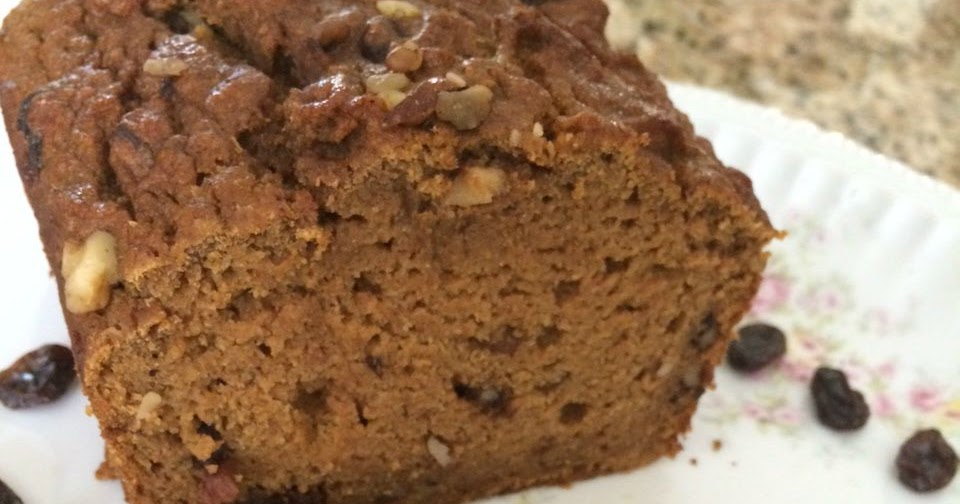
Today’s recipe is one of my favorite Fall recipes—Pumpkin Bread! The recipe says you can make 2 9-inch loaves or 3 8-inch loaves. I normally make 1 8-inch loaf and then several mini loaves to share. This bread freezes wonderfully!!
Pumpkin Bread
2/3 cup shortening
2 2/3 cups sugar
4 eggs
1 can (1 pound) pumpkin
2/3 cup water
3 1/3 cups flour
2 teaspoons baking soda
1 ½ teaspoons salt
½ teaspoon baking powder
1 teaspoon cinnamon
1 teaspoon cloves
2/3 cup chopped nuts (I use walnuts)
2/3 cup plumped raisins
Heat oven to 350*. Spray 2 9-inch loaf pans or 3 8-inch loaf pans with baking spray. In a large bowl, cream the shortening with the sugar until fluffy. Stir in the eggs, pumpkin and the water. Blend in the flour, baking soda, salt, baking powder, cinnamon and cloves. Stir in the nuts and raisins. Pour into pans. Bake about 70 minutes or until wooden toothpick inserted in the center comes out clean. Enjoy!
Note: if you use the mini loaf pans, your baking time will be less. I check mine at 40 minutes and go from there.
Already owning a Number One hit with “Heartbreak Hotel,” Elvis had been on television before, but nothing compared to his debut on The Ed Sullivan Show when 60 million viewers tuned in. It was a high profile cultural moment and national event when 82% of the television viewing audience watched Elvis on The Ed Sullivan Show.
This young man, whose sound and raw, energetic performances went against everything the conservative Eisenhower era stood for, captivated the youth of America. That night on the Sullivan show, Elvis entered living rooms across the country and created a cultural revolution that changed musical tastes and entertainment forever.
An average student, Elvis found inspiration at The First Assembly of God, the church his family attended, and where he learned to love gospel music. On his eleventh birthday, Elvis was given a guitar by his mother and, inspired by southern gospel singers like Jake Hess and country artists like Hank Snow and Roy Acuff, he taught himself to sing and play the instrument by ear. As he grew older Elvis became more passionate about music and immersed himself in the sounds of his new home — Memphis, Tennessee.
By 1955, at the age of 20, Elvis Presley was emerging as a regional star in the south, touring and playing shows from Tennessee to Texas. Known for his lively performances and on stage gyrations, Elvis played a unique blend of R&B, country, gospel and rock ‘n’ roll. At this early age, Elvis was taken under the wing of well-known music promoter Colonel Tom Parker who heard about Elvis and the audience reaction he was getting whenever he performed. Elvis was recording for producers Sam Phillips and his Sun label. Parker got RCA to buy Elvis’ contract for an outrageous sum at the time — $35,000. Elvis’ first single, “Heartbreak Hotel” was released on January 27, 1956 and his self-titled debut album two months later. “Heartbreak Hotel” became Elvis Presley’s first Number One single and his debut album quickly went gold.
To give his artist a national showcase Colonel Parker booked Elvis’s first televised appearance on Tommy and Jimmy Dorsey’s Stage Show. To get him on the show, The Colonel sent the show’s producer, Jackie Gleason, a glossy photo of Elvis with a note reading “JG: This is Elvis Presley. About to be Real Big…- Colonel.” The deal was for six appearances, and although Stage Show was not a major variety show it brought Elvis his first national exposure.
Soon after, Elvis’s national popularity was on the rise, and Hollywood wanted in. Elvis signed a movie contract with Hal Wallis and Paramount Pictures. The Colonel next booked two appearances for him on The Milton Berle Show. For the first show broadcast, April 3, 1956, Elvis was filmed on the flight deck of the USS Hancock in San Diego. Hundreds of sailors were in attendance. In the second show, June 5, 1956, Elvis’s playful performance of “Hound Dog” drove the teens wild, but the press and some adults were outraged. The controversy over his bumps and grinds and gyrating hips only served to fuel the fire. When Ed Sullivan was asked if he would book Elvis on his show, he said he would not. He didn’t want to be the recipient of scathing criticism from the nation’s media.
Then on July 1st, 1956, Elvis appeared on NBC’s new Steve Allen Show, which aired opposite CBS’s The Ed Sullivan Show. Due to the backlash from Presley’s second and last performance on The Milton Berle Show, Allen decided to dress Elvis in a tuxedo and have him sing “Hound Dog” to a basset hound. While many of Elvis’s teenaged fans may not have appreciated the comedic intent of the song (Elvis personally hated it), The Steve Allen Show crushed Ed Sullivan in that week’s ratings. On Monday, Ed Sullivan sent Steve Allen a telegram reading: “Steven Presley Allen, NBC TV, New York City. Stinker. Love and kisses. Ed Sullivan.”
By Monday morning Ed Sullivan caved and decided to book Elvis on his Sunday night showcase. Sullivan and Colonel Parker agreed to have Elvis appear three times for the then mind boggling sum of $50,000, the highest amount ever paid to a performer to appear on TV. Ironically, before Elvis had appeared nationally on television, Sullivan had turned down the opportunity to book Elvis on his show for $5,000. He passed on the opportunity, because he wasn’t sure that Presley would be a good fit for his show’s family audience. But after getting trounced in the ratings by Steve Allen, Ed had to concede and he paid dearly. It would be a show business marriage made in ratings heaven.
A month before Elvis’s Sullivan debut, Ed was involved in nearly fatal automobile accident that left him hospitalized for weeks. By the time September 9th, 1956 rolled around, Ed was still recovering from his injuries and was unable to host Presley’s historic appearance. British actor Charles Laughton hosted the show from Ed’s New York studio and introduced Elvis to the television audience. “…and now, away to Hollywood to meet Elvis Presley!” 60 million viewers were transported to CBS Television City in Los Angeles for Elvis Presley’s performance of “Don’t Be Cruel” and “Love Me Tender,” the latter being the title song of his first Hollywood feature film.
Later, it was again back to Hollywood where Elvis returned to perform Little Richard’s hit, “Ready Teddy” after which he thanked “Mr. Sullivan” for the opportunity and wished him a speedy recovery. Continuing his serious tone, Elvis then introduced his next number, “As a great philosopher once said…’You ain’t nothin’ but a hound dog!’” Elvis held nothing back, snarling and gyrating and stirring up controversy all over again. Contrary to what many believe about CBS insisting that cameras only shoot Elvis from the hips up, the TV audience had a full view of Elvis Presley that evening.
By the time of his next appearance on The Ed Sullivan Show, October 28th, 1956, Sullivan had recovered from his injuries and resumed his duties hosting the show. Following an innocent act by an Irish children’s choir called The Little Gaelic Singers, Elvis Presley took the stage and sang, “Don’t Be Cruel” and “Love Me Tender.” After Señor Wences’s ventriloquism act, Elvis returned to perform “Love Me.” During this song the camera moved in for a close-up of Elvis’ face, and then, as if on cue, he smiled and snarled his upper lip. The studio audience went wild. Elvis closed with another performance of his hit, “Hound Dog.” Again viewers were shown a head-to-toe Elvis.
Following the broadcast, which again enjoyed huge ratings, Elvis was burned in effigy by angry crowds in Nashville and St. Louis. The popular press was also critical of his style and movements. Rock and roll was increasingly attacked and there was growing opposition to its supposedly negative influence on America’s youth. The more the establishment pushed back, the more Elvis’s support grew from millions of teenagers.
Elvis’s third and final appearance on The Ed Sullivan Show took place on January 6th, 1957. He shared the stage with Sullivan impressionist Will Jordan, ventriloquist Arthur Worsley and a rising comedienne, Carol Burnett.
Elvis’s sexy gyrations had stirred up enough controversy across America that CBS censors demanded he be shot only from the waist up only!
Elvis performed a number of songs that night including “Hound Dog,” “Don’t Be Cruel,” “Too Much,” “When My Blue Moon Turns To Gold Again,” and a gospel favorite, “Peace in the Valley.” At the end of the show Ed Sullivan went out of his way to compliment Presley, “I wanted to say to Elvis Presley and the country that this is a real decent, fine boy, and wherever you go, Elvis, we want to say we’ve never had a pleasanter experience on our show with a big name than we’ve had with you. So now let’s have a tremendous hand for a very nice person!” With that endorsement, Elvis Presley bowed, was clearly appreciative and exited the Sullivan stage for the last time. He went on to become one of the most famous and beloved artists in the history of entertainment.
In 2006, The History Channel selected the September 9th, 1956 Elvis Presley appearance on The Ed Sullivan Show as one of the “10 Days That Unexpectedly Changed America.” Elvis Presley on The Ed Sullivan Show was a key stepping stone on The King’s path to worldwide fame. Today Presley remains a cultural icon and a global legend, the best selling solo artist in the history of popular music, and perhaps thanks in part to Elvis’ three historic appearances on The Ed Sullivan Show.
Nothing says Fall more than pumpkins to me. But buying a bunch of fresh pumpkins each year can be expensive. So, I learned to make fabric pumpkins, using old clothes, fabric scraps or just about anything cloth—like napkins or tablecloths. There are 3 different methods to make these and the method you choose depends on the shape pumpkin you want and how much hand sewing you want to do.
Circular Pattern Pumpkins
General Supplies
Fiberfill
Fabric
Thread
Needle
Felt, stick, or saved pumpkin stem
Felt for leaves, or berries for top of pumpkin or ribbon
Instructions
Trace a circle on a piece of paper—the size will determine your pumpkin. If you want to make small pumpkins for place cards at Thanksgiving dinner, you will want to use a circle of about 4-6 inches wide. Increase the circle size to make larger pumpkins. Using the paper pattern, trace the circle on the fabric and cut out.
With the needle and thread, sew a running stitch around the outside of the circle about ½ of an inch from the edge. Gather the edges somewhat so that you can stuff the fiberfill inside. When the pumpkin is filled to your liking, draw the thread tight. Knot the thread. Use another length of thread (or yarn) to create the pumpkin sections. Insert the needle close to the stem and go downward through the center. Loop over the pumpkin and back to the center, drawing tight enough to create an indentation in the pumpkin side, and insert the needle again, making another loop. Continue in this fashion around the pumpkin until you make 5 pumpkin ridges. Knot the thread or yarn. Place hot glue in the indention, place the stem in the glue, then hold it until it sets up. Add raffia, ribbon, tendrils, and or leaves to decorate your pumpkin.
Rectangular Pumpkin Pattern
General Supplies
1 rectangle piece of fabric – any size will do but 12” x 8” is great 1 8” x 3” piece of felt Thread & Needle; yarn Hot glue gun & glue Fiberfill (pillow stuffing)
Instructions
With your fabric lying flat on a table and the long side laying horizontal, fold the fabric in half inside out. Stitch up the side opposite to the fold. You can do this by hand if you don’t have a sewing machine.
Next, taking your needle and thread do a simple gathering stich along the bottom of your fabric. Don’t cut the thread yet. Pull the thread tight so the fabric gathers in the center. Tie off the thread and cut the extra thread.
You are ready to start stuffing the pumpkin. Try to get the stuffing placed evenly throughout the pumpkin. Now at the top of the pumpkin you are going to do the same thing with a gathering stich like you did at the bottom. Gather the fabric by pulling the stich tight, tie off the thread and cut extra thread off.
Using a large needle, thread the yarn starting at the bottom of the pumpkin up through the center. Pull tight and loop back over the side of the pumpkin back through the bottom.
Repeat 4 – 5 times around the pumpkin. Tie off with a knot. Next, take your felt fabric with the long end horizontal. Place a line hot glue along the short end and start rolling the fabric on itself. You should end up with a short and thick roll of fabric.
Cut the felt to the desired length you would like for the pumpkin stem. Attach the stem to your pumpkin with a generous dollop of hot glue.
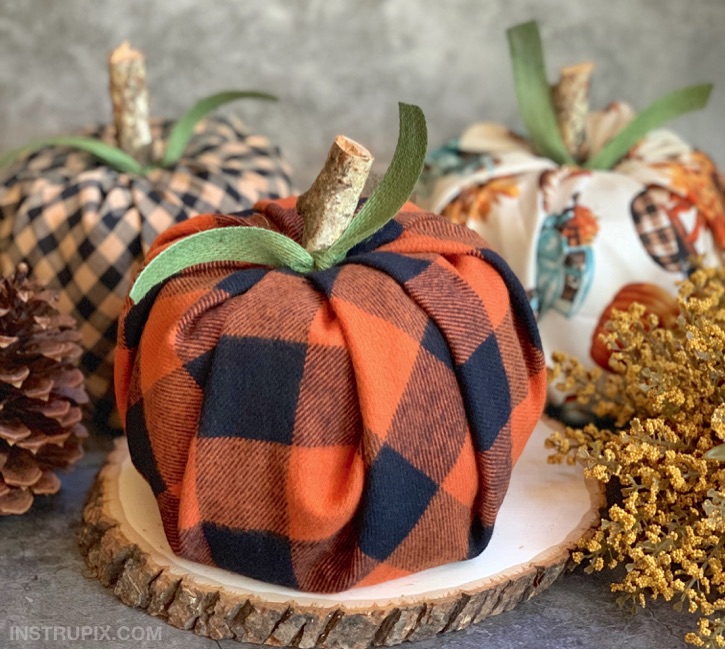
Toilet Paper Pumpkins (NO SEW)
Supplies
roll of toilet paper
rectangle of fabric approximately 18″ x 22″
stick for stem
ribbon
Instructions
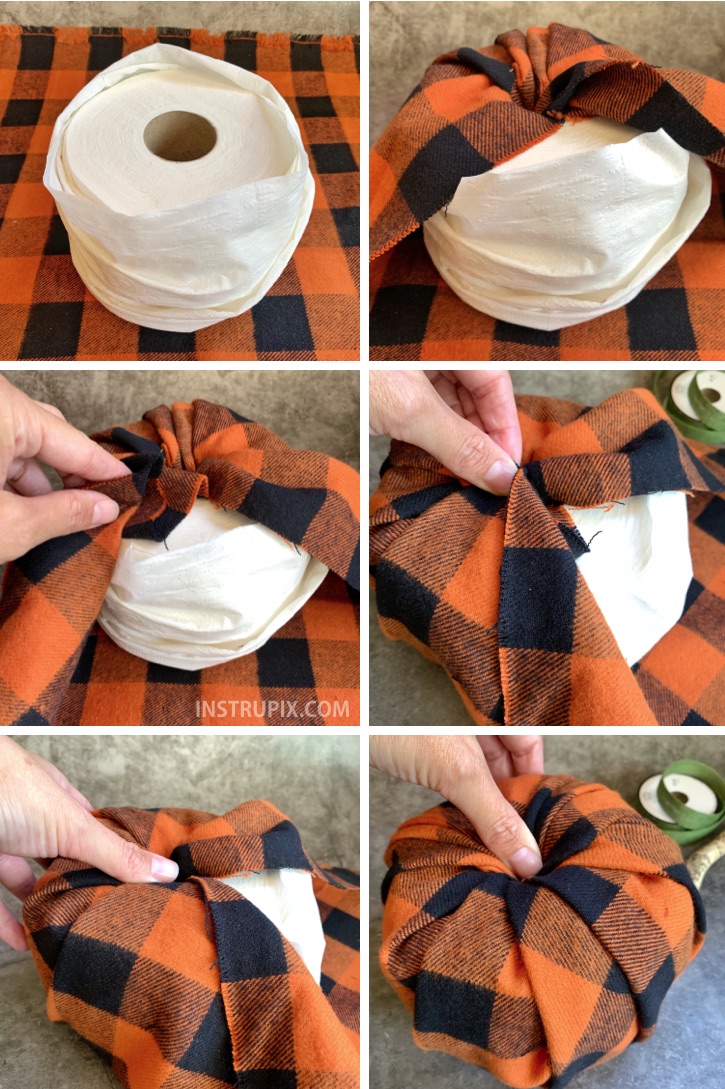
Unroll the toilet paper about 10 times, and then roll it loosely back up to give more of a round shape.
Lay out your fabric and place the toilet paper in the center.
Grab one corner of the fabric and tuck it inside of the toilet paper roll. Slowly work your way around gathering up the fabric and tucking each corner into the roll.
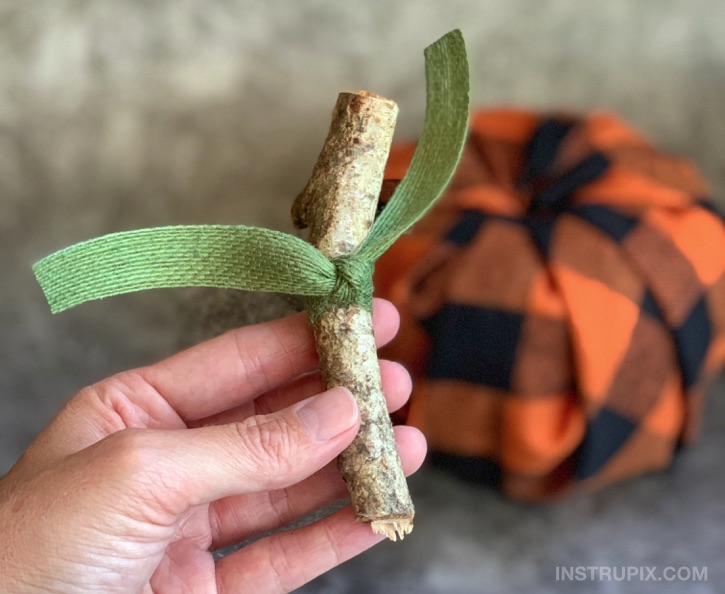
Tie a ribbon around your branch piece and stuff it into the center.
Ants can be a particularly persistent problem in the house, because they leave scent trails for others to follow. Here are some “natural” home remedies you can try the next time you see these little aggravating pests.
White Vinegar
A recipe for ant-controlling success? Three parts vinegar and one part water. Spray under doorways, in the yard or even around your picnic blanket. The pungent liquid helps cover up ant scent trails, messing with their tracking abilities. Next time you mop the floor, pour a bit of vinegar into the bucket for good measure.
Borax
Borax, a mineral used in many cleaning products, is lethal to ants, interfering with their digestive system. Create a syrupy paste with borax, confectioner’s sugar and water. Put the mixture inside shallow containers with narrow, ant-sized openings and place them near ant mounds or wherever you see ants. Enticed workers carry the sweet substance back to the nest to share with their friends.
Note: Although borax has a low toxicity rate for humans, home expert and CEO of Pest Strategies Ed Spicer recommends keeping borax-laced bait away from children and pets.
Pepper
To be clear: Pepper doesn’t kill ants, but the strong odor will chase them away. Pour the ground black or cayenne version onto ant scent trails. Or mix pepper and water in a spray bottle and spritz your home’s entry points.
Cinnamon
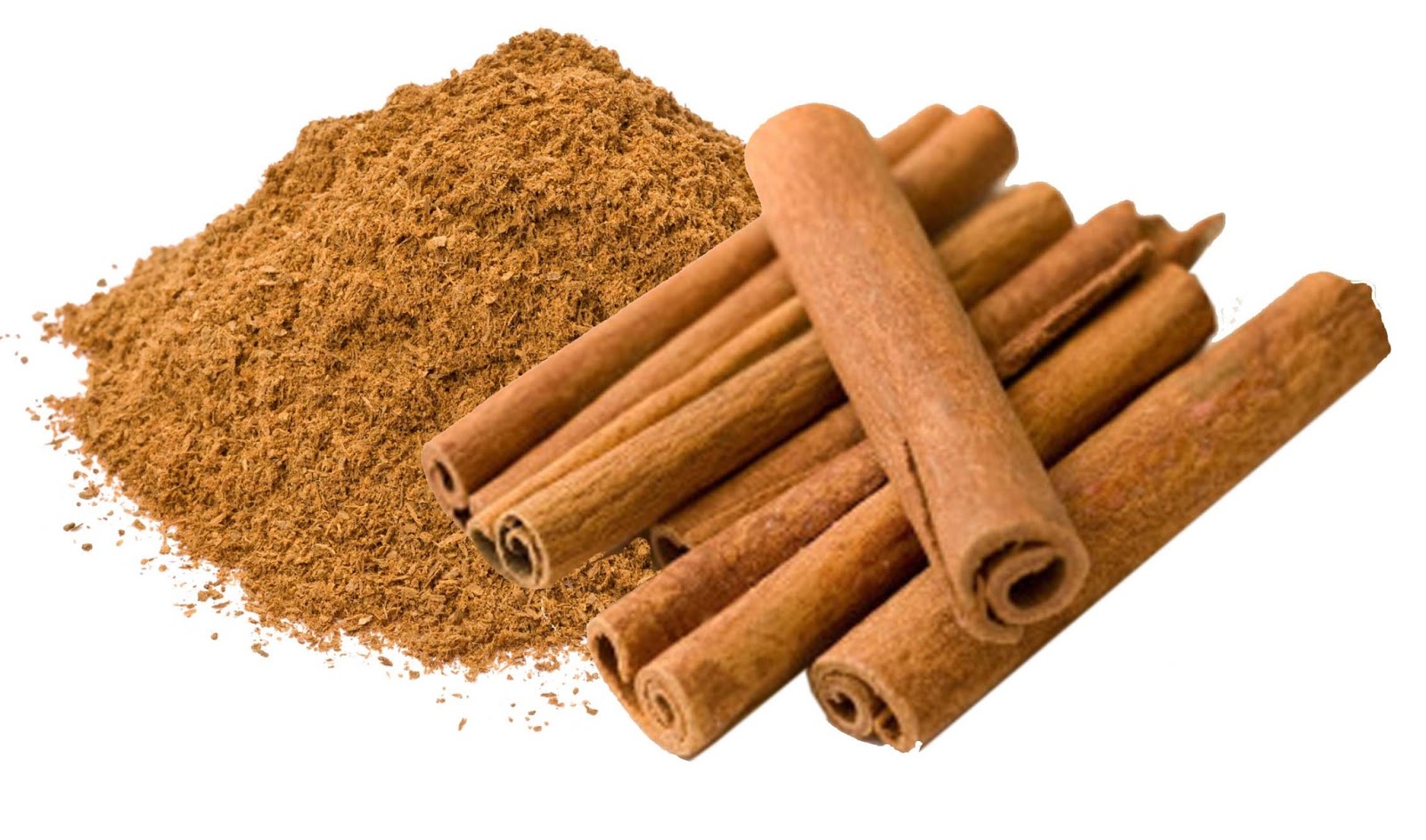
The best spice for getting rid of ants in your kitchen? Cinnamon. Natural and non-toxic, cinnamon not only kills ants, but its strong smell makes it shine as a repellent, too. According to Spicer, Saigon cinnamon can be especially effective when sprinkled around anthills, across their paths, on kitchen countertops and along floorboards. And cinnamon essential oil can effectively repel and exterminate ants, too.
Fresh Mint
Ants don’t like the smell of fresh mint, so planting it in vegetable patches and flower beds deters ants and other insects while giving your garden a lovely aroma. Minty essential oils from peppermint, wintergreen, geranium, thyme, clove and rosemary work, too!
Cornmeal & Boric Acid
Contrary to popular belief, cornmeal does not kill ants, by exploding them or otherwise. “Ants are pretty keen on cornmeal,” Spicer says, “so spreading too much of it around might worsen your infestation.” You can, however, weaponize cornmeal in your fight against ants by mixing it with boric acid, a cousin to Borax that’s available online and at home improvement stores. Mix nine parts cornmeal with one-part boric acid, adding a generous helping of soybean oil or peanut butter to create a paste. Place the homemade bait near gaps and crevices, anywhere ants are on the march.
Like borax (above), any bait containing boric acid should be kept away from kids and animals.
Flour
Stop ants in their tracks. Scatter all-purpose flour liberally at door thresholds, on window sills and across foundations. Or use a sifter to apply a dusting of flour directly along their path to disrupt their pheromone trail.
Citrus
The natural acids in tangy citrus, such as lemon, orange, lime and grapefruit, work wonders at keeping ants at bay by masking their scent trails — at least temporarily. Squeeze lemons into a spray bottle, or rub a pureed blend of orange peel and water on window sills and doors jambs to discourage the itsy-bitsy insects from crossing over.
Bonus: Toss the leftover rinds in the garden as an organic disincentive.
Coffee Grounds
This popular ant-repelling tactic has been around for years: Sprinkle coffee grounds around the stems of indoor and outdoor plants and flowers. Some say it’s the smell that repels them; others claim ants don’t like the feeling of the grounds under their feet. Either way, it works!
Sugar
If you can’t beat ’em, divert ’em! Extend a sugar trail from your house to your outdoor compost pile. Ants can feast to their hearts’ content and needn’t darken your door again. (Pat’s note: this seems counterproductive to me, but I’m no expert.)
Ant-Repellent Myth: Baking Soda
You see it all over the internet: Baking soda kills ants by drying them up or exploding them. Not true. According to Spicer, “There’s virtually no scientific evidence that supports the theory that baking soda can kill ants.” Best to save your baking soda for baking.
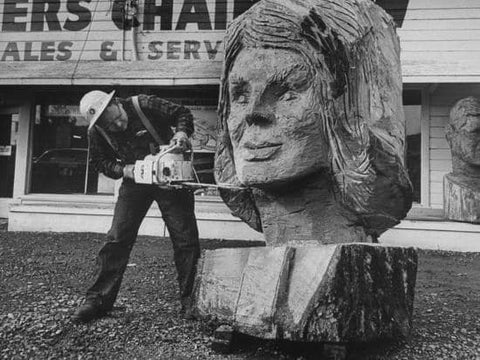
Chainsaw carving began in the U.S. in the 1950s. Ben Murphy and Ken Kaiser pioneered the craft and began distributing their pieces. Interest in chainsaw carving grew slowly until the 1980s. Then the craft jumped in popularity thanks to the publication of a handful of books about chainsaw carving and the creation of several chainsaw carving festivals and competitions. Men and women from all walks of life entered the contests, and the number of chainsaw carvers multiplied.
The development of the Internet also aided the growth of the craft. Chainsaw carvers posted “how-to” articles, recorded videos while they carved a piece, and sold their items in online stores.
As chainsaw carving gained popularity, it spread from America to Japan and Europe. Now, chainsaw artists participate in dozens of annual chainsaw carving festivals and competitions around the world. According to the United Chainsaw Carving Guild (UCCG), there are now chainsaw sculptors in more than 80 countries worldwide.
Like most chainsaw carvers, you will likely start with a single saw and add more as you learn the craft and increase the realism and detail of your projects. Standard chainsaw models from well-known tool manufacturers like Dewalt, Stihl, Husqvarna, Black+Decker, Worx, and Makita often make annual lists of “Best Chainsaws for Chainsaw Carvers”. Very popular models frequently feature guide bars (blades) with small noses that allow the artist to create realistic detail.
As you master the craft and increase the size, variety, and complexity of your pieces, you’ll probably add “specialty” saws with unusually long (or short) guide bars or custom noses that allow you to sculpt a piece exactly as you’d like it.
Safety gear
Obviously, chainsaw carving is dangerous. A careless mistake can result in serious injury or death. Therefore, the wise chainsaw carver “gears up” with at least goggles, ear protection, gloves, and steel-toed boots. Some carvers also wear a helmet with a face shield and Kevlar pants.
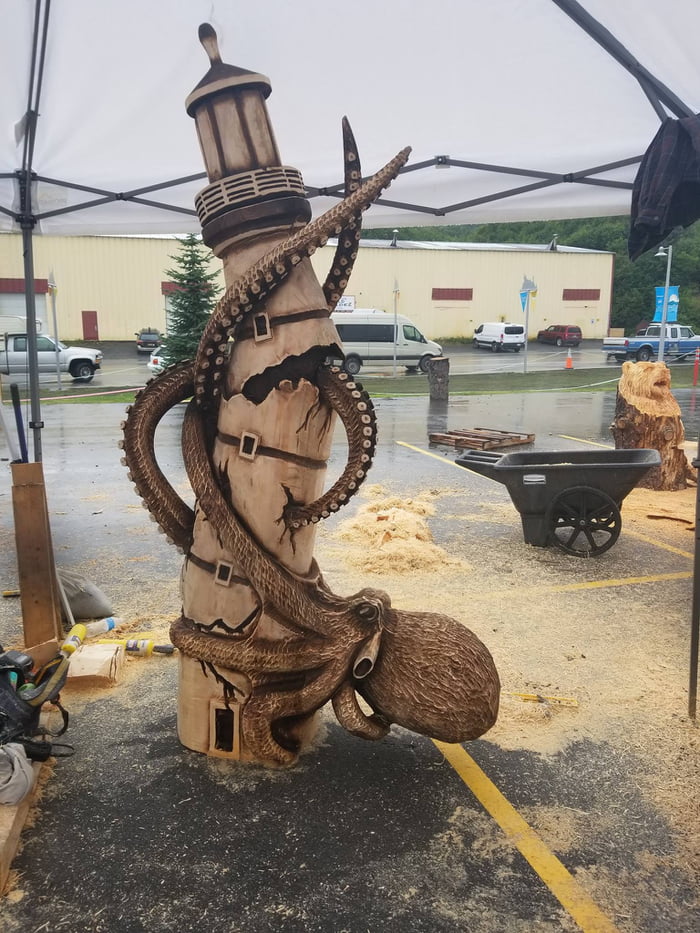
One of the benefits of chainsaw carving is that you can use wood that isn’t pristine enough for other woodcarvers to use. For example, irregular grain or knots that derail a chip carving or relief carving add character to a chainsaw carving. Some sculptors utilize fallen logs; others get scrap logs or end pieces from sawmills. (If you’re planning to use fallen logs, but don’t have any on your own property, be sure to get permission from the landowner beforehand.)
Commissioned pieces or extensive works can be the exception to this rule. In these cases, the carver may have to scour several sources before locating a log with the correct dimensions and character.
Another factor you’ll need to consider is the variety of wood you want to carve. Softwoods are easier to carve, offer less kick-back when you carve them, and are, therefore, less dangerous to carve. These reasons make softwoods much more popular for chainsaw carving than hardwoods are. Favorite woods for carving include:
Pine–It’s plentiful, inexpensive, and reliable to cut. White pine and ponderosa pine are particularly popular.
Red cedar–It’s not quite as easy to carve or as inexpensive as pine is, but the color is marvelous.
Basswood–which is a hardwood–is also popular because it’s relatively soft, fairly easy to use, and attractive. It’s also inexpensive and plentiful.
Crisp, sweet, and delicious, bushels of apples are a true symbol that autumn has arrived. Whether you stroll through the apple orchard and pick some yourself, or scoop a few pecks up from the store, Americans just can’t get enough. By volume, we eat more apples than any other fruit. But for all the love we show to apples, how much do you actually know about our favorite fall fruit?
Archaeologists have found evidence that people have been eating apples since 6,500B.C.
The science of growing apples is called pomology.
There are more than 7,500 apple varieties in the world — about 2,500 varieties grown in the United States. About 100 of those are sold commercially. Apples are the second-most valuable fruit grown in the U.S. (oranges being the first).
Apples are grown in all 50 states, but they’re only grown commercially in 36 states. The top producing states are Washington, New York, Michigan, Pennsylvania, California, and Virginia.
Top producing counties in the world are China, United States, Turkey, Poland, and Italy.
Most apples in the world are still picked by hand.
Americans eat more apples per capita than any other fruit. According to the USDA Economic Research Service, the average American eats about 16 pounds of fresh apples and 28 pounds of processed apples like juice, cider, or sauce, for a total of about 44 pounds per person per year.
Apples are available in grocery stores all year long thanks to the global market, but the Northern Hemisphere typically considers as early as July and as late as November apple season. September and October are peak months.
If you’ve ever wondered why apples float it’s because they’re 25 percent air, giving us the ability to bob for apples in a barrel of water.
The common autumn party game bobbing for apples started as a Celtic New Year’s tradition for trying to determine one’s potential future mate.
Apples ripen up to 10 times faster at room temperature than if they are refrigerated.
Apple trees take at least four to five years to start producing fruit. Some take as many as 10 years.
The top ten varieties produced in the United States are Gala, Red Delicious, Granny Smith, Fuji, Golden Delicious, Honeycrisp, Mcintosh, Rome, Cripps Pink, and Empire.
An average tree produces 840 pounds of fruit.
It takes about 36 apples to make one gallon of apple cider.
One of George Washington’s hobbies was pruning his apple trees.
Apples are a member of the rose family of plants, which also includes pears, peaches, cherries, and plums.
When John Glenn, the first American to orbit Earth, blasted off on his initial space flight, he carried with him pureed applesauce in squeezable tubes.
According to Guinness World Records, the largest apple peel was created by Kathy Wafler Madison in Rochester, N.Y. on October 16, 1976. The prize-winning peel was 172 feet 4 inches long.
The first American apple orchard was planted around 1625 by William Blackstone on Boston’s Beacon Hill.
Apple juice was one of the earliest prescribed antidepressants.
Only sour apple trees were native to America before the European settlers brought with them their favorites.
The pale, lime green Lady apple is one of the oldest varieties of apple still available today. It was originally documented in early Rome (approximately 700 B.C.). It was first referenced as the ‘Lady apple’ in 1628 during the French Renaissance.
An apple has about 80 calories. They are fat-free, sodium-free, and cholesterol-free and also are an excellent source of fiber.
After nearly a decade with Red Delicious as the apple darling of the United States, Gala apples are now the nation’s favorite.
Located at the Kinzua Bridge State Park in northwestern Pennsylvania, the skywalk was constructed on six of the historic Kinzua Viaduct massive steel towers remaining after the tornado of 2003. The Kinzua Viaduct was once the highest and longest railroad viaduct in the world. The park amenities include forestland picnic areas, a park pavilion-available for rental, hiking trails and the new Kinzua Bridge State Park Visitors Center. The access road to the park is the Kinzua Bridge Scenic Byway a shared use road for bicycling. The Kinzua Sky Walk extends out 624 feet into the Kinzua Gorge offering panoramic views. The skywalk features a walkway with a set of railroad tracks leading to the end of the overlook which has a partial glass floor. At a stunning height of 225 feet above the valley floor, visiting the Kinzua Sky Walk is an exciting opportunity to “Walk the Tracks across the Sky.”
Kinzua Visitor’s Center
Start your journey at the Kinzua Bridge Visitors Center, located at the edge of the Kinzua Gorge. Arriving at the entrance, visitors are greeted by huge steel towers flanking the doorway. The new 11,000 sq. ft. building features two exhibit halls with displays showcasing the three E’s – Engineering, Energy and the Environment. The flagship PA Wilds Cooperative Artisan Shop features handcrafted and handmade items from the region. Modern classrooms welcome school groups and special functions.
Are you brave enough to experience this sky walk in Pennsylvania? Mother Nature simply won’t take no for an answer but, then again, neither will the Kinzua Bridge. When Mother Nature unleashed her fury with a furious tornado that ripped through Kinzua State Park in 2003, she succeeded in bringing down all but one-third of the 2,053 foot long Kinzua Bridge.
But, despite the vicious storm, part of the Kinzua Bridge refused to collapse. Today, the 600 feet of bridge that survived has become one of the state’s most spectacular sky walks, promising visitors a stunning view of the forest floor and the remains of the bridge scattered haphazardly some 300 feet below.
Recent events have emphasized the need to shop early! Besides beating the crowds and garnering the best selection, prices are never going to be lower!
Let’s start with a stocking stuffer idea… MASKS! No, I’m not talking about the silly cv masks…I’m talking about the ones that cover up way more than a nose! Everyone who has a RINO on their shopping list knows their current masks are slipping and it’s time for some new ones. The Bushes and Mitt Romney are sporting the new We-Trust-the FBI look this coming election season. Intending to portray strength and trust in government agencies, it’s difficult to pull off and your most discerning patriots won’t even attempt to wear this. But if have a relative who believes 9-11 was a terrorist plot or that Romney is still a Republican, then this is definitely a MUST-HAVE!
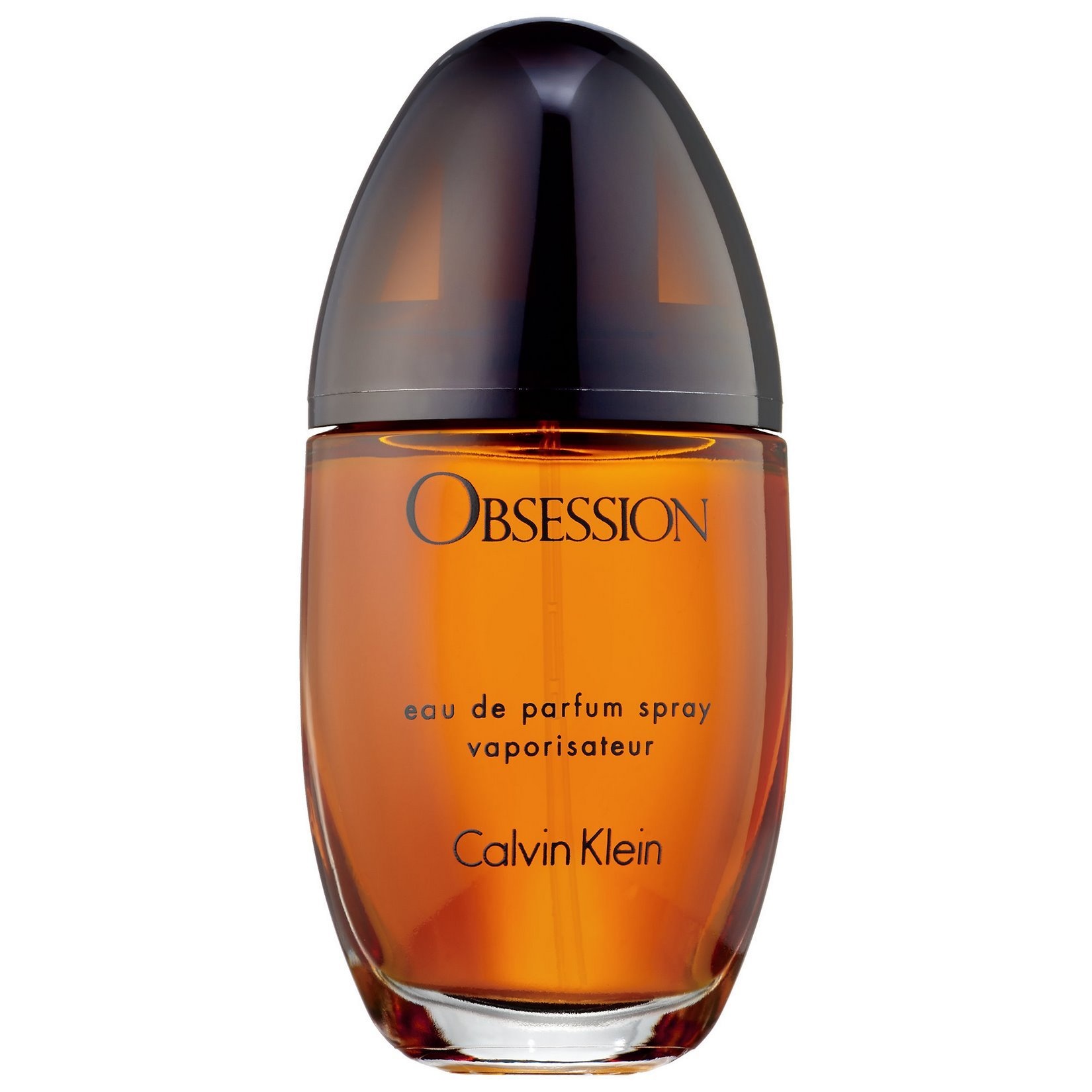
For a personal gift, how about some of the new perfumes and colognes on the market right now? Joe Biden continues to wear the classic Obsession (with getting Donald Trump) cologne, while the Intelligence Community continues to peddle their favorite smell…OPPRESSION (of the truth). Merrick Garland hopes to corner the market with his latest offering OBSTRUCTION (of justice) but it doesn’t seem to be selling among the general population. They all seem to mirror the favorite scent of the left: DESPERATION. I do hope Michelle Obama buys Barrack a new cologne for Christmas though, because that stink he’s wearing now? follows him everywhere!
Another gift to consider is a plant. Not the poinsettias or small fir trees…no, we’re talking people whose loyalty can be bought or shifted after the fact. You can prebuy them—like gift cards!! Insert them into an opponent’s campaign or administration and at the time of your choosing, they’ll turn on your opponent. You wind them up and make them say whatever you want—it’s all the rage!!
If you’re looking for something a little more personal, there’s a new storage service that might be perfect! The FBI is offering compartments to store unsightly personal mementos that you can’t quite get rid of, but certainly do not want to store at your home. The cost? A healthy donation to the Democrat Party or one of their preferred candidates (they’ll provide you with a list–simply ask Alexa: who should I donate to? And a list will appear on your laptop—how convenient is THAT?) And then that racy diary or depraved laptop of your youth can be whisked away from public scrutiny forever!
But let’s get to the hottest gift this Christmas—JUDGES!!!! Judge shopping is a difficult task for sure. You have to find one that you control somehow—so that might not be an easy task. You might have to settle for a Magistrate—a step down from a judge—but realistically you might be able to fool your friends! It all depends on what you want your judge to do—they do come with optional activist packages (see SCOTUS Sotomayer) but that can be expensive! If you’re going to need your judge over and over though, it might be well worth the investment!
I hope these shopping tips have been useful. Christmas really is a magical holiday!! HO, HO, HO!
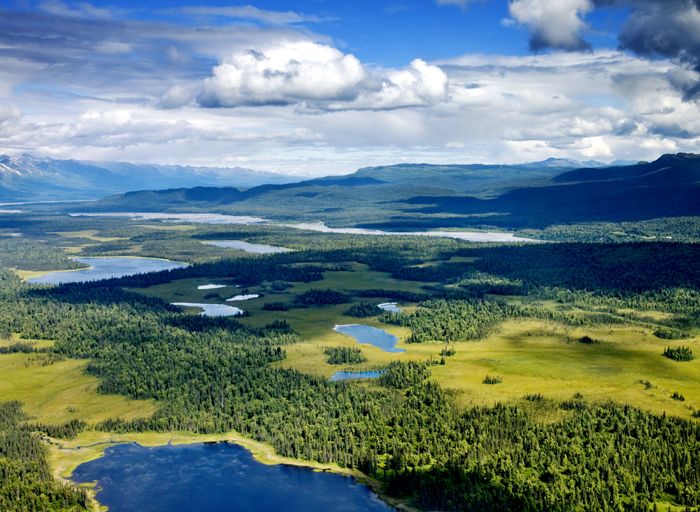
The Alaska Triangle, sometimes called Alaska’s Bermuda Triangle, is a place in the untouched wilderness of the Frontier State where mystery lingers and people go missing at a very high rate. The Alaska Triangle connects the state’s largest city of Anchorage in the south, to Juneau in the southeast panhandle, to Barrow, a small town on the state’s north coast. Here, is some of North America’s most unforgiving wilderness.
The area began attracting public attention in October 1972, when a small, private plane carrying U.S. House Majority Leader Hale Boggs, Alaska Congressman Nick Begich, an aide, Russell Brown, and their bush pilot Don Jonz seemingly vanished into thin air while flying from Anchorage to Juneau. For more than a month, 50 civilian planes and 40 military aircraft plus dozens of boats, covered a search area of 32,000 square miles, but no trace of the plane, the men, wreckage or debris were ever found.
Afterward, more planes went down, hikers went missing, and Alaskan residents and tourists seemed to vanish into thin air. In fact, since 1988, more than 16,000 people have disappeared in the Alaska Triangle, with a missing person rate at more than twice the national average.
Alaska is bound by 33,000 miles of coastline, contains more than three million lakes, untamed wildlife, and winters that blanket vast reaches of the state in snow and ice. In any given year, 500-2,000 people go missing in Alaska, never to be seen again. Authorities conduct hundreds of rescue missions, most often return without finding the missing person or any evidence at all. There are several theories about the disappearances—everything from severe weather to aliens—to swirling energy vortexes to evil shape-shifting demons.
The Environmental Theory
The most likely explanation of these many missing people is the wilderness itself. Despite the warnings from authorities regarding weather, wildlife, and environmental conditions, hundreds of tourists visit Alaska to see the unspoiled land, many of whom are unprepared for the natural elements. Some of these people probably became lost in the middle of nowhere, resulting in the numerous search and rescue operations performed each year.
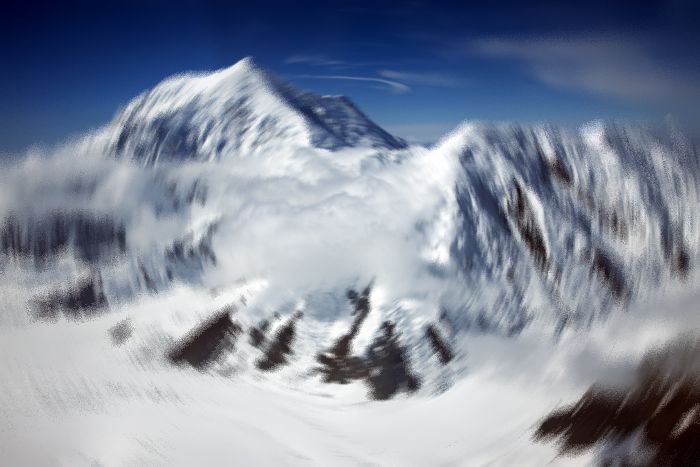
Within this area are dense forests, craggy mountain peaks, massive glaciers, hidden caves, and deep crevasses where downed aircraft or lost hikers might easily be hidden and then covered by snowfall, hiding any trace of human activity. This harsh landscape is also filled with wild animals and is subject to unforgiving weather, including avalanches. That, however, does not explain why there are more disappearances in the Alaska Triangle than elsewhere in the state.
The Vortex Theory
Some believe that the Alaska Triangle is home to its own electromagnetic variations, also known as ‘vortexes,’ that affect the physical world. Energy vortexes are thought to be swirling centers of energy concentrated in specific places where the energy crackles most intensely. The energy radiates in a spiraling cone shape clockwise or counterclockwise, creating positive and negative effects. They are thought to affect humans in various physical, mental, and emotional ways.
One example of this vile vortex is the Bermuda Triangle, but a more common example would be the North and South Poles. These types of magnetic energy centers are believed to have varying affects on humans, including anything from confusion to emotional changes.
Positive vortexes spiral upward in a clockwise motion creating an enhancing flow of energy. This type is said to be conducive to healing, meditation, creativity, and self-exploration. People actively search these places out to feel inspired, recharged or uplifted. Some of the places where positive vortexes are said to exist are the Egyptian pyramids, Stonehenge, the Sedona desert, and sacred temples and cathedrals throughout the world.
Alternatively, negative vortexes spiral downward in a counterclockwise motion, creating a draining or depleting energy and depleting the positive energies in its vicinity. In humans, they are believed to cause health problems including depression, nightmares, disorientation, confusion, and both visual and audio hallucinations. They are also said to cause electrical instruments to malfunction. Some places that are said to be filled with negative vortexes are the Bermuda Triangle, Japan’s Devil’s Sea, and Easter Island.
Electronic readings in Alaska have found large concentrations of magnetic anomalies, some of which have disrupted compasses to the point that they are as much as 30 degrees off. In addition, some search and rescue workers have reported having audio hallucinations, disorientation, and lightheadedness.
It is unclear whether vortexes really exist and the theory has been open to a good amount of skepticism, but is it possible? Whether the mysterious disappearances of the Alaska Triangle are the result of natural perils, strange energy vortexes, or ancient evil spirits, they are certainly alarming.
The Alien Theory
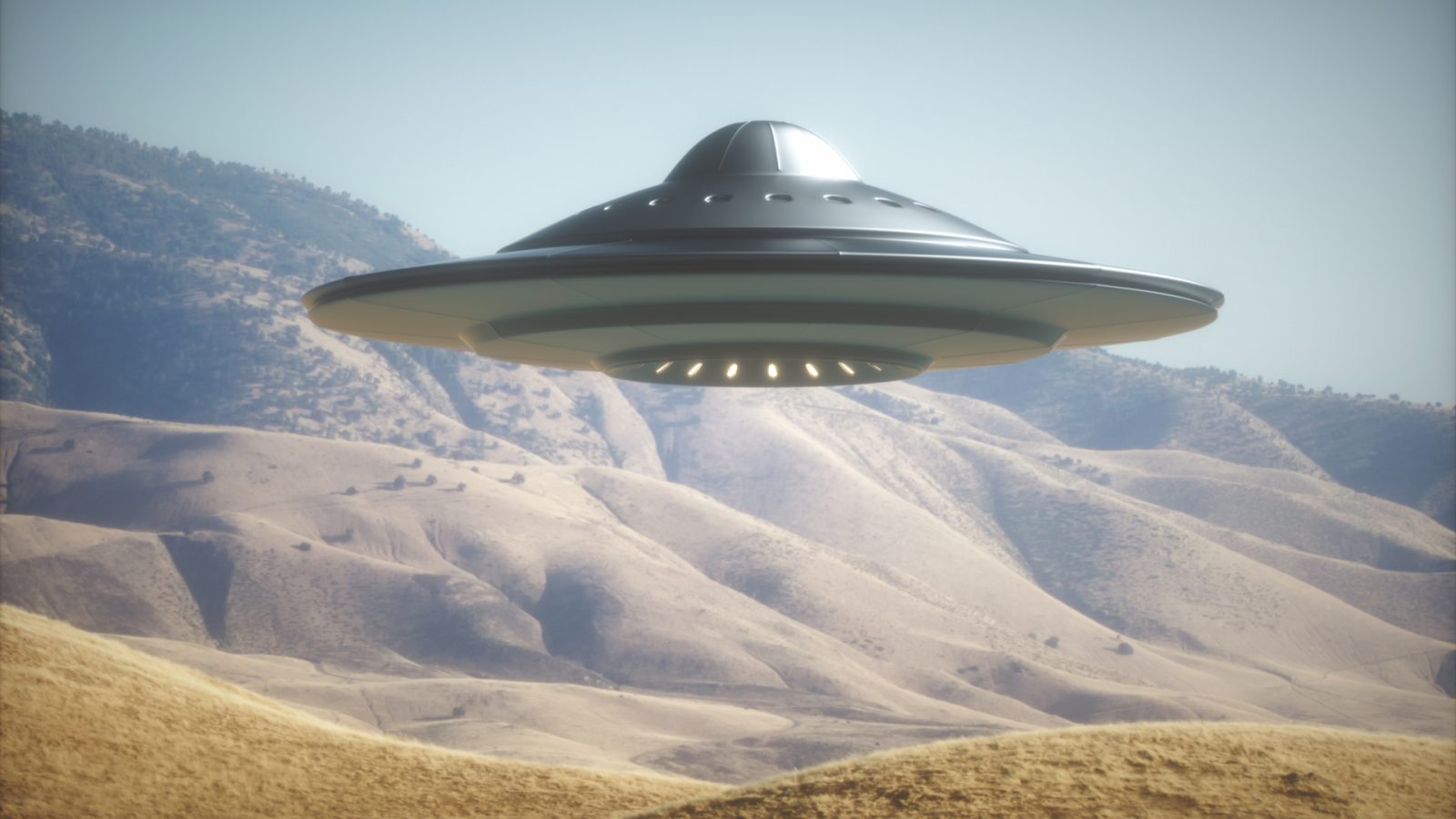
Another theory about the Alaska Triangle is…aliens. Since 1998 there have been over 560 reported UFOs (Per the National UFO Reporting Center) in Alaska with a majority of sightings in the Alaska Triangle. The most notable example of this, however, happened in 1986, when a Japanese plane flying from Iceland to Anchorage witnessed something that still has no explanation to this day. The plane stumbled upon what appeared to be three separate aircraft, all of which followed the plane’s flight pattern for roughly 400 miles before they disappeared after about 30 minutes. The entire time, the pilots reported the unusual aircraft darting in and out of their line of sight and performing strange aerial maneuvers that are unlike what anyone had seen with the average plane.
The Kushtaka Theory
Still there are many theories that persist about a shape-shifting demon that is associated with the native Tlingit people who live in the area. These people are said to have origins dating back to 11,000 years ago. Their name, Tlingit, means “People of the Tides.” These people believe that there is a shape-shifting demon named Kushtaka who is a cross between a man and an otter. It is said to lure people to their impending doom by attracting lost people to the water by portraying children or women who are screaming for help. It is also said that when the Kushtaka (also known as the “Otterman”) captures these lost people, it then steals their souls. It is folklore that has never been proven, but it’s still a frightening thought, to say the least.
The Big Foot Theory
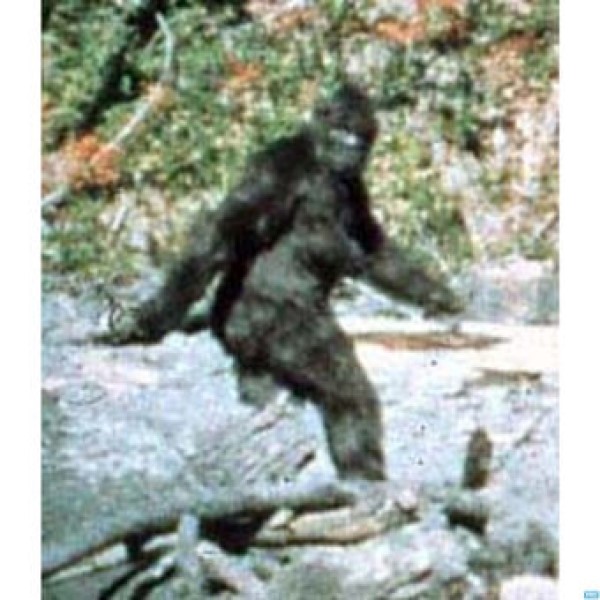
And still legends persist about Big Foot—Sasquatch. With huge amounts of forests and uncharted wilderness, Alaska is certainly a perfect location for Bigfoot to hide out. There are numerous reports of Bigfoot sightings throughout the entire state. Some reports include evidence of nesting sites, a possible Bigfoot skeleton, and unidentified hair samples. Some witnesses have even reported seeing a swimming Sasquatch during their encounters.
Some villages have even relocated as a result of terrifying encounters with Bigfoot, which is surprising because the common understanding is that the creature prefers isolated areas and is in general quite peaceful.
The Nome Serial Killer
Our discussion of theories would not be complete without a serial killer and the FBI. Around 2005, people began to notice that a large percentage of residents or tourists who went missing in Alaska happened to disappear from the city of Nome. In fact, the numbers became so worrying, that rumors of a serial killer began to run rampant throughout local topics of conversation, totally freaking out the population. This loud panic eventually caught the ear of the FBI, who came rushing in to investigate, eager to catch a murderer and show him off to their friends. But they didn’t find one.
Instead, they concluded that it was Nome’s fault all along. You see, Alaska is known to have one of the highest concentrations of alcohol-free municipalities in America, but Nome? Nome loves to party, which is the very reason why so many people flocked to the city in the first place.
So now you had a bunch of drunk visitors wandering off alone, into the woods to take a pee maybe, and then suddenly they get eaten by a bear, or stolen by aliens, or seduced by the Otter-Man, or they pass out and freeze to death, snowed under, gone, added to the list, forgotten already. Morale of the story? Don’t get baked in Alaska…
Today we’re going to make Banana Nut Muffins! These freeze beautifully, by the way. After they’ve cooled, put them on a baking tray in the freezer for about 30 minutes. Remove them, wrap in aluminum foil and freeze in an air-tight container for up to 2 months. You can also reduce the fat in these muffins, by substituting half (or all) of the oil with unsweetened applesauce.
Banana Nut Muffins
1-1/2 cups all-purpose flour
1 cup sugar
1 teaspoon baking soda
1/2 teaspoon salt
3 medium ripe bananas
1 large egg, room temperature
1/3 cup vegetable oil
1 teaspoon vanilla extract
In a large bowl, combine dry ingredients. In another bowl, mash the bananas. Add egg, oil and vanilla; mix well. Stir into the dry ingredients just until moistened. Fill greased or paper-lined muffin cups half full.
Bake at 375° for 18-22 minutes or until a toothpick inserted in the center comes out clean. Cool for 10 minutes; remove from pan to a wire rack to cool completely. Enjoy!



:format(jpeg):mode_rgb():quality(90)/discogs-images/R-4063046-1354001115-3836.jpeg.jpg)


















 Sew Colorful