Nutmeg is the common name for a dark-leaved evergreen tree, Myristica fragrans, that is cultivated for two spices derived from its fruit, “nutmeg” and “mace.”
The nutmeg is the oval-shaped seed, and mace is the bright red webbing that surrounds the seed.
The tree is native to the Moluccas, or Spice Islands, of Indonesia.
Nutmeg is known to have been a prized and costly spice in European medieval cuisine as a flavoring, medicinal, and preservative agent.
Saint Theodore the Studite (ca. 758 C.E. – ca. 826), was famous for allowing his monks to sprinkle nutmeg on their pease pudding when required to eat it.
In Elizabethan times, it was believed that nutmeg could ward off the plague, so nutmeg was very popular.
Around1600 it became important as an expensive commercial spice in the Western world and was the subject of Dutch plots to keep prices high and of English and French counterplots to obtain fertile seeds for transplantation.
Until the mid-19th century, the Spice Islands, was the only location of the production of the spices nutmeg and mace in the world.
As a result of the Dutch interregnum during the Napoleonic Wars, the British took temporary control of the Spice Islands from the Dutch and transplanted nutmeg trees, complete with soil, to Sri Lanka, Penang, Bencoolen, and Singapore. From these locations they were transplanted to their other colonial holdings elsewhere, notably Zanzibar and Grenada.
Today, Indonesia and Grenada dominate production and exports of both products, with world market shares of 75% and 20%, respectively. Other producers include India, Malaysia, Papua New Guinea, Sri Lanka, and Caribbean islands.
The nutmeg tree is a small evergreen tree, usually 16–43 ft tall, but occasionally reaching 66 ft. The tree may bear fruit for more than 60 years.
The alternately arranged leaves are dark green, 2.0–5.9 inches long by 0.8–2.8 inches wide with petioles about 0.4 inches long.
The species is dioecious, i.e. “male” orstaminate flowers and “female” or carpellate flowers are borne on different plants, although occasional individuals produce both kinds of flower. The flowers are bell-shaped, pale yellow and somewhat waxy and fleshy. Staminate flowers are arranged in groups of one to ten, each 0.2–0.3 inches long; carpellate flowers are in smaller groups, one to three, and somewhat longer, up to 0.4 inches long.
Trees produce smooth yellow ovoid or pear-shaped fruits, 2.4–3.5 inches long with a diameter of 1.4–2.0 inches. The fruit has a fleshy husk. When ripe the husk splits into two halves along a ridge running the length of the fruit.
Inside is a purple-brown shiny seed, 0.8–1.2 inches long by about 0.8 inches across, with a red or crimson covering (an aril).
Nutmeg has a distinctive pungent fragrance and a warm slightly sweet taste; it is used to flavor many kinds of baked goods, confections, puddings, potatoes, meats, sausages, sauces, vegetables, and such beverages as eggnog.
Mace’s flavor is similar to nutmeg but more delicate; it is used to flavor baked goods, meat, fish, vegetables and in preserving and pickling. The more delicate flavor of mace makes this spice much more expensive than nutmeg and also because its yield is about ten times less that of nutmeg.
Nutmeg is known to impact health in many ways because of its nutritive content of vitamins, minerals, and organic compounds related to the essential oils. These beneficial components include dietary fiber, manganese, thiamine, vitamin B6, folate, magnesium, copper, and macelignan.
The health benefits of nutmeg include ability to relieve pain, reduce insomnia, detoxify the body, helps digestion, brightens skin, protect the teeth and gums, helps lower blood pressure, increases circulation, prevents leukemiand and protect cognitive functionality against degenerative diseases such as Alzheimer’s.
Nutmeg butter is obtained from the nut by expression. It is semisolid, reddish-brown in color, and tastes and smells of nutmeg.
The essential oil obtained by steam distillation of ground nutmeg is used widely in the perfumery and pharmaceutical industries.
Nutmeg contains myristicin, a natural compound that has mind-altering effects if ingested in large doses. The buzz can last one to two days and can be hallucinogenic, much like LSD.
Exactly how much nutmeg you can tolerate before becoming ill depends partly on your body mass. In one case, an eight-year-old child ate just 0.5 ounce of nutmeg and died from the effects, according to A.K. Demetriades, M.D., of University College London Hospital. From 1 to 3 tbsp. of nutmeg powder, or 1 to 3 whole nutmeg seeds, causes illness in most people.
Nutmeg is highly neurotoxic to dogs and causes seizures, tremors, and nervous system disorders which can be fatal.
Connecticut’s nickname is the “Nutmeg State” because its early inhabitants had the reputation of being so ingenious and shrewd that they were able to make and sell wooden nutmegs. Sam Slick (Judge Halliburton) seems to be the originator of this story. Some claim that wooden nutmegs were actually sold, but they do not give either the time or the place.
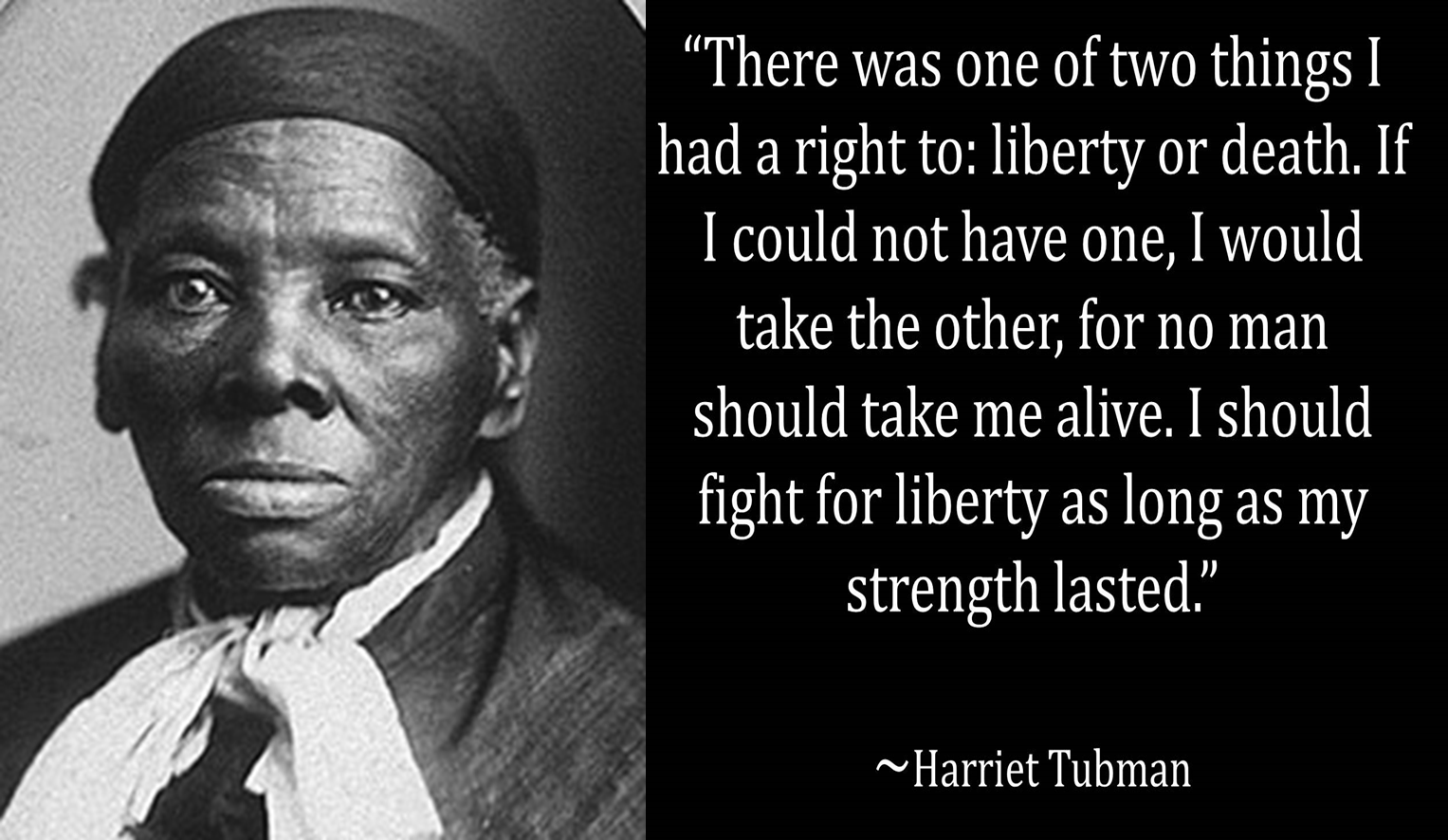
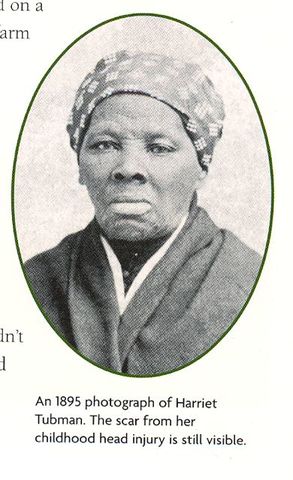
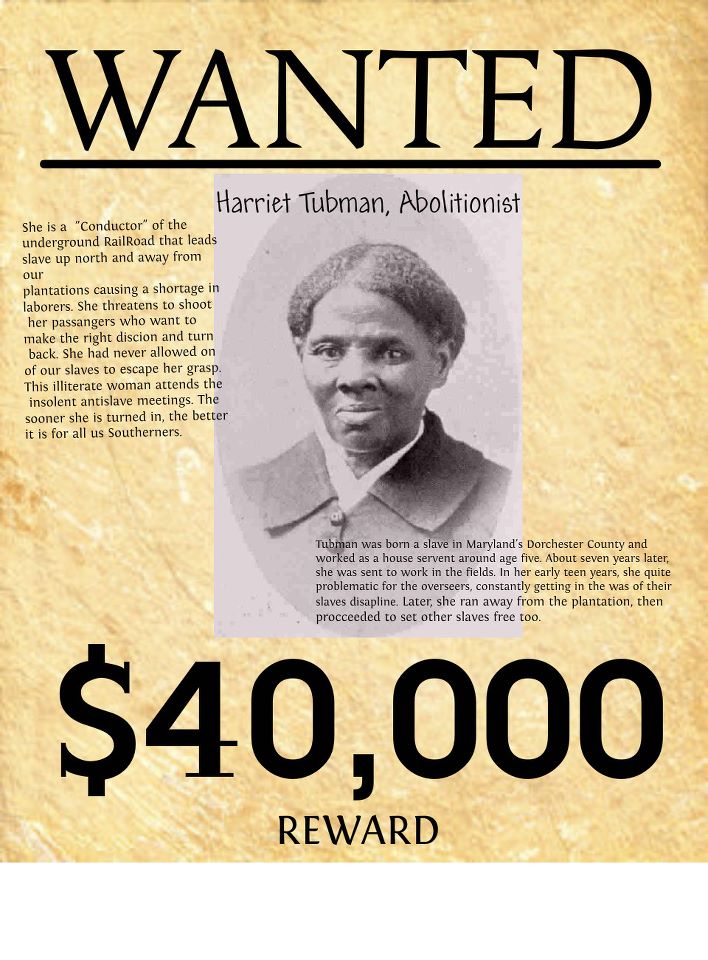
Harriet Tubman was an escaped enslaved woman who became a “conductor” on the Underground Railroad, leading enslaved people to freedom before the Civil War, all while carrying a bounty on her head. But she was also a nurse, a Union spy and a women’s suffrage supporter. Tubman is one of the most recognized icons in American history and her legacy has inspired countless people from every race and background. NOTE: Harriet Tubman Day is celebrated on the day that she died, because her exact birthday is unknown.
When Was Harriet Tubman Born?
Harriet Tubman was born around 1820 on a plantation in Dorchester County, Maryland. Her parents, Harriet (“Rit”) Green and Benjamin Ross, named her Araminta Ross and called her “Minty.”
Rit worked as a cook in the plantation’s “big house,” and Benjamin was a timber worker. Araminta later changed her first name to Harriet in honor of her mother.
Harriet had eight brothers and sisters, but the realities of slavery eventually forced many of them apart, despite Rit’s attempts to keep the family together. When Harriet was five years old, she was rented out as a nursemaid where she was whipped when the baby cried, leaving her with permanent emotional and physical scars.
Around age seven Harriet was rented out to a planter to set muskrat traps and was later rented out as a field hand. She later said she preferred physical plantation work to indoor domestic chores.
A Good Deed Gone Bad
Harriet’s desire for justice became apparent at age 12 when she spotted an overseer about to throw a heavy weight at a fugitive. Harriet stepped between the enslaved person and the overseer—the weight struck her head.
She later said about the incident, “The weight broke my skull … They carried me to the house all bleeding and fainting. I had no bed, no place to lie down on at all, and they laid me on the seat of the loom, and I stayed there all day and the next.”
Harriet’s good deed left her with headaches and narcolepsy the rest of her life, causing her to fall into a deep sleep at random. She also started having vivid dreams and hallucinations which she often claimed were religious visions (she was a staunch Christian). Her infirmity made her unattractive to potential slave buyers and renters.
Escape from Slavery
In 1840, Harriet’s father was set free and Harriet learned that Rit’s owner’s last will had set Rit and her children, including Harriet, free. But Rit’s new owner refused to recognize the will and kept Rit, Harriet and the rest of her children in bondage.
Around 1844, Harriet married John Tubman, a free Black man, and changed her last name from Ross to Tubman. The marriage was not good, and the knowledge that two of her brothers—Ben and Henry—were about to be sold provoked Harriet to plan an escape.
Harriet Tubman: Underground Railroad
On September 17, 1849, Harriet, Ben and Henry escaped their Maryland plantation. The brothers, however, changed their minds and went back. With the help of the Underground Railroad, Harriet persevered and traveled 90 miles north to Pennsylvania and freedom.
Tubman found work as a housekeeper in Philadelphia, but she wasn’t satisfied living free on her own—she wanted freedom for her loved ones and friends, too.
She soon returned to the south to lead her niece and her niece’s children to Philadelphia via the Underground Railroad. At one point, she tried to bring her husband John north, but he’d remarried and chose to stay in Maryland with his new wife.
Fugitive Slave Act
The 1850 Fugitive Slave Act allowed fugitive and freed workers in the north to be captured and enslaved. This made Harriet’s role as an Underground Railroad conductor much harder and forced her to lead enslaved people further north to Canada, traveling at night, usually in the spring or fall when the days were shorter.
She carried a gun for both her own protection and to “encourage” her charges who might be having second thoughts. She often drugged babies and young children to prevent slave catchers from hearing their cries.
Over the next 10 years, Harriet befriended other abolitionists such as Frederick Douglass, Thomas Garrett and Martha Coffin Wright, and established her own Underground Railroad network. It’s widely reported she emancipated 300 enslaved people; however, those numbers may have been estimated and exaggerated by her biographer Sarah Bradford, since Harriet herself claimed the numbers were much lower.
Nevertheless, it’s believed Harriet personally led at least 70 enslaved people to freedom, including her elderly parents, and instructed dozens of others on how to escape on their own. She claimed, “I never ran my train off the track and I never lost a passenger.”
Harriet Tubman’s Civil War Service
When the Civil War broke out in 1861, Harriet found new ways to fight slavery. She was recruited to assist fugitive enslaved people at Fort Monroe and worked as a nurse, cook and laundress. Harriet used her knowledge of herbal medicines to help treat sick soldiers and fugitive enslaved people.
In 1863, Harriet became head of an espionage and scout network for the Union Army. She provided crucial intelligence to Union commanders about Confederate Army supply routes and troops and helped liberate enslaved people to form Black Union regiments.
Though just over five feet tall, she was a force to be reckoned with, although it took over three decades for the government to recognize her military contributions and award her financially.
Harriet Tubman’s Later Years
After the Civil War, Harriet settled with family and friends on land she owned in Auburn, New York. She married former enslaved man and Civil War veteran Nelson Davis in 1869 (her husband John had died 1867) and they adopted a little girl named Gertie a few years later.
Harriet had an open-door policy for anyone in need. She supported her philanthropy efforts by selling her home-grown produce, raising pigs and accepting donations and loans from friends. She remained illiterate yet toured parts of the northeast speaking on behalf of the women’s suffrage movement and worked with noted suffrage leader Susan B. Anthony.
In 1896, Harriet purchased land adjacent to her home and opened the Harriet Tubman Home for Aged and Indigent Colored People. The head injury she suffered in her youth continued to plague her and she endured brain surgery to help relieve her symptoms. But her health continued to deteriorate and eventually forced her to move into her namesake rest home in 1911.
Pneumonia took Harriet Tubman’s life on March 10, 1913, but her legacy lives on. Schools and museums bear her name and her story has been revisited in books, movies and documentaries.
Harriet Tubman: $20 Bill
In 2016, the United States Treasury announced that Harriet’s image will replace that of former President and slaveowner Andrew Jackson on the $20 bill. Treasury Secretary Steven Mnuchin (who served under President Trump) later announced the new bill would be delayed until at least 2026. In January 2021, President Biden’s administration announced it would speed up the design process to mint the bills honoring Tubman’s legacy.
Tubman even had a World War II Liberty ship named after her, the SS Harriet Tubman.
The baseball plant (Euphorbia obesa) is a succulent perennial that is native to the Cape Province of South Africa. Since its discovery during the late 1800s, baseball plants have exploded in popularity as houseplants due to their unique appearance and low-maintenance needs. Though baseball plants are actually considered an endangered species in their native habitat due to unsustainable harvesting, they can easily be found in garden centers. Today, national and international legislation that prohibits harvesting baseball plants has been enacted in an effort to protect the remaining native populations of baseball plants.
These long-lived, slow-growing succulents are characterized by bulbous shape, V-shaped markings, and seam-like ridges that resemble stitching. Rather than branches or leaves, the plant consists of a single wide stem body from which the flowers sprout. Young baseball plants are round in shape but become more elongated and cylindrically shaped with maturity. Baseball plants are also called sea urchin plants since they loosely resemble that creature.
The plants are dioecious, with either male or female flowers that are yellow in color and rather insignificant in appearance. To produce seeds, the female flowers must be cross-pollinated by a male plant, and for this reason, the plant is rarely propagated by seed except in the nursery trade.
Baseball Plant Care
Baseball plants are relatively easy plants to care for as long as their light and water requirements are met. They thrive if grown in a standard coarse potting mix formulated for cactus and succulents and placed in a location that receives plenty of sunlight or at constant bright indirect light. They are slow-growing plants that can be allowed to fill their pots before repotting becomes necessary. Few houseplants require less care than baseball plants.
Baseball plants do not produce leaves or foliage but they do produce small, fragrant flowers in the summer months. The tough stem structures are largely impervious to pest and disease problems, but if over watered or allowed to soak in water, the roots may develop rot.
Light
In their native habitat, baseball plants are accustomed to plenty of bright, direct sunlight. When grown indoors, baseball plants should receive at least four hours of direct sunlight a day if possible. Loss of color and pattern, as well as a loss of shape, are all indications that your baseball plant is not receiving enough light; etiolated (“leggy”) growth is another indication. Place your baseball plant in a south or east-facing window in your home to ensure it receives adequate sunlight.
Soil
Baseball plants require coarse, well-draining potting soil in order to thrive and should be planted in a potting mix intended for cacti and succulents. Cactus soil is available at most commercial nurseries and garden centers, but if you don’t have one readily available you can easily make your own by mixing 3 parts regular potting soil, 2 parts coarse sand, and 1 part perlite.
Water
Baseball plants, like most succulents and cacti, do not tolerate over watering. Water the plant only when the soil is thoroughly dry. Baseball plants require more water during the spring and summer months, and significantly less water during their dormant period in the fall and winter months.
Temperature and Humidity
Baseball plants appreciate warm temperatures. When grown inside, the average household temperature is more than sufficient. However, be careful to avoid placing your baseball plant in areas with cold drafts, as it can inhibit growth. If grown outdoors, they can tolerate occasional temperatures down to 30 degrees Fahrenheit.
Fertilizer
As with most succulents, baseball plants do not require regular fertilization, as they are accustomed to growing in nutrient-poor soil. However, fertilizing your baseball plant during the spring can help it to thrive during its peak growing season. Be sure to use a cactus/succulent fertilizer for the best results.
Propagating Baseball Plant
Like other species of Euphorbia, baseball plant is difficult to propagate from seeds, since male and female plants require cross-pollination in order to produce seeds. Further, the seeds are very slow-growing.
Euphorbias such as E. obesa, which have a single stem structure rather than individual branches, are normally propagated by first decapitating the plant at soil level. When small new growth structures emerge around the remaining root body, each new offset can be carefully cut away and replanted in coarse cactus/succulent planting mix. These are quite -growing plants that can take as much as eight years before they mature into flowering plants.
Potting and Repotting
Baseball plants do well in any coarse potting mix formulated for cactus and succulents. They do not require frequent repotting, and should only be repotted once the circumference of the plant is pushing against the edge of the pot. Protective gardening gloves should be worn at all times while repotting baseball plants as their sap can irritate the skin upon contact.
Bucks County, PA boasts many scenic spots, but there’s only one place to get an above-the-trees, bird’s-eye view of the surrounding countryside and Delaware River.
Rising 125 feet in the air atop Bowman’s Hill and offering a 14-mile view on a clear day, Bowman’s Hill Tower is a favorite stop for locals and tourists alike.
The Tower is located near the corner of Rt. 32 (River Road) and Lurgan Road, a few miles south of New Hope, PA.
The History of Bowman’s Hill Tower
One of the biggest misconceptions about the Tower is that it existed during General George Washington’s day. In reality, it was just built of local field stone in 1929-31 to commemorate what may have been a lookout point for Washington’s troops to watch for enemy activity on the Delaware River. Today, historians consider using Bowman’s Hill for a lookout to be more oral tradition than documented fact, however.
Construction of the Tower took nearly two years to complete. More than 2,400 tons of materials were used, including 1,200 perches of native stone from the hill and nearby stone fences, cut stone from local quarries, 517 tons of sand and 225 tons of cement. Workers excavated 15-feet deep so that the 24–foot-squared base would rest on a bedrock foundation. With construction done entirely by the Washington Crossing Park Commission employees, the total cost of the Tower was $100,000, including labor and materials.
Soon after the tower’s construction, workers planted 28,300 seedlings in the area to reforest the hill like people thought it would have been in Washington’s time. Some of those seedlings have become today’s towering trees on Bowman’s Hill. Due to the Tower’s height, lightning strikes were an ongoing problem. To improve safety and eliminate damage to the Tower, the National Lightning Protection Company of St. Louis, MO installed a lightning protection system on the building. Then the tower was vandalized (for the copper). The broken copper cables that visitors see hanging down its sides were part of this system. With the installation of new cables that are not copper, the system still operates today.
In the early 1980s, the Bowman’s Hill Tower underwent extensive restoration. An elevator was installed that takes visitors three-quarters of the way to the top, although it still is necessary to climb the last 23 steps to reach the outside observation deck. Previously, visitors had to climb a spiral staircase all the way to the top of the Tower. Today, visitors can choose which way they would like to reach the top.
So, what’s the mystery?TheNAME!
There is no definitive source for the name Bowman, however there are several theories:
The original name was Beau Mont which was paired with Belle Mont, a similar hill in New Jersey. There was a John Beaumont who owned the original land in 1783. His tract of land can be seen in the Upper Makefield township building.
The hill was named for Thomas Bowman, an English merchant who conducted trade up and down the Delaware River in the 17th century.
The hill was named for a John Bowman, a friend of Jonathan Pidcock, the first European settler in the area. Pidcock’s farm was located in the northeast end of the hill, from which Revolutionary War soldiers encamped on the farm, then owned by a Robert Thompson.
Or perhaps Bowman refers to a Doctor John Bowman (possibly the same John Bowman as above), allegedly ship’s surgeon to Captain Kidd. Dr Bowman was thought to have retired to eastern Pennsylvania after his time at sea and is said to be buried somewhere on the hill. The legend goes on in claiming that pirate treasure may be buried on the hill.
Note: The only burial placard on the hill commemorates a John Pidcock, early settler of the area, and not Dr. Bowman.
For whatever reason this hill was named, it’s a lovely lookout spot—even if George Washington never used it, Captain Kidd’s doctor never heard of it and there isn’t any buried treasure there!
Pisces, the twelfth sign in the zodiac, belongs to those between the dates of February 19th and March 20th.
Pisces Zodiac Sign Traits
Smart, creative, and deeply intuitive, Pisces can be close to psychic. Pisces feel things deeply, and have incredibly strong gut reactions. A Pisces “knows” things from deep within, and can often judge whether a person or situation is good or bad. That doesn’t mean a Pisces ignores the logical part of their brain, though. Deeply intelligent, Pisces have a profound respect for the power of the human mind. Is it a surprise that Albert Einstein was a Pisces?
Pisces signs are sensitive, and get along well in small groups of people. Sometimes, a Pisces may feel like they have an internal and external self, and they may need to spend a lot of time solo to recalibrate those two halves of themselves. A Pisces is rarely lonely when they are by themselves, and have an active imagination. Creative, Pisces love spending time reading, exploring or creating art or music, and understanding their emotions through art.
Those with the Pisces sign may seem quiet but they are incredibly strong and have a very strong sense of right and wrong. Their moral compass, along with their gut, guides them well. When a Pisces speaks up, people listen. Pisces tend to take in everything around them, and they are great people to ask for advice on pretty much anything. While Pisces has strong convictions about the best way for them to live, they have a “live and let live” approach when it comes to others, and are accepting and nonjudgmental of all.
Pisces in Love
Pisces in love is passionate, intense, and singular. A relationship with a Pisces is a roller-coaster ride that will make you feel your feelings—even the bad ones—and help you emerge as a better, more honest person. Even if a relationship with a Pisces doesn’t last, the lessons you learn from a Pisces partner will.
Pisces Friendship Style
A Pisces can feel like a great friend—until you consider how much you actually know about them. While Pisces are natural therapists within the Zodiac, they can be cagey about who they are, never revealing their full selves until they trust you—and sometimes, they may never reveal who they truly are.
Pisces Career, Money & Success Traits
Pisces’s greatest career strength: Detachment. Pisces can care passionately about a project, but they also know that success and failure are temporary. Learning to let go, let things flow, and that nothing can be guaranteed can allow Pisces to change course mid-stream, try new avenues to success, and let go if a career doesn’t seem to be working.
Pisces’ Greatest Gifts
A Pisces has a great gut and great intuition, which can guide them well, and help them make creative or intellectual leaps other people might not be able to see or consider. Deeply imaginative, Pisces can happily spend hours daydreaming, and are often just as surprised as the rest of the world when the pieces come together in an amazing way. Pisces don’t necessarily work the same way as other people do, and they may be able to get things done incredibly quickly. But it’s not that they’re that much faster than other zodiac signs. It’s that the time they may have been caught staring into space are times that are deeply valuable to them, and necessary for any creative process. The more a Pisces understands how they work and respects that process, the better they are.
Pisces’ Greatest Challenges
Pisces signs can sometimes spend too much time in their heads, getting overly wrapped up in a problem and assuming there’s no solution. Pisces are always one of the first signs to lend an ear to others, but when it comes to asking for help—especially emotional help—Pisces can sometimes wall themselves off, assuming that nobody knows what they are feeling and not even giving anyone a chance to try. Learning how to open up can be a huge lesson for Pisces. Of course, the fact remains that no one can read a Pisces mind. Pisces sometimes feels frustrated that they are seen as “more complicated” than their peers, and that feeling can make them act or seem defensive. Pisces needs to learn to let down their guard, allow people to love them, and allow for mistakes to be made.
Pisces’ Secret Weapon
The realization that life is so much more than what we see. Pisces sign is in tune with the magic of everyday existence and can find beauty in all situations, even ones that may cause tears. Recognizing these moments of beauty and being able to share them with others is what makes Pisces a creative sign, and is also what makes Pisces a soulful sign.
Maybe you go all out for St Patty’s Day, like the person above did with decorating the whole door or maybe you’d rather be a little more low key. Here are 3 very easy and cute ideas for St Patty’s day crafts. The first one requires a clean jar, some felt scraps, ribbon scraps, a hat (these can be purchased at any place that has St Patty’s decorations), a button and some orange colored candies. Easy Peasy!
Here’s a thrifty idea! We all save small plastic containers (for leftovers and whatnot). Take a small tub bowl with lid and paint it green. Add construction paper for a hat band and buckle and add a construction paper shamrock. Fill with rollos or chocolate gold coins!
And what’s St Patty’s Day without some gold! You can paint rocks to look like gold nuggets, or you can be more creative if you choose to be.
How about THIS for an easy decoration? Buy GREEN Mason jars! (Mason jars CAN be used for just about everything! lol)
So your St Patty’s decorations can be festive AND easy…but there’s always that one house…
Since this is March, I thought I’d bring a recipe for classic Irish Soda Bread. I have not attempted this as of writing this open. If I do before it posts, I’ll update it to let you know the results.
Ingredients
2 cups flour
2 tablespoons brown sugar
1 teaspoon baking powder
1 teaspoon baking soda
1/2 teaspoon salt
3 tablespoons cold butter, cubed
2 large eggs, room temperature, divided use
3/4 cup buttermilk
1/3 cup raisins
Directions
Preheat oven to 375°. Whisk together first 5 ingredients. Cut in butter until mixture resembles coarse crumbs. In another bowl, whisk together 1 egg and buttermilk. Add to flour mixture; stir just until moistened. Stir in raisins.
Turn onto a lightly floured surface; knead gently 6-8 times. Shape into a 6-1/2-in. round loaf; place on a greased baking sheet. Using a sharp knife, make a shallow cross in top of loaf. Whisk remaining egg; brush over top.
Bake until golden brown, 30-35 minutes. Remove from pan to a wire rack. Serve warm.
Today is Jon Bon Jovi’s birthday and I wanted to share my most favorite Bon Jovi song. It’s from the movie Young Guns II (about Billy the Kid and cohorts). The song is Bang a Drum and it’s been called rock gospel by many.
“Bang A Drum”
I went to see the preacher to teach me how to pray He looked at me and smiled Then that preacher turned away He said if you want to tell him something You ain’t gotta fold your hands Say it with your heart, your soul and believe it And I’d say amen
Bang a drum for the sinners Bang a drum for the sins Bang a drum for the losers And those who win Bang a drum, bang it loudly Or as soft as you need Bang a drum for yourself son And a drum for me Ooh, let me hear you say yeah (yeah), hallelujah, amen
I called upon my brother just the other day He said: John I’m gonna die if I don’t start to live again I work each day and night like clockwork Just trying to make ends meet I could kick this bad world’s ass If I could just get on my feet
I’d bang a drum for the dying Bang a drum for the truth Bang a drum for the innocence lost in our youth Bang a drum, bang it loudly Or as soft as you need Bang a drum for you brother And a drum for me
I don’t know where all the rivers run I don’t know how far, I don’t know how come Well I’m gonna die believin’ each step that I take Ain’t worth the ground that I walk on If we don’t walk it our way
[Guitar solo] (ooh…)
No I don’t claim to be a wiseman, a poet or a saint I’m just another man who’s searching for a better way But my heart beats loud as thunder For the things that I believe Sometimes I wanna run for cover Sometimes I want to scream
Bang a drum for tomorrow Bang a drum for the past Bang a drum for the heroes that won’t come back Bang a drum for the promise Bang a drum for the lies Bang a drum for the lovers and the tears they’ve cried Bang a drum, bang it loudly Or as soft as you need But as long as my heart keeps on bangin’ I got a reason to believe (I got a reason to believe)
(Yeah, yeah, oh yeah, yeah, hallelujah, amen) Let me hear you say yeah (yeah) yeah (yeah) oh yeah Let me hear you say yeah (yeah) hallelujah, amen Come on now (yeah) yeah (yeah) oh yeah Let me hear you say yeah (yeah) hallelujah, amen All right girls (yeah) brother (yeah) yeah (yeah) oh yeah Let me hear you say yeah (yeah) hallelujah, amen
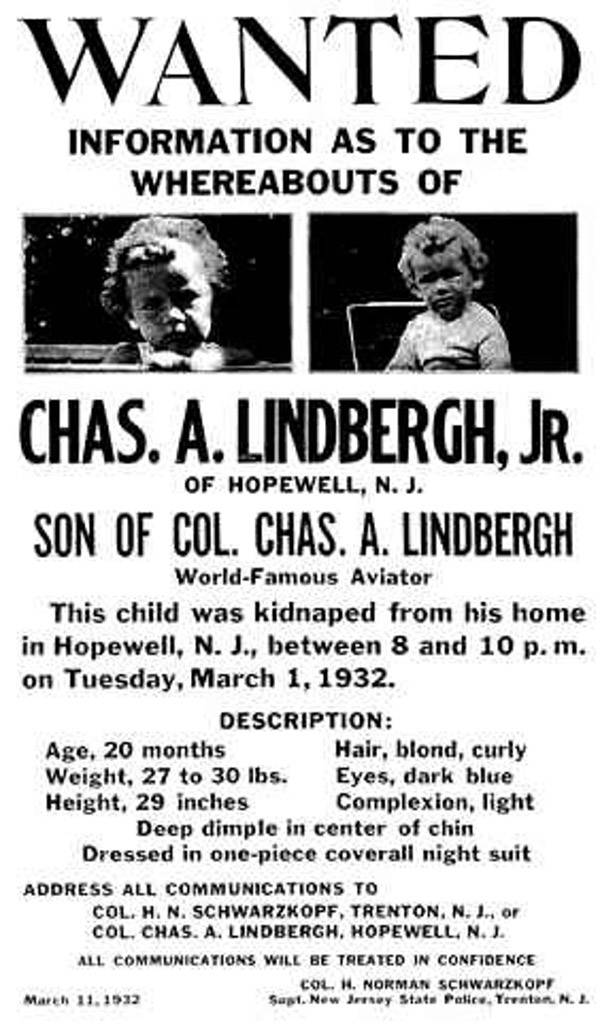
Although this incident happened over 90 years ago, it still intrigues me. This was one of the first mysteries I ever read about in high school and it’s stuck with me. March 1 is the 91st anniversary of the event, so I am bringing the tale to you from the All That’s Interesting website. (I have added some pictures because some of the pictures in the story would not post for me.)
The Tragic Story Of The Lindbergh Baby Kidnapping
By Katie Serena
On May 12, 1932, the tiny body of one-year-old Charles Augustus Lindbergh Jr. was discovered in the woods outside of Trenton, New Jersey. The coroner’s report stated that the child had been dead for over two months. The child’s skull had a hole in it as well as several other fractures, and the coroner ruled the cause of death as a blow to the head. Several of the baby’s body parts were also missing.
The Lindbergh baby, the son of Spirit of St. Louis pilot Charles Lindbergh Sr., had been missing for roughly three months after being kidnapped from his crib at the Lindbergh home.
The child had been put to bed by the nurse at 7:30 PM. Two hours later, Lindbergh Sr. heard a noise coming from that he assumed to be a wooden crate, snapping in the kitchen. At 10:00 PM, the nurse discovered that the child’s crib was empty.
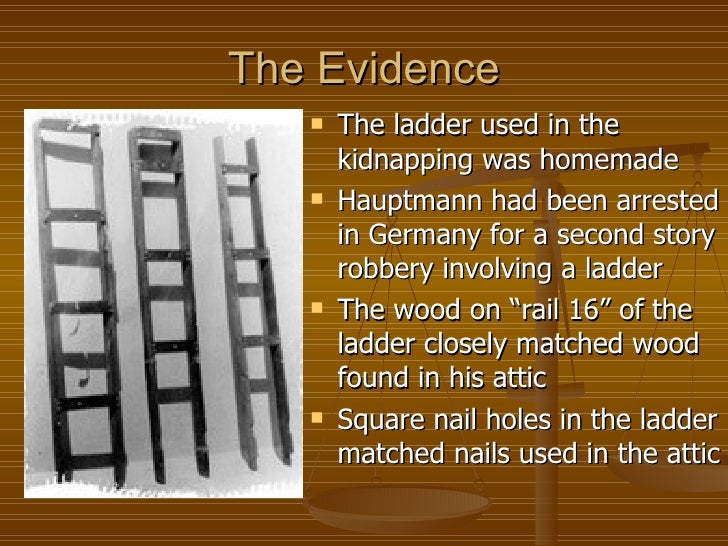
After discovering that the child was not with the nurse, or with his mother, Lindbergh Sr. discovered a ransom note on the windowsill and a broken ladder outside the window. After reading the note, Lindbergh Sr. fruitlessly searched the house and the grounds before calling the police.
For three months, the Lindbergh family, along with the FBI, searched for the child, even fulfilling an enormous ransom request and interviewing countless suspects and witnesses.
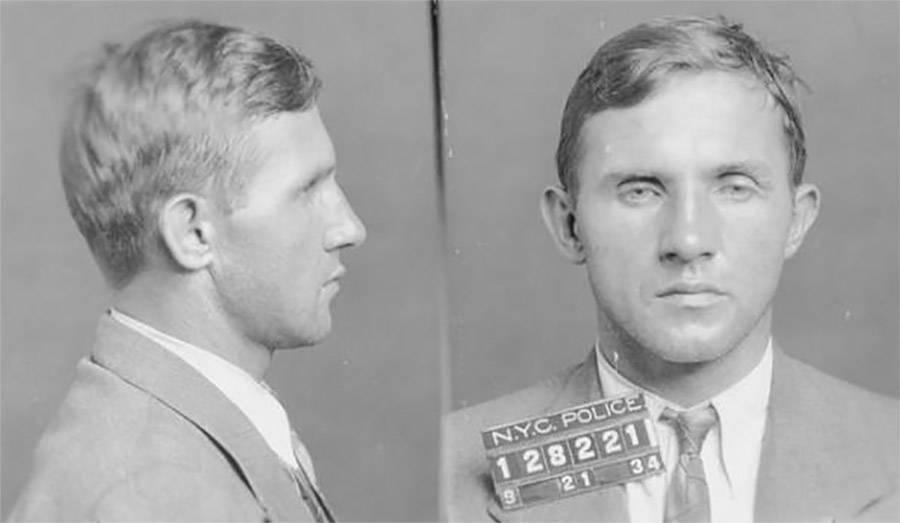
In the end, the official culprit named was Richard Hauptmann, an immigrant from Germany who had a criminal record back in his homeland. Police discovered Hauptmann in possession of $14,000 of the original $50,000 used to pay the ransom after tracking him through one of the $10 bills he had spent at a local gas station.
Hauptmann was arrested and charged with capital murder of the Lindbergh baby, a charge that allowed the death penalty as a possible option. The trial was dubbed the “Trial of the Century,” with one reporter even claiming it was the “biggest story since the Resurrection.”
As big as the trial was, the jury was surprisingly quick to return a guilty verdict. He was immediately sentenced to death and his two requests for appeal were both denied. On April 3, 1936, four years after the kidnapping, Richard Hauptmann was executed via electric chair.
The Official Investigation Of The Lindbergh Baby Kidnapping
Though the case seemed open and shut on paper, the investigation was far from. Between the media frenzy, the mysterious ransom letters, and the numerous side investigations happening, it’s a miracle anyone was convicted.
When the Lindbergh baby kidnapping was first reported, hundreds of loyal Lindbergh fans and concerned citizens descended upon the Lindbergh estate. While the media attention helped to boost the case and help spread the word about the missing toddler, the high levels of traffic on the estate effectively destroyed any footprint evidence that might have been found outside the home.
It also encouraged hundreds of false reports of sightings and information. Military officials and investigators all offered their services, claiming to have expertise in kidnappings and law enforcement. However, only one of them truly did.
Herbert Norman Schwarzkopf, superintendent of the New Jersey State Police Department, along with Lindbergh, theorized that the Lindbergh kidnapping was part of an organized crime ring rather than a single perpetrator seeking the ransom money. Following that lead, they reached out to mobsters, both in and out of prison, hoping one of them would have information on the Lindbergh baby.
Al Capone himself even reached out to Lindbergh, offering his services in exchange for an early prison release, though he was quickly denied. Similarly, it was decided that mobsters were likely to be less than helpful when it came to offering up information for free.
Due to the media circus and the high profile of Lindbergh, President Herbert Hoover was notified of the kidnapping the morning after it happened. Though kidnappings were usually dealt with among local authorities, Hoover assigned the entire Bureau of Investigation (not yet Federal) to the case and authorized them to work with the New Jersey police.
As a reward for information pertaining to Charles Lindbergh Jr.’s case, the police department offered up $25,000. In addition, the Lindbergh family offered another $50,000 of their own.
The Unofficial Investigation
While the New Jersey Police were investigating alongside the Lindbergh family, a retired New York school teacher was also taking an interest in the Lindbergh baby case.
John F. Condon, who was at the time a well-known personality in the Bronx, wrote a letter to a local newspaper offering a reward of $1,000 if the kidnapper would return “Little Lindy” to a Catholic priest. Surprisingly, Condon received a letter back from people claiming to be the kidnappers, asking Condon to be their intermediary between them and Lindbergh.
Lindbergh, desperate to find his son, agreed, allowing Condon to fulfill the letters request. Condon placed a classified ad in another newspaper and arranged a meeting with one of the kidnappers to take place in Woodlawn Cemetery in the Bronx.
The meeting did indeed take place, though under cover of darkness, so the culprit’s face was never clearly seen. However, the man said his name was John and claimed he was part of an escaped Scandinavian gang. He claimed to have the toddler in his possession in a boat off the coast and would return it for the ransom. When Condon doubted the man’s story, the man promised to return the baby’s pajamas.
Indeed, a few weeks later, Condon received a toddler’s sleeping suit in the mail. Lindbergh confirmed that the pajamas were his sons and asked Condon to continue communicating with the kidnappers and fulfilling their requests.
The Ransom For The Lindbergh Baby
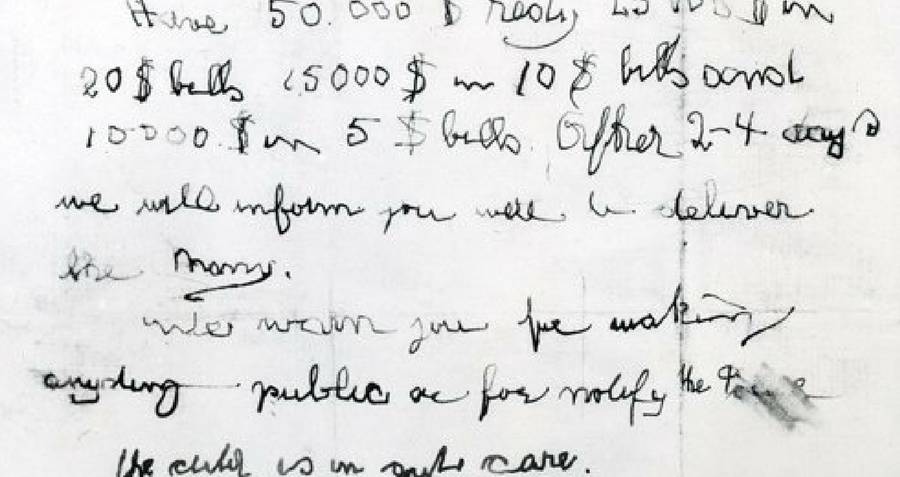
Over the course of the Lindbergh kidnapping investigation, the Lindberghs and Condon received a total of seven ransom letters. The first was found by Charles in his son’s room immediately after discovering the boy was gone. It outlined the Lindbergh baby kidnapping and asked for $50,000 to be delivered to a yet-undisclosed location in small bills.
The first note was signed with a “signature,” a hand-drawn symbol comprised of three circles and three punched out holes. The second and third notes, delivered to the Lindbergh home and local investigators, carried the same symbols. The rest of the notes were delivered to Condon and did not carry the notes, though their authenticity was confirmed.
After the delivery of the seventh note, the Lindberghs and the police authorized Condon to orchestrate a drop off of the funds. The ransom money was comprised of gold certificates, chosen because they were about to be withdrawn from circulation, placed inside a handmade box, specifically designed so that it would be easy to recognize in the future. The bills were not marked, but each bill’s serial number was recorded so it could be tracked in the future.
Condon met with “John” on April 2, 1932, to hand over the money. He was told at the meeting that Charles Lindbergh Jr. was in the custody of two innocent women but provided no further information.
the ransomer’s “signature”
Having no leads besides “Cemetery John,” the police began tracking the serial numbers of the ransom bills.
A pamphlet was distributed to businesses in New York containing the serial numbers and providing information for what to do if they were found. Some of the bills turned up, though most went unseen. Most of the bills that appeared showed up randomly and in scattered locations such as Chicago and Minneapolis, though the people who had used them were never located.
A break in the case came on the day that the gold certificates, which made up a large sum of the ransom, were ordered to be turned in for other bills. A New York man brought $2,980 into a Manhattan bank, hoping to exchange them. It was only after he left the bank that it was discovered that the serial numbers matched those of the ransom bills.
Over a period of 30 months, police noticed that many of the bills had started popping up, specifically in the upper east side of Manhattan. Even more specifically, they were being spent along the Lexington Avenue subway route. After a local gas station called and said they had one of the ransom bills in their possession, police were led to Richard Hauptmann.
Other Suspects
Though Hauptmann is considered the official kidnapper of Charles Lindbergh Jr., that hasn’t stopped conspiracy theorists from coming up with their own version of what actually happened during the Lindbergh kidnapping.
Defenders of Hauptmann’s are quick to point out that his fingerprints were never found on the ladder or any of the ransom notes. They also attest to the fact that the crime scene was a mess from the start and that any evidence available was quickly compromised by the media circus it became.
Some experts — both self-proclaimed and legitimate — have theorized that Hauptmann was a scapegoat and that Lindbergh knew who the real kidnapper was but was either in on it or too afraid to say anything.
In fact, one of the most popular, and some might say substantiated claims is that the kidnapping was perpetrated by Charles Lindbergh himself. Some say that he accidentally killed his son while attempting a practical joke and staged the kidnapping to cover up his crimes, pointing the finger at Hauptmann to cover his own deeds.
Some believe that Lindbergh orchestrated the kidnapping as a publicity stunt and that after the hired kidnappers didn’t get whatever it was Lindbergh had promised them, the stunt went horribly wrong.
Lindbergh, his family, and the New Jersey police have argued against the theories that he was responsible for the kidnapping, insisting that everything they knew about the case suggested it had been legitimate and that the toddler’s death was simply the result of the kidnapper snapping under pressure.
Whatever the case, though it is closed, the Lindbergh baby kidnapping has become one of the most controversial and conspiratorial cases to ever be discussed by the American public.
Outside of pop culture and media, the case broke ground when it pushed Congress to pass the Federal Kidnapping Act, which made transporting a kidnapping victim across state lines a federal offense. The law is commonly referred to as the “Lindbergh Law.”
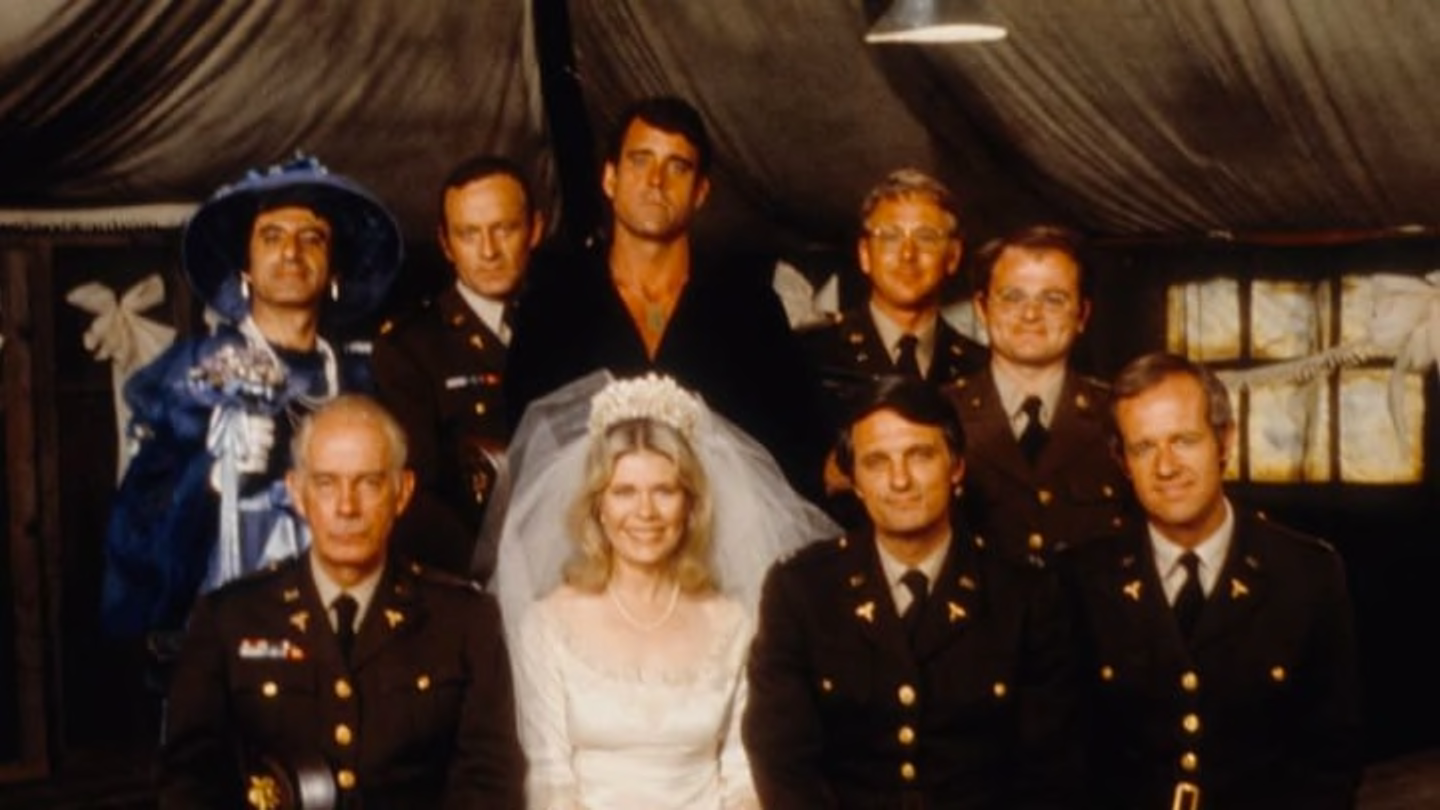
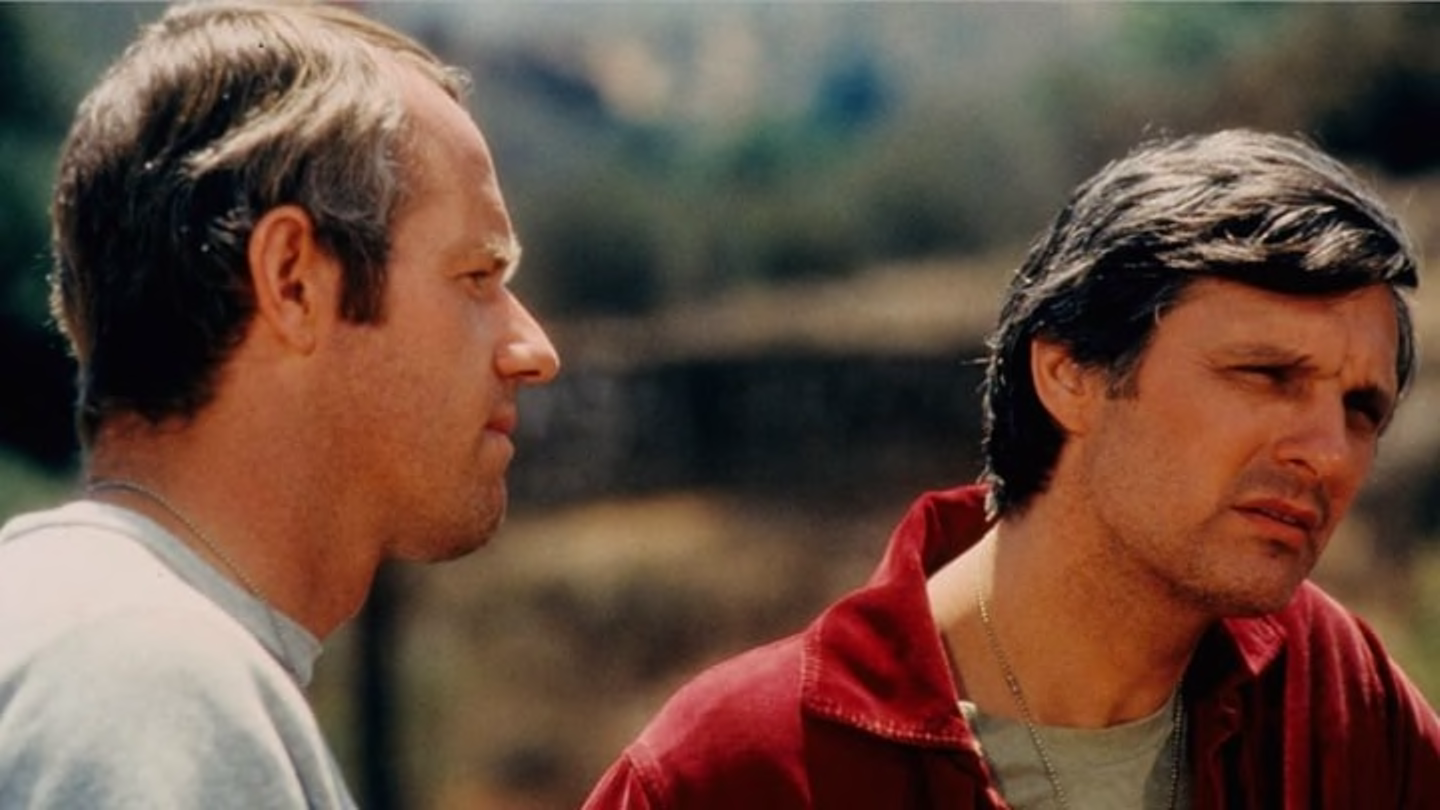
Today is the 40th anniversary of the M*A*S*H series finale. The Mental Floss website has a list of 17 interesting things we might not know or remember (from an article dated February 28, 2018.)
In 1968, surgeon H. Richard Hornberger—using the nom de plume of Richard Hooker—collaborated with writer W.C. Heinz to create the book MASH: A Novel About Three Army Doctors, based on his experiences with the 8055th Mobile Army Surgical Hospital during the Korean War. Two years later, Robert Altman used the book as the basis for a movie about the fictional 4077th unit (he cut the number 8055 in half). Two years after that, M*A*S*H came to life again in the form of an 11-season television series. And 35 years ago today, that show culminated in the most-watched series finale in television history. Here are some facts about the show that won’t get you a Section 8.
ALAN ALDA AND JAMIE FARR SERVED IN THE U.S. ARMY.
Alda (Hawkeye Pierce) was in the Army Reserve for six months in Korea. Farr enlisted, and was stationed in Japan when Red Skelton requested his services on his USO Tour through Korea. Wayne Rogers (Trapper John McIntyre) joined the U.S. Navy for a time as a ship navigator. Mike Farrell (B.J. Hunnicut) served in the U.S. Marine Corps.
MCLEAN STEVENSON AUDITIONED FOR HAWKEYE, AND COMEDIAN ROBERT KLEIN TURNED DOWN THE ROLE OF TRAPPER JOHN.
Stevenson was convinced to take the role of Lt. Colonel Henry Blake instead. As for Klein, he denied a claim that he lived to regret the decision.
LARRY GELBART WROTE THE PILOT IN TWO DAYS FOR $25,000.
The veteran screenwriter had been living in London after growing tired of Hollywood, but he couldn’t pass up the opportunity to try to adapt Robert Altman’s movie for television audiences.
KLINGER WAS ONLY SUPPOSED TO BE IN ONE EPISODE.
He was also supposed to be gay. Jamie Farr’s character was changed to a heterosexual who cross-dressed to try to get himself kicked out of Korea. Allegedly, the Klinger character was influenced by comedian Lenny Bruce’s claim that he got discharged from the Navy for claiming to have “homosexual tendencies.”
ONLY THE NETWORK WANTED THE LAUGH TRACK.
Gelbart and executive producer Gene Reynolds were against the canned laughter; unfortunately, CBS knew of no other way to present a 30-minute “comedy.” Gelbart and Reynolds did manage to get the network to agree to take out the laughing during the scenes in the operating room, and as the seasons progressed, the track got quieter and quieter. In the U.K., the BBC omitted the laugh track entirely.
CBS DIDN’T WANT ONE “UNPATRIOTIC” EPISODE.
An episode where soldiers stand outside in the freezing cold so that they can make themselves sick enough to be sent home was rejected by CBS. That soldier tactic was apparently actually used during the Korean War.
THE WRITERS CAME UP WITH AN INGENIOUS WAY OF DEALING WITH SCRIPT COMPLAINTS.
After growing tired of having to listen to cast members’ notes about their scripts, M*A*S*H writer Ken Levine and his fellow scribes changed their script on two occasions so that the actors were forced to pretend it was parka weather on 90- to 100-degree days on their Malibu ranch set. They took the hint and the “ticky tack” notes stopped.
WAYNE ROGERS WAS ABLE TO LEAVE THE SHOW BECAUSE HE NEVER SIGNED A CONTRACT.
Rogers was threatened with a breach of contract lawsuit. The problem was that he had never signed a deal, objecting to the standard contract given to TV actors when he had started playing Trapper John, particularly the “morals clause,” which he considered antiquated. Rogers said that aside from missing the cast—and his friendship with Alda in particular—he had no regrets about leaving the show after season three.
ALDA WAS THE ONLY ACTOR WHO WAS AWARE OF HENRY BLAKE’S FATE UNTIL MOMENTS BEFORE SHOOTING THE FINAL SCENE IN “ABYSSINIA, HENRY.”
Gelbart and Reynolds used the opportunity for McLean Stevenson wanting to leave after the third season to “make a point” about the “wastefulness” of war, and decided to kill off Henry Blake. After distributing the script without the last page and shooting all of the scenes written therein, Gelbart asked the cast to wait a few minutes before the start of the end-of-season wrap party and gave them each one copy of the final page, where Radar enters the O.R. and announces that Henry didn’t make it.
Larry Linville (Frank Burns) immediately remarked that it was “f***ing brilliant.” Gary Burghoff (Radar) turned to Stevenson and called him a son of a bitch, because he was going to get an acting Emmy for the episode. (He didn’t.) They then shot the scene in two takes. Gelbart and Reynolds claimed they received over 1000 letters from people upset over the ending. Reynolds also claimed that CBS was so unhappy with the decision that in at least one repeat airing, they cut out the final scene.
THE WRITERS RAN OUT OF NAMES.
During season six, there’s an episode that features four Marine patients named after the 1977 California Angels infield. Throughout season seven, the patients were named after the 1978 Los Angeles Dodgers. Ken Levine didn’t just use baseball players’ names though; in “Goodbye Radar,” Radar’s new girlfriend was named after one of Levine’s former lady friends, Patty Haven.
THE SERIES LASTED MUCH LONGER THAN THE ACTUAL KOREAN WAR.
The series spent 11 years telling the story of Army doctors and nurses dealing with a three year, one month, and two day war.
ALDA CO-WROTE 13 AND DIRECTED 31 EPISODES OF THE SERIES.
That 31 count includes the series finale. Alda was the first person to ever win an Emmy for acting, directing, and writing on the same program.
A METRIC TON OF FUTURE STARS MADE GUEST APPEARANCES.
Ron Howard played an underage Marine. Leslie Nielsen played a Colonel. Patrick Swayze portrayed an injured soldier with leukemia. John Ritter, Laurence Fishburne, Pat Morita, Rita Wilson, George Wendt, Shelley Long, Ed Begley Jr., Blythe Danner, Teri Garr, and even Andrew Dice Clay also all visited the 4077th.
THE SERIES FINALE IS STILL THE MOST WATCHED EPISODE OF TELEVISION IN AMERICAN HISTORY.
Seventy-seven percent of the people watching television in the United States on the night of Monday, February 28, 1983 were watching the two-and-a-half-hour series finale, “Goodbye, Farewell and Amen.” That was 121.6 million people. A company only had to pay $30,000 to run a 30-second commercial when M*A*S*H got started in 1972. For the series finale, a 30-second spot cost $450,000.
THERE WERE THREE SPINOFFS.
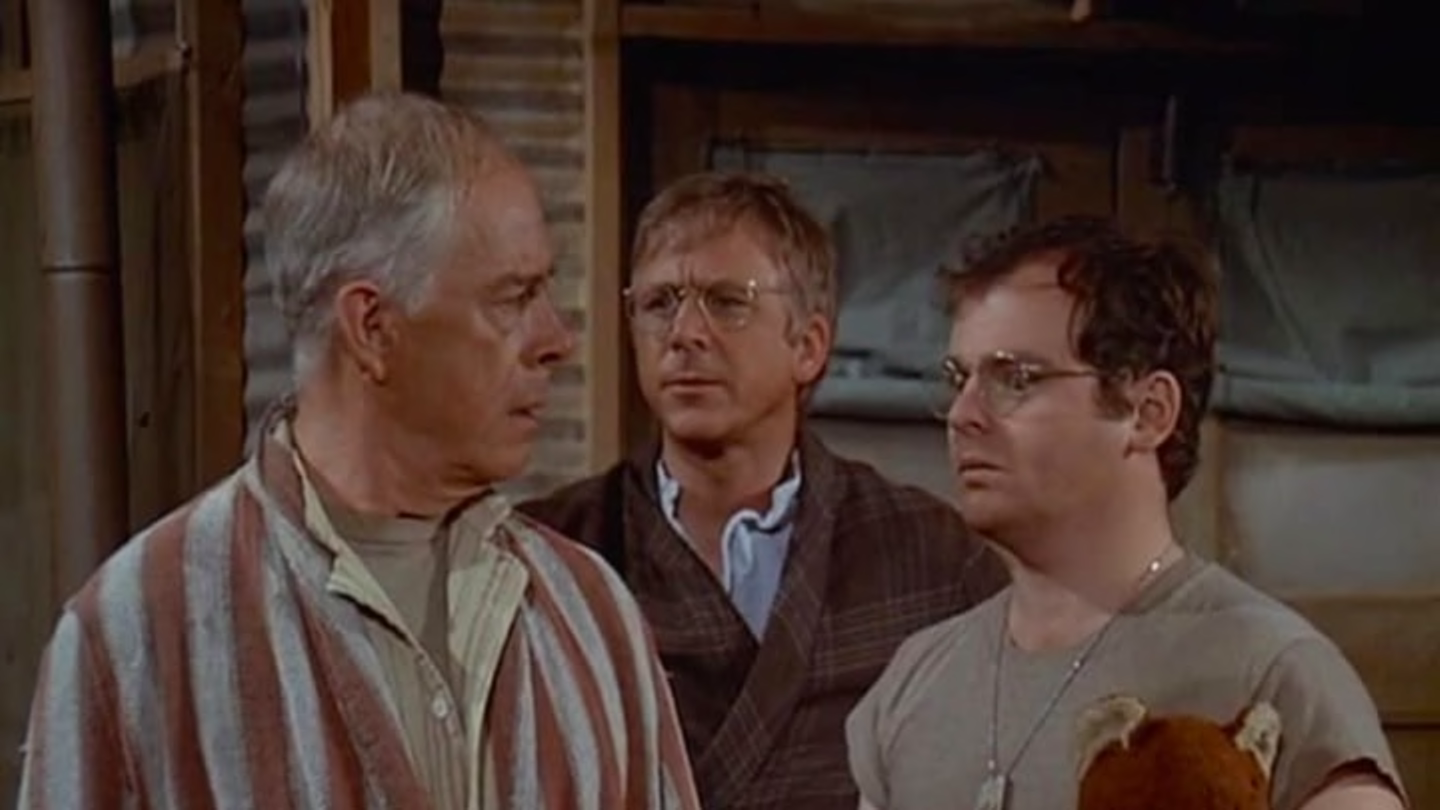
Trapper John, M.D., aired from 1979 to 1986 and was about Trapper John McIntyre’s present-day tenure as chief of surgery back in San Francisco (it didn’t star Wayne Rogers). AfterMASH featured Col. Potter (Harry Morgan), Father Mulcahy (William Christopher), and Klinger (Jamie Farr) working at a veterans’ hospital in Missouri right after the events of M*A*S*H; it was cancelled in its second season as it was unable to compete with The A-Team. W*A*L*T*E*R followed the new adventures of Walter “Radar” O’Reilly (Burghoff again), who became a St. Louis cop after losing the family farm and his wife (not Patty Haven) and attempting suicide. The pilot wasn’t picked up, and only aired once, and only in the eastern and central time zones, on CBS on July 17, 1984.
RADAR’S TEDDY BEAR WAS SOLD AND RETURNED TO BURGHOFF.
Burghoff said Radar’s teddy bear had been lost for 30 years until it suddenly turned up at an auction in 2005. A medical student bought it for $11,500, and promptly sold it back to Burghoff.
A CONSTRUCTION WORKER FOUND THE SHOW’S TIME CAPSULE ALMOST IMMEDIATELY.
In the series’ penultimate episode, “As Time Goes By,” the characters bury a time capsule under the Fox Ranch. Two months later, the land was sold. Soon after, a construction worker found the capsule and got in contact with Alan Alda to ask what he should do with it. After he was told to keep it, Alda claimed the construction worker “didn’t seem very impressed.”


































/diagram-of-lindbergh-kidnapping-scene-515168038-5c1d4de046e0fb00010db520.jpg)






 Sew Colorful