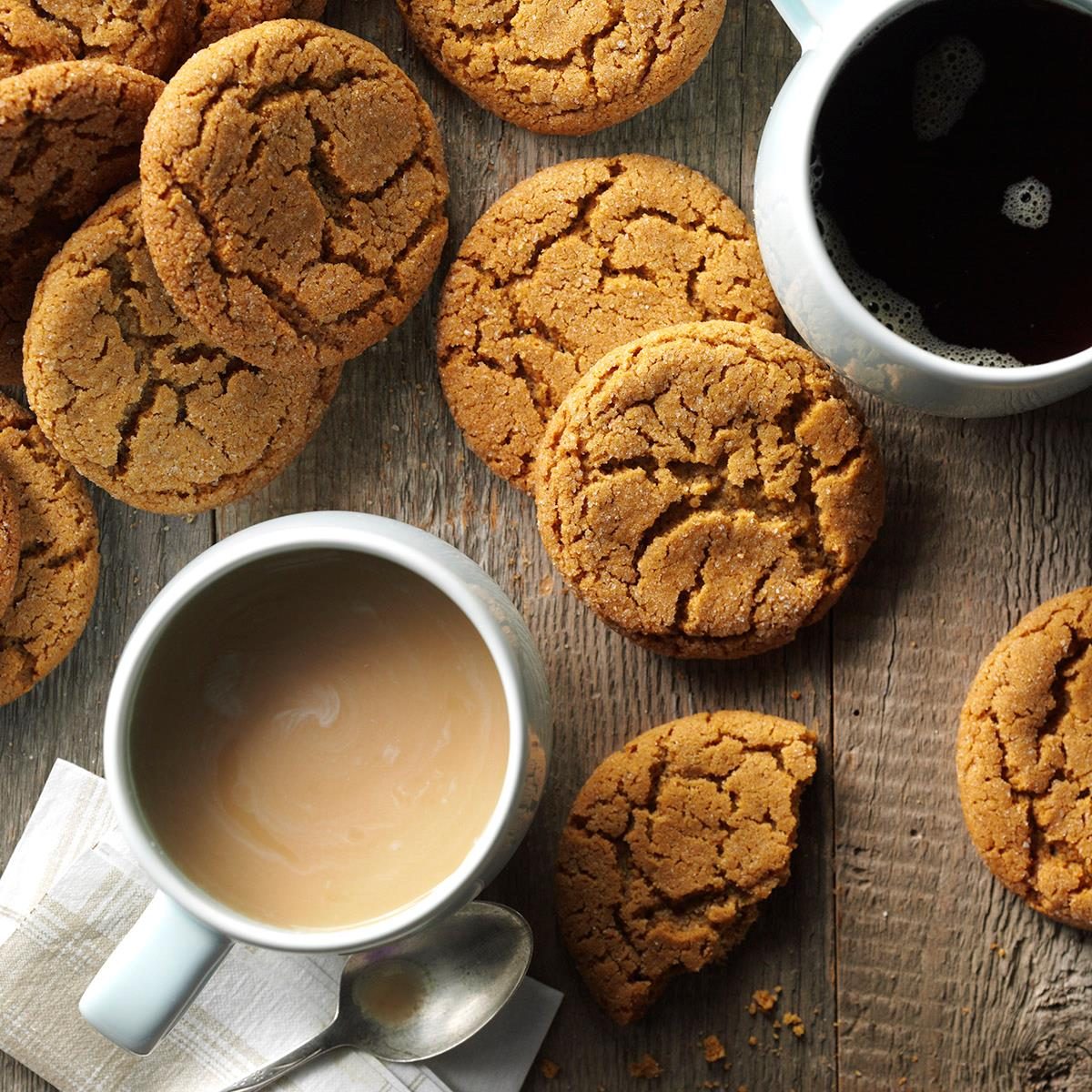
October is the perfect time for ginger cookies. I like the big, soft cookies!
Ginger Cookies
Ingredients
3/4 cup butter, softened
1 cup sugar
1 large egg, room temperature
1/4 cup molasses
2-1/4 cups all-purpose flour
2 teaspoons ground ginger
1 teaspoon baking soda
3/4 teaspoon ground cinnamon
1/2 teaspoon ground cloves
1/4 teaspoon salt
Additional sugar
Directions
In a large bowl, cream butter and sugar until light and fluffy, 5-7 minutes. Beat in egg and molasses. Combine the flour, ginger, baking soda, cinnamon, cloves and salt; gradually add to the creamed mixture and mix well.
Roll into 1-1/2-in. balls, then roll in sugar. Place 2 in. apart on ungreased baking sheets. Bake at 350° until puffy and lightly browned, 10-12 minutes. Remove to wire racks to cool.
ENJOY!
Tips from The Taste of Home website:
Soft Ginger Cookie Tips
What kind of molasses do you use for ginger cookies?
Dark molasses is commonly used when making ginger cookies because it gives them their dark golden-brown color, chewiness and rich flavor. If you don’t have dark molasses, use light molasses instead!
How can I make these cookies crisp?
To make ginger cookies crisp, leave out the baking soda. The main difference between soft and crispy ginger cookies has to do with this leavening agent. (For less mess while measuring baking soda, coat your measuring cups in cooking spray before portioning it out.)
How can I keep these cookies chewy?
To keep the cookies soft and chewy, store them on the counter in an airtight container with a slice of bread.
Why are my ginger cookies flat?
There are plenty of reasons why cookies turn out flat. To avoid flat cookies, make sure to cream your butter and sugar until it is light yellow and fluffy. This usually takes 5 minutes on medium speed. Doing so adds air and structure to the dough. If your cookies are still turning out flat while baking, refrigerate the unbaked dough balls for 10-15 minutes before baking to prevent excessive spreading.
Marigolds (Tagetes spp.) are among the most common and reliable of all bedding flowers. These cheerful flowers with warm colors and fern-like foliage are true annuals, completing their life cycles in a single growing season. The size and construction of the blooms can vary considerably, from tiny single-petal flowers of the signet marigolds to the large 4-inch double-petal blossoms of the African marigolds, but all show their membership in the aster family with flowers demonstrating the characteristic daisy-like appearance. Marigolds are typically planted from nursery starts or seeds planted in the spring after the soil can be worked. These fast-growing plants will achieve blooming maturity within a matter of a few months when planted from seeds. For earlier outdoor blooms, start the seeds indoors six to eight weeks before the last frost.
Marigold Care
Marigolds are very low-maintenance once established, and they are notably pest-free. In fact, they are sometimes planted as a deterrent to pests that attack other plants. Marigolds can bloom almost non-stop and will keep going all summer, until frost. To achieve that non-stop flowering, keep your marigolds deadheaded. Flowering may decrease slightly during the heat of summer but generally resumes in full force as cooler weather arrives.
Tall varieties of African marigold are sometimes planted by stripping off the lower leaves and burying the stems extra deep. This encourages an extra sturdy root system and minimizes the need for staking the plants.
Light
For the most flowers and the healthiest plants, plant your marigolds in full sun. Shady conditions will cause the plants to become leggy and to flower less profusely.
Soil
Marigolds are not fussy. Any good garden soil (and a little water during dry spells) should keep them happy, as long as the soil is not too acidic. Keep the soil pH roughly neutral, from 6.0 to 7.0. They also don’t need a soil that is particularly rich in organic matter and seem to grow better in a leaner soil.
Water
When you first plant your marigold seeds or plants, make sure they get regular water. Don’t leave them in dry soil for more than a couple of days. If it is particularly hot and sunny, water new plants every day. Once they have had a few weeks to establish a good root system, they will be more drought-tolerant, but they will still bloom best if given weekly water.
Temperature and Humidity
Marigolds are heat-loving plants that thrive in summers throughout their growing range, zones 2 to 11. These true annuals may become a bit subdued during the height of summer, especially in areas with hot summers, but the flowering picks up again when the weather cools in later summer and fall.
Marigolds tolerate a wide range of humidity levels, but they may get powdery mildew in damp or humid summers. Planting in full sun and providing room for airflow will lessen this problem. These native plants of Mexico prefer relatively dry air.
Fertilizer
Your marigolds won’t need any supplemental fertilizer unless your soil is extremely poor. The best thing you can do to keep them in flower is to deadhead regularly.
Types of Marigolds
There are several species and divisions of marigold, with many cultivars of each. Most are moderate in height, but there is a good amount of variety among the different types. You can find short bedding marigolds that grow only 4 to 6 inches tall and taller varieties that can reach 48 inches and make nice cutting flowers. The three most commonly grown types are African, French, and signet marigolds, representing three different Tagetes species:
African marigolds (Tagetes erecta): With large, pom-pom flowers on medium-sized to tall plants, African marigolds (also known as Mexican marigolds) are popular for both the border and as cut flowers. They can grow up to 4 feet tall and have flowers more than 4 inches across. Colors include yellow and orange. ‘Antigua’ Series are African marigolds with unusually profuse blooms.
French marigolds (Tagetes patula); French marigolds are prized for their long, prolific blooms. They tend to be short, bushy plants, from 5 to 18 inches tall. They have purple-tinged stems with double flower heads in yellow, orange, and mahogany that are about 2 inches across. ‘Naughty Marietta’ is a ruffled, deep-yellow French marigold with maroon splashes in the center.
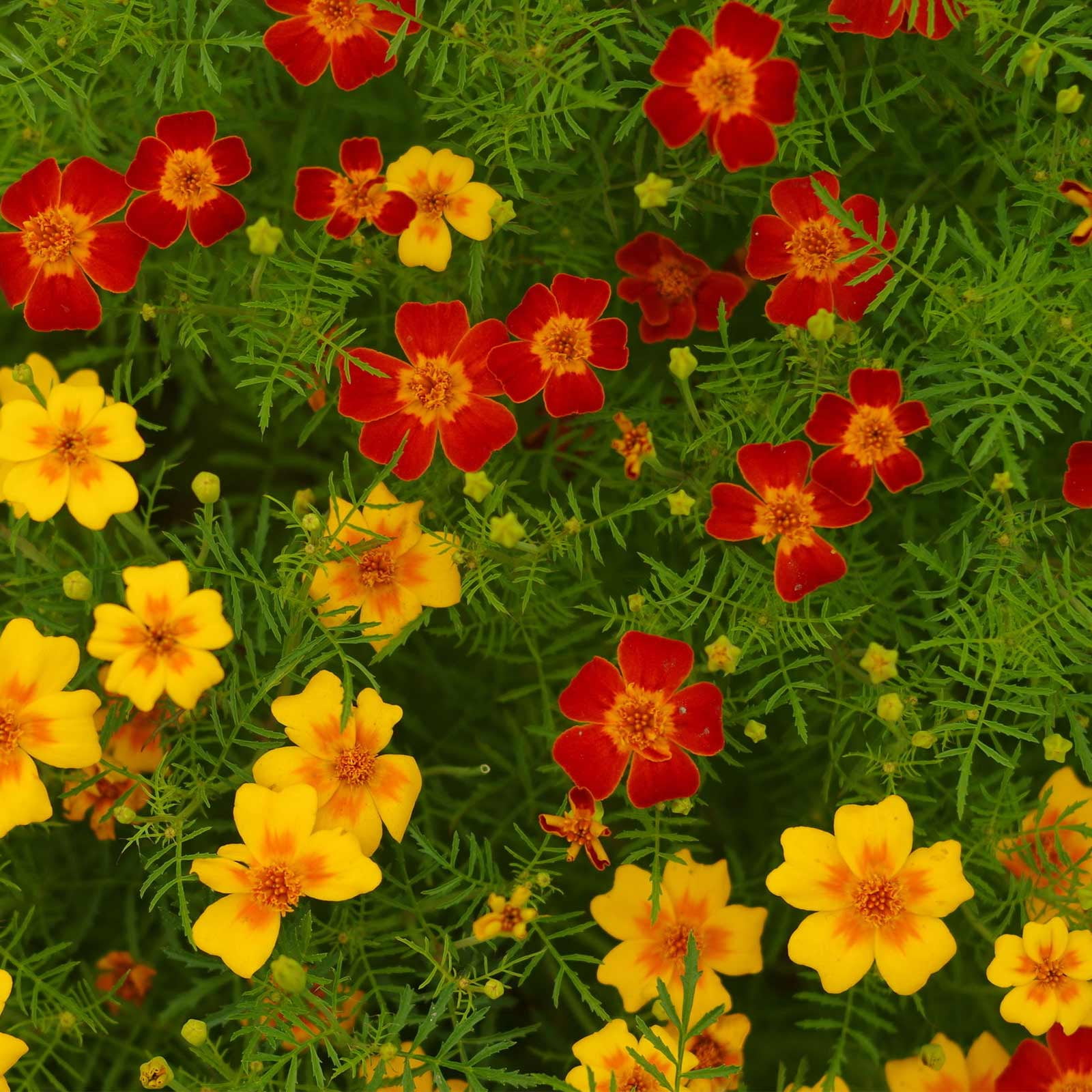
Signet marigolds (Tagetes tenuifolia): The edible marigolds are the signets. They look totally different from bedding marigolds, with lacy leaves and small, single, daisy-like flowers. They come in yellow and orange, with fitting cultivar names such as ‘Orange Gem,’ ‘Tangerine Gem’, ‘Red Gem’, and ‘Lemon Gem’. ‘Gem’ Series are single-flowered signets with very fern-like foliage. There have been some hybrids on the market recently with an expanded palette of colors, such as shades of cream, burgundy, and bi-colors, but the flavor is not always equal to that of the ‘Gem’ varieties.
There are also hybrid crosses between T. erecta x T. patula that combine the large flowers of the African marigolds with the more compact stature of the French marigolds.
Intelligent, kind, and always willing to put others before themselves, Libras value harmony in all forms. Ruled by Venus, the planet of beauty, Libra adores a life that looks good. As the master of compromise and diplomacy, Libra is adept at seeing all points of view, and excels at crafting compromises and effecting mediation between others. This sign has a rich inner life yet loves other people, and they’re always happiest with a large group of friends, family, and coworkers on whom they can count.
An air sign, Libra can often be “up in the clouds,” and while he or she is amazing at making big plans, follow through can be tricky. Working with detail-oriented signs, like Virgos or Capricorns, can help Libras actually manifest their dreams into reality, especially in the workspace. But don’t call out Librans for daydreaming—their imagination is one of their biggest assets, and they often put their imagination to work by finding careers in the arts or in literature.
Libras believe that they’re directing their own lives, and they take a big-picture approach in making that life look and feel the best it can be. They spend a lot of time figuring out what’s missing from that big picture, and they may feel unhappy if they become too focused on one thing, whether it’s work, a partner, or a family member. Librans are at their best when they balance their schedule to include plenty of time for self-care rituals and personal pursuits, and when they give themselves enough flexibility to change focus.
When Libra falls in love, he or she falls hard, but this sign also recognizes that there’s room for more than one grand love in his or her life. The Scales are pragmatic about love, realizing that different relationships often have different seasons. Librans can sometimes be accused of being too pragmatic, and they’ve been known to call off a relationship pre-emptively if they feel it may not work due to distance, age difference, or another external conflict.
Although Libra appears self-confident to outsiders, he or she might struggle with insecurity, especially as it relates to personal identity, which sometimes feels mutable. This sign’s lifelong question is: “Who am I?” They may find their identity shifting based on where they are in their lives and who they’re spending time with. In order to feel more confident in their identity, social Libras need to get comfortable spending time with themselves and getting to know their gut and their internal voice.
Libra’s Love Style
Libra adores flirting, loves the drama and pageantry of romance, and is one of the few signs of the Zodiac that actually enjoys first dates. While Libras excel at charming potential partners, they have difficulty figuring out what they want, and all too often can get lost in the twists and turns of a relationship.
Libra Friendship Style
Thanks to this sign’s quick smile, sharp wit, and ability to make anyone feel like the most important person in the room, people are often surprised to find that the Libra they consider a “best friend” has about ten “best friends” just like them. Libras are adept at connecting to others quickly and love getting to know people.
Libra Career, Money & Success Traits
Libra’s greatest career strength: Imagination. For a Libra, work can be a playground. If this sign works with a great team and on projects they believe in, their job is fun. Librans love dreaming up new projects to accomplish and challenges to meet.
Libra’s Greatest Gifts
Libra’s everyday vibe is this gentle reminder: “Let’s just all get along.” For this sign, compromise is key. Librans don’t do well when anyone in their orbit isn’t happy, and they’re especially adept at inviting other signs to see things from a different perspective. A Libra doesn’t strong arm or use coercion, but rather relies on his or her communication prowess to help everyone see another side to a story.
Libra’s Greatest Challenges
Libra is great at making everyone happy—but what good is that if Libras themselves don’t feel fulfilled? While the Scales have a fine-tuned internal compass, they sometimes ignore what they want in favor of what makes everyone else happy—and this habit ends up backfiring in the long run.
Libra’s Secret Weapon
This sign has weaponized their imagination in the service of good. Librans’ imagination is unmatched, and they can always come up with a new way of looking at an issue. Libra is also blessed with boundless creativity. Even if they’re working in a data-dominated field, their creativity shows them novel ways to see things.
Actors and actresses are often approached for roles in movies or television that require more than just good acting skills. Some rolls require difficult stunts or heroic feats the attractive star may not feel comfortable doing—or even capable of doing. Enter the stunt double.
The expensive actor or actress is spared any chance of harm, while the public is fooled.
In other roles, an actor or actress may be required to do a risqué scene that exposes parts of their bodies they are unwilling to reveal. Enter the body double.
These doubles, by their very nature, HAVE to be very convincing. Our movie experience wouldn’t be the same, if they were obviously fake. But how far could doubles go? Could we be fooled for any length of time? Enter the movie Dave.
Dave, starring Kevin Kline, was a 1993 tale about Dave Kovic (Kline), the owner of an employment agency who is hired to stand in for the President of The United States, Bill Mitchell (also Kline) at a Washington D.C. function while the Commander in Chief has a tryst with a staff member only to become his full-time replacement when Mitchell suffers a near-fatal stroke during that tryst. The Chief of Staff and the President have been conducting unsavory business which could be exposed if the President passes away and the VP assumes the office. The Chief of Staff decides to implicate the VP and run for the office himself, but is later thwarted by Kline who, as the President, confesses publicly, exonerates the VP and blames the Chief of Staff. He then fakes a stroke, and is “replaced” by the real President who later passes away.
Enter Joe Biden. It seems the left is attempting a real life Dave-redo using body doubles for Joe Biden. Keeping Old Joe out of the public eye as much as possible is essential to fooling a lot of people, but that isn’t always going to work—as cameras are everywhere and they capture everything. There are pictures and theories about the different Joe Bidens, and as a result, the White House has revealed Old Joe has had some work done…hair plugs definitely but maybe other work as well?
Enter John Fetterman. John has undergone some trauma after he arrived on the national political scene—a stroke which has left him somewhat incapacitated—which might account for the differing looks he sports.
In some photos you can see the signature ears…in others it appears his ears have been tucked back. In some photos he is haggard looking and then in newer photos, he looks 10 years younger. And the mustache? If I were a suspicious person, I would point out it’s a good distraction. You look at John and think something’s off but you quickly dismiss your concerns—oh it’s the mustache that’s making me think that. Disregard the tucked back ears, the softer, younger eye area and less pronounced Frankenstein-ish brow.
And the signature tattoos that seemed to disappear in a recent picture? That’s a camera trick due to the rotation of his arms. No one’s trying to fool us.
Reader’s Digest had an article on genius cooking hacks—some I never heard of. I thought I’d share!
Use an empty water bottle to separate egg whites and yolks
Crack an egg into a shallow bowl, then hold the mouth of the bottle near the yolk and gently squeeze. When you release the squeeze, the yolk will be sucked out, and you can deposit it into another bowl.
Cut corn with a Bundt pan
To remove corn from the cob quickly, stand the cob upright in the center of a Bundt pan. Holding the top of the cob steady, stroke a chef’s knife downward along the sides to remove kernels. Scrape the cob with the back of the knife to release juices. Kernels and juice collect in the Bundt pan—meaning one less mess for you to clean up.
Skip the pasta rinse
Rinsing noodles washes away flavor and natural starch, which helps yummy sauce stick. It’s why some recipes suggest saving pasta water to use in sauce. Instead, skip the wash and spread drained pasta on a pan to cool.
Don’t cry over a broken cake…
Instead, make a trifle by layering salvaged cake pieces with fresh whipped cream and fruit in a pretty glass bowl, advises Tamar Adler, chef and author of An Everlasting Meal: Cooking with Economy and Grace.
Keep counters clean with a baking sheet
Place all ingredients on an empty baking sheet prior to prepping them. (This will help you catch spills and avoid wasting time hunting for an item as you cook.)
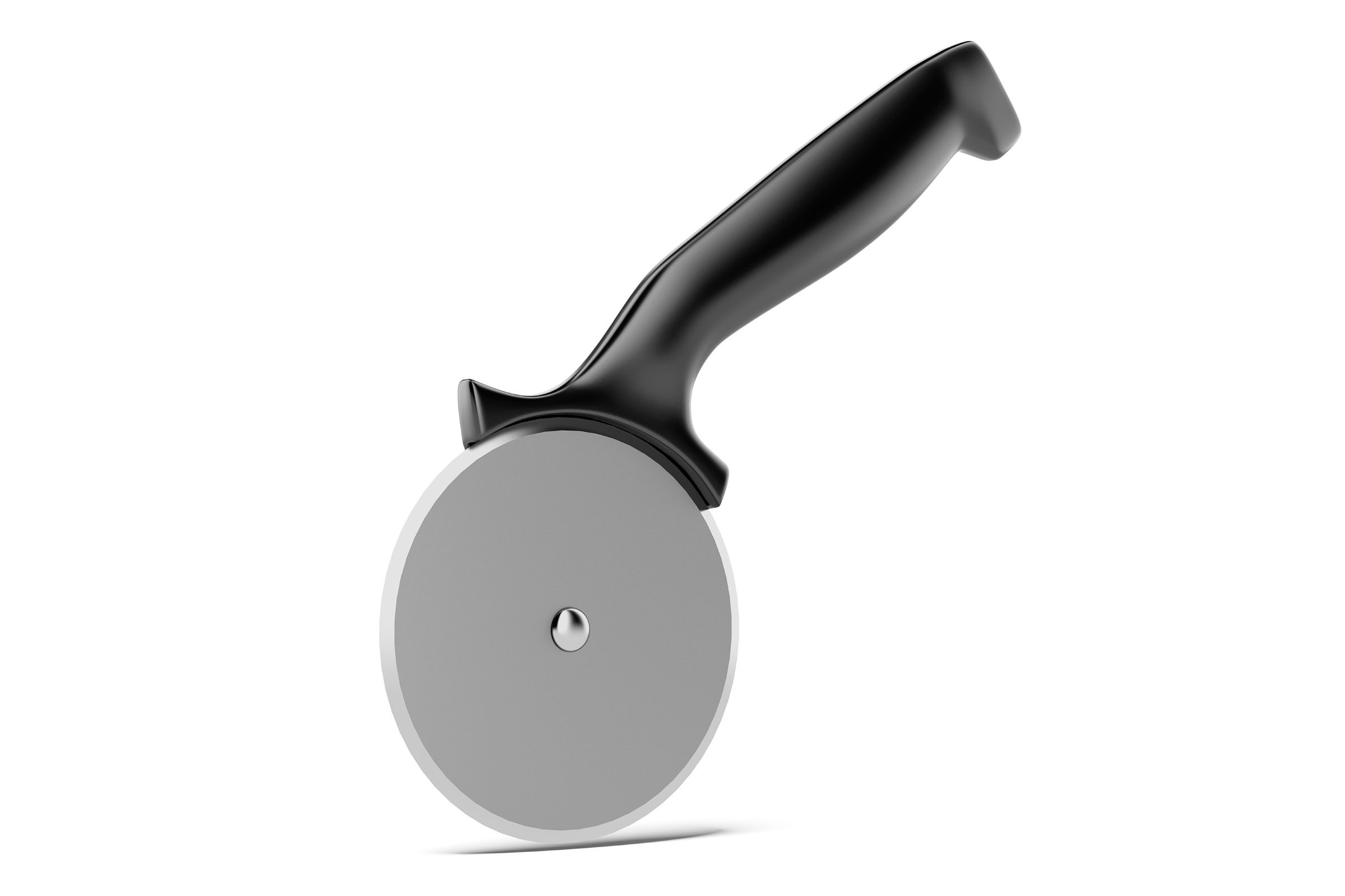
Turn in the chopping knife: Instead, roll over herbs like parsley and cilantro with a pizza wheel for quick and safe slicing. A pizza wheel also effortlessly chops foods like pancakes and pasta for small children
Use a countertop bowl for easy garbage
As you cook, toss scraps, eggshells, and other garbage into a large bowl. This will contain messes and save time if a trash can isn’t readily accessible. Line the bowl with a plastic bag to make cleanup even easier.
For easier hard-boiled eggs, salt is your BFF
Want the shells of hard-boiled eggs to come off in big chunks instead of a million tiny pieces? Add a teaspoon of salt to the cooking water before putting in the eggs.
Clean a blender sans sponge
Fill it one-third full with warm water and a few drops of dishwashing liquid, recommends Woman’s Day. Run it for ten seconds. Rinse and dry.
Whip up gourmet bread crumbs in a pinch
Got extra burger or hot dog buns? Tear into pieces and freeze in a zipper-top bag. Ten to 20 pulses in a food processor will transform them into ready-to-use bread crumbs—no thawing necessary.
Juice a lemon with a microwave
Zap a lemon for ten seconds to break down cells and make the juice flow faster, suggests Laurent Tourondel, chef and partner at Arlington Club in New York City. This is good to remember when trying to squeeze out as much juice as possible for a vinaigrette.
For better pie crusts, use a cheese grater
A cheese grater makes quick work of piecrusts and biscuits. Instead of cutting the butter into the flour, simply grate a stick of frozen butter, and then toss the shreds with flour until a crumbly mixture forms, says Beth Moncel, creator of budgetbytes.com.
Flavor sauces and stews with leftover wine
Freeze leftover wine in ice cube trays (eight cubes = one cup) to add flavor to sauces and stews. White and sparkling work best in creamy or clear and brothy soups (think chowder and simple vegetable), while red wine goes well with tomato or beef-based varieties (think chili). Add a few generous splashes per portion.
Flip natural varieties of peanut butter upside down
This position allows the pool of oil near the lid to move through the rest of the jar and make the peanut butter creamier (and to skip messy stirring). Just make sure the cap is screwed on tight to avoid a greasy pantry shelf.
Use your porch to refrigerate
If your fridge is full because you’re hosting a party and the temperature is 40°F or below, place hardy perishables (like fruits and vegetables) in a cooler outside near the back door. Doing so will free up a lot of extra shelf space while still keeping food cold.
Leftover Doritos? Think outside the chip bag
Smash a handful of chips, stuff into a clean pepper mill, and grind away onto everything from mac and cheese to broccoli.
Make friends with your kitchen scissors
Use them to chop cooked or tender raw vegetables (especially greens) right in the bowl or pan.
Halve cherry tomatoes fast
Save time on your next salad: Find two similarly sized storage container lids. Place cherry tomatoes on top of one, then firmly hold the other lid on top of the tomatoes. Use a very sharp knife to slice through the entire bunch at once.
Apple cutters slice potatoes
You’ll have perfectly sized pieces to bake as wedges.
Soften ice cream hard as a brick
Heat a sharp knife under warm water, then use it to make one-inch-deep cuts in a grid formation, spacing the lines about an inch apart. This increases your ice cream’s exposed surface area, speeding up the thawing process (similar to the beef trick). Run a scooper under warm water, and easily serve up each section.
Defrost meat last minute
Thank high school science for this neat trick: Remember, metal conducts heat. Place meat in a plastic bag, then put it on top of an upside-down aluminum pot. Fill another pot with room-temperature water, and set it on the meat. In five to ten minutes, your meat will be defrosted.
Cut away the mold
Before you toss suspect-looking leftovers, know this: firm foods are more likely to be salvageable than soft foods. Mold generally can’t penetrate deep into hard cheeses like Asiago and cheddar, so it’s OK to cut off about an inch. The same goes for firm produce like bell peppers and carrots. However, chuck moldy-looking foods with high moisture content—yogurt, soft cheeses, cooked leftovers, and bread. Porous foods are likely to be contaminated beneath the surface.
Chop strawberries with an egg slicer
Use an egg slicer to quickly chop strawberries for fruit salads and desserts. Or cut avocados for sandwiches and uniform mozzarella slices for salads and pizza.
Twist open a mason jar for easy fried eggs
For perfectly round fried eggs (handy for breakfast sandwiches), heat a pan and spritz Mason jar rings with cooking spray. Place the rings on the pan, and slowly drop one cracked egg into each of the rings. Cook for about 5 minutes for a medium yolk. Use tongs to remove the Mason jar rings, and serve.
Whip up French toast in your microwave
Rub a pat of butter on the bottom of a mug; fill it to the top with chopped bread. In a separate cup, mix one egg, three tablespoons of milk, and a sprinkle of cinnamon. Pour the mixture into the mug, and microwave for one minute.
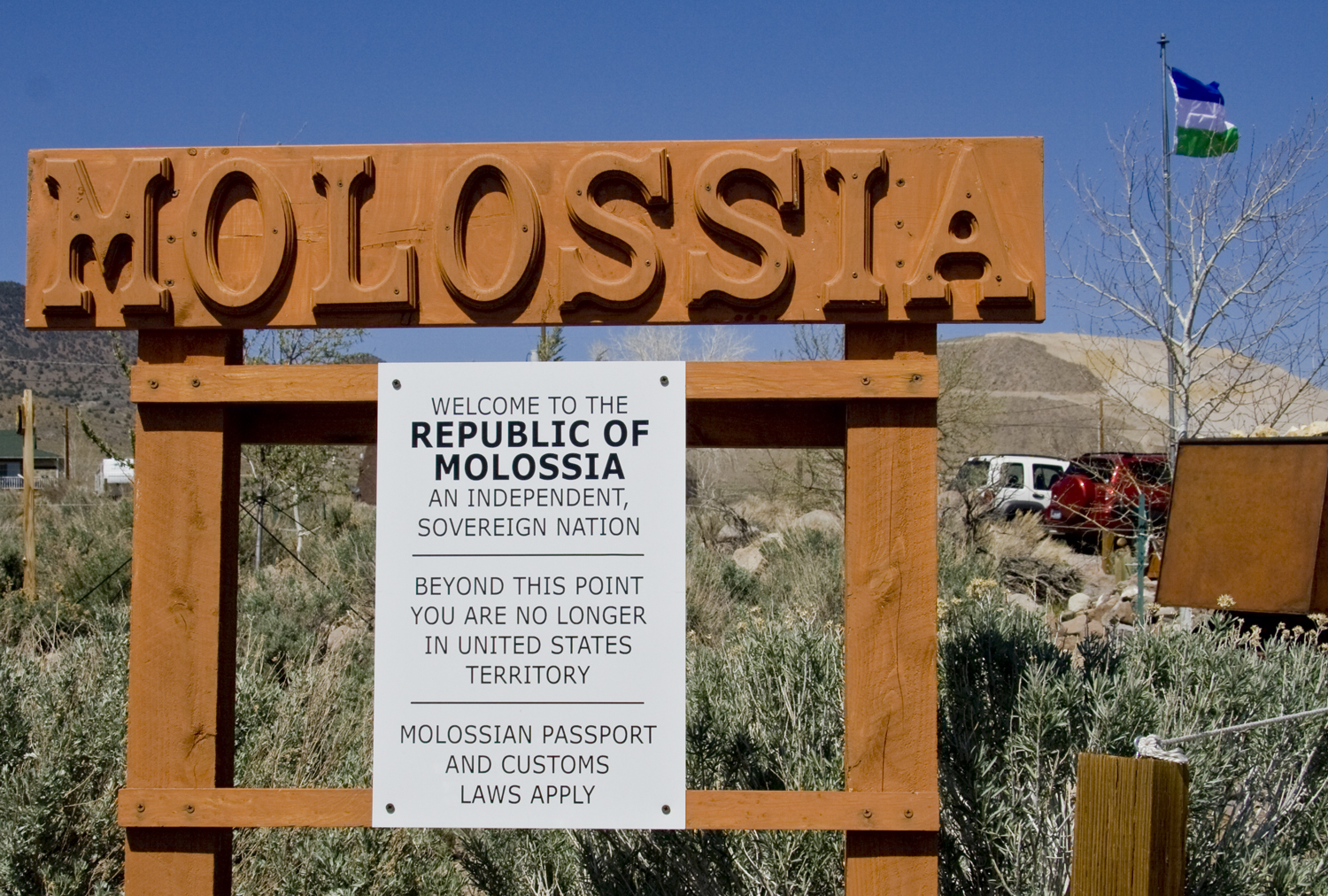
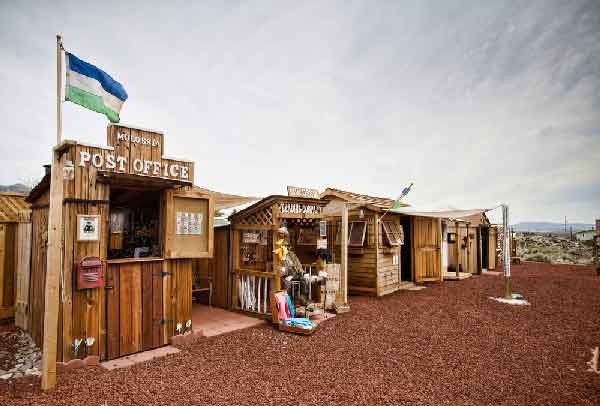
Inside the United States, there is a micronation of 38 citizens residing in what they call The Republic of Molossia. I found this article at SFGATE that explains the concept and gives a brief overview of this quirky little (unrecognized) nation inside Nevada.
The Republic of Molossia is the city of your adolescent, Candy Land dreams, where the currency is cookie dough and the nation’s leader officially outlawed spinach.
How does a place like Molossia, located about 45 minutes from Reno, exist within the confines of the United States? The self-described independent nation, ruled by President Kevin Baugh and first lady Adrianne Baugh, is actually a micronation within the United States.
At last count, there were 67 micronations across the globe, although that number is more of an estimate considering there aren’t a lot of hard and fast rules for declaring sovereignty. Micronations are not recognized as sovereign states, no matter their claims, but they often share a dedication to pageantry and humor.
Molossia is enclosed within a small Nevada town called Dayton, on an 11-acre property with a total population of 38 souls. Three of the citizens are dogs.
Molossia is an artistic expression with shades of outlaw libertarianism, and it owes its entire existence to a San Francisco icon who was a pioneer in “fake it till you make it” social entrepreneurialism.
The micronation accepts tourists but on specific terms. I rode over the desert brush to find it on a recent August afternoon. Before embarking on the journey, I somewhat expected an unhinged social vigilante with a political agenda, but what I discovered instead was a seemingly well-meaning couple with a solid sense of humor and a love of entertaining the masses with their clever takes on what it means to run a micronation.
I left knowing it was a place I would need to bring friends, if only to experience the hilarity and downright weirdness firsthand. Without seeing it, it’s hard to say who will believe a place like Molossia exists.
Tours are held one day a month between April and October, usually, but not always, on a Saturday. During this time, anyone can visit Molossia. A passport isn’t strictly required, but if you bring one, you can get it stamped at the customs office.
Molossia is smaller than 10 football fields but can draw worldwide attention. During my visit in August, I met people from Canada, Washington and Texas, as well as many from other parts of Nevada. In total, there were about 20 attendees. It’s customary to bring cookie dough to exchange for the local currency, called Valora, which is Latin for “brave or courageous.”
It’s important to abide by the laws when moving about Molossia. That means no contraband like tobacco, incandescent lightbulbs, plastic bags, catfish, onions, walruses and, of course, spinach.
Other laws prohibit citizens from causing catastrophe; torpedoes may not be set off inside of the country, and percussion instruments are barred from every bathroom. It’s also illegal to detonate a nuclear device within the nation and offenders incur a 500 Valora fine.
President Baugh is also considering outlawing hurricanes, but the weather in these parts of Nevada tends to be sunny.
“Molossia weather is always perfect,” he boasts. He says the problem is that “we’re so close to the U.S. border that their crappy weather blows in all the time.”
A tour guarantees access to all of Molossia’s main buildings, including a post office, Tiki bar, the president’s office, a trading post and a jail cell. You’re subject to arrest if you bring in unpermitted items, but the president doesn’t make a habit of keeping anyone past the end of their tour (or for more than a few minutes).
Although Molossia is still at war with East Germany — there’s a long-winded explanation to this involving an argument suggesting East Germany still exists as a small island off the coast of Cuba — the micronation resists the need for a military to defend itself (in part because that East Germany island is uninhabited).
Nevertheless, Molossia does have a naval program composed entirely of inflatable kayaks that explore nearby lakes, including Lake Tahoe on flexible biannual excursions. There are also annual and public events including a dry land boat race.
The space program is predictably limited, but you can launch a small rocket when visiting, which earns yourself a designation as an honorary Molossia space cadet.
Today’s offering combines chocolatey goodness with caramel and pecans—Turtle Bars! This recipe is quick and easy!
Ingredients
1 box German chocolate cake mix (any chocolate cake mix will do)
½ cup butter melted
¼ cup milk
1 cup chocolate chips (semi sweet, milk or dark, your choice)
1 cup chopped pecans divided
1 12 oz jar caramel ice cream topping
Instructions
Preheat oven to 350°. Spray 9X13 with non-stick cooking spray.
Combine cake mix, butter and milk in large bowl and stir until well blended. Spread half of mixture in prepared pan.
Bake 7-8 minutes. Sprinkle chocolate chips and half of pecans on the baked crust. Drizzle with caramel topping. Drop spoonfuls of remaining batter over caramel, sprinkle with remaining pecans. Bake 18-20 minutes. Cool completely in pan. Refrigerate before slicing.
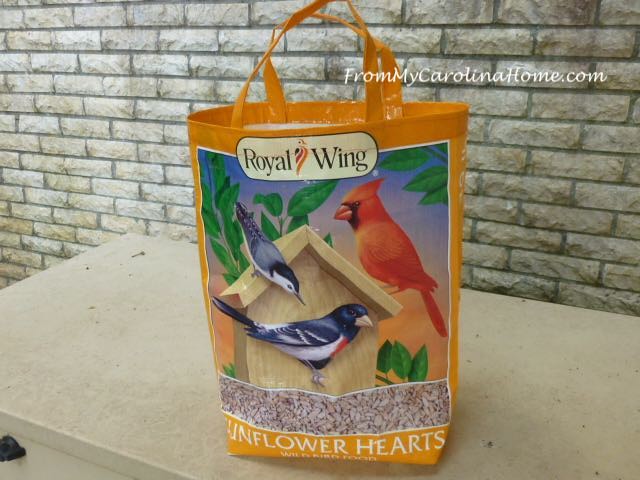
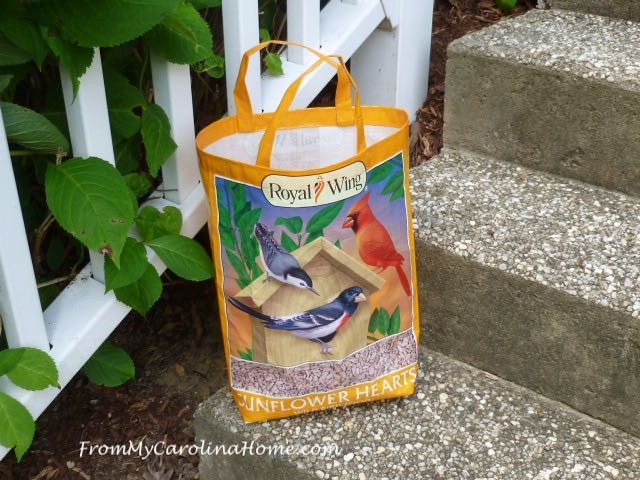
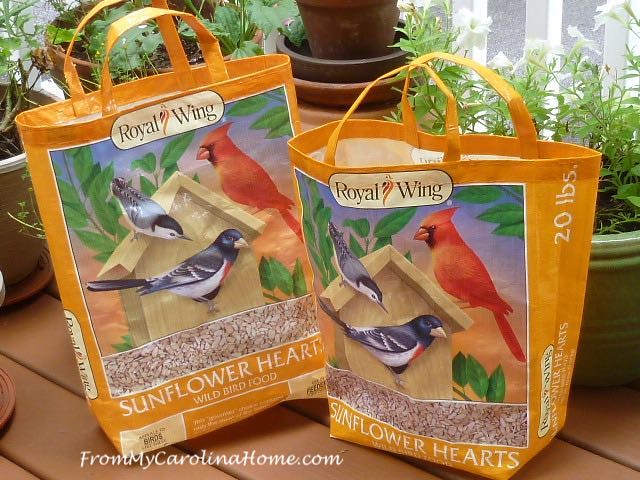
I ran across a wonderful and detailed tutorial on how to make reusable bags from bird seed bags! The tutorial shows a larger bird seed bag, but these bags can be made using smaller quantity bags as well.
The website is From My Carolina Home.
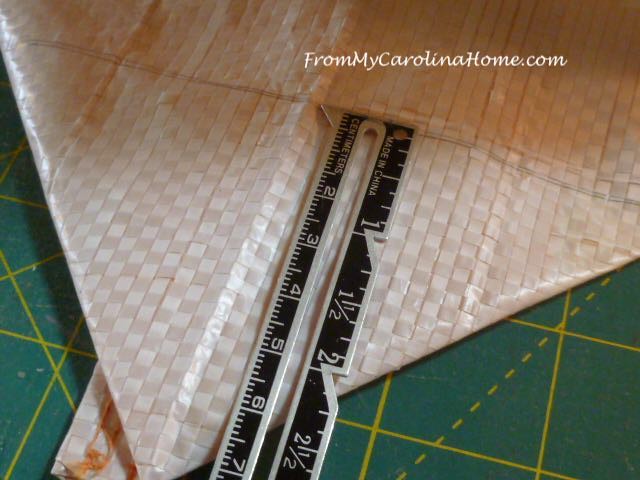
Begin by cutting the bottom off the first bag. There are two reasons for this. It makes the bottom square, and cuts off the former stitching that could harbor seed debris and interfere with boxing the corners.
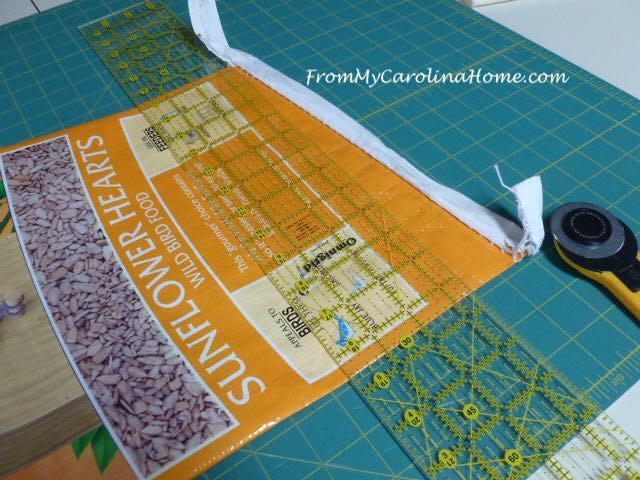
On the top of the bag, cut two strips off, 3-inches wide each.
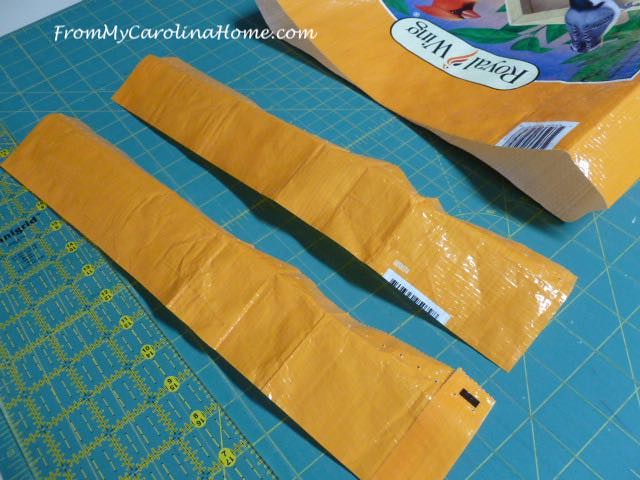
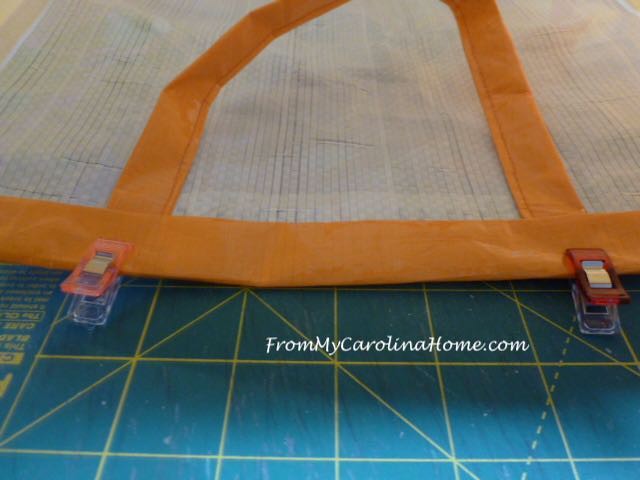
Cut through each one crosswise to create two long strips. Fold the edges to the center.
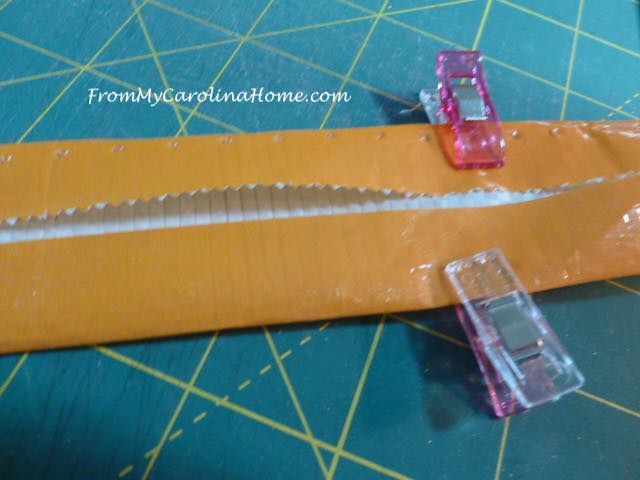
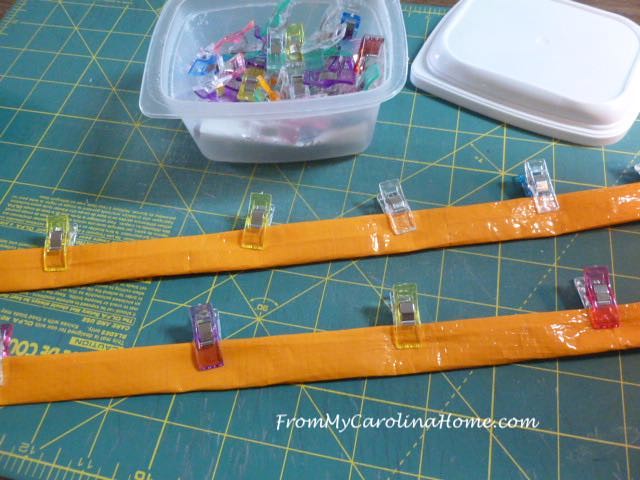
Then fold in half again, enclosing the raw edges inside the strap. Use clips to hold as pins would leave holes.
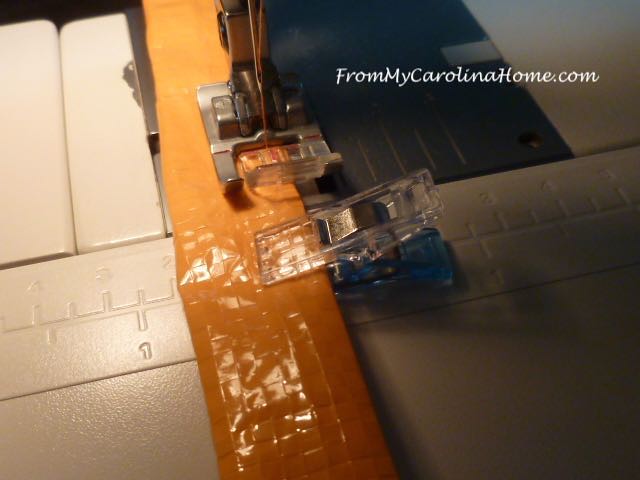
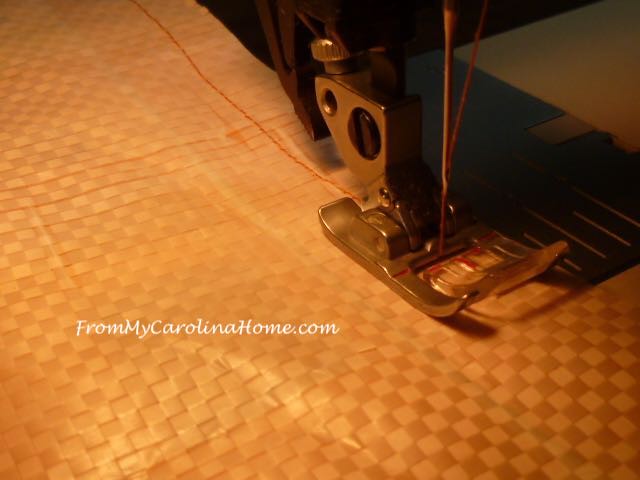
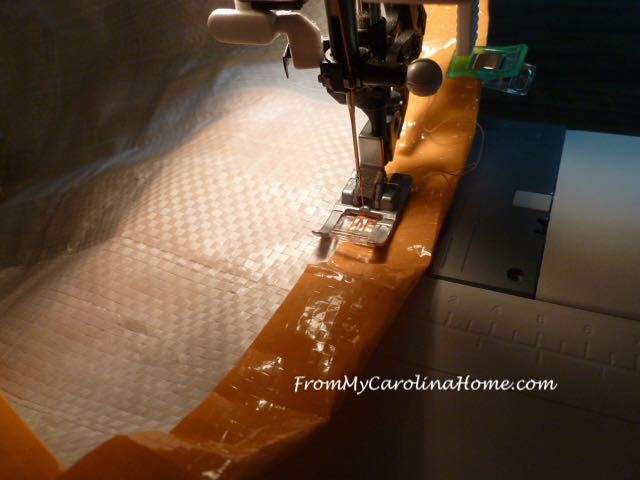
Turning to the machine, change the needle to a size 16. I also chose a thicker thread than the kind I usually use for piecing. Next, lengthen your stitch length. On my machine, I believe the 2.5 setting gives me 12 stitches per inch, and the 4.0 setting is more like 8 stitches per inch. If you don’t do this, the closer stitching may perforate the bag too closely in a line and weaken the stitching.
Stitch the handles near the double-folded edge to secure the layers together. Repeat with the other handle.
Turn the bag inside out, and stitch across the bottom.
Fold up that end, and stitch again for strength.
Box the corner 3 inches.
On the inside top, fold the top edge down one inch, then fold again one more inch. Insert the handle under the fold, with each end 3 inches from the center.
Stitch all the way around on the lower edge.
Fold the handle up, and stitch again around the top edge.
Voila, all done. This first bag took under an hour to make.
I stumbled across this beautiful picture while looking for something else. The bird is a Grandala and lives primarily in India. I couldn’t find much info on this lovely bird, except for this from Wikipedia:
The grandala (Grandala coelicolor) is a species of bird in the thrush family Turdidae. It is the only species placed in the genus Grandala. It is an arboreal insectivore. It ranges across the northeastern Indian Subcontinent and some adjoining regions, existing primarily in the low-to-mid altitudes of the Himalayas. It is found in Bhutan, India, Myanmar, and Nepal, as well as Tibet and other areas of China.
The body length of the grandala is 20.5-23 cm, and it weighs from 38 to 52 g. The plumage of the male is blue-gray, only the tail and wings are black. The plumage of the female is brownish with white stripes; rump gray-blue; the tip and underside of the wing feathers are white. Birds usually make the sounds “dew-ee” and “dewee”. In young birds, the plumage is similar to females, but does not have a bluish tint on the rump and upper tail integuments.
Grandala is a social bird; they feed on insects, fruits, berries.
The grandala lives in a vast territory. In India it is found in the Himalayas from Kashmir (Kishenganga and Liddar valleys), Himachal Pradesh, Uttarakhand through Nepal, Sikkim, and east to Arunachal Pradesh. Though grandala is a common bird in that region, no scientific studies have been conducted.
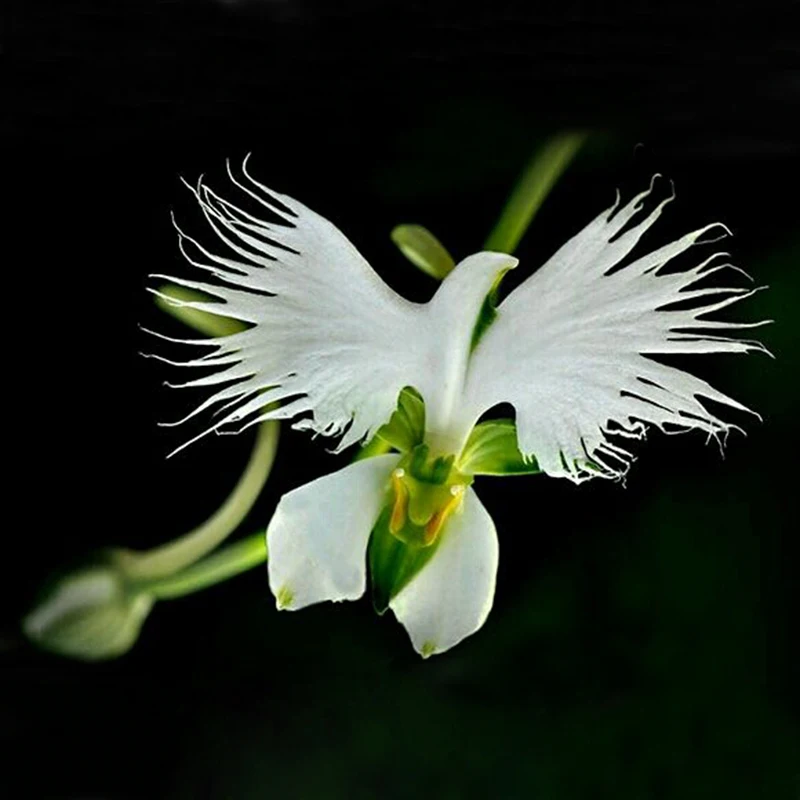
The white egret orchid is named for its uncanny resemblance to a white egret (also known as a Great White Heron) when its wings spread in flight. Native to Japan, Korea, Russia and China, this orchid is known as a terrestrial orchid because it grows in soil as opposed to being found in tree canopies. It likes damp, boggy sites, such as grassy wetlands and steepage slopes (i.e., wetland areas found on the sides of hills). It grows from a small tuber and spreads via tiny offset bulbs.
The white egret orchid is highly sought after for its small but floriferous green and white blooms, with up to eight flowers per stalk.
White Egret Orchid Care
Growing the white egret orchid as a home gardener is not difficult, though its moisture requirements are fairly specific.
Plant the bulbs in growing medium created specifically for orchids; ordinary potting soil may cause fungus to develop.
Keep soil consistently moist during the growing season, then allow to dry out in a cool spot during winter dormancy.
Fertilize lightly with diluted all-purpose plant food (10 to 20% of usual dose) once or twice at the start of the flowering season.
If growing indoors, locate near a window that can be opened to give the plant fresh air.
Remove spent blooms to keep plant looking neat.
Warning
The white egret orchid is endangered in the wild due to over-gathering and destruction of its habitat, so it’s important to source this plant in a way that does not contribute further to its decline.
Light
Your white egret orchid is adaptable to a range of light conditions, and will perform well in full sun to partial shade. Dappled sunlight or bright morning sunlight are both suitable, though it can also handle plenty of afternoon sunlight and enjoys hot weather in summer.
Soil
A sandy, slightly acidic, well-drained soil is best for the white egret orchid. The standard potting mix designed to be used with orchids is also suitable. Perlite mixed with sand and peat can form a good mixture for growing this orchid. A light layer of dried sphagnum moss on top keeps the soil surface healthy.
Water
During the growing season, keep the soil lightly but consistently moist. If growing in a container, remember the soil will dry out a bit faster. Placing a container with drainage holes in a saucer with pebbles will help the plant absorb water at a uniform rate.
It’s important to use water that is free from chlorine, as chlorine can damage this delicate plant. Set chlorinated water for 48 hours to allow the chlorine to dissipate.
Temperature and Humidity
Though some guides say this plant is cold-hardy to Zone 5, to be on the safe side it should be grown within Zones 6 through 10. Once the weather gets hot, be sure the soil remains moist, which may require increasing the amount of water, or using a mister to spray the top layer of soil during the day.
This orchid likes a humid environment, apart from its dormant season (winter), but it also enjoys plenty of fresh air.
Fertilizer
Fertilize your white egret orchid very lightly when blooms begin to appear in spring. A basic all-purpose liquid plant food is recommended, at a diluted strength of 10 to 20% of the recommended amount. Dilute the plant food with water before watering as usual. You can also use organic fertilizers such as fish emulsion or seaweed extracts, but dilute them before use.


:max_bytes(150000):strip_icc():format(webp)/growing-and-using-calendula-1402626-hero-6c4c4cf97a8940aaabad6975a27358b1-975ec0f7f1144eef8553df0111e7136f.jpg)























 Sew Colorful