In honor of Halloween later this month, today’s recipe is from Reader’s Digest and it’s for FAKE BLOOD & GUTS, lol. I am only presenting the fake blood part of the article because the rest is too out there even for me. But there are many, MANY videos on how to make your own intestines if you really want to know how.
From the article:
Many years ago, I worked as a celebrity makeup artist. And for a while there, I trained in special effects makeup—you know, the gooey, gross, and oozing stuff that makes you gasp or peek through your hands as you’re watching a scary movie. If you’re opting for an easy Halloween costume this year and trying to figure out how to make fake blood to accent your creation, we’ve got you covered. Literally.
Making fake blood is both creative and easy, depending on your needs. The king of modern splatter makeup, Greg Nicotero, who’s best known for his work on The Walking Dead, once told CBS News that creating fake blood was “kind of—oddly—a weird art form.” He’s not wrong. And Nicotero’s creative zombie art has inspired countless Halloween costume ideas and Halloween makeup ideas.
So why should you whip up your own fake blood? Well, what is Halloween without a little gore? Plus, it’s easy, inexpensive, and really fun to make. And let’s not forget about bragging rights. You can reference it in your Halloween Instagram captions, or share a TikTok of yourself scrolling through Halloween face paint ideas and scary Halloween costumes and then pan out to an image of you stirring up a batch of fake blood.
These fake blood recipes are total no-brainers, but keep in mind that a lot of these ingredients will stain your skin and property. And remember: Don’t sacrifice safety for fun. Fake blood that comes in contact with your skin or mouth needs to be edible.
So, what should you expect from this creepy crafts experiment? The DIY fake blood should be slightly runny, like the fake blood in movies. Think Dexter and his blood spatter, and you’ll have an idea of what the texture should look like. Ready to create your own (make-believe) blood? Here’s how:
Ingredients:
3/4 cup corn syrup (if you’re trying for the look of old blood, consider using a few drops of maple syrup as well)
1/4 cup water
1/2 teaspoon red food coloring
5 drops blue food coloring
2 drops green food coloring
1 tablespoon cornstarch
Step 1: Combine the water and corn syrup. You’re trying for runny, but not so runny that it drips off your face or body and just leaves stains.
Step 2: Slowly add the food coloring until you reach your ideal color.
Step 3: Slowly mix in the cornstarch. You can add a drop of water to the cornstarch first to keep it from clumping.
Step 4: Let it sit at room temperature for 10 minutes before use.
Note: This is going to stain your skin and clothing.
The food coloring proportions are optional; only you know the exact color you’re trying to create. That said, using green and blue makes the color more realistic. Bear in mind that red and blue create purple, and green will give your fake blood the sickening look you’re trying for.
How to make fake blood for clothes
If you’re hoping to make your clothes look bloody, you’ll need to create blood that is thicker and darker. The fake blood recipe below is nontoxic and made with edible ingredients. Ideally, you’ll make a bigger batch of this fake blood so you can thoroughly soak your costume.
This fake blood recipe uses a ratio of corn syrup to water, versus exact measurements, so you can make as little or as much as you like. If you and your friends are batting around group Halloween costume ideas, consider making a single batch of blood for everyone to use.
Ingredients:
Corn syrup
Water
Red food coloring
Cocoa powder
Step 1: In a large bowl, combine three parts corn syrup with one part water. Mix thoroughly.
Step 2: Add a couple drops of red food coloring into the mixture while stirring continuously. Keep adding more drops of food coloring until the blood is your desired color. Stir for at least five minutes to distribute the food coloring evenly.
Step 3: Add 3 tablespoons cocoa powder to the mixture and stir. This thickens the blood. Keep adding cocoa powder, a tablespoon at a time, until the blood reaches your desired consistency. The blood will be thick but not lumpy, so it can sit on your clothing and absorb without running.
You can also try using old red paint and water, blending in blue and green paint until you have the right color and texture of dried blood.
Potoos are neotropical birds of the family Nyctibiidae. There are 7 species of potoos and all of them are famous for their incredible camouflage skills.
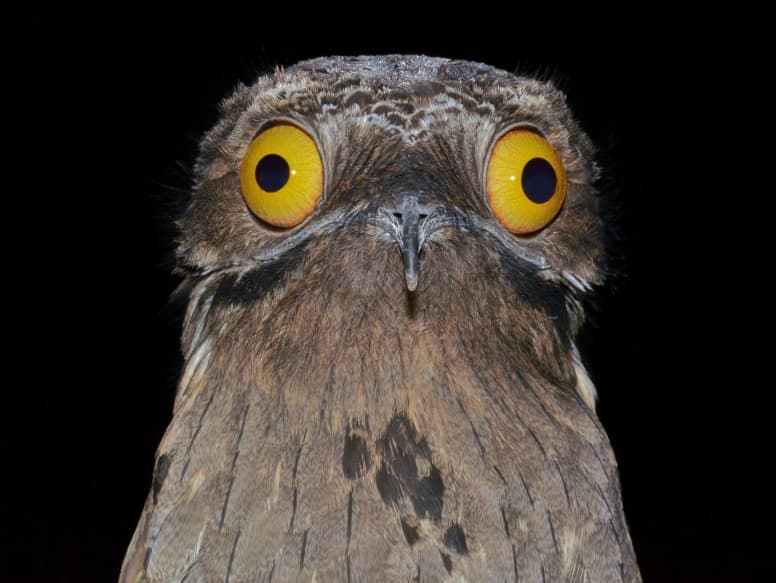
They are often seen in memes due to their slightly goofy-come-creepy looks, with enormous googly yellow eyes, as well as their amusing name (often mistakenly spelled ‘pooto‘).
Potoos are insectivorous, nocturnal and related to nightjars and frogmouths. They can be found in every central and south American country, on Caribbean islands and have the greatest diversity in the Amazon, which holds five of the seven species.
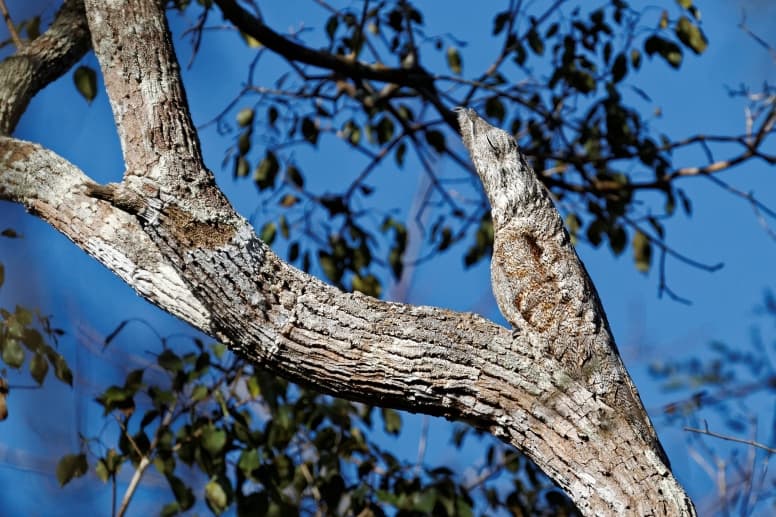
During the day, they perch almost completely still with their eyes closed on the ends of dead branches or tree stumps. This behavior combined with their tree-like plumage makes them so well camouflaged that it is almost impossible to spot them.
At night, they are excellently evolved for hunting flying insects. Their large eyes combined with huge mouths allow them to swoop down from their perches and grab beetles, moths, termites and more.
Interesting Potoo Facts
Potoo camouflage perfectly with dead branches.
While some animals focus on defense techniques, these birds instead have become talented at hiding. They perch at the top of a dead branch usually, where they position themselves at a sharp angle and stay completely still, with their eyes closed.
The Great potoo below even points its beak upwards, making itself look even more like a branch.
Potoos will stay in this position all day, barely moving, and almost invisible.
They can see you even with their eyes closed.
They have “magic eyes”, which are small folds along the upper eyelids that allow them to sense movement with their eyes closed. This means that from their camouflaged positions during the day, they can still watch for predators.
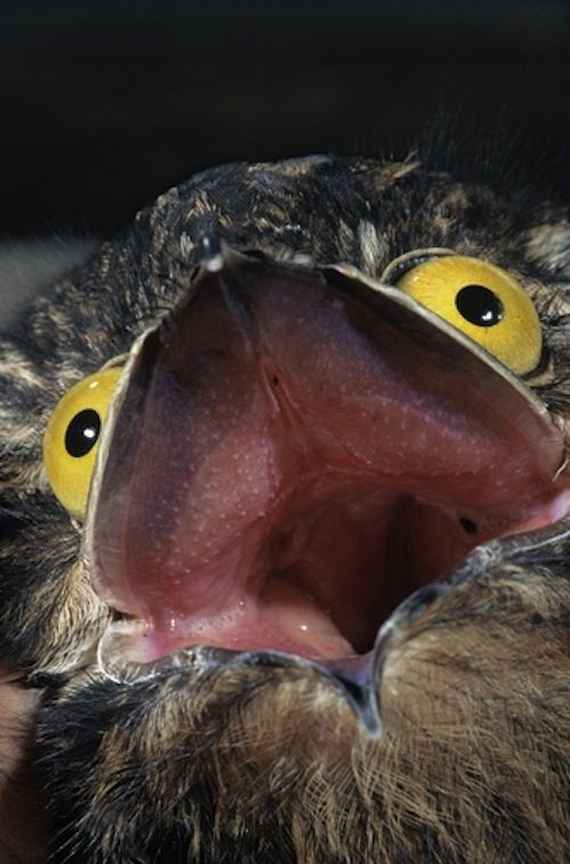
Potoo have huge mouths.
In the same way that humpback whales have huge mouths to catch as many krill as possible, these birds’ huge mouths allow them to scoop up lots of flying insects.
They have equally huge eyes.
As night-time hunters, their huge eyes mean they have excellent night vision allowing them to spot insects from their perch. They also add to the dorky look that has made them so popular in memes.
Potoo lay a single egg in the top of broken branches.
They lay a single egg in the same place they perch for camouflage during the day, usually in the hollowed-out top of a broken branch. They add no materials to the nest, making it harder to spot. They are also meticulously clean, removing all of the chick’s poop from the nest making it hard for predators to find them by smell.
They start young.
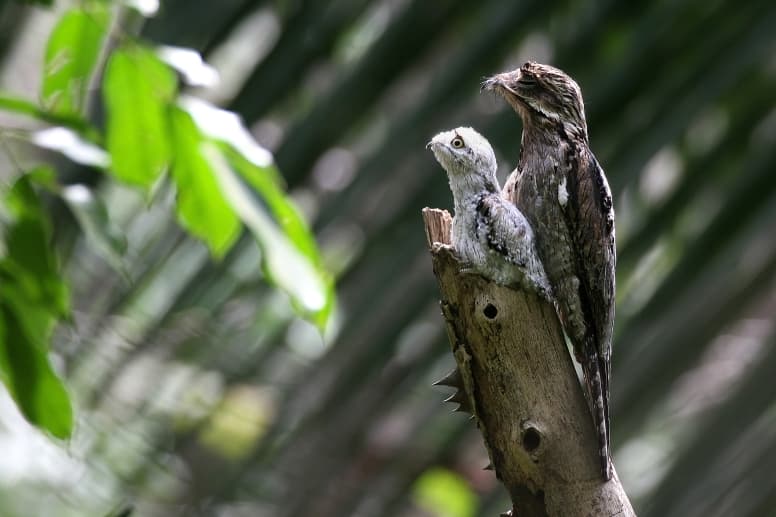
From a young age, nesting potoos imitate their parents, standing in camouflaged positions next to their parents, as can be seen in the adorable photo below.
Potoo have strange and wonderful calls.
Across Nyctibiidae there is a wide range of weird and wonderful of calls, all of which are likely to disturb new night-time wanderers of the neotropics. The Common Potoo (Nyctibius griseus) has earned itself the local name of “Ayaymama”, after it’s long and mournful call “ayyyyyy ayyyyy maaaaa maaaa”. While the Great Potoo has terrifying moaning howl.
Their eerie night-time calls make them a subject of many myths.
The Common Potoos eerie call of “aaaaaay aaaaay maaaaa maaaaa” has led to the Amazonian version of Hansel and Gretel. Two children, abandoned in the forest by parents too poor to feed them, eventually turn into birds. They are eternally calling out “mama” to the mother that left them. While in Ecuador there is an equally sad story of two lovers separated, one becomes the moon and the other a potoo. The potoo is eternally calling out to the lover it can never reach, the moon.
The adorable Rufous Potoo is the smallest of the potoos.
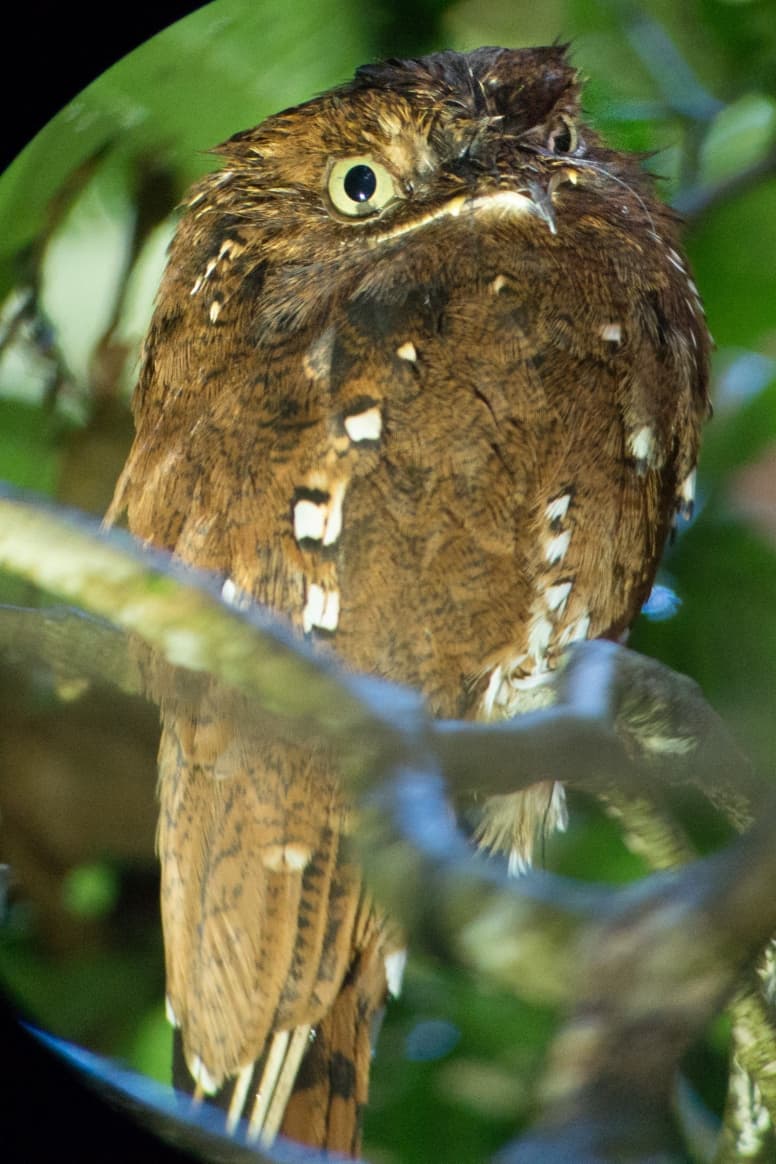
The Rufous Potoo (Nyctibius bracteatus) is the smallest potoo, weighing in at around 50g. Its tactic is to pretend to be dead leaves. It even rocks back and forth slightly so that it resembles a leaf moving in the wind.
They’ve started perching on human-made things.
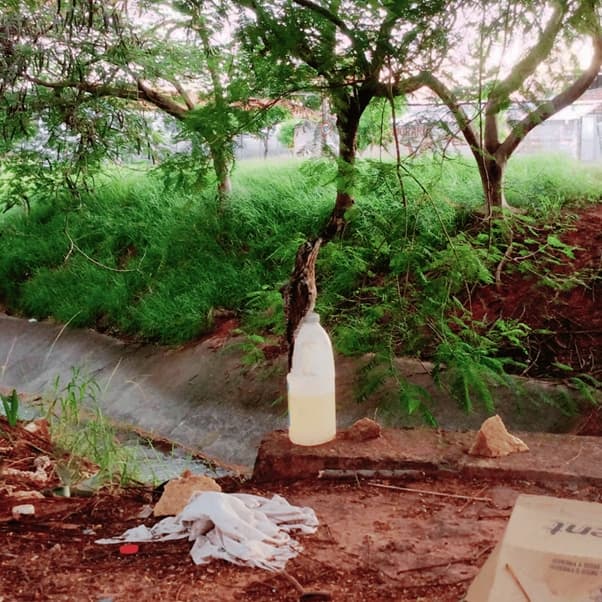
An extensive study showed that potoos have taken to hiding on human things, like plastic bottles. This is an interesting side effect of humans continuing spread into wild habitats.
This weird Wednesday offering is a residential home in New Mexico and the only detailed descriptions and photos I could find were in an architectural magazine: The Guide to New Mexico Architecture.
This architect’s unusual residence and separate studio gallery are quite special for Albuquerque. The visual complexity of the residence’s unique series of volumes disguises an architectural diagram that is best described from the top down. The top floor is a long, flattened tube placed parallel to the long dimension of this very narrow site. Four cylindrical, hollow pillars (aligned along this long dimension) support this tube and all the major enclosures. A large circular volume engages the western two pillars, and a smaller circular volume engages the eastern two pillars. The visual complexity is accomplished by exposing all the supporting beams and columns and the addition of surface art to walls, balcony railings, window and door treatments, beam ends, and other opportunities that present themselves.
Windows on the south-facing facades of the house take advantage of the long southern exposure of the site. Three light scoops on the northern portion of the third-floor roof capture southern sun in the winter and bring it into the northern part of that volume. The cylindrical library tower was appended to the residence’s southern face in 1990; the dramatically linear studio gallery, built in the 2000s, stands alone—albeit sitting atop a smaller stuccoed structure—just to the north of the residence.
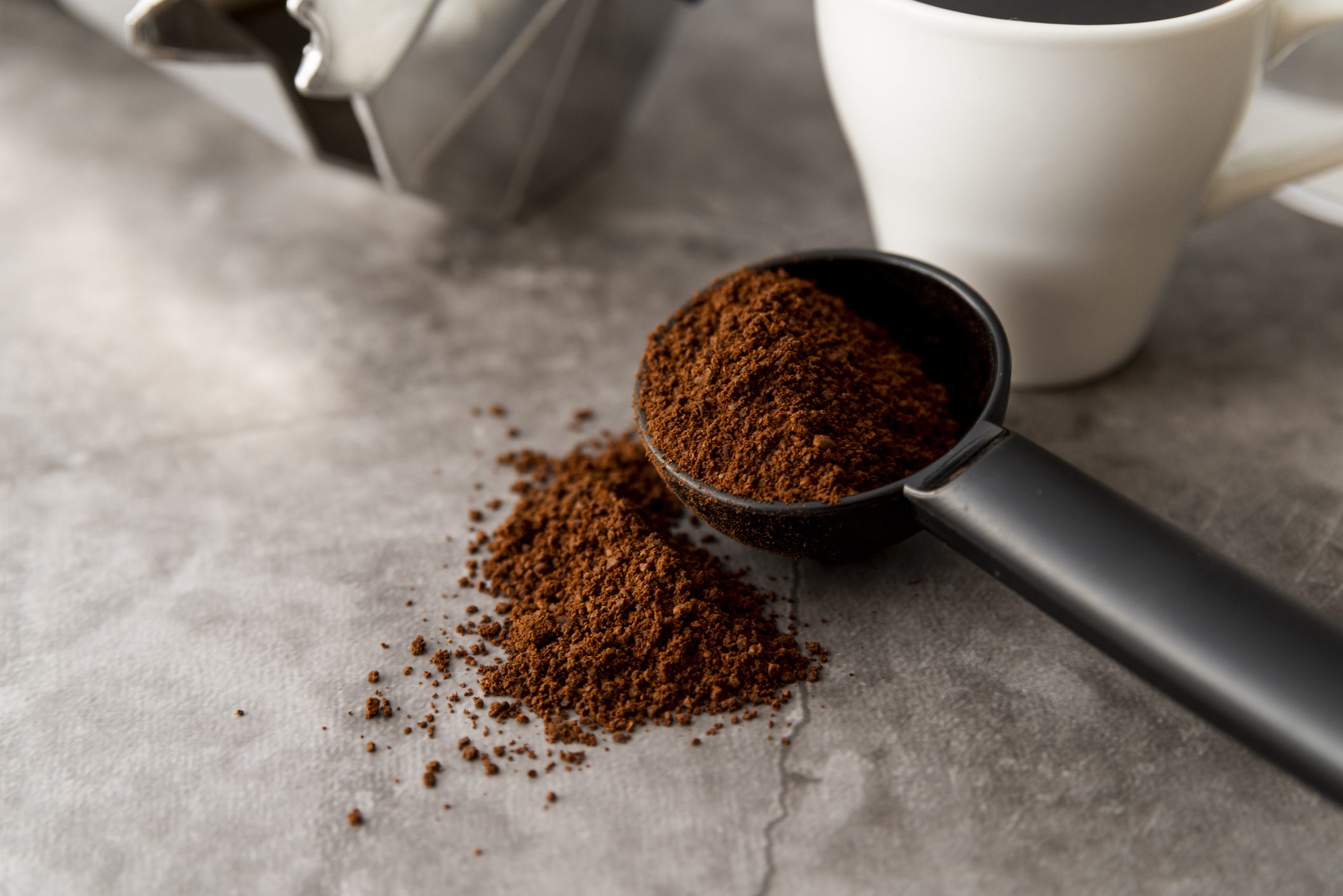
Wondering if you can give all those used coffee grounds another purpose after making a fresh pot? If so, you’re smart to care about sustainable living. “Reusing, repurposing or finding any alternate applications for a product is always a better choice for the environment than throwing it in the trash,” says Natalie Lennick, environmental activist and founder of zero-waste hair-care brand Green Ablutions. Giving coffee grounds another life not only benefits you, it’s also a small act that’s beneficial for the planet.
You may have already heard about using coffee grounds for plants, but they’re way more versatile than that. Used coffee grounds can be used for kitchen hacks and in various other ways, so you can take advantage of this organic material more than once. You’ll likely be surprised at all the uses for coffee grounds, and they’re cost-effective too.
Adding them to your compost pile
This may not come as a total surprise, but you may not know exactly how to use coffee grounds in the garden—or even how to make compost. “Used coffee grounds are an excellent addition to compost because they are high in nitrogen, which is a key component of a healthy compost pile,” explains Chia-Ming Ro, garden consultant and owner of Coastal Homestead in Los Angeles. “They help to balance out the carbon-rich materials in compost, such as leaves and paper.”
Pro tip: Coffee grounds and their paper filters can be added directly to a compost pile with other organic matter like eggshells, leaves, grass clippings, cardboard or paper to produce a well-balanced soil amendment that feeds trees, plants and flowers, says Lennick.
Using them as insect repellent
Want to repel unwelcome bugs in the garden? Coffee grounds can give you an assist. “There is some evidence to suggest that coffee grounds can repel certain insects, such as slugs, ants and mosquitoes,” says Ro. “The exact mechanism by which coffee grounds repel insects is not well understood, but it may have to do with the strong scent of the coffee, which can mask the scent of the plant and make it less attractive to insects.”
Sprinkle coffee grounds at the base of plants or where you’re having an infestation problem in the garden. If you’re wondering how to save money on your gardening habit, now you know you may be able to skip buying the bug spray.
Pro tip: Before you start sprinkling used coffee grounds in your garden, make sure your pets don’t have access to this area. Lennick says the caffeine in coffee is toxic to cats and dogs. “Never use them in an area where your pets might accidentally ingest them,” she says.
“Coffee grounds can be beneficial for flowers because they provide a source of nitrogen, which is an essential nutrient for plant growth,” says Ro. But before you start adding spent coffee granules to your garden bed, you’ll want to look into which flowers may benefit, since it’s possible that used coffee grounds may change the soil composition.
Pro tip: Want to use coffee grounds in some flower beds? Ro suggests sprinkling them around the base of the plant and mixing them into soil.
Creating blue hydrangeas
Love hydrangeas and want to have the blue flowers? Coffee grounds may be the key to that beautiful blue hue you’re after. “The flower color of many hydrangea species is dictated by the pH of the soil,” says Lennick. Coffee is considered acidic—but coffee grounds are often considered to have a neutral pH. There is a debate among gardeners about whether coffee grounds are the answer for modifying the soil composition to get the sought-after blue color. Now, if your hydrangeas have a powdery mildew on the leaves, it may be because the plant has a fungus.
Pro tip: You may want to do a test in your garden before adding coffee grounds to all your hydrangeas. “It’s important to note that the effect of coffee grounds on the color of hydrangeas can vary, depending on the soil composition and other factors,” shares Ro.
Providing food for beneficial worms
If you have a compost bin, you may also be interested in investing in a worm bin for vermicomposting. This is where you feed your produce scraps to your “pet” worms, who eat and break down different leftover veggies and fruit. This leaves you with rich, natural fertilizer. “Worms can benefit from coffee grounds because they provide a source of nitrogen and can help to increase the nutrient content of the vermicompost,” says Ro. Plus, coffee grounds can help increase the moisture-holding capacity of the vermicompost, she adds.
Pro tip: Before you start tossing your coffee grounds into your worm bin each morning, opt for moderation. Ro says it’s important to maintain a balance in there. Too much of one ingredient can affect the composition of the compost and the health of the worms.
Deodorizing the microwave
If these appliances have taken on an odor, used coffee grounds can help. “Coffee grounds can be used to clean and deodorize stinky microwaves,” says Lennick. “It’s a safe, effective and free way to clean.”
Pro tip: Cleaning with used coffee grounds is simple and straightforward. “Apply a small amount of coffee grounds with a damp cloth and then wipe clean a few minutes later,” says Lennick.
Scrubbing pots and pans
If you have tough, hard-to-remove stains caked on your pots or pans, this is one of the handiest uses for used coffee grounds. “The abrasive nature of coffee grounds makes them useful for scrubbing stuck food from pots, pans, grills and griddles,” says Lennick.
Pro tip: Sprinkle the coffee grounds directly onto the stain and then start scrubbing. Certain types of material or surfaces should be avoided. “Do not use it on porous surfaces, as it may cause stains,” Lennick says
Cleaning the kitchen sink
If you notice that your kitchen sink needs a good scrub, and you want to avoid harsh chemicals, used coffee grounds may just be your answer. “Spent grounds can also be used to clean your kitchen sink instead of chalky products that may leave behind a white film,” explains Stacy Savage, founder & CEO of Zero Waste Strategies. “This also reduces the levels of toxicity in your home or office kitchenette areas, as your cleaning habits start to shift away from industrial-grade products.”
Pro tip: Sprinkle coffee grounds in the sink, and then scrub just as you would using another cleaner. Your sink should be shining in no time.
Flavoring baked goods
One wonderful use for coffee grounds that you may not have considered is baking. “Coffee grounds can be used as an ingredient in baked goods like cookies, muffins, scones or even granola to add a delicious coffee flavor,” says Lennick. “They are especially good in brownies, as they complement chocolate and deepen the rich cocoa flavor.”
Pro tip: Use that morning’s coffee grounds the same day you bake. “Fresher is better,” says Lennick. You may need to modify the recipe to account for more liquid. “If your grounds are very wet, you may need to slightly reduce the liquid content of the recipe to accommodate the additional moisture.”
Freshening your garbage disposal
Want to neutralize odors coming from the kitchen drain and want another option aside from your old go-to baking soda? Yup, grab those used coffee grounds. “Coffee grounds naturally trap odors,” says Lennick.
Pro tip: “Put some used coffee grounds down the drain and run the grinder for about 30 seconds to clean the inside of the mechanism,” says Savage.
Dyeing clothes
Ever spilled coffee on your favorite white shirt and then spent a ton of time trying to get the spot out? Coffee stains easily, but it also makes a wonderful natural dye for cotton, linen, silk—and even paper. The process is easy and simple too.
Pro tip: “Just take old coffee grounds, steep them in hot water and place lighter-colored fabrics and fibers into the solution for dyeing,” says Savage. “Hang-dry to allow the dye to set.”
Minimizing cellulite
If you’re looking for a natural approach to minimizing cellulite, used coffee grounds could be worth a shot. Coffee grounds contain caffeine, which has been shown to help with cellulite. “Some people believe that the caffeine in coffee grounds may help reduce the appearance of cellulite when applied topically,” says Savage.
Pro tip: Combine coffee grounds either with water or an oil, such as coconut oil, and rub onto an area affected by cellulite, for 10 minutes, two times a week.
Exfoliating your skin
The gritty and coarse texture of coffee granules makes them wonderful as a skin scrubber. Exfoliating keeps skin glowing and healthy, because it’s beneficial to remove dead skin cells and stimulate the skin. Plus, the caffeine in coffee grounds can help stimulate blood flow, which adds a natural glow to the skin.
Pro tip: “Coffee grounds can be mixed with coconut oil or honey to create an exfoliating scrub that may help remove dead skin cells and improve circulation,” says Savage.
Making a face mask or hair scrub
Shampoo can leave buildup and residue in your hair after continued use. Giving your scalp a massage while exfoliating with coffee grounds can help remove that and help stimulate hair growth—thanks to caffeine, which is known to help with hair growth as well as stimulate blood flow. According to Savage, “Coffee grounds can be used as a hair mask to potentially stimulate hair growth and add shine.”
Pro tip: Here’s the formula you need: “A tablespoon of coffee grounds mixed with an equal amount of olive oil or coconut oil creates a moisturizing face mask or stimulating scalp scrub,” says Lennick.
Minimizing under-eye circles
Coffee grounds are high in antioxidants, which help fight free radicals and are also beneficial for the skin. Caffeine not only has anti-inflammatory properties; it also can stimulate blood circulation when applied below the eyes to minimize dark circles and puffiness. “Some people use coffee grounds as an eye mask to potentially reduce puffiness and dark circles,” shares Savage.
Pro tip: Mix coconut oil or water with used coffee grounds, gently rub below your eyes for around 10 minutes and then rinse. Consider making this part of your daily beauty-care routine.
An unredacted memo adds depth to our understanding of the CIA’s response to allegations that Oswald worked with the spy agency.
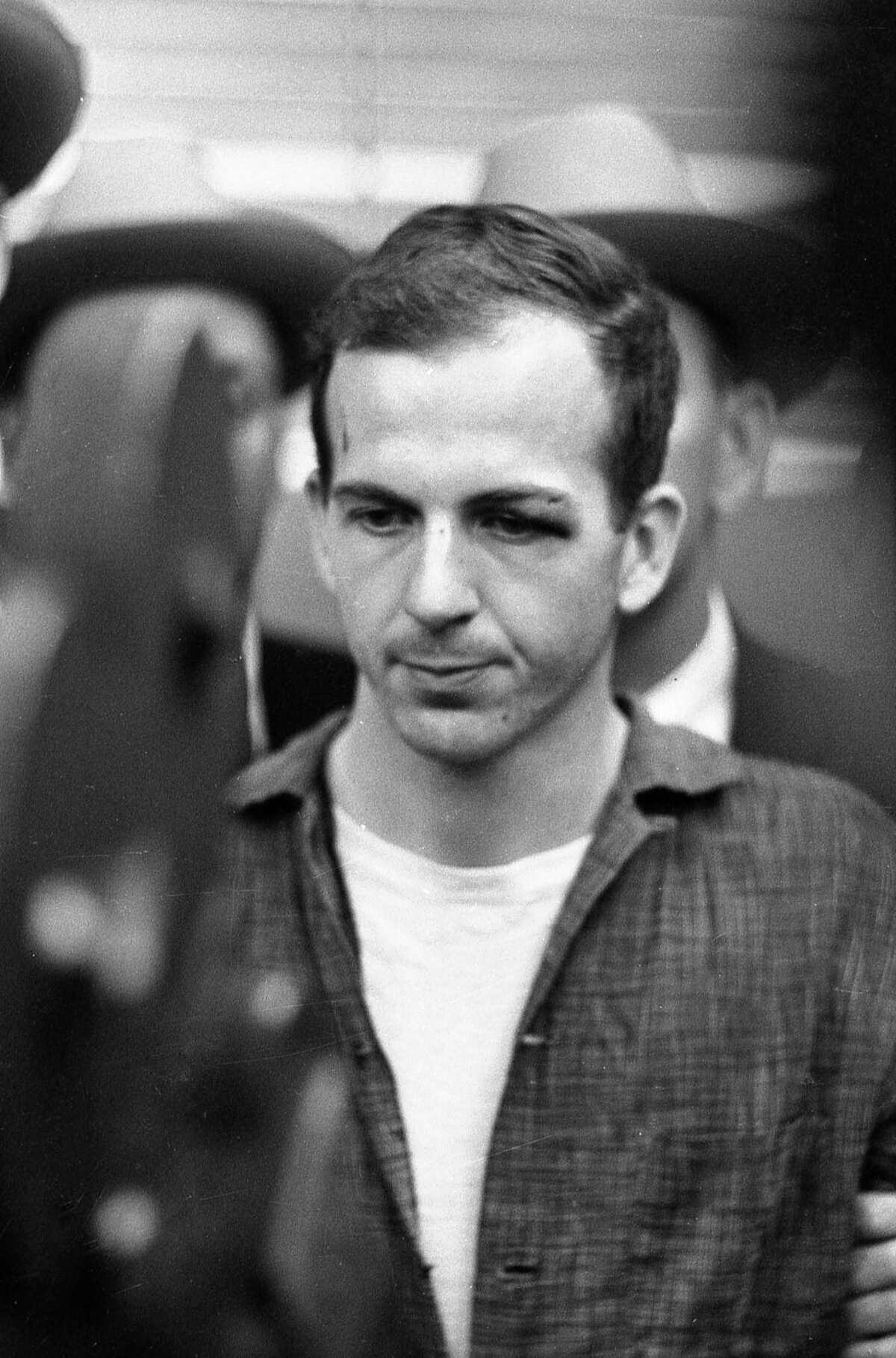
The Biden administration declassified a new clue last week to the relationship between Lee Harvey Oswald and the Central Intelligence Agency. Among the intersections between Oswald and the CIA, his time as a young Marine at the Atsugi naval air facility in Japan in 1957 is high among them.
Atsugi was a launching pad for U-2 spy flights over the Soviet Union and was also a hub of the CIA’s research into psychedelic drugs. “A CIA memo titled ‘Truth Drugs in Interrogation’ revealed the agency practice of dosing agents who were marked for dangerous overseas missions,” wrote author David Talbot in “The Devil’s Chessboard,” his 2015 biography of former CIA Director Allen Dulles.
Talbot’s exploration of the link ended there: “Some chroniclers of Oswald’s life have suggested that he was one of the young marines on whom the CIA performed its acid tests.”
A new document released in full last week relates directly to Oswald’s time at Atsugi, revealing details about the CIA’s response to testimony from a former agency accountant that the spy service had employed Oswald — who went on to be a gunman in the assassination of President John F. Kennedy in 1963.
The CIA’s role in Kennedy’s assassination remains one of the great unsolved mysteries of American history. A majority of Americans believe the president was killed as part of a conspiracy that went beyond Oswald, and roughly a third believe the CIA or elements within the CIA had a hand in it.
The CIA’s role in Kennedy’s assassination remains one of the great unsolved mysteries of American history.
The main theory posits the assassination as a response to Kennedy’s firing of Dulles, a cloak-and-dagger powerbroker, following the failed CIA Bay of Pigs operation to unseat Fidel Castro’s Communist government in Cuba. Some believers of the theory also point to evidence Kennedy was souring on the Vietnam War or militarism in general. If Dulles did orchestrate a coup against Kennedy, it would be far from his first.
A memorandum from 1978 reports that a finance clerk with the CIA, James Wilcott Jr., had informed a House panel exploring the assassination that “the CIA hired Lee Harvey Oswald when Oswald served in Atsugi.” The memo goes on to cast doubt on Wilcott’s claim, noting that he arrived in Tokyo in 1960, after Oswald had left the base, suggesting that Wilcott’s claim is based on “second hand” information.
A version of the document was declassified by the Trump administration in 2017, though it redacted a portion of a note that runs along the bottom of it. That redaction obscured the name of a CIA official, Dan Nieschur, who fielded requests from congressional investigators in the 1970s and searched Oswald’s files. Jefferson Morley, editor of the Substack newsletter JFK Facts, said that inconsequential lifting of such redactions seems to be common in this latest document release, allowing the government to claim it is releasing thousands of documents, while most had largely already been in the public domain.
The memo, written to a person identified only as “JHW,” explains that CIA official Russ Holmes “inherited the so-called Oswald files, but that he has assured me the Agency had no contact with Oswald.” The memo says that “contrary records” might be in “EA” — a likely reference to the CIA’s East Asia desk — and that they would be searched for and checked if found.” “He is after it,” the memo says of Holmes, who became legendary for his now-declassified CIA archive on the assassination.
The new JFK files include a number of personnel records connected to Wilcott, whose testimony before the House committee in the late 1970s made news at the time.
Oswald’s next few years make much more sense with a connection to the CIA than without them.
After studying Russian while in the military — perhaps trained at the Army Language School in Monterey, California, according to Talbot, sourcing the claim to the Warren Commission chief counsel J. Lee Rankin — Oswald was discharged with a false claim of his mother’s ill health.
Completely broke, with only $203 in his bank account, he took a boat to England nine days after his discharge. Then, according to his wife, Oswald took a military transport flight to Finland, staying at two of the nicest hotels in Helsinki.
Oswald then took an overnight train from Helsinki to Moscow. Once there, he presented himself at the U.S. Embassy to announce he’d become a defector. Embassy staff later recalled that his defection speech sounded odd and rehearsed. He spent two and a half years in the Soviet Union and then, just as curiously as he’d defected, returned home to the United States.
If the series of moves — from the discharge to the flight to the defection to the return — were made at the behest of the CIA, they make sense, with Oswald playing some type of role in the inscrutable world of spycraft. Absent an intelligence link, the tick-tock of Oswald’s post-military years would be situated somewhere between extraordinarily implausible to impossible to pull off.
The CIA is known to have explored creative uses of psychedelics — and Dulles was specifically aware of these activities, even proposing some of the uses. On March 2, 1960, according to a declassified CIA report included in last week’s document release, the CIA director briefed Richard Nixon, then the vice president, on a proposal to deal with Fidel Castro and Cuba. The report, which appears to be another version of a previously declassified document, included plans for economic sabotage of cane production and interference with oil deliveries.
A more innovative idea presented in the briefing, according to the CIA, appears to be a reference to dosing Castro with LSD, which the agency was at the time experimenting with. Nixon was told that the agency had “a drug, which if placed in Castro’s food, would make him behave in such an irrational manner that a public appearance could have very damaging results to him.”
The CIA’s claim to have had no contact with Oswald is undercut by the fact that George de Mohrenschildt, a CIA asset, became close friends with Oswald in the months before the assassination. That spring, de Mohrenschildt traveled to New York, Philadelphia, and Washington. According to documents found in the newly declassified files, at the same time as his trip, the CIA’s Domestic Operations Division ran a search on de Mohrenschildt, “exact reason unknown,” according to two documents created by a CIA analyst included in last week’s declassification.
The covert arm of the division was run at the time by E. Howard Hunt, a black ops specialist who confessed later in life to learning ahead of time of a conspiracy to assassinate Kennedy that involved high-level figures in the CIA.
“It is interesting that Allen’s interest in de Mohrenschildt coincided with the earlier portion of this trip,” the memo concludes, referring to Gale Allen, a case officer with the CIA’s Domestic Operations Division at the time, “and the information would suggest that possibly Allen and de Mohrenschildt were possibly in the same environment in Washington, D.C., circa 26 April 1963.”
In the wake of the latest document release, which also withheld countless additional documents, Fox News host Tucker Carlson reported that a source who reviewed the undisclosed records said they included evidence of CIA involvement in the assassination. Carlson said that he had invited his friend Mike Pompeo, the former CIA director who also withheld crucial documents, on to his show to respond. “Though he rarely turns down a televised interview, he refused to come,” Carlson said. “We hope he will reconsider.”
In honor of Penny Marshall’s birthday this month, I thought it would be fun to look at some little-known facts about the Lavern & Shirley Show. I found an article on looper.com, written by Brian Boone in 2021, sharing the “untold truth” about Laverne & Shirley.
The Untold Truth Of Laverne & Shirley
Give them any chance, they’d take it, give them any rule, they’d break it — Laverne and Shirley were going to make their dreams come true, their way.
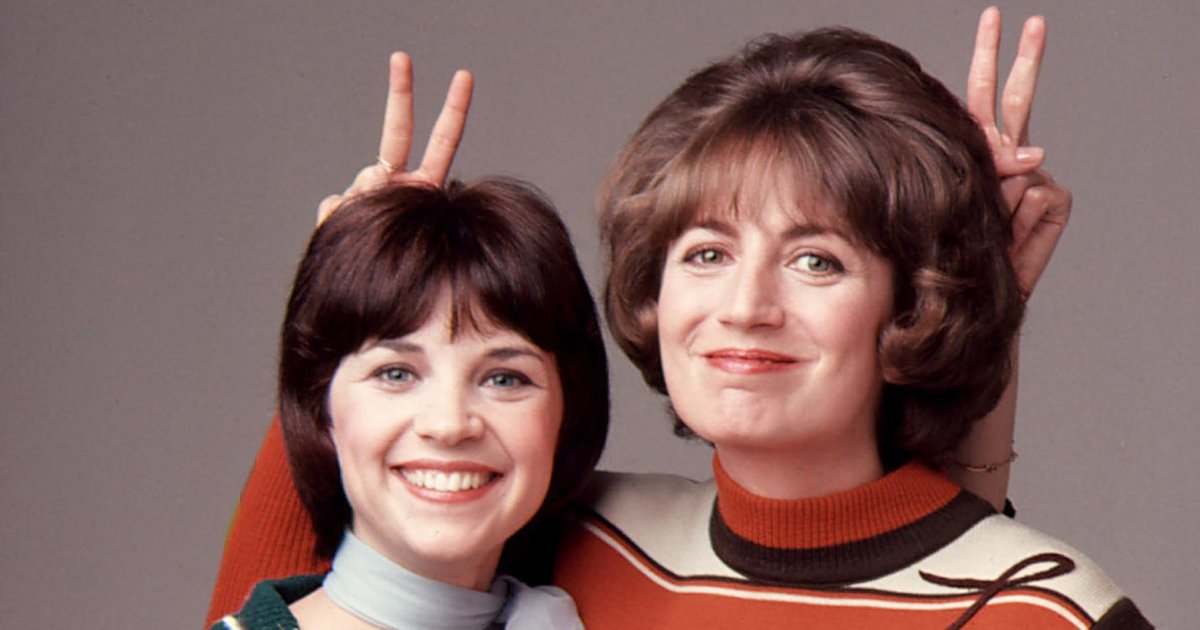
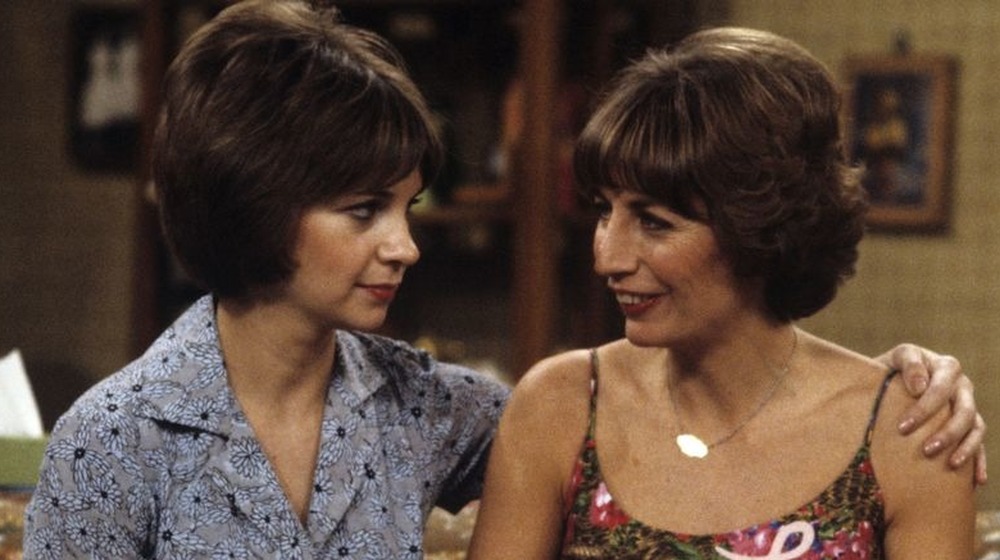
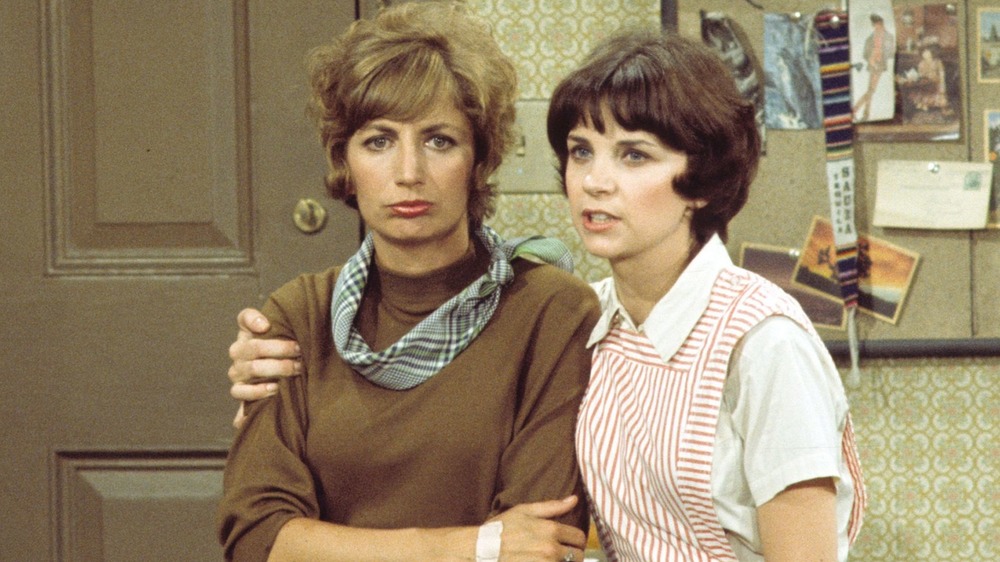
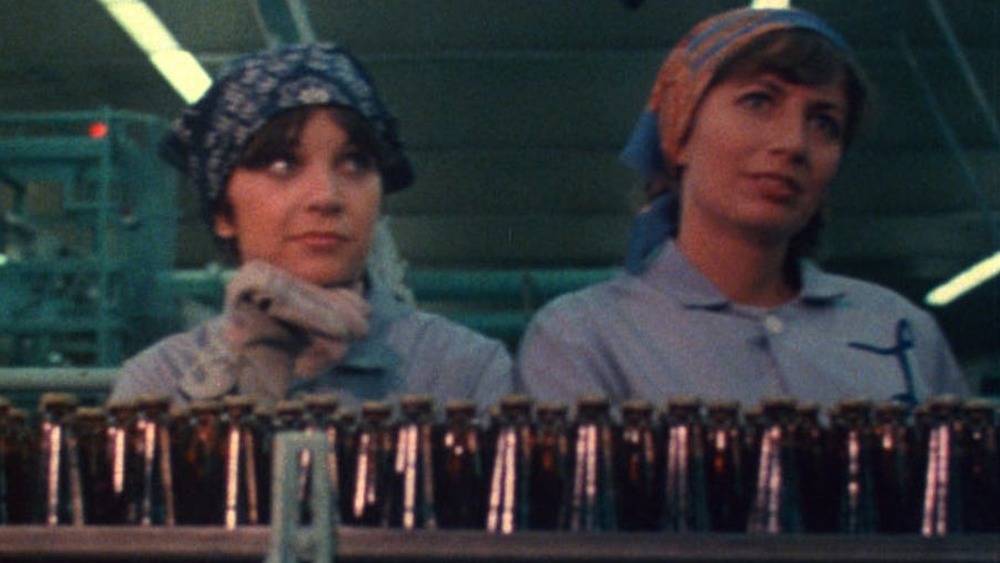
Laverne & Shirley – starring Penny Marshall and Cindy Williams as the street-smart, self-sufficient, Shotz Brewery bottle-cappers in early 1960s Milwaukee — ran on ABC from 1976 to 1983, and it was one of the most popular sitcoms of its era … or any era, for that matter. Millions tuned in each week to watch Laverne and Shirley get themselves into jams, go on bad dates, strive for a better life outside of their tiny apartment, and get embroiled in mishaps. And that’s to say nothing of their friends and associates Carmine “The Big Ragu” Ragusa, Big Rosie, and fan-favorites Lenny and Squiggy — wannabe bad boys but really total dweebs.
A spinoff of Happy Days — another Garry Marshall-created, retro-flavored megahit — Laverne & Shirley was a television institution. And if you want to know more about this beloved sitcom, here are some behind-the-scenes stories about the creation, production, and impact of Laverne & Shirley.
Laverne and Shirley originated as tough ladies on Happy Days
By its third season in 1975, Happy Days was a smash hit, a top 10 show and cultural phenomenon. That was thanks partly to former child star Ron Howard as amiable 1950s teenager Richie Cunningham but mostly because of Henry Winkler as Arthur “Fonzie” Fonzarelli, the coolest guy in Milwaukee. An appearance on the heavily viewed show could be career-changing for an actor, and that’s exactly what happened to Penny Marshall and Cindy Williams.
On November 11, 1975, the episode “A Date with Fonzie” aired. As for the plot, Richie is having a hard time landing a date, so Fonzie sets them up for a double date. Richie winds up way out of his depth because the women Fonzie selects for them are a lot older, more aggressive, and more experienced than the high school students Richie usually dates. As Penny Marshall told the Television Academy Foundation, Happy Days producer Garry Marshall (her brother) described the duo as “fast girls, girls who ‘put out.'” The two performers (writing partners at the time) signed on for the one episode, and that was it … until after it aired and TV executives thought Laverne (Marshall) and Shirley (Williams) could carry their own series.
Less than three months after that Happy Days episode, Laverne & Shirley debuted. For the 1975-76 season, it ranked as the #2 show on TV, outdrawing even its predecessor series.
Laverne & Shirley is a semi-remake
Garry Marshall is the undisputed king of 1970s sitcoms. Prior to creating Laverne & Shirley, Happy Days, and Mork and Mindy, he had his first big hit developing and writing for the television adaptation of Neil Simon’s comic stage play The Odd Couple. That series went off the air in 1975, and Laverne & Shirley was scheduled to hit ABC as a midseason replacement in early 1976. To get it up and running in a relatively quick manner, Marshall (and production studio Paramount) had to act quickly and recycle where possible. According to Maclean’s, the Laverne & Shirley main apartment set is simply the revamped apartment set of Oscar and Felix from The Odd Couple.
Scripts for Laverne & Shirley also leaned heavily on preexisting sitcoms. For example, Hey, Landlord lasted two short seasons in 1966 and 1967, and it was a show about a guy who moves to New York, inherits an apartment, and shares it with a comedian. Marshall reused many elements of that forgotten, unpopular sitcom in episodes of Laverne & Shirley.
Lenny and Squiggy came before Laverne and Shirley
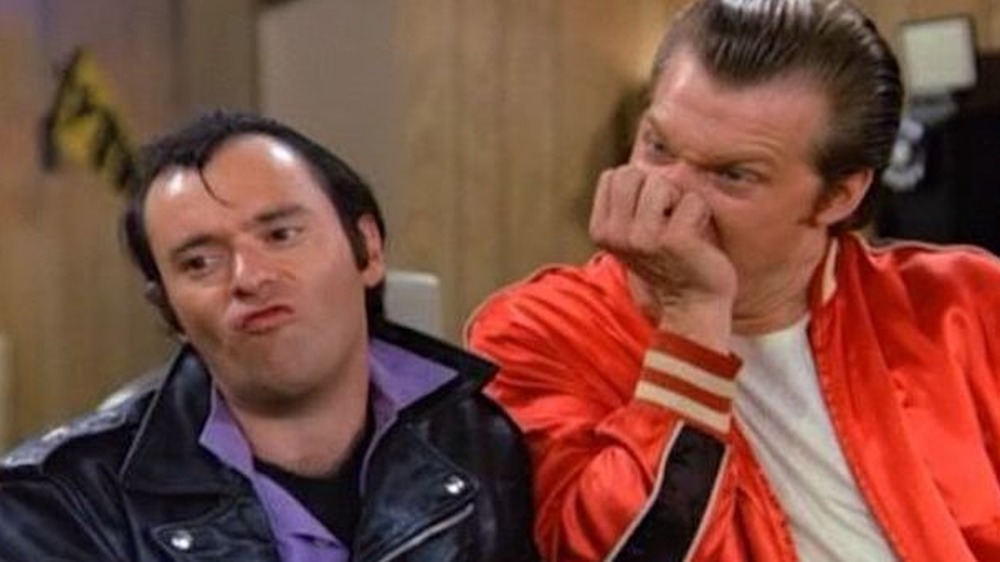
Laverne & Shirley ran on the laughs generated by two comedy duos — Laverne and Shirley but also Lenny and Squiggy. Portrayed, respectively, by Michael McKean and David L. Lander, Lenny and Squiggy dressed like “greasers” — tough guy hoodlums like you’d find in Grease or The Outsiders. But looks can be deceiving. They were really a couple of truck drivers who worked at Shotz Brewery with Laverne and Shirley (and who wouldn’t leave them alone) and were, in actuality, a couple of creepy loser weirdos with strange voices.
Believe it or not, Lenny and Squiggy greatly predate Laverne & Shirley. According to Delaware Liberal, McKean and Lander met as drama students at Carnegie Mellon University in the mid-1960s and developed the characters — originally named Lenny and Ant’ny — while members of the comedy group the Credibility Gap. Actor-director Rob Reiner was a big fan of the characters, and he asked McKean and Lander to perform them at a party that was attended by his wife, Penny Marshall, just before Laverne & Shirley entered production. McKean and Lander landed jobs on the show as writing consultants, and their first order of business was to write themselves into the pilot episode, although producers asked them to rename Ant’ny, and thus Lander’s character became Squiggy.
The dorky, confident pair became so popular that McKean and Lander recorded a 1979 album while in character as Lenny and the Squigtones.
Cindy Williams was only barely cast as Shirley
Penny Marshall and Cindy Williams arrived at their respective roles of Laverne and Shirley in different ways. Marshall’s brother, Garry Marshall, created the series, and the two had worked together earlier in the ’70s on the sitcom The Odd Couple. Williams’ route to the show was more circuitous.
According to Penny Marshall in Live from New York: The Uncensored History of Saturday Night Live, Williams was in the running for the role early on, as she’d be reprising a character she originated on Happy Days, but the actress wanted to keep pursuing movie roles. After all, Williams had broken out in George Lucas’s American Graffiti and Francis Ford Coppola’s The Conversation. Laverne & Shirley producers auditioned a number of actresses in her absence, but Penny Marshall was left underwhelmed, taking it upon herself to try and recruit Saturday Night Live cast member Gilda Radner. “I needed someone strong,” Marshall said. However, Radner “had a loyalty to” SNL producer Lorne Michaels, plus that show had only just started airing.
A young actor named Liberty Williams, who’d appeared on episodes of ’70s TV shows like Chico and the Man and The Mary Tyler Moore Show, just about had the part of Shirley locked up. Producers called her in for a screen test (and promo photos), only for Cindy Williams to decide she wanted the role after all.
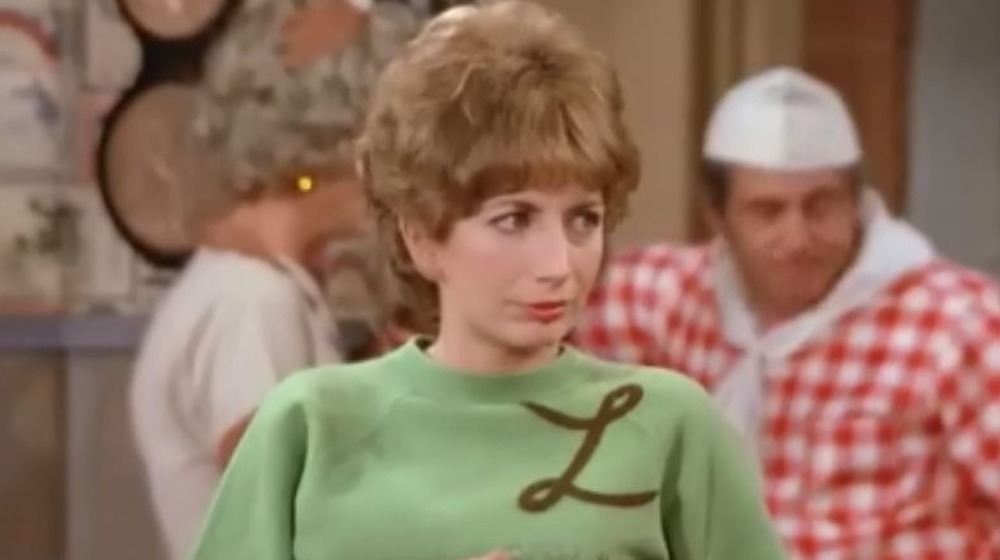
The real reason why Laverne’s clothes are adorned with an “L”
One of the most unique stylistic choices on Laverne & Shirley was a fashion choice on the part of the character of Laverne. Seemingly every outfit she wore over the course of the series came adorned with a large, script “L” near the shoulder and neckline. That “L” stands for “Laverne,” of course, and its constant presence implies that Laverne makes her own clothes or alters store-bought ones to carry her personalized and identifying touch.
However, Laverne actually wears an “L” all the time due to practical concerns, for the benefit of the audience. “At the beginning of any TV series, you have to repeat who you are, where you’re from, and what you do for a living so viewers will get to know you,” Laverne herself, Penny Marshall, wrote in her memoir My Mother Was Nuts. But she found that having to repeat identifying information was “boring,” and it was just as annoying to hear costar Cindy Williams “say ‘Laverne’ all the time.” Marshall’s suggestion, adopted by producers, was to put an “L” on her clothes to instantly let the audience know which character she was. It didn’t work. “I was wrong. We still had to say those lines,” Marshall wrote.
Laverne & Shirley made Cyndi Grecco’s dreams come true
There are many connections between Happy Days and Laverne & Shirley. Garry Marshall created both shows, the latter is a spinoff of the former, and songwriting duo Charles Fox and Norman Gimbel wrote the memorable and catchy theme songs for each series. However, the Laverne & Shirley opening music could’ve sounded a lot different had the composers not ventured out to a California amusement park to do something nice for a Happy Days cast member.
Pop singer Cyndi Grecco was discovered singing in a pizza parlor and landed a manager, who booked her for a months-long gig. “I went on to Magic Mountain to do an all-summer thing,” Grecco told Dick Clark on American Bandstand. “Charlie and Norman came down there to see a friend of mine, Anson Williams,” she added, referring to the actor and singer who played Potsie on Happy Days. “And they saw me, and they liked me, they wanted to know what I was doing.”
Grecco then mentioned she’d like to record an album at some point, and Fox and Gimbel promised to write something for her. Eventually, they did, and it was the Laverne & Shirley theme song. An extended version of the number, titled “Making Our Dreams Come True,” was released as a single and made it to #25 on the Billboard pop chart, Grecco’s one and only hit.
Schlemiel? Schlimazel? Hasenpfeffer Incorporated!
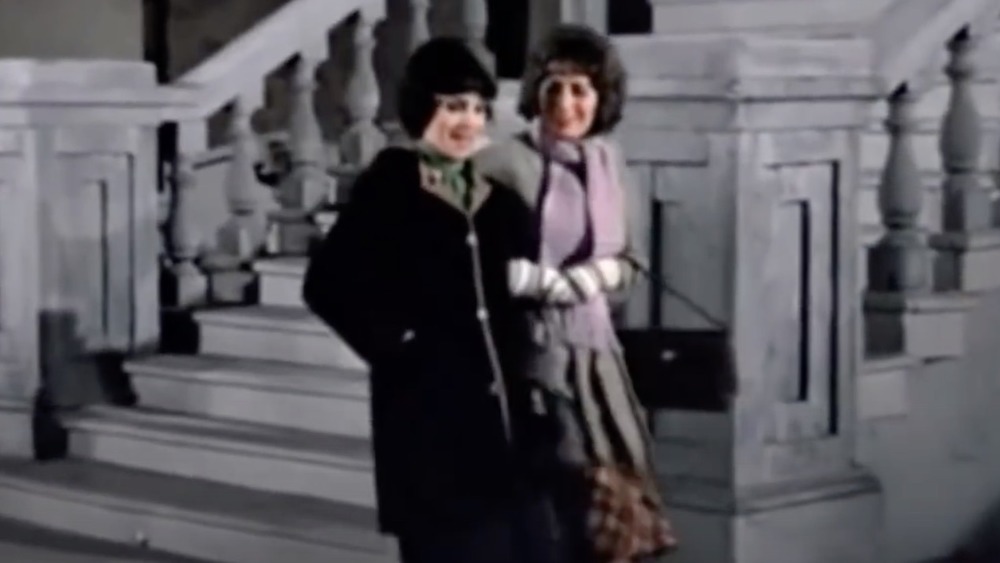
Even before Cynthia Grecco’s bombastic Laverne & Shirley theme song kicks in, the sitcom’s opening sequence gets viewers’ attention with a musically underscored, spoken word introduction. On a Milwaukee street at night, Laverne and Shirley march and recite in unison what sounds like a nonsensical, schoolyard chant: “One, two, three, four, five, six, seven, eight, schlemiel, schlimazel, Hasenpfeffer Incorporated!” “Schlemiel,” “schlimazel,” and “Hasenpfeffer” weren’t commonly used words in the American lexicon in the 1970s (or today), so what do they mean? In the context of Laverne & Shirley, almost nothing.
In an interview with the Television Academy Foundation, Williams said that the rest of the credits sequence had already been shot, and creator Garry Marshall needed a bit more footage. He asked Penny Marshall, his sister, about a nonsense song-and-dance routine she used to do while walking to school as a kid decades earlier, and she went through the “schlemiel, schlimazel” spiel. “I don’t know what it means,” Penny Marshall said, but Garry Marshall told her to teach it to Williams. They had very little time to learn it and only had time to shoot it twice, which Williams said she had a hard time figuring out because of her dyslexia.
So what does it mean? “A schlemiel is someone who falls from a building,” Williams explained, “and a schlimazel is the person they land on.” Hasenpfeffer is a German stew made of rabbit.
Was Laverne & Shirley’s soft reboot a mistake?
There are two ways an aging sitcom can reinvent itself. First, it can generate new storylines and fresh starts for characters. Second, it can change its setting and jump a few years into the future. Laverne & Shirley did both.
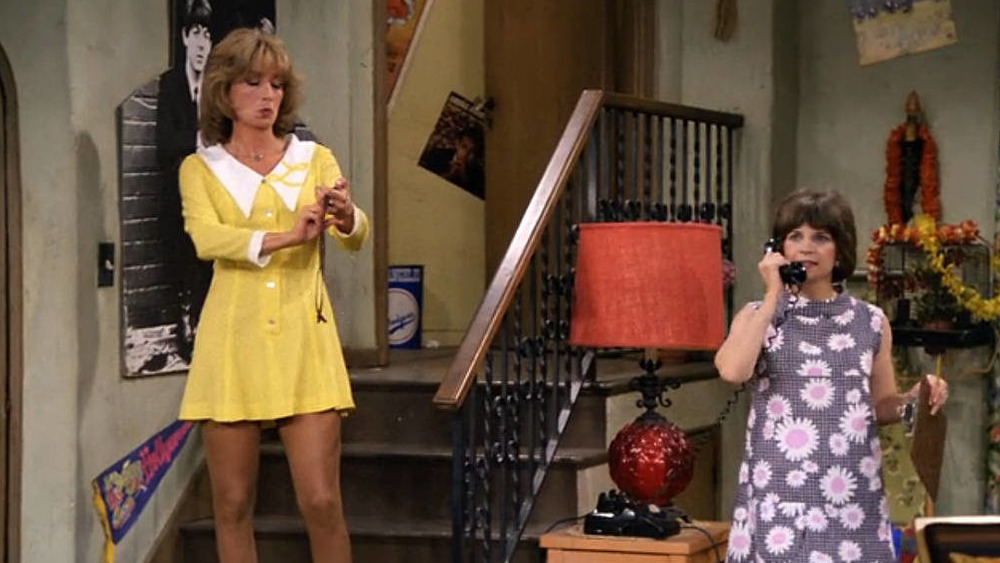
At the beginning of the show’s sixth season in 1980, side characters Frank and Edna have moved out of Milwaukee in favor of sunny Burbank, California, and after their jobs at the Shotz Brewery are eliminated by automation, Laverne and Shirley head west, as do Carmine, Lenny, and Squiggy. Frank and Edna manage a barbecue joint, Carmine tries to make it as an actor, Lenny and Squiggy open a talent agency, and Laverne and Shirley find jobs as department store gift-wrappers. The gang also mysteriously moved ahead in time by about five years, as the Burbank episodes weren’t set in the early ’60s like the rest of the show but the late ’60s, as evidenced by a Beatles poster on Laverne and Shirley’s apartment wall.
The transition was awkward, and it didn’t sit well with star Penny Marshall. “I thought the whole thing was a mistake,” she wrote in My Mother Was Nuts, arguing that superficial, moneyed Los Angeles “didn’t make sense” for the working-class, no-nonsense characters. “They were regular folks. I thought they should go to New York, where they would face new struggles,” Marshall wrote, adding that her opinion couldn’t persuade producers and executives.
When Shirley left Laverne
Laverne & Shirley successfully weathered big changes and remained a highly rated show in its sixth and seventh seasons. Viewership would slip in season eight, however, likely owing to the sudden loss of a fundamental element. Laverne & Shirley was built on the interplay between its two title characters — which disappeared when Cindy Williams left the series in 1982.
According to Marley Brant’s Happier Days: Paramount’s Classic Television Sitcoms, 1974-1984, Williams learned she was pregnant, and she claimed that producers would work it into the show but then reneged on the promise, along with guarantees that she’d be paid for episodes she wouldn’t appear in. Creator and producer Garry Marshall had also reportedly worked up a plan for Williams to tape as many episodes as possible before her pregnancy became undeniably visible. When it became evident that none of those things were going to happen for Williams, she walked off the set in August 1982 and filed a $20 million lawsuit against producers, which was ultimately settled out of court. She never appeared on Laverne & Shirley again.
It probably also didn’t help that one-half of the show’s other essential duo disappeared for half the season. Michael McKean, the Lenny of Lenny and Squiggy, departed to film This is Spinal Tap. At any rate, the actor-depleted 1982-83 season of Laverne & Shirley would finish in the Nielsen Top 30, but ABC decided to cancel the long-running sitcom anyway.
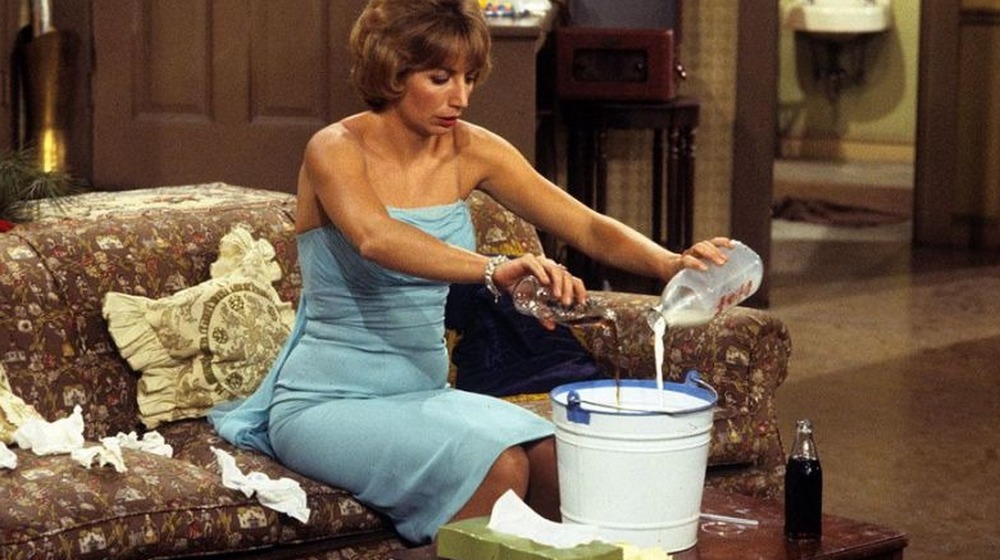
Why Laverne drinks Pepsi and milk
Certain characters in the annals of television are associated with particular foods and drinks. Sesame Street’s Cookie Monster loves cookies, the Doctor on Doctor Who had an affinity for jelly babies, and Laverne on Laverne & Shirley often guzzled a mixture of milk and Pepsi. It probably tasted something like a Coke float, only it was explicitly made with Pepsi and not Coca-Cola and not as sweet.
It’s a trait of the character that Laverne & Shirley creator Garry Marshall pulled from real life, and the childhood of the actor who plays Laverne — Penny Marshall, his sister. “I actually drank that as a kid,” the performer wrote in her memoir, My Mother Was Nuts. “At kosher camp,” she recalled from childhood, “they couldn’t drink milk with meat so they had Pepsi.” Marshall wanted to be like the adults and wanted to drink Pepsi with her meals at home, as well. However, as she put it, “My mother made me drink milk first.” Only then could she have a serving of the less-healthy, sugary soda. “Sometimes she didn’t rinse out the glass. Sometimes it wasn’t even empty. Eventually it became half and half.” The Marshall siblings included the slightly stomach-churning concoction in Laverne & Shirley knowing that “it would get a reaction.”
The many spinoffs of Laverne & Shirley
Television networks, particularly in the ’70s and ’80s, sought to build franchises out of successful series by spinning off characters into their own shows. Itself a spinoff of Happy Days (like Mork and Mindy and Joanie Loves Chachi), Laverne & Shirley also led to more programming for ABC. During the first season of Laverne & Shirley, breakout characters Lenny and Squiggy proved so popular that ABC president Fred Silverman asked show creator Garry Marshall to come up with a showcase show for the weird duo. Marshall dutifully came up with the self-explanatory Lenny and Squiggy in the Army. Producer Paramount Television liked the notion, but ABC didn’t like the pilot episode and dropped the idea.
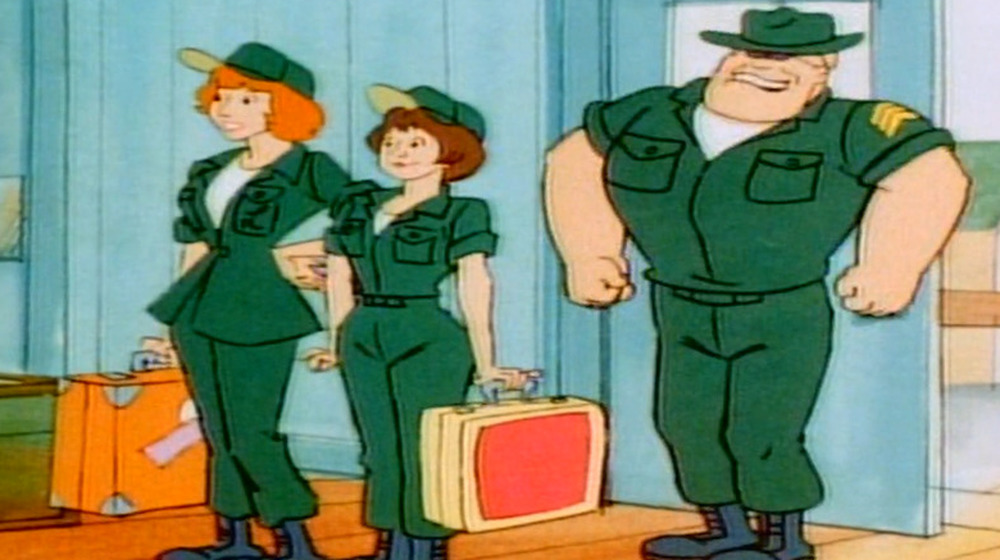
Five years later, ABC revisited the idea of Laverne & Shirley in the military in the form of a Saturday morning cartoon. The sitcom was popular with children, and in 1981, Laverne & Shirley in the Army debuted, featuring the title characters (along with Lenny and Squiggy) signing up for and getting drafted into the U.S. Army in advance of a war. The animated spinoff lasted just 19 episodes.
I bet you didn’t know there was a Congressional Theme Song…well there is! I just heard it the other day and it explains EVERYTHING! The Title is “If You Go Down, (I’m Going Down Too) by Kelsea Ballerini. Read the lyrics…you’ll see!
I’ve known you since Brad and Angelina We go back like Pontiac seats If I got an aisle with a mess I gotta clean up I know you’ll be showin’ up with bleach
All those names that we don’t ever speak of Got a couple nights that have slipped my mind Proof and photographs have been deleted If you ever needed an alibi
‘Cause dirt on you is dirt on me And we both know our hands ain’t clean If it all blows up and we end up on the news If you go down, I’m goin’ down too
It’s a good thing we’re each other’s kinda crazy Ain’t no judgment or keepin’ score If you rob a bank, I’m your getaway Mercedes God knows that’s what friends are for
‘Cause dirt on you is dirt on me And we both know our hands ain’t clean If it all blows up and we end up on the news If you go down, I’m goin’ down too If you go down, I’m goin’ down too, yeah
I keep all your secrets by the dozen You know where my skeletons sleep Hypothetically, if you ever kill your husband Hand on the Bible, I’d be lyin’ through my teeth
Our bodies are buried and they’re in the same ditch So even if I wanted to, I can’t snitch 30 to life would go quicker with you, yeah So, if you go down, I’m goin’ down too If you go down, I’m goin’ down too If you go down, I’m goin’ down too
I think this truly represents the ideology in government. This is why things never change. If you take down one? You gotta take them ALL down.
Parsley is a biennial plant with bright green, feather-like leaves. It’s in the same family as dill and carrots and is most commonly used as a garnish. Here’s how to grow parsley in your own garden.
About Parsley
This popular herb is used in sauces, salads, and especially soups, as it lessens the need for salt. Not only is parsley the perfect garnish, it’s also good for you; it’s rich in iron and vitamins A and C!
Native to Mediterranean Europe, the parsley plant is a biennial, but is usually grown as an annual in home gardens. After the first year, the leaves tend to become more bitter and tough, but the plant will gladly reseed itself in temperate zones.
Planting
Pick a spot that gets full sun (6+ hours of sunlight) and has well-draining soil that’s rich in organic matter. This herb needs more fertile soil than most herbs. Soil pH should ideally be around 6.0—slightly acidic.
Try to also choose an area that is weed-free; it’ll be easier to see the parsley sprouting.
When to Plant Parsley
Parsley seeds can be started indoors or sown directly in the garden. However, the taproot of parsley plants is delicate, so take extra care if transplanting!
For a head start, plant seeds in individual pots indoors 6 to 8 weeks before the last spring frost date.
Sow seeds outdoors 3 to 4 weeks before the last spring frost, as parsley is a slow starter.
For the best germination, soil should be around 70ºF, though parsley seeds will germinate in temperatures as low as 50ºF.
How to Plant Parsley
The germination rate of parsley seeds tends to be low, so consider soaking the seeds overnight before sowing to improve your chance of success.
Sow parsley seeds 1/4 inch deep.
Sow seeds about 6 to 8 inches apart. For larger plants, sow about 8 to 10 inches apart.
Be sure to keep soil moist while seeds germinate.
It can take 2 to 4 weeks for seedlings to appear.
Tip: Plant radish seeds in the gaps between parsley seeds. The radishes will sprout and grow before the parsley appears, and the radishes will mark the row.
Indoors, you can use a grow light to help seedlings grow. Make sure it remains at least two inches above the leaves at all times.
Growing
Be sure to keep parsley plants sufficiently watered, especially through the heat of summer.
Lightly mulch around the plants to conserve moisture.
Recommended Varieties
Flat-leaf varieties: Use in cooking because they have better flavor and are easier to work with than curly-leaf parsley
Curly-leaf varieties: Use when you want a fancier garnish
Harvesting
When the leaf stems have at least three segments, parsley is ready to be harvested.
Cut leaves from the outer stems of the plant whenever you need them. Leave the inner portions of the plant to mature. Ideally, allow 2 to 3 weeks for regrowth between major harvests.
If you want fresh parsley throughout the winter, replant a parsley plant in a pot and keep it in a sunny window.
How to Store Parsley
One method of storing the parsley fresh is to put the leaf stalks in water and keep them in the refrigerator.
Another method of storage is drying the parsley. Cut the parsley at the base and hang it in a well-ventilated, shady, and warm place. Once it’s completely dry, crumble it up and store it in an airtight container.
One of my all-time favorite Tom Petty songs is American Girl. It’s a story about a girl longing to be more than what she was. It was recorded on July 4th 1976 during the Bicentennial and American Girl was the last song performed in concert by Tom Petty and the Heartbreakers. They played it to close out the encore of their performance on September 25, 2017, at the Hollywood Bowl in Los Angeles, California, the final concert of their 40th Anniversary Tour. Petty died of complications from cardiac arrest after an accidental prescription medication overdose on October 2, just over a week later.
My first real boyfriend was actually a Tom Petty look alike and when he took me to a Tom Petty & The Heartbreakers’ concert, we were mobbed! Everyone thought he was THE Tom Petty. Security finally came to investigate the crowd and we ended up getting to meet Tom. Nice but brief hello. It was cool.
American Girl
Well, she was an American girl Raised on promises She couldn’t help thinkin’ that there Was a little more to life Somewhere else After all it was a great big world With lots of places to run to Yeah, and if she had to die tryin’ She had one little promise She was gonna keep
Oh yeah, alright Take it easy baby Make it last all night She was an American girl
Well, it was kind of cold that night She stood alone on her balcony Yeah, she could hear the cars roll by Out on 441 Like waves crashin’ on the beach And for one desperate moment there He crept back in her memory God it’s so painful Something that’s so close And still so far out of reach
Oh yeah, alright Take it easy, baby Make it last all night She was an American girl



















:max_bytes(150000):strip_icc():format(webp)/close-up-of-parsley-growing-outdoors-593459093-59b5bb299abed50011366808.jpg)


 Sew Colorful