Oregon State Animal

The American beaver’s most noticeable characteristic is the long, flat, black tail. A beaver’s tail not only helps it swim faster, but can also be used to make a loud alarm call when slapped against water. In addition, the large tail helps the beaver balance when carrying a heavy log or tree trunk.

The American beaver is the largest rodent in the United States, growing from two to three feet  long, not including the tail. They have dark-brown waterproof fur and webbed feet. Beaver teeth grow continuously throughout their lives, and beavers must gnaw on trees to keep their teeth from getting too long. Thick layers of enamel on their teeth give them an orange color.

Beavers live in ponds, lakes, rivers, and streams throughout the continental United States, except in the desert areas of the Southwest. Beavers are well known for their ability to build dams. They are one of the few animals that can actively change an ecosystem by blocking rivers and streams with trees and mud, creating new lakes, ponds, and floodplains.

Beavers also build homes called lodges out of branches and mud, which can often only be accessed from underwater entrances in the ponds.

Beavers are semi-aquatic herbivores. They travel from water to land to collect and eat tree bark, leaves, roots, and wetland plants.

Beavers are monogamous. They mate at around three years of age. Females gestate the young for roughly three months before giving birth. A female will typically have one litter of kits a year, with litter size ranging from one to four kits. These kits, along with those born the previous year, stay with their parents inside the lodge.

Beavers can stay underwater for 15 minutes without coming to the surface. They have transparent eyelids that act as goggles so they can see as they swim.

SOURCE: NWF.ORG

What Shall We Bake Today?

Today’s offering is another picnic favorite: Butterscotch Blondies!

Ingredients

Cooking spray

1 3/4 cups packed light brown sugar

3/4 cup unsalted butter, melted

3/4 cup chunky peanut butter

1 tsp. baking powder

1 tsp. pure vanilla extract

1/2 tsp. kosher salt

3 large eggs, room temperature

2 cups all-purpose flour

2 1/2 cups mini pretzels, divided

1 cup butterscotch chips, divided

Directions

Preheat oven to 350° and grease a 13″x9″ metal baking pan with cooking spray. Line with parchment, leaving an overhang on 2 long sides. Grease parchment with cooking spray.

In a large bowl, using a handheld electric mixer on medium-high speed, beat brown sugar, butter, peanut butter, baking powder, vanilla, and salt until combined. Add eggs, one at a time, beating on low speed after each addition, until well combined

Fold flour into batter until only a few streaks remain. Add 2 cups pretzels by hand, lightly crushing into 2 to 3 large pieces. Add 2/3 cup chips, then fold pretzels and chips into batter until well combined.

Scoop batter into prepared pan, spreading with an offset spatula or the back of a spoon. Press remaining 1/2 cup pretzels into top of batter. Sprinkle with remaining 1/3 cup chips.

Bake blondies until light golden brown and a tester inserted into the center comes out clean, 23 to 27 minutes.

Let cool. Using parchment overhang, lift blondies out of pan, transfer to a cutting board, and cut into squares.

Enjoy!

Do I?

Today is Luke Bryan’s birthday (born in 1976) and this song is one of my all time country favorites…Do I?

“Do I”

Baby, what are we becomin’?
It feels just like we’re always runnin’
Rollin’ through the motions every day

I could lean in to hold you
Or act like I don’t even know you
Seems like you could care less either way

What happened to that girl I used to know?
I just want us back to the way we were before

Do I turn you on at all when I kiss you, baby?
Does the sight of me wantin’ you drive you crazy?
Do I have your love? Am I still enough?
Tell me, don’t I? Or tell me, do I, baby?
Give you everything that you ever wanted?
Would you rather just turn away and leave me lonely?
Do I just need to give up and get on with my life?
Baby, do I?

Remember when we didn’t have nothin’
But a perfect simple kind of lovin’?
Baby, those sure were the days

There was a time our love ran wild and free
But now I’m second guessin’ everything I see

Do I turn you on at all when I kiss you, baby?
Does the sight of me wantin’ you drive you crazy?
Do I have your love? Am I still enough?
Tell me, don’t I? Or tell me, do I, baby
Give you everything that you ever wanted?
Would you rather just turn away and leave me lonely?
Do I just need to give up and get on with my life?
Baby, do I

Still give you what you need?
Still take your breath away?
Light up the spark way down deep?
Baby, do I?!

Whoa! Do I turn you on at all when I kiss you, baby?
Does the sight of me wantin’ you drive you crazy?
Do I have your love? Am I still enough?
Tell me, don’t I? Or tell me, do I, baby
Give you everything that you ever wanted?
Would you rather just turn away and leave me lonely?
Do I just need to give up and get on with my life?
Tell me, baby, do I get one more try?
Do I?
Baby, do I?

Happy Birthday Luke!

Weird Wednesdays: Abandoned Mansions: Prince Mongo’s Castle

This month’s abandoned mansion is in Memphis, Tennessee and didn’t start out being called Prince Mongo’s Castle.   It started out as Ashley Hall.

Robert Brinkley Snowden, an architecture graduate from Princeton, and a premiere real estate developer in Memphis, built Ashlar Hall in 1896. Named after Ashlar stone, the predominant building material used in the construction of the Gothic Revival Mansion. It was built for around $25,000, the equivalent of $725,000 by today’s standards. Snowden was Memphis royalty. He was the owner of the famous Peabody hotel which was opened by his great-grandfather Colonel Robert C. Brinkley. He donated land for the Snowden School which was named for him, and is still open today. Snowden died in 1942, and by 1960 upkeep on the castle became too difficult and expensive for the heirs, and they filed an application to allow non-residential use of the building. From the 60s through the 70s it functioned as a restaurant, and the front lawn was paved over to provide parking for the guests.

Every year since 1978 he has run for Mayor of Memphis, never winning although he came in third one year. He still attends debates, even proposing some legitimate solutions amid his other wildly bizarre and humorous ones. On a pamphlet for his candidacy he stated “Mongo will restrict the duties of the ignorant City Councilmen according to their mentality. They will feed the criminals on Dead Man’s Island from canoes during hurricanes.” However this humorous jab at the local government is followed by statements like” Mongo will donate all of his salary to charity.” And “Mongo will provide homes for the poor and needy, free utilities, and free transportation.”

No one seems to know where Mongo’s money comes from, but he appears to be quite well off with homes in Memphis, Miami, and Cashiers, NC. He even has a yacht to accompany his two million dollar mansion in Miami. He also appears to be somewhat of a philanthropist, donating to and promoting St. Jude Children’s hospital.

Mongo certainly marches to his own beat. There is a great video interview with him from back in the 80s on YouTube that you can watch and get a better understanding of his zany antics and creative character.

In the early 90s Mongo purchased Ashlar Hall and turned it into The Castle Nightclub. I had an opportunity to speak with Mongo over the phone about his time owning Ashlar Hall and this is what he had to say:

“It’s full of ghosts, but they’re good ghosts. They used to visit with me all the time. They would summon me upstairs to the attic and I would hear them tapping on the pipes and I’d tap back.” He said that shortly after he bought the building an old man came by and asked him if the air conditioner was still in the attic. The old man said that when he was a young boy in the early 1900s he would play with one of the Snowden girls and they would go up to the attic and watch the servants load ice into a box. The ice would melt and the cool water would flow down through the pipes and provide some measure of cooling for the house. Mongo believes these taps on the pipes were coming from the ghosts of the slaves who used to work there.

I asked Mongo about the interesting décor of the place and what drove him to festoon the building with large metal art installations. Some had old CRT TVs mounted inside them, and there was a huge metal chandelier dominating the great room in the center. He said, “All those were done by an artist in Houston. I wanted to combine the past with the future. The chandelier in the center was to be like Earth falling. The lights would shine through them all.”

When I asked him if he had any interesting stories of the parties and times spent at the nightclub he simply said, “It was a landmark in Memphis, and the people who came out were like a big family. We never had any problem with the people there, there were no fights and no shootings.”

Unfortunately the neighborhood didn’t feel the same way about The Castle. It quickly became an infamous nightclub with rumors circulating about underage drinking especially after two underage girls were killed in car crash after supposedly drinking at The Castle. Mongo was able to skirt the law by owning the building, but “gifting” the business to an employee, thus exonerating himself from legal complications as he was simply the landlord. He claims to be innocent of any underage drinking accusations.

At one point the Fire Marshall lowered the capacity for guests inside the castle. When Mongo was found to be in violation of the new lowered capacity, he responded by bringing in 800 tons of sand and turned the parking lot into a “beach” and brought the party outside! Over the years and after complaints from neighbors in a nearby apartment building, the city began taking action against him by responding to noise complaints, labeling the venue as a nuisance. They finally shut the Castle down in the late 90s.

Mongo continued his ownership of the unused building until a few years ago, when mounting fines and environmental court issues became too much. He quit-claimed the building to Kenny Medlin who now owns the land and is trying to figure out what can be done to save it. The most recent news out of Ashlar Hall is not of the good variety unfortunately. A contractor that Medlin hired pulled apart the roof, stole a significant amount of copper and much of the restaurant equipment from the building, and skipped town leaving the property in much worse condition than it already was. Williamson is still missing with a warrant for his arrest for “theft of services, passing bad checks, and illegal possession of credit/debit.” The battle to save Ashlar Hall continues…

SOURCE: WWW.ARTOFABANDONMENT.COM

Desert Dust

FROM: COWBOYSTATEDAILY:

R.J. “Gill” Gillilan would often sit in the corner of the room, sporting a leather coat and gold chains or, at other times, bib overalls when he didn’t want to be bothered by anyone. He was in Las Vegas, Nevada as an undercover “john” on what his wife, Carmalen, called “smut patrol.”

Gillilan had planned his personal vacations meticulously and always looked forward to leaving behind the glitz of Sin City for the sage and dirt of Wyoming.  He had been drawn back to his boyhood home by a portrait of a horse. 

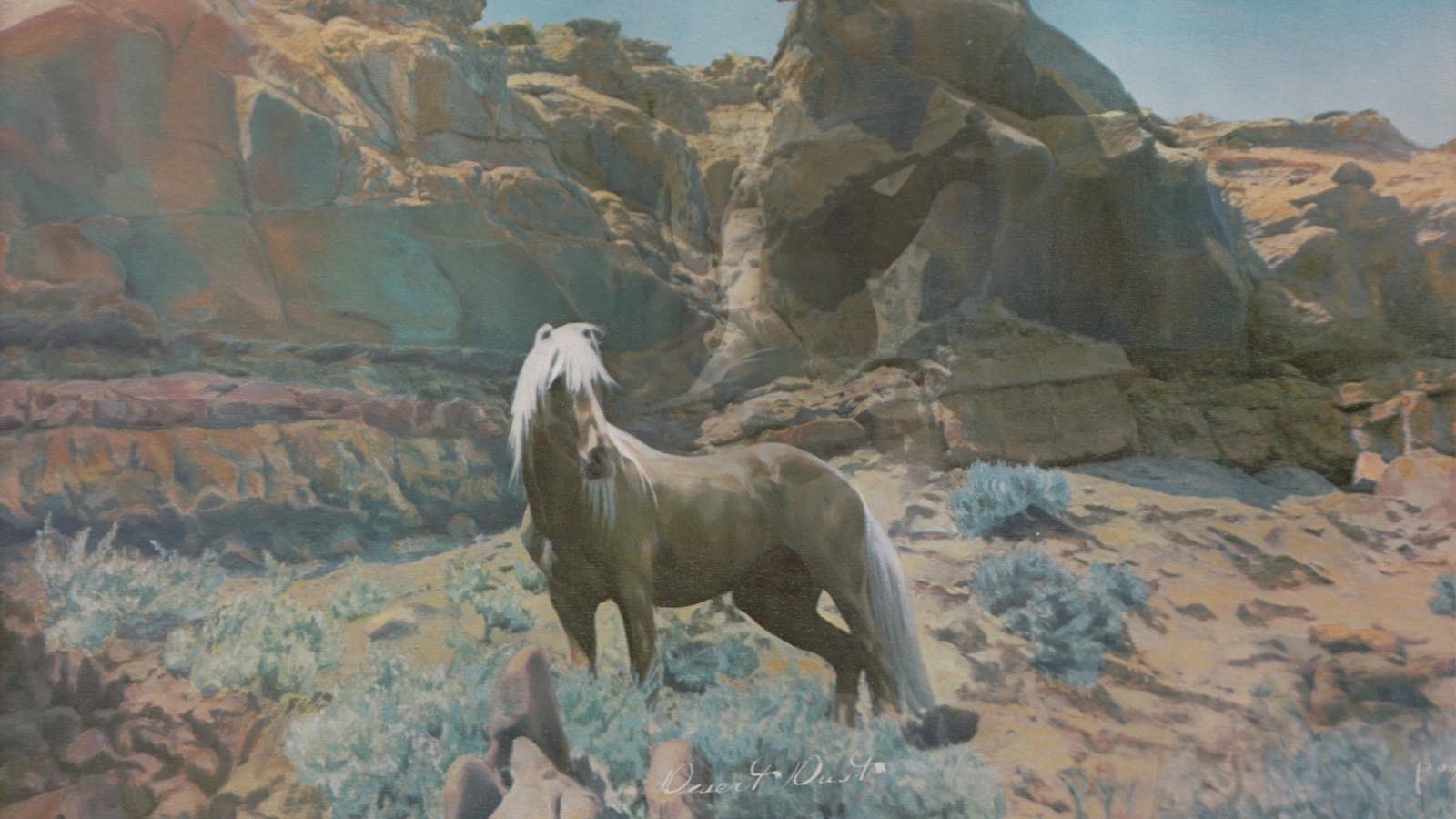
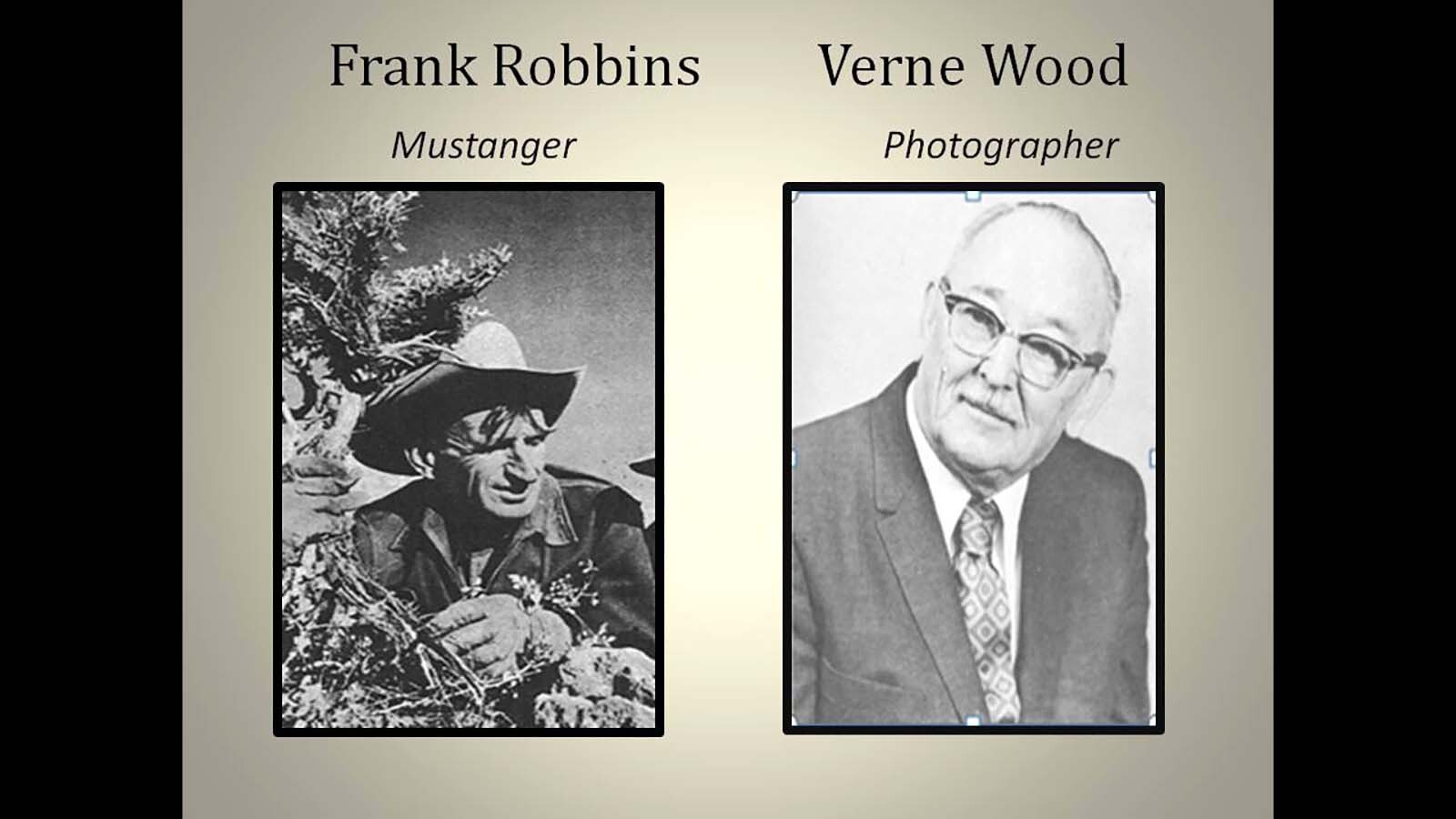
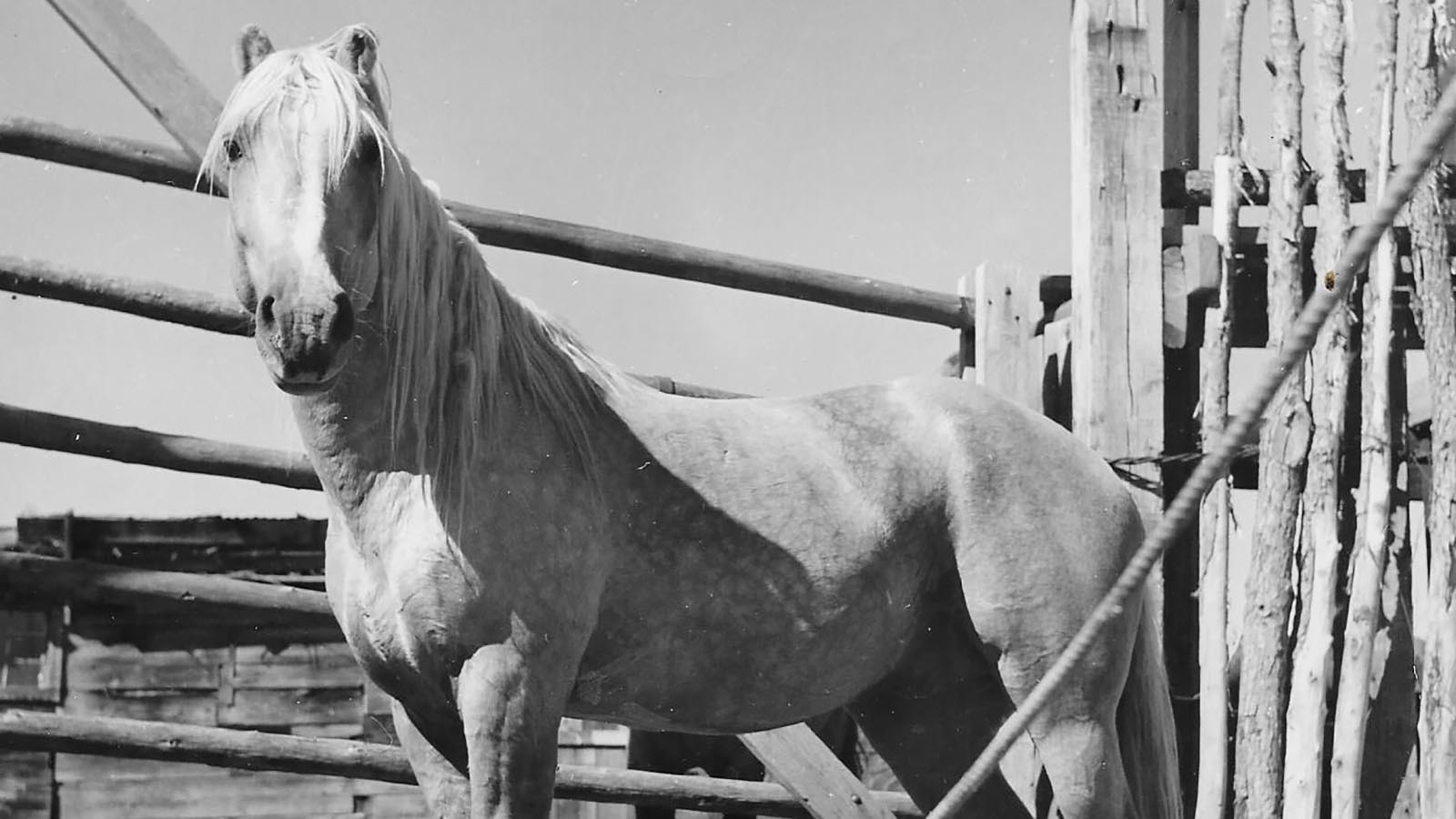
Eighty years ago, Frank “Wild Horse” Robbins was rounding up mustangs with an airplane in the Red Desert near Rawlins, Wyoming, when he spotted a rare palomino stallion running with the herd. He sent for his photographer, Verne Wood, to take a photo, unaware of the sequence of events that he was about to unleash. 

This photo caught the imagination of the world. The horse, now known as Desert Dust, had posed in sage and rock the day of his capture, still untamed and wild.  More than a million copies were sold worldwide appearing at such prestigious places as the House of Commons in London.

Wood hired a team to colorize the copies he sold, and life was good. However, his good fortune was about to change. Realizing the stunning popularity of his horse, Robbins sued for the rights of the famous photo, especially since now he planned to shoot a movie about Desert Dust with Universal Studios.  It was this first photo of Desert Dust that sparked an investigation by the Las Vegas detective into just who this horse was. What began as mere curiosity of a wild horse ballooned into a lifelong passion to tell the true tragic story of Desert Dust.

The Spark of an Investigation

Desert Dust was once the most famous Wyoming horse in the world, but by the time Gillilan was in high school in the 1960s, the memory of the wild stallion was beginning to fade and only tall tales seemed to remain. Desert Dust’s photo hung in nearly every important building in Rawlins, including Gillilan’s high school, and everyone knew his name but not much else.  

“I was always interested in the story of Desert Dust,” Gillilan said. “My granddad was really mad about the dog food thing.” Many of the wild horses in the early days were slaughtered after their capture for dog food. His grandfather hated to see these symbols of America destroyed like that and it colored Gillilan’s own story of all the horses, including Desert Dust.

Gillilan’s earliest memories of Desert Dust’s owner, Frank Robbins, was his grandpa glaring at the horse wrangler in unconcealed contempt at a wild horse sale. Robbins had used airplanes to catch Desert Dust and the horse had died in his care. It also didn’t help that his grandpa’s neighbor and friend was a horse wrangler in competition with Frank Robbins.

“Typical small town,” Carmalen, Gillilan’s wife, said. “You have to take one side or the other. You can’t both be true.” These memories of his childhood prompted Gillilan to eventually buy his own tinted portrait of Desert Dust and hang it in his house. It became more than a photo and a story began to emerge after his daughter, Kyla, asked an innocent question.

She wanted to know who the horse was and Gillilan had given her the basic answer he knew. Desert Dust had been the first wild stallion ever captured by an airplane and this horse was the inspiration of his Rawlins high school mascot, the Outlaws. However, he was about to prove himself wrong. The longer he pondered the question of just who Desert Dust really was, the more doubt crept in and the investigator in him took over. Gillilan may not have had any formal training as a historian, but he knew how to find the clues that would tell the story. 

For the next 20 years, his vacations involved chasing down the facts about Desert Dust and knocking on the doors of strangers. He dragged his family into remote canyons, learned how to surf the web and went wherever the trail led him. This hard-boiled detective was determined to learn the truth about Desert Dust, no matter how long it took. Slowly, the story began to emerge.

The Famous Photo

On the morning of July 12, 1945, after getting the call from horse wrangler Robbins, Wood had snapped a black-and-white photo of Desert Dust. Even as he took the photo, his family said he knew that he had just captured the photo of a lifetime. “It was about a week before the atomic bomb was tested in New Mexico,” Gillilan said, noting the timeline. “The war wasn’t over yet when they developed this picture.”

Wood was the first one to announce the name of the wild palomino and started selling black and white copies to others besides Robbins. As the picture’s popularity started to grow, Wood started colorizing his photos and then he hit it big. “Verne really started selling a lot of them after he submitted the picture to the Denver Post and won the contest,” Carmalen said. 

In the late 1940s, everybody that was in agriculture that could went to Denver for the stock show and the national western show. The newspaper contest announced their winner when this crowd was in town and people from all over the country saw the picture as a result. Sales rocketed.  “He started hiring gals to come in and do the hand painting, and he’s getting orders all over the country and things have never been better,” Gillilan said. “He has six people working for him.” “He actually built an enlarger,” Carmalen added. “He was really cutting edge.”

When Robbins realized just how successful Wood was with this photograph of his horse, he filed a lawsuit. “It wouldn’t have been a problem at all if they had signed a contract,” Gillilan said. “But when Desert Dust’s picture got to be a really big deal, that’s when Frank sued.” Wood had already copyrighted the photo and so the judge decided that the two of them would both share the copyright and be able to make colorized photos to sell. As a result, Robbin’s wife started painting her own version of Desert Dust so there are now two different styles of the same photo with two different bylines. 

An Investigator Turns Historian 

Gillilan always had a fascination with history and making sure all perspectives were told, especially after spending a career keeping people honest in the sin city of Las Vegas. He recalled that as a youngster in 1962, before life led to detective work, he had gone to the Custer Battlefield and heard two completely different stories told by two rangers. Both were right but their stories were wildly different.  “That really got to me,” he said. “I learned that there’s more than one story to everything and everybody has their own version of the story.”

As an investigator, Gillilan knew that he would need to know as many versions as possible of a case and look at it from everyone’s point of view. “I also learned along the way that con artists are sharper than a tack in their own little element, although, there’s some really dumb criminals too,” he said.

He used this knowledge to pursue the story of Desert Dust and unravel years of hidden stories to get to the truth of just who this beautiful palomino was. “I think that the families (of Wood and Robbins) respected that,” Carmalen said. “The people directly responsible for Desert Dust and the picture could no longer speak for themselves and the good thing about Gil, he didn’t draw any conclusions. He said, here’s the facts.”

Gillilan ended up with a few unsolved mysteries surrounding Desert Dust and so his investigation continues to this day. One mystery was just who ultimately killed Desert Dust and why. The stallion had been found shot and following the facts he had uncovered, Gillilan concluded it was about fences. “Frank was an opportunist at best,” Gillilan said. “Desert Dust basically got killed because (a rancher named) Franklin let his horses go on somebody else’s land all the time.” 

Pursuing A Phantom Horse 

During the years of spending his vacations researching Desert Dust, Gillilan met remaining families of Wood and the horse wrangler Frank Robbins. Both families had their own pain, family lore and legends about Desert Dust that slowly Gillilan started to unravel. In the end, he also unintentionally brought about some healing as the families began to see the bigger picture of the legacy left behind by Desert Dust’s capture and brief life.

Gillilan also rekindled old friendships himself and made new, meaningful friends during his investigation into Desert Dust. “It just happened that when I was in high school, there was a young lady a year ahead of me that was editor of the school paper,” he said. “The next year I was the editor of the school paper and we became really close friends. Now she worked at the clerk of the courts office in Rawlins and I called her up.”

His high school friend put together all the information she had about the lawsuit with Desert Dust, helping to put more puzzle pieces together and deepening the mystery surrounding the horse and his picture.  He also found out that the real reason Frank sued was not to make more photos himself, although that became a nice benefit. He sued because he wanted to make a movie about his horse with Universal Pictures. 

“They said, ‘We don’t want anything to do with something that’s in a legal mess, even if it’s kind of settled,’” Gillian said. “So, they ended up making the movie with Desert Dust, but calling him Pal, short for palomino.”  “Fight of the Wild Stallion” was shot as a documentary, recreating the capture of Desert Dust, two years after he had been captured. When Gillilan uncovered a copy of the movie at the American Heritage Center, he felt like he had found gold. Here was Desert Dust, alive and running with the herd.

Another treasure was meeting others who had also been interested in Desert Dust’s story and had interviewed key people before they passed away, including the pilot who had captured Desert Dust with his plane.  “They ran them along fences they built into a canyon with the airplane, and the horseback riders would come along on the sides and force them into the box canyon,” Carmalen said. “That plane would scare them and then they closed the canyon behind them.”  On one of their family trips to Wyoming, the vacation was to the very canyon Desert Dust was captured in and the family discovered the fences were still there. 

Still Searching for New Clues 

Gillilan had donated his extensive research to the American Heritage Center and then discovered a Laramie author, Paul W. Papa, who just happened to also be living in Las Vegas. This was the author he knew would be able to tell Desert Dust’s story since, as Gillilan said, he was an investigator but not a good writer. Papa agreed to write Desert Dust’s story but with one stipulation. He said that the real story was how a Las Vegas investigator uncovered the story of this nearly forgotten stallion that at one time represented all of Wyoming’s wild horses. 

Gillilan thought that the book, ”Desert Dust”, would be the end of his journey with the palomino. However, he is still drawn to Desert Dust’s story and continues to discover more secrets that were lost to time.  “It’s a piece of history that would have been lost,” Carmalen said. “It’s really a fascinating story with a lot of characters that Gill brought to life.”

SOURCE: COWBOYSTATEDAILY.COM

DIY: Bungee & Wine Cork Cord Ties

From: thekimsixfix.com website:

Today I have a super quick little tutorial for you.  The end product isn’t the biggest, most exciting thing you have ever seen, but sometimes these little hacks are the best tricks!

If you are anything like me, you probably have a bunch of extension cords lying around your house or garage.  Maybe they are neatly wrapped up neatly hanging on a hook, or maybe they are thrown in a box, or maybe you are even organized enough to keep them neat by tying them up with zip ties (which is actually what I have always done when I am planning to store them long term.) But what I didn’t like about the Zip Tie method is that you need to cut off the tie to remove it, they aren’t reusable.

Then one day I was reading my subscription to Family Handyman (hey, some girls like Vogue, I like FH!) and I saw a reader had submitted this cork cord tie in the ‘hacks and tricks’ column.  I was immediately intrigued.  So I ran out and bought all the supplies to make my own.

The actual ‘device’ couldn’t be simpler.  A bungee cord through a wine cork.

I probably don’t have to tell you where to get wine corks. (This project is a good excuse for that glass of Merlot.)  Keep in mind YOU NEED TO USE THE SYNTHETIC RUBBER CORKS.  Real corks will crack and break when you put tension on them. So if you are your palate is too snobby too sophisticated to drink fake-o wine cork wine.. call me.  I can definitely hook you up.

When I made my version I used mini-bungee cords since they were cheaper than buying a roll of the cording itself.  If you were going to make a lot of these, or if you wanted the ties to be longer, you could always buy the actual cording.

Because I bought the cords, I needed to remove the hooks so I cut the knot off one end,

and slid the hooks off (I left the knot on the other end, since I could reuse it.) Next I drilled holes in the wine corks.  

You want the holes pretty close to the center, since you need to ends free to wrap the cord around. Next I pushed the cording through the holes forming a loop on one side. 

I tied the end of the cord that I had cut. And to prevent fraying I singed the end. Burning the tip of the cord melts the plastic and keeps the outer wrapping from unraveling.

The end product:

SOURCE: THEKIMSIXFIX.COM

Starfish

Starfish (or sea stars) are beautiful marine animals found in a variety of colors, shapes, and sizes. All starfish resemble stars, and though the most common have only five arms, some of these animals can grow up to 40 arms. The amazing sea creatures—part of a group of animals known as echinoderms—travel using their tube feet. They can regenerate lost limbs and swallow large prey using their unusual stomachs.

Sea Stars Are Not Fish

Although sea stars live underwater and are commonly called “starfish,” they are not true fish. They do not have gills, scales, or fins like fish do. Sea stars also move quite differently from fish. While fish propel themselves with their tails, sea stars have tiny tube feet to help them move along. Because they are not classified as fish, scientists prefer to call starfish “sea stars.”

Sea Stars Are Echinoderms

Sea stars belong to the phylum Echinodermata. That means they are related to sand dollars, sea urchins, sea cucumbers, and sea lilies. Overall, this phylum contains approximately 7,000 species. Many echinoderms exhibit radial symmetry, meaning their body parts are arranged around a central axis. Many sea stars have five-point radial symmetry because their body has five sections. This means that they do not have an obvious left and right half, only a top side and a bottom side. Echinoderms also usually have spines, which are less pronounced in sea stars than they are in other organisms such as sea urchins.

There Are Thousands of Sea Star Species

There are about 2,000 species of sea stars. Some live in the intertidal zone, while others live in the deep water of the ocean. While many species live in tropical areas, sea stars can also be found in cold areas—even the polar regions.

Not All Sea Stars Have Five Arms

While many people are most familiar with the five-armed species of sea stars, not all sea stars have just five arms. Some species have many more, such as the sun star, which can have up to 40 arms. 

Sea Stars Can Regenerate Arms

Amazingly, sea stars can regenerate lost arms, which is useful if a sea star is injured by a predator. It can lose an arm, escape, and grow a new arm later. Sea stars house most of their vital organs in their arms. This means that some species can even regenerate an entirely new sea star from just one arm and a portion of the star’s central disc. This won’t happen too quickly, though; it takes about a year for an arm to grow back.

Sea Stars Are Protected by Armor

Depending on the species, a sea star’s skin may feel leathery or slightly prickly. Sea stars have a tough covering on their upper side, which is made up of plates of calcium carbonate with tiny spines on their surface. A sea star’s spines are used for protection from predators, which include birds, fish, and sea otters. One very spiny sea star is the aptly named crown-of-thorns starfish.
Sea Stars Do Not Have Blood
Instead of blood, sea stars have a circulatory system made up primarily of seawater. Seawater is pumped into the animal’s water vascular system through its sieve plate. This is a sort of trap door called a madreporite, often visible as a light-colored spot on the top of the starfish. From the madreporite, seawater moves into the sea star’s tube feet, causing the arm to extend. Muscles within the tube feet are used to retract the limb.
Sea Stars Move Using Their Tube Feet
Sea stars move using hundreds of tube feet located on their underside. The tube feet are filled with seawater, which the sea star brings in through the madreporite on its top side. Sea stars can move quicker than you might expect. If you get a chance, visit a tide pool or aquarium and take a moment to watch a sea star moving around. It is one of the most amazing sights in the ocean. Tube feet also help the sea star hold its prey, including clams and mussels.
Sea Stars Eat with Their Stomachs Inside-Out

Sea stars prey on bivalves like mussels and clams as well as small fish, snails, and barnacles. If you’ve ever tried to pry the shell of a clam or mussel open, you know how difficult it is. However, sea stars have a unique way of eating these creatures. A sea star’s mouth is on its underside. When it catches its food, the sea star will wrap its arms around the animal’s shell and pull it open just slightly. Then it does something amazing: the sea star pushes its stomach through its mouth and into the bivalve’s shell. It then digests the animal and slides its stomach back into its own body. This unique feeding mechanism allows the sea star to eat larger prey than it would otherwise be able to fit into its tiny mouth.
Sea Stars Have Eyes

Many people are surprised to learn that starfish have eyes. It’s true. The eyes are there—just not in the place you would expect. Sea stars have an eye spot at the end of each arm. This means that a five-armed sea star has five eyes, while the 40-armed sun star has 40 eyes. Each sea star eye is very simple and looks like a red spot. It doesn’t see much detail but it can sense light and dark, which is just enough for the environments the animals live in.

All True Starfish Are in the Class Asteroidea

Starfish belong to the animal class Asteroidea. These echinoderms all have several arms arranged around a central disk. Asteroidea is the classification for “true stars.” These animals are in a separate class from brittle stars and basket stars, which have a more defined separation between their arms and their central disk.

Sea Stars Have Two Ways to Reproduce

Male and female sea stars are hard to tell apart because they look identical. While many animal species reproduce using only one method, sea stars are a little different. Sea stars can reproduce sexually. They do this by releasing sperm and eggs (called gametes) into the water. The sperm fertilizes the gametes and produces swimming larvae, which eventually settle on the ocean floor, growing into adult sea stars. Sea stars can also reproduce asexually through regeneration, which is what happens when the animals lose an arm.

SOURCE: THOUGHTCO.COM

National Eat Your Jello Day!

In honor of the day, I am bringing the recipe for Knox Blox—or the Jello you can cut into shapes and eat with your fingers!

ingredients

3 (3 1/4 ounce) packages Jello gelatin (any flavor)

4 (1 ounce) envelopes unflavored gelatin

4 cups boiling water

directions

Heat the 4 cups of water until boiling.

Combine the Jello and gelatin together in a bowl.

Pour in the water.

Stir until completely dissolved.

Pour into a glass dish or pan.

Put in refrigerator about 2 hours to cool and set.

When set cut into squares.

How many you get depends on how large you cut them. You can also use cookie cutters for shapes.

ENJOY!

Pennsylvania State Flower: Mountain Laurel

Mountain laurel (Kalmia latifolia) is a familiar shrub. While common, it is also extraordinary. A part of Pennsylvania’s folklore as the state flower and also studied by scientists for its biomechanics, this broadleaf evergreen abounds in mystique.

Since the early 18th century, mountain laurel has been cultivated as a flowering ornamental, an exotic addition to English gardens. English breeders later shipped it back across the Atlantic to be sold to Americans as a potted plant. At least 75 cultivars, mostly propagated through tissue culture, are available today. Its native range, however, is the eastern United States, extending from southern Maine to Louisiana and northern Florida. A total of seven species are known throughout North America, including sheep laurel (Kalmia angustfolia) and bog laurel (Kalmia polifolia). Along with rhododendrons, azaleas, huckleberries, and Indian pipe, Kalmias are ranked among the Ericacea (heath) family. 

Mountain laurel is the most prolific of the Kalmia species. In the woods, it can grow in dense, gnarly thickets known colloquially in southern states as “laurel hells.” Foresters and lumbermen in Pennsylvania have been heard to curse it with off-color expressions and not-so-nice epithets, the least offensive being “ankle breaker” or “ankle twister.” Mature plants average heights from seven to ten feet, but some specimens have been recorded as tall as 40 feet. Ascending and horizontal branches are often contorted and considered picturesque, and although a shrub, the healthiest of mountain laurels can take on the stature of a small tree. Its growth rate, however, is slow, four to eight feet over the course of a decade. Laurel wood and its burls have been used for various tools and utensils, explaining one of its many monikers, “spoonwood.”

The corymb is the marquee attraction. The fused petals of mountain laurel’s florets are shaped like inverted parasols. They range from near white to a blush of pink, while their corollas include subtle markings that can reveal either cinnamon, scarlet, rose, or burgundy. Like the symmetrical shapes of dancers in a 1930s Busby Berkeley musical, each floret is perfectly formed. From late May to late June, scores of these corymbs appear in one of two stages, bud or bloom.

Governor Gifford Pinchot dubbed mountain laurel the state flower of the Commonwealth of Pennsylvania in 1933. One factor in its designation concerned the shrub being located in nearly all of the state’s sixty-seven counties, but the public’s concern for conservation might have also played a role.

Generations of Pennsylvanians have been admonished by their parents, scout leaders, and camp counselors that it was against the law to pick the state flower. This is not true, according to the Department of Conservation and Natural Resources. There are also no legal restrictions on cultivating Kalmia latifolia, although special permits and inspections from the Pennsylvania Department of Agriculture are required to sell any collected native specimens.  

SOURCE:PSU.EDU