(Compiled from the writings of Dr. Bob Livingston)
There is much interest by the left-wing in the elimination of the EC; indeed, three attempts have been made through the years, with the first serious challenge in 1969/70 by Birch Bahy, a young Democrat Senator from Indiana, who was also responsible for the introduction of the 25th Amendment after the assassination of JFK. He failed to overturn the EC, thankfully. Of course, the leftists claimed this was due to racism.
Bayh reintroduced an Electoral College amendment five more times over the next decade. The only time it came up for a full Senate vote was in 1979, when it got 51 votes, well shy of the 67-vote supermajority needed to pass a constitutional amendment.
There is also currently a pact among 13 states and DC called the “National Popular Vote Interstate Compact (NPVIC)” that bears watching.
“The National Popular Vote Interstate Compact (NPVIC) is an agreement among a group of U.S. States and the District of Columbia to award all their electoral votes to whichever presidential candidate wins the overall popular vote in the 50 states and the District of Columbia. The compact is designed to ensure that the candidate who receives the most votes nationwide is elected president, and it would come into effect only when it would guarantee that outcome.[2][3] As of November 2020, it has been adopted by fifteen states and the District of Columbia. These states have 196 electoral votes, which is 36% of the Electoral College and 73% of the 270 votes needed to give the compact legal force.
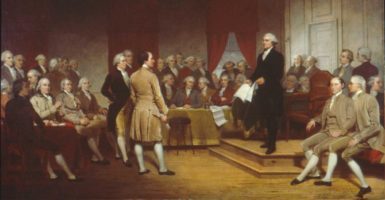
The Founding Fathers feared two things above all else: a democracy and an overly powerful executive. The Electoral College was designed to prevent both. For a good, very detailed history of the Electoral College and its evolution over the years, read “Origins of the Electoral College,” by Randall G. Holcombe.
Without the Electoral College a presidential candidate would merely have to win a big majority of the population in the five or six of the most populace states to carry the election – say California, New York, Texas, Ohio, Pennsylvania and Florida. As it is, Democrats hold a decisive advantage in the Electoral College math because they advocate for socialism. Minorities love socialism, and minorities tend to congregate in the urban areas. As a result, Democrats can win only about 20-30 percent of the counties of the America and still win the election, even with the Electoral College.
Look at the map below. It shows the counties won by Hillary Clinton (blue) and Donald Trump (red). Had Clinton been elected a vast swatch of Middle America – geographically speaking — would have been on the losing end of the election.
The globalist elites want to erase all borders in their move toward one world government, and the globalist elites love democracy as much as minorities love it. That’s because the principle of government is that political power is maximized by forcibly leveling every individual to the same status of conformity, collectivism, ecumenicalism and serfdom.
But it must be done in such a way that the people who are being reduced never see it coming. That’s why it’s done with gradualism and by “the vote.” If we aren’t careful, we will vote for our own slavery.
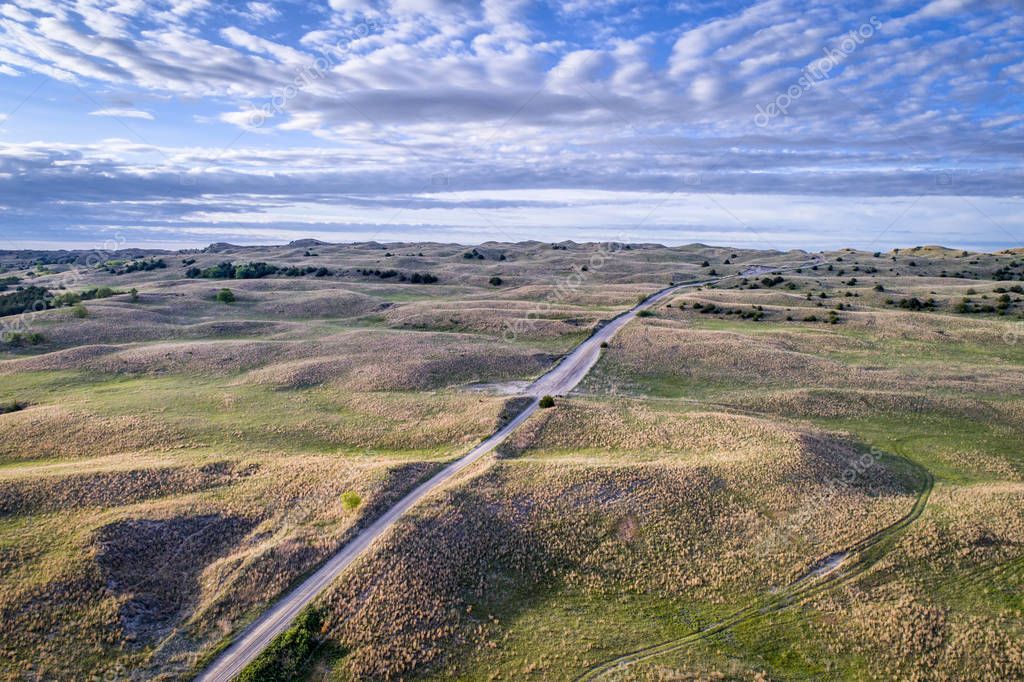
Overall, Nebraska is pretty good at keeping secrets. There are still tons of people who have no idea that ours is a state full of impressive natural beauty and enviable attractions. Even for those of us who have lived here forever, there’s always more to explore and discover…like these 15 places.
1. Kregel Windmill Factory Museum, Nebraska City
This fun museum is all about that most ubiquitous of rural Nebraska sights: the windmill. Kregel Windmill Factory Museum is filled with the machinery and tools that were used to manufacture windmills at the beginning of the 20th century.
2. Florence Mill, Omaha
Just down the street from the Mormon Winter Quarters is the historic Florence Mill, built under the supervision of Brigham Young in 1846. The original mill has been rebuilt and added onto several times over the years, but it contains the only remaining structural components of the original Winter Quarters settlement. Today it’s an art gallery and a meeting space – there’s even a farmers market on the grounds in the summer.
3. Bone Creek Museum of Agrarian Art, David City
This fairly new museum is the nation’s only museum displaying exclusively agrarian art. Bone Creek has received much praise from the art community for its thoughtful, complex, and well-organized exhibits. This is a must-visit for anyone who sees the agricultural life as rich with artistic opportunities.
4. Happy Jack Peak and Chalk Mine, Scotia
Those of you who know and love Happy Jack will be shocked to learn that there are so many Nebraskans who have no idea it exists. This diatomite mine – and the big hill and gorgeous surroundings outside – should be a required destination for all Nebraskans. Read up on its history and plan your own visit on the attraction’s website.
5. The Speakeasy, Sacramento (Holdrege)
Being located in the middle of nowhere, in a town that doesn’t actually exist anymore, doesn’t hurt the Speakeasy’s business at all. If anything, it seems like people are drawn to this mysterious oasis of gourmet food in south-central Nebraska. The formally trained chef brings a creative element to the food that is hard to find in rural areas. Read more about the Speakeasy here.
6. Alpha Omega Labyrinth, North Platte
There are, perhaps surprisingly, quite a few labyrinths in Nebraska. This one, however, was constructed as an Eagle Scout project in 2007. We think that makes it pretty unique. The Alpha Omega Labyrinth is located just outside of the First United Methodist Church in North Platte, and the public is welcome to come walk the path and seek enlightenment.
7. Crescent Lake National Wildlife Refuge, 30 miles north of Oshkosh
The peace that you’ll feel out in the still air on the western edge of the Sandhills is indescribable. This place is truly magical.
8. Old Poor Farm Animal Sanctuary, Dodge County
This farm has a long and fascinating history – you can read all about it here. Today it houses animals that would otherwise have nowhere to go. It’s open seasonally for historical tours.
9. Heron Haven, Omaha
It comes as a surprise to many that there’s such a relaxing, serene natural place within Omaha city limits. The spring-fed wetland sanctuary offers education on conservation and natural history, and of course it’s the perfect place for birders.
10. Terry’s Steakhouse, Virginia
Yes, Nebraska, there is a Virginia – it’s near Beatrice in Gage County. In the extremely tiny town with fewer than 60 residents is a steakhouse that’s definitely worth the drive. Terry’s Steakhouse is a true gem with more than its share of devoted fans.
11. Johnson Lake State Recreation Area, near Elwood
The large lake at this recreation area is surrounded by a relatively small amount of land, leaving the focus firmly on the water. You can camp, swim, fish, and generally just enjoy the outdoors at Johnson Lake, and it’s less crowded than some of Nebraska’s other recreation areas.
12. Museum of Shadows, Plattsmouth
Are you afraid of the things that go bump in the night? This is where they live. This unique museum is the only one of its kind in the Midwest, and it’s sure to delight ghost hunters and paranormal enthusiasts. The Museum of Shadows isn’t just for Halloween; its exhibits are open to entertain and enlighten all year round.
13. Rock Creek Station Historical Park, Fairbury
This is one of several places in Nebraska where you can actually see and touch the ruts worn into the ground by wagons on their westward journey on the Oregon Trail. Visit Rock Creek Station in the summer and you’ll see living history reenactments that will really bring the past to life.
14. The Most Unlikely Place, Lewellen
This place definitely lives up to its name; you wouldn’t expect to find healthy food, an organic farm, and a thriving art community out here in western Nebraska, but The Most Unlikely Place delivers them all.
15. The underground missile silo house, near Kimball
Driving past this property may not alert you to the wonder that exists below the surface. An abandoned Cold War-era missile silo has been converted into a large subterranean home with all – ok, most – of the amenities you’d find above ground. Find more information about this unique home here.
Show of hands: is there anyone who already knew about every one of this hidden treasures? How many of them are you planning to visit now?
Folks who follow Thoroughbred racing on TV only see the pomp and ceremony in gorgeous, bucolic settings – IOW, the elites – not the mundane and yes, often seedy, environs of the small, cheap, so-called “dirt” tracks. It is rare for trainers from these small tracks to make the big time. Jack Van Berg was one of them. I worked for him briefly at Ak-Sar-Ben, which, by the way, is Nebraska spelled backwards.
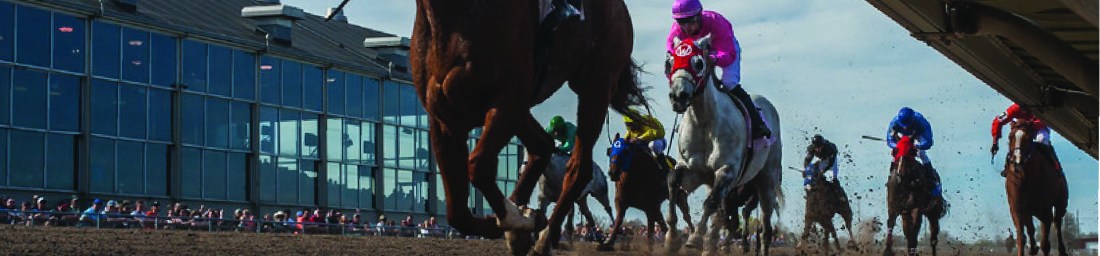
I first began in the early ’70’s at Fonner Park in Grand Island, which has now been incorporated into the State Fairgrounds. Atokad Racetrack (Dakota spelled backwards for the Indian tribe) in So. Sioux City has been closed and Ak-Sar-Ben has been demolished. This was the first race of the season last year at Fonner Park.
The horses are walked to the paddock before every race, where they are tacked up, and a Paddock Judge checks the lip tattoo of each horse. All racehorses have a number tattooed on the underside of their upper lip, which identifies them. He also gives every horse the once-over for any injuries or injection sites. Yes, some of the dirt-track trainers dope their horses. As with any insular culture, there is a hierarchy and most are fully aware of which trainers dope or mistreat their horses.
Usually, it is the groom – the 2nd to lowest in the pecking order – who is at the heads of those horses, trying to keep them calm and focused. Grooms literally live with their horses for every minute of every day within a very transient life. You move from track to track, staying in various places – a hotel in Gr. Island, a rented room in a private home in Columbus, an apartment in Omaha, a hotel across the river in Sioux City.
By the way, if you want to know who to bet on in a race, find a way to talk to the grooms. They know ALL of the inside skinny – which jockey is going to throw which race in order to help a young jockey into the winner’s circle (called a “boat race”), which horse is drugged out of it’s mind, which horse is particularly sore that day, which one is a “machine” horse……they know it all!
Ah yes…..a “machine horse.” I had one of those: Stumpy the Boy, sire named Stumps. It was he who stomped on my bare foot right over my arch (NEVER go barefoot in the shed row) with the sharp toe grabs on his new shoes. I almost passed out and couldn’t wear my boots for weeks but I ran my horse!
This is Secretariat but Stumpy looked exactly like him.
A “machine” is an electric buzzer that jockeys hold in their hands or, if there is a “shakedown” in the starting gate, hide in their clothes. Stumpy would be 15 lengths behind into the last turn, yet end up 10 lengths in front at the finish line! He was THAT fast but it took a shock from a machine to get him moving! Here’s a trick for you: when you see a horse corkscrewing their tail, going round and round, that is often an indication they were just “plugged in.”
Stumpy did NOT like men – he had been hand-raised by a woman; he also hated for someone to stand outside his stall and look at him – with Stumpy, you did NOT dawdle in front of the stall. Walk right in or he would come at you with ears laid back and teeth bared. I put a metal gate on his stall rather than the webbing seen in this picture of a shed row on the backside at Belmont Park.
A groom’s life is repetitive – every single day, there are certain activities that must be completed for each horse and there are generally 4 horses for each groom.
Each horse must be fed at the same time every day with it’s own individualized feed mix, with supplements and medications. In the spring, it is around 6 am; in the heat of the summer, it is 4:30 am. When it is 90 degrees and humid by 8 am, you want your horses done with their workouts and back in the barn early. While they eat, the grooms head to the track kitchen to fill their own bellies, gulp as much strong black coffee as possible, and gossip; back to the barn within an hour or so, often making a stop at the head on the way back since your barn is a long way to walk.
The trainer will have provided instructions as to which horse is to be taken to the track to work-out and which are to be just walked. Most trainers have “hot walkers,” i.e., people who walk the horse around in a circle. Many also have mechanical walkers, such as this homemade one.
Automatic Walker
Some horses are very laissez-faire about this procedure, while others are absolutely terrified. The on/off switch is at the center – if a horse is acting up on the walker, you take your life in your hands trying to get to the on/off switch, all while holding your horse. So, you wait until the open spot comes around, step in and walk along as you connect the snap to your horse’s halter. It takes talent and agility!!
While the horse is out of the stall, you clean the stall, re-bed it, wash the feed and water tubs, and refresh the water and hay. You bring the walking horse in and commence the daily grooming – brushing, clipping, cleaning and treating the hooves, etc., etc. Some horses have their legs rubbed each day with liniment and stall bandages that must be applied carefully – too tight in the wrong direction and you run the risk of a “bowed” (i.e., damaged) tendon.
If your horse has been to the track that morning, about the time you get the stall done, the exercise rider is bringing your horse back and it is now time for the bath. I always trained my horses to ground-tie, i.e., I could drop the lead shank on the ground, say “stand,” and they would stay there while I bathed them. That proved challenging at the Columbus track, since our barn was located just 20 feet from the railroad tracks. THAT was fun!!!! Not really so grand, in truth.
Grandstand at Columbus, NE
Another of my favorites, Z Irish Lover, was indeed, the lover in the stable! Everyone simply adored her – she was a laid back, lanky bay mare, with white markings, who simply loved people – ALL people – but especially children. It is rare, indeed, to find a Thoroughbred race horse who can be trusted with children. Lover was that one! After a race, the horses have to be “cooled out,” or walked and watered until the sweat dries, they are breathing normally and their adrenaline has leveled off. Lover always tried to go down the shed row where the most people were located. She loved the attention.
Generic pic
Of course, we grooms always wanted our horses to look especially pretty. We would often make our own yarn pompoms, in the owner’s racing colors – Gary’s were Kelly green and white (his last name was Kelley). I would use a white bridle on her, with green and white pompoms in her braided mane and tail, and green or white “rundown” bandages. These are stretchy bandages that provide a little bit of support for their legs during a race. These are bell boots to protect the coronet band, from which the hoof grows (white area at top in pic below).
Coronet Band
There are different classes of races at every track: allowance, stakes, claiming, maiden, etc. I won’t get into the details but will provide a link for those who are interested. The majority of the races on the dirt tracks are claiming races – btw, if the horse dies during the race? Too bad – you just bought yourself a dead horse!
“Claiming Races are when owners can buy or sell their thoroughbred horses. Every thoroughbred horse running in a Claiming Race can be purchased (“claimed”) for a specific claiming price prior to the race. The horses usually have a similar value in price, bloodlines, and age.
A claim has to be put in before the actual race goes off. The outcome of the race is inconsequential once the horse has been claimed. The prices range on a low end of $1,000 to as much as $100,000.
The previous owner receives any winnings if the horse is in the money and the new owner receives the horse. Over half of the Thoroughbred Horse Races in America are Claiming Races, this serves as a way for owners to buy and sell horses.”
Lover always ran in stakes races but did not have the skills and ability necessary for the top races. She won repeatedly up to a certain level but was unable to compete above that. Finally, the owner decided to run her in a $15,000 claiming race, thinking no-one would take her for that amount. Lo and behold! She was claimed!!! It was THE hardest day ever for all of us working for Gary.
As her groom, it was my responsibility to take her over to the claiming shed so the owner could take possession. I cried all the way and passed by one of my fellow grooms on the way who was also in tears. I was required to remove her bridle and watch as they put on their own halter. I almost exploded when I saw them put the chain over her nose. There are many methods used to control a horse with a lead shank – usually leather with a measure of chain and a snap at the end. Some horses need this chain over their nose, some under their chin, and some inside their upper lip on their gums, called a “lip chain,” in order to control them. Lover NEVER needed such harsh tactics! I refused to allow them to take her away until they moved that chain!
The only thing that gave me any solace was that she had been purchased for breeding purposes and would never be raced again. Some years later, when my b-Mom was working on the racetrack in New Mexico, she happened to see a young horse on the program whose dam was Z Irish Lover. She bet on her because she remembered me raving about Lover and won hundreds of $$$’s on her win ticket.
I was happy envisioning my Lover romping in the fields with her foal by her side!
Humming birds are amazing birds and one of my absolute favorites!
Hummingbirds are the only birds that can fly in different directions. They can hover forward, backward, sideways, in mid-air, and even upside-down! They can also fly in the rain and shake their heads off to remove drops of water. What is incredible though is that they can shake their heads as fast as 132 times per second and rotate up to 202 degrees. And they can do all of this while flying!
Hummingbirds have a very fast metabolism, which is nearly 100 times faster than that of an elephant.
They eat nectars and insects such as ants, gnats, mosquitoes, and wasps the entire day just to survive. These hummers can feed every 10 to 15 minutes and scout between 1,000 and 2,000 flowers every day for food.
Don’t judge them by their size as hummingbirds have speed and stamina. They have been clocked in direct flights at about 30 mph and in courtship dives at 45 mph. In addition, their heart can beat up to 1,200 times per minute when flying and 225 times at rest. And their wings? Well, they can flap to as fast as 70 times per second on a regular flight and 200 times when diving.
Once a hummer has found a food source, it will return yearly. We generally begin to see ours in mid-April (depending on the warmth) and they depart in September. Our neighbor once told us that the hummers would fly to his windows in the spring and “say hello” and that’s when he knew it was time to get his feeders out. (Although hummers have no sense of smell, bears do and in early spring the sweet smell of the sugar water attracts bears, so we take our feeders in every evening.)
We found that in the mornings, the hummers will indeed fly at the window to “announce” they are up and to signal they are ready for breakfast…LOL
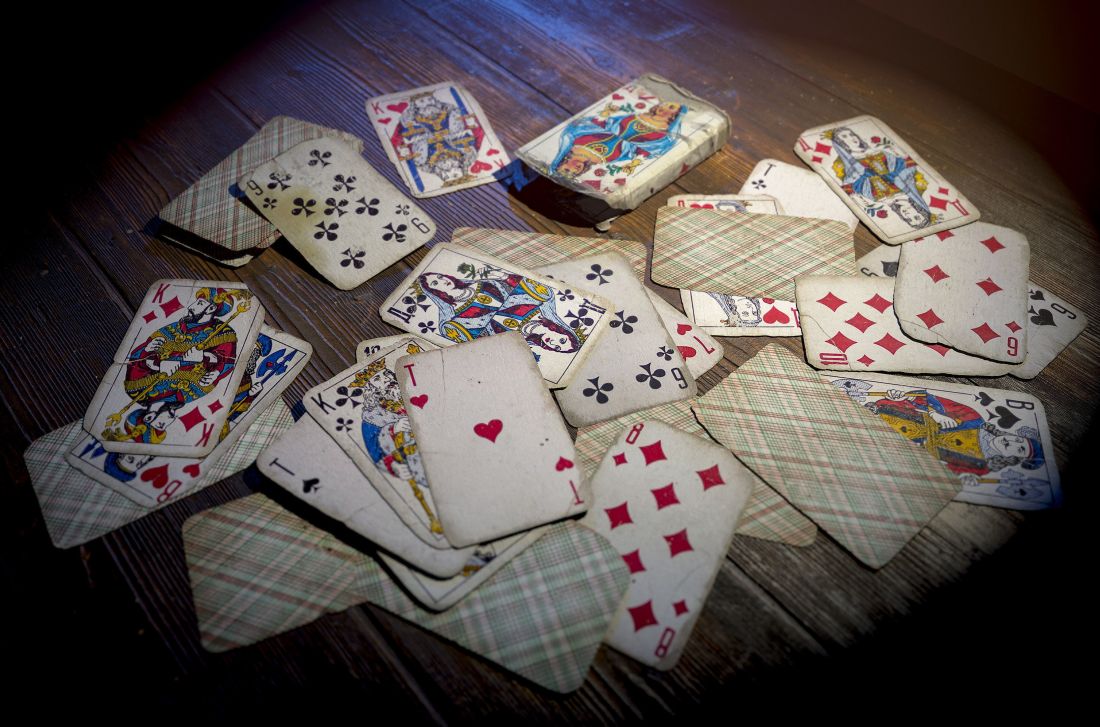
When playing cards first arrived in Europe toward the end of the 14th century AD, they caused quite a furor. In 1377, the town council of Florence complained that the playing of “a certain game called naibbe has recently been introduced into these parts,” and by a vote of 98 to 25 decided to prohibit it. In the same year cards reached Paris, where new city regulations cracked down on working-class cardplayers but apparently left nobel devotees alone.
European Playing Cards
The following year, in the Bavarian city of Regensburg, the council tried to limit card games to small stakes. By 1387, cards had arrived in the Spanish kingdom of Castile, where the government tried to ban them.
The killjoys were fighting a losting battle, however, for even at this early stage, cards began to acquire royal patrons. In 1379, the prince of Brabant, in Belgium, bought a highly decorated pack of cards, while in 1392 the mad French king Charles VI received three packs of cards painted by artist Jacquemin Gringonneur “for his amusement during the intervals in his sad illness.”
Charles VI/Gringonneur Cards
Playing cards soon led to the emergence of cardsharps, and the mother of all card swindles is recorded in the Parisian court annals for 1408. Two dubious characters lured a traveling merchant into an inn with talk of a good currency deal. One of them then produced a pack of cards from his pocket and demonstrated an amusing game of guessing the identity of a card while seeing only its back. The astute merchant soon noticed that one of the cards had a slight but distinctive mark on the reverse, so he happily joined in when the betting started. When the marked card turned up, the trader put his shirt on it, only to find that the front of the card was not the same, as it had been switched for another.
The French also made one great contribution to the development of playing cards by inventing, around 1480 AD, the names and shapes of the four suits (spades, hearts, diamonds, and clubs) we still use today. These simple geometric shapes did much to encourage card playing. By the end of the 15th century, playing card manufacture was a major industry, and even Johannes Gutenberg, often claimed to be the inventor of movable type, became involved.
Johannes Gutenberg Card
He developed some of the mechanical methods of production and, at a time when his finances were in desperate straits, he used drawings that his artists had prepared for his famous Bible to decorate the back of a deck of playing cards.
From this point the history of Western playing cards is clear. But who brought them to Europe in the first place? The subject is swathed in mystery, and it has at different times been claimed that they were introduced by Marco Polo (1254-1324), the Crusaders, or the Gypsies. The most exotic theories credit the Gypsies with the invention of cards (as a means of divination), and it has therefore been argued that their origins lie in India or even Egypt. The truth is that playing cards are a Chinese invention, but the problem has been that little is known of their transmission from China to the West.
Ancient Chinese Playing Cards
Playing cards had been invented in China by at least the 9th century AD when, according to tradition, a princess and her relatives played the “leaf game,” or cards. Women were certainly important in the development of card games, for one apparently wrote the world’s first book on the subject (now lost), later in that century.
By the 11th century, cards were printed with woodcut blocks, and in the early Ming dynasty (1369-1644 AD) famous artists were employed to design card backs with portraits of characters from favorite novels, such as The Water Margin. Chinese cards were much smaller than ours (about 2 inches long and 1 inch wide) and were printed on fairly thick paper, which made them hard-wearing but difficult to shuffle. Chinese “money cards” had four suits: cash, strings (of cash), myriads (of strings) and tens (of myriads), with the numbers 2 thru 9 in the first three and 1 thru 9 in the fourth.
Ancient Woodcut Playing Cards
The Chinese of yesteryear were enthusiastic cardplayers and gamblers, as they are today. Ming Dynasty books on cards praised them as superior to all other amusements, for they “were convenient to carry, could stimulate thinking and could be played by a group of four without annoying conversation, and without the difficulties which accompanied playing chess or meditation.” Also, “cards could be played in almost any circumstances without restrictions of time, place, weather, or qualification of partners.”
But this still leaves us without a link to Europe, for early Western cards don’t resemble Chinese ones and have different suits. The missing link appears to be the Islamic world, despite the fact that card playing was frowned on by Muslim clerics.
In 1938, Professor L.A. Mayer came across a pack of 52 cards while searching through the collections of the famous Topkapi Museum, in Istanbul, Turkey. They had been made in Egypt about 1400 AD, using designs that closely resemble those of early Italian cards.
Second card from left: The Seven of Swords (equivalent to Seven of Clubs)
Third card from left: the Malik of Cups (equivalent to the King of Hearts)
The Arabic inscriptions on the court cards make clear the origin of the word naibbe for cards (used by the Florence council); they are called the Malik (King), Na’ib Malik (Governor), and Na’ib Thani (Deputy Governor). They are in 4 suits – swords, polo sticks, cups, and coins (equivalent to modern clubs, spades, hearts and diamonds).
The only significant difference between these and early Italian cards is that the Egyptian ones are, like the Chinese, long and thin. Even this difficulty seems to have been overcome by the find of a single card with an Arabic inscription made around 1200 AD; its dimensions are like those of Italian cards, which are still slightly narrower than those made today in the rest of Europe.
There can now be little doubt that the Arabs were the intermediaries for the widespread transmission of one of ancient China’s most popular inventions.
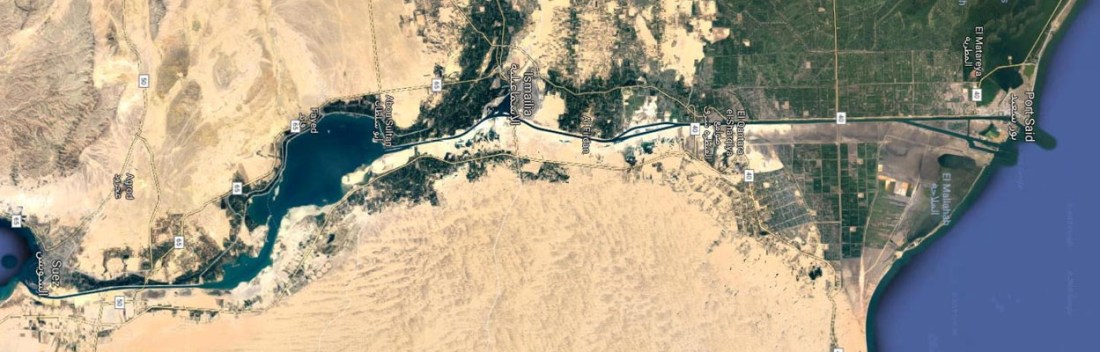
In 1869, the Suez Canal was finished under Ferdinand de Lesseps’s leadership. The French had wanted a shipping route from the Mediterranean to the Red Sea for a long time. A shortcut from Marseilles to the Orient would give France a fine advantage over England. As early as 1800 Napoleon had surveyors looking at routes.
Napoleon was told that the Red Sea was 30 feet higher than the Mediterranean. Dig a canal, his surveyors said, and the Red Sea will hemorrhage into the Mediterranean. It’ll sweep away the Nile Delta. The survey was grossly in error, of course. French scientists tried to point out that sea level couldn’t possibly differ that much at two points only eighty miles apart.
But the damage was done; the moment had passed; only the idea wasn’t dead. It re-emerged in both England and France after Napoleon was gone. Lesseps finally dug his Suez Canal so it wandered northward from the Red Sea, following two lakes, to a mid-point. Then he dug in a straight line to the Mediterranean.
That southern leg of the Lesseps canal actually followed a vastly older canal. Napoleon had been a latecomer to the canal idea. In 500 BC, the Persian conqueror of Egypt, Darius, had begun a canal along that same route. He meant his canal to swing west at the mid-point and link with the Nile near Cairo. But Darius’s experts, like Napoleon’s, decided the Red Sea was higher than the Mediterranean. They too thought a canal would result in disaster.
Ferdinand de Lesseps
So Darius didn’t finish his canal. But the Ptolemies who followed Darius did finish it. By 250 BC, a substantial canal linked the Red Sea and the Mediterranean. It was fifty yards wide and it served ocean-going vessels. Cleopatra probably rode that canal in her royal barge, a few years before the birth of Christ.
Here the plot thickens even further: For Darius had built on the route of an earlier canal, begun in 600 BC. And that canal followed the route of an even older canal that served shipping around 1500 BC. Temple carvings show the Queen of Egypt setting out for Africa on that canal. And, as Egyptian history blends into myth, 4000 or so years in the past, it tells of still other canals.
Cleopatra’s Barge
But the Suez Canal we remember is the one built only 140 years ago by Lesseps. The crowning irony is that the French honored Lesseps so highly for his work that they gave him the job of digging a Panama Canal. But that was another matter entirely. The Panama Canal had to penetrate jungles, cross mountains, and span great fields of mud. Twenty thousand workers died, and Lesseps returned to France in failure.
Spring is a time of renewal, rebirth. A chance to clean the slate and start again. Sweep out the old and usher in the new…
Every spring, households across the country engage in a ritual called Spring Cleaning. Pre-covid, my ritual was simple yet satisfying. I would target an area in the house, clean and organize, and remove any unwanted or unnecessary items.
NOT our house–I would freak out
But, Post-covid, that wonderful process has completely fallen apart. An interloper has intruded onto the scene and is hindering my best attempts to complete my mission!
Just the other day I was spring cleaning the kitchen, the refrigerator specifically. Following the previously tested and approved process, I would remove all the items from a shelf. Then I would check the expiration date on the package…tossing those whose freshness had passed. The surviving items I would wipe with a clean cloth and after washing the shelf, put the cleaned items back.
But that was all destroyed by covid.. I was removing items, checking their freshness dates and tossing the bad ones into the trash. Or at least I thought I was. As I was tossing items in the trash, hubby–better known around here as the Interloper–was removing them!
“I can still eat this…” he’d say, removing a jar of garlic olives.
“But you haven’t yet…” I told him, taking the olives back and tossing them again.
“But I will now.”
And the olives were placed BACK on the shelf. A container of yellow mustard followed the same route…and he only eats Golden Mustard…back on the shelf it went.
Finally, I tossed a can of biscuits that had seen better days…nearly a month after it’s expiration date. The Interloper insisted HE would make them with our dinner that evening and removed them from the trash, smiling. I had my doubts, but I returned his smile. I was picturing the day he would be enjoying garlic olives, alongside his mustard covered biscuits!
UPDATE:
Later that afternoon, I was sipping some tea, enjoying a cookie (or 3), when I heard a gunshot!! Frantic, I jumped up and ran right into the Interloper–who had also heard the gunshot! Confused, we searched high and low but saw nothing or no one who could have fired a gun. The mystery, however, was solved when I opened the refrigerator…the dang biscuit can exploded all over my clean refrigerator!
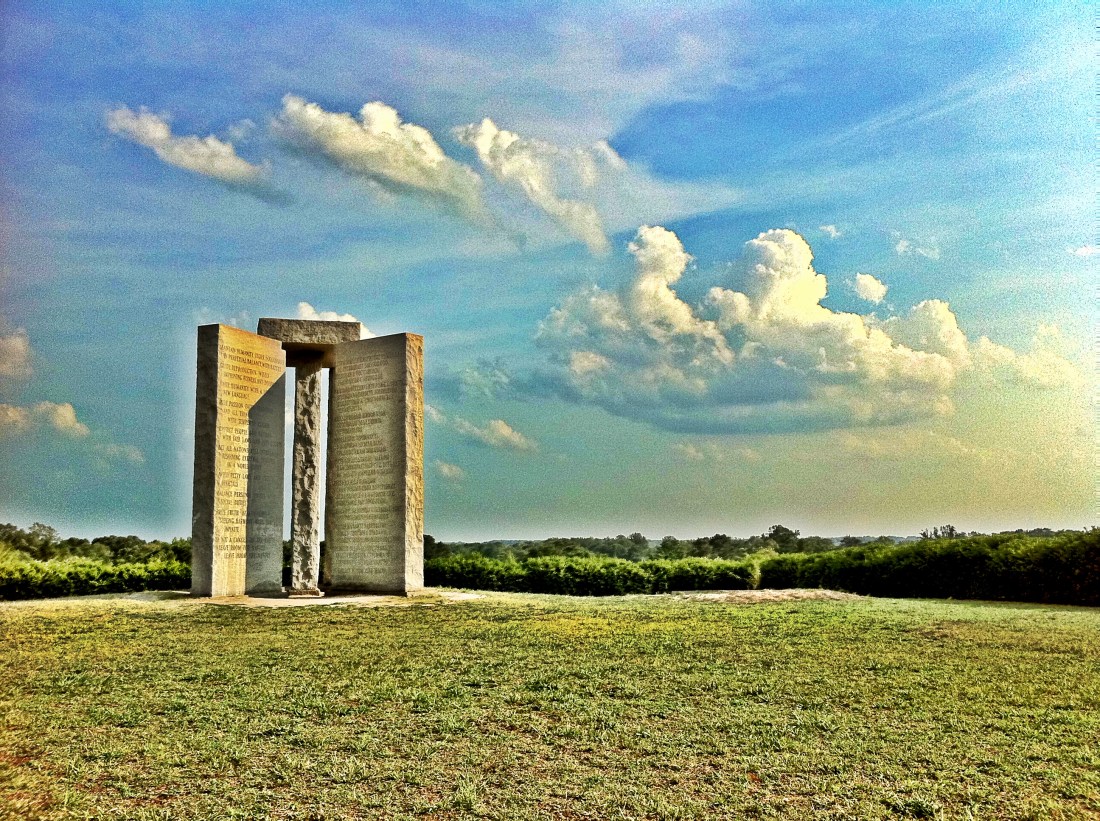
On one of the highest hilltops in Elbert County, Georgia stands a huge granite monument. Engraved in eight different languages on the four giant stones that support the common capstone are 10 Guides, or commandments. That monument is alternately referred to as The Georgia Guidestones, or the American Stonehenge. Though relatively unknown to most people, it is an important link to the Occult Hierarchy that dominates the world in which we live.
The origin of that strange monument is shrouded in mystery because no one knows the true identity of the man, or men, who commissioned its construction. All that is known for certain is that in June 1979, a well-dressed, articulate stranger visited the office of the Elberton Granite Finishing Company and announced that he wanted to build an edifice to transmit a message to mankind. He identified himself as R. C. Christian, but it soon became apparent that was not his real name.
He said that he represented a group of men who wanted to offer direction to humanity, but to date, almost two decades later, no one knows who R. C. Christian really was, or the names of those he represented. Several things are apparent. The messages engraved on the Georgia Guidestones deal with four major fields:
(1) Governance and the establishment of a world government,
(2) Population and reproduction control,
(3) The environment and man’s relationship to nature, and
(4) Spirituality.
A book written by the man who called himself R.C. Christian explained that the monument he commissioned had been erected in recognition of Thomas Paine and the occult philosophy he espoused. Indeed, the Georgia Guidestones are used for occult ceremonies and mystic celebrations to this very day.
THE MESSAGE OF THE GEORGIA GUIDESTONES
1. Maintain humanity under 500,000,000 in perpetual balance with nature. 2. Guide reproduction wisely – improving fitness and diversity. 3. Unite humanity with a living new language. 4. Rule passion – faith – tradition – and all things with tempered reason. 5. Protect people and nations with fair laws and just courts. 6. Let all nations rule internally resolving external disputes in a world court. 7. Avoid petty laws and useless officials. 8. Balance personal rights with social duties. 9. Prize truth – beauty – love – seeking harmony with the infinite. 10. Be not a cancer on the earth – Leave room for nature – Leave room for nature.
Limiting the population of the earth to 500 million will require the extermination of nine-tenths of the world’s people. The American Stonehenge’s reference to establishing a world court foreshadows the current move to create an International Criminal Court and a world government. The Guidestones’ emphasis on preserving nature anticipates the environmental movement of the 1990s, and the reference to “seeking harmony with the infinite” reflects the current effort to replace Judeo-Christian beliefs with a new spirituality.
The message of the American Stonehenge also foreshadowed the current drive for Sustainable Development. Any time you hear the phrase “Sustainable Development” used, you should substitute the term “socialism” to be able to understand what is intended. What is the true significance of the American Stonehenge, and why is its covert message important? Because it confirms the fact that there was a covert group intent on:
(1) Dramatically reducing the population of the world; (2) Promoting environmentalism; (3) Establishing a world government; and (4) Promoting a new spirituality.
Certainly the group that commissioned the Georgia Guidestones is one of many similar groups working together toward a New World Order, a new world economic system, and a new world spirituality. Behind those groups, however, are dark spiritual forces. Without understanding the nature of those dark forces it is impossible to understand the unfolding of world events.
A recent addition to the monument – a block on which is inscribed 2014 – was placed inside an indent between the English and the Spanish slab. While apparently trivial, this block nevertheless proves that the Guidestones is still updated by its sponsors and that its message is, more than ever, relevant in 2014.
Why is 2014 inscribed on that block? Will an event lead to the fruition of one of the Guidestones’ commandments in 2014? Considering the fact that the first commandment is about maintaining the world population under 500 million, this is somewhat disturbing.
The fact that most Americans have never heard of the Georgia Guidestones or their message to humanity reflects the degree of control that exists today over what the American people think. We ignore that message at our peril.
The hole was drilled in the Center Stone so that the North Star could be visualized through it at any moment. This was one of several requirements stipulated by R.C.Christian for the building of the American Stonehenge and reflects his obsession with the alignment of the stars, the sun, and the moon. Occultists often worship the alignment and movement of heavenly bodies as part of their religious ceremonies.
One of the highlights of our Saturday shopping expedition with our granddaughter was PIZZA for lunch! The pizza place in the mall is in the food court on the upper level of the mall. Disclaimer: Food Court at this point in time is probably a misnomer. The upper level used to have a Friendly’s Restaurant anchoring the section on the left, followed by a Burger King, an Arby’s, a Video Arcade, a Chinese Restaurant, a deli, the pizza place and a coffee stand. On the opposite side of the food court was the cineplex. Today, the Chinese place, the pizza place and the coffee stand are all that remains of the “food court”. Sad.
Today, however, the mall was buzzing. The Easter Bunny was in house for photos and vendors were on site—mostly businesses, but a few crafters as well. Upstairs, we got our pizza slices and drinks and sat at a table to enjoy our food and people watch a bit.
We weren’t disappointed! The older folk were mostly in jeans and shirts, jackets, that type of thing, but the younger people? My goodness! Ripped jeans, short skirts, and far out shoes—each more outlandish than the previous ones! But one guy stood out. I saw him standing at the pizza counter and he was sporting a bleached pony tail pulled over his left ear protruding under a ball cap turned sideways. His face was adorned by several piercings and his earlobes sported giant purple buttons—not ON his lobes—IN his lobes.
As he was ordering pizza, a woman approached with a toddler and a stroller. She had BRIGHT blue hair, at least 4 pairs of earrings and looked to be dressed in 3 or four layers. I could see leggings, and a plaid skirt, and several brightly colored shirts under a thin jacket.
The toddler was a little girl, with delicate features but big brown eyes, wearing an adorable matching outfit in soft pink. The baby in the stroller was equally striking and smiling profusely.
As we ate, we all seemed to watch the couple and the family dynamic unfolding. The mother seemed brutish and the father quite timid and I realized we were staring at them like they were in an aquarium tank. So I hurried everyone along so we could leave the food court.
Our granddaughter wanted to go to Burlington’s and she found several items she wanted to try on. Grandpa sat outside in the mall area, while I went with her and sat outside the dressing room. I watched ladies come and go, browsing and going in and out of the dressing rooms when something bright blue caught my eye. I turned and saw the young woman storming thru the aisles. Lagging behind her was the young man pushing the stroller. The baby was swaddled in a blanket and the toddler was grasping the side of the stroller and walking along.
As I sat and watched, he spoke softly to the toddler and cooed to the baby. As they passed me, the toddler was saying “wowwowwowwow…” and the young man was repeating “wowwowwowwow…” and smiling at her.
It was perfectly charming and adorable. Then the toddler stopped suddenly and stared up at him and reached her arms up. He swiftly picked her up and cradled her close and kissed her forehead. She wrapped her arms tightly around his neck and hugged him.
All my preconceptions about the young man vanished and I found myself smiling at the young father and admonishing myself. When the young man saw me smiling, he blushed and smiled back at me.
You never know what lies beneath the surface…in the hidden depths.
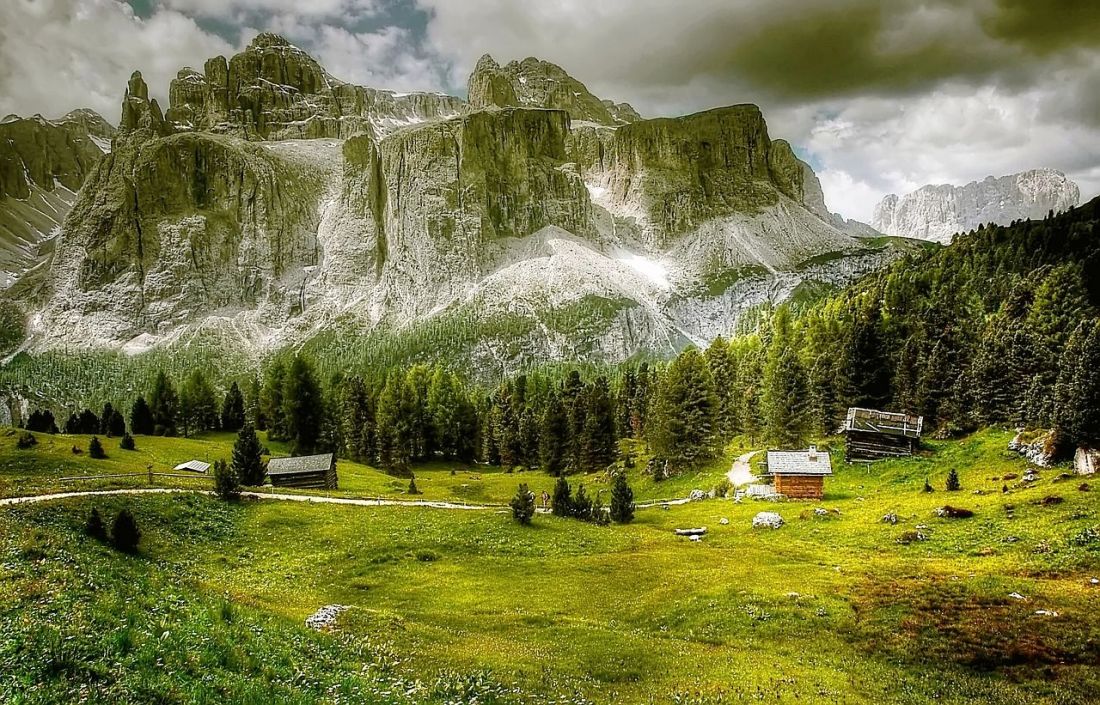
Not every couple on vacation comes across a dead body, let alone a deep-frozen one. But this is precisely what happened on Thursday, September 19, 1991 in the Tyrolean Alps by Helmut and Erika Simon. They had just crossed the Hauslabjoch Pass, which would bring them down to Italy, when they noticed a body protruding from the ice. Reporting their find to the nearest mountain center, they proceeded on their trip, little knowing what would follow.
Tyrol Alps Stock Photo
The manager of the center notified both the Italian and Austrian police, as well as the mountain rescue chief for the area. The following day the Austrian police arrived at the Pass and began chiseling out the body, which lay in a natural hollow covered by the remains of a glacier. A suggestion that it was a man who had disappeared in 1941 was belied by the collection of ancient-looking objects found with the body, including skin clothing and an axe, apparently with an iron blade.
Stock Photo
Of course, wide speculation abounded from local mountaineers to experts in local folk-culture. Early estimates claimed the body’s age ranged from 500 to 3K years. The body was finally released from the ice on September 23 and sent to the Institute of Forensic Medicine in Innsbruck, Austria. The corpse turned out to be of a man over 40 who had apparently died of exposure. Konrad Spindler, Professor of Archaeology at Innsbruck, believed the axe had a bronze rather than an iron blade, and speculated that the body was at least 4K years old.
Initial radio carbon tests on grass samples found with the body suggested an even earlier date – somewhere between 2,600 BC and 2,900 BC. Excavations at the site revealed an amazing repertoire of equipment carried by a prehistoric man going about his business: a pair of grass-lined leather shoes; a fur hood; a patchwork jacket made of deer fur; fur leggings; a leather apron; a woven-grass cloak; a thong with a stone pendant; a goat-fur rucksack; a net; a beaker made of birch bark; a bow; a copper axe with wooden handle; a fur quiver stuffed with 12 wooden arrow shafts; two arrows complete with flint arrowheads and an arrow repair kit; flint and bone tools; and a calf’s-leather pouch containing a fire-making kit.
Artifacts found with Otzi
It soon became clear that the iceman, dubbed “Otzi” by the press, was one of the greatest archaeological finds of the century. This brought about an undignified row between Italy and Austria as to ownership of Otzi’s body. Once the archaeological importance of the find had been appreciated, the press on both sides of the Alps trumpeted a battle of words over the frozen corpse.
It is difficult to determine border lines through the snowy terrain of the Alps but it was agreed, after a new survey specially commissioned to solve the problem, that the body was found just within the Italian side of the border. Eventually the authorities of the North Tyrol (Austrian) and South Tyrol (Italian) came to an agreement that Otzi could remain in Innsbruck until the scientific studies were completed.
Wild theories abounded, including one woman who claimed it was her husband’s body, who went missing in the 1970’s; and then there was a Viennese gay magazine that started a rumor that Otzi was the world’s oldest known passive homosexual, while his skin clothing surely revealed him to be a “leather queen.” The claim was also made that Otzi’s penis was missing. When Otzi’s genitals were examined in April 1993, his penis proved to be there after all, shrunk to about 5 centimeters – quite a creditable length after 5K years of deep-freezing.
These stories are, no doubt, only the small beginnings of a popular publishing industry on the iceman that will come to rival that on Tutankhmanu. The speculations of academics themselves have sometimes lacked restraint, even turning at times to the bizarre. With this kind of speculation coming from the academic world, it may only be a matter of time before a book is published claiming that Otzi was an alien who landed on the Alps in a spaceship!!!!























 Sew Colorful