History of Nicola Tesla, Part 2

Nikola Tesla’s Failures, Death and Legacy

In 1895 Tesla’s New York lab burned, destroying years’ worth of notes and equipment. Tesla relocated to Colorado Springs for two years, returning to New York in 1900. He secured backing from financier J.P. Morgan and began building a global communications network centered on a giant tower at Wardenclyffe, on Long Island. But funds ran out and Morgan balked at Tesla’s grandiose schemes.

Tesla lived his last decades in a New York hotel, working on new inventions even as his energy and mental health faded. His obsession with the number three and fastidious washing were dismissed as the eccentricities of genius. He spent his final years feeding—and, he claimed, communicating with—the city’s pigeons. Tesla died in his room on January 7, 1943. Later that year the U.S. Supreme Court voided four of Marconi’s key patents, belatedly acknowledging Tesla’s innovations in radio.

Patent After Nikola Tesla was found dead in January 1943 in his hotel room in New York City, representatives of the U.S. government’s Office of Alien Property seized many documents relating to the brilliant and prolific 86-year-old inventor’s work

What happened to Tesla’s files from there, as well as what exactly was in those files, remains shrouded in mystery—and ripe for conspiracy theories. Three weeks after the Serbian-American inventor’s death, an electrical engineer from the Massachusetts Institute of Technology (MIT) was tasked with evaluating his papers to determine whether they contained “any ideas of significant value.”

Dr. John Trump

According to the declassified files, Dr. John G. Trump reported that his analysis showed Tesla’s efforts to be “primarily of a speculative, philosophical and promotional character” and said the papers did “not include new sound, workable principles or methods for realizing such results.” The scientist’s name undoubtedly rings a bell, as John G. Trump was the uncle of the 45th U.S. president, Donald J. Trump. The younger brother of Trump’s father, Fred, he helped design X-ray machines that greatly helped cancer patients and worked on radar research for the Allies during World War II.

Tesla, Trump, Trump

At the time, the FBI pointed to Dr. Trump’s report as evidence that Tesla’s vaunted “Death Ray” particle beam weapon didn’t exist, outside of rumors and speculation. But in fact, the U.S. government itself was split in its response to Tesla’s technology. Marc Seifer, author of the biography Wizard: The Life & Times of Nikola Tesla, says a group of military personnel at Wright Patterson Air Force Base in Dayton, Ohio, including Brigadier General L.C. Craigee, had a very different opinion of Tesla’s ideas.

Wizard: The Life & Times of Nokola Tesla

“Craigee was the first person to ever fly a jet plane for the military, so he was like the John Glenn of the day,” Seifer says. “He said, ‘there’s something to this—the particle beam weapon is real.’ So you have two different groups, one group dismissing Tesla’s invention, and another group saying there’s really something to it.”

Then there’s the nagging question of the missing files. When Tesla died, his estate was to go to his nephew, Sava Kosanovic, who at the time was the Yugoslav ambassador to the U.S. According to the recently declassified documents, some in the FBI feared Kosanovic was trying to wrest control of Tesla’s technology in order to “make such information available to the enemy,” and even considered arresting him to prevent this.

Yugoslavan Ambassador Sava N. Kosanovic

In 1952, after a U.S. court declared Kosanovic the rightful heir to his uncle’s estate, Tesla’s files and other materials were sent to Belgrade, Serbia, where they now reside in the Nikola Tesla Museum there. But while the FBI originally recorded some 80 trunks among Tesla’s effects, only 60 arrived in Belgrade, Seifer says. “Maybe they packed the 80 into 60, but there is the possibility that…the government did keep the missing trunks.”

Despite John G. Trump’s dismissive assessment of Tesla’s ideas immediately after his death, the military did try and incorporate particle-beam weaponry in the decades following World War II, Seifer says. Notably, the inspiration of the “Death Ray” fueled Ronald Reagan’s Strategic Defense Initiative, or “Star Wars” program, in the 1980s. If the government is still using Tesla’s ideas to power its technology, Seifer explains, that could explain why some files related to the inventor still remain classified

Although some of his more sensitive innovations may still be hidden, Tesla’s legacy is alive and well, both in the devices we use every day, and the technologies that will undoubtedly play a role in our future. “Tesla is the inventor of wireless technology. He’s the inventor of the ability to create an unlimited number of wireless channels,” Seifer says of the inventor’s lasting impact. “So radio guidance systems, encryption, remote control robots—it’s all based on Tesla’s technology.”

History of Nicola Tesla, Part 1

Serbian-American engineer and physicist Nikola Tesla (1856-1943) invented the first alternating current (AC) motor and developed AC generation and transmission technology. Though he was famous and respected, he was never able to translate his copious inventions into long-term financial success—unlike his early employer and chief rival, Thomas Edison.

Nikola Tesla

Nikola Tesla was born in 1856 in Smiljan, Croatia, then part of the Austro-Hungarian Empire. His father was a priest in the Serbian Orthodox church and his mother managed the family’s farm. In 1863 Tesla’s brother Daniel was killed in a riding accident. The shock of the loss unsettled the 7-year-old Tesla, who reported seeing visions.

Young Tesla in the lab

In 1870, Tesla moved to Karlovac (Carlstadt) and stayed with his Aunt and Col. “Old War Horse” Brankovic. He attended “Higher Real Gymnasium” where teacher Martin Sekulic taught him math and physics and had a decided influence over him. Tesla graduated Gimnazije Karlovac a year early.

House where Tesla lived in Karlovac

Did you know? During the 1890s Mark Twain struck up a friendship with inventor Nikola Tesla. Twain often visited him in his lab, where in 1894 Tesla photographed the great American writer in one of the first pictures ever lit by phosphorescent light.

Tesla and Twain

Tesla studied math and physics at the Technical University of Graz and philosophy at the University of Prague. In 1882, while on a walk, he came up with the idea for a brushless AC motor, making the first sketches of its rotating electromagnets in the sand of the path. Later that year he moved to Paris and got a job repairing direct current (DC) power plants with the Continental Edison Company. Two years later he immigrated to the United States.

Nikola Tesla and Thomas Edison

Tesla arrived in New York in 1884 and was hired as an engineer at Thomas Edison’s Manhattan headquarters. He worked there for a year, impressing Edison with his diligence and ingenuity. At one point Edison told Tesla he would pay $50,000 for an improved design for his DC dynamos. After months of experimentation, Tesla presented a solution and asked for the money. Edison demurred, saying, “Tesla, you don’t understand our American humor.” Tesla quit soon after.
Nikola Tesla and Westinghouse

After an unsuccessful attempt to start his own Tesla Electric Light Company and a stint digging ditches for $2 a day, Tesla found backers to support his research into alternating current. In 1887 and 1888 he was granted more than 30 patents for his inventions and invited to address the American Institute of Electrical Engineers on his work.

His lecture caught the attention of George Westinghouse, the inventor who had launched the first AC power system near Boston and was Edison’s major competitor in the “Battle of the Currents.” Westinghouse hired Tesla, licensed the patents for his AC motor and gave him his own lab. In 1890 Edison arranged for a convicted New York murderer to be put to death in an AC-powered electric chair—a stunt designed to show how dangerous the Westinghouse standard could be.
Edison’s Electric Chair

Buoyed by Westinghouse’s royalties, Tesla struck out on his own again. But Westinghouse was soon forced by his backers to renegotiate their contract, with Tesla relinquishing his royalty rights. In the 1890s Tesla invented electric oscillators, meters, improved lights and the high-voltage transformer known as the Tesla coil.

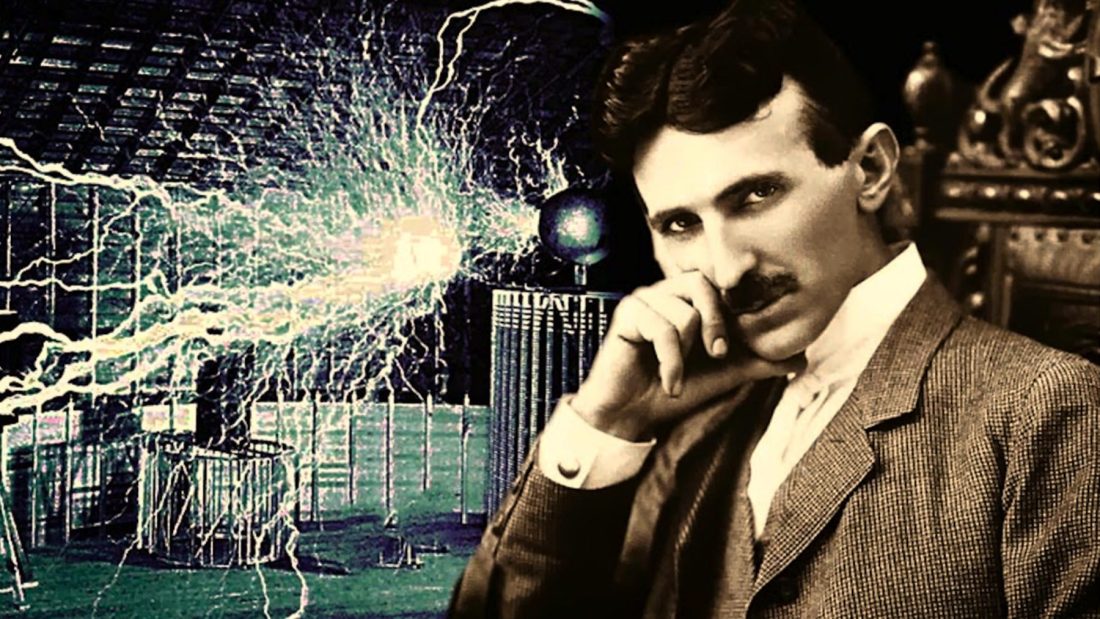
Early Tesla Coil

He also experimented with X-rays, gave short-range demonstrations of radio communication two years before Guglielmo Marconi and piloted a radio-controlled boat around a pool in Madison Square Garden. Together, Tesla and Westinghouse lit the 1893 World’s Columbian Exposition in Chicago and partnered with General Electric to install AC generators at Niagara Falls, creating the first modern power station.

Functioning Model

JonBenét Ramsey

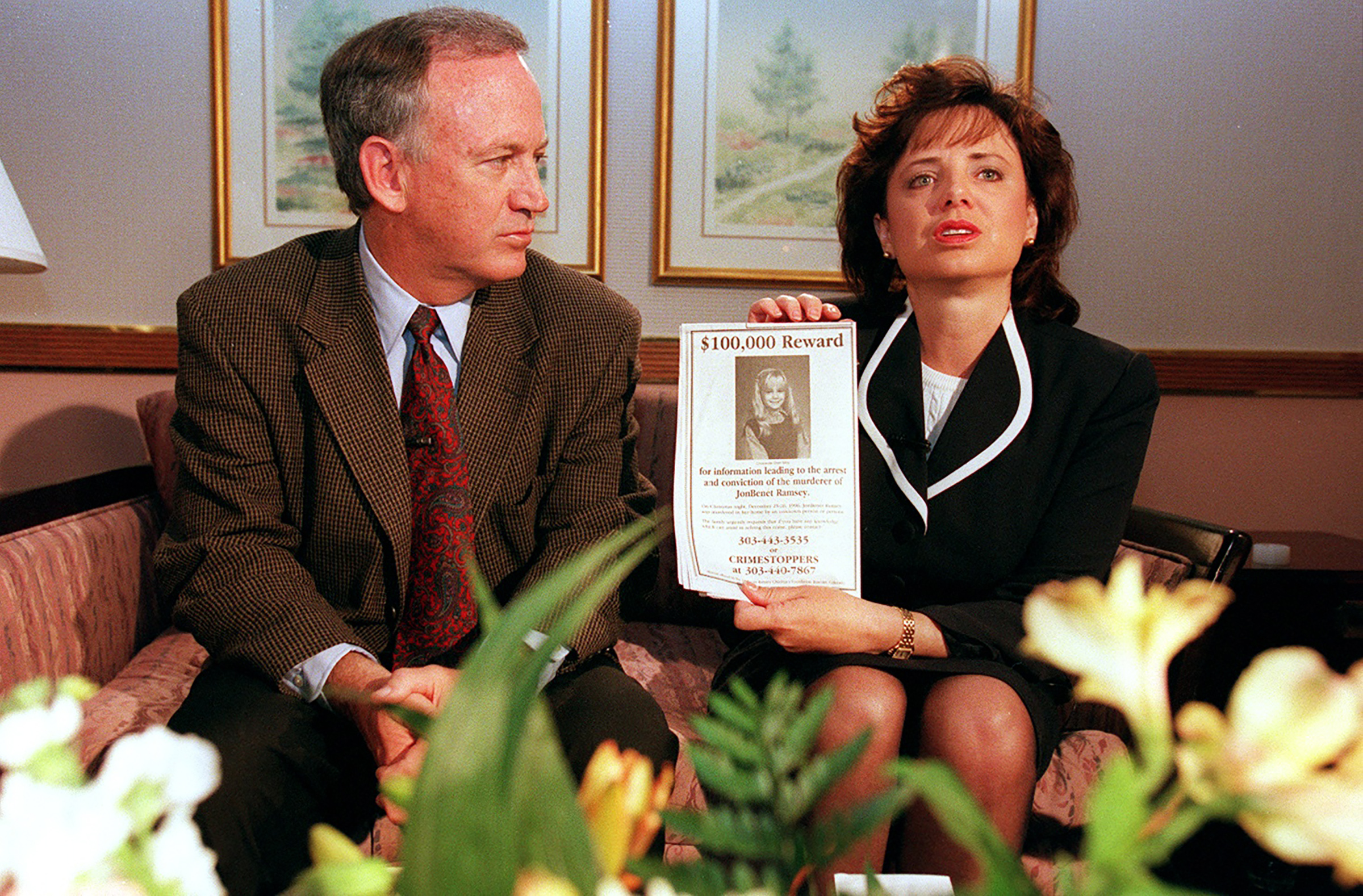
In the early morning hours of December 26, 1996, John and Patsy Ramsey awoke to find their six-year-old daughter JonBenét Ramsey missing from her bed at their home in Boulder, Colorado. Patsy and John had woken up early to prepare for a trip, when Patsy discovered a ransom note on the stairs demanding $118,000 for their daughter’s safe return.

Despite the note’s warning not to involve police, Patsy immediately called them, as well as friends and family in order to aid in the search for JonBenét Ramsey. Police arrived at 5:55 AM and found no signs of forced entry, but did not search the basement, where her body would eventually be found.

Before JonBenét’s body was even found, there were many investigative mistakes made. Only JonBenét’s room was cornered off, so friends and family roamed the rest of the house, picking up things and potentially destroying evidence. The Boulder Police Department also shared evidence they found with the Ramseys and delayed conducting their informal interviews with the parents. At 1:00 PM the detectives instructed Mr. Ramsey and a family friend to go around the house to see if anything was amiss. The first place they looked was the basement, where they found JonBenét’s body. John Ramsey immediately picked up his daughter’s body and brought her upstairs, which unfortunately destroyed potential evidence by disturbing the crime scene.

During the autopsy it was discovered that JonBenét Ramsey had died from asphyxiation due to strangulation, in addition to a skull fracture. Her mouth had been covered in duct tape and her wrists and neck were wrapped with a white cord. Her torso had been covered in a white blanket. There was no conclusive evidence of rape as no semen was found on the body and her vagina appeared to have been wiped clean, although a sexual assault had occurred. The makeshift garret was made using a length of cord and part of a paintbrush from the basement. The coroner also found what was believed to be pineapple in JonBenét’s stomach. Her parents do not remember giving her any the night before she died, but there was a bowl of pineapple in the kitchen which had her nine-year-old brother Burke’s fingerprints on it, however this meant little since time cannot be attributed to fingerprints. The Ramseys maintained Burke was in his room all night asleep, and there was never any physical evidence to reflect otherwise.

There are two popular theories in the Ramsey case; the family theory and the intruder theory. The initial investigation focused heavily on the Ramsey family for many reasons. The police felt that the ransom note was staged as it was unusually long, written using a pen and paper from the Ramsey’s house, and demanded almost the exact amount of money that John had received as a bonus earlier that year. Additionally, the Ramseys were reluctant to cooperate with police, though they later said this was because they feared the police would not conduct a full investigation and target at them as easy suspects. However all three members of the immediate family were questioned by investigators and submitting handwriting samples to compare to the ransom letter. Both John and Burke were cleared of any suspicion of writing the note. Although much was made that Patsy could not be conclusively cleared by her handwriting sample, this analysis was not further supported by any other evidence.

Despite a larger pool of suspects, the media immediately focused on JonBenét’s parents, and they spent years under the harsh limelight of the public eye. In 1999, a Colorado grand jury voted to indict the Ramseys on child endangerment and obstruction of a murder investigation, however the prosecutor felt that the evidence did not meet the beyond a reasonable doubt standard and declined to prosecute. JonBenét’s parents were never officially named as suspects in the murder.

Alternatively, the intruder theory had lots of physical evidence to support it. There was a boot print found next to JonBenét’s body which did not belong to anyone in the family. There was also a broken window in the basement which was believed to be the most likely point of entry for an intruder. Additionally, there was DNA from drops of blood from an unknown male found on her underwear. The floors in the Ramsey’s home were heavily carpeted, making it plausible for an intruder to have carried JonBenét downstairs without waking the family.

One of the most famous suspects was John Karr. He was arrested in 2006 when he confessed to killing JonBenét by accident, after he had drugged and sexually assaulted her. Karr was eventually dismissed as a suspect after it was revealed that no drugs had been found in JonBenét’s system, police could not confirm he was in Boulder at the time, and his DNA did not match the profile generated from the samples found.

Much of the recent investigation in the case revolves around the DNA profiles developed from the sample found in her underwear and the touch DNA later developed from her long johns. The profile from her underwear was entered into CODIS (the national DNA database) in 2003, but no matches have been identified.

In 2006, Boulder District Attorney Mary Lacy took over the case. She agreed with the federal prosecutor that the intruder theory was more plausible than the Ramseys killing their daughter. Under Lacy’s lead, investigators developed a DNA profile from touch DNA (DNA left behind by skin cells) on her long johns. In 2008 Lacy released a statement detailing the DNA evidence and fully exonerating the Ramsey family, saying in part:

“The Boulder District Attorney’s Office does not consider any member of the Ramsey family, including John, Patsy, or Burke Ramsey, as suspects in this case. We make this announcement now because we have recently obtained this new scientific evidence that adds significantly to the exculpatory value of the previous scientific evidence. We do so with full appreciation for the other evidence in this case.

Local, national, and even international publicity has focused on the murder of JonBenet Ramsey. Many members of the public came to believe that one or more of the Ramseys, including her mother or her father or even her brother, were responsible for this brutal homicide. Those suspicions were not based on evidence that had been tested in court; rather, they were based on evidence reported by the media.”

In 2010 the case was officially reopened with renewed focus on the DNA samples. Further testing has been conducted on the samples and experts now believe that the sample is actually from two individuals rather than one. In 2016 it was announced that the DNA would be sent to the Colorado Bureau of Investigation to be tested using more modern methods and authorities hope to develop an even stronger DNA profile of the killer.

In 2016, CBS aired The Case of JonBenét Ramsey which implied her then nine-year-old brother Burke was the killer despite the fact he was cleared by the DNA evidence that proved the existence of an intruder. Burke filed a $750 million-dollar lawsuit against CBS for defamation. The case was settled in 2019, and while the terms of the settlement were not disclosed, his lawyer stated the case was “amicably resolved to the satisfaction of all parties.”

The JonBenét Ramsey case is still open and remains unsolved.

SOURCE: CRIME MUSEUM

Seneca White Deer

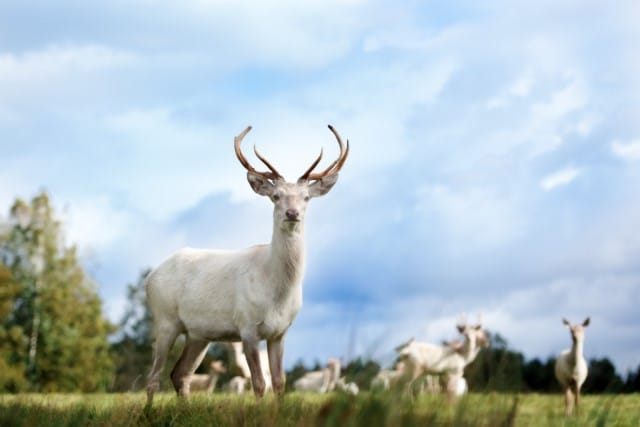
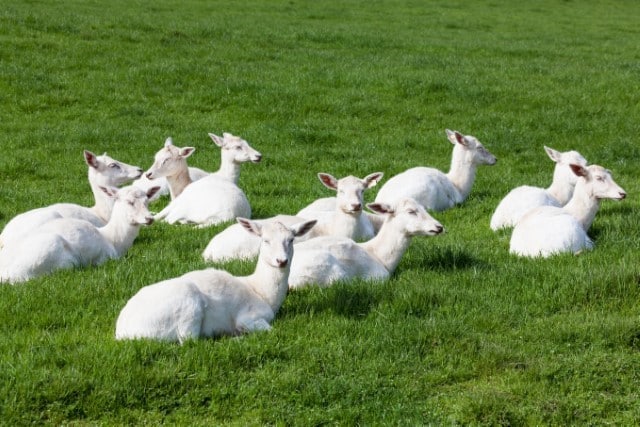
Even some of the most ardent deer enthusiasts and hunters have never heard of the Seneca white deer herd. This unique group of deer boasts a beautiful white coat that makes it notable throughout the world. Keep reading to learn everything you need to know about this mysterious herd.

The History of the Seneca White Deer Herd

The Seneca white deer herd’s history stretches back to 1941. Humans were inadvertently instrumental in the creation of this unique group of deer.

In 1941, New York’s Seneca Army Depot in Seneca County enclosed 10,600 acres to create a compound where since then, we’ve seen this herd’s development.

A fence positioned around the compound trapped in a deer population, keeping it separate from other deer in the area. This fence stretched 24 miles, and it was high enough that the deer inside the compound weren’t able to jump over.  While the compound’s number of deer was small at the beginning, it has obviously grown exponentially since then.

Some of the original deer on the compound carried recessive genes that create all-white coats. As inbreeding became common in this deer population, white coats became common. The white coat genes got stronger and stronger as time passed.

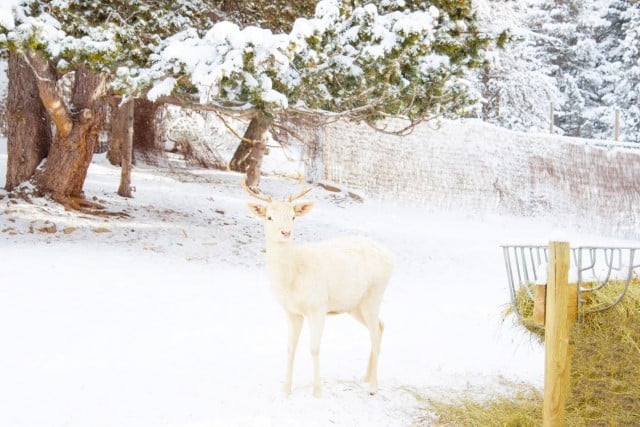
Some people believe the Seneca white deer herd is made up of albino deer, but this isn’t true. Leucism, not albinism, causes the white coat that is so common in this herd, and the white deer in the Seneca herd are actually leucistic deer.

The Seneca White Deer Herd is a Leucistic Deer Herd

The gene for leucism means that the deer’s fur doesn’t have any pigmentation. While deer usually have a coat in a shade of brown, deer with leucism lack the pigmentation to create that kind of coat.

That is why their coats are completely white. While leucism is a recessive gene, constant inbreeding in the Seneca white deer herd over several decades has made this herd mostly white-coated.

Are Seneca White Deer Always Completely White?

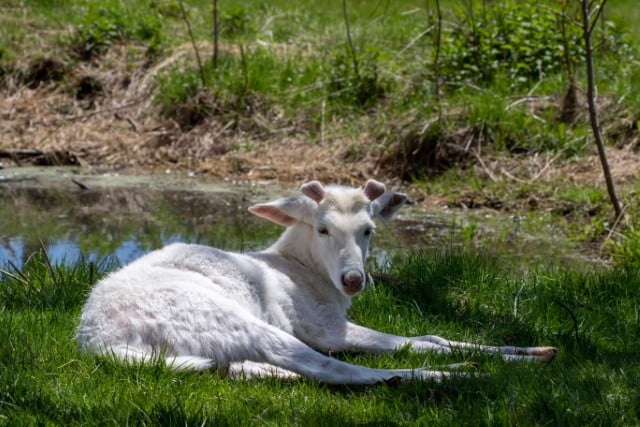
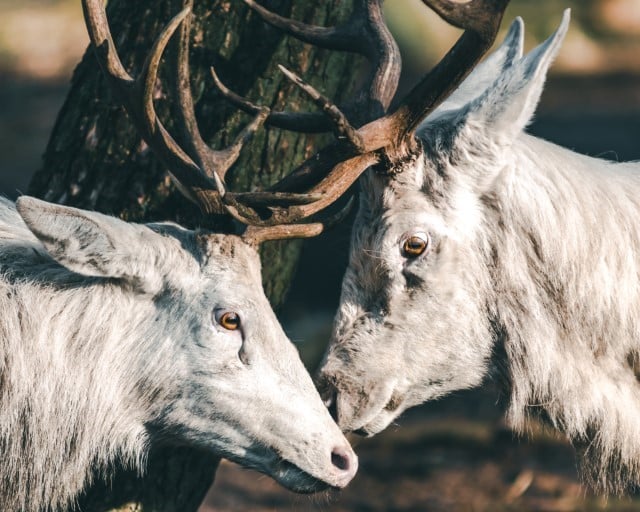
While deer with leucism, such as the ones in the Seneca white deer herd, are usually completely white, there can be some variations. For example, a leucistic deer may be only primarily white, with other markings. Even completely white leucistic deer still have a black nose.

Leucism vs Albinism

One difference between a leucistic deer and an albino deer is that the albino deer has pink eyes. Leucistic deer like the ones in the Seneca white deer herd, on the other hand, have brown eyes like any other deer. Albinism is much rarer than leucism.

Overall, deer with leucism are healthier than albino deer. That is why leucistic deer tend to enjoy longer lives than deer with the albino trait.  One major disadvantage of any kind of white deer, however, is their difficulty with camouflaging themselves and hiding from predators in the wild.  Of course, this herd is protected, so they don’t have this challenge – a fact which may help to explain how the deer became more and more white over time.

Other Facts About the Seneca White Deer Herd

The fact the deer herd on the former Seneca Army Depot had become overwhelmingly white-coated was first noticed in the 1950s.  That was when the United States Army decided to keep this deer herd intact and protected.

It was in 2000 that this property ceased being an army depot. It was transformed into Seneca White Deer, Inc., which is a conversation park devoted to the herd.  The property also holds a Cold War Museum. Without question, the Seneca white deer herd preserve is a unique wildlife park with a fascinating heritage.

How is the Seneca White Deer Herd Doing Today?

The Seneca white deer herd is still thriving. However, the White Deer Tour program officially ended in 2019.  The Seneca White Deer, Inc., organization and Hobart and William Smith Colleges’ Finger Lakes Institute have established a special scholarship fund in honor of the herd and its preservation.

This herd is found in New York State towns called Varick and Romulus. They’re in the Finger Lakes Region. The preserve spans an impressive 3,000 acres. Its deer herd is the largest herd of deer with visible leucism on the planet.

Are There Health Problems Associated with White-Coated Deer?

Remember that leucism is a recessive trait. Like many other such traits, it only becomes prevalent when there is inbreeding.  And inbreeding, in turn, is linked to many potential health problems. That is why a deer with leucism is more likely to have certain health problems than a deer without this condition. Some problems commonly linked to leucism in animals include birth defects, such as a cleft palate and cross eyes.

Myths and Legends About White-Coated Deer

The recessive leucism gene exists in deer all over the world, so leucistic white deer do pop up in populations outside of the Seneca herd.

That is why we see the symbolism of white deer in myths and cultures around the globe.

For example, there are white-coated deer in Asian, European, and Native American stories. We see white deer treated as magical creatures in European mythology.

Are White Deer an Endangered Species?

No, white deer aren’t an endangered species of deer. They aren’t actually a species separate from regular deer.  White deer are the same species as the other deer in your area, but they have either leucism or albinism.

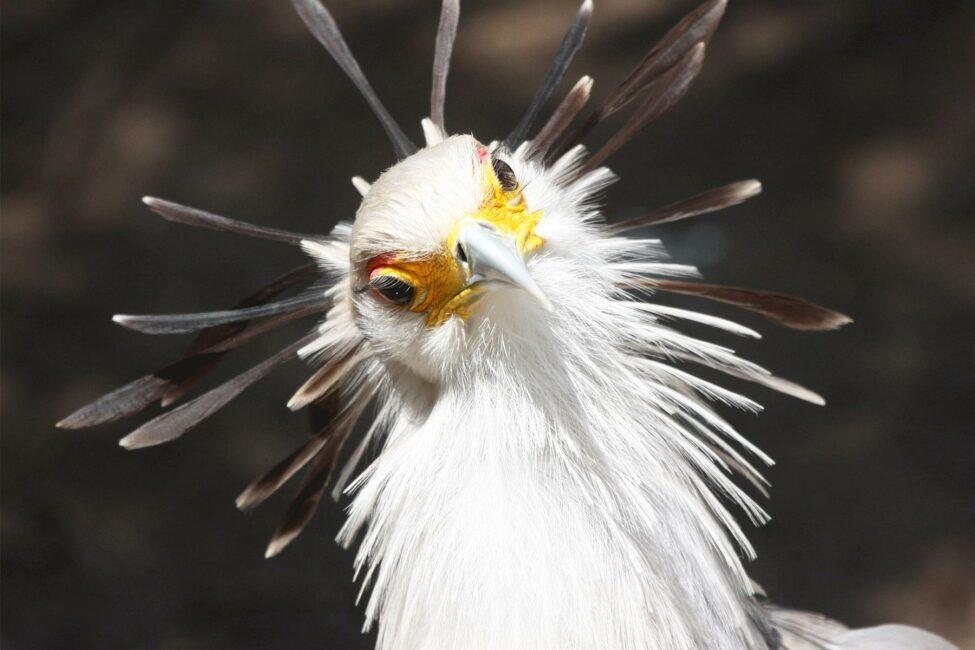
The Secretary Bird

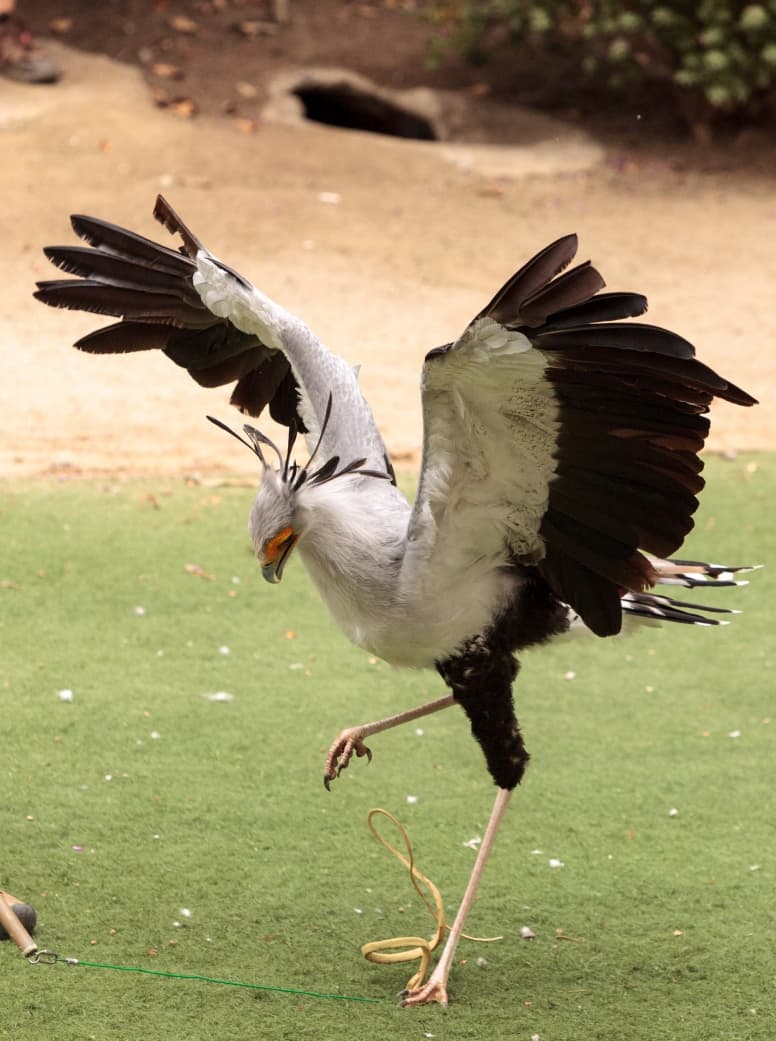
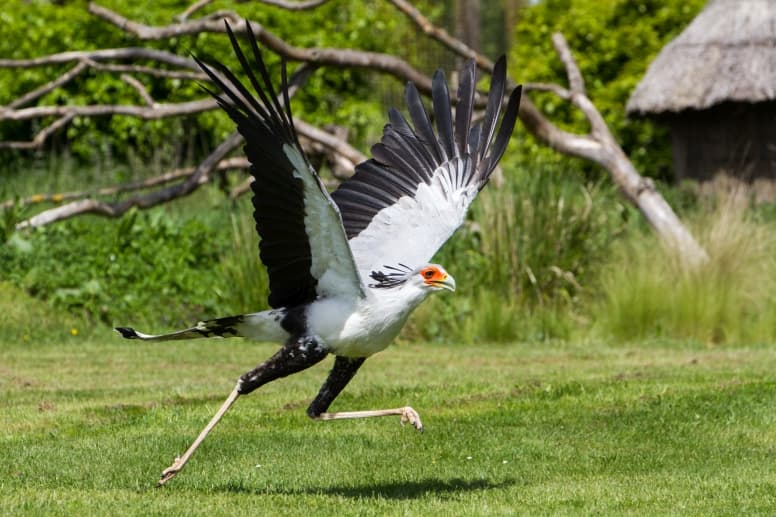
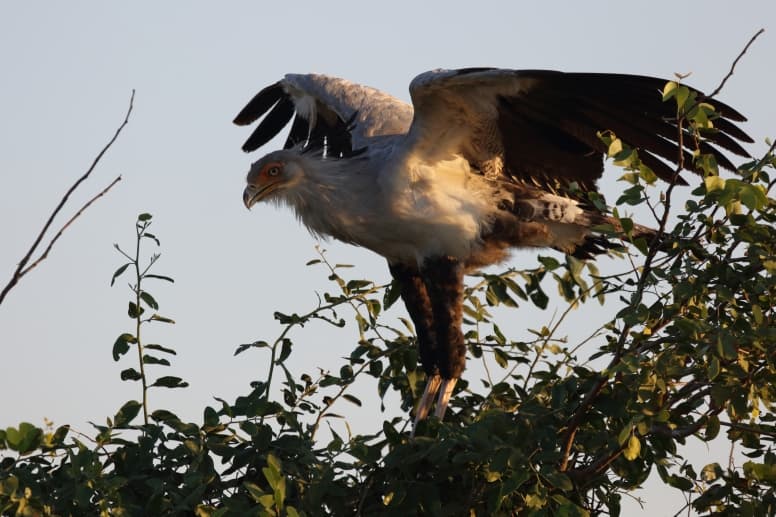
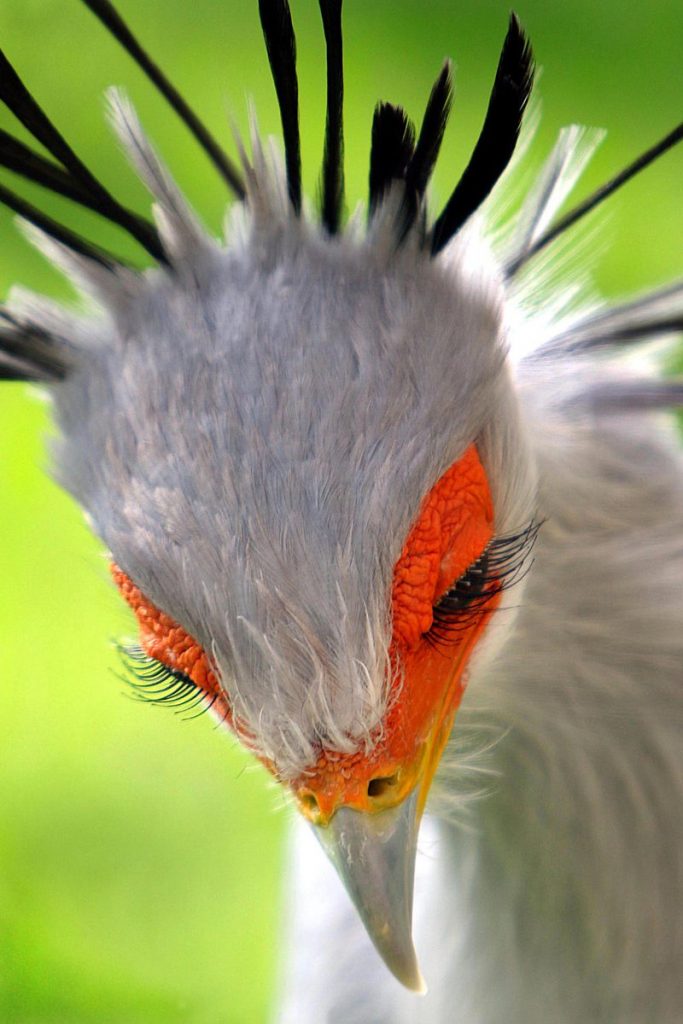
Its preferred habitat is open savannas or grasslands in sub-Saharan areas. It hunts in these open areas, using its long legs to strike prey and stomp them to death. It is famous for eating snakes, but it also hunts insects and small mammals. They mate for life and one pair inhabits and defends a territory of up to 50km. Pairs lay eggs in a nest of their own making at the top of Acacia trees. They live 10-15 years in the wild and up to 19 in captivity. They are classed as endangered, with their numbers rapidly decreasing due to habitat loss.

Interesting Secretary Bird Facts

No one is quite sure where it got its name.

There are a few different theories, including that it was named by Dutch Settlers because of its resemblance to 19th Century Lawyers’ Secretaries. Another theory suggests that the name is a corruption of an originally Arabic word, meaning “hunter bird”.

Its scientific name means “the archer of snakes”.

This is because secretary birds love to hunt snakes. They use their large wingspan to distract the snake, while their scaley legs prevent snake bites.

They rarely fly.

They move around on foot most of the time, only taking to the air to reach their nests or for courtship displays.

They have a wingspan of 2m.

This is huge! They use their wings while hunting to distract their prey, and also during mating rituals.

They are one of just two birds of prey that hunt on the ground.

The only other birds that hunt on the ground are caracaras.

Secretary birds have one of the strongest (and fastest) kicks in the animal kingdom.

They can kick with a force 5-6 times their body weight. It happens fast too, in 15 milliseconds the foot can go from still to making contact.

They have been seen hunting juvenile big cat.

They’ve been spotted using their stomping hunting technique to kill juvenile cheetahs, and also baby gazelles.

They hunt in pair.

Monogamous pairs, and sometimes familiar groups, will hunt together.

Secretary birds mate for life.

Once paired up, they will stay together for life. They even use the same nest year after year.

They have elaborate mating display.

Even though they mate for life, they still perform their elaborate mating displays. They will perform “pendulum flights”, swooping up and down again. And on the ground, they dance together.

Secretary birds have large territories.

Pairs of secretary birds will inhabit, and defend, areas of up to 50 km2. However, many can be spotted together around important resources, such as watering holes.

They make their nests on the top of thorny trees.

This is almost always in an acacia tree. The nests are large, platform-like and often softened with grass and dung.

They lay 2-3 blue-green eggs.

These eggs are a few inches long and hatch after 45 days of incubation.

Sadly, the secretary bird is endangered.

This is because their grassland habitats are cleared and used for cattle.

SOURCE: FACT ANIMAL

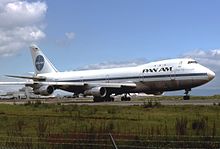
Pan AM Flight 103

On December 21, 1988, Pan Am Flight 103 from London to New York explodes in midair over Lockerbie, Scotland, killing all 243 passengers and 16 crew members aboard, as well as 11 Lockerbie residents on the ground. A bomb hidden inside an audio cassette player detonated in the cargo area when the plane was at an altitude of 31,000 feet. The disaster, which became the subject of Britain’s largest criminal investigation, was believed to be an attack against the United States. One hundred eighty-nine of the victims were American.

Islamic terrorists were accused of planting the bomb on the plane while it was at the airport in Frankfurt, Germany. Authorities suspected the attack was in retaliation for either the 1986 U.S. air strikes against Libya, in which leader Muammar al-Qaddafi’s young daughter was killed along with dozens of other people, or a 1988 incident, in which the U.S. mistakenly shot down an Iran Air commercial flight over the Persian Gulf, killing 290 people.

Sixteen days before the explosion over Lockerbie, the U.S. embassy in Helsinki, Finland, received a call warning that a bomb would be placed on a Pan Am flight out of Frankfurt. There is controversy over how seriously the U.S. took the threat and whether travelers should have been alerted, but officials later said that the connection between the call and the bomb was coincidental.

In 1991, following a joint investigation by the British authorities and the F.B.I., Libyan intelligence agents Abdel Basset Ali al-Megrahi and Lamen Khalifa Fhimah were indicted for murder; however, Libya refused to hand over the suspects to the U.S. Finally, in 1999, in an effort to ease United Nations sanctions against his country, Qaddafi agreed to turn over the two men to Scotland for trial in the Netherlands using Scottish law and prosecutors. In early 2001, al-Megrahi was convicted and sentenced to life in prison and Fhimah was acquitted. Over the U.S. government’s objections, Al-Megrahi was freed and returned to Libya in August 2009 after doctors determined that he had only months to live. In December 2020, reports surfaced that the U.S. Justice Department would unseal criminal charges against another suspect in the bombing, Abu Agila Mohammad Mas’ud. 

In 2003, Libya accepted responsibility for the bombing, but didn’t express remorse. The U.N. and U.S. lifted sanctions against Libya and Libya agreed to pay each victim’s family approximately $8 million in restitution. In 2004, Libya’s prime minister said that the deal was the “price for peace,” implying that his country only took responsibility to get the sanctions lifted, a statement that infuriated the victims’ families. Pan Am Airlines, which went bankrupt three years after the bombing, sued Libya and later received a $30 million settlement.

In December 2022, the U.S. Justice Department announced Abu Agila Mohammad Mas’ud was arrested by the FBI for his suspected role in the bombing. 

SOURCE: HISTORY.COM

Turquoise

Turquoise is a popular gemstone that has long been prized in many cultures. It’s said to bring luck, peace, and protection, and it’s also one of the birthstones associated with December.

Turquoise stones have many meanings that go above and beyond the beauty of the blue color they provide.

What Is Turquoise?

Turquoise is an opaque stone that ranges from blue to green in color. The most valuable turquoise stones generally have a more smooth, solid color, while many stones have brown veins throughout. It has a calming, soothing, protective energy that can be beneficial for various feng shui applications. The word turquoise comes from a French word meaning “Turkish,” likely because the stone was introduced to Medieval Europe by Turkish sources. Turquoise has a Mohs scale ranking of 5 to 6, which means it has a fair to good hardness rating.

Properties of Turquoise

There is not one rare or best turquoise stone. But there are many rare types of turquoise with unusual colors. There are rare specimens of turquoise with blue-violet colorations and highly valuable transparent or translucent turquoise crystals that come from Virginia, for example.

Here are more common properties of turquoise stones:

Color: Blue, green

Chakra: Throat, third eye

Number: Vibrates to 1

Planet: Jupiter, Venus, Neptune

Zodiac: Scorpio, Sagittarius, Pisces, Rabbit

Bagua areas: Zhen, Qian

Elements: Wood, metal

Origin: Afghanistan, Arabian Peninsula, China, Egypt, France, Iran, Mexico, Peru, Poland, Russia, Tibet, United States

Spiritual Meaning of Turquoise

What does turquoise mean spiritually? The stone has a calming, grounding energy that makes it a great stone for when you are feeling overwhelmed, or to aid in meditation. It is said to connect heaven and earth and help you connect to the spiritual world. Turquoise can strengthen your connection to intuition, and it is also helpful for protection and purification. 

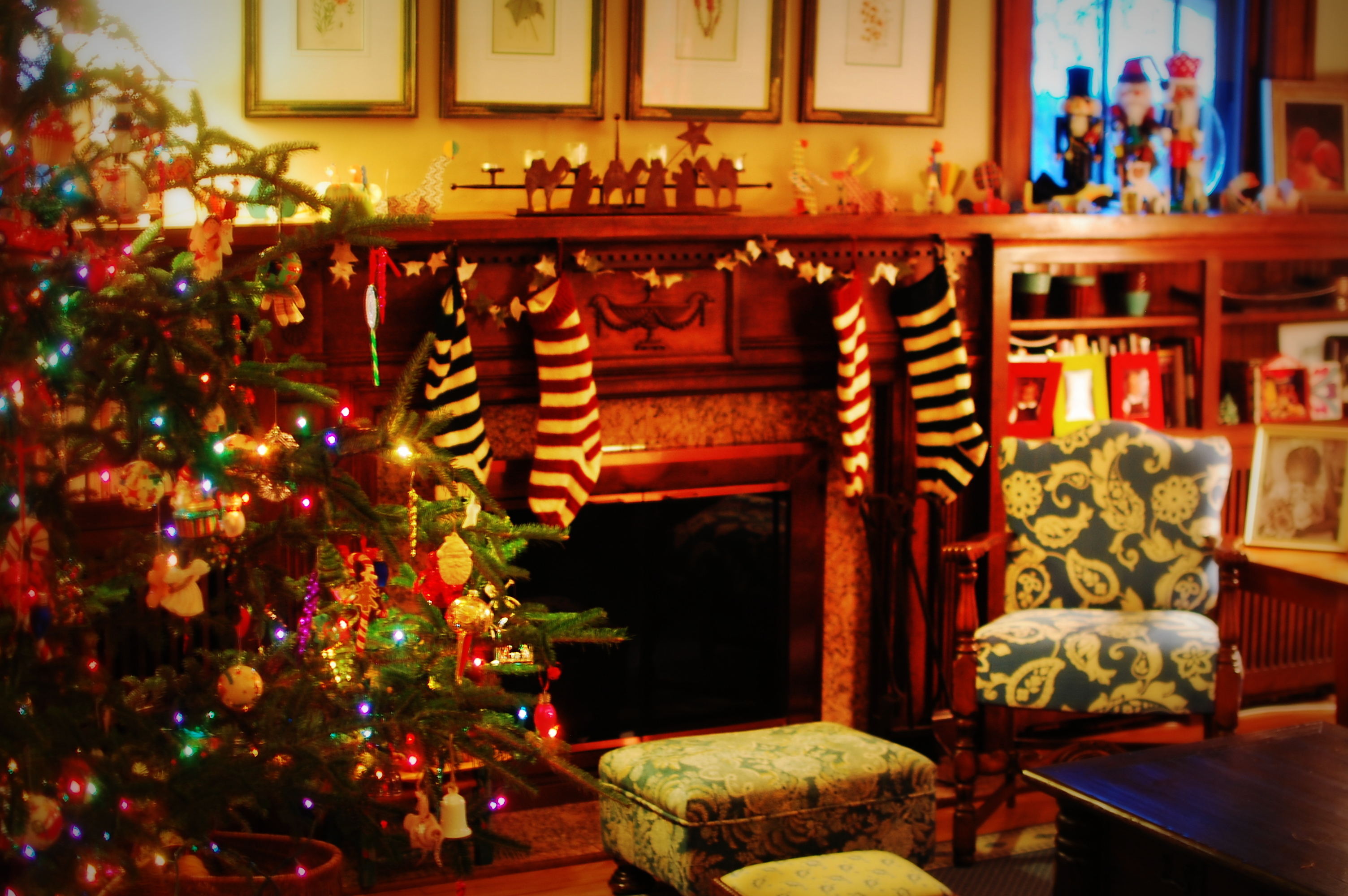
Know-It_Alls: Christmas Trivia

Put on your thinking caps! It’s time for Tuesday Trivia: Christmas Version!

Question: Which popular Christmas beverage is also called “milk punch?”
Answer: Eggnog

Question: What did the other reindeer not let Rudolph do because of his shiny red nose?
Answer: Join in any reindeer games

Question: How many ghosts show up in A Christmas Carol?
Answer: Four

Question: Where was baby Jesus born?
Answer: In Bethlehem

Question: The movie Miracle on 34th Street is based on a real-life department store. What is it?
Answer: Macy’s

Question: What are the two other most popular names for Santa Claus?
Answer: Kris Kringle and Saint Nick

Question: Elvis isn’t going to have a white Christmas he’s going to have a….
Answer: Blue Christmas

Question: What do people traditionally put on top of a Christmas tree?
Answer: An angel

Question: In Home Alone, where are the McCallisters going on vacation when they leave Kevin behind?
Answer: Paris

Question: In the classic Christmas movie, How The Grinch Stole Christmas, the Grinch was described with three words. What are they?
Answer: Stink, stank, stunk

Question: In which modern-day country was St. Nicholas born in?
Answer: Turkey (originally Patara, a city in the ancient district of Lycia, in Asia Minor)

Question: In the movie It’s A Wonderful Life, what happened every time a bell rang?
Answer: An angel got his wings

Question: What words follow “Silent Night” in the song?
Answer: Holy night

Question: Which Hollywood actor played six different roles in The Polar Express?
Answer: Tom Hanks

Question: In Charles Dickens’ A Christmas Carol, what was the first name of Scrooge?
Answer: Ebenezer

Question: Which country did eggnog come from?
Answer: England

Question: Which real-life person is Santa Claus based on?
Answer: The Christian bishop St. Nicholas

Question: What did Frosty The Snowman do when a magic hat was placed on his head?
Answer: He began to dance around

Question: What is Ralphie’s little brother’s name in the movie A Christmas Story?
Answer: Randy

Question: Which Christmas song contains the lyric “Everyone dancing merrily in the new old-fashioned way?”
Answer: “Rocking Around The Christmas Tree”

Question: What are you supposed to do when you find yourself under the mistletoe?
Answer: Kiss

Question: Which one of Santa’s reindeer has the same name as another holiday mascot?
Answer: Cupid

Question: Which country started the tradition of putting up a Christmas tree?
Answer: Germany

Question: In the song “Winter Wonderland,” what do we call the snowman?
Answer: Parson Brown

Question: In the movie Elf, what was the first rule of The Code of Elves?
Answer: Treat every day like Christmas

Question: What’s the name of the main villain in The Nightmare Before Christmas?
Answer: Oogie Boogie

Question: According to the song, what did my true love give to me on the eighth day of Christmas?
Answer: Eight maids a milking

Question: What was the highest-grossing Christmas movie of all time?
Answer: Home Alone

Question: Whose eyes are all aglow in “The Christmas Song?”
Answer: Tiny tots

Question: What was the real name of the character Tim Allen plays in The Santa Clause?
Answer: Scott Calvin

Question: How many gifts in total were given in “The Twelve Days of Christmas” song?
Answer: 364

Question: Which fairy tale was the first gingerbread houses inspired by?
Answer: Hansel and Gretel

Question: In the movie A Christmas Story, what was the name of the neighbors whose dog ate the Christmas turkey?
Answer: The Bumpuses

Question: How do you say “Merry Christmas” in Spanish?
Answer: Feliz Navidad

Question: Where did the word and idea “Christmukkah” come from?
Answer: The O.C.

Question: What is the name of the last ghost that visits Scrooge in A Christmas Carol?
Answer: The Ghost of Christmas Yet To Come

Question: Visions of which food danced in children’s heads as they slept in the poem “‘Twas The Night Before Christmas?”
Answer: Sugar plums

Question: What gift did the Little Drummer Boy give to the newborn Christ?
Answer: He played a song for him on his drums

Question: What is the best-selling Christmas song ever?
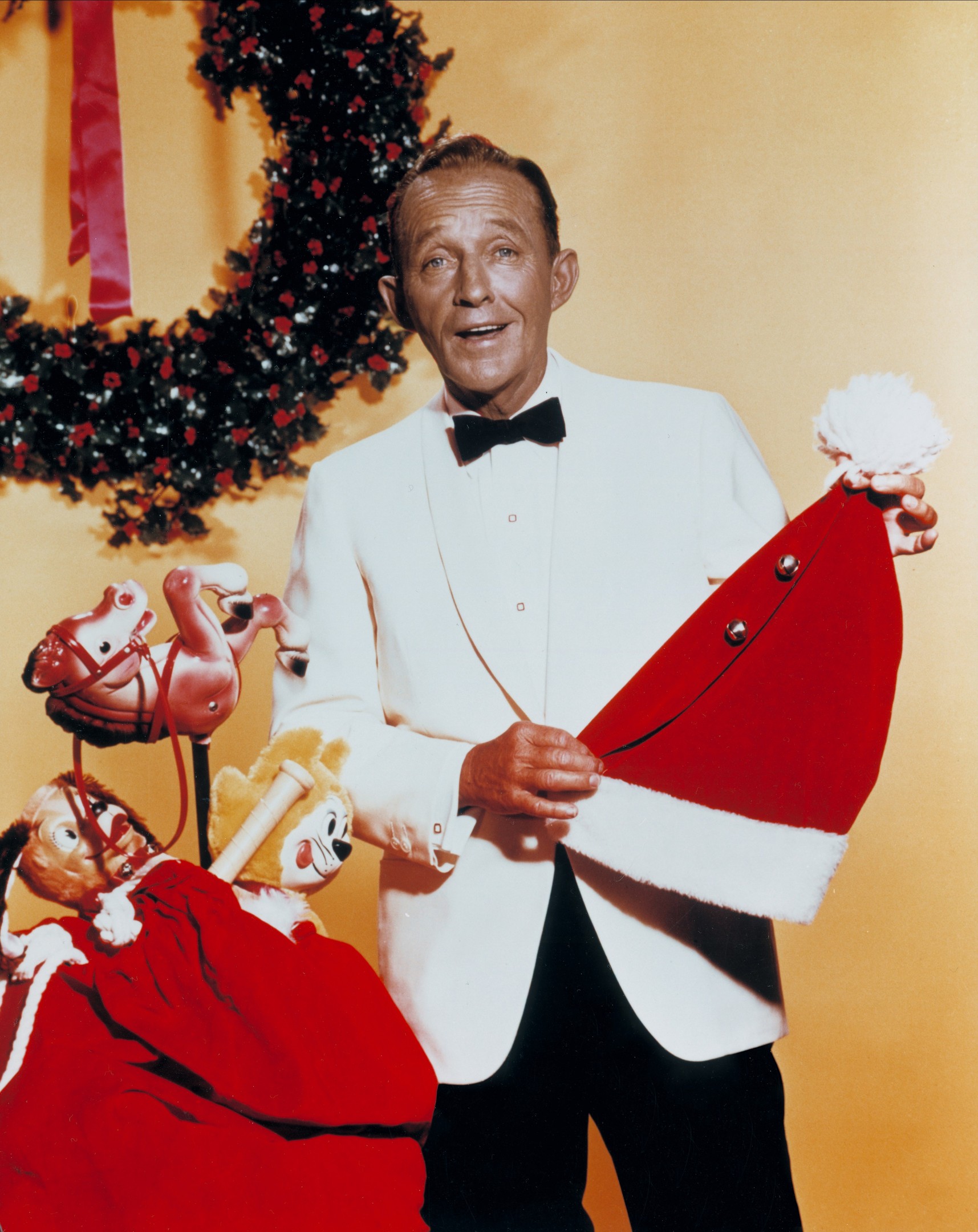
Answer: “White Christmas” by Bing Crosby

Question: Who wrote, “Christmas doesn’t come from a store, maybe Christmas perhaps means a little bit more?”
Answer: Dr. Seuss

Question: Three of Santa’s reindeer’s names begin with the letter “D.” What are those names?
Answer: Dancer, Dasher, and Donner

Question: What was Frosty the Snowman’s nose made out?
Answer: A button

Question: What is the name of George Bailey’s guardian angel in It’s A Wonderful Life?
Answer: Clarence Odbody

Question: In the 1964 movie Rudolph the Red-Nosed Reindeer, what was the name of Rudolph’s elf friend?
Answer: Hermey

Question: What popular Christmas song was actually written for Thanksgiving?
Answer: “Jingle Bells”

Question: What was the first company that used Santa Claus in advertising?
Answer: Coca-Cola

Question: In “The Christmas Song,” who did the narrator see kissing Santa Claus under the mistletoe?
Answer: Mommy

Question: In the movie Elf, how does Buddy get to the North Pole?
Answer: He hides in Santa’s sack

Question: Where did there arise such a clatter?
Answer: On the lawn

Question: What are Christmas trees also called?
Answer: Yule-Tree

How did you do?