Alexandrite is one of those gemstones that everyone would love to own, but few people do because it’s so rare and expensive. If you inherited a large alexandrite stone, get it tested because it may be a synthetic stone.
What Is Alexandrite?
Alexandrite is part of the chrysoberyl family along with chrysoberyl, also known as cat’s-eye.
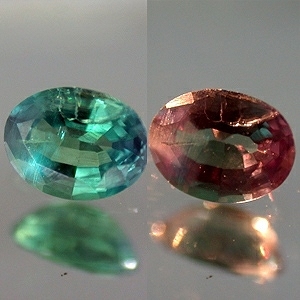
Alexandrite appears bluish-green in sunlight and reddish-purple under artificial light like a light bulb.
The color-change quality in alexandrite is due to trace amounts of chromium. Chromium is also the trace element that makes beryl emerald’s green.
When Was Alexandrite Discovered?
French mineralist Nils Gustaf Nordenskiöld discovered alexandrite in the Ural Mountains of Russia in 1834. However, some accounts suggest the stone was found as early as the late 1700s.
When Nordenskiöld first found alexandrite in Russia, he thought the stone was an emerald.
The gem was named after Russian Czar, Alexander II, who was assassinated in 1881.
Even though this gemstone doesn’t have a very long history, it has been strongly associated with good fortune and is said to enhance creativity and focus.
The mines in the Ural region of Russia no longer produce large amounts of gem-quality alexandrite.
Alexandrite is now mined in parts of Africa, Brazil, and Sri Lanka although the gem is still extremely rare and valuable.
Most large scale alexandrite gemstones are found in antique Russian period pieces from the Victorian era. Victorian jewelry from England also featured alexandrite gemstones, but they were usually much smaller.
How Rare Is Alexandrite?
Natural alexandrite is rarer than diamonds and more costly than emerald, ruby, and sapphire.
Any alexandrite more than three carats is highly uncommon. Smaller stones are more readily available to commercial jewelers.
Top-quality natural Alexandrite can cost more than $30,000 per carat.
Pricing of Alexandrite is based primarily on the strength of the color change and the purity of the hue.
Unlike many other gemstones, natural alexandrite is often left untreated.
Not only does alexandrite change colors, but in extremely rare cases it can also exhibit chatoyancy or the cat’s-eye effect. This is when a white line shines down the center of the gemstone and moves around as the stone moves under a light source.
Because of the intense color change in alexandrite, color-changing abilities in other gemstones have become known as the alexandrite effect.
What Is Synthetic Alexandrite?
Due to the gemstone’s rarity, many types of imitations and synthetics have been on the market since the early 1900s. Fake alexandrite from the 1920s was made out of the mineral corundum (sapphire and ruby) and then laced with chromium or vanadium to create the color-change effect.
Synthetic alexandrite composed of chrysoberyl has been around since the 1960s. It is a very costly process, so this type of synthetic alexandrite is still very expensive.
Famous Alexandrite
The Smithsonian has the largest known faceted 66-carat alexandrite on display in their museum.
The largest uncut gem-quality alexandrite specimen ever found is the Sauer Alexandrite that weighs 122,5400 carats and was found in Bahia, Brazil, in 1967.
Male Emperor penguins are among the best fathers. When the female penguin lays her egg, she leaves it in the care of dad while she goes in search of food. Male penguins keep the egg safe from the icy cold elements of the Antarctic biome by keeping them nestled between their feet and covered with their brood pouch (feathery skin). The males may have to care for the eggs without eating themselves for as long as two months. Should the egg hatch before the female returns, the male feeds the chick and continues to protect it until mom returns.
Seahorses
Male seahorses take fatherhood to a whole new level. They actually birth their young. Males have a pouch on the side of their bodies in which they fertilize eggs deposited by their female mate. A female seahorse can deposit thousands of eggs in the male’s pouch. The male seahorse creates a favorable environment within the pouch that is optimal for the proper development of the eggs. Dad cares for the babies until they are fully formed, which can take as long as 45 days. The male then releases the tiny babies from his pouch into the surrounding aquatic environment.
Frogs and Toads
Most male frogs and toads play a vital role in the development of their young. Male phantasmal poison-dart frogs guard the eggs laid by females after mating. As the eggs hatch, the resulting tadpoles will use their mouths to climb onto their dad’s back. The male frog gives the tadpoles a “piggy-back” ride to a nearby pond where they can continue to mature and develop. In other species of frog, the male will protect the tadpoles by keeping them in their mouths. Male midwife toads care for and protect the string of eggs laid by the females by wrapping them around their hind legs. The males care for the eggs for a month or longer until they can find a safe body of water in which to deposit the eggs.
Water Bugs
Male giant water bugs ensure the safety of their young by carrying them on their backs. After mating with a female, the female lays her eggs (up to 150) on the back of the male. The eggs remain tightly attached to the male until they are ready to hatch. The male giant water bug carries the eggs on his back to ensure that they are kept safe from predators, mold, parasites, and to keep them aerated. Even after the eggs hatch, the male continues to care for his young for as long as two years.
And the WORST:
Grizzly Bears
much of their time alone in the forest, except when it is time for mating. Female grizzly bears tend to mate with more than one male during mating season and cubs from the same litter sometimes have different fathers. After mating season, the male continues his solitary life and leaves the female with the responsibility of raising any future cubs. In addition to being an absentee dad, male grizzlies will sometimes kill and eat cubs, even their own. Therefore, mother grizzlies become fiercely protective of their cubs when a male is near and tend to avoid males altogether when caring for young.
Assassin Bugs
Male assassin bugs actually protect their young after mating. They guard the eggs until they hatch. In the process of guarding the eggs however, the male will eat some of the eggs around the perimeter of the egg grouping. This action is considered a defense mechanism that protects the eggs in the center of the brood from parasites. It also provides the male with nutrients as he must forgo finding food while guarding the eggs. The male assassin bug abandons his young once hatched. The young assassin bugs are left to fend for themselves as female assassin bugs die soon after laying their eggs.
Sand Goby Fish
Male sand goby fish construct nests on the seabed to attract mates. After mating, they carefully tend to the eggs and hatchings when females are around. The males keep the nest clean and fan the eggs with their fins to ensure the young have a better chance of survival. These animal fathers however, have a tendency to eat some of the eggs in their care. Eating the larger eggs shortens the time that the males must guard their young as the larger eggs take more time to hatch than smaller ones. Some males behave even worse when females are not around. They leave their nests unattended and some even devour all of the eggs.
Lions
Male lions fiercely protect their pride from dangers on the savanna, such as hyenas and other male lions. They do not however, participate much in the rearing of their cubs. They spend most of their time sleeping while the female lions hunt and teach the cubs skills needed for survival. Male lions typically hog the food and the females and cubs can go hungry in times when prey is scarce. While male lions don’t typically kill their own cubs, the have been known to kill cubs from other males when they take over a new pride.
(This article from 2018, written by Thomas Lipscomb, details briefly the problems with governmental records and their safekeeping. Of note is former President Obama and former Secretary of State Clinton and their egregious behavior with destroying public records.)
By Thomas Lipscomb
June 10, 2018
In the middle of directing the difficult task of transferring the historically important records of the Obama administration into the National Archives, the archivist in charge, David Ferriero, ran into a serious problem: A lot of key records are missing.
A first-rate librarian, Ferriero has been driving a much-needed digital overhaul and expansion of the National Archives over the nine years of his appointment. This will greatly improve the ability of digital search locally and remotely, as well as accessing the files themselves.
To support this effort, in 2014 President Obama signed the Presidential and Federal Records Act Amendments. For the first time electronic government records were placed under the 1950 Federal Records Act. The new law also included updates clarifying “the responsibilities of federal government officials when using non-government email systems” and empowering “the National Archives to safeguard original and classified records from unauthorized removal.” Additionally, it gives the Archivist of the United States the final authority in determining just what is a government record.
(Pat’s Note: How is that constitutional? No one has power superseding the President.)
And yet the accumulation of recent congressional testimony has made it clear that the Obama administration itself engaged in the wholesale destruction and “loss” of tens of thousands of government records covered under the act as well as the intentional evasion of the government records recording system by engaging in private email exchanges. So far, former President Obama, former Secretary of State Hillary Clinton, former Attorney General Lynch and several EPA officials have been named as offenders. The IRS suffered record “losses” as well. Former federal prosecutor Andrew McCarthy called it “an unauthorized private communications system for official business for the patent purpose of defeating federal record-keeping and disclosure laws.”
Clearly, America’s National Archives is facing the first major challenge to its historic role in preserving the records of the United States. What good is the National Archives administering a presidential library, like the planned Obama library in Chicago, if it is missing critical records of interest to scholars? And what’s to prevent evasion of the entire federal records system by subsequent administrations to suit current politics rather than serve scholars for centuries to come?
The National Archives in Washington has evolved from a few dusty shelves in 1934 to an independent agency with over 40 facilities nationwide. These include field archives, military records, Federal Records Centers, 13 presidential libraries, the Federal Register, and the National Historical Publications and Records Commission.
Its electronic records system alone, which only began in 2008, has already compiled close to 1 billion unique files from over 100 federal agencies totaling well over 400 terrabytes. The archive describes itself as “the U.S. Government’s collection of documents that records important events in American history. … the Government agency that preserves and maintains these materials and makes them available for research.”
Federal records have solved historical mysteries and provided key information ever since the archive’s founding. Adm. Hyman Rickover’s investigations there proved his suspicion that the U.S. battleship Maine had not been sunk by a Spanish mine, but rather an explosion caused by careless proximity of gunpowder storage to coal bunkers.
And in my own research, I found a detailed report of the debriefing of Nazi Deputy Reichsfuhrer Rudolf Hess by MI6 the day after he parachuted into Scotland — a report that was not in the British Archives. It established that in May 1941, over seven months before the Wannsee Conference formalized the Nazis’ “Final Solution,” Hess had told the British: “We are exterminating the Jews.” It established as lies the Allies’ claims they only learned about the Holocaust later.
The archive sensibly only collects a fraction of the federal records for its permanent archive. That number varies between 2 percent and 5 percent of the total. That can be a good thing, according to historian Arthur Herman. “In studying a bureaucracy, too much evidence may be a greater danger than too little,” he said. “The amount of material often seems to be inversely proportionate to the value of its evidence.”
And Pulitzer Prize-winning historian Joseph J. Ellis points out that it is not always the record itself that is key: “Sometimes it is the marginalia. There were 28,000 notations in the John Adams collection that were critical to my interpretation of the relationship between John and Abigail Adams.”
And marginalia may be the key to solving the puzzle of just what the late Sandy Berger, acting as former President Bill Clinton’s representative, was destroying during his 2005 trips into the National Archives, where he stuffed papers into his clothing. Berger only got away with this twice before archive personnel kept tabs on him, but the first trips involved as yet uncatalogued material so no one really knows what he took. But there seemed to be copies in the archive of everything they caught him with. And archival libraries dependent upon physical papers are vulnerable.
Every archive in the world suffers attacks, resulting in the theft of its records, the amending or destroying of them, and the archive has had five it knows of since Berger. Digital storage and authentication will be a great help in securing all holdings.
Berger was supposedly reviewing records for a Clinton response to the 9/11 Commission’s considerations of mistakes made leading up to the attack on the World Trade Center and the Pentagon. Dean Emeritus of Boston University Law School Ronald Cass wonders if there was telling marginalia by Clinton or others on some of these documents that were not on the file copies. The Clintons seemed to have a longstanding problem with records, since the disappearance in 1994 and reappearance in 1996 of the subpoenaed Rose Law Firm files in the Clintons’ private White House quarters.
Now the National Archives is faced with Hillary Clinton’s history-making assault on government records while secretary of state, which Cass describes as fitting a pattern of “destroy, deny and corrupt the process.” (This is no doubt why Harvard just awarded her the Radcliffe Medal citing her “transformative impact on society.”)
How does David Ferriero plan to deal with this unique challenge to his institution? First, it’s not just his problem, although he must address the realities of gaps in the record and how it will affect plans for the new Obama presidential library. But will there be penalties for violating the 2014 law? Is it even possible to continue the great tradition of maintaining an authentic record center for the United States that President Franklin Roosevelt founded 83 years ago, if that law is not supported?
Obama’s presidential library…
Thomas H. Lipscomb is the founding publisher of Times Books. His news reporting has appeared in the Chicago Sun-Times, New York Sun and other papers. As a digital entrepreneur he has founded and served as CEO of two public companies based upon his patents.
Dads are not hard to shop for if you’ve got a Dad with a sense of humor!
For the Grill Master: Daddio of The Patio Apron
File this Daddio of The Patio Apron under funny dad gifts that are actually useful, especially for outdoor cooking enthusiasts. Buy it for the dad who spends his summer nights grilling up food for the fam. It has an adjustable neck loop and a front pocket pouch for Dad’s grill tools, phone and hand towel. Best of all, it’s easy to clean, so Daddio can throw it in the washing machine when he’s done cooking up a storm.
For the Toothpick Fan: Whiskey Infused Toothpicks
We all know (and love) that guy who gnaws on a toothpick after every meal. Ditch boring picks and gift him these extra-large whiskey-infused toothpicks. The flavor of each pick is released by biting the wood, and there are four different whiskey-inspired varieties included. From single malt to bourbon, these toothpicks are sure to find their home right next to Dad’s favorite recliner and bar cart.
For the Lager Lover: Beer Drinker’s Gift Set
Take Dad’s love for a cold one to the next level (literally) with this raised beer table that holds two beers and a snack for outdoor, post-work drinkin’. The set includes a table, beer foaming stones and a khaki vest-inspired koozie. It’s five o’clock somewhere!
For the Fast Food Fan: Refrigerator Magnet Chicken Wings
We can’t really explain why we like these realistic, life-size chicken wing magnets so much. But we do. And we’re pretty sure Dad’s going to love this unique gift idea, too. The fried chicken pair comes with a 3D flat wing and drum wing that look ridiculously life-like.
For the Koozie Collector: Father Figure Drink Sleeve
“It’s not a dad bod, it’s a father figure,” reads this funny Father’s Day beer sleeve. Handmade from neoprene, this koozie comes in two different sizes: original short and tall. They’re water-resistant and hold up in the washing machine, so they’re basically dad-proof.
For the Dad Who Appreciates Bathroom Humor: Master Crapsman Set
From Poo-Pourri, the non-toxic before-you-go toilet spray brand, comes the Master Crapsman Gift Set—ideal for the guy who spends quality time on the John. The set includes two bathroom deodorizers: Royal Flush and Fresh Sea Salt. The sprays come in hilarious toolbox packaging, perfect for the back of the toilet in dad’s man cave.
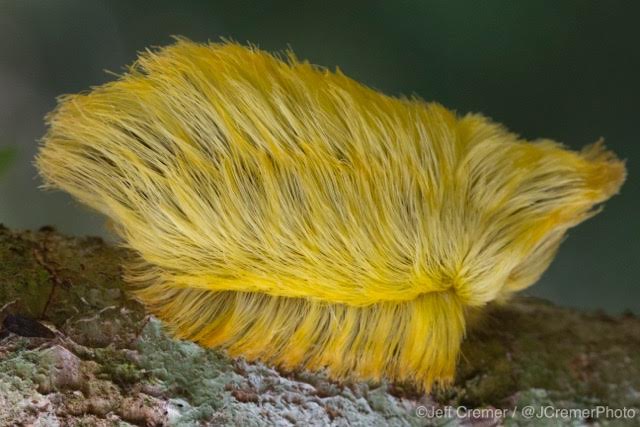
Many have wondered about exact nature of Donald Trump’s hair. Is it the world’s worst toupee? A poorly-executed elaborate comb-over? A weird, incredibly expensive weave? The world may never know. But I prefer to think it’s inspired by nature—not another human’s lovely locks, of course, but those of this animal, which some have taken to calling the Donald Trump Caterpillar or simply the Trumpapillar.
Prior to this election season, the animal was known as the Flannel Moth Caterpillar or the Asp Caterpillar (Megalopyge opercularis). As an adult, the Trumpapillar is equally fur-tastic:
But while the adult is a plush hybrid between moth and cat, the young caterpillar’s golden hairs are not just fluff. The Donald Trump Caterpillar isn’t just a surprisingly-accurate mimic of The Donald’s hair—it’s even more venomous than its namesake. The lovely waves of dandelion “fur” which so perfectly emulate the Republican candidate’s locks are actually dangerous spines capable of delivering potent toxins.
According to the scientific literature, contact with the fine hairs—what scientists call ‘setae’—is an awful experience. “Intense, throbbing pain develops immediately or within five minutes of contact with the caterpillar,” explains David Eagleman in Clinical Toxicology. And we’re not talking a little boo-boo—as Eric Hossler explains in an article in Dermatologic Therapy, some patients liken the amount of pain to “a broken bone, kidney stones, or being hit with a hammer or baseball bat.” A characteristic grid of blood-colored spots mark the site of the sting for about a day afterwards. And pain isn’t the only symptom—Eagleman writes that responses to stings “can include headaches, nausea, vomiting, intense abdominal distress, lymphadenopathy, lymphadenitis, and sometimes shock or respiratory stress.”Impressive, for a wiggling wig.In fact, the animal is so venomous that there are creatures—other than The Donald—which attempt to mimic its look, as Joe Hanson explains:While these photos were taken in the Amazon, this furry monster isn’t just found south of the border; its range extends through Texas all the way up to Maryland and down through Florida. Many Americans have Trumpy toupees crawling around their backyards and don’t even know it! So if you live in the south, keep an eye out—you’ll regret rubbing elbows with the Trumpapillar even more than these Apprentice contestants do with its namesake. SOURCE: DiscoverBy Christie Wilcox Oct 6, 2016
Today is President Donald Trump’s birthday. I decided not to do a piece on his life, or accomplishments. Instead, I want to focus on a different aspect of his personality–his generosity! These are articles, letters to the editor, and the like, detailing the many acts of generosity of Donald Trump. I cobbled them together, so pardon the format.
Express-Times Letters to the Editor (a newspaper in the Lehigh Valley, PA)
In this Jan. 30, 2016 file photo, Donald Trump holds a check presentation with a $100,000 contribution from the Donald J. Trump Foundation to Puppy Jake, a veteran’s charity, at a campaign event in Davenport, Iowa. AP
A lot of people may be turned off by his tweets, his mannerisms, or even the way he talks, but the way President Trump treats politicians (whom most Americans hate) is much different than how he treats the American people.
Here are a few examples of his kindness and charitable moments: Stopping the presidential motorcade promptly to thank firefighters. Helping a Harlem hospital repair its elevator systems. Loaning his private airline to the family of a three-year-old boy suffering from a life-threatening medical condition so he could get treatment in New York.
Another story is that of Annabel Hill, whose husband killed himself for insurance money to save his family farm, but the insurance wouldn’t pay for a suicide. Trump stepped in and helped save the farm.
Trump also let Jennifer Hudson and some of her family members stay in Trump International Hotel & Tower in Chicago for free after her relatives were killed.
Trump sent a bus driver a $10,000 check for stopping a woman from jumping off a bridge.
These are just a few of the many acts of kindness that have gone unnoticed by the media and most Americans. I hope after reading this you have a different opinion of the president. He may be quick with a tweet and fast with the lip, but the man also has a big heart and the character to lead this nation. Please join me in voting for Trump on Tuesday.
Luke Sterner
Upper Nazareth Township
I know men like Trump. Givers. They are universally conservative. They give with no expectation of people knowing the depth and breadth of their philanthropy. Such is Trump’s generosity.
I admire these men, and so want to be one of them. I pray for the day when I can give some single mother working as a waitress (or whatever) enough money to ease her mind for a month or two. I want to be the man who sees that street person who just needs a ray of hope, and provides that ray of hope.
I think about how the media has mischaracterized Trump, intentionally. All because the media has been told, “It’s her time.”
Media and other Leftists don’t care how crooked Hillary Clinton is. They don’t care how many people she has killed or had their lives ruined by Hillary Clinton. Because Leftists have their marching orders.
What you won’t learn about Hillary Clinton is anything about her charity. The Clinton Family concerns themselves with themselves. They pretend to care, while blatantly robbing the public who genuinely cares.
Apparently, this is an article that appeared in Townhall. It documents some of Trump’s generosity. This needs to get out. Trump won’t brag about these things, because he’s grateful to have been able to showcase his heart.
Per Townhall:
Donald Trump is a racist, bigot, sexist, xenophobe, anti-Semitic and Islamophobe — did I miss anything? The left and the media launch these hideous kinds of attacks at Trump every day; yet, nothing could be further from the truth about the real estate mogul.
As an entertainment journalist, I’ve had the opportunity to cover Trump for over a decade, and in all my years covering him I’ve never heard anything negative about the man until he announced he was running for president.
Keep in mind, I got paid a lot of money to dig up dirt on celebrities like Trump for a living so a scandalous story on the famous billionaire could’ve potentially sold a lot of magazines and would’ve been a “yuge” feather in my cap. Instead, I found that he doesn’t drink alcohol or do drugs, he’s a hardworking businessman and totally devoted to his beloved wife and children. On top of that, he’s one of the most generous celebrities in the world with a heart filled with more gold than his $100 million New York penthouse.
In 2004, the first season of “The Apprentice” aired and at that time I worked as an entertainment columnist for the “RedEye Edition of the Chicago Tribune” and as a freelancer for “Us Weekly”. I had a gut feeling that Chicago contestant, Bill Rancic, was going to win the reality show. So I contacted him and covered the hit show the entire season. I managed to score an invite to New York for the show’s grand finale and after-party. This is where I first met Trump and got to ask him a few questions. That year, Rancic did win “The Apprentice”. I attended “The Apprentice” finale the next two years in a row. Between that and the frequent visits Trump and his family made to Chicago during the construction of their Trump International Hotel & Tower, I got a chance to meet most of his family too and I’ve had nothing but positive experiences with them. Since the media has failed so miserably at reporting the truth about Trump, I decided to put together some of the acts of kindness he’s committed over three decades which has gone virtually unnoticed or fallen on deaf ears.
In 1986, Trump prevented the foreclosure of Annabell Hill’s family farm after her husband committed suicide. Trump personally phoned down to the auction to stop the sale of her home and offered the widow money. Trump decided to take action after he saw Hill’s pleas for help in news reports.
In 1988, a commercial airline refused to fly Andrew Ten, a sick Orthodox Jewish child with a rare illness, across the country to get medical care because he had to travel with an elaborate life-support system. His grief stricken parents contacted Trump for help and he didn’t hesitate to send his own plane to take the child from Los Angeles to New York so he could get his treatment.
In 1991, 200 Marines who served in Operation Desert Storm spent time at Camp Lejeune in North Carolina before they were scheduled to return home to their families. However, the Marines were told that a mistake had been made and an aircraft would not be able to take them home on their scheduled departure date. When Trump got wind of this, he sent his plane to make two trips from North Carolina to Miami to safely return the Gulf War Marines to their loved ones.
In 1995, a motorist stopped to help Trump after the limo he was traveling in got a flat tire. Trump asked the Good Samaritan how he could repay him for his help. All the man asked for was a bouquet of flowers for his wife. A few weeks later Trump sent the flowers with a note that read: “We’ve paid off your mortgage.”
In 1996, Trump filed a lawsuit against the city of Palm Beach, Florida accusing the town of discriminating against his Mar-a-Lago resort club because it allowed Jews and blacks. Abraham Foxman, who was the Anti-Defamation League Director at the time, said Trump “put the light on Palm Beach – not on the beauty and the glitter, but on its seamier side of discrimination.” Foxman also noted that Trump’s charge had a trickle-down effect because other clubs followed his lead and began admitting Jews and blacks.
In 2000, Maury Povich featured a little girl named Megan who struggled with Brittle Bone Disease on his show and Trump happened to be watching. Trump said the little girl’s story and positive attitude touched his heart. So he contacted Maury and gifted the little girl and her family with a very generous check.
In 2008, after Jennifer Hudson’s family members were tragically murdered in Chicago, Trump put the Oscar-winning actress and her family up at his Windy City hotel for free. In addition to that, Trump’s security took extra measures to ensure Hudson and her family members were safe during such a difficult time.
In 2013, New York bus driver Darnell Barton spotted a woman close to the edge of a bridge staring at traffic below as he drove by. He stopped the bus, got out and put his arm around the woman and saved her life by convincing her to not jump. When Trump heard about this story, he sent the hero bus driver a check simply because he believed his good deed deserved to be rewarded.
In 2014, Trump gave $25,000 to Sgt. Andrew Tahmooressi after he spent seven months in a Mexican jail for accidentally crossing the US-Mexico border. President Barack Obama couldn’t even be bothered to make one phone call to assist with the United States Marine’s release; however, Trump opened his pocketbook to help this serviceman get back on his feet.
In 2016, Melissa Consin Young attended a Trump rally and tearfully thanked Trump for changing her life. She said she proudly stood on stage with Trump as Miss Wisconsin USA in 2005. However, years later she found herself struggling with an incurable illness and during her darkest days she explained that she received a handwritten letter from Trump telling her she’s the “bravest woman, I know.” She said the opportunities that she got from Trump and his organizations ultimately provided her Mexican-American son with a full-ride to college.
Lynne Patton, a black female executive for the Trump Organization, released a statement in 2016 defending her boss against accusations that he’s a racist and a bigot. She tearfully revealed how she’s struggled with substance abuse and addiction for years. Instead of kicking her to the curb, she said the Trump Organization and his entire family loyally stood by her through “immensely difficult times.”
Trump’s kindness knows no bounds and his generosity has and continues to touch the lives of people from every sex, race and religion. When Trump sees someone in need, he wants to help. Two decades ago, Oprah asked Trump in a TV interview if he’d run for president. He said: “If it got so bad, I would never want to rule it out totally, because I really am tired of seeing what’s happening with this country.” That day has come. Trump sees that America is in need and he wants to help – how unthinkable!
And then there’s two tweets:
May 25, 2023 2:50 am
In Jan. 2023, Silk revealed at the funeral of Diamond that when she revealed Diamond’s passing to Trump,
he not only insisted on paying for everything, but insisted on being there in person, too.
“I want you to do whatever you want, and whatever you want, Diamond will have.”❤️ pic.twitter.com/gss5HnzjDm
The portion of the flag denoting honor is the canton of blue containing the stars representing states our veterans served in uniform. The field of blue dresses from left to right and is inverted only when draped as a funeral cloth over the casket of a veteran who has served our country honorably in uniform. In the U.S. Armed Forces, at the ceremony of retreat, the flag is lowered, folded in a triangle and kept under watch throughout the night as a tribute to our nation’s honored dead. The next morning it is brought out and, at a ceremony of reveille, flown high as a symbol of belief in the resurrection of the body.
Meaning Behind the 13 Folds
The first fold of our flag is a symbol of life.
The second fold is a symbol of our belief in eternal life.
The third fold is made in honor and remembrance of the veteran departing our ranks, and who gave a portion of his or her life for the defense of our country to attain peace throughout the world.
The fourth fold represents our weaker nature; as American citizens trusting in God, it is Him we turn to in times of peace, as well as in times of war, for His divine guidance.
The fifth fold is a tribute to our country. In the words of Stephen Decatur, “Our country, in dealing with other countries, may she always be right, but it is still our country, right or wrong.”
The sixth fold is for where our hearts lie. It is with our heart that we pledge allegiance to the flag of the United States of America, and to the republic for which it stands, one nation under God, indivisible, with liberty and justice for all.
The seventh fold is a tribute to our armed forces, for it is through the armed forces that we protect our country and our flag against all enemies, whether they be found within or without the boundaries of our republic.
The eighth fold is a tribute to the one who entered into the valley of the shadow of death, that we might see the light of day, and to honor our mother, for whom it flies on Mother’s Day.
The ninth fold is a tribute to womanhood. It has been through their faith, love, loyalty and devotion that has molded the character of the men and women who have made this country great.
The 10th fold is a tribute to father, who has also given his sons and daughters for the defense of our country since he or she was first born.
The 11th fold represents the lower portion of the seal of King David and King Solomon and glorifies the God of Abraham, Isaac and Jacob.
The 12th fold represents an emblem of eternity and glorifies God the Father, the Son and Holy Ghost.
The 13th and last fold, when the flag is completely folded, the stars are uppermost, reminding us of our national motto, “In God We Trust.”
After the Folding Ceremony
After the flag is completely folded and tucked in, it has the appearance of a cocked hat, ever reminding us of the soldiers who served under Gen. George Washington and the sailors and Marines who served under Capt. John Paul Jones and were followed by their comrades and shipmates in the U.S. Armed Forces, preserving for us the rights, privileges and freedoms we enjoy today.
The source and the date of origin of this Flag Folding Procedure is unknown. However, some sources attribute it to the Gold Star Mothers of America while others to an Air Force chaplain stationed at the United States Air Force Academy. Some sources also indicate that the 13 folds are a nod to the original first 13 colonies. The flag folding ceremony is provided as a patriotic service.
VA Policy on Flag-Folding Recitation of “13-Fold” Ceremony
To ensure burial services at the 143 national cemeteries operated by the Department of Veterans Affairs reflect the wishes of veterans and their families, VA officials have clarified the department’s policy about recitations made while the U.S. flag is folded at the grave site of a veteran.
“Honoring the burial wishes of veterans is one of the highest commitments for the men and women of VA,” said William F. Tuerk, VA’s undersecretary for Memorial Affairs. “A family may request the recitation of words to accompany the meaningful presentation of the American flag as we honor the dedication and sacrifice of their loved ones.”
Traditional grave site military funeral honors include the silent folding and presentation of a U.S. flag, three rifle volleys and the playing of “Taps.”
Source: Military.com
{Pat’s Note: Tomorrow, June 14th is Flag Day, but it’s also my favorite President’s birthday!}
Pearls, natural or cultured, are formed when a mollusk produces layers of nacre (pronounced NAY-kur) around some type of irritant inside its shell. In natural pearls, the irritant may be another organism from the water. In cultured pearls, a mother-of-pearl bead or a piece of tissue is inserted (by man) into the mollusk to start the process.
For both, the quality of the nacre dictates the quality of the luster, or shine of the pearl, which is very important to its beauty and its value. The surface of the pearl should be smooth and free of marks while the overall shape could be round, oval, pear-shaped, or even misshapen. Misshapen pearls are called baroque pearls.
While shopping for pearls, there are various lengths available:
A collar fits directly against the throat
A choker rests at the base of the neck
The princess length reaches near the collarbone
A matinee length is usually 20-24 inches
The Opera length is 30-36 inches
The longest length, known as a rope, refers to all strands longer than 36 inches
Necklaces can also be classified as uniform (where all pearls are about the same size) or graduated (pearls change uniformly from ends to center).
Natural Pearls
Natural pearls are extremely rare. Historically, many were found in the Persian Gulf; unfortunately, today, most have already been harvested. You may be able to purchase small, natural pearls, but they will be costly.
Cultured Pearls
Cultured pearls are grown in pearl farms. The mollusks are raised until they are old enough to accept the mother-of-pearl bead nucleus. Through a delicate surgical procedure, the technician implants the bead and then the mollusks are returned to the water and cared for while the pearl forms.
Not all produce a pearl; and not all the pearls are high quality. Over 10,000 pearls may be sorted before a 16” single strand of beautifully matched pearls is assembled.
Pearls can be found in saltwater and in freshwater. There are also different types of mollusks that produce very different looking pearls.
Saltwater Pearls
Saltwater pearls include the akoya cultured pearls grown in Japanese and Chinese waters. They range in size from 2mm (tiny) to 10mm (rare) and are usually white or cream in color and round in shape.
Australia, Indonesia, and the Philippines produce the South Sea pearl – the largest of all the pearls. They range in size from 9mm to 20mm and can be naturally white, cream, or golden in color.
Tahitian pearls are interestingly not exclusively from Tahiti – they’re grown in several of the islands of French Polynesia, including Tahiti. Their typical sizes range from 8mm to 16mm. These naturally colored pearls are collectively called black pearls, but their colors include gray, blue, green, and purple.
Freshwater Pearls
These pearls are grown in freshwater lakes, rivers, and ponds, predominately in China. Although many are white and resemble the akoya cultured pearls in shape and size, they can also be produced in various shapes and in an array of pastel colors.
Many freshwater pearls don’t have a bead nucleus — only a piece of tissue — resulting in a pearl with thicker nacre than the akoya.
Imitation Pearls
Imitation pearls are usually a coated glass bead. Most have a high luster, but not the depth of luster seen on high quality cultured pearls.
It’s possible to separate an imitation from a cultured or natural pearl. It can be a challenge, though, to determine if the pearl is cultured or natural. And, many pearls undergo treatments to either enhance their luster or alter their color.
Since this treatment affects their value, you will want to obtain the educated advice of a top jeweler, such as the certified gemologists of the American Gem Society.
Natural pearls are extremely rare. Historically, many were found in the Persian Gulf; unfortunately, today, most have already been harvested. You may be able to purchase small, natural pearls, but they will be costly.
I found an interesting post on the History website about Alcatraz.
Was the Escape from Alcatraz Successful?
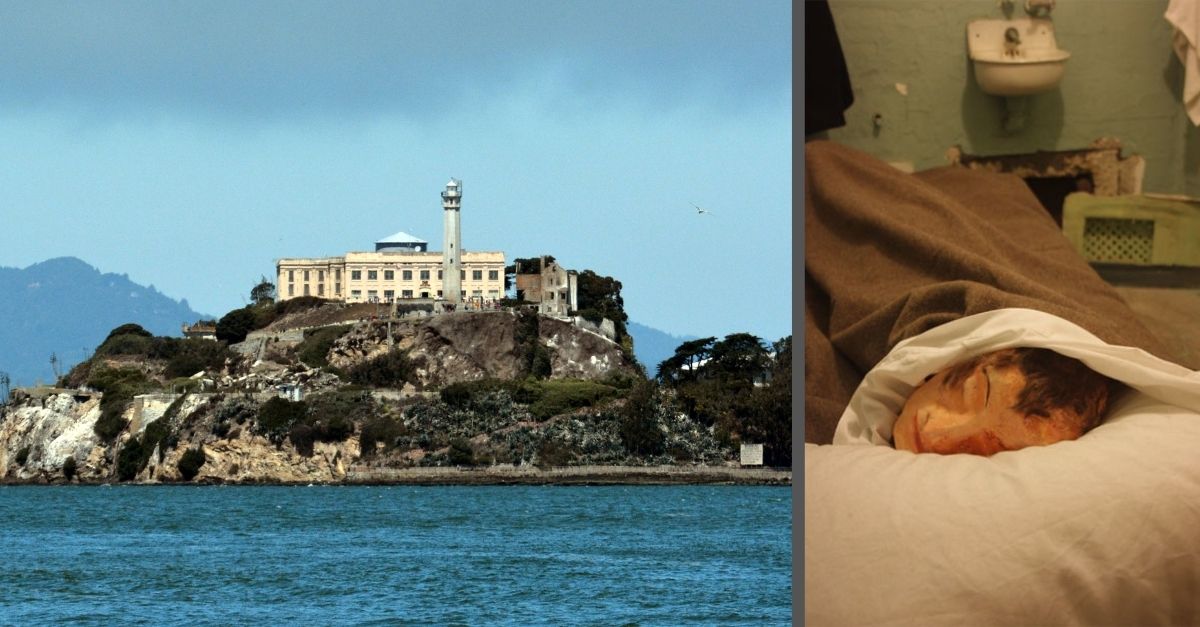
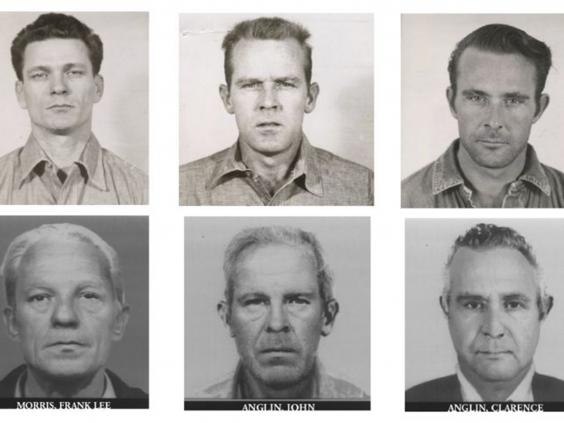
It was one of the most ingenious prison breaks of all time—if it worked. In 1962, inmates and bank robbers Frank Morris and John and Clarence Anglin vanished from Alcatraz, the federal island penitentiary off the coast of San Francisco. They had used sharpened spoons to bore through the prison walls, left papier-maché dummies in their beds and floated away on a raft made from 50 raincoats.
But what happened next has stumped historians for decades. Their bodies were never recovered, leaving many wondering whether they perished in the choppy San Francisco Bay or made it to shore—and freedom.
In the years since nearly six decades of silence from the men led many to conclude that the escape had met a watery end. The FBI closed its case in 1979, concluding that the escapees were unlikely to have survived a treacherous swim of more than a mile of frigid waters to the mainland. But in January of 2018, CBS San Francisco published an extract of a letter addressed to the FBI that told an altogether different story—and claimed that the criminals had been at large since the 1960s. “My name is John Anglin,” it read. “I escape[d] from Alcatraz in June 1962 with my brother Clarence and Frank Morris. I’m 83 years old and in bad shape. I have cancer. Yes, we all made it that night but barely!”
The letter was sent to the San Francisco Police Department’s Richmond station in 2013, the broadcaster reported but had been kept under wraps during a long investigation. An FBI laboratory examined the letter for fingerprints and DNA and analyzed the handwriting within, but the results were inconclusive. “So that means yes, and it means no, so this leaves everything in limbo,” security analyst Jeff Harp told CBS.
In the letter, the writer explained that he was the last living member of the trio, with his co-conspirators dying in 2005 and 2008. He offered a deal: If authorities announced on television that he would receive a single one-year jail sentence, in which he could have the medical treatment he needed, “I will write back to let you know exactly where I am. This is no joke…” The FBI did no such thing and instead repressed the letter.
A photograph showing the cell where one of the three prisoners escaped from Alcatraz on June 12, 1962. A dummy head was used to throw off guards, and sheets were used to conceal his exit below the sink.
Though this is the first time anyone purporting to be one of the men has contacted authorities, it isn’t the first piece of evidence that suggests they might have made it out in one piece. Robert Checchi, an officer with the San Francisco police, reported seeing what he described as a “pristine white boat” out in the Bay on the night of the men’s disappearance. It had no lights on, but appeared to have someone on board shining a flashlight into the water. Police followed up on the sighting, but couldn’t find the owner of this strange boat—or where it went next.
More recently, a 2015 HISTORY special showed an alleged photograph of the brothers, taken in Brazil some 13 years after their disappearance. Family members of the men have also reported strange experiences that suggest there may be more to the story than many believe. “It’s always been talked about through the family,” David Widner, a nephew of John and Clarence Anglin, told CBS. “My grandmother received roses for several years after the escape.” If Anglin is still alive today, he would be nearly 90. He has not been heard from since.
Widner expressed dismay that authorities had not contacted the family about his relative’s alleged illness. “For him to say he had cancer and was dying, I feel like they should have at least reached out to the family and let them know [the letter] existed,” he said. But federal authorities have been quick to quash any rumors of a successful great escape. In an interview with CBS San Francisco, the U.S. Marshals investigating the case told the broadcaster they considered the lead closed with no merit and a simple hoax from someone hoping to scam and embarrass federal and local authorities. “The Federal Bureau of Prisons say that they drowned once they got off of Alcatraz and their bodies were swept out to the Pacific Ocean—end of story,” National Park Service Ranger John Cantwell said. The prison was closed permanently in 1963, a year after the men vanished. Today, it plays host to more than a million tourists each year, often drawn to the site by the story of the Anglin brothers, which was adapted for the screen in the 1979 film Escape From Alcatraz. John Anglin’s cell, where the men made their exit, is a popular attraction. It’s preserved almost perfectly, with the same gaping hole in its teal-painted wall—but even the scene of the crime offers few answers as to where these great escapees wound up.By: Natasha FrostUpdated: September 1, 2018 | Original: July 16, 2018
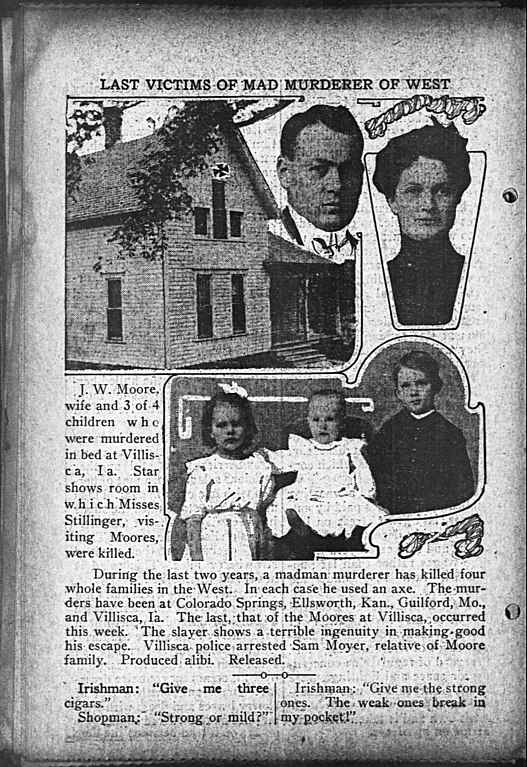
Today, June 12th, is the 111th anniversary of gruesome murders in Iowa. Eight people, including 6 children were bludgeoned with an axe. Worse yet, the murders remain unsolved. I found this article on allthatsinteresting.com website.
The Gruesome Story Of The Unsolved Villisca Axe Murders
By Katie Serena | Edited By John Kuroski
Updated September 29, 2022
On June 10, 1912, all eight people inside the Moore family’s house in Villisca, Iowa — including two adults and six children — were murdered by an axe-wielding assailant.
At the end of a quiet street in Villisca, Iowa, there sits an old white frame house. Up the street, there are a group of churches, and a few blocks away is a park that faces a middle school. The old white house looks like many of the others that fill the neighborhood, but unlike them, it lies abandoned. The house emits no light or sound, and upon closer inspection, the doors are found to be tightly boarded up. A small sign out front reads: “Villisca Axe Murder House.”
Despite its ominous air, the little white house was once filled with life, life that was harshly stamped out one warm summer’s night in 1912, when a mysterious stranger broke in, and viciously bludgeoned its eight sleeping inhabitants to death. The event would come to be known as the Villisca Axe Murders and it would baffle law enforcement for over a century.
The Brutal Story Of How The Villisca Axe Murders Unfolded
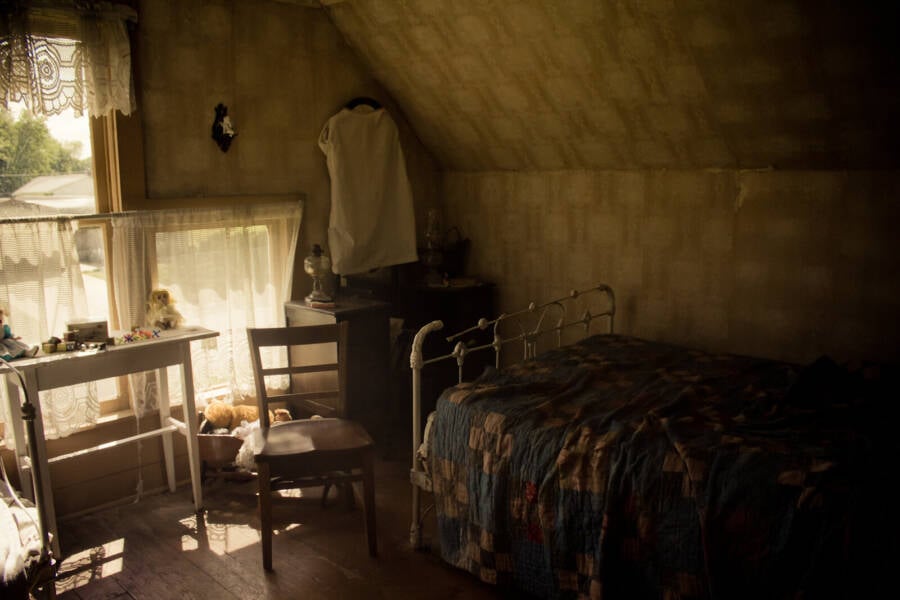
On June 10, 1912, the Moore family was sleeping peacefully in their beds. Joe and Sarah Moore were asleep upstairs, while their four children were resting in a room down the hall. In a guest room on the first floor were two girls, the Stillinger sisters, who had come for a sleepover.
Shortly after midnight, a stranger entered through the unlocked door (not an uncommon sight in what was considered a small, safe, friendly town), and plucked an oil lamp from a nearby table, rigging it to burn so low it supplied light for barely one person. On one hand, the stranger held the lamp, lighting the way through the house.
In his other, he held an axe.
Ignoring the sleeping girls downstairs, the stranger made his way up the stairs, guided by the lamp, and a seemingly unerring knowledge of the home’s layout. He crept past the room with the children, and into Mr. and Mrs. Moore’s bedroom. Then he made his way to the children’s room, and finally back down to the bedroom downstairs. In each room, he committed some of the grisliest murders in American history.
Then, as quickly and silently as he had arrived, the stranger left, taking keys from the home, and locking the door behind him. The Villisca Axe Murders may have been quick, but as the world was about to discover, they were unimaginably horrifying.
The Horrors Of The Villisca Murders Come To Light
The next morning, the neighbors became suspicious, noticing that the usually rambunctious home was dead quiet. They alerted Joe’s brother, who arrived to take a look. What he saw after letting himself in with his own key was enough to make him sick.
Everyone in the house was dead, all eight of them bludgeoned beyond recognition.
The police determined that the Moore parents had been murdered first, and with obvious force. The axe that had been used to kill them had been swung so high above the murderer’s head that it gouged the ceiling above the bed. Joe alone had been hit with the axe at least 30 times. The faces of both parents, as well as the children, had been reduced to nothing but a bloody pulp.
The state of the bodies wasn’t the most concerning part, however, once the police had searched the home.
After murdering the Moores, the killer had apparently set up some kind of ritual. He had covered the Moore parent’s heads with sheets, and the Moore children’s faces with clothing. He then went through each room in the house, covering all of the mirrors and windows with cloths and towels. At some point, he took a two-pound piece of uncooked bacon from the fridge and placed it in the living room, along with a keychain.
A bowl of water was found in the home, spirals of blood swirling through it. Police believed that the murderer had washed his hands in it before leaving.
By the time the police, the coroner, a minister, and several doctors had thoroughly perused the crime scene, word of the vicious crime had spread, and the crowd outside the home had grown. Officials cautioned the townspeople against going inside, but as soon as the premises was clear at least 100 townspeople gave in to their gross fascinations and traipsed through the blood-spattered home.
One of the townspeople even took a fragment of Joe’s skull as a keepsake.
Who Committed The Villisca Axe Murders?
As for the perpetrator of the Villisca Axe Murders, the police had shockingly few leads. A few half-hearted efforts to search the town and surrounding countryside were made, though most officials believed that with the roughly five-hour head start that the killer had had, he would be long gone. Bloodhounds were brought in, but with no success, as the crime scene had been fully demolished by the townspeople.
A few suspects were named over time though none of them panned out. The first was Frank Jones, a local businessman who had been in competition with Joe Moore. Moore had worked for Jones for seven years in the farm equipment sales business before leaving and starting his own rival business.
There was also a rumor that Joe was having an affair with Jones’ daughter-in-law, though the reports were unfounded. The townspeople insist, however, that the Moores and the Joneses harbored a deep hatred for each other, though no one admits it was bad enough to spark murder.
The second suspect seemed far more likely and even confessed to the murders – though he later recanted claiming police brutality.
Lyn George Jacklin Kelly was an English immigrant, who had a history of sexual deviancy and mental problems. He even admitted to being in town the night of the Villisca Axe Murders and admitted that he had left early in the morning. Though his small stature and meek personality led some to doubt his involvement, there were certain factors police believed made him the perfect candidate.
Kelly was left-handed, which police determined from blood spatters that the killer must be. He also had a history with the Moore family, as many had seen him watching them while at church and out and about in town. A dry cleaner in a nearby town had received bloody clothing from Kelly a few days after the murders. He reportedly also asked police for access to the home after the crime while posing as a Scotland Yard officer.
At one point, after a long interrogation, he eventually signed a confession detailing the crime. However he almost immediately recanted, and a jury refused to indict him.
The Case Goes Cold And The Villisca Axe Murders House Becomes A Tourist Attraction
For years, police looked into every possible scenario that could have culminated in the Villisca Axe Murders. Was it a single attack, or part of a larger string of murders? Was it likelier to be a local perpetrator, or a traveling killer, simply passing through town and taking an opportunity?
Soon, reports of similar enough crimes happening throughout the country began to pop up. Though the crimes were not quite as gruesome, there were two common threads – the use of an axe as the murder weapon, and the presence of an oil lamp, set to burn extremely low, at the scene.
Despite the commonalities, however, no actual connections could be made. The case eventually ran cold, and the house was boarded up. No sale was ever attempted, and no changes were made to the original layout. Now, the house has become a tourist attraction and sits at the end of the quiet street as it always has, while life goes on around it, undeterred by the horrors that were once committed within.




:max_bytes(150000):strip_icc():format(webp)/penguin-chicks-5758973f5f9b5892e860cb46.jpg)
:max_bytes(150000):strip_icc():format(webp)/male-seahorse-575898195f9b5892e860d2fc.jpg)
:max_bytes(150000):strip_icc():format(webp)/dart-frog-575899cb3df78c9b4614d9c0.jpg)
:max_bytes(150000):strip_icc():format(webp)/water-bug-57589ad23df78c9b4614dc22.jpg)
:max_bytes(150000):strip_icc():format(webp)/grizzly-bear-57589c545f9b5892e860e2a4.jpg)
:max_bytes(150000):strip_icc():format(webp)/assassin_bug-57589dbe3df78c9b4614eb3c.jpg)
:max_bytes(150000):strip_icc():format(webp)/sand-goby-57589f085f9b5892e860e9e2.jpg)
:max_bytes(150000):strip_icc():format(webp)/lion-and-cub-57589fae3df78c9b4614ede1.jpg)



















 Sew Colorful