Sand Cats

Sand cats, also known as “sand dune cats,” are desert dwelling felines native to Northern Africa, Central Asia, and the Middle East. While these cute cats look quite similar to your average housecat, be warned they are 100% wild animals. Sand cats have not been domesticated in any way, and are actually ferocious little predators.

Description of the Sand Cat

Sand cats are a pale tan or sandy color (to match all the sand of course), with some dark spots or stripes on their fur. Their tails are tipped with black, with a few black bands around them. There are two dark stripes on their upper forelegs. Their ears are quite large, which helps heat escape in the hot desert temperatures.

Interesting Facts About the Sand Cat

Don’t let their cuteness fool you… these little cats are fierce predators! They are unique felines due to their desert habitat, and have a few characteristics to help them survive this environment.

Desert Dwelling Feline – Sand dune cats are the only cats that live primarily in desert regions. Other felines may range in deserts occasionally, but sand cats specialize in surviving within these arid environments.

Purr-fect Hiding Place – Where better to snooze during the hot desert day than a nice cool burrow in the sand? Sand cats are experts at burrowing, and spend much of their naptime in shallow burrows. They also dig to seek out their prey, most of which also spends its time underground.
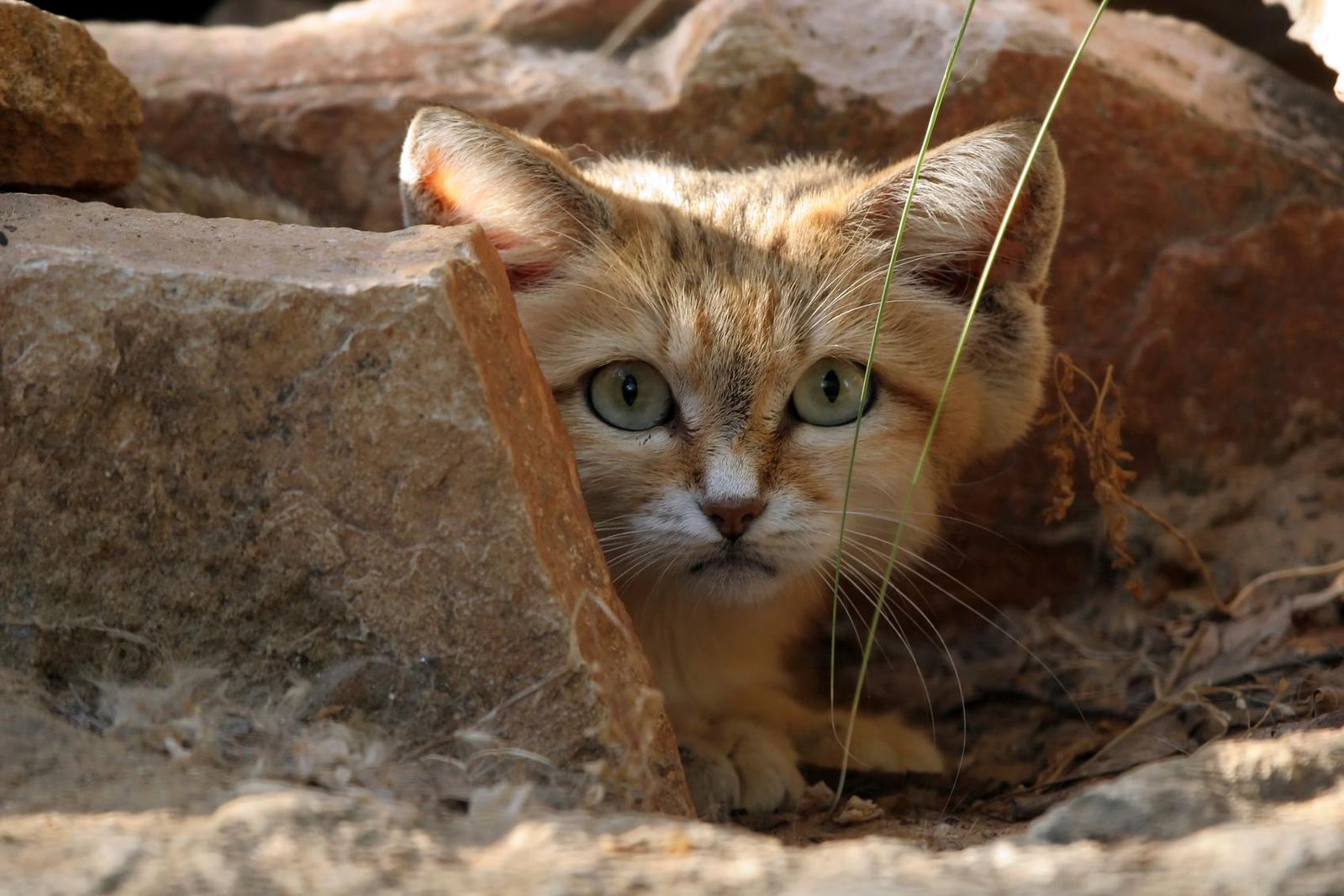
Furry Feet – Those fuzzy little feet aren’t just for show! Sand cats have heavily furred feet to help keep them from burning their toes on hot sand. The fur protects sand cats’ feet by providing a barrier between the sensitive footpads and the scorching sand and rock. They have so much fur on their feet that they don’t leave behind footprints!

Water? Who Needs It! – Because water is scarce in the desert, sand cats can go long periods of time without drinking. Instead, they receive most of their moisture from the prey that they eat. Sand cats can sometimes go months without drinking.

Habitat of the Sand Cat

Sand cats live exclusively in desert regions. They are found in very arid habitats with little to no vegetation. Instead, they live in dry, sandy plains and rocky valleys. Conditions are extreme in the desert, and temperatures can reach 124º F during the day, and 31º F at night. Because they need to burrow to escape the heat, sand cats are found only in soft soils.

Distribution of the Sand Cat

These cats are native to Northern Africa, the Middle East, and Central Asia. They are restricted mainly to the Sahara Desert in Africa, the Arabian Peninsula, and parts of Iran, Afghanistan, Turkmenistan, and Pakistan. Their ranges are influenced by the presence of desert as well as land development and soil composition.

Diet of the Sand Cat

Sand dune cats prey on rats, mice, hares, birds, snakes, spiders, and insects. They commonly make lunchmeat out of venomous snakes and spiders. Because they live in such a harsh environment, sand dune cats must be opportunistic feeders. The must eat whatever they can find, because they have no other choice!

Domestication

Sand cats have not been domesticated in any way.

Does the Sand Cat Make a Good Pet

No. Because sand cats are threatened, animals taken illegally for the pet trade can seriously damage wild populations. They are very sensitive animals, and do not do well in facilities not equipped for their needs.

Sand Cat Care

In zoos, sand cats must be provided with very particular care. They are provided with plenty of hiding spaces and burrowing opportunities, and have access to round the clock medical care. They are fed a diet of mice or rats, bones, and rib bone meat at the Smithsonian’s National Zoo.

Behavior of the Sand Cat

Because the desert is so extremely hot, animals benefit from nighttime activity. Avoiding the heat, sand cats are nocturnal and hunt at night. They are mainly solitary animals, but not highly territorial. While they don’t socialize with other cats, they will occasionally share burrows. They do not share the same space in the burrow, but instead occupy it while the other animal is away.

Reproduction of the Sand Cat

Populations of sand cats in different locations will breed at different times of year. After mating, the female sand cat has a gestation period of 59 – 67 days. The litter usually consists of 2 – 4 kittens, with numbers up to 8 occurring as well. The kittens will begin to hunt for their own prey between 6 and 8 months of age. They reach breeding age by 14 months old, and can produce a litter of their own at that time.

SOURCE: ANIMALS.NET

Montana State Mammal: Grizzly Bear

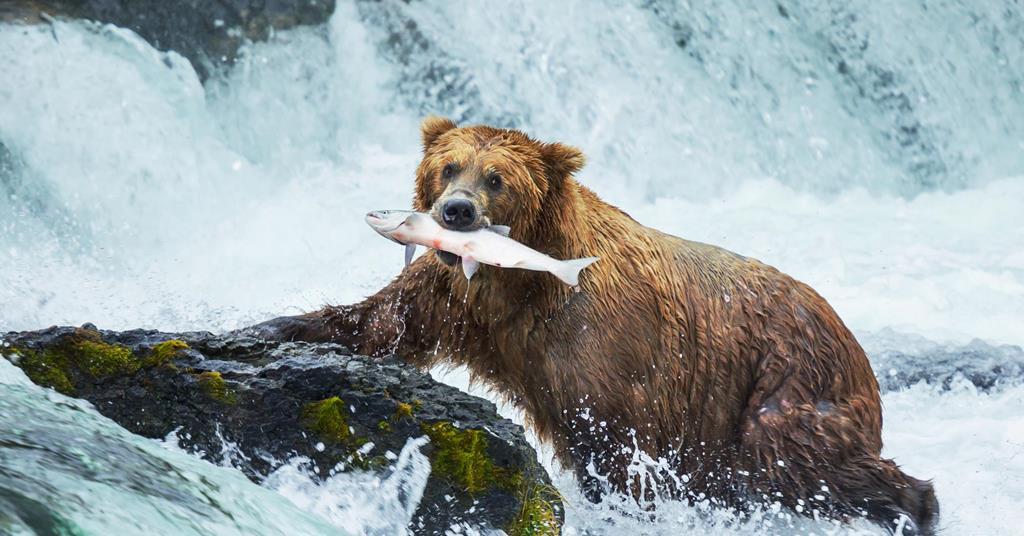
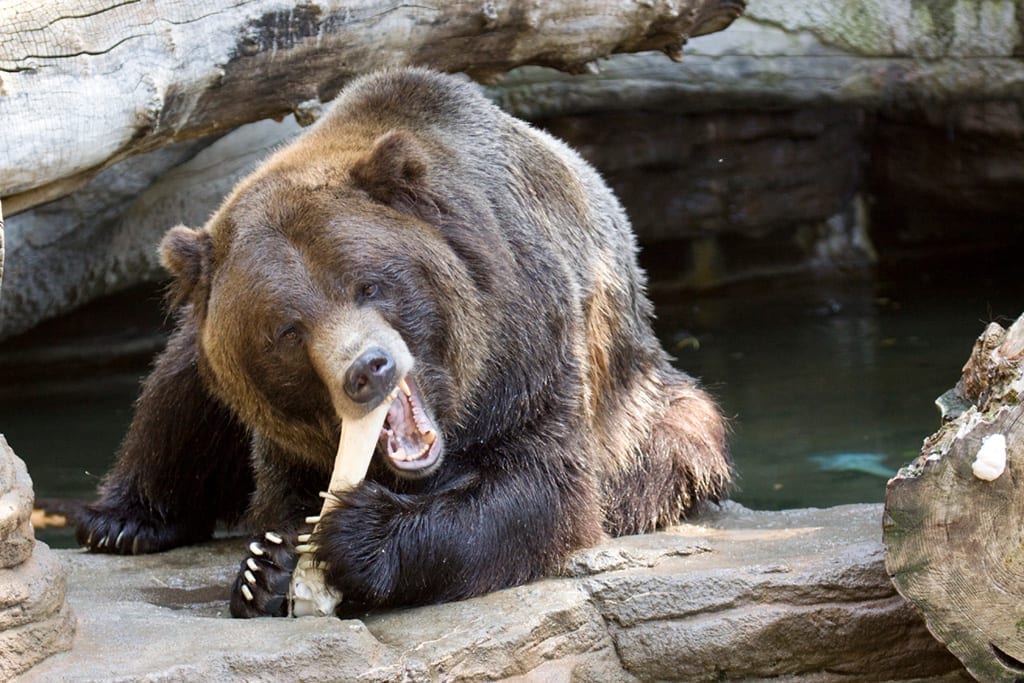
Grizzly bears (Ursus arctos horribilis) are a subspecies of the brown bear (Ursus arctos) found in inland Northern America. They are famous for their large size, weighing up to 360kg, and their often aggressive nature. They are apex predators, hunting large prey such as caribou, but they are also very opportunistic. They will eat carrion (already dead animals), salmon, berries and even clams. Their strong front legs are adapted both for running fast to catch prey, and for digging and foraging. They are primarily solitary, except for mothers with cubs. However, as many as 20 individuals can come together to hunt salmon that are moving upstream to spawn. Females live for around 26 years, which is longer than males who live for around 22 years on average.

Interesting Grizzly Bear Facts

1 They are a subspecies of the brown bear.

Grizzly bears are considered a subspecies of the brown bear (Ursus arctos). The main difference between them is in diet and geography. Brown bears are mainly coastal with access to marine foods, whereas grizzlies live further inland.

2 They are called “grizzly” both for their fur and their nature.

Their hair is grizzled, meaning silver tipped. However, it is believed they originally got their name after the word “grisly” meaning gruesome or scary. Their scientific classification ‘Ursus arctos horribilis‘ was also named after their ‘horrifying’ reputation by a naturalist in 1815.

3 They are apex predators.

This means they are at the top of the food chain. They hunt large mammals, such as moose, caribou, and bison, using their speed and strength to catch them.

4 Grizzly bears are also very opportunistic eaters.

They’ll also eat carrion (things that are already dead), forage for berries, dig into sand for razor clams, eat grass, and go fishing in rivers.

5 They come together to hunt salmon.

Every year grizzlies gather to fish for the salmon that are swimming upstream to spawn. As many as 20 can be seen in one spot, where they often catch salmon leaping out of the water with their paws.

6 They are huge.

Average length of grizzly bears is around 2 meters, with females weighing 130-180kg and males 180-360kg. However, some huge male grizzlies have been reported to stand as high as 3 meters (9.8 ft) and weighing up to 680kg!

7 They have a distinctive hump on their back.

This hump is actually a large muscle which controls their forearms.

8 Grizzlies claws are as long as human fingers.

They are up to 4 inches long.

9 They can run at 30 miles an hour.

Despite their large size, they can move fast. The large hump on their shoulders powers their fast-moving front legs. This is why they tell you if you bump into a grizzly, don’t try and run from it!

10 They hibernate for 5-7 months every year.

They’re well known for their hibernating habits. Bears will dig large dens which they curl up in to sleep for the coldest months of the year. However, bears in sunny California don’t hibernate as it’s not needed.

11 They give birth while hibernating.

Female grizzly bears give birth while hibernating. The grizzly cubs will stay in the den drinking milk until the end of winter.

12 They don’t become pregnant straight away.

Via a process of “delayed implantation”, embryos are stored until the mother has gained enough weight for hibernation.

13 They eat a lot of food before they hibernate.

They don’t eat while they’re hibernating, so they eat as much food as possible beforehand. Bears can gain as much as 400lb in weight before going into hibernation.

14 Grizzly bears don’t pee or poop during hibernation.

Throughout the whole of the 5-7 months they don’t go to the bathroom. They are actually able to turn excess urea (a component of urine) back into protein, meaning they actually gain muscle while hibernating.

15 Mama bears are fierce.

Mothers with young cubs will be very protective of their young, including fighting off larger male bears.

16 They will nurse their cubs for up to 3 years.

A mother will keep her cubs with her for as many as three years.

17 They need a lot of space.

Grizzlies in general range over large areas, as much as 1500 square km (~600 square miles). Males have large territories, which females roam through.

18 They are more dangerous to humans than sharks.

While sharks get all the media attention, bear attacks on humans are actually more common and numbers are actually on the rise. However, grizzly bears normally avoid contact with people and rarely actively hunt humans. Many of these attacks occur when people accidentally stumble upon mother bears with cubs. The rise in attacks is thought to be due to growing human use of grizzly bear habitat, and ‘problem bears’ who have associated humans with having potential ‘food’ near to them.

19 Grizzlies and wolves are competitors.

In places where the two overlap, like Yellowstone Park, they often compete fiercely over food.

20 They are a conservation success story.

Human expansion into grizzly habitat led to huge numbers in their decline, however after they were declared protected by the law in the USA, their numbers have bounced back.

SOURCE: FACTANIMAL.COM

Winter Insects to Watch For

I always thought winter was a small respite from pests, but as I read in the following article from BackYardBoss, there are several insects we need to keep a look out for.

From BACKYARDBOSS:

Winter can be harsh for wildlife, including insects. As temperatures drop and the days grow shorter, many of the bugs that are common during other seasons become rarer to see. But where do bugs go in winter? Many insects enter a state of dormancy or seek shelter to survive the cold. Some burrow into the soil, finding refuge beneath the frost line, while others hibernate in cozy nooks, such as leaf litter or tree bark. Certain insects, like monarch butterflies, travel south for the winter, according to the U.S. Forest Service. There, the butterflies hibernate until the cold months are over.

But not all insects are intimidated by winter. There’s a world of bizarre and terrifying insects that thrive in the cold.These winter insects are adapted to surviving in harsh conditions, displaying unique characteristics that set them apart from their warm-weather counterparts.From beetles with antifreeze-like blood to spiders that brave cold temperatures, thesewinter bugsare both fascinating and, at times, unnerving. Discover eight weird winter insects you’ll probably see before the season is over.

Snow Fleas

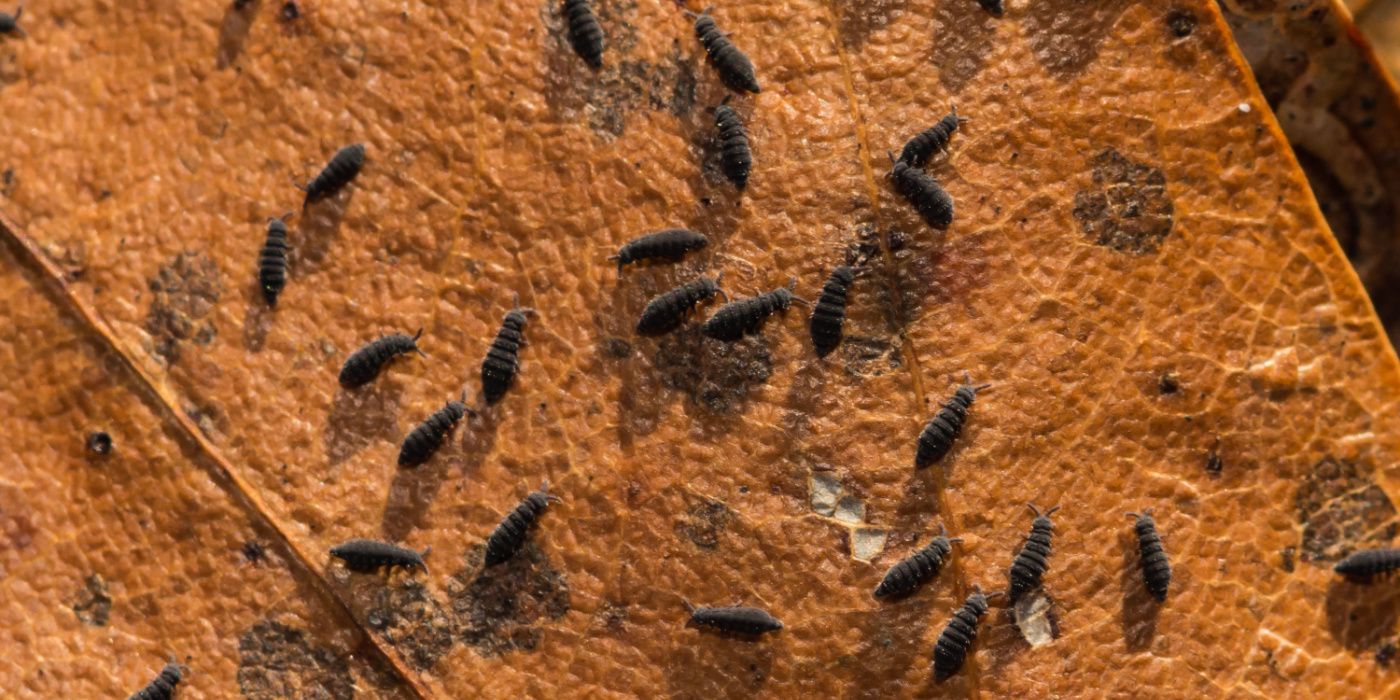
Snow fleas, despite their name, are not actual fleas. These minuscule insects are a type of springtail. Found in moist environments, snow fleas are some of the most active insects in winter, and their presence becomes noticeable on snowy surfaces. The winter bugs measure only about ⅒ of an inch, according to the University of Minnesota, and their dark color makes them stand out against the white snow. Despite their ominous appearance, snow fleas are harmless to humans. They feed on organic matter and play a crucial role in breaking down decaying plant material, which can help improve your soil.

Snow fleas produce Hypogastrura harveyi Folsom, a protein that acts as an antifreeze, preventing ice crystal formation within their bodies, and allowing them to remain active even in subzero temperatures. Their ability to jump vast distances helps them navigate through snow, while their dark coloration absorbs sunlight, providing them with warmth in chilly environments.

Snow flies can find their way into your home, but there are some things you can do to keep snow fleas at bay:

Maintain proper ventilation to reduce moisture levels indoors.

Clear snow and debris from around the foundation to limit their access points.

Use natural repellents like diatomaceous earth near entry points.

Apply a thin layer of cedar oil or citrus-based repellent in infested areas.

Use a vacuum cleaner with proper filtration to remove snow fleas indoors.

Consider introducing predatory insects like ground beetles to control populations.

Winter Stoneflies

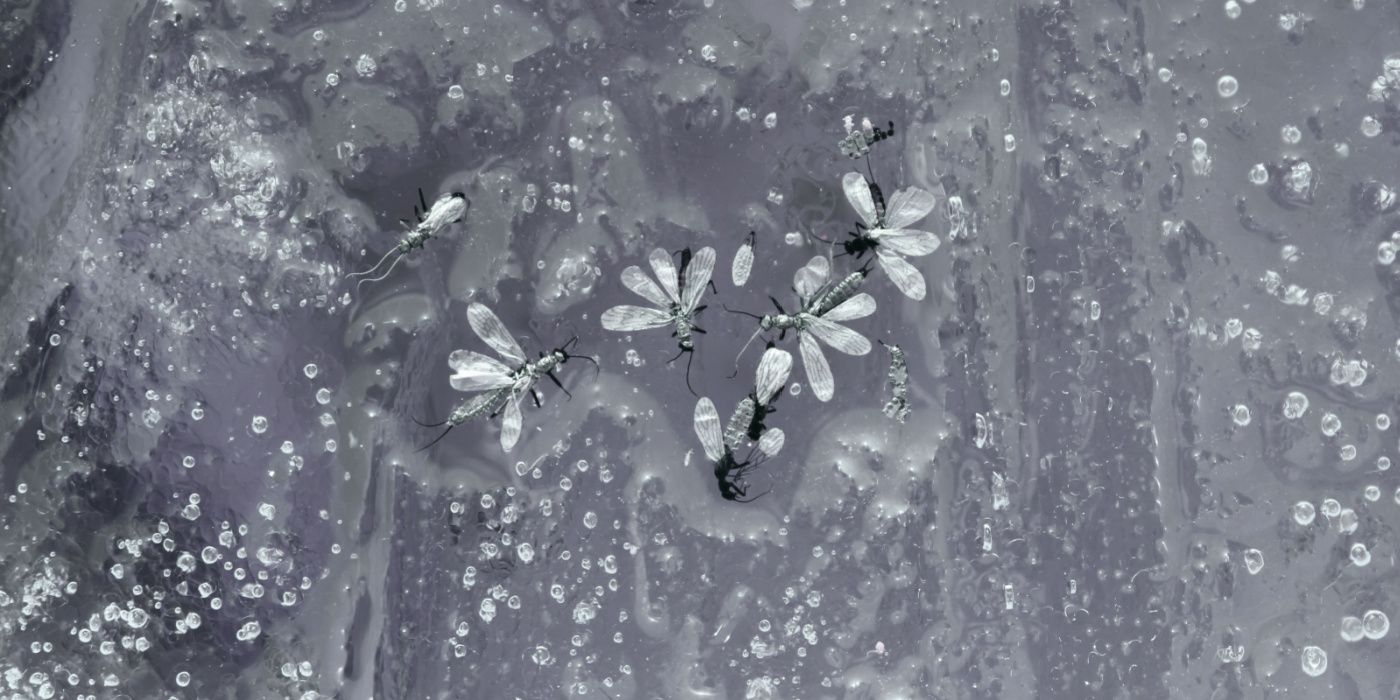
Winter stoneflies are insects that defy the common perception of insects going dormant in winter. Thesewinter bugsare characterized by their elongated bodies and two pairs of membranous wings. Typically found near cold, running water, winter stoneflies undergo a unique life cycle that involves egg-laying on rocks in freezing conditions. Like snow fleas, winter stoneflies have dark coloration that aids in absorbing sunlight for warmth. Their ability to walk on their tippy-toes prevents direct contact with cold surfaces. Additionally, they seek refuge in crevices to evade harsh winter winds and replace body fluids with glycerol, an alcohol that remains unfrozen, enabling them to regulate their antifreeze levels as necessary.

Fortunately, stoneflies rarely invade your living space. However, if you have discovered them in your space and would like to get rid of them, there are some things you can do:

Use light-colored exterior paint to reduce heat absorption and deter stoneflies.

Install artificial light sources away from water bodies to minimize attraction.

Remove standing water around the property to limit breeding sites.

Apply insecticidal soaps sparingly on stonefly-infested plants.

Winter Moths

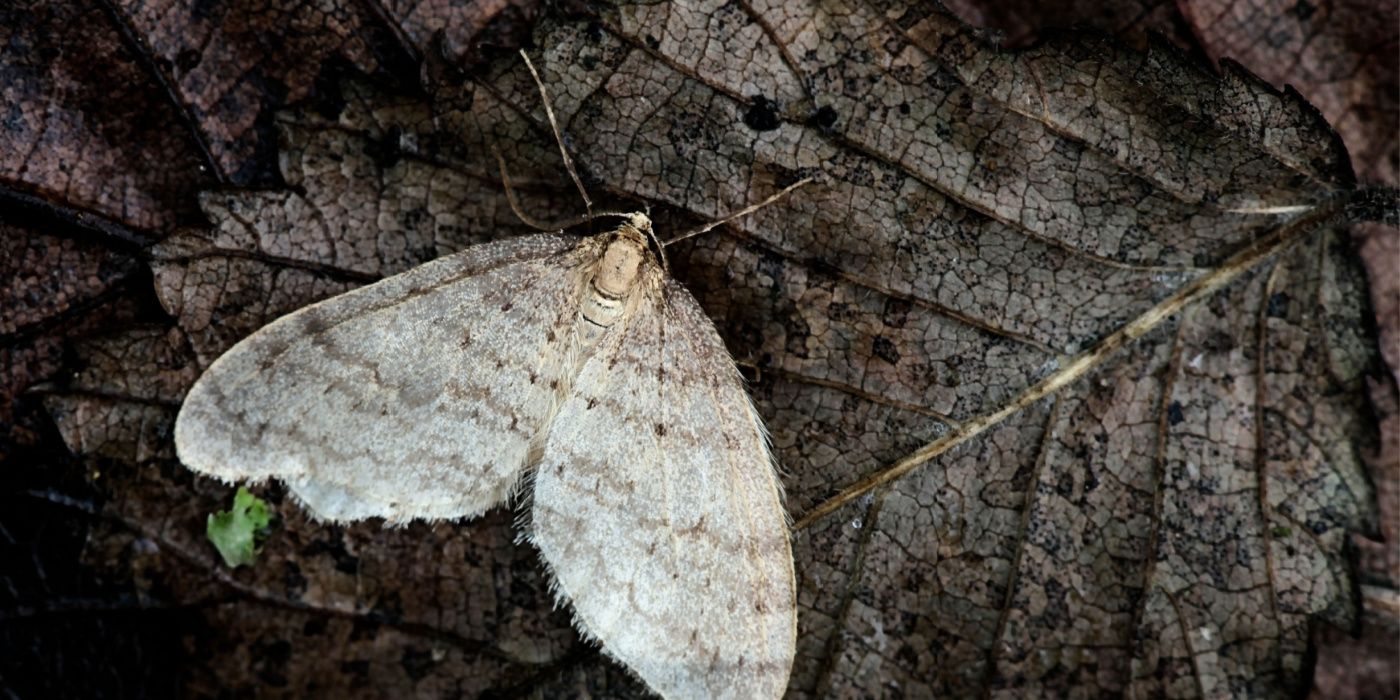
Winter moths are enchanting insects with a problematic reputation. These small, delicate moths have a wingspan of around 1 inch and are known for their ability to fly in cold temperatures. While they may seem harmless, the weird winter insects can be highly destructive to deciduous trees during their larval stage. The caterpillars feed on tree buds, potentially causing extensive damage to forests and ornamental trees. Winter moths have antifreeze in their bodies, aiding survival in freezing temperatures. They can also shiver to generate heat, maintaining their activity levels in cold weather.Moreover, they exhibit the ability to delay hatching until food sources are plentiful, enhancing their survival prospects by synchronizing with blooming cycles.

Winter moths can nest in your home but, there are some considerations for getting rid of these bugs in the winter:

Release natural predators such as parasitic wasps to control caterpillar populations outdoors.

Use organic insecticides such as neem oil to kill winter moths.

Apply horticultural oils on tree trunks to suffocate winter moth eggs.

Introduce pheromone traps to disrupt the mating cycle of adult moths.

Wrap tree trunks with burlap in late fall to prevent egg-laying.

Use sticky bands around tree trunks to trap crawling caterpillars.

Winter Ticks

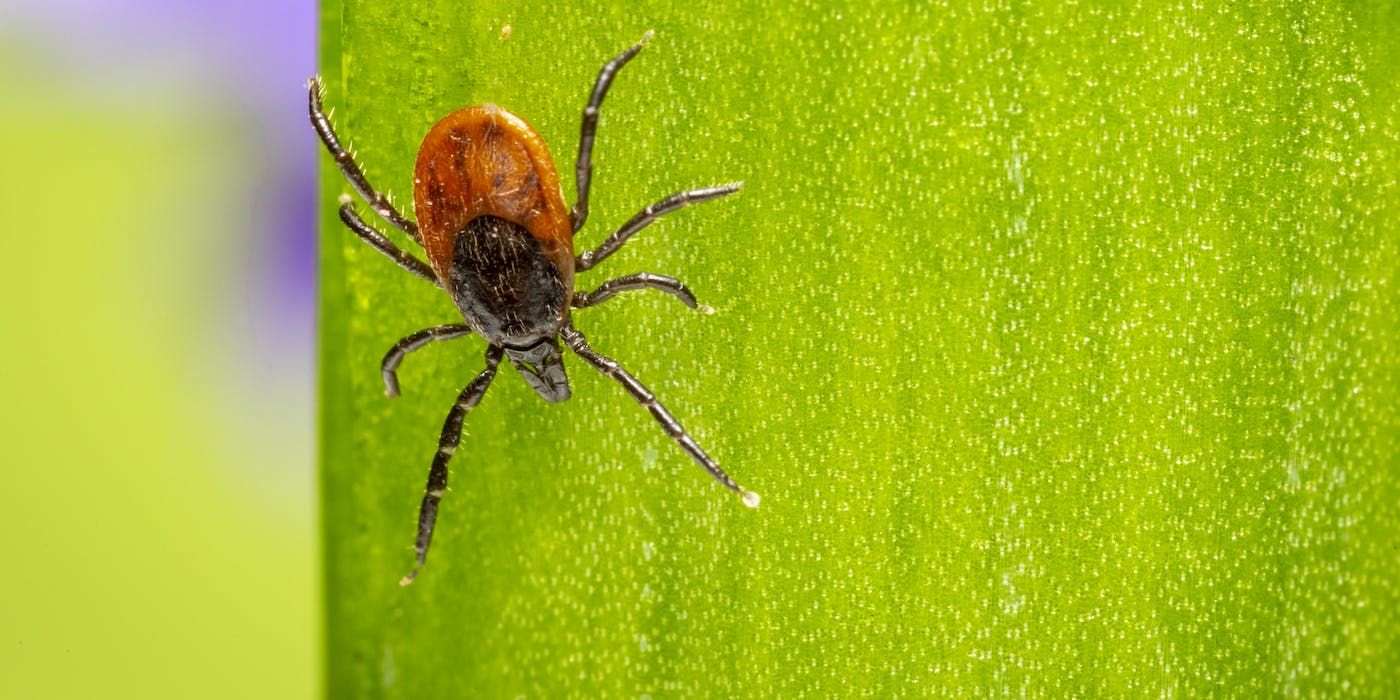
Winter ticks feed on the blood of mammals during the winter months. These tiny, reddish-brown bugs are particularly concerning due to their impact on wildlife and domestic animals. Animals can suffer from significant blood loss when infested with large numbers of winter ticks.

A significant adaptation of these winter bugs is their ability to remain on a host throughout cold winters, unlike other tick species that shift hosts between developmental stages.This strategy ensures their survival by providing consistent access to a blood meal. Furthermore, off-host larvae and adult female winter ticks display remarkable survival techniques underwater, showcasing their adaptability to severe environments. To fight winter ticks:

Regularly check pets and livestock for ticks, especially after outdoor activities.

Safely remove the winter insectsusing fine-tipped tweezers, grasping as close to the skin’s surface as possible.

Create tick-safe zones by clearing tall grass and dense vegetation.

Use botanical repellents on pets, focusing on ears, neck, and paws.

Consult with local wildlife management agencies to control tick-infested wildlife populations.

Snow Scorpionflies

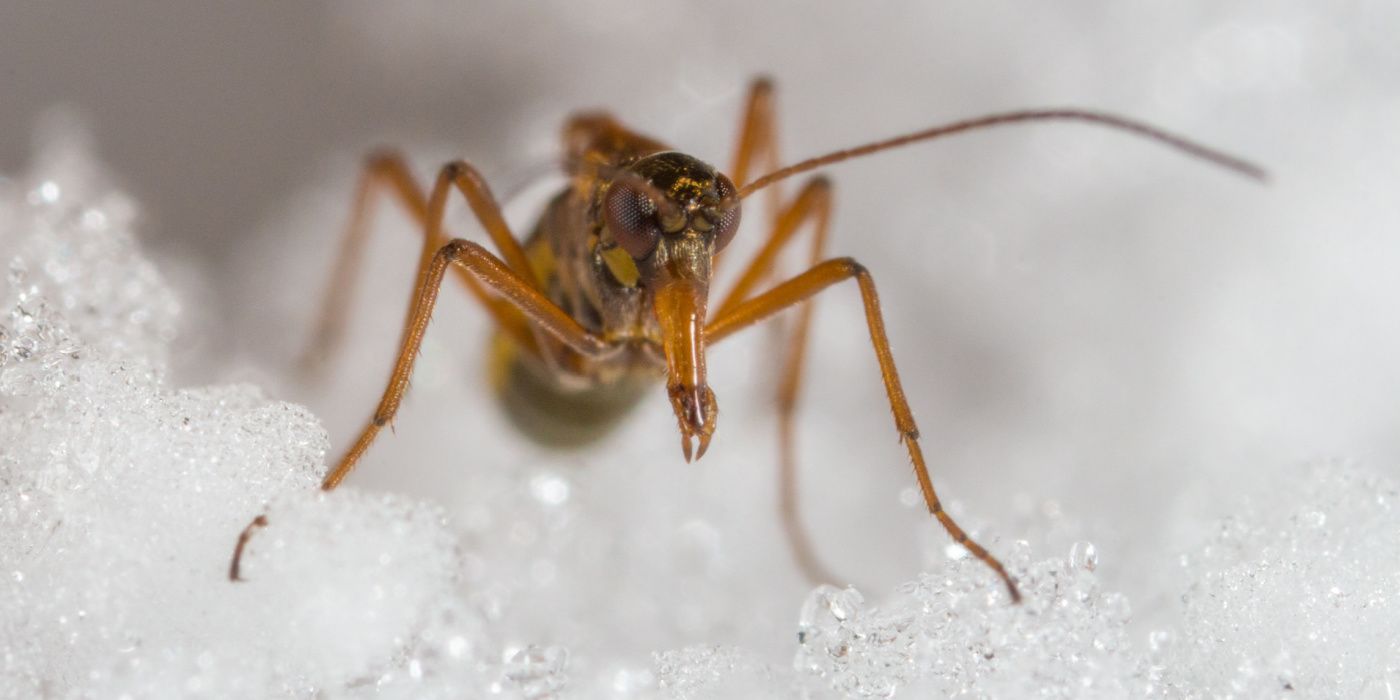
Snow scorpionflies are fascinating insects that add a touch of mystery to winter landscapes. With their distinctive long antennae and tail-like appendages, snow scorpionflies have an otherworldly appearance. This winter flyis commonly found on snow surfaces, where it feeds on small invertebrates and detritus. What makes snow scorpionflies so adept at surviving in the winter? Well, the winter insects can lower the freezing point of fluids in their cells, which prevents the formation of ice crystals and allows them to be active in cold conditions. Snow scorpionflies don’t often infest your living spaces. But if you’re concerned that the winter insects might find their way into your home, there are things you can do to thwart an attack by the bugs in the winter:

Maintain cleanliness to discourage their presence indoors.

Safeguard your living space by fitting screens on windows and doors to block their entry.

Use yellow outdoor lighting to minimize their attraction to illuminated areas.

Clear snow and debris from outdoor spaces to reduce potential habitats.

Plant native vegetation to encourage the presence of natural predators.

Winter Ants

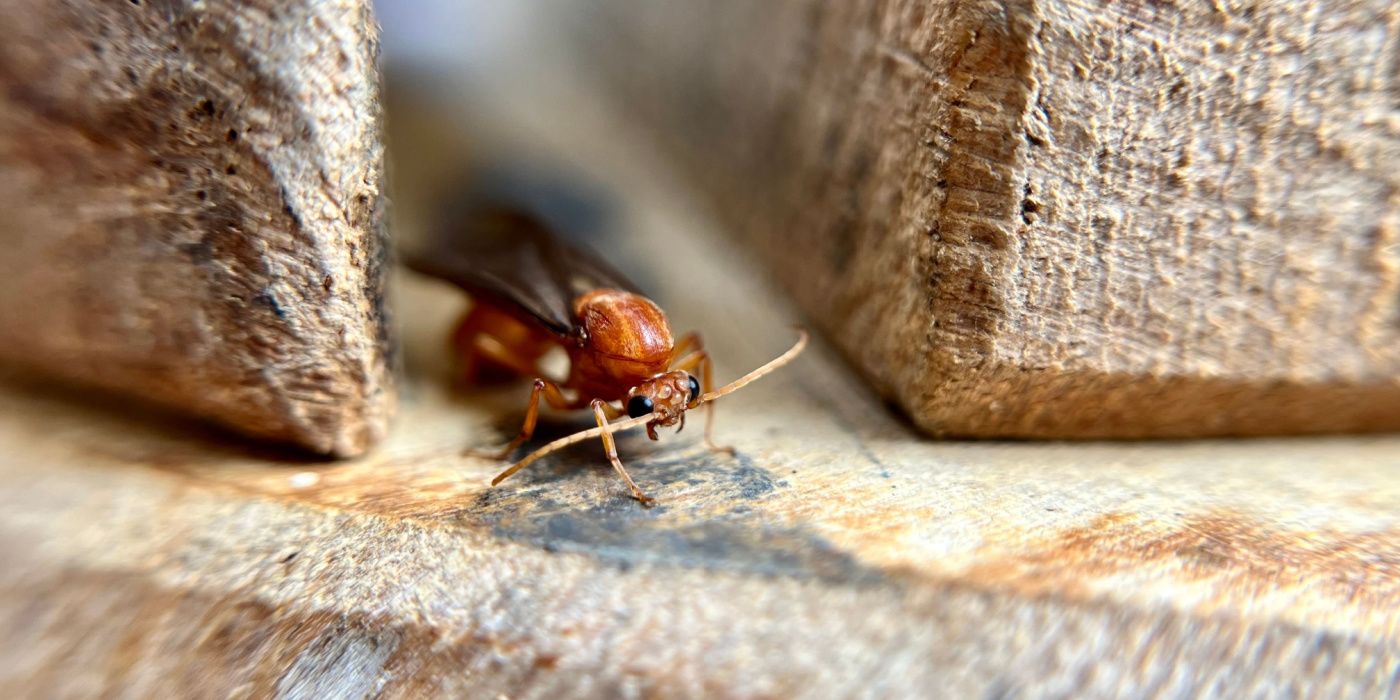
Winter ants, despite their small size, exhibit remarkable resilience in cold weather. The insects remain active during winter, foraging for food sources when temperatures drop. With a preference for sweet substances, winter ants may venture into homes seeking sustenance during the colder months. Ants have several adaptations to survive the winter. In colder months, ants use southern exposure rock surfaces to warm themselves and crowd together to share body heat. Unfortunately, winter ants can infest your home.The good news is that there are things you can do to get rid of ants, including winter ants:

Store food in airtight containers to eliminate potential food sources.

To prevent their intrusion, sealing cracks and eliminating food sources is essential.

Clean up crumbs and spills promptly to discourage ant foraging.

Use a mixture of vinegar and water to clean ant trails, disrupting their pheromone communication.

Sprinkle cinnamon or cayenne pepper near entry points as a natural ant deterrent.

Apply diatomaceous earth around the perimeter of your home to create a physical barrier.

Cold weather bugs reveal the hidden world of insect survival in freezing conditions. From the fascinating adaptations of snow fleas to the potential threat posed by winter moths and ticks, these winter insectsshowcase the diverse strategies employed to endure the harsh environment. Understanding their habits, appearance, and potential risks allows you to coexist with these cold weather bugs while appreciating the intricate balance of nature even in the coldest months.

SOURCE: BACKYARDBOSS.NET

Philippine Eagle

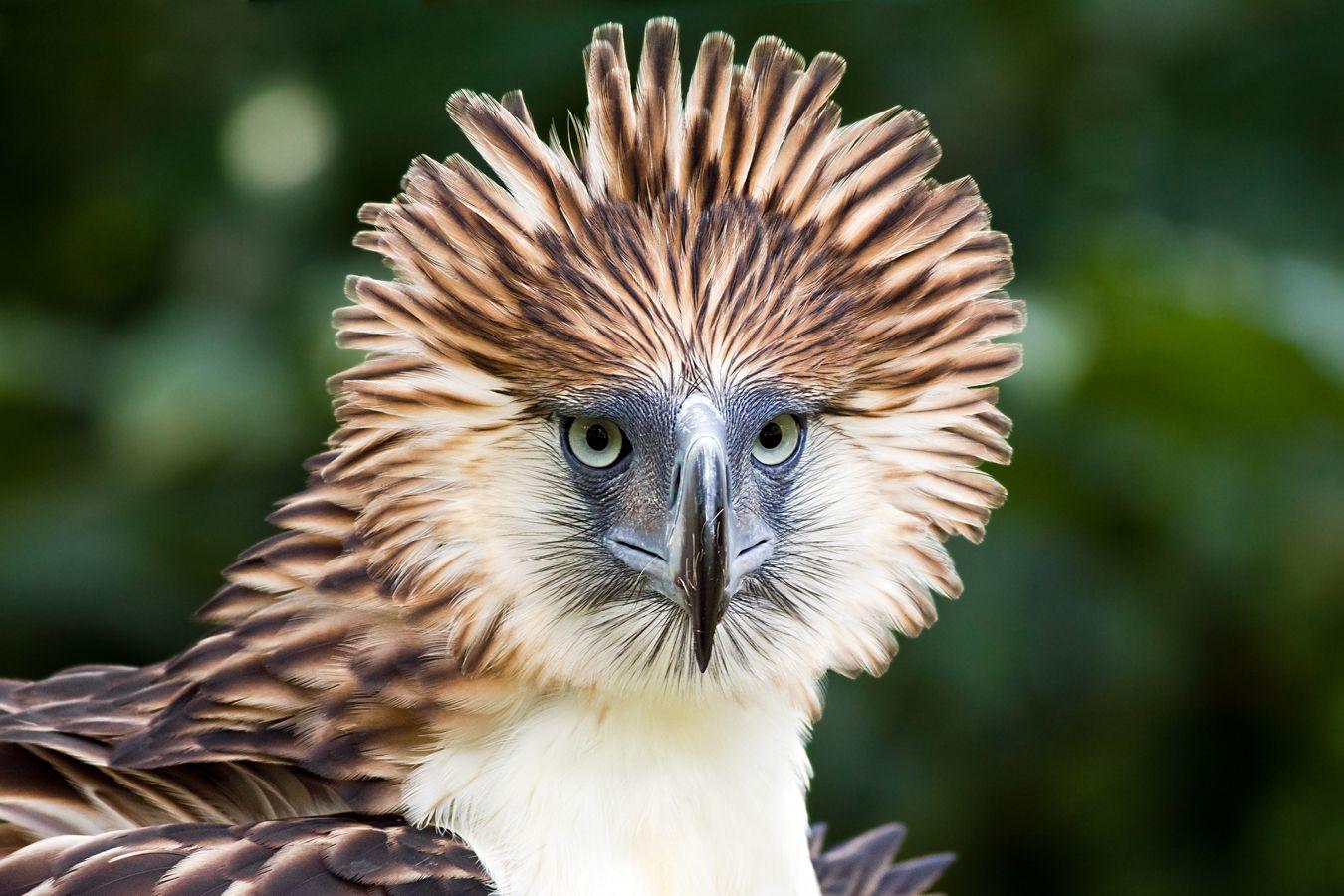
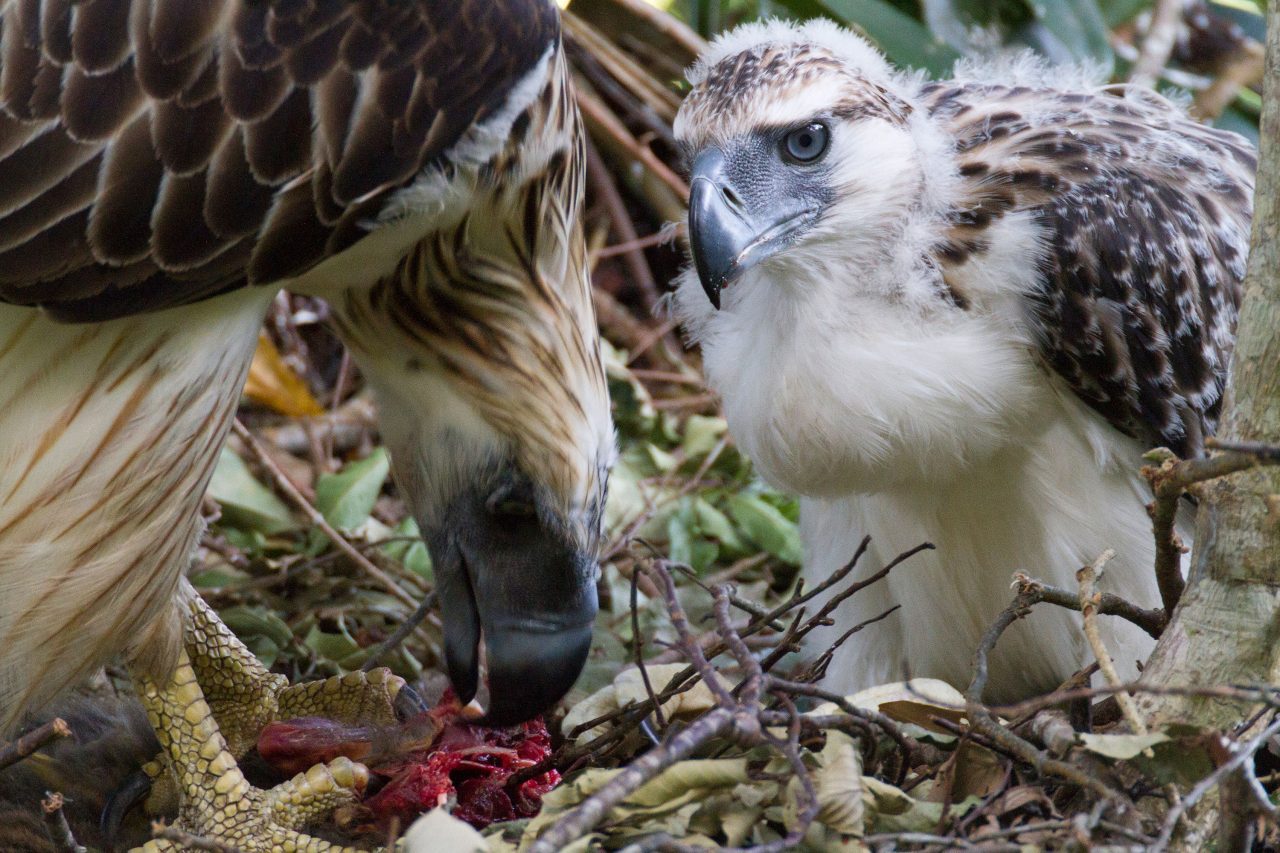
The Philippine eagle or monkey-eating eagle is considered one of the rarest and most powerful birds in the world. The Southeast Asian country declared it as its national bird and protects this critically-endangered species at all costs, punishing those who are found guilty of killing it with 12 years of imprisonment or with high fines. Below, we round up 11 interesting facts about this majestic bird.

It can live up to 60 years of age

The Philippine eagle’s life expectancy ranges from 30 to 60 years. Two Philippine eagles were recorded to have lived for more than 40 years – one of which died on October 2016. The full-grown, female Philippine eagle named ‘Thor’ (after the Norse God of Thunder), died due to old age. Authorities believe her captivity worsened her condition. Hence, it is believed the Philippine eagle can live longer if left in the wild.

The female Philippine eagle is usually bigger

The giant forest raptor is not only considered as rare and powerful but also recognised for its length. It can grow up to 3 feet and its wingspan can extend up to 7 feet. Average measurements among male and female Philippine eagles suggest the female Philippine eagle can be 10% bigger than its male counterpart. In terms of length, it’s considered as the largest surviving eagle in the world.

It doesn’t really eat monkeys

Earlier beliefs suggested that the Philippine eagle was also known as the monkey-eating eagle because it preyed on monkeys. However, contrary to popular belief, the Philippine eagle does not eat monkeys. According to recent studies, it preys on a variety of animals, usually rodents, bats, snakes, and pigs.

It has a distinguished noise

The noises heard from a Philippine eagle are described as loud and high-pitched, suggesting its fierce and territorial characteristics. It has clearer eyesight than humans.

It is found in four major islands in the Philippines

It’s only found in the Philippines, and can be spotted on four major islands. These are the islands of Leyte, Luz

on, Mindanao, and Samar. However, due to shooting and trapping, the Philippine eagle has been critically endangered for years. Despite the prevalence of strict laws, there are still cases of Philippine eagles being shot in forests. Thus, the Philippine Eagle Center was put up as a conservation breeding facility for this highly-threatened raptor.

Deforestration is usually the cause of its death

The forest, particularly lush dense forests, is the Philippine eagle’s home. Despite the country’s abundance of greenery, massive logging and irresponsible use of resources is killing the forests, thereby killing the species’ home. Aside from shooting and trapping, deforestration is also seen as a major cause of Philippine eagle deaths.

The Philippine Eagle is monogamous and loyal

The Philippine eagle is reportedly very loyal. Once paired to a partner, they choose to remain as a couple for the rest of their lives. As for their offsprings, a Philippine eagle only lays a single egg every two years. And before they lay another egg, the parent eagles ensure that their offspring can already survive on its own.

A British naturalist discovered the Philippine eagle

t wasn’t a Filipino or local who discovered this powerful bird species. British naturalist and explorer John Whitehead discovered the Philippine eagle in 1896, when he found the specimen in Paranas, Samar. In honor of his father, who financed his expeditions and explorations, the Philippine eagle was scientifically named as ‘Pithecophaga jefferyi’ – where ‘jefferyi’ means Jeffrey (the father of John Whitehead).

It has no recognized subspecies

The Philippine eagle was named as the country’s national bird in 1995. Proclamation No. 615, signed by former President Fidel Ramos, gave way to the recognition of the species as the country’s national bird. It was recognized as such for it is only found in the Philippines and according to the proclamation, its distinguished characteristics of strength and love for freedom exemplify the Filipino people. Unlike other raptors, the Philippine eagle has no known close relatives or sub-species, making it very unique.

Its sighting indicates a healthy environment

Since it lives in forests, many believe that sightings of a Philippine eagle indicate the healthy condition of the forest. Additionally, its presence suggests that there’s balance in the ecosystem and with a healthy natural environment, flooding and climate change effects are minimized.

SOURCE: THECULTURETRIP.COM

Edible Flowers

I didn’t realize that some flowers are edible, but this article from Treehugger.com details 42 that are!

From Treehugger.com:

Beyond nasturtium blossoms and rose petals, there is a surprising number of blooms that are a true delight to eat. The culinary use of flowers dates back thousands of years to the Chinese, Greek, and Romans. Many cultures use flowers in their traditional cooking—think of squash blossoms in Italian food and rose petals in Indian food. Adding flowers to your food can be a nice way to add color, flavor and a little whimsy. Some are spicy, and some herbaceous, while others are floral and fragrant. The range is surprising.

Ways to Use Edible Flowers

It’s not uncommon to see flower petals used in salads, teas, and as a garnish for desserts, but they inspire creative uses as well—roll spicy ones (like chive blossoms) into handmade pasta dough, incorporate floral ones into homemade ice cream, pickled flower buds (like nasturtium) to make ersatz capers, use them to make a floral simple syrup for use in lemonade or cocktails. I once stuffed gladiolus following a recipe for stuffed squash blossoms—they were great. So many possibilities…

Eating Flowers Safely

So, as lovely as eating flowers can be, it can also be a little … deadly. Not to scare you off or anything, but follow these tips for eating flowers safely:

Eat flowers you know to be consumable — if you are uncertain, consult a reference book on edible flowers and plants.

Eat flowers you have grown yourself, or know to be safe for consumption. Flowers from the florist or nursery have probably been treated with pesticides or other chemicals.

Do not eat roadside flowers or those picked in public parks. Both may have been treated with pesticide or herbicide, and roadside flowers may be polluted by car exhaust.

Eat only the petals, and remove pistils and stamens before eating.

If you suffer from allergies, introduce edible flowers gradually, as they may exacerbate allergies.

To keep flowers fresh, place them on moist paper towels and refrigerate in an airtight container. Some will last up to 10 days this way. Ice water can revitalize limp flowers.

Edible Flower List

1 ALLIUM All blossoms from the allium family (leeks, chives, garlic, garlic chives) are edible and flavorful! Flavors run the gamut from delicate leek to robust garlic. Every part of these plants is edible.

2 ANGELICA Depending on the variety, flowers range from pale lavender-blue to deep rose and have a licorice-like flavor.

3 ANISE HYSOP Both flowers and leaves have a subtle anise or licorice flavor.

4 ARUGULA Blossoms are small with dark centers and with a peppery flavor much like the leaves. They range in color from white to yellow with dark purple streaks.

5 BACHELOR’S BUTTON Grassy in flavor, the petals are edible. Avoid the bitter calyx.

6 BASIL Blossoms come in a variety of colors, from white to pink to lavender; the flavor is similar to the leaves, but milder.

7 BEE BALM The red flowers have a minty flavor.

8 BORAGE Blossoms are a lovely blue hue and taste like cucumber!

9 CALENDULA/marigold A great flower for eating, calendula blossoms are peppery, tangy, and spicy — and their vibrant golden color adds dash to any dish.

10 CARNATIONS / DIANTHUS Petals are sweet, once trimmed away from the base. The blossoms taste like their sweet, perfumed aroma.

11. CHAMOMILE Small and daisy-like, the flowers have a sweet flavor and are often used in tea. Ragweed sufferers may be allergic to chamomile.

12 CHERVIL Delicate blossoms and flavor, which is anise-tinged.

13 CHICORY Mildly bitter earthiness of chicory is evident in the petals and buds, which can be pickled.

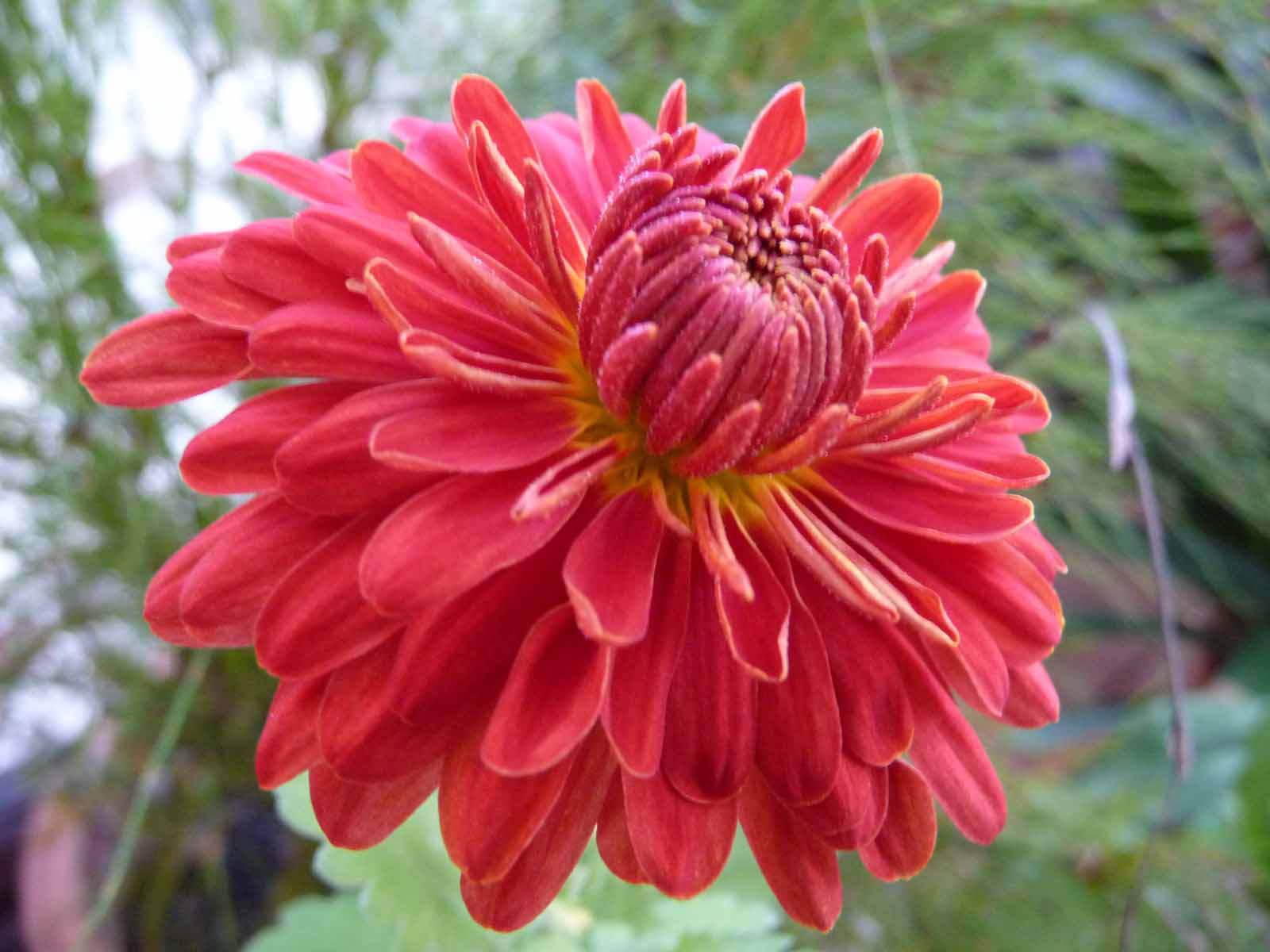
14 CHRYSANTHEMUM A little bitter, mums come in a rainbow of colors and a range of flavors range from peppery to pungent. Use only the petals.

15 CILANTRO Like the leaves, people either love the blossoms or hate them. The flowers share the grassy flavor of the herb. Use them fresh as they lose their charm when heated.

16 CITRUS (orange, lemon, lime, grapefruit, kumquat) Citrus blossoms are sweet and highly scented. Use frugally or they will over-perfume a dish.

17 CLOVER Flowers are sweet with a hint of licorice.

18. DANDELION

19 DILL Yellow dill flowers taste much like the herb’s leaves.

20 ENGLISH DAISY These aren’t the best-tasting petals — they are somewhat bitter — but they look great!

21 FENNEL Yellow fennel flowers are eye candy with a subtle licorice flavor, much like the herb itself.

22 FUCHSIA Tangy fuchsia flowers make a beautiful garnish.

23 GLADIOLUS Who knew? Although gladioli are bland, they can be stuffed, or their petals removed for an interesting salad garnish.

24 HIBISCUS Famously used in hibiscus tea, the vibrant cranberry flavor is tart and can be used sparingly.

25 HOLLYHOCK Bland and vegetal in flavor, hollyhock blossoms make a showy, edible garnish.

26 IMPATIENS Flowers don’t have much flavor — best as a pretty garnish or for candying.

27 JASMINE These super-fragrant blooms are used in tea; you can also use them in sweet dishes, but sparingly.

28. JOHNNY JUMP-UP Adorable and delicious, the flowers have a subtle mint flavor great for salads, pasta, fruit dishes, and drinks.

29 LAVENDER Sweet, spicy, and perfumed, the flowers are a great addition to both savory and sweet dishes.

30 LEMON VERBENA The diminutive off-white blossoms are redolent of lemon — and great for teas and desserts.

31 LILAC The blooms are pungent, but the floral citrusy aroma translates to its flavor as well.

32 MINT The flowers are — surprise! — minty. Their intensity varies among varieties.

33 NASTURTIUM One of the most popular edible flowers, nasturtium blossoms are brilliantly colored with a sweet, floral flavor bursting with a spicy pepper finish. When the flowers go to seed, the seed pod is a marvel of sweet and spicy. You can stuff flowers, add leaves to salads, pickle buds like capers, and garnish to your heart’s content.

34 OREGANO The flowers are a pretty, subtle version of the leaf.

35 PANSY The petals are somewhat nondescript, but if you eat the whole flower you get more taste.

36 RADISH Varying in color, radish flowers have a distinctive, peppery bite.

37 ROSE Remove the white, bitter base and the remaining petals have a strongly perfumed flavor perfect for floating in drinks or scattering across desserts, and for a variety of jams. All roses are edible, with flavor more pronounced in darker varieties.

38 ROSEMARY Flowers taste like a milder version of the herb; nice used as a garnish on dishes that incorporate rosemary.

39 SAGE Blossoms have a subtle flavor similar to the leaves.

40 SQUASH and PUMPKIN Blossoms from both are wonderful vehicles for stuffing, each having a slight squash flavor. Remove stamens before using.

41 SUNFLOWER Petals can be eaten, and the bud can be steamed like an artichoke.

42 VIOLETS Another famous edible flower, violets are floral, sweet and beautiful as garnishes. Use the flowers in salads and to garnish desserts and drinks.

SOURCE: TREEHUGGER.COM

Missouri State Mammal: Missouri Mule

On May 31, 1995, Governor Mel Carnahan signed a bill designating the Missouri Mule as the official state animal. The mule is a hybrid animal, the offspring of a mare (female horse) and a jack (male donkey). The mule was introduced to the state in the 1820s and quickly became popular with farmers and settlers because of its strength and hardy nature. It was an appropriate choice for state animal as it reflects Missouri’s history as a large rural community, and as the “gateway to the West” the state was frequently the location where immigrants bought and filled the wagons – often pulled by mules – that would take them westward.

The high demand for the hardy animal prompted Missouri breeders to develop a larger draft mule. For decades, Missouri was the nation’s premier mule producer. At one time forty-five percent of Missouri farmers were involved in the use or breeding of mules. The average farmer’s income at the turn of the century was around $700 a year. A pair of mule foals could be sold for $500 at this time so not only were they strong workers, but breeding mules was a lucrative side business for many farmers. Missourians marketed the mule to the Cotton Belt and to the lead, coal and logging industries. In addition, the Missouri mule played a critical role during both World Wars in moving troops and supplies. Eventually new technology diminished the mule’s importance and by 1940 the tractor had largely replaced the mule on the family farm.

The prestigious term, Missouri Mule, was said to have been coined at the 1904 World’s Fair in St. Louis when locally bred animals swept the competition in the six-mule wagon team. More than 1,000 mules were exhibited at the 1904 Fair from numerous states.

Associated with strength, endurance and honesty, the Missouri Mule is a symbol of the rich agricultural beginnings of the Show-me State. Today they are primarily used for recreation, although some are still used to work farms and forests.

Montana State Flower: Bitterroot

Official State Flower of Montana

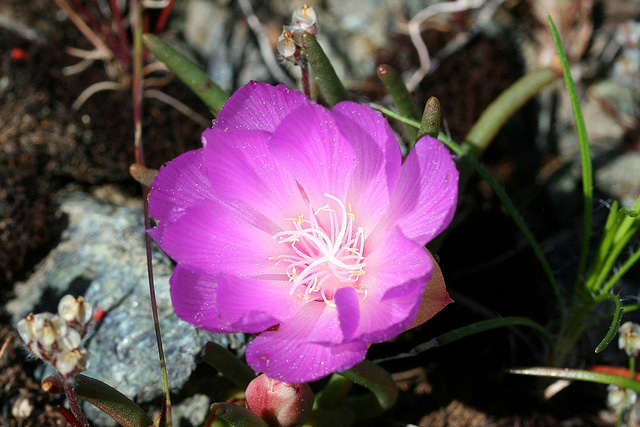
Montana designated bitterroot (Lewisia rediviva) as the official state flower in 1895.

Bitterroot can be found during spring and summer, growing in the sagebrush plains and the foothills of the mountains in western and south central Montana.

Native Americans such as the Shoshone and Flathead Indians used the roots for food and trade. The bitter root of the low-growing perennial plant was cooked and usually mixed with berries or meat. The Lemhi Shoshone believed the small red core found in the upper taproot had special powers (notably being able to stop a bear attack).

Explorers Lewis and Clark wrote about the beautiful purplish-pink flower of the bitterroot. The Bitterroot Mountains (which form the divide between Idaho and Montana), the Bitterroot Valley, and the Bitterroot River all owe the origins of their names to this flower.

Missouri State Flower: Hawthorn

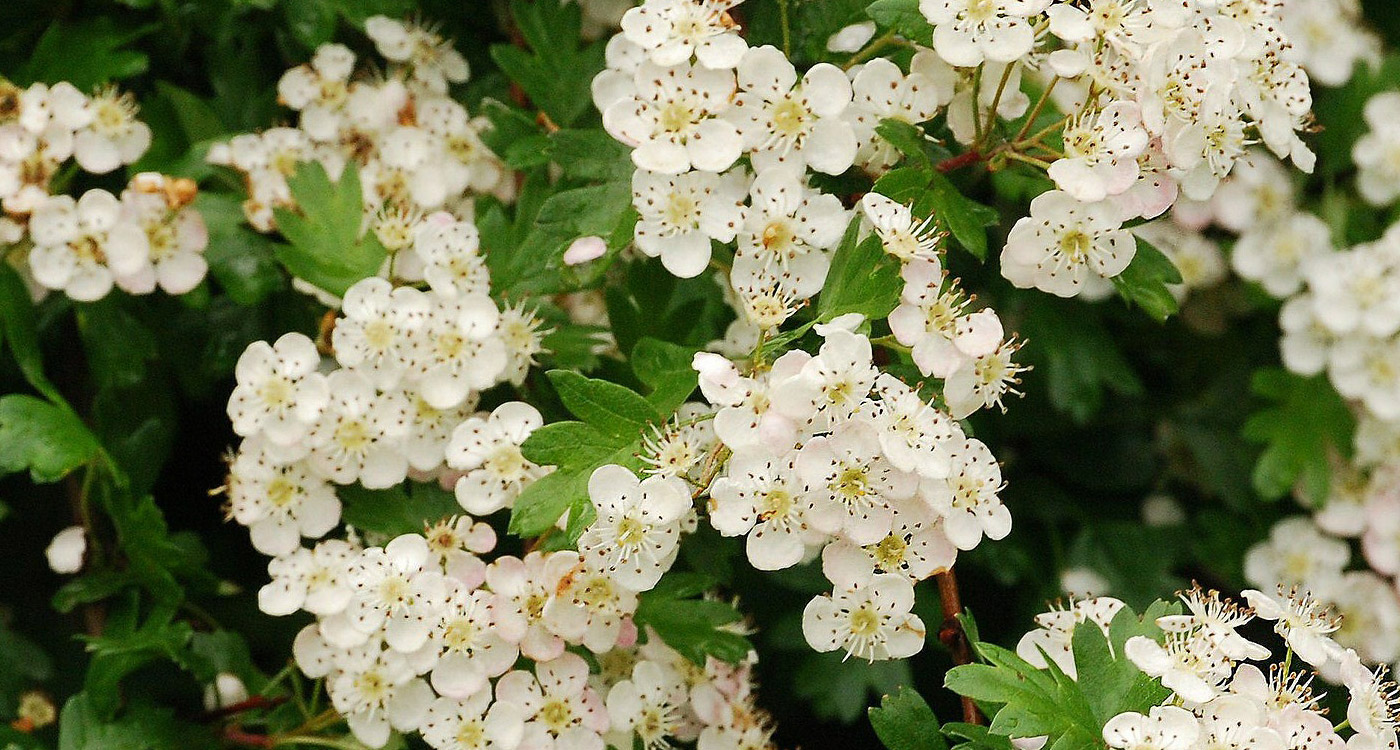
The state flower of Missouri is the attractive bloom of the flowering Hawthorn. The small tree grows well in Missouri’s climate, lining streets and yards across the state. Hundreds of species of Hawthorn exist. State lawmakers did not single out a specific Hawthorn when naming it as the Missouri state flower, providing residents with no guidance about which plant’s bloom to call their own.

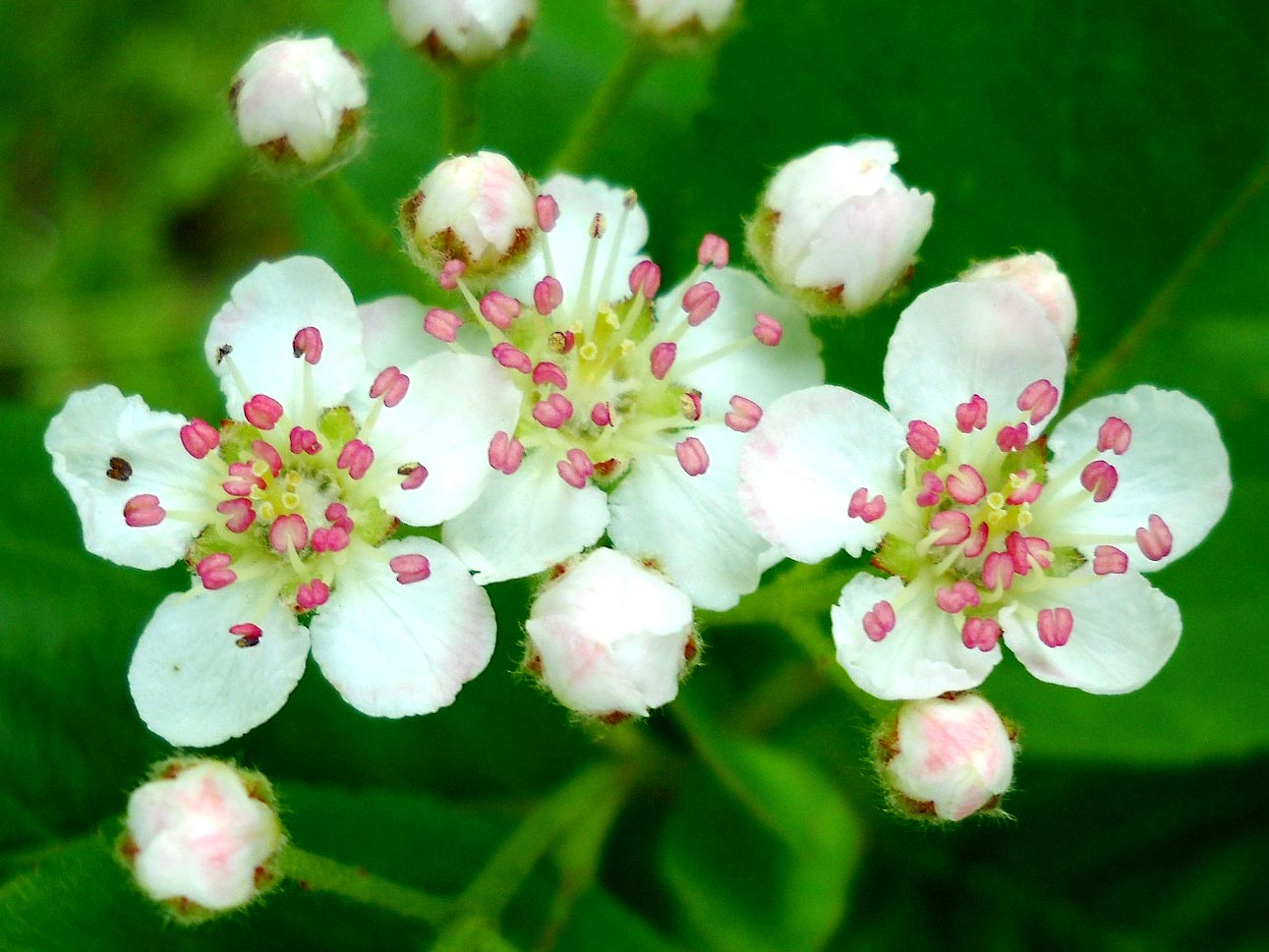
Each spring, Hawthorn trees produce the Missouri state flower. These pretty white blossoms are made up of five petals, bear greenish-yellow stamens, and appear in globe-like clusters over the Hawthorn tree. Their numbers help to attract the pollinators needed to produce its valuable fruit. Hawthorn fruit resembles an apple yet is less than an inch across. It is a favorite source of nutrition for wildlife and can be used to make jams and jellies. Hawthorn fruits are also used in some herbal medicines.

In addition to its fruit, the tree on which the Missouri state flower grows is valued by wildlife for its ability to provide shelter. It grows quite thick and can reach heights of up to 25 feet. Such dense proportions make it an ideal home for numerous birds and mammals.

History

In Celtic lore, the Hawthorn plant was said to heal the broken heart.

Fun Fact

Hawthorn trees generally bear small red fruits, called haws, and have thorny branches – hence their name.

SOURCE: PROFLOWERS.COM

Minnesota State Mammal: Gray Wolf

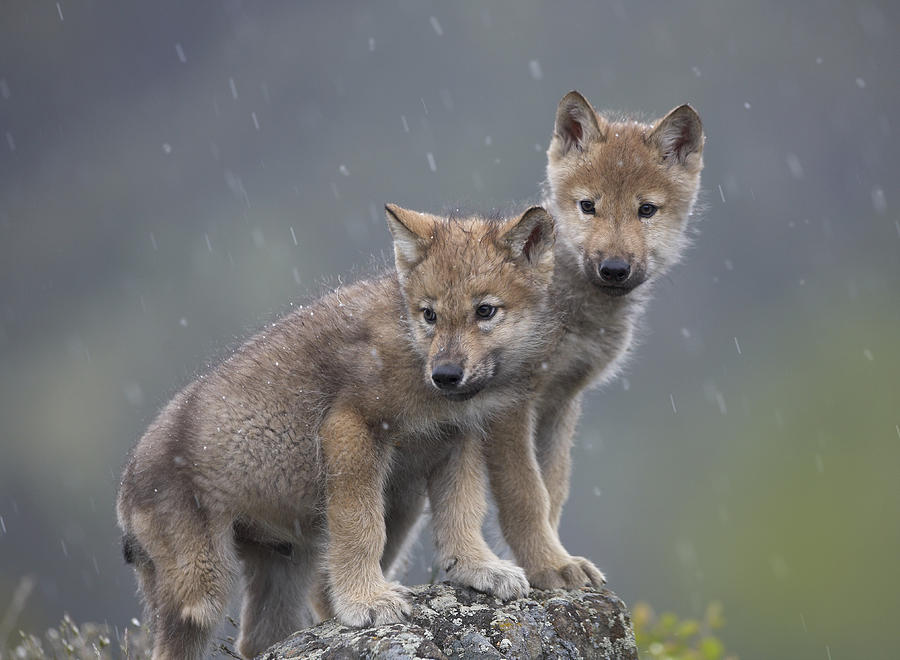
The Grey Wolf (Canis Lupus), also known as the ‘Timber Wolf’ is the largest of the wild dog family. Grey Wolves were once in abundance and distributed over North America, Eurasia and the Middle East. However, because of human-related activity such as destruction of habitat and excessive hunting, Grey Wolves now only occupy a fraction of their former range.

The Grey Wolf is listed as an endangered species under the 1973 Endangered Species Act as they continue to be hunted in many areas of the world as a perceived threat to livestock, humans and also for sport. As extremely adaptable animals, Grey Wolves generally live in mountains, temperate forests and grasslands.

Grey Wolf Characteristics

Grey Wolves have a grey coat (hence their name) with interspersed yellow and pepper colored flicks which seep through from the base of their thick fur. Their coat has a kind of ‘grizzled’ look about it. Adult Grey Wolves weigh around 75 – 125 pounds. Male Grey Wolves are larger than the females and can even grow to weigh as much as 175 pounds in some cases. Grey Wolves stand between 27- 32 inches at the shoulder.

Wolves can appear much larger than they already are, this is because of their long fur. In winter when their fur is fully grown, their fur can be as long as 2 – 2.5 inches on their backs and sides. The hairs in their mane can be as long as 4 – 5 inches long and when stood upright, this makes them appear taller. The length of the Grey Wolf varies between 50 and 70 inches long from nose tip to tail tip. A third of this length is the length of its tail.

Compared to a large dog, a wolf has a narrower chest and longer legs. Because their chests are narrow, their left and right footprints are closer together than those of a dog’s. Grey Wolves have very strong jaws. Wolves have 42 teeth altogether. These consist of: 12 incisors, 4 canines, 16 pre-molars and 10 carnassials and molars. A wolf’s canine teeth can be as long as 1 inch long. A wolf’s teeth are extremely sharp, strong and slightly curved. This enables them to grasp their prey in their teeth and chew down to the soft marrow in the bones. It also helps the wolf to eat nearly all of its prey, leaving very little waste.

Wolf paws are able to traverse easily through a wide variety of terrains, especially snow. There is a slight webbing between each toe, which allows wolves to move over snow more easily than comparatively hampered prey. Wolves are digitigrades, so the relative largeness of their feet helps to better distribute their weight on snowy surfaces. The front paws are larger than the hind paws and feature a fifth digit, a dew claw, (a claw that grows higher on the leg so that, when the animal is standing, it does not make contact with the ground) that is absent on hind paws. Bristled hairs and blunt claws enhance grip on slippery surfaces, and special blood vessels keep paw pads from freezing.

Grey Wolf Population

Today, there are over 300 wolves in Yellowstone Park and over 500 in Idaho. The reintroduction of wolves is still in ongoing debate and is sometimes heated about already introduced wolves and the possibility of reintroducing more. Through negotiations between livestock ranchers and Defenders of Wildlife, the reintroduction of wolves has been a great success and number recovery goals have been met. However, the reintroduction still provides a sharp divide between industry and environmentalist.

Grey Wolf Reproduction

Wolves mate in January to March. The female wolfs gestation period is 63 days. An average litter is 4 to 7 pups. At birth, wolf pups tend to have darker fur and blue eyes. Their eyes will change to a yellow-gold or orange color when the pups are 8 – 16 weeks old. Though extremely unusual, it is possible for an adult wolf to retain its blue-colored eyes. Wolves can live to be between 8 – 13 years. In the wild, Grey Wolves live about 6 to 8 years and sometimes up to 13 years. In zoos, Grey Wolves may live up to 17 years.

Grey Wolf Diet

Grey wolves are carnivores. Their natural diet is solely meat and they often prey on animals larger than they are including – deer, moose, caribou, elk, bison and musk-oxen as well small animals such as beaver, hares and other small rodents.

Grey Wolf Behavior

Grey wolves live in packs, which have complex social structures that include the breeding adult pair (the alpha male and female) and their offspring. A hierarchy of dominant and subordinate animals within the pack help it to function as a unit. Wolves communicate by scent-marking, vocalizing (including howling), facial expressions and body postures.

Grey Wolf Range

Today the range of the Grey Wolf has been reduced to the following areas of the United States: Alaska, Idaho, Michigan, Minnesota, Montana, Wisconsin and Wyoming. Grey Wolves can also be found in Alaska, Canada, as well as Russia and a few eastern European countries. Mexican wolves have been reintroduced in New Mexico and Arizona.

Grey Wolf Habitat

Historically, Grey wolves have the largest range of any land mammal, other than people. Grey wolves have lived in all habitats in the Northern Hemisphere except for tropical forest. Grey wolves tend to occupy forests, tundra and grassy plains as well as deserts and mountains.

SOURCE: ANIMALCORNER.ORG