Boston Massacre

Today marks the anniversary of the infamous Boston Massacre.  This article from History.com details the events and the aftermath.

From History.com:

The Boston Massacre was a deadly riot that occurred on March 5, 1770, on King Street in Boston. It began as a street brawl between American colonists and a lone British soldier, but quickly escalated to a chaotic, bloody slaughter. The conflict energized anti-British sentiment and paved the way for the American Revolution.

Tensions ran high in Boston in early 1770. More than 2,000 British soldiers occupied the city of 16,000 colonists and tried to enforce Britain’s tax laws, like the Stamp Act and Townshend Acts. American colonists rebelled against the taxes they found repressive, rallying around the cry, “no taxation without representation.” Skirmishes between colonists and soldiers—and between patriot colonists and colonists loyal to Britain (loyalists)—were increasingly common. To protest taxes, patriots often vandalized stores selling British goods and intimidated store merchants and their customers.

On February 22, a mob of patriots attacked a known loyalist’s store. Customs officer Ebenezer Richardson lived near the store and tried to break up the rock-pelting crowd by firing his gun through the window of his home. His gunfire struck and killed an 11-year-old boy named Christopher Seider and further enraged the patriots. Several days later, a fight broke out between local workers and British soldiers. It ended without serious bloodshed but helped set the stage for the bloody incident yet to come.

On the frigid, snowy evening of March 5, 1770, Private Hugh White was the only soldier guarding the King’s money stored inside the Custom House on King Street. It wasn’t long before angry colonists joined him and insulted him and threatened violence.
At some point, White fought back and struck a colonist with his bayonet. In retaliation, the colonists pelted him with snowballs, ice and stones. Bells started ringing throughout the town—usually a warning of fire—sending a mass of male colonists into the streets. As the assault on White continued, he eventually fell and called for reinforcements.

In response to White’s plea and fearing mass riots and the loss of the King’s money, Captain Thomas Preston arrived on the scene with several soldiers and took up a defensive position in front of the Custom House. Worried that bloodshed was inevitable, some colonists reportedly pleaded with the soldiers to hold their fire as others dared them to shoot. Preston later reported a colonist told him the protestors planned to “carry off [White] from his post and probably murder him.”

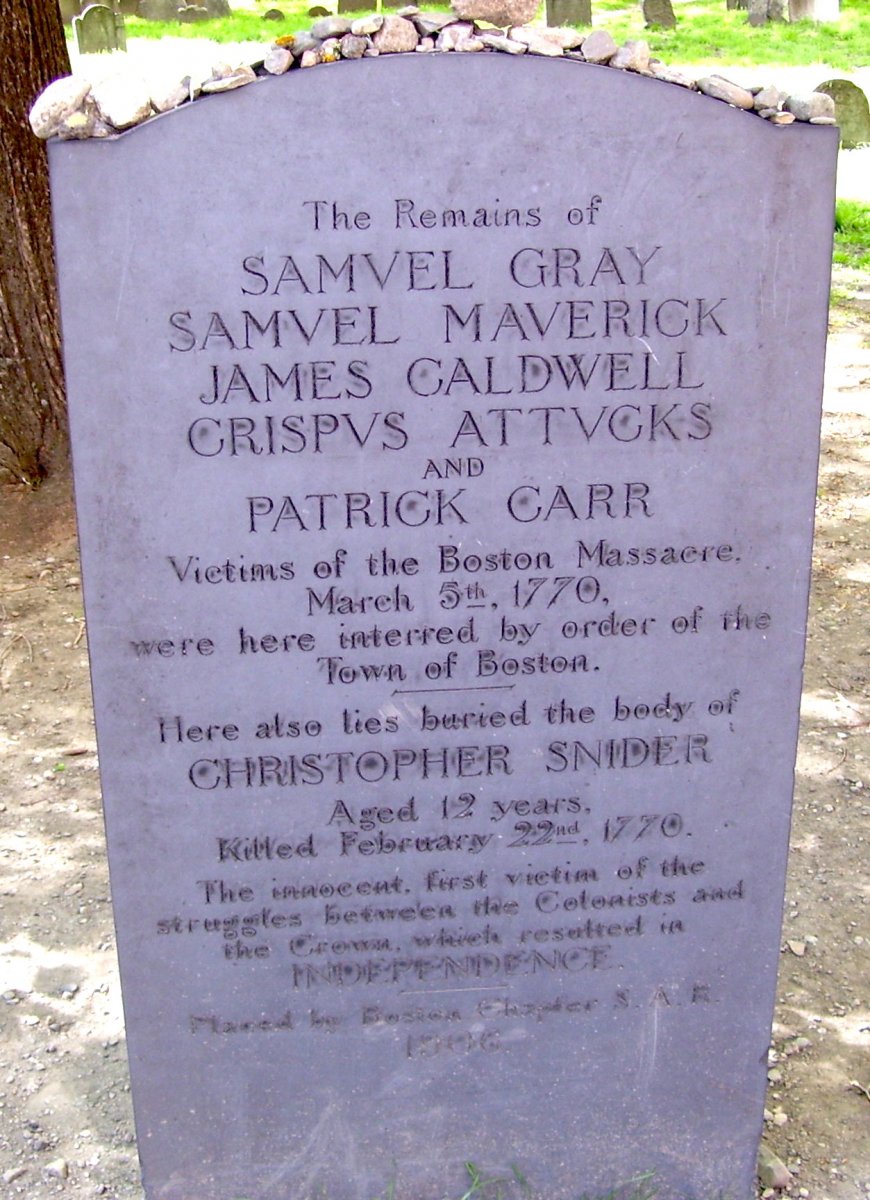
The violence escalated, and the colonists struck the soldiers with clubs and sticks. Reports differ of exactly what happened next, but after someone supposedly said the word “fire,” a soldier fired his gun, although it’s unclear if the discharge was intentional. Once the first shot rang out, other soldiers opened fire, killing five colonists–including Crispus Attucks, a local dockworker of mixed racial heritage–and wounding six. Among the other casualties of the Boston Massacre was Samuel Gray, a rope maker who was left with a hole the size of a fist in his head. Sailor James Caldwell was hit twice before dying, and Samuel Maverick and Patrick Carr were mortally wounded. Within hours, Preston and his soldiers were arrested and jailed and the propaganda machine was in full force on both sides of the conflict.

Preston wrote his version of the events from his jail cell for publication, while Sons of Liberty leaders such as John Hancock and Samuel Adams incited colonists to keep fighting the British. As tensions rose, British troops retreated from Boston to Fort William.

Paul Revere encouraged anti-British attitudes by etching a now-famous engraving depicting British soldiers callously murdering American colonists. It showed the British as the instigators though the colonists had started the fight. It also portrayed the soldiers as vicious men and the colonists as gentlemen. It was later determined that Revere had copied his engraving from one made by Boston artist Henry Pelham.

It took seven months to arraign Preston and the other soldiers involved in the Boston Massacre and bring them to trial. Ironically, it was American colonist, lawyer and future President of the United States John Adams who defended them.

Adams was no fan of the British but wanted Preston and his men to receive a fair trial. After all, the death penalty was at stake and the colonists didn’t want the British to have an excuse to even the score. Certain that impartial jurors were nonexistent in Boston, Adams convinced the judge to seat a jury of non-Bostonians.

During Preston’s trial, Adams argued that confusion that night was rampant. Eyewitnesses presented contradictory evidence on whether Preston had ordered his men to fire on the colonists. But after witness Richard Palmes testified that, “…After the Gun went off I heard the word ‘fire!’ The Captain and I stood in front about half between the breech and muzzle of the Guns. I don’t know who gave the word to fire,” Adams argued that reasonable doubt existed; Preston was found not guilty.

The remaining soldiers claimed self-defense and were all found not guilty of murder. Two of them—Hugh Montgomery and Matthew Kilroy—were found guilty of manslaughter and were branded on the thumbs as first offenders per English law. To Adams’ and the jury’s credit, the British soldiers received a fair trial despite the vitriol felt towards them and their country.

The Boston Massacre had a major impact on relations between Britain and the American colonists. It further incensed colonists already weary of British rule and unfair taxation and roused them to fight for independence.

Yet perhaps Preston said it best when he wrote about the conflict and said, “None of them was a hero. The victims were troublemakers who got more than they deserved. The soldiers were professionals…who shouldn’t have panicked. The whole thing shouldn’t have happened.”

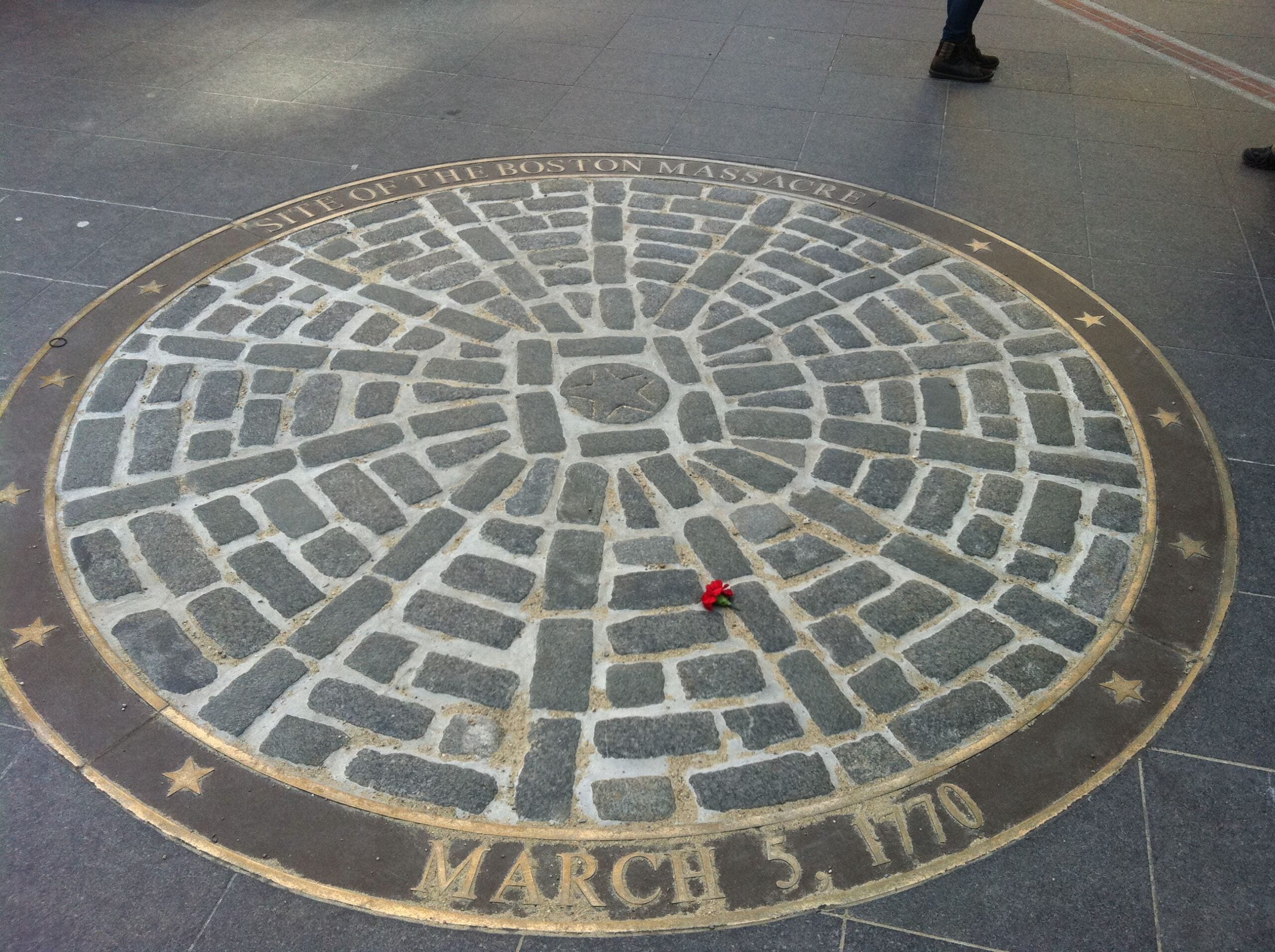
Over the next five years, the colonists continued their rebellion and staged the Boston Tea Party, formed the First Continental Congress and defended their militia arsenal at Concord against the redcoats, effectively launching the American Revolution. Today, the city of Boston has a Boston Massacre site marker at the intersection of Congress Street and State Street, a few yards from where the first shots were fired.
SOURCE: HISTORY.COM
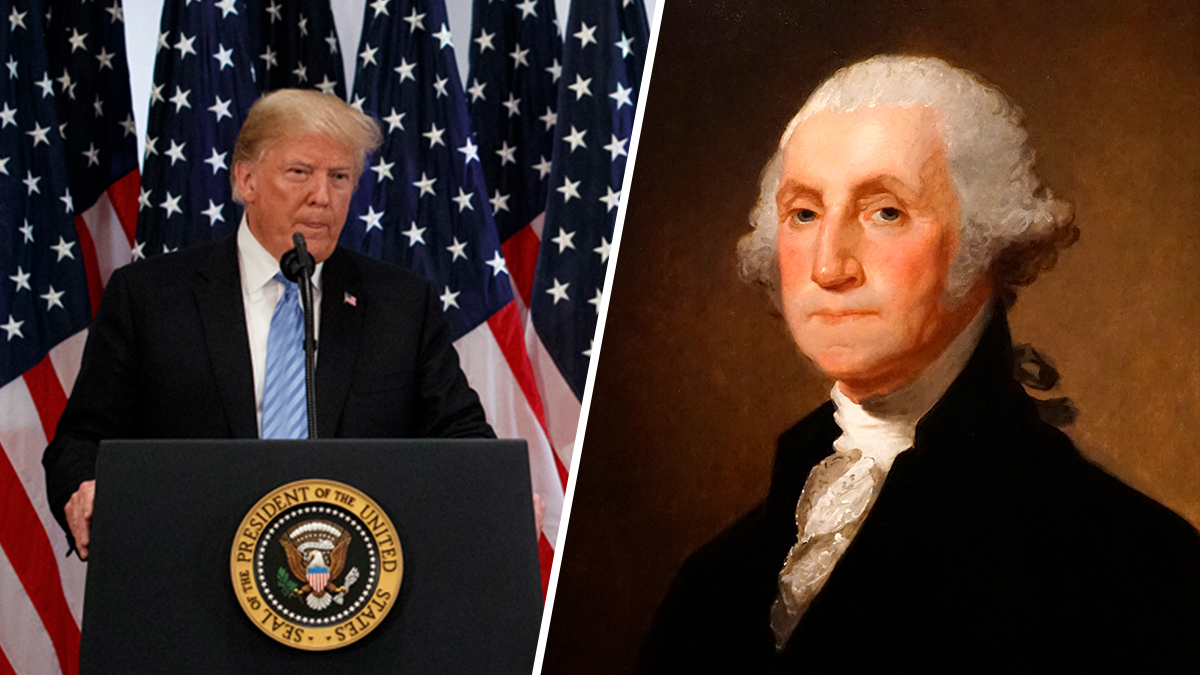
George Washington & Donald Trump

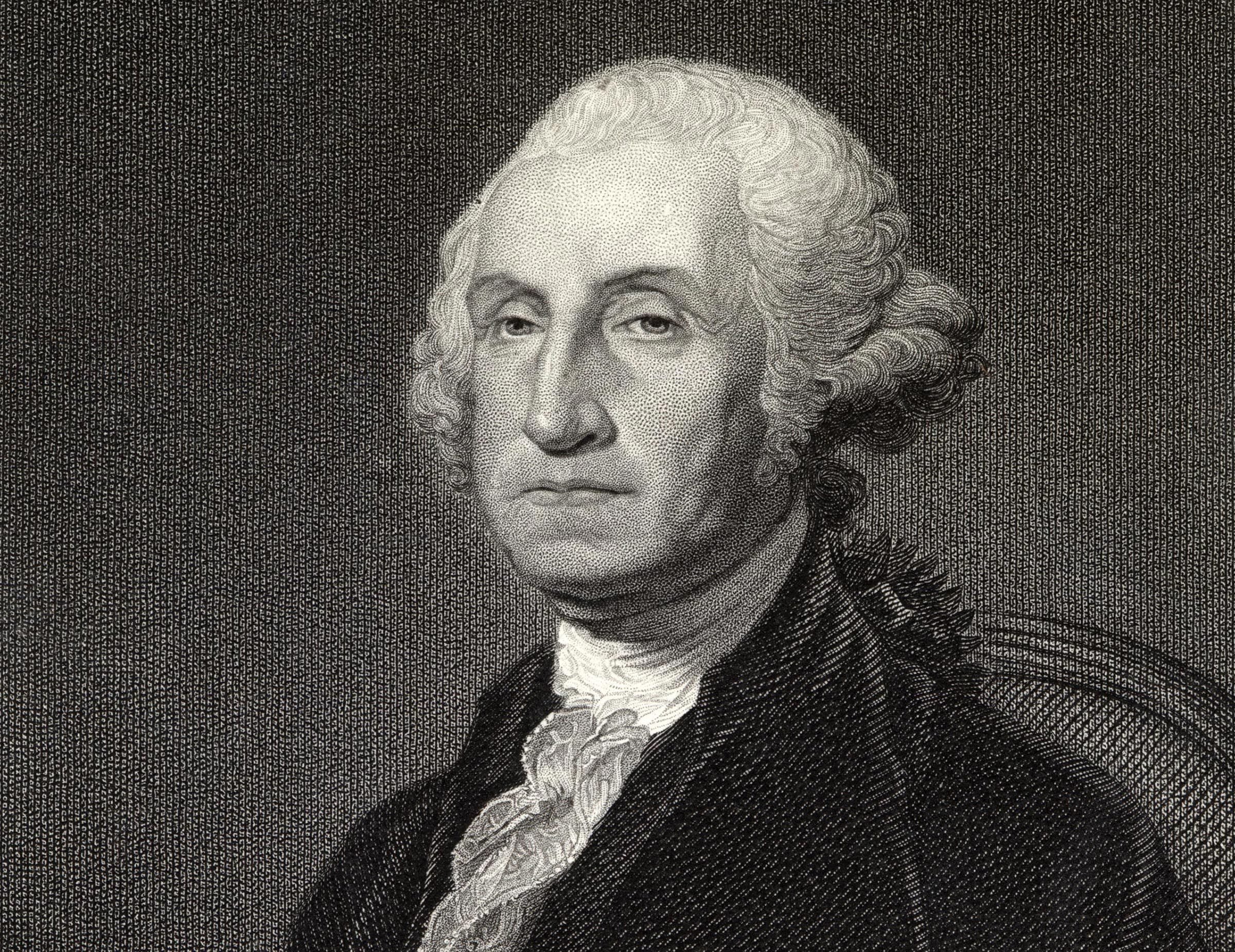
A while back, Filly posted a link to a post written by Erik Carlson on the similarity between these two great men.  It was chilling.  I saved the link (posted at the bottom if you want to read it all) to bring it on Washington’s birthday. 

From: badlands.substack.com:

This assassination attempt reminds me of an American legend, or rather, the hand of God protecting Trump and the miracle of him surviving this attack, reminds me of a legendary story.

This story involves an incident that occurred only 30 miles from Butler, Pennsylvania in the area known today as Pittsburgh. It occurred on July 9, 1755, 269 years and four days ago, and involved America’s founding president, George Washington.

From the August 15, 2013, article by Dr. Bo Wagner published in the Cleveland Corner:

On July 9, 1755, there was a battle that took place during the French and Indian War, the battle of Monongahela. During the two-hour battle, 23-year-old Colonel George Washington had ridden back and forth on the battlefield, delivering the general’s orders to other officers and troops. The Indians had been specifically targeting the officers. Of the 86 British and American officers, 63 were casualties. Washington was the only officer on horseback not shot down. Following the battle, Washington wrote a letter to his brother in which he said:

“By the all-powerful dispensations of Providence, I have been protected beyond all human probability or expectation; for I had four bullets through my coat, and two horses shot under me, yet [I] escaped unhurt, although death was leveling my companions on every side of me!”

Did you get that? After the battle, he took off his coat and found four bullet holes through it… but no bullets in him. Do you know what you call that? A miracle!

Fifteen years later he was back in that area, and an old, respected Indian chief sought out Washington. When he found him, he explained that he had been the one leading the Indians against them in the battle fifteen years earlier. He then revealed to Washington what had occurred behind the scenes during the conflict.

He said: “I called to my young men and said, mark yon tall and daring warrior [Washington]? …Himself is alone exposed. Quick, let your aim be certain, and he dies. Our rifles were leveled, rifles which, but for you, knew not how to miss. ’twas all in vain, a power mightier far than we shielded you. Seeing you were under the special guardianship of the Great Spirit, we immediately ceased to fire at you… I have come to pay homage to the man who is the particular favorite of Heaven, and who can never die in battle.”

Those Indians, who could not miss anyone else, specifically aimed at George Washington and fired at him over and over and over again, and for some reason, the bullets never would hit him! They would go through his coat, which was on his body, but somehow, they never made it to his body, they just ceased to exist in the 1/8 of an inch between his coat and his body. That old Indian chief was right; Washington was the particular favorite of Heaven. God raised him up specifically to lead our nation against Britain in our hour of greatest need.

From the New York Post on July 14, 2024, the day following the failed assassination attempt on Trump’s life:

A grateful and at times defiant Donald Trump told The Post Sunday he’s “supposed to be dead” as he recalled the harrowing moment a would-be assassin shot at him at a Pennsylvania campaign rally.

The former president shared the “very surreal experience” that nearly ended his life during an interview aboard his private plane en route to Milwaukee for the GOP National Convention.

“The doctor at the hospital said he never saw anything like this, he called it a miracle,” said Trump, who was sporting a large, loose white bandage that covered his right ear. His staff insisted that no photos be taken.

“I’m not supposed to be here, I’m supposed to be dead,” Trump said. “I’m supposed to be dead.”

I believe both men have been chosen by God and protected by God. One was chosen to make America, and the other to make America great again.

https://badlands.substack.com/p/donald-trump-and-george-washington

The Mystery of the USS Maine Explosion

Today is the 127th anniversary of the explosion of the USS Maine, killing 286 servicemen and igniting the Spanish American War.  To this day, it remains a mystery why the ship exploded.

From: allthatsinteresting.com:

Between April and December 1898, the United States engaged in a brief armed conflict with Spain as the two countries’ prominence on the world stage began to shift. Known as the Spanish-American War, this period led to substantial change in the Caribbean region as the Spanish Empire’s decline was contrasted by the U.S.’s rapid economic and industrial growth. But there was one event in particular that set this war in motion: the sinking of the USS Maine.

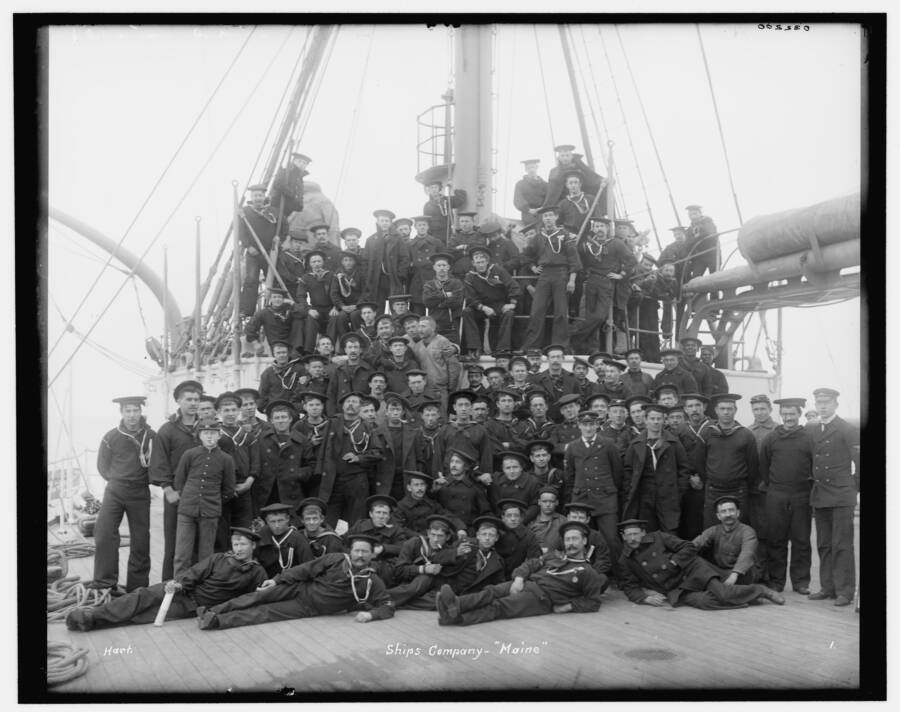
The Maine had been one of the first American battleships. It was docked in the harbor of Havana, Cuba for a supposedly friendly visit amid ongoing revolts by the Cubans against Spanish colonial rule.

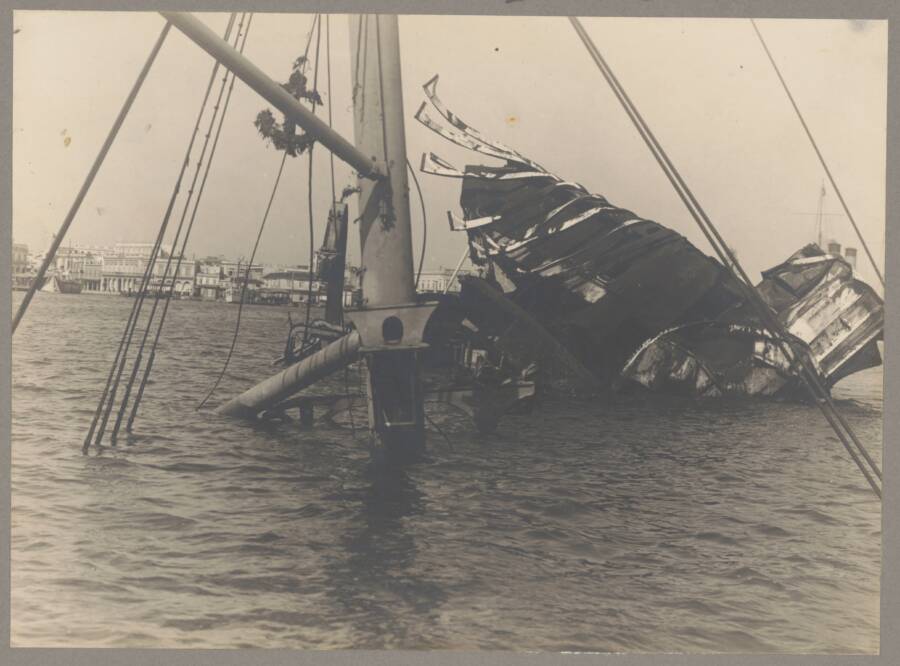
Then, it exploded.

An official investigation determined that a submerged mine had destroyed the vessel, and Congress and the American public were quick to point fingers at Spain as the culprit. However, more recent evidence suggests the explosion may have actually been an accident. And conspiracy theorists have offered up even more sinister explanations for the destruction of the Maine. The question is, what really happened?

How The Fight for Cuban Independence Created Tension Between The U.S. And Spain

The 16th century was a time of great expansion for many European superpowers, though perhaps none more notably than England and Spain. The countries’ westward expansions saw colonizers claiming indigenous lands and committing a litany of atrocities, including rape, genocide, and slavery. By the 18th and 19th centuries, it was clear that many populations were well and truly fed up with their European colonizers, and they began to fight for their independence.

Per the Library of Congress, the fight found its way to Cuba first in October 1868, when a group of patriotic Cubans attempted to overthrow Spanish power on the island in a conflict known as the Ten Years’ War. Although the Cubans failed to topple Spanish rule, they did at least succeed in putting an end to the old colonial structure of aristocrats and slaves — and theoretically earned themselves representation in the Cortes.

At the same time, Cuba grew more and more economically linked with the United States. The U.S. refined the raw tobacco and sugar grown in Cuba with its industrial technology. Needless to say, the U.S. had a vested interest in Cuba, and it benefited the American government from both an economic and humanitarian standpoint to back Cuba’s bid for independence.  So, on Feb. 24, 1895, when Cuban insurgents once again revolted against their Spanish rulers, the first ripples of pressure began to swell for American intervention. Less than three years later, they reached a boiling point.

The Sinking of The USS Maine Marks the Beginning Of The Spanish-American War

In January 1898, the American battleship USS Maine set sail for Havana, Cuba to observe the country’s ongoing conflict and protect American interests. The Maine was one of the first battleships built in the U.S. It weighed in at over 6,000 tons, cost more than $2 million to construct, and carried a crew of just under 400 seamen.

Unfortunately, just a few weeks later, on Feb. 15, most of the crew members on board the Maine were killed when the ship suddenly exploded in Havana Harbor. Then, in March, the United States Naval Court of Inquiry determined that the Maine had been destroyed by a submerged mine — and many fingers pointed to Spain.

Per the Encyclopedia Britannica, the blast took the lives of at least 260 crew members. Outrage over the event quickly found prominence in the headlines of American newspapers — particularly those of William Randolph Hearst and Joseph Pulitzer. The tycoons specialized in “yellow journalism,” which was characterized by highly sensationalized and exaggerated news.

It didn’t take long for the papers to land on a slogan that garnered public support for armed intervention: “Remember the ‘Maine,’ to hell with Spain!” Spain never took responsibility for the explosion, but the damage had been done. In April 1898, the United States declared war on Spain, and thus began the Spanish-American War.

The fighting was decidedly short-lived, with the United States defeating Spain on both the land and sea in less than four months. An armistice was called in August, and the war officially ended on Dec. 10, 1898, when the U.S. and Spain signed the Treaty of Paris. Spain ceded Puerto Rico, Guam, and the Philippines to America, and Cuba ultimately became an independent country.

The acquisition of these territories, of course, had far-reaching consequences, making the catastrophic destruction of the USS Maine one of the most important naval disasters in modern history. Yet, it turns out, it may have been nothing more than an accident.

The Real Cause Of The USS Maine Explosion

The initial investigation of the explosion of the USS Maine was conducted in 1898 by a court of inquiry headed by Captain William T. Sampson. It concluded that the Maine was destroyed when one or more of its forward magazines exploded — and that the source of the explosion had been outside the ship. In other words, the ship had been sabotaged.

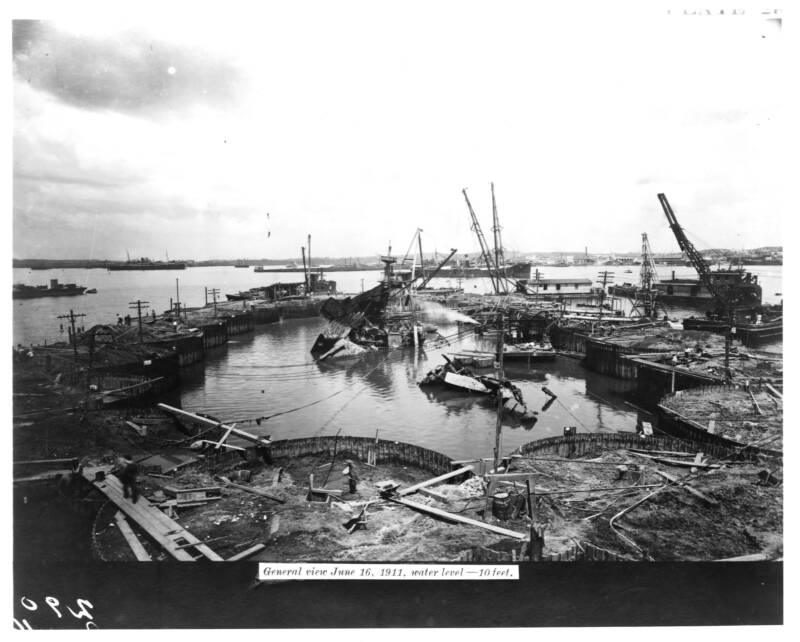
According to a 1976 report from U.S. Navy Admiral Hyman Rickover, a second investigation was then conducted in 1911 as the Maine‘s wreckage was raised. The second inquiry actually contradicted Sampson’s original conclusion, but only by asserting that the explosion occurred in a different part of the ship’s bow. It still claimed a mine had set off the magazines.

However, Rickover later criticized the earlier inquiries, particularly Sampson’s. Sampson’s investigation, he said, was largely based on the testimonies of the Maine‘s crew members and of divers working on the wreckage. Contemporary technical experts who doubted the mine theory were not heeded.

The 1911 investigation was more accurate than Sampson’s in that it found the true source of the explosion within the ship. However, Rickover felt the later investigation was too politically motivated when it stood by the conclusion that a mine had triggered the blast.

Rickover and his team ultimately reached their own conclusion: The USS Maine had not been destroyed by a Spanish act of sabotage or a mine, but rather by a spontaneous combustion fire within its ammunition stocks. In other words, it was a complete accident.

The 1976 investigation was, of course, limited in what it could gather, given that nearly a century had passed since the explosion of the USS Maine by then and many primary sources had reached contradictory conclusions. While Rickover and his team’s conclusion is plausible, there is no way of knowing for certain if it is entirely accurate.

Then, there are other theories, PBS notes, that suggest William Randolph Hearst himself may have orchestrated the explosion to instigate the war and sell more newspapers. Evidence for this is almost entirely non-existent and limited to conspiracy theory groups, but it goes to show that there is enough speculation about the Maine‘s destruction to warrant outlandish skepticism.

Whether it was an act of sabotage, an accident, or indeed a stunt to sell newspapers, we may never know for certain. But that does not change the fact that the USS Maine disaster marked a key turning point for a significant portion of the Western world — for better or worse.

SOURCE: ALLTHATSINTERESTING.COM

Penny for Your Thoughts

Ten interesting facts about pennies in honor of Abe Lincoln’s birthday!

The average penny lasts 30 years!

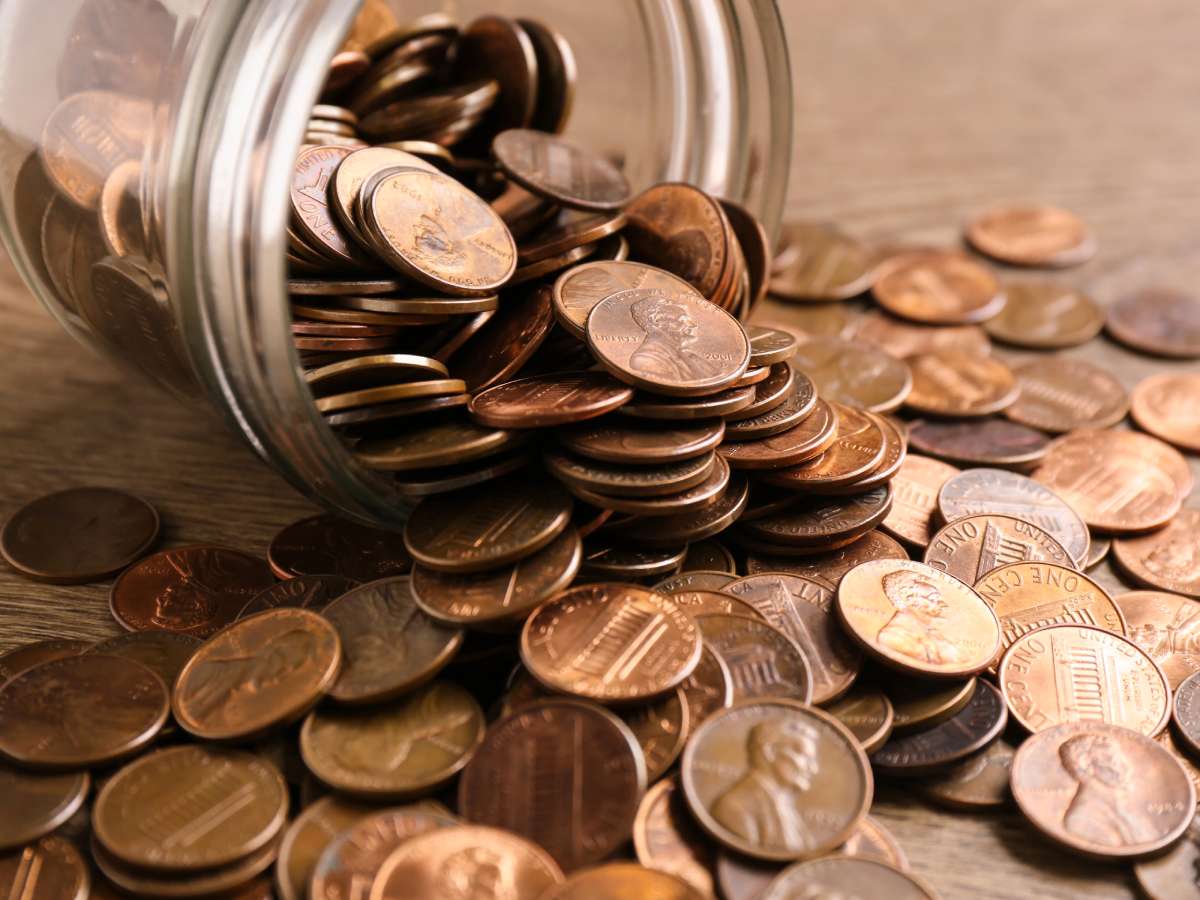
Pennies were the very first coins minted in the United States. In March 1793, the mint distributed 11,178 copper cents. (The amount of copper and zinc in the penny has changed significantly through the years.)

There have been 11 different designs featured on the U.S. penny.

The Lincoln penny was first minted and circulated in 1909, the 100th anniversary of Abe Lincoln’s birth.

Lincoln faces to the right, while all other portraits on coins face to the left. This was not done on purpose — it was simply the choice of the coin’s designer.

The penny was the first U.S. coin to have the motto “IN GOD WE TRUST”.

Lincoln pennies made from 1909 to 1958 were designed by Victor D. Brenner. His initials V.D.B. were on a limited quantity of the 1909 pennies making it one of the most sought after pennies for collecting.

Each year, the U.S. Mint produces more than 7 billion pennies. That’s approximately 19 million pennies per day! 

Over two-thirds of all coins produced by the U.S. Mint are pennies. In fact, the penny is the most widely used denomination currently in circulation and it remains profitable to make. Each penny costs .81 of a cent to make, but the Mint collects one cent for it. The profit goes to help fund the operation of the Mint and to help pay the public debt.

SOURCE: THEFUNTIMESGUIDE.COM

The Last Soldiers

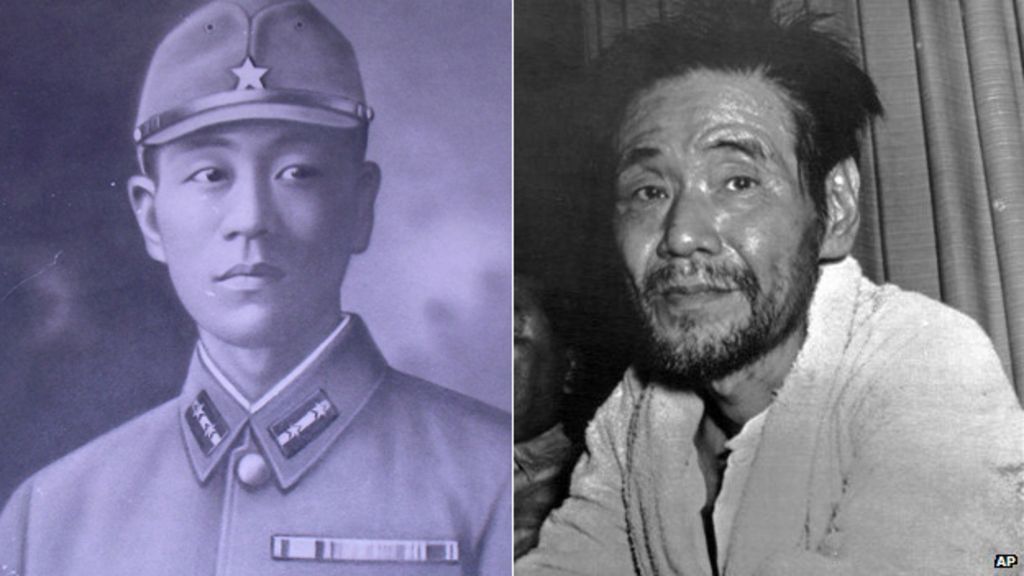
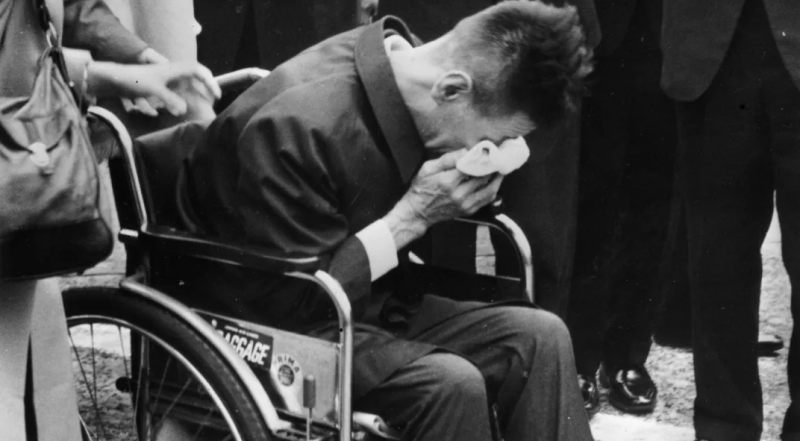
When Japanese sergeant Shoichi Yokoi returned to his home country after almost three decades in hiding, his initial reaction was one of contrition: “It is with much embarrassment that I return.”

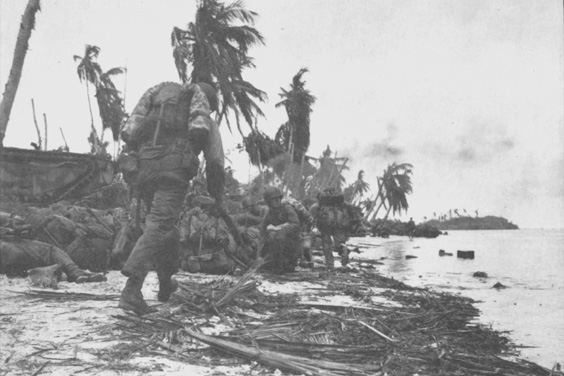
Then 56, Yokoi had spent the past 27 years eking out a meager existence in the jungles of Guam, where he’d fled to evade capture following American forces’ seizure of the island in August 1944. According to historian Robert Rogers, Yokoi was one of around 5,000 Japanese soldiers who refused to surrender to the Allies after the Battle of Guam, preferring life on the lam to the shame of being detained as a prisoner of war. Though the Allies captured or killed the majority of these holdouts within a few months, some 130 remained in hiding by the end of World War II in September 1945. Yokoi, who only rejoined society after being overpowered by two local fishermen in January 1972, was one of the last stragglers to surrender, offering an extreme example of the Japanese Bushidō philosophy’s emphasis on honor and self-sacrifice.

“He was the epitome of prewar values of diligence, loyalty to the emperor and ganbaru, a ubiquitous Japanese word that roughly means to slog on tenaciously through tough times,” wrote Nicholas D. Kristof for the New York Times in 1997, when Yokoi died of a heart attack at age 82. Upon his return to Japan, “he stirred widespread soul-searching … about whether he represented the best impulses of the national spirit or the silliest.”

Born in the Aichi Prefecture of Japan in 1915, Yokoi worked as a tailor before being drafted into the Imperial Japanese Army in 1941. Per Wanpela.com, which maintains a registry of Japanese World War II holdouts, he was stationed in China until February 1943, when he was transferred to Guam. After American forces nearly annihilated Yokoi’s regiment in the summer of 1944, he and a group of nine or ten comrades escaped into the jungle.

“From the outset they took enormous care not to be detected, erasing their footprints as they moved through the undergrowth,” Yokoi’s nephew, Omi Hatashin, told BBC News’ Mike Lanchin in 2012.

Initially, the holdouts survived by eating locals’ cattle. But as their numbers shrank and the likelihood of discovery grew, they retreated to increasingly remote sections of the island, living in caves or makeshift underground shelters and dining on coconuts, papaya, shrimp, frogs, toads, eels and rats. Per the Washington Post, Yokoi drew on his tailoring skills to weave clothing out of tree bark and marked the passage of time by observing phases of the moon. He eventually parted ways with his companions, who either surrendered, fell victim to enemy soldiers on patrol or died as a result of their spartan lifestyle. Yokoi stayed in sporadic contact with two other stragglers, but after they died during flooding in 1964, he spent his last eight years in hiding in total isolation.

Fifty years ago, on January 24, 1972, fishermen Jesus M. Duenas and Manuel D. Garcia spotted Yokoi checking a bamboo fish trap in a part of the Talofofo River about four miles away from the nearest village. As the Associated Press (AP) reported at the time, Yokoi attempted to charge at the men, who easily overpowered him in his weakened state. (Doctors later deemed him slightly anemic but otherwise in relatively good health.)

“He really panicked” after encountering humans for the first time in years, Hatashin explains to BBC News. “He feared they would take him as a prisoner of war—that would have been the greatest shame for a Japanese soldier and for his family back home.”

After hearing Yokoi’s story, officials in Guam arranged to repatriate him to Japan. Though he’d found leaflets and newspapers detailing the conflict’s end two decades earlier, he viewed these reports as American propaganda and continued to resist surrendering. “We Japanese soldiers were told to prefer death to the disgrace of getting captured alive,” the soldier later said, per Wyatt Olson of Stars and Stripes.

Yokoi arrived back home in February 1972, receiving a hero’s welcome by a crowd of 5,000. “I have returned with the rifle the emperor gave me,” he told the New York Times upon his return. “I am sorry I could not serve him to my satisfaction.”

The subject of fascination both at home and abroad, Yokoi divided public opinion, with older residents of Japan interpreting his actions as an inspirational reminder of a bygone era and younger people more often viewing his refusal to surrender as “pointless and symbolic of an age that taught children to stick to what they were doing rather than to think about where they were going,” as Kristof wrote.

Yokoi attempted to assimilate into a “world [that had] passed him by,” in the words of one contemporary columnist, but grew nostalgic for the past, sometimes criticizing the innovations of modern life, according to Hatashin. He entered into an arranged marriage in November 1972, unsuccessfully ran for Parliament in 1974, and detailed his experiences in a best-selling book and lectures delivered across the country. Still, noted Lanchin for BBC News, he “never quite felt at home in modern society,” and prior to his death in 1997, he made several trips back to Guam.

Two years after Yokoi’s return to Japan, another wartime holdout, Lieutenant Hiroo Onoda, resurfaced on the Philippines’ Lubang Island after 29 years in hiding. Like Yokoi, he maintained that he’d received orders to fight to the death rather than surrender. He refused to leave the island until March 1974, when his commanding officer traveled to Lubang and formally relieved him of duty.

SOURCE: SMITHSONIANMAGAZINE.COM

The Crevalle Rescue

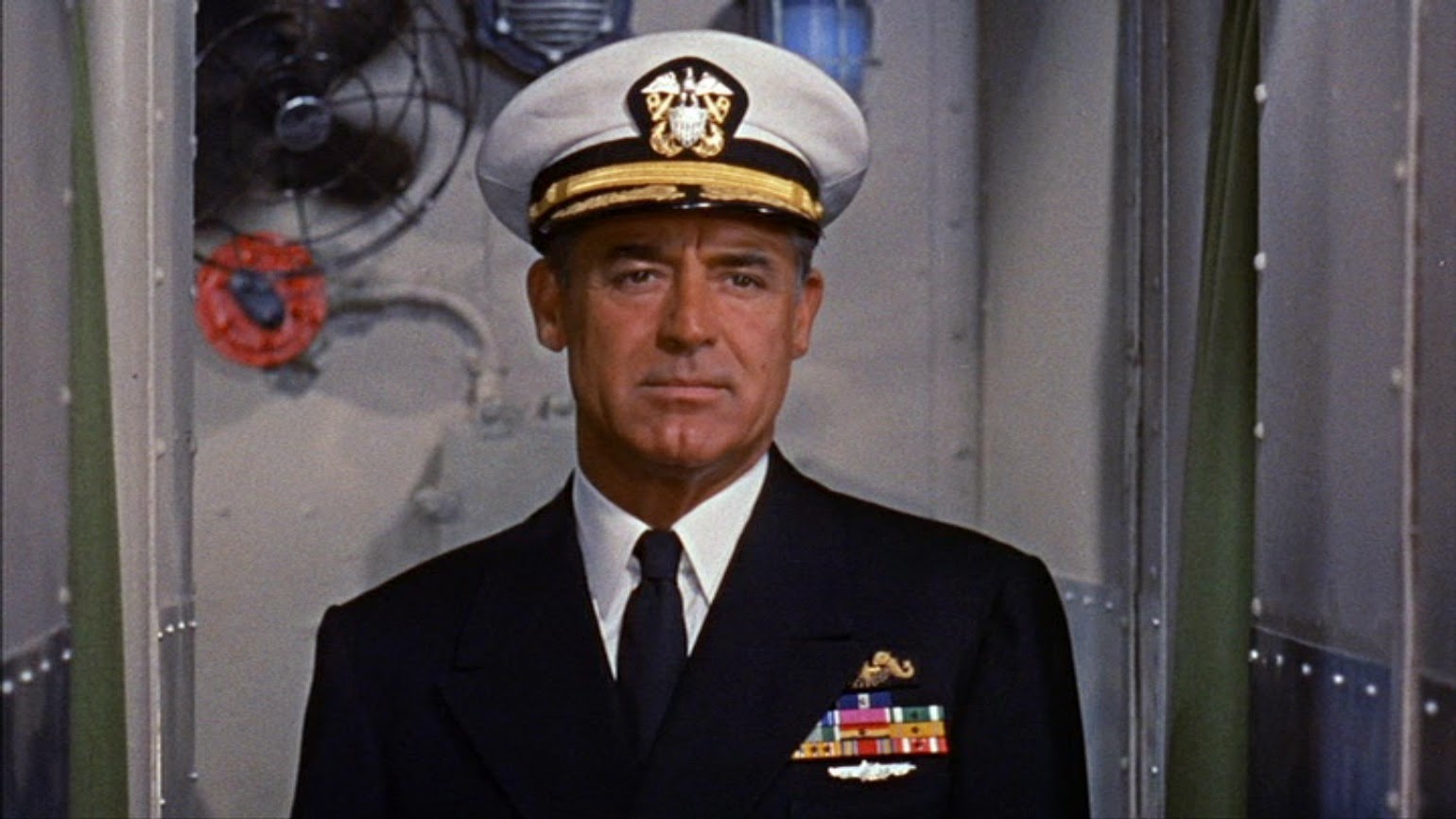
Today is Cary Grant’s birthday (born in 1904 and died 11/29/1986) and I went in search of interesting facts about my favorite Cary Grant movie—Operation Petticoat.  I found out it was loosely based on the real rescue of civilians during World War II by a submarine called the Crevalle.  I found this story about the rescue on the pacificwarmuseum.org website:

The island of Negros, located between the islands of Panay and Cebu in the Philippines, was a center of sugarcane production since Spanish colonial times, known for its sugar haciendas. The workers of these haciendas, or sugar mills, were notably not considered as property or segregated by race, and they were free to move about, not tied to mills or locations as many plantations bound slaves. After the Philippines was liberated from Spain, many Americans visited or went to live on Los Negros, often intermarrying with the locals and starting families. Some Americans came as missionaries, some came as entrepreneurs, and some as laborers. There were mothers and fathers, students, teachers, workers, businessmen, and missionaries living across the island throughout the early twentieth century. But the lives of the people of Negros changed when the Japanese invaded in 1941.

Once Japan attacked the United States at Pearl Harbor in Hawaii on 7 December 1941, it continued to attack territories and rapidly gained control of various islands in the Pacific. The struggle for the Philippines was prolonged, but it finally fell into Japanese hands in May 1942. The peaceful island of Negros became dangerous for those of American ancestry. Guerrilla fighters in the Philippines fought fiercely against occupation, and Japan finally ordered in November of 1943 that all Americans must give themselves up or be hunted down and killed. The United States’ response was to send the USS Crevalle, a Balao-class submarine, to Negros to evacuate American families from the island to Australia. In May 1944, Crevalle’s orders were to rescue twenty-five passengers and “important documents” awaiting them on Negros. They encountered forty-one people—men, women, and children who had risked their lives running from the Japanese and escaped to the beach for their chance of salvation.

The refugees came from all walks of life—missionaries, planters, former prisoners of war, sugar mill owners, businessmen, and even young children. Few of the refugees knew each other before meeting on the beach, but the one thing they had in common was that the Japanese were hunting them, and they were leaving their homes to survive. Colonel Abcede, leader of the guerillas and the organizer of the evacuation, was dismayed to find that they had far exceeded the promised 25 passengers for the Crevalle, but when the submarine arrived her captain, Francis D. Walker, Jr., assured him they would take them all.

Captain Walker assumed command of the Crevalle in March 1944 for her third war patrol and sunk two Japanese ships in less than two weeks. Walker’s command style was described as “aggressive,” and not always as a compliment, but he had twice earned the Silver Star for command decisions—once during his time aboard the USS Searaven and again as executive officer and navigator of the Crevalle in December 1943. Just after the Crevalle sank the second ship on her third war patrol, Walker received orders to terminate the patrol and head for Negros for this special mission. Walker was dismayed at having to call off what had been a rousingly-successful patrol, but he followed orders.

This was not Captain Walker’s first experience with a special rescue mission; while Walker was serving aboard the Searaven, their war patrol was called off to rescue thirty-three Australian aviators. Now, as captain of the Crevalle, he found himself with forty-one extra passengers and a mysterious box containing documents that the U.S. military was eager to receive. No one told Walker at the time, but these documents held the Japanese plans for a decisive, all-out battle against the Americans, called the “Z Plan.” The plane carrying this plan had crashed in the Bohol Strait off the island of Cebu, just east of Negros, and two native Filipinos found the box on the beach. The Allied Intelligence Bureau learned of the crash and requested, among other things, all the documents from the downed plane.

…SURFACE. AND RECIEVED FROM BOAT FLYING U.S. COLORS TWENTY-FIVE PASSENGERS AND IMPORTANT DOCUMENTS.

Top secret orders received by Captain Walker

Once everyone was aboard, the Crevalle got underway, headed back for Australia. Several families, including the Reals and the Lindholms, had young children who amused themselves as best they could, occasionally finding themselves underfoot of the Crevalle crew. There were also soldiers like 25-year-old Howard Chrisco, who had survived the Bataan Death March and now desperately awaited the return home. When the passengers from Negros boarded the submarine and got underway, they believed they had made it, that the worst was over. But there was more to come for the Crevalle.

Early the next morning, 12 May, a Japanese Betty bomber dropped out of the clouds when the submarine was on the surface. The submarine was ordered to dive, but the bombs fell close to the vessel. Everyone aboard heard and felt the explosion, which woke most of the boat. The Crevalle stayed submerged for over an hour before coming back to the surface. The bomber was soon sighted again, and the Crevalle would be bombed, submerged, and surface again multiple times throughout the morning. Later, while the vessel was still submerged, the crewman on watch sighted through the periscope a Japanese convoy. Since Captain Walker’s orders to retrieve the passengers and documents from Negros hadn’t forbidden attacking the enemy, he chose to engage the convoy. An enemy plane dropped a smoke signal above the submarine, marking the sub’s location. It wasn’t until the last moment that Captain realized they’d been spotted—just before the first depth charges went off.

The submarine was rocked as the charges exploded, sending loose equipment, belongings, and children’s toys flying. The attack only lasted about a minute, but managed to inflict heavy damage. The concussive blasts had slammed into the hull and caused leaks that the crewmen raced to slow or stop. Equipment had broken, including the sonar and both periscopes, leaving the Crevalle blind. The frightened children were hushed, and all forty-one passengers and eighty crew members stayed silent as they listened to the enemy sonar pinging as it looked for the submarine. For some of the passengers, like eight-year-old Berna Real, the experience was terrifying, but others, like Berna’s older brother Billy, found it quite exciting—until the second barrage hit suddenly and without warning.

Although the Crevalle managed to survive the second barrage, everyone aboard was shaken, and all aboard spontaneously agreed without orders to run silent, shutting down all equipment that could make noise and alert the Japanese to their position. This included the ventilation system, and the submarine quickly grew very hot. They stayed submerged in this way for hours, sweating profusely and waiting for whatever was coming next as they crept slowly along underwater. Finally, blinded by the smashed periscopes and not entirely sure what he might find at the surface, Captain Walker made the decision to surface. Luckily, there were no other ships or planes in sight. The worst had passed.

The Crevalle rendezvoused with the Chinampa, a trawler that took the Negros passengers aboard and brought them the rest of the way to Australia, and to safety. The documents carried by the Crevalle were transported immediately to American intelligence, who transcribed and decrypted the Z Plan and sent this new intelligence to Admiral Nimitz. This information on Japanese naval tactics enabled them to react and respond to Japanese strategy, gave them insights as to the strength of the present Japanese military, and informed the American naval strategies for the rest of World War Two.

The refugees were relocated to the United States, although many had never lived there before or had not been there in years. The Lindholms, a missionary family whose father Paul elected to stay behind on Negros, went to live with Paul’s brother until Paul himself rejoined them after the liberation of the Philippines in 1945. Bataan survivor Howard Chrisco returned to his parents in Salem, Missouri where he met and married his wife Elsie and eventually became a cattle farmer. The Real family landed in San Francisco and moved to the small town of Albany, just across the bay. None of the Real children had ever lived in the United States, and they regarded it as a fascinating new adventure, exploring their new home. Although the children were young when it happened, none ever forgot the experience of their tumultuous rescue from Negros.

In Fall 2024, the National Museum of the Pacific War will open its “submersive” experience, The Rescue, based on the escape from Negros alongside Berna Real, whose testimony contributed to the development of this experience.

SOURCE: PACIFICWARMUSEUM.ORG; Margaret Dudley

It’s All About the Benjamins!

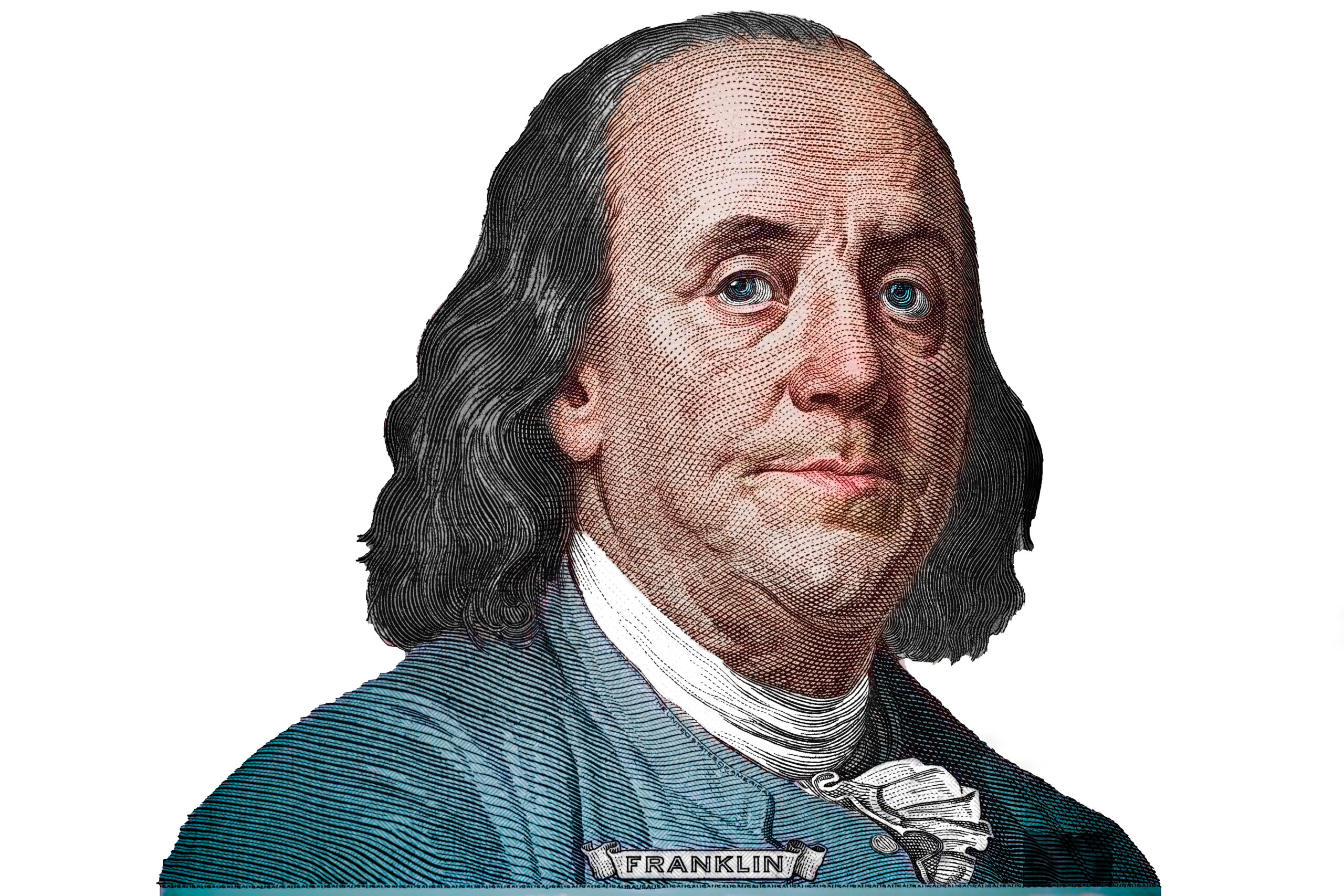
Today is Ben Franklin’s birthday ( born in 1706) so I decided to search for things we might not know about the $100 bill on which Franklin appears.  This article from gobankingrates.com does just that!

From gobankingrates.com:

You probably know the $100 bill is the largest note currently produced by the U.S. Department of the Treasury. You’re also likely aware of which Founding Father is on the $100 bill — politician and inventor Benjamin Franklin. There’s a lot more history behind this bill, however.

The $100 bill is more than just a way to pay for bigger purchases — it contains a great deal of fascinating American history. Take a few minutes to discover these interesting facts about your money.

It’s the Highest-Circulated Bill

The $100 bill is the most circulated form of U.S. currency. As of Dec. 31, 2022, there were 18.5 billion Benjamins currently in circulation, according to the Federal Reserve Bank. The $1 bill is second with 14.3 billion, followed by the $20 bill with 11.5 billion. In 2017, there were only 12.7 billion $100 notes in circulation.

It’s the Second-Most Printed Currency …

The Federal Reserve gave approval to print up to 8.7 billion currency notes in 2023. Nearly 1.5 billion of them will be $100 bills, second only to the $1 denomination.

… But Most $100 Bills Aren’t in America

Our $100 bills are very popular internationally. In 2018, the Federal Reserve Bank of Chicago issued a paper that estimated that as many as 80% of the $100s in circulation were being held outside the country. The report attributed that to “economic and political instability” abroad.

The International Popularity Benefits the Economy

Thanks to that, up to 80% of the $100 bills being circulated reside overseas. They act almost like an interest-free loan for the economy since most of that currency won’t return stateside.

It Costs 8.6 Cents to Produce

Every $100 bill comes with a production cost of 8.6 cents, according to the Federal Reserve. Print costs cover essentials such as paper, ink, labor and overhead costs to print. The $100 bill is the most expensive U.S. currency to print because of its security features. Printing cost of a $1 bill is just 2.8 cents each. The $100 bill includes components such as a 3-D security ribbon that changes from bells to 100s when moved, and a bell that seems to appear and disappear within the inkwell.

The First $100 Bill Was Printed in 1914

Even though the first $100 “Interest-Bearing Notes” were issued in 1861, the first $100 Federal Reserve Notes — aka money as it’s currently known — were printed with Benjamin Franklin gracing the front, just like it is today.

Benjamin Franklin Has Been on It for Over 100 Years

Although many people think there is a $100 bill with a president’s face, the truth is that Benjamin Franklin’s face graces this note — and has since 1914. Since then, the currency has gone through several re-issues, but it has remained the Benjamin Franklin $100 bill.

The Franklin Association Is Uncertain

If you’re like many Americans, you might be wondering, “Why is Benjamin Franklin on the $100 bill?” After all, he was never president like George Washington or Abraham Lincoln. The truth is, there’s a lack of credible information for the reason his portrait graces the currency. It likely has something to do with Franklin being one of the Founding Fathers, alongside Washington, John Adams, Thomas Jefferson, James Madison, Alexander Hamilton and James Monroe.

It’s Had Three Major Redesigns

The $100 has featured Benjamin Franklin since its inception over a century ago, and there have been tweaks through the years. The note has had three major redesigns to incorporate updated security features, however, coming in 1990, 1996 and 2013.

“In God We Trust” Started Appearing in 1966

The phase “In God We Trust” was adopted as the official motto of the United States back in 1956 — beating out “E Pluribus Unum” — but it wasn’t always featured prominently on currency. The first record of the phrase appearing on paper currency (the one-dollar silver certificate to be exact) was in 1957, making its debut on the $100 bill nine years later.

The 1996 $100 Bill Was the First to Get a General Seal

Before new release of the $100 in 1996, each bill contained the seal of a specific Federal Reserve Bank. In 1996, individual seals were replaced with a general seal denoting the entire Federal Reserve System.

The 2013 Version Was Two Years Late

The most recent release of the $100 bill was originally planned for 2011 but was delayed two years because of new security features that caused the notes to crease during printing. The end result was that some of the bills were filled with blank spaces.

The Ink in the New $100 Can Change Color

Your mind isn’t playing tricks on you — the newest (2013) redesign of the $100 does, in fact, change color. The lower right corner has the capability to shift between copper tones to traditional green when in the light. According to Esquire, this is thanks to the ink containing microscopic metallic flakes that reflect various wavelengths of light.

The Time on the Clock Was Changed on the New Bill

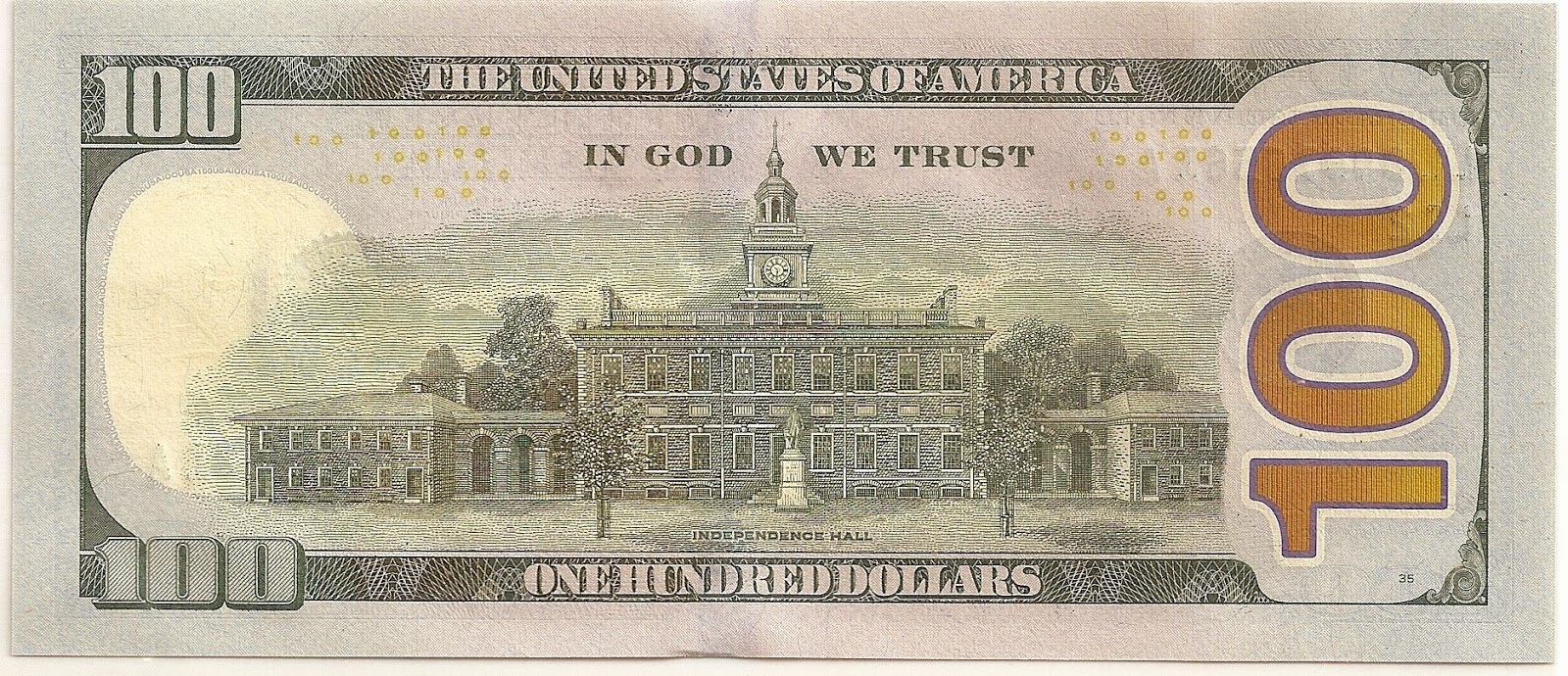
If you have an eye for detail, you might have noticed that the time on Independence Hall’s bell tower clock on the back of the old $100 bill read 4:10. It was changed to 10:30, however, on the newer ones. No one seems to know why either of these times was chosen, but both images — the north and south views — were engraved by J.C. Benzing in the 1920s. It is assumed that he took pictures of the building at different times of day, which would explain the clock discrepancy.

The Paper Is Unique

Though it might seem like it, our money isn’t printed on paper at all — at least not in the traditional sense. Whereas books and newspaper use wood pulp for their pages, Federal Reserve note paper is composed of 25 percent linen and 75 percent cotton, which gives it its trademark rich texture. It also has red and blue security fibers built in.

Crane & Co. Has Made the Paper Since 1879

Crane & Co., which got its start in Massachusetts, has been producing the paper for the $100 bill and all other American notes since 1879. In 1844, the company became the first to embed silk threads in banknote paper, according to its website. Crane & Co. has also created several anti-counterfeit measures, including advanced security threads, watermarks, planchettes, security fibers, special additives and fluorescent and phosphorescent elements. Spotting the fakes in distribution is a huge problem, but sometimes keeping your money away from criminals is just as hard.

It Has a Cue for the Visually Impaired

Chances are, you’ve noticed the large gold 100 on the back of the $100 bill, but it’s not a flashy design touch. The 100 was put in place to help people with visual impairments distinguish the bill from other denominations.

Benjamin Franklin’s Shoulder Is Rough to the Touch

If you’ve ever run your finger over Benjamin Franklin’s shoulder on the $100 bill, you might have noticed it’s rough to the touch on the left side. This is not a flaw unique to your particular bill; it’s actually caused by the enhanced intaglio printing process used to produce the portrait.

It Has a Longer Lifespan Than All Other American Bills

The $100 bill has an average lifespan of 15 years, according to the U.S. Currency Education Program. In comparison, the $1 bill lasts an average of 6.6 years, the $5 bill averages 4.7 years of use, the $10 bill gets 5.3 years, the $20 bill lasts 7.8 years and the $50 stays strong for about 12.2 years. The $100 bill is held more by its owners than lower-denomination bills, which pass from one hand to another frequently. Therefore, it will last longer before wearing out, per the program.

The Portrait of Ben Franklin is Off-Center

After the latest redesign of the currency in 2013, Benjamin Franklin was removed from his portrait frame and placed off to the side for the first time in the bill’s history.

There’s Two Ben Franklins (If You Look Hard Enough)

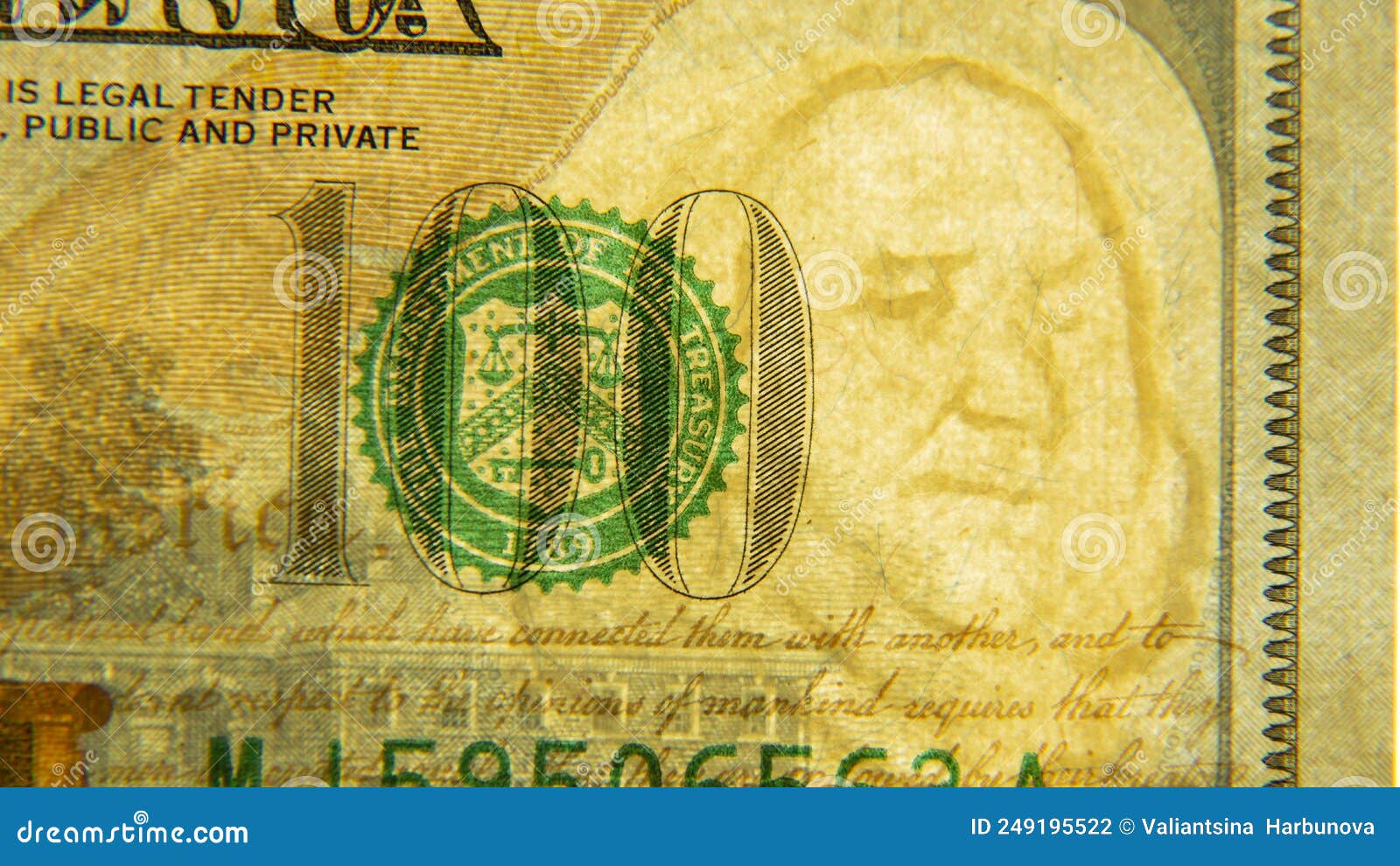
The 2013 redesign of the bill featured a plethora of new security features — one of which was a second portrait of Ben Franklin when held up to the light. The watermark of Franklin looks fuzzy, thanks to the linen content featured in American currency. If money was printed on all cotton, there wouldn’t be a bleed.

Same Building, New View

The $100 bill has long featured a depiction of Independence Hall, which is a huge factor in Franklin’s lore. The newest 2013 redesign also features a new engraving that shows the back of Independence Hall instead of the iconic front.

It Features a Top-Secret Ribbon

To improve security, the U.S. Department of Treasury rolled out new plastic ribbons as part of larger currency to help deter counterfeiting. Even though the most recent $100 bills look as though the plastic ribbon was interwoven into the very fabric of the bill, it wasn’t — according to Esquire, the bill is actually created around the ribbon itself in a top-secret process.

Be Sure to Check the Extremely Fine Print

If you check near Franklin’s collar, you’ll find an engraving present on the latest edition of the bill — and it harkens back to an original portrait painted of the Founding Father by Joseph Siffred Duplessis in the 1780s.

The 2013 Design Uses a Feather to Draw It Together

The newest redesign also features another icon that is integral to Franklin’s tale — a feather quill. The quill, along with its companion the inkwell, were drawn by artist Brian Thompson.

SOURCE: GOBANKINGRATES.COM

Newgrange

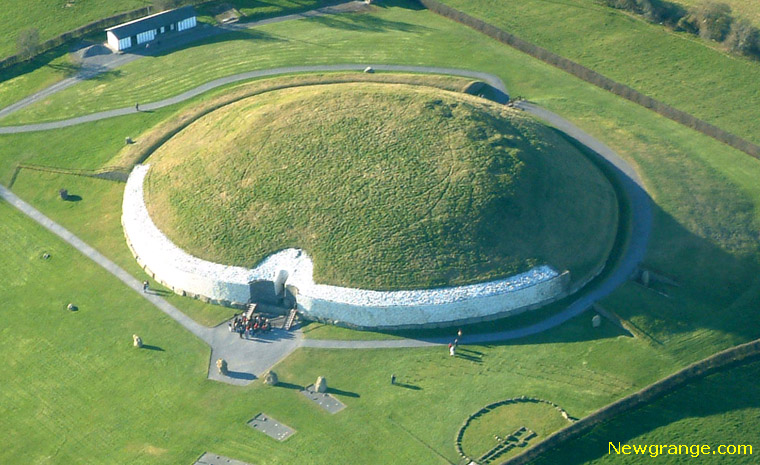
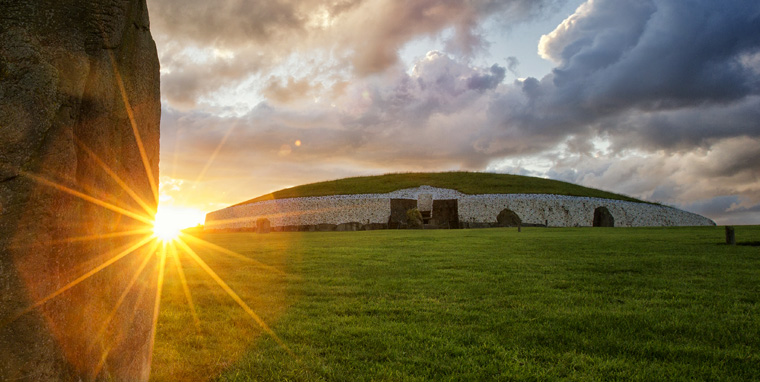
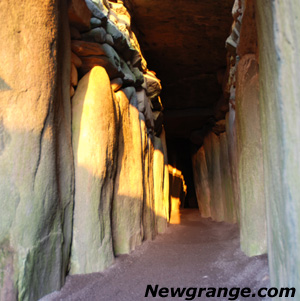
Newgrange was built by Stone Age farmers, the mound is 85m (279ft) in diameter and 13m (43ft) high, an area of about 1 acre. A passage measuring 19m (62ft) leads into a chamber with 3 alcoves. The passage and chamber are aligned with the rising sun on the mornings around the Winter Solstice.  Access to the Newgrange monument is via the Brú na Bóinne Visitors Centre.
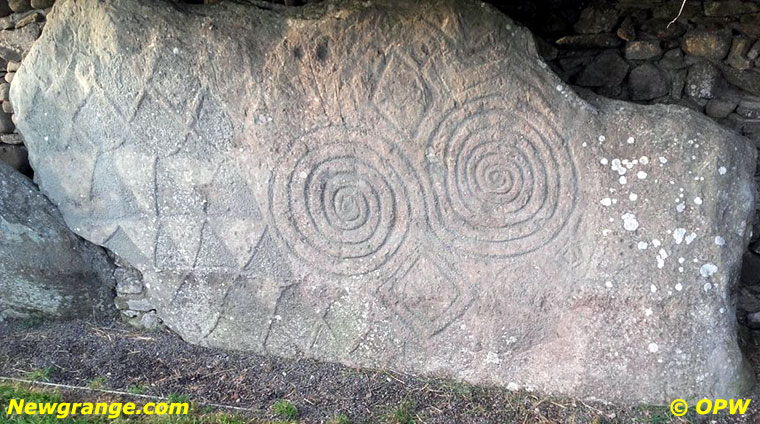
Newgrange is a Stone Age (Neolithic) monument in the Boyne Valley, County Meath, it is the jewel in the crown of Ireland’s Ancient East. Newgrange was constructed about 5,200 years ago (3,200 B.C.) which makes it older than Stonehenge and the Great Pyramids of Giza. The mound is ringed by 97 large kerbstones, some of which are engraved with symbols called megalithic art; the most striking is the entrance stone.

Newgrange was built by a farming community that prospered on the rich lands of the Boyne Valley. Knowth and Dowth are similar mounds that together with Newgrange have been designated a World Heritage Site by UNESCO.

Archaeologists classified Newgrange as a passage tomb, however Newgrange is now recognized to be much more than a passage tomb. Ancient Temple is a more fitting classification, a place of astrological, spiritual, religious and ceremonial importance, much as present day cathedrals are places of prestige and worship where dignitaries may be laid to rest.

Newgrange is a large kidney shaped mound covering an area of over one acre, retained at the base by 97 kerbstones, some of which are richly decorated with megalithic art. The 19m (62ft) long inner passage leads to a cruciform chamber with a corbelled roof. The amount of time and labor invested in construction of Newgrange suggests a well-organized society with specialized groups responsible for different aspects of construction.

Newgrange is part of a complex of monuments built along a bend of the River Boyne known collectively as Brú na Bóinne. The other two principal monuments are Knowth (the largest) and Dowth, but throughout the area there are as many as 35 smaller mounds.

Winter Solstice

Newgrange is best known for the illumination of its passage and chamber by the winter solstice sun. Above the entrance to the passage at Newgrange there is an opening called a roof-box. This baffling orifice held a great surprise for those who unearthed it. Its purpose is to allow sunlight to penetrate the chamber on the shortest days of the year, around December 21st, the winter solstice. At dawn, from December 19th to 23rd, a narrow beam of light penetrates the roof-box and reaches the floor of the chamber, gradually extending to the rear of the chamber.

As the sun rises higher, the beam widens within the chamber so that the whole room becomes dramatically illuminated. This event lasts for 17 minutes, beginning around 9am. The accuracy of Newgrange as a time-telling device is remarkable when one considers that it was built 500 years before the Great Pyramids and more than 1,000 years before Stonehenge.

The intent of the Stone Age farmers who build Newgrange was undoubtedly to mark the beginning of the new year. In addition, it may have served as a powerful symbol of the victory of life over death.

Each year the winter solstice event attracts much attention at Newgrange. Many gather at the ancient tomb to wait for dawn, as people did 5,000 years ago. So great is the demand to be one of the few inside the chamber during the solstice that there is a free annual lottery (application forms are available at the Visitor Centre). Unfortunately, as with many Irish events that depend upon sunshine, if the skies are overcast, there is not much to be seen. Yet all agree that it is an extraordinary feeling to wait in the darkness, as people did so long ago, for the longest night of the year to end.

SOURCE: NEWGRANGE.COM

Heavens to Betsy!

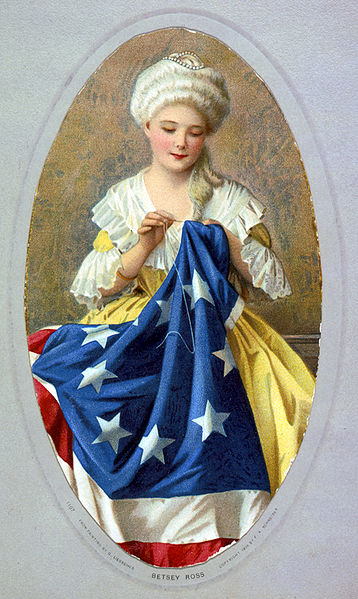
Today is Betsy Ross’s birthday and I found an article on Have Fun With History about Betsy!

From havefunwithhistory.com:

Betsy Ross, born on January 1, 1752, in Philadelphia, Pennsylvania, is a prominent figure in American history known for her role in the creation of the first American flag. While her life and contributions are often celebrated, some aspects remain shrouded in legend and debate. This brief introduction provides a glimpse into the life of Betsy Ross, a woman whose association with the American flag has left an indelible mark on the nation’s history and identity.

Betsy Ross Facts

1 Born on January 1, 1752, in Philadelphia, Pennsylvania

Betsy Ross was born as Elizabeth Griscom in the bustling colonial city of Philadelphia. She was one of 17 children in her family, and her Quaker parents, Samuel Griscom and Rebecca James, raised her in the Quaker faith.

2 Married John Ross in 1773

In 1773, Betsy Ross married John Ross, who was an Anglican vestryman and an upholsterer by trade. Together, they established an upholstery business in Philadelphia. However, their marriage was short-lived due to John Ross’s untimely death in 1776 during the early years of the American Revolutionary War. Despite the brevity of their marriage, Betsy Ross continued to work in the upholstery trade after his passing.

3 Known for her role in creating the first American flag

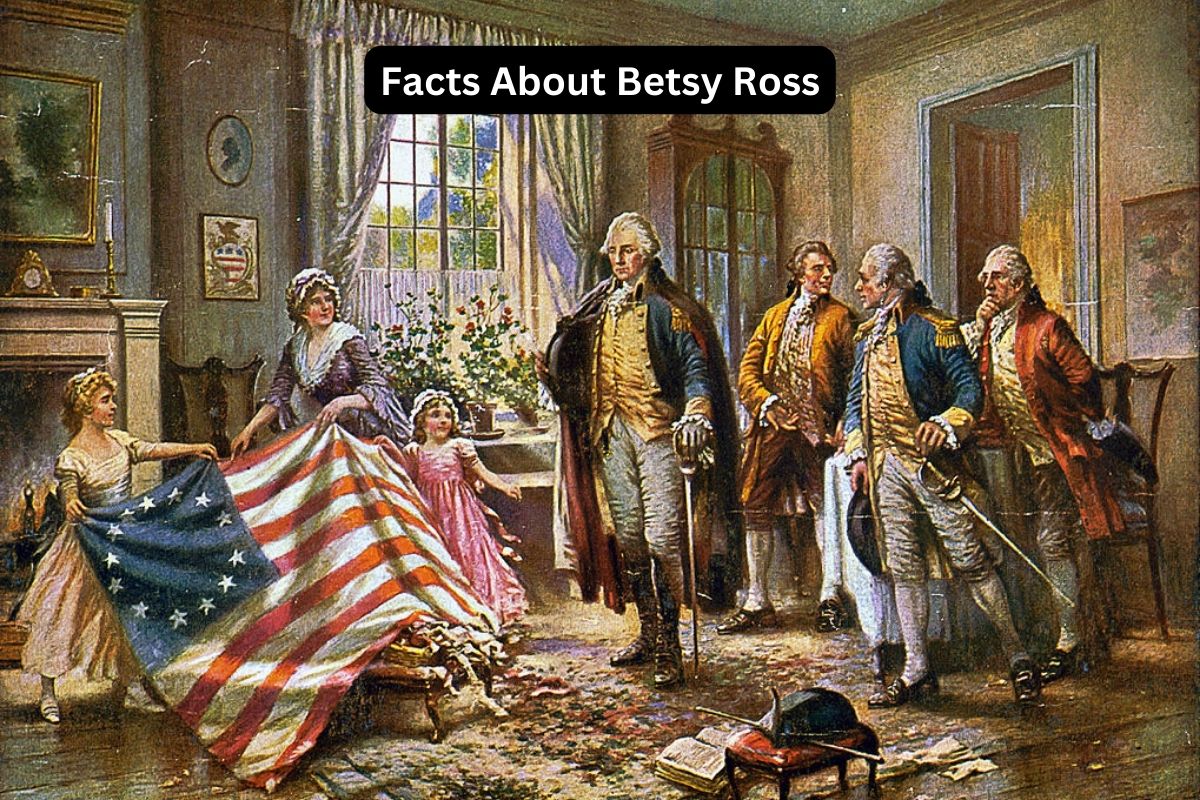
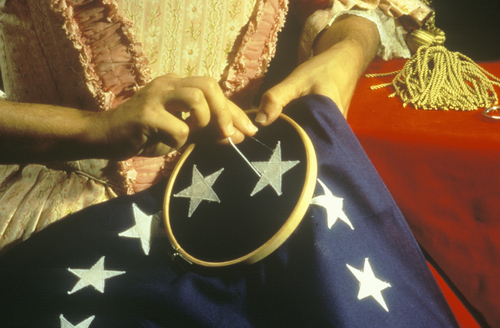
Betsy Ross is most renowned for her association with the creation of the first American flag. According to legend, she was approached by a committee consisting of George Washington, George Ross (John Ross’s uncle), and Robert Morris in June 1776. They presented her with a rough design of the American flag, which had 13 stars and 13 stripes, representing the 13 American colonies. Betsy Ross is said to have suggested changes to the design, including the use of a five-pointed star and the arrangement of stars in a circle. While the exact historical accuracy of this story remains debated, it has become a cherished part of American folklore, and Betsy Ross is widely recognized for her association with the creation of the American flag.

4 Traditionally credited with suggesting design modifications for the flag

As previously mentioned, Betsy Ross is traditionally credited with suggesting design modifications to the American flag presented to her by George Washington and the committee. According to the legend, she proposed using a five-pointed star instead of a six-pointed one, as well as arranging the stars in a circular pattern. This circular arrangement made it easier to create the stars, as opposed to the more complex design of a star within a star.  While there is some debate among historians about the accuracy of this specific account, there is no doubt that Betsy Ross was an accomplished flag maker, and her contributions to early American flag design are celebrated.

5 The first American flag she created had 13 stars and 13 stripes

Betsy Ross’s most famous creation was the first American flag, which she is believed to have sewn in 1776. This flag had 13 stars, representing the 13 original colonies, and 13 stripes, alternating red and white, symbolizing the same colonies. The design was intended to reflect the united efforts of the American colonies in their struggle for independence from British rule. The stars and stripes have since become iconic symbols of the United States and its history.

6 Operated an upholstery business with her first husband, John Ross

Betsy Ross and her first husband, John Ross, ran an upholstery business together in Philadelphia. Upholstery involved the crafting and repair of furniture, making draperies, and creating various fabric-based items. While John Ross was also involved in the early stages of the American Revolution, Betsy’s skills as a seamstress and upholsterer became particularly valuable during this time. After John’s death in 1776, Betsy continued to manage and operate the upholstery business on her own. Her ability to work with fabrics and textiles likely contributed to her involvement in flag-making, and she remained an active and skilled craftsman throughout her life.

7 Married three times in her lifetime

Betsy Ross had a complex personal life, marked by three marriages. Her first marriage was to John Ross in 1773. After his death in 1776, she married Joseph Ashburn in 1777. Tragically, Ashburn died while imprisoned by the British during the Revolutionary War. Betsy’s third marriage was to John Claypoole in 1783, and together they had five daughters. Betsy’s marriages were intertwined with the challenges and turmoil of the Revolutionary period.

8 Widowed multiple times, her husbands had ties to the Revolutionary War

All three of Betsy Ross’s husbands had direct or indirect connections to the American Revolutionary War. John Ross died early in the war, Joseph Ashburn was a sailor who suffered the hardships of wartime captivity, and John Claypoole was a veteran of the Continental Army. Betsy’s personal life was deeply affected by the conflicts and challenges of the Revolutionary period.

9 Died on January 30, 1836, at the age of 84

Betsy Ross lived a long life and passed away at the age of 84. Her death occurred on January 30, 1836, in Philadelphia, Pennsylvania. Her legacy, particularly her association with the creation of the American flag, continued to be celebrated after her death, and she remains a notable figure in American history.

10 Buried at the Free Quaker Burying Ground in Philadelphia

Betsy Ross was buried at the Free Quaker Burying Ground in Philadelphia, Pennsylvania. The Free Quakers were a group of Quakers who broke away from the mainstream Quaker community during the American Revolution because they supported the American cause. Betsy Ross’s burial at this historic site is a testament to her affiliation with the Free Quakers and her enduring connection to the Revolutionary period.

SOURCE: HAVEFUNWITHHISTORY.COM

Fun Facts About the Presidents: Part 4

Jimmy Carter believed in UFOs

In 1973, four years before becoming the 39th president of the United States, Jimmy Carter filed a report of a UFO sighting in Georgia in 1969. He called it “the darnedest thing I’ve ever seen.” He promised, if elected president, to disclose government information about UFOs, but backpedaled while in office.

Abraham Lincoln was a licensed bartender

Before he became the 16th president, Abraham Lincoln was a bartender and bar owner. He partnered with a friend to buy a bar in Illinois but gave it up to become a lawyer shortly thereafter. He remains officially the only U.S. president to be a licensed bartender.

John Adams named his dog Satan

Plenty of U.S. presidents have had dogs as pets in the White House, but only one had a dog named after the devil himself. Satan was one of the pooches belonging to the second U.S. president, John Adams. No word on whether Satan lived up to its name.

We had a 24-hour president

Ever hear of President David Rice Atchison? If the answer is no, that’s probably because he was only president for a day. In 1849, the inauguration of Zachary Taylor landed on a Sunday, and the religious incumbent refused to be sworn in on a holy day. He had Atchison stand in for him.

James Monroe attacked his rival with red-hot tongs

After backing down from running against James Monroe in the presidential election, William H. Crawford accepted a position as his secretary of the Treasury. During a fight between the two men, the fifth U.S. president chased the politician out while brandishing a set of tongs from his fireplace.

Thomas Jefferson had a comically positioned bed

Jefferson famously served out his tenure at his estate, Monticello. Though his home was vast in size, he preferred to squeeze his bed into a tiny alcove that provided zero room at the foot and head of the bed. He’s thought to be the originator of the alcove bed layout.

Presidents Day is technically called Washington’s Birthday

Presidents Day has a more complex history than one might think. After George Washington died in 1799, his supporters recognized his birthday as a day of remembrance. In 1885, his birthday became a federal holiday for the country. Later, in 1968, a new bill made certain federal holidays on Mondays and combined birthday celebrations for Washington and Lincoln into Presidents Day. According to the United States Code, however, that February holiday is technically still called Washington’s Birthday and never officially changed to Presidents Day. Federal code permits local governments and private businesses to name federal holidays whatever they want, so most states call it Presidents Day.

Three presidents married while in office

President John Tyler remarried in 1844 after the death of his first wife. Woodrow Wilson also remarried after the death of his wife, in 1915. And before his wedding, Grover Cleveland was one of two White House bachelors. (The other was James Buchanan, who never married.) Cleveland is also the only U.S. president to marry in a White House ceremony.

Martin Van Buren made “OK” popular

Experts don’t definitively know the origin of “OK.” People suggest it has origins in Native American language or Sub-Saharan African language, among other possibilities. They do know that Martin Van Buren helped popularize the expression. One of his nicknames was “Old Kinderhook,” the town he was from in New York. During his election campaign in 1840, people held signs with, and chanted, “OK.”

“Billy Possums” was meant to replace “Teddy Bears”

President Theodore Roosevelt inspired the name “Teddy Bears.” Roosevelt chose not to shoot a bear on a hunting trip, asking to put down the already injured bear humanely instead. Newspapers made cartoons of the event, and Morris Michtom, a candy shop owner, asked Roosevelt’s permission to sell stuffed bears in his shop and call them “Teddy Bears.” Once William H. Taft became president, toy makers worried that the bears wouldn’t be as popular. They came up with an alternative toy to name after Taft—”Billy Possums.” In 1909, the U.S. president ate possum in Georgia, inspiring the rival toy that never came close to the popularity of the Teddy Bear.

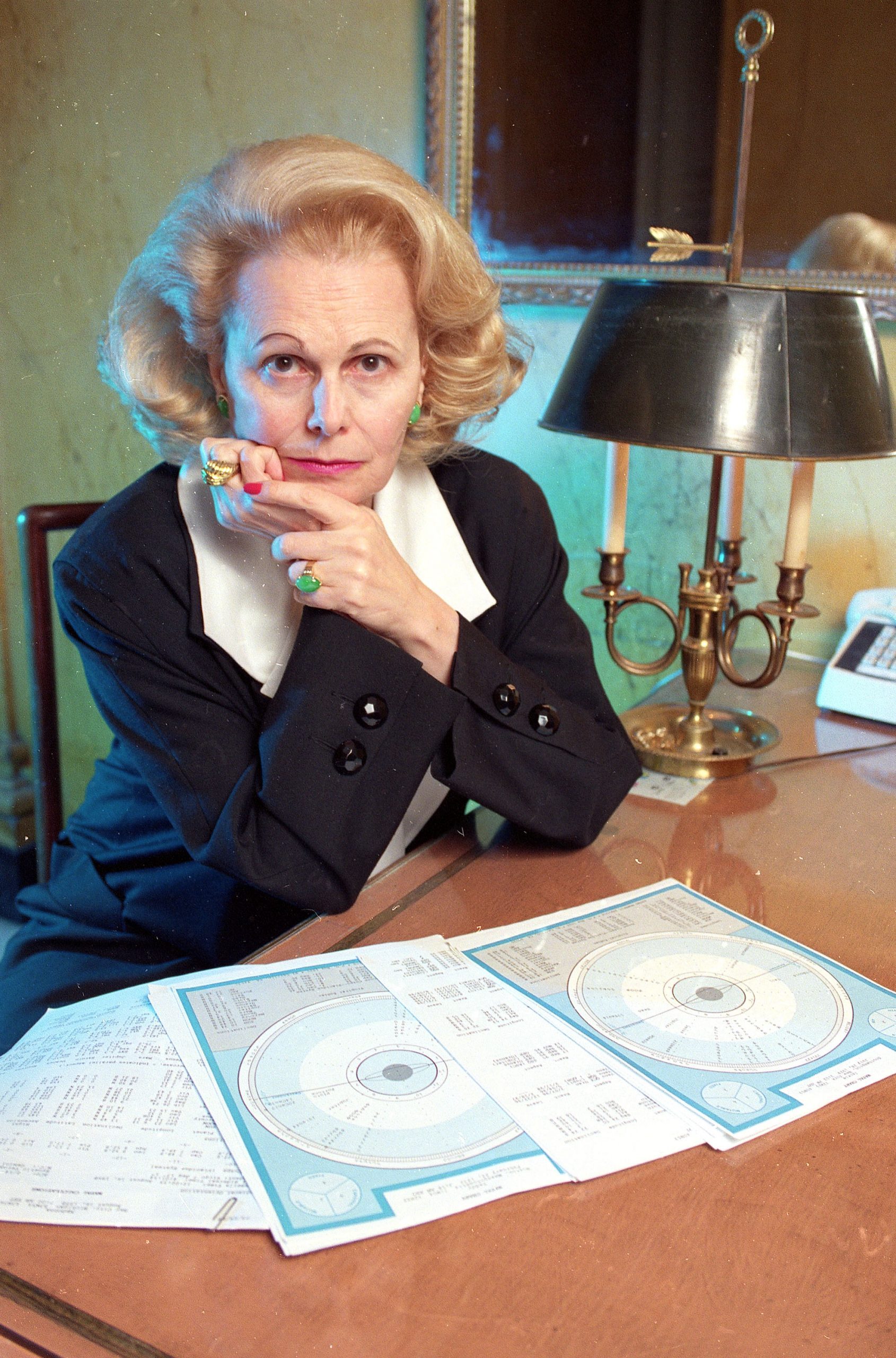
Ronald Regan consulted with an astrologist while in the White House

Joan Quigley was Ronald and Nancy Reagan’s astrologist while they were in the White House. Quigley only met the president once, but she did communicate regularly with the first lady. Quigley was reportedly responsible for timing conferences, speeches, takeoffs and landings, and even the State of the Union address. The president kept a color-coded calendar of good and bad days according to astrological rules and circumstances, based on information from Quigley. In her book, Quigley even claims she could have predicted the assassination attempt on his life—but at the time she hadn’t drawn up his charts.

George H.W. Bush inspired a Japanese slang word

In 1992, George H.W. Bush vomited on the prime minister of Japan at a state dinner in Tokyo while in Asia for a 12-day trip. After the incident, the term Bushu-suru—”do a bush”—became a popular Japanese slang word for vomiting.

John Quincy Adams kept a detailed, 51-volume diary

Here’s the last of our president facts: John Quincy Adams began keeping his 14,000-page journal in 1779 at the age of 12. He continued until shortly before his death in 1848. People can read the whopping 51 volumes online.

SOURCE: READERSDIGEST