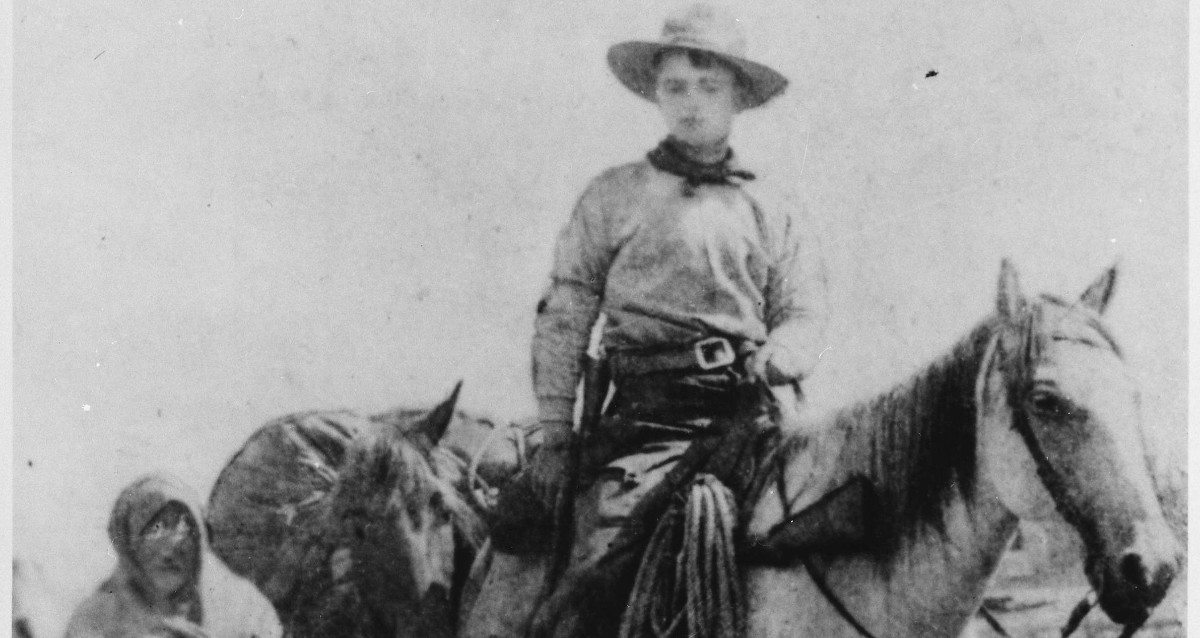
The first Pony Express ride began in St. Joseph, MO on April 3, 1860 and ended in Sacramento, CA, on April 14, 1860.
“…citizens paraded the streets with bands of music, fireworks were set off….the best feeling was manifested by everybody.” – New York times, April 14, 1860 on the success of the first Pony Express delivery.
With only two months to make the Pony Express a reality, the team of William H. Russell, Alexander Majors and William B. Waddell had their hands full in January 1860. Over 100 stations, 400-500 horses and enough riders were needed – at an estimated cost of $70,000.
But on April 3, 1860, the first official delivery began at the eastern terminus of the Pony Express in St. Joseph, Missouri. Amid great fanfare and with many dignitaries present, a mail pouch containing 49 letters, five telegrams and miscellaneous papers was handed to a rider. At 7:15 p.m., a cannon was fired and the rider bolted off to a waiting ferry boat.
The Pony Express was set up to provide a fresh horse every 10-15 miles and a fresh rider every 75-100 miles. 75 horses were needed total to make a one-way trip. Average speed was 10 miles per hour.
On April 9 at 6:45 p.m., the first rider from the east reached Salt Lake City, Utah. Then, on April 12, the mail pouch reached Carson City, Nevada at 2:30 p.m.
The riders raced over the Sierra Nevada Mountains, through Placerville, California and on to Sacramento. Around midnight on April 14, 1860, the first mail pouch was delivered via the Pony Express to San Francisco.
Despite the success and approval of the public, the Pony Express was by no means a trouble-free operation after the first delivery. Costs and difficulties of maintaining the extensive network of stations, people and horses were numerous. Yet the Pony Express, with the exception of delays caused by the Pyramid Lake War, stayed in operation until the telegraph’s arrival in 1861.
The British tabloid Daily Mail has long been criticized for its sensationalism, its practice of printing stories of a vague and frightening nature, and for its inaccuracies in reporting. It has also been the target of criticism for copyright violations from time to time. Its sensationalist nature provides it with cover, as it were, when some of its stories appear to be, shall we say, of questionable veracity. Such was the case on April Fools’ Day, 1981, when the paper reported a story of a Japanese long distance runner who had come to England for the London Marathon, and due to a misunderstanding, believed the race consisted of 26 days, rather than 26 miles. According to the Daily Mail, he was still running.
Kimo Nakajimi, the evidently quite fit runner, was reported by the newspaper as being “somewhere” on the roads of the United Kingdom, doggedly determined to complete the marathon. The misunderstanding was attributed to a translation error, but the race officials were unable to determine the exact location of the runner, in part because he was in constant motion. According to the article, numerous residents of the British Isles spotted the runner, who refused to stop when hailed. According to a race official quoted in the article, the misunderstanding was fed by the fact that such grueling endurance races were common in Japan, and thus seemed normal to Kimo.
12. Send in the brides, April 1, 1928
According to the Berlin Illustrated Newspaper in April 1928, the tiny principality of Liechtenstein suffered from a shortage of marriageable women, due to the migration of such ladies to neighboring Switzerland in search of work. To relieve the shortage, the government of Liechtenstein was importing women from other European countries, transporting them via freight cars. Once they arrived in the small country they were sold at auction to prospective husbands, eager to obtain brides. A photograph which accompanied the article depicted prospective brides being unloaded from the trains, and was considered by the men of Liechtenstein to be particularly offensive.
Most of the women shown were of an inordinately large size, and the populace, government, and newspapers of the principality took the story as an insult. The government and newspapers denounced the story as an example of tactless German boorishness. The story was picked up by other European and American newspapers, and the hoax was blown out of proportion into an international diplomatic incident. The fact that so many other newspapers ran the story saw the photograph, which was considered by the Liechtensteiners the most insulting part of the story, reproduced worldwide.
13. BBC broadcasts aromas via television, April 1, 1965
On April Fools’ Day 1965 the BBC announced a new dimension to their television broadcasts. An interview with a scientist from the University of London revealed that he had perfected a machine which allowed for the broadcast of odors from the studio to receiving sets, with no modification of the sets required. The entire process was completed in the studio, where his machine absorbed the molecules of the aromas and transmitted them over the airwaves. The scientist agreed to a demonstration of his machine, using the pungent aroma of raw onions and the fragrance of freshly brewed coffee, both of which were inserted into his machine. Viewers were asked to call in when they detected the scents.
It didn’t take long before the telephones were ringing in the studio. Scores of viewers from across the United Kingdom called in to report that the machine – which was called smell-o-vision – was a success. Some viewers reported the smell of onions was so strong that it caused their eyes to water. That smell-o-vision was a carefully conceived April Fools’ Day hoax was revealed after the BBC received a multitude of calls from viewers apparently readily susceptible to suggestion. The concept has been revisited in film and television since, though through the use of peripheral equipment rather than the aroma being broadcast through the television receiver.
14. The Night Watch self-erasure, April 1, 1950
Among the most famous paintings in the world, and noted for its large size, The Night Watch by Rembrandt von Rijn is beloved by the Dutch as a national symbol, as well as a source of national pride. It is widely considered to be the greatest masterpiece of the period known as the Dutch Golden Age. On April 1, 1950, Dutch citizens were stunned to learn, via radio, that the painting was dissolving of apparently its own accord, with little opportunity of its being saved. According to a broadcast of the Dutch national radio network, the painting was inadvertently cleaned with a harmful cleaning fluid, and was melting throughout the day. Already unrecognizable, by midnight it would be gone.
The radio broadcast caused hundreds of art lovers and students to race to the Rijksmuseum, where the painting was housed, in order to view it one last time. The length of time waiting in the queue was hours, and VARA – the Dutch national radio network – had reporters working the line, interviewing those waiting to see the painting live on the air. Many were in tears. They exited the building through an opposite door so as not to reveal to those still waiting the painting was fine and the story was a hoax. The Night Watch has been the subject of vandalism several times, and in 2019 was schedule for a full restoration, to take place while the painting remained on public display.
15 The rain-proof BMW sunroof, April 1, 1983
The German car manufacturer BMW has a long tradition of presenting advertisements on the first of April which are deliberate hoaxes, leading their fans to expect them and limiting their efficiency as a joke, since it is well-known and expected of them. That was not the case on April Fools’ Day, 1983, when magazine and newspaper advertisements revealed their latest innovation in luxury. The company announced a new sunroof, which drivers could leave open in the hardest rain while the interior of the vehicle remained dry. According to the ads, the car could be driven through an automatic carwash with the top open, the occupants protected by the new design.
BMW claimed that the new sunroof was designed by one of their engineers, identified by the company as Herr Blohn. The system used high volume air blowers to direct a jet of air across the opening, which diverted water from entering the vehicle. Those potential customers who wanted additional information were directed to telephone customer service and direct their call to April Wurst (pronounced versed). Since the 1983 April Fools’ Day advertisement BMW has produced many more such jokes, inspiring similar tongue in cheek advertisements and announcements by competitors.
16. A Martian in Germany, April 1, 1950
Those who subscribe to UFO conspiracies will be dismayed to learn that one of the photos of an extraterrestrial which purports to support evidence of alien contact began as an April Fools’ Day joke in a German newspaper. It began with a photograph of an alien which appeared in a Wiesbaden newspaper accompanying an article which described the crash of a UFO discovered by American soldiers. The alien, alive, had been taken into the soldiers’ custody. Several days later the newspaper published an announcement describing the article and photograph as an April Fools’ Day joke. By that time a copy of the photograph was in the FBI’s voluminous files.
In 1980 the photograph was obtained by the authors of the book The Roswell Incident, Charles Berlitz and William Moore. They presented the photograph as proof of an alien encounter, which had been hushed up by the United States military. The German photographer who created the picture, as an April Fools’ Day hoax, later revealed that the “alien” was actually his then five year old son, costumed and posing with amenable American soldiers. The revelation has not stopped those who believe it to be a photograph of a genuine extraterrestrial from continuing to present it as proof that earth has been visited by aliens and governments continue to create cover ups to deny the fact to citizens.
17. Using pigs as lard factories, April 1, 1921
The Germans, through their newspapers, have a long and distinguished history of producing April Fools’ Day hoaxes, some more believable than others. In April, 1921, a Berlin newspaper produced a story which explained how a particularly innovative farmer derived lard from his pigs without killing them. The lard was removed surgically from the living animal, which was then stitched up to presumably produce yet more lard. The animal was numbed during the procedure, which could be performed up to three times per year, making the animal a living lard factory. First British, and later American newspapers reprinted the story and enhanced it.
For over a year the story remained in play. The farmer who discovered the process had been described as living in the town of Schleichegrieben. Once it became apparent that no town of that name existed in Germany British newspapers began to question the story. The name of the fictional town translated to sneaking bacon, another indication of the falsity of the story. The Berlin newspaper which originally published the story admitted it was an April Fools’ Day joke over a year after it first appeared, having fooled hardened news publishers in Europe and America, as well as their readers, for most of that time.
18. Creating write-only memory, April 1, 1973
It would be hard to imagine a purpose for write-only memory, which allows information to be stored but never retrieved. But on April 1, 1973, Signetics, a California based manufacturer of integrated circuit chips founded in 1961, announced that they had successfully developed write-only memory in a press release. A spokesperson for the company, Roy L. Twitty, called the innovation a major achievement which would have a beneficial effect on the lives of all who ever used computers. Signetics included technical data sheets describing the memory as part of the press release, comprised of meaningless diagrams and equations.
The concept became an inside joke within the industry, and was expanded upon by other manufacturers and engineers, including Apple, which included references to it in their reference manual for the Apple IIe computer in 1982. Apple claimed that the concept of write-only memory was developed under a government contract in 1975, and that it had been criticized as a “six-million dollar boondoggle” but that the device allowed for the storage of “excess information”, and thus saved millions of dollars by freeing up conventional memory storage systems for other uses. The concept remains an allusion to a totally worthless device or idea.
19. The lamp which cast darkness, April 1, 1955
Popular Electronics published their April issue for 1955 including an article which described the concept of “Contra-Polar Energy”. Contra-polar energy was described as negative energy, which when applied to any electronic or electrical device would cause it to produce the exact opposite of what it was designed to produce. In other words, if applied to a light bulb, the bulb would cast darkness rather than light. An electric element on a stove would become ice cold rather than generate heat. The energy could act as a brake on an electric motor. According to the magazine the energy was developed secretly by the military during the Second World War.
The magazine included a photograph which depicted a table lamp creating darkness on the surface on which it rested. The article also contained a disclaimer, which directed the readers’ attention to the fact of its being published on the first day of April. Nonetheless, interested readers continued to write to the magazine for additional information for years. In 1959 Popular Electronics was forced to issue a statement which indicated the article had been an April Fools’ Day joke, and continued demand for more information led to their doing so again in 1963, eight years after its original publication.
20. London’s Big Ben converted to digital, April 1, 1980
Once again, in 1980 the BBC perpetrated a hoax in celebration of April Fools’ Day which bemused some and outraged others. Clocks and watches with digital faces rather than traditional dials were all the rage in the late 1970s and early 1980s. On April 1, the BBC reported that in accordance with the times the famed London hallmark, Big Ben, would be equipped with a digital face replacing its dial. The report included much of the history of what is arguably the world’s most famous clock, and closed with the announcement that the hands would be given away to listeners on a first come, first served basis. Calls from around the world began immediately, hoping to obtain a relic of the clock.
Not all of the calls were about gaining one of the clock’s hands. The British public was outraged at the idea. The volume of calls and the anger expressed in them forced the network to issue a statement that the entire report had been an April Fools’ Day joke. That announcement merely increased the numbers of calls into the BBC, from viewers and listeners who did not find the joke the least bit funny. The BBC issued several apologies for the gaffe. The joke has been repeated over the years by British tabloids and magazines, with reasons for the conversion given as an effort to boost tourism and the need to upgrade the clock, but never with the overwhelmingly negative reaction expressed in 1980, which gives an indication of the credibility the BBC held with the public at the time.
Happy April Fools’ Day! I found an interesting article on the some of the best April Fools’ pranks ever pulled on the History Collection website. Enjoy!
From: historycollection.com:
Nobody is certain when the custom of setting aside the first day of April to pull pranks on the unsuspecting began. Records of pranks go back centuries. There are reports of people hoaxing their fellows as far back as the early 16th century in France, at a time when the New Year was celebrated on March 25, one week earlier than April 1. Pranks were considered part of the New Year celebration. By the late 16th century, the event was recorded in the Low Countries, and it appeared in the British Isles a century or so later. In England, public announcements of a ceremony to wash the lions – statues at the Tower of London – appeared in 1698, though no such event took place.
In any event, throughout the history of the western world, April 1 became the date when harmless pranks were pulled on friends and strangers – and some have been epic. News organizations, governments, and private individuals have generated hoaxes for their own amusement and for the entertainment of others, at the same time demonstrating both their power and the gullibility of sections of the public. Here are some of the best April Fools pranks of all time, which when perpetrated demonstrated the brilliance of the prankster, and the foolishness of those taken in.
1. The Curious Case of Sidd Finch, April 1, 1985
Just before Opening Day, 1985, Sports Illustrated ran an article in their April 1 edition describing a unique phenomenon in the New York Mets training camp. His name was Hayden Siddhartha Finch – known to his teammates as Sidd – and he was capable of throwing a baseball at the unheard of speed of 168 miles per hour, with astonishing accuracy. He was a master of yoga, a dropout from Harvard University, disliked wearing shoes, and preferred playing the French horn to baseball. The article was accompanied by photographs, and the Mets organization played along, assigning both a locker and a uniform number to the fictitious pitcher (21). The response from the public and other media was immediate.
Mets fans called the team’s offices for additional information about Sidd. Sportswriters flocked to the Mets spring training facilities for a glimpse. A press conference was held on April 2, attended by the three major networks at the time, during which Sidd’s retirement was announced. The story, which had been written by George Plimpton, was revealed to have been an April Fools’ joke on the fifteenth of that month, but by then an uncounted number of people had been taken in. The absurdity of the tale and the absence of Finch in camp aside, many believed the story, and the Mets continued to field questions about the pitcher who never was for weeks.
2. The spaghetti harvest in Switzerland, April 1, 1957
In 1957 the British Broadcasting Corporation ran a segment on their popular television program Panorama, presented by the widely respected newsman, called a presenter in the UK, Richard Dimbleby. The three minute segment depicted spaghetti being harvested from the trees on which it had been grown in Switzerland. The report described a bumper crop of Swiss spaghetti, in part because the Swiss government had successfully eradicated the spaghetti weevil. Footage of an annual spaghetti harvest festival was included in the segment. Dimbleby’s deadpan voice-over and his reputation as a newsman gave the segment the air of authenticity, and over eight million Britons watched the program.
How many of them were fooled is unknown, but the BBC received hundreds of telephone calls in the aftermath, many of them asking how they could successfully grow their own spaghetti. Spaghetti was a recently introduced food in the UK in the late 1950s, usually purchased already prepared in tomato sauce in cans, which the British refer to as tins. It was considered somewhat exotic, even in that less than delicious presentation. Callers were told to try to seed their spaghetti in tomato sauce. Decades later the spaghetti hoax was described by CNN as one of the greatest ever pulled by a professional news organization, no matter how unbelievable it seems today.
3. Make your own color television, April 1, 1962
In 1962 Sweden had but one television channel, SVT (Sveriges Television) and the vast majority of television sets in the country were black and white receivers. SVT broadcast its programming in black and white as well, there were no color programs available for airing. On April 1, 1962, its leading technical expert appeared during a news broadcast, with the important news of a technological breakthrough which would allow Swedes to view the channel’s programming in what became known to an American network as “living color”. All they had to do was place an ordinary woman’s nylon stocking across the face of their television screen.
The expert, whose name was Kjell Stensson, demonstrated the process on the air, and the public responded with alacrity. According to Stensson, it was the mesh of the nylon which generated the color in the pictures appearing on the screen, though remember they were being broadcast in black and white. Hundreds, if not thousands, reported successfully obtaining a color image. After the report was revealed to be an April Fools’ Day joke, the number of Swedes who admitted being taken in dropped dramatically. By the way, color television broadcasts did not appear in Sweden until 1970, also on April 1, when it was no longer necessary to have a pair of nylons to receive the transmission.
4. The day the world became lighter, April 1, 1976
Early in the morning of April 1, 1976, the BBC radio station 2 presented an interview with noted astronomer Patrick Moore. Moore announced to his interviewer, and thus to listeners, that later that same morning a rare planetary alignment would occur which would have an effect on the gravitational forces on earth. At precisely 9.47 AM in Great Britain the affect would be at its peak. According to Moore if people were to jump into the air at that time they would achieve heights which up to then had been reachable only by NBA players, and some may even be able to float in the air for an extended period.
The appointed time came and went, and the BBC began receiving calls from listeners who reported successfully accomplishing the feat predicted by Moore in the interview. Hundreds of callers reported being able to reach unforeseen heights, and remaining suspended in mid-air for incredible lengths of time. Others claimed that they had been lifted out of their chairs, with no effort on their part, and floated about the room. How many of the callers were simply playing along with the joke and how many were actually taken in is unknown, but BBC 2 and Moore never revealed the idea had been made up by pranksters in the studio, and the affable Moore went along with the joke.
5. A German joke became American news, April 1, 1934
On April Fools’ Day, 1934, a Berlin newspaper published a photograph which showed a man flying using an apparatus which was powered by his own breathing. The man exhaled into a box worn on his chest, his breath causing rotors to spin and create suction, which according to the accompanying article lifted him into the air. Skis attached to his feet were used to land, and a tail fin was strapped to his back, affording him the capability of steering while airborne. The entire article and photograph was clearly a joke, in accordance with the date of its publication in Germany. American wire services picked up the story, and it appeared in American newspapers, one of which was the New York Times, later in the week.
The American newspapers received the story days after it appeared in Germany, and the significance of the date of publication was lost on them. In the United States the story ran as being real news. It was distributed throughout the United States by Hearst International. Newspapers which subscribed to Hearst carried stories which described the invention as a miraculous new means of man achieving flight, and even speculated on the invention’s potential impact on transportation and daily commuting. Gradually the newspapers came to realize that the whole story had been a joke, and the reports of a breath powered aviator faded out.
6. The Norwegian wine bottle shortage, April 1, 1950
The most widely read newspaper in Norway published a story on its front page on April 1, 1950, which described a dilemma faced by the Vinmonopolet, the wine monopoly in Norway which was owned and operated by the government. According to the story, the monopoly faced an overstock of barreled wine, and at the same time a severe shortage of bottles to fill in order to present the wine for sale to the public. In order to alleviate the glut and distribute the wine, the monopoly would sell at a deep discount, and for just that day tax-free, the wine to individuals who arrived at markets with vessels with which to carry the beverage home. The article recommended buckets.
Dutiful Norwegians formed long lines, laden with the recommended buckets, though some brought with them pitchers, empty bottles, and other vessels to carry their share of the inexpensive wine they felt was their due. Gradually realizing that the lines were not moving, or moving very slowly as those at the head of the line realized they’d been had, the disappointed Norwegian wine drinkers went home, many of them leaving their buckets – the symbol that they had been duped – behind. Who placed the story in the newspaper – whether a government official or an impish editor – was never revealed.
7. The wasp swarm in Auckland, April 1, 1949
In late March every year New Zealand radio stations are warned against perpetrating April Fools’ Day hoaxes on the air, as being a violation of the standards expected of news organizations. The warning came about in the aftermath of an April Fools’ Day joke in 1949. That year a disk jockey by the name of Phil Shone broadcast a report of a swarm of wasps, more than one mile wide, approaching Auckland. Shone exclaimed on the damage the swarm could do to persons who were inundated by it, and told his listeners to take precautions to protect themselves from being stung. He advised them to place traps baited with honey outside their abodes, to keep the wasps from entering the home.
For those who had to go out, he recommended that all skin be covered, with masks and gloves. He also suggested that socks be pulled up over the cuffs of trousers for those forced to be outside. The image of New Zealanders clad as he recommended was no doubt amusing to him, but there were those who did not find the joke entertaining. The New Zealand Broadcast Service determined that the hoax was a violation of the standards all broadcasters were duty bound to meet, and the annual reminder appeared the following year, and every year hence.
8. The Hawaiian tax refund, April 1, 1954
It was another disk jockey, at Hawaii’s KHON radio, who created a frenzy through an April Fools’ Day joke in 1954. The radio station announced that the United States had granted statehood to the territory, and as a result, Hawaiians were to receive refunds on the income taxes paid for 1953. IRS offices in the islands and on the mainland were flooded with calls from citizens demanding additional information. So were radio stations, television stations, congressional offices, savings and loans, and banks. The entire territory of Hawaii, not then as populated as today, was placed in a frenzy before cooler heads prevailed.
The situation of residents of Hawaii, who paid federal income taxes but were not granted full rights as citizens of the United States, had been much in the news. Tax relief for the islanders had been discussed among members of Congress, including those lobbying for statehood for the islands. The joke did little other than roil the islands for a few days, before it was demonstrably proven false. Statehood was not granted to the islands until 1959, and Hawaiians were never refunded the income taxes they paid before statehood was achieved.
9. Americans land on the moon, April 1, 1967
To Americans, the drive to land on the moon by the end of the decade was in limbo in the spring of 1967. A disastrous and tragic fire which killed three astronauts in January of that year had shaken confidence in the space program. Congress was divided on whether to continue to pursue President Kennedy’s vision. But on April 1 of that year, listeners to Radio Zurich in Switzerland were informed that the Americans had landed on the moon. The news was broadcast in a breathless, rushed fashion, complete with winded reporters rushing to their mikes to deliver the latest information, barely able to control their breathing as the story unfolded.
The good citizens of Zurich were informed of the time the American spaceship would depart the moon to return to earth, and encouraged to head for rural areas where, once away from the light pollution of the city, they would be able to view the departure. Thousands did. Even American officials in Switzerland were taken in by the hoax, which was the brainchild of Radio Zurich’s Hans Menge, a respected news broadcaster. The April Fools’ Day hoax was even monitored by the Soviets, though their radar capabilities caused them to question what they were hearing from the Swiss. The Americans finally did land on the moon over two years later, in July 1969.
10. Converting soil into food, April 1, 1878
The New York Daily Graphic was a newspaper which relied on illustrations rather than writers to deliver the news of the day. It was filled with both original artwork and the reproductions of others. It was the first American newspaper to present a daily weather map, provided by an obliging government, which paid the paper to print it for the benefit of its readers. On April Fools’ Day, 1878, the Graphic presented its readers with an illustrated story which described Thomas Edison, then on the crest of fame for his invention of the phonograph, having created a machine which converted dirt into edible protein. His machine could also emulate the Wedding at Cana, converting water into wine.
According to the Graphic, Edison’s invention forever solved the problem of hunger in the world, since the minerals in the soil could be shaped into food without the pesky delay of growing wheat, or corn, or some other comestible. Competing newspapers reprinted the Graphic’s reporting, and Edison was fervently praised on editorial pages across the country. When editors for the Graphic learned of the story being repeated around the country they took the opportunity to needle their compatriots in the media, reprinting their reports, and gloating over the fact that their competitors had bought into their April Fools’ Day hoax. The writer of the hoax, William Croffut, gave birth to Edison’s moniker, “the Wizard of Menlo Park”.
On March 25, 1911, the Triangle Shirtwaist Company factory in New York City burned, killing 146 workers. It is remembered as one of the most infamous incidents in American industrial history, as the deaths were largely preventable–most of the victims died as a result of neglected safety features and locked doors within the factory building. The tragedy brought widespread attention to the dangerous sweatshop conditions of factories, and led to the development of a series of laws and regulations that better protected the safety of workers.
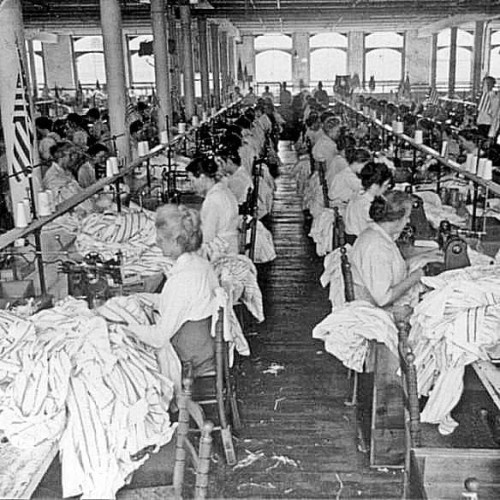
The Triangle factory, owned by Max Blanck and Isaac Harris, was located in the top three floors of the Asch Building, on the corner of Greene Street and Washington Place, in Manhattan. It was a true sweatshop, employing young immigrant women who worked in a cramped space at lines of sewing machines. Nearly all the workers were teenaged girls who did not speak English and worked 12 hours a day, every day. In 1911, there were four elevators with access to the factory floors, but only one was fully operational and the workers had to file down a long, narrow corridor in order to reach it. There were two stairways down to the street, but one was locked from the outside to prevent stealing and the other only opened inward. The fire escape was so narrow that it would have taken hours for all the workers to use it, even in the best of circumstances.
The danger of fire in factories like the Triangle Shirtwaist was well-known, but high levels of corruption in both the garment industry and city government generally ensured that no useful precautions were taken to prevent fires. Blanck and Harris already had a suspicious history of factory fires. The Triangle factory was twice scorched in 1902, while their Diamond Waist Company factory burned twice, in 1907 and in 1910. It seems that Blanck and Harris deliberately torched their workplaces before business hours in order to collect on the large fire-insurance policies they purchased, a not uncommon practice in the early 20th century. While this was not the cause of the 1911 fire, it contributed to the tragedy, as Blanck and Harris refused to install sprinkler systems and take other safety measures in case they needed to burn down their shops again.
Added to this delinquency were Blanck and Harris’ notorious anti-worker policies. Their employees were paid a mere $15 a week, despite working 12 hours a day, every day. When the International Ladies Garment Workers Union led a strike in 1909 demanding higher pay and shorter and more predictable hours, Blanck and Harris’ company was one of the few manufacturers who resisted, hiring police as thugs to imprison the striking women, and paying off politicians to look the other way.
What Started The Triangle Shirtwaist Factory Fire?
On March 25, a Saturday afternoon, there were 600 workers at the factory when a fire began in a rag bin. The manager attempted to use the fire hose to extinguish it, but was unsuccessful, as the hose was rotted and its valve was rusted shut. As the fire grew, panic ensued. The young workers tried to exit the building by the elevator but it could hold only 12 people and the operator was able to make just four trips back and forth before it broke down amid the heat and flames. In a desperate attempt to escape the fire, the girls left behind waiting for the elevator plunged down the shaft to their deaths. The girls who fled via the stairwells also met awful demises–when they found a locked door at the bottom of the stairs, many were burned alive.
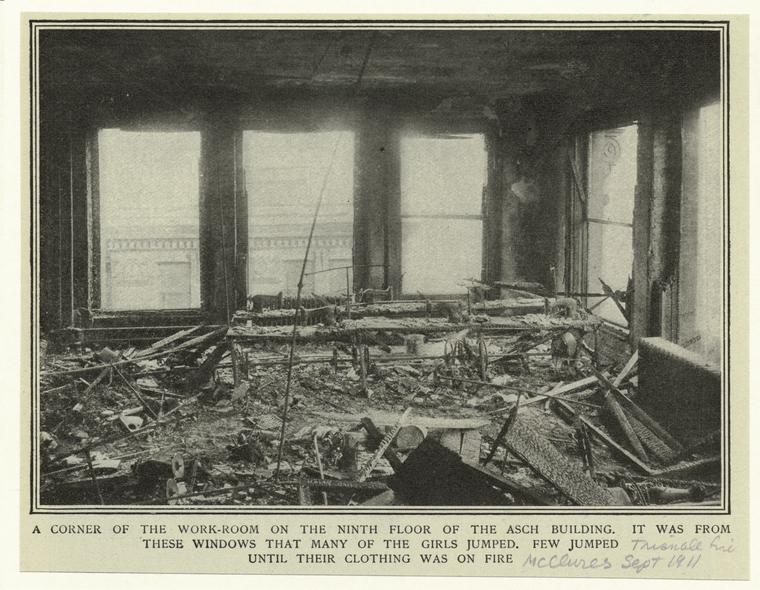
Those workers who were on floors above the fire, including the owners, escaped to the roof and then to adjoining buildings. As firefighters arrived, they witnessed a horrible scene. The girls who did not make it to the stairwells or the elevator were trapped by the fire inside the factory and began to jump from the windows to escape it. The bodies of the jumpers fell on the fire hoses, making it difficult to begin fighting the fire. Also, the firefighters’ ladders reached only seven floors high and the fire was on the eighth floor. In one case, a life net was unfurled to catch jumpers, but three girls jumped at the same time, ripping the net. The nets turned out to be mostly ineffectual.
Within 18 minutes, it was all over. A total of 146 people were killed by the fire due to severe burns, smoke inhalation, falls from great heights and injuries sustained during the incident.
The fire helped unite organized labor and reform-minded politicians like progressive New York Governor Alfred E. Smith and Senator Robert F. Wagner, one of the legislative architects of President Franklin D. Roosevelt’s New Deal agenda. Frances Perkins, who served on a committee that helped to set up the Factory Investigating Commission in New York in the wake of the fire, would later become Roosevelt’s Secretary of Labor. The workers union set up a march on April 5 on New York’s Fifth Avenue to protest the conditions that had led to the fire. It was attended by 80,000 people.
Despite a good deal of evidence that the owners and management had been horribly negligent in the fire, a grand jury failed to indict them on manslaughter charges. To settle lawsuits against them, they eventually paid $75 in compensation to each victim’s family—a fraction of the $400 per death that they were paid by their insurer.
Still, the massacre for which they were responsible did finally compel the city to enact reform. In addition to the Sullivan-Hoey Fire Prevention Law passed that October, the New York Democratic set took up the cause of the worker and became known as a reform party. Both were crucial in preventing similar disasters in the future.
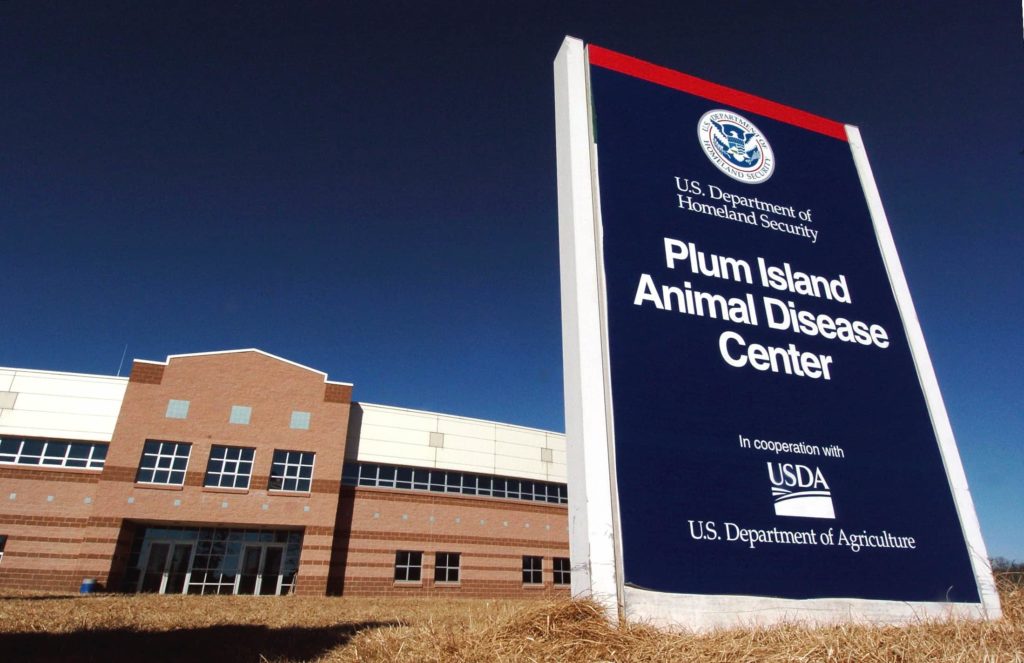
For years, plenty of wild rumors and conspiracy theories have swirled around an 840-acre (340-hectare) speck of land a mile-and-a-half off New York’s Long Island, home to a high-security federal research facility that Internet-fueled urban legends have made into the East Coast’s equivalent of Area 51. Some have speculated that animal-human hybrids and biological warfare weapons are being developed inside the Plum Island Animal Disease Center, opened by the U.S. Department of Agriculture (USDA) in the 1950s and under the control of the U.S. Department of Homeland Security since 2003.
“I’ve had questions about Nazi scientists, alien technology and genetically-modified monsters,” says John Verrico, a spokesman for Homeland Security’s Science and Technology Directorate.
But inside the security fences and biocontainment area checkpoints (described in the unredacted parts of this 2007 government report), government researchers work to stave more tangible threats — foreign animal diseases such as foot-and-mouth disease and African swine fever, which have the potential to wreak havoc with the U.S. food supply if they ever spread across the nation’s farms.
In the U.S., which hasn’t had an outbreak of foot-and-mouth disease since 1929, an outbreak of the highly contagious affliction could cause “billions and billions of dollars” in economic losses, Verrico says, because infected farm animals would have to be culled from herds and destroyed. Meat exports would come to a halt until the disease was eradicated, and consumers might face shortages of meat and dairy products. Farmers who produce animal feed would be harmed as well. A 2001 outbreak in the U.K. cost that nation the equivalent of more than $10 billion, according to the BBC.
That longstanding danger led Congress to authorize the Department of Agriculture to create a laboratory to fight animal diseases back in the 1950s, with one major condition — the facility had to be located on an island, to reduce the danger of pathogens or infected animals escaping and spreading to farms, according to this September 1956 booklet. Plum Island, the site of the U.S. Army’s Fort Terry from 1879 to 1948, fit that criteria.
A Super Prison for Deadly Animal Diseases
A 1971 New York Times article described the facility as a “Devil’s Island for the deadliest animal disease germs known to man,” and described the elaborate security measures. They included round-the-clock patrols along the island’s perimeter (intended to warn away boaters who might be attracted by the pristine beaches), buildings with airlocks to keep bacteria and viruses from escaping, and holding tanks to sterilize the waste water from mandatory showers taken by staffers before leaving at the end of the work day. In part because of the risk of a terrorist attack on the facility, in 2003 it was transferred to the Department of Homeland Security, even though agriculture researchers continue to work there, and additional measures such as door sensors and alarms were added, as this 2007 Government Accountability Office report describes.
An al-Qaida operative who was arrested in 2008 in Afghanistan had a handwritten list of various potential targets in the U.S. that included Plum Island, according to the U.S. Department of Justice.
Despite all the security measures, the Plum Island facility doesn’t work in secrecy. “We actually don’t do any classified work at all,” Verrico says. “Our scientists publish reports on everything we do.”
Plum Island houses the only foot-and-mouth disease vaccine bank in North America, which maintains a variety of vaccines that have been developed to combat the more than 60 different strains of the disease. Those vaccines could be deployed in the event that the disease began to spread in the U.S., Canada or Mexico. “It’s regularly updated,” Verrico explains.
Additionally, if an animal becomes sick and develops suspicious lesions or other possible signs of the disease, tissue samples are sent to Plum Island for analysis, Verrico says. Veterinarians come to Plum Island for training.
Work at Plum Island was instrumental in the conquest of rinderpest, a deadly cattle disease that is one of the only the two diseases — smallpox is the other — that have been totally eradicated, Verico says.
Scheduled for Shutdown in 2023
Although the Plum Island facility and its 400-person workforce have been an important part of the nation’s defenses against animal diseases for decades, it’s scheduled to shut down by approximately 2023. It gradually will be replaced by the National Bio and Agro-Defense Facility, a $1.25 billion project under construction in Manhattan, Kansas. That facility will be larger than Plum Island and be able to conduct more studies simultaneously. It also will have added layers of security to enable it to function as a level 4 laboratory, meaning that it will be able to study animal diseases that have the potential to be transmitted to humans. It will be the first large-animal facility capable of such research, Verrico says. Advances in security measures will make it unnecessary for it to be located offshore.
What will happen to Plum Island after the animal disease center shuts down isn’t yet clear. The U.S. General Services Administration already has advertised the island and its buildings for sale, in keeping with a provision tucked into the 2009 economic stimulus package that requires it to be auctioned off to defray the construction cost of the Kansas facility and/or Homeland Security’s new headquarters complex.
But local environmentalists don’t want to see Plum Island turned into a waterfront housing development or golf resort. Because the island has been off-limits to development for so many years, much of it has reverted to its natural state and become a refuge for birds and animals, according to Chris Cryder, an outreach coordinator for the Preserve Plum Island Coalition, composed of environmental organizations in New York, Connecticut and Rhode Island. The coalition advocates setting aside 80 percent of the island as a preserve.
In the winters, for example, Plum Island is a haven for 600 harbor and gray seals, who migrate from Canada to forage for food there, Cryder says. It also provides habitat for avian species such as the piping plover and roseate tern. Over the past six decades, “there’s been relatively little disturbance of nature because of the high security operation there,” Cryder explains.
Environmental groups filed a lawsuit in 2016, seeking to prevent the government from going ahead with a sale, on the grounds that it hadn’t complied with requirements of various federal environmental laws. After GSA unsuccessfully sought to get the suit dismissed, the agency announced in August that it would hold off on the sale in order to prepare a new environmental impact statement to augment the review it had done in 2013. In an interview, Roger Reynolds, senior counsel for Connecticut Fund for the Environment, describes the initial study as “remarkably inadequate.”
Now That’s Interesting
Last year, a portion of Plum Island’s power system was utilized by the departments of Homeland Security, Defense and Energy to conduct tests simulating a cyber-attack on U.S. electrical grids, according to the Wall Street Journal.
Plum Island FAQs
Is Plum Island open to the public?
Its beaches are open to the public, but there are no stationed lifeguards in Newbury or Newburyport. The beach at Sandy Point State Reservation is open to the public for swimming and sunbathing.
Did Lyme disease come from Plum Island?
No, but there have been rumors that state otherwise because the island is located near the coast of Lyme, Connecticut, where the first outbreak of Lyme was recorded in 1975.
Can you swim at Plum Island?
You can swim at the beach at Sandy Point reservation.
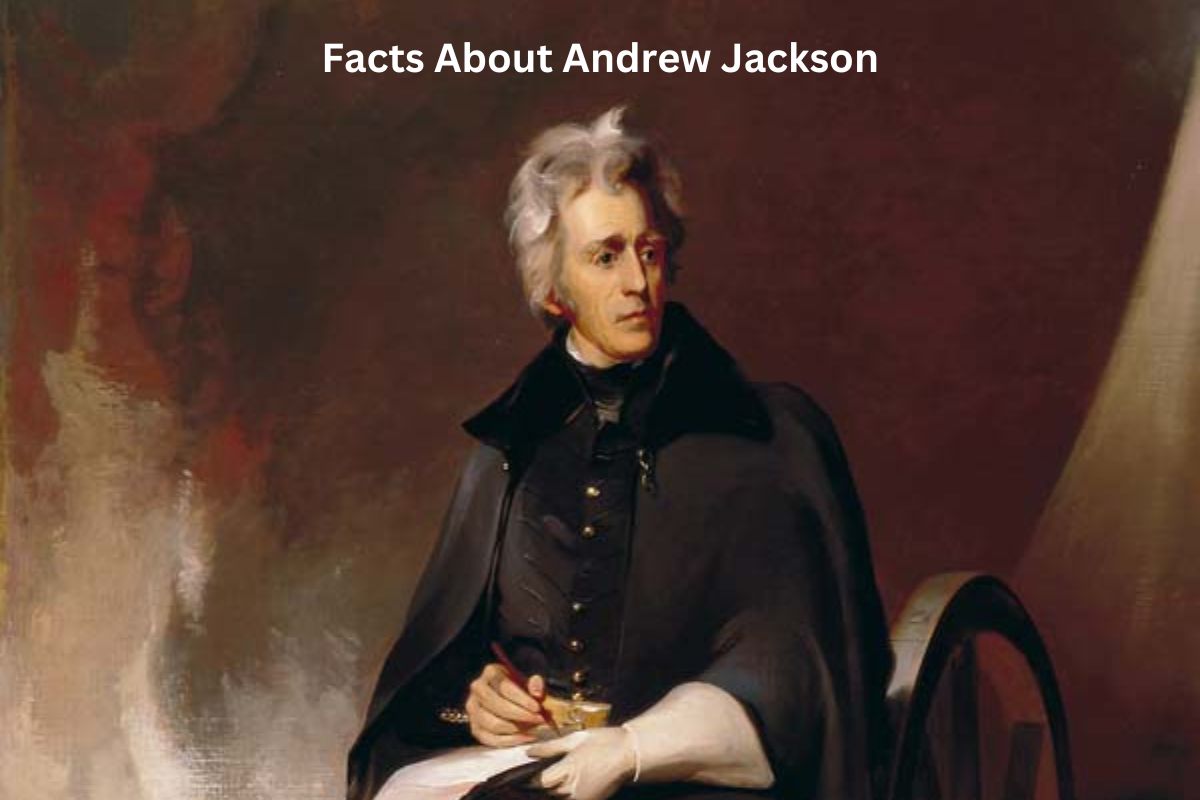
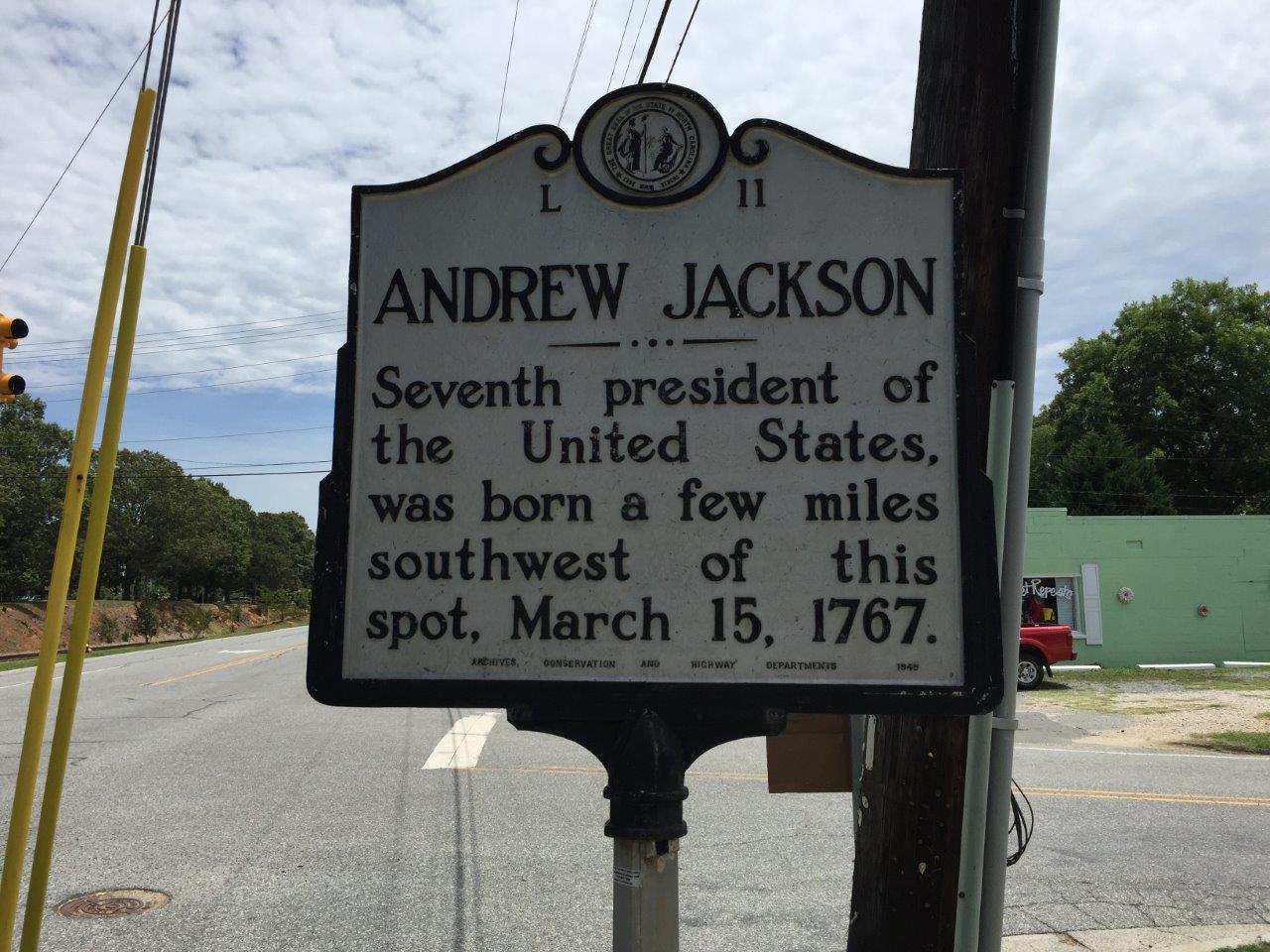
Today is Andrew Jackson’s birthday and I found this wonderful article on him, on the funwithhistory.com website.
13 Facts About Andrew Jackson
Andrew Jackson, the seventh President of the United States, is a figure of both admiration and controversy in American history. Born into humble beginnings in the Carolinas, he rose to prominence through his military heroics during the War of 1812 and later became known as “Old Hickory” for his unyielding character. Jackson’s presidency, marked by confrontations like the Nullification Crisis and the Indian Removal Act, left a lasting impact on the nation. In this exploration of Andrew Jackson’s life and legacy, we delve into some key facts that illuminate his journey from orphaned youth to one of the most influential figures in American history.
Andrew Jackson Facts
1 Born in the Carolinas in 1767
Andrew Jackson’s exact birthplace is disputed, but it is generally believed that he was born in the Waxhaws region, which straddled the border of North and South Carolina. This region was a rural and frontier area during the 18th century, and Jackson’s humble beginnings shaped his character and worldview.
2 Orphaned at a young age
Jackson faced considerable adversity in his early life. His father, Andrew Jackson Sr., died in a logging accident just a few days before Andrew’s birth. Tragically, his mother, Elizabeth Jackson, died of cholera when he was only 14 years old. This left him an orphan, and he and his older brother, Robert, had to fend for themselves. These early hardships instilled in Jackson a strong sense of self-reliance and resilience that would define his life.
3 Self-taught lawyer
Despite having limited access to formal education, Jackson was a determined and self-motivated individual. He worked as a saddle maker, schoolteacher, and even a law clerk before teaching himself the law. He eventually moved to Nashville, Tennessee, in 1788 and established a successful law practice. His legal career played a crucial role in his rise to prominence in Tennessee and his later entry into politics. Jackson’s success as a lawyer showcased his intelligence and determination, which would serve him well in his future endeavors, including his military and political career.
4 Military hero during the War of 1812
Andrew Jackson gained national prominence for his military leadership during the War of 1812. He was appointed as a major general in the United States Army and commanded American forces in the Southern theater of the war. His most famous victory came in the Battle of New Orleans in 1815, where he successfully defended the city against British forces. This victory made him a national hero and propelled him into the political spotlight.
5 Nicknamed “Old Hickory”
He earned the nickname “Old Hickory” due to his tough and resilient personality. It was given to him by his soldiers during his military campaigns, reflecting his unyielding and often stern demeanor. Jackson was known for his strong will and determination, and this nickname stuck with him throughout his life.
6 Seventh President of the United States
He was elected as the seventh President of the United States and served two terms from 1829 to 1837. He was the first president to hail from west of the Appalachian Mountains, symbolizing a shift in political power away from the Eastern elite. Jackson’s presidency is often associated with the rise of Jacksonian democracy, characterized by an emphasis on the common man’s role in government. However, it was also marked by controversy, including his confrontations with the Second Bank of the United States and the Indian Removal policy.
7 Faced the Nullification Crisis
During Andrew Jackson’s presidency, the Nullification Crisis emerged as a major challenge. It revolved around the issue of tariffs imposed by the federal government, which disproportionately affected Southern states, particularly South Carolina. In 1832, South Carolina declared that it had the right to nullify or reject federal laws within its borders, including the tariffs. Jackson vehemently opposed this assertion of state sovereignty and believed it could lead to the dissolution of the Union. He responded with the Nullification Proclamation and the Force Bill, which authorized the use of military force to enforce federal laws in South Carolina. Ultimately, a compromise was reached, and the crisis was defused, but it highlighted the tension between states’ rights and federal authority.
8 Signed the Indian Removal Act
In 1830, Andrew Jackson signed the Indian Removal Act into law, which provided for the forced removal of Native American tribes from their ancestral lands in the Southeastern United States to lands west of the Mississippi River. This policy resulted in the tragic Trail of Tears, during which thousands of Native Americans, primarily from the Cherokee Nation, died due to exposure, disease, and starvation during their forced relocation. Jackson’s support for this policy remains a deeply controversial and dark chapter in American history.
9 Opposed the Second Bank of the United States
Andrew Jackson was a vocal opponent of the Second Bank of the United States, viewing it as a symbol of corruption and elitism. He believed the bank had too much power and favored the wealthy over the common people. In 1832, Jackson vetoed the recharter of the bank, effectively causing its demise. This decision had a profound impact on American financial policy, leading to a period of economic instability known as the “Bank War.”
10 Survived an assassination attempt
In January 1835, while Jackson was President, he survived an assassination attempt. A disturbed house painter named Richard Lawrence approached Jackson with two pistols and attempted to shoot him. Both pistols misfired, and Jackson, known for his physical toughness, proceeded to physically attack Lawrence with his cane. The attempt on his life cemented Jackson’s image as a strong and resilient leader, and he remained unharmed.
11 Engaged in several duels
Andrew Jackson was involved in several duels during his lifetime, reflecting the dueling culture of the time. Notable among these was his duel with Charles Dickinson in 1806. The dispute arose over insults exchanged between Jackson and Dickinson. During the duel, Dickinson fired the first shot, which struck Jackson in the chest, near his heart. Jackson, despite being wounded, managed to stay standing and calmly took aim at Dickinson, firing and fatally wounding him. The bullet that struck Jackson remained lodged in his chest for the rest of his life, causing him occasional pain. Jackson’s willingness to participate in duels was emblematic of his fiery temperament and his strong sense of personal honor.
12 Controversial marriage to Rachel Donelson Robards
Andrew Jackson’s marriage to Rachel Donelson Robards was a subject of controversy during his political career. Rachel had been previously married to Lewis Robards, but they had separated before her relationship with Jackson began. However, due to a legal technicality, their divorce was not finalized when Jackson and Rachel married in 1791. This led to accusations of adultery and social ostracism against Rachel. The controversy surrounding their marriage was used against Jackson in political campaigns, and it caused him considerable personal anguish.
13 Legacy includes populism and the forced removal of Native Americans
Andrew Jackson’s legacy is complex and polarizing. He is often remembered as a champion of the common people and a symbol of Jacksonian democracy, which emphasized increased political participation for white males without property qualifications. However, his legacy is also marked by controversy and criticism. His role in the forced removal of Native American tribes, such as the Cherokee on the Trail of Tears, is widely condemned as a tragic and inhumane chapter in American history. Additionally, his opposition to the National Bank and his assertion of executive power contributed to political division during his presidency. Jackson’s strong-willed personality and his impact on American politics and government continue to be subjects of debate among historians and scholars.
Today marks the anniversary of the infamous Boston Massacre. This article from History.com details the events and the aftermath.
From History.com:
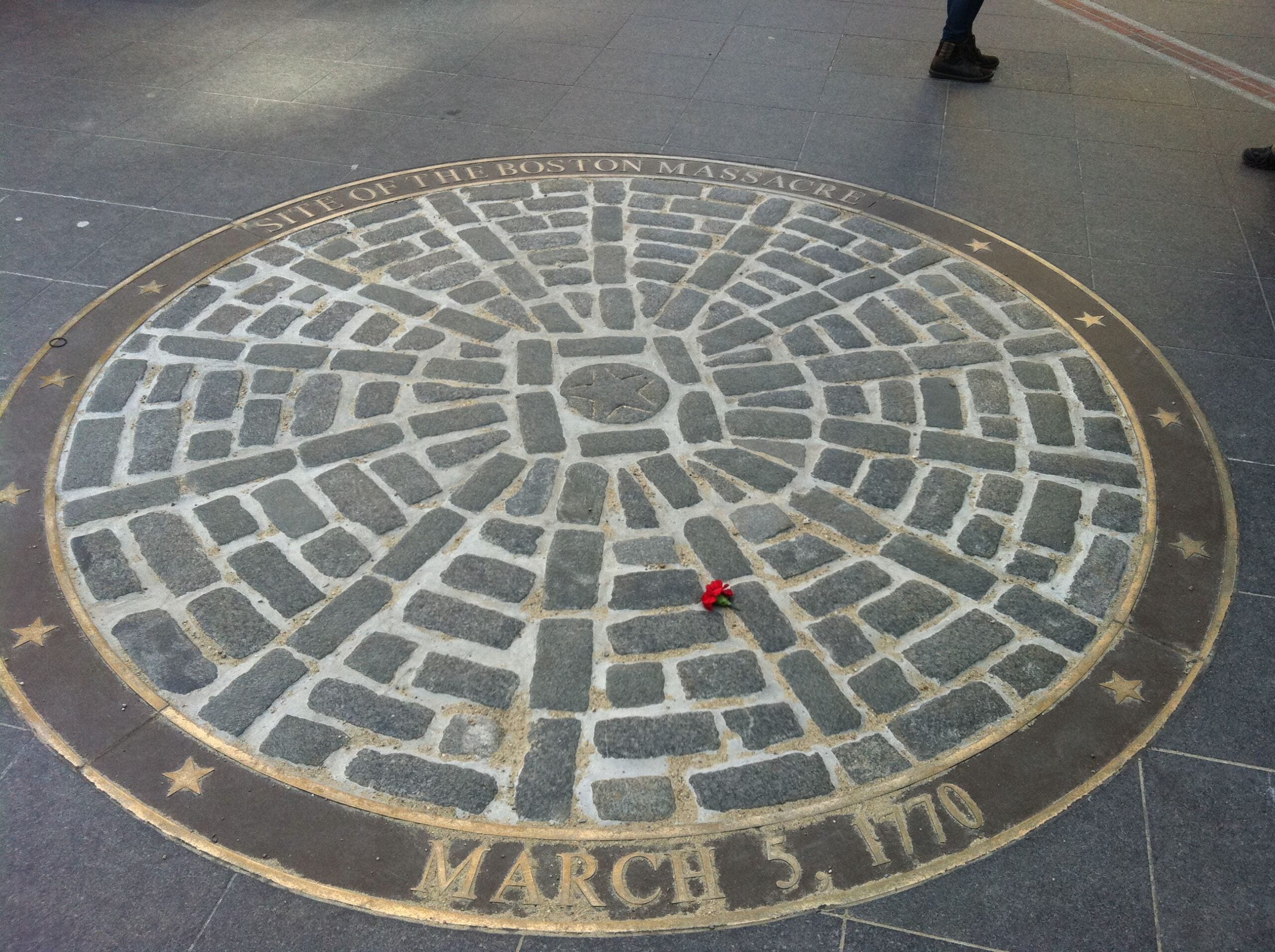
The Boston Massacre was a deadly riot that occurred on March 5, 1770, on King Street in Boston. It began as a street brawl between American colonists and a lone British soldier, but quickly escalated to a chaotic, bloody slaughter. The conflict energized anti-British sentiment and paved the way for the American Revolution.
Tensions ran high in Boston in early 1770. More than 2,000 British soldiers occupied the city of 16,000 colonists and tried to enforce Britain’s tax laws, like the Stamp Act and Townshend Acts. American colonists rebelled against the taxes they found repressive, rallying around the cry, “no taxation without representation.” Skirmishes between colonists and soldiers—and between patriot colonists and colonists loyal to Britain (loyalists)—were increasingly common. To protest taxes, patriots often vandalized stores selling British goods and intimidated store merchants and their customers.
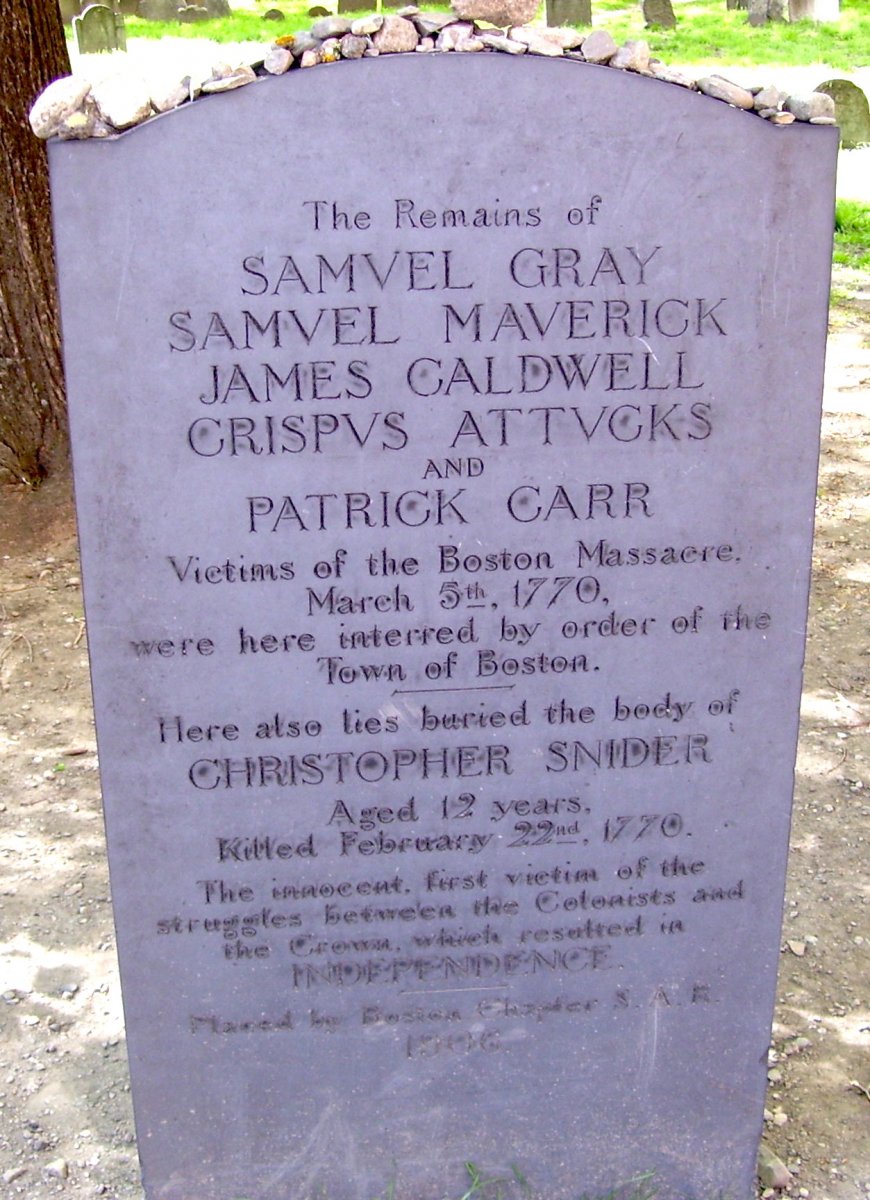
On February 22, a mob of patriots attacked a known loyalist’s store. Customs officer Ebenezer Richardson lived near the store and tried to break up the rock-pelting crowd by firing his gun through the window of his home. His gunfire struck and killed an 11-year-old boy named Christopher Seider and further enraged the patriots. Several days later, a fight broke out between local workers and British soldiers. It ended without serious bloodshed but helped set the stage for the bloody incident yet to come.
On the frigid, snowy evening of March 5, 1770, Private Hugh White was the only soldier guarding the King’s money stored inside the Custom House on King Street. It wasn’t long before angry colonists joined him and insulted him and threatened violence.
At some point, White fought back and struck a colonist with his bayonet. In retaliation, the colonists pelted him with snowballs, ice and stones. Bells started ringing throughout the town—usually a warning of fire—sending a mass of male colonists into the streets. As the assault on White continued, he eventually fell and called for reinforcements.
In response to White’s plea and fearing mass riots and the loss of the King’s money, Captain Thomas Preston arrived on the scene with several soldiers and took up a defensive position in front of the Custom House. Worried that bloodshed was inevitable, some colonists reportedly pleaded with the soldiers to hold their fire as others dared them to shoot. Preston later reported a colonist told him the protestors planned to “carry off [White] from his post and probably murder him.”
The violence escalated, and the colonists struck the soldiers with clubs and sticks. Reports differ of exactly what happened next, but after someone supposedly said the word “fire,” a soldier fired his gun, although it’s unclear if the discharge was intentional. Once the first shot rang out, other soldiers opened fire, killing five colonists–including Crispus Attucks, a local dockworker of mixed racial heritage–and wounding six. Among the other casualties of the Boston Massacre was Samuel Gray, a rope maker who was left with a hole the size of a fist in his head. Sailor James Caldwell was hit twice before dying, and Samuel Maverick and Patrick Carr were mortally wounded. Within hours, Preston and his soldiers were arrested and jailed and the propaganda machine was in full force on both sides of the conflict.
Preston wrote his version of the events from his jail cell for publication, while Sons of Liberty leaders such as John Hancock and Samuel Adams incited colonists to keep fighting the British. As tensions rose, British troops retreated from Boston to Fort William.
Paul Revere encouraged anti-British attitudes by etching a now-famous engraving depicting British soldiers callously murdering American colonists. It showed the British as the instigators though the colonists had started the fight. It also portrayed the soldiers as vicious men and the colonists as gentlemen. It was later determined that Revere had copied his engraving from one made by Boston artist Henry Pelham.
It took seven months to arraign Preston and the other soldiers involved in the Boston Massacre and bring them to trial. Ironically, it was American colonist, lawyer and future President of the United States John Adams who defended them.
Adams was no fan of the British but wanted Preston and his men to receive a fair trial. After all, the death penalty was at stake and the colonists didn’t want the British to have an excuse to even the score. Certain that impartial jurors were nonexistent in Boston, Adams convinced the judge to seat a jury of non-Bostonians.
During Preston’s trial, Adams argued that confusion that night was rampant. Eyewitnesses presented contradictory evidence on whether Preston had ordered his men to fire on the colonists. But after witness Richard Palmes testified that, “…After the Gun went off I heard the word ‘fire!’ The Captain and I stood in front about half between the breech and muzzle of the Guns. I don’t know who gave the word to fire,” Adams argued that reasonable doubt existed; Preston was found not guilty.
The remaining soldiers claimed self-defense and were all found not guilty of murder. Two of them—Hugh Montgomery and Matthew Kilroy—were found guilty of manslaughter and were branded on the thumbs as first offenders per English law. To Adams’ and the jury’s credit, the British soldiers received a fair trial despite the vitriol felt towards them and their country.
The Boston Massacre had a major impact on relations between Britain and the American colonists. It further incensed colonists already weary of British rule and unfair taxation and roused them to fight for independence.
Yet perhaps Preston said it best when he wrote about the conflict and said, “None of them was a hero. The victims were troublemakers who got more than they deserved. The soldiers were professionals…who shouldn’t have panicked. The whole thing shouldn’t have happened.”
Over the next five years, the colonists continued their rebellion and staged the Boston Tea Party, formed the First Continental Congress and defended their militia arsenal at Concord against the redcoats, effectively launching the American Revolution. Today, the city of Boston has a Boston Massacre site marker at the intersection of Congress Street and State Street, a few yards from where the first shots were fired.
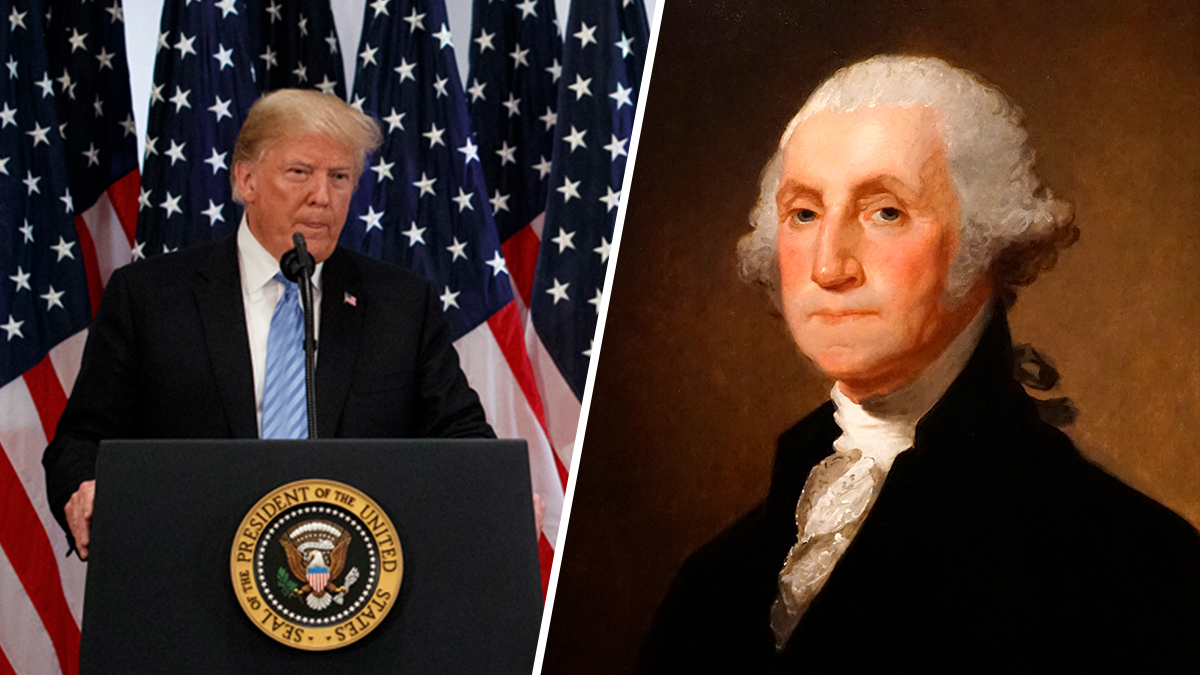
A while back, Filly posted a link to a post written by Erik Carlson on the similarity between these two great men. It was chilling. I saved the link (posted at the bottom if you want to read it all) to bring it on Washington’s birthday.
From: badlands.substack.com:
This assassination attempt reminds me of an American legend, or rather, the hand of God protecting Trump and the miracle of him surviving this attack, reminds me of a legendary story.
This story involves an incident that occurred only 30 miles from Butler, Pennsylvania in the area known today as Pittsburgh. It occurred on July 9, 1755, 269 years and four days ago, and involved America’s founding president, George Washington.
From the August 15, 2013, article by Dr. Bo Wagner published in the Cleveland Corner:
On July 9, 1755, there was a battle that took place during the French and Indian War, the battle of Monongahela. During the two-hour battle, 23-year-old Colonel George Washington had ridden back and forth on the battlefield, delivering the general’s orders to other officers and troops. The Indians had been specifically targeting the officers. Of the 86 British and American officers, 63 were casualties. Washington was the only officer on horseback not shot down. Following the battle, Washington wrote a letter to his brother in which he said:
“By the all-powerful dispensations of Providence, I have been protected beyond all human probability or expectation; for I had four bullets through my coat, and two horses shot under me, yet [I] escaped unhurt, although death was leveling my companions on every side of me!”
Did you get that? After the battle, he took off his coat and found four bullet holes through it… but no bullets in him. Do you know what you call that? A miracle!
Fifteen years later he was back in that area, and an old, respected Indian chief sought out Washington. When he found him, he explained that he had been the one leading the Indians against them in the battle fifteen years earlier. He then revealed to Washington what had occurred behind the scenes during the conflict.
He said: “I called to my young men and said, mark yon tall and daring warrior [Washington]? …Himself is alone exposed. Quick, let your aim be certain, and he dies. Our rifles were leveled, rifles which, but for you, knew not how to miss. ’twas all in vain, a power mightier far than we shielded you. Seeing you were under the special guardianship of the Great Spirit, we immediately ceased to fire at you… I have come to pay homage to the man who is the particular favorite of Heaven, and who can never die in battle.”
Those Indians, who could not miss anyone else, specifically aimed at George Washington and fired at him over and over and over again, and for some reason, the bullets never would hit him! They would go through his coat, which was on his body, but somehow, they never made it to his body, they just ceased to exist in the 1/8 of an inch between his coat and his body. That old Indian chief was right; Washington was the particular favorite of Heaven. God raised him up specifically to lead our nation against Britain in our hour of greatest need.
From the New York Post on July 14, 2024, the day following the failed assassination attempt on Trump’s life:
A grateful and at times defiant Donald Trump told The Post Sunday he’s “supposed to be dead” as he recalled the harrowing moment a would-be assassin shot at him at a Pennsylvania campaign rally.
The former president shared the “very surreal experience” that nearly ended his life during an interview aboard his private plane en route to Milwaukee for the GOP National Convention.
“The doctor at the hospital said he never saw anything like this, he called it a miracle,” said Trump, who was sporting a large, loose white bandage that covered his right ear. His staff insisted that no photos be taken.
“I’m not supposed to be here, I’m supposed to be dead,” Trump said. “I’m supposed to be dead.”
I believe both men have been chosen by God and protected by God. One was chosen to make America, and the other to make America great again.
Today is the 127th anniversary of the explosion of the USS Maine, killing 286 servicemen and igniting the Spanish American War. To this day, it remains a mystery why the ship exploded.
From: allthatsinteresting.com:
Between April and December 1898, the United States engaged in a brief armed conflict with Spain as the two countries’ prominence on the world stage began to shift. Known as the Spanish-American War, this period led to substantial change in the Caribbean region as the Spanish Empire’s decline was contrasted by the U.S.’s rapid economic and industrial growth. But there was one event in particular that set this war in motion: the sinking of the USS Maine.
The Maine had been one of the first American battleships. It was docked in the harbor of Havana, Cuba for a supposedly friendly visit amid ongoing revolts by the Cubans against Spanish colonial rule.
Then, it exploded.
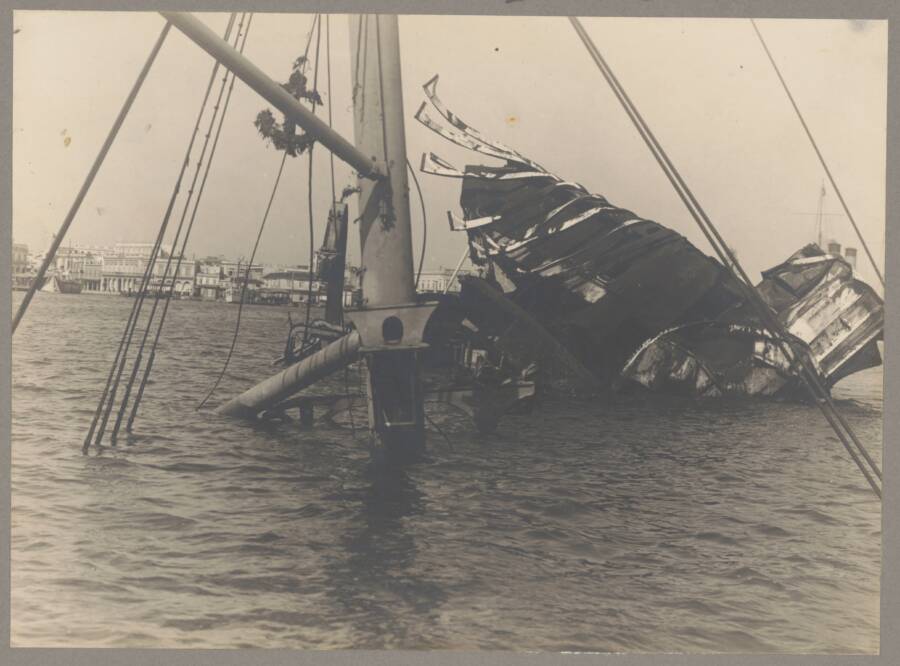
An official investigation determined that a submerged mine had destroyed the vessel, and Congress and the American public were quick to point fingers at Spain as the culprit. However, more recent evidence suggests the explosion may have actually been an accident. And conspiracy theorists have offered up even more sinister explanations for the destruction of the Maine. The question is, what really happened?
How The Fight for Cuban Independence Created Tension Between The U.S. And Spain
The 16th century was a time of great expansion for many European superpowers, though perhaps none more notably than England and Spain. The countries’ westward expansions saw colonizers claiming indigenous lands and committing a litany of atrocities, including rape, genocide, and slavery. By the 18th and 19th centuries, it was clear that many populations were well and truly fed up with their European colonizers, and they began to fight for their independence.
Per the Library of Congress, the fight found its way to Cuba first in October 1868, when a group of patriotic Cubans attempted to overthrow Spanish power on the island in a conflict known as the Ten Years’ War. Although the Cubans failed to topple Spanish rule, they did at least succeed in putting an end to the old colonial structure of aristocrats and slaves — and theoretically earned themselves representation in the Cortes.
At the same time, Cuba grew more and more economically linked with the United States. The U.S. refined the raw tobacco and sugar grown in Cuba with its industrial technology. Needless to say, the U.S. had a vested interest in Cuba, and it benefited the American government from both an economic and humanitarian standpoint to back Cuba’s bid for independence. So, on Feb. 24, 1895, when Cuban insurgents once again revolted against their Spanish rulers, the first ripples of pressure began to swell for American intervention. Less than three years later, they reached a boiling point.
The Sinking of The USS Maine Marks the Beginning Of The Spanish-American War
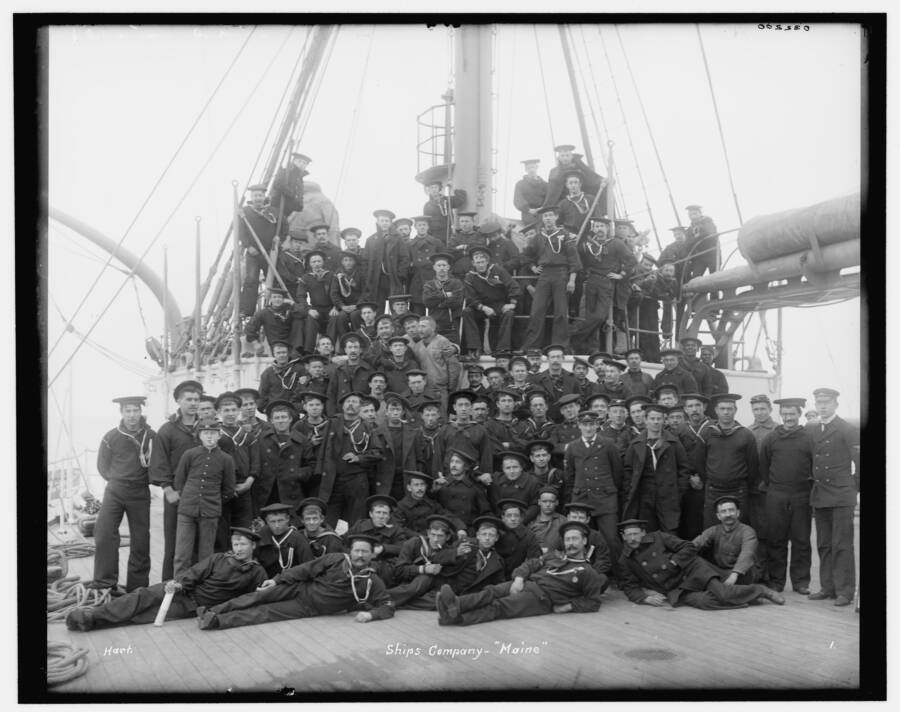
In January 1898, the American battleship USS Maine set sail for Havana, Cuba to observe the country’s ongoing conflict and protect American interests. The Maine was one of the first battleships built in the U.S. It weighed in at over 6,000 tons, cost more than $2 million to construct, and carried a crew of just under 400 seamen.
Unfortunately, just a few weeks later, on Feb. 15, most of the crew members on board the Maine were killed when the ship suddenly exploded in Havana Harbor. Then, in March, the United States Naval Court of Inquiry determined that the Maine had been destroyed by a submerged mine — and many fingers pointed to Spain.
Per the Encyclopedia Britannica, the blast took the lives of at least 260 crew members. Outrage over the event quickly found prominence in the headlines of American newspapers — particularly those of William Randolph Hearst and Joseph Pulitzer. The tycoons specialized in “yellow journalism,” which was characterized by highly sensationalized and exaggerated news.
It didn’t take long for the papers to land on a slogan that garnered public support for armed intervention: “Remember the ‘Maine,’ to hell with Spain!” Spain never took responsibility for the explosion, but the damage had been done. In April 1898, the United States declared war on Spain, and thus began the Spanish-American War.
The fighting was decidedly short-lived, with the United States defeating Spain on both the land and sea in less than four months. An armistice was called in August, and the war officially ended on Dec. 10, 1898, when the U.S. and Spain signed the Treaty of Paris. Spain ceded Puerto Rico, Guam, and the Philippines to America, and Cuba ultimately became an independent country.
The acquisition of these territories, of course, had far-reaching consequences, making the catastrophic destruction of the USS Maine one of the most important naval disasters in modern history. Yet, it turns out, it may have been nothing more than an accident.
The Real Cause Of The USS Maine Explosion
The initial investigation of the explosion of the USS Maine was conducted in 1898 by a court of inquiry headed by Captain William T. Sampson. It concluded that the Maine was destroyed when one or more of its forward magazines exploded — and that the source of the explosion had been outside the ship. In other words, the ship had been sabotaged.
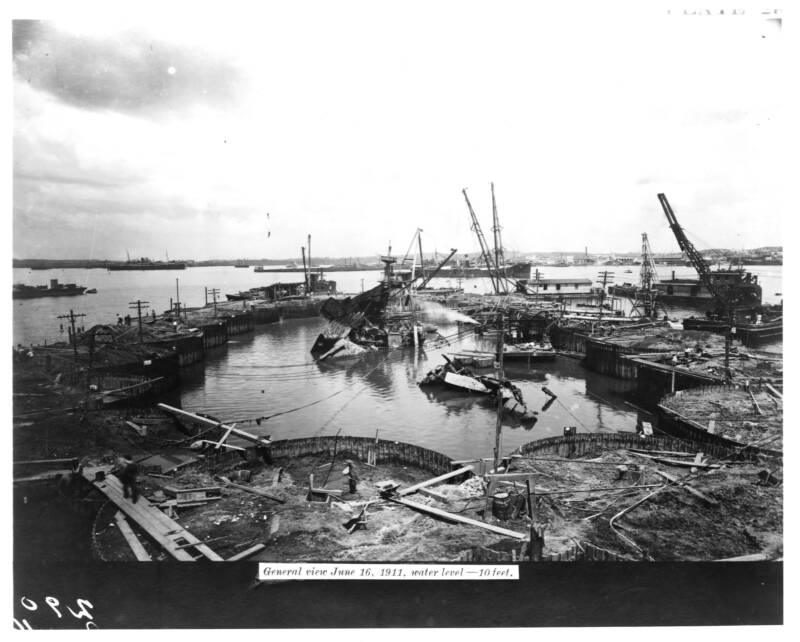
According to a 1976 report from U.S. Navy Admiral Hyman Rickover, a second investigation was then conducted in 1911 as the Maine‘s wreckage was raised. The second inquiry actually contradicted Sampson’s original conclusion, but only by asserting that the explosion occurred in a different part of the ship’s bow. It still claimed a mine had set off the magazines.
However, Rickover later criticized the earlier inquiries, particularly Sampson’s. Sampson’s investigation, he said, was largely based on the testimonies of the Maine‘s crew members and of divers working on the wreckage. Contemporary technical experts who doubted the mine theory were not heeded.
The 1911 investigation was more accurate than Sampson’s in that it found the true source of the explosion within the ship. However, Rickover felt the later investigation was too politically motivated when it stood by the conclusion that a mine had triggered the blast.
Rickover and his team ultimately reached their own conclusion: The USS Maine had not been destroyed by a Spanish act of sabotage or a mine, but rather by a spontaneous combustion fire within its ammunition stocks. In other words, it was a complete accident.
The 1976 investigation was, of course, limited in what it could gather, given that nearly a century had passed since the explosion of the USS Maine by then and many primary sources had reached contradictory conclusions. While Rickover and his team’s conclusion is plausible, there is no way of knowing for certain if it is entirely accurate.
Then, there are other theories, PBS notes, that suggest William Randolph Hearst himself may have orchestrated the explosion to instigate the war and sell more newspapers. Evidence for this is almost entirely non-existent and limited to conspiracy theory groups, but it goes to show that there is enough speculation about the Maine‘s destruction to warrant outlandish skepticism.
Whether it was an act of sabotage, an accident, or indeed a stunt to sell newspapers, we may never know for certain. But that does not change the fact that the USS Maine disaster marked a key turning point for a significant portion of the Western world — for better or worse.
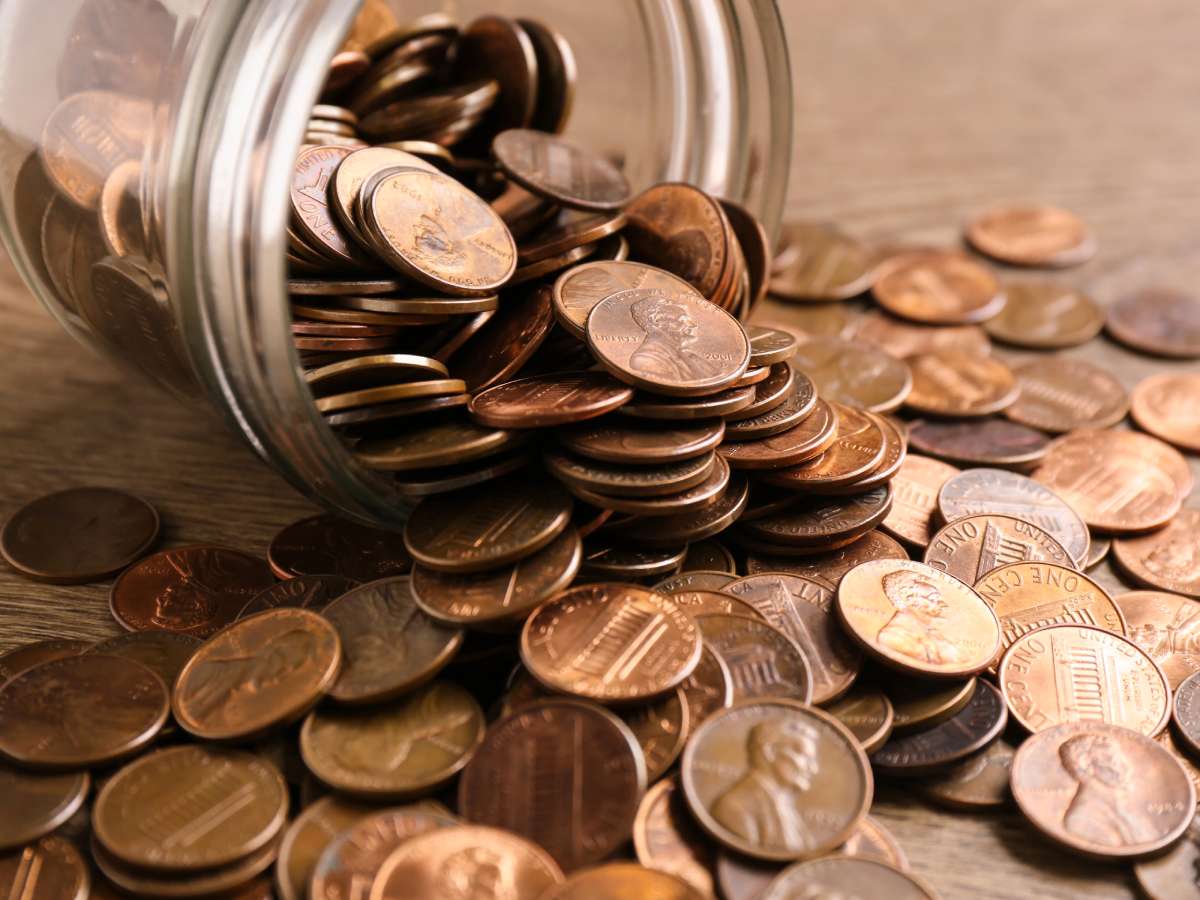
Ten interesting facts about pennies in honor of Abe Lincoln’s birthday!
The average penny lasts 30 years!
Pennies were the very first coins minted in the United States. In March 1793, the mint distributed 11,178 copper cents. (The amount of copper and zinc in the penny has changed significantly through the years.)
There have been 11 different designs featured on the U.S. penny.
The Lincoln penny was first minted and circulated in 1909, the 100th anniversary of Abe Lincoln’s birth.
Lincoln faces to the right, while all other portraits on coins face to the left. This was not done on purpose — it was simply the choice of the coin’s designer.
The penny was the first U.S. coin to have the motto “IN GOD WE TRUST”.
Lincoln pennies made from 1909 to 1958 were designed by Victor D. Brenner. His initials V.D.B. were on a limited quantity of the 1909 pennies making it one of the most sought after pennies for collecting.
Each year, the U.S. Mint produces more than 7 billion pennies. That’s approximately 19 million pennies per day!
Over two-thirds of all coins produced by the U.S. Mint are pennies. In fact, the penny is the most widely used denomination currently in circulation and it remains profitable to make. Each penny costs .81 of a cent to make, but the Mint collects one cent for it. The profit goes to help fund the operation of the Mint and to help pay the public debt.
















:max_bytes(150000):strip_icc()/US0001-Lincoln-Wheat-1926-S-MS65-59c45da96f53ba00105d5460.jpg)

 Sew Colorful