There’s A Roller Skating Museum In Nebraska And It’s Full Of Fascinating Oddities, Artifacts, And More

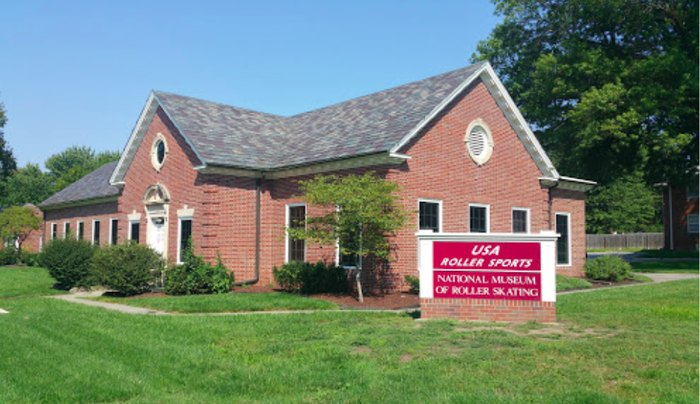
Since 1980, Lincoln, Nebraska has been the home of a one-of-a-kind museum that most people aren’t even aware of. The National Museum of Roller Skating sits in an unassuming little brick building that it shares with the headquarters of USA Roller Sports, the national governing body of roller sports. The next time you’re in the area, don’t pass by this hidden gem; step inside and get to know a fascinating part of American history.

The people behind the National Museum of Roller Skating believe that everyone should know about this delightful activity and its long history. What comes to mind when you think of roller skating? If you’re of a certain age, you probably picture couples gliding hand-in-hand around a hardwood floor as live music floats through the air from the on-site organist.

Younger people may picture a similar scene, but with a DJ and colorful flashing lights in place of a live organist. No matter what your personal experience is with roller skating, chances are you’ve got some positive associations with the activity.

Those fond memories – and much more – are all on display in this unique museum. The exhibits trace the history of roller skating back through the generations, all the way to the early 19th century.

When you visit, you’ll see some early versions of roller skates, beginning with the most primitive pieces of wood with wheels attached.

Some of the crowd-favorite exhibits are the rare and unusual types of roller skates. Would you ever try to race around the rink in these cowboy-boot skates?

Other exhibits tell little-known stories of roller skating as a sport, a hobby, and an all-around cultural phenomenon.

The museum houses the world’s largest collection of roller skating items, making it a must-visit for anyone who has ever felt a rush of excitement as they laced up a pair of skates.

The museum also contains the National Roller Skating Archives, a collection of publications and other information on all aspects of roller skating’s history.

Roller skating is explored here as a sport and an art form, as a diplomatic tool, and a unifying experience that just about everyone can enjoy. See old costumes and uniforms and read all about the surprising ways in which roller skating has influenced the world.

Whether your interest lies in leisurely rolls around the rink, dominating in a roller derby league, or even competitive speed-skating, you’ll find fascinating information at the museum about this underrated all-American activity.

Address: National Museum of Roller Skating, 4730 South St, Lincoln, NE 68506, USA

HISTORY OF SNOW GLOBES

You place the dome in your hand, turn it over and beautifully, magically the item inside is engulfed in a swirling slow-motion blizzard. Everyone can relate to them – evoking a childhood memory or nostalgia of a simpler time. The first mention of a snow globe featured a man with an umbrella displayed at the Paris Exposition of 1878. It was later suggested that the globes were created to commemorate the Tower’s inauguration.

This extremely rare LouisVuitton Eiffel Tower dome made of luggage is a whimsical example that sold for $995 in 2017.

A few years later, a Viennese man Edwin Perzy developed the same idea when researching a way to improve operating room light..He used a glass globe filled with water, hoping to create a magnifying lens by increasing refraction. To enhance the reflected light, Perzy put ground glass in the water. When it quickly sank, he tried semolina which floated slowly to the bottom of the globe. It did nothing to improve the light quality, but the snowfall inspired him to make his first snow globe: he carved a small house and inserted it into the globe.

Edwin Perzy

Facsimile of Perzy’s first globe used in Citizen Kane

Mass production began in the US during the 1920s. Joseph Garaja of Pittsburgh was granted a patent in 1927, which altered how snow globes were made. His method needed the spheres to be assembled underwater, removing any trapped air. This ingenious method made it possible for the industry to go into mass production, which drastically lowered the prices of globes.

However, by the early 1960s, glass snow globes had been overtaken by plastic Hong Kong-made globes. It was soon discovered that the water in their spheres was filthy, obtained directly from their port. As a result, a Hong Kong snow globe producer got into significant trouble and was temporarily barred from entering the United States.

The “snow” in snow globes has a fascinating backstory as well. Snow was previously created in glass domes using tiny porcelain, bone chips, or ground rice. Camphor/wax, as well as meerschaum, was also used to make these snowflakes. Today, most “snow” is tiny particles or shards of white plastic. Also, the liquid hasn’t always been water; at one point, light oil was used. In addition, glycol (antifreeze) was added to help with the problem of freezing during winter shipping.

The snow globe fell out of favor in the 1970’s when it epitomized kitsch –but have evolved into something more sophisticated, intricate and valued among designers and collectors. Novelty gift manufacturers have upgraded the designs and components making them unique gift items often including beautifully modelled landscapes.

Some incorporate lights, music and motors eliminating the need for shaking. Many high-end department stores introduce a custom design every year to commemorate the Christmas season.

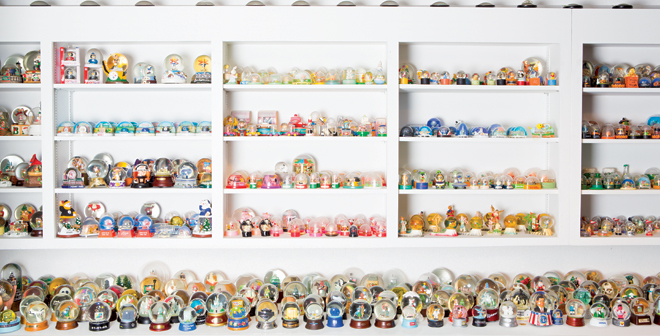
Snow globes have become an increasingly popular collectible for both antique and novelty globes. Actor, Corbin Bernsen may be the most prolific collector with about 8,000 – he began collecting snow globes in the ‘80’s. “There’s something that happens to a collector, this internal voice that says, ‘I want to have one of each that is in existence,’” Bernsen says.

Corbin Bernsen

Originally the globes were made of glass and the figures inside were made of porcelain, bone, metals, minerals, rubber or wax. The snow or “flitter” as it’s called, could have been ground rice, wax, soap, sand, bone fragments, meerschaum, metal flakes or sawdust. Producers tried everything. The base was either round or square and may have been of stone, marble, ceramic or wood. Some are quite bizarre!!!

“Snow domes are not only fascinating to look at, to hold, to play with, they are folk art,” says collector Nancy McMichael, author of Snowdomes (Abbeville Press). “They are a bridge back to an idealized past we think existed but is actually in our head. It is something we carry with us.”

Brain Teasers

Do you have your thinking caps on this morning?

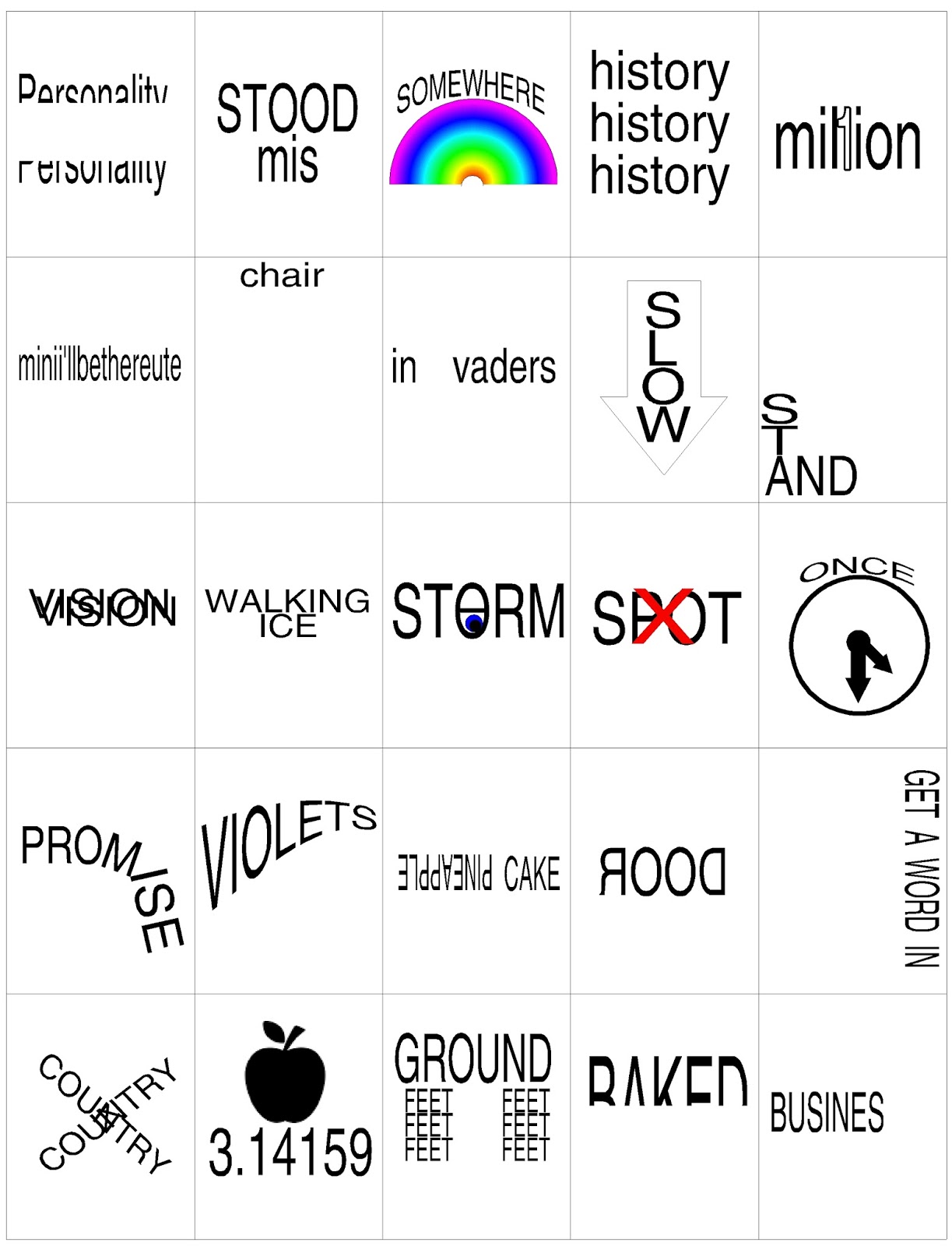
I said CAPS…not cat! The game today is brain teasers! The pictures below represent a word or phrase. For example, the uppermost left square answer would be SPLIT PERSONALITY. See how many you can puzzle out!

SO…how did you do??

The Cow Says…

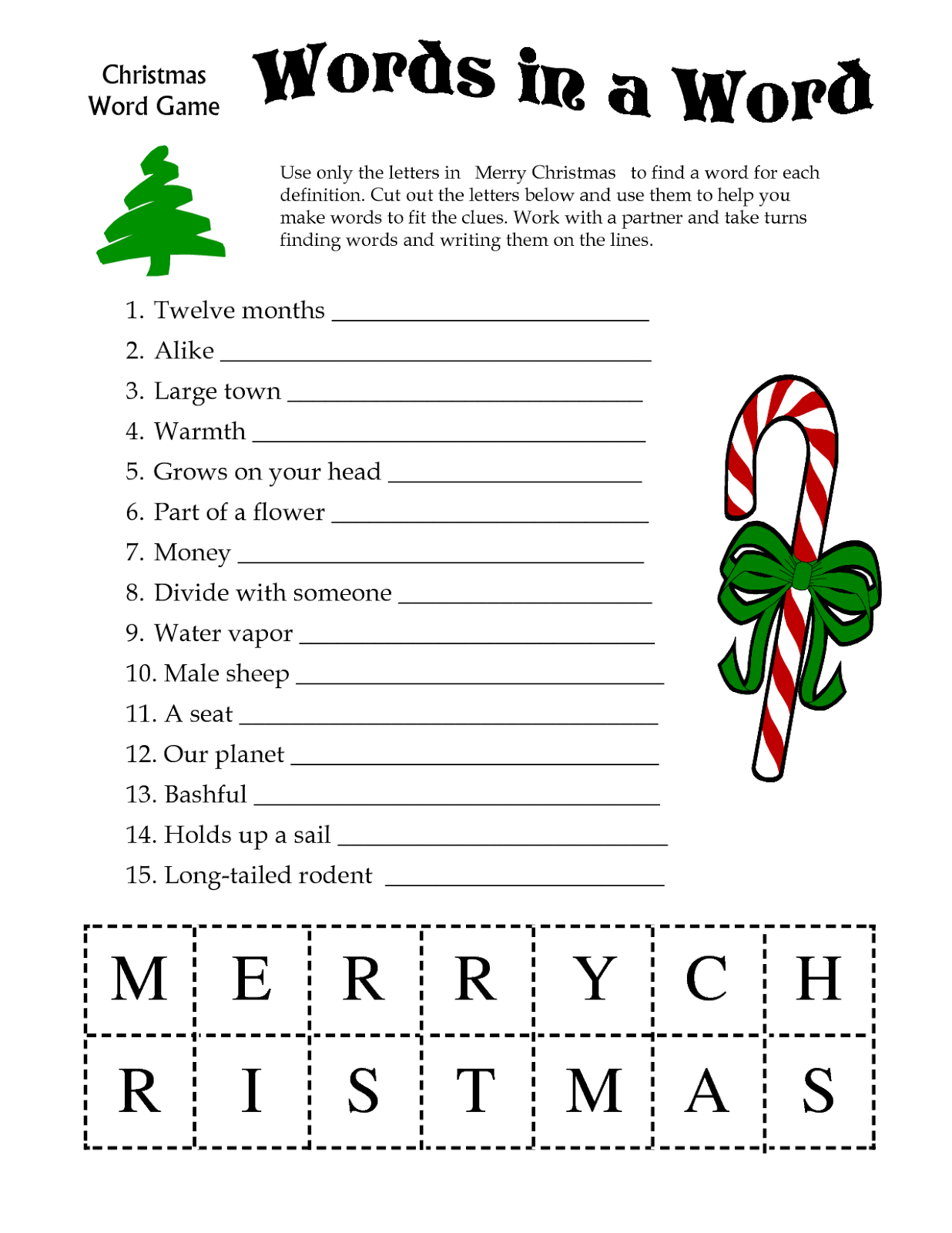
Remember this from your childhood?  All the sounds we’d endlessly mimic while driving our parents crazy?  Well, those sounds are the basis for today’s game!  Fill in the missing blanks with an animal sound.

For example:

Like a meal made in your own kitchen:  HOME_ _ _KED

The answer is COO…a pigeon coos.

Can you get them all??

  1. Encouraged                                                                     S _ _ _ _ ED  ON
  2. One who has paid off their mortgage                           HO_ _ _ _NER
  3. Blended fruit drink                                                          S_ _ _THIE
  4. Kitchen zapper MI_ _ _ _AVE
  5. Leave a ship DISEM_ _ _ _
  6. Al Pacino film SC_ _ _ACE
  7. Campfire spiritual song KUM_ _ _A
  8. Not a good try FEE_ _ _ _ _TEMPT
  9. Bozo C_ _ _N
  10. Where you live _ _ _ _ _BORHOOD
  11. Stir-fry ingredient BAMBOO S_ _ _ _
  12. Body liquid art TATTO_ _ _ _
  13. Queue in the mess hall C_ _ _ _INE
  14. Timer _ _ _ _ER
So how did you do?

Are you…

King of the jungle?

Or are you more…

Manly Kind of Woman

This story describes a very brief interval which, TBH, I have a hard time recalling. I was hot, sweaty and dirty after hauling sawdust and decided to stop and get a cold beer at the local hangout in Haymarket, VA. In my ragged cut-off overalls, with a tube top underneath, and slip-on Duck boots, I slid onto a stool next to a friend, who had a young friend of his sitting next to him. Hmmmm…..well, one beer became two and…….at some point, the Cougar came to life and I began eying the young, 20-something WV boy named Billy (I was easily twice his age). Well, THIS looked interesting!!!!

One thing led to another, we hit it off and got together a few times for drinking, dancing and bedroom games. The final time I was with Billy was highly illuminating, to say the least. It was a cool night, with light rain – almost a mist – and he came to my house with a bottle of Rum and a 2 liter bottle of Coke. We chatted while we fixed some drinks and moved to the living room, seating outselves on the couch.

From the gitgo, something just seemed off. He sat down in the corner at one end, leaning away from me on the arm of the couch – like he was turned away from me intentionally. We discussed this and that until the conversation turned to dog training. Early on, he informed me that he knew more than I about the subject because he had raised Rottweilers. He insisted that he understood, with his dogs, that once the food was given to them, they were well within their rights to bite even him if he tried to remove it. Uh, no………..that was the beginning of an evening of Billy arguing with EVERYTHING I said!!!!

Fairly early on, I recognized that this was not going to be a long-term relationship and I determined to get what I could out of the evening (some entertaining escapades in the bedroom) and mark it off as the end of that experiment. So I suggested we take a romantic stroll outside, in the rain.

I also decided he needed to meet my wolf-shepherd cross – the one to whom I could give a raw steak bone and easily remove it from her mouth 2 minutes later, with nary a growl. Spirit understood quite clearly that I was the Alpha – not her – she answered to me. The arguing continued…..seriously, it was beyond tiresome!

I finally decided enough chit-chat – let’s do the deed and get this nightmare over with – I was still determined to at least get a good POA out of the deal. We moved into the house and into my bedroom to my California King size waterbed. Ever had sex on a waterbed? Most people don’t have them full enough – mine was filled to the brim and was like a firm regular mattress with minimal sloshing and waves. It had a book-case headboard with a mirror in the center – an added accoutrement that did, indeed, enhance the experience, I must say!

GoTee on my waterbed

Billy stayed on the side by the door and began disrobing, as I walked to my side and did the same. Naked, I turned towards him and saw him getting into bed still wearing his t-shirt. Nope! That was NOT going to work!!!! So I scooted over next to him and helped him take off his t-shirt, then lay full up against him and began…..um….playing. Touching, kissing…..you know the drill! Expecting a reaction…….nada – none – he might have been dead for all the movement I got out of him!!! Hmmmm…..WTH is going on here????

So I laid on top of him and began moving down his body……..kissing…….caressing…… licking…….still….no reaction whatsoever. Well, dang – did he go to sleep or what??!!?? So….I nipped him on his belly……HOLY CRAP!!! He jumped 2 feet as if I had plugged him in!!! “DON’T YOU EVER DO THAT AGAIN!!!!! I don’t EVER want to feel your teeth on me again!!!!” OK, now I’m really confused!!!!

What in the hell did he want???? I laid back down on my side of the bed, trying to figure out whether this was even worth it!!!! He said to me, “What the hell are you doing?” and I replied, “Trying to figure out what the hell you want!!!!” “I want you to finish what you started!!!!!” Yeah, ok, that is NOT going to work with ME!!!! Me being me, I proceeded to berate him for his attitude, explaining explicitly that I was NOT his slave and he had to actively participate on an equal basis. Oh, my! That was way too much for poor Billy! He jumped out of bed, grabbed his clothes and spouted, “I’m getting out of here!!! You’re too manly for me!!!!”

Well, of course, I erupted in raucous laughter, rolling out of bed onto the floor! He forgot his undies, literally ran out of the bedroom, grabbed his bottle of rum, leaving his jacket, and hit the door, never pausing stride! He flew up the driveway, spitting gravel every step of the way!!!!

Gee, did I have fun recounting THAT at the local hang out, where poor Billy never showed his face again!!!!! Ok, everyone – come on – let’s hear about some of YOUR romantic encounters!!!! Show and tell time – fair is fair, after all!!!!

Sudoku

sample puzzle

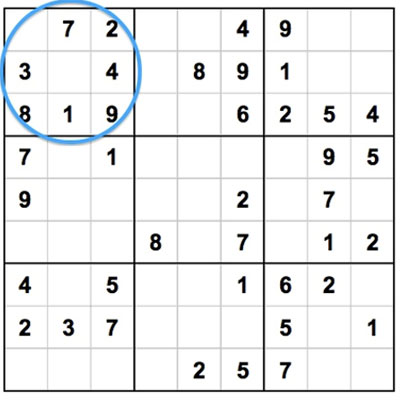
Sudoku is played on a grid of 9 x 9 spaces. Within the rows and columns are 9 “squares” (made up of 3 x 3 spaces). Each row, column and square (9 spaces each) needs to be filled out with the numbers 1-9, without repeating any numbers within the row, column or square. Does it sound complicated? As you can see from the image above of an actual Sudoku grid, each Sudoku grid comes with a few spaces already filled in; the more spaces filled in, the easier the game – the more difficult Sudoku puzzles have very few spaces that are already filled in.

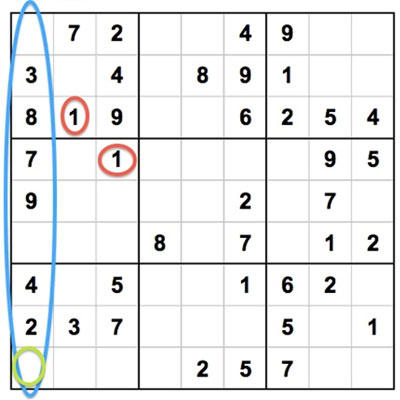
In the above puzzle, the upper left square (circled in blue), already has 7 out of the 9 spaces filled in. The only numbers missing from the square are 5 and 6. By seeing which numbers are missing from each square, row, or column, we can use process of elimination and deductive reasoning to decide which numbers need to go in each blank space.

We know we need to add a 5 and a 6 to be able to complete the square, but based on the neighboring rows and squares we cannot clearly deduce which number to add in which space. This means that we should ignore the upper left square for now, and try to fill in spaces in some other areas of the grid instead.

One way to figure out which numbers can go in each space is to use “process of elimination” by checking to see which other numbers are already included within each square – since there can be no duplication of numbers 1-9 within each square (or row or column). Looking at the same puzzle below, we can use the process of elimination to determine where another number should go. In the far left-hand vertical column (circled in Blue) the 1, 5 and 6 missing.

In this case, we can quickly notice that there are already number 1s in the top left and center left squares of the grid (with number 1s circled in red). This means that there is only one space remaining in the far left column where a 1 could possibly go – circled in green. This is how the process of elimination works in Sudoku – you find out which spaces are available, which numbers are missing – and then deduce, based on the position of those numbers within the grid, which numbers fit into each space.

Sudoku rules are relatively uncomplicated – but the game is infinitely varied, with millions of possible number combinations and a wide range of levels of difficulty. But it’s all based on the simple principles of using numbers 1-9, filling in the blank spaces based on deductive reasoning, and never repeating any numbers within each square, row or column.

There is no guessing in sudoku…reasoning and logic are key…and there’s NO MATH required…LOL.

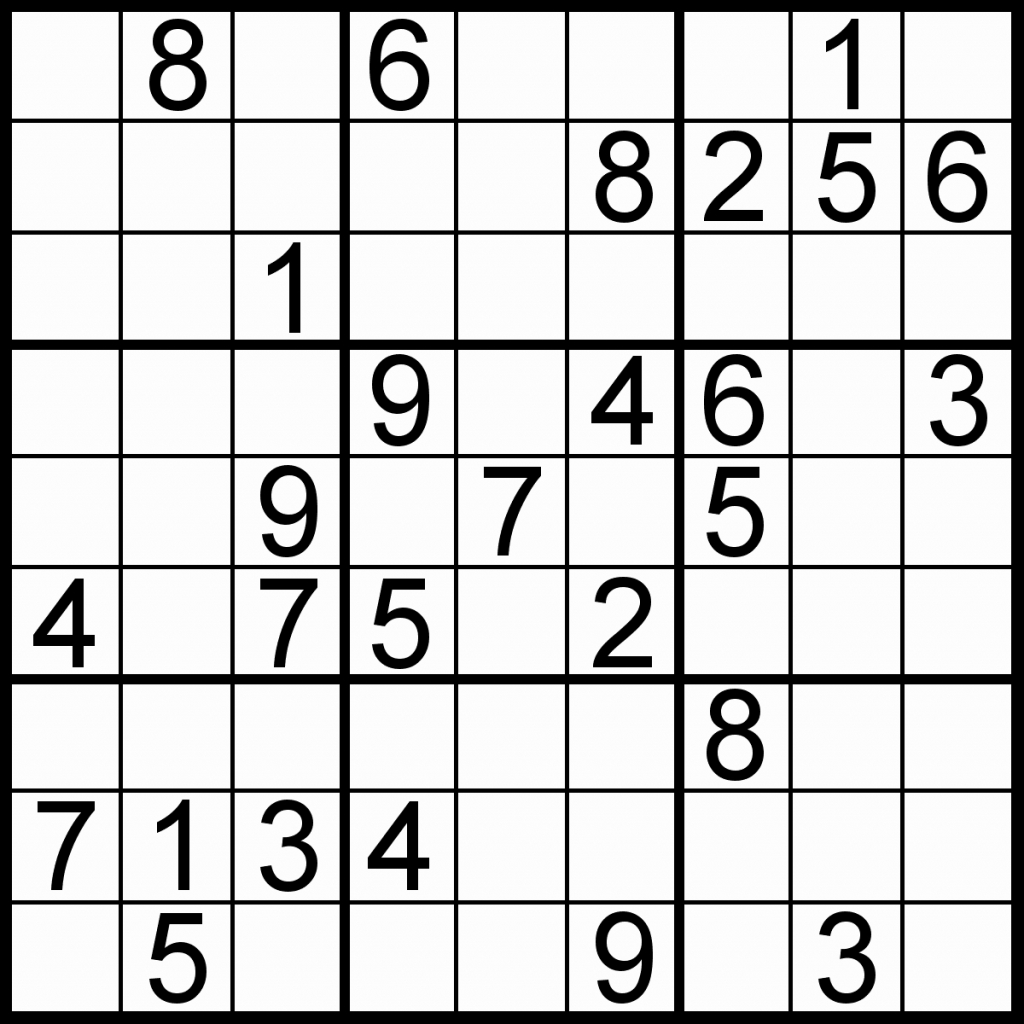
Pat’s Apology: the above sample puzzle requires a little more than basic skills to complete but most puzzles i found on line were like this. (I liked the circles and details in the explanations to help you see exactly what they were talking about.) I have included a puzzle below which requires ONLY the most basic process of elimination skills to solve and I will post the answer if anyone requests it.

History of Playing Cards

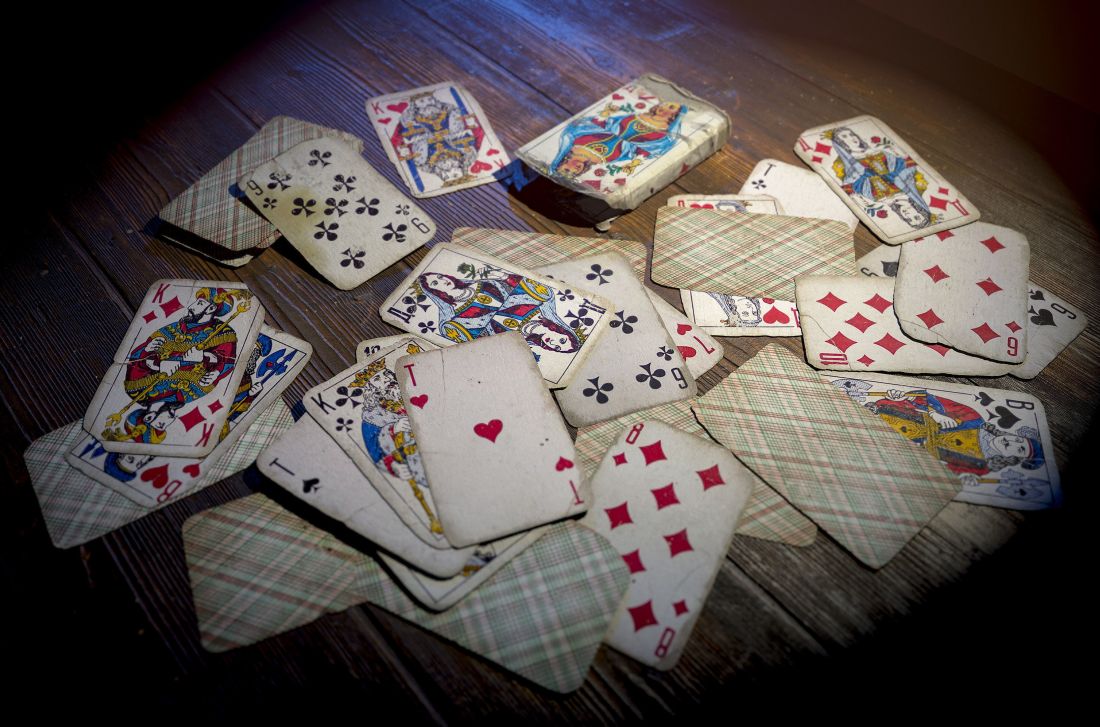
When playing cards first arrived in Europe toward the end of the 14th century AD, they caused quite a furor. In 1377, the town council of Florence complained that the playing of “a certain game called naibbe has recently been introduced into these parts,” and by a vote of 98 to 25 decided to prohibit it. In the same year cards reached Paris, where new city regulations cracked down on working-class cardplayers but apparently left nobel devotees alone.

European Playing Cards

The following year, in the Bavarian city of Regensburg, the council tried to limit card games to small stakes. By 1387, cards had arrived in the Spanish kingdom of Castile, where the government tried to ban them.

The killjoys were fighting a losting battle, however, for even at this early stage, cards began to acquire royal patrons. In 1379, the prince of Brabant, in Belgium, bought a highly decorated pack of cards, while in 1392 the mad French king Charles VI received three packs of cards painted by artist Jacquemin Gringonneur “for his amusement during the intervals in his sad illness.”

Charles VI/Gringonneur Cards

Playing cards soon led to the emergence of cardsharps, and the mother of all card swindles is recorded in the Parisian court annals for 1408. Two dubious characters lured a traveling merchant into an inn with talk of a good currency deal. One of them then produced a pack of cards from his pocket and demonstrated an amusing game of guessing the identity of a card while seeing only its back. The astute merchant soon noticed that one of the cards had a slight but distinctive mark on the reverse, so he happily joined in when the betting started. When the marked card turned up, the trader put his shirt on it, only to find that the front of the card was not the same, as it had been switched for another.

The French also made one great contribution to the development of playing cards by inventing, around 1480 AD, the names and shapes of the four suits (spades, hearts, diamonds, and clubs) we still use today. These simple geometric shapes did much to encourage card playing. By the end of the 15th century, playing card manufacture was a major industry, and even Johannes Gutenberg, often claimed to be the inventor of movable type, became involved.

Johannes Gutenberg Card

He developed some of the mechanical methods of production and, at a time when his finances were in desperate straits, he used drawings that his artists had prepared for his famous Bible to decorate the back of a deck of playing cards.

From this point the history of Western playing cards is clear. But who brought them to Europe in the first place? The subject is swathed in mystery, and it has at different times been claimed that they were introduced by Marco Polo (1254-1324), the Crusaders, or the Gypsies. The most exotic theories credit the Gypsies with the invention of cards (as a means of divination), and it has therefore been argued that their origins lie in India or even Egypt. The truth is that playing cards are a Chinese invention, but the problem has been that little is known of their transmission from China to the West.

Ancient Chinese Playing Cards

Playing cards had been invented in China by at least the 9th century AD when, according to tradition, a princess and her relatives played the “leaf game,” or cards. Women were certainly important in the development of card games, for one apparently wrote the world’s first book on the subject (now lost), later in that century.

By the 11th century, cards were printed with woodcut blocks, and in the early Ming dynasty (1369-1644 AD) famous artists were employed to design card backs with portraits of characters from favorite novels, such as The Water Margin. Chinese cards were much smaller than ours (about 2 inches long and 1 inch wide) and were printed on fairly thick paper, which made them hard-wearing but difficult to shuffle. Chinese “money cards” had four suits: cash, strings (of cash), myriads (of strings) and tens (of myriads), with the numbers 2 thru 9 in the first three and 1 thru 9 in the fourth.

Ancient Woodcut Playing Cards

The Chinese of yesteryear were enthusiastic cardplayers and gamblers, as they are today. Ming Dynasty books on cards praised them as superior to all other amusements, for they “were convenient to carry, could stimulate thinking and could be played by a group of four without annoying conversation, and without the difficulties which accompanied playing chess or meditation.” Also, “cards could be played in almost any circumstances without restrictions of time, place, weather, or qualification of partners.”

But this still leaves us without a link to Europe, for early Western cards don’t resemble Chinese ones and have different suits. The missing link appears to be the Islamic world, despite the fact that card playing was frowned on by Muslim clerics.

In 1938, Professor L.A. Mayer came across a pack of 52 cards while searching through the collections of the famous Topkapi Museum, in Istanbul, Turkey. They had been made in Egypt about 1400 AD, using designs that closely resemble those of early Italian cards.

Second card from left: The Seven of Swords (equivalent to Seven of Clubs)

Third card from left: the Malik of Cups (equivalent to the King of Hearts)

The Arabic inscriptions on the court cards make clear the origin of the word naibbe for cards (used by the Florence council); they are called the Malik (King), Na’ib Malik (Governor), and Na’ib Thani (Deputy Governor). They are in 4 suits – swords, polo sticks, cups, and coins (equivalent to modern clubs, spades, hearts and diamonds).

The only significant difference between these and early Italian cards is that the Egyptian ones are, like the Chinese, long and thin. Even this difficulty seems to have been overcome by the find of a single card with an Arabic inscription made around 1200 AD; its dimensions are like those of Italian cards, which are still slightly narrower than those made today in the rest of Europe.
There can now be little doubt that the Arabs were the intermediaries for the widespread transmission of one of ancient China’s most popular inventions.

Source: Ancient Inventions