Schroedinger’s Cat

Today is Erwin Schroedinger’s birthday (born in 1887 and passed away in 1961).  He is famous for his explanation of Quantum mechanics using Schroedinger’s cat.  What exactly is it?  I found this “simplified” explanation on the culturacolectiva.com website.

From culturacolectiva.com:

Many of us have heard about Schrödinger’s cat, but let’s be honest, either we don’t even know what it is or we know about the theory but we don’t understand anything. Certainly, quantum mechanics is not exactly a piece of cake, so in order for you to have something to talk about at the next party, we leave you with a for dummies so you know it and can show it off to your friends.

What is Schrödinger’s cat?

We are sorry to tell you this cat never actually existed. Although it’s already part of popular culture (yes, they even talked about this cat in an episode of The Big Bang Theory), the Schrödinger’s cat paradox is a thought experiment devised by Austrian physicist Erwin Schrödinger – one of the founders of quantum mechanics – back in 1935.

And what was this mad scientist trying to do? Well, he was trying to talk about a basic principle of quantum mechanics, that branch of physics that some people find exciting, while others flatly hate it. And believe it or not, this is how Erwin felt about quantum physics: he found it so philosophically disturbing that he decided to send it to hell and dedicate himself to biology.

So, what’s the experiment all about?

Now comes the good stuff, so sit up and pay attention to expand the horizons of your intellect (or have your brain explode).

The experiment Erwin devised goes like this: you have to put a cat inside a sealed box. Inside, next to the cat, is a container with hydrogen cyanide (a poisonous gas) threatened by a hammer connected to a radioactive container.

There is a 50% chance that after a period of time (say, one hour) radioactive decay of some atom inside the container will occur which would activate the hammer and break the cyanide container, releasing the poison that would kill the cat.

The other 50% of possibility tells us that this will not happen and therefore the cat is still alive.

Well, Schrödinger’s paradox tells us that we as spectators, on the outside, do not know if inside the box the cat is alive or dead, therefore, without verification, it is alive and dead at the same time.

How?

Yes, think about it, it’s like those times when you are asked if a tree falls in the middle of a forest but no one hears it, does the tree actually sound the thump of the falling tree? And the fact is that the spectator, not seeing inside the box, does not know the result, so the cat is alive and dead, and only the observation is what would change the result.

And this, my friends, is precisely quantum physics, which says that quantum objects can be in two states at the same time.

Two states at once? You don’t say…

This is not just a matter of the cat but is a metaphor to describe the state within this type of mechanics. According to quantum laws, the atom is in an intact and disintegrated state at the same time, which is called quantum superposition*. Only when we look at the particle can we know what state it is in at the moment (like the cat, remember?).

*Quantum superposition: a quantum phenomenon that is a consequence of the dual particle and wave nature of everything.

This action of looking to determine the state (of the atom or the cat, it doesn’t matter, the cat was just an example) is called collapse, and it is that we practically screw up the quantum property it has and it will only be able to materialize in one state (like looking in the box and knowing if it is alive or dead).

But it doesn’t make sense

No, maybe our logic tells us that the cat is going to be alive or dead (there is no other way!) but in the atomic world, the properties of things are governed by laws that are not simple and that is where probability comes in.

For example light. Light, like electrons, has a wave nature, but it also has particle characteristics. But you can’t pick up light with your hands, can you? It stays in two simultaneous states.

Let’s go back to the superposition

The fact of two states at the same time responds to the fact that for an object to have a wavelength, it must extend over some region of space, i.e… it occupies many positions at the same time. omg!

This can lead to other theories such as those of the quantum multiverse. Let’s think: if the cat can be alive or dead but it depends on observation, isn’t it feasible that both possibilities are in fact occurring in parallel but within a multiverse?

More than a cat

Although Schrödinger got fed up with quantum physics and decided it was not worth it, beyond the cat, the physicist formulated one of the most important equations in history: the Schrödinger equation (he was not so original when it came to names).

Here we leave the formula for you to calculate it (Photo: YouTube).

This formula, something like Newton’s second law but for quantum mechanics, contains all the properties and information of any particle. This simple formula is a wave function capable of describing the state of a particle such as energy or position. Because let’s review: if the particle is in two states at the same time, how do you determine anything about it? Unfortunately one of the problems with the equation is that it cannot measure all values simultaneously.

Well, now you know about Schrödinger’s cat and the next time it comes up in the conversation of your educated friends you will be able to explain clearly (or not?) why this cat lives in the collective mind of the whole world.

SOURCE: CULTURACOLECTIVA.COM

History of Nicola Tesla, Part 2

Nikola Tesla’s Failures, Death and Legacy

In 1895 Tesla’s New York lab burned, destroying years’ worth of notes and equipment. Tesla relocated to Colorado Springs for two years, returning to New York in 1900. He secured backing from financier J.P. Morgan and began building a global communications network centered on a giant tower at Wardenclyffe, on Long Island. But funds ran out and Morgan balked at Tesla’s grandiose schemes.

Tesla lived his last decades in a New York hotel, working on new inventions even as his energy and mental health faded. His obsession with the number three and fastidious washing were dismissed as the eccentricities of genius. He spent his final years feeding—and, he claimed, communicating with—the city’s pigeons. Tesla died in his room on January 7, 1943. Later that year the U.S. Supreme Court voided four of Marconi’s key patents, belatedly acknowledging Tesla’s innovations in radio.

Patent After Nikola Tesla was found dead in January 1943 in his hotel room in New York City, representatives of the U.S. government’s Office of Alien Property seized many documents relating to the brilliant and prolific 86-year-old inventor’s work

What happened to Tesla’s files from there, as well as what exactly was in those files, remains shrouded in mystery—and ripe for conspiracy theories. Three weeks after the Serbian-American inventor’s death, an electrical engineer from the Massachusetts Institute of Technology (MIT) was tasked with evaluating his papers to determine whether they contained “any ideas of significant value.”

Dr. John Trump

According to the declassified files, Dr. John G. Trump reported that his analysis showed Tesla’s efforts to be “primarily of a speculative, philosophical and promotional character” and said the papers did “not include new sound, workable principles or methods for realizing such results.” The scientist’s name undoubtedly rings a bell, as John G. Trump was the uncle of the 45th U.S. president, Donald J. Trump. The younger brother of Trump’s father, Fred, he helped design X-ray machines that greatly helped cancer patients and worked on radar research for the Allies during World War II.

Tesla, Trump, Trump

At the time, the FBI pointed to Dr. Trump’s report as evidence that Tesla’s vaunted “Death Ray” particle beam weapon didn’t exist, outside of rumors and speculation. But in fact, the U.S. government itself was split in its response to Tesla’s technology. Marc Seifer, author of the biography Wizard: The Life & Times of Nikola Tesla, says a group of military personnel at Wright Patterson Air Force Base in Dayton, Ohio, including Brigadier General L.C. Craigee, had a very different opinion of Tesla’s ideas.

Wizard: The Life & Times of Nokola Tesla

“Craigee was the first person to ever fly a jet plane for the military, so he was like the John Glenn of the day,” Seifer says. “He said, ‘there’s something to this—the particle beam weapon is real.’ So you have two different groups, one group dismissing Tesla’s invention, and another group saying there’s really something to it.”

Then there’s the nagging question of the missing files. When Tesla died, his estate was to go to his nephew, Sava Kosanovic, who at the time was the Yugoslav ambassador to the U.S. According to the recently declassified documents, some in the FBI feared Kosanovic was trying to wrest control of Tesla’s technology in order to “make such information available to the enemy,” and even considered arresting him to prevent this.

Yugoslavan Ambassador Sava N. Kosanovic

In 1952, after a U.S. court declared Kosanovic the rightful heir to his uncle’s estate, Tesla’s files and other materials were sent to Belgrade, Serbia, where they now reside in the Nikola Tesla Museum there. But while the FBI originally recorded some 80 trunks among Tesla’s effects, only 60 arrived in Belgrade, Seifer says. “Maybe they packed the 80 into 60, but there is the possibility that…the government did keep the missing trunks.”

Despite John G. Trump’s dismissive assessment of Tesla’s ideas immediately after his death, the military did try and incorporate particle-beam weaponry in the decades following World War II, Seifer says. Notably, the inspiration of the “Death Ray” fueled Ronald Reagan’s Strategic Defense Initiative, or “Star Wars” program, in the 1980s. If the government is still using Tesla’s ideas to power its technology, Seifer explains, that could explain why some files related to the inventor still remain classified

Although some of his more sensitive innovations may still be hidden, Tesla’s legacy is alive and well, both in the devices we use every day, and the technologies that will undoubtedly play a role in our future. “Tesla is the inventor of wireless technology. He’s the inventor of the ability to create an unlimited number of wireless channels,” Seifer says of the inventor’s lasting impact. “So radio guidance systems, encryption, remote control robots—it’s all based on Tesla’s technology.”

History of Nicola Tesla, Part 1

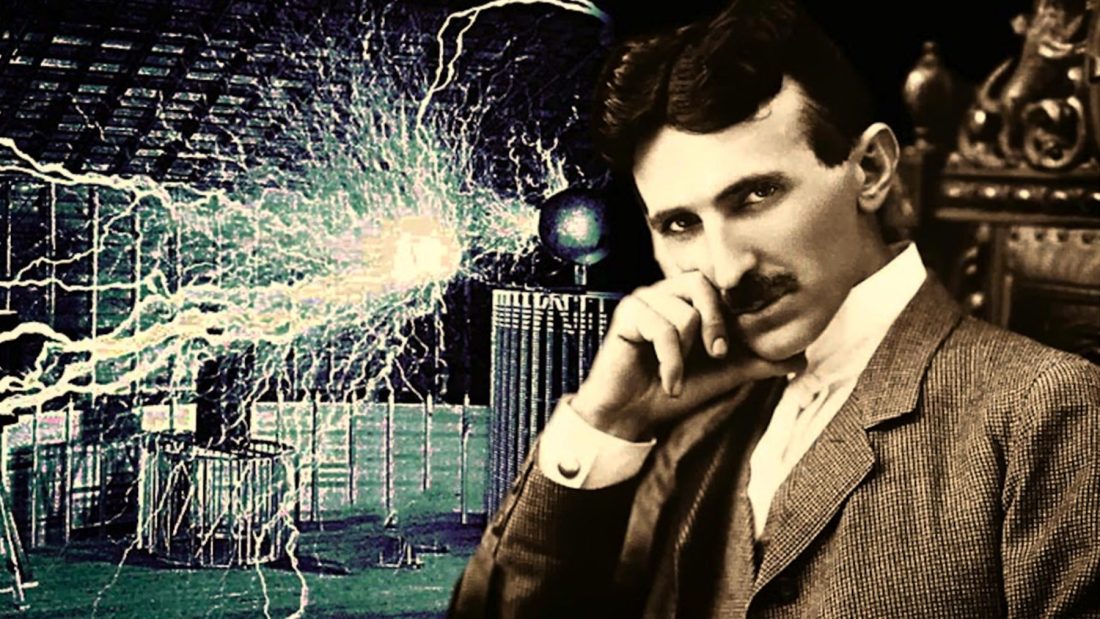
Serbian-American engineer and physicist Nikola Tesla (1856-1943) invented the first alternating current (AC) motor and developed AC generation and transmission technology. Though he was famous and respected, he was never able to translate his copious inventions into long-term financial success—unlike his early employer and chief rival, Thomas Edison.

Nikola Tesla

Nikola Tesla was born in 1856 in Smiljan, Croatia, then part of the Austro-Hungarian Empire. His father was a priest in the Serbian Orthodox church and his mother managed the family’s farm. In 1863 Tesla’s brother Daniel was killed in a riding accident. The shock of the loss unsettled the 7-year-old Tesla, who reported seeing visions.

Young Tesla in the lab

In 1870, Tesla moved to Karlovac (Carlstadt) and stayed with his Aunt and Col. “Old War Horse” Brankovic. He attended “Higher Real Gymnasium” where teacher Martin Sekulic taught him math and physics and had a decided influence over him. Tesla graduated Gimnazije Karlovac a year early.

House where Tesla lived in Karlovac

Did you know? During the 1890s Mark Twain struck up a friendship with inventor Nikola Tesla. Twain often visited him in his lab, where in 1894 Tesla photographed the great American writer in one of the first pictures ever lit by phosphorescent light.

Tesla and Twain

Tesla studied math and physics at the Technical University of Graz and philosophy at the University of Prague. In 1882, while on a walk, he came up with the idea for a brushless AC motor, making the first sketches of its rotating electromagnets in the sand of the path. Later that year he moved to Paris and got a job repairing direct current (DC) power plants with the Continental Edison Company. Two years later he immigrated to the United States.

Nikola Tesla and Thomas Edison

Tesla arrived in New York in 1884 and was hired as an engineer at Thomas Edison’s Manhattan headquarters. He worked there for a year, impressing Edison with his diligence and ingenuity. At one point Edison told Tesla he would pay $50,000 for an improved design for his DC dynamos. After months of experimentation, Tesla presented a solution and asked for the money. Edison demurred, saying, “Tesla, you don’t understand our American humor.” Tesla quit soon after.

Nikola Tesla and Westinghouse

After an unsuccessful attempt to start his own Tesla Electric Light Company and a stint digging ditches for $2 a day, Tesla found backers to support his research into alternating current. In 1887 and 1888 he was granted more than 30 patents for his inventions and invited to address the American Institute of Electrical Engineers on his work.

His lecture caught the attention of George Westinghouse, the inventor who had launched the first AC power system near Boston and was Edison’s major competitor in the “Battle of the Currents.” Westinghouse hired Tesla, licensed the patents for his AC motor and gave him his own lab. In 1890 Edison arranged for a convicted New York murderer to be put to death in an AC-powered electric chair—a stunt designed to show how dangerous the Westinghouse standard could be.

Edison’s Electric Chair

Buoyed by Westinghouse’s royalties, Tesla struck out on his own again. But Westinghouse was soon forced by his backers to renegotiate their contract, with Tesla relinquishing his royalty rights. In the 1890s Tesla invented electric oscillators, meters, improved lights and the high-voltage transformer known as the Tesla coil.

Early Tesla Coil

He also experimented with X-rays, gave short-range demonstrations of radio communication two years before Guglielmo Marconi and piloted a radio-controlled boat around a pool in Madison Square Garden. Together, Tesla and Westinghouse lit the 1893 World’s Columbian Exposition in Chicago and partnered with General Electric to install AC generators at Niagara Falls, creating the first modern power station.

Functioning Model

Vinegar: Cleaning, Removing Stains, and Natural Remedies

Who knew that vinegar could do so much? Here are some of the many household uses for vinegar—from cleaning to stain treatment to relieving insect bites. Discover vinegar’s versatility, as well as when NOT to use vinegar.

There’s a cheap, safe, and effective product that has hundreds of uses: vinegar! Let’s explore all the ways vinegar is useful, from the uncommon to the common.

Vinegar in the Garden

Defeating garden weeds: Spray white vinegar directly on plants that you want to kill, especially weeds in cracks in your driveway! Spray on a dry, sunny day. Remember that vinegar will kill plants you want to keep as well, so be careful and try to apply it directly on the leaves of the weed you want to get rid of. 

Soothing insect bites: Apply full strength vinegar to mosquito or other insect bites to relieve the itching. (Caution: Do not do this if the affected area is raw.)

Insect repellent: Rub a solution of 1 part apple cider vinegar to 2 parts water on your skin to help repel insects. (For sensitive skins, dilute the vinegar further.)

Keeping cut flowers fresh: To extend the life of flowers in a vase, add a few teaspoons of apple cider vinegar to the water, plus a dash of sugar. The acidic vinegar helps to prevent bacterial growth.

White Vinegar and Cleaning

Vinegar is a common ingredient in countless homemade cleaners and is especially helpful for cleaning household appliances.

Coffeepot: Every month, bring a solution of 1 cup of vinegar and 4 tablespoons of baking soda to a boil in teapots and coffeepots to rid them of mineral deposits. To clean drip coffeemakers, fill the reservoir with white vinegar and run it through a brewing cycle. Rinse thoroughly by brewing two cycles with water before using.

Cutting boards: Use white vinegar to disinfect cutting boards, especially those made of wood.

Stovetop: A solution of vinegar and baking soda will easily remove cooking oil from your stovetop.

Oven: For a clean oven, combine vinegar and baking soda, then scrub.

Microwaves: Pour white vinegar into a bowl of water and microwave it for a few minutes, then wipe out.

Dishwasher: Use as a cheap rinsing agent to get your glasses and plates clean. Also, once a year, pour a cup of white vinegar into an empty dishwasher, then run it for a short cycle to get rid of the lime and soap build-up.

Clogged or smelly sink: Pour 1/4 cup of baking soda down the sink, then add 1 cup of vinegar. 

Humidifier: Clean the filter on your humidifier by removing it and soaking it in a pan of white vinegar until all the sediment is off.

Tubs and showers: Saturate a cloth with vinegar and sprinkle with baking soda, and then use it to clean fiberglass tubs and showers. Rinse well and rub dry for a spotless shine. 

Tile grout: White vinegar is actually safer than chlorine bleach for cleaning grout and caulking in bathrooms and kitchens. Spray, leave for one hour, and then scrub.

Shower curtain: Use a sponge dampened with vinegar to clean shower curtains.

Toilet bowl: Clean and deodorize your toilet bowl by pouring undiluted white vinegar into it. Let stand for five minutes, then flush. Spray stubborn stains with white vinegar, then scrub vigorously.

Windows: Clean windows with a cloth dipped in a solution of one part white vinegar and 10 parts warm water.

Fridge odors: Rid your refrigerator and freezer of bad odors by cleaning the insides with a solution of equal parts vinegar and water, then wiping dry.

Smoke odors on clothes: To remove smoke odors on clothes, hang them above a steaming bathtub filled with hot water and a cup of white vinegar.

Prevent mildew: Wipe down surfaces with vinegar to clean and prevent mildew. 

When NOT to use vinegar:

Do not use vinegar on granite or marble countertops.

Avoid using vinegar where there is unsealed grout.

Do not use vinegar on wood surfaces or hardwood floors (or no-wax vinyl floors).

Never use vinegar on your cell phone or computer screen! 

Vinegar and Stain Removal

White vinegar is known as an effective stain remover. 

Clothes: Vinegar naturally breaks down uric acid and soapy residue, leaving baby clothes and diapers soft and fresh. Add a cup of vinegar to each load during the rinse cycle. It also gets rid of stinky towel mildew and makes clothes more colorful. 

For removing specific stains such as ketchup, tomato sauce, etc., spray a little vinegar directly onto the stain and then launder. 

Chewing gum: To remove chewing gum, rub it with full-strength vinegar.

Paint stains: Soak paint stains in hot vinegar to remove them.

Shoes: To remove salt and water stains from leather boots and shoes, rub with a solution of 1 tablespoon white vinegar and 1 cup water. Wipe over the stained area only, and then polish.

Brighten white clothes: Soaking white clothing in vinegar will help bring back their brightness.

Vinegar and Pet Care

Itchy ears: Clean inside of dog and cat ears with a clean washcloth or rag dipped in a white vinegar solution (4 tablespoons water: 1 tablespoon vinegar).

Smelly pets: If your pets get sprayed by a skunk or have other incidents, vinegar can help get rid of the smell!

Vinegar and Car Care

Remove bumper stickers: To remove bumper stickers from car chrome, squirt on vinegar and let it soak in. Next, scrape off the stickers. Decals can be removed similarly.

Keep windows clear: Wipe down windows with diluted vinegar in winter to keep them frost-free. You can also use vinegar spray as a window cleaner.

More Uses for Vinegar!

Sprains: Place a vinegar-soaked brown bag on sprains to ease pain and aid recovery.

Shiny hair: For brunettes, rinsing hair with vinegar after a shampoo makes hair shinier. Use one-tablespoon vinegar to one-cup warm water.

Loosen jar lids: Hold the jar upside down and pour warm vinegar around the neck at the joint between the glass and the top.

SOURCE: Almanac

She’s a Grand Old Flag

The portion of the flag denoting honor is the canton of blue containing the stars representing states our veterans served in uniform. The field of blue dresses from left to right and is inverted only when draped as a funeral cloth over the casket of a veteran who has served our country honorably in uniform. In the U.S. Armed Forces, at the ceremony of retreat, the flag is lowered, folded in a triangle and kept under watch throughout the night as a tribute to our nation’s honored dead. The next morning it is brought out and, at a ceremony of reveille, flown high as a symbol of belief in the resurrection of the body.

Meaning Behind the 13 Folds

  1. The first fold of our flag is a symbol of life.
  2. The second fold is a symbol of our belief in eternal life.
  3. The third fold is made in honor and remembrance of the veteran departing our ranks, and who gave a portion of his or her life for the defense of our country to attain peace throughout the world.
  4. The fourth fold represents our weaker nature; as American citizens trusting in God, it is Him we turn to in times of peace, as well as in times of war, for His divine guidance.
  5. The fifth fold is a tribute to our country. In the words of Stephen Decatur, “Our country, in dealing with other countries, may she always be right, but it is still our country, right or wrong.”
  6. The sixth fold is for where our hearts lie. It is with our heart that we pledge allegiance to the flag of the United States of America, and to the republic for which it stands, one nation under God, indivisible, with liberty and justice for all.
  7. The seventh fold is a tribute to our armed forces, for it is through the armed forces that we protect our country and our flag against all enemies, whether they be found within or without the boundaries of our republic.
  8. The eighth fold is a tribute to the one who entered into the valley of the shadow of death, that we might see the light of day, and to honor our mother, for whom it flies on Mother’s Day.
  9. The ninth fold is a tribute to womanhood. It has been through their faith, love, loyalty and devotion that has molded the character of the men and women who have made this country great.
  10. The 10th fold is a tribute to father, who has also given his sons and daughters for the defense of our country since he or she was first born.
  11. The 11th fold represents the lower portion of the seal of King David and King Solomon and glorifies the God of Abraham, Isaac and Jacob.
  12. The 12th fold represents an emblem of eternity and glorifies God the Father, the Son and Holy Ghost.
  13. The 13th and last fold, when the flag is completely folded, the stars are uppermost, reminding us of our national motto, “In God We Trust.”

After the Folding Ceremony

After the flag is completely folded and tucked in, it has the appearance of a cocked hat, ever reminding us of the soldiers who served under Gen. George Washington and the sailors and Marines who served under Capt. John Paul Jones and were followed by their comrades and shipmates in the U.S. Armed Forces, preserving for us the rights, privileges and freedoms we enjoy today.

The source and the date of origin of this Flag Folding Procedure is unknown. However, some sources attribute it to the Gold Star Mothers of America while others to an Air Force chaplain stationed at the United States Air Force Academy. Some sources also indicate that the 13 folds are a nod to the original first 13 colonies. The flag folding ceremony is provided as a patriotic service.

VA Policy on Flag-Folding Recitation of “13-Fold” Ceremony

To ensure burial services at the 143 national cemeteries operated by the Department of Veterans Affairs reflect the wishes of veterans and their families, VA officials have clarified the department’s policy about recitations made while the U.S. flag is folded at the grave site of a veteran.

“Honoring the burial wishes of veterans is one of the highest commitments for the men and women of VA,” said William F. Tuerk, VA’s undersecretary for Memorial Affairs. “A family may request the recitation of words to accompany the meaningful presentation of the American flag as we honor the dedication and sacrifice of their loved ones.”

Traditional grave site military funeral honors include the silent folding and presentation of a U.S. flag, three rifle volleys and the playing of “Taps.”

Source: Military.com

{Pat’s Note: Tomorrow, June 14th is Flag Day, but it’s also my favorite President’s birthday!}

WORLD OTTER DAY

World Otter Day occurs on the last Wednesday of May, which is May 31 this year. Otters are beautiful, playful animals that live in wetlands across the world. Species are declining due to habitat destruction, reduction of prey, roadkill, and illegal trade for fur and as pets.

There are 13 different species, 12 of which are disappearing. Seven of these species are classified as vulnerable and five are endangered. The International Otter Survival Fund founded World Otter Day with two goals in mind. First, to help raise awareness of the dangers that otters face. Second, to educate people on how to protect their habitats.

River Otters
Sea Otters

HISTORY OF WORLD OTTER DAY

World Otter Day had humble beginnings as Otterly Mad Week, a week of events, education, and fun. Then International Otter Awareness Day was founded before becoming the International Otter Survival Day, then World Otter Day, whose singular purpose is to ensure that future generations can enjoy these charming animals.

International Otter Survival Fund began in 1993 to protect and help the different species of otters worldwide. It was inspired by observing otters in their natural habitats. The Fund is one of the world’s leading charities with various projects that protect otters. They have dedicated over 20 years of research to conserving, protecting, and caring for otters and have developed a worldwide program to encourage education on otters.

To date, they have supported projects in 44 countries and helped cubs in 33 countries.

Since 2009, they held workshops across the world in places such as Cambodia, Indonesia, Bangladesh, and China. The workshops provide training in otter field techniques, public awareness programs, law enforcement, and general conservation issues. Some other activities include research, campaigns, training, and otter hospitals.

5 FACTS ABOUT OTTERS

1. Most of them live in Alaska: About 90% of all sea otters live on the coast of Alaska.

Alaska Otters Rebound

2. They have their own tools. Otters use rocks to open clams and carry them around in case they are needed.

3. They are amazing at holding their breath. Sea otters can hold their breath for five minutes and river otters can hold theirs for eight.

4. They have a thick fur. Sea otters lack any blubber, so their thick, dense, water-resistant fur keeps them warm.

5. Their dung tells a story. Scientist believe they may be able to determine the sex, age, and reproductive status of an otter just by studying it’s dung.

WHY WORLD OTTER DAY IS IMPORTANT

Otters are cute. We don’t need too much convincing to spend the day learning about them. They are the cutest, quirky, furry animals.

Conservation is always a plus. World Otter Day focuses on teaching people about the conservation of our planet and our wildlife.

It’s a worthwhile global cause. Otters are found all over the world. They are also celebrated in over 20 different countries.

Maple Syrup

(This post was bumped from it’s more timely spot, but it’s still interesting imo.)

 As winter loses its grip on Pennsylvania, warmer days followed by cold nights signal the beginning of maple syrup season. 

When spring conditions are right, sap in sugar maple trees begins to flow, and sugars made with last summer’s sun move from their storage sites into the tree’s trunk, according to Bob Hansen, Penn State Cooperative Extension forest resources educator based in Tioga County. Mid-February to early March normally heralds the arrival of the “right” conditions, and the season runs until early April most years.

“Maple sugar products are truly North American — native Americans were the first people to make maple sugar,” he said. “We speculate they used hot stones and bark vessels to ‘boil’ sap to concentrate the sugars. Early Europeans likely appreciated this source of sugar, and, with the advantage of iron pots, they soon developed this seasonal industry and converted sap into sugar cakes or blocks, which were easier to store.”

Before tropical sugar sources were easily accessible, maple sugar was the premier sweetener. As imported sugar became increasingly available, the maple industry switched to syrup production. Today, the maple industry produces a wide-range of quality products, Hansen noted. However, syrup is the most common, best known and considered by many the ultimate natural product.

“Many woodlot owners today look forward to the maple season as an important part of their family heritage,” Hansen said. “For some, it is a major cash crop. Among the state’s diverse farm products, it is one of the few to be produced, processed and often sold entirely on the farm.”

Quebec province leads North America in maple-syrup production, and the state of Vermont has successfully built an association with maple products. However, Pennsylvania is a major producer — ranked seventh in the United States in 2009. Other leading maple states include Connecticut, New York, New Hampshire, Massachusetts, Ohio, Wisconsin, Maine, Michigan, Minnesota, West Virginia, Indiana, Iowa and Virginia.

“Sugar maple is the species of choice for tapping to make maple sugar,” Hansen said. “Other maples such as black and red also yield sweet sap, but on average not as sweet as that flowing from sugar maple.”

Tapping done properly generally does little harm to the tree, Hansen pointed out. Trees 10 to 18 inches in diameter at 4.5 feet above the ground receive one tap. Trees larger than 18 inches can have two. Tap holes are made by boring a 5/16 inch diameter hole at a slight upward angle into the tree to a depth of 1.5 to 2 inches. A hollow spout or spile is then gently tapped into the hole to fit snugly.

Commercial maple producers collect sap in stainless steel buckets or weave a web of plastic tubing to connect trees and move sap to a common collection point. Small producers, working with only a few trees, can collect sap in clean plastic jugs (e.g., milk cartons) suspended from the spile.
 
“Eventually sap is brought to the sugarhouse where an evaporator concentrates the sugar and turns the sap into the amber-colored syrup,” Hansen said. “After filtering to remove ‘sugar sand’ (mineral substances in sap concentrated in the boiling process), producers grade their product. Syrup grades depend on color — light, medium or dark amber — and flavor.”

Syrup by law has at least 66 percent sugar solids. The volume of sap needed to make a gallon of syrup varies with the concentration of sugar in the sap. Sap sugar content varies from tree to tree, from less than 1 percent to rarely 10 percent. Normally, it is about 1.5 to 3 percent. Approximately 43 gallons of sap with a 2 percent sugar content yield one gallon of syrup. 
 
“People who are interested in maple-syrup production should consider visiting one of the state’s many maple festivals to learn more about this sweet industry,” said Hansen. “During these weekends, syrup makers open their operations and are available to answer questions.”

Source: https://www.psu.edu/news/impact/story/pennsylvania-its-time-make-maple-syrup/

There’s A Roller Skating Museum In Nebraska And It’s Full Of Fascinating Oddities, Artifacts, And More

Since 1980, Lincoln, Nebraska has been the home of a one-of-a-kind museum that most people aren’t even aware of. The National Museum of Roller Skating sits in an unassuming little brick building that it shares with the headquarters of USA Roller Sports, the national governing body of roller sports. The next time you’re in the area, don’t pass by this hidden gem; step inside and get to know a fascinating part of American history.

The people behind the National Museum of Roller Skating believe that everyone should know about this delightful activity and its long history. What comes to mind when you think of roller skating? If you’re of a certain age, you probably picture couples gliding hand-in-hand around a hardwood floor as live music floats through the air from the on-site organist.

Younger people may picture a similar scene, but with a DJ and colorful flashing lights in place of a live organist. No matter what your personal experience is with roller skating, chances are you’ve got some positive associations with the activity.

Those fond memories – and much more – are all on display in this unique museum. The exhibits trace the history of roller skating back through the generations, all the way to the early 19th century.

When you visit, you’ll see some early versions of roller skates, beginning with the most primitive pieces of wood with wheels attached.

Some of the crowd-favorite exhibits are the rare and unusual types of roller skates. Would you ever try to race around the rink in these cowboy-boot skates?

Other exhibits tell little-known stories of roller skating as a sport, a hobby, and an all-around cultural phenomenon.

The museum houses the world’s largest collection of roller skating items, making it a must-visit for anyone who has ever felt a rush of excitement as they laced up a pair of skates.

The museum also contains the National Roller Skating Archives, a collection of publications and other information on all aspects of roller skating’s history.

Roller skating is explored here as a sport and an art form, as a diplomatic tool, and a unifying experience that just about everyone can enjoy. See old costumes and uniforms and read all about the surprising ways in which roller skating has influenced the world.

Whether your interest lies in leisurely rolls around the rink, dominating in a roller derby league, or even competitive speed-skating, you’ll find fascinating information at the museum about this underrated all-American activity.

Address: National Museum of Roller Skating, 4730 South St, Lincoln, NE 68506, USA

Secrets You Never Knew About America’s Founding Fathers

America’s history is a brief yet rich one. Relative to the rest of the world, we are still just a little baby of a country. We often forget that our founding fathers were humans just like the rest of us — they just happened to have lived some 300 odd years before we did, and, you know, wrote the Declaration of Independence. But these American heroes had their flaws and their secrets, too.

These secrets about the founding fathers are both surprising and eye-opening. There are myths about these men that we’ve all gone along believing our whole lives without a second thought. But in some cases, we may have been entirely wrong!

Thomas Jefferson

Thomas Jefferson Was A Terrible Public Speaker

The author of the Declaration of Independence and our third president only ever gave two speeches, one at each of his inaugurations. While he was elegant with words on paper, he didn’t like speaking out loud, much less in front of large crowds. The speeches he did give were delivered very quietly, too.

Thomas Jefferson was also addicted to learning. Born April 13 (April 2 on the pre-Gregorian calendar), 1743 at his father’s Shadwell plantation in Virginia, Jefferson was one of 10 children (eight of whom survived to adulthood). While he attended the College of William and Mary, he was said to have studied for 15 hours daily on top of violin practice. The hard work paid off: Jefferson moved into law studies before becoming a lawyer in 1767. Two years later, he became a member of Virginia’s House of Burgesses, the Virginia legislature. His autodidact ways continued throughout his life: Jefferson could speak four languages (English, Italian, French, Latin) and read two more (Greek and Spanish).

John Adams

John Adams And Jefferson Were Rivals

John Adams and Jefferson were the only two signers of the Declaration to become president, but they also hated each other’s guts. Before Jefferson passed away on July 4, 1826, he had finally made amends with John Adams, the president who preceded him in office and for whom Jefferson served as vice president. The two men, once on the same side, had grown to resent the other’s approach to diplomacy and politics, with Jefferson lamenting Adams’s preference for centralized and meddlesome government—though according to Jefferson, the major issue was the so-called “Midnight Judges,” appointments that Jefferson felt “were from among [his] most ardent political enemies.”

Strangely, Adams passed away the same day as Jefferson, just five hours later. The date, July 4, was also the 50th anniversary of the Declaration of Independence being adopted.

George Washington

George Washington Didn’t Have Wooden Teeth

This is a fun fact that lots of people like to pull out of their back pocket, but it isn’t even true. George Washington’s teeth were actually made of bone, hippopotamus ivory, human teeth, brass screws, lead, and gold metal wiring. That’s quite the mouthful right there. And his hair was all real but it looks white because he powdered it.

He was a very moral and virtuous man, and he watched carefully everything he did. But he certainly doesn’t fit into our conception of a Christian evangelical or somebody who read his Bible every day. He was not an atheist on the one hand, but on the other hand, he was not a devout Christian. But what about he story of him kneeling in the snow at Valley Forge to pray? “That’s a story that was made up by [early Washington biographer] Parson Weems.” Oh, and Parson Weems, who wrote a myth-filled biography of Washington shortly after he died, made up the cherry tree story. The Mount Vernon Digital Encyclopedia identifies that book, The Life of Washington, as “the point of origin for many long-held myths about Washington.”

Benjamin Franklin

Adams Was “Out Of His Senses”

Well, at least according to Benjamin Franklin. And it seems the feeling was mutual. The two were at the French court of Versailles together as ambassadors when Adams wrote that a statue in the court would make a better ambassador than Franklin. Harsh!

Adams thought Franklin uncouth, vulgar, pretentious…and those were his good qualities. Their poor relationship got off to a rocky start in the fall of 1776. Franklin and Adams had to share a room and a bed in Brunswick where Adams and Franklin went to parley with Adm. Lord Richard Howe over a possible end to hostilities. Adams wanted to sleep with the window closed. Franklin wanted it open. Adams thought it would cause him illness. Franklin thought it would cause good health. After much argument, Franklin prevailed.

Adams grew to dislike Franklin more in Paris. Franklin wore plain clothes for effect. Adams disapproved of his garb. Franklin was a particular favorite of French women. Adams could not understand why this was the case. Adams thought Franklin behaved disreputably and immorally. He did not see how Franklin was using his conduct to obtain contacts and access. What Adams could not understand was how Franklin used these idiosyncrasies to advance the nation.

Paul Revere Wasn’t The Only Midnight Rider

A 16-year-old girl named Sybil Ludington rode 40 miles, twice Revere’s distance, when the British took Danbury, CT. She may have even staved off a band of highway robbers on the way. On April 26, 1777, at age 16, Ludington, the daughter of a colonel in the Colonial militia, Henry Ludington, is said to have made an all-night horseback ride 40 miles (64 km) to rally militia forces in neighboring towns after the burning of Danbury, Connecticut by British forces.

Relatively unknown through the 1870s, Ludington became widely recognized around the time of World War II, after historic road markers were placed in locations she was speculated to have visited on her ride. Memorial statues honor her, and books have been written about her. She was honored on a United States Bicentennial postage stamp that was released on March 25, 1975, which depicts her on a horse.

Peggy Shippen

Benedict Arnold Had Help With His Famous Betrayal

Arnold’s wife, Peggy Shippen, was half his age when they met. She’d previously had a fling with a British spy, John André, and introduced her old lover to her new husband. Together, the three of them plotted to give West Point to the British, which would have squashed America’s independence entirely.

Benedict Arnold

Rumors Swirled Around Washington’s Lack Of Children

Many historians have speculated that perhaps George Washington struggled with infertility, as he had no children of his own. Experts say that tuberculosis often causes this extremely common condition in men. Throughout his life, Washington suffered from a laundry list of ailments: diphtheria, tuberculosis, smallpox, dysentery, malaria, quinsy (tonsillitis), carbuncle, pneumonia, and epiglottitis—to name a few.

“Classic studies of soldiers with tuberculous pleurisy during World War II demonstrated that two-thirds developed chronic organ tuberculosis within five years of their initial infection. Infection of the epididymis or testes is seen in 20 percent of these individuals and frequently results in infertility.”

James Madison

James Madison Used A Secret Code

Madison—like any good politician—was terrified by the idea that someone might intercept one of his private letters. Along with Jefferson and many mutual allies, Madison used complicated encryptions when relaying delicate info. “Having now the use of my cypher,” he informed Jefferson in 1784 after mastering a new system, “I can write without restraint.”

Said to be shy and reserved, Madison apparently had a counterbalance in wife Dolley, who entertained the whole of Washington. At the time, the city was not exactly a hotbed of partying, and her lavish affairs helped endear congressional members to the idea of Madison as president. To date, Madison remains our smallest president at 5 feet, 4 inches and 100 pounds.

Both of James Madison’s vice presidents died in office. George Clinton kicked the bucket in 1812. His short-lived replacement was former Massachusetts governor Elbridge Gerry, who’d redistricted that state to tip the political scales in his favor—a process we now call “Gerrymandering.” Gerry also died in office, and is the only signer of the Declaration of Independence to be buried in Washington, D.C.

He also had a sharp sense of humor. Politics is a pretty serious career, but that didn’t take away Madison’s sense of humor. Among friends, he was known for his quick wit, quippy banter, and well-timed personal anecdotes.

Franklin House

Skeletons Were Buried Under Franklin’s London Home

No, he didn’t murder the people. There was a human anatomy class being run from his basement, which was a very tricky subject at the time. The bones from 15 different bodies were found when, in 1998, work was being done on the historic home.

While all of the Founding Fathers are renowned for pushing the idea of liberty and independent choice, Benjamin Franklin apparently came to the idea a little late. In 1725, when he was just 19 years old, Franklin self-published a pamphlet titled ‘A Dissertation Upon Liberty and Necessity, Pleasure and Pain,’ which argued that humans didn’t actually have free will and weren’t responsible for their behavior. Maturity prevailed, however, and Franklin later burned almost every copy of the booklet he could find.

Ben Franklin’s eccentricity wasn’t limited to that strange philosophy. He once had a plan to rearrange the English alphabet by eliminating the letters C, J, Q, W, X, and Y, declaring them redundant. It didn’t katch on.

If you’re reading this while watching a sunrise, you might have Ben Franklin to thank. A more reasonable Franklin contribution: bifocals, which he invented in order to both see from a distance and read text up close without having to switch lenses.

The Helix Staircase of the Loretto Chapel

In the center of Sante Fe, NM stands a former Roman Catholic Church, known as the Loretto chapel, that was constructed in the popular Gothic Revival style by French architect Antoine Mouly. To Bishop Jean-Baptiste Lamy’s dismay, Mouly didn’t live to see the chapel completed. The renowned architect passed away when the chapel was nearly done, leaving the chapel unfinished.

Despite the beauty and craftsmanship of the chapel, it lacked a critical component, a staircase. As the story goes, the chapel was completed in 1878, but there was no way to get to the choir loft, which is 20 feet off the ground. The Sisters believed this to be a test of faith and set out to find a new carpenter to finish the work promptly.

Legend of the Loretto Chapel Staircase Miracle

According to legend, which has since been made into a movie called “The Staircase” (1998), the nuns didn’t want the staircase to be big because it would take up too much space, so they went to get advice from the local carpenters.

Unfortunately, they met with many carpenters, none of whom could provide a solution that worked for the Sisters. Some said it couldn’t be done, while others quoted an outrageous price. The only option was to use a ladder, which was deemed inappropriate due to the sister’s attire.

In 1880, the Sisters started praying to the patron saint of carpenters, St. Joseph. They asked for a solution to their dilemma and prayed for over a week. According to the historical account, on the 9th day, a man arrived on his mule with some tools. He revealed to the Sisters that he was a carpenter by trade, and they eagerly invited him in.

This carpenter was unlike any who had come before him, and shortly after viewing the problem, he admitted that putting a staircase in was possible, even ones that wouldn’t take up too much space or be an eyesore.

But he asked to be alone in the chapel for three months and, with only simple tools including a saw, T-square, and a hammer, he built the ‘miraculous’ staircase. It is a spiral staircase making two complete 360 degrees rotations but without using a central pole and without using any nails, only wooden pegs.

The bannister of the staircase is perfectly curved, a remarkable accomplishment considering the basic tools that were used. The shape of the helix is not a stable weight-supporting structure, and without the middle column it shouldn’t be able to withstand the weight of people using the staircase.

When the man finished the staircase, he left without asking for a cent. The nuns tried to find him but they could not. They did not know who he was or where he got the wood. Ten years later the railing was added to the staircase by Phillip August Heasch for safety reasons.

The order decided to honor the carpenter’s deed with a banquet, but when it was time to feast, they could not find him. He had disappeared without a trace; he did not identify himself during his time there or ask for payment. Because his identity remains a secret, the Sisters believed him to be St. Joseph, answering their prayers. The number of steps is of religious significance because it was Jesus’ age during his crucifixion. This realization only further convinced the Sisters and fueled the story that St. Joseph had come to their rescue.

With the staircase finished, the chapel was finally complete, but the mystery of its construction was impossible to ignore, and many pondered how the carpenter accomplished the job. The manager of the privately owned chapel (1991-2006), Richard Lindsley, took a piece of wood from the staircase and sent it for analysis. When the results came back, they showed that it was spruce, but of an unknown subspecies. This specific wood was very strong with dense and square molecules – which is something that you usually find in trees that grow very slowly in very cold places like Alaska.

However, there was no such wood in the area and no local trees grow in the Alpine tundra in the surrounding area. The closest place that he would find this density in trees was in Alaska, but of course back then transport was not the same as it is now and wood was not transported over such long distances.

Were the Stairs Created by a Man from a French Secret Society?

Santa Fe New Mexican offers an alternative explanation for the amazing staircase. It’s said that when historian Mary J. Straw Cook researched the stairs for a book she was writing, she “found information in an 1881 nun’s daybook that a man named Rochas was paid for wood.” Francois-Jean Rochas, an alleged “member of a French secret society of highly skilled craftsmen and artisans called the Compagnons, which had existed since the Middle Ages” has been named as the skilled woodworker who apparently “came to the U.S. with the purpose of building the staircase with wood shipped from France.”

When a group of stair-building professionals convened at the Loretto Chapel a few years ago to see the staircase they were shocked at the beauty, design, and engineering of the stairs. A couple of their comments on the workmanship after analyzing the stairs are:

“We all like to think we create creative stair designs and nice curved staircases, but to think how they did it that long ago and still attain the same quality is breathtaking” and

Later, Cook found a newspaper article mentioning Mr. Rochas and that he was a skilled woodworker who built the staircase. Rochas was a member of a secret French society of skilled artisans known as the Compagnons and had come to the U.S. to design the Santa Fe staircase specifically; the wood came from France.

Even with all the advances in technology and engineering, no one can determine how the staircase was built. The stairs are a beautiful and mysterious element of the Loretto Chapel, regardless of the facts around its construction.