The Man in the Iron Mask

During the reign of King Louis XIV, a mysterious man was locked away in the notorious Bastille and other French prisons: the Man in the Iron Mask. Held captive from the end of the 17th century to the beginning of the 18th century, the enigmatic prisoner still conjures up images of political intrigue, deadly betrayal, and historical enigmas.

His unforgiving mask and threadbare cell were perhaps even more infamous than the man himself. But his anonymous face obviously led to questions about his identity later on. Was he a nobleman, a prince, a political rival, or just a valet in the wrong place at the wrong time?

Who was the Man in the Iron Mask, and why was he in prison?

The Man Behind the Mask

While we may never know the true identity of the Man in the Iron Mask, we can make a few guesses based on what we do know.

Before taking up residence at the dreaded Bastille, he was held in a small prison off the coast of Cannes called Sainte-Marguerite. It was first constructed in 1617, but it didn’t become a state prison until 1685. One of the most infamous prisoners was the Man in the Iron Mask, who was said to be held there sometime during the 1680s.

Under the watch of former musketeer Bénigne de Saint-Mars, the Man in the Iron Mask also spent time locked up in the Pignerol and Exilles fortresses.

In 1698, a Bastille official recorded that Saint-Mars finally arrived at the infamous prison with a mysterious inmate who was “always masked and whose name is never pronounced.”

Secrecy was the name of the game for the Man in the Iron Mask. Interestingly, the “iron” detail may have even been part of the legend added later, as some have claimed that the mask was actually made of velvet.

But regardless of the mask’s material, Saint-Mars refused to say a word to anyone about what his inmate did to end up in the slammer.

“You have only to watch over the security of all your prisoners, without ever explaining to anyone what it is that your prisoner of long standing did,” wrote a minister named Barbezieux to Saint-Mars in November 1697, according to The Most Interesting Stories of All Nations.

In any case, Saint-Mars achieved his goal. The true identity of the man, and the crimes for which he was punished, will probably never be known. But of course, that didn’t stop people from guessing.

The Prisoner’s Days in The Bastille

The storming of the Bastille — the prison that housed political dissidents of the powerful — is celebrated today on Bastille Day on July 14 in France. But before the Bastille became a symbol of the country’s freedom from hierarchical oppression, it was a hulking symbol of royal power.

The Man in the Iron Mask spent his final years here in this Parisian stronghold, watched over by Saint-Mars. However, the jailer was no great protector of his captive. Recent documents from 2015 suggest that the former musketeer diverted most of the funds for supporting the prisoner’s cell to his own pockets.

Allegedly, the Bastille cell only contained a mat for sleeping — so it could not have been a pleasant stay.

Even after his death in 1703, the very memory of the Man in the Iron Mask was subject to erasure. His clothes were promptly burned at dawn, and his cell was scraped and whitewashed to hide any trace of his identity that he may have left behind.

The French bureaucratic system worked very hard to ensure no one ever knew the real story behind the Man in the Iron Mask. But it didn’t take long for theories to emerge.

Theories About the Man In The Iron Mask

So, who was the Man in the Iron Mask? The guesses have numbered in the hundreds over the centuries, from the plausible to the far-fetched.

Historians point to two men as the most often suspected identities behind the iron mask: Ercole Matthiole and Eustache Dauger. The former was an Italian count who had betrayed Louis XIV politically in the 1670s.

His last name was so similar to an alias that was often used for the Man in the Iron Mask — “Marchioly.” On top of that, Louis XIV’s descendants Louis XV and Louis XVI had both claimed that the famous prisoner was an Italian nobleman. No wonder Matthiole was in the hot seat.

However, Matthiole died in 1694, which was years before the Man in the Iron Mask passed away. So that’s why many experts agree that Dauger is a more likely candidate.

As for Dauger, he was reportedly a valet arrested for unclear reasons in 1669. While some say the valet was somehow implicated in a political scandal, others say he wasn’t a valet at all. He’s also been painted as a debauched nobleman or even a failed assassin.

But regardless of his former occupation, Dauger had been imprisoned in several fortresses — and he was once transported between prisons in a covered chair so that passersby would not see his face. And when he was first arrested, orders were given to jailers to “threaten him with death if he speaks one word except about his actual needs.”

Enlightenment thinker Voltaire put forth a different theory — that the prisoner may have been a brother of Louis XIV. Voltaire also specified that the mask was made of iron, describing it as such: “The chin of the mask was made of steel springs, allowing the prisoner to eat without removing it.”

Meanwhile, the Dutch people, who fighting the French during the Nine Years’ War, hoped to sow discord by spreading the rumor that the Man in the Iron Mask was the true father of the king. This rumor took root because Louis XIV was born very late into his parents’ marriage.

For some people, that was enough to convince them that his mother may have taken a lover to provide France with an heir.

This had the double effect of besmirching the king’s mother while also painting her son as a bastard, and by extension, an illegitimate ruler.

Yet another rumor suggested that it wasn’t Louis XIV’s father behind the Iron Mask, but instead his illegitimate son Louis de Bourbon.

While these theories would certainly explain why the king wouldn’t want the identity of the prisoner released, there’s never been any clear-cut evidence to prove that these ideas were true.

The Eternal Mystery

Although the iron (or velvet) mask was meant to condemn the prisoner with lifelong anonymity in his jail cell, it also gave him notoriety that still persists to this day. More than 300 years later, we still want to know the true story of the Man in the Iron Mask.

The question has inspired writers, actors, and other creatives to produce artwork illustrating their theories — to varying degrees of success.

During the 19th century, the French author Alexandre Dumas tackled the question in his historical novels. Dumas theorized that the prisoner was King Louis XIV’s twin brother Philippe, imprisoned to simplify the throne’s inheritance and keep Louis XIV in power.

Even though Dumas’ story was just based on one theory, it would eventually inspire more modern depictions of the Man in the Iron Mask — including a 1998 movie starring Leonardo DiCaprio.

In the film version, Louis XIV is portrayed as a villain interested only in money and bedding women while his country starves. In the movie, the royal is also completely responsible for the unique punishment of the mask.

The torturous device is doled out for the sin his brother commits — the sin of sharing his face.

Meanwhile, the TV series Versailles, which follows the early days of the magnificent French palace, portrays Louis XIV’s brother as being obsessed with the Man in the Iron Mask.

Actor Alexander Vlahos, who plays the King’s brother Philippe, commented, “When the writer came up to me and said that that was my storyline for the year, I thought: ‘How are we going to realize this?’ because obviously it’s so steeped in mythology, no one really knows who that person was, and why he was there.”

Vlahos hits the nail on the head. We’ll probably never know the answer to one of the most burning questions in modern history: Who was the Man in the Iron Mask? All we can do is guess.

SOURCE: ALLTHATSINTERESTING

The Turkey Toss

When my kids started high school, the school had 2 “fun” fundraisers for the local Rescue Mission during the year.  One, in the spring, was the egg drop.  Participants paid an entry fee, (as well as spectators), and had to develop a method for their egg (supplied by the school so no fake ones allowed) to be dropped from the top of the high school and land unbroken below.  (There was a metal railing and plenty of adults ensuring the safety of all involved.)

The second was the turkey toss. 

Again, the school provided several frozen turkeys to be used by contestants, either singly or as a team, to fling their turkey as far down the football field as possible.  The entrants and spectators, again, paid a fee and there were additional donation boxes provided to bring canned goods for the Mission.  The rules were simple: your method had to be human powered—no electric anything– and you could start all the way down the opposite end of the field if you wanted a running start–but you had to “launch” your frozen turkey from the 50-yard line.  

The first year we went, neither of my kids participated, but we had a great time!  Mostly the contestants were athletes trying to throw the frozen birds like a football.  Winner of the event got his picture and a write up in yearbook. 

The following summer, my son and 2 of his friends spent a lot of their spare time helping a neighbor down the street from us clear out his garage.  My son stored all sorts of pieces of wood and a jar of odd nuts and bolts in our garage.  And then they began to tinker with it all.  Whatever they were doing was a big secret and they covered it with a tarp they begged hubby for.  We all promised not to peek until they were ready.  One afternoon after school started, the whole thing just disappeared. 

And then the mystery deepened.  We got this funny “invitation” on our front door—apparently the entire neighborhood got the same invitation—to go to the wedding venue parking lot at the bend in the road this Saturday morning for the “unveiling”. 

The entire neighborhood it seemed had gathered there to see what the young men had cooked up.  It was their turkey toss entry…a trebuchet!

Theirs was a little cruder than the above drawing, but still looked basically the same—except theirs didn’t have its own wheels.  They had theirs strapped to 2 mechanic’s dollies to transport it.  We watched and cheered as they flung their frozen turkey all the way from one end of the parking lot to the other.  They were a shoe-in to win the turkey toss!

On the Saturday of the contest, hubby loaded up their pieces—it came apart for easy transport—and their tools and drove them to the high school to set it up very early.  They covered it and took turns guarding it till the start of the contest.  When it was finally their turn, they moved it to the 50-yard line and uncovered it.  The crowd was stunned…and then they launched their turkey.  It CLEARED the uprights in the end zone!  The judges then asked the boys if they wanted to move their contraption BACK so they could really establish a winning distance…they readily agreed! They set the school record that morning for the turkey toss.  Got their names and pictures in the newspaper as well. 

DIY: Alternate Uses for Dryer Sheets

FROM HOWSTUFFWORKS:

Many people routinely toss a dryer sheet or two into their dryers before pressing the start button. That’s because these small, papery sheets reduce static cling and wrinkles, soften your duds, and leave them with a pleasing, fresh scent. But dryer sheets are typically thrown in the trash once the clothes are dried. That’s a shame, because they can be repurposed to perform a wide variety of other tasks.

Dryer sheets are stiff, woven pieces of fiber, generally about 9 inches long and 6.4 inches wide. They’re coated with fabric softeners and lubricants as well as a scent like lavender, linen, musk or rain. Some sheets are also sold unscented.

When you start your dryer, these sheets do their magic when the coating melts off them and onto your clothing as they all tumble together, leaving your laundry soft and free of static. Afterward, the dryer sheets are ready for their second incarnation.

Here are 16 ways you can recycle and reuse your old dryer sheets. Some of these hacks are for new sheets, too.

Regular Cleaning

That coating that dryer sheets come with is useful for picking up dust and dirt. Here are some things you can use dryer sheets for as you clean.

Dust almost anything. Take an old dryer sheet and use it as a dust cloth, running it over items such as window blinds, baseboards, ceiling fan blades and your car’s dashboard. Bonus: The sheets are great at picking up pet hair in the process, and any coating still on them will also help the surface you’ve just cleaned repel dust and lint.

Wipe up spills. Spilled some flour, baking soda or seasoning? Dryer sheets are great at cleaning up such messes, as dry ingredients will stick to the sheets. But don’t use them when you’ve spilled something on the floor, as they can make it quite slick and a slipping hazard.

Remove sap and sand. When you’re in the great outdoors, use old dryer sheets to remove tree sap from your hands — it sticks to a dryer sheet better than a wet wipe — and to easily brush sand from your feet and legs.

Tough Cleaning

Scrub pots and pans. Dryer sheets are great at tackling the hard stuff. Take dirty pots and pans. If you’re not in the mood to vigorously scrub them for an indefinite amount of time, fill the pot or pan with hot water, toss in a new dryer sheet and let it soak at least an hour or overnight. In the morning, the sheet will have helped loosen the crusty food so you can more easily wipe it off.

Remove grime from oven racks. If your oven racks become grimy — a common occurrence — fill your bathtub with warm water, a half-cup of dish soap and eight new dryer sheets. Then lower in the racks and let them soak overnight. In the morning, scrub off the gunk with the dryer sheets, then rinse, dry and replace in your oven.

Clean crusty irons. Dryer sheets work well if you need to clean the bottom of your iron, where residue can accumulate from spray starch buildup and even melted synthetic fabrics.

Remove soap scum. Unfortunately, it’s easy to discover a film of soap on your shower door or bathtub. Scrub clean with a used dryer sheet.

Deodorizing

If you’ve got scented sheets on hand, either new or just out of the dryer, they can be used to make any number of household items smell more pleasant. In general, it’s better to use new sheets for deodorizing, as their scent is stronger.

Freshen wastebaskets and vacuum cleaners. Toss a dryer sheet in the bottom of your wastebasket before adding the bag, or in your vacuum cleaner to combat unpleasant smells.

Refresh camping gear. Even outdoorsy people don’t enjoy unpleasant smells. Before you pack away your camping equipment, toss dryer sheets into items like your tent, sleeping bag and backpack. They’ll smell much better the next time you use them.

Get rid of car odors. Tuck a few dryer sheets under your front seats and you may be able to get rid of that pine tree deodorizer hanging from your rearview mirror.

Freshen up workout gear. Stick dryer sheets into your gym shoes and gym bags to keep nasty smells at bay.

Remove stale odors from your suitcase. Travelers should place dryer sheets in their suitcases to avoid the stale smells that can develop when they’re closed up for a while.

Eliminate smells in your home. If a room in your house smells a little funky, tape a dryer sheet to the back of a vent or two so that the air flowing through them will pick up their pleasant scent. If you do this, though, make sure to replace the sheets weekly so no dusty build-up will impede the air flow.

Miscellaneous

Bet you never thought of using your dryer sheets for the following:

De-squeak shoes. Have a squeak in your shoe due to orthotics or insoles that are rubbing against the bottom? Place a new or used dryer sheet in between the bottom of the shoe and the orthotic or insole, and the squeak will disappear. If it comes back, it may be because the sheet has slipped out of place; simply readjust. Or it may be time for a new sheet.

Sharpen scissors. Scissors dull? Then use them to cut up a dryer sheet or two and that should restore some of their cutting ability.

Repel insects. If you enjoy hiking but flying insects keep circling your head, tuck a new dryer sheet into the back of your ball cap, leaving several inches hanging out. Both the scent of the sheet and its movement as you walk may keep insects at bay. (Studies have shown that linalool, a popular floral-scented chemical in cosmetics, perfumes and dryer sheets, repels fungus gnats and some types of weevils. But linalool didn’t seem to have much value at repelling mosquitoes.)


SOURCE: HOWSTUFFWORKS

What Shall We Make Today?

Since it’s November, today’s offering is my recipe for the perfect turkey breast.  (Although, these tips work just as well for a whole turkey.)

We love white meat, so I rarely make an entire turkey for our get togethers.  However, as is our custom, I will make the entire turkey dinner 2 days in a row because we seldom have many leftovers and I love the way the turkey dinner makes the house smell.  I begin with about a 7 or 8 pound turkey breast.  Butterball was always my first choice, but one year out of necessity I had to purchase a different brand—Honeysuckle White—and it was just as delicious!

Clean the breast and pat dry.  Rub the entire breast with unsalted butter and season.  I use salt, coarse ground black pepper and onion powder.  The breasts available here are “restaurant style” turkey breasts which means they have the rib portion and stand upright in the roasting pan.  This makes them easier to carve in my opinion.

Place in a roasting pan—I do not use a rack since hubby prefers gravy like his mom made—from a jar—so I do not need to collect the juices.  I roast my turkey breast uncovered in a 350* oven until the internal temperature reaches 160*.  I will check the turkey roughly an hour after putting it in the oven.  If the skin is sufficiently brown and crisp, I will remove the pan from the oven and cover the turkey with reynold’s wrap to finish the roasting.  My turkey breasts usually roast to 160* in an hour and a half to 2 hours. But a meat thermometer is invaluable! I got mine from Pampered Chef ages ago.

It’s important to remove the bird when it hits 160* because the turkey should stand—COVERED—for at least 15 minutes before you attempt to carve it—allowing the bird’s juices to settle.  During this time, the internal temperature will continue to rise to the desired 170*.  My turkey breasts are always moist and tender.  Can’t wait till Thanksgiving!  Bon Appetit!

Weird Wednesdays: The Smith Mansion

From: House & History

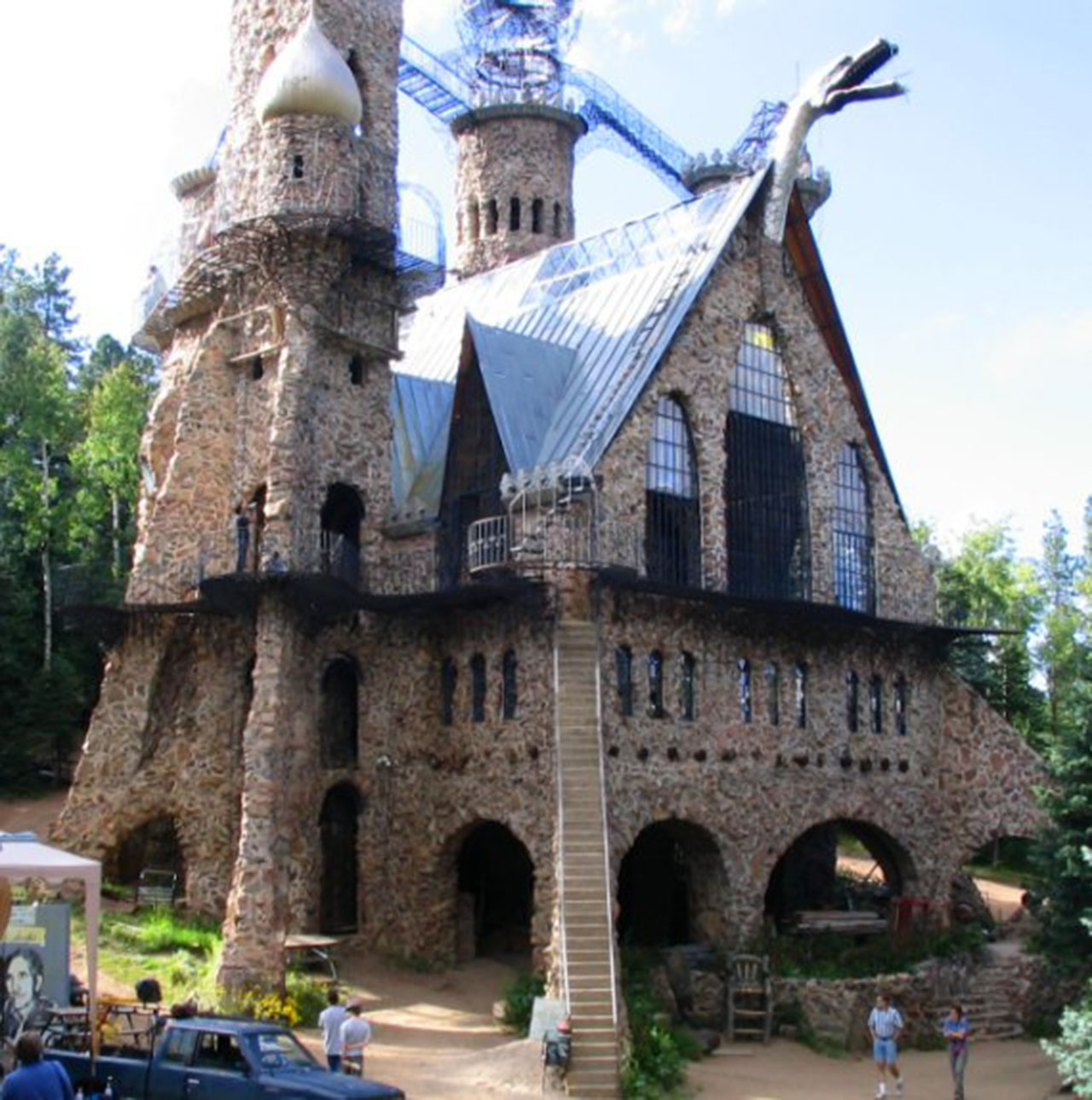
As you make your way through Wyoming’s Wapiti Valley, perched upon a hill just outside of Cody is a strange looking building known to locals as ‘Smith Mansion.’

The home was built over eighteen years by local man Francis Lee Smith. Smith, who worked as a full-time engineer in Cody, made the property in his spare time.

Francis Lee Smith, designed and built ‘Smith Mansion’ from scratch.

Unfortunately, the house didn’t have a fairy-tale ending one would hope for. In 1992, disaster struck, and construction on the property came to an end, forever.

THE HISTORY OF THE SMITH MANSION

In the 1970s, Smith was inspired by an opportunity he couldn’t pass up. After a huge fire on the nearby Rattlesnake Mountain, much of the timber was left up for grabs for anyone willing to lug it away.

Smith had a truck and two willing associates who helped him start loading up. Yet it appears Smith could never stop!

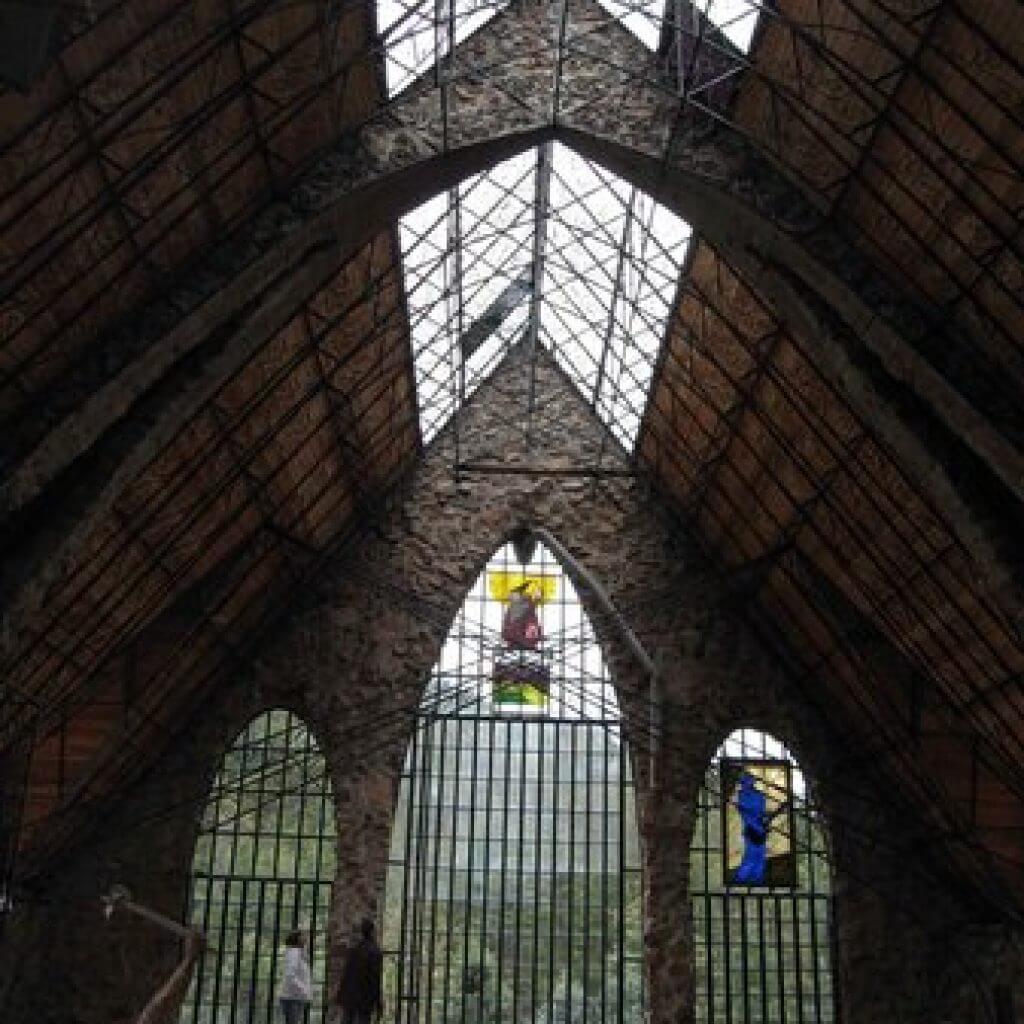
At first, Smith wanted to build a comfortable home for him and his family. But once the house was completed, the project just kept growing. Over the years, what was supposed to be a small family home, became a large tower featuring balconies and viewing platforms.

In the lower floor living spaces, you had named rooms, such as the “hot room” and “cold room.” Through the colder months, they would spend their time in the “hot room” which featured a wood-burning stove. In warmer months, they would use the cooler temperatures of the “cold room.” The house had no running water, and no plumbing or electricity, except for that provided by a small generator.

Unfortunately for Smith, the family home wasn’t to be. Despite living there with his family for some time, his obsession with it became a strain on his marriage, which lead to divorce. His wife, son, and daughter moved back into the nearby town of Cody.

This however, only drove Smith to focus more on completing the building. However, it wasn’t to be, one day in 1992, the 48-year-old was working on one of his slanted roofs when he fell (not for the first time) and died. Smith’s body wasn’t found until two days later.

THE SMITH MANSION TODAY

After the death of Francis Lee Smith, the Smith Mansion passed on to his family. The home is now looked after by Smith’s daughter Sunny Larsen, who was just 12 when her father died but still remembers living in the property as a child.

She said: “His original intent was to build a home for his family, and it just took on a life of its own.” It was only in later years that she realized her father had no blueprints, every addition was off-the-cuff. “He never knew what his next step was going to be.”

His daughter also rejects the idea that mental illness played a part in her father’s obsession. “He built,” she said. “He was an artist in every sense of the word.”

The property has been empty now for almost 30 years, exposed to the elements the wooden structure has begun to decay slowly. Teenagers from the nearby town of Cody routinely visit the property on the weekends and vandalize it.

This decay hasn’t stopped Ms. Larsen from trying to sell the property though. In August 2018, Smith Mansion was listed on the market for $750,000, as of yet it still has no buyer.

How a half-finished wooden structure with no plumbing or electricity on a hill in Wyoming could fetch $750,000 we don’t know. However, it would be a cool property to finish if you had the cash burning a hole in your pocket.

SOURCE: HOUSE & HISTORY

Citrine

What Is Citrine?

Citrine is a transparent variety of quartz with a yellow to orange color. Its attractive color, high clarity, low price, and durability make it the most frequently purchased yellow to orange gem.

Citrine is also a modern birthstone for the month of November. Its designation as a birthstone contributes to its popularity and drives a large number of sales.

The Citrine Color Range

Citrine’s color ranges from yellow, to orangey yellow, to yellowish orange, to brownish orange. The name citrine is used for any transparent quartz in that color range – regardless of its saturation. Stones with a faint color and stones with a rich color are all called “citrine”.

The quality of a stone’s color has an enormous impact on its price. Stones with a faint color are abundant and inexpensive. Stones with a rich, uniform color are rare, valuable, and preferred by buyers.

Reddish orange and reddish brown are rare colors in quartz. Gems of these reddish colors are often called Madeira citrine. The name is after wines of similar color made in the Madeira Islands, an autonomous region of Portugal, located in the North Atlantic Ocean about 450 miles southwest of Portugal.

Birthstone of November

Citrine and topaz both serve as birthstones for the month of November. Topaz was one of the original modern birthstones selected by the National Association of Jewelers in 1912. Citrine was added to the modern birthstones list in 1952.

Citrine and topaz are both available in the yellow to orange color range, but citrine generally has a much lower cost. Citrine has a Mohs hardness of 7 and topaz has a Mohs hardness of 8. That information might make some people believe that topaz has a higher durability than citrine. However, topaz is a brittle mineral that easily breaks by cleavage. It has little, if any, durability advantage over citrine.

Citrine Geodes

One of the most impressive specimens of citrine that you might encounter is a large citrine geode from Brazil.  These are often offered for sale at major gem and mineral shows.  Gem hunters find these geodes in the Brazilian basalt fields, then clean and prepare them to stand as a crystal tower in your living room.  They can be two, or four, or six feet tall – or taller.

Surprisingly, they are not filled with orange to orangy brown citrine when they are found.  Instead, most are filled with purple amethyst crystals.  Somewhere between discovery and the consumer, a decision is made to heat the geodes in industrial ovens to convert the original purple amethyst into an orangy brown citrine.

Why convert a beautiful amethyst geode into a citrine geode?  Because many people who will not buy an amethyst geode will buy a citrine geode because they enjoy the orange color or because citrine is their birthstone.

Natural, Treated, Synthetic

Five categories of citrine exist in the gem and jewelry market. These are:

1. citrine with a natural color
2. citrine with a natural color, but enhanced by treatment
3. citrine produced by heating light amethyst
4. synthetic citrine (a man-made product)
5. imitation citrine (a man-made product that is not SiO2)

All of these are legitimate products; however, sellers should always inform the customer when they are selling gems that have been treated, gems that might have been treated, and especially when they are selling synthetic or imitation materials. Here are a few reasons why…

Natural Color Citrine

Quartz with a natural citrine color is rare. Some people want this natural-color citrine and are willing to pay a premium price for it.

Sources of Citrine

Small quantities of naturally colored citrine are found at many locations throughout the world. The frequency of its occurrence is demonstrated by the locality maps at mindat.org.

The most important commercial source of citrine with a natural yellow to orange color are the pegmatites of eastern Brazil. Other countries where citrine has been produced include: Argentina, Bolivia, Madagascar, Mexico, Russia, Spain, and Uruguay.

The most important source of amethyst that is heat treated to produce a citrine color is also eastern Brazil. Russia is the most important source of synthetic citrine.

Ametrine

Ametrine is a bicolor quartz that has zones of golden yellow citrine and deep purple amethyst in contact with one another in a single crystal. The origin of the name is a combination of AMEthyst and ciTRINE to yield “ametrine.”

Ametrine is a rare gem, with most of the world’s commercial ametrine production from the Anahi Mine in southeastern Bolivia. The mine produces a variety of ametrine, amethyst, citrine, rock crystal, and bicolor gems.

It’s All in the Details!

The food at the Thanksgiving table is usually the star and focus of the event. But before the meal hits the table, guests usually arrive and the focus shifts momentarily to the table itself.  Some people love simple tables, some prefer elaborate settings.  But I think it’s a little over the top to have every place setting use 15 plates and attending silverware, because someone’s gotta do all those dishes and it’s usually me…so that’s a big NO for me!

Still some people prefer off the wall table decor…purple cornucopia and disco balls?

And nothing says Thanksgiving quite like blue pumpkins, right?

And THIS one? A definite NO from me.  I would never put lit candles near dried out grassy wheat (?) on a table where anyone can bump the table and start a 5 alarm fire.

There’s understated and then there’s laziness—letting the napkins drape off the table—like an afterthought. Another NO for me.

So, if you want to add some appeal to your Thanksgiving table, that’s cool, cute and easy to do…here’s a wonderful meme for folding your paper napkins into adorable turkeys.  And there’s plenty of time to practice before the big day!

PS: This is one idea I wished I had started years ago. You have every guest sign the tablecloth and then you stitch out the names.  This would have been an awesome keepsake. Sadly, our big Thanksgiving dinners are no more.

Roseate Spoonbill

Physical Description

The roseate spoonbill is a large wading bird known for its pink plumage and distinctive spoon-shaped bill. Its upper neck and back are colored white, while the wings and feathers underneath display the more recognizable light shade of pink.

The wings and tail coverts are deep red, along with the legs and the iris of the eyes. Part of the spoonbill’s head is a distinct yellow-green. When they are young, the birds are duller in appearance, brightening as they mature.

Size

Reaching a height of up to 2.5 feet, the roseate spoonbill’s wingspan can stretch 1.5 times as wide, reaching up to 4 feet.

Native Habitat

In the United States, the roseate spoonbill can be found in southern Florida, coastal Texas and southwestern Louisiana. Their breeding range extends south from Florida through the Greater Antilles to Argentina, Chile and Uruguay. Roseate spoonbills usually live in marsh-like areas and mangroves.

Communication

While feeding, spoonbills utter a low, guttural sound. They are also known to call during breeding displays and when flying.

Food/Eating Habits

Using its spoon-like bill to scoop prey up from shallow water, the roseate spoonbill’s diet typically includes minnows, small crustaceans, insects and bits of plants. They feed in the early morning and evening hours in both fresh and saltwater wetlands. It is believed the roseate spoonbill receives its bright coloring from the pigments of the crustaceans that it eats.

At the Smithsonian’s National Zoo, they are fed flamingo pellets, sea duck pellets and insects.

Social Structure

A social bird, the roseate spoonbill often feeds, roosts and flies in formation with its species. They nest singly or in pairs, usually in trees over water and sometimes on small islands.

Reproduction and Development

Typically roseate spoonbills do not breed until their third year. To attract one another, courtship displays include ritualized exchanges of nest material, dancing and clapping. Female spoonbills create deep, well-constructed nests out of sticks using materials brought to them by males. The Florida population usually nests in red and black mangroves sometimes with wood storks, while the Texas and Louisiana populations often nest on the ground in offshore island mixed colonies with gulls, terns and herons.

A female lays a clutch of one to five eggs. Both parents share incubation duties, which last about 22 to 24 days. A newly hatched chick has mostly pink skin with a sparse covering of white down. The parents feed the chick by dribbling regurgitated material into the baby’s upturned bill. After one month, the chick will begin to exercise by clambering through the branches or foliage surrounding the nest, and by six weeks, it will have developed wing feathers large enough for flight.

Sleep Habits

The roseate spoonbill sleeps standing, usually on one leg, with its head tucked beneath its back and shoulder feathers.

Lifespan

They can live up to 15 years in human care and an estimated 10 years in the wild.

SOURCE: national zoo.edu

Happy Veterans Day!

I found this information of on the US Department of Defense website:

Veterans Day is a well-known American holiday, but there are also a few misconceptions about it — like how it’s spelled or whom exactly it celebrates. To clear some of that up, here are the important facts you should know.

Veterans Day does NOT have an apostrophe.

A lot of people think it’s “Veteran’s Day” or “Veterans’ Day,” but they’re wrong. The holiday is not a day that “belongs” to one veteran or multiple veterans, which is what an apostrophe implies. It’s a day for honoring all veterans — so no apostrophe needed.

Veterans Day is NOT the Same as Memorial Day.

A lot of Americans get this confused, and we’ll be honest — it can be a little annoying to all of the living veterans out there.

Memorial Day is a time to remember those who gave their lives for our country, particularly in battle or from wounds they suffered in battle. Veterans Day honors all of those who have served the country in war or peace — dead or alive — although it’s largely intended to thank living veterans for their sacrifices.

It was originally called Armistice Day, commemorating the end of World War I.

World War I officially ended when the Treaty of Versailles was signed on June 28, 1919. However, the fighting ended about seven months before that when the Allies and Germany put into effect an armistice on the eleventh hour of the eleventh day of the eleventh month.   

For that reason, Nov. 11, 1918, was largely considered the end of “the war to end all wars” and dubbed Armistice Day. In 1926, Congress officially recognized it as the end of the war, and in 1938, it became an official holiday, primarily a day set aside to honor veterans of World War I.

But then World War II and the Korean War happened, so on June 1, 1954, at the urging of veterans service organizations, Congress amended the commemoration yet again by changing the word “armistice” to “veterans” so the day would honor American veterans of all wars.  

For a while, Veterans Day’s date was changed, too, and it confused everybody.

Congress signed the Uniform Holiday Bill in 1968 to ensure that a few federal holidays — Veterans Day included — would be celebrated on a Monday. Officials hoped it would spur travel and other family activities over a long weekend, which would stimulate the economy.

For some inexplicable reason, the bill set Veterans Day commemorations for the fourth Monday of every October.

On Oct. 25, 1971, the first Veterans Day under this new bill was held. We’re not sure why it took three years to implement, but not surprisingly, there was a lot of confusion about the change, and many states were unhappy, choosing to continue to recognize the day as they previously had — in November.

Within a few years, it became pretty apparent that most U.S. citizens wanted to celebrate Veterans Day on Nov. 11, since it was a matter of historic and patriotic significance. So on Sept. 20, 1975, President Gerald Ford signed another law (Public Law 94-97), which returned the annual observance to its original date starting in 1978.

Other countries celebrate it, too, in their own ways.

World War I was a multinational effort, so it makes sense that our allies also wanted to celebrate their veterans on Nov. 11. The name of the day and the types of commemorations differ, however.

Canada and Australia both call Nov. 11 “Remembrance Day.” Canada’s observance is pretty similar to our own, except many of its citizens wear red poppy flowers to honor their war dead. In Australia, the day is more akin to our Memorial Day.

Great Britain calls it “Remembrance Day,” too, but observes it on the Sunday closest to Nov. 11 with parades, services and two minutes of silence in London to honor those who lost their lives in war.

Sundown

Today is the anniversary of the wreck of the Edmund Fitzgerald and I thought in honor of Gordon Lightfoot’s epic song about that tragedy and his birthday later this month, I’d present another Lightfoot favorite of mine…Sundown.

I can see her lyin’ back in her satin dress

In a room where ya do what ya don’t confess

Sundown you better take care

If I find you been creepin’ ’round my back stairs

Sundown ya better take care

If I find you been creepin’ ’round my back stairs

She’s been lookin’ like a queen in a sailor’s dream

And she don’t always say what she really means

Sometimes I think it’s a shame

When I get feelin’ better when I’m feelin’ no pain

Sometimes I think it’s a shame

When I get feelin’ better when I’m feelin’ no pain

I can picture every move that a man could make

Getting lost in her lovin’ is your first mistake

Sundown you better take care

If I find you been creepin’ ’round my back stairs

Sometimes I think it’s a sin

When I feel like I’m winnin’ when I’m losin’ again

I can see her lookin’ fast in her faded jeans

She’s a hard lovin’ woman, got me feelin’ mean

Sometimes I think it’s a shame

When I get feelin’ better when I’m feelin’ no pain

Sundown you better take care

If I find you been creepin’ ’round my back stairs

Sundown you better take care

If I find you been creepin’ ’round my back stairs

Sometimes I think it’s a sin

When I feel like I’m winnin’ when I’m losin’ again