Hibiscus

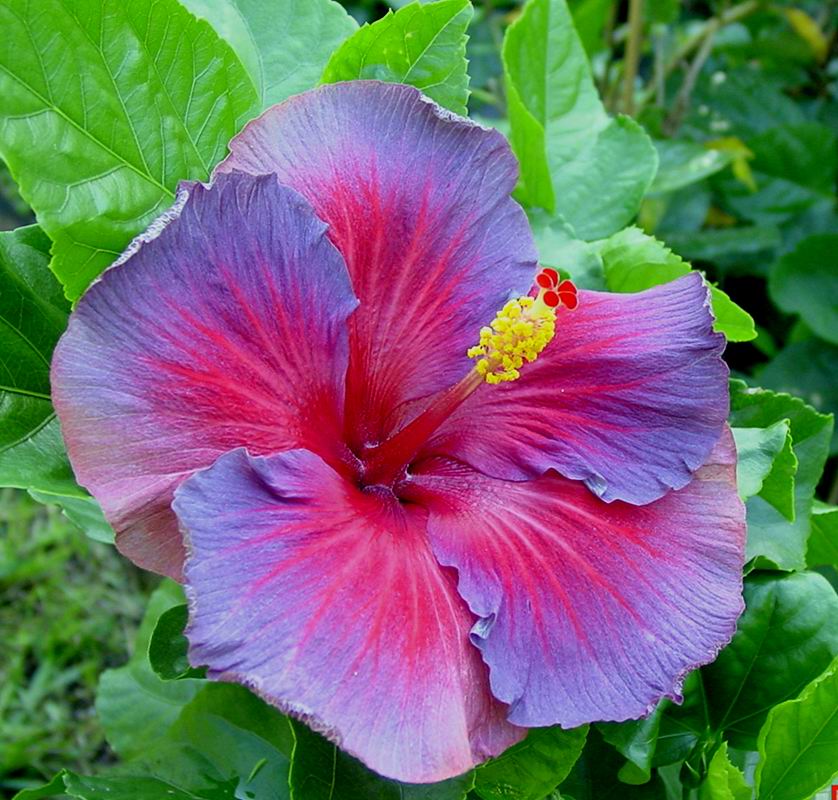
Hibiscus tree is an annual or perennial herbaceous plant with trumpet-shaped flowers. This tropical tree grows in full sun or partial shade and does best in moist, well-drained soil. With over 200 species and many more cultivars in the genus, hibiscus flowers can reach nearly 10 inches in diameter at maturity and come in a wide range of colors from white to red, pink, yellow, and orange.

Tropical hibiscus varieties (Hibiscus rosa-sinensis) are perfect if you live in a warm climate or want an impressive houseplant. For those living in cooler parts of North America, opting for a hardy variety or the shrubby rose of Sharon (Hibiscus syriacus), which are both easier to grow and can withstand colder winter temperatures, will be the better choice. Regardless of variety, hibiscus flowers are very attractive to butterflies and hummingbirds.
While all hibiscus have similarities that go beyond appearance, they have some distinct care and growing requirements.

Hibiscus Care

The care you provide your hibiscus will vary depending on whether it is a hardy or tropical variety and whether it is grown indoors or outdoors.

Warning

You can grow most species of hibiscus without worrying about them getting out of control. However, rose of Sharon (Hibiscus syriacus) is classified as an invasive species in much of eastern North America.1

Light

Hibiscus love bright conditions. In northern climes, full sun is often best, but in the intense, dry heat of the south, filtered sunlight is better. If you find that your plant isn’t producing many blooms, move the plant to a sunnier location.

Indoor tropical hibiscus will need a bright spot near a sunny window but keep it away from strong, direct sunlight. If you are transferring your plants outdoors when the warmer weather arrives, gradually acclimate them to the brighter conditions.

Soil

All hibiscus do best in well-drained, fertile, moist, loamy soil. The hardy varieties are wetland natives and are a good choice for sites that are too wet for other plants.

Most hibiscus prefer a slightly acidic soil pH, but the rose of Sharon is tolerant of alkaline conditions. The color of hibiscus flowers can be affected by the soil acidity level.

Mulching around the plant base can help with moisture retention if your location is experiencing dry conditions. For nutrient-poor soil, amending with organic matter will be beneficial.

Water

All hibiscus are thirsty plants that need to be kept moist. Indoor tropical hibiscus benefit from regular watering from spring to early autumn during the growing season. Significantly reduce watering during dormant periods. For container-grown plants, ensure the top inch or so of potting mix dries out fully before watering—saturated soil is also problematic, and make sure containers have adequate drainage holes.

Depending on the conditions, you might need to water your hibiscus daily to help it produce an abundance of blooms.

If your hardy hibiscus are not planted near a pond or in another wet area, water them on a regular basis to keep them moist.

Temperature and Humidity

Rose of Sharon and hardy hibiscus can grow in cool, temperate climates. They thrive in temperatures from 60 to 90 degrees Fahrenheit but can handle temperatures as low as 20 degrees Fahrenheit. When temperatures drop below 30 degrees Fahrenheit and frost is a risk, bring container-grown plants indoors. However, be mindful of their higher humidity requirements—which is why bathrooms are a good location for these plants.

Temperatures below 50 degrees Fahrenheit can kill tropical varieties, so they are best housed in humid locations indoors in regions where this is likely to occur.

Fertilizer

To encourage abundant, healthy blooms with good color, feed plants with a high potassium and high nitrogen fertilizer. Fish emulsion and seaweed extract are organic fertilizers. Feed a half-strength solution just before the start of the bloom period and continue at least once every few weeks until the end of flowering.

Types of Hibiscus

There are hundreds of tropical and hardy hibiscus hybrids and cultivars available. Just a few popular varieties include:

Swamp Hibiscus (Hibiscus coccineus): An unusual, hardy species featuring large pinwheel-like flowers

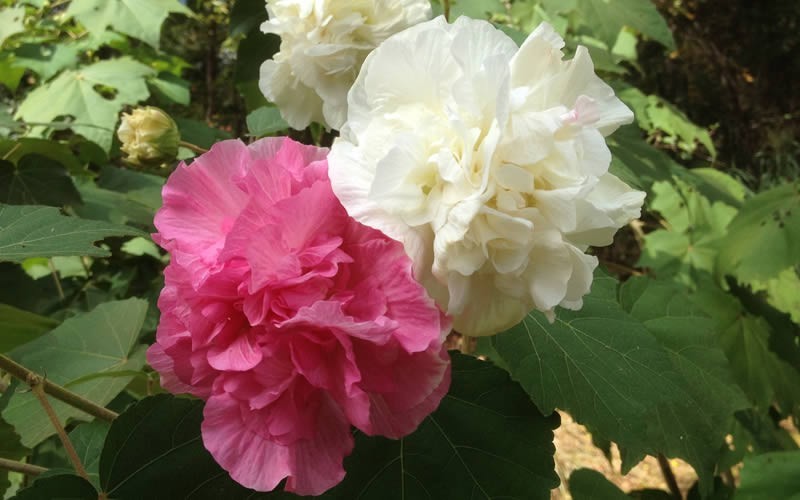
Confederate Rose (Hibiscus mutabilis): This hardy rose mallow has large, showy flowers that open white and then change color.
Hibiscus rosa-sinensis ‘Cajun Cocktail’: A tropical cultivar with striking orange and yellow ruffled blooms, giving each one a one-of-a-kind appearance.

Hibiscus moscheutos ‘Perfect Storm’:A hardy, compact hybrid cultivar that blooms late in the season.

Know-It-Alls: Trivia Tuesday

Today’s category is FOOD.

How did the pound cake get its name?

Why was the Animal Crackers box designed with a string handle?

On which vegetable did an ancient Egyptian place his right hand when taking an oath?

The pretzel shape was created by French monks in 610 AD. What was it designed to resemble?

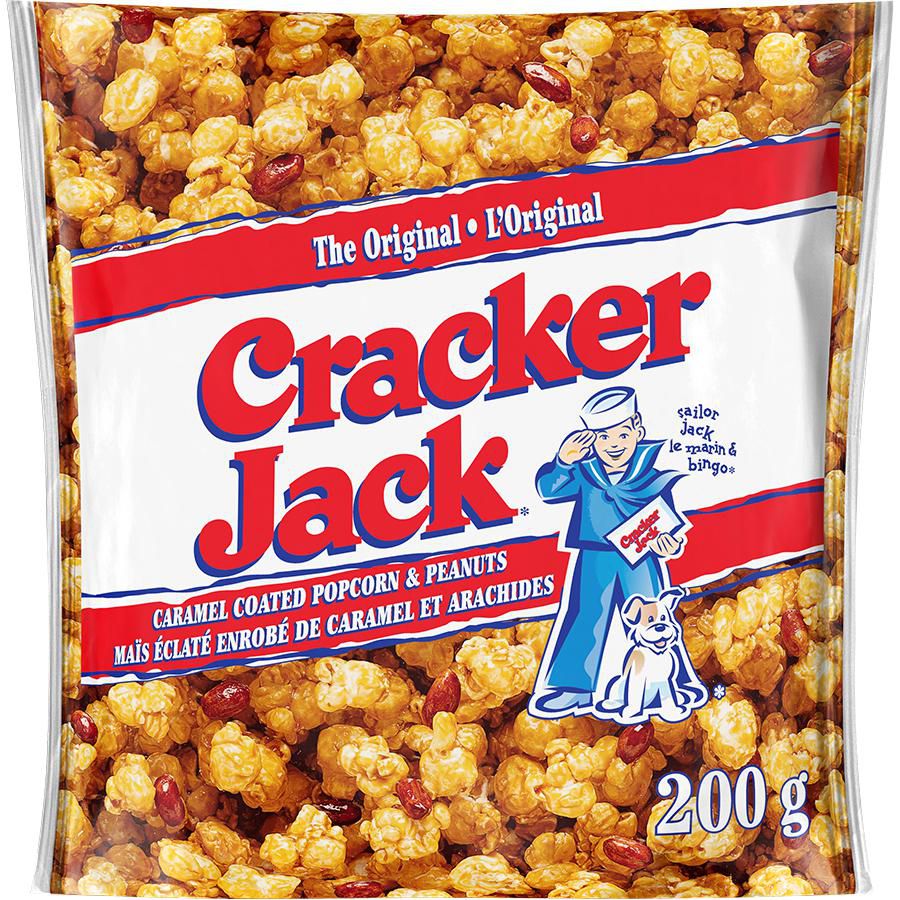
What is the name of the dog on the Cracker Jack box?

What flavor did Baskin-Robbins introduce to commemorate America’s landing on the moon on July 20, 1969?

What is the most widely eaten fish in the world?

What part of the traditional Thanksgiving dinner is called the merrythought?

What is a cluster or bunch of bananas called?

In the world of food, what is pluck?

What part of the orange is the albedo?

What animal’s milk is used to make authentic Italian mozzarella cheese?

What is the only essential vitamin not found in the white potato?

What is the largest fruit crop on earth?

How long does it take to hard boil a 3-pound ostrich egg?

Answers

From the one-pound quantities of the key ingredients (sugar, butter, eggs and flour) in the original recipe.

The animal shaped cookie treats were introduced in 1902 as a Christmas novelty—and packaged so they could be hung from Christmas trees.

The onion. Its round shape symbolized eternity.

A little child’s arms in prayer.

Bingo.

Lunar cheesecake.

Herring.

The wishbone of the turkey.

Hand.

An animal’s heart, liver and lungs.

The bitter tasting white tissue that makes the peel stick to the skin.

The water buffalo’s.

Vitamin A.

Grapes, followed by bananas.

One hour and 45 minutes.

SO…how did you do??

DIY: Yard Games

The weather is turning warmer and sunnier (hopefully) and is the PERFECT time for picnics!  I found a wonderful article on the Pioneer Woman’s website listing some great outside games for picnics.  (She includes instructions at her site—which I’ve listed at the end.)

Kerplunk

This game uses some chicken wire, painted dowels and balls!

Hook and Ring Game

She says this is popular at bars and restaurants in Florida. It looks like fun. 

Giant Jenga

This game requires 2 x 3 blocks of wood and paint…seems easy enough. Hubby and I will make this one for sure!

Bean Bag Toss

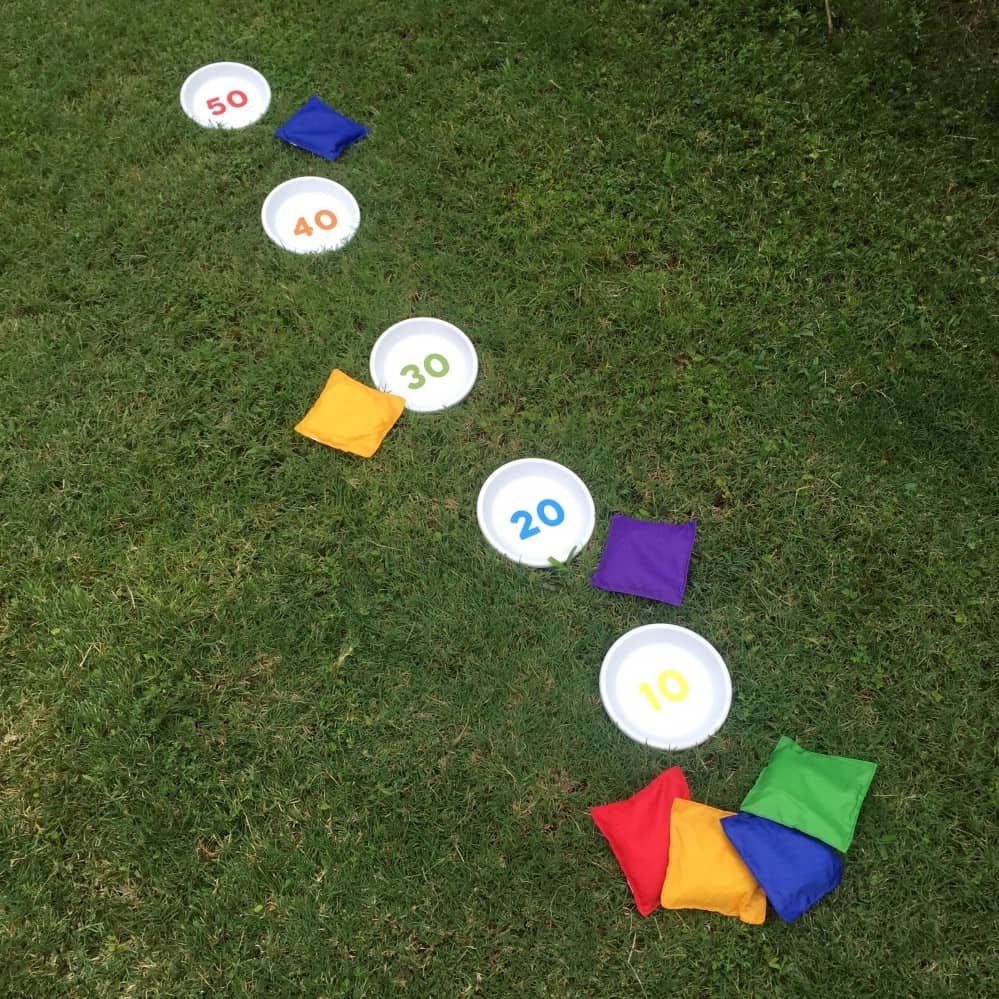
Bean Bag Toss is another simple to make outside game.  It requires clay pot saucers, some paint and bean bags!

There are many more ideas at https://www.thepioneerwoman.com/home-lifestyle/entertaining/g36687460/best-outdoor-games/

Lowland Streaked Tenrec

The lowland streaked tenrec (Hemicentetes semispinosus) is a small mammal within the Tenrecidae family and are only found in tropical lowland rain forest in the eastern parts of Madagascar.

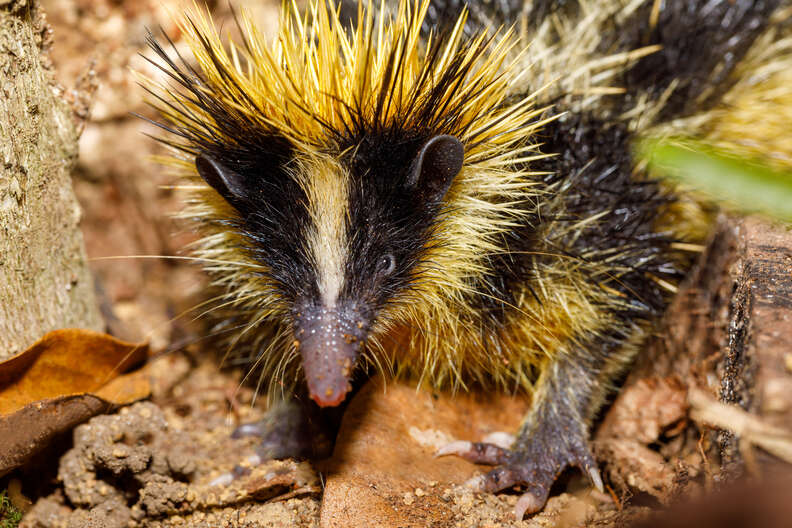
Tenrecs are odd-looking creatures that look like a cross between a shrew and a hedgehog having a bad hair day, don’t you think?

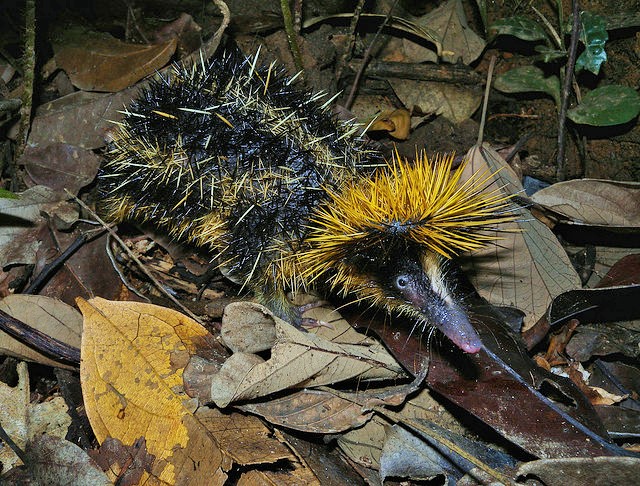
The lowland streaked tenrec has a long snout and limbs, and a vestigial tail. The hair, or fur, is black with yellow stripes that run down the side of the body, and a yellowish band running from the crown to the tip of the snout.

It has a messy assemblage of quills which are barbed and detachable.

The head and body are 4.8 to 6.5 inches in length. The weight is about 7 ounces.The streaked tenrec is active during day and night, feeding primarily upon earthworms, but also on insects.During the winter (May to October), tenrecs can drop their body temperature to nearly that of the surroundings to conserve energy, but in the coldest weather, they must hibernate.Their breeding season is from October to December, although, depending upon local food supply and temperature, they may also mate at other times of the year.The gestation period lasts 58 days. The average size of a litter is 6 young. The young are weaned at 18 to 25 days.Females are reproductively active at a young age, sometimes breeding at just five weeks!

The lowland streaked tenrec lives in long, shallow burrows, usually in family groups of about 20 individuals.

The streaked tenrec communicates with other by a method known as stridulation, the act of producing sound by rubbing together certain body parts. In this case, the body parts are specialized quills on the middle of their backs which they vibrate to create a low-pitched noise. The lowland streaked tenrec is the only known mammal to have the ability to do this. It is a method more commonly associated with insects and snakes.

If threatened by a predator, a streaked tenrec will raise the barbed quills on its back and around its neck and buck the head violently to attempt to drive the quills into the attacker’s nose or paws.

Source: Animal Bliss

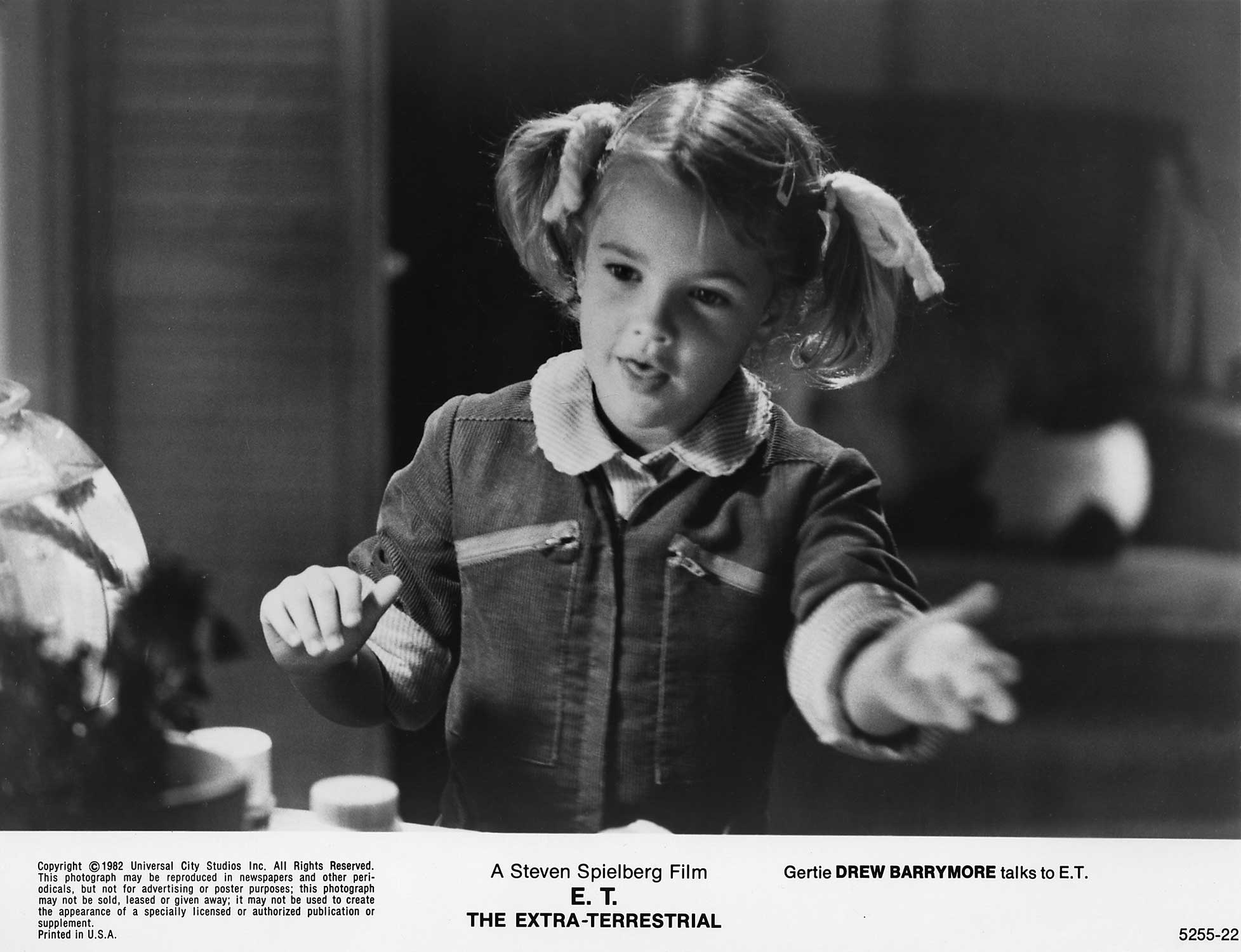
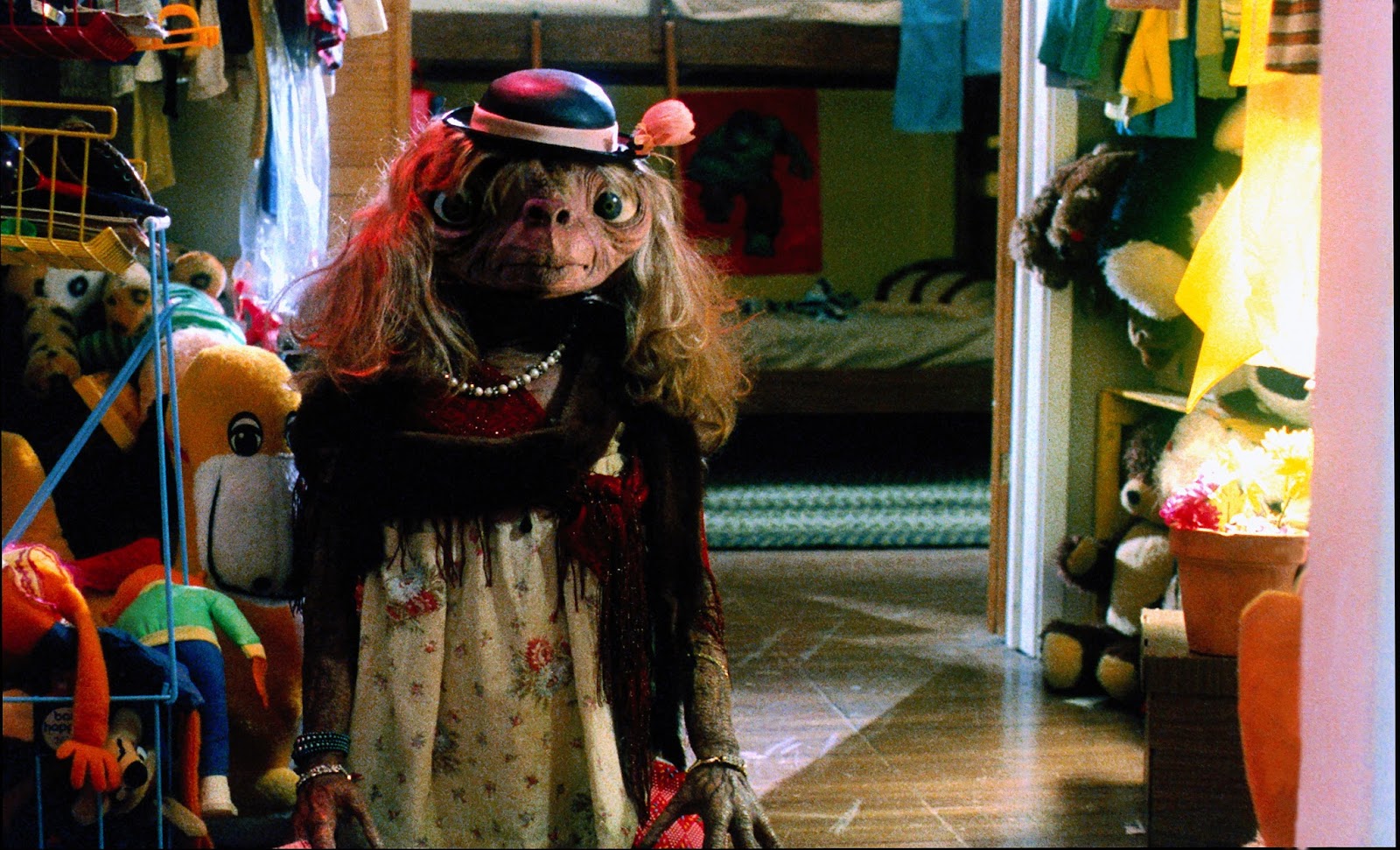
E.T. Phone Home

Today marks the anniversary of the premier of E.T. at the Cannes Film Festival in 1982.  In honor of that event, I bring the following puzzle from GAMES World of Puzzles, called E.T. Phone Home.  Each answer begins with “E T”.  For example, if the clue was “Exam often taken in a blue book” then the answer would be Essay Test.

Ready?

Paris landmark

Décor pieces for the living room

Concerns for large inheritances

Wicked alter ego

Stately shade provider

Star of 1963’s Cleopatra

Journey for one with a big head

Sitting duck

Tan, beige, or cream for example

They go around Chicago

Statement with little muscle behind it

Best Actress winner for Howard’s End

Miniature hourglass used in the kitchen

Indian Ocean island country

So, how did you do?

Weird State Laws Part 2

Montana: No “folf”Anyone who’s driven through Montana has inevitably wondered, “how far could I throw a Frisbee over the plains?” Those who seek answers, avoid Helena; it is illegal to play “folf” (that’s “Frisbee golf”) anywhere not deemed a sanctioned “folf course.” Curiosity could cost you $500 or six months jail time.

Nebraska: No marriage if you have VD

Technically, no person afflicted with a venereal disease may get married in Nebraska. Meanwhile, state officials are still unable to get a green-light for their new TV show, Law And Order: VDU.

Nevada: Be selective with X-rays

Say what you will about the vice and commercialism of Las Vegas—at least they’re looking out for your feet. In Nevada, it is illegal to use an x-ray device to determine someone’s shoe size.

New Hampshire: No seaweed collecting

In New Hampshire it is forbidden to collect seaweed from the beach at night. Yes, it’s unfair, but you should’ve thought about that before becoming a nocturnal sushi chef.

New Jersey: No murder while wearing a bulletproof vest

It’s against the law to murder someone, but in Jersey it’s double against the law to murder someone while you’re wearing a bulletproof vest. See if you can follow along: wearing a bulletproof vest while committing or attempting to commit a crime of the first degree, is a crime of the second degree.

New Mexico: Redefining indecent exposure

Let’s take a break to focus on what’s not illegal: walking around with your butt out. In New Mexico, “indecent exposure” is defined as “intentionally exposing [one’s] primary genital area to public view.” Buttocks are nowhere to be mentioned.

New York: Sales tax for sliced bagels

If you order a sliced bagel in New York City, fuhgeddabout a square deal: “altered” bagels (sliced, toasted, or served with cream cheese, etc.) carry an eight-cent sales tax. Uncut bagels are typically tax exempt.

North Carolina: Be careful with your doggie bag

Be careful what you put in your doggy bag: In North Carolina it is a felony to steal more than $1,000 worth of grease, and a misdemeanor to steal under $1,000-worth. Grease theft, it turns out, was a huge problem in NC before this 2012 law passed, with midnight grease-bandits persistently preventing Biodiesel companies from purchasing restaurants’ excess oil to convert into fuel.

North Dakota: No late-night fireworks

Happy almost New Year! Despite a 1999 amendment allowing the sale of fireworks temporarily from December 26, 1999 through January 1st, 2000, it is illegal to set off fireworks after 11p.m. in Devil’s Lake, North Dakota.

Ohio: Toilet paper in coal mines, please!

Operators of underground coal mines must provide “an adequate supply of toilet paper” with each toilet. It’s too bad the letter of the law here stops at coal mines.

Oklahoma: No bear wrestling

In Oklahoma it is illegal to promote, engage in, or be employed by a “horse tripping” event. Also, it is unlawful to wrestle a bear… but at that point, the law is the least of your worries.

Oregon: No “tests of physical endurance” … while driving

It is considered a speed racing offense in Oregon if you participate in any “test of physical endurance” while on the highway. Sorry, y’all: No more seeing how long you can work the steering wheel with your teeth.

Pennsylvania: Bingo is only for non-felons

Fool me once, shame on you: No person convicted of a felony may operate a Bingo game in Bensalem, Pennsylvania.

Rhode Island: Don’t impersonate an auctioneer

Rhode Island “false personification” laws deem it unlawful to impersonate an auctioneer. Choose your Halloween costume accordingly.

South Carolina: No working (or dancing!) on Sundays

Good news: In South Carolina it is still illegal to work on Sundays! Bad news: it is also illegal to dance on Sundays. Fans of work and/or footwork will both be happy to hear, these antiquated laws are in the process of being repealed.

South Dakota: Fireworks approved to help with farming

Farmers in South Dakota have the green-light to set off fireworks or explosives to protect their sunflower crops… so long as they are six hundred sixty feet away from the nearest church, home, or schoolhouse.

Tennessee: Permits for panhandling

Panhandlers in Memphis must apply for a permit before panhandling. Formerly, this formality cost the destitute $10. Today, it’s free.

Texas: Keep litter on aircrafts

It is illegal in Galveston, Texas to throw litter out of an aircraft. Besides, using the blue bins is so much easier.

Utah: No missiles in bus terminals

Hurling a missile into a bus terminal is a felony—unless you are an appointed officer of the peace or commercial security personnel (see: mall cop.)

Vermont: Clotheslines, be gone

Vermont passed a law just to say there would never be a law prohibiting the use of clotheslines. Good to know.

Virginia: No skunks as pets

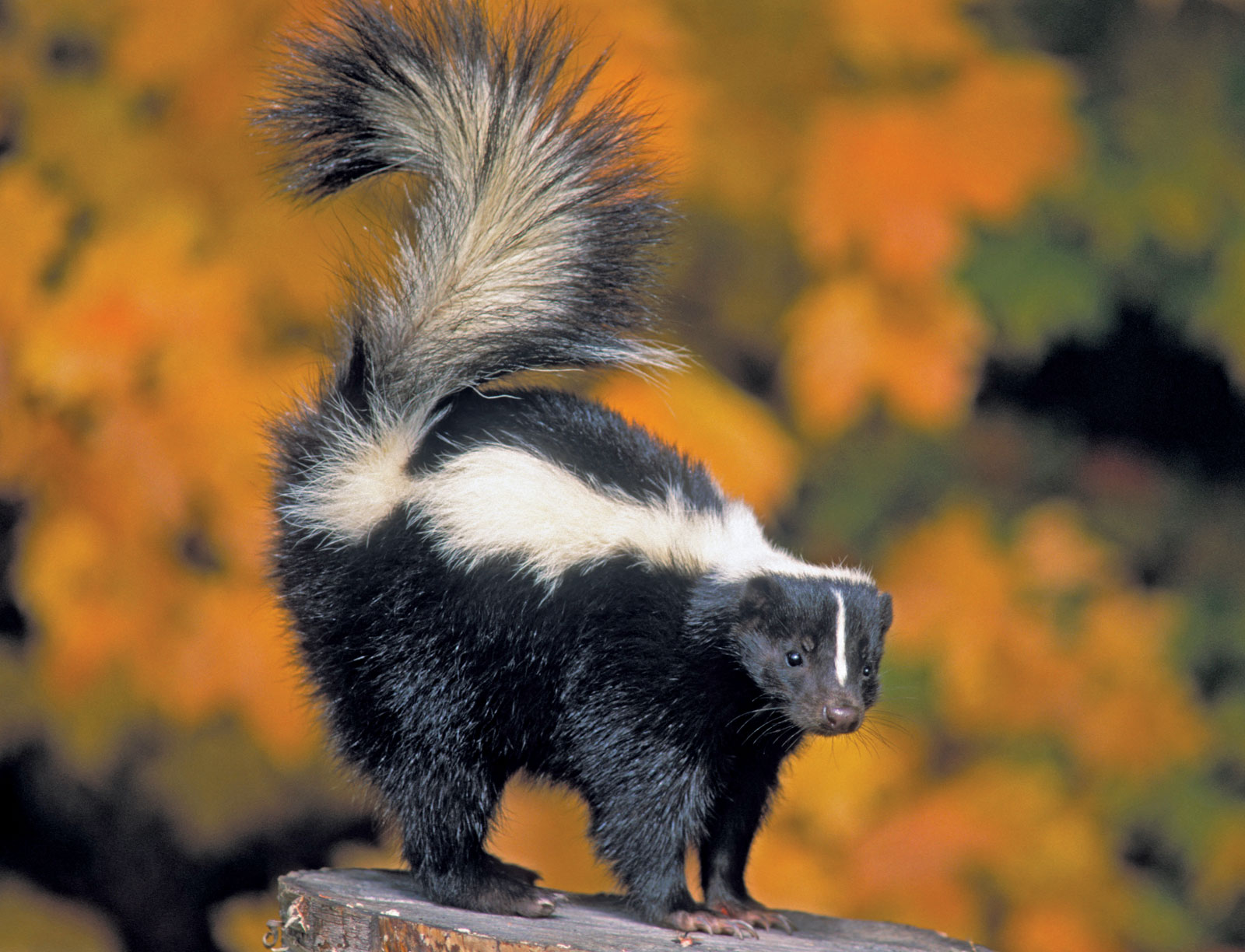
In Prince William County, it is illegal to keep a skunk as a pet. Man, the law stinks.

Washington: No Sasquatch poaching

It is illegal to poach a Sasquatch in at least two Washington counties. In 1991, Whatcom Country declared its roughly one million acres of land an official Sasquatch Protection and Refuge Area, giving our nation its first Bigfoot Sanctuary. If Bigfoot exists, lawmakers reasoned, it would be an endangered species, and therefore in need of protection. For this reason, Skamania County has considered Bigfoot-poaching a felony since 1969—still punishable by a $1000 fine.

West Virginia: No drones for bird hunting

In West Virginia it is illegal to use a drone “or other unmanned aircraft” to hunt birds. While you’re out in the woods, you’d better not use a ferret instead of a hunting dog; that’s a $100 fine right there.

Wisconsin: Better make that butter delicious

Giving credence to its reputation as “America’s Dairyland,” Wisconsin law demands that all cheese and butter produced in the state be “highly pleasing.” Oh, and cows have the right-of-way on highways.

Wyoming: Don’t buy junk from a drunk

Like Mama always said, “don’t buy junk from a drunk.” In Wyoming, purchasing scrap “metals, rubber, rags or paper” from an intoxicated person is prohibited.

Originally Published: June 12, 2019 Reader’s Digest

Weird Laws Per State Part 1

I stumbled across this article from Reader’s Digest listing the dumbest laws in each state (alphabetically). I thought I should pass it along…lol

Alabama: No stink bombs or confetti

If you’re a stodgy school principal from a 1980s film, consider moving to Mobile, Alabama: Stink bombs, “funk balls,” and any object “the purpose of which is to create disagreeable odors” are strictly illegal there. Also illegal: “spray string,” confetti, and bathing in public fountains.

Alaska: No getting drunk in a bar

In Alaska it is illegal to be drunk… in a bar. Per state laws, a person who is already drunk may not “knowingly” enter a bar to drink more, or remain in the bar that got them drunk in the first place. Confusing and cruel? Yes. Outdated? Sadly, no—police actually enforce it.

Arizona: No spitting in public

In the town of Goodyear, Arizona, it is unlawful to spit “in or on” any public building, park, sidewalk, or road. Offenders may be charged a fine of up to $2,500 and six months in prison. And in case you need a reminder, it’s also just lousy etiquette.

Arkansas: Must pronounce state name correctly

Visitors beware: it is strictly prohibited to pronounce “Arkansas” incorrectly. Per the state Code, the only acceptable pronunciation is “in three (3) syllables, with the final ‘s’ silent, the ‘a’ in each syllable with the Italian sound, and the accent on the first and last syllables.” So keep your Arkan-sass to yourself—and while you’re at it, make sure you’re pronouncing these common food words correctly.

California: No nuclear weapons, obviously

It is illegal to build, maintain, or use a nuclear weapon within Chico, California city limits. A law that began in the ‘80s as a serious anti-nuke statement has taken on a second life as an Internet joke, mainly due to the purported consequences: In addition to self-annihilation, the infraction also carries a $500 fine.

Colorado: No catapulting

Sure, you may be allowed to own a catapult in Aspen—but you better not try discharging it, buddy. Flaming arrows, alas, are also off limits.

Connecticut: Pickles must bounce

A pickle cannot be sold unless it bounces. According to a 1948 article, this law became a necessity after two scheming pickle packers tried to sell pickles “unfit for human consumption” on the sly. Connecticut’s Food and Drug Commissioner at the time proclaimed that a real pickle “should bounce” when dropped from the height of one foot, leading to a new state regulation.

Delaware: Strict trick-or-treating times enforced

To prevent “mischief of any sort,” children in the City of Rehoboth Beach may only go trick-or-treating between the hours of 6pm and 8pm on Halloween—UNLESS Halloween falls on a Sunday; in that case, “such going door to door and house to house for treats shall take place on the evening of October 30” instead.

Florida: No selling children

We know that kids can be annoying but please remember that in Florida it is a felony to sell your children. You’ve been warned.

Georgia: Can’t eat fried chicken with utensils

For chicken chompers in Gainesville, Georgia, “finger-lickin’” is not a suggestion—it is mandatory. Thanks to a 1961 law added to the city code as a publicity stunt, it is illegal to eat fried chicken in “the poultry capital of the world” with anything other than your fingers. A tourist was “arrested” for such a chicken-forking violation in 2009.

Hawaii: No billboards

Hawaii’s natural beauty is an advertisement unto itself. To keep it that way, the state has officially outlawed billboards (with some exceptions) and aerial advertising, part of an “urban beautification” initiative that dates to 1927. These aren’t so much “dumb laws” as “laws that make us feel dumb for not thinking of them first.”

Idaho: No cannibalism

Idaho is the only state to have an active ban on cannibalism. Technically not a crime in the rest of the nation, cannibalism is defined as the “nonconsensual consumption” of another human—meaning, we guess, if you can get your buddy’s permission to eat his tenderloin, the feds can’t stop you.

Illinois: No “fancy” bike riding

Listen here, city slicker: Galesburg city law strictly prohibits “fancy riding” of any bicycle on city streets, particularly riding with both hands removed from the handlebars, both feet removed from the pedals, or “any acrobatic” shenanigans on your fancy velocipede. According to a Galesburg police officer, “I suspect the trick riding ordinance came during a time or concern about bicyclist safety and perhaps crashes involving bicyclists.” It is seldom enforced.

Indiana: Proper black cat etiquette on Friday the 13th

In the municipality of French Lick Springs, all black cats must wear bells around their necks on Friday the 13th. The rule was introduced on October 13, 1939, “as a war measure to alleviate mental strain on the populace,” and has technically been in effect since.

Iowa: No faking your butter

I Can’t Believe It’s Not A Misdemeanor! Any person who attempts to pass off margarine, oleo, or oleomargarine as real butter is guilty of a simple misdemeanor in the state of Iowa, punishable by up to 30 days in jail and a $625 fine.

Kansas: No snowballs

It may still be illegal to throw snowballs in Topeka, Kansas. Thanks to a weirdly-worded law in the city Criminal Code, it is unlawful to “throw any stones, snowballs, or any other missiles” at any person or property in Topeka, an ordinance that former mayor Bill Bunten publicly flouted by tossing a whopper at a snowy tree in 2005. “I’m going to have an ordinance drawn up to repeal this Dumb Law lest our already-crowded prisons are filled up with children who, while making a snowman, got carried away and had a snowball fight,” he later claimed.

Kentucky: No dueling

All public officials and attorneys in Kentucky must swear an oath that they “have not fought a duel with deadly weapons” nor acted as a second in another person’s duel. Good to know now; unfortunately, when the oath took effect in 1848, many would-be duelists turned to murderous street brawls instead.

Louisiana: No catfish stealing

In Louisiana it is illegal to steal someone else’s crawfish—like, really illegal. Meriting its own state law, crawfish theft in excess of $1,500 can land the offender with up to ten years prison time or a $3,000 fine. But mostly, they will have to endure the humiliation of being called shellfish for the rest of their life.  [Pat’s question: Are catfish and crawfish the same thing?]

Maine: Don’t advertise on tombstones

It is forbidden to post advertisements on another person’s tombstone in the city of Wells. Part of a lengthy list of cemetery regulations, this ordinance is really a favor to would-be marketers; nobody is a worse customer than a corpse.

Maryland: No cursing while driving

Making road rage even rage-ier, it is illegal to swear or curse upon any street or highway in Rockville, Maryland. Anyone caught swearing faces a misdemeanor charge, effectively having to add $100 to the city swear jar.

Massachusetts: No dancing to the national anthem

It is prohibited to dance to the “Star Spangled Banner” in Massachusetts, thanks to an excessively patriotic 1917 law. While you try to ponder what such a dance would even look like, find solace in the fact that this law could never actually be enforced, thanks to a slightly weightier document called the First Amendment.

Michigan: Bounty hunting encouraged (then not)

Until 2006, every citizen of Michigan was encouraged to be a bounty hunter. A 1941 act titled “An act to provide for the payment of bounties for the killing of starlings and crows,” offered any citizen a bounty of three cents per each starling killed and ten cents per crow—so long as they were presented in “a state of good preservation.” The law was repealed in 2006.

Minnesota: No pig greasing

Long winters can be boring, but that’s not a good reason to hold a greased pig contest in your parlor. Since 1971, it has been considered a misdemeanor to operate, run, or participate in any activity where a pig is oiled up and released with the object of being recaptured—and the same goes for “turkey scrambles.”

Mississippi: No limits on Big Gulp size

Mississippi believes in a person’s inalienable right to consume Big Gulps. Following former New York Mayor Michael Bloomberg’s contentious attempt to restrict the size of soft drinks sold throughout the city, Mississippi Governor Phil Bryant signed a law preventing his state’s lawmakers from enacting rules that limit portion sizes. Thanks in part to the “Anti-Bloomberg Bill,” one in three Mississippians remains obese.

Missouri: Tarzans not welcome

Prankish Tarzans, be warned: In University City, Missouri, it is illegal to “swing upon” another person’s motor vehicle and honk their horn for them.

Come back tomorrow for Part 2 and the rest of the states!

That Touch of Mink

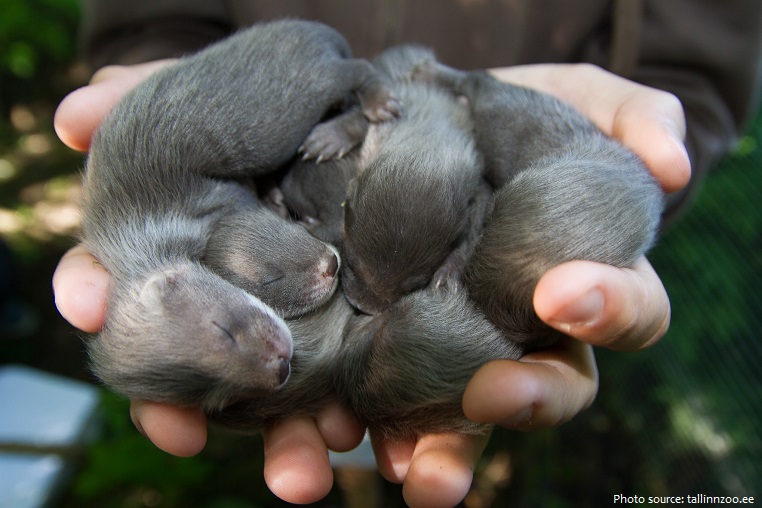
The word “mink” is used for the two sole species of these animals still residing on the planet.

These semi-aquatic species are the American mink (Neovison vison) and the European mink (Mustela lutreola).

American mink roam all over both Canada and the United States, although they are nonexistent in a handful of states and regions — think Arizona and Hawaii.

European mink, true to their monikers, live all the way across the pond in nations such as Spain, France and Russia.

Although both types of mink are undeniably similar animals, they have their fair share of individual qualities, too.

The American mink is larger and more adaptable than the European mink but, due to variations in size, an individual mink usually cannot be determined as European or American with certainty without looking at the skeleton.

In the wild, mink are small, discreet, and most often nocturnal, and they live in close proximity to water.

The lifespan of minks is about 3 years in the wild and up to 10 years in captivity.

The male weighs about 2.2 lb and is about 24 in in length. The female weighs about 1.32 lb and reaches a length of about 20 in. The sizes above do not include the tail which can be from 5.0 in to 9.0 in.

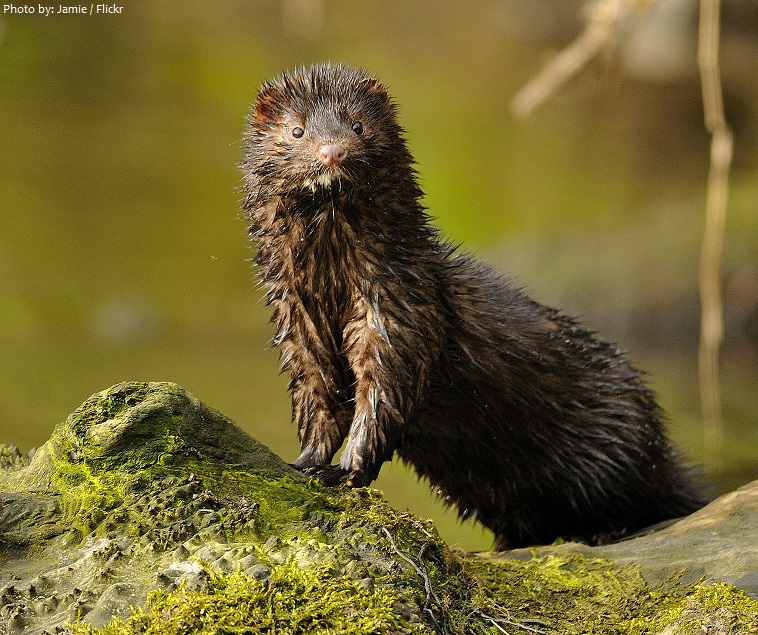
The body is long and slender with short legs and a pointy, flat face. The toes are partially webbed, showing the mink’s semi-aquatic nature.

A mink’s rich glossy coat in its wild state is brown and looks silky, but farm-bred mink can vary from white to almost black. Their pelage is deep, rich brown, with or without white spots on the underparts, and consists of a slick, dense underfur overlaid with dark, glossy, almost stiff guard hairs.

Minks have excellent senses of vision, smell, and hearing.

A mink can run at speeds up to 8 mph.

Minks are carnivores. The diet of mink varies with the season. During the summer it consists of crayfish and small frogs, along with small mammals such as shrews, rabbits, mice, and muskrats. Fish, ducks and other water fowl provide additional food choices. In the winter, they primarily prey on mammals.

Mink are very territorial animals. A male mink will not tolerate another male within its territory, but appears to be less aggressive towards females. Generally, the territories of both male and female animals are separate, but a female’s territory may sometimes overlap with that of a male.

Mink communicate using a variety of cues, including chemical, visual, and auditory signals. They are fairly quiet, but rely heavily on chemical signaling for communicating territorial boundaries and reproductive status.

The breeding season lasts April to May. Although the true gestation period is 39 days, the embryo may stop developing for a variable period, so that as long as 76 days may elapse before the litter arrives. Between 45 and 52 days is normal. There is only one litter per year. They may have between six and ten cubs or kittens per litter. Young are weaned at about 10 weeks, and begin tracking and capturing prey. Young begin to disperse at about 2.5 to 4 months.

Mink have few natural enemies. They are occasionally killed by coyotes, bobcats and other carnivores, but their main threat remains humans.

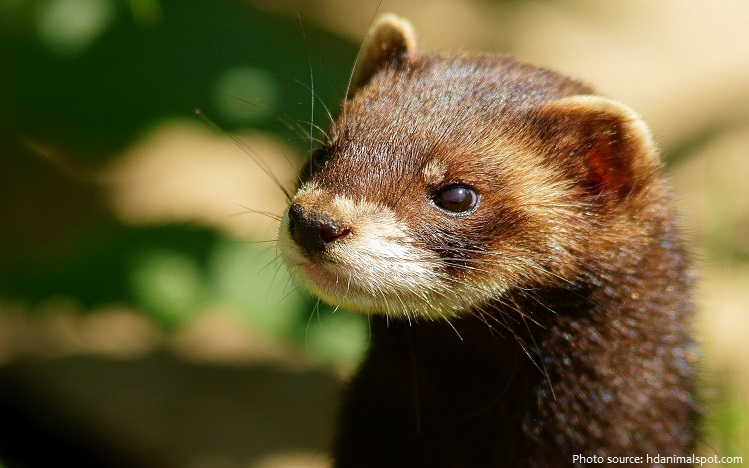
These creatures are related to ermines, ferrets and weasels and look much like their relatives.

The main threat towards mink survival is the continued existence of the fur market.

Mink pelts have for years been considered one of the most luxurious furs on the market. Originally all fur came from natural populations, causing a severe strain on the species.

However, starting in the mid-1900s, mink ranches were established to help bring a more consistent pelt supply to the market. Ranching was very successful, with the number of mink ranches in the United States reaching a high of 7200 during the mid-1960s.

Mink are kept in captivity primarily for the production of their fur.

Source: JustFunFacts

Alternate Uses for Baby Powder

[I found this article on alternate uses for baby powder on a website devoted to frugality.]

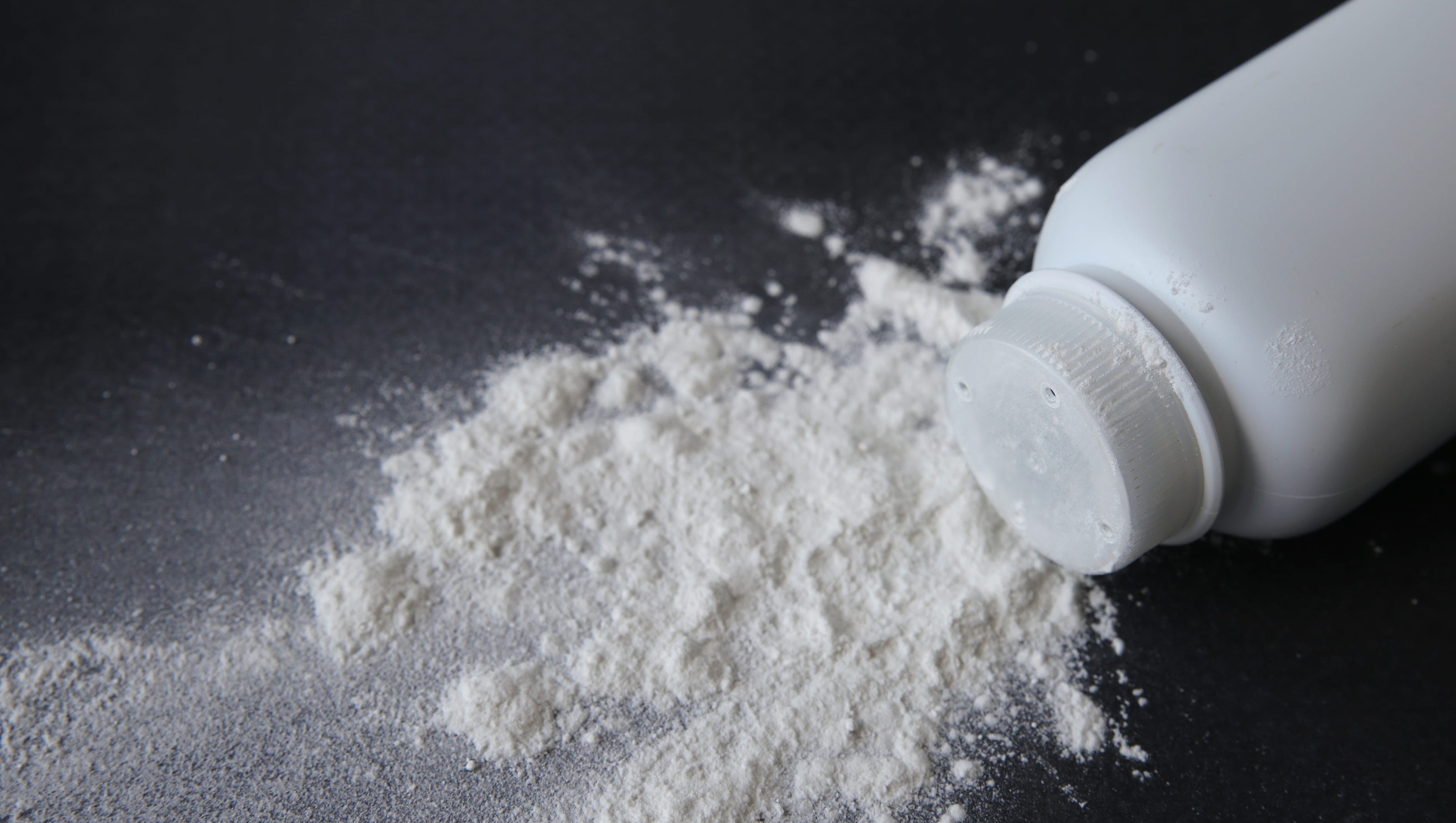
Baby powder isn’t just for babies anymore {though, to be fair, I never did use it on my babies}.  Turns out, there’s actually lots of way to put baby powder to good use.  Here’s my top 10 favorite ways to use it:

Throw a bottle in your beach bag because it helps to get the sand off of your body at the end of the day.  Sprinkle it on, it will absorb the moisture and the sand should easily brush right off.

Sprinkle a little in your dish washing/cleaning gloves.  It makes it easier to get them on and off.

Sprinkle on the sheets in the summer.  It is supposed to give sheets a cool feeling {my guess is that it does more for your sticky summer body than anything else, but it probably still feels soft and luxurious, so I am totally trying it.}

Give your flower bulbs a little baby powder bath before you plant them.  The baby powder deters mold in the bulbs and supposedly deters critters from wanting to eat them.  Just sprinkle some baby powder in a ziploc bag, add the bulbs and shake.

Get playing cards to stop from sticking.  Put the cards and the baby powder in a baggie and shake.  Dust the cards off, and they shouldn’t stick anymore.

Give your dog a dry bath.  Sprinkle some baby powder on, let it sit a few minutes and then brush your dog.  {Hmmm, I know some people I’d like to try this on.}

Use as an aftershave–for men and women.  It’s cheaper and leaves skin feeling as soft as, well, a baby’s bottom.  Ha.

Untangle knots.  Got a necklace that has a knot, or a shoelace that won’t budge.  Sprinkle a little baby powder on it, it will help loosen the knot.

Freshen those old books you snagged at a garage sale by sprinkle baby powder in the pages.  Let the book sit for a bit, and then shake the baby powder out.

Use to absorb grease stains on clothes.  Sprinkle baby powder on the spill and blot the grease out.  Repeat until stain is gone, brushing off excess baby powder each time.

By Mavis Butterfield on September 23, 2013 @https://www.onehundreddollarsamonth.com/10-alternative-uses-for-baby-powder/