Redheads!

I found an interesting article about redheads the other day and decided to bring some of their “facts” here to share.  You can find the article and all their “facts” at the link below.  (Several of their facts discuss how redheads are equated with witchcraft throughout the years.)

Approximately 1-2% of humans, or about two in 100 people in the world, have red hair.

The ancient Greeks believed that redheads would turn into vampires after they died.

Several myths about red hair have become culturally common, such as “the red-headed step child,” “the insatiable red hair girl-next door,” and “the wimpy redhead.”

In some cultures, such as certain parts of Africa, redheads are still believed to be witches.

Otherwise dark hair may turn red or blond in cases of severe protein deficiency due to starvation.

Red hair doesn’t gray as much as other hair colors. Red hair initially tends to turn blond and then white.

According to George Chapman’s 1613 play Bussy D’Ambois, the perfect poison must include the fat of a red-haired man.

Because natural red hair holds its pigment more than other colors, it is harder to dye.

Redheaded women report bruising more easily than other women of different hair colors.

People with red hair have twice the risk of developing Parkinson’s Disease.

Because redheads have thicker hair than people with other hair colors, they have fewer strands of hair. For example, while blondes have on average 140,000 hairs, redheads have approximately 90,000.

According to Hamburg sex researcher Dr. Werner Habermehl, women with red hair have more sex than women with other hair colors. He also postulates that women in a relationship who dye their hair red may be signaling that they are unhappy and looking for something better.

According to legend, the first redhead was Prince Idon of Mu who, upon discovering Atlantis, was imprinted with the island’s stunning red sunset and leaves in the form of red hair and freckles so future generations would be reminded of Atlantis’ first sunset.

Red hair is a recessive trait, which means that a child must inherit one red hair gene from each parent. Recessive traits often come in pairs, and redheads are more likely than other people to be left-handed.

Some scholars speculate that because Adam was from “red earth” and the Hebrew word for “red” is adom, that Adam was a redhead.

Scholars note that redheads have influenced history out of proportion to their numbers. Famous redheads include Roman emperor Nero, Helen of Troy, Cleopatra, the ancient god of love Aphrodite, Queen Elizabeth I, Napoleon Bonaparte, Oliver Cromwell, Emily Dickinson, Antonio Vivaldi, Thomas Jefferson, Vincent Van Gogh, Mark Twain, James Joyce, Winston Churchill, Malcolm X, Galileo, and King David.

The rarest hair color in humans is red.

In ancient Rome, redheaded slaves were often more expensive than those with other hair color.

Satan is often portrayed as a redhead most likely because red was viewed as the color of sexual desire and moral degradation.

In 1995, Professor Jonathan Reese discovered that mutations of the gene MC1R on chromosome 16 were responsible for red hair (known as the “ginger gene”). The gene mutation responsible for red hair in humans probably arose 20,000-40,000 years ago.

Some scholars postulate that the same gene mutation that causes red hair also affects the way redheads respond to pain and anesthetics.

Mark Twain once quipped that “while the rest of the human race are descended from monkeys, redheads derive from cats.”

In Egypt, redheads were buried alive as sacrifices to the god Osiris.

Scientists now report that Neanderthals had a version of the gene that causes red hair but not the same variant as in modern humans, suggesting they did not interbreed with each other.

There is a common perception that redheads could become extinct in 100 years. However, a National Geographic article states that while redheads may decline, barring a catastrophe, the gene for red hair will not likely become extinct.

While Scotland has the highest proportion (13%) of redheads (followed by Ireland with 10%), the United States has the largest population of redheads in the world, with between 6-18 million redheads, or 2-6% of the population.

The gene that causes red hair initially had the benefit of increasing the body’s ability to make vitamin D, which was important for people living farther away from the equator. However, today’s redheads are more likely to develop skin cancer and premature wrinkles.

“Gingerphobia” is a fear of redheads. “Gingerism” is the bullying or prejudice of redheads.

In Michelangelo’s Temptation and in St. Paul’s Cathedral, Eve is initially depicted as having brown and blond hair, respectively. But in both artistic renditions, after she eats the apple and she and Adam are driven from the Garden of Eden, Eve is depicted as a redhead.

Ruadh gu brath is Gaelic for “Red heads forever!”

Some common surnames in the British Isles reflect the frequency of red hair there, including Flanary (“red eyebrow”), Reid (“red-haired, ruddy complexion”), and Flynn (“bright red”).

42 Redhead Facts too Crazy to Believe | Fact Retriever

SOURCE: factretriever.com

Marcia, Marcia, Marcia

In honor of Maureen McCormick’s birthday this month, I went digging for info on the Brady Bunch series.  I found this article on Biography’s website. 

The Brady Bunch: 8 Secrets and Scandals About TV’s Squeaky-Clean Family

Here’s the story about the on-set hookups, arguments and drug use that plagued the cast.

By Colin BertramUpdated: Sep 8, 2020

On television, they were the epitome of the wholesome family. Even when the blended clan of six children that made up the majority of The Brady Bunch did something wrong, it resulted in teachable lessons often delivered by squeaky-clean, caring parents Carol and Mike.

Like many of Hollywood’s classic small-screen series of the late 1960s and early 1970s, the behind-the-scenes goings-on and cast relationships made for far juicier stories than ever appeared on air. For all the sweet-natured shenanigans of the Bradys, off-screen there was drug use, intimate relationships between the cast, hidden sexuality and disputes over storylines.

The Brady Bunch aired from September 1969 through March 1974 on ABC and was created and produced by Sherwood Schwartz. The series went into syndication in 1975 and has become a rerun staple of cable television. The show followed the day-to-day lives of the Bradys, a blended family of six children thanks to the marriage of Mike Brady (Robert Reed) to Carol Martin (Florence Henderson). Mike’s children were three boys: Greg (Barry Williams), Peter (Christopher Knight) and Bobby (Mike Lookinland), and Carol’s three daughters were Marcia (Maureen McCormick), Jan (Eve Plumb) and Cindy (Susan Olsen).

Mike was a widowed architect and the story of Carol’s first marriage was never fully explained, but the blended group took up residence in a sprawling two-story house – designed by Mike – in a suburb of Los Angeles. Also ensconced in the shag-carpeted abode was Alice Nelson (Ann B. Davis), Mike’s live-in housekeeper, and the boy’s dog, Tiger.

Henderson had a risqué sense of humor

The role of Carol would be something Henderson, who passed away in 2016, would be associated with for the remainder of her life. The archetypal mother figure, Carol was ingrained in the imaginations of millions of viewers. In real life, Henderson was described as fun-loving and having a bawdy sense of humor. “She knew the respect that people had for that character,” Lloyd Schwartz, son of Sherwood, said to Variety following Henderson’s death. “Whenever anybody came up to her to say anything about the show, she was as warm as could be – I saw it a million times.”

Williams took Henderson on a date

One particular rumor from her time on set would haunt Henderson throughout later life: That she and Williams dated and had an affair. Williams, as eldest son Greg, was 16 at the time and Henderson was 36. In his 1992 memoir, Growing Up Brady, Williams recalled having a crush on his onscreen mom. “When those little things called hormones start kicking in, you get excited by even inanimate objects. It wasn’t that I sought to bed her,” he writes. “I just wanted to spend time with her.”

Henderson, a happily-married mother of four at the time, humored her young co-star but ensured things never progressed beyond being work colleagues. They did once go out for dinner but were driven by Williams’ older brother as Williams was still without a driver’s license. “That whole thing with Barry got blown way out of proportion,” Henderson wrote on her website of the rumor/date. “I guess in a sense it was a date, because Barry thought it was. But of course, I had no idea that his intentions were to ‘date’ me. It has made for a good story though!”

Williams and McCormick dated while playing brother and sister

Williams had more luck with onscreen sister Marcia. In her 2008 memoir, Here’s the Story: Surviving Marcia Brady and Finding My True Voice, McCormick wrote of dating Williams during filming, noting that at the time she said to herself, “Oh my God! I’m kissing my brother. What am I doing?”

McCormick turned to drugs when the series ended

Only 14 when the series began airing, McCormick said she battled anxiety and personal insecurities due to playing sweet and wholesome Marcia. “As a teenager, I had no idea that few people are everything they present to the outside world,” McCormick writes. “Yet there I was, hiding the reality of my life behind the unreal perfection of Marcia Brady. … No one suspected the fear that gnawed at me.”

Following the end of the series, McCormick’s fear was still there, resulting in cocaine and Quaalude abuse and depression. McCormick recalls drug binges at the Playboy Mansion, and even being so out of it she blew an audition with Steven Spielberg for a role in Raiders of the Lost Ark. After getting clean in the mid-eighties, she says she has come to terms with and even feels acceptance of her Brady character.

Williams filmed an episode high

Williams, like many teens in the 1970s, admits to experimenting with drugs. Except unlike most teens, the results didn’t end up on television. Enjoying a day off from the set with friends, Williams says they smoked some marijuana. “Then [the show producers] called in the middle of this high to go into work,” Williams recounted during a Brady Bunch convention talk in 2014. Though he regrets it, Williams said the results can be seen in the 1973 episode “Law and Disorder”: “I’m a much better actor when I am completely sober than when I’m high!”

Olsen and Lookinland would ‘make out in the doghouse’

Cindy, the youngest member of the Bradys, was often chided for being a tattletale on the show. In real life, Olsen spilled the beans to News.com.au in 2015 about life on the Brady set. When asked whether any of the kids “hooked up” during filming, Olsen replied that she believed “all of us did … We led a sheltered life for part of the year so if there was anybody to crush on or try to date, it would be our counterparts.”

According to Olsen, each young actor paired up with their opposite cast member on the show. “So, I had Mike and we used to make out in the doghouse when we were nine. Eve always had a crush on Chris, they did kind of hook up later on. And, of course, there was Maureen and Barry.”

Reed was a homosexual in real life and kept his sexuality a secret

As Mike, Reed was the level-headed patriarch of the Brady family, doling out words of wisdom with a kindly tone and fatherly hugs at the ready. In real life, Reed, a classically-trained actor, was a homosexual who kept his private life under wraps, a not uncommon occurrence at the time due to fears the revelation would impact ongoing career success.

“Here he was, the perfect father of this wonderful little family, a perfect husband,” Henderson told ABC News in 2000. “He was an unhappy person. … I think had Bob not been forced to live this double life, I think it would have dissipated a lot of that anger and frustration.” While many on set knew of Reed’s life away from the set, it was never discussed openly. “I had a lot of compassion for him because I knew how he was suffering,” Henderson said of Reed, adding that she believed coming out was not a possibility due to the era they were in. “I don’t think The Brady Bunch could have existed at that time with the public knowing that Robert Reed was gay. I just don’t think they would have bought it.”

Reed disagreed with many of the storylines and didn’t appear in the final episode

Reed, who passed away in 1992, also clashed with producer Schwartz over storylines, and especially the visual gags written into each episode. Shakespearean-trained Reed preferred a more serious approach to the storylines, Schwartz told ABC News. Though Schwartz believed Reed to be “a good actor,” he also felt he “wound up on a show that he didn’t want to do in the first place, and it became more and more difficult for him.”

Reed’s displeasure with the scripts would continue throughout the entire series, culminating in his character being written out of what ultimately became the last episode of the original five-season run. The storyline dealt with Greg’s impending graduation from high school and a prank that left his hair orange ahead of the big day. Reed believed the story to be under par and reportedly demanded the episode be rewritten or he would not appear. The powers-that-be called his bluff and Mike’s lines were divided between Carol and Alice, resulting in Reed’s complete absence from the finale.

Spiny Flower Mantis

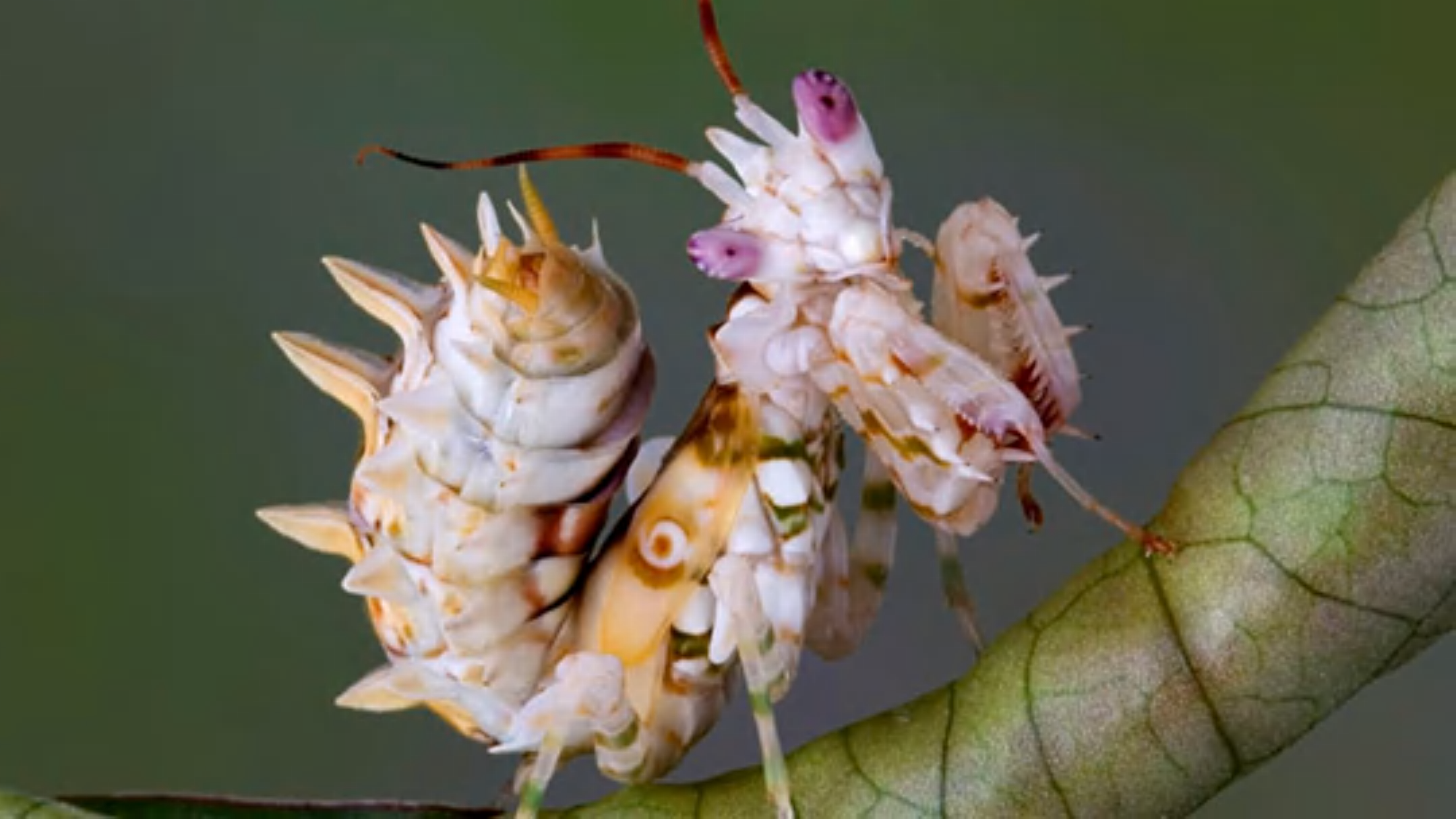
Sure, you’ve heard of the Praying Mantis. But have you met its cousin, Pseudocreobotra wahlbergii, also known as the Spiny Flower Mantis? We stumbled upon its photo during an image search and had to find out more. Here are a few things to know about this beautiful, terrifying-looking insect. 

This tiny bug measures between 1 to 2 inches and is native to Southern and Eastern Africa.

Nymphs, like the one shown above, have an upturned abdomen. Adults have a large yellow spiral eyespot on their fore wings.

When they’re first born, nymphs are mostly black and look almost like ants.

Nymphs will molt approximately every two weeks; the time between molts gradually increases as the mantids get closer to adulthood. During molting, a mantis hangs upside down, sometimes shaking, and eventually wiggles out of its skin. It takes seven molts for a female to reach maturity, and six molts for males.

When threatened, the insects raise their fore wings, which makes them look like a much larger creature with big, golden eyes. This is called a deimatic display, and it looks like this:

I wouldn’t want to run into that guy in an alley—would you?

Instead of searching for prey,P. wahlbergii prefers to snatch its meals—usually pollinating insects right from the air.

Females have small spines on the edges of their wing cases; males do not. The male has slightly longer antennae and eight segments on its abdomen (females will have six or seven).

An easy way to tell males from females is to look at the length of their wings: A female’s wings will reach to the end of her abdomen, while a male’s wings will extend past it.

Like other mantis species, the Spiny Flower Mantis is cannibalistic. As usual, it’s the males who have the most to fear; the website MantisKingdom.com recommends feeding the female before putting a male in the cage behind her:

As she is busy with eating, she can’t grab him or throw him off of her. After a while of holding on, the male will bend his abdomen down to connect with hers and mating will commence.

After the deed is done, the site suggests getting the male out of the cage quickly, or else he’ll become a meal.

SOURCE: MENTAL FLOSS

Mother of Thousands

How To Care For Mother Of Thousands

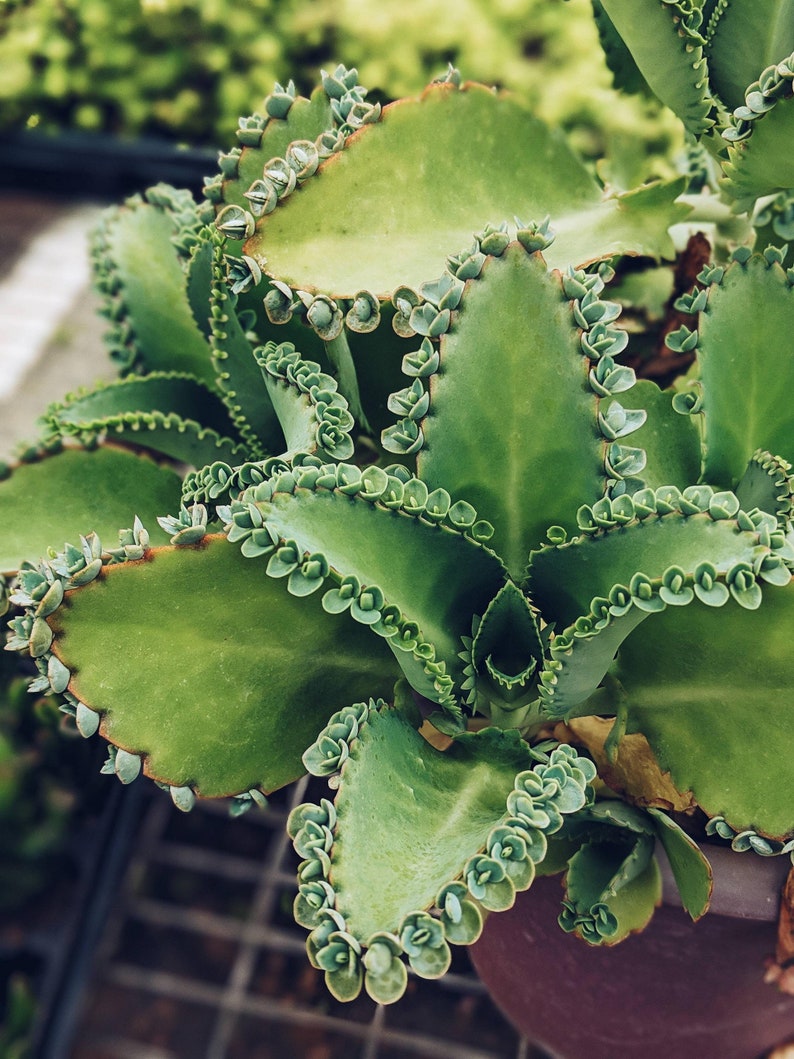
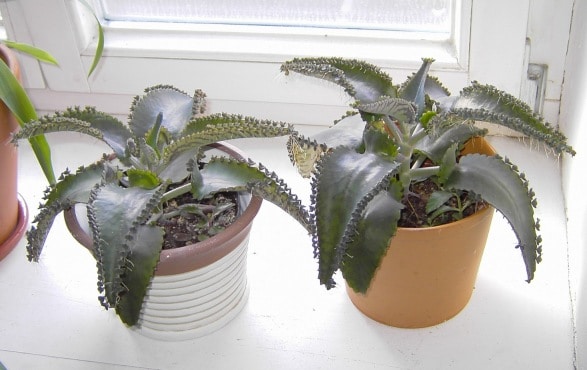
Mother of Thousands (bryophyllum daigremontianum) is a beautiful and interesting house plant, and one of my favorites. If you have one of these plants in your home, you’ll want to know how to care for it, so it thrives for years to come.

Mother of Thousands should be planted in a well draining potting mix, watered infrequently but thoroughly, and kept in bright, indirect sunlight with low humidity at 65 to 75° F. The tiny plantlets that grow along the edges of the leaves will need to be managed as they try to take root wherever they happen to land.

What Is A Mother Of Thousands Plant?

Mother of Thousands is known by numerous other names – Mexican Hat Plant, Alligator Plant, and Devil’s Backbone. A native of Madagascar, the plant is a succulent that grows up from one stem. The large blue-green leaves are pointed and narrow and grow up to 6-inches long and 3-inches wide. The plant itself can grow as tall as 18 to 35-inches if you let it.

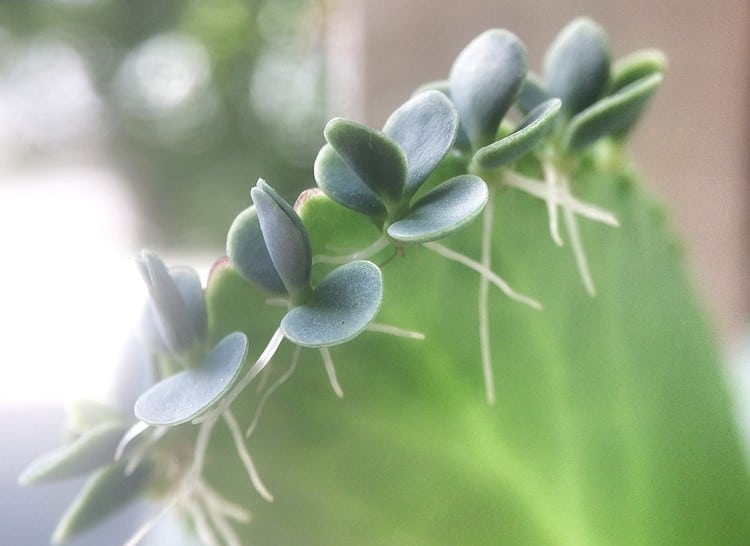
The most unique part of this plant is the tiny plantlets that grow along the edges of the leaves. These little plantlets will drop easily from the main plant, trying to take root wherever they land and find soil appropriate for growth.

For this reason, many gardeners think of the Mother of Thousands as a bit of a problem plant, with the little plantlets doing their best to grow and multiply in all types of soil alongside other plants.

You can easily see how the plant got its most common name – it’s the mother to thousands of other plants! When you’re growing Mother of Thousands indoors, you won’t have to worry too much about it propagating, although you may find that the little plantlets drop into any nearby plant pots where they can take root.

Mother Of Thousands Propagation

With all the little plantlets, your Mother of Thousands is an easy houseplant to propagate. The first thing to do is pick two or three of the plantlets from one of the leaves. If you’re not going to plant them right away, place the plantlets into a plastic bag or seal in plastic wrap. You want to keep them moist until you’re ready to use them.

Take a small terracotta pot and add cactus soil. Don’t worry about finding a deep or big pot – the roots of the plantlets will take some time to grow big enough for a large pot.

Put the plantlets directly onto the soil, making sure they’re at least a ½-inch apart. Spray the soil and the plantlets with water so they’re moist without being saturated. Then cover the pot with plastic wrap so that you’re creating your own little greenhouse.

Place the pot where it gets a lot of sun – then continue to keep the soil and plantlets moist, being careful not to overwater. If you give them too much water, they have a tendency to rot, making them unusable. Mother of Thousands doesn’t like a lot of humidity – this goes for the plantlets as well.

Keep an eye on the plantlets, watching as they start to grow. Adjust the plastic wrap so that it doesn’t crush the plants. You can place a toothpick in the soil and tent over the plastic wrap.

When they’re about an inch tall you can remove the plastic wrap, keeping them in the sun as they continue to grow. If you have a really green thumb, some of these new plants may flower for you, bursting with little pink/purple flowers.

When the plants are big enough you can separate them and plant them in their own pot. Keep in mind that the roots of these new plants are very tender and can be easily damaged. Make a wide cut into the soil when transplanting them to avoid making any cuts into the roots.

Does Mother Of Thousands Flower?

When grown indoors as a house plant, the Mother of Thousands rarely flowers. When grown outside and kept in the garden, Mother of Thousands will flower if the conditions are right. The flowers are pink and tubular in shape, hanging gently over the main stalk of the plant.

They only bloom on plants that are mature and then only in the late fall and early winter if the temperature isn’t too cold. After blooming the plant dies, leaving behind its many plantlets to start sprouting in its place.

Is The Mother Of Thousands Plant Poisonous?

Mother of Thousands is a poisonous plant. The leaves, stem, and tiny plantlets are all toxic and could be fatal to small children and pets. If you have children and pets, be sure to keep the plant well out of reach.

SOUCE: SMART GARDEN GUIDE

The Strawberry Finch

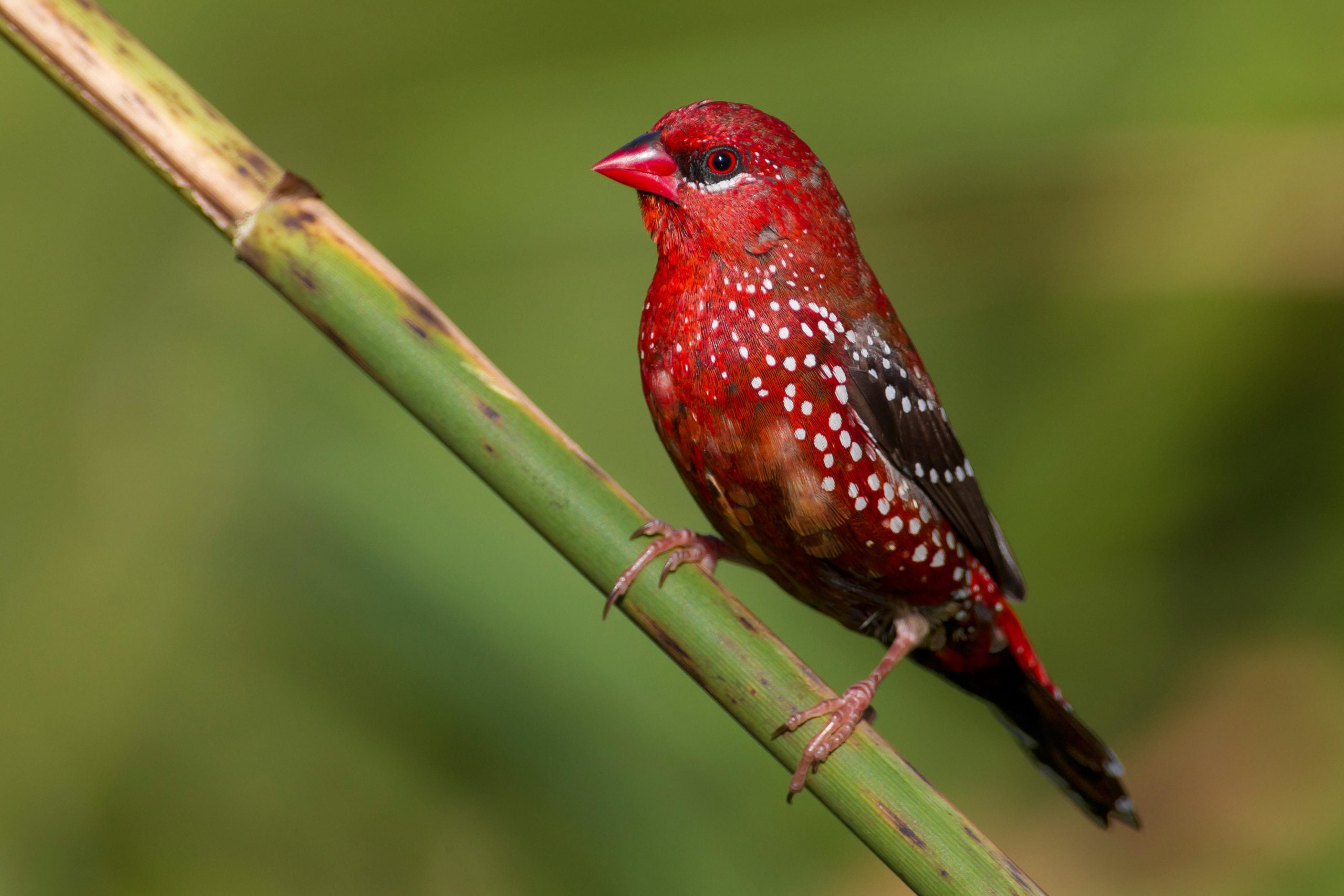
The strawberry finch (Amandava amandava), also known as the red munia or the red avadavat, is a sparrow-sized bird with spectacular bright red plumage speckled with white spots. However, the signature look of the males of the species is only temporary and worn only during the breeding season. Once the breeding season is over, the males take on a plainer and duller look like the female strawberry finches.

Native throughout South and Southeast Asia, these species of finches are most common in the tropical regions of Northwestern and Central India. They are usually found in the flat plains with an abundance of tall grasses. These finches belong to the waxbill group of birds that includes passerines (songbirds). Even though their general physical build is similar to sparrows, the strawberry finches are easily distinguished by their seasonal red beak and the striking vermilion red and white-spotted breeding plumage of the males.

However, there are introduced populations of the strawberry finches that exist in Hawaii, Singapore, Puerto Rico, Portugal, Malaysia, Egypt, Fiji, Brunei, and southern Spain.

The gathering of strawberry finches is called clumping. During this time, they create and maintain bonds by engaging in social preening or grooming.

As part of their pre-mating ritual, the male finch of the breeding pair holds a feather or grass stem in its mouth, keeps its feathers erect, and deeply bows its head in front of the mating partner.

Strawberry Finch Interesting Facts

What type of animal is a strawberry finch?

A strawberry finch is a species of waxbill bird of the family Estrildidae.

Where does a strawberry finch live?

Strawberry finches mostly live in tropical flat plains with crops or tall grasses, preferably with a nearby water source.

What is a strawberry finch’s habitat?

The strawberry finch’s natural habitat and distribution extend throughout South and Southeast Asia from Pakistan to the Malay Peninsula and the adjoining islands. The nominate subspecies (Amandava amandava amandava) is found in Pakistan, India, Nepal, Bangladesh, and Sri Lanka, the Burmese form (Amandava amandava flavidiventris) is also common in Vietnam, Thailand, Indonesia, and China, and the Javan form (Amandava amandava punicea) is found in Cambodia.

How do they reproduce?

Before mating, the male birds try to attract the female finches with a vibrant display of their bright red plumage accompanied by a mating dance comprising bowing, singing, and hopping. The breeding pairs build nests and stick together throughout the breeding season.

The breeding season varies regionally but usually begins in the second half of the rainy season and extends into the following dry months. Female strawberry finches lay a clutch consisting of four to six eggs. The clutch of eggs is incubated by both the parents during the day and by the female of the breeding pair during the night. The eggs are incubated for 11-14 days. After hatching, the young birds take about 20 days to fledge. Both members of a breeding pair are involved in feeding their young.

How do they communicate?

Although not particularly loud, strawberry finches are quite vocal. The male birds have long location calls, but those of the females are softer, shorter, and used less frequently. Both members of a breeding pair use vocalizations during pre-mating ritualistic displays. A shrill call is typical of finches showing aggressive behavior. These birds also give out typical high-pitched calls in times of potential threat to the young. When in the nests, the juveniles learn songs from their father.

What do they eat?

The diet of these finches is quite diverse. They take an omnivorous diet consisting primarily of grass seeds as well as termites, ant larvae, mosquito larvae, caterpillars, and centipedes. They also feed on fruit when available.

SOURCE: kidadl

What Shall We Make Today?

Today’s offering is a comfort food dish for those who do not want to make time consuming perogies—Pierogi Casserole!

Ingredients

1 large onion, diced (about 1 1/2 cup)

3 tablespoon butter

1 1/2 teaspoon kosher salt, divided

9 lasagna noodles

1 1/2 cup Small Curd 4% Cottage Cheese

3 cup prepared mashed potatoes

1 egg

1 teaspoon ground black pepper

1 teaspoon onion powder

1 1/2 cup grated cheddar cheese, divided

fresh parsley for garnish

Instructions

Preheat oven to 350°F. Coat a 9×13- inch baking dish with nonstick spray. Set aside.

Heat butter in a skillet over medium heat. Add the diced onions into the melted butter and season with 1/2 teaspoon kosher salt. Cook onions until they are soft and caramelized, stirring frequently. Remove from the heat. Set aside.

Bring a large pot of water to a boil and cook the lasagna noodles according to package directions. Drain.

While the noodles are cooking combine the cottage cheese, mashed potatoes, egg, pepper, onion powder, 1 cup of grated cheese, remaining 1 teaspoon kosher salt, and HALF of the onions. Stir to combine.

Place 3 noodles into the bottom of the prepared dish. Top with half of the cottage cheese mixture and spread to cover the noodles. Lay 3 more noodles on top of the filling and top that with the remaining filling mixture. Lay the last 3 noodles on top, sprinkle with the reserved onions and remaining 1/2 cup of cheese.

Cover pan with foil and bake for 30 minutes. Remove the foil and broil for 3 minutes.

Allow the casserole to cool for 15-20 minutes. Sprinkle with parsley and serve.

Notes

Store airtight for up to 3 days.

You can use leftover mashed potatoes or store bought prepared mashed potatoes.

You can add bacon, chicken or sausage if you prefer.

Know-It-Alls: Trivia Tuesday

Friends Edition

Which character has a twin?Who was Monica’s first kiss?How many sisters does Joey have?How many times has Ross been married?

What nickname did Monica’s dad give her?

What is Chandler’s dad’s job?

What’s the name of the dancer Joey lived with?

Who got their own spinoff?

What’s Phoebe’s sister’s name?

What is Rachel scared of?

What is Joey’s fake name?

What was the name of the millionaire Monica dated?

What store does Phoebe hate?

Who got stuck in a pair of leather pants?

What movie did Rachel say is her favorite?

What movie is actually her favorite?

What did Phoebe legally change her name to?

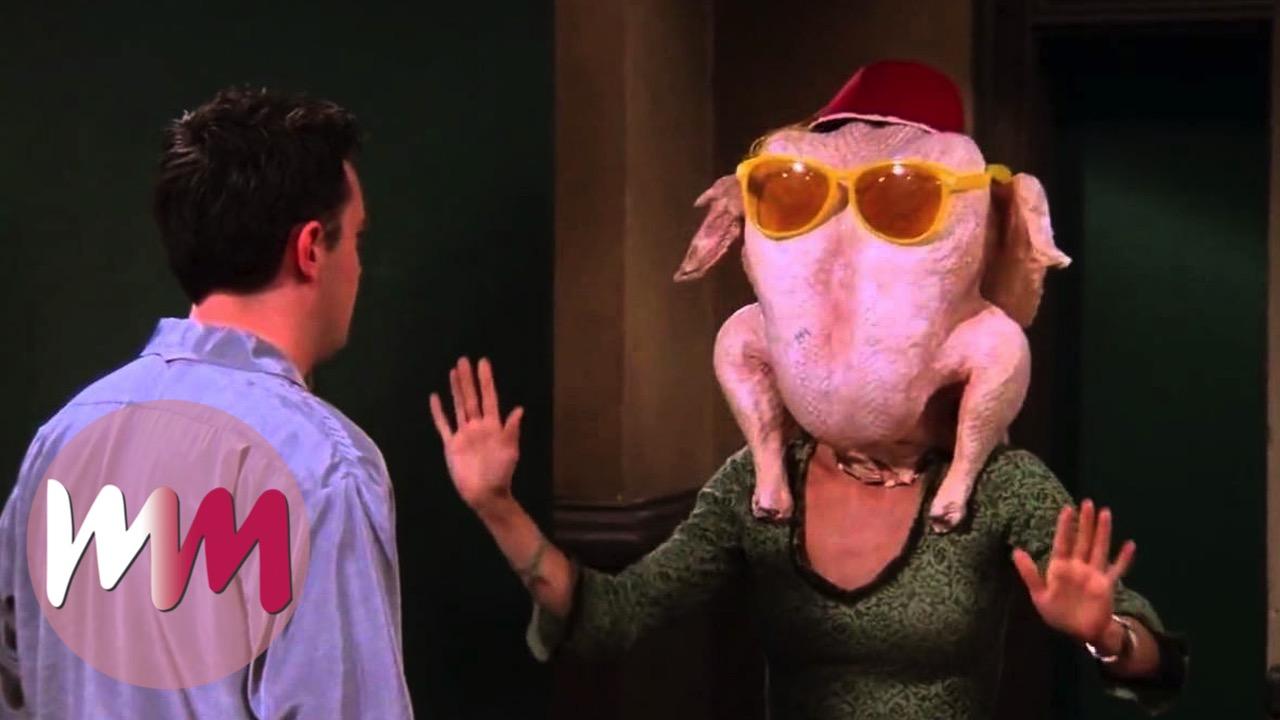
Who hates Thanksgiving?

Who sang the “Friends” theme song?

What’s Monica’s biggest pet peeve?

Answers

Phoebe

Ross

7

3

Little Harmonica

Drag queen

Janine

Joey

Ursula

Swings

Ken Adams

Pete

Pottery Barn

Ross

Dangerous Liaisons

Weekend at Bernie’s

Princess Consuela Banana Hammock

Chandler

The Rembrandts

Animals dressed as humans

CHEERS! (oh wait that’s another sit com…lol)

Gerenuks

They look like a cross between an antelope and a giraffe

Some of the most notable characteristics of the gerenuk are its long, slender neck and thin legs. Gerenuks have also wedge-shaped skulls and shorter noses than many antelope species, lending them a giraffe-like appearance.

Their name means “giraffe-necked”

Gerenuks look so similar to giraffes that they were given the name garanuug, which means “giraffe-necked” in Somali.

They can stand up to find food

Gerenuk diets consist of plant matter from trees, bushes, and other plants. Unique structures in their spine allow them to stand upright on their hind legs to reach food as high as 2 m (about 6 feet) in the air.

Gerenuks never need to drink

These animals get all the moisture that they need from the plants that they consume. Scientists studying gerenuks have observed them for weeks without ever seeing them drink water.

They are surprisingly fast

Gerenuks are prey for lions, cheetahs, hyenas, and other African carnivores. To escape these predators, gerenuks can run up to about 40 miles per hour.

They mark their territory with tar and urine

Male gerenuks secrete a thick, tarry substance from ducts near their eyes. They then wipe this fluid on trunks and branches to alert other males of their territorial boundaries. Male gerenuks also urinate to mark these boundaries. This method only discourages other adult males; female gerenuks and their fawns can move freely through a male’s territory.

Gerenuks have scent glands in unusual places

Many animals use scent to mark their territory. However, unlike most animals, the scent glands of a gerenuk are located behind their knees and inside their hooves. These glands also play a role in reproduction, as they produce pheromones that can help gerenuks attract a mate.

They have a natural defense against thorns

Gerenuks must forage through spiny bushes to find the leaves that make up the bulk of their diet. Their large eyes are vulnerable to scratches or other wounds from sharp thorns. The gerenuk’s long eyelashes protect their delicate eyes from injury as they search for food.

Gerenuks can live up to 13 years in captivity

In nature, gerenuks generally reach about 8 years of age. However, without pressure to find food and avoid predators, captive gerenuks can live much longer than their wild counterparts.

Their mating behaviors are unusual

As gerenuks prepare to mate, the female will raise her nose and pull her ears close to her head. The male will then present his long neck in the hopes that the female will choose to mate with him. Before mating, the male will wipe the female with the scent glands near their eyes and sometimes tap or even kick the female gerenuk in the stomach with his foreleg.

Females live together and males live alone

If you observe a group of gerenuks in the wild, they are almost always adult females and fawns. Male gerenuks leave their maternal groups when they reach sexual maturity. From that point on, they remain solitary, interacting only to defend their territory from other males or breed with females.

Gerenuk pregnancies last about 7 months

Gerenuk breeding happens year-round, and most mothers have only one fawn at a time. Female gerenuks remain pregnant for about 7 months. The newborns are able to stand within minutes after birth.

Hiding is the key to gerenuk fawn survival

Despite their ability to move independently soon after birth, delicate young gerenuks are vulnerable to predators and dangers in the environment. They spend much of their early months hiding in trees, bushes, and piles of leaves and grasses for more than 9 hours a day. Their mothers forage for food while they remain safe. After each nursing period, both mother and fawn move to a new area.

They have a vocabulary of their own

All gerenuks regardless of age or sex communicate with a series of vocalizations. Each sound has a distinct meaning among gerenuks. Loud bleating indicates danger and helps alert other gerenuks. Mothers bleat softly to their young. A whistling noise indicates irritation or annoyance.

SOURCE: FACTANIMAL

Thrift Store Makeovers

I love make overs—this time thrift store makeovers.  These transformations are relatively easy and quick to do! Try yard sales or thrift stores—go hunting for what could be instead of what’s there!

Take old lamp shades-remove the shade part-if necessary, paint the metal frames—hang upside down as planters!

Spray paint an old cookie sheet—use contact paper for the flat bottom and turn it into a magnetic memo board!

Turn any old picture into a chalk board with chalk board paint!

Glue a pie pan to a candle holder and it becomes…a candle holder…LOL

Turn an old diskette holder into a mini greenhouse!