The tall, beautiful iris flower, named after the Greek goddess who rode rainbows, comes in many magical colors. Despite its divine origins, this beautiful flower is rugged, reliable, and easy to grow. Learn to plant and care for irises for long-term success in your gardens.
About Irises
More than 250 species make up the genus Iris. The most familiar irises are the tall bearded irises (I. germanica), which reach 2 to 3 feet tall. Their distinctive six-petaled flowers have three outer hanging petals (called falls) and three inner upright petals (called standards).
Irises may be a bearded or crested (aka beardless) type. Bearded irises are so-called because they have soft hairs along the center of their falls. The hairs on crested types, like the Siberian iris, form a comb or ridge instead.
Most irises flower from late spring to early summer. Some—mostly bearded hybrids—are remontant, meaning they may flower again later in the summer. The blooming period of Siberian irises tends to follow that of the bearded types.
Irises attract butterflies and hummingbirds and make lovely cut flowers. For iris companions in the garden, look to roses, peonies, and lilies.
When to Plant Irises
Plant most irises in late summer to early fall, when nighttime temperatures remain between 40° and 50°F (4° and 10°C) or above. This gives them plenty of time to get established before the coming winter.
Tall bearded iris varieties are best planted closer to fall because they tend to go dormant in early to mid-summer.
If you receive bare rhizomes or irises in a container at some point earlier in the year, plant them as soon as possible. It’s better to get them in the ground rather than wait until the “ideal” time.
How to Plant Irises
Plant bare-root rhizomes (the thick stems) horizontally, with the top exposed and only the roots underground. In areas with particularly hot summers, set the rhizome just below the soil surface.
Dig a hole 10 inches in diameter and 4 inches deep. Make a ridge of soil down the middle and place the rhizome on the ridge, spreading the roots down both sides. Fill in the hole and firm it gently, leaving part of the rhizome and the foliage uncovered.
Plant singly or in groups of three, 1 to 2 feet apart, depending on the fully grown plant’s size.
Soak Siberian iris rhizomes in water overnight before planting, then set them 1 inch deep (2 inches, if the soil is sandy), 2 feet apart. Over a period of years, they will form clumps; divide when blooms get smaller and vigor declines.
Do not mulch around the rhizome, as this may encourage rot.
GA brought this article to my attention and I wanted to share it as an open to really bring it into focus! The article appeared on Cowboy State Daily:
When the Dragon Bravo Fire destroyed the historic Grand Canyon Lodge on the North Rim of the Grand Canyon two weeks ago, the loss of the unique structure, opened in 1928, was mourned by historians and national park enthusiasts.
The Grand Canyon Lodge was one of many structures throughout the United States that exemplified the iconic “parkitecture” aesthetic prevalent throughout the U.S. National Park Service.
These impressive structures, made of locally sourced materials, were built to make the parks more accessible to the people — and make a big impression on everyone who stepped inside.
Knowing Why, Not How
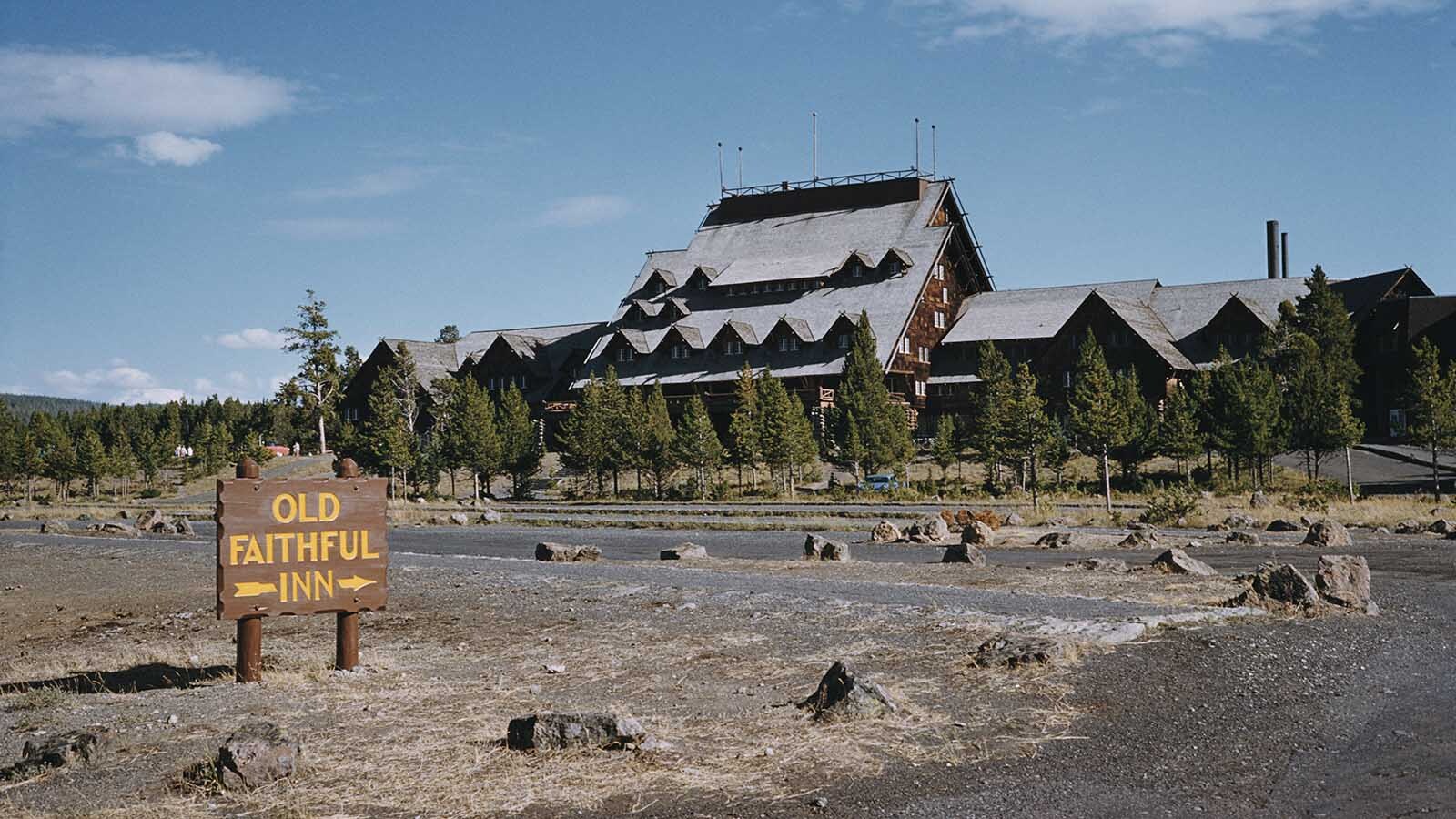
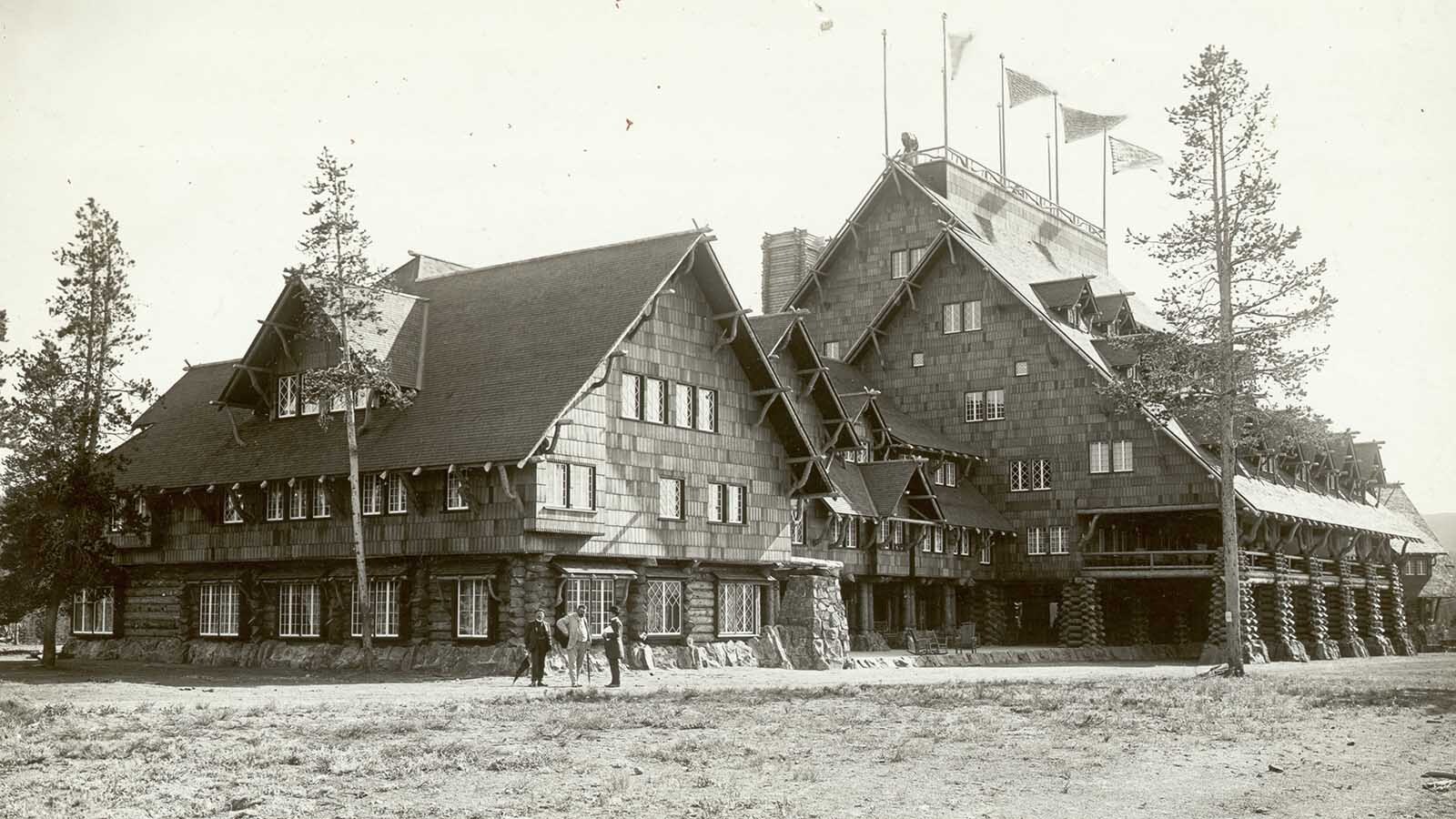
Yellowstone National Park was established in 1872, but many of its amenities were still lacking by the turn of the century. When the Upper Geyser Basin Hotel, “the Shack Hotel,” burned down in 1894, there was a need for a new lodge in the vicinity of the park’s most popular attraction, Old Faithful.
Harry Child, president of the Yellowstone Park Company, hired architect Robert Reamer to design and build a new lodge overlooking Old Faithful. Reamer was only 29 years old, but he understood the assignment.
Details about the construction of the Old Faithful Inn remain, according to Henry, “One of the profound mysteries in Yellowstone’s history.”
Despite the historical significance of the inn and the enormous effort and logistics it must have taken to build it, there are almost no records of the actual construction.
“It must have been the biggest thing that was going on in the park at the time, and yet, there are almost no records about the actual construction,” he said. “As far as I know, there are only two photographs of the inn under construction, and there’s very little mention of it in the U.S. Cavalry’s logbook.”
Locally Sourced
Details of the Old Faithful Inn’s construction aren’t an entire mystery. The lodgepole pines used to build the enormous structure were harvested within an eight-mile radius of the construction site, and the rhyolite stone used for the foundation came from a quarry in the Black Sand Basin, five miles away.
Mike Keller, vice president and general manager for the Xanterra Travel Collection in Yellowstone National Park, said the Northern Pacific Railroad provided a crew of 45 railroad trestle builders for the construction, which was overseen by Reamer. They relentlessly worked through the winter to bring Reamer’s design to fruition.
“Reamer tried to design it like you’re walking through the forest,” he said. “That’s why nothing is synchronized in the building.”
Even if the U.S. Cavalry’s logbook didn’t log a lot of information on the log work, it proceeded at an impressive pace. The initial construction, which consisted of the lobby and first wing of guest rooms, started in 1903 and powered through the winter and spring until the entire complex was open for business by June 1904.
When it opened in June 1904, the Old Faithful Inn had 120 rooms in one wing off the massive lobby, complete with an 85-foot-tall rhyolite fireplace. The hotel had the latest amenities, including electric lighting and steam heat.
Keller noted how most of the windows in the rooms are offset, and no two rooms are exactly alike. That was a deliberate choice by Reamer and the builders to give guests the perception that the Old Faithful Inn was an enhancement to the natural beauty they’d come to see.
The entire construction cost was $125,000, which is equivalent to more than $4.3 million today. Furnishing the massive inn cost another $25,000 (over $900,000 today).
“Nobody knew what to expect when they arrived in 1904,” Keller said. “They take their stagecoach to Old Faithful, and there’s this magnificent log structure sitting there that hadn’t been there the summer before. It’s stunning to think of what they accomplished in less than a year.”
The Sweet Spot
Keller, who lived and worked in the Old Faithful Inn for 15 years, has been infatuated with the historic structure since he first stepped inside.
“There’s a place in the lobby we literally call the ‘Sweet Spot,’ where people walk into the building for the first time,” he said. “You can always tell when people have been in that building for the first time, just by the reaction it draws out of them. It’s amazing.”
The inside of the Old Faithful Inn is iconic for many reasons. Once visitors look beyond the massive rhyolite fireplace, they notice the forest of trident-shaped logs that hold the support beams that carry the inn into the sky above.
“The ridge of the ceiling inside the lobby is about 76 feet, 10 inches,” Henry said. “I measured it once for the sake of my book. A lot of the materials lifted to that level were massive, and more massive boulders were used to construct the fireplace and its chimney. Considering the technology of 1903 and 1904, and the remoteness of the area, I think it’s a remarkable achievement.”
Henry and Keller aren’t the only ones with an emotional attachment to the Old Faithful Inn. Keller said many of the dining, maintenance, lodging, and retail staff have been there longer than he has out of sheer love for their “office” at Old Faithful.
“They come to Yellowstone for their first summer, and stay for 10 or 12 years, but they always want to go back to Old Faithful,” he said.
That passion extends to visitors who book rooms up to a year in advance in anticipation of staying at the Old Faithful Inn. Keller has encountered countless families who revel in their family history of visiting Yellowstone and staying at the inn.
“I’ve had fourth and fifth generation people who come back to the end every year with their kids and their grandkids,” he said. “They bring photo albums and talk about how their great-grandfather stayed in this room in 1913, and they have photographs to show it. The inn connects with people who have a historical legacy tied to Yellowstone.”
Year-Round Upkeep
Unlike other hotels in Yellowstone, the Old Faithful Inn is a seasonal experience. Since its opening, the inn has been open to guests only during the summer season.
“It’s never been open during the winter,” Henry said. “It’s always been a seasonal operation, but it does need year-round attention, and work on and in the building is done during summer, spring, fall, and winter.”
Henry used to provide some of that maintenance as one of Yellowstone’s winter caretakers. From 1977 to 1984, he was employed by the Yellowstone Park Company to clear snow from the slanted roof, ensuring the weight of the winter snow didn’t cause any collapses.
Xanterra took over the seasonal maintenance of the Old Faithful Inn in 1984 and continues to do so to this day. Keller said it’s a constant endeavor, regardless of the season, to ensure the structure stays strong and standing.
“The National Park Service is ultimately responsible for that facility, and it takes great pride in making sure that it is being maintained and preserved for current and future generations,” he said. “Xanterra has the opportunity to manage that facility, and we take it very seriously.”
Keller said the inn’s fire suppression and other safety systems are inspected by a third-party auditor every year to ensure they’re ready in the event of an emergency. Any major improvements or upgrades required are done as needed, rather than on the multi-year timetable that’s typical for many hotels.
“We did a significant structural improvement to the building, with a lot of seismic stabilization, in the early 2000s,” he said. “Within the last five to seven years, we’ve pretty much completed every major component that’s been needed within the building with every reason available, to ensure we’re open and operating with the most sophisticated, up-to-date systems.”
To that end, Keller understands why the Old Faithful Inn isn’t a year-round lodging option. He’s been inside the inn during the winter and, in his opinion, you might be warmer sleeping outside.
“The lobby’s nice and cool in the summertime, but in the winter it’s colder inside the building than outside the building,” he said. “If it’s 20 degrees below outside, it can be 30 degrees below inside. It’s like a reverse-engineered cave in winter.”
Offense Is The Best Defense
There have been some close calls for the Old Faithful Inn over the last century. Henry was amazed that the structure was still standing after everything that threatened to destroy it.
“It survived many, many winters with no fire protection,” he said. “It survived that harsh climate. It survived the 1959 earthquake. It survived the 1988 fires. Not to take anything away from the crew that constructed the building, or Reimer’s work, but, amazingly, the inn has been able to survive this long. It’s a special story, just for that reason.”
The Hebgen Lake earthquake in 1959 caused significant damage to the Old Faithful Inn, including a shattered foundation, partial roof collapse, and the loss of the dining room’s fireplace. Thankfully, there were no deaths or injuries, and everything was promptly repaired.
When the 1988 North Fork Fire threatened the Old Faithful area, proactive measures were taken to ensure the inn’s timber didn’t become tinder. Fire crews hosed down the entire structure to reduce its risk of catching fire, which very well might have ensured its survival.
Meanwhile, many of the recent renovations and upgrades, including the major centennial renovation in 2004, have focused on getting the historic inn closer to its original state. Original materials are used or restored whenever possible, and some design elements obscured during earlier renovations have since been restored.
“We’ve done this enough times that we know what we’re doing,” Keller said. “If you don’t do it right, there are consequences. We take our work seriously because the Old Faithful Inn is a treasure.”
Parkitectural Legacy
Reimer went on to design many other structures in Yellowstone, including the Lake and Canyon Hotels, as well as additions to these hotels, the Mammoth Hotel, and the 1913 addition of the west wing to the Old Faithful Inn.
The massive 10-by-17-foot wooden map of the United States in the Mammoth Hotel Map Room was handcrafted by Reimer and his associate W.H. Fey. He went on to design lodges, train stations, and theaters throughout the U.S. until he died in 1937 at age 65.
Meanwhile, the Old Faithful Lodge was designed and built in the same style as the Old Faithful Inn by Gilbert Stanley Underwood in 1927. Underwood went on to design lodges throughout the National Park system, including the recently lost Grand Canyon Lodge on the North Rim of the Grand Canyon.
Henry said the Old Faithful Inn was so influential on Underwood and other architects and designers that the aesthetic of the National Park Service was modeled after its revolutionary design. That style has come to be known as “parkitecture.”
“The Old Faithful Inn was definitely a trendsetter,” he said. “It set an example for future construction in many other national parks. It became a phenomenon.”
The Old Faithful Inn was added to the National Register of Historic Places in 1973 and was designated a National Historic Landmark in 1987 along with the rest of the structures in the Old Faithful Historic District. In 2007, architects were asked to rank the 150 favorite buildings in the United States – the Old Faithful Inn came in at number 36.
Keller intrinsically understands why the Old Faithful Inn has withstood the test of time. Reimer, in his words, “knew what he was doing” when he designed the most iconic structure in Yellowstone, and one of the most iconic in the nation.
“Keep in mind, when you came to Yellowstone in 1904, you were on the train for two to three days to get there,” he said. “Then, you’re on a seven-day stagecoach trip around the park. They wanted to create a signature experience on that tour, and that’s why the Old Faithful Inn was designed to be great.”
Members of the genus Corvus can be found on every continent except Antarctica and South America (although other close relatives live there). To date, scientists have identified 40 species that are commonly called ravens, crows, rooks, and jackdaws.
In the U.S., the American crow (Corvus brachyrhynchos) and the common raven (Corvus corax) are the most widespread corvids. The common raven is much larger, about the size of a red-tailed hawk. It also has a wedge-shaped tail compared the crow’s slightly rounded tail. And the birds’ calls are different: crows emit a caw-caw call along with rattling and clicking sounds, while a raven’s is a croaking, deeper-pitched onk-onk.
2. Older crow siblings can help their parents raise newborn chicks.
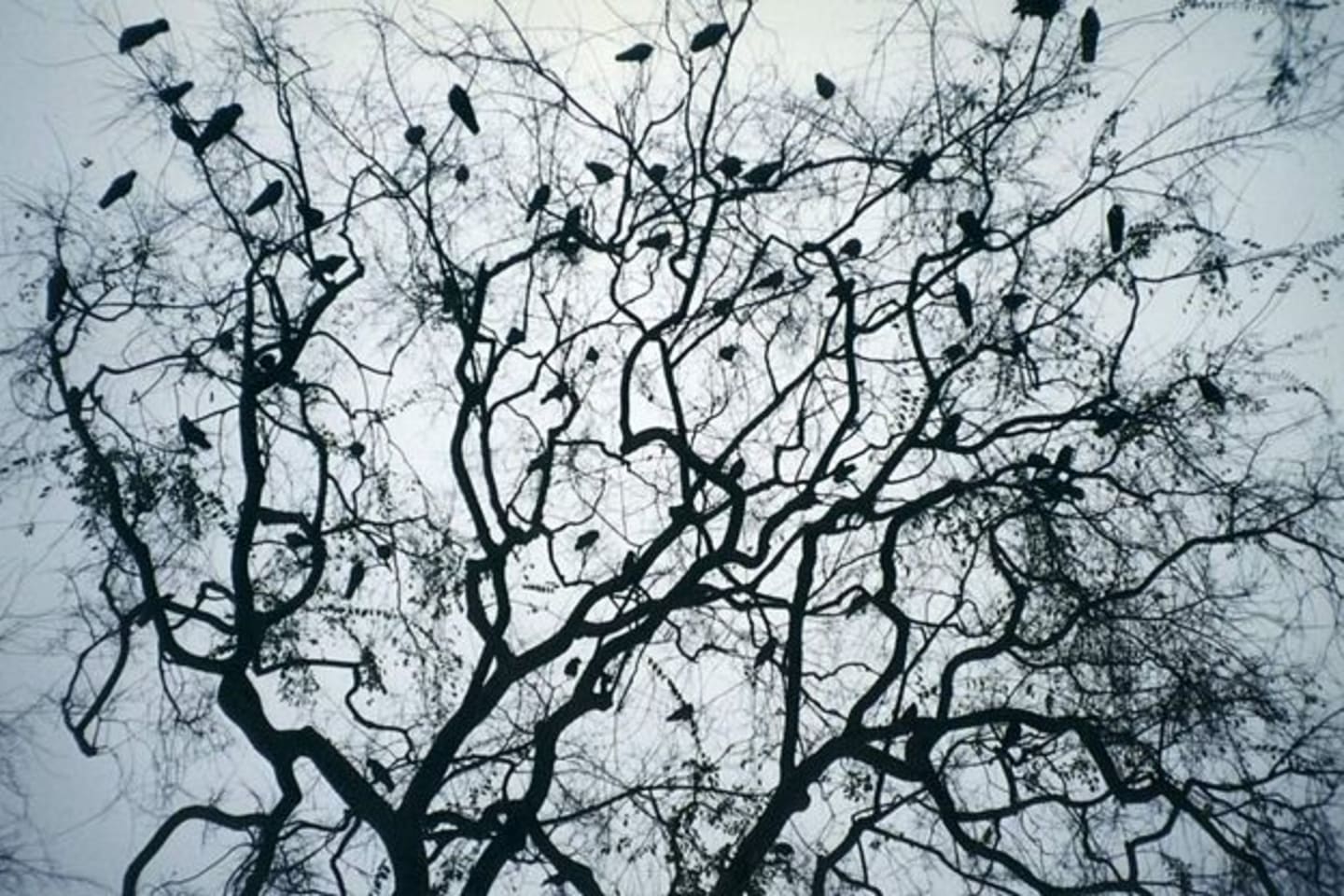
Like a lot of intelligent animals, most crows are quite social. American crows spend most of the year living in pairs (they usually mate for life) or small family groups. During the winter months, they’ll congregate with hundreds or even thousands of their peers to sleep together at night in a sprawling communal unit called a roost.
A mated pair of crows might be lucky enough to receive chick-rearing help. Juvenile birds are frequently seen defending their parents’ nest from predators. Other services they can provide include bringing food to the parents or feeding their younger siblings directly. One study found that 80 percent of American crow nests surveyed had a helping hand. And some birds become regular nest assistants, providing aid to their parents for over half a decade.
3. When a crow dies, its neighbors may have a funeral.
The sight of a dead crow tends to attract a mob of a hundred or more live ones. During this ritual, the live crows almost never touch the dead one, which rules scavenging out as a motive. Some studies suggest that the mass gathering is part of a survival strategy: The birds are learning about threats and seem hesitant to revisit any spot where they’ve encountered a dead crow, even if food is plentiful there.
4. Crows have caused blackouts in Japan.
Since the 1990s, crows have experienced a population boom in Japan, where delicious garbage is more plentiful than ever. Urban crows like to nest on electric transformers and will often use wire hangers or fiber-optic cables as building materials for their nests. One result was an epidemic of crow-caused blackouts in major cities: Between 2006 and 2008, the corvids stole almost 1400 fiber-optic cables from Tokyo power providers, and according to the Chubu electric company, crows are responsible for around 100 power failures per year in their facilities.
Chubu started installing artificial nests in 2004. Made with non-conductive resin, the nests are placed on company towers high above the power lines, where the birds are unlikely to cause any trouble. The strategy seems to be working: two-thirds of the faux nests have been used.
5. Proportionally, some crows’ brains are bigger than yours.
Crows are so smart and so good at improvising that some zoologists call them “feathered apes” (that’s a compliment). The New Caledonian crow’s brain weighs 0.26 ounces and accounts for 2.7 percent of its overall weight. That’s proportionately much larger than a human’s three-pound brain, which accounts for 1.9 percent of overall weight.
Crows, ravens, and parrots have the biggest brain-to-body size ratios of all living bird species. They’ve shown levels of cognition that put them on par with the great apes. In lab tests, they have shown a much higher density of neurons in their forebrains than primates do. The number of neurons in this region is thought to correlate with a given animal’s intelligence. Theoretically, having more neurons translates to better cognitive reasoning.
A 2020 study looked at whether crows, like humans and great apes, can demonstrate consciousness. Crow brains lack a cerebral cortex, where most of the primate brain’s conscious perception happens. Researchers tracked the brain activity in two crows as they performed different tasks, and discovered that they could perceive sensory input—suggesting that there is much more to understand about the evolution of consciousness.
6. Crows have regional dialects.
Apart from their famous caw-caw, crows emit other sounds. Each one sends out a different message; cawing can be used as a territorial warning or a way for crows to signal their location to relatives.
Two different populations of crows may have slight differences. As ornithologist John M. Marzluff and author Tony Angell noted in their 2005 book In the Company of Crows and Ravens, the calls these birds use “vary regionally, like human dialects that can vary from valley to valley.” If a crow changes its social group, the bird will try to fit in by talking like the popular kids. “When crows join a new flock,” they write, “they learn the flock’s dialect by mimicking the calls of dominant flock members.”
7. Some crows can read traffic lights.
In Japan, carrion crows (Corvus corone) use cars like oversized nutcrackers. The birds have learned to take walnuts over to road intersections, where they put them down onto the pavement. The crow then waits for a passing vehicle to smash the nut, after which it will swoop down and eat the delicious interior.
The crows aren’t usually run over because (unlike some people) they’ve figured out what traffic lights mean. Carrion crows wait until the light turns red before flying down to place the un-cracked nut on the road. The second the light goes green, the crow takes off to watch the nut get run over from afar; it will even wait for the next red to scoop up the nut’s meat. American crows have been observed doing the same thing in California.
8. Crows can recognize your face—and hold a grudge.
You don’t want a crow for an enemy. In a 2011 paper, a team from the University of Washington tested how well the birds could identify human faces using two Halloween masks (one resembling a caveman to be used as the aggressor, the other resembling Dick Cheney for the control).
At five sites, a scientist donned the caveman mask before catching and banding some wild crows. Getting trapped is never a fun experience, and upon their release, the crows loudly scolded their assailant with threatening caws. Seeing this, other birds swooped down to harass the captor. Over several years, researchers wore the masks on strolls through all five test spots. The crows—including many who’d never been captured or banded—scolded and dive-bombed the “caveman” while ignoring “Dick Cheney”.
The younger crows, who were born after the initial experiment, also scolded the “caveman.” The grudge had been passed on. Mind your manners around crows. Because if you mistreat them, they won’t forget you and neither will their friends—or the next generation.
9. New Caledonian crows make and use tools.
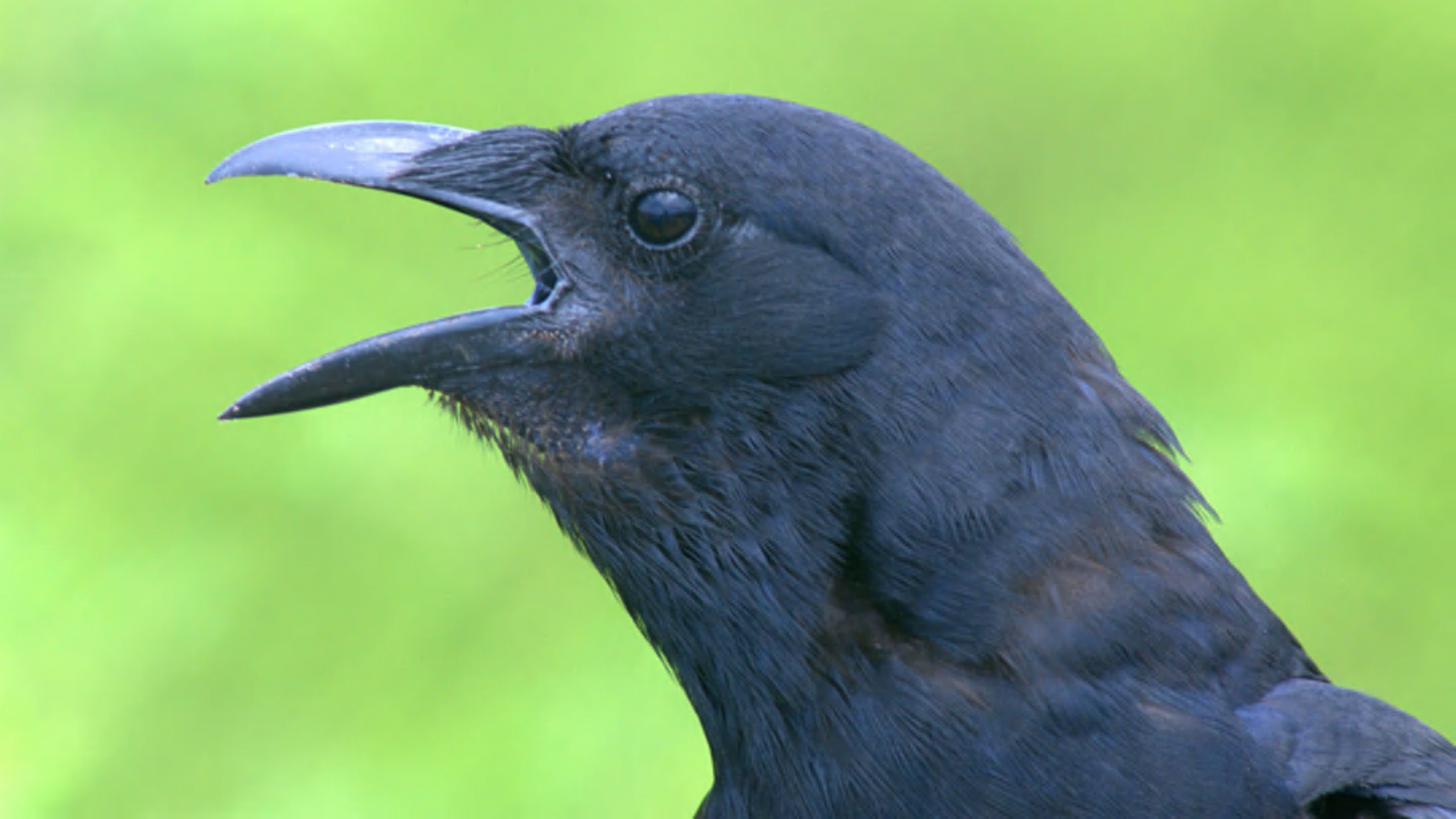
Lots of non-human animals, including chimpanzees and orangutans, create useful implements which help them survive in the wild. The New Caledonian crow (Corvus moneduloides) is one of only two species on the planet that can craft its own hooks in the wild. (The other is Homo sapiens.) The South Pacific crow uses the hooks, which are made from pliable twigs that the crows bend using their beaks and feet into a J-shape, to extract insects from tight crevices.
Another surprising attribute is this species’ bill. Unlike virtually all other birds, the New Caledonian crow has a bill that does not curve downwards. For years, the quirk went unexplained, but scientists now think that their unique beak evolved to help it grasp tools more easily, as well as to better see what the tool is doing.
The New Caledonian crow isn’t the only implement expert in the corvid family. In 2016, scientists at the University of St. Andrews demonstrated that the ultra-rare Hawaiian crow, or ‘Alalā (Corvus hawaiiensis), is similarly adept at using and modifying tools.
10. Crows fight off predators by ganging up on them.
Crows have to deal with a menagerie of predators, such as hawks, owls, coyotes, and raccoons. To ward them off, the corvids exploit the fact that there can be strength in numbers. Upon seeing a would-be attacker, crows are known to gather, with some groups consisting of a dozen birds or more. Individual crows then swoop down to deliver passing blows with their beaks, often inflicting serious bodily injury in the process. If all goes well, the target will back off—though it may kill a few of the dive-bombers before they retreat. Corvids are by no means the only avians that mob would-be attackers. Swallows, chickadees, and even hummingbirds have all been documented doing this. In fact, crows are sometimes at the receiving end of mob violence as smaller songbirds often feel threatened by them and lash out collectively.
11. Crows understand impulse control.
A 2014 study shows that at least some corvids can resist the urge for instant gratification—if you make it worth their while. The research was led by University of Göttingen graduate student Friederike Hillemann, whose team assembled five common ravens and seven carrion crows. Through careful note-taking, the scientists figured out what the favorite meal items of all 12 animals were. Then the experiment began.
With an outstretched hand, one of the researchers gave each of their birds a morsel of food. Then, the animals were shown a different piece of grub. The corvids were made to understand that if they liked the second option better, they could swap snacks—but only if they were willing to sit patiently for a certain period of time first. If a bird ate the original treat during that stretch, it forfeited the chance to trade it for a new one.
Hillemann’s results showed that the crows and ravens didn’t mind waiting around for an improved snack option. As such, a bird with a piece of bread was content to sit quietly if it knew that some fried pork fat would eventually be gained in the trade-off. However, if that same bird’s second choice was another piece of bread, sitting tight would be pointless. So understandably, corvids who were put in this kind of situation tended to go ahead and eat whatever they’d been given. Why wait for more of the same?
12. Some scientists would prefer you not call a group of crows a murder.
According to the Oxford English Dictionary (OED), the correct term for a group of crows is a murder, an expression bird-watchers and poets have been using since at least the 15th century, which the OED speculates may allude “to the crow’s traditional association with violent death, or … to its harsh and raucous cry.” But maybe it’s time to come up with a replacement. Ornithologist Kevin McGowan hates the phrase murder of crows. To him, it only feeds the public’s negative outlook on the animals. “These birds aren’t a gang of nasty villains,” he tells Sy Montgomery in her book Birdology. “These birds are just birds.”
Today is Joan Jett’s birthday (born in 1958) and this great song is one of my favorites!
I saw him dancing there by the record machine I knew he must have been about seventeen The beat was going strong Playing my favorite song And I could tell it wouldn’t be long till he was with me, yeah me And I could tell it wouldn’t be long till he was with me, yeah me
Singing, I love rock and roll So put another dime in the jukebox, baby I love rock and roll So come and take your time and dance with me Ow!
He smiled, so I got up and asked for his name But that don’t matter, he said, ’cause it’s all the same He said, “Can I take you home Where we can be alone?” And next we were moving on, he was with me, yeah me Next we were moving on, he was with me, yeah me
Singing, I love rock and roll So put another dime in the jukebox, baby I love rock and roll So come and take your time and dance with me Ow!
He said, “Can I take you home Where we can be alone?” Next we’re moving on, he was with me, yeah me And we’ll be moving on and singing that same old song, yeah with me
Singing, I love rock and roll So put another dime in the jukebox, baby I love rock and roll So come and take your time and dance with me
I love rock and roll So put another dime in the jukebox, baby I love rock and roll So come and take your time and dance with
I love rock and roll So put another dime in the jukebox, baby I love rock and roll So come and take your time and dance with
I love rock and roll So put another dime in the jukebox, baby I love rock and roll So come and take your time and dance with
I love rock and roll So put another dime in the jukebox, baby I love rock and roll So come and take your time and dance with me
Our next Back-to-School treat is Peanut Butter Banana Cookies!
Ingredients
1/2 cup unsalted butter softened to room temperature
3/4 cup light brown sugar
1/2 cup creamy peanut butter
1 large egg
1 tsp vanilla extract
1 1/3 cups all-purpose flour
1/4 tsp salt
3/4 tsp baking soda
1/2 cup mashed banana
1/3 cup sugar for rolling
Instructions
Preheat the oven to 350F degrees. Line your baking sheets with parchment paper and set aside.
Mix softened butter and brown sugar together well for 2 minutes.
Add in the peanut butter, egg, vanilla, salt, baking soda, and banana. Mix well for 1-2 minutes.
Slowly add the flour and combine well, do not over mix.
Using a cookie scooper – scoop batter and roll dough into a ball, roll each cookie ball in the sugar, and place on a lined cookie sheet. Batter should make 24 cookies.
Use a fork to flatten the cookies, bake in the oven for 10-12 minutes until a light golden brown.
Remove from the oven and let cool for 3-4 minutes.
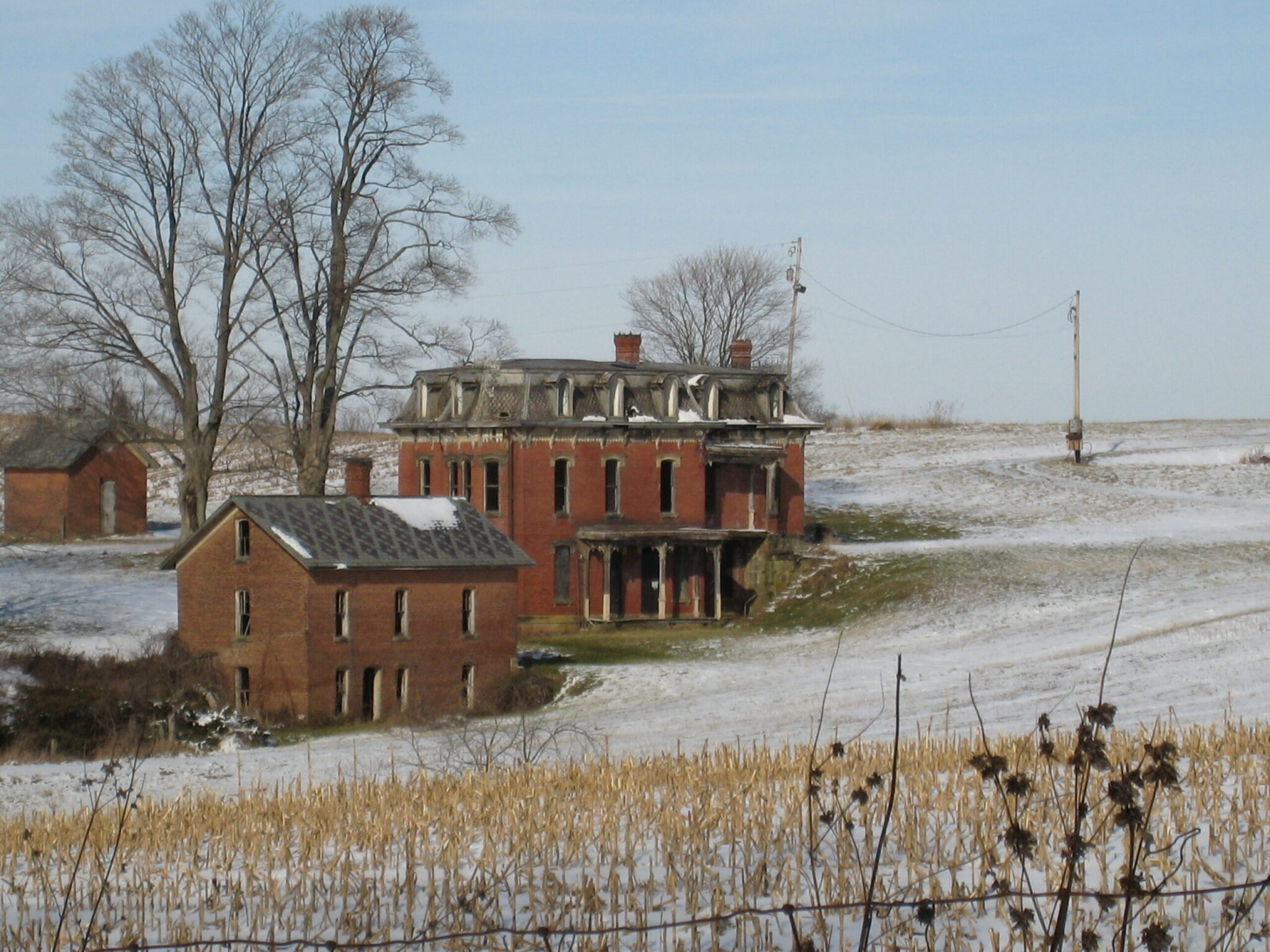
The origins of Mudhouse Mansion trace back to the 19th century, deriving its unique name from the Mudhouse family, the estate’s earliest recorded occupants. Known also as “Hartman Place,” this grand residence epitomized the Gothic Revival architectural style prevalent during that era. Despite the passage of ownership and decay over time, the mansion’s allure persisted until its eventual demolition in 2015 due to structural concerns. Yet, the legends and the aura of mystery surrounding the mansion continue to thrive, fueled by tales of the paranormal.
Mudhouse Mansion Haunted?
Mudhouse Mansion has a dark reputation not only among locals but also among paranormal enthusiasts nationwide. It is without a doubt, one of the most haunted places in Ohio! There are many local tales and legends as to the origin of the haunting in Mudhouse Mansion. One legend says that a government official lived there after the Civil War and kept slaves. It is told that he locked the slaves in one of the outbuildings every night and generally treated them poorly.
One night a slave dug his way out, entered the house and slaughtered the official and his entire family. It is the spirits of these people which haunt the house. However, according to some it is another more recent family that got murdered in the house.
According to local legend, there was a man who actually bought the house in 1892 and he moved in with his wife and their three children. Neighbors never saw them after they entered the house and they thought it very weird that the family would spend all their time indoors. One neighbor went out to the house to investigate and all he could see was the figure of a woman dressed in white, standing on the second-floor window. The figure was just standing there and staring at her.
The following day the neighbor checked again and saw the figure again, standing on the same position. She checked for 10 days and would see the same figure. On the tenth day she called the police and when they came to investigate, they were met by a terrible sight. All the 5 family members were hanging lifeless dressed in white night gowns. The figure which the neighbor had seen was the mother and she was not standing at the window. She had actually been hanging there for several days/weeks.
Mudhouse Mansion is said to be the home of the original “Bloody Mary”. If you say her name three or five times while in front of the mirror, she will appear. Children in town have even called Mudhouse the House of Mary. According to traditional folklore, all her children were killed either by her or her husband.
A woman named Colleen once explored Mudhouse in 2001 and she recalls hearing a whole group of people moving around the third floor of the house. They went upstairs to talk to the people they assumed were causing all the noise but they found the entire floor and the rest of the house completely deserted. There was no one else there but them. The mansion’s neighbors reported hearing shrieks and groans coming from the empty mansion when it lay abandoned.
History
Mudhouse Mansion was built sometime between 1840 and 1850. Christian and Eleanor Rugh purchased the property, where Mudhouse Mansion now stands, from Henry Byler and Abraham Kagy. The property was then sold to Henry and Martha Hartman in 1919. When Henry died, the property was inherited by his daughter Lulu. Her descendants still own the land today and locals have also labeled the mansion as “Hartman Place”.
No one has lived in the home since 1930 although transients and a group of hippies in the 1960’s did call it their home for a short period of time. The grand structure has been damaged by vandalism and fire.
Note: Mudhouse Manor was demolished September 21, 2015.
The Pasque flower is used in treating eye diseases like cataracts.
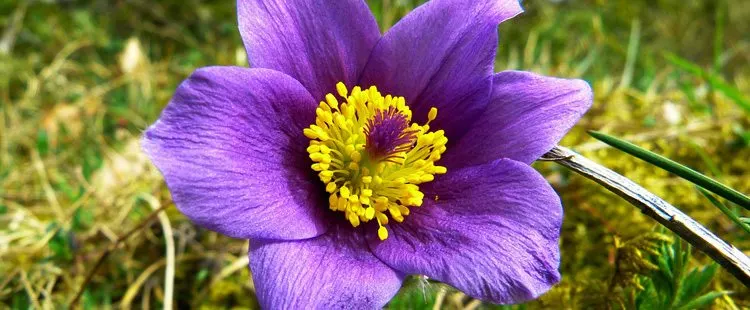
The Pasque flower was approved as the official floral emblem of South Dakota in 1903. The first flower to show its blossoms to settling Europeans in spring, it became the subject of Indian songs and legends.
A member of the Buttercup family, the tundra-loving Pasque is a small solitary bell-shaped flower with gorgeous blue to reddish purple colors, bearing plumed seed heads and golden stamens. It has handsome seed clusters that look like feathery, smoky gray pompoms. The blooming period of Pasque is from April to May, lasting for two weeks. As soon as it blooms, it signals the start of spring to South Dakotans and lights up the landscape from Mount Vernon to Sioux City.
Pasque is a low perennial, rarely exceeding 6 inches in height, and its furry leaf clusters appear rapidly after winter snow disappears. Large, flashy lavender flowers open soon thereafter consisting of 5-8 petal-like sepals, elongated clusters of white to purple, and a ring of numerous yellow stamens. The petal color ranges from deep violet to white. The long silky hairs that cover the finely divided, lobed leaves give the plant a sparkly silver sheen. These leaves continuously expand after the flowers open. The flowering stalk or stem is densely covered with silky hairs, helping to insulate it.
Pasque, all parts of which are poisonous, grows wild throughout the state, plus is distributed from the northwestern U.S. to northern Alaska. The hardy plant is best adapted to cool, moist climates and rarely succeeds in warm dry areas.
On the night before Christmas in 1945 in Fayetteville, West Virginia, George and Jennie Sodder were asleep with nine of their children when a fire started in the house around 1:00 in the morning. George, Jennie, and four of their children managed to escape. The remaining children: 14-year-old Maurice, 12-year-old Martha, 9-year-old Louis, 8-year-old Jennie, and 5-year-old Betty still remained in the house. Between the five of them, they shared two bedrooms located upstairs.
George broke back into the house to save the rest of the children but the staircase was on fire. When he went outside to retrieve his ladder, it was missing from its normal spot. Plus, both of his coal trucks, which he was going to use to stand on top of, were strangely not starting. Marion, one of the children who escaped the fire, ran to a neighbor’s house to phone the fire department but the operator didn’t pick up. When another neighbor called, the operator failed to pick up the phone again. That same neighbor actually drove to town and found the fire chief in person, FJ Morris, and told him about the fire. However, even though the fire station was located a mere 2.5 miles away from the house, the firefighters didn’t reach the Sodder home until 8 a.m., seven hours after the fire began. When they got there, the house was literally burnt to ash.
Authorities sifted through the ash to try and find the remains of the missing 5 children but nothing was found and they were presumed dead due to the fire. Morris suggested that the fire was so hot that it literally cremated the children’s bodies—including their bones. While that theory sounds reasonable, it’s not entirely accurate because even when flesh is burned away, bones are typically left behind. Additionally, there was no smell of burning flesh reported during or after the fire.
The cause of the fire was deemed to be bad wiring and the five missing children were issued death certificates. Soon after the fire, George and Jennie began to suspect that their children were not dead but instead kidnapped and the fire was deliberately set as a diversion. In fact, George had the wiring checked earlier that fall by the power company which had deemed the wiring in safe working order. While the fire was in progress, a woman came forward and said she saw all of the five missing children peering from a passing car. Another woman who was staying at a Charleston hotel had seen the children’s photos in a newspaper and said she had seen four of the five a week after the fire. “The children were accompanied by two women and two men, all of the Italian extraction,” she said in a statement. “I tried to talk to the children in a friendly manner, but the men appeared hostile … and wouldn’t allow it.”
From the 1950s until Jennie Sodder’s death in the late 1980s, the Sodder family maintained a billboard on State Route 16, with pictures of the five vanished children and offering a reward for information. The last known surviving Sodder child, Sylvia, still doesn’t believe her siblings perished in the fire. To this day, they have never been found.





:max_bytes(150000):strip_icc()/GettyImages-852208542-5a496c0d482c5200360a21f1.jpg)





















/https://tf-cmsv2-smithsonianmag-media.s3.amazonaws.com/filer_public/34/58/34580751-2709-40b5-bb55-9271f4decd9b/sodder.png)
 Sew Colorful