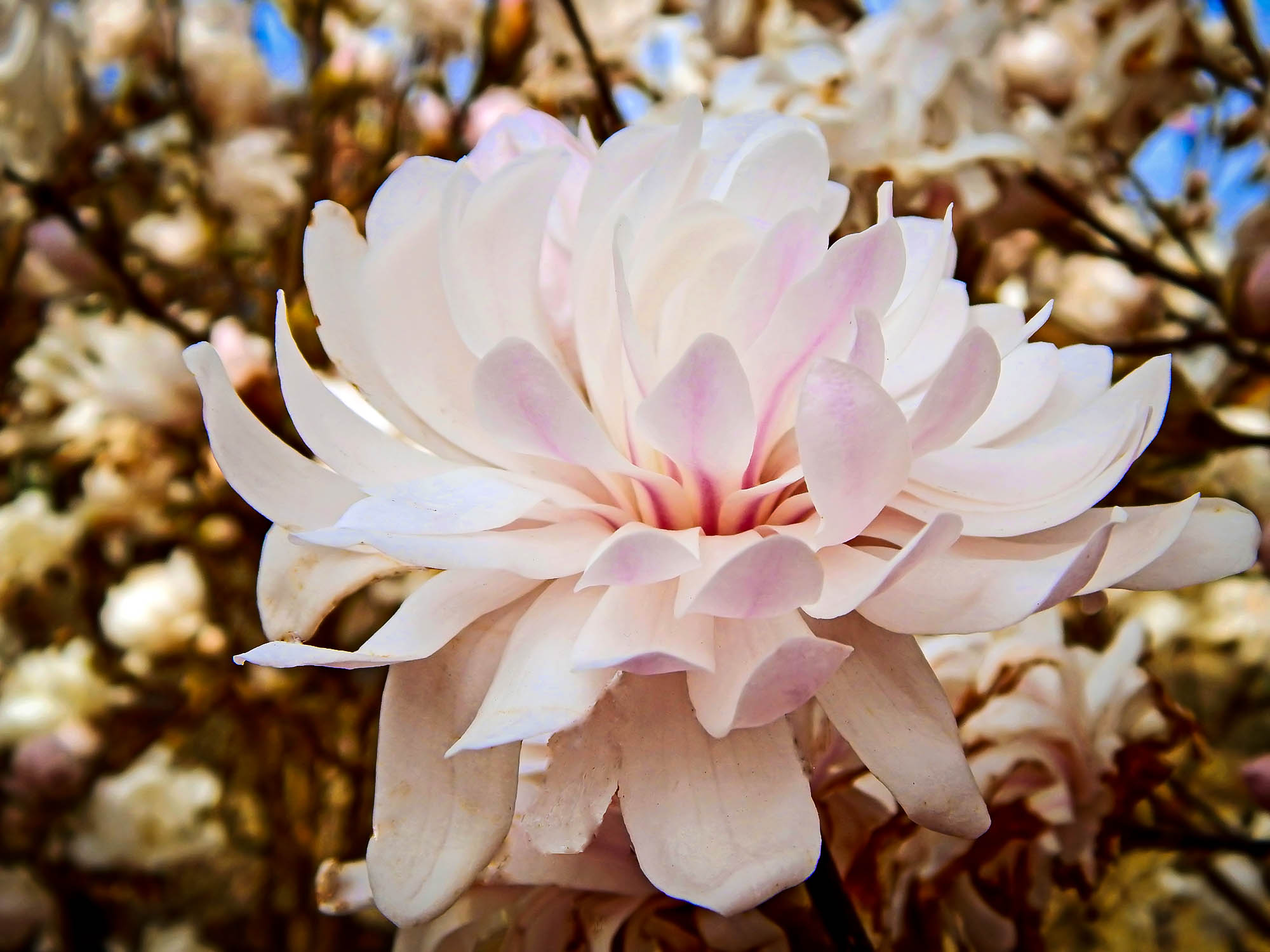
Louisiana State Flower: Magnolia

From almanac.com:

Magnolias aren’t just for southern gardeners. The genus Magnolia is varied and encompasses hundreds of plant species, with many more cultivars developed. Today, magnolias are available in all sizes, from small shrubbery to large shade trees, deciduous or evergreen. Some are cold, hardy, and frigid, as in zone 4.

Magnolias are believed to be among the oldest flowering plants, at about 100 million years old. They have been blooming in spring and summer since dinosaurs roamed the earth.

The giant of the family, southern magnolias (M. grandiflora), are evergreen trees with large, leathery leaves found throughout the American South and grow to gigantic proportions, often reaching 60 to 80 feet tall. Leaves can be epically sized as well, and on larger trees, can be a foot long. The blooms are dinner-plate-sized, and the fragrance is fantastic.

Magnolias come in so many sizes that they can be used for every landscape situation, from huge shade trees to flowering specimens, privacy hedges and borders, screening plantings, and even in beds and containers. When shopping, choose magnolias based on flowering time, hardiness zone, color, and mature size.

When to Plant Magnolias

Magnolias can be planted in spring or fall. If planting in autumn, get the tree in the ground 4-6 weeks before the first frost to allow time to grow new roots. Bare root stock received in spring should be planted as soon as received.

Where to Plant Magnolias

While specific cultivar needs may vary, most members of the Magnolia genus prefer full sun to light shade and, in hotter climates, need protection from the intense afternoon sun. Their branches can be brittle, so pick a site protected from the wind. 

Magnolias grow large, thick, shallow root systems and should be kept away from building foundations or sidewalks. Check the tag and visualize the mature size of the tree or shrub. Some magnolias are enormous, while others are small enough to grow in containers. 

When planting, select a site with the following:

Full to partial sun. Choose a site with morning and midday sun but afternoon shade in hotter climates. 

Moist but well-drained sites are best. Very dry or wet sites are not suitable. 

Acidic soil, pH 5.5-6.5, is best. 

Types of Magnolias

Little Gem’ (M. grandiflora) is a good choice for small yards. It reaches 15 feet in height and flowers within a few years.

Centennial’ (M. stellata) is a star magnolia with slightly pink 5-inch flowers. A vigorous and cold hardy cultivar.

San Jose’ (M. x soulangeana) is a saucer magnolia with deep magenta flowers. Fragrant and vigorous, it makes an excellent container plant.

SOURCE: ALMANAC.COM

Sun Conure

Brilliantly colorful, friendly, and loaded with character, the sun conure has long been popular as a companion bird. These parrots are intelligent, trainable pets known for having playful personalities that are especially suitable for a family setting.

Owners should be prepared; this bird is one of the loudest of all the medium-sized parrots. So, while conures are good pets, they are not good for beginners since they require a lot of consistent training, daily interaction, and constant socialization to stay tame and well-behaved.

What is a Conure Parrot?

Conures are small-to-medium-sized parrots with vibrant feathers, long tails, and curved beaks. These birds are characterized by their talkative nature and active temperament.

The population of this currently endangered bird is dwindling rapidly due to loss of habitat and trapping for the pet trade. According to the World Parrot Trust, populations have dipped drastically over the past three decades despite the U.S. import ban of 1992 and European Union ban in 2007.

Temperament

The sun conure is a playful, amusing bird that enjoys athletic tricks. These birds are smart, interactive, and easily trained. In general, the sun conure is a very affectionate and cuddly bird that is gentle to all members of the family as long as they are treated well. The bird is not without assertiveness, though; they can turn aggressive suddenly if provoked.

This parrot can go through nippy phases that can be hard on children as well as on adults. Even the tamest pet bird can get startled and bite. This is not a true reflection of their personality; it’s a natural reaction.

Like all parrots, sun conures are social birds that need a considerable amount of interaction with their human owners to be happy. They are naturally playful and affectionate when they get the attention they need, making them uniquely suited for those who want a bird for steady companionship. These birds will do well with another sun conure as a companion.

Keep in mind that the sun conure is extremely loud, capable of emitting ear-piercing screams. The loud, shrill call is used in the wild to bring attention to important situations from miles away. Likewise, this bird can stand in as an excellent version of a watchdog for your home.

Speech and Vocalizations

In captivity, this bird’s loud, harsh calls may elicit return calls from angry neighbors. This bird is not suitable for apartment or condo dwellers. You can’t expect to “train away” their calls, but you can train them from early on to curb excessive screaming. They do express excitement and fear with shrill screams. Conures are not shy birds and will let you know vocally if they are bored or if their needs are neglected.

Sun conures are not known for their talking ability, but some birds demonstrate an uncanny ability to mimic other types of sounds, such as doorbells, microwave buzzers, and telephone chimes.

Sun Conure Colors and Markings

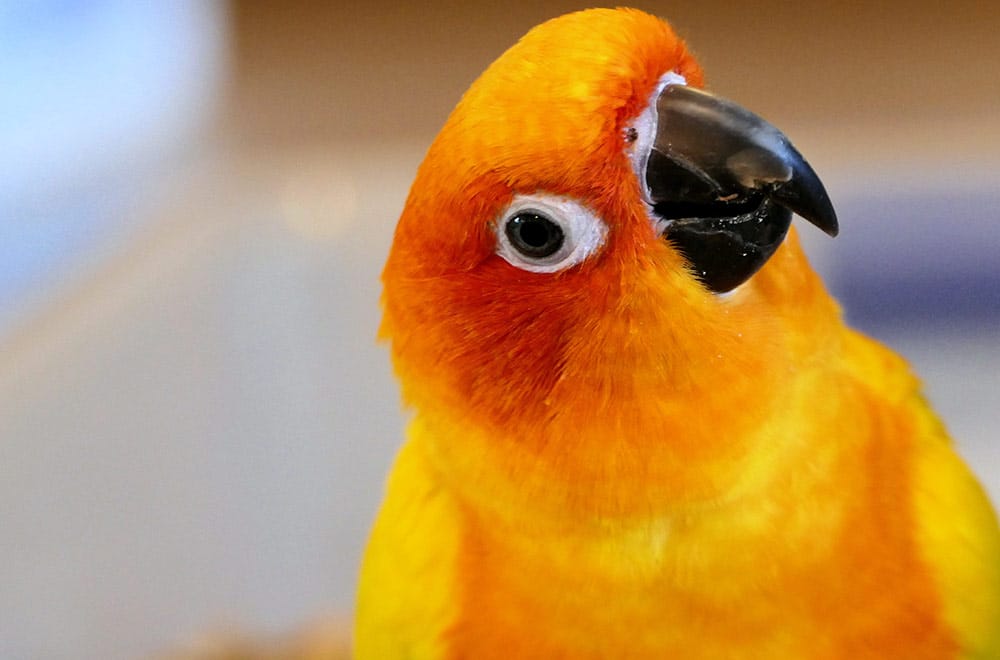
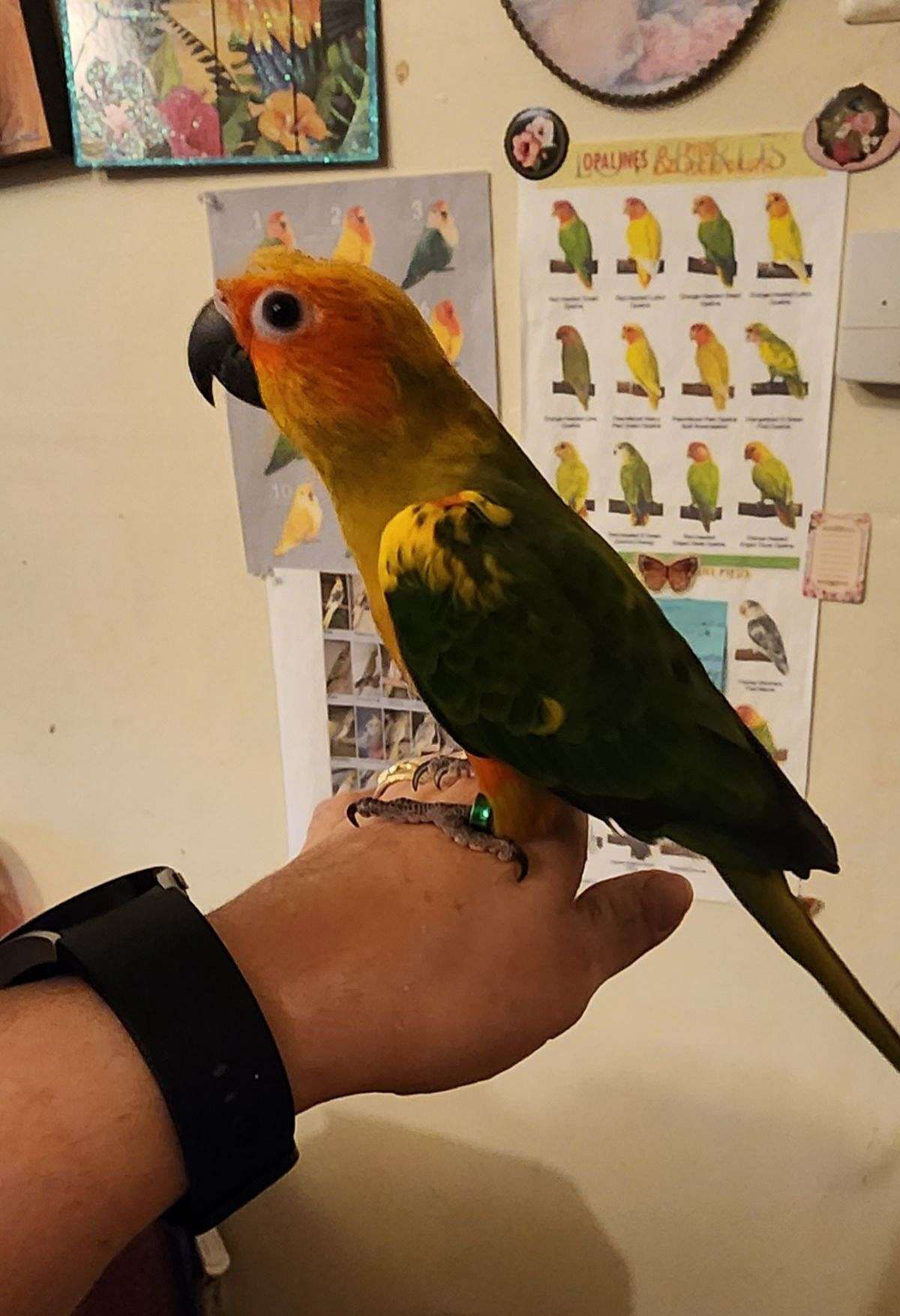
At maturity, a sun conure is bright orange and yellow with traces of green and blue. Juvenile sun conures are not nearly as colorful as adults—this is a natural defense mechanism. The first feathers are olive green in color, changing to a mixture of yellowish-orange at around 6 months of age. Full-color plumage occurs at approximately 18 months to two years of age. Sun conures have black beaks and feet and characteristic white patches around each eye. The sexes are identical in color and markings. To determine sex, your bird would require genetic testing or a surgical sexing procedure.

Caring for a Sun Conure

The sun conure is an active bird that will be happiest in a roomy enclosure. At a minimum, give your bird a cage that is 30 inches by 30 inches in footprint with a height of at least 36 inches for a bird on the smaller size. Make sure the cage has relatively narrow bar spacing (3/4 to one inch) to prevent the bird from getting their head stuck between the bars. Keep the house between 65-80 degrees Fahrenheit for your bird’s comfort.

As is true of most other parrot species, the sun conure needs safe out-of-cage areas to explore and investigate. This athletic bird loves to create their own tricks. Provide a play gym on top of the cage so it can stretch its legs and wings. Consider adding a perch or flight cage.

Like most pet birds, sun conures require training if you want to have a positive and fun relationship with them. Use positive reinforcement techniques to train this parrot to do several athletic tricks. This bird will not respond well to scolding or any kind of negative reinforcement.

Sun conures tend to enjoy bathing and will splash about daily when provided with a shallow water bowl. They may also enjoy a spray shower from overhead misters as some other parrots do.

Diet and Nutrition

In the wild, sun conures primarily feast on fruit, nuts, and seeds. In captivity, they do best on a formulated, balanced pellet diet supplemented with fruits, leafy greens, and root vegetables. Slightly steamed sweet potatoes are an excellent food for your pet conure.

When it comes to pellet food, this should account for approximately 75-80% of the bird’s diet. As for fresh fruits and veggies, offer about a 1/8 to 1/4 cup in the morning and at night.

Like other companion birds, a sun conure needs and appreciates treats, so make healthy choices for treats. Nuts and seeds are always a good choice for an occasional treat. Walnuts and almonds are excellent selections. If you would like to make feeding your feathered companion easier, try making a grain bake casserole dish. It freezes well for a healthy, portioned meal for your bird.

Avoid giving your sun conure overly salty foods, chocolate, or anything with caffeine. Additionally, give any dairy products in moderation since sun conures are lactose-intolerant.

SOURCE: SPRUCEPETS

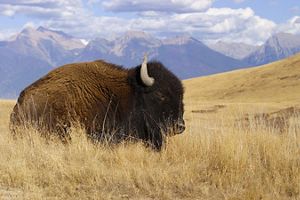
Kansas State Mammal: American Buffalo

From Nature.org:

Meet the American bison

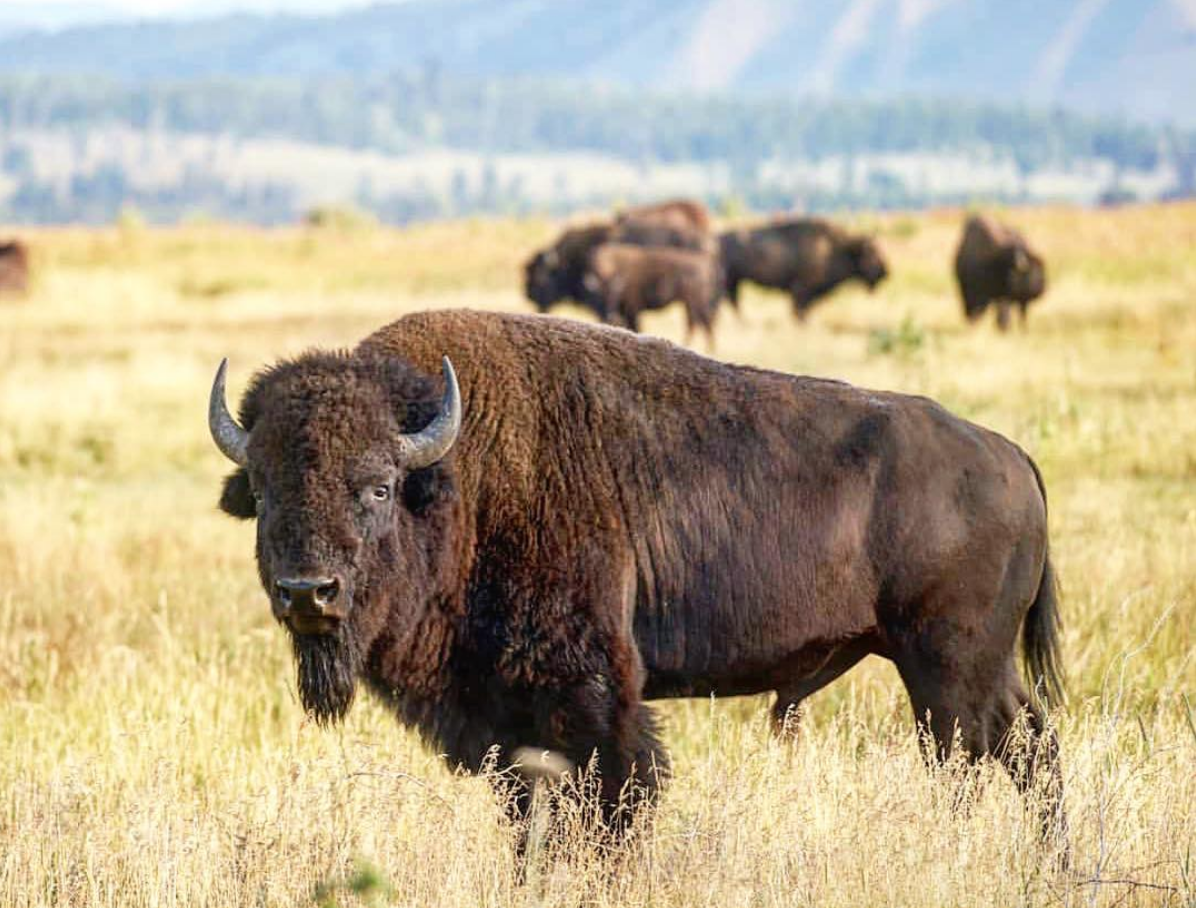
The American bison takes the top prize for the largest land mammal in North America. Adult males weigh in at up to 2,000 pounds and stand as tall as six feet high at the shoulder.

These titans of North America are grazers, matriarchal-led family groups ranging from tens to thousands of buffalo. As they move across the prairie, they selectively focus on the grasses and sedges avoiding most of the forbs and legumes which helps balance the floristic competition. They sometimes wallow, which among many benefits helps mitigate biting insects and is also a social behavior thought to be a sign of contentment. These wallows create shallow depressions in the dense prairie which provide microhabitats to insects and amphibians among others to complete their reproductive cycles.

Bison life cycle and reproduction

Male bison reach sexual maturity at 6 years old and females at 3 years old. They mate once each year from July up to September. During the mating season, also called the rut, bulls (males) will fight aggressively by ramming their heads together and charging at one another for a chance to mate with a cow (female).

After a nine-month gestation period, cows give birth to a single calf each spring. You can typically see mothers with young calves beginning in April.

It’s worth noting here that female bison weigh up to 1,000 pounds and run just as fast as the males at 40 miles per hour.

Bison are very protective of their young and as a group do their best to protect them from any dangers. When visiting a TNC preserve—or any preserve—where bison are present, it’s best to give them the space and respect they deserve, for your safety and for theirs.

Wait… Are they bison or buffalo?

Yes! Both terms have important scientific and historical meanings and use, and both continue to be used today to refer to the official mammal of the United States. There are also hundreds of words from Indigenous languages that have been used for thousands of years. Words like: “tatanka” or “pte” in Lakota and “yanasi” in Cherokee.

Genetically speaking, the American bison is not akin to either the water buffalo of Asia or the Cape buffalo of Africa. The American bison are found only in North America and certain parts of Europe.

Oceans apart in their range, the physical appearance of the American bison is vastly different from water buffalo and Cape buffalo. Developing on different continents means they encountered different conditions including climate, which influenced the evolution of their bodies and behavior.

Protecting the American Bison

Millions of bison once lived and traveled across huge sections of North America. At one point, you could see these icons of the prairie from Canada all the way south to Mexico and even as far east and west as the coasts.

But as American settlers developed and expanded, the U.S. government encouraged settlers to slaughter millions of these animals, bringing bison and the Indigenous communities that relied upon the herds to near extinction in the early 20th century.

At the end of this brutality, tribal communities were decimated, and less than 1,000 free-roaming bison remained in the world.

Today, about 500,000 bison live in the U.S. and can be found in all 50 states. However, most of these bison are privately owned and raised as livestock. Only a small fraction of this number includes bison who are living in conservation herds and even much less than that are bison who are roaming on large landscapes. There are no truly free-roaming bison left in North America.

The Nature Conservancy collectively is one of the largest bison producers with over 6,000 bison living on 12 preserves we own and manage in the United States.

SOURCE: NATURE.ORG

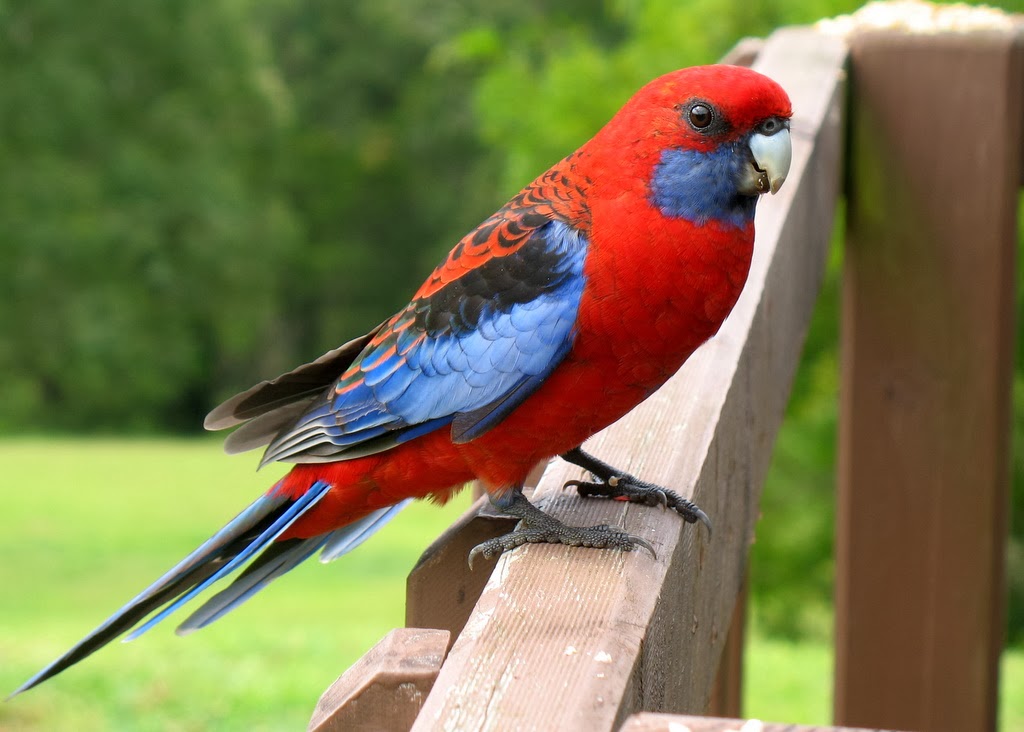
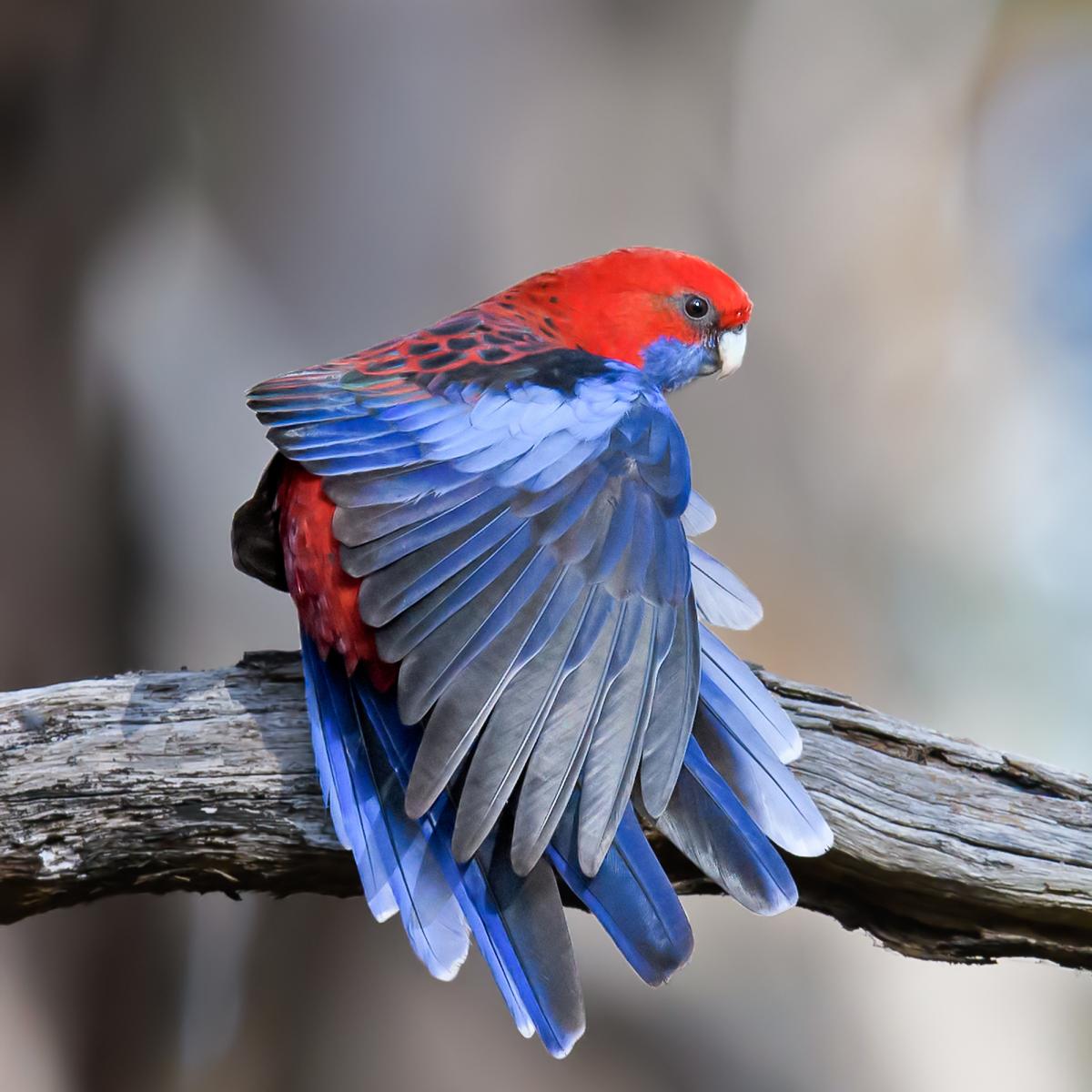
Crimson Rosella

What does it look like?

Description: 

There are several color forms of the Crimson Rosella. The form it is named for has mostly crimson (red) plumage and bright blue cheeks. The feathers of the back and wing coverts are black broadly edged with red. The flight feathers of the wings have broad blue edges and the tail is blue above and pale blue below and on the outer feathers. Birds from northern Queensland are generally smaller and darker than southern birds. The ‘Yellow Rosella’ has the crimson areas replaced with light yellow and the tail more greenish. The ‘Adelaide Rosella’ is intermediate in color, ranging from yellow with a reddish wash to dark orange. Otherwise, all the forms are similar in pattern. Young Crimson Rosellas have the characteristic blue cheeks, but the remainder of the body plumage is green-olive to yellowish olive (occasionally red in some areas). The young bird gradually attains the adult plumage over a period of 15 months.

Similar species: 

The adult Crimson Rosella is similar to male Australian King-Parrots, but differs by having blue cheeks, shoulders, and tail, a whitish, rather than red, bill and a dark eye. Immature Crimson Rosellas also differ from female and immature King-Parrots by having blue cheeks, a whitish bill and a more yellow-green rather than dark green coloring.

Where does it live?

There are several populations of the Crimson Rosella. Red (crimson) birds occur in northern Queensland, in southern Queensland to south-eastern South Australia and on Kangaroo Island. Orange birds are restricted to the Flinders Ranges region of South Australia, while yellow ones are found along the Murray, Murrumbidgee and neighbouring rivers (where yellow birds meet red birds they hybridise, producing orange offspring). Red birds have been introduced to Norfolk Island and New Zealand.

Habitat: 

Throughout its range, the Crimson Rosella is commonly associated with tall eucalypt and wetter forests.

What does it do?

Feeding: 

Crimson Rosellas are normally encountered in small flocks and are easily attracted to garden seed trays. Once familiar with humans, they will accept hand held food. Natural foods include seeds of eucalypts, grasses and shrubs, as well as insects and some tree blossoms.

Breeding: 

The Crimson Rosella’s nest is a tree hollow, located high in a tree, and lined with wood shavings and dust. The female alone incubates the white eggs, but both sexes care for the young. The chicks remain dependent on their parents for a further 35 days after leaving the nest.

SOURCE: BIRDSINBACKYARDS.NET

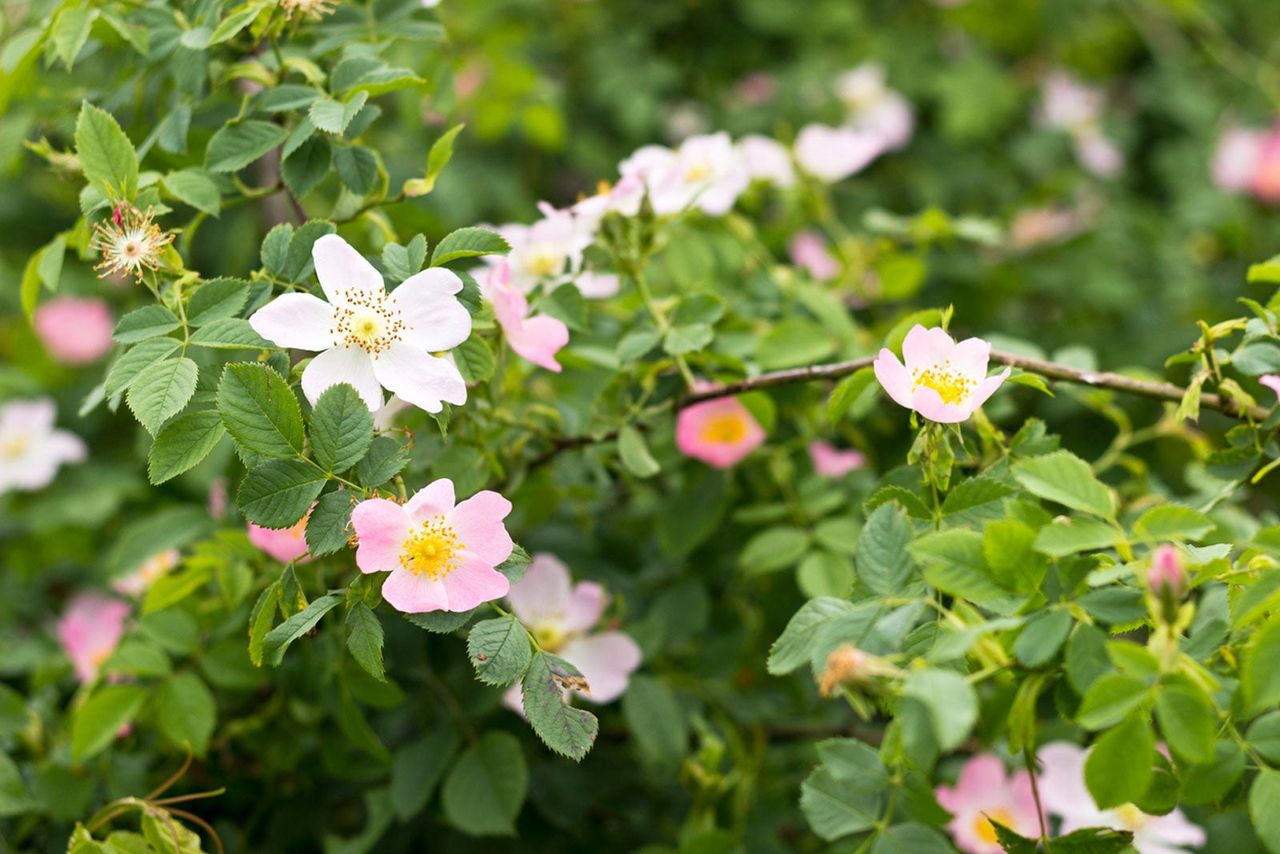
Iowa State Flower: Wild Rose

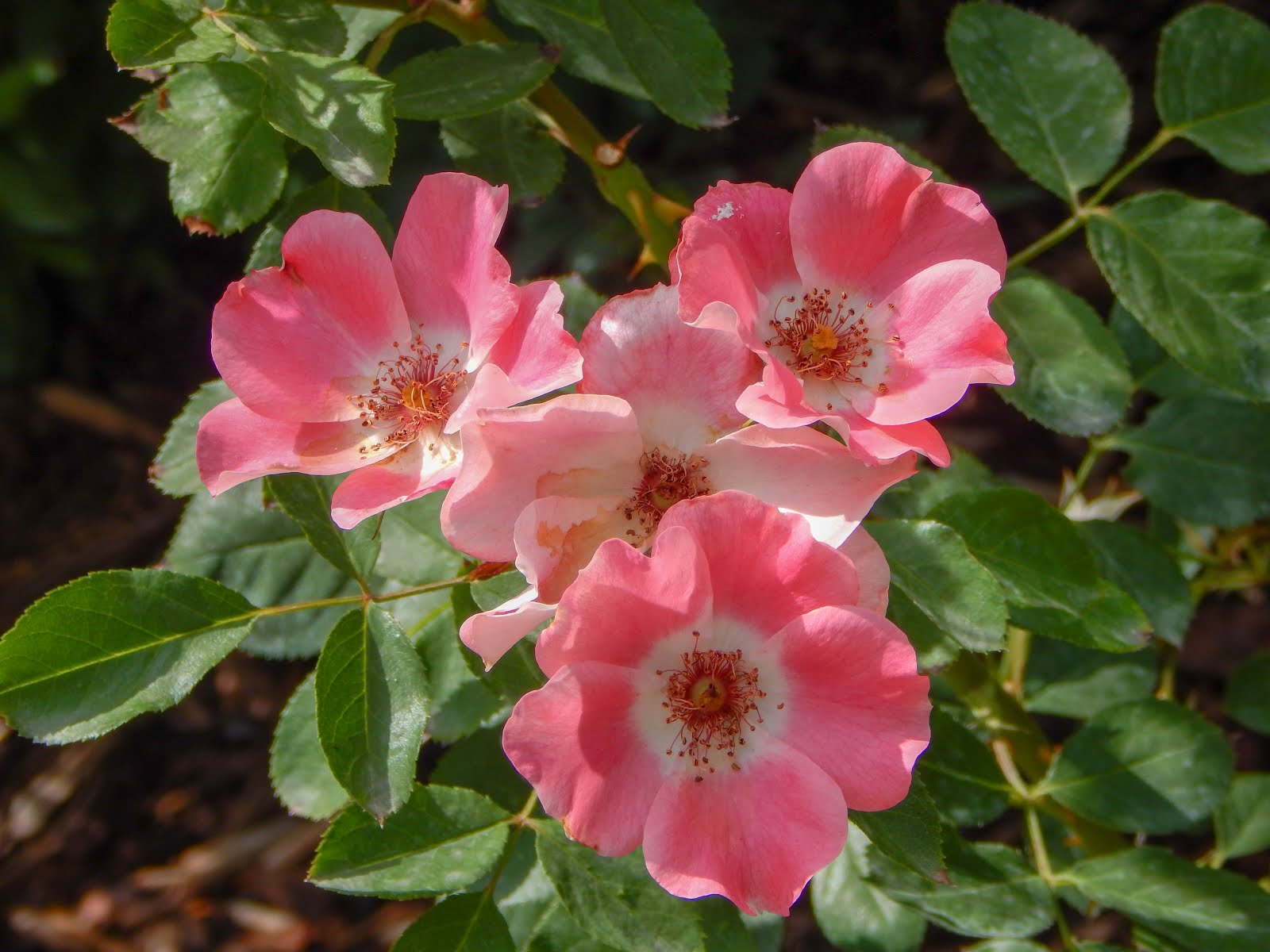
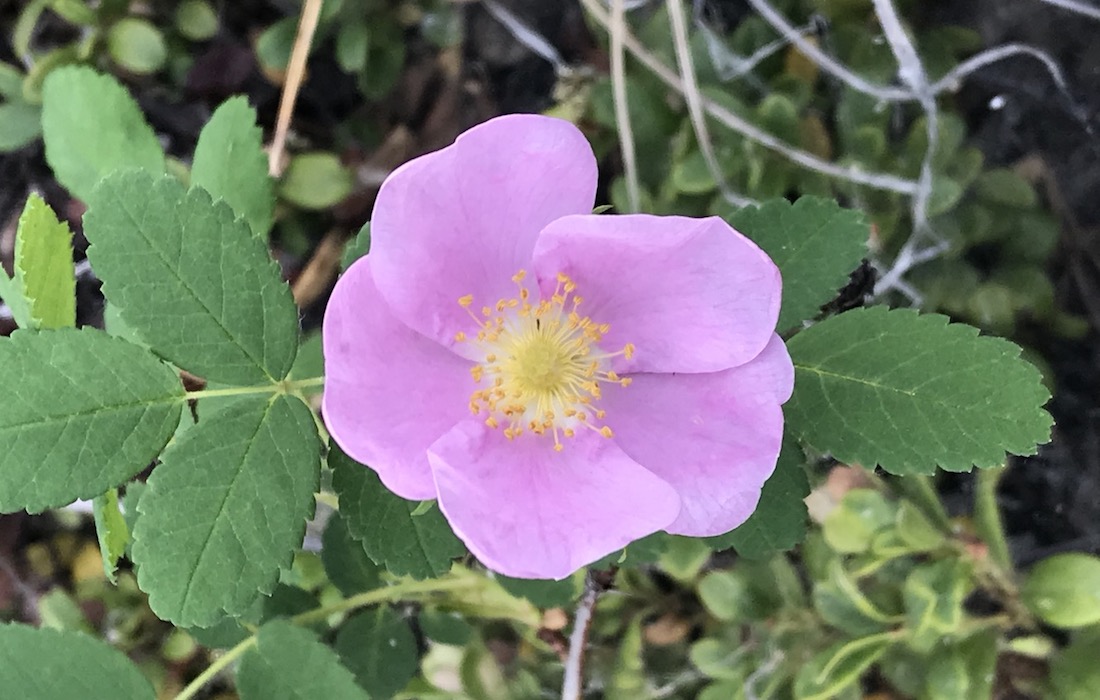
Wild roses tend to stir one’s thoughts towards Medieval times of knights, kings, queens, princes, and princesses, as many of them date back well into our history. The botanical term for them is “Species Roses.” Though this term does not conjure up the same emotions, it is the classification where you will find them listed or placed for sale in rose catalogs and nurseries. Keep reading to learn more about the types of wild roses and how to grow them in the garden.

Where Wild Roses Grow

In order to grow wild rose plants properly, it helps to know more about them, including where wild roses grow. Species roses are naturally growing shrubs that occur in nature with no help at all from man. Wild species roses are single bloomers with five petals, almost all of them are pink with a few whites and reds, as well as a few that go towards the yellow coloration. Growing wild roses are all own root roses, which means they grow upon their own root systems without any grafting as is done by man to help some of the modern roses grow well in varying climatic conditions. In fact, wild roses are the roses from which all others we have today were bred, thus a special place they do hold in the mind and heart of any Rosarian. Species or wild roses tend to thrive on neglect and are exceptionally hardy. These tough roses will grow in just about any soil conditions, at least one of which is known to do very well in wet soil. These wonderful roses will produce beautiful rose hips that carry over into winter and provide food for the birds if left on the bushes. Since they are own root bushes, they can die way down in the winter and what comes up from the root will still be the same wonderful rose.

Growing Wild Roses

It isn’t difficult to grow wild rose plants. Wild rosebushes can be planted just like any other rosebush and will do best in areas where they get plenty of sun and the soils are well drained (as a general rule). One variety that does well in wet ground, however, is named Rosa palustris, also known as the swamp rose. When growing wild roses in your rose beds, gardens or general landscape, do not crowd them. All types of wild roses need room to expand and grow into their natural states. Crowding them, like with other rosebushes, tends to cut down on air flow through and around the bushes which opens them up to disease problems.

Wild Rose Care

Once their root systems are established in their new homes, these tough rosebushes will thrive with a minimum of wild rose care. Deadheading (removal of old blooms) them really is not necessary and will cut down or eliminate the wonderful rose hips they produce. They can be pruned a bit to maintain a desired shape, again be careful how much of this you do if you want those beautiful rose hips later!

Types of Wild Roses

One of the wonderful wild roses found here in my home state of Colorado is named Rosa woodsii, which grows to 3 or 4 feet (91-120 cm.) tall. This variety has pretty pink, fragrant blooms and is listed as a drought resistant rosebush. You can find this growing happily throughout the mountains west of the United States. When deciding to add one or several of the species roses to your gardens, keep in mind that they do not bloom all season like many of the modern roses will. These roses will bloom in spring and early summer and then are done blooming as they begin setting those wonderful multi-use rose hips. To obtain a rosebush that is very close to its wild rose beginnings, look for an aptly named variety like “Nearly Wild.” This one offers the same beauty, charm, low maintenance, and toughness of a true wild rose but has the added magical kiss of repeat blooming. Part of the charm that wild roses carry is the common names that they have been given over their years of existence. Here are a few types of wild roses you may like to grow in the garden (the year listed is when the rose was first known in cultivation):

Lady Banks RoseRosa banksiae lutea (1823)

Pasture RoseRosa carolina (1826, Native American variety)

Austrian CopperRosa foetida bicolor (before 1590)

Sweetbriar or Shakespeare’s Eglantine RoseRosa eglanteria (*1551)

Prairie RoseRosa setigera (1810)

Apothecary Rose, Red Rose of LancasterRosa gallica officinalis (before 1600)

Father Hugo, Golden Rose of ChinaRosa hugonis (1899)

Apple RoseRosa pomifera (1771)

Memorial RoseRosa wichuraiana (1891)

Nootka RoseRosa nutkana (1876)

Wood’s Wild RoseRosa woodsii (1820)

SOURCE: Gardening Knowhow Stan V. Griep

Kansas State Flower: Sunflower

Sunflowers (Helianthus annuus) are a treasure of summertime. They typically begin blooming in the mid-summer and can persist into early fall. The flowers, which stretch around 3 to 6 inches across on average, have a broad central disk surrounded by short, yellow petals. Sunflowers grow on a hairy, sturdy, upright stem that can be several feet high. The stems can hold a single flower or be branched with multiple blooms. Rough, hairy, oval to triangular leaves grow along the stem. These flowers are annual, meaning they complete their growth cycle in one year. You should plant them in the spring after the garden soil has warmed to at least 55 degrees Fahrenheit.

Sunflower Care

The only mandatory requirements for sunflowers are a sunny location and well-drained soil. Select an area sheltered from strong winds that might topple these tall plants if possible. It can be helpful to plant sunflowers in groups to support each other against wind and rain. Growers often have to stake their sunflowers, especially the tall varieties, to keep them growing upright. The plants can become very top-heavy when in bloom. Planting sunflowers along a fence is the easiest way to stake them. Bamboo stakes are also strong enough to keep them upright. Use care when inserting the stakes so you don’t damage the plant’s roots.

Sunflowers don’t like to compete with weeds, so keep the garden clean. Mulching around your sunflowers will help maintain soil moisture and weed suppression. Furthermore, wildlife is often attracted to sunflower seedlings. So it’s best to protect seedlings with row covers or screening, removing the cover once the plants are 1 to 2 feet tall.

Light

For the best flowering and sturdiest stems, plant your sunflowers in full sun, meaning at least six hours of direct sunlight per day. Because they are heliotropic (their flower heads follow the sun), ample sun exposure will help sunflowers remain straight rather than bending toward the direction where the light is strongest.

Soil

Sunflowers will grow in almost any soil, including poor, dry soils. However, they thrive in well-drained soil that contains a good amount of organic matter.

Water

Although tolerant of dry conditions, watering sunflowers regularly promotes blooming, as flowering often reduces during periods of drought. Allow the top 1 to 2 inches of soil to dry out between waterings. If your sunflowers are drooping and the soil is dry, that’s often a sign they need more water.

Temperature and Humidity

Optimal temperatures for growing sunflowers are between 70 and 78 F. Still, they tolerate high heat as long as their moisture needs are met. Sunflowers can handle somewhat chilly but sunny environments. They also tolerate high humidity but must have well-draining soil and good air circulation to prevent root rot and other diseases. 

Types of Sunflowers

Helianthus annuus ‘Russian Giant’

Helianthus annuus ‘Teddy Bear’

Helianthus annuus ‘Giant Sungold’

Helianthus annuus ‘Autumn Mix’

Helianthus annuus ‘Italian White’

SOURCE: THE SPRUCE

Iowa State Bird*: American Goldfinch

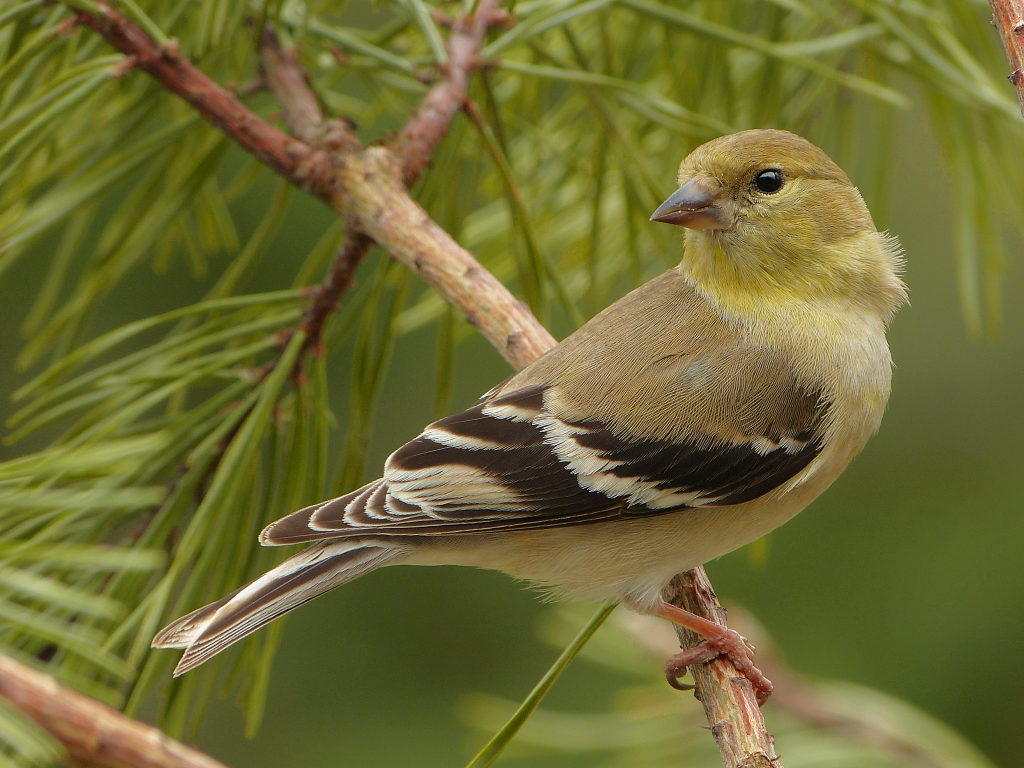
This handsome little finch, the state bird of New Jersey, Iowa, and Washington, is welcome and common at feeders, where it takes primarily sunflower and nyjer. Goldfinches often flock with Pine Siskins and Common Redpolls. Spring males are brilliant yellow and shiny black with a bit of white. Females and all winter birds are more dull but identifiable by their conical bill; pointed, notched tail; wingbars; and lack of streaking. During molts they look bizarrely patchy.

Find This Bird

Goldfinches are usually easy to find throughout much of North America, except in deep forests. Their po-ta-to-chip flight call is draws attention to them in open country. They’re most abundant in areas with thistle plants, and near feeders.

Backyard Tips

To encourage goldfinches into your yard, plant native thistles and other composite plants, as well as native milkweed. Almost any kind of bird feeder may attract American Goldfinches, including hopper, platform, and hanging feeders, and these birds don’t mind feeders that sway in the wind. You’ll also find American Goldfinches are happy to feed on the ground below feeders, eating spilled seeds. They’re most attracted to sunflower seed and nyjer. Find out more about what this bird likes to eat and what feeder is best by using Project FeederWatch’s

Cool Facts

American Goldfinches are unusual among goldfinches in molting their body feathers twice a year, once in late winter and again in late summer. The brightening yellow of male goldfinches each spring is one welcome mark of approaching warm months.

American Goldfinches breed later than most North American birds. They wait to nest until June or July when milkweed, thistle, and other plants have produced their fibrous seeds, which goldfinches incorporate into their nests and also feed their young.

Goldfinches are among the strictest vegetarians in the bird world, selecting an entirely vegetable diet and only inadvertently swallowing an occasional insect.

When Brown-headed Cowbirds lay eggs in an American Goldfinch nest, the cowbird egg may hatch but the nestling seldom survives longer than three days. The cowbird chick simply can’t survive on the all-seed diet that goldfinches feed their young.

Goldfinches move south in winter following a pattern that seems to coincide with regions where the minimum January temperature is no colder than 0 degrees Fahrenheit on average.

Paired-up goldfinches make virtually identical flight calls; goldfinches may be able to distinguish members of various pairs by these calls.

The oldest known American Goldfinch was 10 years 9 months old when it was recaptured and rereleased during a banding operation in Maryland.

*Filly pointed out that birds are not mammals, so I’ve decided to list the birds as birds instead of mammals as the reference list I use, calls them.

Sea Sheep

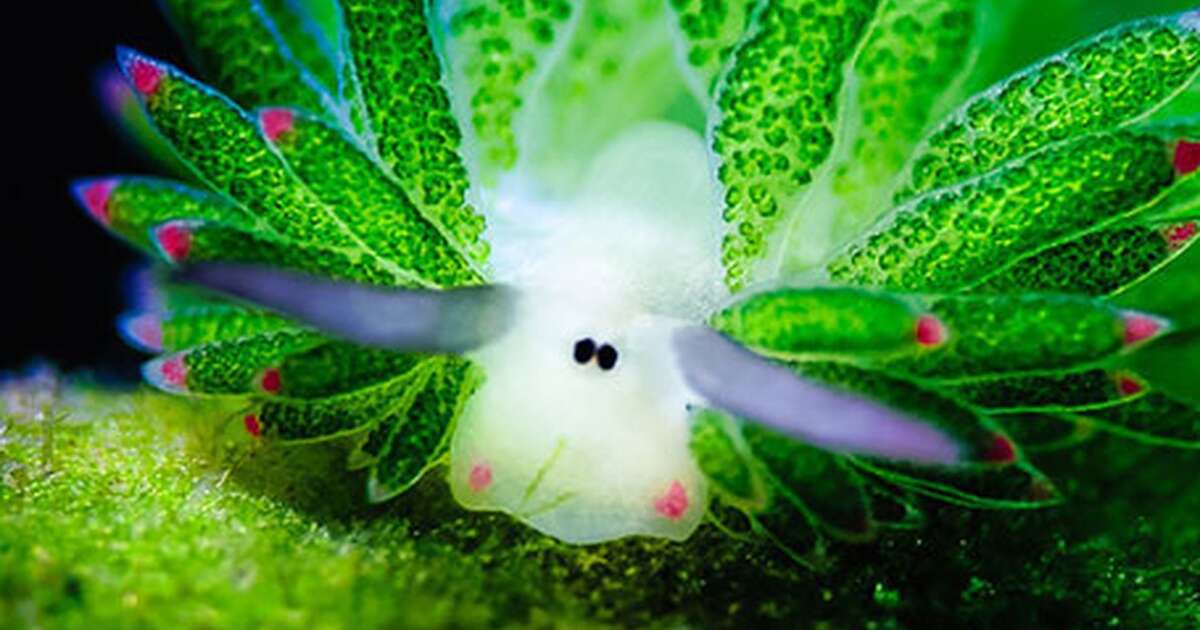
I was browsing pictures and came across this adorable one of Sea Sheep.  This article in Animal Hype:Marine Life, written by Elise McDonald, details all sorts of interesting facts about this cute little slug.

From Animal Hype:

All of us terrestrial beings are surrounded by countless creatures who have unusual traits, but beyond our terrestrial world lies the world of the ocean, the marine ecosystem that hides many more extraordinary treasures. Although we’ve come quite far in exploring the aquatic world and the creatures that inhabit it, when we compare it with the vastness of the oceans, we realize that we have barely scratched the surface.

Have you ever heard of the certain sea animals who can perform photosynthesize like plants? The Sea Sheep is one such sea creature that we have very little knowledge about. Discovered not more than a few decades ago, these sea slugs are quite extraordinary for various reasons.

In this article, we will tell you fascinating and unusual facts about the Sea Sheep that will blow your mind. Sit tight.

First, let us take a quick look at the lineage and family background of the Sea Sheep:

Why is the Sea Sheep called “sheep”?

The Sea Sheep belongs to the category of sea slugs, which are invertebrate marine animals that somewhat resemble the terrestrial slugs that you might have seen somewhere. But can you find even one similarity between a slug and a sheep? Very unlikely. The very idea of a comparison between the two sounds incredulous. While sheep are four-legged, ruminant mammals that are reared for their wool, slugs are terrestrial mollusks who either lack a shell or have a very insignificant shell.

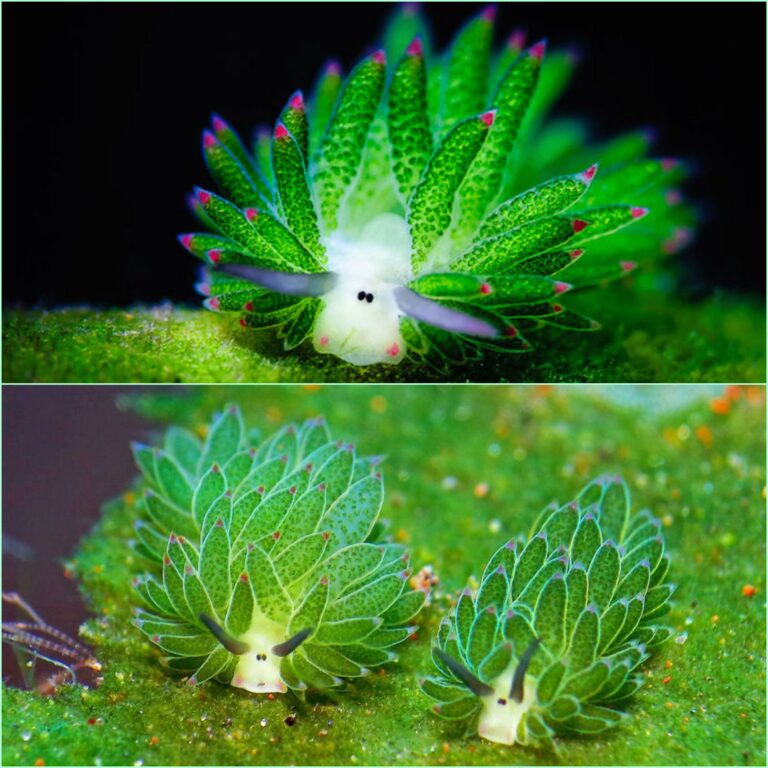
Why, then, are Sea Sheep, being basically a slug, called Sheep? While there is no straightforward answer to it, there are some resemblances between their appearances that might have inspired the name. Sea Sheep have a pair of antennae at either side of their head, which looks very much like the ears of the Sheep. Some people can also compare the hair-like structures grown on their bodies to the wool that grows on the Sheep. That is about all the similarities you can find between the two.

Breaking down the scientific name of the Sea Sheep

As you can see in the table given above, the scientific name of the Sea Sheep is “Costasiella Kuroshimae”. While the term “Costasiella” refers to the genus of the sacoglossan sea slugs to which the Sea Sheep belongs, what does the second part of their name signify?

“Kurashimae” comes from the name of the Japanese island named Kuroshima. Also known as the Kuro island, Kuroshima is one of the native places of the Sea Sheep.

Moreover, the island of Kuroshima might also have some relevance with the discovery of their species, which makes the name all the more significant.

What does sea sheep look like?

Not much is known about what the Sea Sheep looks like because they rarely appear on the surface of the sea or the ocean. However, from what we have gathered, we can provide you with a rough description. The Sea Sheep are among the smaller sea slugs that only grow to be 1-inch long. Due to their small size, it is very difficult to recognize them from a fair distance.

They have a small, creamish-white, gelatinous body that looks slightly translucent, with two beady, black eyes. It is difficult to make out their mouths, but they have a pair of antennae at each side of their head, which is quite prominent. Their body is covered with several pointy structures all over. These are similar to leaves, have a pinkish tip and green dots all over them.

Although most of their sightings have been of the green-colored Sea Sheep, it is said that there are other color variations present in the ocean as well.

The plant-like behavior of the Sea Sheep

While we agree that the Sea Sheep slightly resembles the terrestrial Sheep and are inhabitants of the oceans, how does their behavior match that of the plants?

What we’re going to talk about now is probably the most unusual trait that makes the Sea Sheep so significant. The Sea Sheep are often compared to plants because they have the ability to perform the process of photosynthesis. All of us familiar with photosynthesis, aren’t we? For a quick memory brush-up, photosynthesis is a process in which the sunlight is used to synthesize all the necessary nutrients from water and carbon dioxide. The process of photosynthesis is associated with plants. In this respect, the Sea Sheep are like plants: they can perform photosynthesis just like them.

The Sea Sheep are kleptoplastic

How many of you have heard of the process of Kleptoplasty before? Even if you haven’t, there is no reason to worry. We will explain it to you: kleptoplasty or kleptoplastidy is a process in which an organism feeds on small aquatic plants like the algae, but stores the plastids (chloroplasts) in its own body to use it to perform photosynthesis. The process of kleptoplasty explains how animals like the Sea Sheep are able to perform photosynthesis.

Sea Sheep is not the only marine creature capable of photosynthesis

Now that you have found about the Sea Sheep being kleptoplastic, you better not make the mistake of thinking that they are the only creatures who can perform photosynthesis. The phenomenon of kleptoplastidy can also be seen in other creatures such as the Sea Slug (Elysia chlorotica) and the Spotted Salamander (Ambystoma maculatum). The Pea Aphid (Acyrthospihon pisum) are amazing insects who can produce carotenoids on their own, which they later use in the process of photosynthesis.

The Sea Sheep closely resembles a house plant

If you go through the physical description of the Sea Sheep carefully, it is not difficult to understand how the Sea Sheep resembles a house plant. The growth of green, leaf-like structures all over the body of the Sea Sheep is probably the reason why it might look like a house plant to most people at first glance.

How does Sea Sheep eat?

The Sea Sheep, like the rest of the sea slug species, are pure herbivores. Their main diet is the algae (Vaucheria litorea). If they eat anything other than algae, we have no knowledge of it as of now. The more interesting part of their diet is how they eat algae. First, they puncture the cell walls of the algae, then hold it close to their mouth so that they can suck in all of its contents. Thereafter, instead of digesting all the contents directly, they simply retain the chloroplast from it and store it safely somewhere inside their body. Later, they take it out to use it to perform photosynthesis. This process is similar to the one that the Sea Slug (Elysia chlorotica) performs during feeding.

Although they live in the oceans, the Sea Sheep are solar-powered

Are you wondering what makes these marine slugs solar-powered? The answer to your question is kleptoplasty. The process of kleptoplasty, which makes them eligible to perform photosynthesis, is also the reason why they are known to be “solar-powered”, i.e., deriving energy from the sun.

In which regions are the Sea Sheep found?

The Sea Sheep was first discovered from the islands of Japan in the year 1993. Little else is known about their discovery. However, recently, some studies have shown that these kleptoplastic sea slugs aren’t limited to Japan. They have also been seen in Indonesia, New Caledonia, Papua New Guinea, Northern Australia, and Singapore. Since these sea slugs are still considered to be understudied, there is a possibility that they could frequent in other parts of the world, too.

How long does the Sea Sheep live?

Unfortunately, due to the lack of enough data, experts have still not been able to provide information about the lifespan of the Sea Sheep. However, the lifespans of the other sacoglossan sea slugs are an indication; you can expect these creatures to live between 2-3 years on average. Some experts claim that the Sea Sheep have a lifeline much longer than the rest of the sea slugs. However, due to a lack of evidence, their claim cannot be considered as a fact.

The sea sheep can sustain on solar energy for months

Since the Sea Sheep can perform photosynthesis, it is not surprising that they can survive on solar energy alone. However, not all the other sacoglossan sea slugs can go without any other food resource for as long as a couple of months. This feature of these creatures is, thus, quite remarkable.

Sea Sheep look even cuter in motion

Most of us have only seen the still pictures of the Sea Sheep, and wonder how these cute little creatures look in action.

Well, you needn’t worry about it. Experts who have spent time researching and observing the Sea Sheep claim that they look even cuter when they move around in the water, either to find more algae to feed on, or just for fun.

Source: Animal Hype; Elise McDonald

International Clouded Leopard Day

Interesting Clouded Leopard Facts

1 Clouded leopards are not leopards

Despite the name, clouded leopards are actually not a type of leopard, but are a separate species entirely, just like a snow leopard. They are not that closely related and in a different genus ‘Neofelis’. True leopards are in the genus Panthera, alongside tigers, lions, jaguars and the snow leopard.

2 They are named for the distinctive ‘clouds’ on their coats

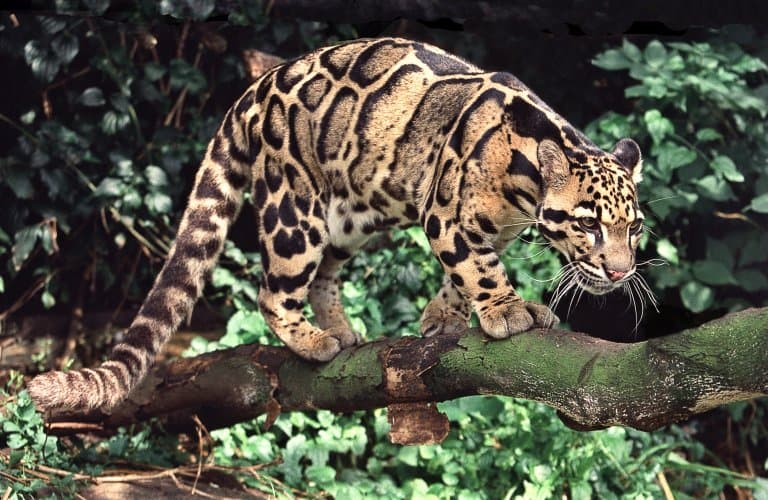
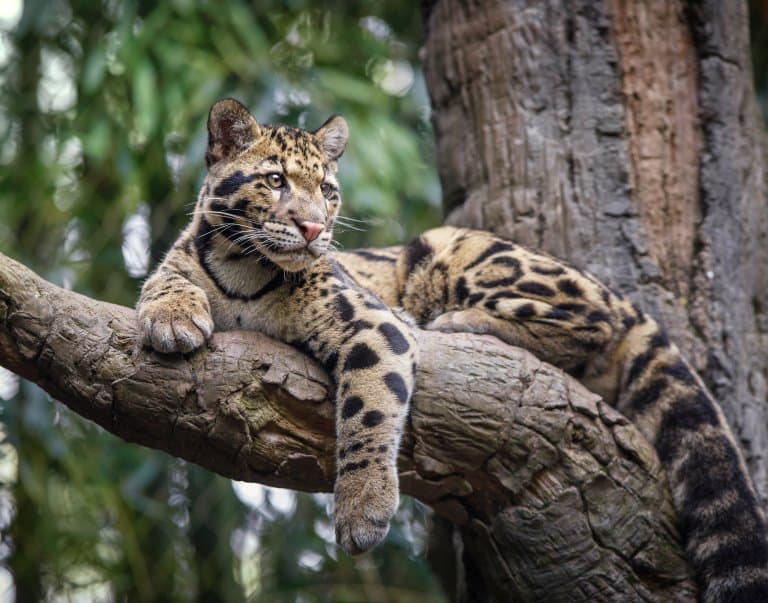
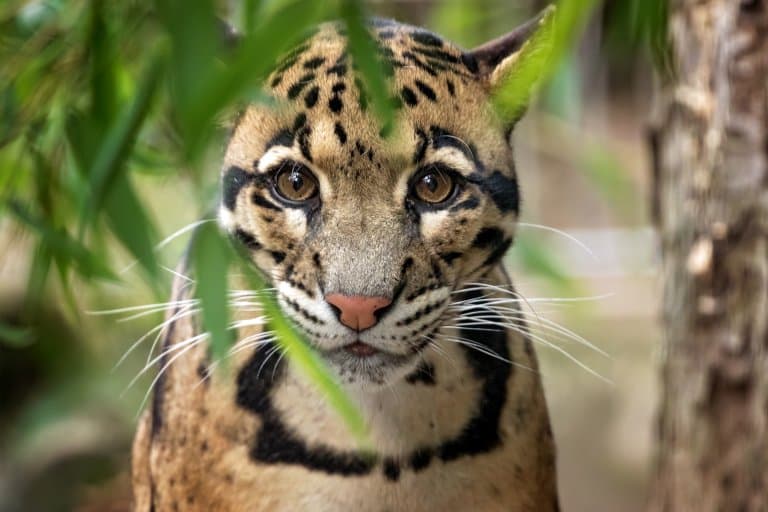
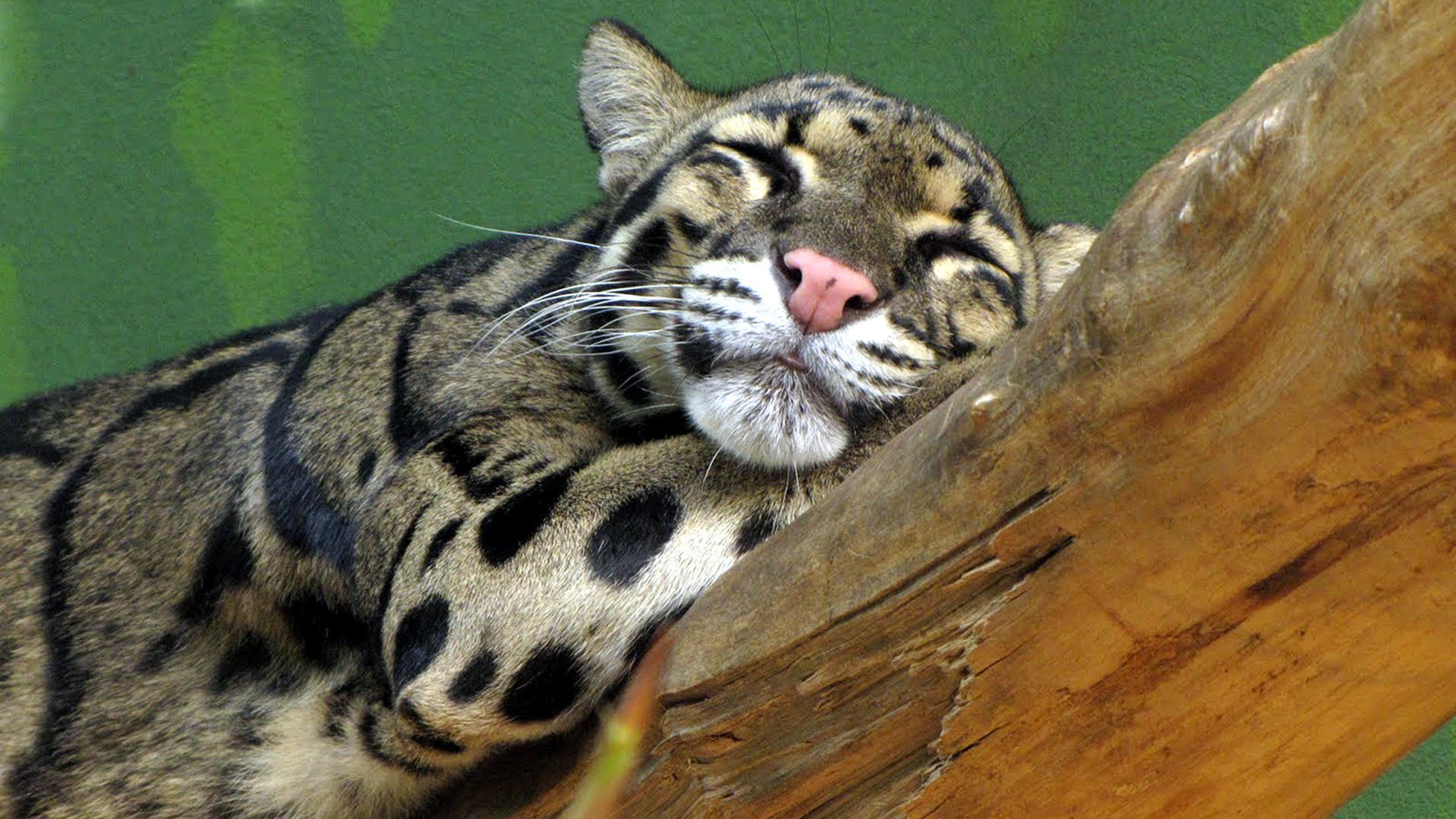
The coats of clouded leopards are covered in irregular spots and patches of a pale grey/brown color surrounded by a darker edge or line. These cloud-like blotches are what give the animal their common name of clouded leopard. In Malaysia, the clouded leopard is known as the ‘tree tiger’, while in China they are named the ‘mint leopard’, because the patches on their coats resemble mint leaves.

3 They have the largest teeth to body size

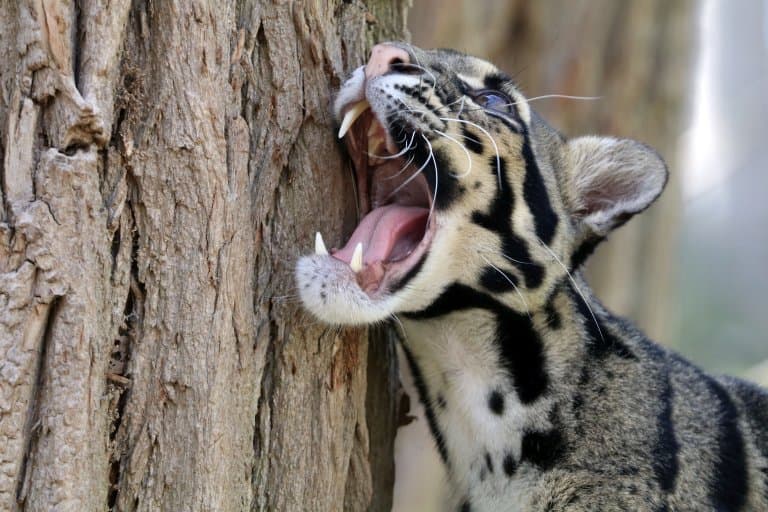
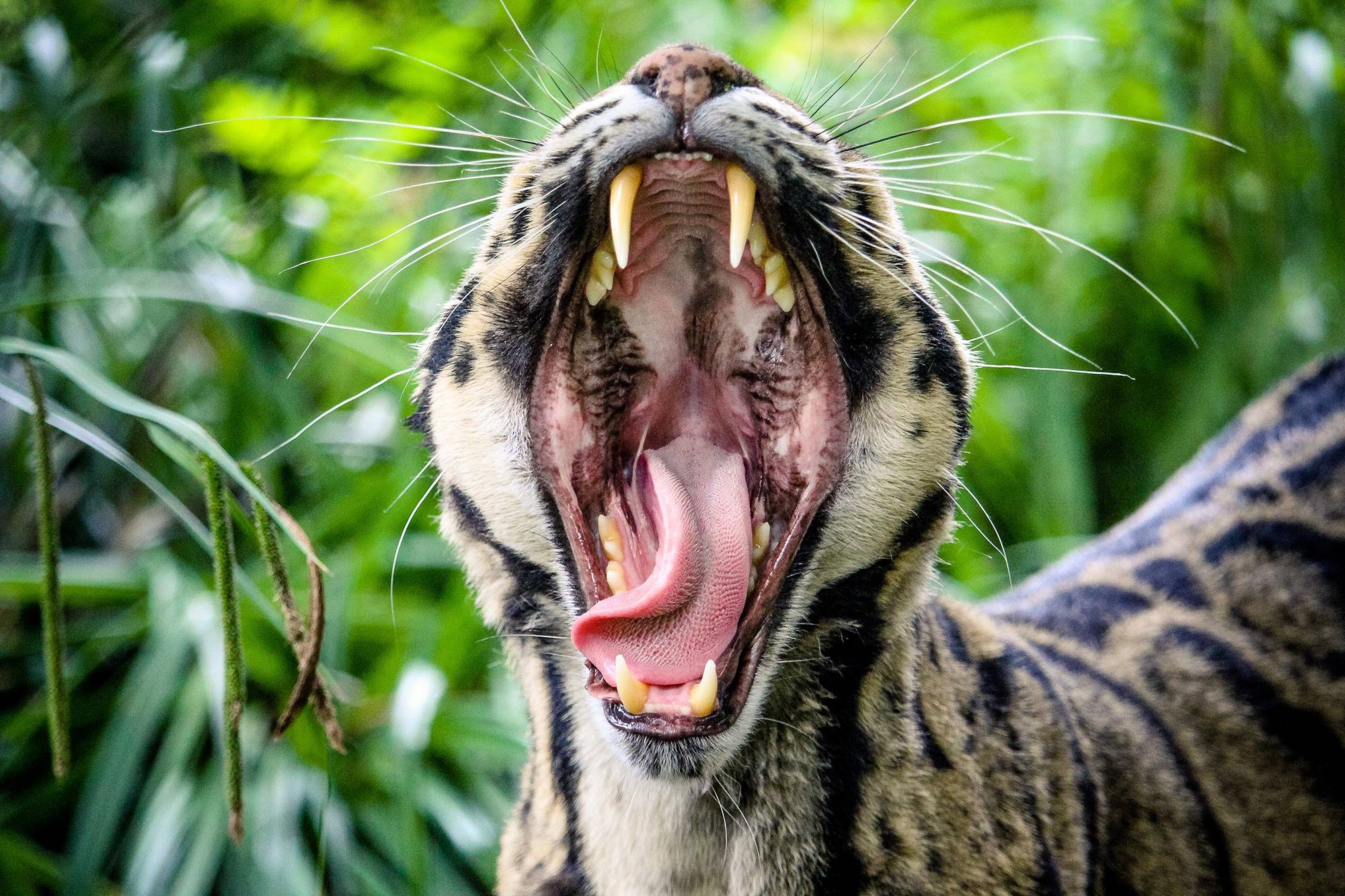
Clouded leopards have the biggest canine teeth – in proportion to their body size – of any wild cat; almost resembling the now extinct sabretooth. With sizes up to 2 inches in length, their canine teeth are the same size as a tiger’s, despite being 10 times smaller in body size. Their large, sharp teeth aid their excellent hunting skills.

4 Clouded leopards can descend trees headfirst

Their strong and stocky legs are equipped with rotating ankles which allow varied climbing positions and therefore enable clouded leopards to quickly and agilely scale up and down trees headfirst – like squirrels. They are also able to climb while hanging upside-down beneath the branches, and even to hang only from their back feet in order to snatch prey with their front legs.

5 The clouded leopard may be the most ancient of the big cats

Recent studies have indicated that the clouded leopard was the first species of the Pantherinae family to branch from the other members – over 6 million years ago. This would make the clouded leopard the most ancient feline of all modern cat species.

6 The clouded leopard cannot roar or purr

These cats have a different structure of bones in their neck which means they lack the ability to roar like the other big cats. They also lack the hyoid bone which enables small cats to purr. The clouded leopard’s alternative communication methods include high-pitched meow calls, hissing, growling and chuffing.

7 Clouded leopards have an extreme gape

They are able to open their mouths extremely wide – to around 100 degrees. This is another feature that assists their hunting, and gives them the ability to take down larger prey.

8 Clouded leopards are strong swimmers

Somewhat surprisingly, given the common acceptance that cats hate water, clouded leopards are very confident swimmers.  It is thought that this may be how they populated small islands off the coast of Vietnam and Borneo.

9 Their eyes are unique

In contrast to other cats, clouded leopards’ pupils never enlarge to a fully round shape like big cats nor to a thin slit like small cats. Instead, their pupils are constantly an oblong shape.

10 Clouded leopards have some reproductive challenges

Although most cats are considered induced ovulators (meaning that the act of copulation induces ovulation), it has not been possible to determine whether this is the case for the clouded leopard, as the females are able to spontaneously ovulate – however this is generally considered to be intermittent. Their ovulation being so unpredictable can cause some challenges for reproduction in this species, when coupled with the fact that around 70% of the males have malformed sperm.

In human care, artificial insemination has been used with sporadic success. It has also proved to be a challenge to find compatible mates for reproduction, as there is a high level of aggression seen between males and females of the same age.

11 Clouded leopards are considered to bridge the gap between big cats and small cats

All cat species are related to the same family of Felidae, but genetics have shown that the clouded leopard is more closely related to big cat species. However, due to its small stature, the clouded leopard is often described as filling the gap between big and small in the feline world: they are bigger than small cats and smaller than big cats!

12 The population of the clouded leopard declined rapidly in the 20th century

This is due entirely to human action from poaching and deforestation destroying their habitat.

Sadly, the clouded leopard is thought to be locally extinct in Singapore, Taiwan, Hainan Island and Vietnam. The clouded leopard is listed in CITES Appendix I and protected over most of its range with hunting banned, although bans are poorly enforced in some countries and poaching continues.

SOURCE: FACT ANIMAL

Golden Pheasant

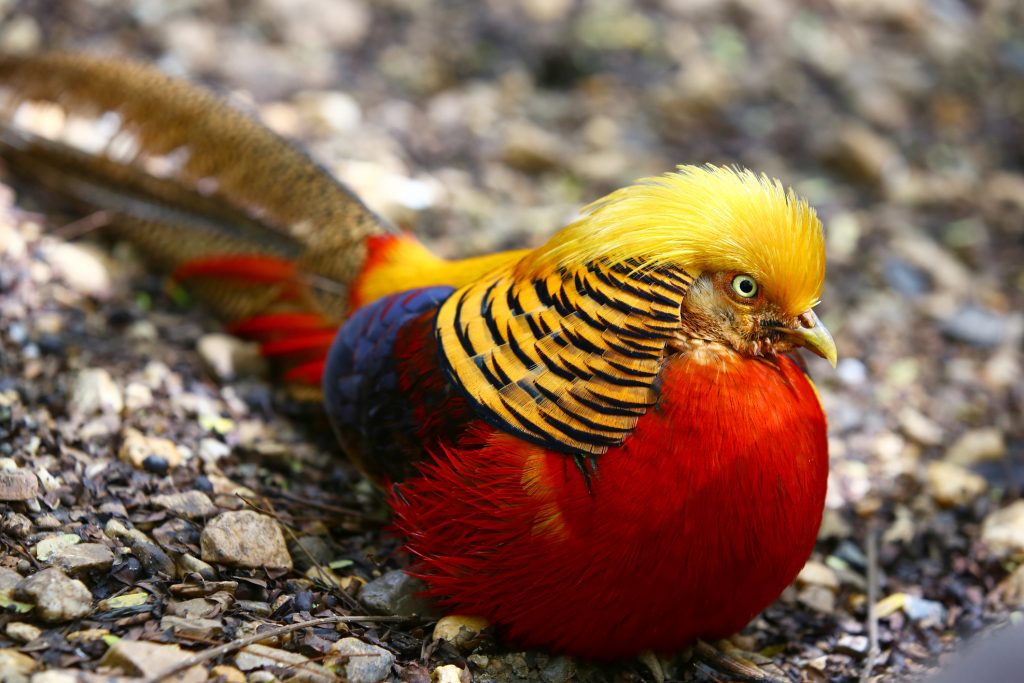
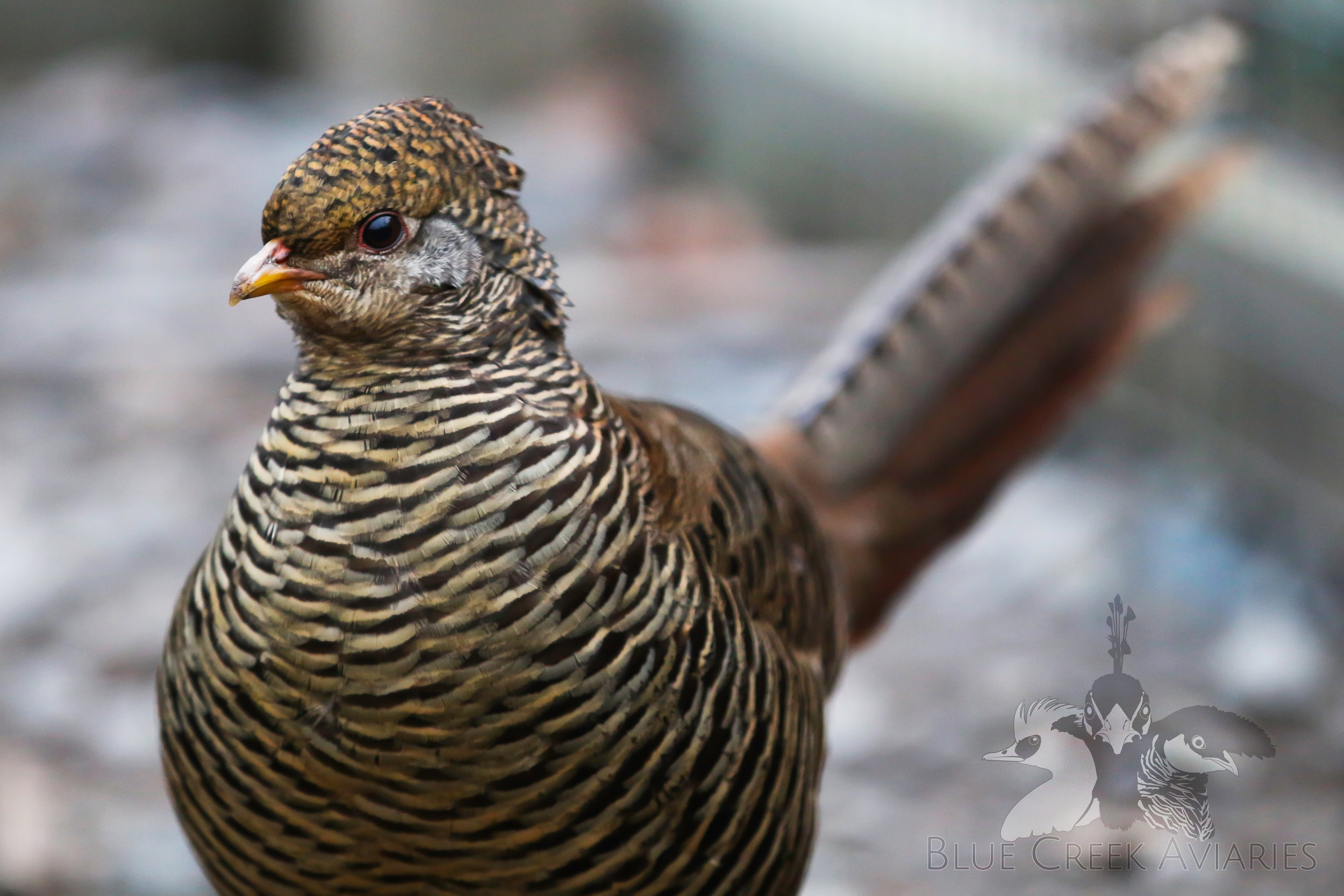
The Golden Pheasant, (Chrysolophus pictus), also known as the ‘Chinese Pheasant’ is one of the more popular species of pheasant which is native to the mountainous forests of Western and Central China. The Golden Pheasant was introduced to the United Kingdom around 100 years ago and there are around 101 – 118 mating pairs in the summer. This hardy, gamebird belongs to the order: Galliformes and is a smaller species of pheasant. The Golden Pheasant along with Lady Amherst Pheasant (Chrysolophus amherstiae), make up the group of ‘Ruffed Pheasants’ named for their ruff which is spread across their face and neck during courtship.

Golden Pheasant Characteristics

Male and female Golden Pheasants look different in appearance. Males measure 90 – 105 centimeters in length with the tail making up two thirds of the total length. Females are slightly smaller measuring 60 – 80 centimeters in length with the tail making up half of the total length. Their wingspan is around 70 centimeters and they weigh around 630 grams.

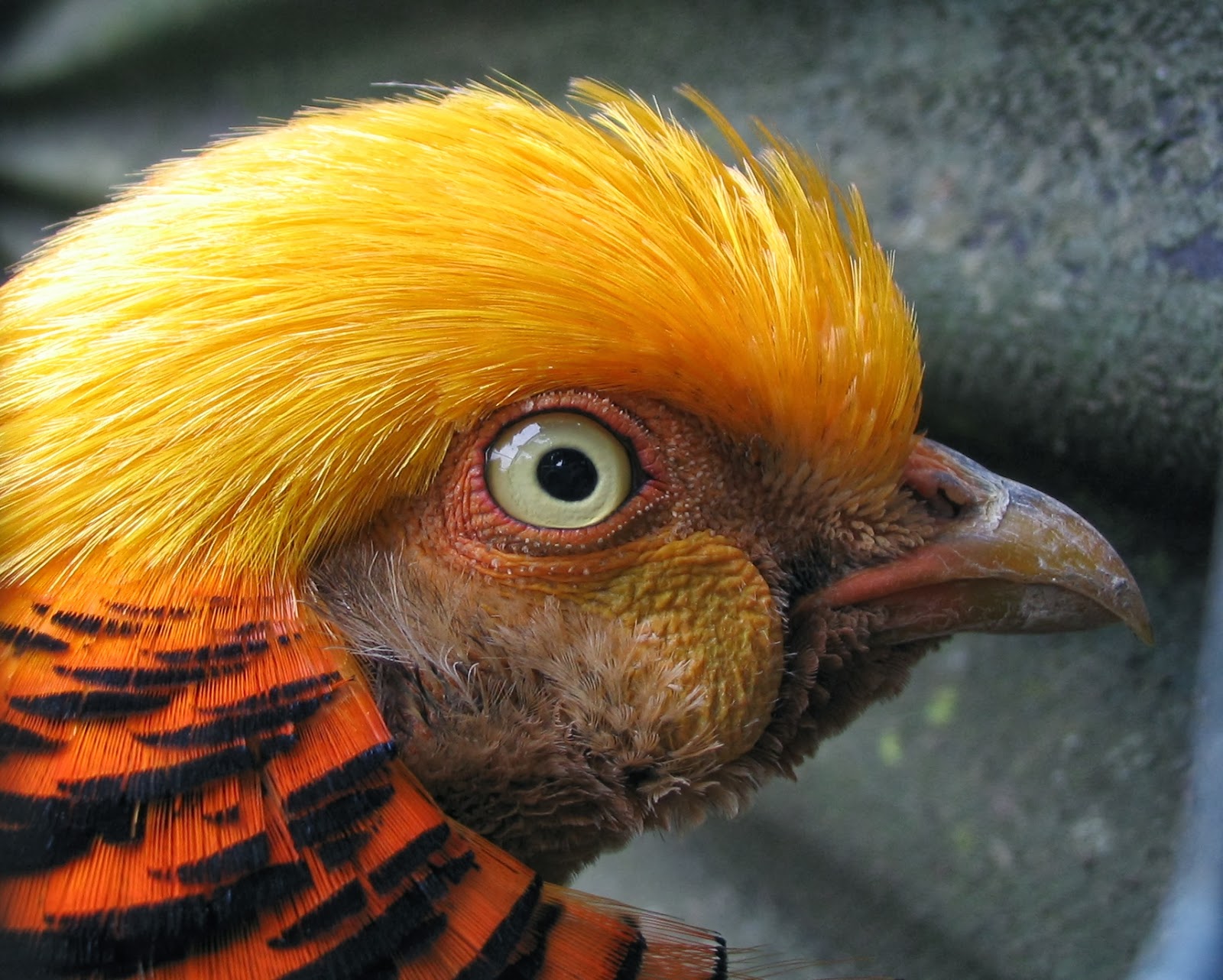
Male Golden Pheasants can be easily identified by their bright coloring. They have a golden crest tipped with red which extends from the top of their heads, down their necks. They have bright red underparts, dark colored wings and a pale brown, long, barred tail. Their rumps are also golden, upper backs are green and they have bright yellow eyes with a small black pupil. Their face, throat and chin are a rust color and their wattles and orbital skin are yellow. Beak, legs and feet are also yellow.

Female Golden Pheasants are less colorful and duller than males. They have a mottled brown plumage, pale brown face, throat, breast and sides, pale yellow feet and are more slender in appearance.

Golden Pheasant Habitat

Golden pheasants are native to Western China, but they have travelled far and wide and have been introduced over time to other places including the United Kingdom, Canada, the United States. Wild populations can also be found across Central and South America, and much of Western Europe. They can even be found in Australia and New Zealand! The Golden Pheasant’s preferred habitats are dense forests and they can often be seen in places with lots of trees and bushes. While this is their favorite, they can also be found in loose woodlands and sparse undergrowth.

Golden Pheasant Diet

Golden Pheasants mainly feed on the ground on grain, berries, grubs and seeds as well as other kinds of vegetation. They will also eat small insects and invertebrates though when the opportunity arises, and their diet may change seasonally. During winter, they like to stay close to humans and eat wheat leaves and seeds.

Golden Pheasant Behavior

Golden Pheasants are very timid birds and will hide in dark, dense forests and woodlands during the day and roost in very high trees during the night. Golden Pheasants often forage on the ground despite their ability to fly, this may be because they are quite clumsy in flight. However, if they are startled, they are capable of taking off in a sudden fast upward motion with a distinctive wing sound.

Little is known about their behavior in the wild as although the males are very colorful birds, they are difficult to spot. The best time to possibly observe a Golden Pheasant is very early in the morning when they may be seen in clearings.

Vocalizations include a ‘chack chack’ sound. Males have a distinctive metallic call during the breeding season. Also, during the males elaborate courtship display, he will spread his neck feathers over his head and beak, like a cape.

5 Fun Golden Pheasant Facts For Kids

  • Male golden pheasants like to show off and perform a colorful dance to impress the females during courtship.
  • They are also known as the Rainbow pheasant because of their vibrant, eye-catching colors.
  • In China, golden pheasants are seen as a sign of good luck and prosperity. It is said to be an ancient ancestor of the Phoenix and to represent ‘auspiciousness’.
  • They live much longer in captivity than in the wild, potentially up to 20 years!
  • Golden pheasants prefer running to flying and spend the majority of their time on the ground.

SOURCE: ANIMALCORNER.ORG