Pat Tillman: The Lie & the Legacy

From All That’s Interesting:

On April 22, 2004, former NFL star and U.S. Army Ranger Pat Tillman was killed by friendly fire in Afghanistan — and it may not have been an accident. After the 9/11 attacks, Pat Tillman gave up a lucrative football career to join the U.S. Army. But in 2004, he was tragically killed by the Taliban — or so his family and the American public were led to believe.

As the story went, Tillman had bravely rescued dozens of his fellow soldiers before he was gunned down by enemy forces in Afghanistan. Unsurprisingly, the American media quickly hailed Tillman as a war hero. Helicopters flew over football stadiums in his honor. A televised memorial service was planned. Top-ranking officers called for Tillman to be posthumously awarded the Silver Star and the Purple Heart

But as Tillman’s family mourned their loss, they had a feeling that something wasn’t quite right. And though his mother pressed the Army for more details, they stuck to their initial story about Pat Tillman’s death.

Around this same time, anti-war voices were getting louder in the United States. And photos of the torture at the Abu Ghraib prison were about to become public. Thus, Tillman seemed like the perfect poster boy for America’s “War on Terror.” But this couldn’t have been further from the truth. Several weeks later, the real story finally came out: Tillman had been killed by friendly fire, not the Taliban. As if that weren’t bad enough, the circumstances surrounding his death were highly suspicious.

The Story Of A Football Star Turned Soldier

Patrick Daniel Tillman was born on November 6, 1976, in San Jose, California. The oldest of three brothers, he was a natural athlete and led his high school football team to the Central Coast Division I Football Championship. As a result, he soon earned a scholarship to Arizona State University. While in college, Tillman led his team to an undefeated season and was named Most Valuable Player of the Year in 1997. After the Arizona Cardinals drafted him into the NFL in 1998, Tillman became a beloved starting player and broke the team record for the most tackles two years later.

However, everything changed for Tillman after he watched the 9/11 terrorist attacks on the United States play out on live television. “My great grandfather was at Pearl Harbor,” he told NBC News on September 12, 2001, “and a lot of my family has… fought in wars, and I really haven’t done a damn thing as far as laying myself on the line like that.”

Tillman famously turned down a $3.6 million, three-year contract with the Cardinals, choosing instead to enlist in the U.S. Army in May 2002.
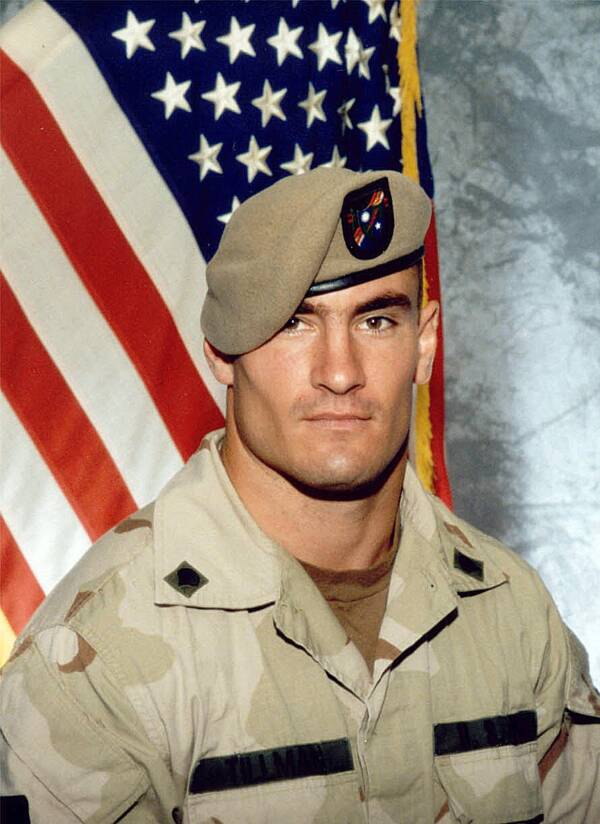
Pat Tillman and his brother Kevin trained to become Army Rangers — elite soldiers who specialize in joint special operations raids. They were eventually assigned to the 2nd Battalion of the 75th Ranger Regiment, based in Fort Lewis, Washington. And in 2003, they were deployed to Iraq.  But significantly, Pat Tillman was against the Iraq War. He was prepared to go to Afghanistan — where the war effort had begun — but he was not happy to hear that the focus was now on a different country.

Tillman had intended to fight against Al Qaeda and bring Osama bin Laden to justice. But the Bush administration had pivoted to Iraq to track down Saddam Hussein and his alleged weapons of mass destruction. That wasn’t what Tillman had signed up for, but he went anyway.  Just one year later, Tillman’s second tour would take him to Afghanistan — where he would tragically die at age 27.

The Story Of Pat Tillman’s Death

As his service began, Tillman noticed differences between his experience in the war and its depiction in the media. For instance, he was assigned to a unit that would help release a POW named Jessica Lynch from Iraqi forces in 2003, and he saw firsthand the media’s sensationalized spin on the story. While the military portrayed Lynch as being in extreme danger, she had actually been taken care of by Iraqi doctors in a hospital. Lynch herself would later blast the national press for nurturing a skewed narrative before the House Committee on Oversight and Government Reform in 2007.

“I’m still confused as to why they chose to lie and try to make me a legend when the real heroics of my fellow soldiers that day were legendary,” she said, insisting that the sensationalization was unnecessary. “The truth of war is not always easy to hear but [it’s] always more heroic than the hype.” At the time the rescue was happening, Tillman described the military’s elaborate tale as “a big public relations stunt.” But after his death on April 22, 2004, he would become the subject of one himself.

Initial reports stated that Tillman was killed by enemy fire during an ambush in the Khost Province of southeastern Afghanistan. His family and the American public alike were told that Tillman had bravely hustled up a hill to force the enemy to withdraw — saving dozens of his comrades in the process. Tillman was quickly declared a hero.

Shortly after the 27-year-old’s death, top-ranking officers were saying that he should receive the Silver Star and the Purple Heart. And he was soon honored at a nationally televised memorial service on May 3, 2004. There, Senator John McCain, a veteran himself, delivered Tillman’s eulogy.  But despite the widespread praise and glory, Pat Tillman’s family couldn’t shake the feeling that they weren’t being told the real story about his death. And they were sadly correct.

How Did Pat Tillman Die?
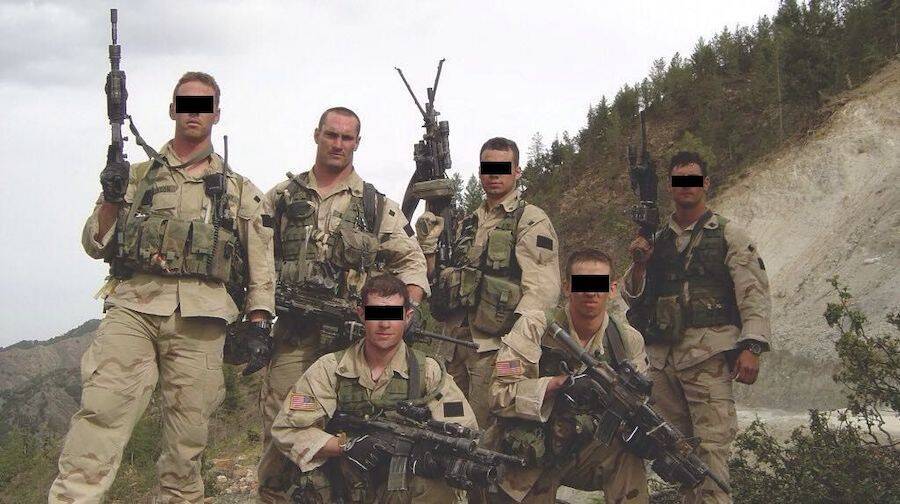
About a month after Pat Tillman’s death, the Army came forward with a shocking announcement. Tillman had not been killed by insurgents — he was shot down by his fellow soldiers. As they took aim at him, he yelled, “I’m Pat f**king Tillman!” to get them to stop. It was the last thing he ever said. Tillman’s mother Mary was later asked how long she thought it took for the Army to realize what had really happened. And she responded, “Oh, they knew immediately. It was pretty evident right away. All the other soldiers on the ridgeline suspected that that’s exactly what happened.”

While the shooting has since been described as accidental, some have their doubts. Not only was Tillman shot three times in the head, but he was also shot at close range and there was no evidence of any enemy fire in the area — unlike the Army’s initial report of the incident. So if there were no enemies nearby, what were the American soldiers shooting at?

In 2007, it was revealed that Army doctors who examined Tillman’s body were “suspicious” of the close proximity of the bullet wounds on his head. They even tried — and ultimately failed — to convince authorities to investigate the death as a potential crime because “the medical evidence did not match up with the scenario as described.”

The doctors believed that Tillman had been shot by an American M-16 rifle from just 10 yards away. But despite the worrying details in this report, it was apparently shelved and not released to the public for years. Eerily, it was also discovered that Tillman’s personal items had been burned — including his uniform and private journals. And those who were present during his death were told to keep quiet about what actually happened.

As it turned out, Pat Tillman’s brother Kevin was on the same mission that day. But Kevin was not present when Pat was killed. So naturally, the secret had to be kept from him as well. Much like his mother, Kevin was initially left in the dark about how Pat Tillman died. And even when the truth came out about the friendly fire, they still felt like they weren’t getting all the details.

Desperate for answers, Tillman’s mother had to spend years fighting through multiple investigations and Congressional hearings to piece the whole story together. And she was horrified by the amount of Army misinformation that had clouded the truth about her son’s demise.

“They had no regard for him as a person,” Mary Tillman said. “He’d hate to be used for a lie.”

Indeed, Jon Krakauer’s Tillman biography Where Men Win Glory revealed that Tillman told a friend after enlisting: “I don’t want them to parade me through the streets [if I die].” Tragically, the government had done just that. And the fact that it was based on a false story made the situation even worse. While there were some soldiers who wanted to tell the truth, they were allegedly silenced. In April 2007, Specialist Bryan O’Neal — the last person to see Tillman alive — testified that his superiors had warned him not to tell the media nor the Tillman family about the friendly fire.

And in July of that same year, two prominent lawmakers of the House Committee on Oversight and Government Reform accused Bush officials and the Pentagon of actively withholding documents on the death. The actions of the military and government have led to the disturbing theory that Tillman was murdered for his views on the Iraq War.

The Legacy Of Pat Tillman

On the surface, Pat Tillman appeared to be the poster boy for America’s multiple wars in the Middle East. A clean-cut all-American, Tillman had gone from being a sports hero to a war hero. But the reality was more complicated. As an anti-war atheist who quickly became disillusioned with the War on Terror, Tillman was quite heterodox for someone in the military. And he wasn’t shy about sharing his views with fellow soldiers while he was deployed in Afghanistan.

While many American soldiers insisted that Tillman was a well-respected Ranger and had no major enemies in the Army, it’s not unreasonable to think that some officers may have had a problem with some of Tillman’s views — especially since he didn’t hesitate to speak his mind. During the lead-up to the 2004 election, Tillman was rumored to be planning to go public with his opposition to the invasion of Iraq and President Bush. He may have even planned to express these views in a televised meeting with Noam Chomsky. But this meeting never happened.

Because of all of this, some insist that Pat Tillman’s death was no accident. The cynicism behind this theory only worsened in 2007, when it was proven that “Army attorneys sent each other congratulatory e-mails for keeping criminal investigators at bay as the Army conducted an internal friendly-fire investigation that resulted in administrative, or non-criminal, punishments.”

While the particulars of the friendly-fire incident remain vague to this day, a few things are clear. Pat Tillman enlisted to fight against those who had planned the 9/11 attacks. Instead, he was deployed to Iraq during an invasion and occupation that he reportedly called “f**king illegal.”  Tillman was clearly disillusioned with the war and started to speak out about this — just before he was shot by his own men. But instead of being honest about Pat Tillman’s death and the events leading up to it, the Army transformed him into an unwitting advocate for the War on Terror.

That said, his family fought for the truth about what happened to their loved one — and they were able to expose many layers of deception along the way. Only time will tell if more revelations emerge in the years to come. But if they do, his family will surely be ready to tell the world. “This isn’t about Pat, this is about what they did to Pat and what they did to a nation,” said Tillman’s mother. “By making up these false stories you’re diminishing their true heroism. It may not be pretty but that’s not what war is all about. It’s ugly, it’s bloody, it’s painful. And to write these glorious tales is really a disservice to the nation.”
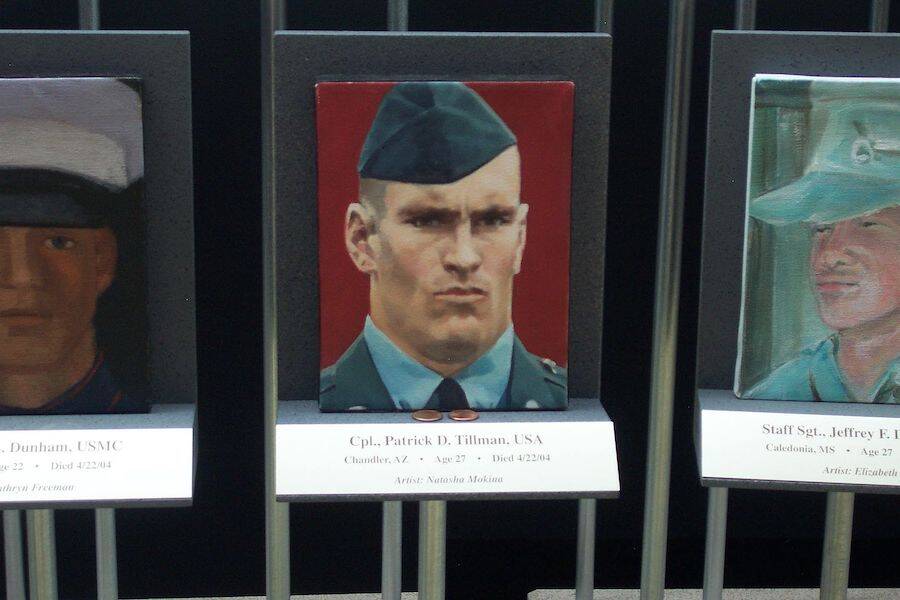
SOURCE: ALLTHATSINTERESTING.COM

Pete Hegseth

Today is our Sect, of Defense’s birthday!  This “biography” was found on Brittanica and some of the wording appears skewed—so take it with a grain of salt.

From Brittanica:

Pete Hegseth (born June 6, 1980, Minneapolis, Minnesota, U.S.) is the U.S. secretary of defense (2025– ) in the Republican administration of Pres. Donald Trump. Hegseth was confirmed on January 24, 2025, following a 50–50 vote in the U.S. Senate that required U.S. Vice Pres. J.D. Vance to cast the tie-breaking vote, resulting in a 51–50 final tally. Hegseth was sworn into office on January 25.

Prior to becoming defense secretary, Hegseth was a TV personality who cohosted Fox & Friends Weekend from 2017 to 2024. While on the show he became known for his conservative views and was an outspoken supporter of Trump. Hegseth also served in the U.S. Army National Guard.

Education and National Guard

Hegseth grew up in Minnesota, and in 1999 he enrolled at Princeton University. There he played basketball, studied politics, and became a frequent contributor to The Princeton Tory, the school’s conservative newspaper. For a time he served as publisher, and he was responsible for articles that, as he wrote, “strive to defend the pillars of Western civilization against the distractions of diversity.” Among these pieces, which stirred controversy at Princeton, was an editorial he cowrote that declared that “the homosexual lifestyle is abnormal and immoral.”

In 2003 Hegseth graduated from Princeton and the school’s Army ROTC program. He then became a member of the Minnesota National Guard and later joined the Army National Guard, rising to the rank of major. Hegseth was deployed three times. After serving at Guantánamo Bay, he was a platoon leader in Iraq and later taught counterinsurgency tactics in Afghanistan. His various military honors include two Bronze Stars.

Senate run and Fox & Friends Weekend

In 2012 Hegseth ran to represent Minnesota in the U.S. Senate as a Republican, but he dropped out before the party’s primary. Two years later he became a contributor to Fox News, and in 2017 he became cohost of Fox & Friends Weekend. In that post Hegseth frequently spoke of his support for President Trump. After Trump lost the 2020 presidential election, Hegseth promoted Trump’s unfounded claim of widespread voter fraud. In 2021 Hegseth was removed from the National Guard group that was to provide security for Joe Biden’s presidential inauguration. The reported issue was his Jerusalem cross tattoo, which he said was simply a Christian symbol, but officials noted that it is also used by Christian nationalists. His other tattoos include the words Deus Vult (Latin: “God wills it”), which was a battle cry during the Crusades and later appropriated by white supremacists. Hegseth left the National Guard later in 2021.

Defense secretary

Nomination and hearing

In 2024 Trump won a second presidential term, and he selected Hegseth as his nominee for defense secretary; the post requires Senate confirmation. The selection proved controversial, many citing Hegseth’s lack of experience managing large, complex organizations. The Department of Defense has some three million employees and has been called the biggest government bureaucracy in the world.

Hegseth’s confirmation hearing was held by the Senate Armed Services Committee in January 2025, and it was highly contentious at times. Democrats questioned him about accusations of personal misconduct, including excessive drinking and infidelity. While denying some allegations, Hegseth stated “I’m not a perfect person, but redemption is real. I have failed in things in my life, and thankfully I’m redeemed by my lord and savior Jesus.” Other topics included women serving in combat. While Hegseth had previously spoken out against the policy, he said that “women will have access to ground combat roles.” Republican committee members largely expressed support for his nomination, and Sen. Eric Schmitt from Missouri suggested that his lack of experience was an asset, stating that Hegseth is “a breath of fresh air.”

Confirmation

In the Senate confirmation vote on January 25, 2025, three Republicans voted not to approve him: Mitch McConnell, Susan Collins, and Lisa Murkowski. That resulted in a 50–50 tie, which was broken by Vice Pres. J.D. Vance. Hegseth took office several hours after the vote. In the following days he stated that he would end DEI initiatives in the department and that he was committed to stopping immigration at the southern border. In February 2025 Hegseth ordered the Pentagon to cut the defense budget by 8 percent for each of the next five years. The money was to be used for other initiatives, including a proposed Iron Dome, an air defense system. Later that month he fired a number of top military officers, including Admiral Lisa Franchetti, the first woman to serve as the navy’s chief of naval operations. According to Hegseth, the moves were to allow for “new leadership that will focus our military on its core mission of deterring, fighting and winning wars.”

SOURCE: BRITTANICA

Happy Birthday, Sir!

Camp Century

All the latest chatter about acquiring Greenland just became much more relevant to me.  I found this article on the allthatsinteresting.com website detailing a hidden American base UNDER the ice in Greenland.

From: allthatsinteresting.com:

Constructed by the United States during the Cold War, Camp Century was built so the Soviets never had any hope of finding it.

Buried underneath the frozen wonderland of Greenland’s vast ice sheet is a remnant of the Cold War. It’s not a plane wreck site or some classified piece of fantastic military hardware, but something far more interesting: Camp Century.

Camp Century, the result of Project Iceworm, was a small, full-fledged city less than 800 miles from the North Pole. Even more impressive, it was powered by a mobile nuclear reactor. The outpost started as a scientific operation around 150 miles inland from Thule Air Base. Eventually, the U.S. military thought it would be an ideal place to expand its operation into something much more sinister than a mere science outpost.

The idea behind a frozen base in a barren wasteland was that no one would think to bomb or invade the area. Even if Soviet planes knew the general location (as shown in this documentary film on the base), the blinding snow conditions would make the installation impossible to see, and because it’s buried beneath the ice, radar from planes would be useless as a detection method.

Think of Camp Century as the ice planet of Hoth in The Empire Strikes Back and you get the idea. No one in the Empire believed a base would exist there, which made it the perfect place to hide rebels.

A Construction Nightmare

The U.S. Army Corps of Engineers had to import everything to construct the base in 1959. Massive machines from Switzerland tunneled out the ice and snow at 1,200 cubic yards per hour. The longest tunnel, called Main Street, measured 1,100 feet long, 26 feet wide and 28 feet tall. These tunnels were covered with corrugated steel sheets for a solid structure, and then the sheets were buried in the snow.

Once the tunnels were hollowed out, special infrastructure had to be constructed. Wooden buildings provided places for men to sleep, eat and work. Special air tunnels, dug up to 40 feet deep into the floor, surrounded each building to keep cold air circulating into Camp Century. Without them, the snow would melt and destroy everything.

Even with the cold air tunnels, melting was a ubiquitous worry. Men had to constantly monitor tunnels for deformations and changes. People had to trim tunnel walls and roofs all of the time to combat melting.

The existence of the base wasn’t a secret – Walter Cronkite profiled it in 1961 when he visited – but the military chose to mask the true purpose of Camp Century.

The U.S. military originally wanted to store hundreds of ICBMs underneath Greenland’s ice sheet. While the engineers stationed there conducted climate research (the first core sample ever taken to study climate change came from Camp Century), Project Iceworm sought to weaponize the base.

The blueprint was to make this a storage facility for nuclear missiles. The military planned to dig 2,500 miles worth of tunnels and store up to 600 ICBMs that could hit the Soviet Union. Because the base was so remote and the Soviets wouldn’t think to launch nukes into Greenland, the belief was that the base could survive, launch its own missiles, and strike back even if the mainland United States suffered horrendous losses.

Abandonment Of Camp Century

Eventually, military commanders abandoned the idea of storing launch-ready nukes underneath a frozen glacier. The engineering feats were too hard and not cost-effective. The military abandoned the base in 1967, just eight years after commanders first mapped out Camp Century.

The vacant facility still poses a threat even though it was decommissioned more than 50 years ago. The army thought snow and ice would continue to accumulate and keep the base buried forever. Then climate change happened.

Experts estimate that 53,000 gallons of diesel fuel, several carcinogenic compounds, and small amounts of nuclear waste may seep into the surrounding environment by 2090. That’s after the 115 feet of snow covering the base melts away due to a five-degree rise in global temperatures.

The lesson here is that even secrets that you think lay hidden beneath a permanent layer of ice and snow may come back to bite you eventually.

Luckily, there aren’t 600 nukes just waiting to be found by rogue elements.

SOURCE: ALLTHATSINTERESTING.COM
The Limping Lady

A short while ago, Filly (THANK YOU!!) mentioned this story about a courageous, but quite unknown spy who helped the Allies win WWII.  The spy was a woman, Virginia Hall, but not just a woman, but a woman with a prosthetic leg—a woman of great courage and determination!

I found this article about the “Limping Lady” in the Smithsonian Magazine. It was written by Brigit Katz and I knew I had to share it.

From Smithsonian Magazine:

How a Spy Known as the ‘Limping Lady’ Helped the Allies Win WW

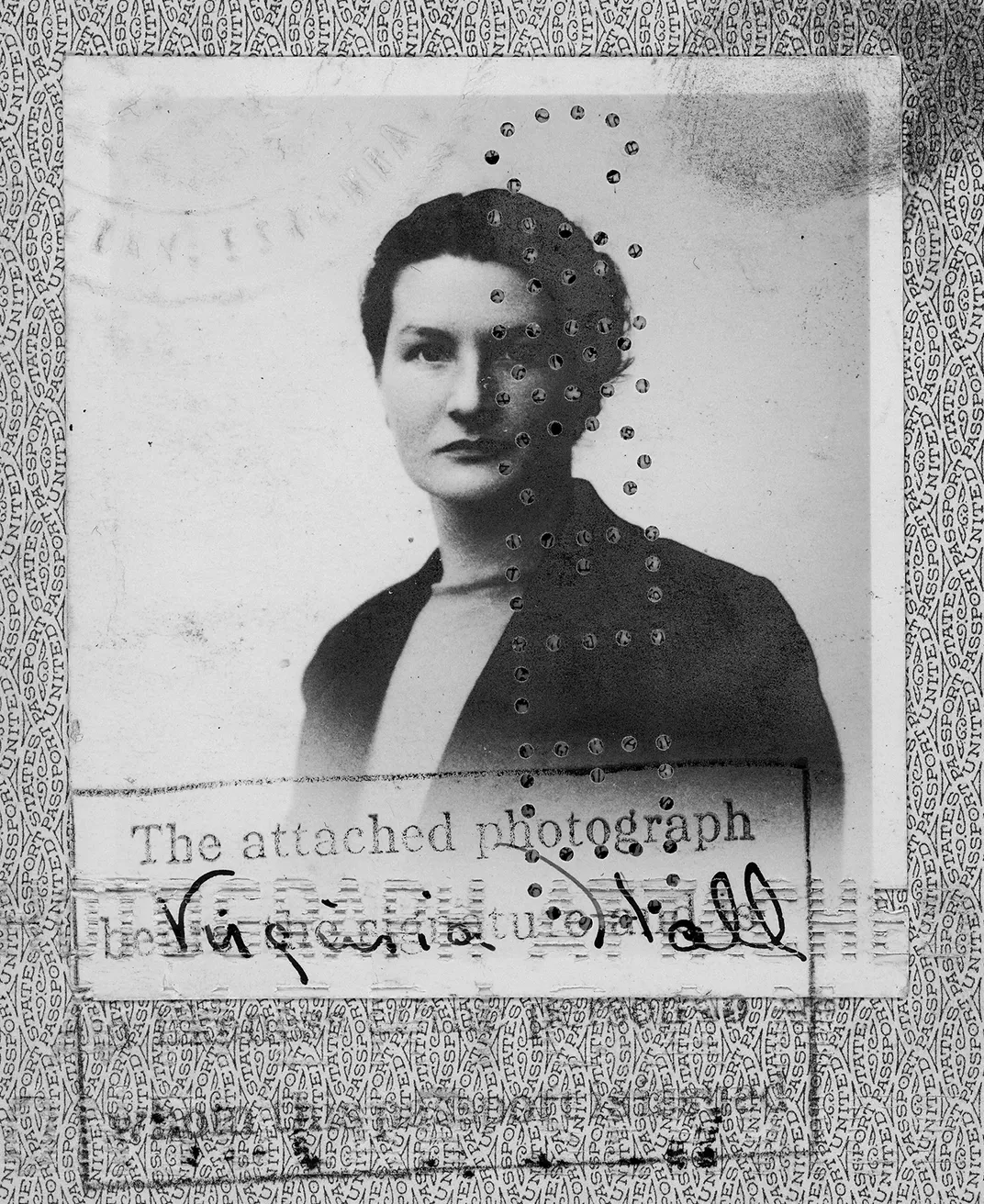
In early September 1941, a young American woman arrived in Vichy France on a clandestine and perilous mission. She had been tasked with organizing local resistance networks against France’s German occupiers and communicating intelligence to the Special Operations Executive (SOE), the fledgling British secret service that had recruited her. In reality, however, Virginia Hall’s supervisors were not particularly hopeful about her prospects; they didn’t expect her to survive more than a few days in a region teeming with Gestapo agents.

At the time, Hall admittedly made for an unlikely spy. British Prime Minister Winston Churchill’s war cabinet had forbidden women from the frontlines, and some within the SOE questioned whether Hall was fit to be operating in the midst of a resistance operation. It wasn’t just her gender that was an issue: Hall was also an amputee, having lost her left leg several years earlier following a hunting accident. She relied on a prosthetic, which she dubbed “Cuthbert,” and walked with a limp, making her dangerously conspicuous. Indeed, Hall quickly became known as the “Limping Lady” of Lyon, the French city where she set up base.

Hall, however, had no intention of letting Cuthbert stop her from playing her part in the Allied war effort, as journalist and author Sonia Purnell reveals in an electrifying new biography, A Woman of No Importance: The Untold Story of the American Spy Who Helped Win World War II. Born to a wealthy Maryland family, Hall was clever, charismatic and ambitious—traits that were not always appreciated by her contemporaries. Before the outbreak of the war, she had travelled to Europe with dreams of becoming a diplomat, but was consistently assigned to desk jobs that failed to satisfy her. Following the amputation of her leg in 1933, when she was just 27 years old, Hall’s application to a diplomatic position with the U.S. State Department was explicitly rejected due to her disability. Spying for the SOE offered a way out of what Hall considered a “dead-end life,” Purnell writes. She was not going to squander the opportunity.

Hall didn’t just survive the wartime years under constant threat of capture, torture and death; she also played a crucial role in recruiting large networks of resistance fighters and directing their assistance to the Allied invasion. Among the secret operatives who adored her and the Nazis who hounded her, Hall was legendary for her gutsy, cinematic feats. She broke 12 of her fellow agents out of an internment camp, evaded the treachery of a double-crossing priest and, once her pursuers began to close in, made an arduous trek over the Pyrenees into Spain—only to return to France to resume the fight for its freedom.

And yet, in spite of these accomplishments, Hall is not widely remembered as a hero of the Second World War. Smithsonian.com spoke to Purnell about Hall’s remarkable but little-known legacy, and the author’s own efforts to shine a light on the woman once known to her enemies as the Allies’ “most dangerous spy.”

In the prologue to A Woman of No Importance, you write that you often felt as though you and Hall were playing a game of “cat and mouse.” Can you describe some of the obstacles you encountered while trying to research her life?

First of all, I had to start with about 20 different code names. A lot of the times that she is written about, whether it’s in contemporary accounts or official documents, it will be using one of those code names. The other thing was that a lot of files [pertaining to Hall] were destroyed—some in France in a fire in the 1970s with a lot of other wartime records. That made things pretty difficult. Then the SOE files, some 85 percent of those had been lost, or are still not opened, or are classified or just can’t be found.

Virginia was posted to Tallinn in the late 1930s and loved hunting in the huge forests of Estonia, but otherwise her life was a series of cruel rejections. Her lifelong ambition to become a diplomat was repeatedly thwarted, and she was frustrated by the limits of her role as a State Department clerk. 

There were a lot of dead-end alleys. But there was enough to pull this all together, and I was particularly fortunate to find this archive in Lyon, put together by one of the guys that Hall fought with in the Haute-Loire [region of France]. He was able to look at a lot of these files before they disappeared, and he had contemporary accounts of a lot of the people that she fought alongside. So, I was extremely lucky to find that, because it was an absolute treasure trove.

You quote Hall as saying that everything she did during the war, she did for the love of France. Why did the country hold such a special place in her heart?

She came [to Paris] at such a young age, she was only 20. Her home life had been quite restrictive … and there she was in Paris, the great literary, artistic and cultural flowering during that time. The jazz clubs, the society, the intellectuals, the freedoms, the emancipation of women—this is quite heady, quite intoxicating. It really opened her eyes, made her feel thrilled, and stretched and inspired. That sort of thing in your 20s, when you’re very impressionable, I don’t think you ever forget it.

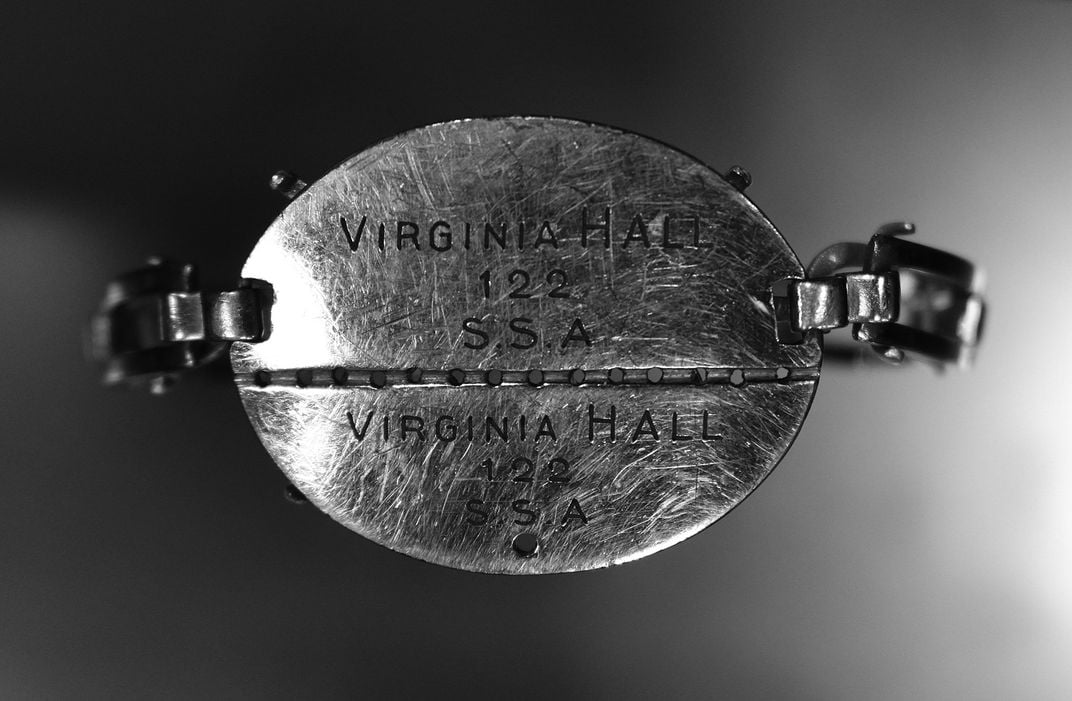
Virginia proved her exceptional courage under fire in 1940 by volunteering to drive ambulances on the front line for the French army’s SAA, or Service de Santé des Armées.

Operating in a war zone with a mid-20th century prosthetic could not have been easy for Virginia. What was life like with “Cuthbert” on a daily basis?

I managed to find a prosthetics historian at one of the museums here in London who was incredibly helpful. He explained to me exactly how her leg would have worked, what the problems were, what it could do and what it couldn’t do. One of the problems was the way it was attached to her, with these leather straps. Well, that might be OK if you’re just walking a short distance in mild weather, but when it’s really hot and you’re climbing up or down steps, the leather would chafe your skin until it was raw and the stump would blister and bleed.

It would have been very difficult in particular going down steps because the ankle doesn’t work in the way that our ankles do, and it would be quite difficult to lock. So she would always feel very vulnerable to falling forward. That would have been a very big danger for her at all times, but then magnify that for crossing the Pyrenees: the grinding, relentless climb and then the grinding, relentless descent. She herself said to her niece that this was the worst part of the war, and I can believe that. It was just phenomenal that she made that crossing.

Hall pulled off so many incredible feats during the war. What, in your opinion, was her most important accomplishment?

That’s a difficult one, it’s a competitive field. I suppose the one that you can grab as being standalone, understandable and also spectacular was how she managed to break those 12 men out of a prison camp: the Mauzac escape. The cunning, and the organization and the courage—just the sheer chutzpah that she had in springing them out … It is quite an extraordinary tale of daring-do. And it was successful! Those guys made it back to Britain. We hear about a lot of other wartime escapes that ultimately ended in a failure. Hers succeeded.

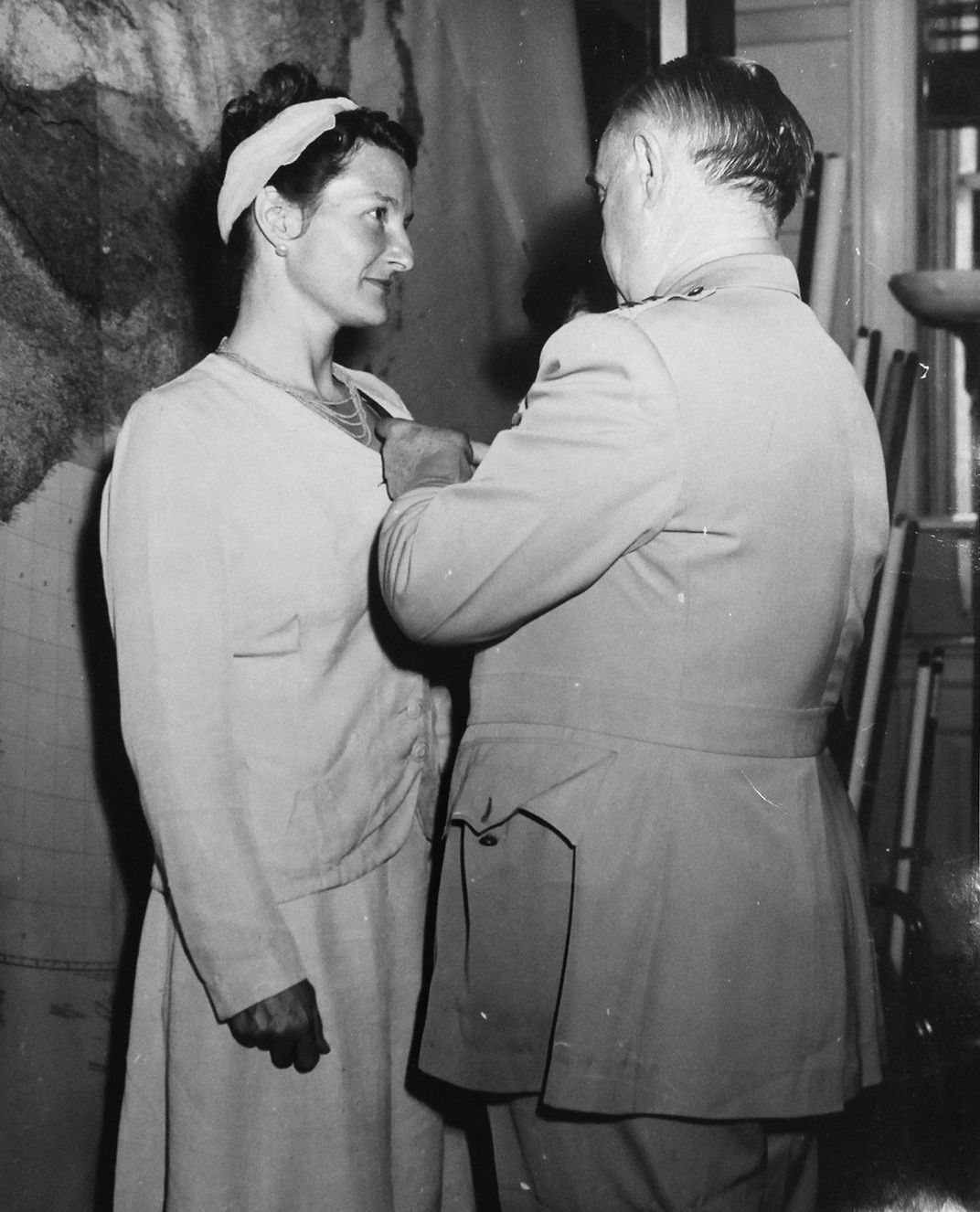
Virginia was the only civilian woman in the Second World War to be awarded the Distinguished Service Cross, for extraordinary heroism against the enemy. She received the medal in Washington, D.C., from “Wild Bill” Donovan in a low-key ceremony on September 27, 1945.

Another of Hall’s feats was pioneering a new style of espionage and guerilla warfare. Does her influence continue to be felt in that realm today?

I spent a day at [CIA headquarters at] Langley, which was really fascinating. Talking to people there, they pointed to Operation Jawbreaker in Afghanistan, and how they drew on the processes that really she pioneered: How do you set up networks in a foreign country, bringing in locals and perhaps preparing them for some big military event later on? They took Hall’s example. I’ve heard from other people involved in the CIA who said she still is mentioned in lectures and training there today. Not that long ago they named one of their training buildings after her. Clearly, she has an influence to this day. I’d love to think she knows that somehow, because that’s pretty cool.

Today, Hall is not particularly well known as a war hero, in spite of her influence. Why do you think that is?

Partly because she didn’t like blowing her own trumpet. She didn’t like the whole obsession with medals and decorations; it was about doing your duty, and being good at your job and earning the respect of your colleagues. She didn’t go out of her way to tell people.

But also, a lot of other SOE female agents who came in after her died, and they became these quite well-known tragic heroines. Films were made about them. But they achieved nothing like what Hall did … It was difficult to pigeonhole her. She didn’t fit into that conventional norm of female behavior. In a way she wasn’t a story that anyone really wanted to tell, and the fact that she was disabled as well made it even more complicated.

When I was thinking of doing this book, I took my sons to see Mad Max: Fury Road with Charlize Theron, and I noticed that her [character’s] forearm was missing, and yet she still was the great hero of the film. And I thought, “Actually, maybe now that Hollywood is doing a film with a hero like that, finally we’re grown up enough to understand and cherish Virginia’s story and celebrate it.” It was that night really that [made me think], “I’m going to write this book. I really want to tell the world about her, because everyone should know.”

SOURCE: SMITHSONIAN MAGAZINE; BRIGIT KATZ

American Sniper: Chris Kyle

From HISTORY.COM:

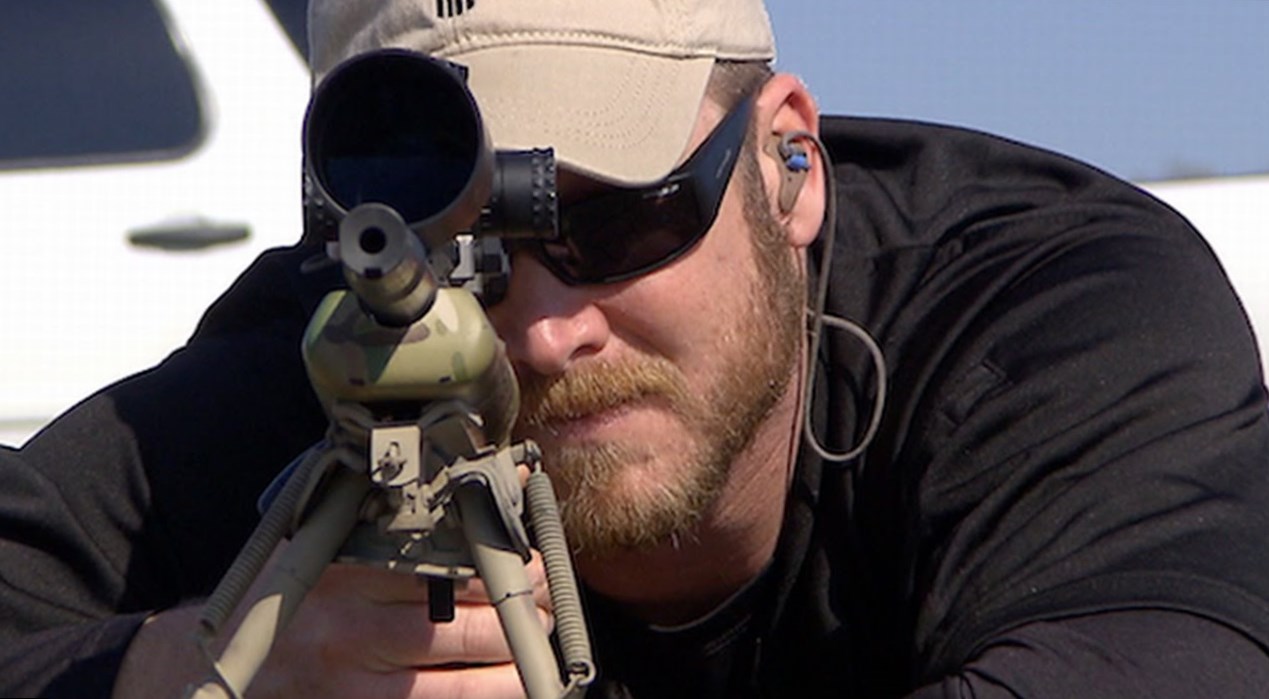
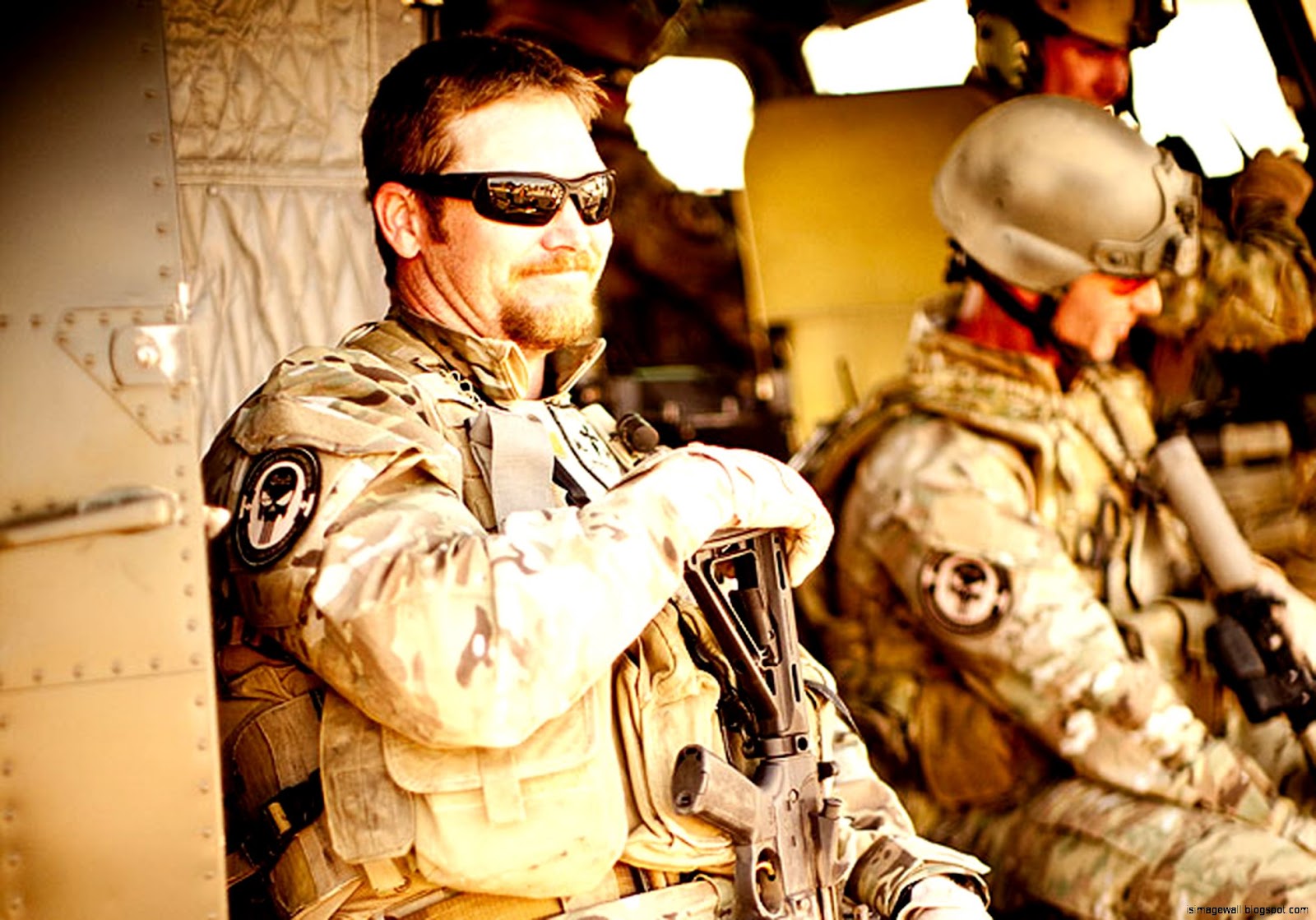
Unlike any American before him, Chris Kyle performed his job with pinpoint accuracy. As a sharpshooter serving in Iraq, that job had deadly results. The Pentagon has credited Kyle with over 160 kills. The actual number could be almost double.

The most lethal sniper in American history was the son of a church deacon and a Sunday-school teacher. Growing up in Texas, Kyle hunted with his father and brother. After two years of college and working as a ranch hand, the 24-year-old Kyle quit school and joined the elite Navy SEALs—although he hated water. “If I see a puddle,” he told Time magazine, “I will walk around it.”

After serving in a number of classified missions, Kyle was deployed with members of platoon “Charlie” of SEAL Team 3 to fight in the Iraq War. After landing on the al-Faw Peninsula at the war’s outset in March 2003, the SEALs joined the Marines on their march north toward the capital city of Baghdad. Stationed on rooftops, Kyle and his fellow SEALs protected Marines squads going door to door from insurgent ambushes.

After entering the city of Nasiriya in the war’s early days, Kyle stationed himself atop a building seized by the SEALs. Through the scope of a bolt-action .300 Winchester Magnum, Kyle watched as a Marine convoy approached. Fifty yards away, he suddenly saw the door of a small house open and a woman step outside with her child. As she neared the Marines, Kyle watched through the crosshairs as the woman reached beneath her robe and pulled out a yellow grenade.

“Take a shot,” ordered Kyle’s platoon chief.

Kyle hesitated as the Marines continued to march closer.

“Shoot!” cried the chief.

Kyle squeezed the trigger twice. The woman fell dead to the ground along with the exploding grenade, which did no harm to the Marines. It was Kyle’s first kill with a sniper rifle. Many more deadly shots would be fired, but the hesitation would never return.

“It was my duty to shoot, and I don’t regret it. The woman was already dead. I was just making sure she didn’t take any Marines with her,” Kyle wrote in his 2012 combat memoir, “American Sniper: The Autobiography of the Most Lethal Sniper in U.S. Military History.”

Kyle’s sole mission in Iraq was to save his fellow servicemen, and he proved to be such a deadly sniper that Iraqi insurgents placed a $20,000 bounty on the head of the man they called “Al-Shaitan Ramad,” or “the Devil of Ramadi.” To Kyle’s fellow soldiers, however, he was known as “The Legend.”

The 160 kills credited to Kyle are more than for any sniper in American history, but the Navy SEAL told D Magazine that he wished instead that he could have calculated the number of people he saved. “That’s the number I’d care about,” he said. “I’d put that everywhere.”

After Kyle’s initial deployment to Iraq in 2003, he returned to fight in Fallujah in 2004, Ramadi in 2006 and Baghdad in 2008. On each tour of duty, the fighting grew fiercer and Kyle’s job grew harder. Insurgents who once carried guns now toted rocket-propelled grenades. Kyle still proved a skilled marksman even killing an enemy fighter 1.2 miles—or 21 football fields—away on a single shot.

When Kyle’s wife, Taya, told him their marriage could be over if he re-enlisted, the sniper reluctantly left the Navy with an honorable discharge in 2009 after a decade of service. He had earned a pair of Silver Stars and five Bronze Stars after surviving two gunshot wounds and six IED attacks.

“I loved what I did. If circumstances were different—if my family didn’t need me—I’d be back in a heartbeat,” Kyle wrote in his autobiography. “I had the time of my life being a SEAL.” Kyle struggled with the transition to civilian life in his roles as husband and father to his two young children. He found that although he left the war, the war didn’t leave him. He drank heavily, suffered bouts of depression and stopped working out.

Kyle felt anchorless without a mission and the camaraderie of his fellow SEALs. But he discovered a new call to duty by helping ailing veterans suffering from the physical and psychological scars of war. After seeing the therapeutic benefits of exercise in his own life, he helped to create the FITCO Cares Foundation in 2011 to provide exercise equipment and counseling to veterans. The following year he published “American Sniper,” which became a New York Times bestseller and the basis for the blockbuster film. Kyle donated his share of the book profits to families of colleagues who had died in battle and to a charity to help wounded veterans.

Kyle’s final mission to help his fellow veterans would tragically be his last. The former Navy SEAL often brought troubled veterans along with him to shoot at targets as a way for them to better connect. On February 2, 2013, he invited Eddie Ray Routh, a 25-year-old Marine veteran who had served in Iraq and Haiti, to a shooting range in Glen Rose, Texas. Routh, who reportedly suffered from post-traumatic stress disorder, allegedly shot and killed the 38-year-old Kyle and his friend Chad Littlefield at point-blank range.

To accommodate the mourners, Kyle’s funeral was held inside the Dallas Cowboys football stadium, where the veteran’s flag-draped coffin rested on the 50-yard line. For miles on end, crowds lined the route of the funeral procession to say goodbye to an American soldier who had survived years of combat only to be gunned down in the country he served to protect.

SOURCE: Christopher Klein History.com

Four Chaplains

I found this article on Military.com commemorating the anniversary of the sinking of the USS Dorchester and four chaplains who gave their lives to their fellow shipmates.

Tragic Loss, Astonishing Heroism Remembered on Anniversary of SS Dorchester’s Sinking

Military.com | By Richard Sisk

Published February 03, 2021

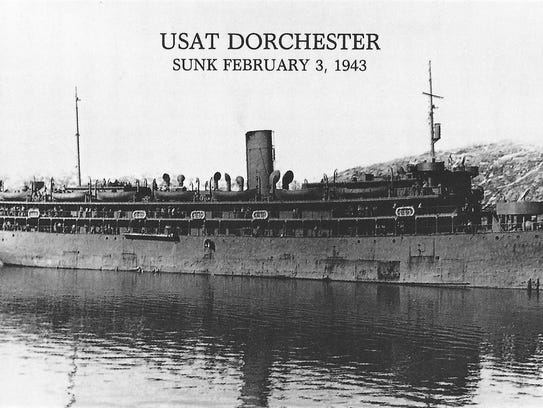
Wreaths Across America on Wednesday is retelling the tragic yet inspiring story of the World War II sinking of the troop ship Dorchester, the heroic sacrifice of the “Four Chaplains” aboard, and the bravery of the Black Coast Guard steward who gave his life swimming through icy seas to rescue a shipmate.

The 368-foot steamship Dorchester, operated by the War Shipping Administration, was part of a convoy that left New York in January 1943 bound for the Army Command Base at Narsarsuaq in southern Greenland.

After midnight Feb. 3, 1943, the Dorchester was torpedoed by a U-boat in the Labrador Sea off Greenland and went down in 20 minutes, according to official records.

A total of 675 of the 904 aboard drowned or died of hypothermia in the frigid waters in what was believed to be the worst single death toll for a U.S. convoy during WWII.

On Wednesday, the 78th anniversary of the Dorchester’s sinking, Wreaths Across America will pay tribute to those who died with a special Facebook Live event beginning at noon Eastern from the Balsam Valley Chapel in Maine.

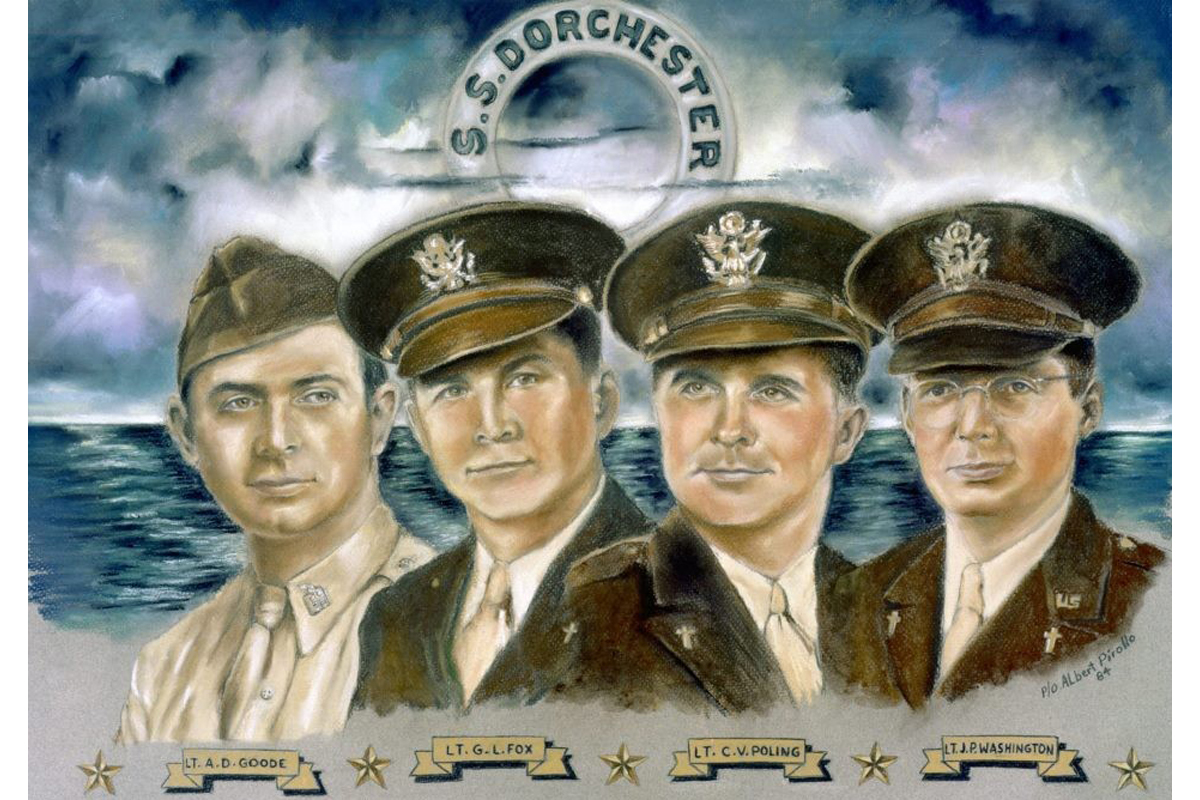
The Dorchester’s loss is remembered most for the sacrifice of the “Four Chaplains” — two Protestants, a rabbi and a Catholic priest. They were all Army first lieutenants who went down with the ship.

When the torpedo hit, the chaplains guided men below decks to the lifeboats and handed out life jackets. When the supply ran out, the chaplains gave away their own life vests to four men who had none, survivors said. They then linked arms, offered prayers and sang hymns as the ship went down.

“I could hear men crying, pleading, praying and swearing. I could also hear the chaplains preaching courage to the men. Their voices were probably the only things that kept me sane,” survivor William Bednar said in a 1997 interview with The Baltimore Sun.

Survivor John Ladd recalled the chaplains giving away their life vests, according to the Four Chaplains Memorial Foundation. “It was the finest thing I have seen or hope to see this side of heaven,” he said.

Lt. George L. Fox, a Methodist minister from Pennsylvania; Lt. Alexander D. Goode, a Reform rabbi from New York; Lt. Clark V. Poling, a Reformed Church in America minister from Ohio; and Lt. John P. Washington, a Catholic priest from New Jersey, were each posthumously awarded the Distinguished Service Cross and Purple Heart.

There were attempts in Congress to award the four chaplains the Medal of Honor, but the efforts did not succeed under the strict guidelines for awarding the medal.

Instead, a Special Medal for Heroism was authorized by Congress and awarded by President Dwight Eisenhower in 1961.

When the Dorchester was going down, the Coast Guard cutter Comanche ignored the threat of another U-boat attack and raced through heavy seas to pick up survivors.

The Comanche lowered a cargo net, but many of those in the lifeboats were too weak and numbed by the cold to climb aboard.

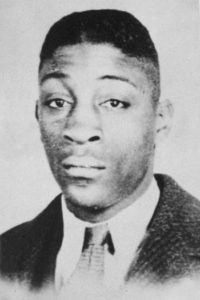
Steward’s Mate 1st Class Charles Walter David Jr., 26, of New York City, known for his fierce loyalty to his ship and shipmates despite the second-class status afforded Blacks during World War II, jumped into the lifeboats and began hoisting the survivors aboard.

In the course of the rescue mission, Lt. Langford Anderson, the Comanche’s executive officer, slipped and fell into the frigid waters. Without hesitation, David dove into the icy sea and swam to Anderson’s rescue and brought him to the net.

After helping the last survivors scramble aboard, David went up the net himself to the Comanche’s deck, but his friend, Storekeeper 1st Class Richard ‘Dick” Swanson, could make it only halfway up, after being in the freezing water, according to an account by Dr. William H. Thiesen, the Coast Guard’s Atlantic Area historian.

From the Comanche’s deck, David shouted encouragement: “C’mon Swanny, you can make it.” But Swanson couldn’t move. David went down the net again and lifted Swanson to safety.

Several weeks later, David died of pneumonia at a hospital in Greenland from the hypothermia he suffered during the rescues.

“Despite his secondary status in a segregated service, Charles Walter David Jr. placed the needs of others before his own. For his heroism, David was posthumously awarded the Navy & Marine Corps Medal and, in 1999, was recognized with the Immortal Chaplains Prize for Humanity,” Thiesen wrote.

In 2013, the Coast Guard named a Sentinel-class fast response cutter the Charles Walter David Jr. in honor of his exemplary service.

SOURCE: Military.com

Happy Veterans Day!

I found this information of on the US Department of Defense website:

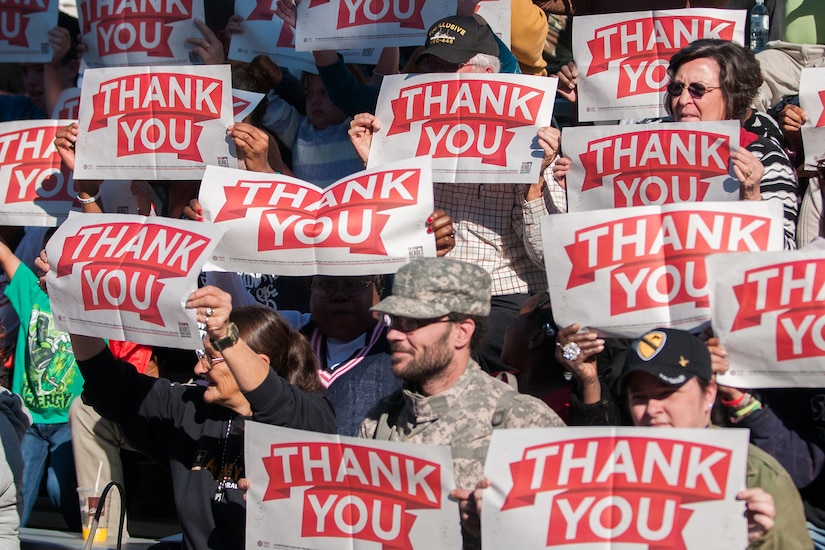
Veterans Day is a well-known American holiday, but there are also a few misconceptions about it — like how it’s spelled or whom exactly it celebrates. To clear some of that up, here are the important facts you should know.

Veterans Day does NOT have an apostrophe.

A lot of people think it’s “Veteran’s Day” or “Veterans’ Day,” but they’re wrong. The holiday is not a day that “belongs” to one veteran or multiple veterans, which is what an apostrophe implies. It’s a day for honoring all veterans — so no apostrophe needed.

Veterans Day is NOT the Same as Memorial Day.

A lot of Americans get this confused, and we’ll be honest — it can be a little annoying to all of the living veterans out there.

Memorial Day is a time to remember those who gave their lives for our country, particularly in battle or from wounds they suffered in battle. Veterans Day honors all of those who have served the country in war or peace — dead or alive — although it’s largely intended to thank living veterans for their sacrifices.

It was originally called Armistice Day, commemorating the end of World War I.

World War I officially ended when the Treaty of Versailles was signed on June 28, 1919. However, the fighting ended about seven months before that when the Allies and Germany put into effect an armistice on the eleventh hour of the eleventh day of the eleventh month.   

For that reason, Nov. 11, 1918, was largely considered the end of “the war to end all wars” and dubbed Armistice Day. In 1926, Congress officially recognized it as the end of the war, and in 1938, it became an official holiday, primarily a day set aside to honor veterans of World War I.

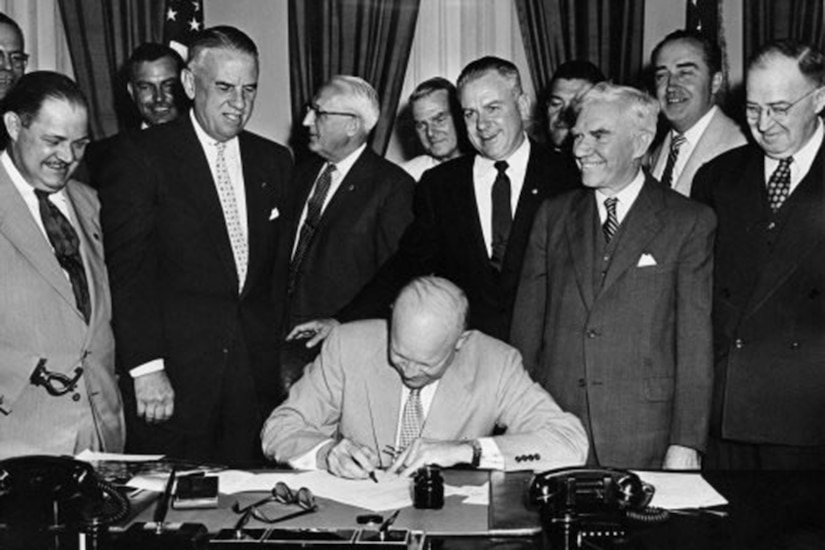
But then World War II and the Korean War happened, so on June 1, 1954, at the urging of veterans service organizations, Congress amended the commemoration yet again by changing the word “armistice” to “veterans” so the day would honor American veterans of all wars.  

For a while, Veterans Day’s date was changed, too, and it confused everybody.

Congress signed the Uniform Holiday Bill in 1968 to ensure that a few federal holidays — Veterans Day included — would be celebrated on a Monday. Officials hoped it would spur travel and other family activities over a long weekend, which would stimulate the economy.

For some inexplicable reason, the bill set Veterans Day commemorations for the fourth Monday of every October.

On Oct. 25, 1971, the first Veterans Day under this new bill was held. We’re not sure why it took three years to implement, but not surprisingly, there was a lot of confusion about the change, and many states were unhappy, choosing to continue to recognize the day as they previously had — in November.

Within a few years, it became pretty apparent that most U.S. citizens wanted to celebrate Veterans Day on Nov. 11, since it was a matter of historic and patriotic significance. So on Sept. 20, 1975, President Gerald Ford signed another law (Public Law 94-97), which returned the annual observance to its original date starting in 1978.

Other countries celebrate it, too, in their own ways.

World War I was a multinational effort, so it makes sense that our allies also wanted to celebrate their veterans on Nov. 11. The name of the day and the types of commemorations differ, however.

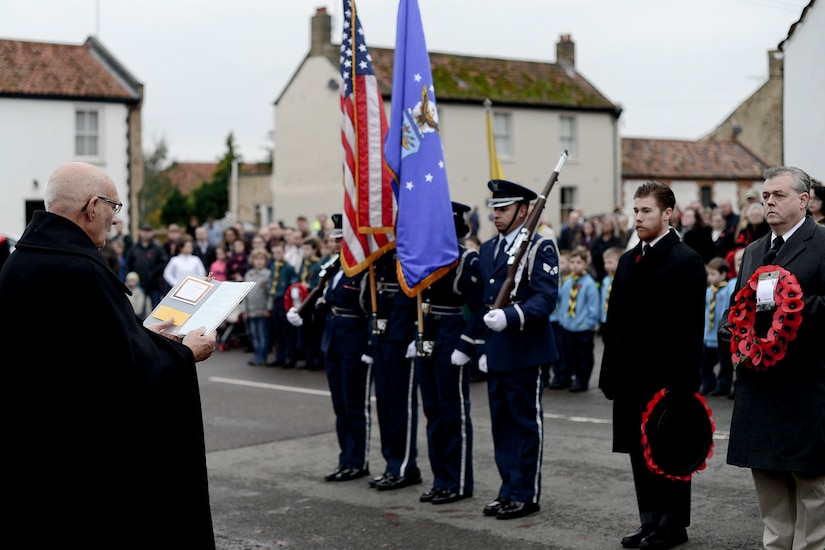
Canada and Australia both call Nov. 11 “Remembrance Day.” Canada’s observance is pretty similar to our own, except many of its citizens wear red poppy flowers to honor their war dead. In Australia, the day is more akin to our Memorial Day.

Great Britain calls it “Remembrance Day,” too, but observes it on the Sunday closest to Nov. 11 with parades, services and two minutes of silence in London to honor those who lost their lives in war.

Raven Rock

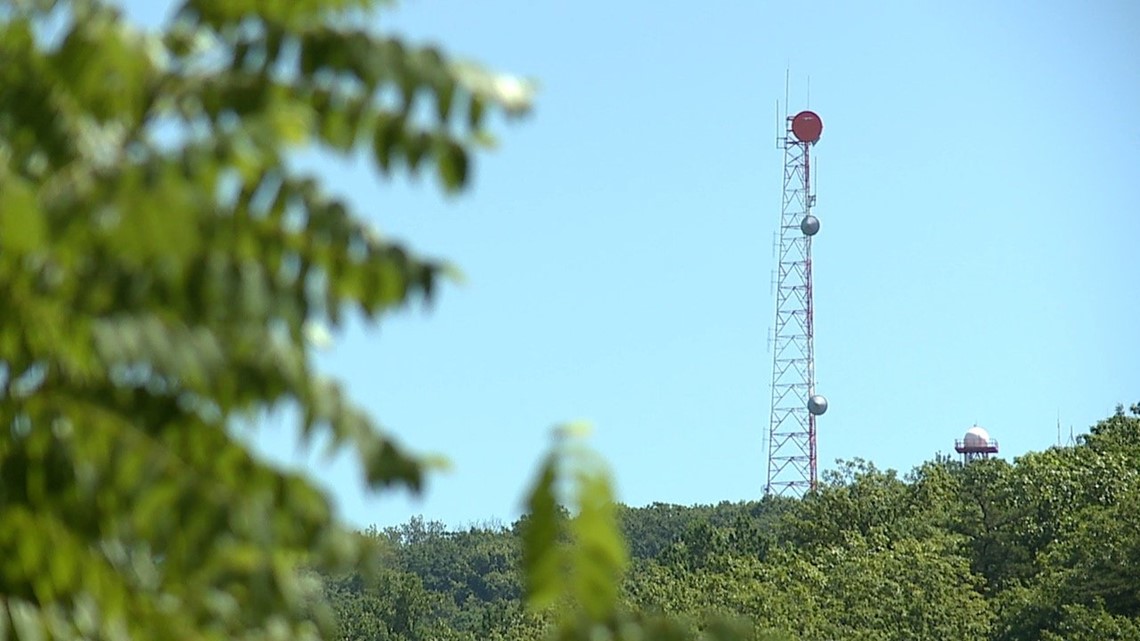
Pretty unimpressive, isn’t it?  Would you believe me if I told you there is a whole military installation built under there?  Maybe a different photo would help…

This is a story I found when I went searching for interesting places to see in PA…only you aren’t allowed in…and shhhhh…it’s supposed to be a secret…LOL

When Raven Rock Mountain Complex was being built in southern Pennsylvania during the late 1940s, locals jokingly called it “Harry’s Hole” for President Harry Truman. Residents would hold picnics while watching the excavations and blastings. Many worked on its construction.

It was never completely a secret. But it stayed close to one for a while, mainly because no one said anything, said Garrett Graff, a journalist and author of the new book “Raven Rock: The Story of the U.S. Government’s Secret Plan to Save Itself – While the Rest of Us Die.”

“This was relatively well known to the locals who worked there or had family who worked there,” Graff told PhillyVoice in an interview. “They just kept it quiet.”

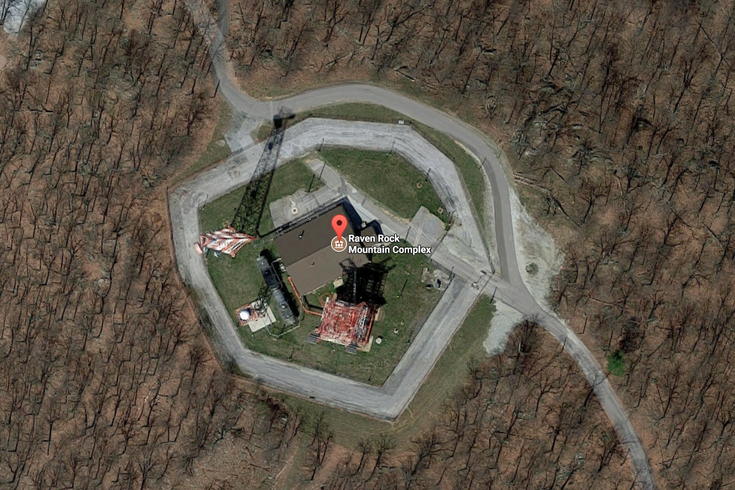
The lid on Raven Rock has slowly been peeled. Located just north of the Maryland border, three hours west of Philadelphia and a short distance from Washington, D.C., it’s clearly labeled on Google Maps and been documented in books and articles.

It also isn’t a relic. Raven Rock is fully operational, and should the United States break out into nuclear war, it’s where defense operations would likely be centered.

“Raven Rock is the place where nuclear war in the United States would begin,” Graff said.

The Raven Rock Mountain Complex was carved into the ground during a period of panic.

As the threat of a Soviet nuclear attack loomed, “ordinary families were being encouraged to dig fallout shelters in their backyards,” investigative journalist Eric Schlosser wrote in his 2013 book “Command and Control: Nuclear Weapons, the Damascus Accident, and the Illusion of Safety.”

At the same time, the military and government were digging holes of their own. A bomb shelter had been built below the East Wing of the White House for President Franklin Roosevelt during World War II, a bunker that was expanded during Truman’s administration.

Planning for a Soviet attack, however, “made it seem necessary to move America’s commander-in-chief someplace even deeper underground,” according to Schlosser.

The result was a bunker inside Raven Rock Mountain, and it was massive. Per “Command and Control”:

“Known as Site R, it sat about a half a mile inside Raven Rock and another half a mile below the mountain’s peak. It had power stations, underground water reservoirs, a small chapel, clusters of three-story buildings set within vast caverns, and enough beds to accommodate two thousand high-ranking officials from the Pentagon, the State Department, and the National Security Council.”

Graff said you can add to that list police and fire departments, a cafeteria, and “everything else you would find in a normal small city.”

The complex was finished in 1953 and has operated 24 hours a day, every day since 1961. 

Some of the bunker’s facilities are located on or around the mountain, such as the fire department sitting on the peak. Most of the complex, however, is underground. Once the blast doors seal, Raven Rock’s dwellers can live there for weeks at a time. 

‘Portals’ A and B are visible at the Raven Rock Mountain Complex near Waynesboro in southern Pennsylvania in this image from GoogleEarth. Once the blast doors are sealed, dwellers can live there for weeks at a time.

After the Cold War, many bunkers built in anticipation of nuclear apocalypse became obsolete, such as the fallout shelter underneath a West Virginia resort that’s now a museum.

Others, like Raven Rock, were kept operational — but barely. That changed after the Sept. 11 terrorist attacks.

“It was more in mothball status,” Graff said. “It wasn’t quite as dramatic as someone walking into the mountain and turning on the lights, but operational-wise, that’s what happened on 9/11.”

The government kicked Raven Rock into gear. The facilities underwent a large expansion, Graff said. About 100 people work there under normal circumstances, but it can now hold about 5,000 in an emergency.

“Raven Rock today is a much more capable and larger facility than it was during the height of the Cold War,” Graff said.

In the days following the 9/11 attacks, Vice President Dick Cheney famously used Raven Rock as one of several secret hideaways while his office tried to shield his whereabouts.

“We know it’s there, we know why it’s there, and that’s as much as we know” — Richard Starliper, mayor of nearby Waynesboro, Pennsylvania.

Graff clarified there’s no evidence Cheney spent the day of the attacks there, but he definitely went afterward. Some defense officials, like Deputy Secretary of Defense Paul Wolfowitz, were taken directly to the mountain complex.

Raven Rock is one of two very similar facilities meant to house officials in case of an attack, with the other being the Mount Weather complex in Virginia. Mount Weather is run by FEMA, and would house most of the civilian government in an emergency.

The Pentagon runs Raven Rock, and it’s where national security would operate in the event of catastrophe or war, like if a President were to truly release “fire and fury” on North Korea — or vice versa.

“If at this exact moment the president decides he wants to launch nuclear war, or North Korea does, and for whatever reason he’s not able to reach the Pentagon, he would call Raven Rock,” Graff said.

Considering the heavy responsibility the complex would carry in the wake of tragedy, it’s not surprising the government has tried keeping a tight lip on Raven Rock. But there have been blips.

While working on their 2008 book “A Nuclear Family Vacation,” defense reporters Nathan Hodge and Sharon Weinberger were seemingly accidentally given information regarding a conference at Raven Rock about underground military facilities.

The reporters simply asked a point of contact for the conference about the event after coming across a notice for it on a Pentagon agency’s website. They were handed informational packets distributed to attendees that highlighted the level of secrecy surrounding Raven Rock, which was referred to as RRMC.

“Guidance” for those attending the conference included the following rules: “Avoid conversations about RRMC with unauthorized personnel,” “Do not confirm or deny information about RRMC to reporters or radio stations,” and “Do not post RRMC information on internet web pages.”

It continues: “Remember: The more the public knows about this facility, the more our adversaries do, and the more vulnerable we become.”

A few days after the reporters obtained the information, the Defense Threat Reduction Agency took down the notice about the conference. Hodge and Weinberger presumed someone at the Pentagon got in trouble.

Only in the past quarter century since the Cold War has information about Raven Rock become more public, “a testament to the limited communications technologies of the era” when it was constructed, according to Graff.

Raven Rock’s relationship with the surrounding community has changed too, particularly since the closure of the Fort Ritchie Army base across the border in Maryland. Some residents of nearby Waynesboro, Pennsylvania, who formerly worked at Fort Ritchie would be stationed at Raven Rock, according to the town’s mayor, Richard Starliper.

“These days you have no idea who works there or what they do,” Starliper said.

The complex is both a mystery and not at all, a sentiment summed up rather appropriately by the Waynesboro mayor.

“We know it’s there,” he said, “we know why it’s there, and that’s as much as we know.”

***There is an unprovable rumor that is interesting***

“I don`t know if it’s true or not,” a Waynesboro resident says, “But there`s supposed to be an underground tunnel from Virginia where they could drive up if they wanted to.”

The resident is referring to the popular rumor that there is an elaborate underground network of tunnels between Washington D.C., nearby Camp David, and Raven Rock so the President or Vice President could escape harm if disaster strikes.

That rumor, according to one D.C. Insider, is categorically false.

SOURCE:

https://www.phillyvoice.com/story-behind-gigantic-not-so-secret-pennsylvania-bunker-where-nuclear-war-us-would-begin/