Thomas Jefferson

From Mental Floss:

Thomas Jefferson (1743-1826), the third president of the United States, penned one of the greatest documents of the modern world in the Declaration of Independence. While that’s certainly a career highlight, it’s far from the only interesting thing about him.

1. He was addicted to learning.

Born April 13 (April 2 on the pre-Gregorian calendar), 1743 at his father’s Shadwell plantation in Virginia, Jefferson was one of 10 children (eight of whom survived to adulthood). While he attended the College of William and Mary (he graduated in 1762), he was said to have studied for 15 hours daily on top of violin practice. The hard work paid off: Jefferson moved into law studies before becoming a lawyer in 1767. Two years later, he became a member of Virginia’s House of Burgesses, the Virginia legislature. His autodidact ways continued throughout his life: Jefferson could speak four languages (English, Italian, French, Latin) and read two more (Greek and Spanish).

2. His greatest work was a study in contradiction.

As a member of the Second Continental Congress and the “Committee of Five” (a group consisting of John Adams, Roger Sherman, Benjamin Franklin, Robert Livingston, and Thomas Jefferson brought together for this purpose), Jefferson was tasked with writing the Declaration of Independence, an argument against the 13 colonies being held under British rule. While the Declaration insisted that all men are created equal and that their right to liberty is inherent at birth, Jefferson’s plantation origins meant that he embraced the institution of slavery. In any given year, Jefferson supervised up to 200 slaves, with roughly half under the age of 16. He perpetuated acts of cruelty, sometimes selling slaves and having them relocated away from their families as punishment. Yet in a book titled Notes on the State of Virginia (which he began writing during his stint as governor and published in 1785), Jefferson wrote that he believed the practice was unjust and “tremble[d]” at the idea of God exacting vengeance on those who perpetuated it. Though Jefferson acknowledged slavery as morally repugnant—and also criticized the slave trade in a passage that was cut from the Declaration of Independence “in complaisance to South Carolina and Georgia”—he offered no hesitation in benefiting personally from it, a hypocrisy that would haunt his legacy through the present day.

3. He didn’t like being rewritten.

After drafting the Declaration, Jefferson waited as Congress poured over his document for two days. When they broke session, Jefferson was annoyed to find that they were calling for extensive changes and revisions. He disliked the fact the passage criticizing the slave trade was to be omitted, along with some of his harsh words against British rule. Benjamin Franklin soothed his irritation, and the finished Declaration was adopted July 4, 1776, spreading via horseback and ship throughout that summer.

4. He recorded everything.

After inheriting his family’s Shadwell estate, Jefferson began constructing a new brick mansion on the property he dubbed Monticello, which means “little mountain” in Italian. For operations at Monticello and the properties he would acquire later in life, Jefferson was preoccupied with recording the minutiae of his daily routine, jotting down journal entries about the weather, his expansive garden, and the behavior of animals on his property. He kept a running tally of the hogs killed in a given year, mused about crop rotations, and noted the diet of his slaves.

5. He doubled the size of the country.

Jefferson’s greatest feat as president, an office he held from 1801 to 1809, was the Louisiana Purchase, a treaty-slash-transaction with France that effectively doubled the size of the United States. The deal took careful diplomacy, as Jefferson knew that France controlling the Mississippi River would have huge ramifications on trade movements. Fortunately, Napoleon Bonaparte was in the mood to deal, hoping the sale of the 830,000 square miles would help finance his armed advances on Europe. Bonaparte wanted $22 million; he settled for $15 million. Jefferson was elated, though some critics alleged the Constitution didn’t strictly allow for a president to purchase foreign soil.

6. He fought pirates.

Another instance where Jefferson pushed the limits of his Constitutional power was his fierce response to Barbary pirates, a roving band of plunderers from North Africa who frequently targeted supply ships in the Mediterranean and held them for ransom. Under Jefferson’s orders, American warships were dispatched to confront the pirates directly rather than capitulate to their demands. The initial Navy push was successful, but the pirates were able to capture a massive American frigate—which an American raiding party subsequently set fire to so the ship couldn’t be used against them. A treaty was declared in 1805, although tensions resumed in what was known as the Second Barbary War in 1815. Again, Naval ships forced Algerian ships to retreat.

7. He helped popularize ice cream in the U.S.

Jefferson spent time in France in the 1700s as a diplomat, and that’s where he was likely introduced to the dessert delicacy known as ice cream. While not the first to port over recipes to the United States, his frequent serving of it during his time as president contributed to increased awareness. Jefferson was so fond of ice cream that he had special molds and tools imported from France to help his staff prepare it; because there was no refrigeration at the time, the confections were typically kept in ice houses and brought out to the amusement of guests, who were surprised by a frozen dish during summer parties. He also left behind what may be the first ice cream recipe in America: six egg yolks, a half-pound of sugar, two bottles of cream, and one vanilla bean.

8. He bribed a reporter.

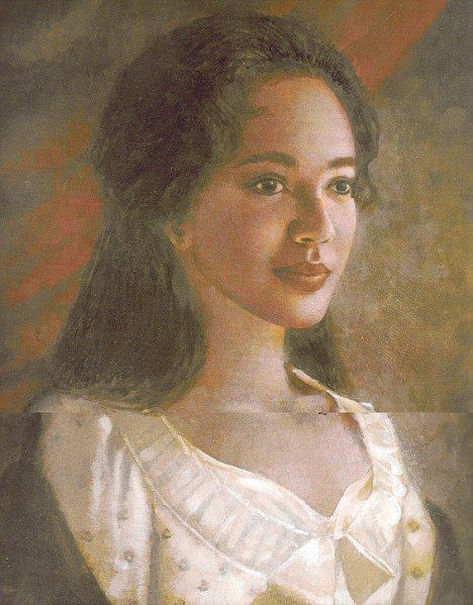
Presidential scandals and dogged newspaper reporters are not strictly a 20th or 21st century dynamic. In the 1790s, a reporter named James Callender ran articles condemning several politicians—including Alexander Hamilton and John Adams—for various indiscretions. In 1801, he turned his attention to Jefferson, whom he alleged was having an affair with one of his slaves, a woman named Sally Hemings. Callender went to Jefferson and demanded he receive $200 and a job as a postmaster in exchange for his silence. Disgusted, Jefferson gave him $50. Callender eventually broke the news that Hemings and Jefferson had been involved, a relationship that resulted in several children. Jefferson supporters ignored the story—which modern-day DNA testing later corroborated—but Callender was never in a position to gather more evidence: He drowned in the James River in 1803.
9. He had a pet mockingbird.

Even before the Revolution, Jefferson had taken a liking to mockingbirds, and he brought this affection to the White House, which they filled with melodious song. (And, presumably, bird poop.) But he was singularly affectionate toward one mockingbird he named Dick. The bird was allowed to roam Jefferson’s office or perch on the president’s shoulder. When Jefferson played his violin, Dick would accompany with vocals. Dick and his colleagues followed Jefferson back to Monticello when he was finished with his second term in 1809.

10. He invented a few things.

Not one to sit idle, Jefferson used his available free time to consider solutions to some of the problems that followed him at his Monticello farming endeavors. Anxious to till soil more efficiently, he and his son-in-law, Thomas Mann Randolph, conceived of a plow that could navigate hills. He also tinkered with a way of improving a dumbwaiter, the elevator typically used to deliver food and other goods from one floor to another.

11. His wife had a curious connection to his mistress.

Jefferson was married for just 10 years before his wife, Martha Wayles, died in 1782 at age 33 of unknown causes. Curiously, Jefferson’s involvement with his slave, Sally Hemings, was part of Martha’s convoluted family tree. Martha’s father, John Wayles, had an affair with Sally’s mother, Elizabeth Hemings—meaning most historians think Sally and Martha were half-sisters.

12. He’s credited with creating a catchphrase.

During his second term as president, Jefferson was said to have run into a man on horseback near his Monticello estate who proceeded to engage him in a lengthy complaint of everything wrong in Washington. Reportedly, the man had no idea he was speaking to the commander-in-chief until Jefferson introduced himself. The man, deeply embarrassed, quickly spouted “my name is Haines” and then galloped away. True or not, Jefferson is credited with originating the resulting catchphrase that was popular in the 1800s, with people saying “my name is Haines” whenever they wanted to feign embarrassment or were forced to leave abruptly.

13. He was served with a subpoena.

Long before Richard Nixon landed in hot water, Thomas Jefferson resisted attempts to compel him to testify in court. The matter unraveled in 1807, when James Wilkinson insisted he had sent Jefferson a letter informing him of Aaron Burr’s plot to invade Mexico. Government attorneys wanted Jefferson to appear with the letter, but the president—who said that the country would be left without leadership if he traveled to Richmond to answer the subpoena—refused to appear, an act of executive willpower that was never challenged in court.

14. He had a secret retreat.

Though Monticello remained Jefferson’s pride and joy, he had another residence for times when he wanted to be alone. Poplar Forest, located near Lynchburg, Virginia, was an octagonal home that he had built to exacting detail: The windows were measured so they would bring in only Jefferson’s preferred amount of sunlight. The home took years to construct and was nearly ready by the time he left office in 1809. It’s now open to the public.

15. He was a shabby dresser.

After taking office, Jefferson offended some in Washington who believed the president should be an impeccably-dressed and polished social host. While many of his stature would opt for a carriage, Jefferson rode a horse and dressed in plain and comfortable clothing. He acknowledged only two official White House celebrations annually: the 4th of July and New Year’s Day.

16. He was an early wine connoisseur.

Centuries before wine appreciation became a national pastime, Jefferson was busy accumulating an eclectic wine cellar. His love for the drink coincided with his trip to France, where he was introduced to the various tastes and textures. He kept a well-stocked collection at Monticello and also tried growing his own European grapes, but was never successful.

17. He shocked people by eating a tomato.

Jefferson’s multitudes of crops included what were, for their time, unique and sometimes puzzling additions. He grew tomatoes when their consumption in Virginia was uncommon, and, according to one account from 1900, Jefferson reportedly appalled some onlookers when he would consume one in front of witnesses.

18. He probably had a fear of public speaking.

Without today’s methods of addressing the public—radio, television, and Twitter—Jefferson was largely free to succumb to his reported phobia of speaking in public. While working as a lawyer, he found himself unable to deliver orated arguments as eloquently as he could write them. When he did speak, it was apparently with a meek disposition. One listener to his inaugural address in 1801 described Jefferson’s speech as being in “so low a tone that few heard it.”

19. He harvested opium.
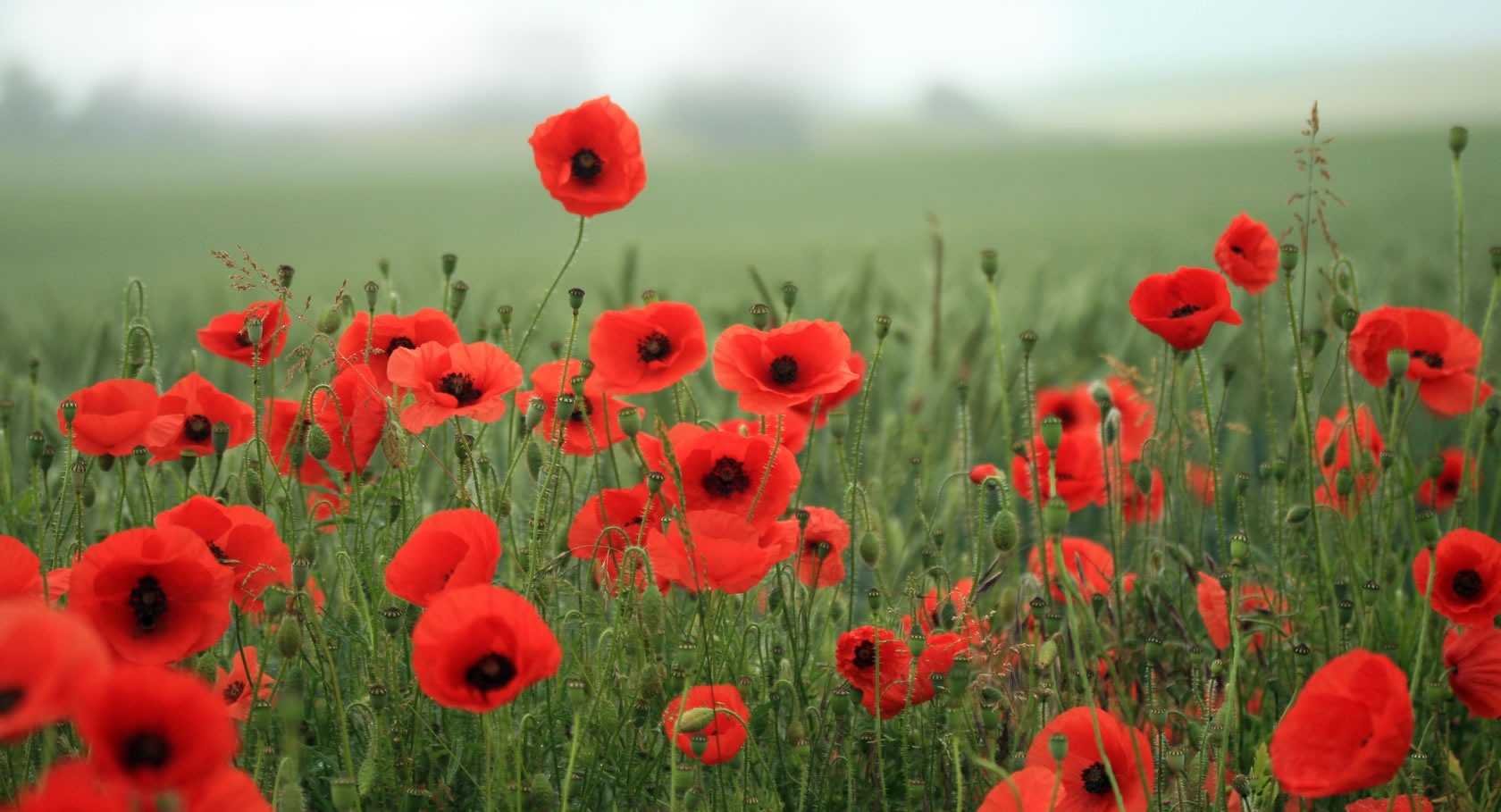
At Monticello’s sprawling vegetable and plant gardens, Jefferson grew over 300 different kinds of crops, flowers, and other sprouts. Among them were Papaver somniferum, the poppy seed that can be used to create opioid drugs. Common in Jefferson’s time, the plant is now under much closer scrutiny and the estate was forced to pull up their remaining crop in 1991.

20. Abraham Lincoln was not a fan.

Though they weren’t contemporaries, Abraham Lincoln sometimes seethed with animosity toward Jefferson. William Henry Herndon, Lincoln’s onetime law partner, wrote that Lincoln “hated” Jefferson both for his moral shortcomings and his political views. But Lincoln also recognized the potency of the Declaration, citing its words as proof of equality among the population. “All honor to Jefferson,” he said, for making the document a “stumbling block” for anyone arguing in favor of tyranny. But he still never liked the guy.

21. He sold a lot of books to the Library of Congress.

Jefferson, a voracious reader, was dismayed when the War of 1812 resulted in British forces burning the Capitol in Washington and reducing its 3000-volume library of books to ashes. To repopulate the repository of knowledge, Jefferson sold Congress his entire personal library of 6707 titles for $23,950. The sale was finalized in 1815, and the books were sent via wagon from Virginia to Washington.

22. He helped found the University of Virginia.

A fierce advocate of education, Jefferson used his later years to propagate an institution of higher learning. Jefferson began planning the resources for a Virginia state university during his presidential term, writing to the Virginia House of Delegates that a college should not be solely a house but a “village.” In the proceeding years, Jefferson arranged funding, contributed design ideas, and helped shepherd the University of Virginia toward its formal opening in March 1825. Known as the “founding father” of the school, his influence has not always been welcomed. In April 2018, protesting students spray-painted the words rapist (in reference to his controversial relationship with slave Sally Hemings) and racist on a campus statue.

23. He was always in debt.

Status, salary, and opportunities should collude to make sure presidents are in solid financial shape during and after their tenure in office. Jefferson was an exception. Despite inheriting his father’s estate, he was plagued by debt for most of his life. He often spent beyond his means, expanding his property and making additions and renovations with little regard for the cost involved. His father-in-law, John Wayles, carried debt, which Jefferson became responsible for when Wayles died in 1774. Jefferson himself died owing $107,000, or roughly $2 million today.

24. His onetime nemesis dies on the same day.

Before Jefferson passed away on July 4, 1826, he had finally made amends with John Adams, the president who preceded him in office and for whom Jefferson had acted as vice-president. The two men, once on the same side, had grown to resent the other’s approach to diplomacy and politics, with Jefferson lamenting Adams’s preference for centralized and meddlesome government—though according to Jefferson, the major issue was the so-called “Midnight Judges,” appointments that Jefferson felt “were from among [his] most ardent political enemies.”

Strangely, Adams passed away the same day as Jefferson, just five hours later. The date, July 4, was also the 50th anniversary of the Declaration of Independence being adopted.

25. He wrote his own epitaph.

Jefferson wasn’t willing to leave his final resting place in the hands of others. He was exacting in how he wanted his grave marker to look and how his epitaph should read. He also directed the marker be made of inexpensive materials to dissuade vandals from bothering it. Following his death in 1826, several people chipped away at his grave in Monticello as souvenirs. Congress funded a new monument in 1882, which is still toured by visitors to the estate today. The engraving reads:

Here was buried Thomas Jefferson Author of the Declaration of American Independence of the Statute of Virginia for religious freedom & Father of the University of Virginia

This time, no one had the temerity to rewrite him.

SOURCE: MENTAL FLOSS: Jake Rossen | Apr 13, 2019

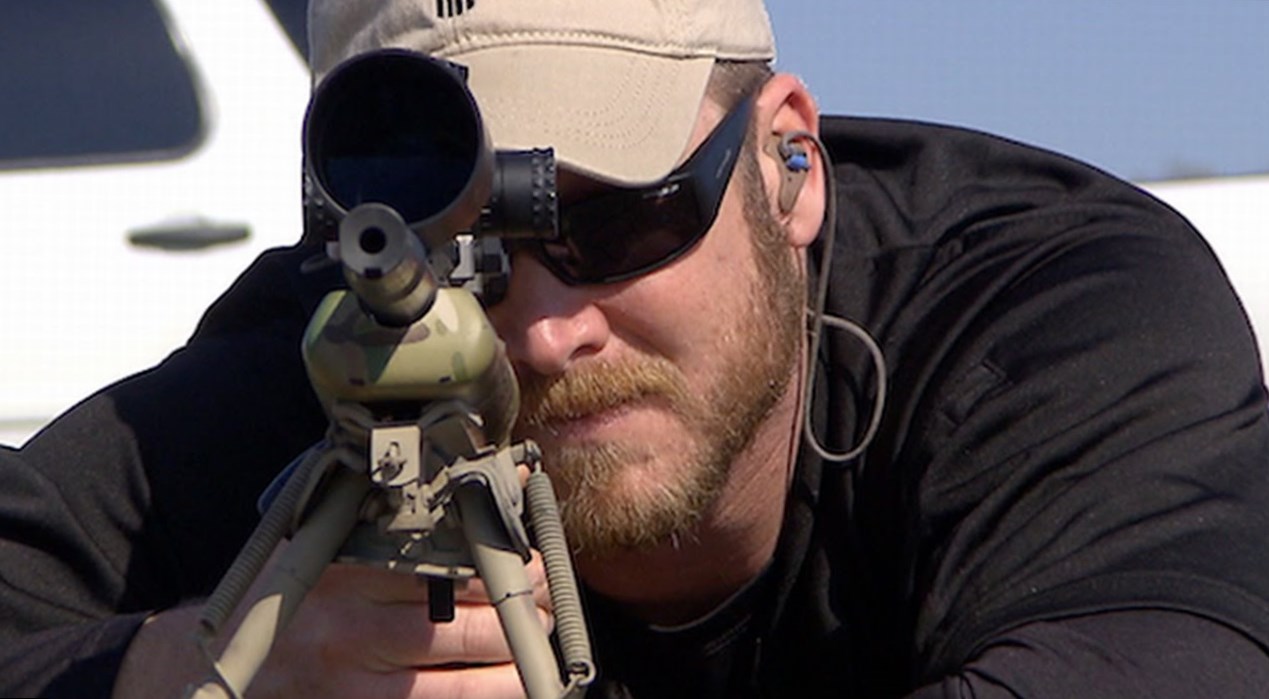
American Sniper: Chris Kyle

From HISTORY.COM:

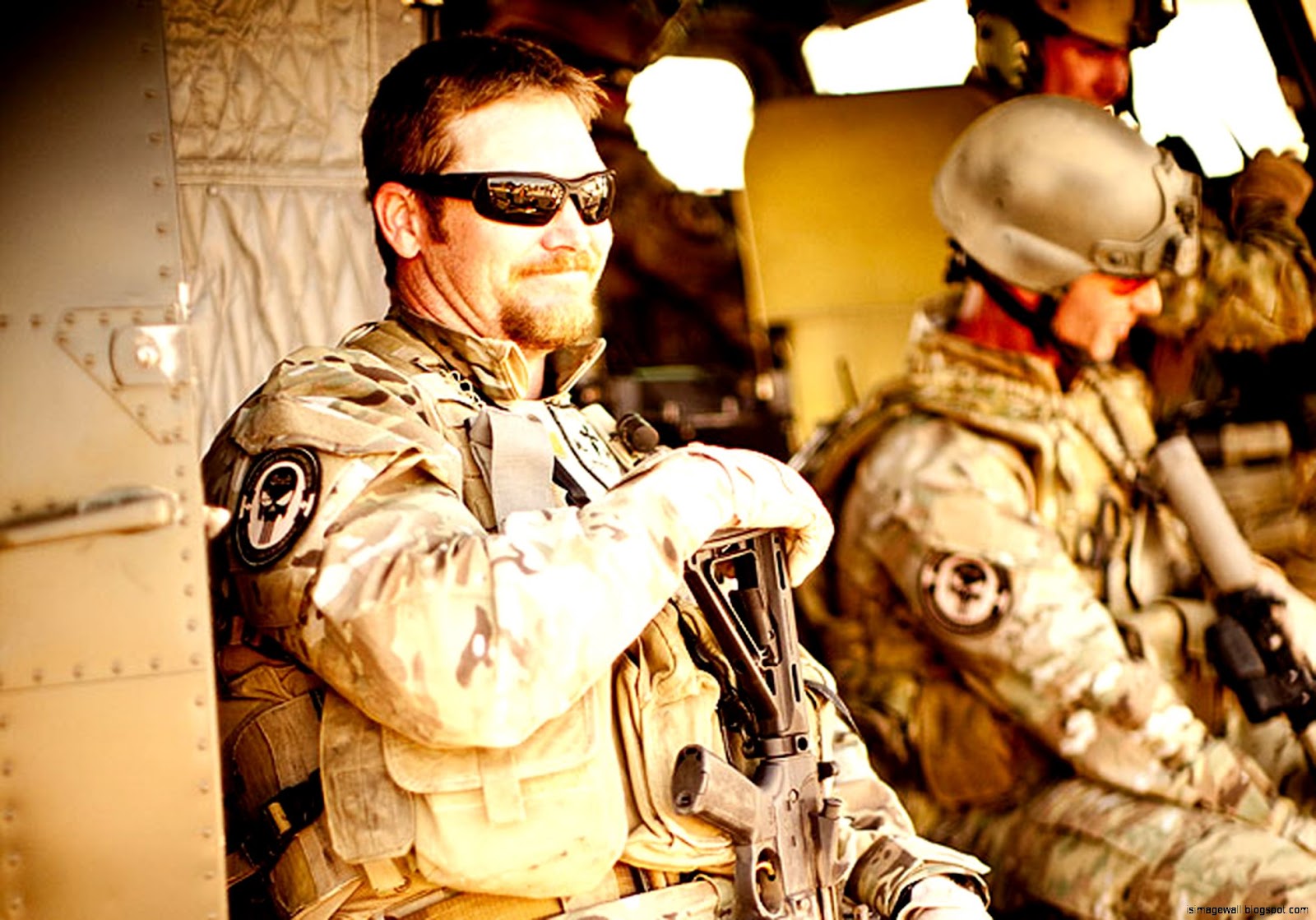
Unlike any American before him, Chris Kyle performed his job with pinpoint accuracy. As a sharpshooter serving in Iraq, that job had deadly results. The Pentagon has credited Kyle with over 160 kills. The actual number could be almost double.

The most lethal sniper in American history was the son of a church deacon and a Sunday-school teacher. Growing up in Texas, Kyle hunted with his father and brother. After two years of college and working as a ranch hand, the 24-year-old Kyle quit school and joined the elite Navy SEALs—although he hated water. “If I see a puddle,” he told Time magazine, “I will walk around it.”

After serving in a number of classified missions, Kyle was deployed with members of platoon “Charlie” of SEAL Team 3 to fight in the Iraq War. After landing on the al-Faw Peninsula at the war’s outset in March 2003, the SEALs joined the Marines on their march north toward the capital city of Baghdad. Stationed on rooftops, Kyle and his fellow SEALs protected Marines squads going door to door from insurgent ambushes.

After entering the city of Nasiriya in the war’s early days, Kyle stationed himself atop a building seized by the SEALs. Through the scope of a bolt-action .300 Winchester Magnum, Kyle watched as a Marine convoy approached. Fifty yards away, he suddenly saw the door of a small house open and a woman step outside with her child. As she neared the Marines, Kyle watched through the crosshairs as the woman reached beneath her robe and pulled out a yellow grenade.

“Take a shot,” ordered Kyle’s platoon chief.

Kyle hesitated as the Marines continued to march closer.

“Shoot!” cried the chief.

Kyle squeezed the trigger twice. The woman fell dead to the ground along with the exploding grenade, which did no harm to the Marines. It was Kyle’s first kill with a sniper rifle. Many more deadly shots would be fired, but the hesitation would never return.

“It was my duty to shoot, and I don’t regret it. The woman was already dead. I was just making sure she didn’t take any Marines with her,” Kyle wrote in his 2012 combat memoir, “American Sniper: The Autobiography of the Most Lethal Sniper in U.S. Military History.”

Kyle’s sole mission in Iraq was to save his fellow servicemen, and he proved to be such a deadly sniper that Iraqi insurgents placed a $20,000 bounty on the head of the man they called “Al-Shaitan Ramad,” or “the Devil of Ramadi.” To Kyle’s fellow soldiers, however, he was known as “The Legend.”

The 160 kills credited to Kyle are more than for any sniper in American history, but the Navy SEAL told D Magazine that he wished instead that he could have calculated the number of people he saved. “That’s the number I’d care about,” he said. “I’d put that everywhere.”

After Kyle’s initial deployment to Iraq in 2003, he returned to fight in Fallujah in 2004, Ramadi in 2006 and Baghdad in 2008. On each tour of duty, the fighting grew fiercer and Kyle’s job grew harder. Insurgents who once carried guns now toted rocket-propelled grenades. Kyle still proved a skilled marksman even killing an enemy fighter 1.2 miles—or 21 football fields—away on a single shot.

When Kyle’s wife, Taya, told him their marriage could be over if he re-enlisted, the sniper reluctantly left the Navy with an honorable discharge in 2009 after a decade of service. He had earned a pair of Silver Stars and five Bronze Stars after surviving two gunshot wounds and six IED attacks.

“I loved what I did. If circumstances were different—if my family didn’t need me—I’d be back in a heartbeat,” Kyle wrote in his autobiography. “I had the time of my life being a SEAL.” Kyle struggled with the transition to civilian life in his roles as husband and father to his two young children. He found that although he left the war, the war didn’t leave him. He drank heavily, suffered bouts of depression and stopped working out.

Kyle felt anchorless without a mission and the camaraderie of his fellow SEALs. But he discovered a new call to duty by helping ailing veterans suffering from the physical and psychological scars of war. After seeing the therapeutic benefits of exercise in his own life, he helped to create the FITCO Cares Foundation in 2011 to provide exercise equipment and counseling to veterans. The following year he published “American Sniper,” which became a New York Times bestseller and the basis for the blockbuster film. Kyle donated his share of the book profits to families of colleagues who had died in battle and to a charity to help wounded veterans.

Kyle’s final mission to help his fellow veterans would tragically be his last. The former Navy SEAL often brought troubled veterans along with him to shoot at targets as a way for them to better connect. On February 2, 2013, he invited Eddie Ray Routh, a 25-year-old Marine veteran who had served in Iraq and Haiti, to a shooting range in Glen Rose, Texas. Routh, who reportedly suffered from post-traumatic stress disorder, allegedly shot and killed the 38-year-old Kyle and his friend Chad Littlefield at point-blank range.

To accommodate the mourners, Kyle’s funeral was held inside the Dallas Cowboys football stadium, where the veteran’s flag-draped coffin rested on the 50-yard line. For miles on end, crowds lined the route of the funeral procession to say goodbye to an American soldier who had survived years of combat only to be gunned down in the country he served to protect.

SOURCE: Christopher Klein History.com

The Promised Land

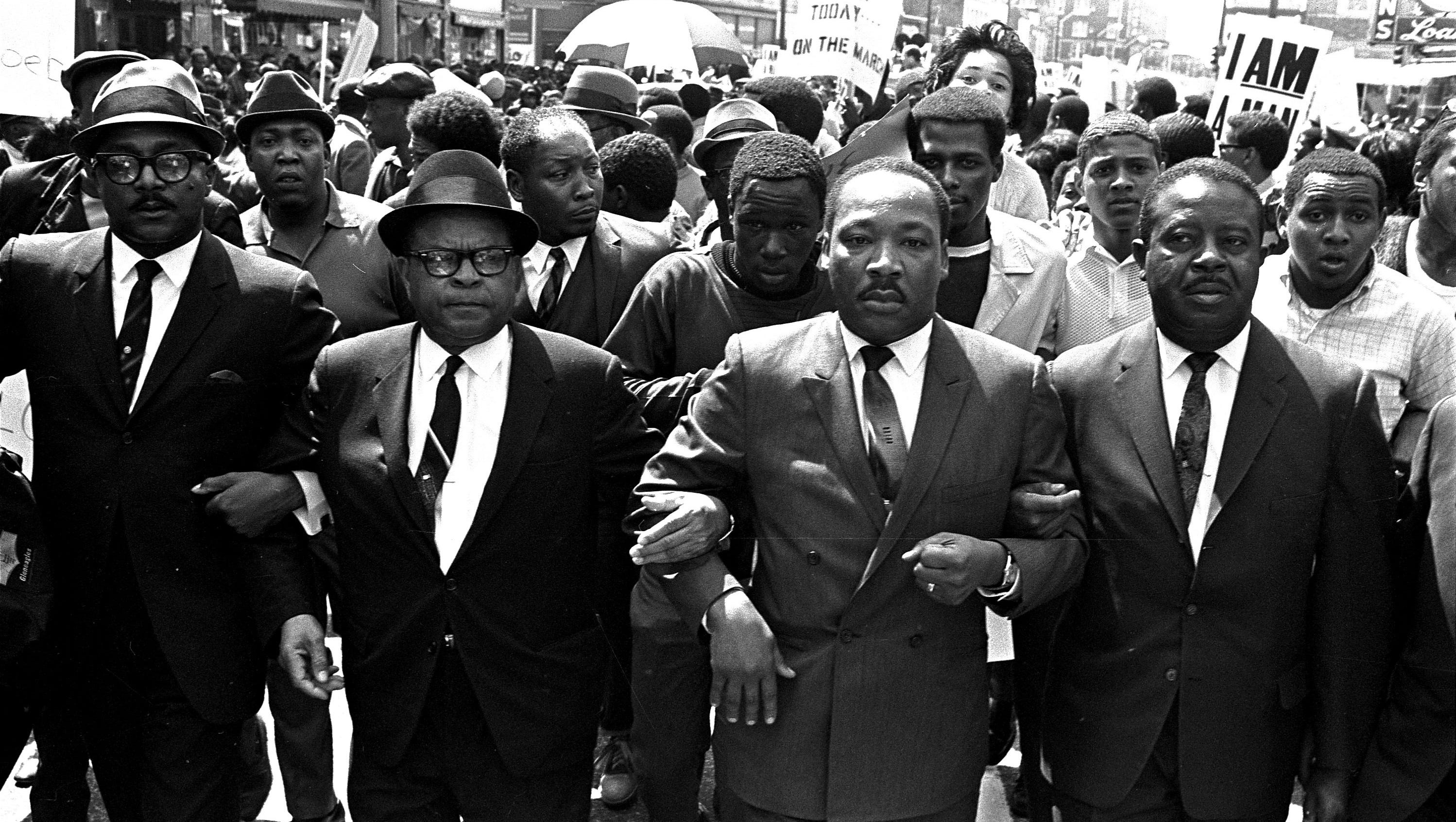
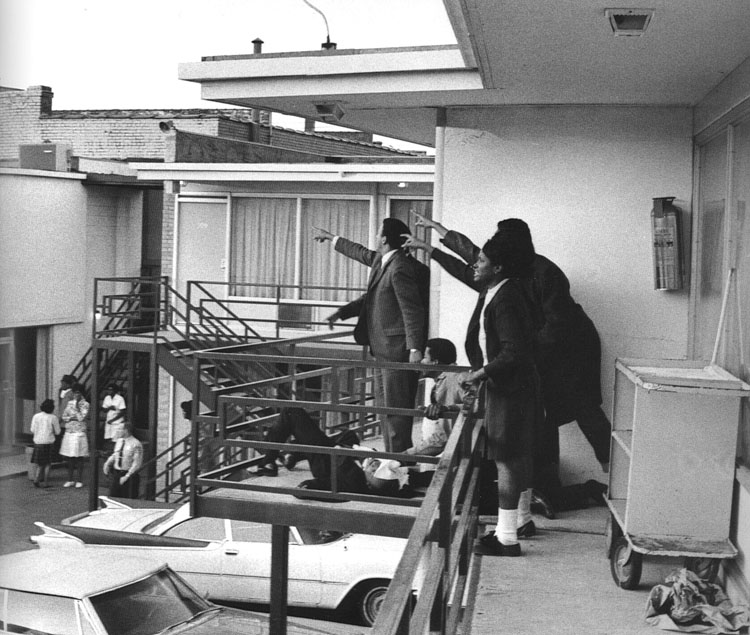
Just after 6 p.m. on April 4, 1968, Martin Luther King Jr. is fatally shot while standing on the balcony outside his second-story room at the Lorraine Motel in Memphis, Tennessee. The civil rights leader was in Memphis to support a sanitation workers’ strike and was on his way to dinner when a bullet struck him in the jaw and severed his spinal cord. King was pronounced dead after his arrival at a Memphis hospital. He was 39 years old.

In the months before his assassination, Martin Luther King became increasingly concerned with the problem of economic inequality in America. He organized a Poor People’s Campaign to focus on the issue, including a march on Washington, and in March 1968 traveled to Memphis in support of poorly treated African-American sanitation workers. On March 28, a workers’ protest march led by King ended in violence and the death of an African American teenager. King left the city but vowed to return in early April to lead another demonstration.

On April 3, back in Memphis, King gave his last sermon, saying, “We’ve got some difficult days ahead. But it really doesn’t matter with me now, because I’ve been to the mountaintop … And He’s allowed me to go up to the mountain. And I’ve looked over, and I’ve seen the Promised Land. I may not get there with you. But I want you to know tonight that we, as a people, will get to the promised land.”

One day after speaking those words, Dr. King was shot and killed by a sniper. As word of the assassination spread, riots broke out in cities all across the United States and National Guard troops were deployed in Memphis and Washington, D.C. On April 9, King was laid to rest in his hometown of Atlanta, Georgia. Tens of thousands of people lined the streets to pay tribute to King’s casket as it passed by in a wooden farm cart drawn by two mules.

The evening of King’s murder, a Remington .30-06 hunting rifle was found on the sidewalk beside a rooming house one block from the Lorraine Motel. During the next several weeks, the rifle, eyewitness reports, and fingerprints on the weapon all implicated a single suspect: escaped convict James Earl Ray. A two-bit criminal, Ray escaped a Missouri prison in April 1967 while serving a sentence for a holdup. In May 1968, a massive manhunt for Ray began. The FBI eventually determined that he had obtained a Canadian passport under a false identity, which at the time was relatively easy.

On June 8, Scotland Yard investigators arrested Ray at a London airport. He was trying to fly to Belgium, with the eventual goal, he later admitted, of reaching Rhodesia. Rhodesia, now called Zimbabwe, was at the time ruled by an oppressive and internationally condemned white minority government. Extradited to the United States, Ray stood before a Memphis judge in March 1969 and pleaded guilty to King’s murder in order to avoid the electric chair. He was sentenced to 99 years in prison.

Three days later, he attempted to withdraw his guilty plea, claiming he was innocent of King’s assassination and had been set up as a patsy in a larger conspiracy. He claimed that in 1967, a mysterious man named “Raoul” had approached him and recruited him into a gunrunning enterprise. On April 4, 1968, he said, he realized that he was to be the fall guy for the King assassination and fled to Canada. Ray’s motion was denied, as were his dozens of other requests for a trial during the next 29 years.

During the 1990s, the widow and children of Martin Luther King Jr. spoke publicly in support of Ray and his claims, calling him innocent and speculating about an assassination conspiracy involving the U.S. government and military. U.S. authorities were, in conspiracists’ minds, implicated circumstantially. FBI Director J. Edgar Hoover obsessed over King, who he thought was under communist influence. For the last six years of his life, King underwent constant wiretapping and harassment by the FBI. Before his death, Dr. King was also monitored by U.S. military intelligence, which may have been asked to watch King after he publicly denounced the Vietnam War in 1967. Furthermore, by calling for radical economic reforms in 1968, including guaranteed annual incomes for all, King was making few new friends in the Cold War-era U.S. government.

Over the years, the assassination has been reexamined by the House Select Committee on Assassinations, the Shelby County, Tennessee, district attorney’s office, and three times by the U.S. Justice Department. The investigations all ended with the same conclusion: James Earl Ray killed Martin Luther King. The House committee acknowledged that a low-level conspiracy might have existed, involving one or more accomplices to Ray, but uncovered no evidence to definitively prove this theory. In addition to the mountain of evidence against him—such as his fingerprints on the murder weapon and his admitted presence at the rooming house on April 4—Ray had a definite motive in assassinating King: hatred. According to his family and friends, he was an outspoken racist who informed them of his intent to kill Dr. Martin Luther King, Jr. He died in 1998.

SOURCE: History.com

Happy St. Patrick’s Day!

I found some interesting facts and trivia about St. Patrick’s Day on The Irish Road Trip website:

The first section of our guide focuses on fun facts about St. Patrick – Ireland’s Patron Saint, while the second focuses on St. Patrick’s Day facts about the celebration itself.

Below, you’ll discover tales about pirates, snakes and the original color associated with St. Patrick (it wasn’t green!).

St. Patrick wasn’t Irish

If you’re not familiar with the story of St. Patrick, you may not be aware that he is not in fact Irish. St. Patrick is British. It’s believed that he was born in either Wales or Scotland. This is arguably the most frequently misbelieved of the many facts about St. Patrick.

 He wasn’t born in Ireland

St. Patrick was born in Roman-Britain (Britain was under Roman rule for 350 years) circa 386 A.D. He didn’t arrive in Ireland until 433. 

When he died

St. Patrick died in 461 in Saul, County Down, at the fine old age of (roughly) 75.

He was abducted at 16

This is another of the lesser known St. Patrick facts that I had never really heard. St. Patrick was abducted at the age of 16 and brought to Northern Ireland as a slave. He was forced to tend to sheep for 6 years in the mountains.

His remains are believed to be at Down Cathedral

It’s believed that the remains of St. Patrick are buried at Down Cathedral in County Down.  This magnificent Cathedral is a Church of Ireland cathedral and it’s found on the site of a Benedictine Monastery.

His name wasn’t Patrick

One of the more surprising St. Patrick’s Day facts revolves around his name. So, apparently ‘Patrick’ is a name that he picked up along the way at some point. St. Patrick’s real name was ‘Maewyn Succat’. The best of luck pronouncing that!

He didn’t banish snakes

For as far back as I can remember, I was told that St. Patrick banished the snakes from Ireland. However, there were never snakes in Ireland…

It’s believed that the St. Patrick snakes link is all about symbolism. In Judeo-Christian tradition, snakes are the symbol of evil.

It’s said that St. Patrick banishing the snakes from Ireland represents his fight to bring the word of God to Ireland.

He escaped Ireland by boat

According to St. Patrick’s Confession (a book that is said to have been written by St. Patrick), God told Patrick to flee his captures and make his way to the coast where a boat would be waiting to take him back home.

A dream led him back to Ireland

After escaping his captures in Ireland, St. Patrick returned to Roman-Britain. It’s said that one night had a dream that the people of Ireland were calling him back to tell them about God. 

Not before he spent 12 years in France…

After having the dream that called him back to Ireland, he was worried. He felt unprepared for the task ahead. 

St. Patrick decided that he must follow his studies first, to better equip himself for the task ahead.

He traveled to France where he trained in a monastery. It wasn’t for 12 years after the dream that he returned to Ireland.

He used the shamrock in his teachings

St. Patrick is often associated with the shamrock. It’s said that, upon returning to Ireland, he used the three-leafed plant as a metaphor for the Hold Trinity. It is now one of the more notable symbols of Ireland, along with the Celtic Cross.

St. Patrick’s Day facts and trivia

The next section of our fun St. Patrick’s Day facts focuses on the day itself – March 17th.

Why March 17th?

St. Patrick’s Day is held on March 17th as this is the day that St. Patrick died. On March 17th we celebrate his life along with Irish culture.

The first parade wasn’t held in Ireland

I’d never heard this St. Patrick’s Day fact before today! The first St. Patrick’s Day parade wasn’t held in Ireland – it was held in Boston in the United States in 1737. To this day some of the biggest St. Patrick’s Day parades take place in the USA.

Ireland’s first parade

The very first St. Patrick’s Day in Ireland was held in County Waterford in 1903. 

A national holiday

St. Patrick’s Day is a bank holiday in Ireland. This means that many people have the day off, as it’s a national holiday. Schools, government offices and many private workplaces close for business on March 17th.

Green isn’t the original color associated with St. Patrick

Interestingly enough, the original color associated with St. Patrick wasn’t green – it was blue. I can’t image people legging it about the place with blue face paint on!

The largest parade in the world

This is one of the few St. Patrick’s Day facts that I did know..! The largest St. Patrick’s Day parade in the world takes place in New York City. The parade attracts a staggering two million+ people every year.

13,000,000 pints of Guinness are sipped

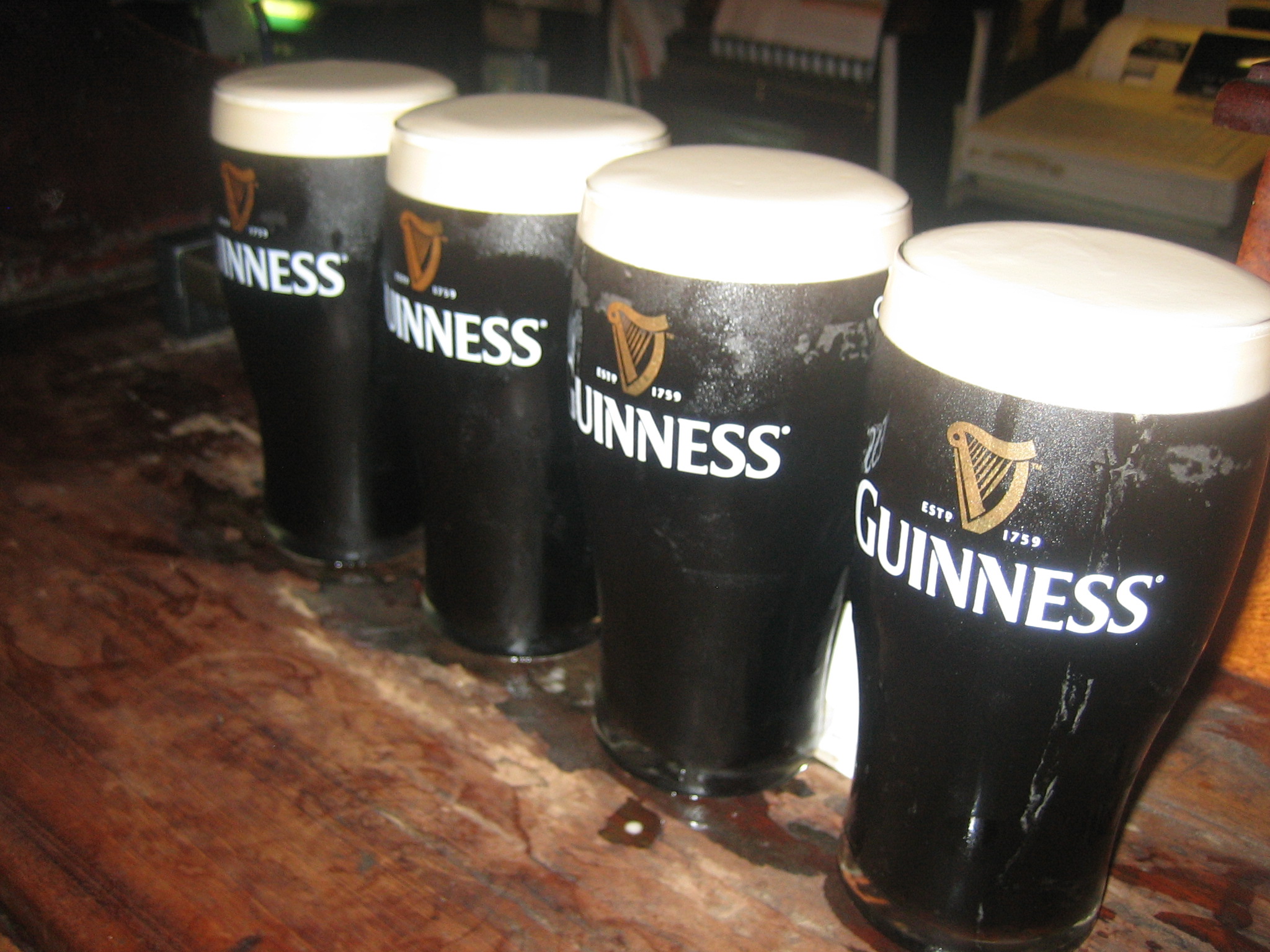
Yep – a whopping 13,000,000 pints of Guinness (the most popular of the many Irish beers) are drank on March 17th across the world! 

SOURCE: The Irish Road Trip

Pennsylvania: Humble Beginnings

From PENNLIVE:

History

The first English charter to colonize land in the New World that is today known as Pennsylvania was set forth by King Charles II as a way to repay William Penn, a member of upper-class nobility, whose father had lent the king money before his death. Penn was a supporter of the Society of Friends, or Quakers, a controversial religion at the time that rejected rituals and oaths and opposed war. Penn wanted to create a haven for his persecuted friends in the New World and asked the King to grant him land in the territory between the province of Maryland and the province of New York.

On March 4, 1681, King Charles signed the Charter of Pennsylvania, and it was officially proclaimed on April 2. The king named the colony after Penn’s father, Admiral Sir Penn. In October 1682, Penn sent a proprietor to Pennsylvania who visited the capital city Philadelphia, created the three original counties and summoned a General Assembly to Chester on December 4.

From those humble beginnings, Pennsylvania has made quite a name for itself.  Consider…

We have a famous groundhog

There’s a town named after a candy bar (Hershey)

There’s a town that’s perpetually on fire (Centralia)

A famous painting horse lived here (Metro Meteor)

We had a museum for famous people’s hair (at Drexel University)

And let’s not forget those memorable Pennsylvania town names:

Asylum

Blue Ball

Burnt Cabins

California

Climax

Coon Hunter

Crackersport

Egypt

Free Love Valley

Glen Campbell

Honey Pot

Indiana

Intercourse

Jersey Shore

Jim Thorpe

Jugtown

Lover

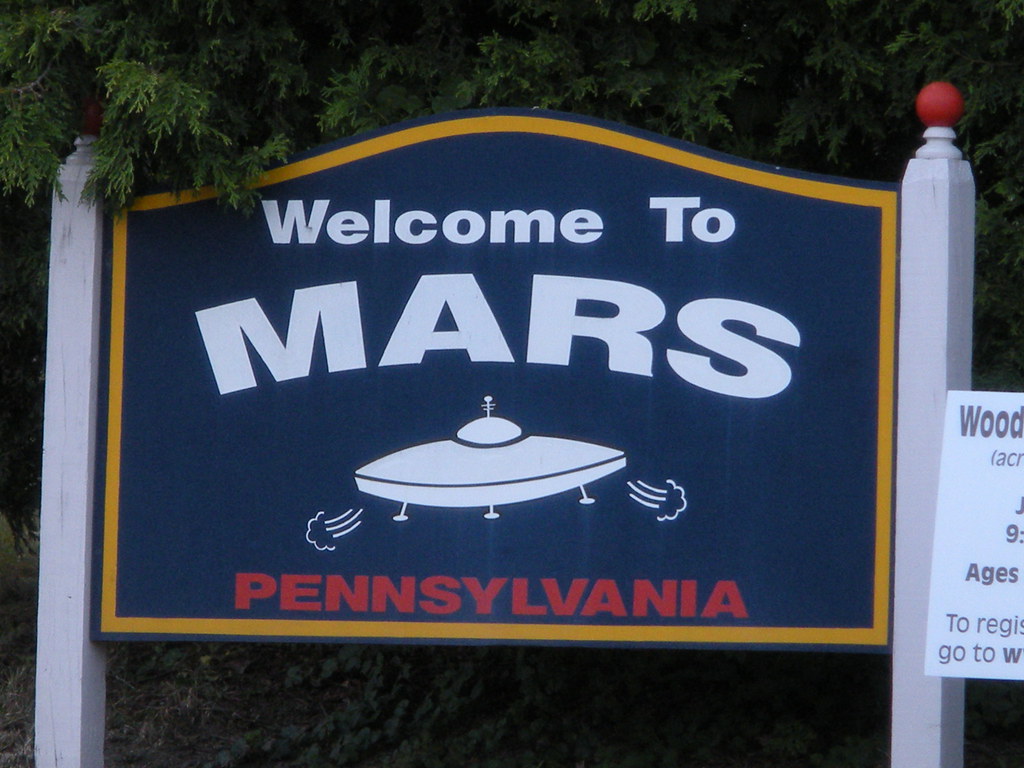
Mars

Milwaukee

Moon

Moscow

Nazareth

Nebraska:

Newfoundland

Normalville

Norwegian

Pancake

Panic

Prosperity

Rome

Rough and Ready

St. Petersburg

Two Lick Valley

Virginville

Versailles

Yellow House

Leap Year

I found an article on History.com detailing five things we may not know about Leap Year’s history.  See how much you already knew!

From History.com:

Nearly every four years, we add an extra day to the calendar in the form of February 29, also known as Leap Day. Put simply, these additional 24 hours are built into the calendar to ensure that it stays in line with the Earth’s movement around the sun.

While the modern calendar contains 365 days, the actual time it takes for Earth to orbit its star is slightly longer—roughly 365.2421 days. The difference might seem negligible, but over decades and centuries that missing quarter of a day per year can add up. To ensure consistency with the true astronomical year, it is necessary to periodically add in an extra day to make up the lost time and get the calendar back in synch with the heavens.

Many ancient calendars had entire leap months

Many calendars, including the Hebrew, Chinese and Buddhist calendars, are lunisolar, meaning their dates indicate the position of the moon as well as the position of Earth relative to the sun. Since there is a natural gap of roughly 11 days between a year as measured by lunar cycles and one measured by the Earth’s orbit, such calendars periodically require the addition of extra months, known as intercalary or interstitial months, to keep them on track.

Intercalary months, however, were not necessarily regular. Historians are still unclear as to how the early Romans kept track of their years, mostly because the Romans themselves may not have been entirely sure. It appears that the early Roman calendar consisted of ten months plus an ill-defined winter period, the varying length of which caused the calendar to become unpegged from the solar year.

Eventually, this uncertain stretch of time was replaced by the new months of January and February, but the situation remained complicated. They employed a 23-day intercalary month known as Mercedonius to account for the difference between their year and the solar year, inserting it not between months but within the month of February for reasons that may have been related to lunar cycles.

To make matters even more confusing, the decision of when to hold Mercedonius often fell to the consuls, who used their ability to shorten or extend the year to their own political ends. As a result, by the time of Julius Caesar, the Roman year and the solar year were thoroughly out of sync.

Julius Caesar introduced Leap Day, with help from the Egyptians…

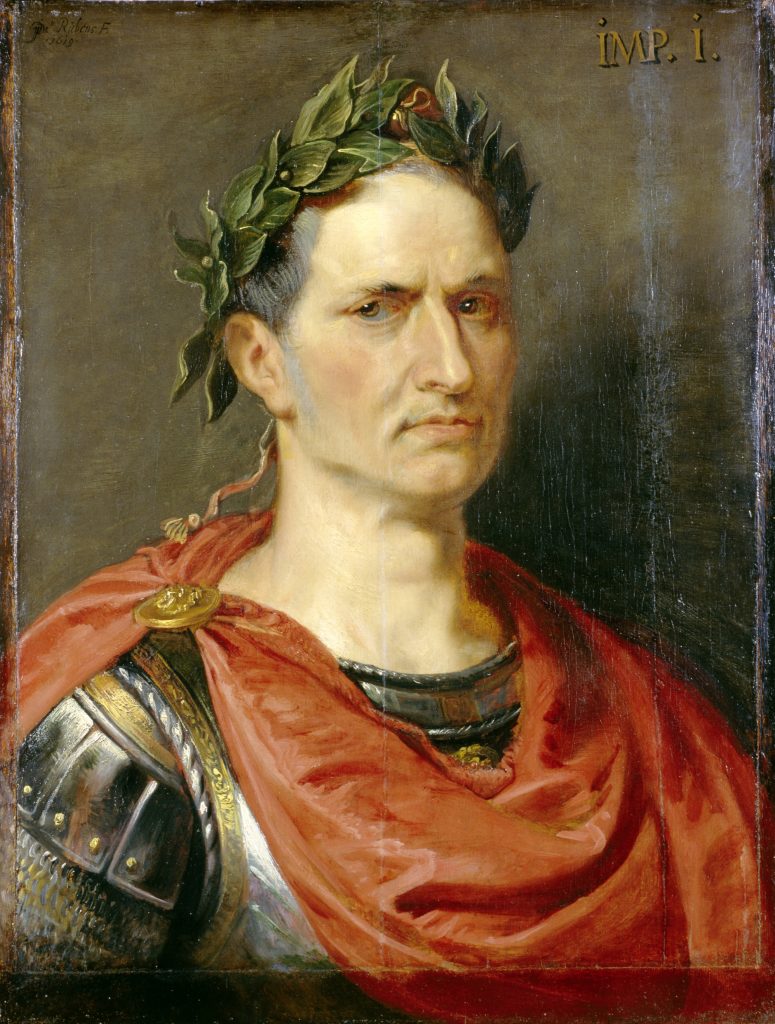
The Mercedonius-when-we-feel-like-it system apparently irked Caesar, the general-turned-consul-turned-dictator of Rome who drastically altered the course of European history. In addition to conquering Gaul and transforming Rome from a republic into an empire, Caesar re-ordered the Roman calendar, giving us the blueprint off of which much of the world still operates to this day.

During his time in Egypt, Caesar became convinced of the superiority of the Egyptian solar calendar, which featured 365 days and an occasional intercalary month which was inserted when astronomers observed the correct conditions in the stars. Caesar and the philosopher Sosigenes of Alexandria made one important modification: instead of relying on the stars, they would simply add a day to every fourth year. In keeping with the Roman tradition of messing with the length of February, that day would fall in the second month of the year—thus Leap Day was born. Caesar added two extra-long months to the year 46 B.C.E. to make up for missed intercalations, and the Julian Calendar took effect on January 1st, 45 B.C.E.

…but their math was a little off

By the 16th century, scholars had noticed that time was still slipping—Caesar’s calculation that a year lasted 365.25 days was close, but still overestimated the solar year by 11 minutes. This was a problem for the Catholic Church, as the date of Easter had drifted away from its traditional place, the first Sunday after the first full moon following the vernal equinox, by roughly ten days. Pope Gregory XIII commissioned a modified calendar, one which kept Leap Day but accounted for the inaccuracy by eliminating it on centurial years not divisible by 400 (1700, 1800, and 1900 were not leap years, but 2000 was). The introduction of the Gregorian Calendar marked the last change to the Western calendar as we know it today.

Experts note that the Gregorian calculation of a solar year—365.2425 days—is still not perfect, and thus another correction will be necessary. Thankfully, the Gregorian calendar is only off by about one day every 3,030 years, so mankind has some time before this becomes a problem.

Leap Day is often associated with marriage, proposals and flipping gender roles

Curiously, many Leap Day customs have revolved around romance and marriage. Tradition holds that in 5th-century Ireland, St. Bridget lamented to St. Patrick that women were not allowed to propose marriage to men. So legend has it that St. Patrick designated the only day that does not occur annually, February 29, as a day on which women would be allowed to propose to men. In some places, Leap Day thus became known as Bachelor’s Day.

This tradition hopped the Irish Sea to Scotland and England, where the British added a twist—if a man rejected a woman’s proposal, he owed her a debt of several pairs of fine gloves, perhaps to hide the fact that she did not have an engagement ring. In Greek tradition, however, it is considered bad luck to marry on Leap Day, and statistics suggest that Greek couples continue to take this superstition seriously.

People born on Leap Day are called ‘Leaplings’

There are only about 5 million people in the whole world who were born on February 29, with the odds of being born on Leap Day standing at about 1-in-1,461. Several famous people—including actress and singer Dinah Shore (born 1916), motivational speaker Tony Robbins (born 1960) and hip-hop artist Ja Rule (born 1976)—are leaplings. Leaplings technically only get to celebrate their birthdays once every four years, but they do get to be part of an elite group.

SOURCE: HISTORY.COM STEPHEN WOOD

By George!

I went looking for some interesting facts about our first President on what I thought was his birthday.  According to this article in MENTAL FLOSS, I got it wrong.  Read on for more interesting facts about George Washington.

By Arthur Holland Michel | Feb 22, 2019

You know that George Washington was the first president of the United States. Is that where your knowledge of this fascinating guy’s life and history ends? Here are 25 George Washington facts that may be new to you.

George Washington didn’t have a middle name.

With a name like George Washington, you don’t really need one.

George Washington’s birthday was not February 22, 1732.

Washington was actually born on February 11, 1731, but when the colonies switched to the Gregorian calendar from the Julian calendar, his birthday was moved 11 days. Since his birthday fell before the old date for New Year’s Day, but after the new date for New Year’s Day, his birth year was changed to 1732.

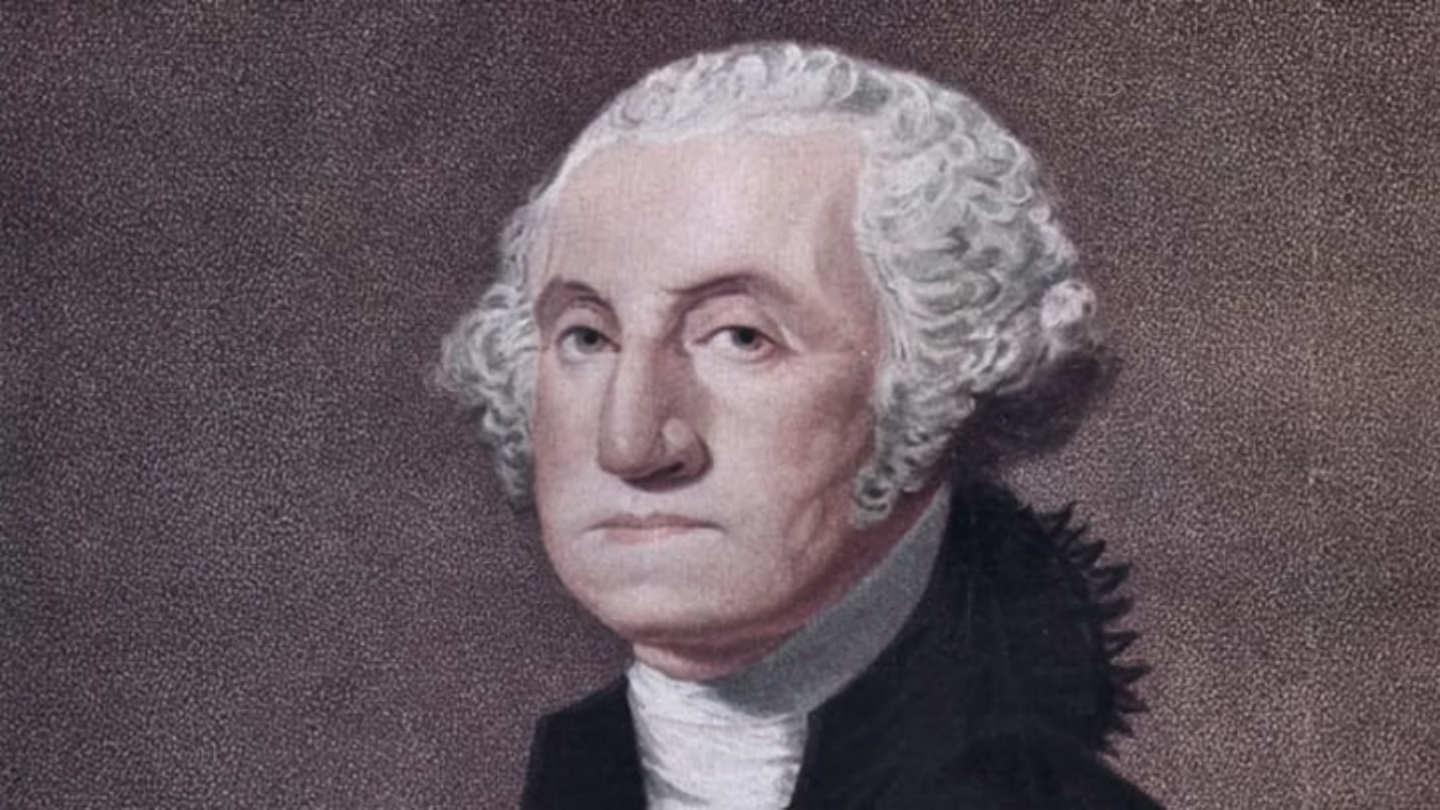
George Washington’s hair was all real.

It looks white because he powdered it.

George Washington was made an honorary citizen of France.

The quintessential American received this honor in 1792.

For a time, George Washington was a non-president commander-in-chief (but he didn’t do much).

In 1798, when fears were growing of a French invasion, Washington was named (by John Adams) commander-in-chief of the U.S. military, even though he wasn’t president anymore. Apparently, this was a strategy to help recruiting, as Washington’s name was very well-known. He only served in an advisory capacity, since he was pretty old by that point. But he felt he should have been a bit more involved. According to this letter, he was frustrated that even though he was the commander-in-chief, nobody really told him much about what was going on with the military.

No one will ever rank higher than him in the U.S. military.

In 1976 Washington was posthumously awarded the highest rank in the U.S. military—ever.

According to Air Force Magazine:

When Washington died, he was a lieutenant general. But as the centuries passed, this three-star rank did not seem commensurate with what he had accomplished. After all, Washington did more than defeat the British in battle. Along the way he established the framework for how American soldiers should organize themselves, how they should behave, and how they should relate to civilian leaders. Almost every big decision he made set a precedent. He was the father of the U.S. military as well as the U.S. itself.

So, a law was passed to make Washington the highest-ranking U.S. officer of all time: General of the Armies of the United States. Nobody will ever outrank him.

George Washington made a pretty hefty salary …

According to the Christian Science Monitor, in 1789, Washington’s presidential salary was 2 percent of the total U.S. budget.

… but he still had cash-flow problems.

Washington actually had to borrow money to attend his own first inauguration.

He was one of the sickliest presidents in history.

Throughout his life, Washington suffered from a laundry list of ailments: diphtheria, tuberculosis, smallpox, dysentery, malaria, quinsy (tonsillitis), carbuncle, pneumonia, and epiglottitis—to name a few.

He may or may not have died as a result of medical malpractice.

On the day he died—December 14, 1799—Washington was treated with four rounds of bloodletting, which removed 5 pints of blood from his body. It seems that it proved to be too much. In 1999, The New York Times wrote:

“On Washington’s fateful day, Albin Rawlins, one of his overseers and a bloodletter, was summoned. Washington bared his arm. The overseer had brought his lancet and made an incision. Washington said, ”Don’t be afraid.” That day, Rawlins drew 12 ounces of blood, then 18 ounces, another 18 ounces and a final 32 ounces into a porcelain bleeding bowl. After the fourth bloodletting, the patient improved slightly and was able to swallow. By about 10 p.m., his condition deteriorated, but he was still rational enough to whisper burial instructions to Col. Tobias Lear, his secretary. At 10:20 p.m., Dr. James Craik, 69, an Edinburgh-trained physician who had served with Washington in the French and Indian Wars, closed Washington’s eyes. Another Edinburgh-trained physician, Dr. Gustavus Richard Brown, 52, was also present. The third physician, Dr. Elisha Cullen Dick, 37, who had been appointed coroner the previous year, stopped the clock in Washington’s bedroom at that moment.”

George Washington might have been infertile.

Washington had no children of his own. In 2007, John K. Amory of the University of Washington School of Medicine proposed that Washington was infertile. Armory goes through a number of possible reasons for Washington’s infertility, including an infection caused by his tuberculosis:

“Classic studies of soldiers with tuberculous pleurisy during World War II demonstrated that two-thirds developed chronic organ tuberculosis within five years of their initial infection. Infection of the epididymis or testes is seen in 20 percent of these individuals and frequently results in infertility.”

Washington’s body was almost buried in the Capitol.

Washington requested that he be buried at Mount Vernon, and his family upheld his request, despite repeated pleas by Congress. They wanted to put his body underneath a marble statue in the Capitol.

He was not very religious.

As Edward Lengel, writer of the George Washington biography Inventing George Washington, told NPR in 2011, “He was a very moral man. He was a very virtuous man, and he watched carefully everything he did. But he certainly doesn’t fit into our conception of a Christian evangelical or somebody who read his Bible every day and lived by a particular Christian theology. We can say he was not an atheist on the one hand, but on the other hand, he was not a devout Christian.”

But what about the story of him kneeling in the snow at Valley Forge to pray? According to Lengel, “That’s a story that was made up by [early Washington biographer] Parson Weems.”

While he would attend church, Washington wouldn’t take communion. According to biographer Barry Schwartz, Washington’s “practice of Christianity was limited and superficial, because he was not himself a Christian. In the enlightened tradition of his day, he was a devout Deist—just as many of the clergymen who knew him suspected.”

He never chopped down that cherry tree.

Parson Weems, who wrote a myth-filled biography of Washington shortly after he died, made up the cherry tree story. The Mount Vernon Digital Encyclopedia identifies that book, The Life of Washington, as ” the point of origin for many long-held myths about Washington.”

He was an inveterate letter-writer.

We don’t have an exact number, but the best estimates seem to put the number of letters he penned somewhere between 18,000 and 20,000. If you wrote one letter a day, it would take you between 50 and 55 years to write that many.

Before becoming the father of the nation, he was a master surveyor.

Washington spent the early part of his career as a professional surveyor. One of the earliest maps he created was of his half-brother Lawrence Washington’s turnip garden. Over the course of his life, Washington created some 199 land surveys. Washington took this skill with him into his role as a military leader.

Before fighting the British, he fought for the British.

At the age of 21, Washington was sent to lead a British colonial force against the French in Ohio. He lost, and this helped spark the Seven Years War in North America.

He was a dog lover.

Washington kept and bred many hunting hounds. He is known as the “Father of the American Foxhound,” and kept more than 30 of the dogs. According to his journals, three of the hounds’ names were Drunkard, Tipler, and Tipsy.

He lost more battles than he won.

According to Joseph J. Ellis’s His Excellency: George Washington, our first president “lost more battles than any victorious general in modern history.”

He was lucky, but his coat wasn’t.

In the Braddock disaster of 1755, Washington’s troops were caught in the crossfire between British and Native American soldiers. Two horses were shot from under Washington, and his coat was pierced by four musket balls, none of which hit his actual body.

He didn’t have wooden teeth.

He did, however, have teeth problems. When he attended his first inauguration, he only had one tooth left in his head. Throughout the rest of his life, he had different sets of dentures. They were made of a variety of materials, including ivory, brass, horse teeth, and, yes, even human teeth, possibly from slaves.

George Washington is the only president to actually go into battle while serving as president.

But only if you don’t count Bill Pullman in Independence Day. According to the Alcohol and Tobacco Tax and Trade Bureau, “On September 19, 1794, George Washington became the only sitting U.S. president to personally lead troops in the field when he led the militia on a nearly month-long march west over the Allegheny Mountains to the town of Bedford.”

He fell in love with his best friend’s wife.

According to Joseph Ellis’s His Excellency, several letters show that before he married Martha, Washington was in love with Sally Fairfax, who was the wife of George William Fairfax.

In 1758, Washington wrote to Sally his famous “Votary to Love” letter:

“‘Tis true I profess myself a votary to Love. I acknowledge that a Lady is in the case; and, further, I confess that this lady is known to you. Yes, Madam, as well as she is to one who is too sensible of her Charms to deny the Power whose influence he feels and must ever submit to … You have drawn me, my dear Madam, or rather I have drawn myself, into an honest confession of a Simple Fact. Misconstrue not my meaning, ’tis obvious; doubt it not or expose it. The world has no business to know the object of my love, declared in this manner to you, when I want to conceal it. One thing above all things, in this World I wish to know, and only one person of your acquaintance can solve me that or guess my meaning—but adieu to this till happier times, if ever I shall see them.”

George Washington was widely criticized in the press in the later years of his presidency.

He was accused of having an overly monarchical style and was criticized for his declaration of neutrality in overseas conflicts. Thomas Jefferson was among the most critical of Washington in the press, and John Adams recalled that after the Jay Treaty, the presidential mansion “was surrounded by innumerable multitudes, from day-to-day buzzing, demanding war against England, cursing Washington.”

He owned a whiskey distillery.

He installed it at Mount Vernon in 1798 and it was profitable. According to Julian Niemcewicz, a Polish visitor to the estate, it distilled 12,000 gallons a year. In 1799, Washington wrote to his nephew: “Two hundred gallons of Whiskey will be ready this day for your call, and the sooner it is taken the better, as the demand for this article (in these parts) is brisk.”

SOURCE: MENTAL FLOSS

By Arthur Holland Michel | Feb 22, 2019

Four Chaplains

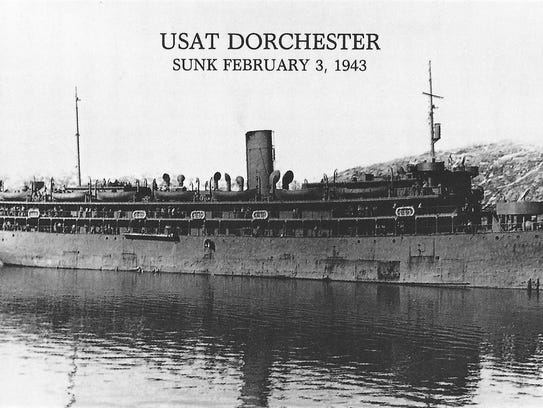
I found this article on Military.com commemorating the anniversary of the sinking of the USS Dorchester and four chaplains who gave their lives to their fellow shipmates.

Tragic Loss, Astonishing Heroism Remembered on Anniversary of SS Dorchester’s Sinking

Military.com | By Richard Sisk

Published February 03, 2021

Wreaths Across America on Wednesday is retelling the tragic yet inspiring story of the World War II sinking of the troop ship Dorchester, the heroic sacrifice of the “Four Chaplains” aboard, and the bravery of the Black Coast Guard steward who gave his life swimming through icy seas to rescue a shipmate.

The 368-foot steamship Dorchester, operated by the War Shipping Administration, was part of a convoy that left New York in January 1943 bound for the Army Command Base at Narsarsuaq in southern Greenland.

After midnight Feb. 3, 1943, the Dorchester was torpedoed by a U-boat in the Labrador Sea off Greenland and went down in 20 minutes, according to official records.

A total of 675 of the 904 aboard drowned or died of hypothermia in the frigid waters in what was believed to be the worst single death toll for a U.S. convoy during WWII.

On Wednesday, the 78th anniversary of the Dorchester’s sinking, Wreaths Across America will pay tribute to those who died with a special Facebook Live event beginning at noon Eastern from the Balsam Valley Chapel in Maine.

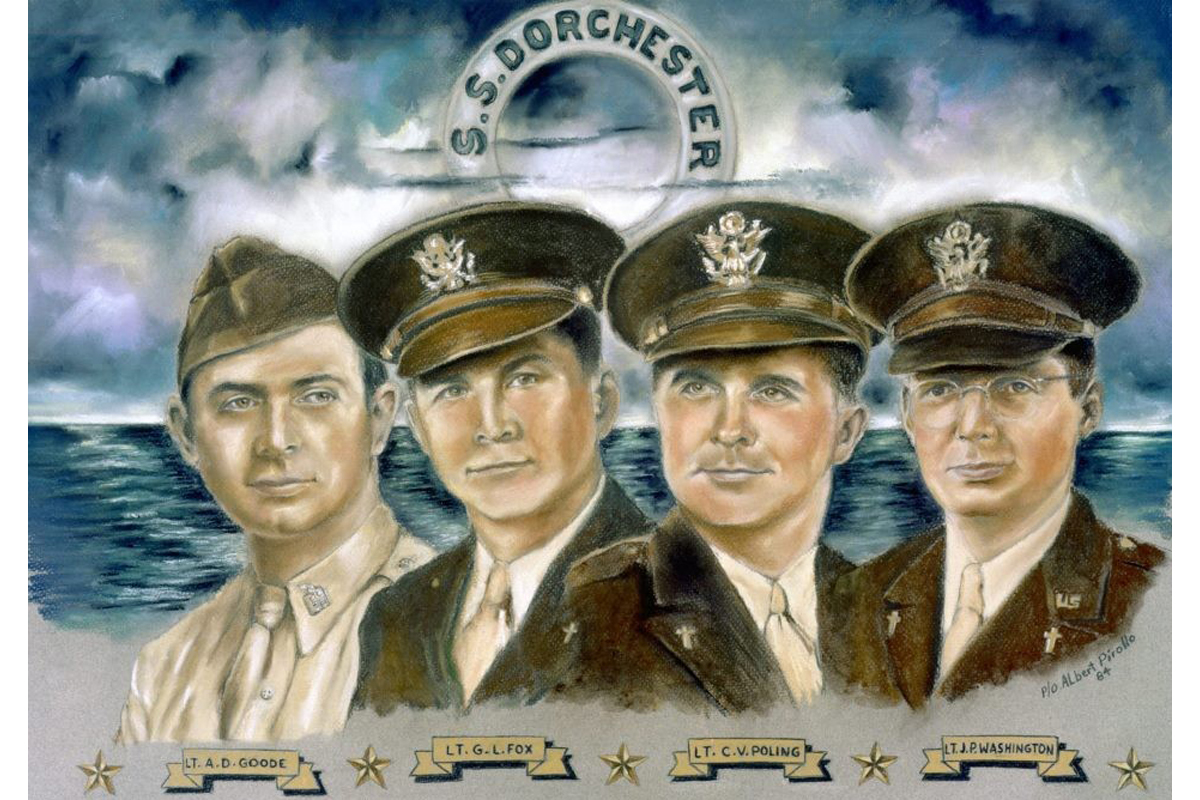
The Dorchester’s loss is remembered most for the sacrifice of the “Four Chaplains” — two Protestants, a rabbi and a Catholic priest. They were all Army first lieutenants who went down with the ship.

When the torpedo hit, the chaplains guided men below decks to the lifeboats and handed out life jackets. When the supply ran out, the chaplains gave away their own life vests to four men who had none, survivors said. They then linked arms, offered prayers and sang hymns as the ship went down.

“I could hear men crying, pleading, praying and swearing. I could also hear the chaplains preaching courage to the men. Their voices were probably the only things that kept me sane,” survivor William Bednar said in a 1997 interview with The Baltimore Sun.

Survivor John Ladd recalled the chaplains giving away their life vests, according to the Four Chaplains Memorial Foundation. “It was the finest thing I have seen or hope to see this side of heaven,” he said.

Lt. George L. Fox, a Methodist minister from Pennsylvania; Lt. Alexander D. Goode, a Reform rabbi from New York; Lt. Clark V. Poling, a Reformed Church in America minister from Ohio; and Lt. John P. Washington, a Catholic priest from New Jersey, were each posthumously awarded the Distinguished Service Cross and Purple Heart.

There were attempts in Congress to award the four chaplains the Medal of Honor, but the efforts did not succeed under the strict guidelines for awarding the medal.

Instead, a Special Medal for Heroism was authorized by Congress and awarded by President Dwight Eisenhower in 1961.

When the Dorchester was going down, the Coast Guard cutter Comanche ignored the threat of another U-boat attack and raced through heavy seas to pick up survivors.

The Comanche lowered a cargo net, but many of those in the lifeboats were too weak and numbed by the cold to climb aboard.

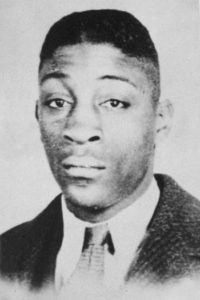
Steward’s Mate 1st Class Charles Walter David Jr., 26, of New York City, known for his fierce loyalty to his ship and shipmates despite the second-class status afforded Blacks during World War II, jumped into the lifeboats and began hoisting the survivors aboard.

In the course of the rescue mission, Lt. Langford Anderson, the Comanche’s executive officer, slipped and fell into the frigid waters. Without hesitation, David dove into the icy sea and swam to Anderson’s rescue and brought him to the net.

After helping the last survivors scramble aboard, David went up the net himself to the Comanche’s deck, but his friend, Storekeeper 1st Class Richard ‘Dick” Swanson, could make it only halfway up, after being in the freezing water, according to an account by Dr. William H. Thiesen, the Coast Guard’s Atlantic Area historian.

From the Comanche’s deck, David shouted encouragement: “C’mon Swanny, you can make it.” But Swanson couldn’t move. David went down the net again and lifted Swanson to safety.

Several weeks later, David died of pneumonia at a hospital in Greenland from the hypothermia he suffered during the rescues.

“Despite his secondary status in a segregated service, Charles Walter David Jr. placed the needs of others before his own. For his heroism, David was posthumously awarded the Navy & Marine Corps Medal and, in 1999, was recognized with the Immortal Chaplains Prize for Humanity,” Thiesen wrote.

In 2013, the Coast Guard named a Sentinel-class fast response cutter the Charles Walter David Jr. in honor of his exemplary service.

SOURCE: Military.com

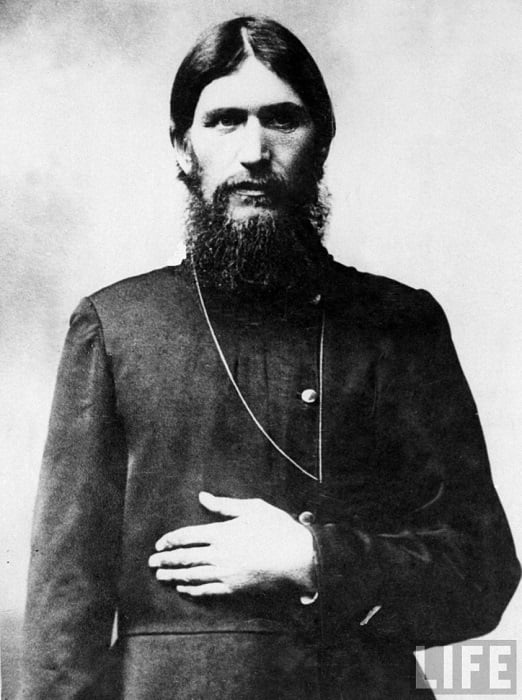
Rasputin, The Mad Monk Who Wouldn’t Die

Rasputin: mystic, mad man, or none of the above? You decide with a fascinating look at his life and fabled death.

Most people have heard of Anastasia, the daughter of Czar Nicholas II and Alexandra Feodorovna who, according to a trove of rumors, survived her family’s extrajudicial murder in July 1918. Though the rumors were later disproved, general fascination with Anastasia and the tragic story of Imperial Russia’s final sovereign family has garnered extensive attention, and even an animated movie, Anastasia, that was released in 1997. Though the movie wasn’t historically accurate, Rasputin, the minion-dispatching menace did exist. According to many eyewitness testimonies, the “man who wouldn’t die” was just as intriguing as the royal family itself.

The Early Years Of Rasputin’s Life

Grigori Yefimovich Rasputin was born in Siberia, Russia in 1869. From an early age, villagers noticed something different about the young boy, and many claimed he had supernatural powers. As a teenager, Rasputin went to Verkhoture Monastery in Russia hoping to become a monk. He never completed the program, however, and instead married at age 19 to Praskovia Fyodorovna, with whom he had three children.

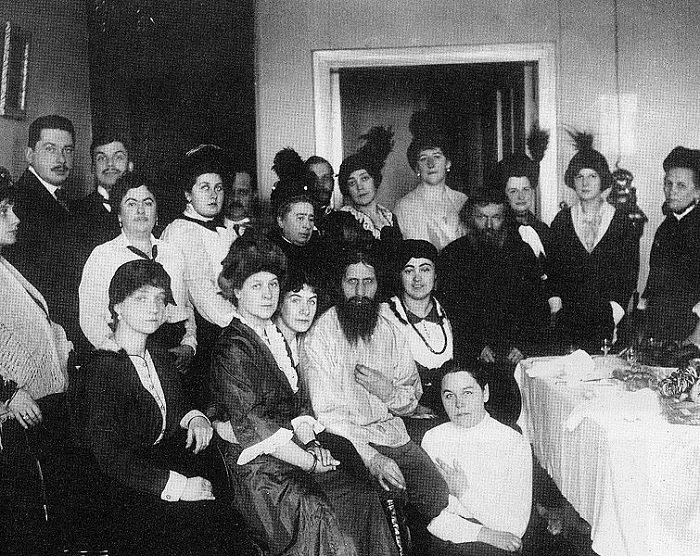
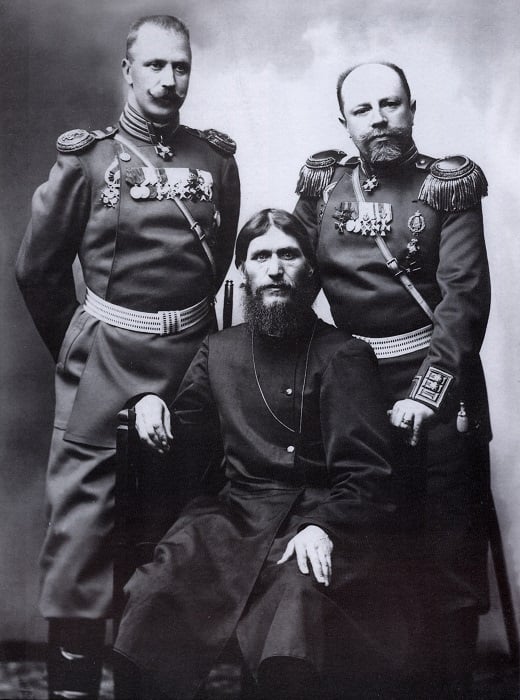
Within two short years following his 1906 arrival in Saint Petersburg, Rasputin was introduced to Czar Nicholas and his wife, both desperately seeking a cure for their son, Alexei, the heir to the throne. Historians now know that Alexei was a hemophiliac, though at the time the royal family chalked his health problems up to a weak constitution. Rasputin successfully “cured” Alexei, gaining the trust of Alexandra in the process. While some claim that Rasputin hypnotized the boy, others say it was dark magic, and still others wonder if the “mad monk” had any healing powers to begin with.

For the next five years or so, Rasputin held a large influence over Alexei’s treatment, however, Rasputin’s presence in the palace and his time spent with Alexandra prompted a number of harsh critiques on the royal family’s credibility. Rasputin’s lewd, unruly behavior and his insistence that he was the czarina’s adviser proved a bone of contention between the royal family and Russian constituents. Alexandra often defended Rasputin from the many advisers and officers who sought his removal from the royal palace as she claimed that he was the only one who could save her son.

World War I, prompting Nicholas to head to war and leave Alexandra in charge of domestic affairs. During this time, many sought to remove Rasputin from the family’s presence. They called him a witchdoctor, and thought he was using black magic to poison Alexandra’s mind. In reality, though, Rasputin had little influence in political matters.

Attempts On Rasputin’s Life

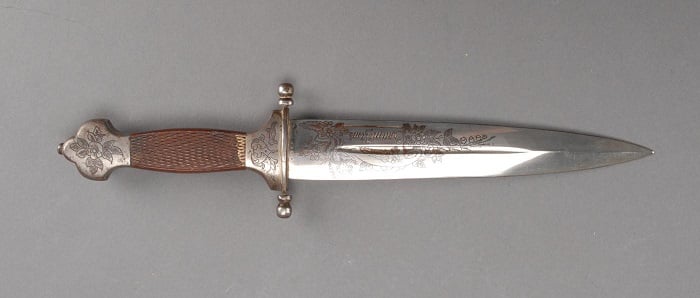
Reportedly, Rasputin’s first assassination attempt occurred in 1914, when the prostitute Khioniya Guseva stabbed him in the gut with a dagger in what was thought to be a mortal wound. Eyewitnesses claim that as Rasputin’s entrails fell from his stomach Guseva shouted, “I’ve killed the antichrist.” Though Rasputin survived the attack, his demeanor changed permanently.

In 1916, the country’s distaste for Rasputin hit an all-time high, and a group of conspirators including Grand Duke Dmitri Pavlovich and Prince Felix Yusupov set out to kill him. Using Yusupov’s wife to lure Rasputin to their home, the conspirators fed Rasputin wine and cakes laced with cyanide. Though it was reportedly enough poison to kill five men, Rasputin was unaffected.

Unperturbed, the conspirators continued their attack by beating him repeatedly, then shooting him in the back and causing him to fall to the floor. Yet Rasputin, much like an antibiotic-resistant pathogen, still wasn’t dead. According to some, Rasputin jumped up violently, only to be shot several more times. The men then wrapped the body in a sheet or carpet and tossed him into the Neva River.

Rasputin’s body was pulled from the water three days later. Though autopsy reports differ, most attest that he was still alive when thrown into the water and that from the positioning of his body, he had tried to break free before either drowning or dying from hypothermia. The exact cause of death has been debated for decades.

Intriguingly, before Rasputin died, he told the Czar, “If I am killed by common men, you and your children will rule Russia for centuries to come; if I am killed by one of your stock, you and your family will be killed by the Russian people!”

Regardless of your thoughts regarding Rasputin’s alleged mysticism, his harsh words came true less than two years later, when the entire family was brought to a basement and murdered.

SOURCE: Allthatsinteresting

Kiri Picone

History of Nicola Tesla, Part 2

Nikola Tesla’s Failures, Death and Legacy

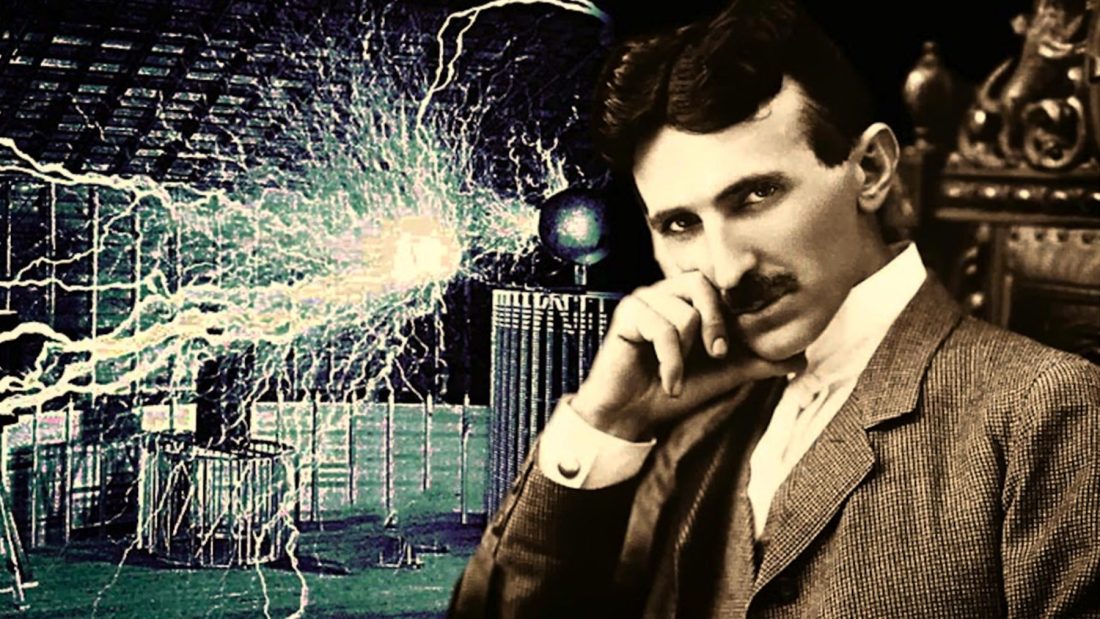
In 1895 Tesla’s New York lab burned, destroying years’ worth of notes and equipment. Tesla relocated to Colorado Springs for two years, returning to New York in 1900. He secured backing from financier J.P. Morgan and began building a global communications network centered on a giant tower at Wardenclyffe, on Long Island. But funds ran out and Morgan balked at Tesla’s grandiose schemes.

Tesla lived his last decades in a New York hotel, working on new inventions even as his energy and mental health faded. His obsession with the number three and fastidious washing were dismissed as the eccentricities of genius. He spent his final years feeding—and, he claimed, communicating with—the city’s pigeons. Tesla died in his room on January 7, 1943. Later that year the U.S. Supreme Court voided four of Marconi’s key patents, belatedly acknowledging Tesla’s innovations in radio.

Patent After Nikola Tesla was found dead in January 1943 in his hotel room in New York City, representatives of the U.S. government’s Office of Alien Property seized many documents relating to the brilliant and prolific 86-year-old inventor’s work

What happened to Tesla’s files from there, as well as what exactly was in those files, remains shrouded in mystery—and ripe for conspiracy theories. Three weeks after the Serbian-American inventor’s death, an electrical engineer from the Massachusetts Institute of Technology (MIT) was tasked with evaluating his papers to determine whether they contained “any ideas of significant value.”

Dr. John Trump

According to the declassified files, Dr. John G. Trump reported that his analysis showed Tesla’s efforts to be “primarily of a speculative, philosophical and promotional character” and said the papers did “not include new sound, workable principles or methods for realizing such results.” The scientist’s name undoubtedly rings a bell, as John G. Trump was the uncle of the 45th U.S. president, Donald J. Trump. The younger brother of Trump’s father, Fred, he helped design X-ray machines that greatly helped cancer patients and worked on radar research for the Allies during World War II.

Tesla, Trump, Trump

At the time, the FBI pointed to Dr. Trump’s report as evidence that Tesla’s vaunted “Death Ray” particle beam weapon didn’t exist, outside of rumors and speculation. But in fact, the U.S. government itself was split in its response to Tesla’s technology. Marc Seifer, author of the biography Wizard: The Life & Times of Nikola Tesla, says a group of military personnel at Wright Patterson Air Force Base in Dayton, Ohio, including Brigadier General L.C. Craigee, had a very different opinion of Tesla’s ideas.

Wizard: The Life & Times of Nokola Tesla

“Craigee was the first person to ever fly a jet plane for the military, so he was like the John Glenn of the day,” Seifer says. “He said, ‘there’s something to this—the particle beam weapon is real.’ So you have two different groups, one group dismissing Tesla’s invention, and another group saying there’s really something to it.”

Then there’s the nagging question of the missing files. When Tesla died, his estate was to go to his nephew, Sava Kosanovic, who at the time was the Yugoslav ambassador to the U.S. According to the recently declassified documents, some in the FBI feared Kosanovic was trying to wrest control of Tesla’s technology in order to “make such information available to the enemy,” and even considered arresting him to prevent this.

Yugoslavan Ambassador Sava N. Kosanovic

In 1952, after a U.S. court declared Kosanovic the rightful heir to his uncle’s estate, Tesla’s files and other materials were sent to Belgrade, Serbia, where they now reside in the Nikola Tesla Museum there. But while the FBI originally recorded some 80 trunks among Tesla’s effects, only 60 arrived in Belgrade, Seifer says. “Maybe they packed the 80 into 60, but there is the possibility that…the government did keep the missing trunks.”

Despite John G. Trump’s dismissive assessment of Tesla’s ideas immediately after his death, the military did try and incorporate particle-beam weaponry in the decades following World War II, Seifer says. Notably, the inspiration of the “Death Ray” fueled Ronald Reagan’s Strategic Defense Initiative, or “Star Wars” program, in the 1980s. If the government is still using Tesla’s ideas to power its technology, Seifer explains, that could explain why some files related to the inventor still remain classified

Although some of his more sensitive innovations may still be hidden, Tesla’s legacy is alive and well, both in the devices we use every day, and the technologies that will undoubtedly play a role in our future. “Tesla is the inventor of wireless technology. He’s the inventor of the ability to create an unlimited number of wireless channels,” Seifer says of the inventor’s lasting impact. “So radio guidance systems, encryption, remote control robots—it’s all based on Tesla’s technology.”