Noah’s Ark in Turkey?

I found this article on ancient -origins.net detailing a discovery that might be Noah’s Ark. 

From: ancient -origins.net:

New Evidence Suggests Formation in Turkey Might Really Be Noah’s Ark 

In a mountainous area of eastern Turkey, a team of American researchers believes they may have uncovered the remnants of one of history’s most legendary vessels—Noah’s Ark. Working at a mysterious and intriguing site known as the Durupınar Formation, the group was stunned to discover what they describe as a “tunnel” beneath a boat-shaped geological formation that may match the Bible’s description of the vessel that supposedly came to rest after the Great Flood more than 4,300 years ago.

According to the Book of Genesis, Noah’s Ark was a massive wooden ship built to preserve humanity and animal life from a catastrophic global deluge. After 150 days, the Bible says, the ark came to rest “on the mountains of Ararat.” The Durupinar site lies just 18 miles (29 kilometers) south of Mount Ararat itself, Turkey’s highest peak and a location long rumored to be the ark’s final resting place.

Deep Scans Produce Stunning Results

The team, led by independent researcher Andrew Jones from the California-based organization Noah’s Ark Scans, employed ground-penetrating radar (GPR) to investigate the site. The scans reportedly revealed three distinct layers beneath the surface, an important detail that mirrors the biblical description of the ark having lower, second, and third decks.

One of the most significant discoveries to emerge from the GPR study is what appears to be a 43-foot (13-meter) tunnel running through the center of the formation. The scans also detected other open spaces and central and side corridors, which could suggest the presence of compartments or interior rooms.

“We’re not expecting something that’s fully preserved. What’s left is the chemical imprint, pieces of wood and in the ground, the shape of a hall,” Jones explained in a statement published by the Daily Mail Online.

GPS scan showing structures and open spaces inside the formation in Turkey, which could reveal rooms and corridors. (Noah’s Ark Scans).

So far, angular structures have been detected as deep as 20 feet (6 meters) below the surface of the ground. According to Jones and his colleagues, this would be a highly unusual feature in a naturally created geological formation.

This is not what you’d expect to see if the site were simply a solid block of rock or the result of random mudflow debris,” Jones said. “But it is exactly what you’d expect to find if this were a man-made boat, consistent with the biblical specifications of Noah’s Ark.”

Supporting their geophysical findings, the team has collected and analyzed soil samples from 22 different locations surrounding the Durupinar formation. Soil scientist William Crabtree, another member of the Noah’s Ark Scans team, noted that samples taken from inside the formation show significantly different characteristics from those collected elsewhere.

Organic matter was found to be double inside the formation compared to the surrounding soil,” Crabtree stated. “If you know soil science—as I am a soil scientist—you will understand that potassium levels, organic matter, and pH can all be affected by the decomposition of organic materials. If this was a wooden vessel and the wood had rotted over time, we would expect to see increased potassium levels, changes in pH, and higher organic content—and that’s exactly what we find.”

Further observations suggest grass growing within the formation differs in color from the vegetation outside it. This is a strong indicator that soil composition beneath the surface is varied or textured. Crabtree also mentioned a tunnel running from the tip of the structure toward its center, which is quite prominent and large. “It is large enough to walk through,” he said.

NOAH’S ARK’ on Mount Ararat’ (1570) by Flemish painter Simon de Myle. (Public Domain).

Skeptics have long maintained that the Durupınar Formation is a natural rock formation, possibly created by mudflows and erosion. The Noah’s Ark Scans team believes the new evidence warrants more extensive investigation. They plan to expand their research with core drilling, additional radar scans, and more soil sampling to record internal and external conditions more thoroughly.

“We want to compare what’s inside the formation to what’s outside,” Jones said. “That could give us a much clearer picture of whether this is truly something man-made.”

Will the Durupinar Mystery Ever Be Solved?

Durupınar has intrigued explorers and researchers since 1948, when heavy rains and seismic activity exposed its unusual boat-like outline. Discovered by a local Kurdish shepherd, the site has drawn both scientific and religious interest for decades.

Until recently, however, no excavation has been officially sanctioned. That is about to change, as Noah’s Ark Scans has announced that they will carry out a controlled excavation in partnership with several Turkish universities. This is a victory for those who are at least open to the idea that the unusual formation may be a petrified Noah’s Ark, as academic institutions have traditionally dismissed the Ark story from Genesis as a myth.

Before breaking ground, the excavation team intends to complete a preservation plan, to make sure the integrity of the archaeological site is preserved regardless of what new studies may reveal.

SOURCE: ANCIENT-ORIGINS.NET

National Buffalo Soldiers Day

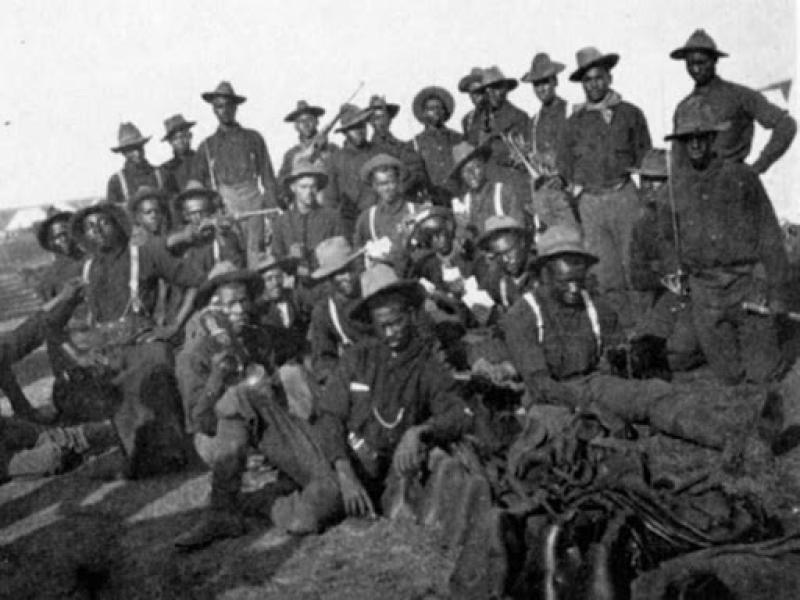
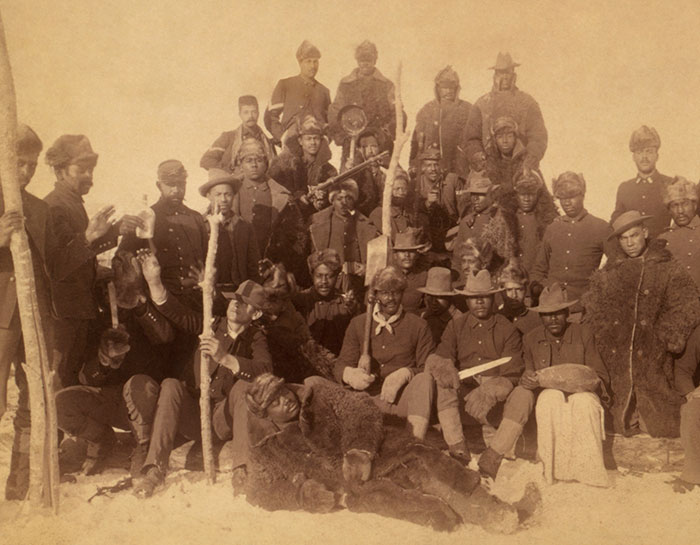
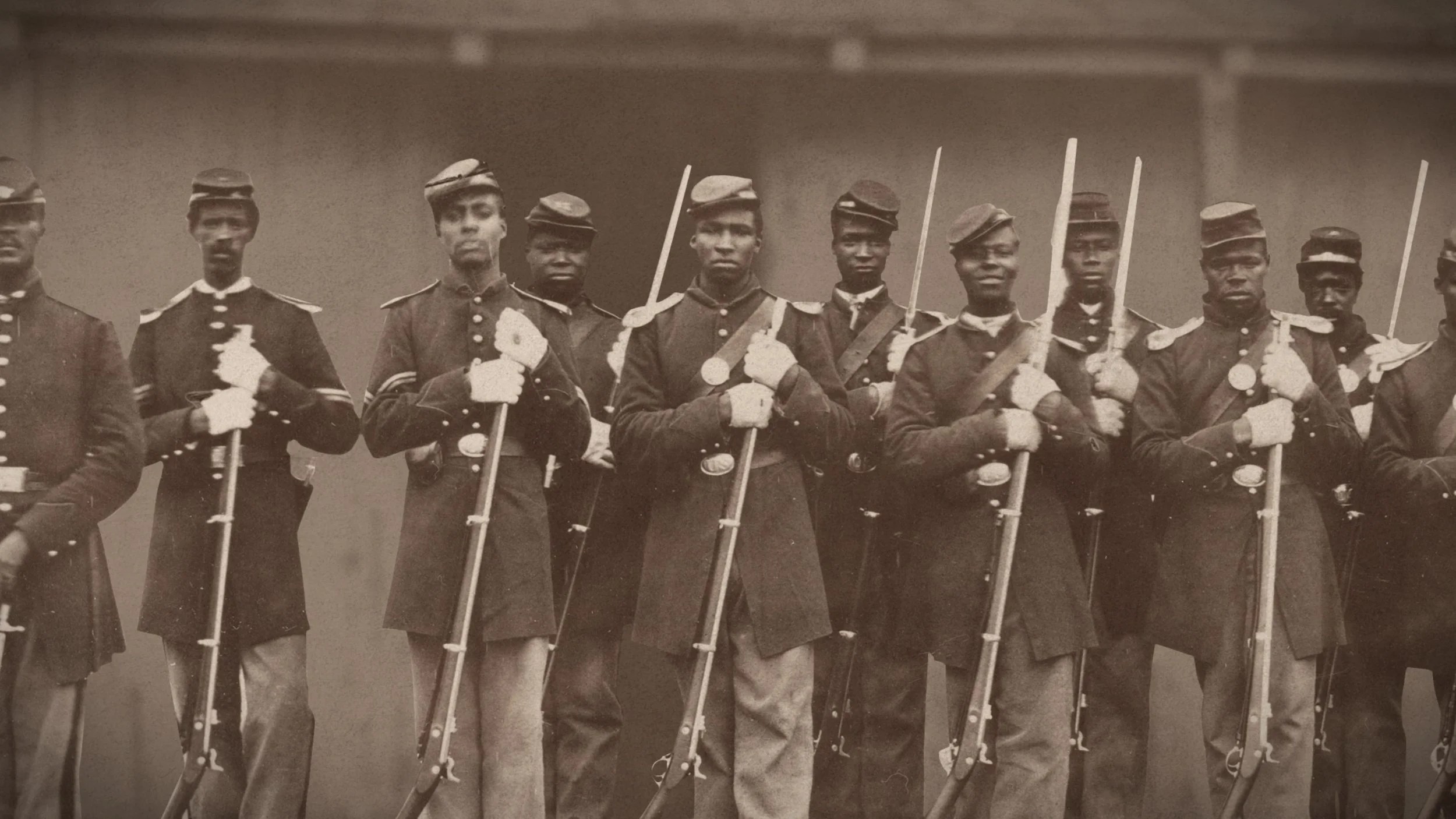
Buffalo soldiers were African American soldiers who mainly served on the Western frontier following the American Civil War. In 1866, six all-Black cavalry and infantry regiments were created after Congress passed the Army Organization Act. Their main tasks were to help control the Native Americans of the Plains, capture cattle rustlers and thieves and protect settlers, stagecoaches, wagon trains and railroad crews along the Western front.

Who Were the Buffalo Soldiers?

No one knows for certain why, but the soldiers of the all-Black 9th and 10th Cavalry Regiments were dubbed “buffalo soldiers” by the Native Americans they encountered.

One theory claims the nickname arose because the soldiers’ dark, curly hair resembled the fur of a buffalo. Another assumption is the soldiers fought so valiantly and fiercely that the Indians revered them as they did the mighty buffalo.

Whatever the reason, the name stuck, and African American regiments formed in 1866, including the 24th and 25th Infantry (which were consolidated from four regiments) became known as buffalo soldiers.

The 9th Cavalry Regiment

The mustering of the 9th Cavalry took place in New Orleans, Louisiana, in August and September of 1866. The soldiers spent the winter organizing and training until they were ordered to San Antonio, Texas, in April 1867. There they were joined by most of their officers and their commanding officer, Colonel Edward Hatch.

Training the inexperienced and mostly uneducated soldiers of the 9th Calvary was a challenging task. But the regiment was willing, able and mostly ready to face anything when they were ordered to the unsettled landscape of West Texas.

The soldiers’ main mission was to secure the road from San Antonio to El Paso and restore and maintain order in areas disrupted by Native Americans, many of whom were frustrated with life on Indian reservations and broken promises by the federal government. The Black soldiers, facing their own forms of discrimination from the U.S. government, were tasked with removing another minority group in that government’s name.

The 10th Cavalry Regiment

The 10th Cavalry was based in Fort Leavenworth, Kansas, and commanded by Colonel Benjamin Grierson. Mustering was slow, partly because the colonel wanted more educated men in the regiment and partly because of a cholera outbreak in the summer of 1867.

In August 1867, the regiment was ordered to Fort Riley, Kansas, with the task of protecting the Pacific Railroad, which was under construction at the time.

Before they left Fort Leavenworth, some troops fought hundreds of Cheyenne in two separate battles near the Saline River. With the support of the 38th Infantry Regiment—which was later consolidated into the 24th Infantry Regiment—the 10th Cavalry pushed back the hostile Indians.

The cavalry lost just one man and several horses despite having inferior equipment and being greatly outnumbered. It was just one of many battles to come.

Indian Wars

Both the 9th and 10th Cavalry Regiments participated in dozens upon dozens of skirmishes and larger battles of the Indian Wars as America became obsessed with westward expansion.

For instance, the 9th Cavalry was critical to the success of a three-month, unremitting campaign known as the Red River War against the Kiowas, the Comanches, the Cheyenne and the Arapahoe. It was after this battle that the 10th Cavalry was sent to join them in Texas.

Troops H and I of the 10th Cavalry were part of a team that rescued wounded Lieutenant-Colonel George Alexander Forsyth and what remained of his group of scouts trapped on a sand bar and surrounded by Native Americans in the Arikaree River. A couple of weeks later, the same troops engaged hundreds of Indians at Beaver Creek and fought so gallantly that they were thanked in a field order by General Philip Sheridan.

By 1880, the 9th and 10th Cavalry Regiments had minimized Indian resistance in Texas and the 9th Cavalry was ordered to Indian Territory in modern-day Oklahoma, ironically to prevent white settlers from illegally settling on Indian land. The 10th Cavalry continued to keep the Apache in check until the early 1890s when they relocated to Montana to round up the Cree.

About 20 percent of U.S. Cavalry troops that participated in the Indian Wars were buffalo soldiers, who participated in at least 177 conflicts.

Buffalo Soldiers Protect National Parks

Buffalo soldiers didn’t only battle Native Americans. They also fought wildfires and poachers in Yosemite and Sequoia National Parks and supported the parks’ infrastructure.

According to the National Park Service, buffalo soldiers billeted at the Presidio army post in San Francisco during the winter and served as park rangers in the Sierra Nevada in the summer.

Buffalo Soldiers in Other Conflicts

In the late 1890s, with the “Indian problem” mostly settled, the 9th and 10th Calvary and the 24th and 25th Infantry headed to Florida at the start of the Spanish-American War.

Even facing blatant racism and enduring brutal weather conditions, buffalo soldiers earned a reputation for serving courageously. They fought heroically in the Battle of San Juan Hill, the Battle of El Caney and the Battle of Las Guasimas.

The 9th and 10th Cavalry Regiments served in the Philippines in the early 1900s. Despite proving their military worth time and again, they continued to experience racial discrimination. During World War I, they were mostly relegated to defending the Mexican border.

Both regiments were integrated into the 2nd Cavalry Division in 1940. They trained for overseas deployment and combat during World War II. The 9th and 10th Cavalry Regiments were deactivated in May 1944.

SOURCE: HISTORY.COM
14th Amendment Ratification

Passed by Congress June 13, 1866, and ratified July 9, 1868, the 14th Amendment extended liberties and rights granted by the Bill of Rights to formerly enslaved people.

Following the Civil War, Congress submitted to the states three amendments as part of its Reconstruction program to guarantee equal civil and legal rights to Black citizens. A major provision of the 14th Amendment was to grant citizenship to “All persons born or naturalized in the United States,” thereby granting citizenship to formerly enslaved people.

Another equally important provision was the statement that “nor shall any state deprive any person of life, liberty, or property, without due process of law; nor deny to any person within its jurisdiction the equal protection of the laws.” The right to due process of law and equal protection of the law now applied to both the federal and state governments.

On June 16, 1866, the House Joint Resolution proposing the 14th Amendment to the Constitution was submitted to the states. On July 28, 1868, the 14th amendment was declared, in a certificate of the Secretary of State, ratified by the necessary 28 of the 37 States, and became part of the supreme law of the land.

Congressman John A. Bingham of Ohio, the primary author of the first section of the 14th Amendment, intended that the amendment also nationalize the Bill of Rights by making it binding upon the states. When introducing the amendment, Senator Jacob Howard of Michigan specifically stated that the privileges and immunities clause would extend to the states “the personal rights guaranteed and secured by the first eight amendments.” Historians disagree on how widely Bingham’s and Howard’s views were shared at the time in the Congress, or across the country in general. No one in Congress explicitly contradicted their view of the amendment, but only a few members said anything at all about its meaning on this issue. For many years, the Supreme Court ruled that the amendment did not extend the Bill of Rights to the states.

Not only did the 14th Amendment fail to extend the Bill of Rights to the states; it also failed to protect the rights of Black citizens. A legacy of Reconstruction was the determined struggle of Black and White citizens to make the promise of the 14th Amendment a reality. Citizens petitioned and initiated court cases, Congress enacted legislation, and the executive branch attempted to enforce measures that would guard all citizens’ rights. While these citizens did not succeed in empowering the 14th Amendment during Reconstruction, they effectively articulated arguments and offered dissenting opinions that would be the basis for change in the 20th century.

AMENDMENT XIV

Section 1.
All persons born or naturalized in the United States, and subject to the jurisdiction thereof, are citizens of the United States and of the State wherein they reside. No State shall make or enforce any law which shall abridge the privileges or immunities of citizens of the United States; nor shall any State deprive any person of life, liberty, or property, without due process of law; nor deny to any person within its jurisdiction the equal protection of the laws.

Section 2.
Representatives shall be apportioned among the several States according to their respective numbers, counting the whole number of persons in each State, excluding Indians not taxed. But when the right to vote at any election for the choice of electors for President and Vice-President of the United States, Representatives in Congress, the Executive and Judicial officers of a State, or the members of the Legislature thereof, is denied to any of the male inhabitants of such State, being twenty-one years of age, and citizens of the United States, or in any way abridged, except for participation in rebellion, or other crime, the basis of representation therein shall be reduced in the proportion which the number of such male citizens shall bear to the whole number of male citizens twenty-one years of age in such State.

Section 3.
No person shall be a Senator or Representative in Congress, or elector of President and Vice-President, or hold any office, civil or military, under the United States, or under any State, who, having previously taken an oath, as a member of Congress, or as an officer of the United States, or as a member of any State legislature, or as an executive or judicial officer of any State, to support the Constitution of the United States, shall have engaged in insurrection or rebellion against the same, or given aid or comfort to the enemies thereof. But Congress may by a vote of two-thirds of each House, remove such disability.

Section 4.
The validity of the public debt of the United States, authorized by law, including debts incurred for payment of pensions and bounties for services in suppressing insurrection or rebellion, shall not be questioned. But neither the United States nor any State shall assume or pay any debt or obligation incurred in aid of insurrection or rebellion against the United States, or any claim for the loss or emancipation of any slave; but all such debts, obligations and claims shall be held illegal and void.

Section 5.
The Congress shall have power to enforce, by appropriate legislation, the provisions of this article.

SOURCE: NATIONAL ARCHIVES

The Day the Laughter Died

From: Paul Andrews at lost-in-history.com:

One of the worst train wrecks in U.S. history happened with, of all things, a Circus Train.  It was carrying over 400 performers when another train rear-ended it in the dead the night; and they burst into flames. The horrific tragedy happened to the famous Hagenbeck-Wallace Circus at Dutchman’s Curve near Hammond, Indiana on 22 June 1918.  The circus train was stopped on the tracks for repairs. The circus train wreck killed 89 performers and roustabouts, and injured over 150 more.   How could such a terrible disaster have occurred during the Golden Age of railroads?  

The Hagenbeck-Wallace Circus was the third-largest in the U.S., a Midwestern version of the Barnum & Baily Greatest Show. The H-W Circus had some of the most excellently trained animals, well-known trapeze artists, and spectacular equestrian routines.  By 1918, the company employed around 250 performers – acrobats, trapeze artists, clowns, and wild animal tamers; not to mention all the roustabouts who kept it going.  Circus owner Benjamin Wallace purchased the Carl Hagenbeck Circus in 1907.  In just a decade, the combined circus grew into a million-dollar extravaganza, which even owned its own trains. 

The circus required two, 28-car trains to transport all the tents, performers, animals, and midway across the U.S. The expansion of railroads in the latter half of the 1800’s fueled a Golden Age for circuses, as well as railroads. By 1900, nearly 100 circuses traveled between U.S. towns and cities. Back then, live circuses were an unmatched spectacle of daring, humor, and shear amazement. When the circus came to town, it was an unofficial holiday, schools and stores were closed and even factories shut down.

The Hagenbeck-Wallace Circus Side Show performers

The Hagenbeck-Wallace Circus had just wrapped up 2 successful shows in Michigan City, Indiana.  They were now enroute overnight to Hammond, only 45 miles away. The first train contained the performing animals, tents, midway and most of the circus workers.  The second train carried the performers and the remaining roustabouts. It was standard to send the animals in the first train ahead of the performers. That way, the animals could be unloaded, penned, and fed. This practice saved all the circus animals, but doomed the performers.

The first train made it safely to Hammond that night without incident.  But engineers on the second were forced to stop that train to fix a “hotbox or overheated axle bearings – a serious problem if not addressed. They were able to pull the first cars off on a side track, but five of the rear ones, including 4 sleeper cars, remained on the main track.  This should not have been a problem as the rail line was aware and turned on red warning lights along the tracks.

Around 4 o’clock in the morning on Saturday, June 22, an empty Michigan Central train, led by an experienced railroad engineer, Alonzo Sargent, was rapidly approaching on the tracks behind them.  He and his train were headed to the west coast to pick up U.S. army soldiers for The Great War in Europe (World War I).  Sargent knew he was following 2 circus trains that were going much slower than his empty train.

As the crew worked, and the performers slept, the empty train came barreling towards them.

The engineer blew past several red stop signals AND the frantically waving lanterns of the circus train’s engineers. All his experience and knowledge was for naught as Sargent’s train inexplicably slammed into the back of the stopped circus train at close to 45 mph. The collision was so loud that farmers asleep in the countryside were startled awake.  They dressed and went to see what on earth had occurred.  

When the Michigan Central train rammed into the red caboose of the circus train, it splintered the caboose like kindling.  Then it continued on into the four wooden sleeper cars, filled with sleeping circus performers. The empty troop train’s massive engine and steel Pullman cars tore easily through the 4 wooden cars as well.Dozens were killed instantly.

Henry Miller, the assistant lighting manager, was a survivor thrown from the wreckage with minor injuries. “I was in the last coach, and was asleep when we were hit. I woke to the sound of splintering wood … Then there was another crash, and another, and another … The train buckled on itself.”

To make matters worse, the circus cars were lit inside with kerosene lamps hanging on the walls.  They smashed and exploded, spewing flames across the shattered wood, rapidly igniting the 4 cars.   Wherever the oil splattered, the fire followed.  Some survivors not killed instantly managed to claw their way out of the debris.  Others desperately cried out for help before the hungry fire engulfed them.

All four sleeping cars were completely engulfed in flames in a matter of minutes.

Survivors from the front of the train were knocked out of their berths when their cars jumped the tracks.  They climbed outside into the dark night and saw the rear of the train ablaze.  They ran back to the shouts and screams of their surviving coworkers.  The uninjured survivors risked their own lives trying to rescue their companions trapped in the burning wreckage.  One acrobat, trapped beneath the wooden walls, was pulled out by a clown just as the flames were licking his legs.  But most weren’t so lucky.

Fire engines from both Hammond and Gary, Indiana rushed to the scene.  But delivering enough water to fight the huge fires was next to impossible.  The only supply came from the shallow marshes aside the tracks. Hammond also brought in a wrecking crane to dig people out.  But it couldn’t be used because the fire’s heat was too intense. The survivors could only stand back helplessly and watch the four train cars burn.

The aftermath of the HagenbeckWallace Circus Train Wreck in Hammond, Indiana

By dawn’s pink light, the burning cars were consumed down to blackened metal wheels and smoking heaps of ashes.  The engineer, Alonzo Sargent, and his fireman were uninjured and arrested by local police. Most of the dead were burned beyond recognition. The task of identifying the corpses was hopeless. Some survived the initial crash but succumbed to their injuries at the Hammond and Gary hospitals. Many of the dead were simple circus roustabouts, people who joined the traveling circus doing odd jobs.

The circus kept few records on their roustabouts, most of whom were immigrants.

When reports of the circus train wreck made the newspapers, scenes of unspeakable horror were retold to a shocked country.  89 people were killed and more than 150 injured. Railway investigators believed most victims died within the first minute after the collision.  Among the dead were some famous circus performers – wild animal trainer Millie Jewel, “The Girl Without Fear”; Jennie Todd, an aerialist in the Flying Wards; bareback rider Louise Cottrell; Wild West rider Verna Connor; the strongmen Derickx brothers; and the wife and sons of head clown Joe Coyle.

Five days later, 53 were buried in a mass grave plot.  As luck or fate would have it, the Showman’s League of America, a fraternal order, had purchased an area of Woodlawn Cemetery in Forest Park, IL, for circus performers. When the coffins arrived, more than 1,500 mourners gathered to pay their final respects.   Only 5 of the 53 victims were identified.  Most were marked as “unknown,” or under markers like tent man, smiley clown, or 4 horse driver.

Mass grave for Hagenbeck-Wallace Circus train wreck victims.

The Showman’s League memorialized the mass grave with a statue of a stone elephant, its head and trunk drooping in sorrow. Today, that portion of Woodlawn Cemetery is known as Showman’s Rest.

In the aftermath, families of the deceased struggled with who they should blame. The circus company?  The railway? The engineer?  All of them pointed fingers at the others. Engineer Alonzo Sargent and his fireman Gustave Klauss were criminally charged with manslaughter. Sargent reportedly had fallen asleep and therefore responsible for the crash. In the 1910s, there was no oversight of train conductors.

Sargent had been awake on the job for over 24 hours, driving trains across the Midwest. A few hours before the accident, he’d eaten a heavy supper and taken some medication.  All that, plus driving a train in the dark of night, he dropped into a deep sleep. He had known circus trains were in front of him, but didn’t know one had stopped for repairs. Sargent slept through two warning signals as well as the waving lanterns from the frantic circus train engineers.

At the trial, the jury was dead-locked, and a mistrial declared.

The Indiana prosecutor decided NOT to re-try the case and all of the charges against the two men were dismissed. The Interstate Commerce Commission investigating the accident cited the use of wooden train cars as a contributing factor to the deaths. “We discourage the use of wooden cars on passenger trains and urge the substitution of steel ones. That is all we can do.”

What became of the Hagenbeck-Wallace Circus? Its owner and the surviving performers decided to continue the show, for no other reason than to honor their dead companions.  Despite the physical and psychological toll of the accident, the Hagenbeck-Wallace Circus missed only two performances in its summer schedule.  Thanks to other circuses providing spare equipment and crew, they were able to continue their mid-west tour. The remaining members, and those from circuses from around the country, all pitched in. 

SOURCE: LOST-IN-HISTORY.COM PAUL ANDREWS

MIBURN

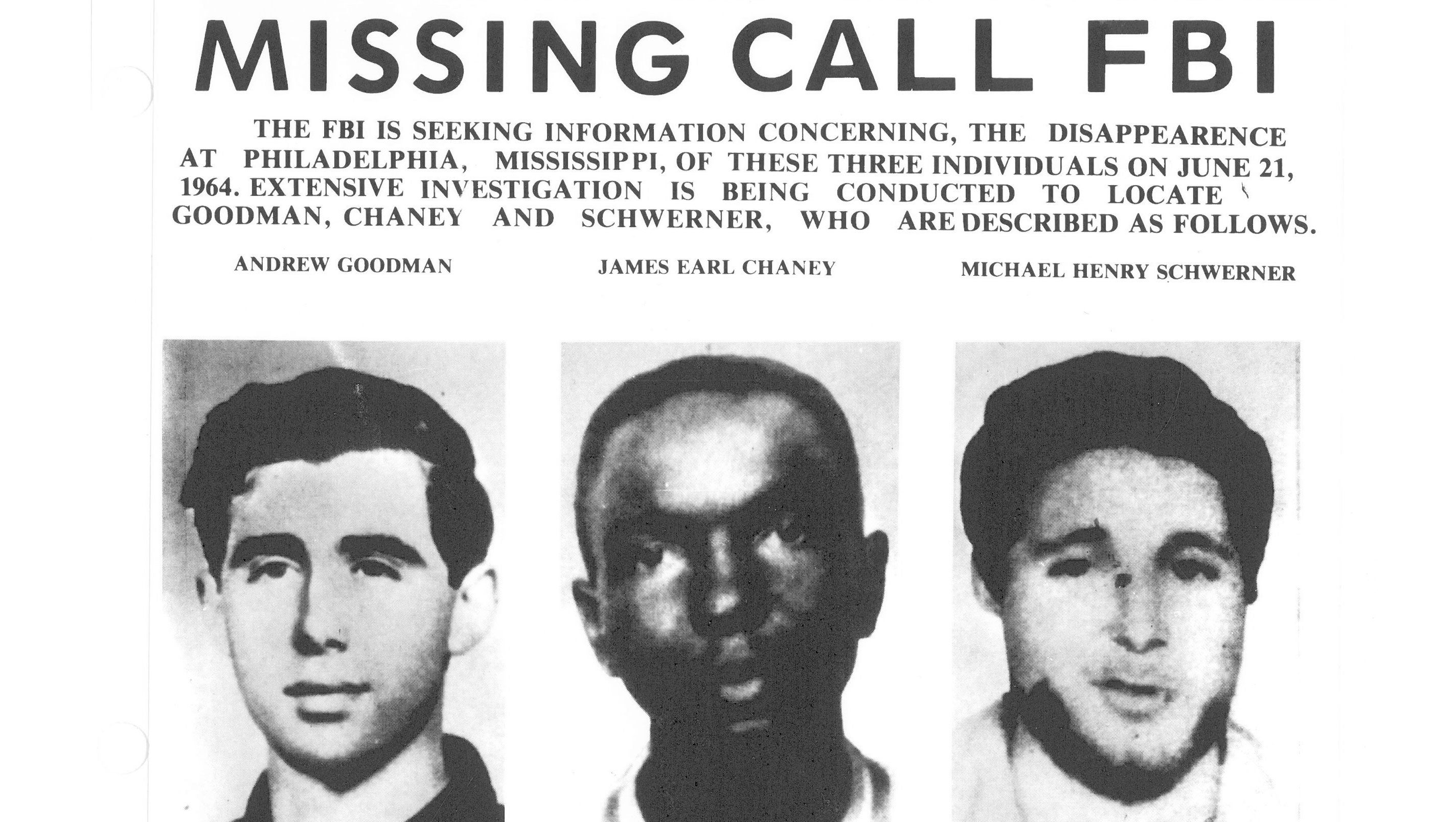
On June 21, 1964, three civil rights workers disappeared.  The following article on the history.com website details the disappearance, the investigation and the discovery of the remains.

From: history.com:

The remains of three civil rights workers whose disappearance on June 21 garnered national attention are found buried in an earthen dam near Philadelphia, Mississippi. Michael Schwerner and Andrew Goodman, both white New Yorkers, had traveled to heavily segregated Mississippi in 1964 to help organize civil rights efforts on behalf of the Congress of Racial Equality (CORE). The third man, James Chaney, was a local African American man who had joined CORE in 1963. The disappearance of the three young men led to a massive FBI investigation that was code-named MIBURN, for “Mississippi Burning.”

Michael Schwerner, who arrived in Mississippi as a CORE field worker in January 1964, aroused the animosity of white supremacists after he organized a successful boycott of a variety store in the city of Meridian and led voting registration efforts for African Americans. In May, Sam Bowers, the Imperial Wizard of the White Knights of the Ku Klux Klan of Mississippi, sent word that the 24-year-old Schwerner, nicknamed “Goatee” and “Jew-Boy” by the KKK, was to be eliminated. On the evening of June 16, two dozen armed Klansmen descended on Mt. Zion Methodist Church, an African American church in Neshoba County that Schwerner had arranged to use as a “Freedom School.” Schwerner was not there at the time, but the Klansmen beat several African Americans present and then torched the church.

On June 20, Schwerner returned from a civil rights training session in Ohio with 21-year-old James Chaney and 20-year-old Andrew Goodman, a new recruit to CORE. The next day—June 21—the three went to investigate the burning of the church in Neshoba. While attempting to drive back to Meridian, they were stopped by Neshoba County Deputy Sheriff Cecil Price just inside the city limits of Philadelphia, the county seat. Price, a member of the KKK who had been looking out for Schwerner or other civil rights workers, threw them in the Neshoba County jail, allegedly under suspicion for church arson. After seven hours in jail, during which the men were not allowed to make a phone call, Price released them on bail. After escorting them out of town, the deputy returned to Philadelphia to drop off an accompanying Philadelphia police officer. As soon as he was alone, he raced down the highway in pursuit of the three civil rights workers. He caught the men just inside county limits and loaded them into his car. Two other cars pulled up filled with Klansmen who had been alerted by Price of the capture of the CORE workers, and the three cars drove down an unmarked dirt road called Rock Cut Road. Schwerner, Goodman and Chaney were shot to death and their bodies buried in an earthen dam a few miles from the Mt. Zion Methodist Church.

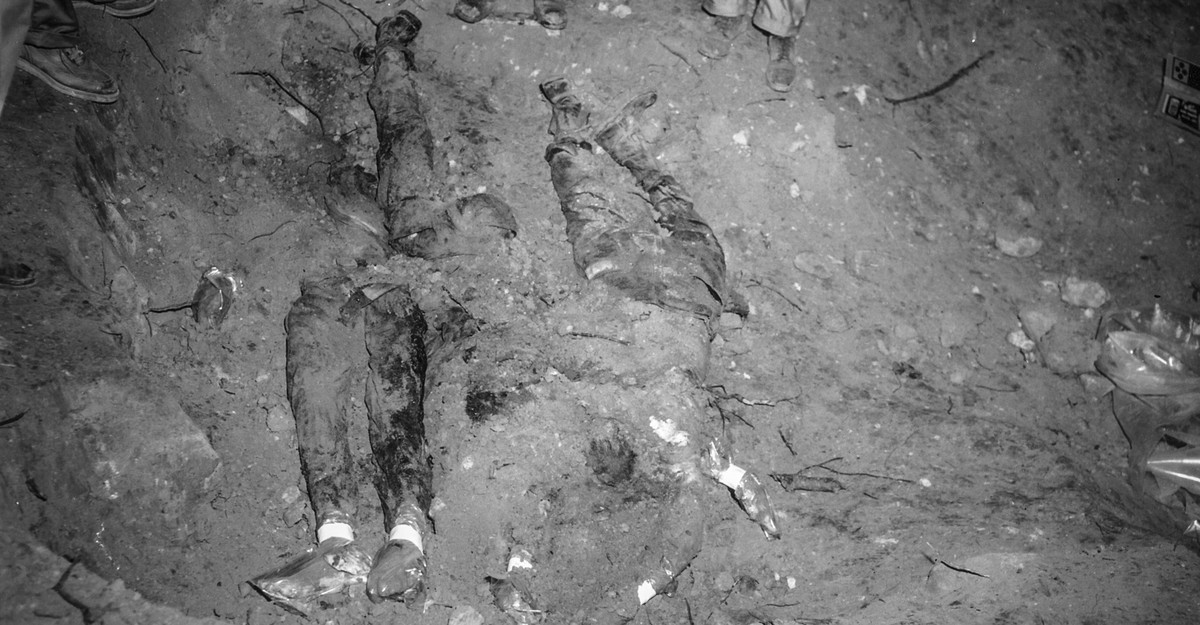
The next day, the FBI began an investigation into the disappearance of the civil rights workers. On June 23, the case drew national headlines, and federal agents found the workers’ burned station wagon. Under pressure from Attorney General Robert F. Kennedy, the FBI escalated the investigation, which eventually involved more than 200 FBI agents and scores of federal troops who combed the woods and swamps looking for the bodies. The incident provided the final impetus needed for the 1964 Civil Rights Act to pass Congress on July 2, and eight days later FBI Director J. Edgar Hoover came to Mississippi to open a new Bureau office. Eventually, Delmar Dennis, a Klansman and one of the participants in the murders, was paid $30,000 and offered immunity from prosecution in exchange for information. On August 4, the remains of the three young men were found. The culprits were identified, but the state of Mississippi made no arrests.

Finally, on December 4, nineteen men, including Deputy Price, were indicted by the U.S. Justice Department for violating the civil rights of Schwerner, Goodman, and Chaney (charging the suspects with civil rights violations was the only way to give the federal government jurisdiction in the case). After nearly three years of legal wrangling, in which the U.S. Supreme Court ultimately defended the indictments, the men went on trial in Jackson, Mississippi. The trial was presided over by an ardent segregationist, U.S. District Judge William Cox, but under pressure from federal authorities and fearing impeachment, he took the case seriously. On October 27, 1967, an all-white jury found seven of the men guilty, including Price and KKK Imperial Wizard Bowers. Nine were acquitted, and the jury deadlocked on three others. The mixed verdict was hailed as a major civil rights victory, as no one in Mississippi had ever before been convicted for actions taken against a civil rights worker.

In December, Judge Cox sentenced the men to prison terms ranging from three to 10 years. After sentencing, he said, “They killed one n*****, one Jew, and a white man. I gave them what I thought they deserved.” None of the convicted men served more than six years behind bars.

On June 21, 2005, the forty-first anniversary of the three murders, Edgar Ray Killen, was found guilty of three counts of manslaughter. At eighty years of age and best known as an outspoken white supremacist and part-time Baptist minister, he was sentenced to 60 years in prison. Killen died in 2018.

SOURCE: HISTORY.COM
Robert Kennedy Assassination

Today is the 57th anniversary of the assassination of RFK.  This article, from History.com., details the information available at the time.

From: History.com:

Shortly after midnight on June 5, 1968, Senator Robert Kennedy is shot at the Ambassador Hotel in Los Angeles after winning the California presidential primary. Immediately after he announced to his cheering supporters that the country was ready to end its fractious divisions, Kennedy was shot several times by 24-year-old Palestinian Sirhan Sirhan. He was pronounced dead a day later, on June 6, 1968.

The summer of 1968 was a tempestuous time in American history. Both the Vietnam War and the anti-war movement were peaking. Martin Luther King Jr. had been assassinated in the spring, igniting riots across the country. In the face of this unrest, President Lyndon B. Johnson decided not to seek a second term in the upcoming presidential election. Robert Kennedy, John’s younger brother and former U.S. Attorney General, stepped into this breach and experienced a groundswell of support.

The Assassination of RFK

The assassination of Robert Kennedy was another tragic incident in a year marked with unrest.

Kennedy was perceived by many to be the only person in American politics capable of uniting the people. He was beloved by the minority community for his integrity and devotion to the civil rights cause. After winning California’s primary, Kennedy was in the position to receive the Democratic nomination and face off against Richard Nixon in the general election.

As star athletes Rafer Johnson and Roosevelt Grier accompanied Kennedy out a rear exit of the Ambassador Hotel, Sirhan Sirhan stepped forward with a rolled-up campaign poster, hiding his .22 revolver. He was only a foot away when he fired several shots at Kennedy. Grier and Johnson wrestled Sirhan to the ground, but not before five bystanders were wounded. Grier was distraught afterward and blamed himself for allowing Kennedy to be shot.

Sirhan, who was born in Palestine, confessed to the crime at his trial and received a death sentence on March 3, 1969. However, since the California State Supreme Court invalidated all death penalty sentences in 1972, Sirhan has spent the rest of his life in prison. According to the New York Times, he has since said that he believed Kennedy was “instrumental” in the oppression of Palestinians. Hubert Humphrey ended up running for the Democrats in 1968, but lost to Nixon.

SOURCE: HISTORY.COM
RFK JR. however, does not believe Sirhan is his father’s murderer.  This is a recent article in the NY Post:

Robert Kennedy Jr. has long maintained that Sirhan Sirhan, who has spent nearly 60 years in prison for killing his father, is innocent of the crime — and that a second gunman was involved in the assassination of Sen. Robert Kennedy in 1968.

That belief has fueled division between him and the majority of his siblings as well as their mother, Ethel, when she was alive. And it’s sure to heat up again as Sirhan, 81, could be eligible for parole again next year.

“I believe Cesar killed my father,” Kennedy Jr. wrote in a 2021 San Francisco Chronicle op-ed of security guard Thane Eugene Cesar, who died in 2019 and was never charged. “Sirhan,” Kennedy Jr. wrote, “is not my father’s killer.”

It was revealed Wednesday that Kennedy Jr., the current US health and human services secretary, sent a letter to then-US Attorney General Eric Holder in 2012 requesting a new investigation into his father’s death and the two-gunmen theory. The letter to Holder, who served under President Barack Obama, came to light in documents on the assassination declassified by the Trump administration.

When Kennedy Jr., 71, recommended to the California Board of Parole Hearings that Sirhan be given parole in 2021 — the 16th time he faced the board — six of his siblings, led by their mother, slammed the move.

“Our family and our country suffered an unspeakable loss due to the inhumanity of one man,” said Ethel in a Sept. 7, 2021, post on her daughter Kerry Kennedy’s X account — adding: “He should not have the opportunity to terrorize again.”

Ethel passed away on Oct. 10, 2024, at age 96.

Her children Joe, Courtney, Kerry, Chris, Max and Rory have opposed Sirhan’s parole. Son Douglas, like Kennedy Jr., is in favor.

Daughter Kathleen Kennedy Townsend told the Washington Post in 2018 that Kennedy Jr. “makes a compelling case” about Sirhan not acting alone, but has not commented on the matter since.

Kennedy Jr.’s 2012 letter to Holder included a three-page “Summary of Evidence for the New Investigation” compiled by Paul Schrade. A former labor leader and confidant of RFK, Schrade was among five people wounded in the fusillade of bullets that resulted in Kennedy’s death at Los Angeles’ Ambassador Hotel following his Democratic presidential primary victory in California.

Schrade, who was shot in the head by Sirhan during the melee, spent years trying to prove his theory that there were two gunmen involved in the assassination.

“Paul and his team of nationally prominent attorneys including former US Attorney Rob Bonner strongly believe this new evidence is conclusive and requires a new investigation,” Kennedy Jr. wrote in his letter to Holder. “I agree and support his request for a new investigation.”

The request was based on “new forensic tests on a journalist’s audiotape recorded during this crime and found in the FBI’s files,” said Schrade in his own letter to Holder dated July 29, 2012.

An acoustics expert who examined the recording maintained that 13 shots were fired. Sirhan fired all eight shots from his .22-caliber Ivar Johnson revolver and did not reload, said Schrade in his letter to Holder.

Schrade, who died in 2022 at age 97, also pointed to the autopsy report that showed that RFK was shot from behind. Eyewitnesses said Sirhan had stood in front of the candidate.

“I have been a strong advocate for the release of Mr. Sirhan B. Sirhan since I learned of evidence that was not presented to the court during his trial,” said Kennedy Jr. in an August 27, 2021, letter to the Board of Parole Hearings. “After years of careful investigation, I arrived at the conviction that the story of my father’s murder was not as cut and dried as portrayed at trial.

“While Sirhan clearly fired shots at my father, overwhelming evidence suggests that these were not the shots that took his life.”

Cesar, hired as a security guard for the night, “was in the exact position to fire the shots as described in the autopsy. Three witnesses saw him draw his gun — which he later admitted — and one said she saw him fire it,” Kennedy Jr. wrote in 2021. “The Los Angeles police never bothered to examine the gun. Cesar, who was moonlighting that night from his high-security clearance job at the Lockheed plant, acknowledged a loathing for the Kennedys and their race-mixing sympathizers.”

Sirhan has consistently maintained that he does not recall the events that took place on the day of the assassination.

Other recently released files on the assassination released by Director of National Intelligence Tulsi Gabbard revealed numerous menacing handwritten notes in Sirhan’s bedroom in the Pasadena, Calif., home he shared with his mother and three siblings.

“My determination to remove RFK is becoming more the more of an unshakeable obsession,” read one of the scribbled notes included in the file.

When Sirhan was up for parole in 2021, the Kennedy family fight over his impending release led to one side “double-crossing” the other, inside sources told The Post at the time.

The family members against Sirhan’s release had promised that they would not make a statement to the parole board, sources told The Post.

“The night before the hearing I got a letter from the parole board via the LAPD,” Sirhan’s lawyer Angela Berry told The Post in 2021. “It read, ‘On behalf of the Kennedy family, we oppose the release of Sirhan.’  [Kennedy Jr.] had been staying out of it specifically on the assumption that his family was going to stay out of it … I got ahold of him right away letting him know what happened.”

In response, Kennedy Jr. stayed up late writing a letter in favor of Sirhan’s release that barely made it into the hearing, sources said.

“The parole hearing started at 8:30 a.m. and Robert’s letter streamed in at 10:30 a.m.,” Berry said. “It read in part, ‘I have to assure you that the letter you got is not on behalf of the whole Kennedy family.’ That was the very last thing the hearing officer read into the record.”

SOURCE: NYPOST.COM

Camp Century

All the latest chatter about acquiring Greenland just became much more relevant to me.  I found this article on the allthatsinteresting.com website detailing a hidden American base UNDER the ice in Greenland.

From: allthatsinteresting.com:

Constructed by the United States during the Cold War, Camp Century was built so the Soviets never had any hope of finding it.

Buried underneath the frozen wonderland of Greenland’s vast ice sheet is a remnant of the Cold War. It’s not a plane wreck site or some classified piece of fantastic military hardware, but something far more interesting: Camp Century.

Camp Century, the result of Project Iceworm, was a small, full-fledged city less than 800 miles from the North Pole. Even more impressive, it was powered by a mobile nuclear reactor. The outpost started as a scientific operation around 150 miles inland from Thule Air Base. Eventually, the U.S. military thought it would be an ideal place to expand its operation into something much more sinister than a mere science outpost.

The idea behind a frozen base in a barren wasteland was that no one would think to bomb or invade the area. Even if Soviet planes knew the general location (as shown in this documentary film on the base), the blinding snow conditions would make the installation impossible to see, and because it’s buried beneath the ice, radar from planes would be useless as a detection method.

Think of Camp Century as the ice planet of Hoth in The Empire Strikes Back and you get the idea. No one in the Empire believed a base would exist there, which made it the perfect place to hide rebels.

A Construction Nightmare

The U.S. Army Corps of Engineers had to import everything to construct the base in 1959. Massive machines from Switzerland tunneled out the ice and snow at 1,200 cubic yards per hour. The longest tunnel, called Main Street, measured 1,100 feet long, 26 feet wide and 28 feet tall. These tunnels were covered with corrugated steel sheets for a solid structure, and then the sheets were buried in the snow.

Once the tunnels were hollowed out, special infrastructure had to be constructed. Wooden buildings provided places for men to sleep, eat and work. Special air tunnels, dug up to 40 feet deep into the floor, surrounded each building to keep cold air circulating into Camp Century. Without them, the snow would melt and destroy everything.

Even with the cold air tunnels, melting was a ubiquitous worry. Men had to constantly monitor tunnels for deformations and changes. People had to trim tunnel walls and roofs all of the time to combat melting.

The existence of the base wasn’t a secret – Walter Cronkite profiled it in 1961 when he visited – but the military chose to mask the true purpose of Camp Century.

The U.S. military originally wanted to store hundreds of ICBMs underneath Greenland’s ice sheet. While the engineers stationed there conducted climate research (the first core sample ever taken to study climate change came from Camp Century), Project Iceworm sought to weaponize the base.

The blueprint was to make this a storage facility for nuclear missiles. The military planned to dig 2,500 miles worth of tunnels and store up to 600 ICBMs that could hit the Soviet Union. Because the base was so remote and the Soviets wouldn’t think to launch nukes into Greenland, the belief was that the base could survive, launch its own missiles, and strike back even if the mainland United States suffered horrendous losses.

Abandonment Of Camp Century

Eventually, military commanders abandoned the idea of storing launch-ready nukes underneath a frozen glacier. The engineering feats were too hard and not cost-effective. The military abandoned the base in 1967, just eight years after commanders first mapped out Camp Century.

The vacant facility still poses a threat even though it was decommissioned more than 50 years ago. The army thought snow and ice would continue to accumulate and keep the base buried forever. Then climate change happened.

Experts estimate that 53,000 gallons of diesel fuel, several carcinogenic compounds, and small amounts of nuclear waste may seep into the surrounding environment by 2090. That’s after the 115 feet of snow covering the base melts away due to a five-degree rise in global temperatures.

The lesson here is that even secrets that you think lay hidden beneath a permanent layer of ice and snow may come back to bite you eventually.

Luckily, there aren’t 600 nukes just waiting to be found by rogue elements.

SOURCE: ALLTHATSINTERESTING.COM

Alcatraz

Today is Clint Eastwood’s birthday (born 1930) and one of his movies—Escape from Alcatraz—still intrigues me.  I found this article, written by Natasha Frost, on the History.com website.

From Natasha Frost:

A 2013 letter to the FBI, if real, suggests the Anglin brothers and Frank Morris survived one of the most daring—and dangerous—prison breaks of all time.

It was one of the most ingenious prison breaks of all time—if it worked. In 1962, inmates and bank robbers Frank Morris and John and Clarence Anglin vanished from Alcatraz, the federal island penitentiary off the coast of San Francisco. They had used sharpened spoons to bore through the prison walls, left papier-maché dummies in their beds and floated away on a raft made from 50 raincoats.

But what happened next has stumped historians for decades. Their bodies were never recovered, leaving many wondering whether they perished in the choppy San Francisco Bay or made it to shore—and freedom.

Alcatraz

In the years since nearly six decades of silence from the men led many to conclude that the escape had met a watery end. The FBI closed its case in 1979, concluding that the escapees were unlikely to have survived a treacherous swim of more than a mile of frigid waters to the mainland.

The Letter from John Anglin

In January of 2018, CBS San Francisco published an extract of a letter addressed to the FBI that told an altogether different story—and claimed that the criminals had been at large since the 1960s. “My name is John Anglin,” it read. “I escape[d] from Alcatraz in June 1962 with my brother Clarence and Frank Morris. I’m 83 years old and in bad shape. I have cancer. Yes, we all made it that night but barely!”

The letter was sent to the San Francisco Police Department’s Richmond station in 2013, the broadcaster reported but had been kept under wraps during a long investigation. An FBI laboratory examined the letter for fingerprints and DNA and analyzed the handwriting within, but the results were inconclusive. “So that means yes, and it means no, so this leaves everything in limbo,” security analyst Jeff Harp told CBS.

In the letter, the writer explained that he was the last living member of the trio, with his co-conspirators dying in 2005 and 2008. He offered a deal: If authorities announced on television that he would receive a single one-year jail sentence, in which he could have the medical treatment he needed, “I will write back to let you know exactly where I am. This is no joke…” The FBI did no such thing and instead repressed the letter.

Clues and Sightings of the Escape

Though this is the first time anyone purporting to be one of the men has contacted authorities, it isn’t the first piece of evidence that suggests they might have made it out in one piece. Robert Checchi, an officer with the San Francisco police, reported seeing what he described as a “pristine white boat” out in the Bay on the night of the men’s disappearance. It had no lights on, but appeared to have someone on board shining a flashlight into the water. Police followed up on the sighting, but couldn’t find the owner of this strange boat—or where it went next.

More recently, a 2015 HISTORY special showed an alleged photograph of the brothers, taken in Brazil some 13 years after their disappearance. Family members of the men have also reported strange experiences that suggest there may be more to the story than many believe. “It’s always been talked about through the family,” David Widner, a nephew of John and Clarence Anglin, told CBS. “My grandmother received roses for several years after the escape.” If Anglin is still alive today, he would be nearly 90. He has not been heard from since.

Widner expressed dismay that authorities had not contacted the family about his relative’s alleged illness. “For him to say he had cancer and was dying, I feel like they should have at least reached out to the family and let them know [the letter] existed,” he said.

Skepticism and Controversy Surrounding Alcatraz Escape

Federal authorities have been quick to quash any rumors of a successful great escape. In an interview with CBS San Francisco, the U.S. Marshals investigating the case told the broadcaster they considered the lead closed with no merit and a simple hoax from someone hoping to scam and embarrass federal and local authorities. “The Federal Bureau of Prisons say that they drowned once they got off of Alcatraz and their bodies were swept out to the Pacific Ocean—end of story,” National Park Service Ranger John Cantwell said.

The prison was closed permanently in 1963, a year after the men vanished. Today, it plays host to more than a million tourists each year, often drawn to the site by the story of the Anglin brothers, which was adapted for the screen in the 1979 film Escape From Alcatraz. John Anglin’s cell, where the men made their exit, is a popular attraction. It’s preserved almost perfectly, with the same gaping hole in its teal-painted wall—but even the scene of the crime offers few answers as to where these great escapees wound up.

SOURCE: HISTORY.COM NATASHA FROST
HAPPY BIRTHDAY CLINT!

Patrick Henry

Since today is Patrick Henry’s birthday, I’m bringing an article from the Have Fun With History website.

13 Facts About Patrick Henry

by The Historian

Patrick Henry (1736-1799) was an American attorney, planter, and politician who played a vital role in the American Revolution and the early years of the United States. Known for his powerful oratory skills, Henry’s passionate speeches and unwavering commitment to liberty made him one of the most influential figures of his time.

Serving as the first and sixth Governor of Virginia, he mobilized support for the Revolutionary cause and played a significant role in shaping the course of the war.

Henry’s famous “Give me liberty or give me death!” speech and his advocacy for individual rights and religious freedom left a lasting impact on American history.

Despite his reservations about the U.S. Constitution, he continued to advocate for the protection of individual liberties, contributing to the subsequent adoption of the Bill of Rights. Patrick Henry’s legacy as a statesman, Founding Father, and defender of individual freedoms continues to inspire and resonate today.

Patrick Henry Facts

1. Patrick Henry was an American attorney, planter, and politician

Patrick Henry was an American attorney, planter, and politician who is best known for his oratory skills and his role in the American Revolution.

2. He was born on May 29, 1736, in Hanover County, Virginia

Born in Hanover County, Virginia, on May 29, 1736, Henry was a charismatic and persuasive speaker whose speeches had a profound impact on the events leading up to the Revolutionary War. His ability to inspire and galvanize audiences with his words made him one of the most influential figures of his time.

3. Henry served as the first and sixth Governor of Virginia

Henry served as the first and sixth Governor of Virginia, holding the position from 1776 to 1779 and again from 1784 to 1786. As governor, he played a crucial role in mobilizing Virginia for the Revolutionary War.  He implemented measures to strengthen the state’s defenses, organized militias, and supported the training and equipping of soldiers.  During his tenure, Henry faced numerous challenges, including British invasions, supply shortages, and political rivalries. Despite these difficulties, he worked tirelessly to lead Virginia through the war and its aftermath.

4. He is famous for his speech at the Virginia Convention in 1775, where he passionately declared, “Give me liberty or give me death!”

One of Patrick Henry’s most iconic moments came during the Virginia Convention in 1775. With tensions escalating between the American colonies and Britain, delegates gathered to discuss Virginia’s response to the growing crisis. It was during this convention that Henry delivered his famous speech, passionately declaring, “Give me liberty or give me death!”

These powerful words expressed his unwavering commitment to the cause of American independence and became a rallying cry for those who sought freedom from British rule. Henry’s speech electrified the audience and solidified his reputation as a fiery patriot and staunch advocate for revolution.

5. Henry was a staunch supporter of American independence from Britain

Patrick Henry’s speech at the Virginia Convention in 1775 is considered one of the most influential speeches in American history. His words were a call to action, urging the colonists to resist British oppression and fight for their freedom. The speech emphasized the importance of individual liberty and the willingness to sacrifice everything for the cause. It helped galvanize support for the Revolutionary War and inspired countless individuals to join the fight for independence.

6. He was a leading figure in the movement for religious freedom in Virginia

Henry was not only a passionate advocate for American independence but also a staunch supporter of religious freedom. He believed in the separation of church and state and fought for the rights of individuals to practice their own religion without interference from the government. His efforts culminated in the passage of the Virginia Statute for Religious Freedom in 1786, which became a model for religious freedom protections and influenced the First Amendment to the United States Constitution.

7. Henry was one of the Founding Fathers of the United States and was a delegate to the First Continental Congress in 1774

As one of the Founding Fathers of the United States, Patrick Henry played a significant role in shaping the early years of the nation. He was a delegate to the First Continental Congress in 1774, where he joined other colonial leaders in discussing grievances with the British government and laying the groundwork for a united colonial response. Henry’s strong convictions and forceful rhetoric made him a prominent figure in the Congress and a voice for colonial rights and self-governance.

8. He opposed the ratification of the U.S. Constitution and argued for the inclusion of a Bill of Rights to protect individual liberties

While Patrick Henry was a prominent figure in the American Revolution, he held reservations about the newly proposed U.S. Constitution. He was concerned about the potential concentration of power in the federal government and the lack of explicit protections for individual rights. Henry opposed the ratification of the Constitution and argued for the inclusion of a Bill of Rights, which would explicitly safeguard fundamental freedoms. His advocacy for the inclusion of a Bill of Rights helped shape the subsequent debate and led to the adoption of the first ten amendments to the Constitution.

9. Despite his opposition to the Constitution, Henry was elected to the Virginia Ratifying Convention in 1788

Patrick Henry’s opposition to the ratification of the U.S. Constitution stemmed from his concerns about the centralization of power and the potential for tyranny. He believed that the Constitution granted too much authority to the federal government at the expense of individual liberties and state sovereignty. Henry argued that without explicit protections for individual rights, the federal government could potentially infringe upon the freedoms of the people. His stance reflected a broader debate between the Federalists, who supported the Constitution, and the Anti-Federalists, who sought to limit federal power and protect individual rights.

10. Henry was not chosen as a delegate to the Constitutional Convention of 1787

Although Patrick Henry was not chosen as a delegate to the Constitutional Convention of 1787, his absence did not diminish his impact on the shaping of the Constitution. From the sidelines, Henry voiced his concerns about the proposed Constitution and its potential implications. His absence at the convention was largely due to his position as an outspoken critic of the centralization of power, which made his selection as a delegate less likely. Nonetheless, his influence on the subsequent debates and discussions surrounding the Constitution cannot be understated.

11. He retired from politics in 1791 but continued to be involved in public affairs

After retiring from active politics in 1791, Patrick Henry remained engaged in public affairs and continued to advocate for the protection of individual rights and limitations on the power of the federal government. He believed that eternal vigilance was necessary to prevent the erosion of individual liberties and constantly spoke out against perceived encroachments on the rights of the people. Henry’s dedication to the principles of limited government and individual freedom remained steadfast even after his formal political career ended.

12. Henry died on June 6, 1799, at the age of 63, in Charlotte County, Virginia

Patrick Henry passed away on June 6, 1799, at the age of 63, in Charlotte County, Virginia. Throughout his life, he had made significant contributions to the American Revolution, the formation of the United States, and the protection of individual liberties. His death marked the end of an era and the loss of a powerful voice in American politics. However, Henry’s ideas and principles continued to resonate and shape the course of American history long after his passing.

13. He left a lasting legacy as an orator, statesman, and advocate for individual liberties

Patrick Henry left a lasting legacy as an orator, statesman, and advocate for individual liberties. His speeches, particularly his “Give me liberty or give me death!” speech, continue to be studied and celebrated for their powerful rhetoric and their ability to inspire people to action.

Henry’s unwavering commitment to freedom, his opposition to tyranny, and his emphasis on the protection of individual rights continue to influence political discourse and shape the understanding of American values. His contributions to the American Revolution, his role as a Founding Father, and his defense of individual liberties solidify his place in history as one of the most influential figures of his time.

Source: HAVEFUNWITHHSTORY.COM

Weird Wednesdays: Abandoned Mansions (Continued)

Today’s abandoned mansion is in Pennsylvania, Elkins Park to be exact—Lynnewood Hall. I found this article about this mansion on the Untapped Cities website. (I am presenting the article in two parts. This is part 2)

6. The Ballroom Used to Be a Library

The ballroom of Lynnewood Hall is perhaps the grandest space in the home. Decorated in a Louis XIV style, it’s covered with walnut paneling that is adorned with ornate gold leaf details. And just look at that ceiling! The central mural that hangs above is believed to be from the 17th century and comes from an Italian villa. This room hosted extravagant balls in the time of both Peter’s and his son Joseph’s residency. However, before the raucous costume balls and performances by the Philadelphia Philharmonic Orchestra, this room was much quieter.

It was originally a library. The walls were covered in velvet and there were built-in bookshelves at the four corners of the room. It was converted into a ballroom around 1912. The blocked-off entryway you see in the photo above used to lead out into the conservatory. If you were to walk from there to the second conservatory on the opposite end of the home, you would cover 268 feet, one of the longest residential enfilades in the country.

7. The Lost Bowling Alley & Basement Billiards Room

There were roughly 40 live-in staff members at Lynnewood during the Widener’s time. They slept on the upper floors of the home above the galleries where there were more than 20 bedrooms. They worked down in the basement where you would find the kitchen, bakeries (one for pastries and one for bread), wine cellar, carpentry shop, upholstery shop, coal storage, and more workspaces. Among these spaces though there was once an area reserved for the family, a private bowling alley. When more staff came on and additional housing was needed, the bowling alley was converted into bedrooms, workspaces, and a billiards room for the staff. In the basement today visitors will notice a fireplace mantelpiece that seems quite ornate for servants’ quarters. This was once part of the bowling alley room.

8. The Final Remaining Piece of Original Free Standing Furniture

The only freestanding piece of furniture that is original to the home and still in the home is the organ bench pictured above. After Peter Widener died, the estate went to his only surviving son Joseph. Joseph lived there until his own death in 1943. At that time, the estate was liquidated in an auction covered by outlets like the New York Times and Life magazine. Everything that hadn’t already been donated to the National Gallery in D.C. went to the auction block. The auction drew hundreds of eager bidders and lasted five days. According to Life, the most expensive item purchased was a “tapestry-covered sofa and eight matching chairs that had once belonged to Louis XV.” It sold for $30,000.

It took a while for the hall to find a new owner after the Wideners. “It was a completely different time,” Thome notes, echoing the writings of Widener’s grandson, “People couldn’t keep up these types of homes anymore.” In 1952, a buyer finally came through. The estate was purchased by Faith Theological Seminary, a Christian school led by Carl McIntire. When the Seminary needed funds, it would sell off parts of the mansion, like wood paneling or mantelpieces. This trend would sadly continue with the next owner who came in 1996, Dr. Richard Yoon, leader of the First Korean Church of New York. Over the ensuing decades, Lynnewood Hall started to come apart piece by piece. Now, the Preservatin Society is working to restore the home to its former glory.

9. The Grand Hall is Based on the Entryway of a Vanderbilt Mansion

The Grand Hall at Lynnewood makes a statement. With soaring ceilings over 40 feet high, intricate carvings, and a wide central staircase, it was an entrance befitting the grandeur of the exterior. While the classical exterior design of the home was inspired by Prior Park in Bath, England, this room was inspired by the entryway at The Breakers, the Newport Estate of Cornelius Vanderbilt II. Comparing photos of the two entryways, you can see the similarities. They are both ringed with arched entryways topped by marble accents. There is a central staircase emerging from one of these arched portals in both homes. The Corinthian pilasters are nearly identical and details on the coffered ceiling and moldings are strikingly similar.

What sets these two spaces apart is the floor. Lynnewood Hall has a checkered black and white floor while the floor at The Breakers is all white, but Lynnewood’s floor was also originally all white as well. When Joseph Widener made renovations to the home around 1915, he added the checkered pattern. It was a popular element in French chateaus. Joseph sprinkled many elements of French influence throughout the mansion.

10. You Can Visit Lynnewood Hall

There is a very long road ahead before Lynnewood Hall can be open to the public. However, there is a way you can get inside while simultaneously supporting the Foundation’s preservation efforts. You can do this by joining a Pre-Restoration Hard Hat Tour. Money from these tours will go toward covering the $1,250,000 cost of asbestos remediation. The tours will be scheduled for after remediation is complete in approximately 4 to 5 months.

The Lynnewood Hall Preservation Foundation was formed in 2019 and officially took ownership of the estate on June 30, 2023. In the years leading up to the purchase, board members worked closely with the previous owner to install security cameras on the property, make essential repairs like fixing broken windows and stopping leaks, and start clean-up efforts. The Foundation is currently waiting on the final report from a conditions assessment which will lay out the roadmap for the estate’s restoration journey. “It’s a daunting project,” VanScyoc admitted, “but from our perspective, we always had the faith that it could be.”

SOURCE: UNTAPPEDCITIES.COM
(Many more photos can be seen at this link: https://www.untappedcities.com/lynnewood-hall-abandoned/)