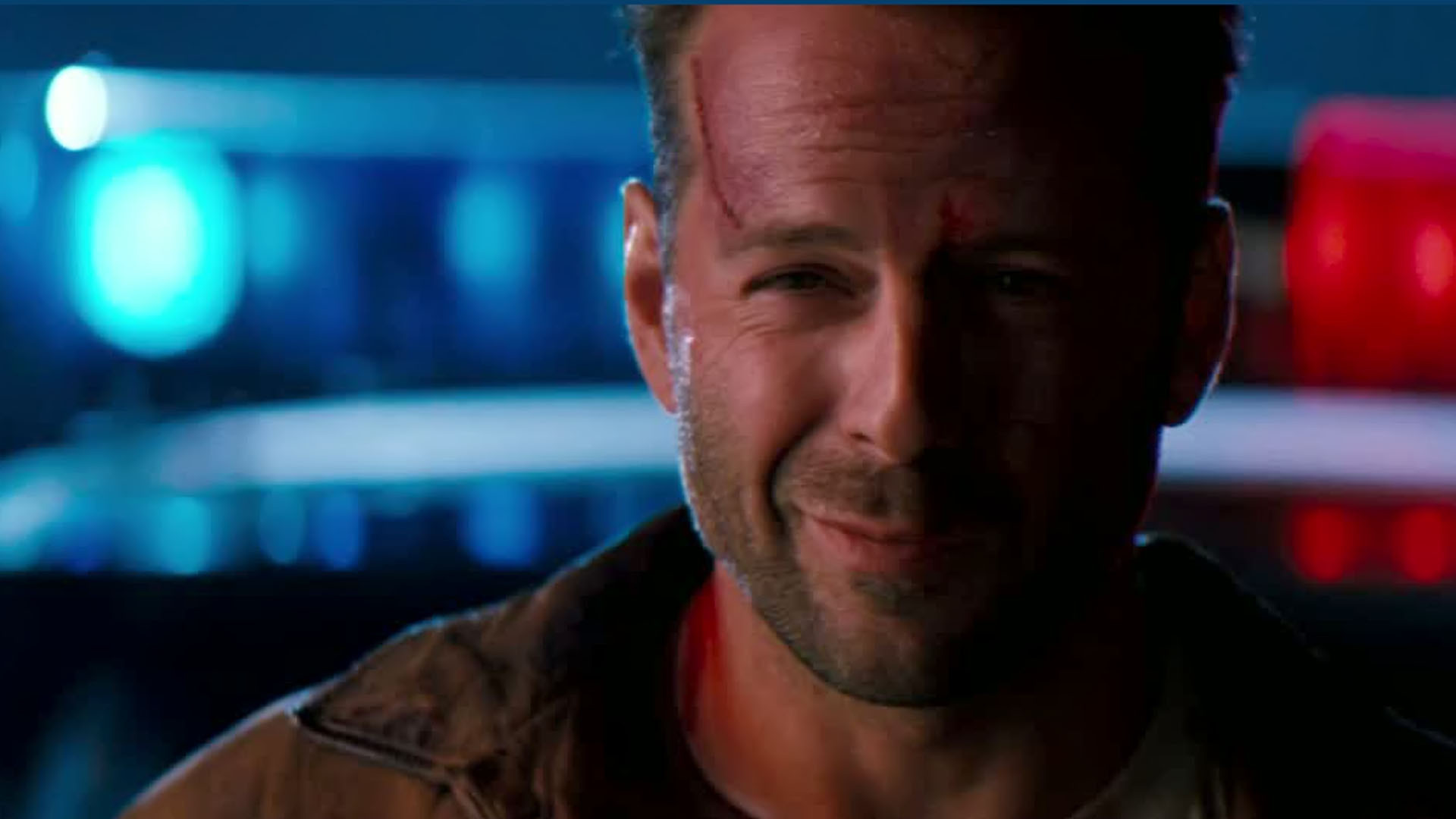
The Last Boy Scout

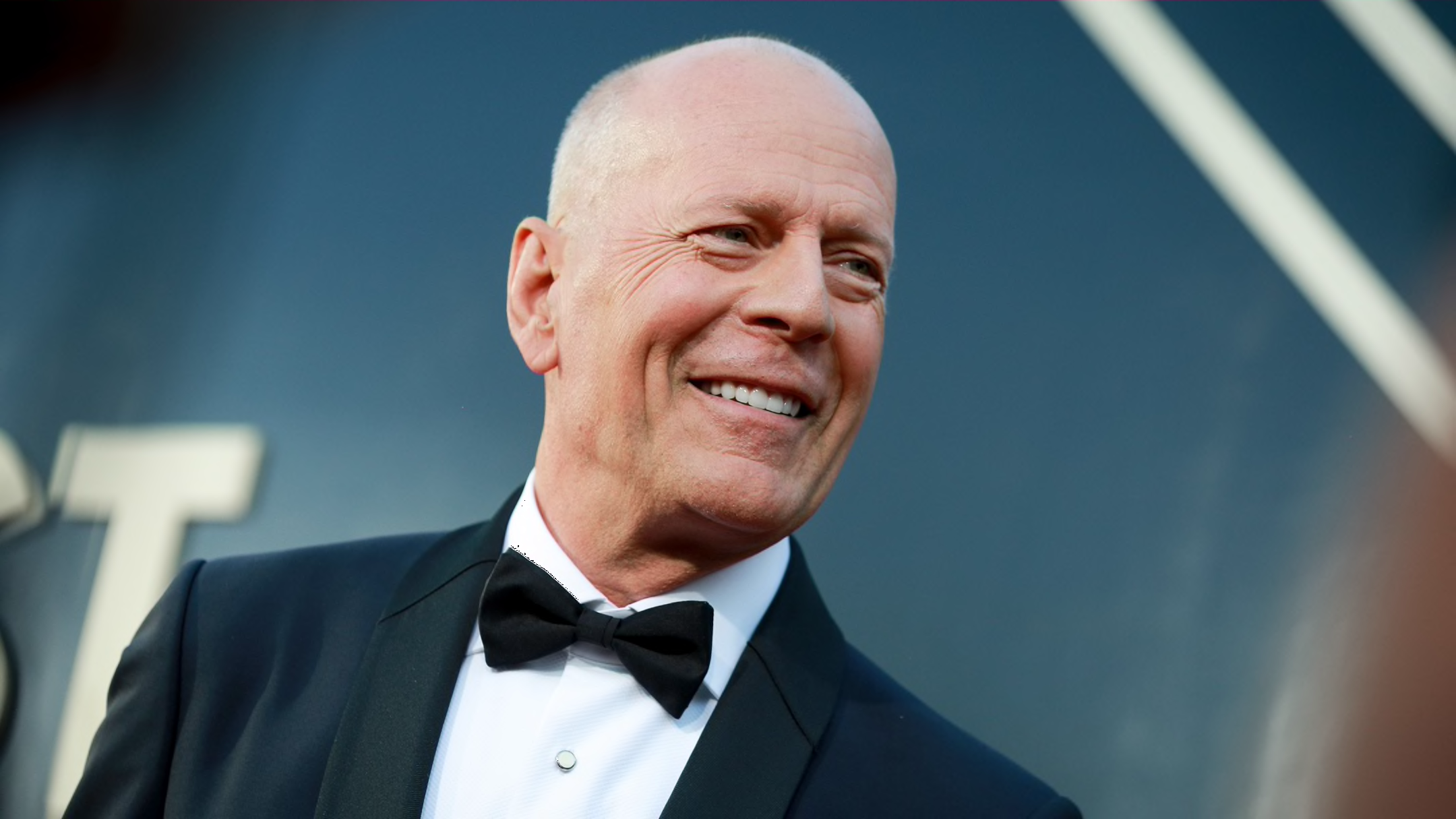
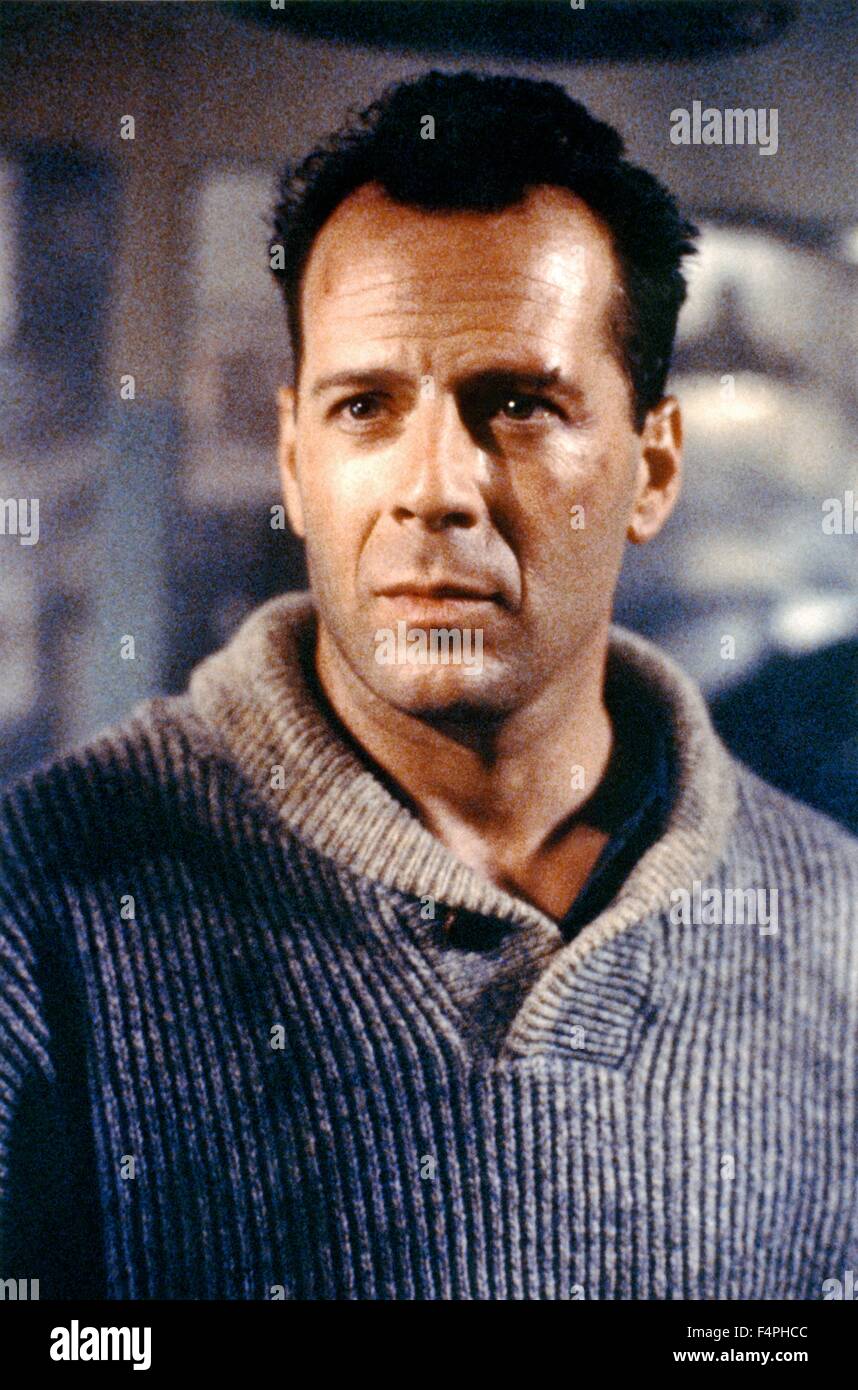
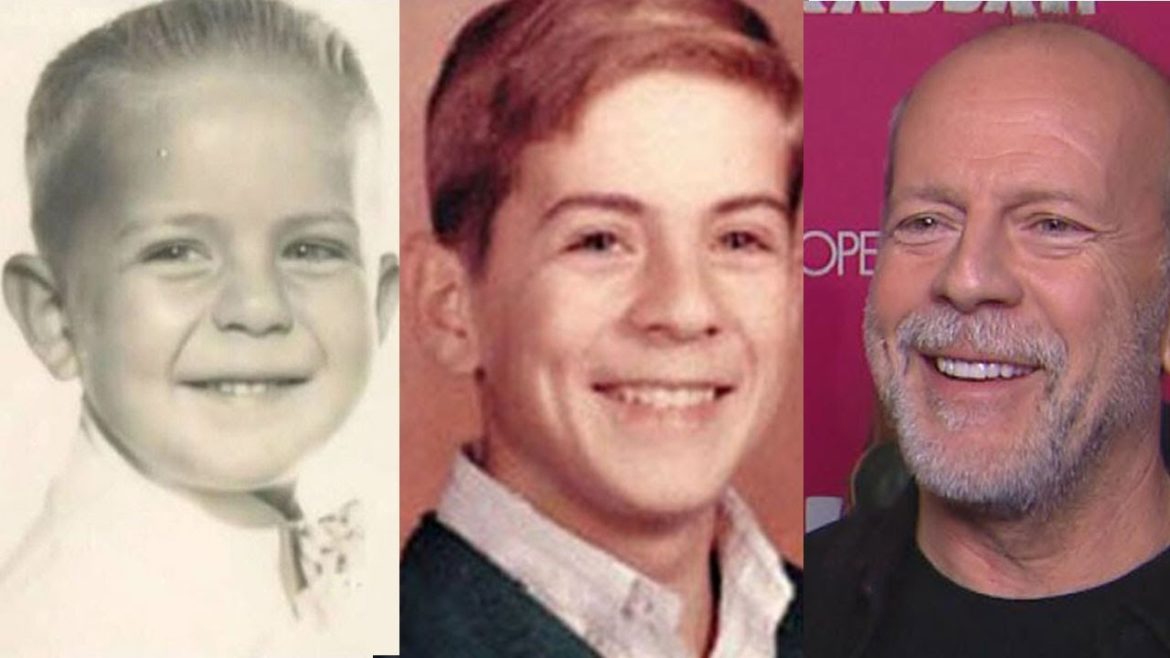
Today is Bruce Willis’ birthday and I enjoy so many of his movies, but Die Hard, Hudson Hawk and The Last Boy Scout are 3 of my favorites!  I found this article on Mental Floss—fun facts about Bruce.

From Mental Floss

On March 30, 2022, Bruce Willis’s family members, including ex-wife Demi Moore and their three daughters, posted a joint statement to their social media accounts announcing that Willis would be retiring from acting due to a recent health diagnosis.

“Bruce has been experiencing some health issues and has recently been diagnosed with aphasia, which is impacting his cognitive abilities,” the statement read. “As a result of this and with much consideration, Bruce is stepping away from the career that has meant so much to him.”

From his turns as unlikely action hero John McClane in the Die Hard series to smaller supporting roles in 1994’s Pulp Fiction and 1995’s Nobody’s Fool, Willis has consistently surprised audiences with his eclectic career choices. For more on Willis, including his recording career and how he made movie history with 1988’s original Die Hard, keep reading.

Bruce Willis was born in West Germany.

Walter Bruce Willis, the son of a military man, was born on March 19, 1955, while his father was stationed in Idar-Oberstein, West Germany. Just two years later, parents David and Marlene Willis moved to Carneys Point, New Jersey, where he spent part of his time in both high school and at Montclair State University trying his hand at acting. After his sophomore year, Willis decided to leave college and head to New York City to pursue a performing career.

Bruce Willis may have been one of the best bartenders in New York City.

While auditioning for acting roles and scoring the occasional break—he appeared in an off-Broadway play, Heaven and Earth, in 1977—Willis tended bar at Chelsea Central on New York City’s Upper West Side. According to actor John Goodman, who knew Willis before either of them became famous, Willis was notable even then. “Bruce was the best bartender in New York,” Goodman told The New York Post in 2017. “He kept an entire joint entertained all night. He just kept the show going. He was amazing.”

Bruce Willis was cast in Moonlighting even though ABC thought the role was “uncastable.”

Willis had done only some stage work and bit parts in movies like 1980’s The First Deadly Sin with Frank Sinatra and 1982’s The Verdict with Paul Newman before he went in to audition for ABC’s Moonlighting, a send-up of detective dramas. At the time, the role of David Addison was proving so difficult to cast that the network was looking to pay creator Glenn Gordon Caron, director Bob Butler, and co-star Cybill Shepherd to abandon the project. Then Willis auditioned, beating out 3000 other hopefuls and securing the part. The series ran from 1985 to 1989.

Thanks to Die Hard, Bruce Willis changed Hollywood salaries forever.

While doing Moonlighting, Willis spent his hiatus shooting feature films like 1987’s Blind Date with Kim Basinger. But it was 1988’s Die Hard that cemented him as a big-screen attraction. The action film about a New York City cop trapped in a Los Angeles skyscraper with his estranged wife and a group of terrorists was a hot commodity, and 20th Century Fox agreed to pay Willis the then-astronomical sum of $5 million for the role. (Richard Gere and Clint Eastwood were also considered.) At the time, major stars like Tom Cruise and Michael J. Fox were getting roughly $3 million a picture. The payday for Willis had other performers taking notice, and salaries reportedly went up as a result.

“It was an enormous amount of money at the time,” Willis told Entertainment Weekly in 2007. “And I was a TV actor! The day after I signed the deal, every actor in Hollywood’s salary went up to $5 million.”

The Bruce Willis movie Hudson Hawk was based on a song.

Following Die Hard, Willis was a proven box office commodity that could help projects get made. In 1991, he starred in Hudson Hawk, a critical and commercial disappointment about a jewel thief with a love of music who is hired to steal from the Vatican. The film was based in part on a song written by musician Robert Kraft in 1981. Kraft knew Willis, then a bartender and actor, and shared it with him. Over the years, the two continued to shape the song, adding characters and stories. Eventually, it wound up in the hands of screenwriters Stephen De Souza and Daniel Waters.

Bruce Willis all but disappeared in Nobody’s Fool.

In contrast to conventional wisdom of the era, Willis parlayed his success as an action hero into opportunities to work with actors and directors he found interesting—even if it meant taking a small supporting role. (Willis spent just 22 minutes onscreen in 1994’s Pulp Fiction as boxer Butch Coolidge.) For 1995’s Nobody’s Fool, he passed on his normal $15 million fee to take $1400 a week since it meant working with Paul Newman. (Newman had forgotten the then-unknown Willis was a bit player in Newman’s 1982 film, The Verdict.) Because Willis felt so strongly Nobody’s Fool was Newman’s film, he opted out of having his photo included in the press kit and his name wasn’t in the production notes.

Bruce Willis had his own cartoon series.


In 1996, Willis lent his voice to Bruno the Kid, a syndicated animated series about an 11-year-old spy named Bruno who convinces his handlers he’s really an adult. “Bruno” was Willis’s nickname growing up as well as the name of his musical alter ego. In 1987, Willis released an album, The Return of Bruno, along with a cable special. The cartoon lasted one season.

Bruce Willis never finished shooting one of his movies.

In 1997, Willis started shooting Broadway Brawler, a romantic comedy about a washed-up hockey player falling in love. Just 20 days into shooting, Willis used his powers as producer to fire director Lee Grant, Grant’s husband and producer Joe Feury, cinematographer William Fraker, and wardrobe designer Carol Oditz—all reportedly over creative differences. The problems continued even after replacement director Dennis Dugan was brought on board. Rather than continue to waste money on the $28 million movie, studio Cinergi opted to shut it down. Cinergi’s parent company, Disney, absorbed the production costs in exchange for Willis agreeing to star in three Disney movies: Armageddon (1998); The Sixth Sense (1999), Willis’s biggest hit to date; and The Kid (2000).

SOURCE: MENTAL FLOSS

Bang a Drum

March 2nd is Jon Bon Jovi’s birthday (born in 1962).  Below are the lyrics to one of my very favorite Bon Jovi’s songs…Bang a Drum.  It’s from the Young Guns movie and has a revival tent feeling about it.  It always makes me sing along at the top of my voice with my arms raised to heaven. 

Happy Birthday Jon!

Bang a Drum

I went to see the preacher to teach me how to pray
He looked at me and smiled
Then that preacher turned away
He said if you want to tell him something
You ain’t gotta fold your hands
Say it with your heart, your soul and believe it
And I’d say amen

[Chorus]
Bang a drum for the sinners
Bang a drum for the sins
Bang a drum for the losers
And those who win
Bang a drum, bang it loudly
Or as soft as you need
Bang a drum for yourself son
And a drum for me
Ooh, let me hear you say yeah (yeah), hallelujah, amen

[Verse 2]
I called upon my brother just the other day
He said: John I’m gonna die if I don’t start to live again
I work each day and night like clockwork
Just trying to make ends meet
I could kick this bad world’s ass
If I could just get on my feet

[Chorus]
I’d bang a drum for the dying
Bang a drum for the truth
Bang a drum for the innocence lost in our youth
Bang a drum, bang it loudly
Or as soft as you need
Bang a drum for you brother
And a drum for me

[Bridge]
I don’t know where all the rivers run
I don’t know how far, I don’t know how come
Well I’m gonna die believin’ each step that I take
Ain’t worth the ground that I walk on
If we don’t walk it our way

[Verse 3]
No I don’t claim to be a wiseman, a poet or a saint
I’m just another man who’s searching for a better way
But my heart beats loud as thunder
For the things that I believe
Sometimes I wanna run for cover
Sometimes I want to scream

[Chorus]
Bang a drum for tomorrow
Bang a drum for the past
Bang a drum for the heroes that won’t come back
Bang a drum for the promise
Bang a drum for the lies
Bang a drum for the lovers and the tears they’ve cried
Bang a drum, bang it loudly
Or as soft as you need
But as long as my heart keeps on bangin’
I got a reason to believe (I got a reason to believe)

[Outro]
(Yeah, yeah, oh yeah, yeah, hallelujah, amen)
Let me hear you say yeah (yeah) yeah (yeah) oh yeah
Let me hear you say yeah (yeah) hallelujah, amen
Come on now (yeah) yeah (yeah) oh yeah
Let me hear you say yeah (yeah) hallelujah, amen
All right girls (yeah) brother (yeah) yeah (yeah) oh yeah
Let me hear you say yeah (yeah) hallelujah, amen

Try That in a Small Town

In honor of Jason Aldean’s birthday, I present the lyrics to one of my favorite songs by him…Try That in a Small Town.

Sucker punch somebody on a sidewalk
Car jack an old lady at a red light
Pull a gun on the owner of a liquor store
You think it’s cool, well, act a fool if you like
Cuss out a cop, spit in his face
Stomp on the flag and light it up
Yeah, you think you’re tough

Well, try that in a small town
See how far you make it down the road
‘Round here we take care of our own
You cross that line, it won’t take long
For you to find out, I recommend you don’t
Try that in a small town

Got a gun that my granddad gave me
They say one day they’re gonna round up
Well, that shit might fly in the city, good luck

Try that in a small town
See how far you make it down the road
‘Round here we take care of our own
You cross that line, it won’t take long
For you to find out, I recommend you don’t

Try that in a small town
Full of good ol’ boys, raised up right
If you’re looking for a fight
Try that in a small town
(Try that in a small town)

Try that in a small town
(See how far you make it down the road)
‘Round here we take care of our own
You cross that line, it won’t take long
For you to find out, I recommend you don’t
Try that in a small town
(Try that in a small town)

Ooh, try that in a small town

GREASE!

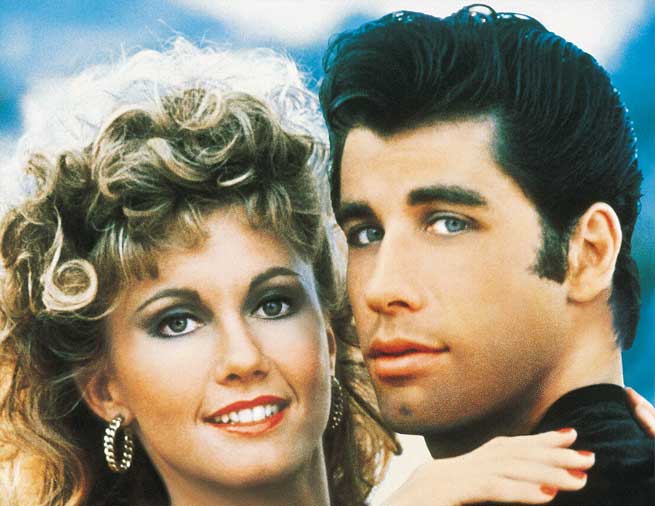
Today is John Travolta’s birthday, so let’s look at some interesting facts about Grease from the Mental Floss website.

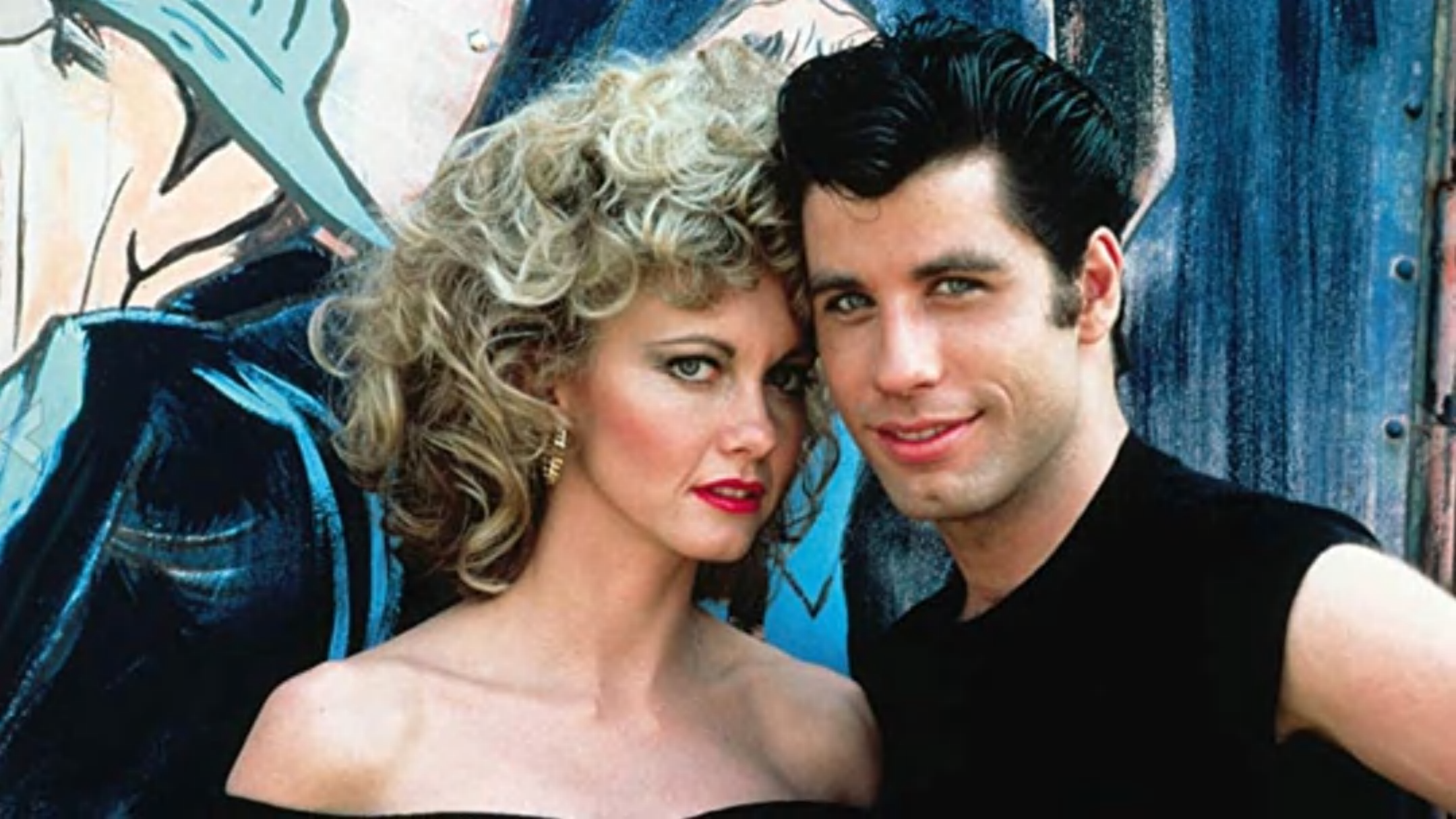
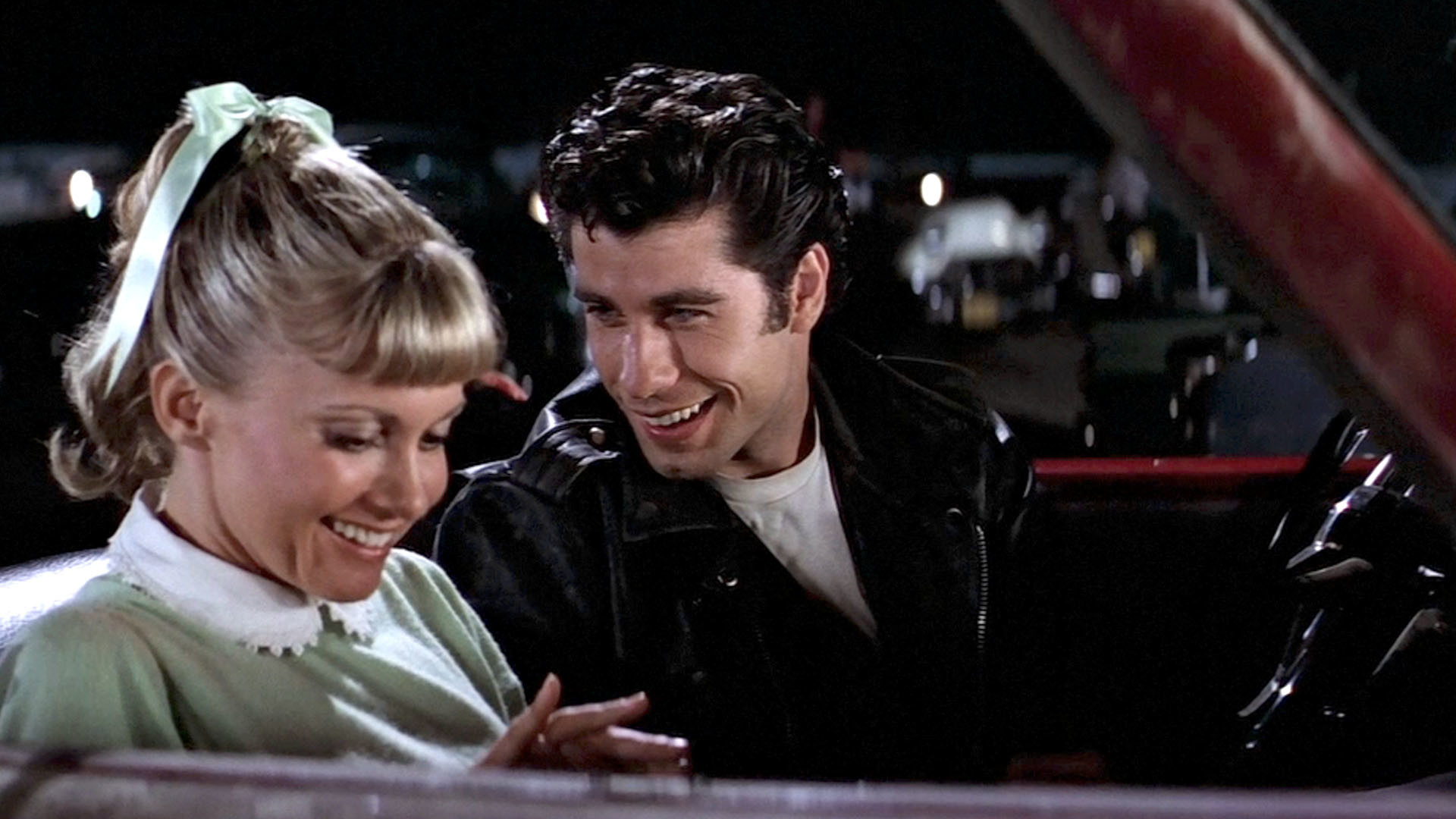
The movie Grease (1978), based on the musical of the same name, is about to be reimagined for a new generation. HBO Max just announced that it will be premiering Grease: Rydell High, a musical series inspired by the film. In the 1978 big-screen adaptation, John Travolta played tough guy Danny Zuko and Olivia Newton-John starred as sweet Sandy Olsson, two teenagers whose summer romance suddenly blossoms into a full-fledged high school love affair.

Shot on a budget of $6 million budget, Grease made nearly $400 million at the box office—making it one of the highest-grossing musical movies of all time.

Henry Winkler turned down the role of Danny Zuko.

As far as Henry Winkler was concerned, Danny Zuko was too similar to Fonzie, the tough guy with a heart of gold he was already playing on Happy Days.

Marie Osmond and Susan Dey said no to playing Sandy.

Marie Osmond told Larry King that she turned the part down because she “didn’t want my teenagers someday to say, you know, ‘You have to go bad to get the boy.’ It was just a personal choice as a someday mother.” Dey (Laurie on The Partridge Family) didn’t want to play another teenager. Director Randal Kleiser went to the Star Wars mixing stage to visit his college roommate, George Lucas, and to see Carrie Fisher in one of the battle scenes. But Kleiser couldn’t tell from the scene whether Fisher was right for the part, so he kept looking. In 1998, Travolta revealed he heard singer Linda Ronstadt was also in consideration.

Olivia Newton-John insisted on having a screen test with John Travolta.

Producer/co-writer Allan Carr met Olivia Newton-John at a party thrown by fellow Australian singer Helen Reddy and was “completely smitten” and begged her to sign on for the part. Travolta told The Morning Call that he rallied for Newton-John to get the part, too. Not trusting her good fortune or her acting (her previous film, Toomorrow, had been released back in 1970), Newton-John requested a screen test with Travolta to make sure they had chemistry.

Andy Warhol and an adult film star would have been cast if Paramount hadn’t stepped in.

Carr wanted Warhol to play the art teacher. One unnamed studio executive said he would not have “that man” in the movie, which Carr interpreted as the executive having a personal vendetta against the legendary artist. Carr also wanted porn star Harry Reems to play Coach Calhoun and offered him the part after a screening of Casablanca at Hugh Hefner’s mansion. The studio wouldn’t have it. “They bounced me out of the cast,” Reems said. “They thought they might lose some play dates in the South.” Carr felt so badly about it that he wrote Reems a personal check for $5000.

Lorenzo Lamas landed a role when a president’s son backed out.

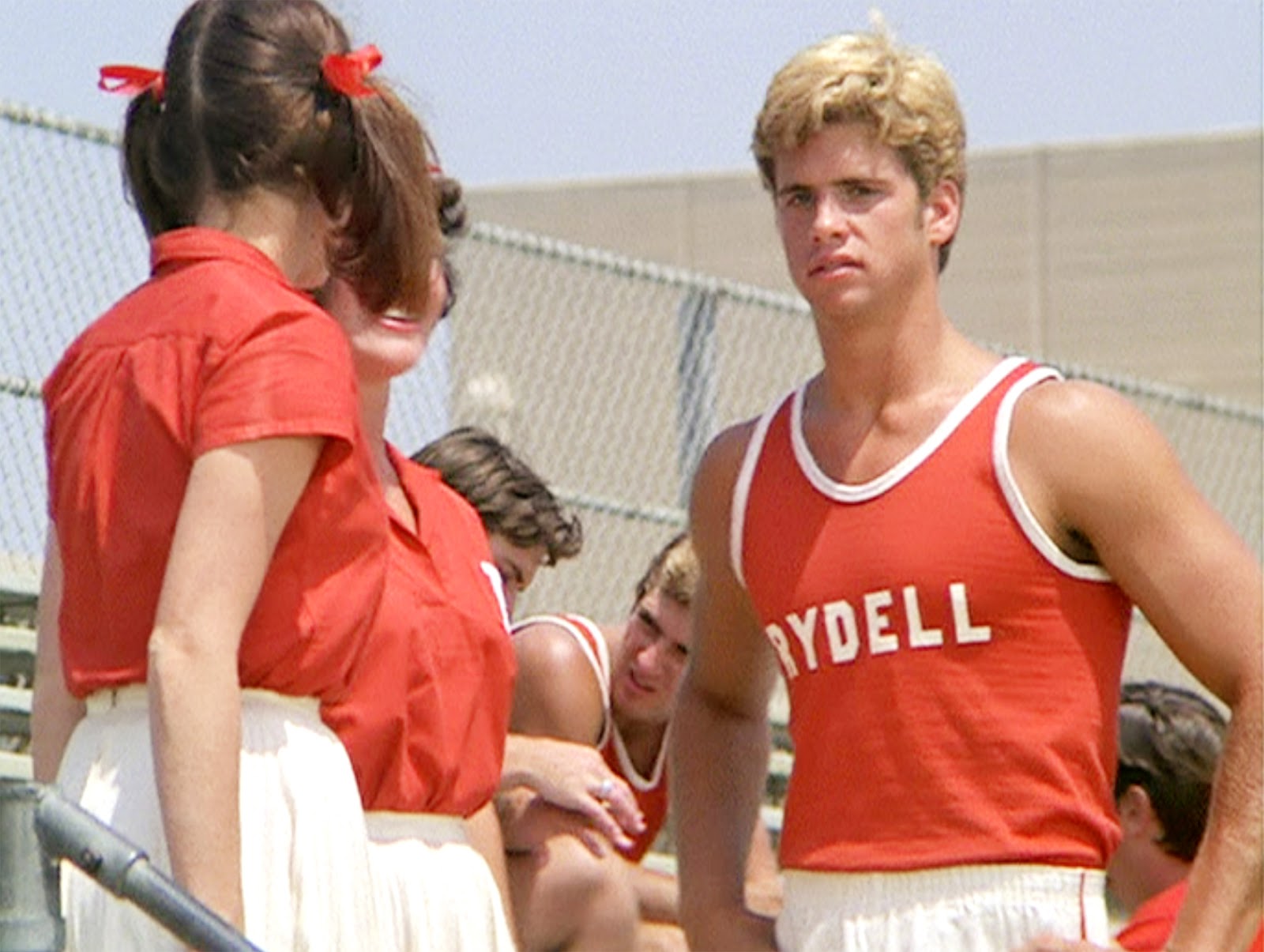
Gerald Ford’s son, Steven, was too nervous to play Tom Chisum, Sandy’s jock boyfriend, who had a grand total of zero lines. Lamas (later Lance Cumson on Falcon Crest and Hector Ramírez on The Bold and the Beautiful) jumped at the chance, agreeing to lighten his dark hair because he looked too much like a T-Bird. “I would have dyed it green, fuchsia, anything,” Lamas told People.

Most of the main actors were far too old to be in high school.

Stockard Channing (Rizzo) was 34 when the film was released. Newton-John was 29. Jeff Conaway (Kenickie) was 27. Travolta was 24. Jamie Donnelly (Jan) was 30 during filming, and had to dye her hair from her premature grey to black. Her hair grew back so quickly that her roots had to be colored in with a black crayon every day.

The title song was written by Barry Gibb, and Peter Frampton played guitar.

Kleiser didn’t like this song because he thought the lyrics were too dark and not fitting of the 1950s. Kleiser asked Gibb to make the lyrics more upbeat; Gibb told Kleiser he should shoot a serious scene to match the song. It became a number one single in the United States.

Rizzo’s hickeys were real.

Conaway gave Channing a real hickey because he wanted it to be authentic. Conaway was also so infatuated with Newton-John that he was tongue-tied whenever she was around. He later married Olivia’s sister, Rona.

“Greased Lightnin'” was supposed to be sung by Jeff Conaway, not John Travolta.

Travolta’s two conditions for agreeing to play Danny were that he could sing “Greased Lightnin’,” even though Kenickie sang it in the stage production; and that he had to have “blue black hair like Elvis Presley and Rock Hudson in the movies” because “it’s surreal and it’s very 1950s.” The star also argued with Kleiser over the end of the song “Sandy”; he wanted a close-up of himself instead of the cartoon shot of a hot dog diving into a bun. Kleiser got his way.

Coca-Cola signs were (mostly) blacked out.

Carr made a promotional deal with Pepsi; the set decorator didn’t know that. When the producer saw footage from the movie featuring Coke products he went “ballistic,” according to Kleiser. The Coca-Cola logos were blocked out with an optical printer. They couldn’t alter the Coke cooler, because it was impossible to cover with the technology available at the time. Pepsi never complained. They would have unblocked the Coke signs when the Pepsi deal expired before the 20th anniversary re-release if the original print hadn’t been lost.

Travolta kept flubbing a word so much it was kept in the movie.

Travolta kept lip-syncing “heap lap trials” instead of “heat lap trials,” and Kleiser claims you could see this in the finished product. Kleiser believed Travolta was distracted after reading a magazine article that morning about his recently deceased girlfriend, Diana Hyland, who had passed away from cancer.

Travolta got more of the stage script into the movie.

Jim Jacobs and Warren Casey, who wrote the original musical’s book, weren’t invited on set during production of the movie. Travolta had played Danny more than 100 times on the road doing the musical, and gradually got more lines from Jacobs and Casey’s version into the film, which was written by Carr and Bronté Woodard. When Travolta didn’t think a line of dialogue was working, he would quote a line from the original, and Kleiser would tend to agree and use that line instead.

That Elvis Presley lyric is creepy.

In “Look at Me, I’m Sandra Dee,” Rizzo sings “Elvis, Elvis, let me be, keep that pelvis far from me,” while looking at a picture of The King. That scene was shot on August 16, 1977—the day Presley died. “It was very eerie,” Kleiser told The New York Post. “It was all over the news, so everyone knew. We did this number, and everybody kind of looked at each other like, ‘Yeah, this is creepy.’” When Carr first bought the film rights to Grease, he envisioned Elvis as Danny and Ann-Margret as Sandy. According to Broadway.com, Presley was offered the role of Teen Angel but turned it down.

Olivia Newton-John was sewn into those spandex pants.

“They sewed me into those pants every morning for a week,” Newton-John said. “Believe me, I had to be very careful about what I ate and drank. It was excruciating.” It was 106 degrees on the set for the carnival finale.

George Lucas helped get the movie re-released.

In 1997, Kleiser called Sherry Lansing, then head of Paramount, and insisted that Grease had to come back again for its 20th anniversary. Lansing informed Kleiser that George Lucas had called her a few days earlier and said that out of all of the movies in the Paramount vault, Grease is the one that should come back. The Star Wars creator explained that every nine-year-old he knew watched a VHS copy of Grease every day.

SOURCE: MENTAL FLOSS:  ROGER CORMIER

Know-It-All Tuesdays: Valentine Trivia

Question: Before “X” stood for a kiss, what did it represent at the end of a letter?
Answer: 
The cross

Question: Cupid has what name in Greek mythology?
Answer:
Eros

Question: In Roman mythology, Cupid is the son of whom?
Answer: 
Venus

Question: In Roman mythology, with whom does Cupid fall in love?
Answer:
Psyche

Question: What Valentine’s Day candy was first created on equipment made for lozenges?
Answer:
Sweethearts

Question: When did Sweethearts first get their shape?
Answer:
1901

Question: “Wearing your heart on your sleeve” has origins from honoring which Roman goddess?
Answer:
Juno

Question: In the Victorian era, mean-spirited Valentine’s Day cards were called “___ Valentines.”
Answer:
Vinegar

Question: Another Victorian-era term for a mean and comically mocking Valentine’s Day card shares a name with what TV show?
Answer:
Penny Dreadful

Question: Who wrote the oldest-known Valentine’s Day message?
Answer:
The Duke of Orleans

Question: From where was the oldest-known Valentine’s Day message sent?
Answer:
Prison

Question: When was the oldest-known Valentine’s Day message written?
Answer:
1415

Question: Sweethearts production was temporarily suspended in which year?
Answer:
2019

Question: About how many roses are sent for Valentine’s Day each year?
Answer:
50 million

Question: Who invented the first Valentine’s Day candy box?
Answer:
Richard Cadbury

Question: On average, how many marriage proposals are there on every Valentine’s Day?
Answer: 220,000

Question: A single red rose surrounded by baby’s breath is called what by florists?
Answer:
A signature rose

Question: Letters to Juliet are sent to what city every year?
Answer:
Verona, Italy

Question: What do yellow roses symbolize?
Answer:
Friendship

Question: How many heart-shaped boxes of chocolates are typically sold each Valentine’s Day?
Answer:
35 million

Question: What brain chemical is known as the “cuddle” or  “love hormone?”
Answer:
Oxytocin

Question: What insanely popular website debuted on Valentine’s Day in 2005?
Answer:
YouTube

Question: Saint Valentine was said to be martyred in what year?
Answer:
269

Question: The love goddess Aphrodite was said to be born from what?
Answer:
Sea foam

Question: When was February 14 first declared to be Valentine’s Day?
Answer:
1537

Question: Besides Valentine’s Day, for which holiday are the most flowers sent?
Answer:
Mother’s Day

Question: How many people typically buy Valentines for their pets?
Answer:
9 million

Question: Why did women and girls eat bizarre foods on Valentine’s Day in medieval times?
Answer:
To dream about their future spouses

Question: What state produces most of America’s red roses?
Answer:
California

Question: What notorious gangster orchestrated the St. Valentine’s Day massacre?
Answer:
Al Capone

Question: How much money do Americans spend on chocolate for Valentine’s Day each year?
Answer:
$1 billion

Question: Women purchase what percentage of all Valentines sold?
Answer:
85%

Question: What major invention was patented on Valentine’s Day?
Answer:
The telephone

Question: About how many Valentine’s Day cards are exchanged every year?
Answer:
1 billion


Question: How many stems of roses are sold on Valentine’s Day every year?
Answer:
189 million

Question: What fruit was once known as a “love apple” for its alleged aphrodisiac properties?
Answer:
Tomato

Question: The first recorded speed dating event was held in what year?
Answer:
1998

Question: What is the Guinness World Record for the longest marriage ever recorded?
Answer:
86 years, 290 days

Mardi Gras World

The rich history of Kern Studios dates back to 1932, when the first mule-drawn float was built on the back of a garbage wagon.

The Early Days

The early days of what has grown into Kern Studios started with Roy Kern, a local artist-turned-sign-painter who worked his way through the Depression by painting names and signs on the bows of freighters and barges.

Roy and his son Blaine built their first Mardi Gras float together on the back on a mule-drawn wagon in 1932. Unable to pay his mother’s medical bills, Blaine offered to paint a mural in the hospital, which caught the eye of a surgeon who was also the captain of a Mardi Gras Krewe. This captain invited Blaine to design and build floats for his Krewe, and Kern Studios was officially founded in its current form in 1947. One float led to another, and before long Blaine became the city’s leading parade designer and builder, working with Rex, Zulu and other legendary krewes.

Mr. Mardi Gras

Blaine Kern traveled throughout Europe to apprentice under the world’s leading float and costume makers. During several trips to Italy, France, and Spain, Blaine became inspired by the extravagant concepts and animation that marked the European style of float building.

He brought these ideas to New Orleans and developed the monumental scale and lavish ornamentation of today’s spectacular Mardi Gras floats. Blaine Kern was instrumental in the formative years of some of New Orleans’ biggest parades and “Super Krewes” and is still known as “Mr. Mardi Gras.”

THE CREATION OF MARDI GRAS WORLD

After many requests for private tours of Kern Studios from people wanting a sneak-peak of Mardi Gras, the Kerns decided to open up the working studio to the public. In 1984, Mardi Gras World was created as a tourist attraction to provide visitors a behind-the-scenes look of our work. Widely successful, the attraction draws hundreds of thousands of visitors from all over the world each year.

SOURCE: MARDI GRAS WORLD.COM

Wake Up Phil!

Today is Groundhog Day…again…lol…to quote Bill Murray in Groundhog Day.  This article by Brandon Specktor and Claire Nowak at Reader’s Digest highlights 16 things you might not know about groundhogs!

First things first: Groundhogs are lousy weather predictors

As the myth of Groundhog Day goes, if a groundhog sees its shadow on February 2, winter will last another six weeks. And while Punxsutawney Phil’s handlers maintain 100 percent accuracy in his seasonal predictions, the numbers tell a different story. Stormfax calculated that Phil has seen a 39 percent forecasting success rate since 1887. According to a Canadian groundhog study, this is just 2 percent higher than the average groundhog success rate of 37 percent (the most accurate hog-nosticators in the study resided in Yellowknife, Canada, and had a 50 percent accuracy rate). In other words, a gambling man would be better off flipping a coin.

Groundhogs have a different secret talent

What do groundhogs have in common with sleazy construction workers? They both whistle at potential mates. It’s because of this odd adaptation that groundhogs are also known as “whistle-pigs” (and lecherous day laborers known simply as “pigs”).

They have other nicknames too

Groundhogs are members of a group of large ground squirrels called marmots, but they’re also called land beavers and woodchucks. Surprisingly, the latter moniker has nothing to do with wood, Scientific American explains. It’s believed to be taken from the Algonquian name for the same animal: “wuchak.”

Groundhogs are vegetarians

The Groundhog Diet consists mainly of grass, herbs, and plants like dandelions, daisies, and goldenrods. They also have an eye for human crops, like carrots and corn, which puts them on farmers’ most-wanted lists. And yes, they do occasionally eat tree bark, as we all hoped woodchucks would.

They call North America home

Most groundhogs live in the eastern and central United States, although you can find them in Canada and even Alaska. They tend to settle down on the edge of a forest or woodland, near an open field, where they’ll likely construct their underground burrows. But you may also spot them climbing trees.

They make great architects

Groundhogs build pretty impressive homes. Their underground burrows include multiple “rooms” with different purposes, including a sleeping chamber, a nursery chamber, and a waste chamber (what we would call a bathroom). The entire burrow can stretch anywhere from eight to 66 feet long.

Sleeping is their favorite hobby

Few animals are as dedicated to hibernating as groundhogs. Known as “true hibernators,” they snooze from late fall to late winter or early spring, which can mean up to as many as six months of deep sleep, depending on their climate. During this time, their body temperatures can drop below 20 degrees Celsius (68 degrees Fahrenheit), and their heart rates slow from 80 beats per minute to just five.

They’re surprisingly romantic

Despite their intense hibernation habits, there’s evidence that male groundhogs wake up early (after about three months) to start looking for potential mates. “Typically, there’s a male that has a territory that includes several female burrows. And there’s some competition for that territory,” Stam Zervanos, retired professor of biology at Pennsylvania State University, told National Geographic. “They try to defend that territory, and they go from burrow to burrow to find out if that female is still there.” Groundhogs start visiting females as early as February and then go back to sleep until mating season starts in March. Putting relationships before sleep? That’s what we call dedication.

It wasn’t always called Groundhog Day

If you can’t find yourself a groundhog to ogle this February 2, simply step outside and recite this old English rhyme:

If Candlemas be fair and bright,
Come, Winter, have another flight;
If Candlemas brings clouds and rain,
Go, Winter, and come not again.

Modern Groundhog Day evolved from Europe’s Candlemas Day, a celebration of light both literal (the days are growing longer) and religious (Candelmas invokes Jesus’s first visit to the Temple in Jerusalem). It’s an old knight’s tale that the weather on Candlemas will be the exact opposite of the weather six weeks hence—yet somehow, centuries later, a few lines of scientifically suspect verse remain the basis of an annual holiday.

Groundhogs weren’t always the holiday’s honored animal

About halfway between the winter and spring solstices, Candlemas has long been a day of seasonal speculation, though the designated animal weatherman varies from culture to culture. Records from Penn State University Libraries show that medieval cults favored bears, holding parties by their dens, gussied up in grizzly costumes and waiting for a bear to lumber out from hibernation and check the weather. English and German Catholics celebrated a similar tradition with sacred badgers. When badgers proved hard to come by for Pennsylvania’s German settlers in the early 1800s, colonists adapted their old-country tradition to an abundant New World animal: the groundhog.

You’re not supposed to eat the groundhog … anymore

On February 2, 1886, The Punxsutawney Spirit newspaper declared the first official Groundhog Day celebration, hosted by a group of town elders dubbed the Groundhog Club. For this club, marmots were more than furry meteorologists; they were a delicacy. In addition to its Groundhog Day ceremony, the club hosted a summertime groundhog hunt and picnic. On the menu: cooked groundhog meat (described by locals as “a cross between pork and chicken”) and something called “groundhog punch,” a combination of vodka, milk, eggs, orange juice, “and other ingredients.” For a time, marmot meat was the regional cuisine. That began to change in 1887, when a groundhog named Punxsutawney Phil was born. To hear his handlers tell it, he has evaded the dinner plate for over 100 years and counting.

Punxsutawney Phil is immortal—allegedly

A typical groundhog will live six to eight years in the wild. Punxsutawney Phil, the official groundhog of America’s largest Groundhog Day celebration (and costar in the hit movie Groundhog Day), has been alive since, uh, 1887. Or so his website says. To what does Phil owe his impossibly impressive 134 years? A magical elixir called, yet again, “groundhog punch”—presumably not the same recipe of vodka and eggs that its original authors quaffed. According to the lore-keepers of the modern Punxsutawney Groundhog Club, Phil is fed a single sip of groundhog punch every summer, instantly granting him another seven years of life. (In other words, the opposite of vodka.)

What does an “immortal” marmot do for fun? Drink and read

Phil has seen a lot in the past century, and he is less sheltered than you’d expect from someone who literally lives with his head in the ground. During Prohibition, for example, Phil publicly threatened to impose 60 weeks of additional winter if he wasn’t allowed a drink. Phil has cooled down significantly these days. For that, we can likely thank his wife, Phyllis. Together, Phil and Phyllis enjoy a quiet life together at the Punxsutawney Memorial Library, where they live during the 364 days not spent looking for their shadows.

Groundhog Day sent tourism in Gobbler’s Knob’s skyrocketing

While Gobbler’s Knob—home of Punxsutawney Phil—has seen its share of tourism every Groundhog Day since the tradition began, actor Bill Murray and his holiday-themed film truly put it on the map. Following the 1993 release of Groundhog Day, starring Bill and Phil, Gobbler’s Knob started seeing crowds as large as 35,000 people on February 2 (for comparison, the population of Punxsutawney at the time was less than 7,000). Two years later, Phil was invited as a guest on The Oprah Winfrey Show.

Bill Murray and Andie MacDowell had Phil’s back in court—or would have, had it come to that.

In a 2013 news story barely discernible from the sort of satire that runs in The Onion, an Ohio lawyer demanded that Punxsutawney Phil pay for a fraudulent weather prediction—with his life. “On or about February 2, 2013, at Gobbler’s Knob, Punxsutawney Phil did purposely, and with prior calculation and design, cause the people to believe that spring would come early,” Ohio prosecutor Michael Gmoser wrote in a cheeky open letter. “Contrary to the Groundhog Day report, a snowstorm and record low temperatures have been and are predicted to continue in the near future, which constitutes the offense of Misrepresentation of early spring, an Unclassified Felony, and against the peace and dignity of the state of Ohio.”

The punishment for this crime? “The death penalty.”

Absurdly, the saga continued when a Pennsylvania law firm openly responded to Gmoser, arguing that the Ohio attorney had no authority to prosecute in Punxsutawney. Furthermore, Phil had a formidable team of character witnesses behind him, as starring in Groundhog Day had helped Phil forge “lifelong and loyal friendships with the lesser supporting cast, including Bill Murray, Andie MacDowell, and Chris Elliot,” the firm wrote. “It is believed that Punxsutawney Phil has already been in contact with Mr. Murray, Ms. MacDowell, and Mr. Elliot, all of whom allegedly pledged to ‘have his back’ should legal action be necessary.” (It wasn’t.)

Robo-groundhogs may be the future

We’ve come a long way from eating groundhogs, but their safety is still not guaranteed. On Groundhog Day 2014, New York City Mayor Bill de Blasio accidentally dropped Staten Island groundhog Charlotte, resulting in internal injuries that killed her a week later. In 1999, Canadian groundhog celebrity Wiarton Willie died the Sunday prior to Groundhog Day, but the news was scandalously withheld until February 3. Stories like these, compounded by the increasingly large crowds at Gobbler’s Knob, prompted PETA to suggest an alternative: Replace Punxsutawney Phil with a robot groundhog.

While fears of a cyber-marmot uprising fill your head, consider Washington, D.C.’s cheaper solution: Potomac Phil, the city’s anointed groundhog since 2014, is a taxidermied thrift shop purchase. Strange? Sure.

(PAT’S NOTE: Everything in D.C. is phony!)

SOURCE: READER’S DIGEST

Brandon Specktor and Claire Nowak

Golden Girls Little Known Facts

In honor of Betty White’s birthday this month, let’s delve into some little known facts about The Golden Girls from PARADE.

The Golden Girls cleaned up during awards seasons

Throughout The Golden Girls‘ 1985-1992 run, they racked up 68 Emmy nominations and 11 wins; the series was ranked No. 69 on the Writers Guild of America’s list of 100 Best-Written TV Series of All Time.

Bea Arthur actually detested cheesecake

Despite Dorothy, Rose, Blanche and Sophia always bonding over the creamy dessert, in real life, Arthur was not a fan of cheesecake at all.

The Golden Girls house wasn’t actually in Miami

The iconic Golden Girls house was actually based on a Brentwood, Los Angeles ranch-style home. Producers had a replica made of the front of the property at the then-Disney-MGM Studios in Orlando, Florida, which was used for exterior shots. The home is estimated to be valued at nearly $3 million.

The Property Brothers want to renovate The Golden Girls property

Drew and Jonathan Scott dropped the idea-bomb on The Kelly Clarkson Show in October 2019 after discussing the Property Brothers‘ renovation of The Brady Bunch house. ”So, we’re thinking next, the Golden Girls house,” Drew quipped. He also volunteered to play Blanche if a reboot was ever on the table!

Betty White and Bea Arthur drew on real-life grief for some heartwrenching scenes

Both White and Arthur each lost their mothers while filming Season 1 of The Golden Girls, but wouldn’t take time off. Director Lex Passaris recalled, “We were ready to shut down the show for as long as they needed, but both ladies said, ‘No. We need to work.'”

Betty White channeled true heartbreak for another poignant scene

While filming the episode “The Heart Attack,” White drew from the death of her beloved husband, Allen Ludden, when she was in character as widow Rose Nylund. “Everyone thinks Estelle’s character Sophia is dying, so it was particularly poignant,” Passaris said. “Rose tells a story about her husband Charlie’s death, and Betty’s basically talking about Allen. Betty’s voice kind of cracked and she took a breath and said to me, ‘I’d give anything to have that year of my life back again.'”

Estelle Getty spent three hours in the makeup chair to become Sophia Petrillo

Makeup artist Maurice Stein revealed that Getty, who was younger than White and Arthur, took three hours to transform into the petite, heavily creased Sicilian spitfire. “When she first sits down in the chair, she’s just Estelle, a nice, lovely lady. But as the makeup goes on, she becomes this snappy old lady, wise-cracking and crusty,” he said. “She seems to slum down in her chair and really get into character. By the time she gets up from her chair, I have Sophia on my hands.”

Getty was only 63 and playing 20 years older—and she didn’t want to age offscreen. She got a facelift in between Season 2 and Season 3, driving the makeup team into a tizzy.

Bea Arthur didn’t like to dine alone

McClanahan once said that Arthur refused to go to dinner between shoots unless White walked with her. Arthur’s son confirmed the anecdote years later, noting, “Betty would pick my mom up in the driveway, or my mom would pick her up.”

Betty White thought Bea Arthur couldn’t stand her

Despite Arthur and White dining together between shoots, White didn’t think Arthur liked her, and McClanahan didn’t think so either. “Bea came from a New York stage point of view,” McClanahan admitted. “She always had what we call ‘the fourth wall.’ And Betty came from a television point of view: She would flirt with the audience, and pull her skirt up and say, ‘Hi sailor.’ But Bea never acknowledged the audience.” McClanahan said she could never be totally sure why Arthur sometimes got grumpy about White because Arthur never told her—but she did note that White “adored” Bea.

Estelle Getty struggled with crippling anxiety

Stage fright was an understatement when it came to Getty. McClanahan once said of her costar, “She had an awful time remembering her lines because she would freeze and panic. The day before tape day, you could see a big difference in her. She’d be walking around like Pig-Pen under a black cloud. By tape day, she was unreachable.” White concurred and marveled of Getty’s skill despite her anxiety battle. “You thought, ‘She’s never going to be able to take a step on that stage.’ She’s one of the reasons for the success of the show with young people. They get such a kick out of little Estelle telling big Bea off!”

Betty White was almost cast as Blanche Devereaux instead of Rose Nylund

“You get a lot of scripts mailed to you and not too many of them are good, but when this one came along it just hit the spot and they sent it to each of us,” White recalled in 2010. “They sent it to me with the idea of me doing Blanche. Jay Sandrich, who was our director for most of the Mary Tyler Moore shows, said, ‘If Betty plays another nymphomaniac they are going to think it is Sue Ann Nivens all over again.’ He said, ‘Why don’t we switch them?'”

Betty White, Bea Arthur and Rue McClanahan all knew each other before being cast as The Golden Girls

Before Rose, Dorothy and Blanche, the core Golden Girls cast had worked together in various series. “The first table read was an experience. I had worked with Bea, I had done a couple of guest shots on Maude. I had worked with Rue on Mama’s Family,” White said. “Estelle was a new one to all of us. She came from New York after her hit. We all sat down for the first table read and somebody read a line and then somebody else read a line.” She added, “It was the most exciting…We all began to look at each other because there wasn’t any first reading feeling about it. It was like we had been working together forever. I still get goosebumps thinking about it.”

Bea Arthur didn’t have patience for what she believed to be fashion crimes

McClanahan revealed that Arthur loathed backward baseball caps. “That really got to her,” McClanahan said. “We were interviewing directors one time and if someone came in with a baseball cap worn backwards, he didn’t stand a chance.”

Bea Arthur came through for Rue McClanahan in a big way

“She took care of me the Thanksgiving my mother died the first year of Maude,” McClanahan recalled. “It was unexpected. My mother was young, and I was young. I went back to Oklahoma for the funeral and I was devastated. When I came back to California, I was grieving so. I heard from Bea and she said, ‘I’m having Thanksgiving dinner and you come over here immediately.’ I went over to her home in Santa Monica and she put me to bed, and tucked me in and brought me dinner. She calmed me down and I felt safe for the first time. You don’t forget things like that.”

There were rumors of a reboot with Betty White

Those rumors, however, were mostly unfounded. Stan Zimmerman, a writer for Season 1 of The Golden Girls, explained, “It is not a rumor. [Fellow Golden Girls writer] James Berg and I did write a pilot script called Silver Foxes. It is NOT a reboot of The Golden Girls. But it is inspired by the show, a show that we were lucky enough to have written on during the first season of the show.” Saturday Night Live alum Cheri Oteri was attached to the project, which was to be about a group of aging gay men living together in Palm Springs, California, inspired by the classic series—and there was even a one-line role in the works for White. “Unfortunately, we cannot get one network executive to read [the script],” Zimmerman said, “or even a producer to pass it to them. We have found ageism and homophobia alive and well in Hollywood. Hopefully a groundswell of support from the viewing public will get an outlet like Hulu or Amazon to make it.”

The iconic “Thank You for Being a Friend” wasn’t producers’ first choice for The Golden Girls theme song

“They approached the publishing company for Bette Midler‘s song, ‘Friends,’ but it was too expensive. Eventually of the producers remembered Andrew Gold’s song, ‘Thank You For Being A Friend,'” Jim Colucci, author of Golden Girls Forever: An Unauthorized Look Behind the Lanai revealed. “They licensed it and hired a session singer named Cynthia Fee. Even though the recording session was slated to last for an hour, she did it in one or two takes—maybe 20 or 30 minutes—and planned on never thinking of it again. The irony is that thanks to unions, every time your song gets played, you get paid. So this job she did on a random weekday in 1985 has put her kids through college.”

Bea Arthur didn’t like the jabs about Dorothy’s appearance

“Bea was offended. When the writers called Rose [Betty White] dumb or Blanche [Rue McClanahan] a slut or Sophia [Estelle Getty] old, it could roll off those women’s backs because they were not like their characters,” Colucci said. “Unfortunately, the things that were said about Dorothy were that she was big and ugly. And that wears on an actress after a while.” The “Dorothy bashing” was one of the reasons Arthur would ultimately exit the series.

Bea Arthur almost wasn’t Dorothy Zbornak

Arthur wasn’t producers’ first choice for the sassy substitute teacher, in part because of her iconic role as the liberal titular Maude Findlay, especially after her character got an abortion before Roe v. Wade was passed. However, Colucci claimed that writer and creator Susan Harris insisted, “I wrote this role for Bea and I want Bea.” As it turned out, Arthur initially didn’t want to be Dorothy, either, because she thought the character was too similar to Maude, but McClanahan claimed in My First Five Husbands … And The Ones Who Got Away that she talked her into taking the role.

Elaine Stritch almost played Dorothy

Elaine Stritch auditioned for Dorothy Zbornak and almost got the role. Stritch went in for a reading, but cursed during her audition—and irked the writer and lost the part to Arthur. To hear her tell it: “I blew it!”

The Golden Girls concept started out as a joke

Colucci said that The Golden Girls began as a gag sketch for advertisers featuring Everybody Loves Raymond star Doris Roberts in 1984. “They did this schtick where they were confused thinking there was a show on NBC called Miami Nice: ‘Oh, it must be about old people in Miami. That does sound nice.’ When people laughed, the president of the network thought, ‘There might be something there.'”

They had a groundbreaking gay main character…until they didn’t

The Golden Girls had one Golden Guy, albeit very briefly: Coco, a gay housekeeper and cook (and former drag performer), played by the late Charles Levin. He appeared in the pilot, where he made huevos rancheros for the girls. When the series’ pilot ended up being five minutes too long, unfortunately, Coco bore the brunt of it on the cutting room floor—especially since Getty was such a hit with audiences when she delivered her iconic one-liners. Coco disappeared from most of the pilot and from the rest of the show, though The Golden Girls did still have a lot of progressive episodes centered around LGBTQ+ issues, including the AIDS crisis.

Blanche Devereaux’s accent evolved over time

McClanahan is originally from Oklahoma, and producers originally had her keep her natural accent to play Blanche in the pilot. However, in later episodes, the southern belle’s twang was much more pronounced and exaggerated, a move that McClanahan said was a combined idea between her and director Paul Bogart.

Rue McClanahan kept a lot of Blanche’s outfits

In her memoir, McClanahan revealed that she was allowed to keep about 500 of her costumes from The Golden Girls—and she somehow had all the closet space she needed for them in a Manhattan apartment.

Rue McClanahan had her own lingerie line

Blanche Devereaux would approve! McClanahan developed and sold her own lingerie line called A Touch of Rue, which was sold on QVC—and inspired by her adventurous and sultry character.

Bea Arthur made a major contribution to the LGBTQ+ community

Arthur bequeathed $300,000 to the Ali Forney Center, a long-term housing center for LGBTQ+ youth, in her will. She had previously hosted shows with proceeds benefiting the center.

The Golden Girls and The Golden Palace had serious star power

The Golden Girls had guest stars with serious pedigrees at the time, including Bob HopeAlex TrebekMerv GriffinSonny BonoLyle WaggonerJulio Iglesias and Burt Reynolds, who played themselves in cameos, as well as a young George Clooney, who played a detective investigating the ladies’ jewel thief neighbors. Jerry Orbach played a former flame of Dorothy’s and Mickey Rooney made an appearance as Sophia’s boyfriend. Mario Lopez guest-starred as an immigrant student Dorothy tutored. LA Law star Alan Rachins made an appearance as a love interest for Blanche. Debbie Reynolds played a prankster pal for Dorothy, Rita Moreno played a neighbor and none other than Quentin Tarantino guest-starred in two episodes as an Elvis Presley impersonator. In the finale, Dorothy marries Blanche’s uncle, Lucas, played by Leslie Nielsen.

The Golden Palace, a brief spinoff of The Golden Girls, also starred a young Don Cheadle and Cheech Marin and had a guest appearance from none other than Jack Black.

The same actor played two different boyfriends for Rose Nylund

Actor Harold Gould played Rose Nylund’s boyfriend, Arnie, in Season 1 episode “Rose the Prude.” He later had a recurring role as Rose’s longtime love, Miles Webber.

The Golden Girls performed for the Queen Mother

The Queen Mother—Queen Elizabeth II’s mom, for those of you unfamiliar with royal titles—was such a huge fan of The Golden Girls that she invited the cast to perform live for her and the British royals in London. “It was very exciting,” White gushed. “The Queen was lovely. We were told not to address her unless we were addressed. She was up in a box and she came down on stage after with Princess Anne. She said, ‘Lovely, pretty girls,’ and I said, ‘Not bad bodies,’ and she said ‘Oh, no, not bad bodies!'”

Estelle Getty was sensitive about what she would and wouldn’t joke about onscreen

White wrote in her book If You Ask Me (And Of Course You Won’t)that Getty would never use death for a laugh, explaining, “Estelle Getty was so afraid of dying that the writers on The Golden Girls couldn’t put a dead joke in the script.” Getty herself once explained that death wasn’t her only no-go, noting, “I have a thing about gratuitous pain. Why would you make fun of somebody who’s fat or who’s cross-eyed or who’s bald? And I won’t do gay-bashing jokes.”

Only three characters could sit at the kitchen table

The set wasn’t big enough for all four characters to sit side by side, and producers and directors didn’t want any of The Golden Girls to have their backs to the camera, which is why one of them often sat on a stool near the table. Additionally, Arthur was always seated in the center of whoever was at the table because she was tall and had priceless facial expressions.

Estelle Getty wanted Sophia to be Jewish, not Italian

Estelle Getty wanted to play Sophia as a Jewish woman like herself—which may well have worked, as Bea Arthur was also raised Jewish.

Bea Arthur wanted to leave while the going was good

Arthur’s son, Matthew Saks, said that her decision to leave The Golden Girls wasn’t a very complicated one, and that while she did appear on The Golden Palace later, she was reluctant to do so. “I think she got tired of it. She just thought it was time to leave the show,” he said. “She wanted to leave a year before, but the others asked her to stay for a final year and she did. And then, of course, they did The Golden Palace without mom on it. She came and did one episode, though. I don’t think she really wanted to do that. But she did. Her logic was also that these shows ran their course. Something suffers, whether it’s the production, the writing. It loses its magic.”

SOURCE: PARADE

9-5

(This month is Dolly Parton’s birthday, so I ‘m bringing this article by Jennifer Pernicano for Country Rebel on things you might not know about the movie 9 to 5.)

The 1980 film 9 to 5, starring Jane Fonda, Lily Tomlin, and Dolly Parton, tells the story of three working women who live out their fantasies of getting even with their “sexist, egotistical, hypocritical bigot” of a boss.

The women eventually overthrow their boss after kidnapping him and holding him hostage in his own house.  While he’s gone from work, the women implement new policies around the office that benefit everyone, including day care, flexible hours, equal pay, and a job-sharing program.

The movie is hilarious, well-written, and for good reason, is ranked No. 74 on the American Film Institute’s list of the top 100 funniest movies in American cinema.

While fans of the movie have probably seen it 100 times, there are still some things we don’t know about it. Let’s take a look at 7 things y’all might not know about 9 to 5!

The Lead Roles Were Written For Tomlin, Fonda, and Parton

Screenwriters often write roles in their movies with an actor serving as inspiration, but it’s rare when you actually get that actor to play the part. Patricia Resnick, who wrote the movie with Colin Higgins, had Jane Fonda, Lily Tomlin, and Dolly Parton all in mind when they were writing the film. Jane Fonda was already attached to the film because, well, it was her idea! She then handed the reigns off to Resnick and Higgins.

“We had Jane for sure, because it was her idea to do the film and it was her production company,” Resnick told Rolling Stone. “It was written for Dolly and Lily, but we did not have them under contract. We really wanted them, but we did have some backup ideas in case they turned us down. For Lily, it was Carol Burnett, and for Dolly, it was Ann-Margret. But I had Dolly, Lily and Jane in my head the whole time, and we were really hoping that’s who it was going to be.”

As luck would have it, Tomlin and Parton accepted the roles of Violet and Doralee, respectively.

Lily Tomlin Initially Turned Down The Role

Can you imagine someone else playing Violet? We sure can’t. Carol Burnett is very talented, but no one could have been as hilarious as Tomlin was in this role. It wasn’t because she didn’t like the script, though. She was just working so much; she wanted to give herself a break!

“I turned ‘9 to 5’ down originally. I was shooting ‘The Incredible Shrinking Woman’ and I was so overworked,” she told the UK’s Evening Times. “I’d worked for seven months on that movie, so I was ready to just shut my eyes to anything else. My partner Jane said to me, ‘This is the biggest mistake of your life. You’ve got to get on the phone and tell Jane Fonda you want to take back the resignation’.”

Tomlin took her now-wife’s advice and begged for the job back, and she is so happy she did.

I am grateful that I did it. [Jane Fonda & Dolly Parton] became two of my good friends, you know.

Tomlin and Fonda currently star on the Netflix original show Grace & Frankie.

Dolly Wouldn’t Star In The Movie Unless She Could Write The Theme Song

According to The Guardian, Parton got her self-confidence from all her brothers and uncles who taught her everything there is to know about men.

“I understood the nature of men and I didn’t go in there feeling all intimidated,” she said. “I just went in there and said: ‘Hey! I have a good product here and we can all make some money here if y’all wanna get involved with it.’”

This same self-confidence helped her when she refused to let Elvis Presley record her iconic song “I Will Always Love You”, and again when negotiating for 9 to 5. Parton leveraged her skills as a songwriter and agreed to star in the movie, but only if she could write the theme song.

Her song “9 to 5” earned Parton an Academy Award nomination and four Grammy nominations. It won the Best Country Song and Best Country Vocal Performance, Female at the Grammys.

Dolly’s Fingernails Inspired The Song “9 to 5”

Once Fonda agreed to let Parton write the theme song for the film, she went straight to work! She wrote the song on set and used one of her famous body parts to help her.

In 2009, Parton sat down with the ladies of The View, and filled them in on a little secret about her writing process of the song “9 to 5.”

“I wrote that on the set when we were doin’ the movie, I just watched the things goin’ on during the day, and I would just kind of do my nails and it sounded like a typewriter to me.”

‘9 to 5’ Was Intended To Be A Drama

Yes, you are reading that right. One of the funniest movies in cinematic history was initially supposed to be a drama!

“At first we were going to make a drama,” Fonda told The London Times. Fonda ran the production company responsible for the film, IPC Films.

“Any way we did it, it seemed too preachy, too much of a feminist line,” she continued. “I’d wanted to work with Lily [Tomlin] for some time, and it suddenly occurred to [producer] Bruce [Gilbert] and me that we should make it a comedy. It remains a ‘labor film,’ but I hope of a new kind, different from The Grapes of Wrath or Salt of the Earth. We took out a lot of stuff that was filmed, even stuff the director, Colin Higgins, thought worked but which I asked to have taken out. I’m just super-sensitive to anything that smacks of the soapbox or lecturing the audience.”

Even after the drama aspect was thrown out of the window, they re-wrote it to be a black comedy, but Fonda still thought it was too dark. We love the film just the way it is, so we’re glad it took the direction it did!

It Was Turned Into A TV Show And Later, A Musical

https://craftsstore.art.blog/wp-content/uploads/2024/01/0e260-9to5iwu.jpg

9 to 5 the movie had huge success at the box office. In fact, it was the highest grossing movie of 1980! Because of its success, it was adapted for the small screen and ran for five seasons!

Parton’s own sister, Rachel Dennison, played Doralee, Parton’s role in the movie. It also starred Valerie Curtin and Rita Moreno.

Many years later, in 2008, the movie was developed as a musical in Los Angeles! It did so well that it was brought to Broadway and starred Allison Janney as Violet, Stephanie J. Block as Jusy, and Megan Hilty as Doralee. Dolly wrote brand new music for the 9 to 5 musical.

Watch a commercial for the musical below.

 Dolly Parton Memorized The Entire Script

9 to 5 was Dolly Parton’s movie debut and learned a few things along the way. Instead of just learning her own lines, she learned everyone’s lines!

Parton was already super successful as a singer-songwriter, but had never even been to a set. The closest she had come to a movie set was the tour at Universal Studios!

“They just sent me the script and I memorized it,” Parton said in an interview with The Today Show. “I just assumed you had to. My part and [Lily’s] part and [Jane’s] part and Dabney’s part. But I just knew the script back and forth and every week I would read it … I would practice.”

“How were you in my part?” Lily Tomlin asked her.

“Oh, I was great!” she responded.

SOURCE: Country Rebel

By Jennifer Pernicano on December 18, 2017