The coffee is made, the cinnamon buns are in the oven and the gifts are open! Maybe you got exactly what you wanted, but maybe not. Whatever the case, your gifts have to be better than the awful ones I found below.
Put on your thinking caps! It’s time for Tuesday Trivia: ChristmasVersion!
Question: Which popular Christmas beverage is also called “milk punch?” Answer: Eggnog
Question: What did the other reindeer not let Rudolph do because of his shiny red nose? Answer: Join in any reindeer games
Question: How many ghosts show up in A Christmas Carol? Answer: Four
Question: Where was baby Jesus born? Answer: In Bethlehem
Question: The movie Miracle on 34th Street is based on a real-life department store. What is it? Answer: Macy’s
Question: What are the two other most popular names for Santa Claus? Answer: Kris Kringle and Saint Nick
Question: Elvis isn’t going to have a white Christmas he’s going to have a…. Answer: Blue Christmas
Question: What do people traditionally put on top of a Christmas tree? Answer: An angel
Question: In Home Alone, where are the McCallisters going on vacation when they leave Kevin behind? Answer: Paris
Question: In the classic Christmas movie, How The Grinch Stole Christmas, the Grinch was described with three words. What are they? Answer: Stink, stank, stunk
Question: In which modern-day country was St. Nicholas born in? Answer: Turkey (originally Patara, a city in the ancient district of Lycia, in Asia Minor)
Question: In the movie It’s A Wonderful Life, what happened every time a bell rang? Answer: An angel got his wings
Question: What words follow “Silent Night” in the song? Answer: Holy night
Question: Which Hollywood actor played six different roles in The Polar Express? Answer: Tom Hanks
Question: In Charles Dickens’ A Christmas Carol, what was the first name of Scrooge? Answer: Ebenezer
Question: Which country did eggnog come from? Answer: England
Question: Which real-life person is Santa Claus based on? Answer: The Christian bishop St. Nicholas
Question: What did Frosty The Snowman do when a magic hat was placed on his head? Answer: He began to dance around
Question: What is Ralphie’s little brother’s name in the movie A Christmas Story? Answer: Randy
Question: Which Christmas song contains the lyric “Everyone dancing merrily in the new old-fashioned way?” Answer: “Rocking Around The Christmas Tree”
Question: What are you supposed to do when you find yourself under the mistletoe? Answer: Kiss
Question: Which one of Santa’s reindeer has the same name as another holiday mascot? Answer: Cupid
Question: Which country started the tradition of putting up a Christmas tree? Answer: Germany
Question: In the song “Winter Wonderland,” what do we call the snowman? Answer: Parson Brown
Question: In the movie Elf, what was the first rule of The Code of Elves? Answer: Treat every day like Christmas
Question: What’s the name of the main villain in The Nightmare Before Christmas? Answer: Oogie Boogie
Question: According to the song, what did my true love give to me on the eighth day of Christmas? Answer: Eight maids a milking
Question: What was the highest-grossing Christmas movie of all time? Answer: Home Alone
Question: Whose eyes are all aglow in “The Christmas Song?” Answer: Tiny tots
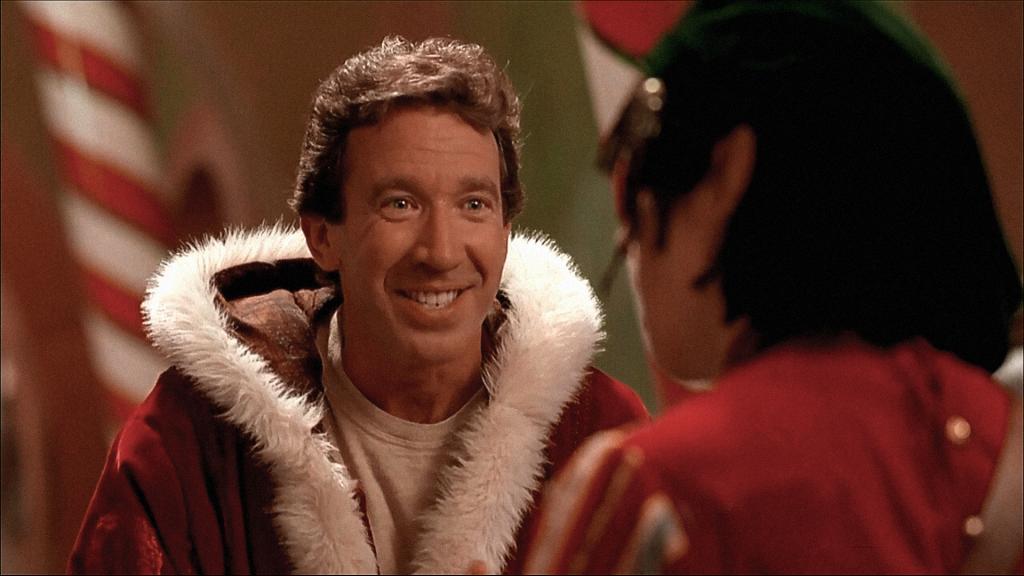
Question: What was the real name of the character Tim Allen plays in The Santa Clause? Answer: Scott Calvin
Question: How many gifts in total were given in “The Twelve Days of Christmas” song? Answer: 364
Question: Which fairy tale was the first gingerbread houses inspired by? Answer: Hansel and Gretel
Question: In the movie A Christmas Story, what was the name of the neighbors whose dog ate the Christmas turkey? Answer: The Bumpuses
Question: How do you say “Merry Christmas” in Spanish? Answer: Feliz Navidad
Question: Where did the word and idea “Christmukkah” come from? Answer: The O.C.
Question: What is the name of the last ghost that visits Scrooge in A Christmas Carol? Answer: The Ghost of Christmas Yet To Come
Question: Visions of which food danced in children’s heads as they slept in the poem “‘Twas The Night Before Christmas?” Answer: Sugar plums
Question: What gift did the Little Drummer Boy give to the newborn Christ? Answer: He played a song for him on his drums
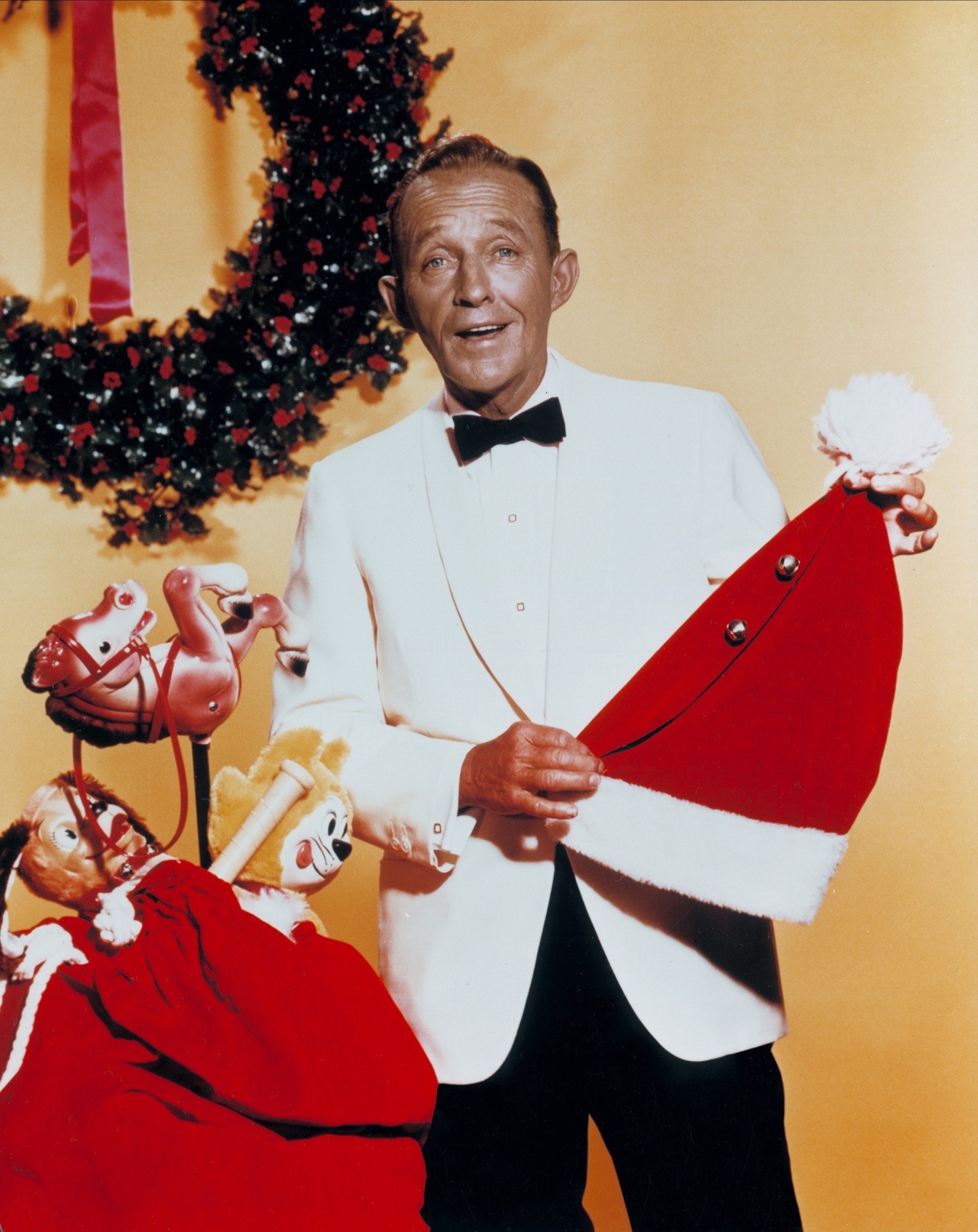
Question: What is the best-selling Christmas song ever? Answer: “White Christmas” by Bing Crosby
Question: Who wrote, “Christmas doesn’t come from a store, maybe Christmas perhaps means a little bit more?” Answer: Dr. Seuss
Question: Three of Santa’s reindeer’s names begin with the letter “D.” What are those names? Answer: Dancer, Dasher, and Donner
Question: What was Frosty the Snowman’s nose made out? Answer: A button
Question: What is the name of George Bailey’s guardian angel in It’s A Wonderful Life? Answer: Clarence Odbody
Question: In the 1964 movie Rudolph the Red-Nosed Reindeer, what was the name of Rudolph’s elf friend? Answer: Hermey
Question: What popular Christmas song was actually written for Thanksgiving? Answer: “Jingle Bells”
Question: What was the first company that used Santa Claus in advertising? Answer: Coca-Cola
Question: In “The Christmas Song,” who did the narrator see kissing Santa Claus under the mistletoe? Answer: Mommy
Question: In the movie Elf, how does Buddy get to the North Pole? Answer: He hides in Santa’s sack
Question: Where did there arise such a clatter? Answer: On the lawn
Question: What are Christmas trees also called? Answer: Yule-Tree
Every state harbors unpleasant secrets—here are 50 of the strangest ones from around the country, and why we may never learn the real truth.
Montana: The Vortex and House of Mystery
Just 13 miles from Glacier National Park you can pass through a portal in which the laws of nature are set aside: A gravitational anomaly forces trees to grow sideways and makes people appear as much as six inches shorter. A shack in the Vortex—called the House of Mystery—is the home to bizarre phenomenon: A marble rolled on an incline will travel upward, and a rope hanging from the ceiling falls in a curve.
Nebraska: The Lucky 15
{{I remember Filly had this in an open.}}
On March 1, 1950, the 15 members of the Beatrice’s West Side Baptist Church choir were supposed to meet for practice. All of the 15 were known for their timeliness, but on this day, they were all running late—every single one of them. The reasons varied, but not a single one was present when a natural gas leak caused the complete destruction of the church. Even Snopes can’t discount the mystery here: Why and how were every single one of the 15 spared a grisly death?
Nevada: Who murdered Tupac Shakur?
In 1996, hip-hop star Tupac Shakur was killed in Las Vegas during a drive-by shooting. “The story…begins with a failed attempt on his life two years earlier,” according to History, which Shakur blamed on producer Sean “Puff Daddy” Combs and rival rapper, Christopher Wallace (“Notorious B.I.G.”). Wallace was murdered six months later in Los Angeles; no arrest has ever been made in either case.
New Hampshire: The disappearance of Rachel Garden
In 1980, 15-year-old Rachel Garden bought a pack of cigarettes at a market in Newton and was never seen again. The friend whom Rachel told her family she was going to be spending the night with denied having plans with Rachel that night. A witness claimed to have seen Rachel talking to three young men outside the market, but none of the men were ever charged. In fact, no one has ever been charged, and there are no suspects. Nearly 40 years later, the case appears to be hopelessly cold.
New Jersey: The phantom sniper
In 1927, Camden was terrorized by what’s been described as phantom- or ghost-sniper. Bus and car windows were shattered and even a policeman was struck, but no bullets or casings were ever found and no one ever saw an actual sniper. One witness reported hearing a man’s laughter. But no one else saw or heard a thing. The attacks suddenly stopped in 1928. To this day, no one knows why they began or what they really were.
New Mexico: What was really going on in Roswell?
It all started in the summer of 1947 when a Roswell rancher found mysterious debris in his sheep pasture. The Air Force claimed the debris belonged to a crashed weather balloon, but the citizens of Roswell didn’t buy it. They believed it came from a UFO. Fifty years later, the military revealed that the debris came from a top-secret atomic project. So it probably wasn’t a UFO—but what was it? And why has the U.S. government come up with at least two different stories about it?
New York: Who was the Leatherman?
During the second half of the 1800s, a leather-clad hermit wandered around Westchester and Putnam Counties, never speaking, and unlike other wanderers of that time period, not looking for work. He was, however, happy to accept a meal and returned once a year—on the same day—to the homes that were generous to him. He was known to sleep in caves; his body was discovered in 1889 in a cave on the Dell family farm in Briarcliff. To this day, no one’s sure who he was or why he wandered.
North Carolina: The shadow of the bear
Going bear-hunting has its own unique meaning in Cashiers: During the autumn months, when the sun is shining, the shadow of a bear is visible on Whiteside Mountain just before sunset. Romantic Asheville suggests you “shoot” this unexplained phenomenon with your camera.
North Dakota: Eugene Butler’s crawl space
Niagara, about 40 miles west of Grand Forks, was founded in 1882 and has never been a big town. In fact, today, it has less than 100 residents. But back in the early 1900s, there were at least six more people there than anyone knew about at the time. In 1915, the bodies of six people who’d been bludgeoned to death were discovered in the crawl space of a house that had once belonged to the reclusive Eugene Butler. He died in 1911, several years after being committed to a mental hospital. Their identities remain a mystery to this day.
Ohio: The Circleville letters
In 1976, residents of Circleville began receiving harassing letters, taunting and threatening them with tidbits about their personal lives. After the murder of one resident and the attempted murder of another, police arrested Paul Freshour, but while he was in prison, the letters continued. Six months after Freshour’s release, television’s Unsolved Mysteries aired a segment—only to receive its own short letter: “Forget Circleville, Ohio… if you come to Ohio, you el sickos will pay. The Circleville Writer.” The identity of the letter writer remains unknown.
Oklahoma: The Jamison Family
In 2014, Bobby and Sherilynn Jamison drove out to look at a property in Red Oak they were interested in purchasing. Their truck was discovered days later, along with their wallets, IDs, phones, $32,000 in cash, and their dog. Their remains, along with their young daughter’s, were discovered by hunters a month later. No cause of death could be determined, and no one knows what happened to them, although theories abound, including that the family faked their deaths and joined the witness protection program, and the family’s supposed involvement with cults and/or witchcraft.
Oregon: The mysterious shrieks of Forest Grove
The small town of Forest Grove is generally a quiet town, but in 2016, the quiet was shattered by reports of an otherworldly shrieking sound that seemed to emanate from nowhere and everywhere all at the same time. Some managed to record the screeching sound, which has been described as being like that of a train careening wildly on metal tracks—except there’s no train nearby. The shrieks ceased soon after, and no one has ever been able to figure out what caused them or where they might have been coming from.
Pennsylvania: Boy in the box
In 1957, the body of a young boy was discovered in a cardboard box in the woods outside Philadelphia. Authorities failed to identify him, and no one came forward looking for a boy that fit his description. The crime scene yielded no clues, but in 1960, a psychic led the police to a foster home where the boy might have lived. But a definitive connection between the boy and the foster home couldn’t be made, and the case remains cold all these years later.
Rhode Island: Where is Adam Emery?
In 1993, Adam Emery disappeared just hours after being convicted of murdering 20-year-old Jason Bass in a road rage incident. (Emery was out on bail pending formal sentencing.) Police found his car abandoned on Newport Bridge. Less than a year later, his wife’s remains were found in Narragansett Bay. Some believe Adam and his wife jumped to their deaths from that bridge, but the FBI still considers Emery one of America’s most wanted criminals.
South Carolina: The Lizard Man
Starting in the summer of 1988, Browntown residents began seeing what’s now referred to as the “Lizard Man,” a seven-foot-tall creature with red eyes and incredible, superhuman strength. The first sighting involved a car being “mauled” by the creature. “To this day, the mystery hasn’t been solved,” reports the Smithsonian, and there have been sightings as recently as 2015.
South Dakota: The strange fate of Tom Keuter
In 1994, Tina Marcotte called a friend to say she had a flat tire but that her coworker, Tom Kueter, was going to help her out. Tina was never seen or heard from again, and when Tom was questioned by police, he disputed that he’d been in touch with Tina on that day. The next day, Tom was found dead: He had been run over by his own forklift. Was it an accident? Suicide? Homicide? And what happened to Tina Marcotte?
Tennessee: The Craigmiles Mausoleum
In 1871, Nina Craigmiles was killed at the age of seven when the buggy she was riding in was hit by a train. Her family had a mausoleum built for her (and future deceased members of the Craigmiles family) of fine white Italian marble. Shortly after Nina was placed there, red streaks and splotches began to appear in the marble. Efforts to clean the marble failed, and each time a family member’s body was placed in the mausoleum, more red stains appeared. There’s no scientific explanation for the stains; some believe they are Nina’s tears.
Texas: The girl behind the Amber Alerts
Amber Hagerman was a nine-year-old Arlington Girl Scout when she was kidnapped while riding her bike on January 13, 1996. A witness quickly told the police he’d seen a girl being forced into a black van. Despite a massive search, Amber was never seen alive again. Her body was found five days later about four miles from where she had been taken. Her killer has never been found, but her abduction led to the invention of “Amber Alerts.”
Utah: Jean Baptiste’s great escape
Jean Baptiste was a notorious grave robber in Utah. When his grave-pillaging came to light in the late 1800s, Baptiste was banished to a remote island in the Great Salt Lake (the equivalent of solitary confinement). Three weeks later, he was gone. What little evidence authorities could find indicated that he might have built a raft in order to escape. But he was never seen or heard from again.
Vermont: The Bennington Triangle
The Bennington Triangle refers to an area of Vermont surrounding Glastenbury Mountain where several people have disappeared without a trace. These include a trail guide who vanished in 1945 while leading a hunting party, college student Paula Jean Weldon, who disappeared the following year from a hiking trail, and James Tedford, who seemingly vanished from a bus headed for Bennington. Since the disappearances were clustered in the 1940s, there’s speculation of a serial killer. But others believe paranormal forces are at work.
Virginia: The Old House Woods
In the quaint seaside town of Diggs, Virginia’s “Old House Woods” was once a popular hiding place for soldiers and pirates, so naturally, it’s become a hotspot for paranormal activity, including sightings of a ghostly woman and accounts of skeletons dressed in armor wandering the woods. People have reported finding themselves filled with dread while walking in the forest. Horses are known to become spooked for no apparent reason. Even paranormal investigators are creeped out, often unable to continue their investigations.
Washington: How Jason Padgett became a math genius
In 2002, Jason Padgett, a furniture salesman, jock, and self-described “partier” from Tacoma, was savagely attacked by two men outside a bar, leaving him with a severe concussion. When he recovered, he had acquired the ability to “visualize complex mathematical objects and physics concepts intuitively,” according to Live Science. Padgett is now one of 15 to 25 cases of so-called “acquired savant syndrome”—people who developed abilities after suffering a head injury.
West Virginia: The Octopus mystery
Danny Casolaro was a freelance writer who came to Martinsburg, West Virginia in 1991 to meet with a source about a story he code-named “the Octopus,” which involved high-ranking government officials and an international cabal. Casolaro was found dead in his hotel room. Authorities labeled it a suicide, but Casolaro’s family believe he was murdered.
Wisconsin: The demon bunkbed in the Tallman house
In 1987, the Tallman family brought a secondhand bunk bed to their home in Horicon. For the next nine months, the family was haunted by what appeared to be poltergeists—clock radios turning on by themselves, a paintbrush that dipped itself in paint—and worse, including the children becoming ill despite no previous health problems and an unexplained fire. The hauntings ceased only when the Tallman family destroyed the bunk bed.
Wyoming: Devil’s Tower
Various Native American tribes view the Devil’s Tower National Monument as a sacred site and have their own origination stories about the massive stone structure. And science fiction fans may recall that the mythology of the structure played an important role in the film, Close Encounters of the Third Kind. Geologically speaking, it’s made of volcanic material and is connected in some way to an existing or previously-existing volcano. But precisely how it came to exist continues to confound scientists.
Every state harbors unpleasant secrets—here are 50 of the strangest ones from around the country, and why we may never learn the real truth.
Alabama: The Brasher-Dye Disappearance
The Dye brothers, Billy Howard and Robert, disappeared in 1956 along with their cousin, Dan Brasher. They were last seen leaving a relative’s house in rural Jefferson County in a 1947 green Ford, but no one even noticed they were missing because they were known to be heavy drinkers and often disappeared for days while sleeping off a binge. When a missing person’s report was filed, investigators’ questions were met with silence or tall tales—for example, of a bulldozer burying a car under a highway. The case remains unsolved.
Alaska: The Investor murders
In 1982, an $850,000 fishing boat named the Investor was seen burning off of the coast of Craig. Inside, eight bodies were found (the owner, his pregnant wife, their two daughters, and four crewmen) They’d been shot to death and left to burn. One possible suspect was tried, but he’s been acquitted due to a lack of hard evidence. Authorities still haven’t determined a motive. The case is Alaska’s biggest and most famous unsolved mystery.
Arizona: Searching for Robert Fisher
Robert William Fisher (born 1961) is one of the FBI’s ten most wanted fugitives. He’s wanted for the murder of his wife and two kids and for blowing up the house in which they lived in Scottsdale on April 10, 2001. Fisher, the only suspect in the case, disappeared the night of the fire and hasn’t been seen since. It’s possible he committed suicide, but equally possible he’s living under an assumed identity. The FBI is offering a $100,000 reward for information leading to his arrest.
Arkansas: The Gurdon Light
Ever since the 1930s, a floating light appears above the railroad tracks near Gurdon sometime in late October. It’s not in dispute whether the light appears because thousands of people have seen it. What remains a mystery is what causes the light. Some believe it’s the ghost of William McClain, a railroad worker murdered in 1931, according to the Encyclopedia of Arkansas. Others believe it’s a natural phenomenon caused by swamp gas or rock quartz beneath the land. It was featured on television’s Unsolved Mysteries in 1994 and remains unsolved to this day.
California: Did anyone survive the “Escape From Alcatraz”?
The supposedly escape-proof prison named for Alcatraz Island in San Francisco Bay claimed the lives of 33 prisoners who attempted to flee. But not necessarily John Anglin, Clarence Anglin, and Frank Morris: In 1962, they escaped from their cells through holes they’d drilled in the wall of their cell. Unfortunately, that’s where the story ends. “What happened next remains a mystery,” reads a portion of an FBI history of the investigation, according to NBC News. The case was closed in 1979, but people (including the families of the escapees) still wonder.
Colorado: The Black Forest haunting
Within weeks of moving into their home in the Black Forest area of Colorado Springs, “all hell broke loose” for the Lee family, according to Our Community Now. There were flashing lights, footsteps, orchestra music, strange smells, and even sightings of ghostly faces. The Lee family lives there to this day, still reporting the same phenomena. No one can explain what it is, although a Hopi shaman who was called in to consult claims the house is located on a “rip in the space-time continuum,” where spirits can move freely between worlds.
Connecticut: The shallow graves beneath New Haven Green
In 2012, Hurricane Sandy caused a tree to fall on New Haven Green. Tangled in the roots was a human skull, dating back around 200 years. An archeological dig followed, yielding more body fragments, as well as coffin nails. It’s suspected more than 5,000 bodies are buried under the Green and that they may have been “dragged out in the middle of the night, wrapped in a sheet, and buried in shallow, unmarked graves.” Some theorize the people died during a terrible epidemic—though no one’s sure of what.
Delaware: The inexplicable murder of Jane Marie Prichard
Jane Marie Prichard was conducting botany experiments in Blackbird State Forest in September 1986 when she was shot to death; campers stumbled across her body later. Many hunters were in the forest that day, but investigators quickly ruled out an accidental shooting, according to Delaware Online. What they couldn’t figure out and still haven’t, is why someone wanted Prichard dead, and who might have killed her. The case remains cold to this day.
Florida: The spontaneous combustion of Mary Reeser
In July of 1951, authorities found the body of 67-year-old Mary Reeser in her St. Petersburg apartment. Or more accurately, the pile of mostly ash that once was Mary Reeser’s body (part of her lower leg and some of her spine remained). Apparently, her body had been almost entirely cremated, which is mind-boggling when you consider that cremation requires three hours of burning in a 3,000-degree fire. Even more bizarre—only Reeser’s body had burned: The rest of her apartment was intact, even a pile of newspapers beside her body.
Georgia: The Bleeding House
One night in 1987, Minnie Winston saw blood on the floor of her Atlanta house. Terrified, she ran to find her husband. He was fine, but there was more blood… everywhere. On the walls, oozing from the floor, seeping up from under kitchen appliances. She and her husband called the police, who found no evidence of a break-in. What they were able to surmise was that the blood had come from a living human. No one has ever figured out where or whom the blood came from.
Hawaii: What happened to Lisa Au
More than 35 years ago, 19-year-old Lisa Au disappeared without a trace, her car abandoned along a highway in Kailua. Her body turned up ten days later, naked and decomposing. The coroner couldn’t determine the cause of death, but police consider the case a homicide—perhaps Hawaii’s most notorious since the police believe that Lisa may have been abducted by someone posing as a police officer.
Idaho: Strange mutilations
The towns of Jerome and Bliss have been plagued by bizarre mutilations since the 1970s—human, cattle, and deer (genitals removed, the bodies drained entirely of blood, and no discernable footprints or other forensic evidence left at the scene). The official explanation by law enforcement is “cult killings,” but no arrest has ever been made, and no cult has ever been identified.
Illinois: The Mad Gasser of Mattoon
During the 1940s, law enforcement received more than two dozen cases of “gassings,” in which the victims reported paralysis, coughing, nausea, and vomiting after smelling a strange, noxious odor in their homes. No physical evidence was ever found, however, and the victims always survived. Some believe the “attacks” were a case of mass hysteria. Others believe the “Mad Gasser” actually existed or that the “attacks” were really the result of paranormal activity. The truth may or may not be “out there.”
Indiana: The mysterious fire poltergeist
In 1941, a farmer in Odon had breakfast with his family and then headed out to his barn to begin his chores. Then he noticed smoke coming out of an upstairs window in his house. He ran back, and with the help of the volunteer fire department put out the fire in an upstairs bedroom—only to have another fire break out in another room. All day long, as soon as they put out one fire, another would start elsewhere in the house—28 in all. Believing his house to be haunted by poltergeists, the farmer tore it down and built a new one. The cause of the fires has never been determined.
Iowa: The boy with no appetite
In Cedar Falls, there lives a boy who never gets hungry or thirsty. It all started in 2013, when the boy, Landon Jones, who’d been completely fine up until then, came down with a bacterial infection in his left lung. Ever since then, he’s never felt hunger or thirst. He only eats and drinks because he is reminded to do so. No one knows what caused this affliction.
Kansas: The baffling disappearance of Randy Leach
In 1988, Randy Leach, a teenager from Leavenworth County, disappeared from a high school party and has never been found. What makes the case stranger is there’d been rumors of satanic cult activity in the county in the days before Randy’s disappearance, and the party site had been cleaned meticulously before investigators arrived; soon after, it burned to the ground. Most people who’ve cooperated in the investigation have turned up dead, and county officials decline to pursue further leads. There are theories about what really happened that night, but we may never know the truth.
Kentucky: The meat shower
Not a meteor shower—a meat shower. One day in 1876 over a farm in Kentucky, the sky rained down chunks of meat of indeterminate origin (was it bear? mutton? No one knew). The only explanation anyone has ever been able to offer is that the meat was the prey of vultures, who had gorged themselves and then vomited while flying overhead.
Louisiana: The Unknowable Marie Laveau
Marie Laveau lived in New Orleans at the turn of the 19th century, and charmed, titillated, and unnerved the community with her practice of voodoo. Laveau told fortunes and created potions and charms on request. She held spiritual ceremonies that led people to become possessed; she also could magically heal the sick. However, stories of her feats have been passed along from one generation of voodoo practitioners to the next, making it impossible to know the truth behind the tales.
Maine: What happened to Sarah Ware?
In 1898, the brutally beaten body of 52-year-old Sarah Ware was discovered in a wooded area of Bucksport. She’d been missing for two weeks. Her killer is believed to have been a neighbor, but when the blood-stained hammer believed to be the murder weapon disappeared, the neighbor was acquitted. The case still haunts the town to this day, not just because the case was never solved, but also because the circumstances of her burial are so strange: her head and body are buried separately, with no gravestone.
Maryland: House of horrors
In 2017, a Bethesda house fire revealed a disturbing find: The body of a man in the basement. Further investigation revealed a mysterious network of tunnels below the foundation of the house that extended all the way to the street. The house owner, Daniel Beckwitt, has since been charged with the death of Askia Khafra (the body in the basement); investigators allege that Beckwitt hired Khafra to dig the tunnels but put him in danger due to the unsafe work environment. But the purpose of the tunnels and Beckwitt’s motives remain a mystery.
Massachusetts: The Black Flash of Provincetown
From 1939 to 1945, the people of Provincetown were terrorized by a being they called the “Black Flash.” The figure first appeared to a group of children—tall, dressed in black, and growling ominously. In 1945, a group of policemen actually reported seeing the figure leap a 10-foot fence. About a month later, a man threw boiling water at the figure, sending it screaming into the night. It was never seen again.
Michigan: What exactly is the Paulding Light?
In 1966, a group of teens reported having seen a mysterious light above a valley in Paulding. Scientific explanations such as swamp gas have been rejected in favor of the more popular paranormal theory that the light is from the lantern belonging to local brakeman who was killed while attempting to stop an oncoming train. Michigan Tech students believe it’s a phenomenon created by headlights from a nearby road, but the mystery remains officially unsolved.
Minnesota: The frozen girl, defrosted
In 1981, Jean Hillard’s car went off the road near Langby, and the next day, her frozen body was discovered, her eyes wide open, her flesh frozen so solid that doctors couldn’t pierce it with a hypodermic needle. Her body temperature was too low to register on a thermometer. But when Hillard thawed, she was very much alive and made a full recovery.
Mississippi: Phantom Barber of Pascagoula
In 1942, Pascagoula was plagued by a series of peculiar home invasions: “The intruder took locks of hair from each of the people whose homes he broke into,” according to Southern Living. Although one man became a suspect, he was never formally charged and passed a lie-detector test; no one has ever figured out who the Phantom Barber really was or why he did what he did.
Missouri: How Robert Rayford contracted AIDS
In 1969, 16-year-old Robert Rayford was hospitalized in St. Louis for extreme, unintended weight loss and a host of infections. The doctors had no answers, and Rayford died. A few years later, HIV, the virus that causes AIDS was discovered in this country; subsequently, medical testing of Rayford’s blood revealed that he had the virus. Somehow, Rayford, who’d never been out of the country and never had a transfusion, had died of AIDS nearly a decade before it was discovered.
Marisa Tomei’s birthday is this month, so I thought I’d look at little known facts about My Cousin Vinny, which I think is her breakout movie.
From Mental Floss:
My Cousin Vinny was inspired by an encounter with a guy hoping to pass the bar.
My Cousin Vinny was one of the earliest ideas screenwriter Dale Launer ever had. “In the very early ’70s, I met a guy who … was waiting the bar exam results,” he told ABA Journal in 2012. Launer asked what would happen if he didn’t pass, and the guy said he could just take it again, and if he didn’t pass that time, he’d just take it again. And again. Until he passed. “So I said, ‘What’s the most times somebody has taken and failed and finally passed?’” Launer recalled. “He said, ‘Thirteen times.’ … I always thought that guy who took 13 times to pass the bar, or girl, is probably out there practicing law in some capacity. Now, how would you feel if suddenly you learned that guy is your lawyer? … What if you have been accused of a crime and clearly, you have what appears to be the worst lawyer in the country?”
Robert De Niro was Launer’s first choice to play Vinny Gambini.
After the script was written, a casting meeting was called and Launer met with Fox’s president, vice president, and CEO. When Launer suggested Robert De Niro for the part of Vincent LaGuardia Gambini, “the prez looked uncomfortable, embarrassed that I would suggest such an actor,” Launer told Writer Unboxed. “‘De Niro, uh … well … he’s not funny. And … his movies don’t make money.’ … Now … the only movies De Niro acts in that make money? Comedies! So, I feel vindicated. But I wish I could’ve been given a big fat check when I [ended up] being proved right.”
Joe Pesci based Vinny on guys from his neighborhood.
“There’s a lot of people around like that in smaller neighborhoods, so I put a few of them together and [came] up with Vinny,” Pesci, who grew up in New Jersey, told The Movie Show in 1992.
The studio initially wanted to cut Mona Lisa Vito from My Cousin Vinny.
n 2007, Launer told Writer Unboxed that the studio had wanted to get rid of Vinny’s Chinese-food-loving, unemployed hairdresser/car expert girlfriend. To keep the character, Launer reluctantly added a scene, requested by the studio president, to the second draft: “He wanted Vinny’s girlfriend to complain that he’s not giving her enough attention,” Launer said. “You often see movies where some guy is hell bent on accomplishing something, and you’re on the ride with him—and his wife/girlfriend/mother is feeling neglected. And she complains. And I HATE this! … Watching those scenes is simply boring. You want to fast forward it. Awful.”
Eventually, he said he “figured out a way where they’d HAVE to keep her and embellished her character … she does complain, but at least apologizes for bringing it up, and you don’t hate her for bringing it up largely because it’s funny. … Now, I thought if she brought this up at this point where he is simply going through hell—he should be pissed off. And he is. So he kinda tears into her.” Mona Lisa’s “biological clock” rant (above) became one of his favorite scenes in the script.
The studio took a chance on Marisa Tomei.
Tomei didn’t have a lot of film experience when she landed the part of Mona Lisa Vito. “I’d seen her [on the set of Oscar] working with John Landis and [had] gone with [him] to the cutting room to look at her performance,” Lynn said in DVD commentary.” She was playing a 1920s blonde flapper, very different, but I could see how funny and talented she was. And we got her in to read. She read wonderfully and we persuaded the studio to let me go with this unknown actress in the role. It was the best decision I ever made.” Lynn said he knew they’d gotten the right actress for the part when he saw the dailies from the first scene they shot with her—Mona Lisa and Vinny’s arrival in Alabama, when she tells him, “Oh, yeah, you blend.”
Marisa Tomei is from Brooklyn, but she doesn’t sound like her My Cousin Vinny character.
Tomei grew up in the Flatbush section of Brooklyn, so “I really knew the neighborhood,” she told The New York Times in 1992. But that doesn’t mean she sounded just like Mona Lisa. “I don’t think that extreme, but I could be wrong,” she told NPR’s Fresh Air in 2010. “My mom was an English teacher, and she was on my butt about that kind of thing and correcting my speech from a young age.”
The legal system is portrayed very accurately in My Cousin Vinny.
Lynn has a law degree from Cambridge University, and, he said in DVD commentary, “I get terribly irritated when I see films in which the legal procedure is obviously wrong.” In addition to Launer’s research, Lynn made adjustments to make sure the legal proceedings were correct. “I’m very pleased with the fact that, although this is heightened for comedic purposes, everything you see legally in this film could happen and is approximately correct,” he said. “Which, by the way, makes it the more frightening.” Lynn even sat in on a murder trial in the Monticello, Ga. courtroom that served as the inspiration for the Vinny courtroom set. “Some of the lines in the [Vinny trial] came directly from that trial,” he said, including Lane Smith’s pronunciation of heinous (“high-a-nus”) and his line about “our little old ancestors” in the opening remarks.
One scene in My Cousin Vinny was lifted from a book about comedy and the law.
The book featured real moments from actual courtrooms. Launer lifted the memorable voir dire scene of a potential juror for Vinny. The lawyers “ask them their opinion on capital punishment, and they said something like, ‘I think it should be left up to the victims’ families,’” Launer told Abnormal Use. “Then they then described exactly what the murderer did, and then that the juror actually said, ‘Fry them.’ So I put that right in the movie.”
My Cousin Vinny shot scenes in an actual prison.
The cast and crew shot for several days in a state prison in Gainesville, Georgia, in the wing where prisoners are kept in solitary confinement. “It does have a death row, right beside the wing where we were shooting, and I looked all around death row,” Lynn said in DVD commentary. “It was a very frightening building, and we were all pretty scared when we were there, even though we had guards with us at all times.”
It took up to 40 minutes to get from the outside of the building to where they were shooting inside. Whitfield told Abnormal Use that “When Ralph and I were walking through the prison the first time like holding our blankets and walking to our cell and you hear the prisoners screaming at us. Those are real prisoners, and they really were yelling at us. … They had to tone it down with what they put in the movie because they were saying some horrible stuff. Ralph and I were petrified.”
The prison guards in My Cousin Vinny aren’t actors.
The guards in the movie were real prison guards. The production used real prisoners as extras twice: once in the background when Stan and Bill are being brought into the prison, and during a short scene where the duo plays basketball during exercise time. “The prisoners were all extremely cooperative and did exactly what we asked,” Lynn said in DVD commentary. “I don’t know what incentives or threats were made in order to achieve that.”
Joe Pesci learned how to do a card trick for My Cousin Vinny.
In the scene where Vinny is convincing Bill to let him represent him, Vinny does a card trick. “It was important to me that the card trick wasn’t faked,” Lynn said in DVD commentary. “Of course you can fake anything by cutting and showing another shot, but I talked about this to Joe before we started shooting, and he learned how to do this card trick. So the scene in which he does it does not have any cuts in it. He actually fools the audience before their very eyes. He did it beautifully. I thought Vinny’s argument would be much less powerful if the audience could say oh well that was just faked by the way the scene was cut.”
The word yutes came from a real conversation with Joe Pesci.
The conversation between Vinny and Judge Chamberlain Haller about “two yutes” became “perhaps the most quoted piece of dialogue from the film,” Lynn said in DVD commentary. It was inspired by a conversation that Lynn and Pesci had when they were prepping the film at the Mayflower Hotel in New York City. “He said something about ‘these two yutes’ who were on trial and I said ‘what?’ and he said ‘what?’ and I said ‘what’s a yute?’” Lynn recalled. “I realized as we were having that conversation that that was something that ought to happen between Vinny and the judge, so I simply wrote it in the way it happened naturally.”
You can visit many locations from My Cousin Vinny.
Though the film is set in Alabama, the production actually shot in three separate small towns in Georgia. “Apart from the courtroom,” which was a set, “virtually everything was shot on location,” director Jonathan Lynn said in Vinny’s DVD commentary. “It wasn’t a very expensive movie, and that was the cheaper way to go. It also had more authenticity.” Which means you can visit a number of the film’s locations—including the Sac-O-Suds convenience store.
My Cousin Vinny was praised by the law community.
“The movie is close to reality even in its details,” lawyer Maxwell S. Kennerly wrote on his blog, Trial and Litigation. “Part of why the film has such staying power among lawyers is because, unlike, say, A Few Good Men, everything that happens in the movie could happen—and often does happen—at trial.” Professor Alberto Bernabe of The John Marshall Law School, who hands his students a list of law movies organized by category, puts Vinny under “Education,” not just because “it provides so much material you can use in the classroom. For example, you can use the movie to discuss criminal procedure, courtroom decorum, professional responsibility, unethical behavior, the role of the judge in a trial, efficient cross-examination, the role of expert witnesses and effective trial advocacy.”
The film has also been praised by a Seventh Circuit Court Judge; referenced by Supreme Court Justice Antonin Scalia; and made it into a legal textbook.
Maria Tomei found out about her Oscar nomination for My Cousin Vinny in an unlikely place.
Tomei was sleeping on a friend’s couch—a friend who was pregnant and due at any moment—when she found out about her Best Supporting Actress Oscar nomination. Her friends were watching TV, and “there were shouts from the other room, and they awoke me,” she told David Letterman in 1993. “I didn’t know if she was going into labor or what.” Tomei would go on to win the Oscar—and yes, despite the urban legend that 74-year-old presenter Jack Palance announced the wrong name, the actress really did win.
There could have been a sequel to My Cousin Vinny.
In 2004, Lautner’s bio noted that “Joe wanted to do it, but Marisa didn’t. Now she does, and so does Joe, but the studio isn’t terribly interested in the remake, feeling too much time has passed since the initial release. Perhaps everyone who liked it has passed on. Or changed their minds. Launer hopes they will see the light.” According to Whitfield, the sequel might have involved Vinny going to Europe.
Joe Pesci made an album as Vinny Gambini.
Before he was an actor, Pesci was a lounge singer; six years after My Cousin Vinny came out, he released an album called Vincent LaGuardia Gambini Sings Just for You. It features the songs “Wise Guy,” “Take Your Love and Shove It,” “Yo Cousin Vinny,” and “I Can’t Give You Anything But Love,” a duet with Tomei as Mona Lisa. It debuted at No. 36 on the Billboard Heatseekers Chart.
Patriots coach Bill Belichik referenced My Cousin Vinny during Deflategate.
Rudy Guiliani isn’t the only person who has randomly referenced My Cousin Vinny during a press conference. “I would not say that I am Mona Lisa Vito of the football world,” Belichik said when asked what he knew about football pressure. When she heard, Tomei texted Pesci. “We thought it was pretty funny,” she told The Rich Eisen Show.
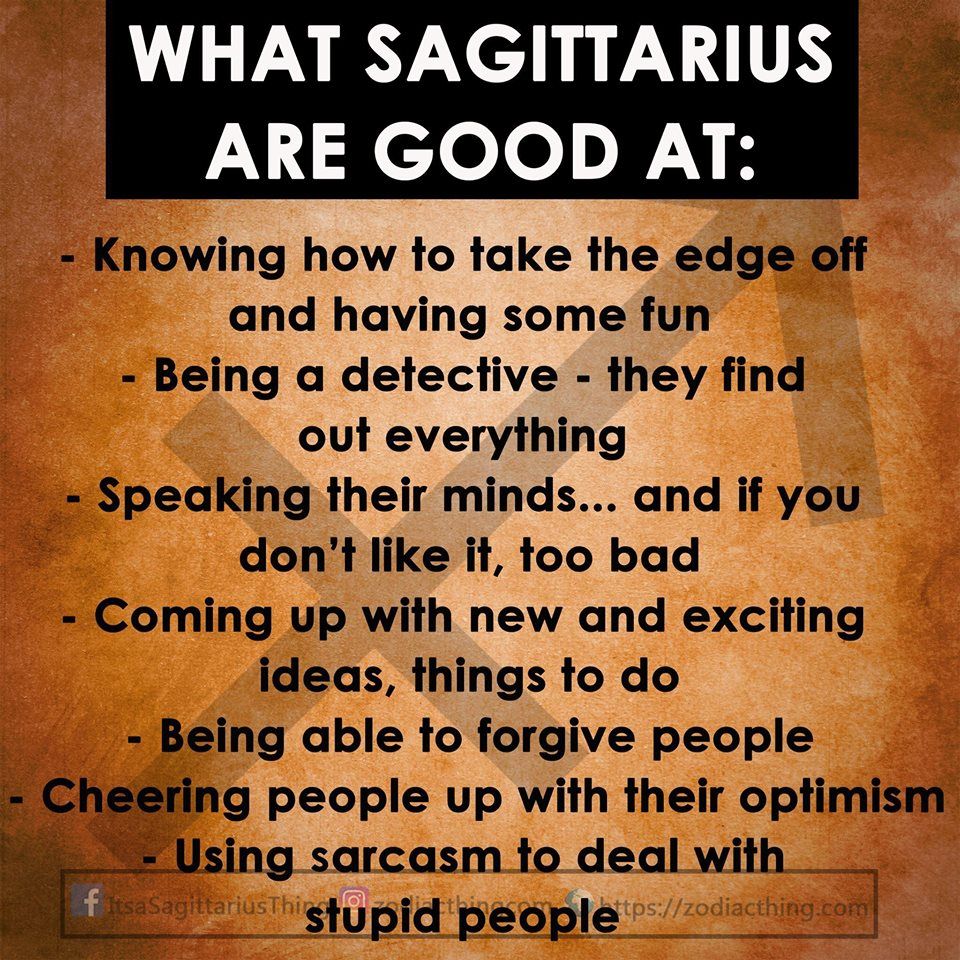
Independent and strong-willed, Sagittarius personalities are all about going off the beaten path. Sagittarius isn’t afraid to step away from the pack, and is a natural born leader who goes after what he or she wants, regardless of what other people think. Sagittarius is a born adventurer, and loves solo travel and exploration. Sagittarius also loves exploring the inner workings of their minds, and love stretching their horizons through a good book or movie.
Sagittarius is open-hearted, generous, and big-spirited, but Sagittarius is always truthful. Because of this, they may hurt others’ feelings, or may be called out for not having tact or empathy. The latter is not true. With their keen imagination, Sagittarius is adept at putting themselves in another person’s shoes—that’s why so many Sagittarius are successful actors—but they do not feel the need to beat around the bush or lie. You can trust a Sagittarius to tell you what they really think. You can also trust a Sagittarius, period. Unlike other signs, they won’t spill any secrets.
In relationships, Sags are adventurous and giving, able to adeptly try new things or break down barriers. In relationships, Sags will be honest and true to themselves, and that may mean that they will move on from a relationship. If it’s not working, it’s not working, and a Sagittarius won’t stay for the sake of another person’s feelings. A Sagittarius will always be honest and in check with their emotions, and a Sagittarius will not engage in emotional blackmail.
Sagittarius is a steadfast friend and a creative thinker; a great person to have on a work team, as they have infectious energy and enthusiasm. They aren’t looking for constant feedback, and can take a project and run with it. A Sag can also be an adept entrepreneur or CEO. A Sagittarius is smart, capable, and a true trailblazer.
Sagittarius Love Style
Ruled by expansive Jupiter, Sagittarius is big-hearted, open, and always looking beyond a checklist. A Sagittarius rarely has a “type,”— they are always intrigued by the individual, and don’t make any assumptions about people until they’ve truly met and spoken with them.
Sagittarius Friendship Style
Sagittarius is loyal, loving, and the type of person you can feel has your back even if you’ve only known them for 24 hours. That said, a Sagittarius isn’t interested in your drama, and doesn’t have a lot of patience for friends who say one thing and do another.
Sagittarius Career, Money & Success Traits
Sagittarius’s greatest career strength: Work-life balance. A Sagittarius may work hard and push themselves to the max, but only because they love their job. A Sag instinctively knows that work can help them live their best life, and works hard so they can also play hard.
Sagittarius Greatest Gifts
Sagittarius is adept at blazing their own paths, and can always go it alone. Sagittarius doesn’t need a roadmap, and can easily conceptualize ideas and opportunities that others may not easily “see.” Sagittarius doesn’t need permission or approval, and has a strong sense of self that allows them to always feel sure-footed, even where others may be unsure or insecure.
Sagittarius Greatest Challenges
Sagittarius can sometimes be far too blunt, and put their own needs above others. You don’t need to veer from your values, but sometimes, a white lie saves all. It can also be helpful to be part of the pack now and then. Sagittarius is so good at doing things independently, but sometimes it can be faster, smarter, and more fun to do things as part of a group.
Sagittarius Secret Weapon
Their independence. Sags don’t need other people’s approval, opinions, or advice. A Sag loves hanging out with herself, and feels like doing things solo can only help her connect more to her deepest self. Sagittarius uses solo time as a much-needed reboot. While an hour stuck in traffic during a car commute could be untenable to anyone else, to a Sag it’s a form of self-care.
Happy Thanksgiving one and all! I imagine I will be in and out all day, and there probably will not be a lot of news today, so how about some puzzles and giggles?
I like the “little known facts” article that are posted about older television series. I found this one on amomama website.
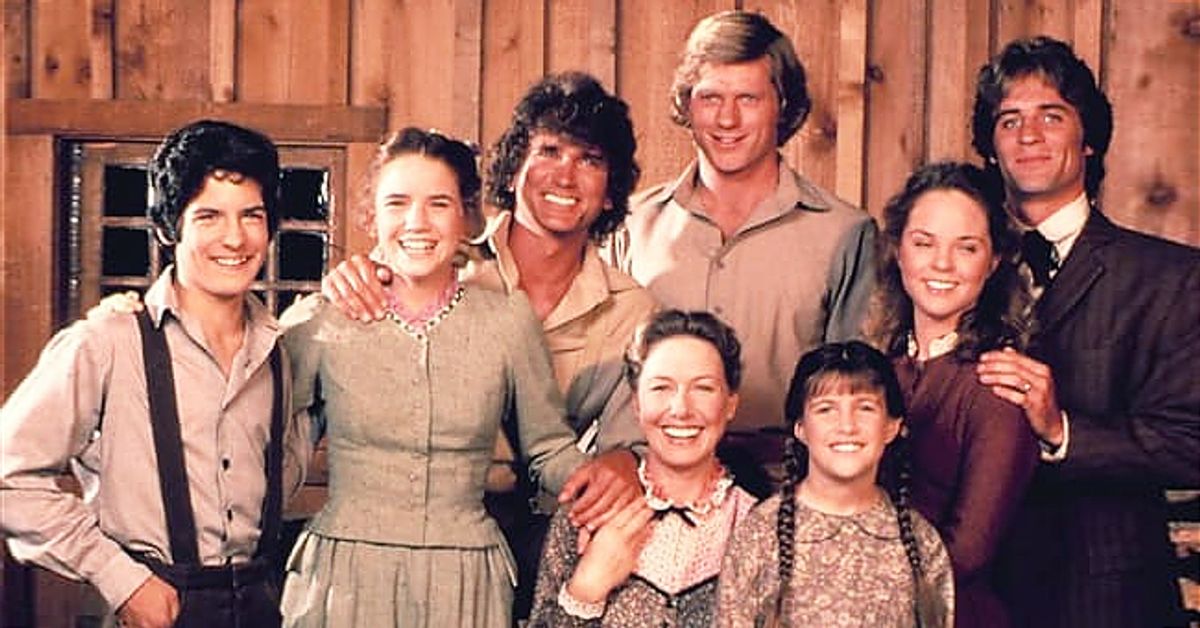
“Little House on the Prairie” aired for a total of nine seasons until it came to a halt in 1982. Viewers and fans spent their days watching the characters, Laura, Mary, Carrie, and Grace growing up, but avid watchers only noticed some behind the scenes facts.
THE THEME SONG WAS QUITE SIMILAR TO THAT OF ANOTHER SHOW
David Rose, the composer and songwriter of the hit series, was responsible for getting the theme song stuck in the heads of loyal fans. However, the tune is quite similar to that of the show “Bonanza,” which ended a year before “Little House on the Prairie” began. It turns out; Rose is also the man behind the “Bonanza’s” theme song; hence, the close themes. An additional connection between the two shows is Michael Landon, who both starred in “Bonanza” as “Little Joe” and in “Little House on the Prairie” as Chris Ingalls.
A CLOSE DISMISSAL
Hitting their ninth season called for a celebration after the show’s almost cancellation by the time season two aired. NBC decided to move its Wednesday night time slot to Monday nights to gain more ratings. However, come the fourth season, the network was once again debating of having it canceled. Thanks to the show’s good ratings, the management decided not to push through with their initial plan.
THE OLESONS SIBLINGS ARE REAL-LIFE SIBLINGS
If fans ever noticed the last name of the actors who play Willie and Laura Oleson are the same, that’s because they are real-life siblings. Willie, played by Jonathan Gilbert, is the adopted younger brother of Laura, played by Melissa Gilbert. (((I dispute this one—Melissa Gilbert played Laura Ingalls not Laura Oleson.)))
LAURA AND NELLIE WERE REAL-LIFE BEST FRIENDS
While Nellie and Laura started their relationship as enemies, their distinct personalities later brought them together, until forming a good friendship. In fact, Nellie’s bouquet was tossed to Laura during her wedding. In reality, Nellie, played by Alison Arngrim, became close friends with Gilbert and even played games together off-screen, to pass the time on set. The manipulative character Nellie portrayed on screen was nothing close to how she was in real life.
INTENSE ADDICTIONS
As filming can be a pretty tough job that just drains the employees the entire day, many cast and crew members turned to drugs and alcohol for solace and strength; hence, seeing both on set was nothing new. On average, the crew would finish two cases of Coors beer per day, and on hectic days, which they named “three-case days,” they would finish so much more and drown out the stress can after can.
CURSE OF THE CANCER
To say it was a curse may have been just an exaggeration, but unfortunately, several cast members of the show were diagnosed with cancer at some point in their lives, with others even passing away. Among those with the said ailment were Michael Landon, who got pancreatic cancer, Victor French, Kevin Hagen, and Charlotte Stewart, who managed to survive. It is believed that the reason behind the disease was radioactively contaminated materials on set.
MICHAEL LANDON WAS A WORK OF ART – OR SO HE BELIEVED.
Michael had very high praise for his personal physique, making sure that he never passed on an opportunity for his character to appear shirtless for the audience. Sporting tight-fitting prairie trousers, the Pa Ingalls star believed the best way to go was always a natural look; free of cosmetics treatment.
NELLIE OLESON’S CURLS WAS THE RESULT OF A WIG.
The character played by Alison Arngrim sported a unique hairdo of fashionable curls. During the initial weeks of filming the show, Arngrim’s hair was masterfully styled using sausage curls coupled with heating irons. For cost and time efficiencies, it was decided that this hairdo had to be sourced from a wig. The wig had to be held in place by quite a number of hairpins, which, at times, caused Arngrim’s scalp to bleed.
MICHAEL LANDON HUMORED EVERYONE
Michael Landon was dubbed the show’s clown for his antics and constant pranks on the crew and cast members. His humor radiated a light atmosphere during taping, which made the set a little less exhausting.
LAURA AND MANLY’S WEDDING WAS NOT WHAT YOU THOUGHT IT WAS
Although portraying a 17-year-old character in Laura, Melissa Gilbert was described to be an inexperienced 15-year-old, with all the innocence of the world. Her on-screen kiss with the character Almanzo Wilder, played by Dean Butler, was considered only the third time she has ever had a lips-to-lips with a boy, even startling her a bit with his beard stubble. Romantic scenes were certainly not limited to kissing, as they also had to shoot one in bed. In an attempt to calm Gilbert down, Butler quietly sang the lyrics to “Strangers in the Night,” which resulted in a further unwanted effect. After such, Gilbert requested to limit the characters’ romantic scenes to mere hugs, and cheek pecks.
MICHAEL LANDON WAS NOT A CHRISTIAN
Despite Landon’s Christian-like character on the show, with a Christian message he was trying to get across, the actor was Jewish in real life. The different beliefs were never a setback for Landon as his mother was a Catholic.
MICHAEL LANDON WAS NOT A BRUNETTE
Landon’s perfect brown curls are not so perfect after all; In fact, they aren’t even real. His hair was dyed for the role, which covered up his bottle brunette hair. As he took the job seriously, Landon sought the help of a professional colorist to get the perfect look.
CHEMISTRY BECAME A PROBLEM ON THE SHOW
A growing cause for concern amongst the producers was the lack of sparks exhibited by couples on the show. A memo was circulating highlighting the lack of chemistry between the characters of Laura and Almanzo, a gap which could not be filled even by the actors themselves. On the other hand, a memo also circulated pointing out the deranged love scenes by the characters of Nellie and Percival. While Steve Tracy (plays Percival) was, indeed, gay in real life, he and Alison Arngrim (plays Nellie) would make passionate on-screen kisses to annoy Melissa Gilbert.
WALNUT GROVE EXISTS
Walnut Grove is, in fact, a beautiful and real place. Laura Ingalls lived there for a while, and Laura Ingalls Wilder, the author of the book, lived in a place called Walnut Grove, Minnesota, when she was a child.
KAREN GRASSLE, WHO PLAYED ‘MA,’ DID NOT ALWAYS USE THE SAME NAME.
Grassle is also known for her stage name, Gabriel Tree. Upon her casting on the show, Michael Landon requested that she use her original name.
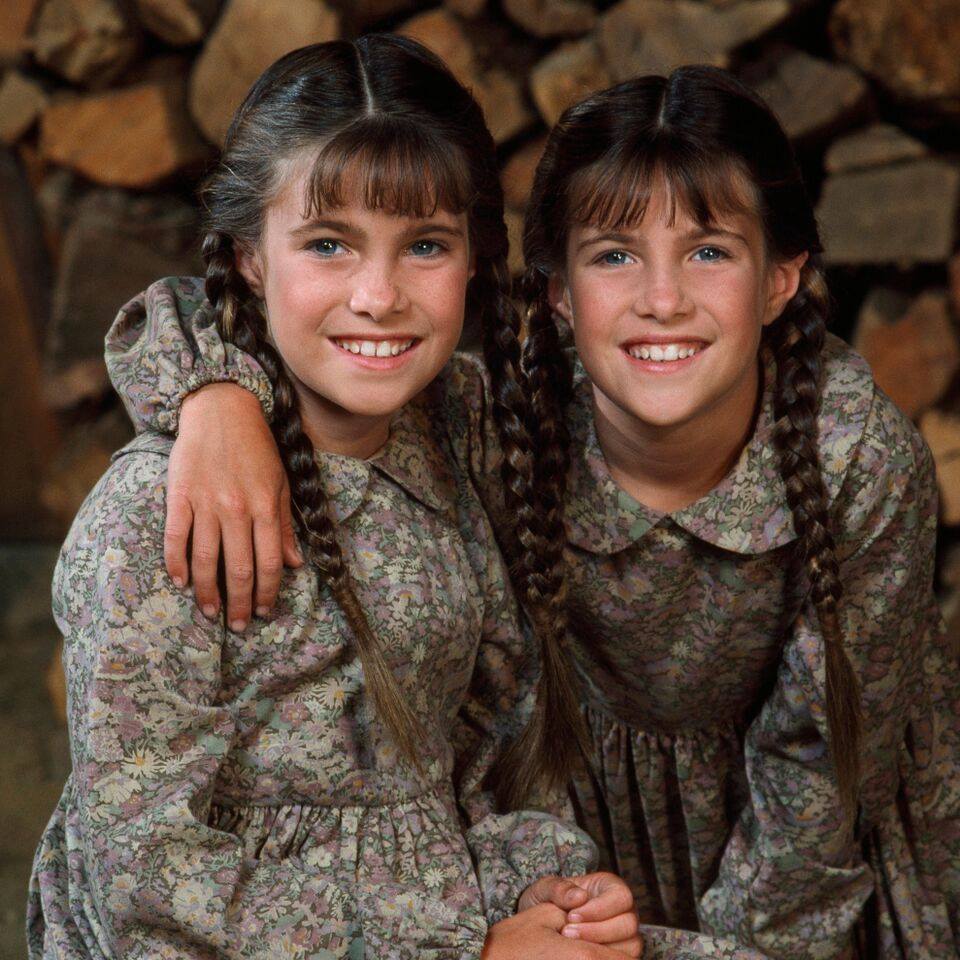
THERE WAS MORE THAN ONE CARRIE INGALLS.
In casting the youngest Ingalls daughter, producers had to bear in mind California child labor laws. Rachel and Sidney Bush were only three years of age. In the opening credits, it is Sidney shown running down the hill. Before shooting the scene, it was Rachel in front of the camera.
After the director requested for a “fresh twin,” an unfortunate mistake of lacing up Sidney with opposite pairs on each foot caused her to fall down the running scene. Michael Landon decided that it was too precious to remove from the final sequence.
THE SHOW SERVED AS AN ACTING DEBUT FOR SOME.
13-year-old Sean Penn played an uncredited schoolboy on the said show. With this father, Leo Penn, directing season one’s The Voice of Tinker Jones, Sean had the privilege of being cast, together with his mother.
CHARLES INGALLS HAD A SECRET WEAPON – HIS BOOTS.
With an official height measurement of 5-feet and 9-inches, Michael Landon faced a problem in not wanting any other characters to tower above his own. As a solution, he used 4-inch inserts for his boots, allowing him to gain some height advantage. And if these insoles didn’t do the trick, Landon made sure his character was standing on something, may it be a ladder, a staircase, or just a bunch of dirt.
THE FOOD WAS ALWAYS DINTY BEEF STEW
A lot of scenes showed the family having dinner. Regardless of what Ma announced as the evening’s main course, whether chicken, rabbit, or squirrel, the correct answer was always Dinty Moore beef stew. You don’t just have to make the audience believe in the story, but with what the characters eat, as well.
CLOTHING WAS A TROUBLE ON SET
Some of the scenes were filmed in Simi Valley, California. A cool day in this place meant the temperature was in the low 90s. This reality became troublesome for some actors given that they were dressed from head to toe in heavy garments; from stockings, coats, and bonnets. Alison Arngrim, who plays Nellie passed out in the heat together with the assistant director.
The food at the Thanksgiving table is usually the star and focus of the event. But before the meal hits the table, guests usually arrive and the focus shifts momentarily to the table itself. Some people love simple tables, some prefer elaborate settings. But I think it’s a little over the top to have every place setting use 15 plates and attending silverware, because someone’s gotta do all those dishes and it’s usually me…so that’s a big NO for me!
Still some people prefer off the wall table decor…purple cornucopia and disco balls?
And nothing says Thanksgiving quite like blue pumpkins, right?
And THIS one? A definite NO from me. I would never put lit candles near dried out grassy wheat (?) on a table where anyone can bump the table and start a 5 alarm fire.
There’s understated and then there’s laziness—letting the napkins drape off the table—like an afterthought. Another NO for me.
So, if you want to add some appeal to your Thanksgiving table, that’s cool, cute and easy to do…here’s a wonderful meme for folding your paper napkins into adorable turkeys. And there’s plenty of time to practice before the big day!
PS: This is one idea I wished I had started years ago. You have every guest sign the tablecloth and then you stitch out the names. This would have been an awesome keepsake. Sadly, our big Thanksgiving dinners are no more.
































:max_bytes(150000):strip_icc():format(webp)/vibrant-modern-setting-a6134601d48b4008b89421ddd702f0a6.jpg)




 Sew Colorful