

Today is Sam Elliot’s birthday. He was born August 9, 1944 and I always thought he was an okay guy…till recently when he narrated an ad for the maggot. But his memes still are funny. So the heck with the man, let’s celebrate the memes!


Today is Sam Elliot’s birthday. He was born August 9, 1944 and I always thought he was an okay guy…till recently when he narrated an ad for the maggot. But his memes still are funny. So the heck with the man, let’s celebrate the memes!
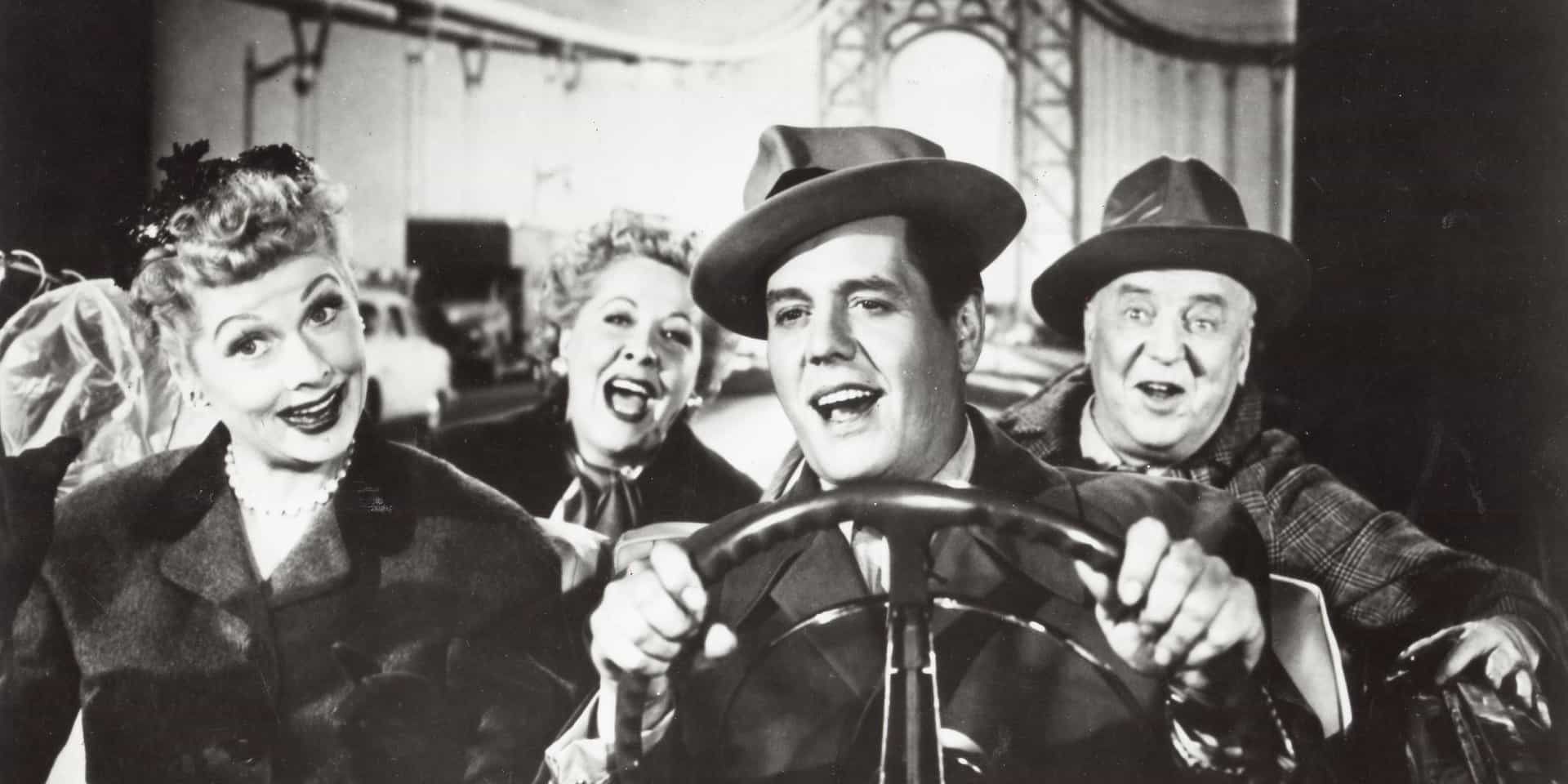
In honor of Lucille Ball’s birthday (born August 6, 1911 and died April 26, 1989), I thought we’d look at some interesting facts about her show.
From Screen Rant:
There have been a lot of very important television shows since television was invented, and one of the most important and influential ones has been I Love Lucy. Even though it aired long ago, this series still has an impact on television these days.
The effects of it will probably be seen for many more years, since it was such a game-changer back then. For example, Lucille had a lot of power behind the scenes of the show. That was a groundbreaking thing since women didn’t typically have much control over television shows back then. Here are some other interesting facts about this series that fans probably didn’t already know.
Lucille Didn’t Like Desi Being On The Road
Part of the reason why audiences have been able to enjoy I Love Lucy for so long is because Lucille did not want her husband being on the road all the time. Fans might remember that Desi was part of a band in real life, and that meant that he was spending lots of time traveling, and Lucille was not a fan of that. The actress wanted her husband to spend more time with her, so that is why she wanted him to play her husband on the series. It’s interesting to think about what the show might have looked like if she did not feel that way.
William Was Not The First Choice For Fred
William Frawley was not the first choice when it came to who was going to play Fred Mertz. Lucille actually wanted someone else to play the part, and that was Gale Gordon. Apparently, she loved the work the actor did on the radio show they starred in together, which was My Favorite Husband. But that actor ended up asking for too much money, so he was not cast in the role. William heard that I Love Lucy was being created, so he gave Lucille a call to find out if there was a part for him. Some people who worked on the series were reluctant to hire him, but Desi believed he would be great for the role, so they met for lunch, and Desi offered him the role.
CBS Didn’t Want Desi To Play Ricky
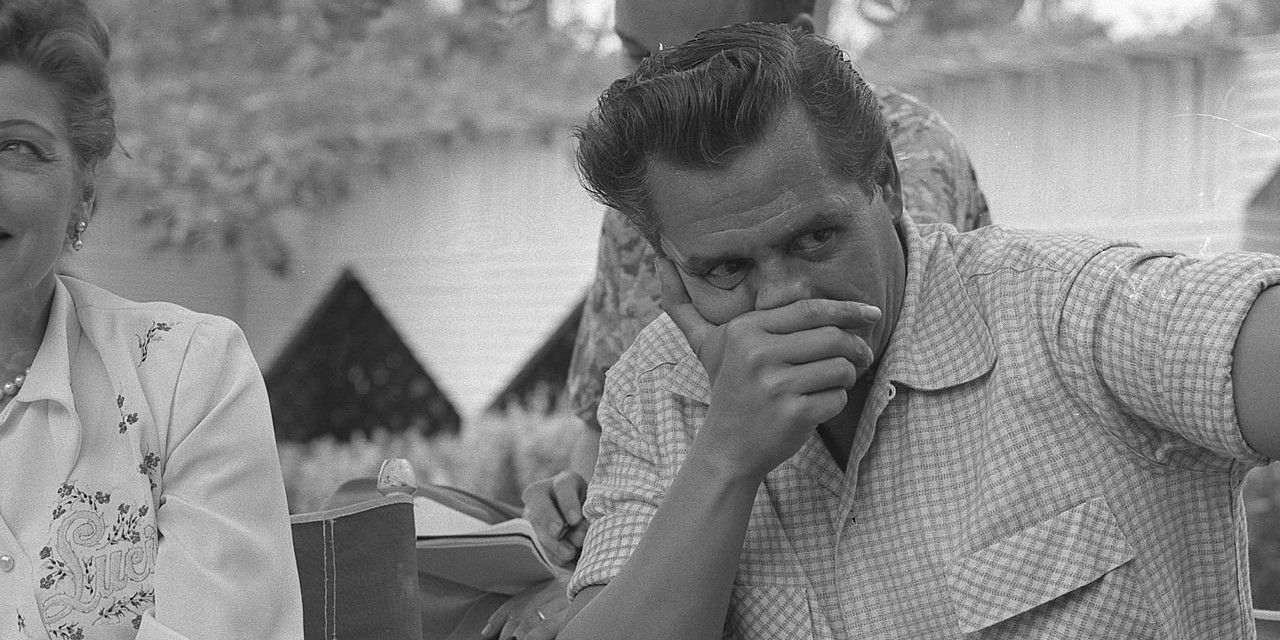
It is hard to imagine what this show would have been like if any of the main characters had been played by different actors, but some of the creators of the show were originally not in favor of Desi being cast as Lucille’s husband, despite the fact that they were really together at the time. CBS really liked My Favorite Husband, and they wanted the man who played her husband on that show to play him on television as well. But, Lucille would only take the role of Lucy if her actual husband was cast as Ricky. The creators didn’t think the audience was going to believe that they could ever be a couple, but history has proved them wrong.
A Dream Pushed Lucille To Take On This Role
Lucille was not sure about whether she should take on the role of Lucy Ricardo or not, but a dream is what convinced her to do it. The actress was very reluctant to join the cast of the show because she was unsure about how the transition from movies to television was going to affect her career, but then she had a dream that pushed her to do it. In the dream, a deceased friend of hers talked to her. The friend was an actress named Carole Lombard, and if Lucille had not had that dream, television as we know it would certainly look a lot different than it does at the moment.
Vivian And William Did Not Get Along
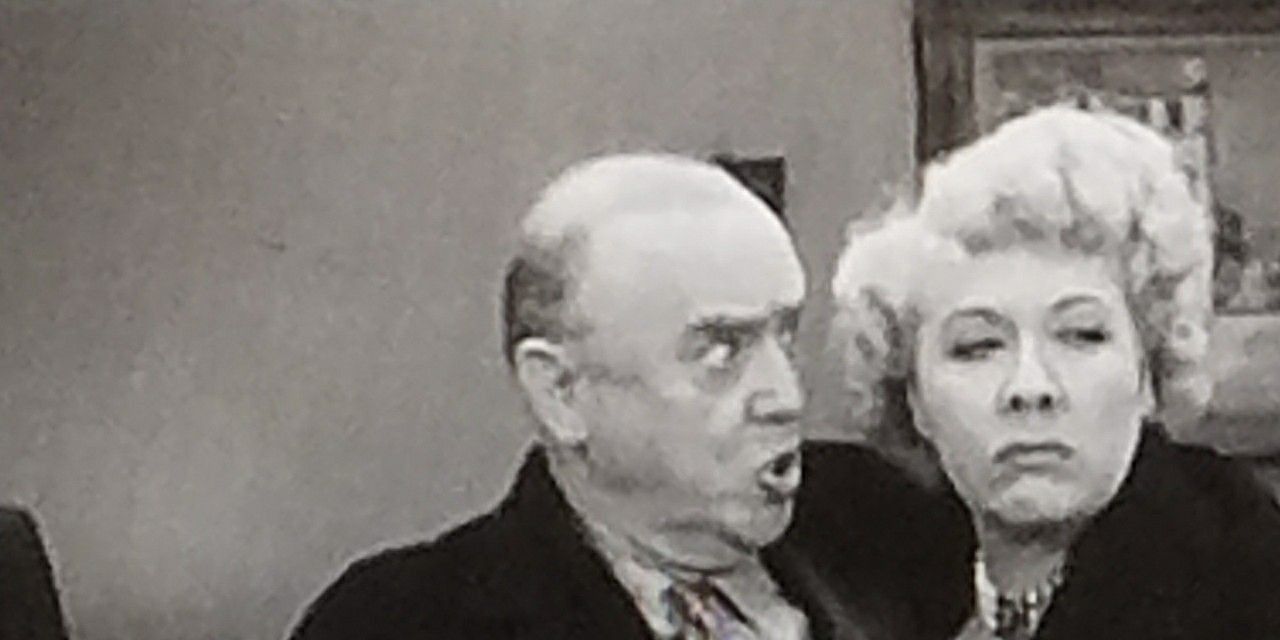
Lots of shows have had some behind the scenes feuds between the cast members, and even I Love Lucy could not escape that since the people who played Fred and Ethel Mertz never really got along with one another. Part of the reason why they did not like one another is because William was so much older than Vivian (there was 22 years between them) and she did not think anyone would believe she was married to a man who was so much older than she was. William didn’t have many nice things to say about her, either. He often referred to her as “that old sack of doorknobs.”
Lucille Was Not A Natural Redhead
Lucy Ricardo’s hair was one of her most famous and identifiable features, but the actress who played her was actually not a natural redhead. Another interesting fact is that her hairdresser did not just use any common hair dye to color her hair. Someone brought the hairdresser a unique mixture that involved hair dye and henna, and that is what was used to create the iconic hair color that I Love Lucy fans are so familiar with. The distinct mixture was locked up in a safe spot when the hairdresser was not using it on the actress, since it was such an important part of her character.
Reruns Are A Thing Because Of This Show
Anyone who loves to watch reruns of their favorite shows are probably very thankful to those who created I Love Lucy. In real life, Lucille and Desi shared two children. Desi thought his wife could use a break from work when she had their second child, so that is when he came up with what audiences now know as a rerun. The actor suggested that instead of filming new episodes for a bit, the studio could show some of the old episodes that had already proven to be really popular with the shows’ fanbase. This obviously worked out pretty well for them, since fans can still catch reruns of the series on television today.
It Was All Part Of The Script
Every line that was spoken when the show was being filmed was scripted out. That may seem pretty obvious, but there are actually lots of movies and television shows that feature some lines that the actors made up on the spot, since some unexpected things can happen on the set (there is a rumor that a certain scene in The Dark Knight is a perfect example of this). But some people might be surprised to find out that none of the actors ever said anything that was not scripted when they were creating any of the episodes of I Love Lucy.
There Was One Thing That Only Lucy Was Allowed To Do
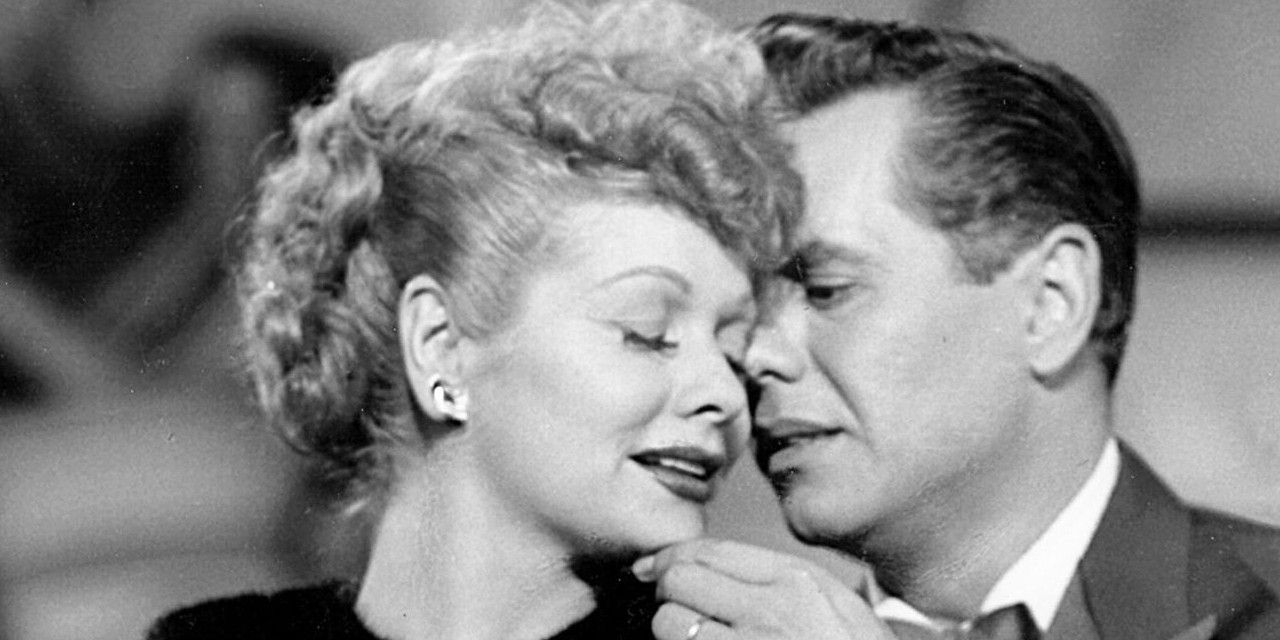
Lucy was the only character on the series who was allowed to make fun of Ricky’s accent. Those who have seen the series probably noticed that Ricky has a very thick accent, and they also probably noticed that the only person who ever made fun of him for it was Lucy. When Lucy did it, the audiences seemed to think it was very funny. But when the series creators attempted to have the other characters do it, things were a bit different. The jokes were not very well-received, so the writers stopped allowing the other characters in the show to poke fun at his accent.
Nearly Everything Shut Down When New Episodes Aired
Lots of businesses closed up shop when new episodes of I Love Lucy aired. These days, there are multiple ways for people to catch episodes of their favorite television shows, even if they have already aired on television before, but things were not always like that. Back when I Love Lucy was still being filmed, fans could only watch it when it aired live each week (except for when Desi invented the rerun), and that resulted in some businesses closing when they knew a new episode was going to air. Almost everyone loved this show, so it seems that the title was fairly appropriate.
SOURCE: SCREEN RANT


At the surprise party 2 weeks ago for my son, I learned about a new conversation starter: Five Things. The person in the spotlight has to say 5 things that the others probably do not know about them. For family members this can be either hard or hilarious.
I’ll start:
ONE:
I cannot throw a frisbee or hula hoop AT ALL.
TWO:
My favorite jello flavor is strawberry.
THREE:
I believe in ghosts.
FOUR:
I once wrote tips and tricks for the game Candy Crush on a website called Crushing Candies.
FIVE:
I do not own a single pair of shorts or flip flops.
So, who’s next???

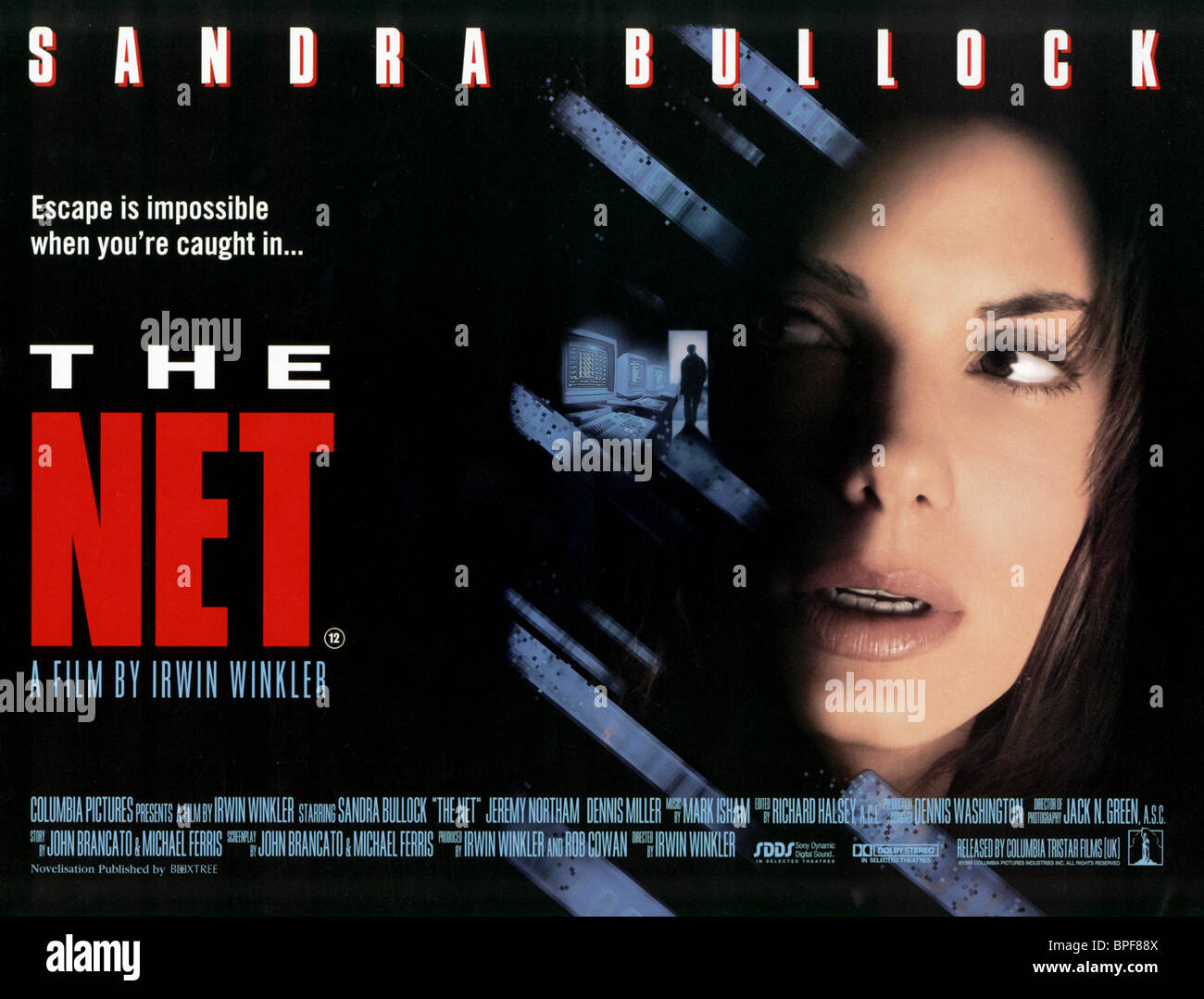
Sandra Bullock was born July 26, 1964 and I wanted to look at one of her earlier movies—The Net. Released in 1995, The Net is relevant to today. (Just as Dave and many other movies seem prescient in their releases, so does The Net.) The following is from the IMDb website:
Synopsis
In Washington DC, U.S. Under Secretary of Defense Michael Bergstrom (Ken Howard) commits suicide after being informed that he has tested positive for HIV.
Angela Bennett (Sandra Bullock) is a computer systems analyst in living in Venice, Los Angeles, California who telecommutes to her employment at Cathedral Software based in San Francisco. Her interpersonal relationships are almost completely online and on the phone, with the exception of forgettable interactions with her neighbors and visits to her 60-year-old mother (Diane Baker), who is institutionalized with an early onset type of Alzheimer’s disease and often forgets who Angela is. Angela’s co-worker Dale (Ray McKinnon) sends her a 3.5 inch floppy disk with a backdoor labeled ‘Pi’ that permits access to a commonly used computer security system called “Gatekeeper” sold by Gregg Microsystems, a software company led by CEO Jeff Gregg. Dale and Angela agree to meet, but later that night the navigation system in Dale’s private aircraft malfunctions and it crashes into a tower, killing him.
Angela travels to Cozumel, Mexico for a week-long on vacation, where she meets Jack Devlin (Jeremy Northam), a charming English-accent businessman who charms his way into her life. After seducing Angela, Devlin pays a local mugger to steal her purse as they walk along the beach during an after-dinner stroll. He chases the mugger into the foliage, catches the mugger, and roots through the purse to find the disk before shooting the mugger dead. Devlin takes Angela out on his speedboat to kill her as well after sleeping with her again, but she finds his gun and confronts him. While fleeing with the disk and Devlin’s wallet, Angela’s dinghy collides with rocks, destroying the disk and hospitalizing her. She is unconscious for three days.
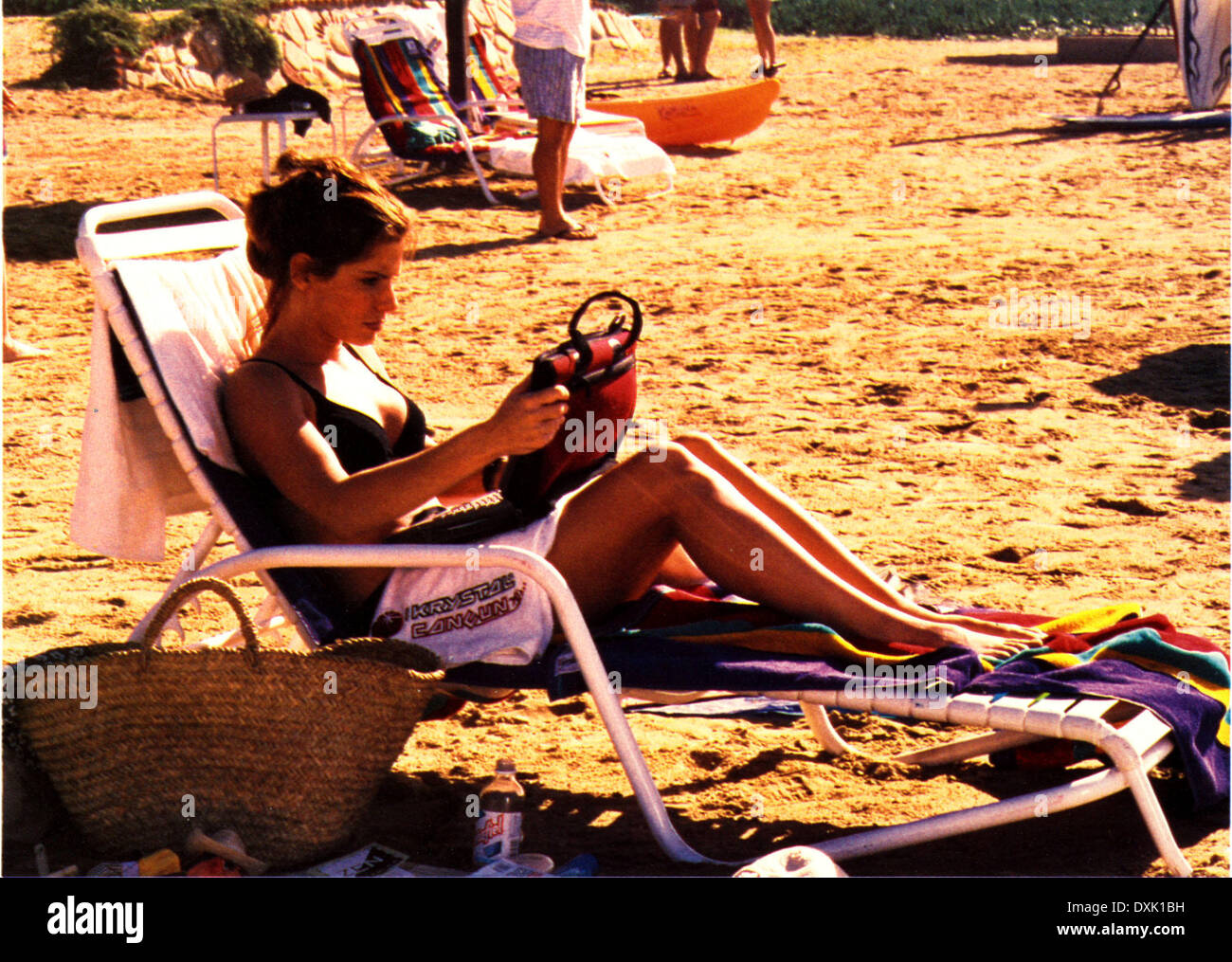
When Angela wakes up, she finds that all records of her life have been deleted: She was checked out of her hotel room in Cozumel, her car is no longer at the LAX airport parking lot, and all of her credit cards are invalid. When she arrives home by taxi, Angela discovers that her house is now empty and listed for sale. Moreover, because none of the neighbors remember her, they cannot confirm her identity. Things turn from bad to worse when after contacting the police, Angela’s Social Security number is now assigned to a “Ruth Marx,” for whom Devlin has entered an arrest record by hacking the police computer system. Angela is forced to flee for her life. Once on the streets, she steals a cell phone from the real estate agent in her former house and calls her own desk at Cathedral Software, an impostor (Wendy Gazelle) answers and offers Bennett her old life back in exchange for the disk.
Angela contacts the only other person who knows her by sight, psychiatrist and former lover Alan Champion (Dennis Miller). He checks her into a hotel, offers to contact a friend at the FBI, and arranges to have her mother moved for her safety.

Using her knowledge of the backdoor and a password found in Devlin’s wallet, Angela logs into the Bethesda Naval Hospital’s computers and learns that Under Secretary of Defense Bergstrom, who had opposed Gatekeeper’s use by the federal government, was misdiagnosed. Fellow hacker “Cyberbob” connects ‘Pi’ with the “Praetorians,” a notorious group of cyber-terrorists linked to recent computer failures around the country. Angela and Cyberbob plan to meet, but the unseen Praetorians intercept their online chat and relay it to Devlin who is now relentlessly pursuing her. Angela manages to escape from Devlin… who is now revealed to be a contract killer for the cyber-terrorists, but the Praetorians kill Champion by tampering with pharmacy and hospital computer records for his medication.
Angela is forced to steal a car to flee from Los Angeles, but she is chased and arrested by the California Highway Patrol. While in jail waiting trial for a series of false criminal charges, a man identifying himself as Ben Phillips (Robert Gossette), Champion’s FBI friend bails her from jail. While driving, Angela realizes that “Ben” is an impostor after he makes a slip to her about the Praetorians, and escapes again, killing the impostor with his own gun.
Now wanted for murder and thought to be Ruth Marx, Angela hitchhikes to Cathedral’s office in San Francisco where, she triggers a fire alarm to evacuate the building and now using her impostor’s computer, she connects the cyber-terrorists to Gregg Microsystems and uncovers their scheme: once the Praetorians sabotage an organization’s computer system, Gregg sells Gatekeeper to it and gains unlimited access through the backdoor. Angela downloads another 3.5 inch disk and escapes just as the impostor realizes her presence.
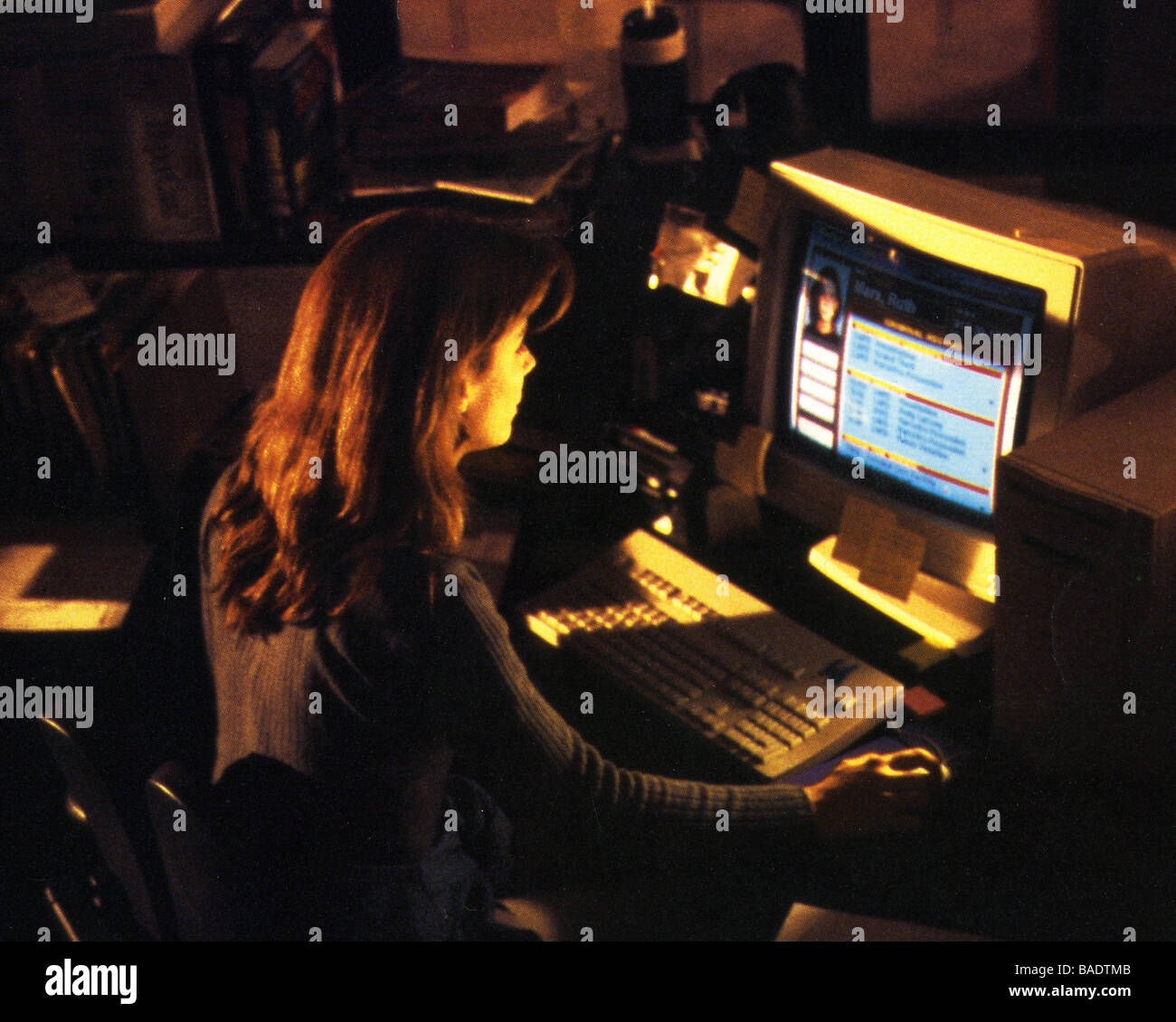
Angela escapes from the building and makes her way to the Moscone Center with Devlin and the Bennett impostor in pursuit. After finding a desktop site to log on, she emails evidence of the backdoor and Gregg’s involvement with the Praetorians to the FBI just before Devlin and the Bennett impostor catch up with her. Angela then tricks Devlin into releasing a virus into Gregg’s mainframe, destroying Gatekeeper and undoing the erasing of her identity.
During a battle on the catwalks of the convention center, in which Devlin accidentally kills the Bennett impostor from Cathedral Software (revealed to be the real Ruth Marx), Angela ambushes Devlin with a fire extinguisher, causing him to fall to his death.
At the end, Angela Bennett regains her identity, home, and life. She then reunites with her mother (who still does not remember her) and goes back to her old solitary life. In a series of news reports, the conspiracy is exposed, with Jeff Gregg being arrested by the FBI.

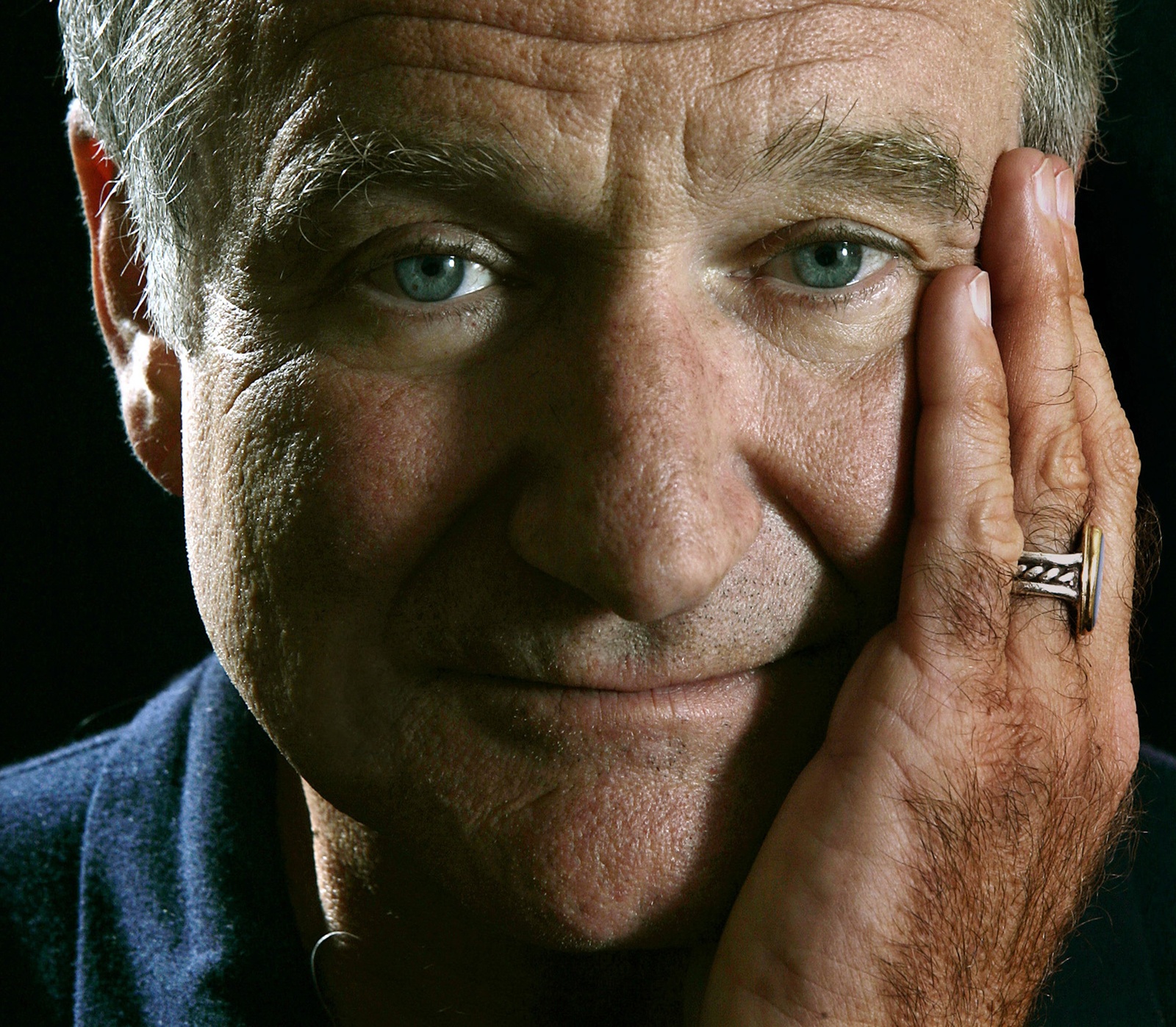
Today would have been Robin William’s birthday (born in 1951 and died August 11, 2014) and I think Good Morning Viet Nam is one of his most memorable movies. Mental Floss had an article detailing 12 “surprising” things we might not know about him.
From Mental Floss:
Robin Williams had a larger-than-life personality. On screen and on stage, he embodied what he referred to as “hyper-comedy.” Offscreen, he was involved in humanitarian causes and raised three children—Zak, Zelda, and Cody.
Since his untimely death on August 11, 2014, HBO has released the documentary Robin Williams: Come Inside My Mind, directed by Marina Zenovich, which chronicles his rise on the stand-up comedy scenes during the 1970s, to his more dramatic roles in the 1980s and ‘90s in award-winning films like Dead Poets Society; Good Morning, Vietnam; Awakenings; The Fisher King; and Good Will Hunting. In 2018, a mural with Williams’s face on it went up in Chicago, his hometown; that same year, journalist Dave Iztkoff published the book Robin.
Here are some things you might not have known about the iconic funnyman.
1 Robin Williams got his start in comedy at a church.
After leaving Juilliard, Robin Williams found himself back in his hometown of San Francisco, but he couldn’t find work as an actor. Then he saw something for a comedy workshop in a church and decided to give it a shot. “So I went to this workshop in the basement of a Lutheran church, and it was stand-up comedy, so you don’t get to improvise with others, but I started off doing, ostensibly, it was just like improvising but solo,” he told NPR. “And then I started to realize, ‘Oh.’ [I started] building an act from there.”
2 He formed a friendship with Koko the gorilla.

In 2001, Williams visited Koko the gorilla, who passed away in June, at The Gorilla Foundation in Northern California. Her caregivers had shown her one of his movies, and she seemed to recognize him. Koko repeatedly signed for Williams to tickle her. “We shared something extraordinary: laughter,” Williams said of the encounter. On the day Williams died, The Foundation shared the news with Koko and reported that she fell into sadness.
3 He spent some time working as a mime in Central Park.
In 1974, photographer Daniel Sorine captured photos of two mimes in New York’s Central Park. As it turned out, one of the mimes was Williams, who was attending Juilliard at the time. “What attracted me to Robin Williams and his fellow mime, Todd Oppenheimer, was an unusual amount of intensity, personality, and physical fluidity,” Sorine said. In 1991, Williams revisited the craft by playing Mime Jerry in Bobcat Goldthwait’s film Shakes the Clown. In the movie, Williams hilariously leads a how-to class in mime.
4 He tried to get Lydia from Mrs. Doubtfire back in school.
As a teen, Lisa Jakub played Robin Williams’s daughter Lydia Hillard in Mrs. Doubtfire. “When I was 14 years old, I went on location to film Mrs. Doubtfire for five months, and my high school was not happy,” Jakub wrote on her blog. “My job meant an increased workload for teachers, and they were not equipped to handle a ‘non-traditional’ student. So, during filming, they kicked me out.”
Sensing Jakub’s distress over the situation, Williams typed a letter and sent it to her school. “A student of her caliber and talent should be encouraged to go out in the world and learn through her work,” he wrote. “She should also be encouraged to return to the classroom when she’s done to share those experiences and motivate her classmates to soar to their own higher achievements … she is an asset to any classroom.”
Apparently, the school framed the letter but didn’t allow Jakub to return. “But here’s what matters from that story—Robin stood up for me,” Jakub wrote. “I was only 14, but I had already seen that I was in an industry that was full of back-stabbing. And it was entirely clear that Robin had my back.”
5 He wasn’t the producers’ first choice to play Mork on Mork & Mindy.

Anson Williams, Marion Ross, and Don Most told The Hallmark Channel that a different actor was originally hired to play Mork for the February 1978 Happy Days episode “My Favorite Orkan,” which introduced the alien character to the world. “Mork & Mindy was like the worst script in the history of Happy Days. It was unreadable, it was so bad,” Anson Williams said. “So they hire some guy for Mork—bad actor, bad part.” The actor quit, and producer Garry Marshall came to the set and asked: “Does anyone know a funny Martian?” They hired Williams to play Mork, and from September 1978 to May 1982, Williams co-headlined the spinoff Mork & Mindy for four seasons.
6 Williams “risked” a role in an Off-Broadway play.
In 1988, Williams made his professional stage debut as Estragon in the Mike Nichols-directed Waiting for Godot, which also starred Steve Martin and F. Murray Abraham. The play was held off-Broadway at Mitzi E. Newhouse Theater at Lincoln Center. The New York Times asked Williams if he felt the show was a career risk, and he responded with: “Risk! Of never working on the stage again! Oh, no! You’re ruined! It’s like you’re ruined socially in Tustin,” a town in Orange County, California. “If there’s risk, you can’t think about it,” he said, “or you’ll never be able to do the play.” Williams had to restrain himself and not improvise during his performance. “You can do physical things,” he said, “but you don’t ad lib [Samuel] Beckett, just like you don’t riff Beethoven.” In 1996, Nichols and Williams once again worked together, this time in the movie The Birdcage.
7 He ushered in the era of celebrity voice acting.
The 1992 success of Aladdin, in which Williams voiced Genie, led to more celebrities voicing animated characters. According to a 2011 article in The Atlantic, “Less than 20 years ago, voice acting was almost exclusively the realm of voice actors—people specifically trained to provide voices for animated characters. As it turns out, the rise of the celebrity voice actor can be traced to a single film: Disney’s 1992 breakout animated hit Aladdin.” Since then, big names have attached themselves to animated films, from The Lion King to Toy Story to Shrek. Williams continued to do voice acting in animated films, including Aladdin and the King of Thieves, Happy Feet, and Happy Feet 2.
8 He forgot to thank his mother during his 1998 Oscar speech.
In March 1998, Williams won a Best Supporting Actor Oscar for his performance as Sean Maguire in Good Will Hunting. In 2011, Williams appeared on The Graham Norton Show, and Norton asked him what it was like to win the award. “For a week it was like, ‘Hey congratulations! Good Will Hunting, way to go,’” Williams said. “Two weeks later: ‘Hey, Mork.’”
Then Williams mentioned how his speech accidentally left out one of the most important people in his life. “I forgot to thank my mother and she was in the audience,” he said. “Even the therapist went, ‘Get out!’ That was rough for the next few years. [Mom voice] ‘You came through here [points to his pants]! How’s the award?’”
9 He comforted Steven Spielberg during the filming of Schindler’s List.
At this year’s 25th anniversary screening of Schindler’s List, held at the Tribeca Film Festival, director Steven Spielberg shared that Williams—who played Peter Pan in Spielberg’s Hook—would call him and make him laugh. “Robin knew what I was going through, and once a week, Robin would call me on schedule and he would do 15 minutes of stand-up on the phone,” Spielberg said. “I would laugh hysterically, because I had to release so much.”
10 Williams helped Ethan Hawke get an agent.
During a June 2018 appearance on The Graham Norton Show, Ethan Hawke recalled how, while working on Dead Poets Society, Williams was hard on him. “I really wanted to be a serious actor,” Hawke said. “I really wanted to be in character, and I really didn’t want to laugh. The more I didn’t laugh, the more insane [Williams] got. He would make fun of me. ‘Oh this one doesn’t want to laugh.’ And the more smoke would come out of my ears. He didn’t understand I was trying to do a good job.” Hawke had assumed Williams hated him during filming.
After filming ended, Hawke went back to school, but he received a surprising phone call. It was from Williams’s agent, who—at Williams’s suggestion—wanted to sign Hawke. Hawke said he still has the same agent today.
11 He was almost cast in Midnight Run.
In February 1988, Williams told Rolling Stone how he sometimes still had to audition for roles. “I read for a movie with [Robert] De Niro, [Midnight Run], to be directed by Marty Brest,” Williams said. “I met with them three or four times, and it got real close, it was almost there, and then they went with somebody else. The character was supposed to be an accountant for the Mafia. Charles Grodin got the part. I was craving it. I thought, ‘I can be as funny,’ but they wanted someone obviously more in type. And in the end, he was better for it. But it was rough for me. I had to remind myself, ‘Okay, come on, you’ve got other things.’”
In July 1988, Universal released Midnight Run. Just two years later, Williams finally worked with De Niro, on Awakenings.
12 Williams and Billy Crystal used to talk on the phone for hours.

Starting in 1986, Williams, Billy Crystal, and Whoopi Goldberg co-hosted HBO’s Comic Relief to raise money for the homeless. Soon after Williams’s death, Crystal went on The View and spoke with Goldberg about his friendship with Williams. “We were like two jazz musicians,” Crystal said. “Late at night I get these calls and we’d go for hours. And we never spoke as ourselves. When it was announced I was coming to Broadway, I had 50 phone messages, in one day, from somebody named Gary, who wanted to be my backstage dresser.”
“Gary” turned out to be Williams.
SOURCE: MENTALFOSS.COM
GARIN PIRNIA

A gurn or chuck is a distorted facial expression and a verb to describe the action. A typical gurn involves projecting the lower jaw as far forward and up as possible and covering the upper lip with the lower lip.
The English Dialect Dictionary, compiled by Joseph Wright, defines the word gurn as “to snarl as a dog; to look savage; to distort the countenance,” while the Oxford English Dictionary suggests the derivation may originally be Scottish, related to “grin.” In Northern Ireland, the verb “to gurn” means “to cry,” and crying is often referred to as “gurnin’.” Originally the Scottish dialectical usage refers to a person who is complaining. The term “gurn” may also refer to an involuntary facial muscular contortion experienced as a side-effect of MDMA consumption.
Apparently, this is a big deal and an annual event in the UK. Enjoy some gurns!


SOURCE: New York Post
Harrison Ford was born today, July 13th, in 1942 and I thought I’d find some fascinating facts from the Indiana Jones franchise.
From Business Insider:
Tom Selleck nearly played Indiana Jones.
It’s hard to imagine anyone other than Harrison Ford donning the fedora and cracking the bullwhip, but the role almost went to Tom Selleck instead. The “Magnum P.I.” and “Friends” star was actually one of the first actors to be offered the role, and even did a screen test alongside “Blade Runner” actor Sean Young as Marion Ravenwood. But as Selleck explained in 2017, CBS wouldn’t let him take the role because he’d already shot the “Magnum P.I.” pilot for the network.
There were around 10,000 snakes in the “Well of Souls” scene.
There are plenty of bugs and reptiles in the whole franchise but the Well of Souls scene is arguably the one that makes many fans squirm because of the thousands of snakes that slither on screen to terrify Indy and Marion Ravenwood (Karen Allen). In a behind-the-scenes featurette, Allen recalled that the original plan was to use “mechanical snakes” but they didn’t look realistic enough. And archival footage shows director Steven Spielberg bringing in numerous snake handlers to fill the set with snakes and glass lizards — which look like snakes.
Harrison Ford even said: “We were working with, I think, around 8, 10,000 snakes.”
The cobra actually spat venom at Harrison Ford.
Although it sounds wild that there were thousands of snakes on the “Raiders” set, the filmmakers didn’t realize how serious the situation could be until one of them actually spat venom at Harrison Ford. Producer Kathleen Kennedy recalled how the cobra reacted to the actor in the scene where Indy comes face-to-face with the snake. Luckily, there was a sheet of glass separating them. She said: “At one point, it hooded and whipped its head off to the side and literally threw venom all over the glass. So that was something that caused everybody to sit up and take notice and recognize that this was not something to play around with.”
Harrison Ford got run over by a plane filming “Raiders of the Lost Ark.”
During the scene where Indy and Marion fight Nazis on the runway, Harrison Ford was actually run over by the plane and tore the ACL ligament in his knee. In a behind-the-scenes documentary, the star recalled: “At a certain point I slipped and fell, and the wheels rode up onto my knee, which resulted in me tearing my anterior cruciate ligament in my left leg in the middle of Tunisia. So rather than submit to any local medical care, we just wrapped it up and put ice on it, and I carried on.”
It wasn’t the only time that Ford got injured on film sets, as he broke his leg years later filming “Star Wars: Episode VII – The Force Awakens,” and hurt his shoulder rehearsing a fight scene for “Indiana Jones and the Dial of Destiny.”
Willie Scott was named after Steven Spielberg’s dog.
While Indiana himself is named after George Lucas’ dog, his “Temple of Doom” love interest, Willie Scott (Kate Capshaw), was named after Steven Spielberg’s Cocker Spaniel. Spielberg explained the name in a behind-the-scenes documentary for the sequel. He said: “Willie was the name of my dog, by the way. ‘Cause, since Indy was named after George’s dog, Indiana, and I had a dog named Willie, and then Short Round was the name of Bill and Gloria’s dog, so Ke was called Short Round. So in that sense, all three characters are named after our house pets.”
Harrison Ford taught Ke Huy Quan how to swim on a day off from filming.
Ke Huy Quan’s career has had a resurgence thanks to “Everything Everywhere All At Once,” but many theatergoers know him for his role as Short Round in “Indiana Jones and the Temple of Doom.” One of the big reasons why his character works so well as comedy relief in the darker movie is because of the believable familial dynamic he has with Indy, and that comes from how Quan and Ford hung out together on set when they weren’t filming. The actor told The New York Times that Ford taught him to swim on a day off while they were in Sri Lanka. Quan said: “We were just hanging out at the swimming pool in Sri Lanka in our hotel, and he says, ‘Ke, do you know how to swim?’ I didn’t, so he says, ‘Come on, I’ll teach you.'”
Kate Capshaw had to be taught how to scream for “Temple of Doom.”
“Temple of Doom” sees nightclub singer Willie Scott get swept along in the adventure after meeting Indy in Shanghai, and because she’s not used to the shenanigans that the archaeologist gets involved in, she’s understandably freaked out by all the action. Kate Capshaw had to be taught how to scream on set, as she explained: “I couldn’t scream, so Steven taught me how to scream. I mean, you know, screaming isn’t as easy as it looks.”
Steven Spielberg cut a scary snake scene for Kate Capshaw.
One of the scenes that didn’t make it off the page in “Temple of Doom” saw a snake descend around Willie Scott, but Kate Capshaw was terrified of the creature while filming in Sri Lanka. Capshaw explained that she was incredibly worried about the scene, and producer Frank Marshall took her to see the snake first to try and ease her into it. Capshaw recalled: “I went over and looked at it, and looking at it, I get tears in my eyes and I’m having a hard time breathing and I’m looking… I can almost work myself up right now. And I went over and I put my hand on the snake, and I lost it.” Spielberg added: “She was shaking and she was all white, and you could see right through her makeup. She had lost all of her color. And I said, ‘I’m not gonna put you through this. Let’s cut it out.’ And I cut the whole scene out of the movie. I think she probably years and years later, married me for that!”
The Nazi uniforms in “The Last Crusade” were apparently genuine.
Costume designer Anthony Powell explained in the “Last Crusade” making-of documentary that the Nazi uniforms worn by the hundreds of extras in the film were genuine. He said: “We had a lot of Nazis in the film. All of those uniforms, I think, were genuine ones that I found in Eastern Europe somewhere. Joanna Johnston worked with me on the two last ‘Indiana Jones’ pictures. I’d give her research pictures and sketches and drawings and things, then she’d go out and find it all.”
2,000 rats were bred for just one sequence in “The Last Crusade.”
“Indiana Jones and the Last Crusade” sees Indy and his father, Dr. Henry Jones Sr. (Sean Connery), hunt for the Holy Grail, and the search takes the hero to Venice with Elsa Schneider (Alison Doody). Unfortunately, when they end up in the catacombs, Schneider is confronted with thousands of rats. It turns out that the crew bred 2,000 of the little critters just for that sequence. In the making-of documentary, Spielberg explained: “In order to have rats that aren’t infected with some virus or disease, you have to basically cultivate them from living births. So our animal handlers gave birth to something like 2,000 living rats. And they were everywhere! The set was half-water, it was like an aqueduct. We had rats walking the very narrow lips of the aqueduct and coming out of holes, rats in poor Alison Doody’s hair.” Thankfully, Ford wasn’t as bothered by all the rats, as he admitted to keeping “black hooded rats” as pets when he was a “nature counselor” as a teenager.
Sean Connery and Harrison Ford filmed a scene together without wearing pants.
Yes, you read that right. Sean Connery and Harrison Ford decided not to wear pants during a conversational scene on the zeppelin in “The Last Crusade.” During the documentary, Connery explained: “The passengers were wearing fur coats and hats, it was supposed to be the wintertime, and I played it without my trousers. Harrison said: ‘You’re not gonna play the scene without your trousers?’ I said, ‘If I don’t, I’ll be stopping all the time because I sweat enormously. I sweat very easily.’ Well, he did the same.” Like father, like son.
Cate Blanchett picked her “Kingdom of the Crystal Skull” haircut by looking at high school yearbooks from the 1950s.
Fast-forward to 2008, and a new “Indiana Jones” movie reared its (crystal) head with “Kingdom of the Crystal Skull.” The film sees the adventurer race against Russian villain Irina Spalko (Cate Blanchett) to find a mythical city in South America. But when it came to Spalko’s intimidating look, Blanchett got inspiration from 1950s high school yearbooks. She explained in the making-of documentary: “I had a look at yearbooks of people’s high school photos in the ’50s, and I found a couple of photos. One of a Russian girl, and one of an American girl with an incredibly short fringe, and I just thought that really emphasized the eyes, so that’s in the end what we went with.”
“Kingdom of the Crystal Skull” carries on the tradition of including a “Star Wars” Easter egg.
When Steven Spielberg and George Lucas made “Raiders of the Lost Ark,” the duo couldn’t resist including a sneaky reference to “Star Wars” on the walls of the Well of Souls scene, with a tile showing R2-D2 and C-3PO. And production designer Guy Hendrix Dyas continued that tradition in the main temple of Akator in the 2008 film’s climax, with R2-D2 and C-3PO being included on a golden tile. He also took it a step further and included the titular alien from Spielberg’s “E.T. the Extra-Terrestrial.”
Shia LaBeouf trained for six weeks to film the bike chase in “Crystal Skull,” but found it hard because Harrison Ford kept moving on the back of it.
Early on in the film, Indy unwittingly meets his long-lost son, Mutt Williams (Shia LaBeouf), and they wind up having to flee Marshall University when the Soviets show up. Stunt coordinator Gary Powell explained that they started off with a “smaller bike” before giving the actor the Harley Davidson, and then they practiced the chase scene for six weeks. But LaBeouf found it hard because Harrison Ford kept moving while sitting on the back of the bike. He said: “The bike was tough, only because when you have somebody moving on the back of a bike. It’s very different than just having someone hold you on the bike. But we’re shooting a movie and Harrison has to animate his character! And we’re on a bike through a lot of it, so a lot of it is the movement. All that stuff was pretty tough.”
SOURCE: BUSINESS INSIDER
Eammon Jacobs

Fact: Only a quarter of the Sahara Desert is sandy
Most of it is covered in gravel, though it also contains mountains and oases. And here’s another geography fact that everyone gets wrong: It isn’t the world’s largest desert. Antarctica is.
Fact: Bananas grow upside down
Or technically, we peel them upside down. Naturally, they grow outward from their stems, but that means their bottoms actually face the sky. As they get bigger, the fruits turn toward the sun, forming that distinctive curve.
Fact: There were active volcanoes on the moon when dinosaurs were alive
Most of the volcanoes probably stopped erupting about a billion years ago, but NASA findings have suggested there might still have been active lava flow 100 million years ago, when dinosaurs were still roaming.
Fact: Dogs sniff good smells with their left nostril

Dogs normally start sniffing with their right nostril, then keep it there if the smell could signal danger, but they’ll shift to the left side for something pleasant, like food or a mating partner.
Fact: Avocados were named after reproductive organs
You’ll never look at avocados the same way again. Indigenous people of Mexico and Central America used the Nahuatl word āhuacatl to mean both “testicles” and “avocado.” The fruits were originally marketed as “alligator pears” in the United States until the current name stuck.
Fact: T. S. Eliot wore green makeup
No one is sure why the poet dusted his face with green powder, though some guess he was just trying to look more interesting.
Fact: The word “fizzle” started as a type of fart
In the 1400s, it meant to “break wind quietly,” according to the English Oxford Living Dictionaries.
Fact: Human noses and ears get bigger as we age
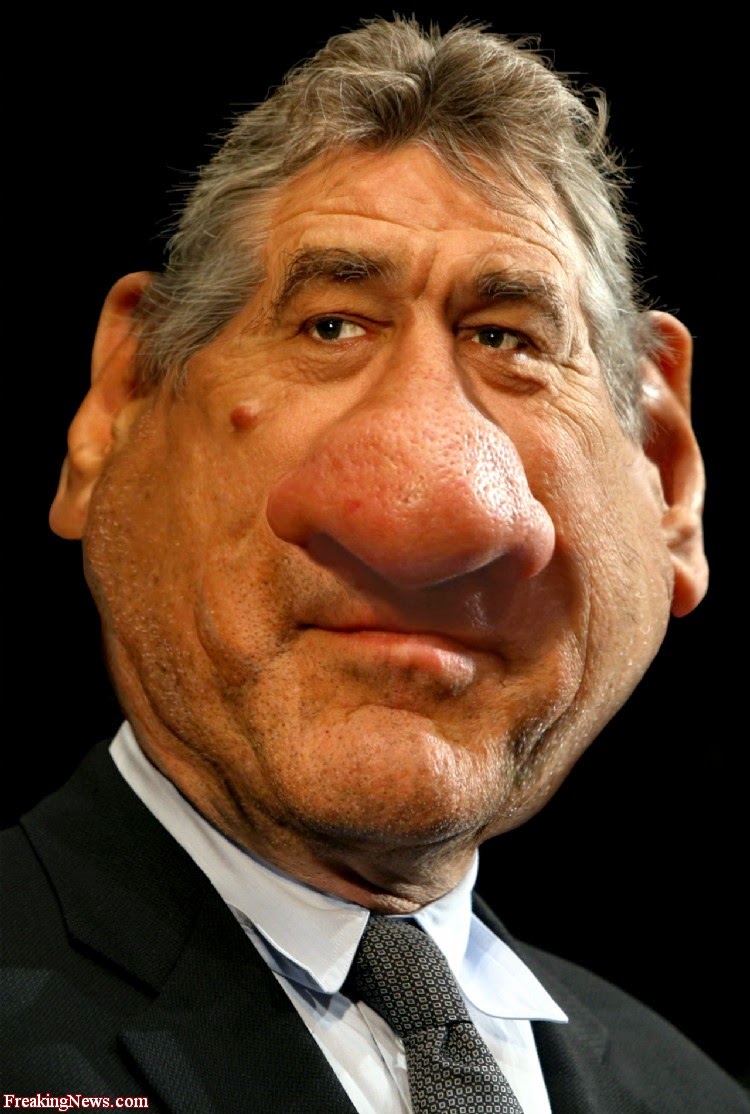
It’s pretty common to see the claim that our nose and ears are the only parts of our body that keep growing as we age, but that’s not exactly true. Our nose and ears stop growing along with the rest of our body, but thanks to the weight of gravity, both parts continue to lengthen over time, according to the Discovery Channel.
Fact: No number before 1,000 contains the letter A
But there are plenty of E’s, I’s, O’s, U’s, and Y’s.
Fact: The # symbol isn’t officially called hashtag or pound
Its technical name is octothorpe. The “octo” means “eight” and refers to its points, though reports disagree on where “thorpe” came from. Some claim it was named after Olympian Jim Thorpe, while others argue it was just a nonsense suffix.
Fact: The French have their own name for a French kiss
Something extra interesting about this kissing fact? The word hasn’t been around for long. In 2014, galocher—meaning to kiss with tongues—was added to the Petit Robert French dictionary.
Fact: You can thank the Greeks for calling Christmas “Xmas”
In Greek, the word for “Christ” starts with the letter Chi, which looks like an X in the Roman alphabet.
Fact: Movie trailers originally played after the movie
They “trailed” the feature film—hence, the name. The first trailer appeared in 1912 and was for a Broadway show, not a movie.
Fact: Mercedes invented a car controlled by a joystick
The joystick in the 1966 Mercedes F200 showcase car controlled speed and direction, replacing both the steering wheel and pedals. The car could also sense which side the driver was sitting in, so someone could control it from the passenger seat.
Fact: H&M actually stands for something

This is one of those interesting facts you’ve probably never thought about before. The clothing retail shop was originally called Hennes—Swedish for “hers”—before acquiring the hunting and fishing equipment brand Mauritz Widforss. Eventually, Hennes & Mauritz was shortened to H&M.
Fact: The U.S. government saved every public tweet from 2006 through 2017
Starting in 2018, the Library of Congress decided to only keep tweets on “a very selective basis,” including elections and those dealing with something of national interest, like public policy.
Fact: Theodore Roosevelt had a pet hyena
Its name was Bill, and it was a present from the Ethiopian emperor. Roosevelt was famous for his many pets, including a one-legged rooster, a badger, a pony, and a small bear.
Fact: The CIA headquarters has its own Starbucks, but baristas don’t write names on the cups
Its receipts say “Store Number 1” instead of “Starbucks,” and its workers need an escort to leave their work posts.
Fact: Giraffe tongues can be 20 inches long

Their dark, bluish-black color is probably to prevent sunburn.
Fact: There’s only one U.S. state capital without a McDonald’s
Montpelier, Vermont, doesn’t have any of those Golden Arches. It also happens to have the smallest population of any state capital, with just 7,500 residents.
Fact: Europeans were scared of eating tomatoes when they were introduced
Scholars think Hernán Cortés brought the seeds in 1519 with the intent of the fruits being used ornamentally in gardens. By the 1700s, aristocrats started eating tomatoes, but they were convinced the fruits were poisonous because people would die after eating them. In reality, the acidity from the tomatoes brought out the lead in their pewter plates, and they actually died of lead poisoning.
Fact: Humans aren’t the only animals that dream
Studies have indicated rats dream about getting to food or running through mazes. Most mammals go through REM sleep, the cycle in which dreams occur, so scientists think there’s a good chance they all dream.
Fact: The inventor of the microwave appliance received only $2 for his discovery
Percy Spencer was working as a researcher for American Appliance Company (now Raytheon) when he noticed that a radar set using electromagnetic waves melted the candy bar in his pocket. He had the idea to make a metal box using microwaves to heat food, but the company was the one to file the patent. That was in 1945, and he received a $2 bonus but never any royalties.
Fact: The Eiffel Tower can grow more than six inches during the summer

The high temperatures make the iron expand.
Fact: Glitter may have originated on a ranch
According to local lore, a man by the name of Henry Ruschmann from Bernardsville, New Jersey, invented glitter by accident in 1934 while working on a cattle ranch. The New York Times reports that in the popular origin story, Ruschmann, a machinist, was trying to find a way to dispose of scrap material by crushing it into tiny pieces. Plastic went in, glitter came out, and the rest is commonly accepted as history.
SOURCE: Reader’s Digest: Elizabeth Yuko

I found this quiz about the Declaration of Independence on Quiz-everyday.com. See how well you do!
Who was the primary author of the Declaration of Independence, which declared the American colonies’ separation from Great Britain?
A) Benjamin Franklin
B) Thomas Jefferson
C) John Adams
D) George Washington
The Declaration of Independence was adopted by the Second Continental Congress on which date?
A) July 2, 1776
B) July 4, 1776
C) July 6, 1776
D) July 8, 1776
Which philosophical concept, derived from the writings of John Locke, is prominently featured in the Declaration of Independence as “unalienable rights”?
A) life, liberty, and property
B) life, liberty, and the pursuit of happiness
C) freedom, equality, and justice
D) liberty, equality, and fraternity
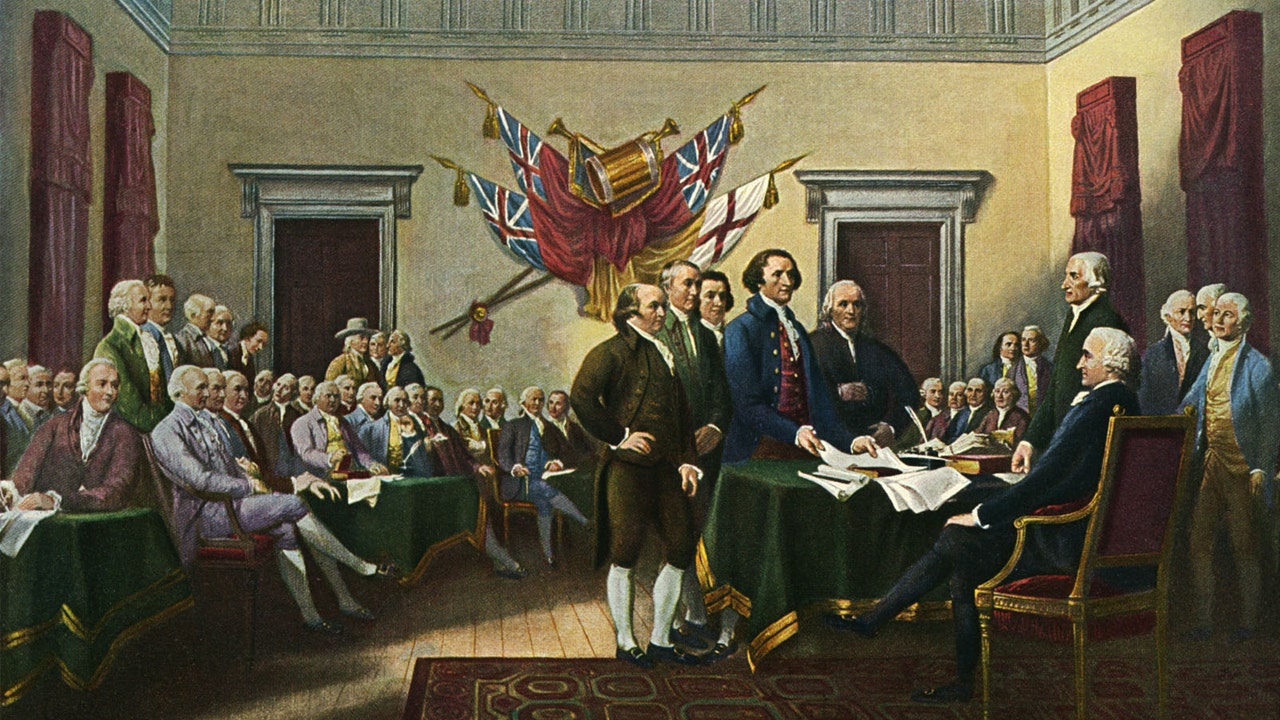
In the Declaration of Independence, who is specifically blamed for the various grievances listed against Great Britain?
A) Parliament
B) King George III
C) the British people
D) the British military
Which delegate from Massachusetts is famously known for his large, bold signature on the Declaration of Independence?
A) John Hancock
B) Samuel Adams
C) John Adams
D) Paul Revere
In total, how many delegates signed the Declaration of Independence?
A) 50
B) 52
C) 54
D) 56
Which colony did not have a delegate sign the Declaration of Independence?
A) New York
B) New Jersey
C) Virginia
D) Massachusetts
Which influential American founding father edited the draft of the Declaration of Independence and later became the second President of the United States?
A) Benjamin Franklin
B) Thomas Jefferson
C) John Adams
D) James Madison

In which city was the Declaration of Independence adopted by the Second Continental Congress?
A) New York City
B) Boston
C) Philadelphia
D) Charleston
In the Declaration of Independence, what phrase is used to describe the colonies’ new status as an independent nation?
A) free and independent states
B) united and independent states
C) sovereign and independent states
D) united and sovereign states
Which delegate from Virginia presented the resolution for independence to the Second Continental Congress, paving the way for the Declaration of Independence?
A) George Wythe
B) Richard Henry Lee
C) Benjamin Harrison
D) Thomas Nelson Jr.
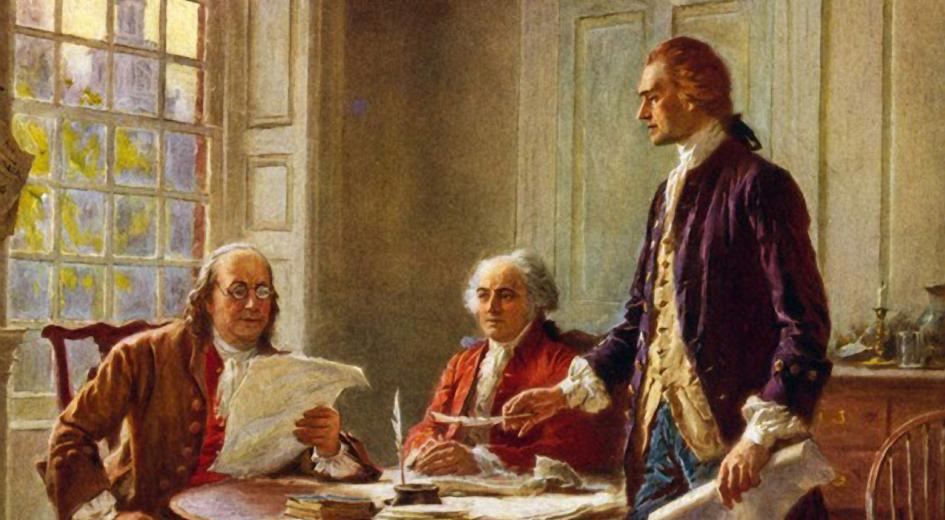
Who was the president of the Second Continental Congress and the first to sign the Declaration of Independence?
A) John Hancock
B) John Adams
C) Thomas Jefferson
D) Benjamin Franklin
The introduction of the Declaration of Independence, which explains the purpose of the document, is commonly referred to as what?
A) Preamble
B) Prologue
C) Introduction
D) Declaration
Which year was the first time the term “Declaration of Independence” was used to describe the document?
A) 1776
B) 1777
C) 1781
D) 1783
Who was responsible for printing the first copies of the Declaration of Independence that were distributed throughout the colonies?
A) Benjamin Franklin
B) John Dunlap
C) Robert Aitken
D) David C. Claypoole
Want to see how you did?
Answers:
Thomas Jefferson
July 4, 1776
Life, liberty and the pursuit of happiness
King Geroge III
Jonh Hancock
56
New York
John Adams
Philadelphia
Free and independent states
Richard Henry Lee
John Hancock
Preamble
1776
John Dunlap

SOURCE:
Quiz-everyday.com





ENJOY!
 Sew Colorful