Real Haunted Houses in America: Part 1

I found an All That’s Interesting article on real haunted houses in America, nine in total, and I’ve broken the list in several parts. 

From All That’s Interesting:

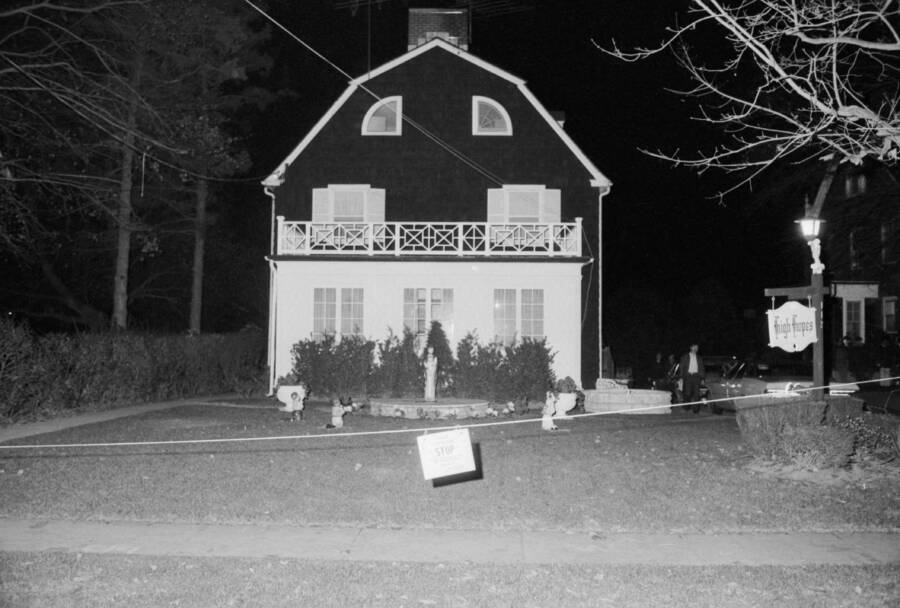
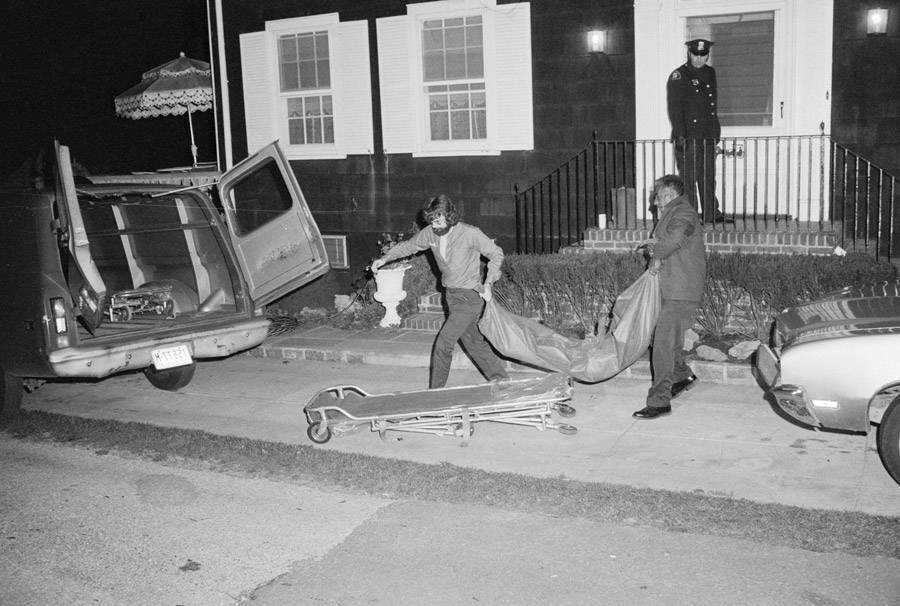
There are many haunted houses in the United States, but there are only a few genuine contenders for the title of the most haunted house in America. Some of them were the site of a gruesome crime scene. Others seem to draw spirits for different reasons.

Paranormal investigators say that homes hold on to the accumulated energy of everyone who has previously lived there or that tragedy and sadness can cause a spirit to linger, hoping to correct the pains of the past before they move on.

Some ghost hunters even say that a house can be haunted by a spirit that is happy to live amongst their former home’s new inhabitants, like the case of the Pittock Mansion’s “friendly” ghosts. Other ghosts, however, not so much. They don’t pull any punches when it comes to making it known that they’d prefer to have the place all to themselves.

But one way or another, the ghosts in these houses make themselves known. Read about the nine hauntings in homes below, and decide for yourself what is the most haunted house in America.

1 ‘The Conjuring’ House

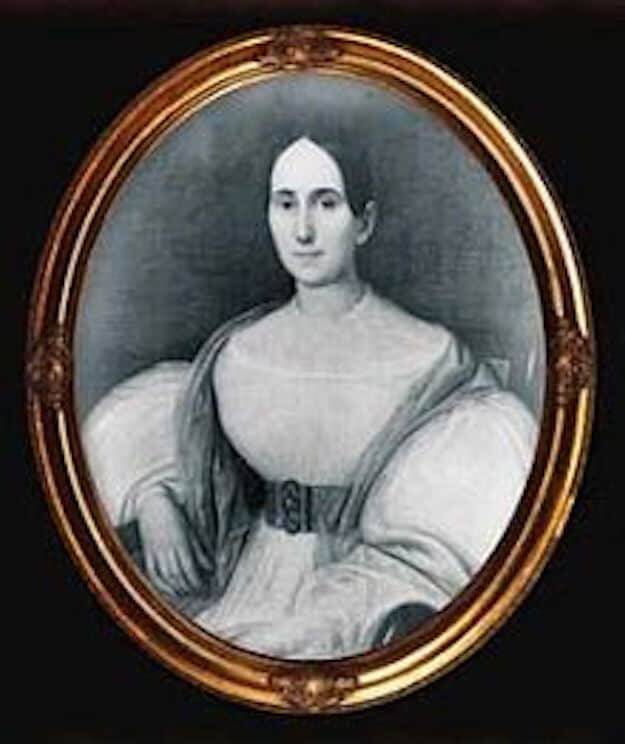
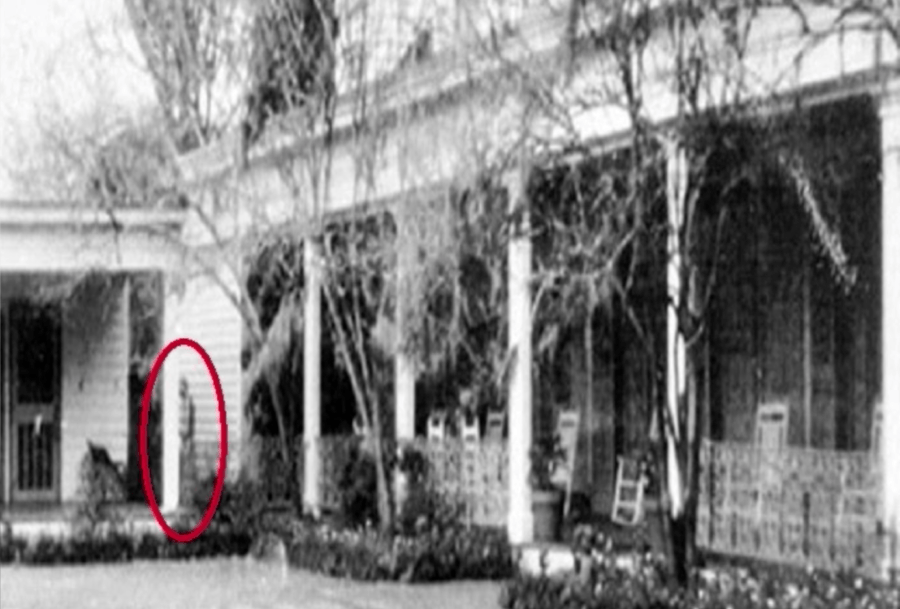
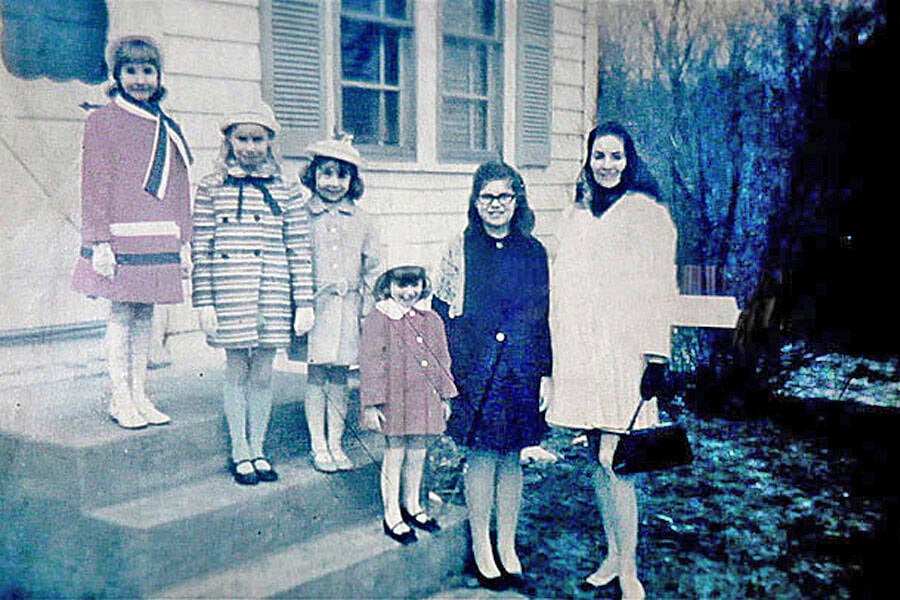
In the 2013 film The Conjuring, a character declares: “There’s something horrible happening in my house.” Though the film is fiction, it’s based on a real story — and a real American haunted house in Rhode Island. The house, a 14-room farmhouse in Harrisville, belonged to the same family for eight generations. They suffered numerous strange tragedies during that time, including the deaths of children by suicides, drownings, and murder.

But the most infamous murder on the property was committed by a woman named Bathsheba Sherman. Local lore claimed that Sherman was a witch and killed a baby by sticking a sewing needle into his brain. After her death, she — and other spirits — were thought to have stuck around the house.  As depicted in The Conjuring, the Perron family moved to the house in 1971 and immediately began experiencing strange things. Carolyn Perron, the matriarch, first noticed objects missing and piles of dirt that appeared on the floor after she’d cleaned. Things only escalated from there.

The family’s beds shook every morning at 5:15 a.m., they smelled rotting flesh, and unexplainable noises kept everyone on edge. Once, Carolyn Perron felt a sharp pain in her leg and discovered a puncture wound — just like a needle would make.  As in The Conjuring, the family eventually enlist the help of Ed and Lorraine Warren, a demonologist and a clairvoyant. The real-life Warrens confirmed that there were spirits in the house, but said they failed to entirely exorcise them.

“We have a respect for the spirits. We lived with them. It was their house first,” said Andrea Perron, one of the family’s daughters. She claims that almost everything in the movie really happened — and, in fact, the movie didn’t even tell the whole story.  Although the Perron family left the house in 1980, another family soon moved in to the Conjuring House. They, too, have had a few brushes with the supernatural, admitting: “We’ve had a few moments in here that have made us jump a bit.”

2 The Winchester House

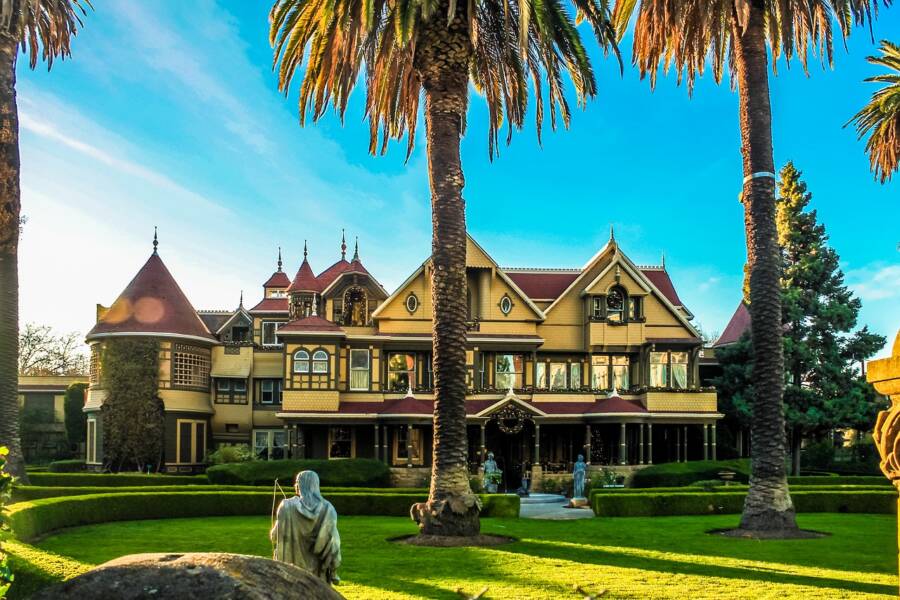
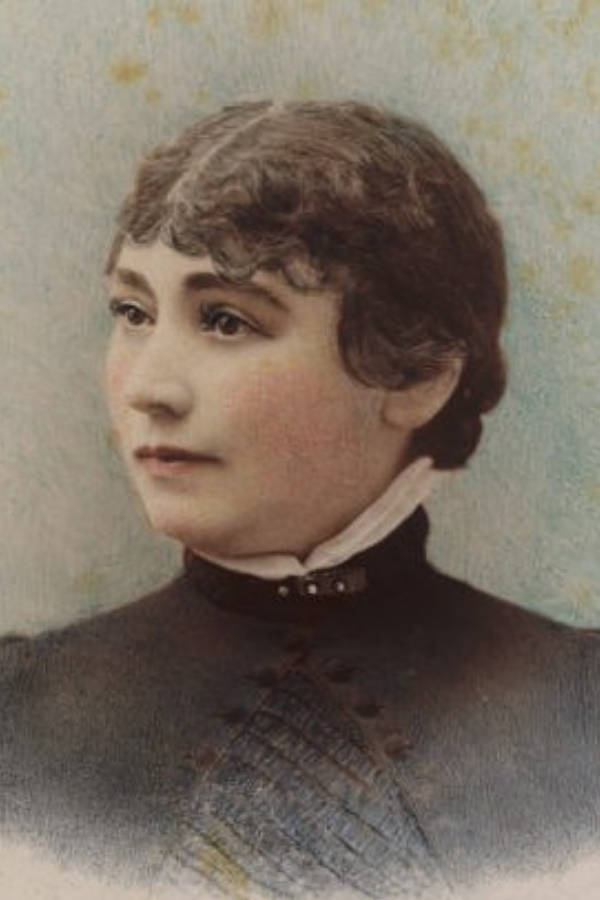
Normally, haunted houses are regular homes that become haunted. But the Winchester Mystery House in San Jose, California, is an American haunted house built specifically as a haven from — and for — spirits.  The idea for the house came from a New England woman named Sarah Winchester. A wealthy widow, she’d once been married to William Winchester, whose family produced Winchester rifles. When William died a premature death from tuberculosis in 1881, Sarah sought the help of a spiritual medium.

The medium told her the family was cursed, haunted by the spirits of people killed by the company’s guns. The only way to appease these ghosts and avoid becoming their next victim, the medium said, was to build a great house for them out west. And as long as construction never stopped, she would be safe. So, Sarah got to work. For her, money was no object. She’d inherited hundreds of millions of dollars from her husband, and thousands more poured in every day from Winchester Arms. Indeed, she couldn’t spend it fast enough — but not for lack of trying.

Sarah Winchester threw money at the house she wanted to build. As a result, the Winchester House began to grow and grow. However, her house didn’t make much objective sense. Without a concrete plan, construction advanced haphazardly — this way, then that, a staircase here, a door to nowhere there. And as the house grew, so did its legend.

A February 1895 article in The San Francisco Chronicle claimed that Sarah kept building the house to avoid death. Others say the confusing layout was meant to confound the spirits that haunted her. “The sound of the hammer is never hushed,” the article said. “The reason for it is in Mrs. Winchester’s belief that when the house is entirely finished, she will die.”

Sarah Winchester did die in 1922, after working on the house for 38 years. Today, it’s a maze of abruptly ending hallways, floors with windows, and stairways that ascend into the ceiling.  Many claim the place to be extremely haunted. Guests and employees of the Winchester Mystery House — now a popular tourist attraction — claim to have seen strange shadows, felt a mysterious tug, and heard unexplainable footsteps.

SOURCE: ALLTHATSINTERESTING.COM

Happy Birthday Walter!

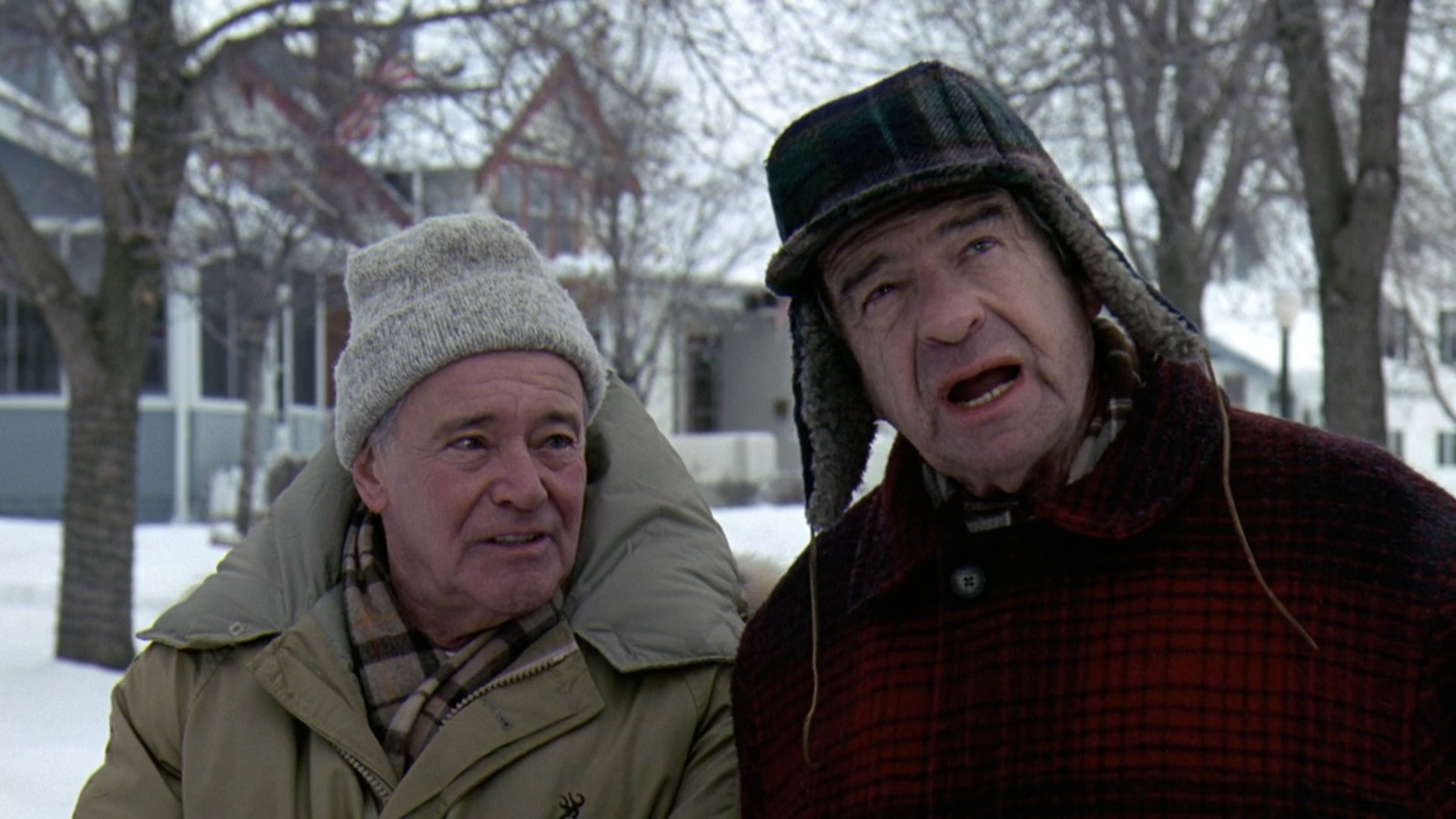
Today is Walter Matthau’s birthday (born October 1, 1920, and died July 1, 2000) and starred in one of my favorite movies, Grumpy Old Men.  I found an article on Facts.net and wanted to share it.

From Facts.net:

Walter Matthau, a name synonymous with talent, charisma, and timeless performances, left an indelible mark on the world of entertainment. From his iconic roles in classic films like “The Odd Couple” and “Grumpy Old Men” to his versatility in both comedy and drama, Matthau captivated audiences with his unique and captivating style. In this article, we will delve into the extraordinary life and career of this Hollywood legend. Prepare to be amazed as we uncover 15 mind-blowing facts about Walter Matthau that showcase his incredible talent, off-screen charisma, and enduring legacy. So, sit back, relax, and get ready to discover the fascinating world of one of the most brilliant actors of our time.

The Odd Couple became a classic comedy duo.

Starring alongside Jack Lemmon, Walter Matthau brought the characters of Oscar Madison and Felix Ungar to life in Neil Simon’s hit play and subsequent film adaptation. Their chemistry and comedic timing made them an unforgettable duo in Hollywood history.

Walter Matthau was born on October 1, 1920.

The talented actor, known for his distinctive gravelly voice, was born as Walter John Matthow in New York City. He would go on to become one of the most beloved and accomplished actors of his time.

Matthau served in World War II.

During his early adulthood, Matthau served in the U.S. Army Air Forces as a B-24 Liberator radioman-gunner in the Pacific theater. His military service greatly influenced his portrayal of tough, no-nonsense characters later in his career.

The Fortune Cookie earned Matthau an Academy Award nomination.

In 1966, Matthau received his first Academy Award nomination for Best Supporting Actor for his role as Whiplash Willie Gingrich in Billy Wilder’s The Fortune Cookie. This marked the beginning of a successful awards career for the talented actor.

Matthau and Jack Lemmon were close friends on and off the screen.

The dynamic duo of Matthau and Lemmon not only shared a successful on-screen partnership but also formed a strong friendship in real life. They went on to star in numerous films together, showcasing their incredible chemistry and friendship.

Walter Matthau won an Academy Award for The Sunshine Boys.

In 1972, Matthau won the Academy Award for Best Actor for his portrayal of Willie Clark in The Sunshine Boys. This recognition solidified his status as one of the top actors of his generation.

Matthau played a variety of roles throughout his career.

From grumpy but lovable old men to quirky and eccentric characters, Matthau’s versatility as an actor allowed him to take on a wide range of roles. He showcased his talent in both comedic and dramatic performances, captivating audiences with his unique charm.

Matthau starred in several successful films with director Billy Wilder.

Matthau collaborated with renowned director Billy Wilder on multiple occasions, resulting in critically acclaimed films such as The Fortune Cookie, The Front Page, and The Private Life of Sherlock Holmes. Their collaboration was a match made in Hollywood heaven.

Matthau received a star on the Hollywood Walk of Fame.

In 1980, Walter Matthau was honored with a star on the Hollywood Walk of Fame. This recognition celebrated his contributions to the world of entertainment and solidified his status as a Hollywood legend.

Matthau appeared in the hit film Grumpy Old Men.

In 1993, Matthau starred alongside Jack Lemmon again in the comedy film Grumpy Old Men. Their reunion was met with great excitement from fans, and the film became a box office success.

Matthau had a successful stage career.

Prior to his success in film, Matthau made a name for himself on the stage. He performed in various productions, showcasing his acting prowess and captivating audiences with his performances.

Matthau had a passion for playing poker.

Off-screen, Matthau had a love for the game of poker. He was known to engage in friendly poker games with his friends and fellow actors, adding an extra element of excitement to his already vibrant life.

Walter Matthau was married twice.

Matthau was first married to Grace Geraldine Johnson, with whom he had two children. After their divorce, he later married Carol Saroyan, with whom he had his third child. Family was important to Matthau, and he cherished his role as a husband and father.

Matthau continued to act until his final years.

Even in his later years, Matthau remained dedicated to his craft. He starred in films such as Grumpier Old Men and The Odd Couple II, showcasing his enduring passion for acting and his commitment to entertaining audiences.

Walter Matthau’s legacy lives on.

Walter Matthau left an indelible mark on the world of entertainment with his incredible talent and unforgettable performances. His iconic roles and his contributions to the industry will always be remembered, ensuring that his legacy continues to inspire future generations of actors and entertainers.

Conclusion

Walter Matthau was more than just a talented actor. He was a legend in the entertainment industry and left an indelible mark on Hollywood. From his iconic performances to his unique personality, Matthau captivated audiences for decades. These 15 mind-blowing facts about Walter Matthau shed light on the man behind the characters, showcasing his incredible talent, his humorous nature, and his enduring legacy. Whether it was his comedic genius in films like “The Odd Couple” or his dramatic depth in movies like “Charley Varrick,” Matthau truly had a range that few actors could match. His wit, charm, and ability to bring characters to life made him a beloved figure both on and off the screen. As we reflect on Matthau’s life and career, it becomes clear that he was not just a celebrity, but an artist who made a lasting impact on the world of entertainment. His talent, passion, and enduring appeal will continue to inspire and entertain generations to come.

SOURCE: FACTS.NET; GINGER HOCH

September Back-to-School Games

I Spy

Visual Puzzles:

Which Parking Spot?

This visual brainteaser was spotted on a Hong Kong first-grade student admissions test, and it’s a great puzzle to encourage children to think laterally. Can you work it out? Apparently, children around the age of 6 are much more likely to solve this problem than older students and even adults.

Move one glass only…

In this visual brainteaser, students can see three glasses on the left that are full and three on the right that are empty. If they make one small change, they can make a row of alternately full and empty glasses, but they only do one change! What do they have to do?

Make 10

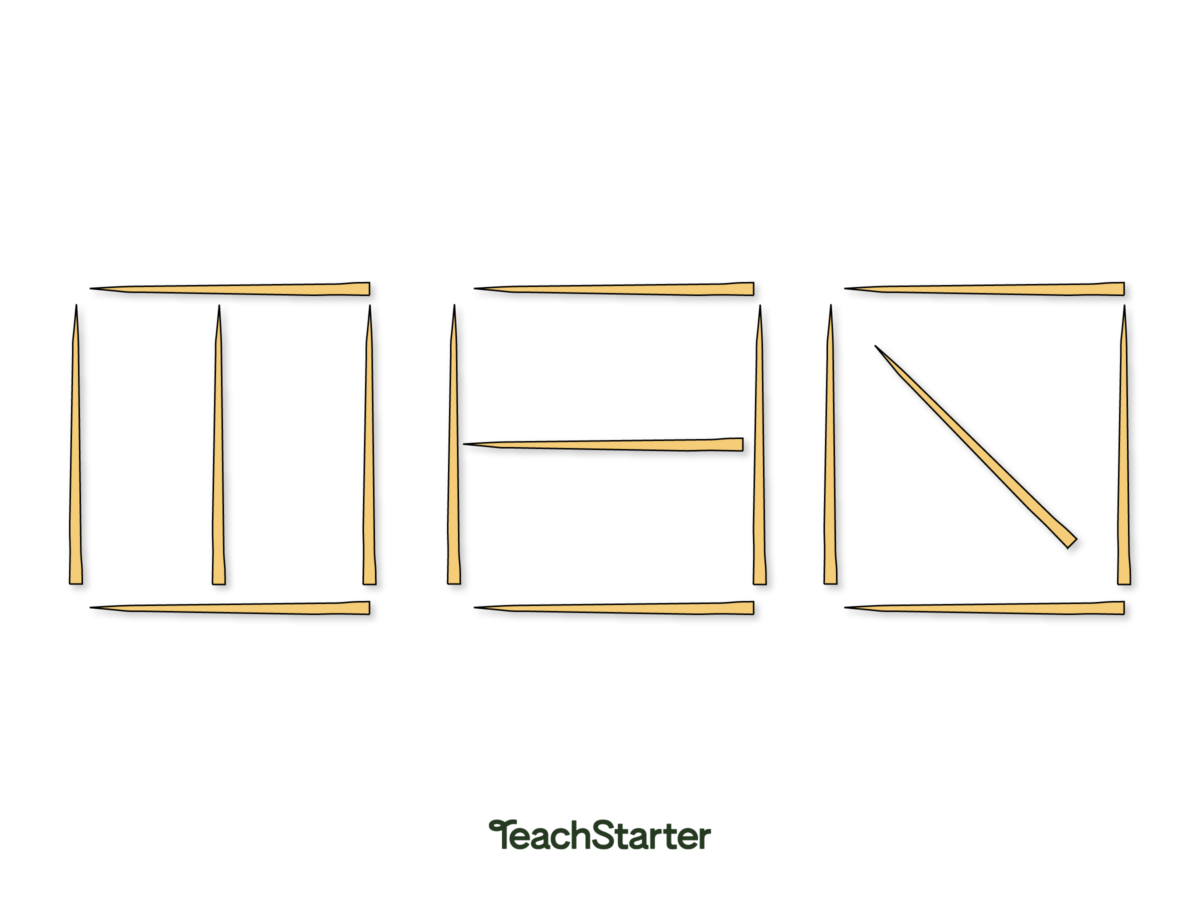
The matchstick test is a great problem-solving brainteaser. Students need to remove six matches to make 10. Which ones do they move?

Who You Gonna Call?

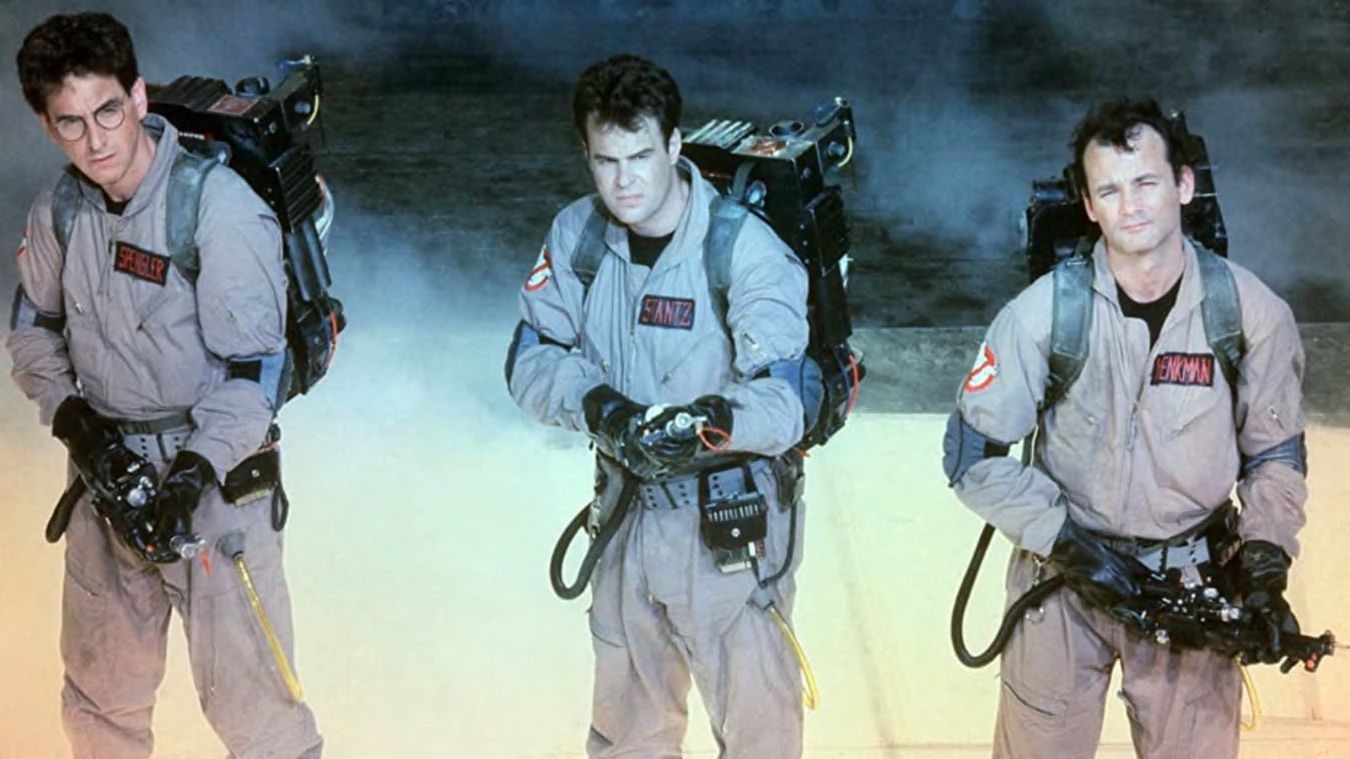
In honor of Bill Murray’s birthday today (born in 1950), I went looking for stuff we might not know about Ghostbusters! I found this article on Mental Floss:

1 DAN AYKROYD FOUND INSPIRATION FOR THE MOVIE IN HIS FAMILY’S HISTORY.

Dan Aykroyd grew up surrounded by spiritualists. His great-grandfather, Samuel A. Aykroyd, was a noted nineteenth century psychic investigator who conducted séances at the Aykroyd family farmhouse in eastern Ontario with a medium named Walter Ashurst. This predilection for the paranormal was passed down to Aykroyd’s grandfather, Maurice, who was an engineer for the Bell Telephone Company. Maurice allegedly tried to use his know-how to create a high-vibration crystal radio that could contact the spirit world. Dan’s father, Peter, kept a sizeable library of books about spooky subjects (including his great grandfather’s séances), which kept ghosts and ghouls in the back of young Aykroyd’s mind. After he left Saturday Night Live in 1979, he read an article about parapsychology in an American Society of Psychical Research publication, which inspired Ghostbusters.

2 GHOSTBUSTERS COULD HAVE BEEN MUCH DIFFERENT—AND MUCH BIGGER.

Aykroyd found comedic inspiration in films like Bob Hope’s The Ghost Breakers, the horror-comedies of Abbott and Costello, and Bowery Boys fare like Spook Busters and Ghost Chasers. He went wild writing his original script, which took place in the future and had a much darker tone. The actors he had in mind for the three main protagonists were himself, John Belushi, and Eddie Murphy. His concept involved dozens of Ghostbuster groups fighting specters across time and different dimensions. The now-iconic Stay Puft Marshmallow Man—which is in the climax of the finished film—appeared much earlier (on page 20) and was one of 50 large-scale monsters that the Ghostbusters would do battle with. Eventual director Ivan Reitman estimated that the first script would have cost up to $300 million to produce—and that was in 1984.

3 JOHN BELUSHI STILL APPEARS IN THE FINAL FILM, IN SPIRIT.

Part of the reason Aykroyd had to recontextualize and rethink his idea—other than its implausible potential budget—was the tragic death of his fellow former SNL castmate John Belushi, whom he envisioned as the sarcastic Peter Venkman. The role was later immortalized by Bill Murray, another SNL alum, but the writers still wanted to honor Belushi by somehow involving him in the movie. When it came time to think up the design for the first ghost the group is commissioned to bust, Aykroyd conceived of a gross-looking, gluttonous, party-guy persona for the apparition as an ironic homage to his friend Belushi. The ghost made it to the screen and was later christened “Slimer.”

4 THE MOVIE HAD TO BE MADE IN A VERY SHORT PERIOD OF TIME.

Once Aykroyd nailed down the general concept and the narrative of the film (but before he’d penned the final draft), he brought on Ivan Reitman, not only to direct, but also to sell the movie to a major motion picture studio. Reitman had previously directed the popular Bill Murray comedies Meatballs and Stripes—both of which had been co-written by another eventual Ghostbuster, Harold Ramis. Since Reitman had a relationship with Columbia Pictures (which produced Stripes), he approached pragmatic studio head Frank Price with Aykroyd’s outrageous one-sentence pitch—“Ghost janitors in New York”—in May 1983. While admittedly skeptical, Price was attracted to the project because the tripartite of comedy geniuses who had agreed to play the leads: Aykroyd, Murray, and Ramis.

Price asked Reitman just how much the outrageous-sounding movie would cost, and the director allegedly threw out a random guesstimate of $30 million. Price agreed on the budget and the movie with one stipulation—that it must have a firm release in June 1984, in time for the summer season. This was no small detail, considering this gave them only 12 months to finish the script, shoot the film, and create and finish the special effects. The rushed production schedule immediately forced Aykroyd, Ramis, and Reitman to retreat to rented houses on Martha’s Vineyard for a marathon three-week writing session to complete the final shooting script. Afterward, they immediately began prepping the shoot and scouting locations.

5 SIGOURNEY WEAVER GAVE A UNIQUE AUDITION.

Despite the fact that the film began production with its three leads already cast, Reitman needed the right actress for another vital part of the film. For the role of Venkman’s headstrong love interest, Dana Barrett, Reitman chose Sigourney Weaver. She was eager to do a comedy after her amazing performance as Ripley in Ridley Scott’s Alien, so she tried something altogether different for her audition. She offered up a wordless scene where she turned into one of the grotesque dogs that do Gozer’s bidding, an act that allegedly involved writhing across the casting couch and loudly snarling at Reitman. The director was impressed—if not a little scared—and she got the part.

6 THE PART OF LOUIS TULLY WAS ORIGINALLY WRITTEN FOR ANOTHER SECOND CITY ALUM.

For the loveable loser-turned whacked-out demon “Keymaster of Gozer” Louis Tully, Aykroyd thought of actor John Candy. The Canadian comedian had previously worked with him in 1941 and The Blues Brothers; with Reitman, Ramis, and Murray in Stripes; and for Ramis again in National Lampoon’s Vacation. But Candy envisioned Louis as a stern German man with a thick accent who kept dozens of dogs in his apartment. He also wanted the character rewritten and made into a starring role. Filmmakers preferred the original character that Aykroyd and Reitman had developed, so they gave the role to another member of the Second City troupe, Rick Moranis. The soft-spoken, bespectacled comic brought his own brand of misfit comedy and improv styles to the now-classic character—and he also provided his own wardrobe.

7 “EGON SPENGLER” WAS INSPIRED BY A FRIEND, AN INTELLECTUAL, AND AN UNKNOWN.

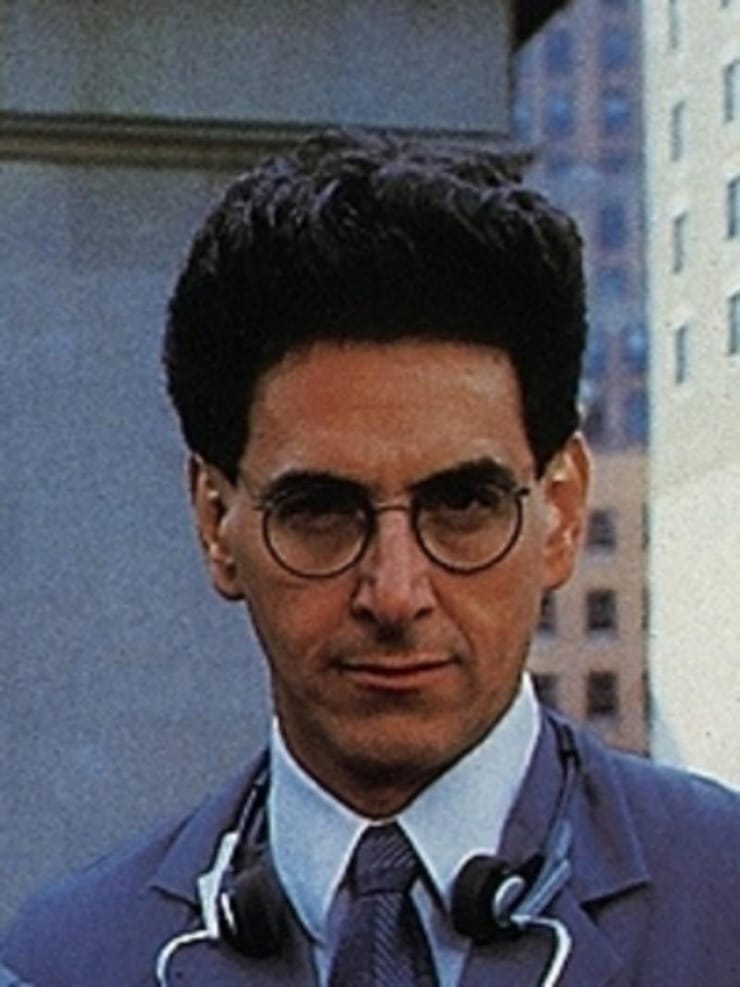
When trying to come up with the perfect name for his character—who was the brains of the Ghostbusters—co-writer Harold Ramis combined both personal and academic inspirations. “Egon” was the first name of Egon Donsbeck, a Hungarian exchange student at Stephen K. Hayt Elementary School who was Ramis’ classmate when he grew up in Chicago. “Spengler” came from German historian and philosopher Oswald Spengler. For the “look” of his character, Ramis copied the style of an unknown guy he’d seen on the cover of an abstract architectural journal. He thought the man’s old three-piece tweed suit, wire-rim glasses, and puffed-up hair were perfect for his geeky parapsychologist.

8 GHOSTBUSTERS IS THOUGHT OF AS A NEW YORK MOVIE, BUT SOME SIMPLE MOVIE MAGIC WENT INTO MAKING ITS VARIOUS LOCATIONS.

Come to New York and you can visit some key Ghostbusters locations. The exterior of the fully functioning FDNY Hook & Ladder #8 building at 14 North Moore Street in TriBeCa served as the Ghostbusters’ base of operations—definitely not a “demilitarized zone,” as Egon said. The building at 55 Central Park West housed the apartments of Dana Barrett and Louis Tully. The main branch of the New York Public Library at Fifth Avenue and 42nd Street is recognizable for the lions guarding its entrance, and Columbia University’s Havemeyer Hall served as the Weaver Hall Department of Psychology building that the guys are kicked out of at the beginning of the movie. Then there’s the legendary restaurant Tavern on the Green, where Louis was attacked by one of Gozer’s dogs.

But none of these places appear exactly as they do onscreen. The interior of the Ghostbusters’ firehouse was actually an abandoned fire station in Los Angeles, and the rooftop temple scenes at Dana’s apartment were filmed at a huge set built on Stage 16 at Columbia Pictures (large-scale matte paintings were used for long shots). The early library scene where Egon is introduced was in fact filmed at the New York Public Library, but the scene where the three Ghostbusters come across the old librarian ghost in the stacks was actually shot across the country at the Los Angeles Public Library. Similarly, the Sedgewick Hotel—where the guys bust Slimer—wasn’t in New York at all; the exterior and interior shots were taken at the Millennium Biltmore Hotel in Los Angeles.

9 THE ECTOMOBILE WAS ONE A KIND—AND THEN IT BROKE DOWN.

Out of the handful of iconic details from Ghostbusters is the Ectomobile, a 1959 Cadillac ambulance outfitted with gadgets and gizmos to help the guys bag pesky poltergeists. In a typical movie production, several similarly-adorned vehicles are used for stylistic and insurance purposes. (The production of Back to the Future, for instance, used three different DeLoreans.) Because the filming of Ghostbusters was so rushed, only one Ectomobile was put together. Naturally, everyone on set was very cautious around the then-25-year-old jalopy. While they handled the ambulance with care, the car broke down at the end of a shot of the Ecto driving across the Manhattan Bridge. Luckily, this didn’t happen until after main production wrapped in New York City, but still, the car was DOA and wasn’t available for use again.

10 ONE VISUAL EFFECT SHOT OF SLIMER INVOLVED SOME SPRAY PAINT AND A PEANUT.

Visual effects supervisor Richard Edlund and his team—who also worked on such films as Raiders of the Lost Ark, the original Star Wars trilogy, and Poltergeist—were given only 10 months to design, storyboard, build, and shoot every special effect in the film. The quick turnaround forced workers like animation supervisor Terry Windell to have to think on their feet, especially when the deadline got very tight. When a wide shot that featured Slimer quickly floating around a chandelier in the Sedgewick Hotel scene wasn’t coming out right, and time was running out, Windell spraypainted a small peanut green in order to mimic the green ghoul. The seconds-long shot depicted Slimer blurred and spinning, so detail wasn’t a factor, and the shot was used in the final print of the film. Windell revealed that the extreme tactics taken for certain shots proved that the effects team was “totally serious about making it stupid.”

11 DIRECTOR IVAN REITMAN MADE A COUPLE OF UNORTHODOX APPEARANCES IN THE MOVIE.

You won’t see Reitman in Ghostbusters, but still, he does have a presence: For the noises of Slimer pigging out on a pile of food before he famously slimes Peter Venkman, Reitman stepped in to provide the gross-out grub-gorging sounds. Reitman’s naturally deep voice also proved perfect for the moment when Dana becomes possessed and says “There is no Dana, only Zuul,” which was later enhanced with special effects for a truly spooky result.

12 BILL MURRAY’S CADDYSHACK CHARACTER, CARL SPACKLER, APPEARED IN ONE SCENE THAT WAS CUT.

It isn’t specified, but the voice and mannerisms of the character that Murray plays opposite Dan Aykroyd in this deleted scene is eerily similar to Carl Spackler, the lowly groundskeeper he portrayed in the 1980 comedy masterpiece Caddyshack (which was directed and co-written by Harold Ramis). The scene was cut for time, mostly to get to the scene where Louis Tully is attacked by the demon dog chasing him, but one doesn’t have to wonder what it would have been like if the worlds of Caddyshack and Ghostbusters had collided in such a fashion.  

13 ONE OF THE FILM’S PRODUCERS CREATED THAT ICONIC LOGO.

The most indelible icon from Ghostbusters is the famous “no-ghost” logo that appeared on the guys’ car, their uniforms, and widely among advertisements and promotions for the movie. Associate producer Michael C. Gross, a bit of a renaissance man, designed the image. Prior to getting into the movie business as a producer, Gross served as an art consultant for The Muppets, John Lennon, and The Rolling Stones. He also served as art director for National Lampoon and Esquire in the 1970s.  

14 PRODUCTION SHUT DOWN CENTRAL PARK WEST, AND ISAAC ASIMOV WASN’T PLEASED.

While shooting exteriors in front of Dana’s apartment building, the production had permission to temporarily shut down traffic in the area surrounding West 65th Street and Central Park West. What they didn’t know was that it would disrupt traffic throughout Manhattan. During rush hour, cars backed up to Columbus Circle, eventually going all the way downtown. In fact, Aykroyd was concerned that they had inadvertently pushed the traffic jam all the way to the Brooklyn Bridge. After receiving complaints, cast and crew members jokingly told others that the delay was caused by Francis Ford Coppola’s production of The Cotton Club, which was shooting in New York at the same time. One particularly ornery Upper West Side resident who complained was author Isaac Asimov, who stumbled on to the set and told Aykroyd that they were “inconveniencing” him. Aykroyd, a lifelong fan of the writer, smoothed things over by using the opportunity to lavish praise on the irritated Asimov.

15 “CROSSING THE STREAMS” WAS MADE UP ON THE SPOT.

The deus ex machina of the Ghostbusters crossing the streams of the proton packs helped them to—spoiler alert—defeat the Marshmallow Man and the evil demon Gozer at the end of the film. According to Ramis, this activity didn’t appear in script. He and Aykroyd were unsure how to get the Ghostbusters out of the final scene alive, and because the nuclear technology behind the proton packs was “explained” with humorous techno-babble and mostly left up to the audience’s imagination, they came up with the idea of crossing the streams—an act which would somehow cause a cataclysmic shift in our dimension. After this decision was made, they added in some foreshadowing of the event to an earlier scene, only to revisit the concept in the climactic standoff at the end.

16 ON SET, THE MARSHMALLOW WAS REALLY SHAVING CREAM.

Once the Ghostbusters cross the streams, the rift between the two dimensions causes the Marshmallow Man to explode, raining down marshmallow on the unsuspecting New Yorkers below. But getting that amount of actual marshmallows to dump on the film’s extras was implausible. Instead, Edlund’s team collected 500-gallon batches of shaving cream to substitute for the remnants of Mr. Stay-Puft. William Atherton, who played EPA villain Walter Peck, was skeptical about having such a large amount of heavy cream dropped on him, so they tested the idea on a stuntman using only 75 pounds, and it knocked him to the ground. The stuntman was okay, and another smaller batch was collected to dump on Atherton for the final take in the film.

17 THE MOVIE ALMOST HAD TO CHANGE ITS NAME.

Once production wrapped, Reitman faced a situation that would possibly have derailed the whole movie. In the 1970s, Universal Studios had produced a live-action TV series titled The Ghost Busters, and their lawyers threatened legal action if the name of the movie wasn’t changed. Reitman, who had shot footage of the leads referring to themselves as the Ghostbusters and of massive crowds shouting “Ghostbusters! Ghostbusters!” was in deep trouble.

Luckily, Frank Price—the head of Columbia Pictures and the man who originally green-lit the movie—was moving to Universal Studios to become the new studio head there, and allowed Reitman to keep the name for the film. But the legal snafu reared its head again when a TV cartoon was made out of the movie. To satisfy Universal, the Saturday- morning fare was labeled The Real Ghostbusters, so as to not legally confuse the two properties.

18 HUEY LEWIS WAS NOT A FAN OF THE THEME SONG.

Because his song “Holiday Road” was featured prominently in National Lampoon’s Vacation (directed by Harold Ramis), Fleetwood Mac guitarist Lindsey Buckingham was allegedly approached about a theme song for the film, but he passed on the project. Reitman hoped that Huey Lewis & The News would take the job, and even used their hit “I Want a New Drug” as a temporary filler song while cutting the film. Lewis declined as well, because he had already agreed to contribute the song “Back in Time” to Back to the Future and didn’t want to do any more soundtrack work. The filmmakers then approached Ray Parker Jr., who had sung hits with Raydio (“Jack and Jill”) and was finding success as a solo artist as well. Unfortunately, the titular tune—with the often quoted “Who you gonna call?” and “I ain’t afraid of no ghosts!”—bore a striking resemblance to Lewis’ “I Want a New Drug,” so much so that the song’s publishers sued for plagiarism. The suit was settled out of court, but you can decide for yourself with the mashup of the two songs above.

19 ELMER BERNSTEIN EXPERIMENTED WITH NEW INSTRUMENTS ON THE SOUNDTRACK.

Composer Elmer Bernstein wanted to go beyond a conventional orchestra for Ghostbusters, so he used both new and old technology. He included the then-cutting-edge Yamaha DX-7 synthesizer to create weird sounds that orchestral instruments couldn’t conjure up, and even employed an Ondes Martenot—a relatively obscure early electronic instrument created in 1928 by inventor Maurice Martenot—for additional otherworldly tones. You can hear it in the beginning and middle of the song above.

20 IVAN REITMAN WAS PETRIFIED DURING THE FILM’S FIRST TEST SCREENING.

On paper and out of context, Ghostbusters was an admittedly outrageous prospect for a feature film. During the movie’s first test screening, held for 200 random people at Columbia Pictures Studio only three weeks after principal photography wrapped, Reitman was utterly terrified. He was not only uncertain about the fundamental plot of the film; he was also concerned that perhaps-too-absurd major details (like the Marshmallow Man) might take audiences “out” of the movie. In addition, only one fully-completed effect shot was available for the test screening—one of the film’s opening scenes, where an old librarian ghost transforms into a frightening ghoul. Reitman waited in the wings during the scene, and when audiences burst out laughing one second and hid their eyes the next, he knew that his fears were unfounded. And Reitman knew he had a major hit on his hands while walking around New York City during the second week of the film’s release, where he saw street vendors selling bootleg Ghostbusters T-shirts.

SOURCE: MENTAL FLOSS

Know-It-All Tuesdays: Animal Names

I found this quiz on the quiz-everyday.com website:

Question 1:

A male tiger is called a tiger and a female tiger is called a _______.

Question 2:

A female zebra or a horse is known as a mare and a male zebra or a horse is known as a _______.

Question 3:

A male chicken is called a _______ or a cock and a female chicken is called a _______.

Question 4:

A male lion is known simply as a lion and a female lion is known as a _______.

Question 5:

Male pig is simply called a _______.

Question 6:

When it comes to cats, a male cat can be called a ______ and a female cat can be called a _______ or a pussy cat. (use the longer form for a male cat and use only one word in both cases)

Question 7:

When we talk about a female dog, we use the word _______.

Question 8:

Male fox is simply called a fox but for a female fox we use the word _______.

Question 9:

When we want to say a male cow, we can use the word ______.

Question 10:

For a female duck we can use the word hen but for a male duck we use the word _______.

Pretty easy quiz! How did you do?

Tigress

Stallion

Rooster, hen

Lioness

Boar

Tomcat, queen

Bitch

Vixen

Bull

Drake

Till next month…stay sharp!

Happy National Frankenstein Day!

Young Frankenstein is one of my favorite Mel Brooks movies.  Mental Floss details 15 thing we may not know about the movie.

From MENTAL FLOSS:

In 1974, Mel Brooks gave the world Young Frankenstein—a movie that would set the bar for all future horror comedies to come.

Studio Executives tried Tricking Director Mel Brooks into Shooting the Film in Color

By the mid-‘70s, black and white cinema was an endangered species. Nevertheless, Brooks felt strongly about replicating the feel of Universal’s classic Frankenstein films by going colorless. However, not everybody shared his vision. Columbia Studios’ brass thought the style was unmarketable and, as Brooks explains in this delightful interview (skip to 47:40), used some slippery tactics in an attempt to get their way:

“They said ‘Okay, we’ll make it in black and white, but on color stock so that we can show it in Peru, which just got color. And I said ‘No. No because you’ll screw me. You will say this and then, in order to save the company, you will risk a lawsuit and you will print everything in color. It’s gotta be on… black & white thick film.”

Thankfully, Brooks prevailed, though 20th Century Fox wound up taking charge of the project.

Star and Co-Writer Gene Wilder Convinced Brooks to Forgo his Usual Cameo Appearance

Like Alfred Hitchcock, Brooks usually gave himself a part in his own films, from Blazing Saddles’ loopy governor to the wine-selling Rabbi of Robin Hood: Men in Tights. These characters regularly broke the fourth wall and “winked” at the audience, something Wilder felt would clash with Young Frankenstein’s tone. So, as a condition of his taking on the lead role, Wilder made Brooks agree to remain off-camera. However, the director did provide some howling: As Frederick Frankenstein (Wilder) takes his first ride to the family castle, the distant wolf cry which startles him is a sound Brooks actually vocalized himself.

Early On, We Hear the Exact Same Conversation Repeated in Both English and German

En route to Romania, our protagonist catches a train to New York, whereupon he hears an American couple bickering. In the very next scene, Frederick (now on a Transylvania-bound locomotive) witnesses a European pair having an identical, word-for-word exchange in German

One of Igor’s Best Moments Inspired a Hit Aerosmith Song

“Walk this way!” Marty Feldman’s Igor instructs his master, who proceeds to copy the hunchback’s shuffling gait. Aerosmith frontman Steven Tyler found this line hilarious and repurposed it as the title of a track about high school lovers.

Hans Delbrück Was a Real Person

As Frederick readies his monster, he sends Igor to fetch a very special brain which rests in a jar labeled “Hans Delbruck: Scientist and Saint”. The actual Hans Delbrück (1848-1929) was an accomplished military historian whose son, Max, won a Nobel Prize for his work with viruses.

Several Props Had Previously Appeared in the Masterful 1931 Frankenstein Film

Taking his feature-length tribute to the next level, Brooks included much of the faux lab equipment used in that earlier picture.

Teri Garr Based Her Character’s Voice on Cher’s Hairdresser

Garr made several appearances on The Sonny and Cher Comedy Hour and used Cher’s German wig-stylist as a model for ditzy lab assistant Inga’s heavy accent.

Brooks Hired Kenneth Mars After the Actor Signed Off on an Odd Costuming Choice

The two had already collaborated in 1968’s The Producers, and while casting Young Frankenstein, Brooks offered Mars the role of grumpy Inspector Kemp, but not before pitching an eccentric wardrobe gimmick that ultimately wound up on-screen.

“He [said],” Mars later reminisced, “‘Let me ask you this… if you’re wearing an eye patch and you’ve got a monocle on top of the eye patch, is that too much?’ I said ‘Of course not.’ He said ‘Good, you’re hired!’”

Gene Hackman Specifically Asked Wilder for a Part in Young Frankenstein Because he “Wanted to Try Comedy”

According to the movie’s Blu-Ray commentary, Hackman—who’d been thrice nominated for an Academy Award (and won one in 1971)—learned about Young Frankenstein through his frequent tennis partner Wilder and requested a role. Ultimately, ‘Harold’—the lonely blind character he briefly portrayed—sparked one of the most memorable sequences in comedic history.

Peter Boyle Had to Wear a Special Pad Over His Crotch to Avoid Getting Scalded During the Famous Blind Man Scene

During their hysterical encounter, sightless Harold winds up accidentally dumping a bowlful of hot soup onto the poor creature’s lap. Fortunately, Boyle’s protective gear kept him from having to method act his way through the ordeal.

A Huge Percentage of the Movie Had to Be Deleted

“For every joke that worked, there were three that fell flat,” says Brooks, who whittled Young Frankenstein down to its current runtime after observing several mixed reactions from test audiences. This cut material included a clip in which Frederick’s relatives listen to a recorded will left by his great grandfather Beauvort von Frankenstein whose message starts skipping and nonchalantly repeats the phrase “Up Yours!”

In addition, the “Puttin’ on the Ritz” number was nearly axed as well. Brooks reportedly felt that having Dr. Frankenstein and his monster tap dance to an old Irving Berlin song seemed “too crazy.” Hearing this, Wilder—who though it brilliant—snapped and came “close to rage and tears” before Brooks unexpectedly changed his tune. “I wanted to see how hard you’d fight for it,” said the director, “And I knew if you fought hard enough, it was right…You did, so it’s in.”

Wilder was Constantly Cracking Up During Takes

According to Cloris Leachman, “He killed every take [with his laughter] and nothing was done about it!” Shots would frequently have to be repeated as many as fifteen times before Wilder could finally summon a straight face. But, to be fair, he certainly wasn’t the only one who couldn’t always keep it together.

Young Frankenstein sees Marty Feldman’s comic genius on full display, which was often more than his castmates could handle. For example, the scene where Frederick’s fiancée Elizabeth (Madeline Kahn) greets him at the castle generated a lengthy gag reel because Feldman—whose character starts ravenously gnawing on her mink scarf—kept everyone in stitches with his manic over-acting.

Brooks’ Blazing Saddles and Young Frankenstein were the 1st and 3rd highest-grossing films of 1974, respectively

“It’s good to be the king!” Before this pivotal year, the funnyman’s earlier efforts—The Producers and The Twelve Chairs (1970)—netted mixed reviews and had lackluster box office performances. But after turning out these back-to-back hits at breakneck speed, Brooks’ reputation as one of Hollywood’s greatest comedic directors was secured.

Leachman Was Asked to Reprise Her Role for the ‘Young Frankenstein’ Musical

After getting eliminated from ABC’s Dancing with the Stars, Brooks offered the 82-year-old actress a chance to take a second stab at playing Frau Blücher for his on-stage Young Frankenstein musical, but the show’s run ended before her schedule freed up.

Throughout the Shoot, Brooks Offered Wilder Directing Advice

Knowing his star dreamed of one day sitting in the director’s chair, Brooks made a point to give him as many pointers as possible before shooting concluded. Wilder reminisced, “Mel would say, ‘Do you know the trouble I’m in because I didn’t shoot that close-up? Don’t do that.’ I would say, ‘To whom are you talking?’ ‘You, when you’re directing.’”

Though both headed various productions after Young Frankenstein, they’d never collaborate on another flick. Nevertheless, the pair’s shared legacy is unimpeachable. All three of Brooks’ movies in which Wilder appeared—The Producers, Blazing Saddles, and Young Frankenstein—have been selected for preservation by the National Film Registry and included on the American Film Institute’s “100 Funniest Movies of All Time” list.

SOURCE: MENTAL FLOSS  MARK MANCINI

My Favorite Spy

Today is Melissa McCarthy’s birthday, born in 1970, and I do not know her politics, but I do enjoy the movies and series I have seen her in—Spy, The Heat, and Mike and Molly.  In Spy, she plays an agent for the government who was tricked into providing support for a handsome agent.  When he is neutralized, she is sent abroad for a low-key surveillance mission where she is assigned aliases such as housewife and cat lady, which she rejects and shows off her true spy capabilities (with some hilarious, but impressive results.) I found an article on factinate.com her describing 42 things we may not know about her, and I wanted to share a few of these.  

From Factinate:

Why Buy It When You Can Make It

Thanks to her fashion background, McCarthy designs the majority of the dresses she wears at award shows and premieres for her movies.

A Little Heads up Would Have Been Nice

In 2011, McCarthy and Joshua Jackson announced the nominees for various Emmy categories, but apparently, no one told her she was up for an award for Mike & Molly. When Jackson announced her name, she was genuinely shocked and so overcome with emotions that she could barely get through the rest of the nominees.

A Dress for Every Occasion

She returned to her fashion roots in 2015 when she launched her own fashion line, Melissa McCarthy Seven7, which offers reasonably priced clothing options for women from size 4 to 28.

Makeover: Diet Edition

After landing the role of Sookie St. James in Gilmore Girls, McCarthy decided to go on an all-liquid diet that resulted in her losing 70 lbs (32 kg) in four months! According to McCarthy, she would never do it again because it drove her crazy, and she would rather have a beer and a burger than starve herself. I’m with ya there, Melissa!

A Very Canadian Heist

In 2011, McCarthy and Mumolo sold a pitch to Paramount Pictures for a movie that has yet to be made and I can’t figure out why. The film would’ve starred McCarthy as a woman who tries to steal the Stanley Cup. Can someone at Paramount finance this movie already!

They Said What?

McCarthy admitted that she was “shocked and heartbroken” after her sitcom Mike & Molly was canceled after 6 seasons. After all, it was one of her first starring roles and she’d achieved much of her film success while still appearing on the show. One of the weirder rumors that was spread after the cancellation was that the show had been axed because McCarthy had lost too much weight after taking diet pills. These rumors were quickly disproven and found to have originated from—you guessed it—a manufacturer of diet pills.

You can read more facts about Melissa at the factinate.com website!

SOURCE: FACTINATE.COM

125 Interesting Facts About Everything Part 4

Fact: Frankenstein’s Creature is a vegetarian

Both Victor Frankenstein and Creature are fictional characters in Mary Shelley’s Frankenstein. In the classic novel, Creature says, “My food is not that of man; I do not destroy the lamb and the kid to glut my appetite; acorns and berries afford me sufficient nourishment.” This is one of the interesting facts you should definitely share with your vegetarian friends!

Fact: Medical errors are a top cause of death

According to a Johns Hopkins research team, 250,000 deaths in the United States are caused by medical error each year. This makes medical error the third leading cause of death in the country.

Fact: Sloths have more neck bones than giraffes

Despite the difference in neck length, there are more bones in the neck of a sloth than a giraffe. There are seven vertebrae in the neck of a giraffe, and in most mammals, but there are 10 in a sloth’s. While they’re on your mind, here are some adorable sloth pictures you totally need to see.

Fact: Bees can fly higher than Mount Everest

Bees can fly higher than 29,525 feet above sea level, according to National Geographic. That’s higher than Mount Everest, the tallest mountain in the world.

Fact: Ancient Egyptians used dead mice to ease toothaches

In Ancient Egypt, people put a dead mouse in their mouth if they had a toothache, according to Nathan Belofsky’s book Strange Medicine: A Shocking History of Real Medical Practices Through the Ages. Mice were also used as a warts remedy in Elizabethan England.

Fact: Cap’n Crunch’s full name is Horatio Magellan Crunch

He’s also been called out for only having the bars of a Navy commander, but the so-called cap’n held his ground on Twitter, arguing that captaining the S.S. Guppy with his crew “makes an official Cap’n in any book!”

Fact: Paint used to be stored in pig bladders

The bladder would be sealed with a string and then pricked to get the paint out. This option wasn’t the best because it would often break open. American painter John G. Rand was the innovator who, in the 19th century, made paint tubes from tin and screw caps.

Fact: Humans have jumped farther than horses in the Olympics

The Olympic world record for the longest human long jump is greater than the world record for longest horse long jump. Mike Powell set the record in 1991 by jumping 8.95 meters, and the horse xtra Dry set the record in 1900 by jumping 6.10 meters.

Fact: The Terminator script was sold for $1

James Cameron is the award-winning director of movies like Titanic and Avatar. In order to get his big break with The Terminator, he sold the script for $1 and a promise that he’d direct it. Of course, this movie has some of the most famous movie quotes of all time in it.

Fact: Pigeon poop is the property of the British Crown

In the 18th century, pigeon poop was used to make gunpowder, so King George I confirmed the droppings to be the property of the Crown.

Fact: Onions were found in the eyes of an Egyptian mummy

Pharaoh Ramses IV of ancient Egypt had his eyes replaced with small onions when he was mummified. The rings and layers of onions were worshipped because people thought they represented eternal life. This aligns with the reason for mummification: to allow the pharaoh to live forever.

Fact: Abraham Lincoln was a bartender

You know that the 16th president of the United States fought for the freedom of slaves and the Union, but what you didn’t know is that he was a licensed bartender. Lincoln’s liquor license was discovered in 1930 and displayed in a Springfield liquor store. According to Wayne C. Temple, a Lincoln expert, Congress wanted to fire Ulysses S. Grant in 1863 because he drank a lot, and Lincoln’s response was to send Grant a supply of whiskey.

Fact: Beethoven never knew how to multiply or divide

The renowned pianist went to a Latin school called Tirocinium, where he was taught some math but never learned multiplication or division—only addition. Once, when he needed to multiply 62 by 50, he wrote 62 down a line 50 times and added it all up.

Fact: Japan released sushi-inspired Kit Kats

For a limited time in 2017, Tokyo’s Kit Kat Chocolatory shop made three types of the chocolate bar that were inspired by sushi but didn’t actually taste like raw fish. The tuna sushi was raspberry, the seaweed-wrapped one tasted like pumpkin pudding, and the sea urchin sushi was the flavor of Hokkaido melon with mascarpone cheese. All were made with puffed rice, white chocolate, and a bit of wasabi.

Fact: An espresso maker was sent into space in 2015

Coffee lovers will appreciate this interesting space fact: Samantha Cristoforetti was the first astronaut to get a warm and cozy piece of home sent to her while in orbit. The Italian Space Agency worked with Italian coffee manufacturer Lavazza to get the coffee capsules into space.

Fact: The word “aquarium” means “watering place for cattle” in Latin

Of course, today’s aquariums aren’t for cows. The first aquarium that looks like what you’d imagine was created in 1921 and opened in 1924 in England.

Fact: An employee at Pixar accidentally deleted a sequence of Toy Story 2 during production

Ed Catmull, the cofounder of Pixar, wrote in his book, Creativity Inc., that the year before the movie came out, someone entered the command ‘/bin/rm -r -f *’ on the drive where the files were saved, and scenes started deleting. It would have taken a year to recreate what was deleted, but luckily another employee had a backup of the entire film on her laptop at home.

Fact: Steve Jobs, Steve Wozniak, and Ron Wayne started Apple Inc. on April Fools’ Day

The three technology innovators signed the documents to form the Apple Computer Company on April 1, 1976. But the company was not fully incorporated until January 3, 1977. Thirty years later, the company was renamed Apple Inc. and is no joke. In 2018, Apple became the country’s first trillion-dollar company.

Fact: The inventor of the tricycle personally delivered two to Queen Victoria

In 1881, Queen Victoria was on a tour on the Isle of Wight when her horse and carriage could not keep up with a woman riding a tricycle. Intrigued by the bike, the queen proceeded to order two. She also asked that the inventor, James Starley, arrive with the delivery. Though you might associate tricycles with toddlers, Queen Victoria made them cool among the elite at the time.

Fact: Your brain synapses shrink while you sleep

Researchers at the University of Wisconsin-Madison Center for Sleep and Consciousness studied mice to observe what happens to their brains while they sleep. Dr. Chiara Cirelli and Dr. Giulio Tononi found an 18 percent decrease in the size of synapses after a few hours of sleep. Don’t worry, though—this nighttime brain shrinkage actually helps your cognitive abilities.

Fact: A waffle iron inspired one of the first pairs of Nikes

Bill Bowerman was a track and field coach in the 1950s who didn’t like how running shoes were made. He first created the Cortez shoe but wanted a sneaker that was even lighter and could be worn on a variety of surfaces. During a waffle breakfast with his wife in 1970, he came up with the idea of using the waffle texture on the soles of running shoes. Waffle-soled shoes made their big debut in the 1972 U.S. Olympic track and field trials in Eugene, Oregon.

Fact: Boars wash their food

National Geographic reported that at Basel Zoo in Switzerland, zookeepers watched adult and juvenile wild boars pick up sandy apples and bring them to a nearby creek in their environment to wash before eating. Though some items like sugar beets were eaten without the human-like behavior, the boars brought a whole dead chicken to the creek to wash before chowing down. One ecologist called this a “luxury behavior.”

Fact: Baseball umpires used to sit in rocking chairs

People have been playing baseball since the mid-19th century. In the early days, umpires would officiate the games while reclining in a rocking chair located 20 feet behind home plate. By 1878, the National League also declared that home teams must pay umpires $5 per game.

Fact: The first commercial passenger flight lasted only 23 minutes

In 1914, Abram Pheil paid $400 (which would be $8,500 today) for a 23-minute plane ride. The Florida flight flew between Saint Petersburg and Tampa, where only 21 miles of water separate the cities. Pheil, a former mayor of Saint Petersburg, and the pilot, Tony Jannus, were the only passengers. This momentous flight paved the way for air travel as we know it.

Fact: The world’s first novel ends mid-sentence

The Tale of Genji, written by Murasaki Shikibu in the 11th century, is considered the world’s first novel. After reading 54 intricately crafted chapters, the reader is stopped abruptly mid-sentence. One translator believes the work is complete as is, but another says we’re missing a few more pages of the story.

SOURCE: Reader’s Digest: Elizabeth Yuko

The Master of Suspense

Today would have been Hitchcock’s birthday. He was born August 13, 1899 and died peacefully April 29, 1980.  This article from Mental Floss highlights fifteen interesting things about the Master of Suspense.

From Mental Floss:

The shower scene in Psycho. The biplane chase in North by Northwest. The gas station attack in The Birds. They’re some of the most memorable and terrifying scenes in cinema history—and they came from the mind of one man: Alfred Hitchcock. The Master of Suspense, who went by the nickname “Hitch,” is also one of the most recognizable Hollywood icons, and his life was as fascinating as his films. Here are 15 things you might not have known about the legendary filmmaker, who was born in London on August 13, 1899.

1 Alfred Hitchcock was afraid of law enforcement … and breakfast.

Hitchcock’s mastery of thrillers may have earned him the nickname the “Master of Suspense,” but the plucky filmmaker had phobias of his own.

His lifelong fear of police stemmed from an incident in his childhood when his strict father, William, punished him by sending him to the local Leytonstone police station on the outskirts of his family’s home in east London. “I was just sent along with a note, I must have been four or five years of age, and the head of the police read it and then put me into the cell and said, ‘That’s what we do to naughty boys,’” Hitchcock later recalled of the experience.

Also, omelettes were decidedly not his favorite breakfast food. “I’m frightened of eggs, worse than frightened, they revolt me,” he once said in an interview. “That white round thing without any holes … Have you ever seen anything more revolting than an egg yolk breaking and spilling its yellow liquid? Blood is jolly, red. But egg yolk is yellow, revolting. I’ve never tasted it.”

2 Alfred Hitchcock began his work in silent films.

Known for the complex title sequences in his own films, Hitchcock began his career in cinema in the early 1920s, designing the art title cards featured in silent films. The gig was at an American company based in London called the Famous Players-Lasky Company (it would later become Paramount Pictures, which produced five Hitchcock-directed films). As Hitchcock later told French filmmaker François Truffaut in their infamous Hitchcock/Truffaut conversations, “It was while I was in this department, you see, that I got acquainted with the writers and was able to study the scripts. And, out of that, I learned the writing of scripts.” The experience also led Hitch to try his hand at actual filmmaking. “If an extra scene was wanted, I used to be sent out to shoot it,” he told Truffaut.

3 Alfred Hitchcock learned from another cinema master.

In 1924, Hitchcock and his wife Alma were sent to Germany by Gainsborough Pictures—the British production company where he was under contract—to work on two Anglo-German films called The Prude’s Fall and The Blackguard. While working in Neubabelsberg, Hitchcock was taken under the wing of expressionist filmmaker F.W. Murnau, who created the chilling Dracula adaptation Nosferatu, and was shooting a silent film called The Last Laugh. “From Murnau,” Hitchcock later said, “I learned how to tell a story without words.”

4 Most of Alfred Hitchcock’s early films are lost, but a 1923 silent melodrama was discovered in New Zealand.

Only nine of Hitchcock’s earliest silent films still exist. The earliest surviving film he worked on, a 1923 melodrama titled The White Shadow—about twin sisters, one good, one evil—was thought lost until three of the film’s six reels were found sitting unmarked in the New Zealand Film Archive in 2011. The film reels were originally donated to the Archive in 1989 by the grandson of a Kiwi projectionist and collector. While the film was technically directed by leading 1920s filmmaker Graham Cutts, the 24-year-old Hitchcock served as the film’s screenwriter, assistant director, and art director.

5 Alfred Hitchcock brought sound to British movies.

The 1929 movie Blackmail, about a murder investigation headed up by the murderer’s fiance, was Hitchcock’s first hit film, and also the first “talkie” film released in Britain. (The first full-length talkie, The Jazz Singer, was released in the U.S. in 1927.) While Blackmail was originally conceived and created as a silent film, the final cut was dubbed with synchronized sound added in post-production using then-state of the art audio equipment imported from the U.S.

6 Alfred Hitchcock popped up on screen all the time.

The most constant image in Hitchcock’s films seem to be Hitchcock himself. The filmmaker perfected the art of the cameo, making blink-and-you’ll-miss-them appearances in 39 of his own films. His trickier appearances include the single-location film Lifeboat, where he appears in a weight-loss advertisement in a newspaper read by one of the film’s characters. The only film he actually speaks in is 1956’s The Wrong Man; his traditional cameo is replaced by a silhouetted narration in the introduction. That replaced a scrapped cameo of the director exiting a cab in the opening of the film.

7 Alfred Hitchcock was as successful in front of the camera on the small screen as he was behind the camera on the big screen.

By 1965, Hitchcock was a household name. That was the same year his long-running anthology TV series, Alfred Hitchcock Presents—which began in 1955 and was later renamed The Alfred Hitchcock Hour after episode lengths were stretched from 25- to 50-minute runtimes—came to an end. The series was known for its title sequence featuring a caricature of Hitchcock’s distinctive profile, which was replaced by Hitchcock himself in silhouette. But Hitchcock also appeared after the title sequence to introduce each new story. At least two versions of the opening were shot for every episode: An American opening specifically poked fun at the show’s network advertisers, while Hitchcock usually used the European opening to poke fun at American audiences in general.

7 Alfred Hitchcock literally wrote the encyclopedia entry on how to make movies.

The filmmaker would write (at least part of) the book on the medium that made him famous. Hitchcock personally contributed to writing a portion of the “Motion Pictures, Film Production” entry in the 14th edition of the Encyclopedia Britannica, giving typically cheeky first-hand insight into the fundamentals and technical aspects of filmmaking.

On the practice of moving the camera during a shot, Hitchcock wrote, “it is wrong to suppose, as is all too commonly the case, that the screen of the motion picture lies in the fact that the camera can roam abroad, can go out of the room, for example, to show a taxi arriving. This is not necessarily an advantage and it can so easily be merely dull.”

8. Alfred Hitchcock popularized the MacGuffin.

Even if you don’t know it by name, you know what it is. The MacGuffin is the so-called motivating element that drives a movie’s plot forward. Think: the eponymous statue in The Maltese Falcon, or the briefcase in Pulp Fiction, or the airplane engine plans in Hitch’s own The 39 Steps.

The term was coined by Angus MacPhail (note the prefix in his surname), Hitchcock’s screenwriting collaborator on films like Spellbound and The Man Who Knew Too Much. Even though such plot details were supposed to be important, Hitchcock didn’t seem to think they truly mattered. “The main thing I’ve learned over the years is that the MacGuffin is nothing. I’m convinced of this, but I find it very difficult to prove it to others,” Hitchcock told Truffaut in 1962, highlighting how the audience never finds out why the government secrets (a.k.a. the MacGuffin) in North by Northwest truly matter. “Here, you see,” Hitchcock said, “the MacGuffin has been boiled down to its purest expression: nothing at all!”

9 Alfred Hitchcock scrapped his own documentary about the Holocaust.

Hitch’s films flirted with mentioning the escalating tensions in Europe that would spark World War II, like in the shocking plane crash climax of 1940’s Foreign Correspondent. But the film Hitchcock collaborated on about the explicit horrors of the war would go unseen for decades.

Memory of the Camps, a 1945 documentary filmed by crews who accompanied the Allied armies that liberated those in the Nazi death camps at the end of the war, was stored in a vault in the Imperial War Museum in London until 1985. Originally commissioned by the British Ministry of Information and the American Office of War Information, Hitchcock served as a “treatment advisor” at the behest of his friend Sidney Bernstein, who is the credited director of the film. But the final film was scrapped because it was deemed counterproductive to German postwar reconstruction. The film was put eventually together as an episode of PBS’s FRONTLINE, and aired on May 7, 1985 to mark the 40th anniversary of the liberation of the camps.

10 Alfred Hitchcock didn’t want you to see five of his famous films for decades.

Vertigo may have topped many best-of movie polls, but for over 20 years, between 1961 and 1983, it and four other Hitchcock classics were almost virtually impossible to see. It turns out it was Hitchcock’s fault that Vertigo, Rear Window, Rope, The Trouble with Harry, and The Man Who Knew Too Much were purposefully unavailable to the general public.

The filmmaker personally secured full ownership to the rights of the five films per a contingency clause in the multi-film deal he made with Paramount Pictures in 1953. Eight years after the release of each film, the rights reverted back to Hitchcock, which, in the years before Blu-ray and DVD, seemed like a financially savvy move on Paramount’s part. Three years after Hitch’s death in 1980, Universal Pictures acquired the film rights to all five classics, making them available once again.

11 Alfred Hitchcock didn’t want to work with Jimmy Stewart after Vertigo.

Everyman actor Jimmy Stewart worked with Hitchcock a number of times, including as the nosy, wheelchair-bound photographer in Rear Window, and as the dastardly murderer in the “one-take” film Rope. After Stewart appeared in Vertigo in 1958, the actor prepared to appear in Hitchcock’s follow-up a year later, North by Northwest. But Hitch had other plans.

The director felt that one of the main reasons Vertigo wasn’t more of a smash hit was because of its aging star, and vowed to never use Stewart in any film ever again. Hitch wanted actor Cary Grant instead, and, according to author Marc Eliot’s book, Jimmy Stewart: A Biography, “Hitchcock, as was his nature, did not tell Jimmy there was no way he was going to get North by Northwest.” But when Stewart grew tired of waiting, and took a part in the movie Bell Book and Candle instead, “Hitchcock used that as his excuse, allowing him to diplomatically avoid confronting Jimmy and maintaining their personal friendship, which both valued.”

12 Alfred Hitchcock personally funded Pyscho.

When Hitchcock approached Paramount Pictures—where he was under contract—to put up the money to make Psycho, the studio balked at the salacious story. So Hitchcock financed the movie himself, foregoing his normal salary in exchange for 60 percent ownership of the rights to the film; Paramount agreed to distribute the film. To cut costs even more, the filmmaker enlisted his relatively cheaper Alfred Hitchcock Presents TV crew and shot the film on less pricey black and white film. Hitch’s gamble worked: He reportedly personally earned $6 million from Psycho—about $50 million in today’s dollars.

13 Alfred Hitchcock wouldn’t allow theaters to let anyone—not even the Queen of England—in to see Psycho once it had started.

Psycho (1960) has one of the best twists in movie history—and Hitchcock went to great lengths to not only make sure audiences didn’t spoil that twist, but to make sure they enjoyed the entire movie before the twist. Hitchcock attempted to buy all copies of author Robert Bloch’s source novel to keep the twist under wraps in cities where the movie opened. The promotional rollout of the film was controlled by Hitchcock himself, and he barred stars Janet Leigh and Anthony Perkins from doing interviews about the movie. He also demanded that theaters in New York, Chicago, Boston, and Philadelphia adhere to strict theatrical showtimes and not allow admittance after the movie had started.

Marketing materials for Psycho included lobby cards meant to be prominently displayed with the message, “We won’t allow you to cheat yourself. You must see PSYCHO from the very beginning. Therefore, do not expect to be admitted into the theatre after the start of each performance of the picture. We say no one—and we mean no one—not even the manager’s brother, the President of the United States, or the Queen of England (God bless her)!”

14 Alfred Hitchcock loved movies that were not “Hitchcockian.”

The filmmaker had a habit of screening films in his studio lot office every Wednesday, and his daughter Patricia revealed that one of his favorite films—and, in fact, the last movie he personally screened before his death—was the 1977 Burt Reynolds movie Smokey and the Bandit.

15 Alfred Hitchcock never won a competitive Oscar.

Hitchcock is in the bittersweet class of venerable filmmakers like Stanley Kubrick, Orson Welles, Charlie Chaplin, Ingmar Bergman, and more who never received their industry’s highest honor as Best Director. Hitchcock did get Oscar nominations for directing Rebecca (which took home Best Picture), Lifeboat, Spellbound, Rear Window, and Psycho. But he personally went home empty-handed every time.

When the Academy finally honored him with the Irving G. Thalberg Memorial Award in 1967, his long-time-coming speech was only five words long: “Thank you, very much indeed.”

SOURCE: MENTAL FLOSS