Healthy Habits to Adopt in the New Year

I found this article on thefactsite.com that details some healthy habits to adopt this year.

From thefactsite.com:

Our habits reveal what kind of person we are. That’s why creating healthy habits and breaking bad ones is important, especially when it comes to things like succeeding or feeling happier. Regardless of your reason, in this article, you’ll discover the healthy habits that are worth trying, ranging from minimizing screen time to learning something new every day. With that said, keep on reading, and let’s make this year worthwhile!

Avoid doom-scrolling.

Too much screen time has been a problem these days. And one culprit of it is scrolling too much on social media. It can be addicting to the point you find yourself consuming content for hours on social media apps like Facebook, Instagram, and TikTok. This bad habit can make you waste a lot of time and prevent you from achieving the goals you’ve set or keeping your New Year’s resolutions. To avoid mindlessly scrolling, consider turning off your notifications, setting time limits for app usage, and deleting apps that always distract you.

Eat for nutrition, not just for pleasure.

It’s kind of annoying that healthy foods typically taste bad while unhealthy ones make your mouth water. However, it doesn’t always have to be this way, as there are some ways to make healthier foods taste yummy! Some examples would be roasting your veggies or adding herbs and spices to it. It’s also worth noting that eating healthy doesn’t necessarily mean you only eat fruits and vegetables. You can still take a bite of that donut or drink those sugary drinks. Just remember to consume them in moderation!

Exercise consistently.

Besides eating healthier, exercising is one of the things that’s always in the conversation if health is the topic. After all, working out improves your physical and mental health without making your wallet cry. But I want you to know that not everyone who works out becomes healthy. Why so? Well, it’s due to a lack of consistency.  So, don’t think that one day or even a month of exercising is enough to keep you in shape for the rest of your life. Unfortunately, it doesn’t work that way (although we wish it did)!

Wake up earlier than usual.

Research at the University of Westminster, UK, discovered that people who wake up earlier have higher cortisol levels, which is associated with energy and productivity. That explains why people generally feel more energized and motivated to accomplish their daily tasks when they wake up early rather than late. It’s worth reminding, though, that for this to be a healthy habit, you need to get to bed early enough; going to bed late and waking up early is terrible for you!

Socialize more.

While spending time with your own thoughts can be a good thing, too much of it can be a buzzkill for your mental health. That’s why you also have to interact with others since it prevents loneliness, increases happiness, and even improves your memory. So, get yourself out there, have some chit-chats, and make new friends! But just like fact number two, remember that balance is key since both socializing and spending time alone have their fair share of pros and cons.

Take up journaling.

Whenever you write down your thoughts and feelings, it helps you process your emotions, reduce stress, and reflect on yourself. In other words, journaling is essential for your mental well-being! But other than improving your mental health, journaling also serves as a documentary of your life. Come to think of it, wouldn’t it be nice to flick back through old journals, and reflect on how far you’ve come along?

Practice mindfulness.

Mindfulness meditation is about meditating while being in the moment, accepting whatever thoughts come into your mind without judgment. As a result, you gain more focus, reduce stress levels, and become less emotionally reactive. Keep in mind, though, that mindfulness doesn’t just revolve around meditation. It can also be practiced with other activities, like yoga, tai chi, and qigong.

Implement a skincare routine.
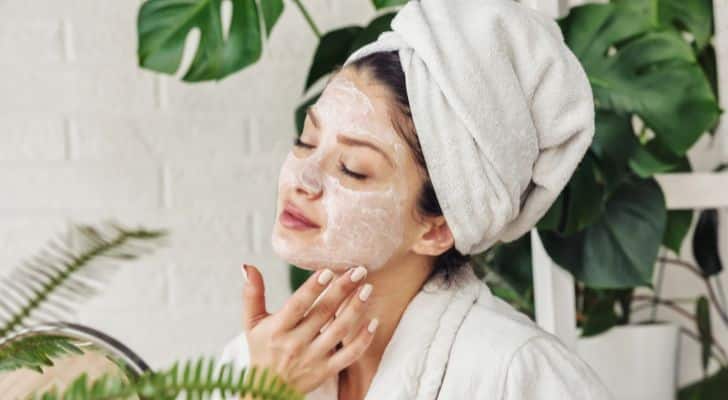
According to dermatologists, a proper skincare routine doesn’t have to be complicated. All you really need are three things: cleanser, moisturizer, and sunscreen. They say anything other than the three mentioned are just optional. Looking after your skin is a great habit to adopt, since, just like exercising, skincare not only benefits your physical but also your mental well-being.

This is because caring for your skin activates happy hormones like dopamine and serotonin and boosts self-confidence, making you look good and feel good!

Get organized.

Becoming an organized person has many mental health benefits. It eliminates distractions and stress in your surroundings, making you feel relaxed or giving you peace of mind. As the saying goes, “A cluttered desk is a cluttered mind.” In addition, when you plan and organize what you eat daily, you also become physically healthier. Now, I know some claim being messy can boost your creativity; even Albert Einstein implied that an empty desk equates to an empty mind. But hey, if disorganization deteriorates your life, then copying them might not be a great idea!

Become a lifelong learner.

There’s a saying that the day you stop learning is the day you stop growing. This alone is enough to make us realize how important lifelong learning is. But to be more specific, learning consistently can provide you with many benefits. For example, it can keep your brain healthy, increase self-esteem, and make life a little more interesting! So, starting from now on, become the best and healthiest version of yourself by reading a book, learning a new skill, or picking up a new hobby!

Habits can make you or break you. And while you can’t do anything about the unhealthy habits you’ve had in the past, like always using your phone and waking up late, I’m here to tell you it’s never too late to change! Let this be a sign to replace them with healthy ones today. Start cleaning your place, never let a day pass without learning something new, and become a skincare fanatic. Of course, changing your habits is easier said than done. But please don’t use this as an excuse not to start improving your life!

SOURCE: THEFACTSITE.COM

Collect Rocks Day

Filly posted a meme about a rock last month…similar to the meme below…

…which inspired me! I always thought it would be a hoot to place small, painted rocks in the stream that crosses the driveway. Heavier rains will eventually push those rocks downstream and eventually into a river. From there? who knows? Here are some rock inspirations.

Philosophy of Life

Nebraska Filly brought this open to our sister site Marica is a Honey Badger and it resonated with me so much, I asked if I could bring it here!

“A professor stood before his philosophy class and had some items in front of him. When the class began, he wordlessly picked up a very large and empty mayonnaise jar and proceeded to fill it with golf balls. He then asked the students if the jar was full. They agreed that it was.

The professor then picked up a box of pebbles and poured them into the jar. He shook the jar lightly. The pebbles rolled into the open areas between the golf balls. He then asked the students again if the jar was full. They agreed it was.

The professor next picked up a box of sand and poured it into the jar. Of course, the sand filled up everything else. He asked once more if the jar was full.. The students responded with a unanimous ‘yes.’

The professor then produced two Beers from under the table and poured the entire contents into the jar effectively filling the empty space between the sand. The students laughed..

‘Now,’ said the professor as the laughter subsided, ‘I want you to recognize that this jar represents your life. The golf balls are the important things—-your family, your children, your health, your friends and your favorite passions—-and if everything else was lost and only they remained, your life would still be full. The pebbles are the other things that matter like your job, your house and your car. The sand is everything else—-the small stuff.

‘If you put the sand into the jar first,’ he continued, ‘there is no room for the pebbles or the golf balls. The same goes for life. If you spend all your time and energy on the small stuff you will never have room for the things that are important to you.

Pay attention to the things that are critical to your happiness. Spend time with your children. Spend time with your parents. Visit with grandparents. Take your spouse out to dinner. Play another 18. There will always be time to clean the house and mow the lawn.

Take care of the golf balls first—-the things that really matter. Set your priorities. The rest is just sand.

One of the students raised her hand and inquired what the Beer represented. The professor smiled and said, ‘I’m glad you asked.’ The Beer just shows you that no matter how full your life may seem, there’s always room for a couple of Beers with a friend.

Thanks Filly for this thought provoking lesson!

Profile in Courage

I found this inspirational article on the all that’s interesting website about Erik Weihenmayer—who climbed Mount Everest despite being blind.

From: allthatsinteresting.com:

“I was afraid that I wasn’t going to be able to participate in life,” Erik Weihenmayer remembered thinking after he first went blind at 14. But that’s not how things turned out.

Ever since Sir Edmund Hillary and Tenzing Norgay made the first documented summit of Mount Everest in 1953, climbers have been competing for other “firsts” on the mountain. And in 2001, American mountaineer Erik Weihenmayer accomplished one of the most astounding Everest firsts of all when he reached the treacherous peak despite the fact that he was blind.

Erik Weihenmayer: Blind Mountaineer

Erik Weihenmayer, born in New Jersey in 1968, was just four years old when he was diagnosed with retinoschisis, a rare disease (sometimes hereditary, sometimes of unknown origin) resulting in the progressive loss of sight. By the time he was just 14, Weihenmayer was completely blind.  As he himself put it, “I was afraid that I wasn’t going to be able to participate in life.” But thanks to his parents’ insistence and encouragement, Weihenmayer actually became more physically active after he became blind, taking up both wrestling and rock climbing.

“Shortly after going blind, I received a newsletter in Braille about a group taking blind kids rock climbing,” Weihenmayer recalled. “I thought to myself, who would be crazy enough to take a blind kid rock climbing? So I signed up!”

After graduating from college, Weihenmayer became a teacher and also joined the Arizona Mountaineering Club, spending his free time rock climbing. Soon it was much more than just a hobby and in 1995 he reached the top of Mount Denali, the highest peak in North America.

“After this exhilarating feat,” he said, “I then decided that I wanted to commit to a life as a full-time adventurer.” And he did. Weihenmayer went on to scale three more of the seven highest mountains in the world (the “Seven Summits,” or highest mountains on each continent) before finally setting his sights on Mount Everest in 2001.

Preparing For Everest

Mount Everest has long been a lure for adventurers — though it also serves as a graveyard for many of them. What’s more, the mountain’s low oxygen levels and frigid temperatures mean that many of the climbers who perished on their ascents remain stunningly well-preserved corpses on the slopes, serving as gruesome reminders of the dangers of the mountain.

And in 2001, Erik Weihenmayer was preparing to attempt this same perilous climb — despite having a handicap that none of them had.

It wasn’t just physical obstacles that Weihenmayer and his team would face in the quest to summit Everest. They had difficulties recruiting Sherpa guides (who are so often the difference between life and death on the mountain), due to the perceived risk of working with a blind climber.

But once Weihenmayer arrived in Kathmandu, Nepal, the locals were so surprised at the ease with which he got around that they thought he was actually lying about being blind. After convincing them that he was indeed both blind and physically capable, the Sherpas agreed to the expedition.

However, it wasn’t just the Sherpas who had doubts. Weihenmayer also faced backlash from other climbers who doubted his ability and expressed serious concerns about his attempt. In an interview with Men’s Journal, American climber and Everest veteran Ed Viesturs said, “I support [Weihenmayer’s] going. But I wouldn’t want to take him up there myself.”

Although Weihenmayer was hurt by all the doubt, he was well aware that he would be facing challenges that other mountaineers would never have to worry about. As Viesturs went on to explain, “He can’t assess the weather, or the ice-fall, or the ladders you have to crawl across” — and one misjudged step could send him careening down the slopes to his death.

But Weihenmayer was no mountaineering novice who was simply determined to reach the world’s highest peak at great risk to his other team members. He had been climbing for 16 years at this point and, far from being a hindrance to his climbing teammates, he had often been the one to offer them assistance. In response to Viesturs comments, Weihenmayer simply replied, “He hadn’t seen any part of my life except for the fact that I was blind.”

A 2017 interview with Erik Weihenmayer from TODAY.

The Ascent and Beyond

The journey to the top was certainly harrowing. Members of the group would take turns guiding Weihenmayer through the gaps and crevasses, shouting out instructions, “Slot coming up, two steps!” or “Clear traveling for the next ten steps.” But it was Weihenmayer’s own endurance and mountaineering skills that ensured he made it to the peak, which he did on May 25.

It was then that Erik Weihenmayer became the first blind person in history to stand on the summit of Mount Everest. He had not only joined the ranks of the few who have been to the highest spot on the planet, but he had also effectively silenced all of his critics.

And by 2008, he had climbed the rest of the Seven Summits, becoming one of only 150 people to have ever accomplished this, yet another incredible feat in an incredible career.

SOURCE: ALLTHATSINTERESTING.COM By Gina Dimuro | Edited By John Kuroski

The Many Faces of Donald Trump

Today is President Trump’s birthday! Happy Birthday, Sir!

Is that First Lady Melania over there?

How do you really feel about our country, Sir?

I think I see Hitlery in the crowd that’s gathering…see her?

How do you feel about Fani Willis’s troubles, Sir?

Are you ready to take on Jack Smith and his corrupted case, Sir?

What do you think of Joe Biden, Sir?

What are the chances that Joe is actually running the country?

So how do you feel coming into this election season, Sir?

Do you think you’ll be able to turn this country around, Sir?

We’ll see you in November President Trump!

Lucky Charms

Lucky charms: Some people swear by them while others think they’re silly. But regardless of whether a rabbit’s foot or a favorite number really attracts Lady Luck, lucky charms can be fun and make you feel more optimistic. When you have fun and feel more positive, that attitude makes you luckier, too!

If you don’t have a favorite lucky symbol already, maybe it’s time to find one that inspires you. Here are some popular lucky charms from around the world.

Lucky Four-Leaf Clover Charms

Four-leaf clovers are an ancient Irish symbol of luck. Among the Celtic, it was a common belief that a four-leaf clover could help people see fairies and avoid their mischief, a common source of bad luck.  The four leaves were rumored to have mystical powers representing positive attributes. Some legends attribute them to faith, hope, love, and luck, while others say they’ll bring fame, wealth, health, and faithful love.

There are many variations of clover that always have four leaves, but the lucky ones come from the white clover plant, Trifolium repens. “Trifolium” literally means three-leaved; four-leaved plants are a genetic mutation.  True four-leaf clovers are rare, with only about one in 10,000 plants carrying the lucky leaves.  To know you’ve found a true four-leaf clover, look for one leaflet that’s smaller than the others. If all four leaflets are the same size, you are probably looking at the wrong variety of clover.

Lucky Horseshoe Charms

Horseshoes are one of the oldest lucky superstitions, with various legends from different cultures attributing lucky powers to them. One legend says that horseshoes are lucky because they are made of iron. Mischievous fairies couldn’t stand the touch of iron, so they shied away from houses that had horseshoes on them.

Another legend attributes lucky horseshoes to Saint Dunstan. According to the legend, the devil commanded Dunstan, who was a blacksmith, to shoe his horse. Instead, Dunstan nailed a horseshoe to the devil’s foot. He only agreed to remove it and ease the devil’s pain when he received a guarantee that the devil would stay away from any house with a horseshoe on the door. After that, any house with a horseshoe was guaranteed to be lucky.

Lucky Dice (Fuzzy or Otherwise) Charms

Many games of chance are played with dice, so it’s no surprise that they became a symbol of luck. You might be surprised to know that, unlike many of the lucky charms on this list, fuzzy dice are a relatively recent invention. During World War II, fighter pilots would fly missions with terrible odds of coming home again. They’d bring lucky charms with them in the hopes of tipping the odds in their favor. Gambling items like cards and dice were popular charms to bring aboard the fighter planes. Knowing the WWII tradition, Deccofelt Corp started marketing fuzzy dice to hang on the rearview mirrors of cars in 1959, and a fad was born. 

Ladybugs as Good Luck Charms

Ladybugs are popular insects worldwide, and many cultures believe they bring good luck. In German-speaking countries, they are literally called lucky bugs: “Glückskäfer”

How can a ladybug make you luckier? Some cultures say that if a ladybug lands on you and you don’t brush it off, your luck will improve. Others say that they’re a sign of impending love. For example, if a man and a woman see a ladybug at the same time, they’ll fall in love. In Belgium, a ladybug crawling across a maiden’s hand was a sign that she would soon be married.

And that’s not the only way ladybugs bring luck. Farmers believed a large number of ladybugs in the spring was a harbinger of a good harvest that year. Be careful, however, around these cheerful-looking insects. Killing a ladybug can bring you misfortune. When you pick your lucky charm, keep in mind that all ladybugs are not created equal in the luck department; The deeper red their color and the more spots they have, the luckier you’ll be!

Lucky Number Seven Charms

Growing up, you may have heard that seven was the luckiest number, but did anyone tell you why? The number seven is connected with luck, perfection, and knowledge in many cultures.

One reason might be that the number seven has special mathematical properties. The ancient Greeks called 7 “the perfect number,” the sum of 3 (triangle) and 4 (square), which are perfect forms. Seven is an important number in other ways, too:

There are 7 days of the week.

There are 7 colors in the rainbow.

7 planets are visible to the naked eye.

The 7th son of a 7th son is supposed to be especially gifted and lucky.

7 is a winning roll in many games of chance.

How can you adopt the lucky seven as a lucky charm? You could make a slot machine showing all sevens or you could be more subtle and pick 21 as your token: three sevens.

Lucky Number Eight Charms

In China, however, the number 8 is considered the luckiest number, not 7. The reason is much clearer than with the number 7: Its luck-bringing properties stem from a play on words. In Chinese, the word for the number 8 sounds a lot like the word for prosperity. The number 8, with its two graceful curves, is also a balanced number. Balance and harmony are believed to be vital ingredients for a lucky life.

Lucky Rabbit Foot Charms

Lucky rabbit foot keychains, whether real or faux, are popular symbols of luck. The original legend says that the left hind foot of a rabbit that is captured in a cemetery at night can ward off evil magic. Luckily, you don’t have to go through that much effort to have a fun rabbit’s foot charm for inspiration. There are fake rabbits’ feet for sale if you don’t want to harm an actual bunny.

More Lucky Animal Charms

Rabbits aren’t the only animals to be used as a lucky charm. Here are some more animals you can use as your lucky symbol:

In feng shui, goldfish are said to attract luck and prosperity. Dragons and horses are also considered lucky.

In Germany, lucky pigs (“Glücksschwein”) are given as tokens to wish friends and family a happy and lucky New Year.

Turtles and tortoises are considered lucky due to their long lifespans.

Ancient Egyptians considered the scarab beetle to be lucky.

In Korea, the swallow is considered a sign of good luck thanks to the story of ​Heungbu and Nolbu, where a sparrow rewarded a kind deed with prosperity.

Rainbow Good Luck Charms

Rainbows are considered lucky because of the legend that says that if you dig at the end of a rainbow, you’ll find a pot of gold. Rainbows are great lucky symbols because they’re beautiful and cheery.

Lucky Coin Charms

Most of us know the old saying, “Find a penny, pick it up, and all that day you’ll have good luck!” Those found pennies are fun luck-bringers. Some people say that not just any penny lying on the ground is lucky, but that lucky pennies have to be found face-up.

Lucky Bamboo Charms

Lucky bamboo is technically not bamboo at all, but a close relative called Dracaena. It’s a hardy, long-lived plant, which might account for its lucky properties.

The more stalks a lucky bamboo plant has, the more luck it brings. A plant with three stalks is said to bring happiness, wealth and longevity to the owners. What benefits would more stalks bring you? Of course, any green plant is a good lucky charm in your home or office. According to The Sill, studies show they improve your mood and clean the air indoors.

Dreamcatcher Luck Charms

Dreamcatchers come from Native American lore. Looking like a web or net stretched over a loop and decorated with bright beads and feathers, they catch bad dreams as they enter a household.  By capturing the disturbing dreams, they make the owner happier, more balanced, and luckier. Plus, they look cool, too.

To use dreamcatchers as lucky charms, hang one inside your office window to keep bad luck away. Or buy a pair of dreamcatcher earrings or a dreamcatcher necklace to bring luck with you wherever you go.

Evil Eyes to Ward Off Bad Luck

While you may give someone the evil eye when they annoy you, people used to take malevolent looks much more seriously. Usually triggered by jealousy, giving someone an evil eye was supposed to cause all manner of suffering from mental illness to physical maladies. For thousands of years, people have been using evil eye talismans, or nazur, to ward off the bad luck caused by these curses.

The evil eye lucky charm takes several different forms. Some cultures use a hand with an eye in its center for protection. Others use simple blue or green beads. But some of the most popular and beautiful evil eye talismans come from Turkey. They use glass beads with alternating blue and white circles to bring themselves more luck.

Acorns as Lucky Symbols

Because of its association with the Norse god Odin, the lowly acorn is also considered a symbol of luck. Odin hung himself from an oak tree to gain knowledge, so the acorn has come to symbolize wisdom. The Norse also believed that acorns could bring divine protection and placed them in the windows of their homes to ward off lightning. During the Norse Invasion, Englishmen would carry acorns in their pockets, perhaps hoping that they’d make their conquerors more sympathetic.

As the saying, “great oaks from little acorns grow ” indicates, acorns also signify fertility, youth, and prosperity.

SOURCE: LIVEABOUT.COM

National Collect Rocks Day

When my granddaughter was younger, one of the first crafts we ever did together was painting rocks.  We went out into the driveway to collect rocks for a “leaf with lady bugs on it” project.

We chose angular rocks for the leaves and smaller rounded pebbles for the lady bugs.  We hosed them off and let them dry and then started painting them.  She has hers sitting in the flowerbed outside her bedroom window.  I have mine on an end table in the great room.

Over the years, our projects evolved into sketching animals, painting jars and canvases, and other similar projects, but last summer we returned to the rocks. We hatched a brilliant plan to paint rocks with “inspirational” or “motivational” messages and place them in the little creek bank at the bottom of the driveway.  She thought they’d be cool for anyone visiting to see AND, she said, maybe they would get washed downstream during a thunderstorm and someone else might find them.

So, Project Rock Inspire was born.  We gathered a bucketful of rocks from along the driveway and washed them all and let them dry in the sun while we planned colors and messages. Our first session included things like SMILE, BE HAPPY, LAUGH, LIVE FREE, and BE THANKFUL.  Of the dozen we put in the bank, more than half remains.  But that means 5 have made their way on to other places.  We plan on placing more the next time she comes.

Hopefully someone will find one and wonder where it came from…