
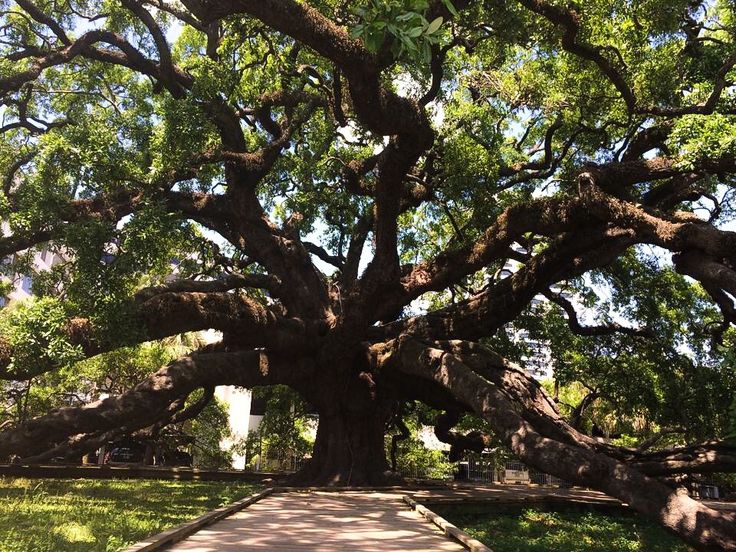
Although over a quarter of a century has gone by, the bitter memory of the Treaty Oak’s poisoning still lingers in the minds of many Texans. Few recall, however, the dark motives of the man convicted of the crime.
The Treaty Oak is the lone surviving member of the Council Oaks, a grove where folklore holds that Stephen F. Austin met with Comanche and Tonkawa tribes to negotiate the first boundary treaty of Texas. The 600-year-old live oak is a belove Austin landmark. Before the poisoning, its branches spread some 130-feet wide.

John Giedraitis, at that time the arborist for the City of Austin, discovered dead grass under the tree in spring, 1989. After heavy rains caused the poison to penetrate the oak, leaves yellowed and sailed to the ground. Something was terribly wrong. Soon the malevolent cause of the tree’s illness was discovered, a revelation that shocked the Lone Star State.

When news of the poisoning spread throughout Austin, residents were outraged. The tree was a treasured part of the region’s history: Before European-Americans settled the land around it, the tree was revered in Tejas, Apache, and Comanche culture. A plaque beneath the site tells the (unsubstantiated) story of Texas settler Stephen F. Austin negotiating a border treaty with Native Americans on that very spot in the 1830s.

In an attempt to save the dying tree’s life, the city launched a full-blown recovery campaign. The contaminated soil was replaced with fresh dirt and the damaged roots were treated with sugar. A sprinkler system was installed in Treaty Oak Park to provide the tree a steady supply of revitalizing spring water. Other efforts were less practical: a Dallas-based psychic named Sharon Capehart tried healing the tree by transferring energy into it. (In the process, she allegedly discovered that its spirit had once belonged to an ancient Egyptian woman named Alexandria.) Without any supposed psychic gifts or tree expertise to offer, some Austin citizens responded with good vibes.

Texans from far and wide arrived to pay their respects to the dying tree. Around its thick trunk, they left notes and gifts, as well as prayers for the tree’s recovery. The experts were unanimous: none of them believed there was any hope for the Treaty Oak. Billionaire Ross Perot sent Austin a blank check. The city would spend $250,000 in an attempt to save the tree, using radical, desperate methods.
As the public processed the shock and grief, the Austin police worked to nab the perpetrator. On June 29, 1989—a few months after the crime had been committed—they arrested their primary suspect: a 45-year-old local named Paul Stedman Cullen. He was convicted on a second-degree criminal mischief charge nearly a year later. His motive?
Cullen poisoned the tree as part of a mystic ritual. “Prosecutors said he used the herbicide in an occult ritual to kill his love for his counselor at a methadone clinic, protect her from another man, and pay back the state for outdoor work he was forced to do while he was in prison,” The New York Times reported in 1990.

Before pouring the Velpar on the oak’s roots, Cullen had placed objects that belonged to his counselor in a circle around the trunk. He told an acquaintance that every time he passed the tree and saw it dying he would “see his love for the counselor dying.” The jury had the option to sentence him to life in prison, but in the end they settled on a sentence of nine years (which he served a third of) and a $1000 fine.

Witness Cindy Blanco testified that Cullen owned books on witchcraft and that he’d told her he had placed items belonging to the counselor around the oak’s roots before pouring the herbicide. When Cullen drove past the dying tree, Blanco claimed, it was as though he were watching his own unrequited love slowly perishing.
Cullen maintained his innocence and claimed the media was setting him up. His attorney made the case that Cullen had lied to Blanco in an attempt to appear impressive. The defendant faced the stark possibility of a life sentence.

The jury faced a difficult decision. They understood that a man’s life is worth more than any tree, even if the man in question is a criminal. Yet at the same time, the jury acknowledged a serious and disturbing crime had been committed and justice must be served. In May 1990, the jury gave Cullen a nine-year sentence and a fine of $1,000. He would serve only three years.
Perhaps prayers are stronger than black magic. In the end, the Treaty Oak survived. Though now a third of its original size, the oak is going strong and managed to produce acorns in 1997 for the first time since the poisoning. The Treaty Oak outlived Cullen, who passed away in 2001 at the age of only 57.


























 Sew Colorful


