
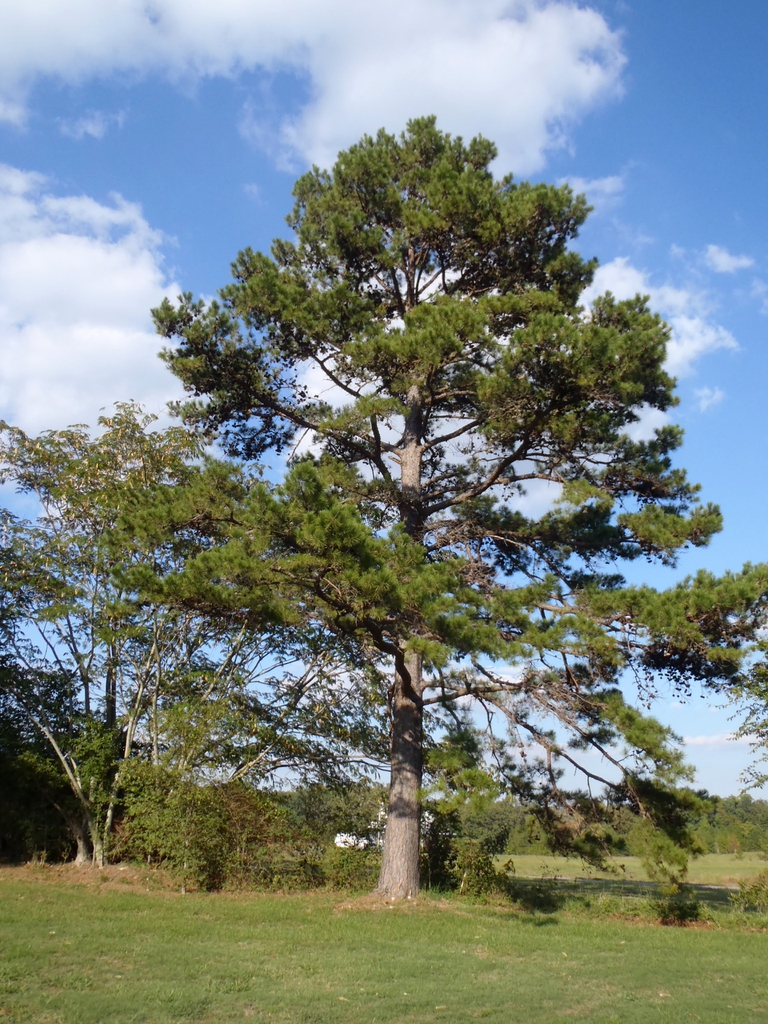
How to Identify the Loblolly Pine
The loblolly pine has several distinctive features that make it easy to recognize once you know what to look for.
Needles in bundles of three, typically 6 to 9 inches long.
Cones usually 3 to 6 inches long with a slightly rounded shape, often with small prickles on the scales.
Bark on mature trees is thick and deeply furrowed, with reddish-brown plates; younger trees have smoother, flaky bark.
A straight trunk with a conical crown in young trees; older specimens develop a broader crown and can become irregular.
Height at maturity typically 60 to 100 feet in natural stands; plantation-grown trees may exceed 100 feet under ideal conditions.
/GettyImages-139822624-b1f1b7cff00a491095cdfb3cf64efd03.jpg)
Ecological and Economic Importance
Loblolly pine plays major roles both ecologically and economically.
Wildlife habitat: Provides cover and nesting sites for birds, squirrels, and other wildlife; seeds are food for small mammals and birds.
Erosion control: Fast early growth and extensive root systems help stabilize soil on disturbed and sloping sites.
Timber and pulp: Loblolly is the backbone of the southern timber industry–used for lumber, plywood, pulp, and biomass.
Carbon sequestration: Its rapid growth makes loblolly valuable for carbon capture in reforestation and timber production.
Understanding these roles helps prioritize care actions that preserve both tree health and their broader benefits.
 Sew Colorful
LikeLike
LikeLiked by 1 person
LikeLiked by 1 person