
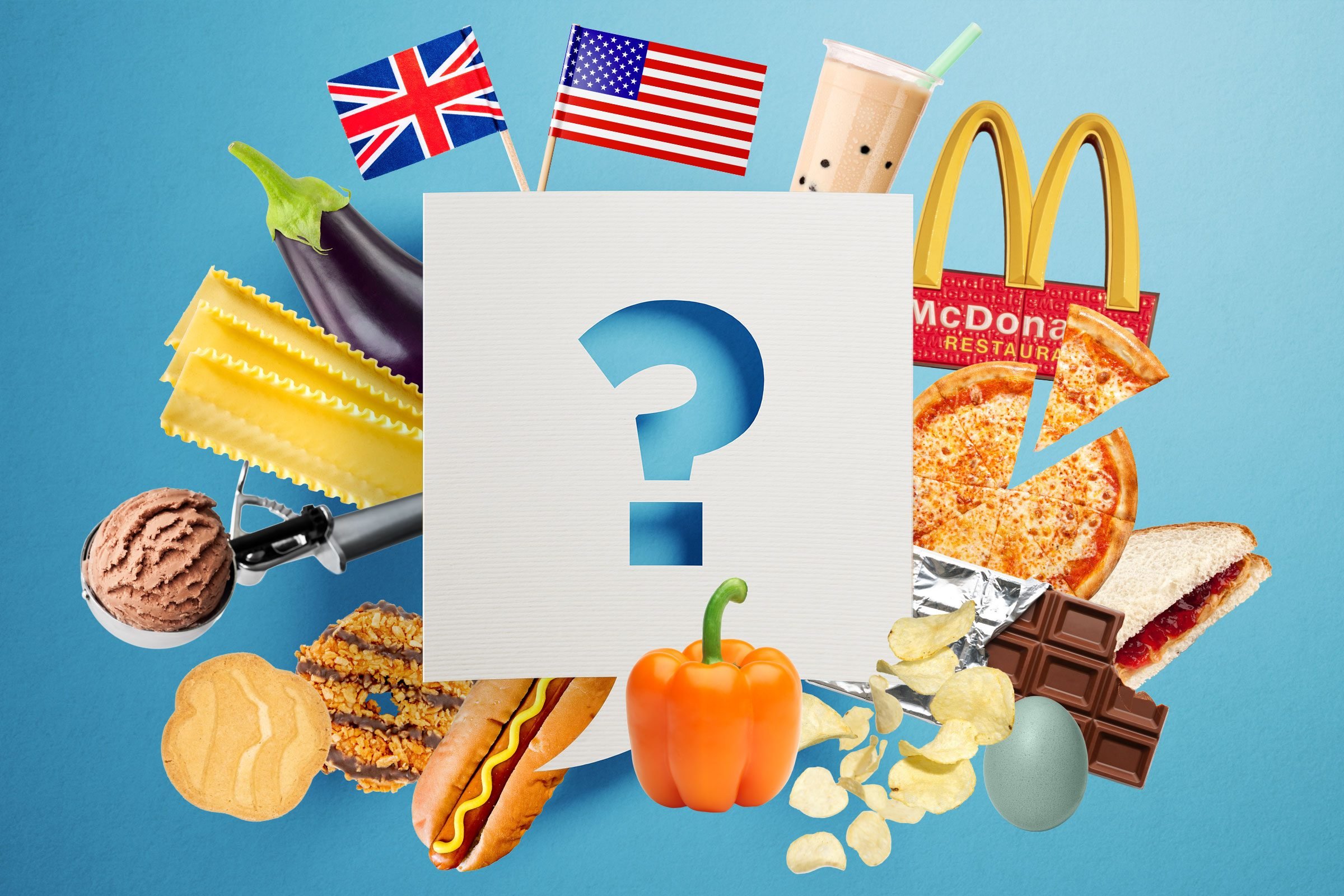
Reader’s Digest had an interesting article on surprising, fun, food facts:
1 Bananas are technically berries
It’s hard to miss the huge yellow heap of bananas in the produce section at a typical grocery store. Grocers are definitely giving the people what they want because, according to the USDA, bananas top the list of the most popular fresh fruit in America. While that may not be a surprising food fact, what may be is that bananas are classified as berries because they come from a single seed. With consumption at 13.4 pounds per person in America, bananas clearly have plenty of a-peel.
2 Watermelons are popular hostess gifts in China
A slice of cold, sweet watermelon is one of summer’s greatest pleasures—all the water in the melon’s pretty pink flesh is a sweet and juicy way to stay hydrated. Turns out, Americans aren’t the only ones who appreciate a watermelon. More than 1,200 varieties are grown in 96 countries around the world (ever heard of a yellow watermelon?), and, in terms of production, the United States currently ranks seventh, while China is in first place. Maybe that has something to do with why watermelons are popular hostess gifts in China.
3 McDonald’s isn’t the oldest fast-food chain
For decades, Americans have turned to fast food when they’re hungry and on the go. While some people think McDonald’s ignited the category in the 1950s, the first fast-food burger chain was actually White Castle, which was founded in Kansas in 1921.
4 Around 66 percent of Americans like their toast lightly toasted
There’s a strong preference for lightly toasted toast on breakfast plates. According to a 2019 survey from YouGov, 58 percent of respondents are in the “somewhat lightly toasted” camp, with another 8 percent preferring their bread very lightly toasted. On the other hand, 32 percent prefer somewhat to very darkly toasted toast, and 1 percent like their toast burnt. No judgments here.
5 Only a fifth of Americans take their morning coffee black
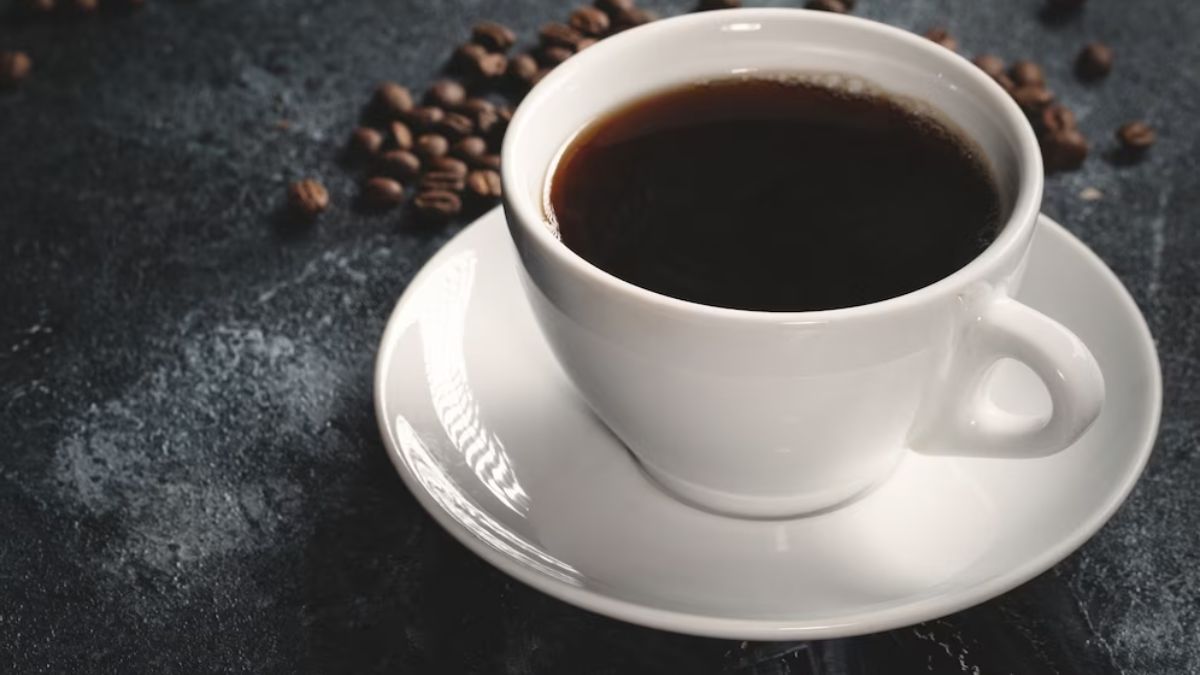
Just 20 percent of Americans like their coffee black, and another fifth (19 percent) don’t drink coffee at all. The remaining 60 percent of coffee drinkers like their cuppa somewhere along the tan spectrum. “With milk, very light tan” covers 39 percent of respondents, “with light milk, brown” is the preference for another 10 percent, and “with a lot of milk, almost white” rounds things out with 11 percent. This particular survey only asked about milk—sugar is another matter, and iced coffee was not a choice.
6 One of the sweetest American traditions started with copious quantities of homemade sugar cookies
The selling of Girl Scout cookies began as early as 1917, around five years after Juliette Gordon Low founded the Girl Scouts of America in the United States. Through the 1920s, Girl Scouts baked sugar cookies, packed them in waxed paper bags, then sold them door to door for 25 cents to 35 cents per dozen to raise cash for troop activities. The tradition continues to this day—only now there are nine cookie varieties and a box costs $5 to $6.
7 Florida isn’t the biggest seller of ice cream in the United States
It’s logical to assume that the most successful ice cream market in the country is where it’s hot all the time, but according to ice cream makers and retailers, that distinction goes to the Great Lakes region (Illinois, Indiana, Michigan, Ohio, and Wisconsin). In 2020, U.S. ice cream makers churned out just over 1 billion gallons of ice cream—the majority of which was made from March through July.
8 Oranges get all the glory for packing a vitamin C punch, but this green veggie has even more
A cup-size serving of broccoli delivers 81 milligrams of vitamin C, 18 grams more than you’d get from a whole orange. The same amount of broccoli provides 3 grams of protein, 2.5 grams of fiber, and 31 calories. The green veggie is native to Asia and the Mediterranean, and it was introduced to the United States centuries ago—most likely during the colonial era.
9 Boston may—or may not—be the birthplace of this famous pie
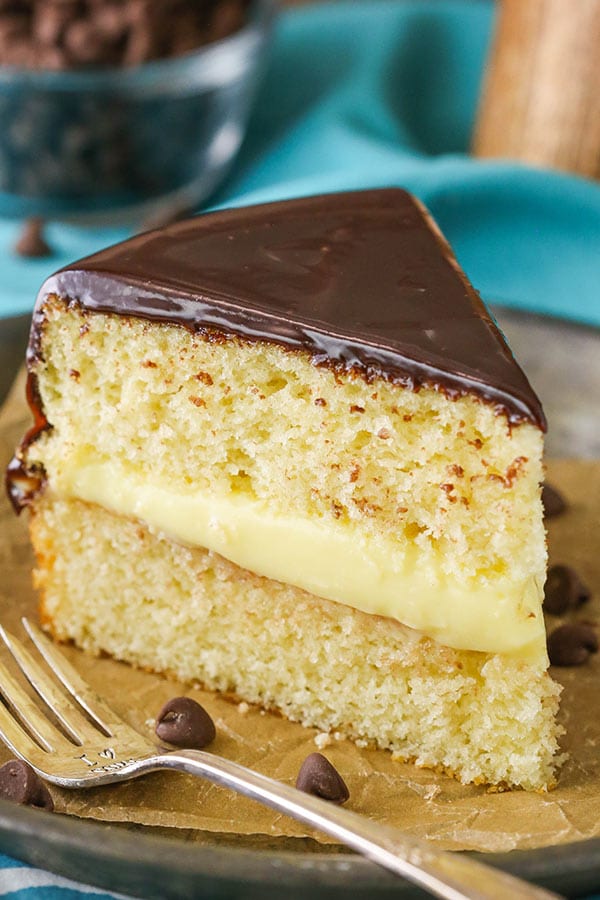
Was Boston cream pie really invented in Beantown? Folks fascinated with food facts have debated the answer to this question for decades, and the answer is a resounding…maybe? Boston’s Parker House Hotel often gets anecdotal credit, but there doesn’t seem to be solid proof anywhere. There is also no explanation for why it was called a pie when it has no crust and is clearly a cake. Regardless, it’s delicious.
10 Pilgrims are responsible for apples in America
Several hundred years back, pilgrims planted the first U.S. apple trees in the Massachusetts Bay Colony. Now, there are apple orchards in every state. The old adage about an apple a day keeping the doctor away aside, annual per capita consumption of apples in the United States has fluctuated between about 15 and 19 pounds in the years spanning 2000 to 2021. Apples contain about 5 grams of fiber, and they don’t contain any fat, sodium, or cholesterol. You can’t go wrong munching an apple!
11 Though Italy often gets all the credit, lasagna actually originated in Greece
Layers upon layers of noodles and cheese are the stuff of dreams, as well as a Sunday staple in many Italian homes. Centuries ago, lasagna was named for the fermented noodle laganon, which was popular in ancient Greece, where lasagna originated. Yes, Greece, not Italy. Lasagna made its way to Italy by way of Roman conquerors. Italians then brought the recipe to North America in the 1800s when they immigrated.
12 When runners want a performance enhancer, they should grab a handful of raisins
Store aisles are packed with sports chews that promise to enhance athletic performance, but there’s a simple, cost-effective, whole-food alternative. Raisins are a gift from Mother Nature to runners, thanks to their carbohydrate and glucose content, which are both sources of quick energy. According to a study in the Journal of the International Society of Sports Nutrition, noshing on raisins and drinking water improved running performance as effectively as downing commercial chews.
13 Blue-green eggshells draw tons of ooohs and aaahs, but what’s inside is no different

Though rumors fly around that eggshell color indicates nutritional variances, that’s not true at all. Shell color is simply indicative of the breed of hen that laid the egg. Assorted white and brown shells are laid by dozens of different breeds of hens: Brown speckled shells are laid by Maran, Speckledy, and Wellsummer hens, while gorgeous blue-green eggs are laid by Araucana, Rumpless Araucana, and Cream Legbar hens.
14 Only about one in 1,000 eggs will have a “bonus” yolk inside
No matter what any given egg’s fate will be—fried, scrambled, hard-cooked, mixed into batter—it starts in the hen’s ovary with the formation of an ovum. Once the ovum reaches full size, it breaks free and moves down the oviduct, where the white and shell form around it. This start-to-finish process usually takes 24 to 26 hours. But if something goes amiss, occasionally two yolks move down the oviduct together and are both enclosed in a single shell. This doesn’t mean the egg is expired—it’s perfectly safe to eat.
15 Ice cream is one of the oldest desserts in the world
The origin of this most delightful dessert goes back to the 2nd century B.C., according to the pros at the International Dairy Foods Association. However, specific details are hazy. Numerous early rulers, including Alexander the Great and Nero Claudius Caesar, supposedly enjoyed snow flavored with honey or fruit juices. For the sweet treat we eat today, fast-forward 1,000 years, when the intrepid Marco Polo returned from the Middle East with a sherbet-type recipe that historians say morphed into ice cream sometime in the 16th century. Today, purveyors of Ben & Jerry’s ice cream say vanilla is the favorite flavor in the United States, as well as in Germany, Italy, and Brazil.
16 New York officially classifies hot dogs as sandwiches
The USDA agrees with New York state (specifically the department of taxation and finance) in its sandwich determination. But the president of the National Hot Dog and Sausage Council—a trade group that refers to itself as “the official voice of hot dogs and sausages”—likens calling a hot dog a sandwich to calling the Dalai Lama “just a guy.” The confusion around this food fact stems from a philosophical divide about the precise definition of the word sandwich.
SOURCE: READER’S DIGEST
 Sew Colorful
This just made my day
EXCLUSIVEThe View co-host Sunny Hostin’s surgeon husband Emmanuel accused of insurance fraud in bombshell lawsuit
https://www.dailymail.co.uk/tvshowbiz/article-14243993/The-View-Sunny-Hostin-surgeon-husband-Emmanuel-insurance-fraud-claim.html
Karma
LikeLiked by 2 people
that bitch slaps HARD
LikeLiked by 1 person
😁
LikeLike
schadenfreude
LikeLike
“On Mark Zuckerberg’s Speech Announcement: The Meta chief’s surprising public address on free speech hints at a coming battle between the U.S. and the rest of the world”
Matt Taibbi, Jan 07, 2025
(Already posted video)
“Meta CEO Mark Zuckerberg, in a video promising a shift toward free speech:
Mark Zuckerberg isn’t the most popular person. Some consider him a self-directed oddball rightfully savaged by the likes of South Park, while others see an opportunist who engaged in censorship when it suited him, changing colors only out of fear of retaliation. Others can sort that out. For now, his comments feel significant both as confirmation of reporting on the topic, and as an assessment of coming challenges.
If Zuckerberg’s words sound familiar, it may be because speech advocates been singing that tune for a while. I said something similar in last September’s “Rescue the Republic” speech. The Twitter Files, the Murthy v. Missouri Supreme Court case, Jim Jordan’s Facebook Files, and other probes offered a peek into the “pushing” Zuckerberg describes. These investigations focused on U.S. agencies like the FBI, DHS and GEC, but a broader problem involving foreign pressures is hinted at in Zuckerberg’s announcement.
Beyond new laws like Europe’s Digital Services Act and Britain’s Online Safety Act lay a series of less-well-known agreements and working groups, like Europe’s Code of Practice on Disinformation or the Global Risks Initiative. In recent years the United States has been participating in discussions about such agreements, sometimes with the idea of creating analogs to European or global rule systems that could be enforced via Executive Branch authority (say, through the FTC). My own personal “time to panic” moment came when I learned the U.S. was considering moves to join such international speech codes that wouldn’t have required consulting Congress.
Zuckerberg may referring to such worries when he says that “we have an opportunity to restore free expression” but “it’ll take time to get this right, and these are complex systems.” More on the topic soon, but Zuckerberg’s video is more subtle and meaningful than naysaying reports in places like the New York Times (“Meta Says Fact-Checkers Were the Problem. Fact-Checkers Rule That False”) would have you believe. The Meta CEO is claiming the U.S. and its closest allies are about to have a showdown on speech. If he’s right, bring it on. It’s overdue.”
LikeLiked by 1 person
i don’t believe or trust him
LikeLiked by 1 person
Oh, hell no!
LikeLike
According to Breitbart, While the prime minister’s downfall arguably began with the surprise victory of Conservative Don Stewart in June for a seat in Toronto-St.Paul’s that had been held by Liberals since the 1980s, pressure for his resignation mounted after the election of Donald Trump as U.S. president in November.
Many members of Trudeau’s own party agreed with the opposition that Trudeau was unsuited to the task of leading Canada in tough negotiations against Trump, who has threatened to increase tariffs against Canadian goods unless its border with America is brought under control.
LikeLiked by 2 people
LikeLiked by 1 person
AWESOME!!!!
shared the calendar at wolf’s!
LikeLiked by 2 people
👍👍👍👍👍
LikeLike
LikeLiked by 1 person
EXCERPT: “….The President-elect replied to a question on the topic from a member of the press gaggle:
These statements are sure to set off a firestorm of whining from the left, but it’s a safe bet that the President-elect doesn’t much care about what the left thinks.
It’s unclear what the President-elect meant when he brought up Hezbollah. As of this writing, there isn’t any confirmed indication that Hezbollah or any other jihadi group was involved in the January 6th events in any way. It is, however, past time a proper investigation was done into the events of that day four years ago. Ashli Babbitt’s death, for one thing, was never properly investigated or accounted for. This is, presumably, one of the bad things that the President-elect is referring to….”
https://redstate.com/wardclark/2025/01/07/trump-promises-major-pardons-for-j6-defendants-n2184061
LikeLiked by 1 person
LikeLiked by 1 person
1956 Ford F-100
1972 Chevrolet C10
1953 Studebaker Transtar
1960 Jeep FC-150
1957 Chevrolet Cameo
LikeLiked by 1 person
hubby LOVES these and said THANKS!
LikeLiked by 1 person
😉😉😉😉😊😊😊
LikeLiked by 1 person
1970 Ford Ranchero
1948 Willys-Overland Jeepster
1949 Chevrolet 3100
1963 Studebaker Champ
1962 International Harvester Scout
LikeLiked by 1 person
EXCERPT: “The Commonwealth Court of Pennsylvania last week ruled that Amos and Rebecca Miller, farmers who produce raw milk, may continue to sell raw milk outside the state while a lawsuit filed by the state against them moves through the courts.
The court’s ruling upheld a March 2024 decision by a Lancaster County trial court, which concluded that the Millers were not clearly violating Pennsylvania statutes by selling their raw milk products outside Pennsylvania.
That court previously issued a preliminary injunction that completely blocked the Millers from selling raw milk. However, the court later modified the injunction, limiting it to blocking Millers’ raw sales only within Pennsylvania.
The Commonwealth Court also acknowledged that the Millers raised “potentially meritorious constitutional challenges” to Pennsylvania’s Milk Sanitation Law. These challenges involve the Commerce Clause, the Supremacy Clause, the right to travel, and the fundamental right to purchase “traditional foods directly from the producer of that food.”
Robert Barnes, the Millers’ attorney, celebrated the decision on X, formerly Twitter, calling it a “big win” for food freedom.
https://x.com/barnes_law/status/1875333460560429137
Barnes told The Defender that broad questions about raw milk and agriculture are at stake in the case. “The case of Amos Miller decides the future of food freedom in America — do we decide what we put in our bodies or does the government?”
A win for ‘food freedom’
Miller is an Amish farmer who owns and operates Amos Miller Organic Farm in Lancaster County where he produces cheese, meat, eggs and raw milk products. People who want to purchase his farm products join the farm as members and either travel to the farm to buy the products or have the farm ship them.
Federal law bans raw milk sales across state lines. However, the U.S. Food and Drug Administration (FDA) also makes it clear that it does not prohibit people from purchasing raw milk and transporting it across state lines for personal consumption, according to the National Agricultural Law Center.
Rules regarding raw milk sales within states vary from state to state. Currently, 18 states ban sales and 32 states allow them, although the conditions for sale vary.
In Pennsylvania, sellers must obtain a permit from the state Department of Agriculture to sell raw milk. The permit is contingent on testing and documentation requirements. A separate permit from a different department is required to sell raw milk cheese, the only other raw milk product permitted for sale in the state.
Miller does not have a state-mandated license for retail raw milk sales. He told the court that such a permit would only allow him to sell milk and raw milk hard cheeses — a small portion of the raw milk products he produces, which also include butter, kefir and yogurt, Lancaster Farming reported…..”
https://childrenshealthdefense.org/defender/big-win-amish-farmer-food-freedom-raw-milk-case/
LikeLiked by 1 person
Um….oookkkaaay…kinda weird but hey! Each to his own, eh?
LikeLiked by 1 person
oh wow! both ladies have gorgeous hair!!
LikeLiked by 1 person
IKR? No matter how hard I tried, I could never get mine to look even half that good!
LikeLiked by 1 person
me either. I have coarse hair which holds curls well, but i always wanted silky hair.
LikeLiked by 1 person
Mine is course and straight, straight, straight – it will NOT hold a curl unless permed.
LikeLiked by 1 person
mine will hold a curl unless there’s humidity. then it droops.
LikeLiked by 1 person
I used to spend untold amounts of time in front of a mirror with a curling iron – by the time I got one side done and did the other, the first side was already straight again. I gave up and just started perming my hair! LOL
LikeLiked by 1 person
“Greenland, or would that be Trumpistan?”
“Sunrise over Tehran”
“A SpaceX Falcon Heavy rocket transits the moon carrying the X-37B space plane into orbit. Shockwaves from the rocket cause a ripple effect across the moon.”
“Two European shags on Hornoya island in Norway.”
LikeLiked by 2 people
FANTASTIC pictures!
I always thought it was weird–Greenland is icy and Iceland is green.
LikeLiked by 2 people
Good night
LikeLiked by 2 people
Good Night Filly!
LikeLiked by 2 people
I am adding a short daily prayer to the board. I would invite each of you, if you wish, to also add one or maybe two of your own liking. I do not want to stifle anyone but please limit yourself to one or two religious postings. here’s one I found that I liked.
LikeLike
LikeLike
LikeLike
LikeLike
LikeLike
Good Night All!
LikeLike