
Curiosity killed the cat is a well-known phrase that is found repeatedly in English literature. The meaning of ‘curiosity killed the cat’ is easy to summarise: don’t go poking your nose into other people’s affairs, and don’t be overly inquisitive about things which don’t concern you, as it will only cause trouble.

The phrase suggests that a cat that went nosing about in something it shouldn’t have came a-cropper and died as a result. However, the phrase began life quite differently. ‘Care killed the cat’ – a phrase with a subtle, but important, different meaning – has a much longer, and older, pedigree. ‘Care killed the cat’ is found as early as 1598, in Ben Jonson’s city comedy, “Every Man in His Humour.” In that play, we find the line: ‘Helter skelter, hang sorrow, care’ll kill a cat, up-tails all, and a louse for the hangman.’

So when did ‘curiosity killed the cat’ take over as the cat-killing expression or phrase of choice – and why? It had certainly come into being by the second half of the nineteenth century: James Allan Mair’s 1873 book, “A handbook of proverbs: English, Scottish, Irish, American, Shakesperean, and scriptural; and family mottoes” lists ‘curiosity killed the cat’ as a familiar phrase, with an ‘I.’ next to it to suggest that the phrase is Irish in origin.
This is perfectly possible, especially as the phrase seems to have really taken off in the United States, where it was perhaps introduced by Irish immigrants in the second half of the nineteenth century. The prolific short-story writer O. Henry, in his 1909 story ‘Schools and Schools,’ wrote: ‘Curiosity can do more things than kill a cat; and if emotions, well recognized as feminine, are inimical to feline life, then jealousy would soon leave the whole world catless.’
Turnabout is fair play is a proverb with its roots in the mid-1700s. A proverb is a short, common saying or phrase that particularly gives advice or shares a universal truth.
Turnabout is fair play is a proverb that means if someone has harmed you, it is permissible to retaliate in kind. Turnabout is fair play is used to justify paying back a real or perceived injury. The phrase turnabout is fair play originated in the mid-1700s in reference to gaming, meaning taking turns assures a fair game.

Today, the term has taken on the connotation of revenge or retaliation, in the sense of two parties taking equal advantage of each other. Occasionally, turnabout is fair play is used in a friendly, teasing manner as an admonishment to keep things fair and equal.
Beggar belief is not a phrase that means the beliefs of beggars. Instead, its true meaning as an idiomatic expression is to be undeserving of being believed or to become unbelievable. People also use the term as a verb meaning to defy belief. The idiom beggar belief comes from the verb to beggar, which means to make poor or impoverished.

In American English, the famous meaning of beggar is a noun that refers to an impoverished person. Some people believe that beggar as a verb was coined by William Shakespeare. He used the term in 1616 in Antony & Cleopatra: ‘For her owne person It beggerd all discription.’
However, it has been around since the early 16th century. Three centuries later, beggar as a verb was combined with belief to mean be unbelievable. The phrase was first found in John Whitley’s “Completion of Prophecy.” He used it in the 19th century to describe the “heathens” who didn’t believe in the Bible.
Catty-corner, kitty-corner, and cater-cornered all derive from the Middle English catre-corner, literally meaning four-cornered. All three forms are used throughout the English-speaking world. They usually mean positioned diagonally across a four-way intersection, but they can work in other contexts relating to one thing being diagonal from another.

Gobsmacked, a British colloquialism, means (1) surprised, (2) dumbfounded, or (3) awestruck. In parts of Britain, gob is slang for mouth, and to be gobsmacked (one word) is to be figuratively smacked in the mouth—that is, struck dumb by something. Gobsmacked is most common in British and Australian speech and writing. It appears occasionally in Canadian and U.S. publications, but it gives the impression that the writer is either British or affecting a British voice.

Another version of this adjective is gobsmacking. Usually things are gobsmacking while people are gobsmacked. The term’s origins are pretty literal. When people are shocked or in awe, they clap or smack their hands to their mouths or gobs. Another related term is a gobstopper, or a jawbreaker in the United States. The candy is round and hard, usually meant to be sucked on instead of chewed, effectively stopping one’s gob from other tasks such as talking.
To have another string in your bow can mean that you have a backup plan in case the current plan fails. This is analogous to an archer carrying an extra bowstring in the event that the first breaks. Alternatively, the phrase may mean to have two strings in one bow that may work together, or to have two methods of acquiring a goal. This would be similar to a bow having two or more strings to increase the force propelling the arrow forward. The arrow would hit the target faster.

A slight variation of this last definition is that by having an extra string in your bow, you have learned a new talent that will help in your career. Or in other words, you have more than one skill to rely on to accomplish your goals. This may refer to an archer having different kinds of strings, some of different materials and strengths.
It should be noted that all of the archer analogies have been used since the sixteenth century and some of them have morphed over time. It is unlikely that each phrase was coined with the explicit analogy in mind. This idiom is mostly found outside of the United States, and it is extremely changeable.
To be at a loose end is to have nothing to do. It is primarily used in British English. In the United States, there is a variant phrase to be at loose ends. This also means to have nothing to do, but it carries the connotation of nervousness, as in the situation of not being able to do anything about a stressful situation. The British phrase suggests only boredom.

The chart shows that the global popularity of the two versions has traded places over time, with the current favorite being ‘at loose ends’. A straight internet search finds ‘at a loose end’ slightly more popular. As with all informal phrases, research is somewhat unreliable about usage since most usage is verbal.
Boggle the mind and mind-boggling are terms that have their roots in the sixteenth century, though their current use only became popular in the 1950s. To boggle the mind means to baffle someone, to astonish or overwhelm someone. The term begins with the word boggle, which dates back to the sixteenth century. At that time, boggle was mostly used to describe the state of a startled horse.
The word boggle is most probably derived from the dialect word bogle, which meant an unseen specter. Presumably, these unseen specters were blamed for startled horses. Today, the word boggle is almost exclusively used in the phrase boggle the mind or the adjective form, mind-boggling. Note that when used as an adjective before a noun, the term is hyphenated. Related terms are boggles the mind, boggled the mind, boggling the mind.
The word cheapskate is a closed compound word made of the words cheap and skate. But it does not refer to affordable skates. The term describes a person who goes beyond frugal living. Cheapskate is a noun that refers to a miserly or stingy person. It’s usually someone who tries to avoid paying their share of expenses or costs. This scornful term describes someone with “short arms and long pockets.”

A cheapskate is not only a cheap person or someone who wants to save money and live debt-free. It’s also someone who does not want to spend money even though it’s necessary. Ebenezer Scrooge from A Christmas Carol is a clear example of a cheapskate. Despite being wealthy, he underpays his employee and hounds debtors relentlessly. He hates Christmas because he associates it with reckless spending.

The origin of cheapskate is not recorded. But it’s worth noting that skate is a slang word for a mean or contemptible person. It might have originated from skite, a Scottish slang with the same definition. Then, in the 20th century, skate and cheapskate became synonymous in the USA and UK. The earliest recorded use of cheapskate can be found in George Ade’s “Artie: A Story of the Streets and Town” (1896):
“Them sporty boys don’t last. They get in with a lot o’ cheap skates and chase around at nights and think they’re the real thing.”

 Sew Colorful
the pond guy is coming late tomorrow afternoon to give us an estimate on a “tune up” and maybe restocking some fish.
yesterday morning we were all out looking at the pond and the fish started to surface. i grabbed some fish food pellets and some took them. it’s still quite early for them to be out and frolicking…lol
some notes: lots and lots of frog and fish eggs in the water.
last year we had a pair of long-ish striped fish–already this year, we saw 5!
and the other ones which were plentiful last year, were scarce…but again it’s early.
LikeLiked by 1 person
Nice! I would have loved to have a pond. I still want to figure out a way to get a fountain in my front yard again.
LikeLiked by 1 person
that would fit right in!!
LikeLiked by 1 person
Holy cow! My thermometer is reading 81 and no, it’s not in direct sunlight! Are we going to jump right smack into summer again?!? That happened a few years ago and it just messes everything up!
LikeLiked by 1 person
it does!
LikeLiked by 2 people
Issue: April 10, 2023
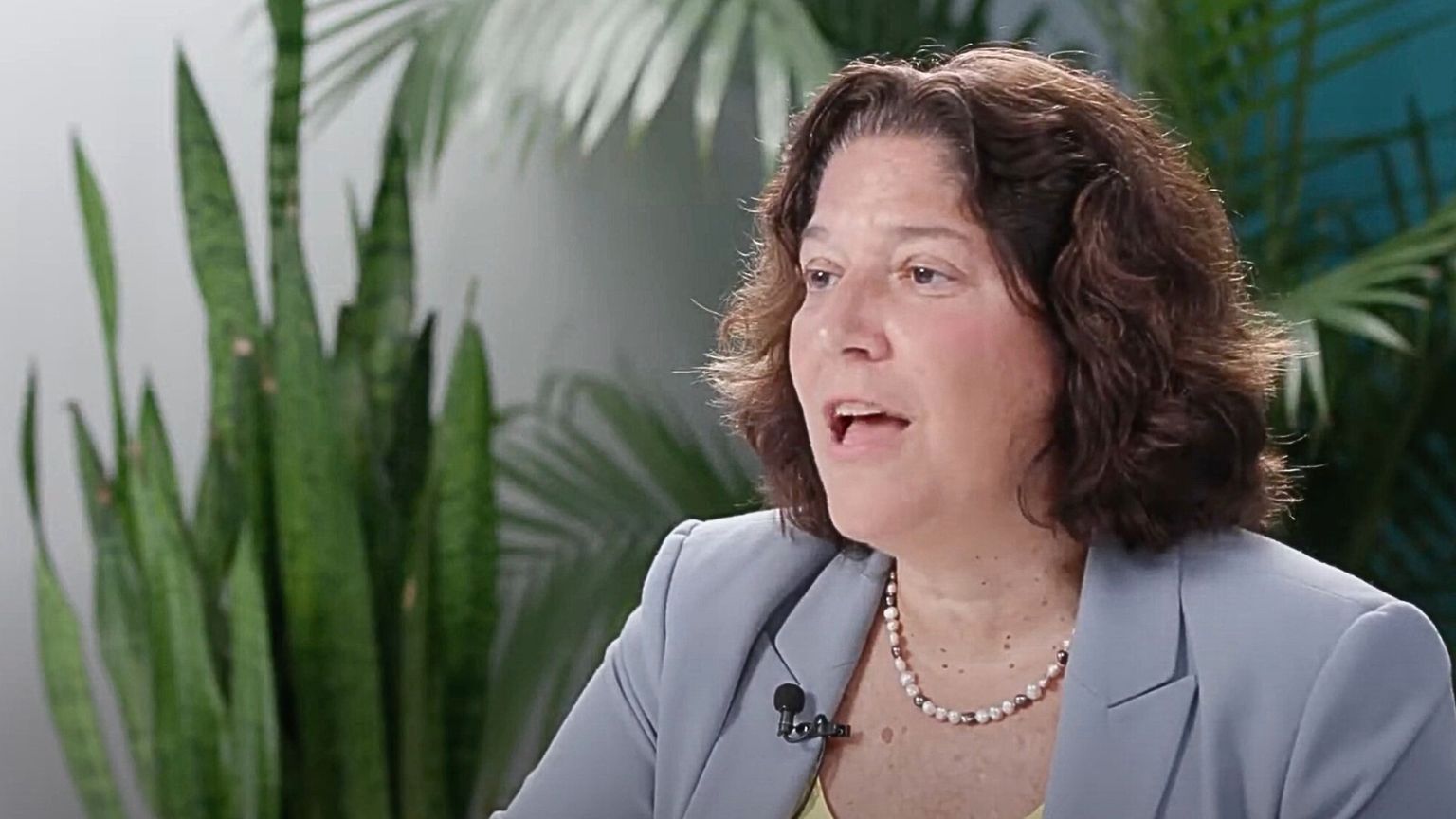
“Regulator told banks to stop doing business with the NRA “or else.” The Supreme Court is asked to weigh in. A First Amendment case.”
By Cindy Harper
Posted 12:27 pm
ENTIRE ARTICLE @ ReclaimTheNet: “Sean Reyes, the Attorney General of the state of Utah, has joined 18 other attorneys general calling on the US Supreme Court to reverse a decision by the US Circuit Court of Appeals for the Second Circuit to dismiss a lawsuit brought by the National Rifle Association (NRA) against the former superintendent of the New York Department of Financial Services Maria Vullo.
Vullo told financial institutions to stop doing business with the NRA “or else.”
In an amicus brief, the attorneys general said that Vullo violated the First Amendment rights of the NRA, and “engaged in a politically motivated campaign against the financial institutions doing business with the NRA but steered clear of any explicit threats.”
We obtained a copy of the amicus brief for you here.
The attorneys general asked the Supreme Court to protect the free speech rights of the NRA and others.
They also argued that courts have generally sided with organizations and individuals instead of the government in similar cases.
“But in this case, the Second Circuit flipped this approach on its head, effectively requiring a government official to explicitly threatened adverse consequences before any First Amendment violation occurs, even if any interested party would understand a state official’s words or conduct as an implied threat,” Utah’s attorney general’s office wrote in a press release.
The coalition of attorney generals argued that the decision by the lower court would allow the government to censor speech that it does not like.
“If the Second Circuit’s decision is left standing, it’s not difficult to imagine government officials employing similar tactics to stifle disfavored speakers. Whether the method of choice is to target financial institutions that advocacy groups depend on to engage in fulsome political advocacy…or simply to target private organizations that host events for such groups, the path forward is clearly marked,” the attorneys general wrote in the brief. “And if this Court doesn’t intervene to shut down that path, ‘where would such official bullying end?’”
The amicus brief was filed by Utah, Montana, Georgia, Ohio, Iowa, Arkansas, Alabama, Missouri, North Dakota, New Hampshire, Kansas, Louisiana, North Dakota, Kentucky, South Dakota, Wyoming, Oklahoma, South Dakota, West Virginia, and South Carolina.”
LikeLiked by 1 person
more I missed while the “look squirrel” indictment was happening…
entire article
WASHINGTON–House Committee on Oversight and Accountability Chairman James Comer (R-Ky.) issued the following statement on today’s transcribed interview with Kathy Chung, who served as assistant to Joe Biden when he was Vice President:
“I thank Kathy Chung for her cooperation with the Oversight Committee’s investigation into President Biden’s mishandling of classified documents. She provided startling information that undermines the Biden White House’s narrative on the matter.
“Today we learned that when Joe Biden left the vice presidency, boxes containing classified documents, vice presidential records, and other items were stored in three different locations around the Washington, D.C. area, including an office near the White House, an office in Chinatown, and eventually the Penn Biden Center. At some point, the boxes containing classified materials were transported by personal vehicles to an office location. The boxes were not in a ‘locked closet’ at the Penn Biden Center and remained accessible to Penn Biden employees as well as potentially others with access to the office space. We need to find out who had access to these documents.
“We also learned today that then-White House Counsel Dana Remus tasked Kathy Chung with retrieving these boxes from the Penn Biden Center as early as May 2022. This story does not begin in November 2022, as represented by President Biden’s attorney.
“In the coming days, the Oversight Committee will follow up with persons of interest in this investigation.”
I completely missed this story with all the Trump Drama this week. Gee, I don’t suppose that was the whole idea, huh?
Beege Wellborn collects up the story.
Biden’s lying about when he discovered the documents. And where he kept them.
House Oversight Committee Chairman James Comer, R-Ky., on Tuesday announced that a former Biden aide had indicated in an interview that the president’s team was aware of classified materials at the Penn Biden Center earlier than they admitted.
Comer’s statement followed a transcribed interview with Kathy Chung, who was an assistant to Biden during his vice presidency, whom Comer said provided “startling information that undermines the Biden White House’s narrative” on its handling of classified materials.
The Biden White House had said previously that a lawyer clearing out Biden’s old office at the Penn Biden Center in Washington had discovered materials marked classified inside a closet in November 2022. Chung’s testimony indicated that Biden had stored classified materials at multiple locations in Washington, D.C., and that his team had been aware of them for months prior to the November “discovery.”
“Today we learned that when Joe Biden left the vice presidency, boxes containing classified documents, vice presidential records, and other items were stored in three different locations around the Washington, D.C. area, including an office near the White House, an office in Chinatown, and eventually the Penn Biden Center,” Comer said. “At some point, the boxes containing classified materials were transported by personal vehicles to an office location.”
“The boxes were not in a ‘locked closet’ at the Penn Biden Center and remained accessible to Penn Biden employees as well as potentially others with access to the office space. We need to find out who had access to these documents,” he continued.
Julie Kelly caught the Washington Post spinning for Biden:
Julie Kelly
@julie_kelly2
LOL “The emphasis on obstruction marks a key distinction so far between the Mar-a-Lago investigation and a separate… probe into how a much smaller number of classified documents ended up in an insecure office of Biden’s, as well as his Delaware home.”
Isn’t lying to government investigators. — what’s that word, what’s the charge the Regime charges Non-Regime members with…? — obstruction of justice? Isn’t that the pretext for the raid on Mar-a-Lago?
Still no raid on Joe Biden, even though he is, as the left claimed about Trump, “playing games” with classified documents.
Biden stashed classified documents in Chinatown and had his ex-assistant do the dirty work for him. Joe ordered the Trump raid, knowing he had documents spread-eagled all over Chinatown & his unlocked garage. Biden�s now been caught ordering 2 illegal hits on his next opponent. pic.twitter.com/Jk3Nep7nfK
— Jesse Watters (@JesseBWatters) April 6, 2023
It gets worse: Hunter Biden sent at least one document which appears to be classified at to his “partners” at Burisma.
Gee, where did Hunter Biden get that document from?
House Oversight Committee Chair James Comer (R-KY) said Monday he is “concerned” about a government document Hunter Biden sent Burisma officials that could have originated from the troves of classified information that President Joe Biden mishandled.
Speaking with Fox Business’s Maria Bartiromo, Comer raised concerns that the family’s “influence peddling” could be connected to Joe Biden’s mishandling of classified information.
“We don’t the know the true extent of what he [Joe Biden] has done,” Comer said. “All we know is he had classified documents scattered all over the place dating back to the time as U.S. senator.”
“There is one document in particular that I can tell you from my investigation of Biden family influence peddling that we are very concerned about with respect to the document that Hunter Biden sent to officials at Burisma in Ukraine,” Comer said.
“It was a government document. We are concerned that it may have been one of the classified documents,” he added.
https://acecomments.mu.nu/?post=403907
LikeLiked by 1 person
LikeLiked by 1 person
LikeLiked by 1 person
LikeLiked by 1 person
LikeLiked by 1 person
LikeLiked by 1 person
LikeLiked by 1 person
LikeLiked by 1 person
I am adding a short daily prayer to the board. I would invite each of you, if you wish, to also add one or maybe two of your own liking. I do not want to stifle anyone but please limit yourself to one or two religious postings. here’s one I found that I liked.

LikeLike
LikeLike
LikeLike
LikeLike
LikeLike
LikeLike
LikeLike
LikeLike
LikeLike
Good Night All!
LikeLiked by 1 person
Good night!
LikeLiked by 1 person
Great opening
LikeLiked by 1 person