
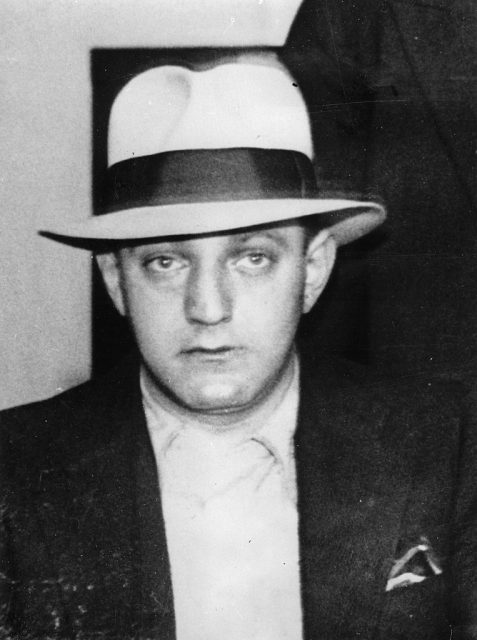
Dutch Schultz was born Arthur Flegenheimer in 1902, but he was already a career criminal by the age of twenty-five. Reported to have had 136 people killed in under ten years, he made millions illegally manufacturing and distributing bootleg liquor during Prohibition.
Dutch Schultz was a classic example of someone being at the right place at the right time. With Prohibition taking hold of the United States between 1920 and 1933, he got his foot on the ladder and never looked back.
Dutch Schulz was born Arthur Simon Flegenheimer in 1902. By the age of 25 he was already a career criminal. Reported to have had 136 people killed in under ten years, he made millions illegally manufacturing and distributing bootleg liquor during Prohibition. It is speculated that his gangster name could have come from the company he became associated with, Schultz Trucking. They transported booze down from Canada for thirsty customers.
From there, Schultz fell in with the formidable Joey Noe, who ran a speakeasy. They created a partnership that challenged the existing underworld authorities– the Mafia’s Five Families and the Irish Mob were their opponents. Schultz was undeterred and kept going, even after Prohibition had ended. A lottery scam was the next move to bolster his bulging finances. He also put the squeeze on restaurants – pay up or wind up on the menu.
With his bank balance coming under serious scrutiny, Schulz realized he would be indicted for income tax invasion. He immediately took steps to protect his money. He decided that he needed a nest egg to fall back on in case he was sent to prison, so he had his top lieutenants clean out his safety deposit boxes and gather together all of his cash from his available bank accounts.

At a hideaway in Connecticut, Dutch, “Lulu” Rosencrantz, and Marty Krompier packed everything up in a steel-plated strongbox. One night, Dutch and Lulu traveled to Phoenicia, New York, and buried everything near the trunk of a tree with an “X” carved into it. Dutch swore Lulu to secrecy.
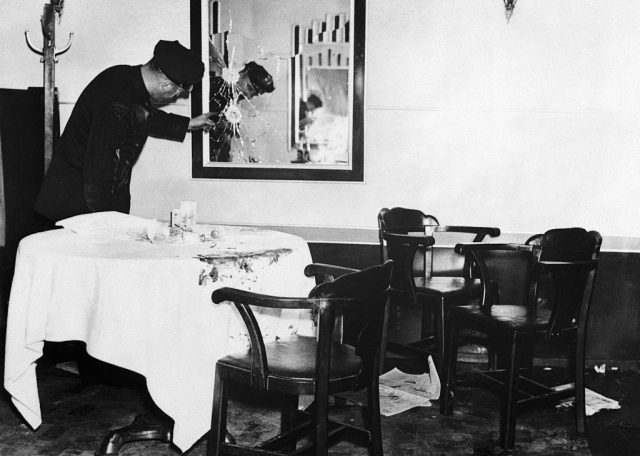
Schultz then decided his only course of action was to whack prosecutor Thomas Dewey. He thinned out his competition but was eventually talked out of murdering Dewey. His ruthless behavior, however, spooked the crime syndicate, who finally shot Schultz at the Palace Chop House in Newark. On October 23, 1935, Schultz was gunned down by members of the crime syndicate. His bodyguard, “Lulu” Rosencrantz, also fell from shots by rival Mafia figures.
Before his death, Schultz made his confession about his treasure. And even though he swore Lulu to secrecy, Lulu couldn’t keep his mouth shut and told Krompier where the treasure was buried. At some point, he even drew Krompier a map to the treasure. But as fate would have it, Krompier also couldn’t keep his mouth shut and told several people about the treasure. Two henchmen eventually caught up with Marty at a barber shop in New York City, gunned him down and took the map. Krompier survived the attack, but he was never able to locate the treasure without the map.

The treasure is said to be a 2′ by 3′ waterproof container holding gold, diamonds, war bonds, and thousand-dollar bills. According to treasure seekers, a main area of interest is Stony Clove Creek in Phoenicia, NY. Why? Because apparently a picture of the creek was included in Schulz’s possessions passed down to relatives, and they are convinced a nondescript picture of “nothing in particular” along a creek HAS to have meaning.
Schultz’s own lawyer Dixie Davis, claimed to have seen the box in question, and there was the “dying declaration” of Schultz himself. Although reading through the rantings that were recorded by the police at the scene, I couldn’t discern anything remotely resembling a declaration of anything. I have read on line that treasure hunters meet annually in the Catskills to continue the search for the Dutch’s treasure.
 Sew Colorful
Oh wow….Lets go be treasure hunters!!!
LikeLiked by 1 person
LikeLiked by 1 person
added to the list
LikeLike
LikeLiked by 1 person
LikeLiked by 1 person