
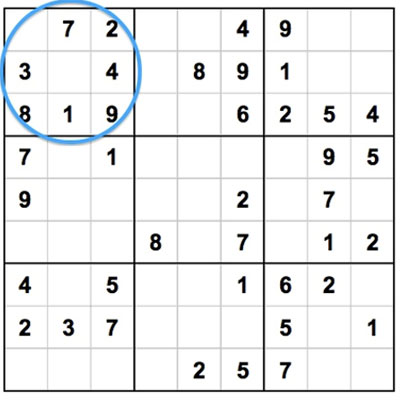
Sudoku is played on a grid of 9 x 9 spaces. Within the rows and columns are 9 “squares” (made up of 3 x 3 spaces). Each row, column and square (9 spaces each) needs to be filled out with the numbers 1-9, without repeating any numbers within the row, column or square. Does it sound complicated? As you can see from the image above of an actual Sudoku grid, each Sudoku grid comes with a few spaces already filled in; the more spaces filled in, the easier the game – the more difficult Sudoku puzzles have very few spaces that are already filled in.
In the above puzzle, the upper left square (circled in blue), already has 7 out of the 9 spaces filled in. The only numbers missing from the square are 5 and 6. By seeing which numbers are missing from each square, row, or column, we can use process of elimination and deductive reasoning to decide which numbers need to go in each blank space.
We know we need to add a 5 and a 6 to be able to complete the square, but based on the neighboring rows and squares we cannot clearly deduce which number to add in which space. This means that we should ignore the upper left square for now, and try to fill in spaces in some other areas of the grid instead.
One way to figure out which numbers can go in each space is to use “process of elimination” by checking to see which other numbers are already included within each square – since there can be no duplication of numbers 1-9 within each square (or row or column). Looking at the same puzzle below, we can use the process of elimination to determine where another number should go. In the far left-hand vertical column (circled in Blue) the 1, 5 and 6 missing.
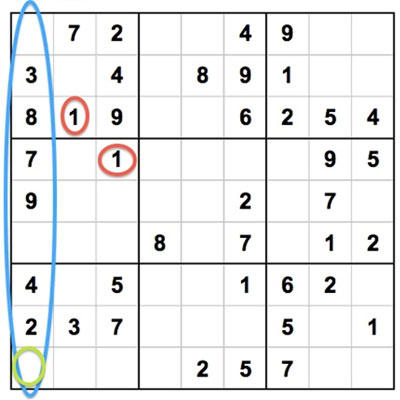
In this case, we can quickly notice that there are already number 1s in the top left and center left squares of the grid (with number 1s circled in red). This means that there is only one space remaining in the far left column where a 1 could possibly go – circled in green. This is how the process of elimination works in Sudoku – you find out which spaces are available, which numbers are missing – and then deduce, based on the position of those numbers within the grid, which numbers fit into each space.
Sudoku rules are relatively uncomplicated – but the game is infinitely varied, with millions of possible number combinations and a wide range of levels of difficulty. But it’s all based on the simple principles of using numbers 1-9, filling in the blank spaces based on deductive reasoning, and never repeating any numbers within each square, row or column.
There is no guessing in sudoku…reasoning and logic are key…and there’s NO MATH required…LOL.
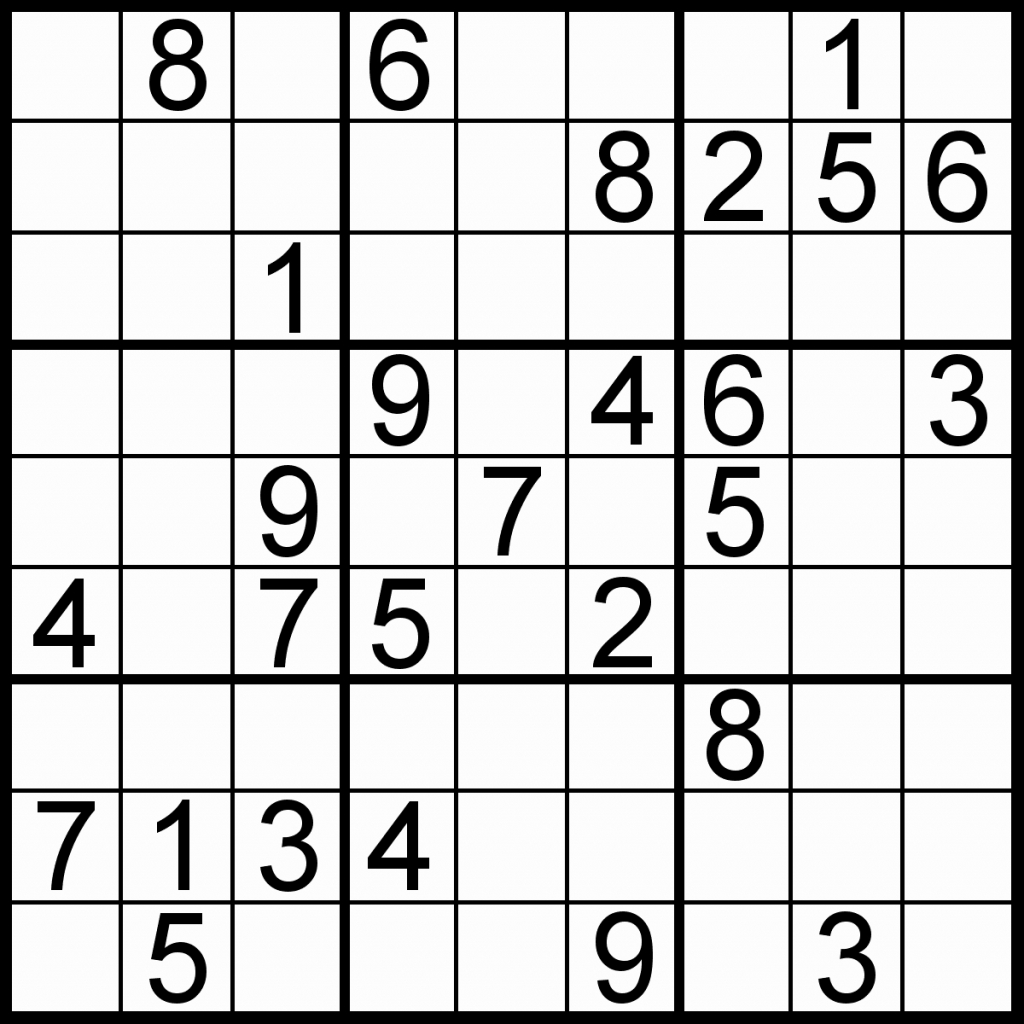
Pat’s Apology: the above sample puzzle requires a little more than basic skills to complete but most puzzles i found on line were like this. (I liked the circles and details in the explanations to help you see exactly what they were talking about.) I have included a puzzle below which requires ONLY the most basic process of elimination skills to solve and I will post the answer if anyone requests it.
 Sew Colorful