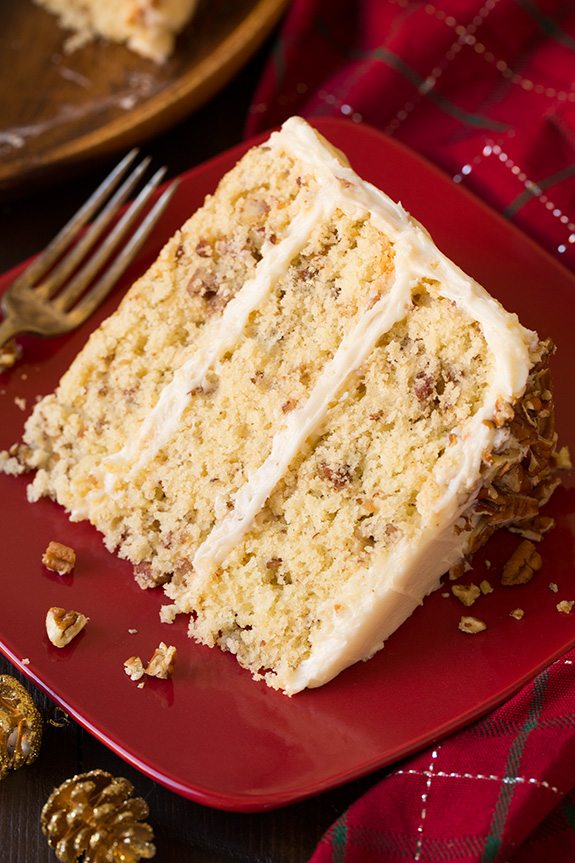
Preheat oven, prepare cake pans: Preheat oven to 350 degrees. Butter and line 3 9-inch round cake pans with parchment paper, butter parchment paper and lightly dust pans with flour shaking out excess. Set pans aside.
Saute pecans in butter: Melt 3 Tbsp butter in a skillet over medium heat. Once melted add pecans and cook until slightly browned and fragrant, tossing frequently, about 4 minutes. Pour and spread onto a sheet of parchment paper or a baking sheet. Set aside and allow to cool.
Mix liquids together: stir together buttermilk and milk, set aside.
Whisk dry ingredients: In a mixing bowl whisk together flour, baking powder, baking soda and salt for 20 seconds, set aside.
Cream butter and sugar, then eggs and vanilla: In the bowl of an electric stand mixer fitted with the paddle attachment whip together butter and sugar until very pale and fluffy. Mix in eggs one at a time adding in vanilla with last egg.
Mix in flour alternating with milk mixture: Add 1/3 of the flour mixture to the butter mixture and mix on low speed just until combined, then add in 1/2 of the buttermilk mixture and mix just until combined then repeat process once more. Finish by mixing in remaining 1/3 of the flour mixture and mix just until nearly combined.
Fold in pecans: Remove bowl from stand mixer and fold in pecans (fold batter until there’s no longer streaks in the batter). Divide batter evenly among prepared baking pans.
Bake until set: Bake in preheated oven 23 – 28 minutes until toothpick inserted into center of cake comes out clean. Remove from oven and cool in cake pans 10 minutes.
Let cake cool completely on wire rack: Run a knife around edges of cake to ensure they are loosened and invert onto wire racks to cool completely. Once cool frost with cream cheese frosting and top with pecans.
For the cream cheese frosting: In the bowl of an electric stand mixer fitted with the paddle attachment whip together butter and cream cheese until smooth. Mix in vanilla and powdered sugar and blend until smooth and fluffy.
Today would have been Georgia’s birthday. I miss her posts early in the morning. I am comforted that she passed peacefully in her sleep. Her absence is still felt and is still painful but hopefully the pain will fade and only the memories of this wonderful mother will remain.
The Sego Lily is a sacred plant in Native American legend. Sego is a Shoshonean word thought to mean “edible bulb.” The flower thrives in desert-like conditions. It blooms in May and June. There are about seven variations of the plant in Utah. The white flower species displays three large, waxy petals. Each petal, on the inner surface, shows a distinctive crescent-shaped, purplish marking with a fringe of bright yellow hairs. The plant’s leaves, withered by flowering time, appear grass-like and sparse.
Sego Lilies, are the Utah State flower. This plant is responsible for staving the hunger of the Mormon pioneers many times. They retained their color to some extent after cooking, thus making a colorful dish. The pioneers of 1848–49 ate the sego lily bulb to help ward off starvation. Some bulbs were as large as walnuts, but most were the size of marbles. The bulbs were best fresh-cooked because they turned thick and ropey when cool.
By the 1880s those early settlers who had eaten the bulb felt it set them apart from newcomers to the Salt Lake Valley. The old-timers thought that to have suffered through the hard times of the early Utah colonizing showed their tenacity and righteousness. For those pioneers it became a badge of virtue to have been a “bulbeater.”
On March 18, 1911, the Utah State Legislature designated the sego lily as the state flower. Early in 1913 the LDS General Relief Society Board chose it as their official emblem. During the First World War the flower became a symbol of peace. Karl E. Fordham’s poem “Sego Lily” portrayed the plant as an image of home, mercy, freedom, and peace for the men and women of Utah who were serving on the battlefields of Europe.
Few Utahns today have eaten a sego lily bulb. Instead, people harvest the flower by taking pictures of it in its harsh, Utah desert setting. Others just look at the flowers and store memories of the sego lily’s beauty of springtime blossoms. Today, the delicate bloom nourishes the senses and the soul.
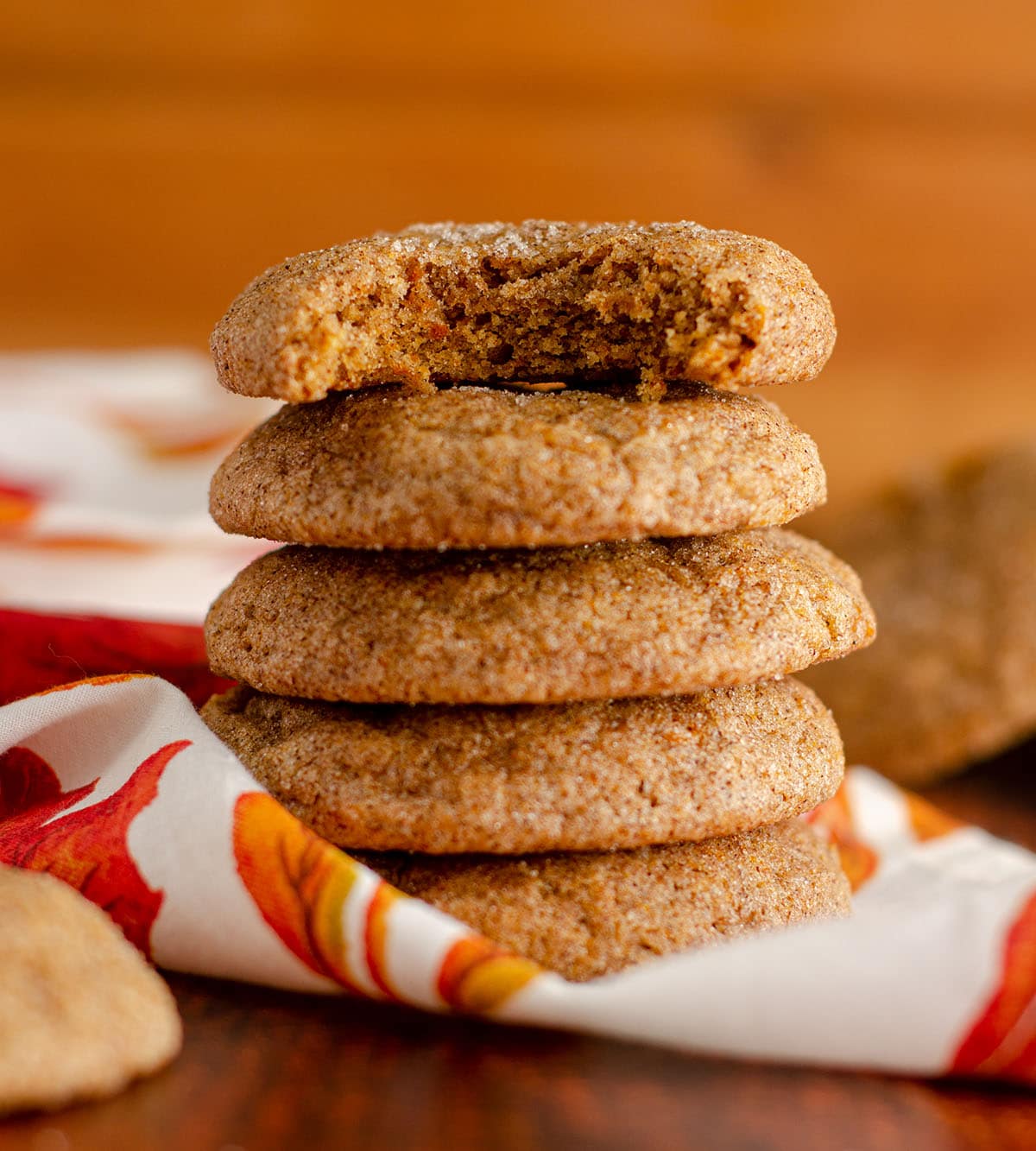
The final offering in our Back-to-School series is Pumpkin Spice Cookies!
Ingredients
1 and ½ cups all-purpose flour
¼ teaspoon salt
¼ teaspoon baking powder
¼ teaspoon baking soda
2 and ½ teaspoons ground cinnamon divided
1 and ½ teaspoons pumpkin pie spice divided
½ cup unsalted butter melted and allowed to cool
¼ cup firmly packed brown sugar
1 cup granulated sugar divided
¼ teaspoon vanilla extract
6 Tablespoons pumpkin puree
Directions
In a large bowl, whisk together the flour, salt, baking powder, baking soda, 2 teaspoons cinnamon, and 1 teaspoon of pumpkin pie spice. Set aside.
In a medium bowl, whisk together the cooled melted butter, brown sugar, and ½ cup of the granulated sugar until smooth, then whisk in the vanilla and pumpkin puree until smooth.
Pour the wet ingredients into the dry ingredients and mix together with a large spatula until everything is combined. Cover the dough and chill in the refrigerator for at least 1 hour, or up to 3 days.
When you are ready to bake the cookies, remove the dough from the refrigerator. Preheat the oven to 350°F. Line two large baking sheets with parchment paper or silicone baking mats. Set aside.
Combine the remaining ½ cup of granulated sugar, ½ teaspoon of cinnamon, and ½ teaspoon pumpkin pie spice. Stir or whisk together until uniform in color. Set aside.
Roll the dough into balls, about 1 Tablespoon in size. Roll each of the dough balls generously in the sugar/cinnamon/pumpkin pie spice mixture and place on prepared baking sheet.
Bake the cookies for 11-13 minutes or until the edges are just set. Cookies will look very soft and under-baked. Remove from the oven and allow cookies to cool on the baking sheet for at least 5 minutes before transferring to a wire rack to cool completely. Store leftovers covered at room temperature, up to 5 days. Baked cookies freeze well, up to 3 months. Thaw in refrigerator or at room temperature.
GA brought this article to my attention and I wanted to share it as an open to really bring it into focus! The article appeared on Cowboy State Daily:
When the Dragon Bravo Fire destroyed the historic Grand Canyon Lodge on the North Rim of the Grand Canyon two weeks ago, the loss of the unique structure, opened in 1928, was mourned by historians and national park enthusiasts.
The Grand Canyon Lodge was one of many structures throughout the United States that exemplified the iconic “parkitecture” aesthetic prevalent throughout the U.S. National Park Service.
These impressive structures, made of locally sourced materials, were built to make the parks more accessible to the people — and make a big impression on everyone who stepped inside.
Knowing Why, Not How
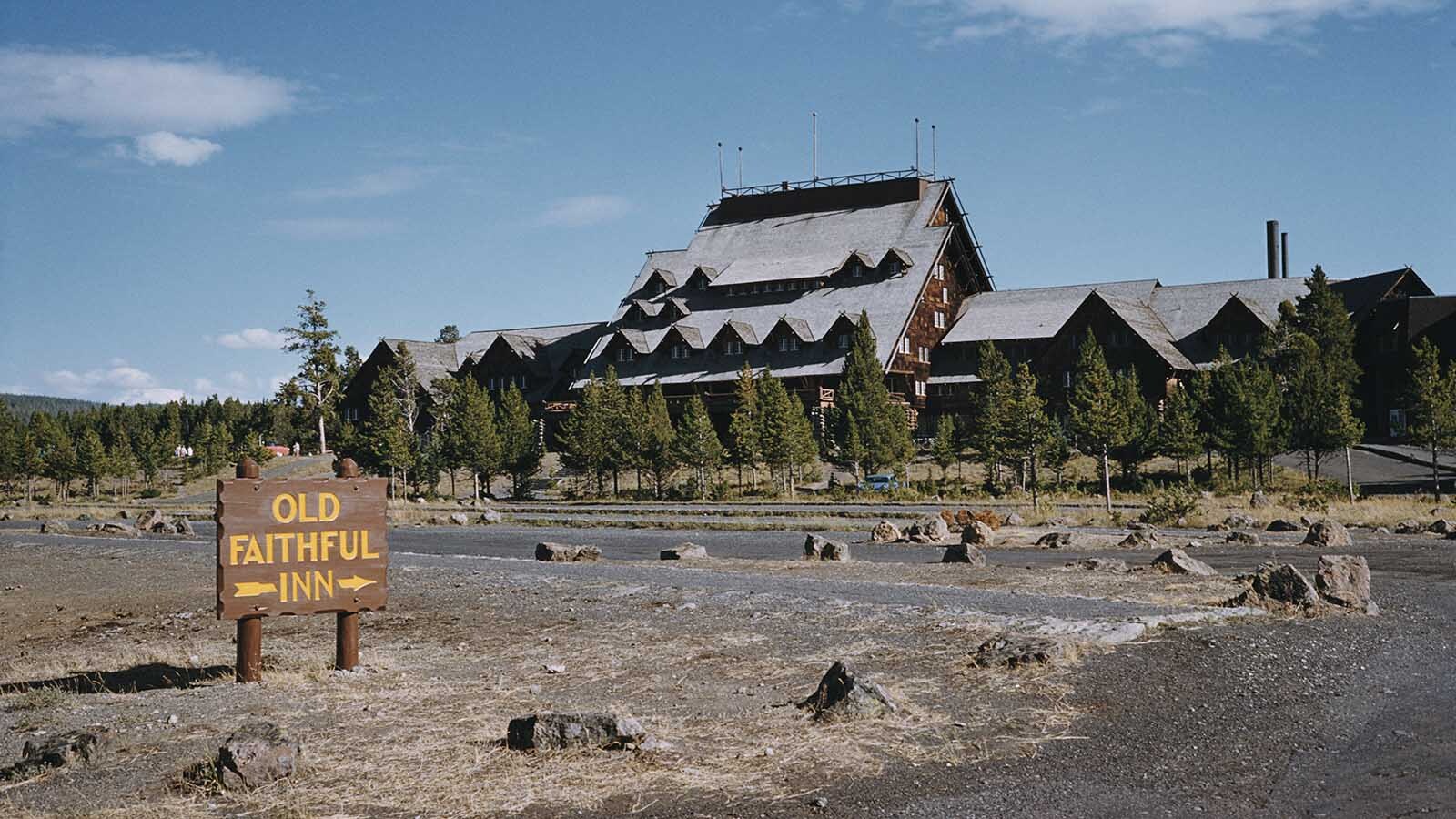
Yellowstone National Park was established in 1872, but many of its amenities were still lacking by the turn of the century. When the Upper Geyser Basin Hotel, “the Shack Hotel,” burned down in 1894, there was a need for a new lodge in the vicinity of the park’s most popular attraction, Old Faithful.
Harry Child, president of the Yellowstone Park Company, hired architect Robert Reamer to design and build a new lodge overlooking Old Faithful. Reamer was only 29 years old, but he understood the assignment.
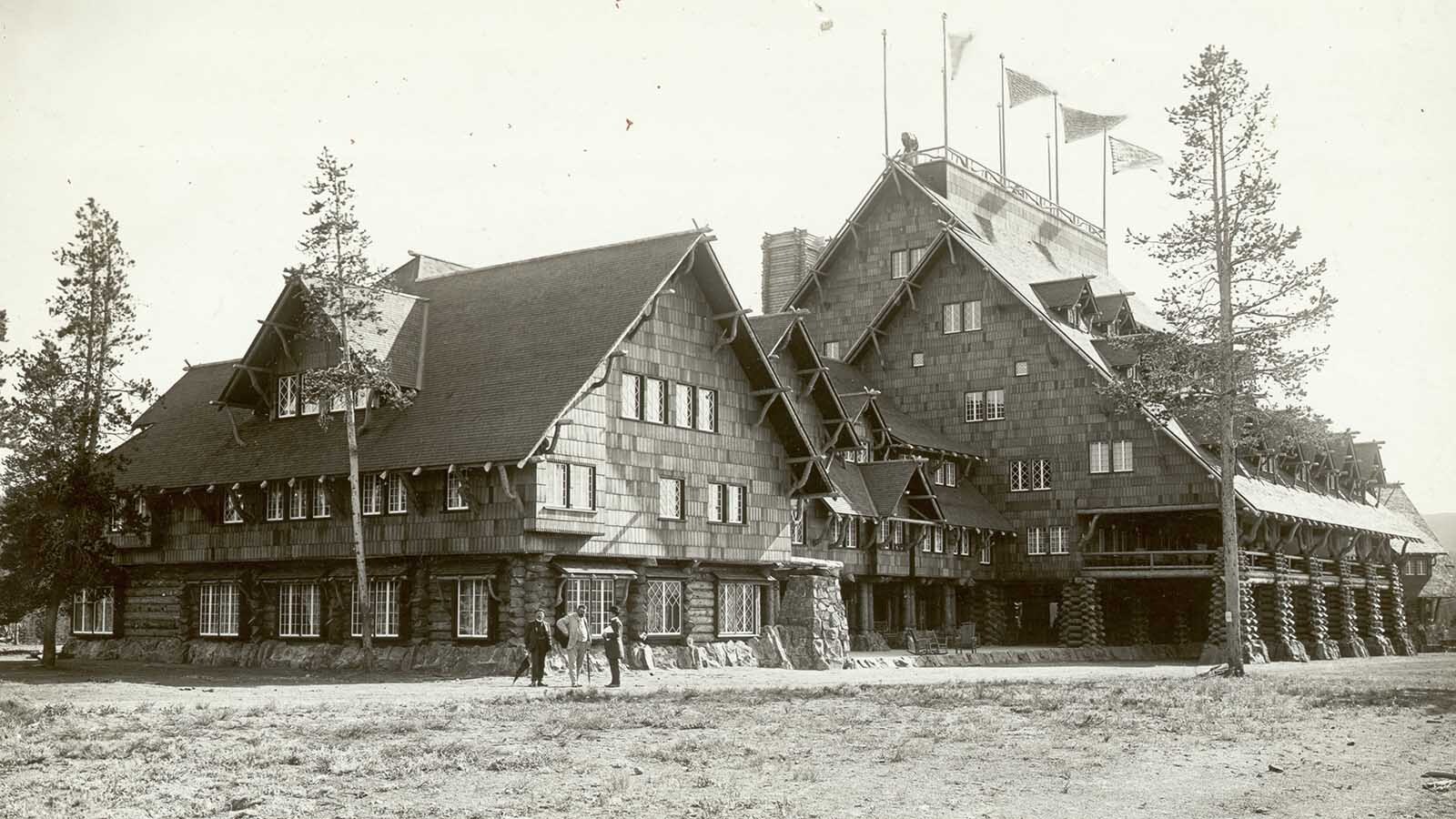
Details about the construction of the Old Faithful Inn remain, according to Henry, “One of the profound mysteries in Yellowstone’s history.”
Despite the historical significance of the inn and the enormous effort and logistics it must have taken to build it, there are almost no records of the actual construction.
“It must have been the biggest thing that was going on in the park at the time, and yet, there are almost no records about the actual construction,” he said. “As far as I know, there are only two photographs of the inn under construction, and there’s very little mention of it in the U.S. Cavalry’s logbook.”
Locally Sourced
Details of the Old Faithful Inn’s construction aren’t an entire mystery. The lodgepole pines used to build the enormous structure were harvested within an eight-mile radius of the construction site, and the rhyolite stone used for the foundation came from a quarry in the Black Sand Basin, five miles away.
Mike Keller, vice president and general manager for the Xanterra Travel Collection in Yellowstone National Park, said the Northern Pacific Railroad provided a crew of 45 railroad trestle builders for the construction, which was overseen by Reamer. They relentlessly worked through the winter to bring Reamer’s design to fruition.
“Reamer tried to design it like you’re walking through the forest,” he said. “That’s why nothing is synchronized in the building.”
Even if the U.S. Cavalry’s logbook didn’t log a lot of information on the log work, it proceeded at an impressive pace. The initial construction, which consisted of the lobby and first wing of guest rooms, started in 1903 and powered through the winter and spring until the entire complex was open for business by June 1904.
When it opened in June 1904, the Old Faithful Inn had 120 rooms in one wing off the massive lobby, complete with an 85-foot-tall rhyolite fireplace. The hotel had the latest amenities, including electric lighting and steam heat.
Keller noted how most of the windows in the rooms are offset, and no two rooms are exactly alike. That was a deliberate choice by Reamer and the builders to give guests the perception that the Old Faithful Inn was an enhancement to the natural beauty they’d come to see.
The entire construction cost was $125,000, which is equivalent to more than $4.3 million today. Furnishing the massive inn cost another $25,000 (over $900,000 today).
“Nobody knew what to expect when they arrived in 1904,” Keller said. “They take their stagecoach to Old Faithful, and there’s this magnificent log structure sitting there that hadn’t been there the summer before. It’s stunning to think of what they accomplished in less than a year.”
The Sweet Spot
Keller, who lived and worked in the Old Faithful Inn for 15 years, has been infatuated with the historic structure since he first stepped inside.
“There’s a place in the lobby we literally call the ‘Sweet Spot,’ where people walk into the building for the first time,” he said. “You can always tell when people have been in that building for the first time, just by the reaction it draws out of them. It’s amazing.”
The inside of the Old Faithful Inn is iconic for many reasons. Once visitors look beyond the massive rhyolite fireplace, they notice the forest of trident-shaped logs that hold the support beams that carry the inn into the sky above.
“The ridge of the ceiling inside the lobby is about 76 feet, 10 inches,” Henry said. “I measured it once for the sake of my book. A lot of the materials lifted to that level were massive, and more massive boulders were used to construct the fireplace and its chimney. Considering the technology of 1903 and 1904, and the remoteness of the area, I think it’s a remarkable achievement.”
Henry and Keller aren’t the only ones with an emotional attachment to the Old Faithful Inn. Keller said many of the dining, maintenance, lodging, and retail staff have been there longer than he has out of sheer love for their “office” at Old Faithful.
“They come to Yellowstone for their first summer, and stay for 10 or 12 years, but they always want to go back to Old Faithful,” he said.
That passion extends to visitors who book rooms up to a year in advance in anticipation of staying at the Old Faithful Inn. Keller has encountered countless families who revel in their family history of visiting Yellowstone and staying at the inn.
“I’ve had fourth and fifth generation people who come back to the end every year with their kids and their grandkids,” he said. “They bring photo albums and talk about how their great-grandfather stayed in this room in 1913, and they have photographs to show it. The inn connects with people who have a historical legacy tied to Yellowstone.”
Year-Round Upkeep
Unlike other hotels in Yellowstone, the Old Faithful Inn is a seasonal experience. Since its opening, the inn has been open to guests only during the summer season.
“It’s never been open during the winter,” Henry said. “It’s always been a seasonal operation, but it does need year-round attention, and work on and in the building is done during summer, spring, fall, and winter.”
Henry used to provide some of that maintenance as one of Yellowstone’s winter caretakers. From 1977 to 1984, he was employed by the Yellowstone Park Company to clear snow from the slanted roof, ensuring the weight of the winter snow didn’t cause any collapses.
Xanterra took over the seasonal maintenance of the Old Faithful Inn in 1984 and continues to do so to this day. Keller said it’s a constant endeavor, regardless of the season, to ensure the structure stays strong and standing.
“The National Park Service is ultimately responsible for that facility, and it takes great pride in making sure that it is being maintained and preserved for current and future generations,” he said. “Xanterra has the opportunity to manage that facility, and we take it very seriously.”
Keller said the inn’s fire suppression and other safety systems are inspected by a third-party auditor every year to ensure they’re ready in the event of an emergency. Any major improvements or upgrades required are done as needed, rather than on the multi-year timetable that’s typical for many hotels.
“We did a significant structural improvement to the building, with a lot of seismic stabilization, in the early 2000s,” he said. “Within the last five to seven years, we’ve pretty much completed every major component that’s been needed within the building with every reason available, to ensure we’re open and operating with the most sophisticated, up-to-date systems.”
To that end, Keller understands why the Old Faithful Inn isn’t a year-round lodging option. He’s been inside the inn during the winter and, in his opinion, you might be warmer sleeping outside.
“The lobby’s nice and cool in the summertime, but in the winter it’s colder inside the building than outside the building,” he said. “If it’s 20 degrees below outside, it can be 30 degrees below inside. It’s like a reverse-engineered cave in winter.”
Offense Is The Best Defense
There have been some close calls for the Old Faithful Inn over the last century. Henry was amazed that the structure was still standing after everything that threatened to destroy it.
“It survived many, many winters with no fire protection,” he said. “It survived that harsh climate. It survived the 1959 earthquake. It survived the 1988 fires. Not to take anything away from the crew that constructed the building, or Reimer’s work, but, amazingly, the inn has been able to survive this long. It’s a special story, just for that reason.”
The Hebgen Lake earthquake in 1959 caused significant damage to the Old Faithful Inn, including a shattered foundation, partial roof collapse, and the loss of the dining room’s fireplace. Thankfully, there were no deaths or injuries, and everything was promptly repaired.
When the 1988 North Fork Fire threatened the Old Faithful area, proactive measures were taken to ensure the inn’s timber didn’t become tinder. Fire crews hosed down the entire structure to reduce its risk of catching fire, which very well might have ensured its survival.
Meanwhile, many of the recent renovations and upgrades, including the major centennial renovation in 2004, have focused on getting the historic inn closer to its original state. Original materials are used or restored whenever possible, and some design elements obscured during earlier renovations have since been restored.
“We’ve done this enough times that we know what we’re doing,” Keller said. “If you don’t do it right, there are consequences. We take our work seriously because the Old Faithful Inn is a treasure.”
Parkitectural Legacy
Reimer went on to design many other structures in Yellowstone, including the Lake and Canyon Hotels, as well as additions to these hotels, the Mammoth Hotel, and the 1913 addition of the west wing to the Old Faithful Inn.
The massive 10-by-17-foot wooden map of the United States in the Mammoth Hotel Map Room was handcrafted by Reimer and his associate W.H. Fey. He went on to design lodges, train stations, and theaters throughout the U.S. until he died in 1937 at age 65.
Meanwhile, the Old Faithful Lodge was designed and built in the same style as the Old Faithful Inn by Gilbert Stanley Underwood in 1927. Underwood went on to design lodges throughout the National Park system, including the recently lost Grand Canyon Lodge on the North Rim of the Grand Canyon.
Henry said the Old Faithful Inn was so influential on Underwood and other architects and designers that the aesthetic of the National Park Service was modeled after its revolutionary design. That style has come to be known as “parkitecture.”
“The Old Faithful Inn was definitely a trendsetter,” he said. “It set an example for future construction in many other national parks. It became a phenomenon.”
The Old Faithful Inn was added to the National Register of Historic Places in 1973 and was designated a National Historic Landmark in 1987 along with the rest of the structures in the Old Faithful Historic District. In 2007, architects were asked to rank the 150 favorite buildings in the United States – the Old Faithful Inn came in at number 36.
Keller intrinsically understands why the Old Faithful Inn has withstood the test of time. Reimer, in his words, “knew what he was doing” when he designed the most iconic structure in Yellowstone, and one of the most iconic in the nation.
“Keep in mind, when you came to Yellowstone in 1904, you were on the train for two to three days to get there,” he said. “Then, you’re on a seven-day stagecoach trip around the park. They wanted to create a signature experience on that tour, and that’s why the Old Faithful Inn was designed to be great.”
Today is Joan Jett’s birthday (born in 1958) and this great song is one of my favorites!
I saw him dancing there by the record machine I knew he must have been about seventeen The beat was going strong Playing my favorite song And I could tell it wouldn’t be long till he was with me, yeah me And I could tell it wouldn’t be long till he was with me, yeah me
Singing, I love rock and roll So put another dime in the jukebox, baby I love rock and roll So come and take your time and dance with me Ow!
He smiled, so I got up and asked for his name But that don’t matter, he said, ’cause it’s all the same He said, “Can I take you home Where we can be alone?” And next we were moving on, he was with me, yeah me Next we were moving on, he was with me, yeah me
Singing, I love rock and roll So put another dime in the jukebox, baby I love rock and roll So come and take your time and dance with me Ow!
He said, “Can I take you home Where we can be alone?” Next we’re moving on, he was with me, yeah me And we’ll be moving on and singing that same old song, yeah with me
Singing, I love rock and roll So put another dime in the jukebox, baby I love rock and roll So come and take your time and dance with me
I love rock and roll So put another dime in the jukebox, baby I love rock and roll So come and take your time and dance with
I love rock and roll So put another dime in the jukebox, baby I love rock and roll So come and take your time and dance with
I love rock and roll So put another dime in the jukebox, baby I love rock and roll So come and take your time and dance with
I love rock and roll So put another dime in the jukebox, baby I love rock and roll So come and take your time and dance with me
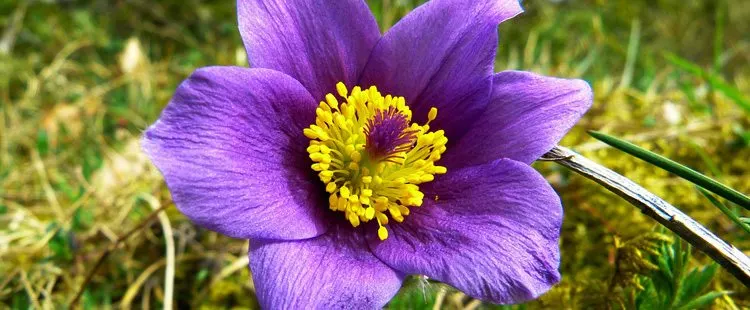
The Pasque flower is used in treating eye diseases like cataracts.
The Pasque flower was approved as the official floral emblem of South Dakota in 1903. The first flower to show its blossoms to settling Europeans in spring, it became the subject of Indian songs and legends.
A member of the Buttercup family, the tundra-loving Pasque is a small solitary bell-shaped flower with gorgeous blue to reddish purple colors, bearing plumed seed heads and golden stamens. It has handsome seed clusters that look like feathery, smoky gray pompoms. The blooming period of Pasque is from April to May, lasting for two weeks. As soon as it blooms, it signals the start of spring to South Dakotans and lights up the landscape from Mount Vernon to Sioux City.
Pasque is a low perennial, rarely exceeding 6 inches in height, and its furry leaf clusters appear rapidly after winter snow disappears. Large, flashy lavender flowers open soon thereafter consisting of 5-8 petal-like sepals, elongated clusters of white to purple, and a ring of numerous yellow stamens. The petal color ranges from deep violet to white. The long silky hairs that cover the finely divided, lobed leaves give the plant a sparkly silver sheen. These leaves continuously expand after the flowers open. The flowering stalk or stem is densely covered with silky hairs, helping to insulate it.
Pasque, all parts of which are poisonous, grows wild throughout the state, plus is distributed from the northwestern U.S. to northern Alaska. The hardy plant is best adapted to cool, moist climates and rarely succeeds in warm dry areas.
















 Sew Colorful