The Dwarf Castle, Alpharetta, Georgia

From the Atlas Obscura website:

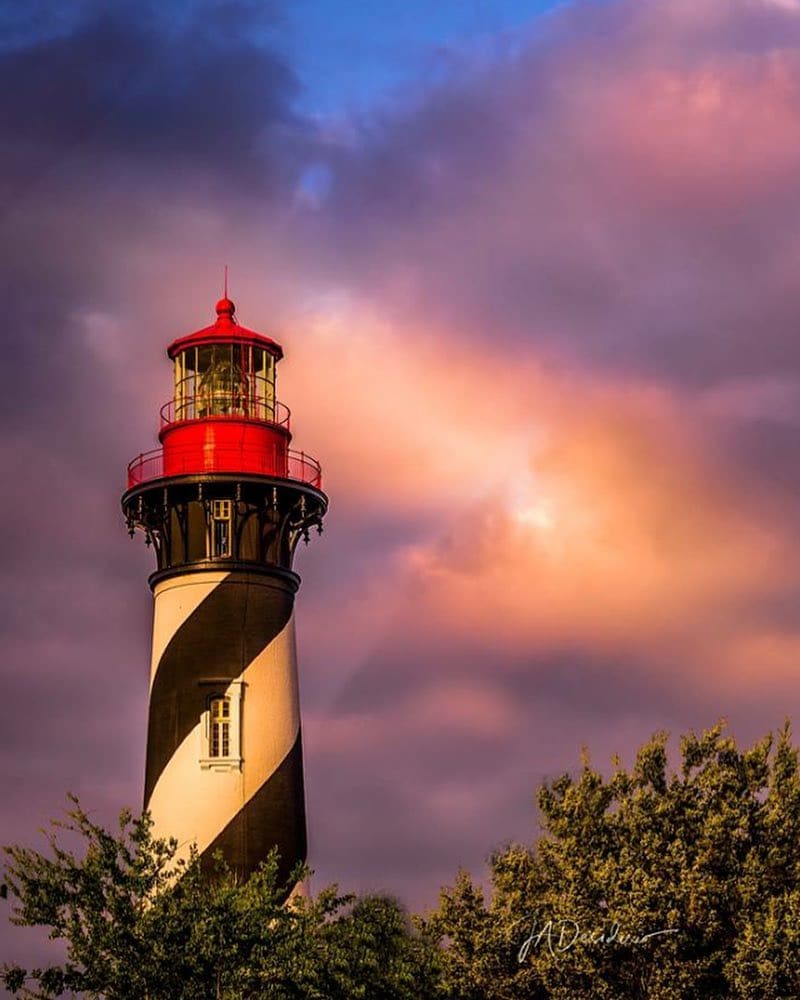
Not many, besides fairy tale Princesses, get to live in a castle and you certainly don’t find many castles in this affluent exurb of northern Georgia. But one truck driver decided to change that.

According to the county, the house was begun in 1950 and was built by Rudy and Ruth McLaughlin. Rudy was a long-haul truck driver who told his wife he would build her a castle – and did! It was heavy work – mortar and concrete for the roof was lifted in five-gallon buckets.

The home is surrounded by a wrought iron fence and features gnomes – though some call them dwarfs and hence the name – guarding the lawn. A swimming pool surrounding the castle doubles as a moat. The two-bedroom house is a little over 1400 square feet and has two garages. The garages are only accessible via a drawbridge.

As this is a private home, it is not open for tours–but it is still quite a curiosity to behold from the road.

Know Before You Go

The best place to park is off Summerhill Drive at the neighborhood pool parking lot. You can then walk down to the right to get a closer look.

SOURCE: ATLASOBSCURA

Hells Canyon, Idaho

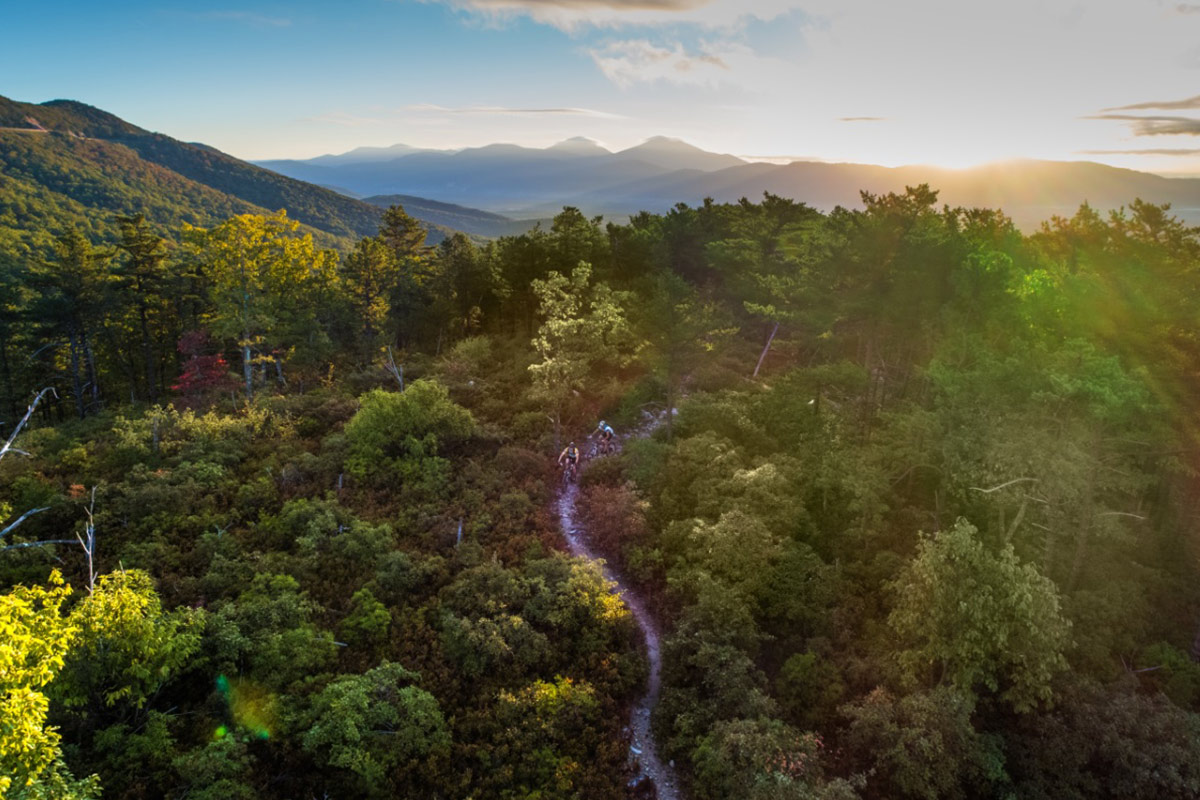
Welcome to the Hells Canyon National Recreation Area managed by the Wallowa-Whitman National Forest.

Hugging the borders of northeastern Oregon and western Idaho, this national showcase holds 652,488 acres of beauty and adventure, where you can let your senses run as wild as the landscape. The deepest river gorge in North America. Scenic vistas that rival any on the continent. World-class whitewater boating. Spectacular mountain peaks. Vast reaches of remote wilderness for hiking or horseback riding. Diverse and abundant wildlife. Artifacts from prehistoric tribes and rustic remains of early miners and settlers…Hells Canyon National Recreation Area truly offers something for everyone, and much to remember. We know you will enjoy Hells Canyon National Recreation Area as a very special place, whether you choose to explore by road, trail, or boat.

Deepest Gorge in North America

Hells Canyon, North America’s deepest river gorge, encompasses a vast and remote region with dramatic changes in elevation, terrain, climate and vegetation. Carved by the great Snake River, Hells Canyon plunges more than a mile below Oregon’s west rim, and 8,000 feet below snowcapped He Devil Peak of Idaho’s Seven Devils Mountains. There are no roads across Hells Canyon’s 10-mile wide expanse, and only three roads that lead to the Snake River between Hells Canyon Dam and the Oregon-Washington boundary.

Where is Hells Canyon?

There is no recognized geographic place called Hells Canyon. According to R.G. Bailey’s book, Hells Canyon, the canyon starts 90 miles south of Lewiston, Idaho and Extends 40 miles further south to appoint near Oxbow, Oregon. This is, of course, debatable.

How did it get its name?

According to Carrey, Conley, and Barton, in their book Snake River of Hells Canyon, most of the early explorers referred to the gorge as Box Canyon or Snake River Canyon. The first reference to Hells Canyon appears in an 1895 edition of McCurdy’s Marine History of the Pacific Northwest. In discussing the voyage of the steamboat, Norma, the author writes; “she then bound off, swinging into midstream, and like a racehorse, shot into Hells Canyon…” The name was used by the Mazama hiking club in their 1931 bulletin. Bailey’s book, Hells Canyon, was published in 1943. Senator Neuberger of Oregon used it in several publications in the 1930s.

How deep is the canyon?

He Devil Mountain is 9,393 feet above sea level. The canyon plunges 7,913 feet, and 1 ½ miles from its summit to the mouth of Granite Creek, 6 miles away, at 1,480 feet.

How long have people lived in Hells Canyon?

The earliest firm date comes from a rock shelter at Bernard Creek, 7,100 years ago. A Clovis point found near the south end of the canyon indicates the possibility of human occupation 15,000 years ago. These people left ample evidence of their passing including some magnificent rock art at places like Buffalo Eddy. Figures carved into the rock are called petroglyphs, and pictures painted on the rock are called pictographs. They are not a form of written language; their meanings are lost in time.

The Wild and Scenic Snake River

How long is the Snake River?

The Snake River originates in Yellowstone National Park at 9,500 feet and winds through southern Idaho before turning north to form the boundary between Idaho and Oregon. It finally joins the Columbia River near Pasco, Washington at 340 feet in elevation 1036 miles from its source. According to Bill Gulick, in his book Snake River Country, the Snake drains 109,000 square miles and contributes 36 million acre feet of water to the Columbia River, ranking 6th in volume among the nation’s rivers.

How did the river get its name?

Indians living along the river in southern Idaho used a hand sign to identify themselves that resembled the movement of a snake. Although, it didn’t mean ”snake’, that name was given to this group of people, now known as the Shoshone. The river flowing through the Snake Indian’s land was given the tribal name.

SOURCE: Forest Service US.GOV.COM
Weird Wednesdays: Whimzeyland, Florida

I found this interesting house on the Family Destinations Guide website! The article, written by David Reeve, details what a unique property this is.  Prepare yourself!

From Family Destination Guide:

Ever thought your neighborhood lacked a bit of pizzazz?

Look no further than Florida‘s own hidden gem, Whimzeyland!

Nestled in Safety Harbor, this explosion of creativity and color offers a whimsical journey right in your backyard.

Ready to dive into a world where ordinary meets extraordinary?

Whimzeyland challenges that notion with every vibrant corner and eye-popping detail.

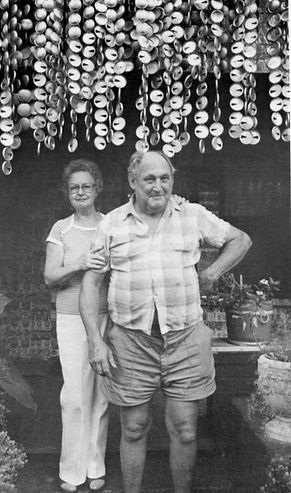
Created by the artist duo Todd Ramquist and Kiaralinda, this marvel took over two decades to evolve into what it is today.

Their canvas?

A humble abode and its neighboring properties.

Picture this: over 500 bowling balls, each meticulously painted, dotting the landscape.

This kaleidoscope of art isn’t confined to just bowling balls, though.

From mosaics crafted from broken bottles to chandeliers that dangle with a story, Whimzeyland is a testament to recycling turned into art.

As you step inside, the riot of colors and materials instantly mesmerizes you.

It’s a sensory feast, with each nook and cranny revealing a new surprise.

Jester statues playfully greet you in the backyard, a nod to the whimsy that defines this place.

Exploring further, you’ll notice every inch of Whimzeyland is an artwork in itself.

The walls, the floors, and even the ceilings join in this artistic symphony.

And yes, those famous bowling balls make their presence felt everywhere!

Relaxing in Whimzeyland isn’t your typical day at the park.

Here, you’re not just a spectator but part of the art itself.

The place has this magical way of making you feel like you’ve stepped into a painting, one where the colors don’t just stay on the canvas but leap out to greet you.

It’s like being in a live-in art gallery, where every step uncovers a new piece of wonder.

The air itself seems to buzz with creativity.

You hear the gentle clinking of glass pieces in the mosaics, each telling a story of what they once were and what they’ve become.

The scent of paint and earth mingles together, a unique perfume that marks this as a place of transformation.

Kids love it here, their eyes wide as they trace the outlines of each bowling ball, counting to see if they can reach 500.

Families gather, smiles as bright as the art they’re admiring, creating memories in a backdrop that’s nothing short of a fairy tale.

And for the adults?

It’s a chance to let go and embrace the quirky side of life.

You find yourself chuckling at a particularly eccentric statue or marveling at how a simple bowling ball can be transformed into a work of art.

But it’s not all about the visuals.

The mosaics, intricate and bursting with color, add another layer to this artistic haven.

Walking through Whimzeyland, you can’t help but feel like you’ve stepped into a real-life Lisa Frank illustration.

This art extravaganza doesn’t just stop at one property.

It spills over into the neighboring areas, creating a continuous stream of imaginative splendor.

Each step you take reveals more creative imagery, making it an endless journey of discovery.

It’s like someone splashed a rainbow across the neighborhood, and the result is this continuous stream of creativity that just keeps flowing.

You walk from one yard to the next, and there’s no telling what artistic surprise awaits you around the corner.

It’s not just about the art; it’s about the sense of community it creates.

It’s like living in a storybook where each chapter is more colorful than the last.

Kids skipping along the sidewalks are suddenly part of a larger canvas that’s alive and constantly evolving.

Every corner you turn in this area offers a new visual treat.

From whimsical sculptures that seem to wink at you as you pass by to murals that tell stories without words, it’s an art lover’s paradise that’s both quirky and endearing.

Families find themselves playing an impromptu game of ‘spot the most amusing artwork,’ a pastime that has both the young and young-at-heart chuckling.

Whimzeyland is more than just a destination; it’s an experience, a place where art and life intertwine most delightfully.

It’s like stepping into a world where imagination isn’t just encouraged; it’s the rule of the land.

And in this world, the only thing you can expect is the unexpected.

Situated in downtown Safety Harbor, Whimzeyland is a bridge to the local community.

After wandering through this bowling ball paradise, local restaurants and cozy cafes await to quench your thirst and treat your taste buds.

For those curious souls craving more information, Whimzeyland’s official website and Facebook page are treasure troves of details.

Keen on visiting?

Where: 1206 3rd St N, Safety Harbor, FL 34695

So, are you ready to embark on a journey that’s anything but ordinary?

Whimzeyland awaits with open arms, promising an adventure that’s both strange and stunningly beautiful.

It’s a rare opportunity to step into an artist’s mind and see the world through a lens of unbridled creativity.

Have you ever experienced anything like Whimzeyland before, or will this be your first dive into Florida’s world of whimsical art?

SOURCE: Family Destination Guide: DAVID REEVE

Coronado Heights Castle, Kansas

Coronado Heights Park is a scenic overlook and park on a 300′ promontory a few miles northwest of Lindsborg, Kansas. In the 1930s, the Works Progress Administration (WPA) built a picnic area and castle like building out of Dakota limestone. It is rather cool and the view is spectacular – reminiscent of the view from Sterling Castle in Scotland.  The winding drive up to the heights is beautiful, with many trees, yucca, and sumac.

The park has grills and fireplaces, including a fireplace in the “castle,” which is otherwise unlighted except for the windows. There are many stone picnic tables located around the edge of hill, with views in all directions. When visited in July of 2007, the castle and grounds were clean and in surprisingly good repair. There is a stone rest room building, but from a distance it wasn’t clear what condition it is in, and it didn’t look like there was a regular path to the rest rooms.

Coronado Heights receives its name from Francisco Vasquez de Coronado, who visited central Kansas in 1541, looking for the Native American community of Quivira, where he was told “trees hung with golden bells and … pots and pans were beaten gold.”

Coronado didn’t find his gold, and it is unknown if he actually ascended the heights now named after him near Lindsborg, Kansas.

There is also a 3 mile mountain bike trail with two loops around the base of Coronado Heights Park.

Take Coronado Avenue (Highway 4) 3 miles north of Lindsborg to Coronado Heights Road (unpaved). Go 1 mile west, just past Smoky Hill Cemetery and turn right at the stone gate. You will see Coronado Heights Park from many miles. Open 8 AM to 11 PM.
Coronado Heights Park was closed for most of the 2019 summer, because of a land slide on the road up to the park, but it reopened at the end of August.

SOURCE: kansastravel.org

Weird Wednesdays: The Cedar Peak Treehouse, Washington

Have you ever wanted to stay in a treehouse?  If you visit Washington, you may have a chance!

I found this article, written by Melissa, who visits and photographs her journeys on her site called Miss Rover.

Where is Cedar Falls Treehouse in Washington?

Cedar Falls Tree House sits on a lovely property named Cozy Acres. This beautiful spot of old growth forest is just outside of North Bend, Washington about 30 minutes East of Seattle. This Washington Treehouse is a very convenient getaway from the city.

Treehouse Details:

2 guests, 1 bed

No Pets

Kitchenette

Composting Toilet

Outdoor Shower

Note: the bed is in a loft with a secured ladder. It was moderately easy to get in and out of the loft space for me.

Amenities

Large Picture Windows

Wrap around deck

Firepit on deck

Outdoor Shower

WIFI

Projector and 100″ screen

Speaker for music

Cooking at the Treehouse

The treehouse provides a small kitchenette with a mini fridge, microwave and Keurig. Outside on the deck, there is a grill and camp stove included with all the basic cooking utensils provided.

We cooked the first night we were there, grilling kababs with a delicious jalapeno sauce.

The Bathroom

I know some people are very particular about bathrooms when staying at more rustic places! This bathroom is small, but very clean with a composting toilet. This specific composting toilet was wonderful. Sometimes they can have really strange/bad odors and this one smelled fantastic, like cedar.

Instructions are provided on how to use the toilet.

The shower is an outdoor shower below the treehouse. Hot water is available through a propane system that was really easy to use. The water heated up really fast and it felt very private and was really a peaceful, luxurious experience for me.

Prices of this Washington Treehouse

As of July 2022, the price to book Cedar Falls Treehouse on Cozy Acres is $290 per night. Also note a 2-night minimum is required(and worth it). This price is without the added cleaning fees and service fee that can vary.

SOURCE: MISS ROVER.com

Bishop Castle: Rye, Colorado

Ever since 1969, Jim Bishop has singlehandedly constructed Bishop’s Castle, which is the largest self-built palace in the United States — and may be the largest self-built architecture project in the entire world.

There were no blueprints or diagrams for the eccentric Bishop Castle in Rye, Colorado. Built by Jim Bishop over the course of 60 years, the monumental structure is the result of his own imagination and lackadaisical building style. As he told one interviewer, “I just build. I don’t measure.”

Made of high, teetering bridges and stairs, Bishop’s Castle is constructed on top of what once was his one-room cottage using over 1,000 tons of rock from the nearby San Isabel National Forest.

It is also littered with signs that warn visitors not to excessively shake them or they could collapse, as Bishop didn’t believe in building codes.

Nevertheless, people flock from all around to see Bishop’s Castle — and to marvel at its craftsmanship. Indeed, even though some may be wary of its stability, the beauty of the castle stands on its own merit.

Why Jim Bishop Built Bishop Castle

It was 1959 and Jim Bishop was 15 years old when he fell in love with two-and-a-half acres for sale in the mountains outside Pueblo, Colorado. He had enough money saved for the $450 down payment — of the total $1,250 price — from mowing lawns and delivering newspapers. His parents had to sign the paperwork since he wasn’t legally able to buy the land himself.

His dream was to build a family cabin. For the next handful of summers, Bishop and his dad went camping at the site and made building plans. Those plans remained dreams until Bishop married his girlfriend, Phoebe, and decided to begin building them a place to live.

Taking rocks from the surrounding parkland, Bishop set out to construct a simple, one-room cottage. Building season in the mountains is quite short, however, between snowmelt and snowfall. Bishop and his father alternated weeks; one working on the home while the other ran the family’s ironwork business.

There wasn’t any running water at the cottage, so Bishop had to build a 40-foot-tall cistern for the water supply. When he began constructing it from stone as well, it resembled a castle tower. Neighbors noticed and jokingly asked if Bishop was erecting a castle.

The comments sparked his imagination: Why not build a castle?

Bishop’s father thought this sounded like more work than he was willing to do, and with the main cabin finished, gracefully bowed out and let his son go on building to his heart’s content.

Constructing The Eccentric Palace

Working in his family’s iron shop meant Bishop learned how things came together. He chopped down trees and milled them into lumber. He dug 12-foot foundations and created scaffolding and pulley systems as he went.

According to Bishop, he’d dream up some feature he wanted, build it, and when it was finished it’d spark an idea for the next part of the castle.

The ironwork arches on the second floor of Bishop Castle are perhaps one of the palace’s best examples of precision geometry. The support trusses are so large that it’s hard to fathom them being put into place by one man. But they were. All of the castle was built by Bishop alone.

He would say Bishop Castle was “Built by one man with the help of God.”

The facade of the building features a fire-breathing dragon made from recycled warming plates and a donated hot-air balloon warmer. The fireplace cleverly ventilates through the dragon’s nostrils. Stained glass windows decorate the palace’s grand hall.

Bishop Castle kept growing, and more visitors showed up to see it, but Bishop never considered charging them admission to enter. Bishop Castle can still be accessed free of charge.

In fact, Bishop drew up legal documents stating that as long as Bishop Castle stands, no one can ever charge admission. However, he did eventually set up a donation box.

Visiting Bishop Castle

Because of its unwieldiness, the Colorado Chamber of Commerce refused to list the castle as an attraction in their pamphlets. There was already some bad blood between Bishop and the state of Colorado, however, as he technically built his palace with rocks that belonged to a national park.

Additionally, no insurance company wanted to be responsible for the ongoing construction at the code-less “attraction.” After he’s gone, Jim Bishop said that he hopes his kids and grandkids will carry on the traditions of the castle.

Today, the castle is 160 feet tall, and construction has slowed considerably as Bishop has gotten older — but will probably not stop anytime soon. His eldest son, Daniel, handles the upkeep and interacts with the visitors. He put his own business on hold to help his parents as they moved into old age. Sadly, his mother, Phoebe, died in 2018.

The castle is no stranger to sad tales. Bishop and Phoebe lost another son, four-year-old Roy, in a tree-felling accident years earlier. There have been fires that claimed parts of the castle, including a gift shop, but they were always rebuilt.

Bishop still occasionally gets out to talk with tourists. He may be prone to anti-government rants, as is outlined by some of the signs on the property, but he is truly still humbled that people stop by to see his life’s work.  He added memorials to Phoebe and Roy inside and maintains he built the castles for others, not himself.

“Them walls, them buttresses, arches, towers. If there wasn’t somebody to climb on them, be inspired by them, get married up there, and use them, and have fun screamin’, hollerin’ and climbin’, there’d be no point in doing it,” he said. “It would be like the noise in the forest. Did it really happen? Was there a noise? Oh yes, there was, but how can you prove it? Well, the castle’s its own proof.”

SOURCE: allthatsinteresting.com

Below is a link that contains a larger photo gallery of the castle:

https://allthatsinteresting.com/bishop-castle

Valley of Fire, Nevada

HISTORY

Valley of Fire consists of bright red Aztec sandstone outcrops nestled in gray and tan limestone mountains.  The sandstone is from the Jurassic period and is the remnant of the sand left behind by the wind after inland seas subsided and the land rose. Early man moved into southern Nevada as far back as 11,000 years ago. The most obvious evidence of occupation is the petroglyphs carved into the rocks by the Basketmaker culture about 2,500 years ago, followed later by the Early Pueblo culture. Paiutes were living in this area in 1865 when Mormons settled at nearby St. Thomas at the south end of the Moapa Valley.  Farming, ranching and mining occurred in the region along a narrow stretch of water.

A rough road was built through this area in 1912 as part of the Arrowhead Trail, connecting Salt Lake City with Los Angeles. This road allowed people to travel through what became known as Valley of Fire.  In the 1920s the name was coined by an AAA official traveling through the park at sunset.  This person purportedly said that the entire valley looked like it was on fire; hence the name. It was also during the 1920s that the archeological richness and recreational possibilities of the area were recognized and about 8,500 acres of federal public domain, the original Valley of Fire tract, were given to the State of Nevada.

In 1933, the Civilian Conservation Corps built the first facilities and campgrounds in the park.  On Easter Sunday in 1934, Valley of Fire was formally opened as Nevada’s first state park.  However, the park didn’t receive its legal designation from the Nevada State Legislature until the body convened in 1935.  Since then, the park has grown to its present size of more than 40,000 acres of multi-colored rock displaying a varied array of shapes and textures.

NATURA RESOURCES & CLIMATE

The area plant community is dominated by widely spaced creosote bush, burro bush and brittlebush. Several cactus species, including beaver tail and cholla, are also common. The springtime bloom of such plants as the desert marigold, indigo bush, and desert mallow are often spectacular along park roads.

Resident birds include the raven, house finch, sage sparrow and roadrunner. Many migrant birds also pass through the park. Most desert animals are nocturnal and not frequently seen by the passing motorist. Many species of lizards and snakes are common in the park, as well as the coyote, kit fox, spotted skunk, black tailed jackrabbit and antelope ground squirrel.

The desert tortoise is a rare species and is protected by state law. If you are lucky enough to come across one, please leave this likeable and harmless creature to live its life in peace in its own environment.

Winters are mild with temperatures ranging from freezing to 75˚F. Daily summer highs usually exceed 100˚F and may reach 120˚F. Summer temperatures can vary widely from day to night. Average annual rainfall is four inches, coming in the form of light winter showers and summer thunderstorms. Spring and fall are the preferred seasons for visiting the Valley of Fire.

SOURCE: NEVADA STATE PARKS

Our Lady Queen of Peace Shrine

She’s officially Our Lady Queen of Peace, but unofficially Our Lady of the Delaware Memorial Bridge, since she stands in clear sight of thousands of travelers who cross the bridge from New Jersey into Delaware every day.

Mary’s long journey to Delaware began in 1982, when local artist Charles C. Parks sculpted a giant steel Mary for Santa Clara, California. For a time, she stood outdoors in Delaware, and some Delaware Catholics really liked her. Their desire was rekindled in 1999, when Parks created a second giant Mary — this one for Chicago (which is now in Indiana)– and again stood her outdoors. Frustrated Delawareans could only look on in envy.

Spurred to act, the Catholics of Delaware spent over seven years raising funds for their own giant steel Mary. According to the campaign’s organizers, supporters contributed $500,000 and prayed more than 800,000 rosaries. One wealthy donor successfully got Mary to have the face of Our Lady of Medjugorje, a Mary who made multiple appearances in Bosnia-Herzegovina.

The 34-foot-tall stainless-steel Mary was officially dedicated on May 26, 2007. Her Immaculate Heart, surrounded by a crown of thorns, is hollow, and those who contribute $100 to her maintenance fund can have their names placed inside it through a hatch in the back.

Mono Lake, California

The reserve was established to preserve the spectacular “tufa towers,” calcium-carbonate spires and knobs formed by interaction of freshwater springs and alkaline lake water. It also protects the lake surface itself as well as the wetlands and other sensitive habitat for the 1 – 2 million birds that feed and rest at Mono Lake each year.

Mono Lake is a majestic body of water covering about 65 square miles. It is an ancient lake, over 1 million years old — one of the oldest lakes in North America. It has no outlet.

Throughout its long existence, salts and minerals have washed into the lake from Eastern Sierra streams. Freshwater evaporating from the lake each year has left the salts and minerals behind so that the lake is now about 2 1/2 times as salty as the ocean and very alkaline.

Location/Directions
Highway 395, 13 miles east of Yosemite National Park, near the town of Lee Vining, California.

Seasons/Climate/Recommended clothing
The weather can be changeable; layered clothing is recommended.

Winter is a particularly beautiful time at Mono Lake. The crowds are gone, a quiet stillness prevails, and snow crystals sparkle on the tufa towers.

In winter, State Route 120 is closed from 5 miles east of the junction of US 395; which allows for access to South Tufa if weather permits. The South Tufa road is not plowed.

South Tufa, Navy Beach, and the Old Marina area are all wonderful places to cross-country ski when snow conditions permit.

Facilities – Activities

Visitor Center

The Mono Basin Scenic Area Visitor Center is a great place to start your visit to this area. The center is located just off Highway 395, north of Lee Vining and includes a variety of exhibits about the natural and human history of the Mono Basin. Visitor center staff stand ready to help you plan your explorations of Mono Lake and the Eastern Sierra. 

Outdoor Activities
Hiking, photography, bird watching, swimming, boating, and cross-country skiing are just a few of the many activities you can enjoy at this unusual lake.

Photographers come from all over the world to capture the interplay of light on the mountains, desert, and water. The natural history of the lake is described and explained in a one-mile self-guided nature trail at South Tufa. This is the best place to visit if you have time for only one stop. A boardwalk (ADA) trail below the Mono Lake County Park allows access to the north shore tufa area and wetland. A new trail links the Scenic Area Visitor Center near Lee Vining with the Old Marina area at the shore. A trail at Panum Crater leads to the dome and crater rim.

A swim in Mono Lake is a memorable experience. The lake’s salty water is denser than ocean water, and provides a delightfully buoyant swim. Old timers claim that a soak in the lake will cure almost anything. Keep the water out of your eyes or any cuts, as it will sting.

Camping
The State Natural Reserve is surrounded by the Mono Basin National Forest Scenic Area, operated by the Forest Service. There are no campgrounds in the State Natural Reserve or the Scenic Area. Established campgrounds are located nearby in Lundy Canyon, Lee Vining Canyon, and the June Lake Loop. Dispersed camping is permitted in most of the Scenic Area above the exposed lake bed lands. Campfire permits are required.

Boating
All types of boating are permitted on Mono Lake, although access is restricted to all islands between April 1 and August 1 each year to protect the nesting gulls. Boaters must not approach within 200 yards of Osprey nesting sites located on offshore tufa towers April 1st through Sept. 1st. It is advisable to stay near shore while boating and to be alert for sudden high winds. We recommend launching canoes and kayaks at Navy Beach, on the south shore, where a parking lot is close to the water. For those with boats too large to carry, an unimproved launch ramp is available near Lee Vining Creek. Stop by the Scenic Area Visitor Center for directions or for more information.

SOURCE: CA.GOV

Weird Wednesdays: Cave House, Festus Missouri

This month’s Weird Wednesday house is actually a cave!  The story comes from UnusualPlaces.Org.

There is a cave in Missouri, USA, that has a particularly storied history.

It began as a mine underneath a forest in the 1930s. In the 1950s, the 17,000 square foot space became ‘Caveland’ – a roller skate rink and concert venue that played host to major pop acts, including Tina Turner.

Caveland closed its doors in 1985, and it was transformed again, this time into a glass recycling center until it shut in 1990.

After that, it stood unused, seemingly for good. Then, finally, in 2003, it was discovered for sale online by Curt and Deborah Sleeper. The couple fell in love with the cave, bought it, and set about the arduous task of turning it into a home.

It nearly didn’t happen at all. Struggles in financing the cave’s purchase meant the Sleepers were on the verge of moving to Belize before the owner finally agreed to a down payment of half the value in return for funding the rest.

With finances stretched to the limit, he Sleepers enlisted acquaintances’ help to build the property from glass doors and other material from a nearby store. In the meantime, they lived in a giant tent inside the cave.

Four years later, the cave had been converted into an incredible three-bedroom house and office space. Inside, the space is vast (the cave itself is three acres in size), with dining and living rooms on the ground floor and the bedrooms on a mezzanine above the kitchen. The property also benefits from a natural spring.

The website, caveland.us, is currently run by the Sleeper family and they still live in the home. It is located at 1101 North 11th Street in Festus.

SOURCE: UNUSUAL PLACES.ORG   MIKE J HALL