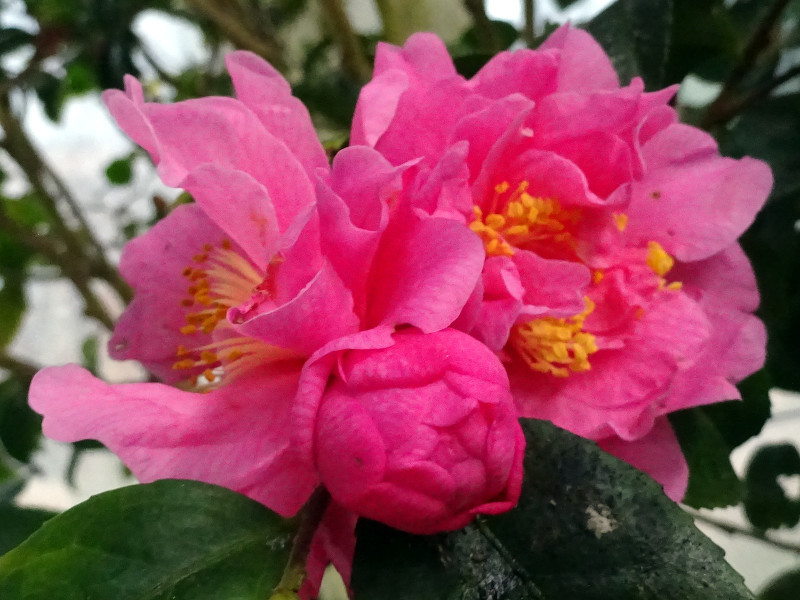
The camellia is a flowering evergreen shrub with dark, glossy leaves and large, lush blossoms that appear and bloom for several weeks during the fall through early spring period in warmer regions. Where it is reliably hardy (zones 7 to 9), the camellia is a very popular plant that is used in much the same way that northern gardeners use peonies. Similarities between peonies and camellias include lushly petaled blooms and a tendency to outlive their owners.
Camellias can be planted from container-grown nursery plants at almost any time of year except during the hottest summer months. They are slow-growing but exceptionally long-lived plants.
Camellia Care
Camellias are best planted in rich, moist soil in a partial shade location. If planting multiple camellia shrubs, space them at least five feet apart. They do not like to compete for water and nutrients with trees in close proximity. They should be planted at the same depth they were growing in their nursery container with the top of the crown slightly exposed.
Know the mature size of your camellia, and plan accordingly if planting close to a window or home foundation. You do not need to amend the soil at planting time; instead, rake compost or well-rotted manure into the top few inches of the soil.
In favorable conditions, camellia is an easy-to-care-for plant that requires pruning only to remove dead branches. However, some gardeners might find them susceptible to a variety of pest and insect problems, which are more serious if the plant is neglected or in poor health.
Light
Camellias thrive in partial shade or in locations that receive dappled sunlight for the entire day, such as the understory beneath tall airy trees. Camellia sasanqua cultivars can tolerate more sun than Camellia japonica cultivars.
Soil
Camellias require well-drained soil, and an ideal soil pH for camellias is within the 6.0 to 6.5 range—slightly acidic.
If your garden soil consists of dense clay and doesn’t drain well, grow your camellia in a container. Smaller cultivars are more suitable for container growth and require large, wide, heavy containers with adequate drainage holes and filled with rich, moisture-retentive potting soil.
Water
Camellias require consistently moist soil. Dry periods that occur during bud development result in fewer flowers with a lower petal count. Drought-stressed plants can also cause spider mite infestations. Twice-a-week watering for a total of one inch of water per week is a good watering schedule. Apply a three-inch layer of mulch to moderate soil temperatures, retain soil moisture, and stifle weeds.
Temperature and Humidity
Camellias are reliably hardy in USDA hardiness zones 7 to 9, although some, especially the hybrids, are known to be hardy in zone 6. Gardeners in colder climates can increase the chances of their camellias surviving the winter by carefully selecting a permanent planting site in the landscape. A northern-facing location has an advantage over a warmer south-facing location. South-facing locations can cause the plant to break dormancy too early, resulting in the loss of flowers to frost damage. A north-facing site combined with a building, hedge, or fence that acts as a windbreak gives cold-climate gardeners the best rate of success.
Fertilizer
Camellias are best fed with a nitrogen-rich slow-release fertilizer, such as 12-4-8 or 16-4-8 applied in three applications: early spring, late spring, and mid-summer. Avoid feeding after August because the new growth that fertilizer promotes can be damaged by cold temperatures.1
The acidity that camellias favor can be provided by a fertilizer designed explicitly for camellias or azaleas.
Types of Camellia
Although camellias are indigenous to Asia, the genus is named for Moravian Jesuit priest Brother Josef Kamel, a botanist, pharmacist, and missionary who classified plants in the Philippines.
The Camellia genus belongs to the Theaceae (tea) plantfamily and includes well over 100 species. But nearly all garden camellias, of which there are hundreds of different types, are cultivars developed from C. japonica (Japanese camellia) or C. sasanqua (sansaqua camellia). A third common species, C. sinensis, is normally grown for tea production, not as an ornamental plant. Additional species sometimes lend their genetics to hybrids.
Some popular garden varieties include:
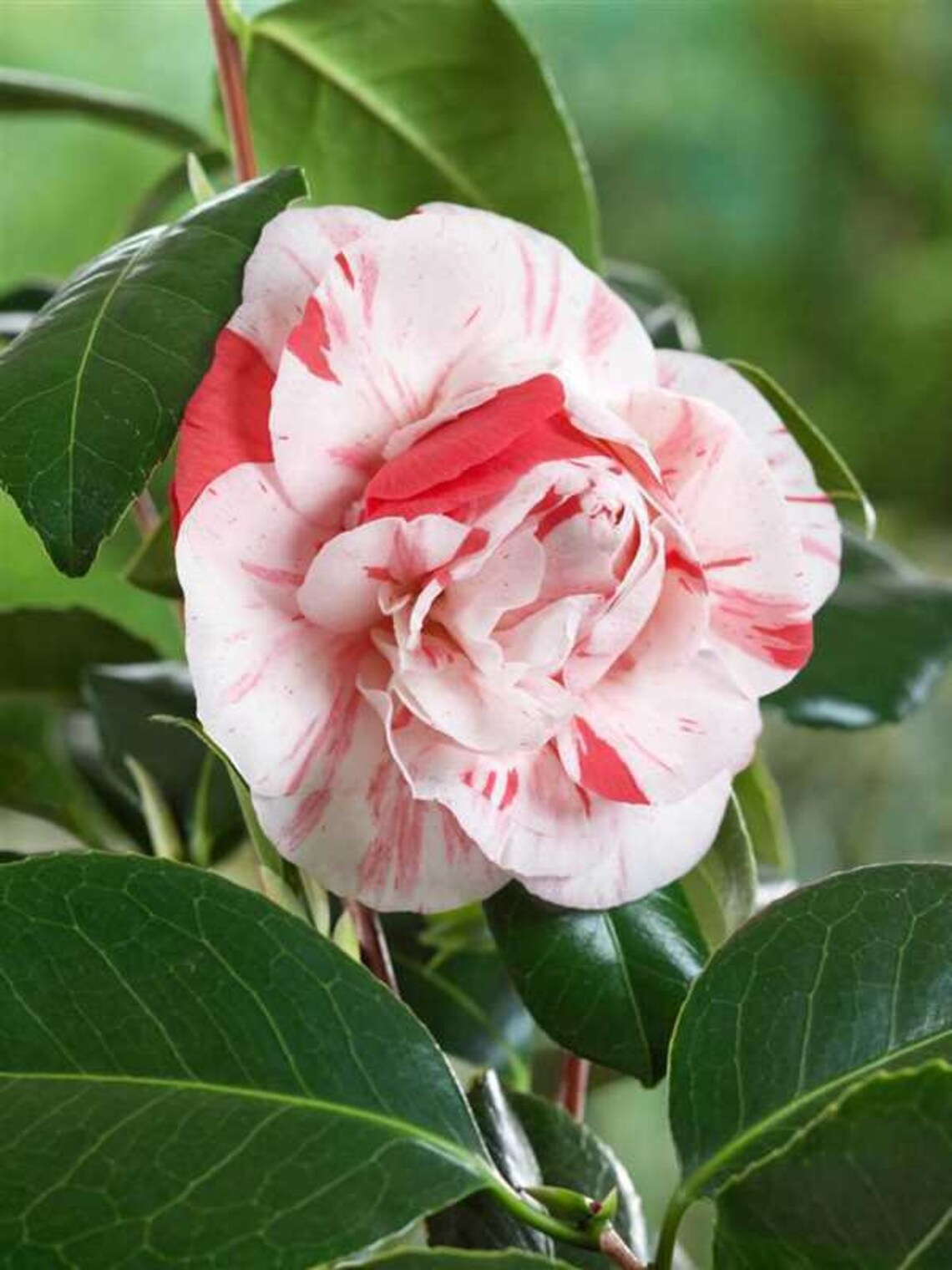
‘April Dawn’: Reliably hardy in zone 6, this variety has double white flowers streaked with pink.
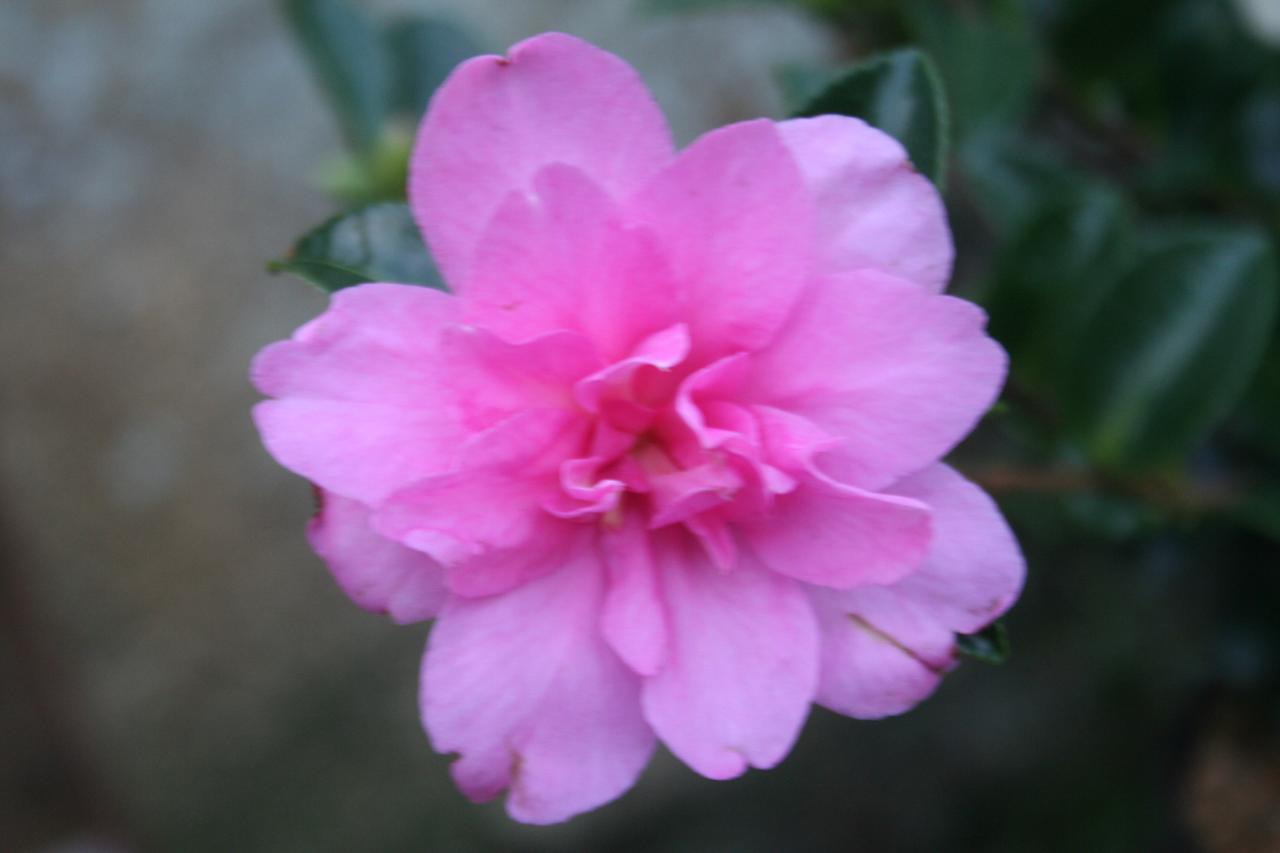
‘Elfin Rose’: This cultivar has pale pink double blooms that appear in October and November.
‘Fragrant Pink’: This variety has small pink flower clusters with a sweet fragrance that is especially obvious on warm winter days.
‘Francis Eugene Phillips‘: This popular cultivar has highly ornamental fringed foliage and ruffled pink flowers edged in white.
‘Yuletide’: This plant features red single blooms on a compact, four-foot-tall shrub.
SOURCE: THE SPRUCE



:max_bytes(150000):strip_icc():format(webp)/camellia-flowers-1316021-5-93d4ac57872e466f8d9834ac1d996503.jpg)
:max_bytes(150000):strip_icc():format(webp)/camellia-flowers-1316021-8-047500c26b81426c9633f086623894df.jpg)


 Sew Colorful