New Jersey State Mammal: Horse

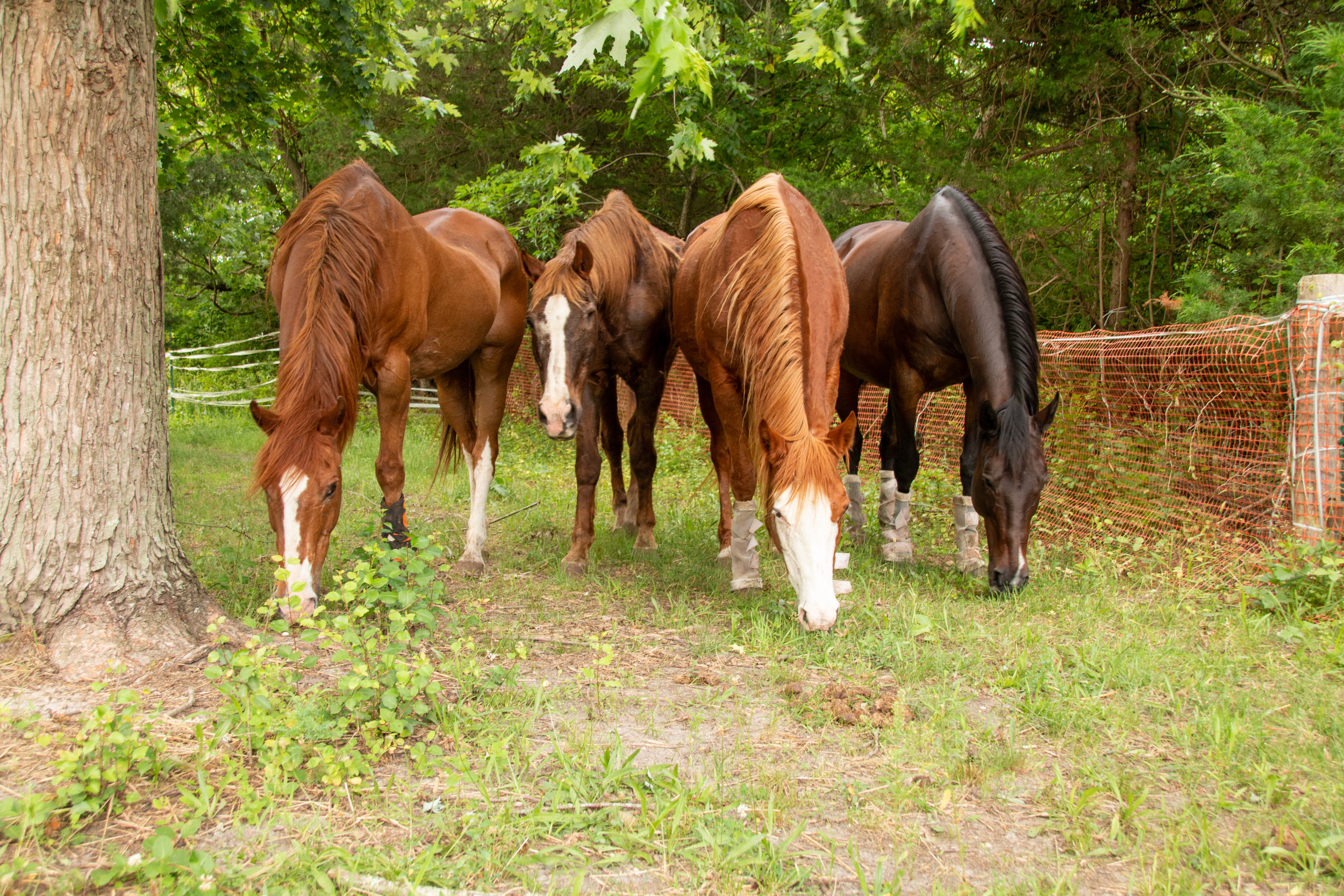
I couldn’t find a specific breed of horse for New Jersey, just the general term “horse” due to its importance in agriculture and economy.  So, I decided to focus on New Jersey Horse Rescue.

South Jersey Horse Rescue is a 501c3 non-profit horse rescue and rehabilitation facility.  Our mission is to provide a loving sanctuary to abandoned, neglected, abused, and slaughter bound horses. 

Donations pay for food, medicine, and veterinary services. We also use donations to buy horses at auction that would otherwise be sold to kill brokers, people who buy horses to sell them for meat in Mexico and Canada. About 90% of the horses that go through the slaughter lot are in perfect health.

What We Do

We evaluate and rehabilitate then re-home the horses we rescue. We do have some permanent residents, but strive to adopt out as many animals as possible to loving forever homes. We are 100% volunteer run and operate solely on donations.

We have been chosen for Secret Santa powered by our friends at Special Horses, Inc.

Please see link and donate to our rescue horses’ letters to Santa

https://specialhorses.company.site/South-Jersey-Horse-Rescue-c26120097

The rescue may have to close and our equine residents need your help!

Want to help us save the rescue? We are raising money to buy our property from the bank. We have made a great deal of progress with the help of our supporters just like you! We have had slow and steady negotiations. Fingers crossed we will be able to work this out and buy the property. We hope to have good news soon for those of you who have volunteered, donated, and sent well wishes. Any bit of support means the world to those who are here daily caring for our lovely rescues. We will do anything to keep providing a safe landing for those animals who need us most!

We have been at this property doing our life saving work as a rescue for over 14 years. Our fearless leader Ellen and her trusty staff have helped adopt and rehome over 400 horses, ponies, and donkeys. We are still rescuing animals and will do anything it takes to save our beloved rescue.

WEBSITE: https://www.southjerseyhorserescue.com/

Nevada State Mammal” Big Horn Sheep

The bighorn sheep is a majestic species of animal native to western North America. They are considered a “big game” trophy in many parts of the world and have been hunted by humans for their meat and fur since ancient times. Bighorn sheep are not only the largest sheep in North America, they are also wild. In this article, you’ll learn 8 facts about bighorn sheep.

8 Facts about bighorn sheep

These magnificent mammals are some of the first animals that come to mind when we think of the North American West and they were once a major source of food and income for humans living in areas where they reside.

1 The bighorn sheep is one of two wild sheep species in North America with large horns

Bighorn sheep are not the only wild sheep in North America with large horns. The other is the Dall sheep, which is found in Alaska and Canada. But unlike the Dall sheep, bighorn sheep are found throughout western North America, with populations in the US states of Arizona, California, Colorado, New Mexico, Oregon, Utah, and Washington as well as the Canadian provinces of Alberta, British Columbia, and Saskatchewan.

2 The bighorn sheep has 3 subspecies

The Rocky Mountain bighorn sheep, the desert bighorn sheep, and the Sierra Nevada bighorn sheep are each a part of the single bighorn sheep subspecies. Each subspecies has adaptations to help it survive, such as fur color and terrain.

The Rocky Mountain bighorn sheep is the largest of the 3 subspecies and has adaptations to survive its harsh surroundings. These sheep have large hooves that help them traverse rocky, mountainous terrain with ease. Additionally, they are able to eat plants found in these areas, such as grasses and shrubs. As a result, they have longer coats to help insulate them from the cold.

The desert bighorn sheep has adaptations to survive in its hot and arid climate. These sheep have shorter, coarser fur that can withstand intense heat, as well as large noses to help them avoid breathing in dust. They also tend to travel only at night when it is cool and avoid areas where there is a lot of vegetation.

The Sierra Nevada bighorn sheep has adaptations to survive its high, dry climate. These sheep have longer fur that helps insulate them from the cold, as well as large hooves that can help them traverse challenging terrain. Additionally, these sheep are also able to eat plants in their environments, such as fungi and woody shrubs.

3 Rams and ewes have differently shaped horns

Rams are male sheep and ewes are female sheep. A rams’ horns are thicker and curve forward and ewes have more slender horns that stick straight out from their heads. This difference is important for the sheep population to survive because rams use their horns as a defense against predators and competition from other males, as well as for fighting and courting females.

4 Bighorn sheep can climb steep cliffs without much effort

Bighorn sheep are known for their ability to climb steep cliffs with relative ease. They have strong neck muscles, and their hooves are able to cling to even the roughest of surfaces. These traits help them find food during certain times of the year when food may be scarce, such as in the winter months or in more arid regions. This adaptation also helps them to evade predators.

5 Bighorn sheep have 4-part stomachs

Bighorn sheep are ruminants, meaning that they have a four-part stomach. After their first meal, which usually consists of grass and other plants, bighorn sheep chew their cud – or regurgitated food – before digesting it again. Their digestive system is specially designed to let them eat and process fiber-rich vegetation from harsh environments.

6 Rams spend most of their lives in a bachelor flock

Rams leave their mother’s ewe group a few years after being born to go join a herd of rams. This is known as a bachelor flock. This bachelor herd can be anywhere from two rams to over 10 and they only leave the herd during mating season. The rams spend most of their lives in this bachelor flock.

7 Rams fight over who is allowed to mate with the ewes

It can be hard for rams younger than 7 or 8 years to mate. Bighorn sheep have a hierarchy that favors older rams with bigger horns, making it difficult for younger rams to find a mate. During the mating season, known as the rut, rams will compete against each other for dominance and the right to mate with ewes. This competition can take up to a month, with rams fighting aggressively using their horns to battle it out. Only one ram will be selected to mate with the ewes, and after mating, the victorious rams will return to their bachelor herds.

Despite these challenges, many younger rams are able to successfully find a mate during the rut. Ultimately, it all comes down to size and dominance – larger and older rams are more likely to win in the mating battles and are therefore more likely to find a mate. However, even small rams can get lucky if they manage to outsmart or intimidate their larger competitors.

8 The skulls of bighorn sheep are made for head-to-head combat that males engage in

The bighorn sheep is a species of large, sturdy-looking mammal with thick fur and huge curved horns. These horns can measure up to three feet in length, allowing the bighorns to engage in head-to-head combat with one another. The skulls of the males are particularly suited for this; they have thick bones that can withstand the repeated battering that occurs during fights. This is an important aspect of bighorn sheep adaptation, as competition for females is fierce among males.

SOURCE: WILDLIFEINFORMER.COM

Montana State Mammal: Grizzly Bear

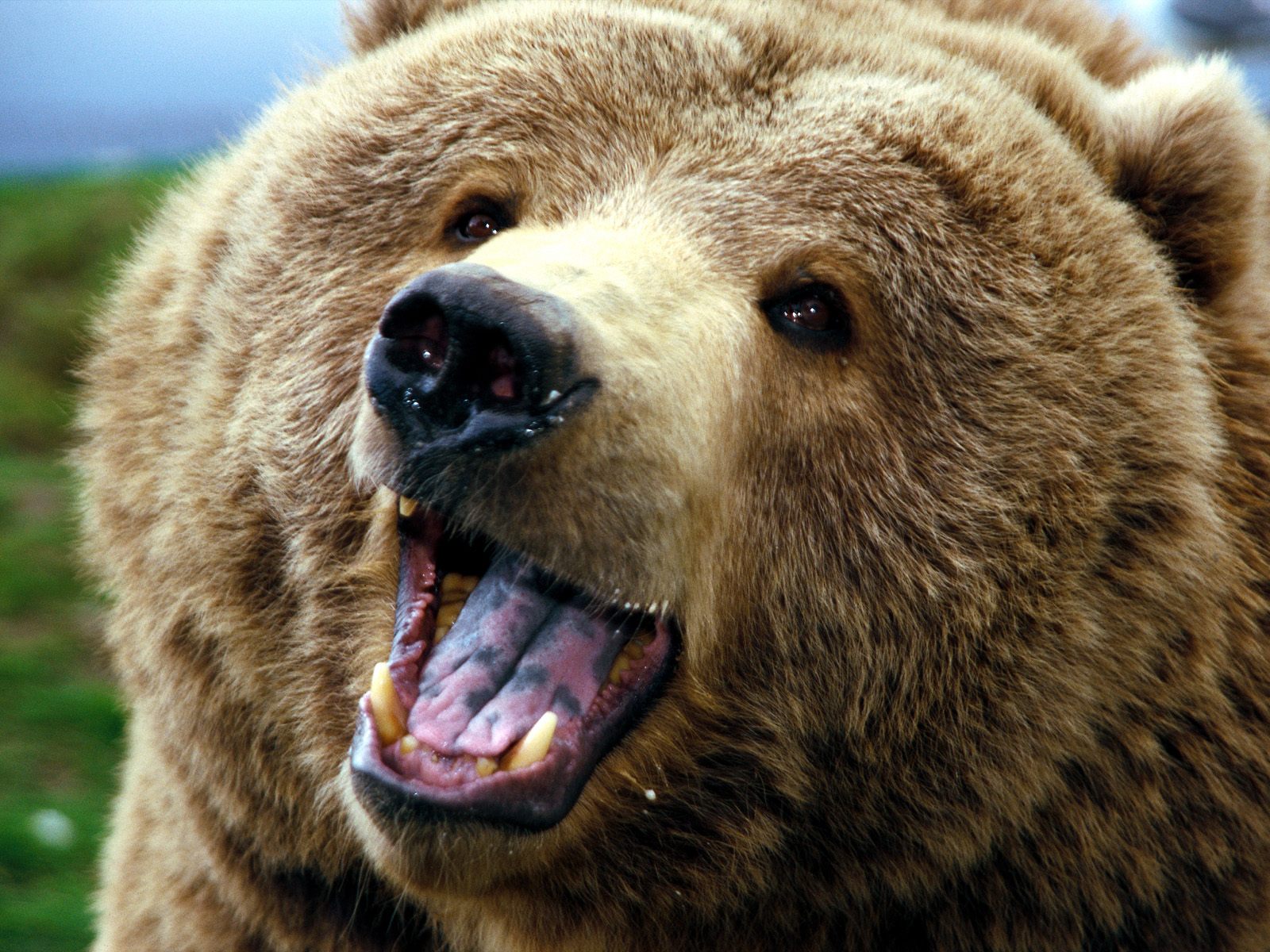
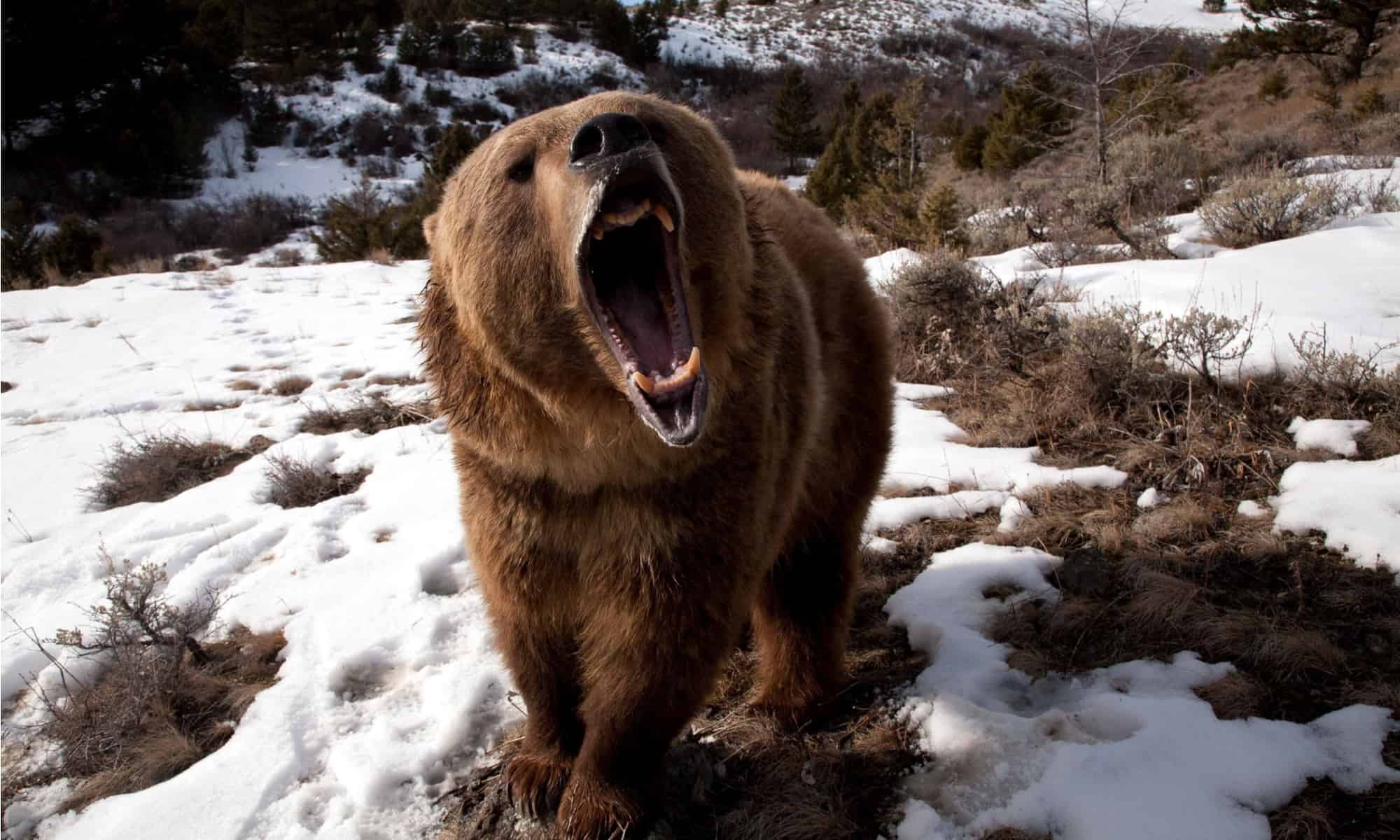
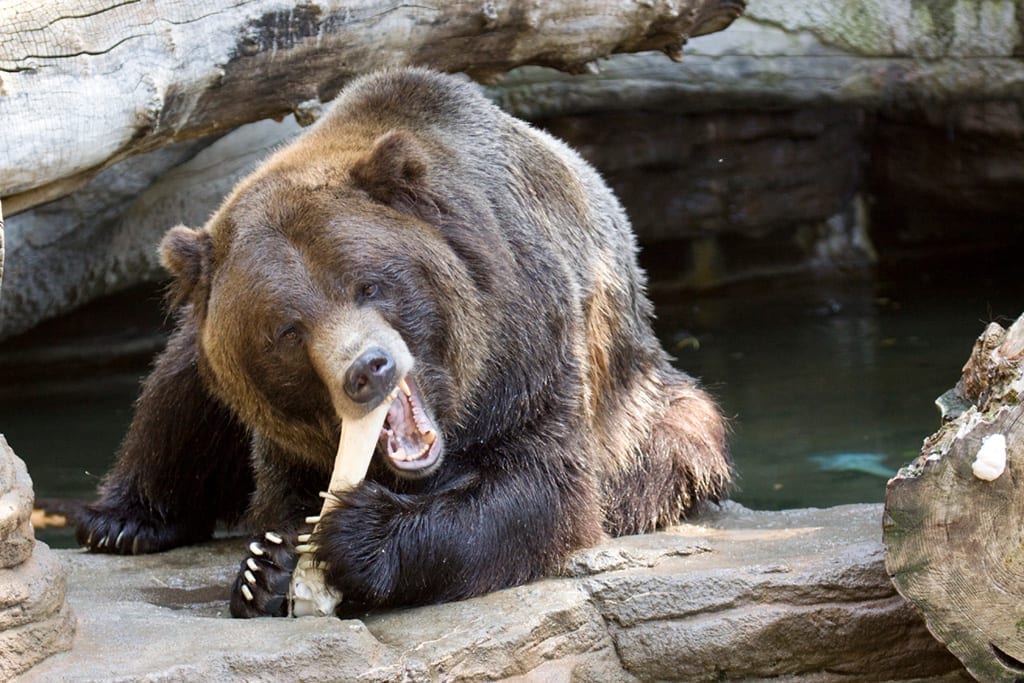
Grizzly bears (Ursus arctos horribilis) are a subspecies of the brown bear (Ursus arctos) found in inland Northern America. They are famous for their large size, weighing up to 360kg, and their often aggressive nature. They are apex predators, hunting large prey such as caribou, but they are also very opportunistic. They will eat carrion (already dead animals), salmon, berries and even clams. Their strong front legs are adapted both for running fast to catch prey, and for digging and foraging. They are primarily solitary, except for mothers with cubs. However, as many as 20 individuals can come together to hunt salmon that are moving upstream to spawn. Females live for around 26 years, which is longer than males who live for around 22 years on average.

Interesting Grizzly Bear Facts

1 They are a subspecies of the brown bear.

Grizzly bears are considered a subspecies of the brown bear (Ursus arctos). The main difference between them is in diet and geography. Brown bears are mainly coastal with access to marine foods, whereas grizzlies live further inland.

2 They are called “grizzly” both for their fur and their nature.

Their hair is grizzled, meaning silver tipped. However, it is believed they originally got their name after the word “grisly” meaning gruesome or scary. Their scientific classification ‘Ursus arctos horribilis‘ was also named after their ‘horrifying’ reputation by a naturalist in 1815.

3 They are apex predators.

This means they are at the top of the food chain. They hunt large mammals, such as moose, caribou, and bison, using their speed and strength to catch them.

4 Grizzly bears are also very opportunistic eaters.

They’ll also eat carrion (things that are already dead), forage for berries, dig into sand for razor clams, eat grass, and go fishing in rivers.

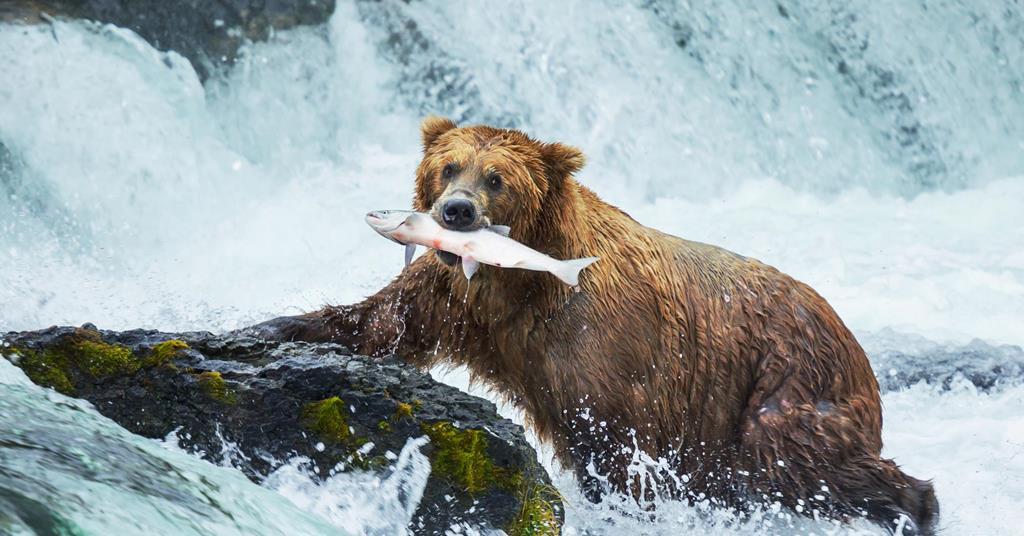
5 They come together to hunt salmon.

Every year grizzlies gather to fish for the salmon that are swimming upstream to spawn. As many as 20 can be seen in one spot, where they often catch salmon leaping out of the water with their paws.

6 They are huge.

Average length of grizzly bears is around 2 meters, with females weighing 130-180kg and males 180-360kg. However, some huge male grizzlies have been reported to stand as high as 3 meters (9.8 ft) and weighing up to 680kg!

7 They have a distinctive hump on their back.

This hump is actually a large muscle which controls their forearms.

8 Grizzlies claws are as long as human fingers.

They are up to 4 inches long.

9 They can run at 30 miles an hour.

Despite their large size, they can move fast. The large hump on their shoulders powers their fast-moving front legs. This is why they tell you if you bump into a grizzly, don’t try and run from it!

10 They hibernate for 5-7 months every year.

They’re well known for their hibernating habits. Bears will dig large dens which they curl up in to sleep for the coldest months of the year. However, bears in sunny California don’t hibernate as it’s not needed.

11 They give birth while hibernating.

Female grizzly bears give birth while hibernating. The grizzly cubs will stay in the den drinking milk until the end of winter.

12 They don’t become pregnant straight away.

Via a process of “delayed implantation”, embryos are stored until the mother has gained enough weight for hibernation.

13 They eat a lot of food before they hibernate.

They don’t eat while they’re hibernating, so they eat as much food as possible beforehand. Bears can gain as much as 400lb in weight before going into hibernation.

14 Grizzly bears don’t pee or poop during hibernation.

Throughout the whole of the 5-7 months they don’t go to the bathroom. They are actually able to turn excess urea (a component of urine) back into protein, meaning they actually gain muscle while hibernating.

15 Mama bears are fierce.

Mothers with young cubs will be very protective of their young, including fighting off larger male bears.

16 They will nurse their cubs for up to 3 years.

A mother will keep her cubs with her for as many as three years.

17 They need a lot of space.

Grizzlies in general range over large areas, as much as 1500 square km (~600 square miles). Males have large territories, which females roam through.

18 They are more dangerous to humans than sharks.

While sharks get all the media attention, bear attacks on humans are actually more common and numbers are actually on the rise. However, grizzly bears normally avoid contact with people and rarely actively hunt humans. Many of these attacks occur when people accidentally stumble upon mother bears with cubs. The rise in attacks is thought to be due to growing human use of grizzly bear habitat, and ‘problem bears’ who have associated humans with having potential ‘food’ near to them.

19 Grizzlies and wolves are competitors.

In places where the two overlap, like Yellowstone Park, they often compete fiercely over food.

20 They are a conservation success story.

Human expansion into grizzly habitat led to huge numbers in their decline, however after they were declared protected by the law in the USA, their numbers have bounced back.

SOURCE: FACTANIMAL.COM

Missouri State Mammal: Missouri Mule

On May 31, 1995, Governor Mel Carnahan signed a bill designating the Missouri Mule as the official state animal. The mule is a hybrid animal, the offspring of a mare (female horse) and a jack (male donkey). The mule was introduced to the state in the 1820s and quickly became popular with farmers and settlers because of its strength and hardy nature. It was an appropriate choice for state animal as it reflects Missouri’s history as a large rural community, and as the “gateway to the West” the state was frequently the location where immigrants bought and filled the wagons – often pulled by mules – that would take them westward.

The high demand for the hardy animal prompted Missouri breeders to develop a larger draft mule. For decades, Missouri was the nation’s premier mule producer. At one time forty-five percent of Missouri farmers were involved in the use or breeding of mules. The average farmer’s income at the turn of the century was around $700 a year. A pair of mule foals could be sold for $500 at this time so not only were they strong workers, but breeding mules was a lucrative side business for many farmers. Missourians marketed the mule to the Cotton Belt and to the lead, coal and logging industries. In addition, the Missouri mule played a critical role during both World Wars in moving troops and supplies. Eventually new technology diminished the mule’s importance and by 1940 the tractor had largely replaced the mule on the family farm.

The prestigious term, Missouri Mule, was said to have been coined at the 1904 World’s Fair in St. Louis when locally bred animals swept the competition in the six-mule wagon team. More than 1,000 mules were exhibited at the 1904 Fair from numerous states.

Associated with strength, endurance and honesty, the Missouri Mule is a symbol of the rich agricultural beginnings of the Show-me State. Today they are primarily used for recreation, although some are still used to work farms and forests.

Minnesota State Mammal: Gray Wolf

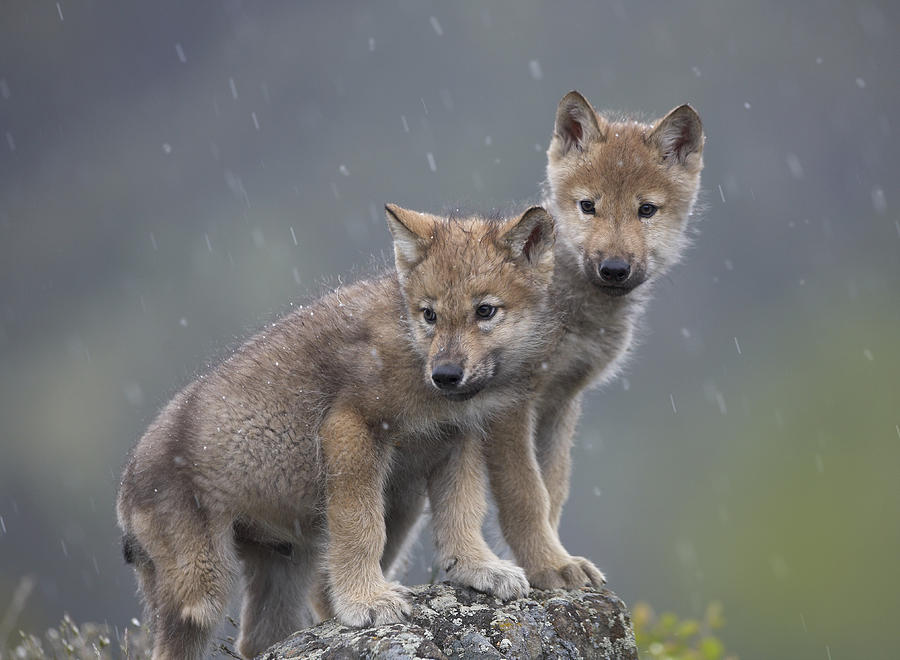
The Grey Wolf (Canis Lupus), also known as the ‘Timber Wolf’ is the largest of the wild dog family. Grey Wolves were once in abundance and distributed over North America, Eurasia and the Middle East. However, because of human-related activity such as destruction of habitat and excessive hunting, Grey Wolves now only occupy a fraction of their former range.

The Grey Wolf is listed as an endangered species under the 1973 Endangered Species Act as they continue to be hunted in many areas of the world as a perceived threat to livestock, humans and also for sport. As extremely adaptable animals, Grey Wolves generally live in mountains, temperate forests and grasslands.

Grey Wolf Characteristics

Grey Wolves have a grey coat (hence their name) with interspersed yellow and pepper colored flicks which seep through from the base of their thick fur. Their coat has a kind of ‘grizzled’ look about it. Adult Grey Wolves weigh around 75 – 125 pounds. Male Grey Wolves are larger than the females and can even grow to weigh as much as 175 pounds in some cases. Grey Wolves stand between 27- 32 inches at the shoulder.

Wolves can appear much larger than they already are, this is because of their long fur. In winter when their fur is fully grown, their fur can be as long as 2 – 2.5 inches on their backs and sides. The hairs in their mane can be as long as 4 – 5 inches long and when stood upright, this makes them appear taller. The length of the Grey Wolf varies between 50 and 70 inches long from nose tip to tail tip. A third of this length is the length of its tail.

Compared to a large dog, a wolf has a narrower chest and longer legs. Because their chests are narrow, their left and right footprints are closer together than those of a dog’s. Grey Wolves have very strong jaws. Wolves have 42 teeth altogether. These consist of: 12 incisors, 4 canines, 16 pre-molars and 10 carnassials and molars. A wolf’s canine teeth can be as long as 1 inch long. A wolf’s teeth are extremely sharp, strong and slightly curved. This enables them to grasp their prey in their teeth and chew down to the soft marrow in the bones. It also helps the wolf to eat nearly all of its prey, leaving very little waste.

Wolf paws are able to traverse easily through a wide variety of terrains, especially snow. There is a slight webbing between each toe, which allows wolves to move over snow more easily than comparatively hampered prey. Wolves are digitigrades, so the relative largeness of their feet helps to better distribute their weight on snowy surfaces. The front paws are larger than the hind paws and feature a fifth digit, a dew claw, (a claw that grows higher on the leg so that, when the animal is standing, it does not make contact with the ground) that is absent on hind paws. Bristled hairs and blunt claws enhance grip on slippery surfaces, and special blood vessels keep paw pads from freezing.

Grey Wolf Population

Today, there are over 300 wolves in Yellowstone Park and over 500 in Idaho. The reintroduction of wolves is still in ongoing debate and is sometimes heated about already introduced wolves and the possibility of reintroducing more. Through negotiations between livestock ranchers and Defenders of Wildlife, the reintroduction of wolves has been a great success and number recovery goals have been met. However, the reintroduction still provides a sharp divide between industry and environmentalist.

Grey Wolf Reproduction

Wolves mate in January to March. The female wolfs gestation period is 63 days. An average litter is 4 to 7 pups. At birth, wolf pups tend to have darker fur and blue eyes. Their eyes will change to a yellow-gold or orange color when the pups are 8 – 16 weeks old. Though extremely unusual, it is possible for an adult wolf to retain its blue-colored eyes. Wolves can live to be between 8 – 13 years. In the wild, Grey Wolves live about 6 to 8 years and sometimes up to 13 years. In zoos, Grey Wolves may live up to 17 years.

Grey Wolf Diet

Grey wolves are carnivores. Their natural diet is solely meat and they often prey on animals larger than they are including – deer, moose, caribou, elk, bison and musk-oxen as well small animals such as beaver, hares and other small rodents.

Grey Wolf Behavior

Grey wolves live in packs, which have complex social structures that include the breeding adult pair (the alpha male and female) and their offspring. A hierarchy of dominant and subordinate animals within the pack help it to function as a unit. Wolves communicate by scent-marking, vocalizing (including howling), facial expressions and body postures.

Grey Wolf Range

Today the range of the Grey Wolf has been reduced to the following areas of the United States: Alaska, Idaho, Michigan, Minnesota, Montana, Wisconsin and Wyoming. Grey Wolves can also be found in Alaska, Canada, as well as Russia and a few eastern European countries. Mexican wolves have been reintroduced in New Mexico and Arizona.

Grey Wolf Habitat

Historically, Grey wolves have the largest range of any land mammal, other than people. Grey wolves have lived in all habitats in the Northern Hemisphere except for tropical forest. Grey wolves tend to occupy forests, tundra and grassy plains as well as deserts and mountains.

SOURCE: ANIMALCORNER.ORG

Michigan State Mammal: White Tailed Deer

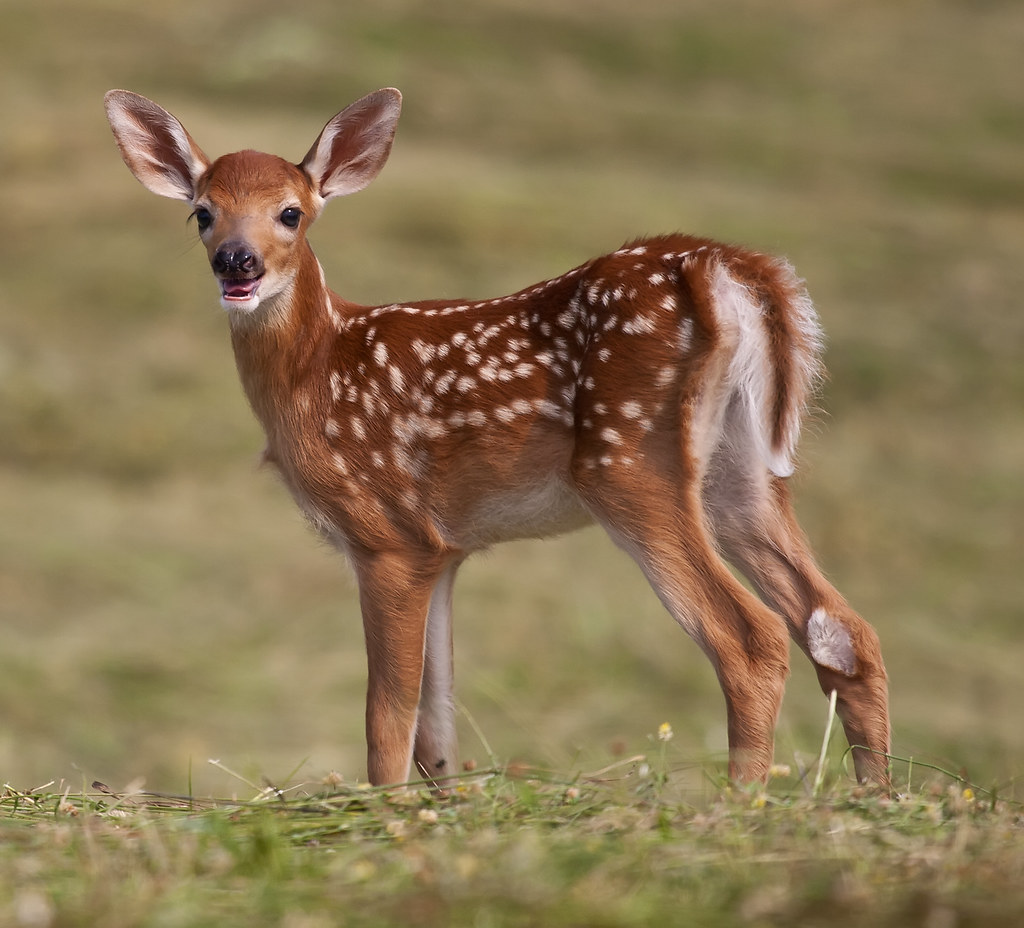
Fuzzy, shy, and downright adorable, white-tailed deer are among the most abundant creatures in America’s woodlands. Adults are characterized by their reddish-brown coats, which fade to a grayer brown from summer to winter. They have excellent eyesight and hearing, and are even good enough swimmers to escape predators by crossing rivers or lakes with relative ease.

From how they got their name to the story behind their booming population in the United States, explore these 15 wonderful facts about white-tailed deer.

1 White-Tailed Deer Are Found in Central and North America

Even though they are native to North America, white-tailed deer have extended their range through Central America to Bolivia. Still, the vast majority live in southern Canada and throughout the mainland United States. They prefer open woodland but can also be found on the outskirts of developed urban areas and even near agricultural lands and cactus-filled deserts. An ideal habitat for a white-tailed deer consists of dense thickets of shrubs in which to hide and feed.

2 They Are the Most Common Deer Species in North America

The IUCN estimates the population of white-tailed deer in the United States to number over 11 million, and about a third live in the state of Texas. The white-tailed deer range has pushed farther up into Canada due to habitat loss, and there are believed to be half a million of them there already. Numbers in North America are stable and abundant, but in Mexico, Central America, and South America, most populations are declining.

3 Only Some Individuals Migrate

Experts believe that populations of white-tailed deer who live in low-quality home ranges are more likely to migrate to different locations in the summer. In contrast, those who are lucky enough to live in regions with better weather and more food abundance typically stay put throughout the year. Researchers studying white-tailed deer in Washington state have found that, surprisingly, survival rates for both migrating and non-migrating groups are nearly identical. In fact, annual survival rates for migrating deer were slightly higher, at 0.85 compared to non-migratory individuals at 0.84.

4 White-Tailed Deer Grazing Can Influence the Ecosystem

Since white-tailed deer are so abundant, their grazing can significantly affect the composition of plants within their habitats. Throughout the northern United States, tree seedling abundance decreases when white-tailed deer density grows above 5.8 individuals per square kilometer (0.38 square miles) in most forests. Introduced or non-native plant species, however, increase in areas with higher deer density. As ruminant animals, they typically feed on what’s most available to them, their four-chambered stomachs allowing them to digest anything from leaves, twigs, moss, and even fungi. They also consume the buds of maple trees, poplar trees, birch trees, and shrubs, switching to hardier plants and conifers in the winter when food becomes scarce.

5 They Often Live Alone

One would think that such a populous species would prefer to live in large groups, but the white-tailed deer is generally a solitary creature. They tend to live alone, especially during the summer months, and males and females only interact during mating season. Most of the time, if you see multiple deer together, it is either a female (called a “doe”) and her babies (called “fawns”) or a small group of young adult males (called “bucks”). 

6 Disney’s Bambi Was Modeled After a White-Tailed Deer

According to the New England Historical Society, one of Disney’s earliest animators helped bring white-tailed deer to the big screen in 1942. Walt Disney himself hired Maurice Day for the film, and the artist would reportedly settle for nothing less than a white-tailed deer from his home state of Maine as the model for the young fawn. As a result, two 4-month-old deer were transported from Maine to Hollywood after a four-day train ride across the country to model Bambi, and the rest is cinematic history.

7 They Live Three Times Longer in Captivity Than in the Wild

Most wild white-tailed deer live to about two or three years old, and most adults don’t make it past 10. On the other hand, deer held in captivity can live up to three times longer than their wild counterparts, something scientists believe has to do specifically with the difference in diet. Not only do captive white-tailed deer deal with significantly less stress because they aren’t required to find their own food, but studies have found that their diets contain more protein and less carbon.

8 Only Bucks Grow Antlers

Female white-tailed deer don’t have antlers, but males begin growing them at just a few months old. Made of a combination of bone and keratin (the same material that makes up human hair and fingernails), antlers are used to attract females and to spar against other males to assert dominance. It has been well-documented that both body size and antler size are positively associated with annual breeding success among males, and older males with larger antlers are more likely to breed than those with smaller ones. Males shed their antlers every year, a completely natural process caused by a drop in testosterone after the end of mating season.

9 White-Tailed Deer Are Important Prey Animals for Large Predators

Although humans remain the largest predator for white-tailed deer, they are also preyed on by wolves, mountain lions, bears, jaguars, and coyotes. This predator-prey relationship is especially important to the local food chain and can leave more room for the survival of stronger, healthier animals, and also help control the spread of disease through population control.

10 They Are the Smallest of North America’s Deer Species

With an average height between 31 and 39 inches at the shoulders, white-tailed deer are smaller than other North American species. While white-tailed deer and mule deer are the only species native to the United States, there are also caribou, moose (the largest member of the deer family), brocket deer, and elk that now call North America home.

11 They Can Run 30 Miles per Hour and Jump Higher Than 8 Feet

White-tailed deer have been recorded bounding speeds of up to 30 miles per hour through the forest, and researchers have found that their jumping abilities are even more impressive. A study in the Journal of Wildlife Management found that wild deer could jump fences just under 8 feet tall. After the experiment, they surveyed over 150 wildlife biologists who routinely observe deer close to fences and found at least six who said they had witnessed a deer jumping a 7.87-foot fence.

12 White-Tailed Deer Are Known for Their Grunts

From snorts to bleats, white-tailed does and fawns make a variety of sounds. Males, however, are especially known for their loud grunts, which they make to show their dominance to other bucks nearby. Adults and offspring will also make soft grunts to communicate with each other, but they are often much longer and quieter than a buck grunt. These aggressive buck grunts are strictly social, used to announce their presence in the area and send a message to other males.

13 They Can Weigh Up to 300 Pounds

Despite being the smallest of the North American deer, white-tailed deer can still hold their own in terms of weight. A mature buck may weigh anywhere from 200 to 300 pounds, while females show much more variety in size, averaging 90 to 200 pounds.

14 White-Tails Make Up Most of the United States Hunting Industry

Each year, the National Deer Association reports on the hunting status of the North American population of white-tailed deer. In 2018, deer harvest went up in the states of Kentucky, Missouri, New England, New York, and Wisconsin. The year 2017 saw a total of 2,878,998 bucks killed throughout the United States, up 2% from the previous year. Texas, which also holds the highest concentration of white-tailed deer in the country, shot the most bucks (506,809), and Rhode Island shot the least (782).

15 They’re Named for Their White Tails

True to its name, the white-tailed deer has a white tail, though only on the underside; the top of its tail maintains the same light brown color as the rest of its body. When a white-tailed deer is alarmed or senses danger, it flips its tail up to display the white underside in a motion called “flagging.” Apart from being white on the bottom, their tails are also larger and broader than other deer species.

SOURCE: TREEHUGGER.COM

Massachusetts State Mammal: Boston Terrier

From: THESPRUCEPETS:

The Boston terrier is a small non-sporting dog breed from the United States bred to serve as a companion dog. Nicknamed the “American Gentleman,” these well-mannered, bright, affectionate canines make wonderful four-legged friends and family dogs. With their short, smooth, black and white coat that’s patterned to resemble a tuxedo jacket, the Boston terrier is undeniably adorable and can easily be described as dapper.

Boston terriers typically like to be around their humans as much as possible and are eager to please. They tend to get along with just about everyone, including young children who know not to be too rough, other household dogs, and dog-friendly cats. With their friendly, lively, and active personalities, it’s no wonder that the Boston terrier is such a popular breed.

Boston terriers typically have happy, friendly, and affectionate temperaments. Their love of play and comical nature also help to mold their personalities. They’re typically good around people, including kids and strangers, and they often get along well with other pets.

Despite their small size, Boston terriers are active, high-energy canines that tend to do well in dog sports such as flyball and agility. These intelligent dogs can easily be taught tricks, but are sometimes stubborn, so don’t expect your Boston terrier to obey every time you give a command.

This is a brachycephalic breed, meaning that the face is flat, with a somewhat “squashed” appearance. Keep in mind, however, that like other breeds with this facial structure, Bostons can overheat easily and should be allowed to rest when needed.

Surprisingly, the friendly, playful, and sometimes silly Boston terrier is a descendant of dogs that were originally bred for pit fighting and other “blood sports” popular in 19th-century England. However, the Boston terrier today is generally non-aggressive towards humans, nor prone to fighting or aggression with other dogs. Most are outgoing and well-mannered with just about everyone.

The Boston terrier’s story began in the 1860s when a Boston man named William O’Brien purchased a bulldog-white English terrier mix from England named Judge. O’Brien ended up selling Judge to another Bostonian named Robert C. Hooper. Records refer to “Hooper’s Judge” as the father of the Boston terrier breed from which all Bostons descend. 

Judge was a muscular, tough, but fairly small dog, weighing in at around 30 pounds. His head was square, and his coat was dark brindle with a white stripe down his face. Judge was bred with a small, white, bulldog-type female, and that launched the selective breeding process. Breeders specifically were looking to create a small, friendly companion dog.

In 1891, the Boston Terrier Club of America was founded. And soon after in 1893, the American Kennel Club first recognized the breed. Since then, the Boston terrier has become quite popular throughout the United States. It’s Boston University’s official mascot, as well as the official dog for the state of Massachusetts. 

For the most part, Bostons are a fairly low-maintenance breed. They do require regular exercise, grooming, and training, like any dog, but in amounts that are lower than many other breeds. If left alone too often, however, or not provided with enough mental and physical stimulation, they can become destructive or develop annoying behaviors. Remember that your Boston terrier was bred to be a companion dog and wants to be with you as much as possible.

Exercise

Boston terriers are relatively energetic and should receive about an hour of exercise per day. A couple of daily walks, games of fetch, playing with puzzle toys, and running around in a secure area should suffice. Dog sports, such as agility and rally, can help to burn their mental and physical energy. The key is that Bostons prefer to be active with their humans. If you leave them to their own devices, they might become bored and develop problem behaviors, such as unwanted chewing. 

Moreover, due to the Boston’s flat face, the breed is prone to breathing issues. Discuss this with your vet, and know how to spot the signs of labored breathing during exercise.

SOURCE: THESPRUCEPETS.COM

Maryland State Bird: Baltimore Oriole

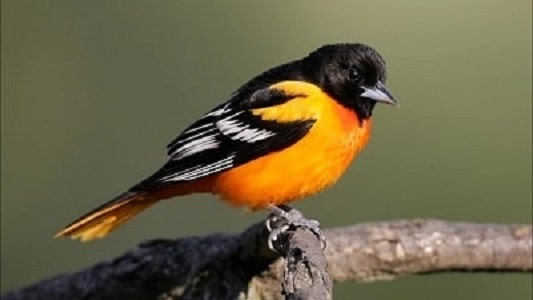
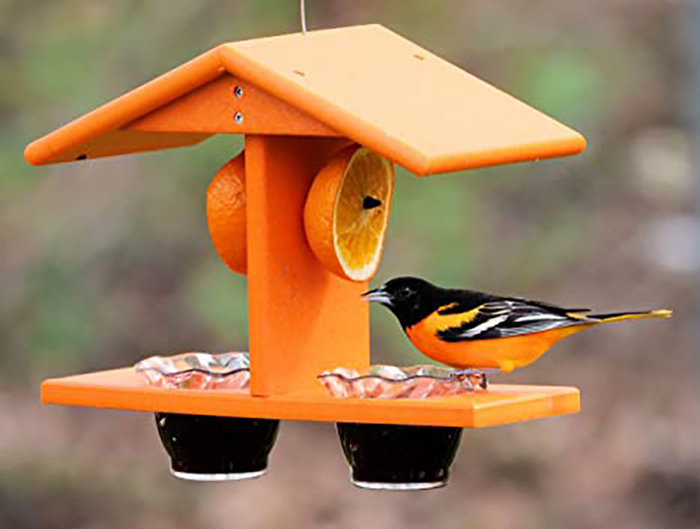
Baltimore Orioles measure 7 – 8 1/2 inches long. The male bird is black with orange underparts, rump, shoulders, and sides of the tail. His wings have 2 white wing bars. The female Baltimore Oriole looks quite different than the male. She is olive above, and yellowish below with 2 white wing bars. This particular Oriole bird is found east of the Rockies.

The breeding season begins in late April to early May. The males arrive 2 or 3 days before the females and begin claiming their territories. You’re likely to hear them singing from treetops in their effort to attract a mate. Their singing is almost constant until they mate with a female. Unlike the Northern Mockingbird though, these birds do not sing at night. Generally, any singing late in the season is from unmated or immature birds. Once the birds have found a mate they defend their territory and begin nesting.

The female selects a site for the nest, usually in a deciduous tree, often a tall one. Orioles prefer trees such as Elm, Cottonwood, or Maples to build their nest. The nest is typically located at the end of a branch, which provides some protection against predators. The female gathers materials for the nest, which can include plant, animal, and even human-made materials. This often includes grass, bark, hair, and twine. She may also use spider silk as a binding agent. The female weaves the nest, creating a small cup shape. She starts by weaving a loop around a twig. Then she weaves additional material, including long grasses and strips of bark, in and out of the loop. The weaving process can take as long as a week.

Once the basic structure is complete, the female lines the inside of the nest with soft materials, such as plant down, fur, or feathers, to provide a comfortable and warm environment for the eggs and chicks. The outside of the nest is often decorated with gray and white lichen, which helps to camouflage it against the tree. Nest can be anywhere from 6 to 90 feet above the ground.

While it’s quite common for them to return each year to the same territory, they will not use the same nest. They often take parts of the old nest to build a new one, so you may see them at the old nest site. Bird watchers will find the best viewing of the Baltimore Oriole’s nest when the leaves are off the trees. You’ll see them at the end of branches high in shade trees.

The preferred habitat of Orioles is in open woodlands of deciduous trees near parks, gardens, and suburban settings. In this tightly woven hanging nest, the female lays 3 to 6 pale blue with dark marks eggs. Incubation of the eggs is done by the female with the male always close by and watching. Incubation will last 12 to 14 days and the young birds will leave the nest in 12 to 14 days after hatching.

Baltimore Orioles nest only once each season and do not use birdhouses. Cowbirds have a difficult time laying eggs in the Oriole’s nest but still do. Orioles can tell the difference between their eggs and Cowbird’s eggs. Either the Oriole will eat the Cowbird’s eggs, or eject them from the nest.

The main diet of the Baltimore Oriole consists of insects, fruits, and flower nectar. At the feeding station orange halves or grape jelly placed in a shallow bowl will draw them in. Another option is by providing a sugar-water mixture. 1 part sugar to 4 parts water. No need to boil the sugar-water mixture. Replace often during hot weather.

Often we’re asked “What happened to our Oriole birds”? “They were here every day eating our oranges and grape jelly and now they’re gone”. The simple answer is that Orioles often disappear from feeders because they switch to a protein-rich diet while nesting and feeding their young to ensure healthy growth. This means they are hunting insects instead of visiting your feeders. They also may have started migrating south. Don’t worry, sometimes the adults will bring their young to the feeders once they’ve left the nest. So be prepared for a return after a 4-week absence.

Spring migration begins in April when male Baltimore Orioles begin to arrive at their breeding grounds roughly East of the Rockies. The winter migration to the South can begin as early as July, which is much earlier than most species. Still, you may see some Orioles well into September or a little later in their Southern range.

SOURCE: WILD-BIRD-WATCHING.COM

Maine State Mammal: Moose

The ereferencedesk.com has these 30 interesting facts about Moose:

Moose are the official state animal of Maine.

Male moose are called Bull Moose.

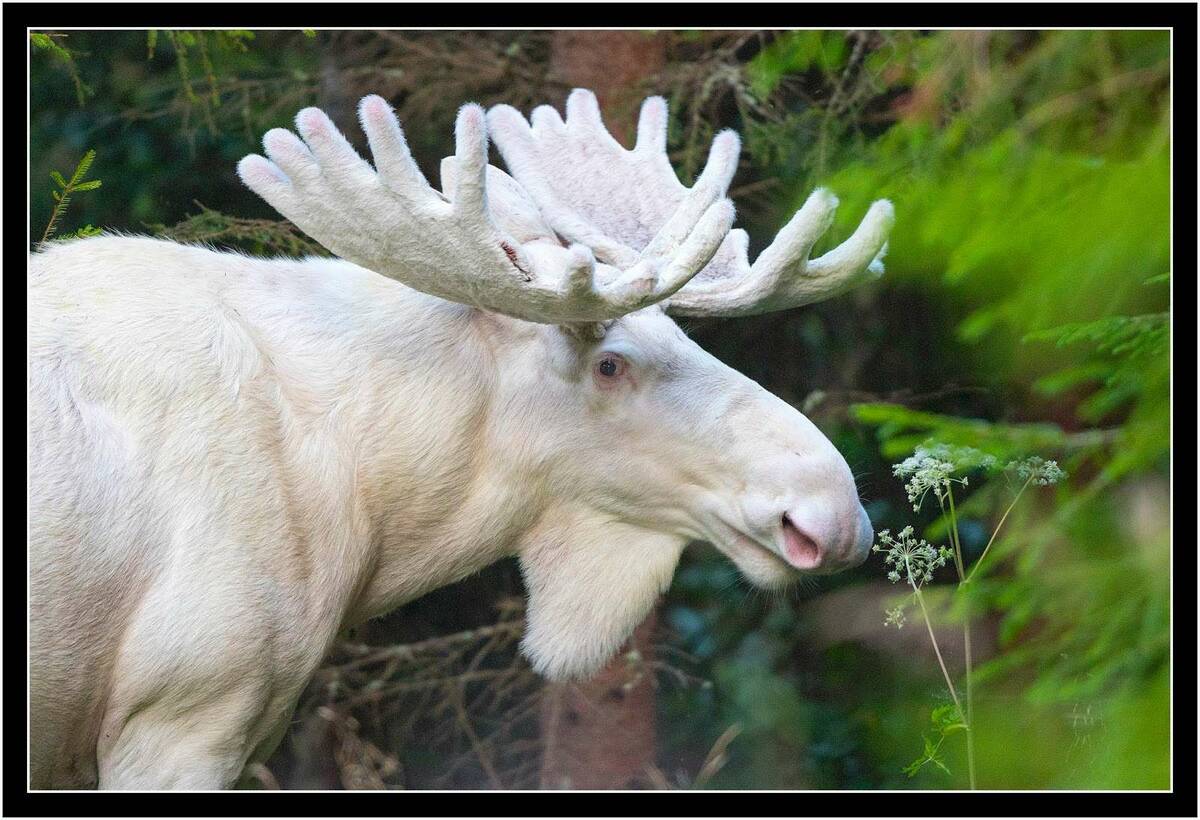
Only Bull Moose has antlers.

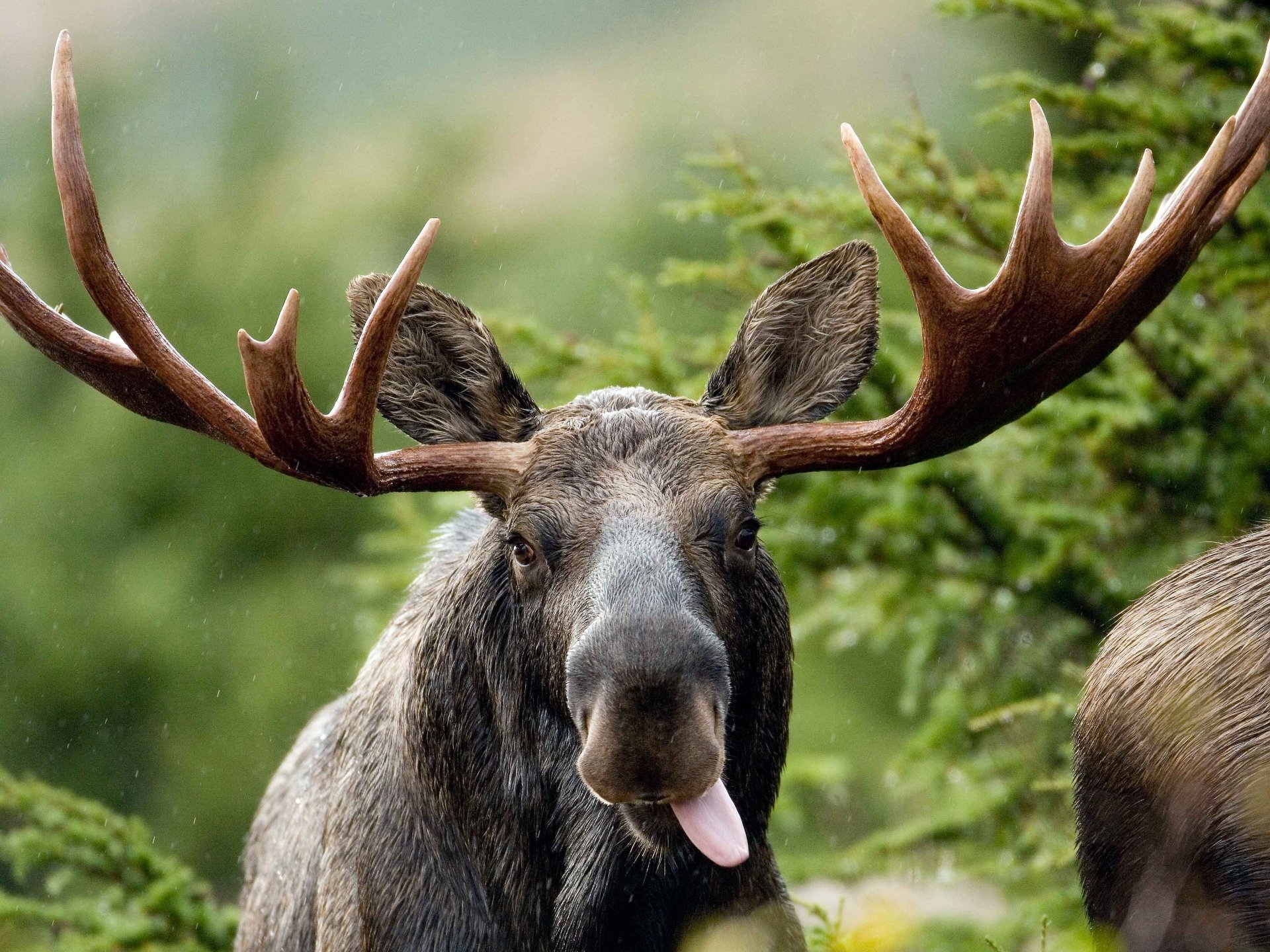
Bulls’ antlers can span up to 6 feet wide and weigh up to 90 lbs.

Bull Moose shed their antlers every winter and grows them back every spring.

Each year a moose grows bigger antlers than the year before.

Bull Moose grow antlers to impress cows during mating season and to express dominance in the pack.

Moose have the highest rate of bone formation growth; growing up to 1 inch a day.

During mating season Bull Moose are more aggressive.

Moose live for an average of 25 years and can weigh up to 1500 lbs.

Moose on average are 7 feet tall at the shoulders and 8.5 feet in length.

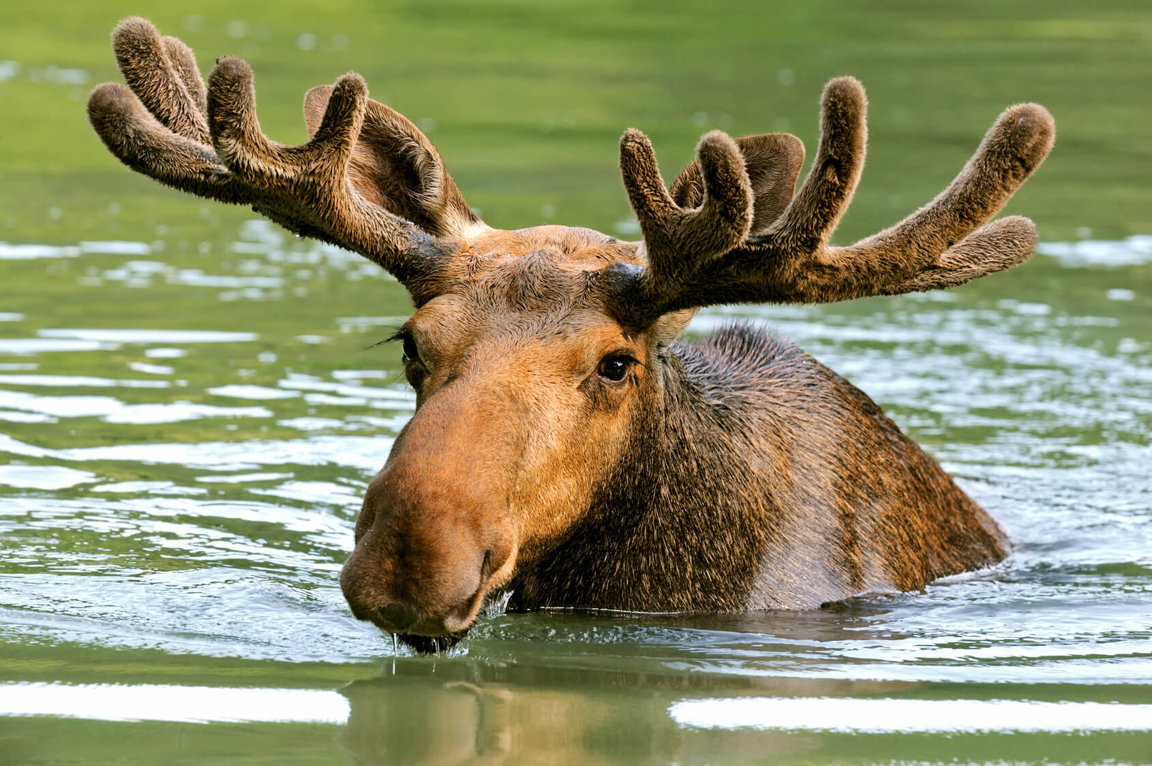
Moose are great swimmers and can swim up to 6 mph.

Moose can run up to 35 mph.

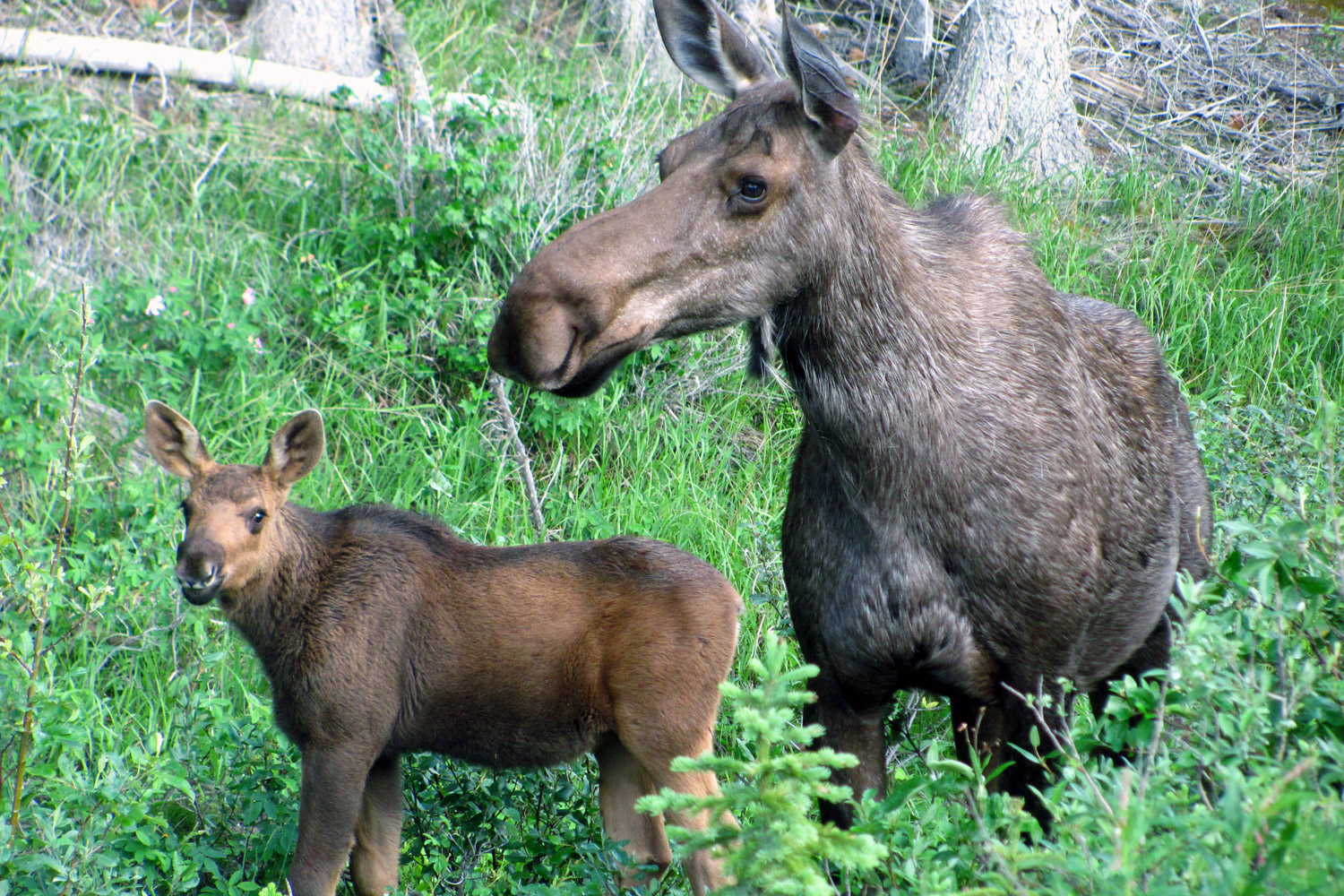
Female moose are called “cows”.

Female moose (cows) are pregnant for 8 months.

Infant moose are called “calves”.

Baby moose are an average of 25 – 33 lbs when born.

Calves will stay with their mom until they are 1 year old.

Moose have bad eyesight.

Moose have 32 teeth.

Moose have no upper front teeth.

Moose have front legs that are longer than their back legs.

Moose have 27 chromosomes. Humans have 23.

The flap that hangs under the moose’s throat is called a “Bell”.

Moose are the largest member of the deer family.

There is such thing as a white moose, however it’s extremely rare, and is not considered an albino.

Like a dog, when moose are agitated the hairs on their backs stand up straight.

Maine has the second highest population (30,000) of moose in the U.S., next to Alaska.

May, June, September, October and December are the best moose watching seasons in Maine.

You are more likely to see a fully antlered Bull Moose in September and October. (This is right before they shed them for the winter)

SOURCE: EREFERENCEDESK.COM