Tennessee State Animal: Raccoon

Interesting Raccoon Facts

1. Their bandit mask may reduce glare and help with night vision

The black contrasts with the white fur around the rest of a raccoon’s face, which help them see clearly. This is similar to how some athletes wear black stickers under their eyes to absorb light and reduce glare than could obstruct vision. Although that’s just one theory, another is that the subtle differences help them identify each other. One thing is for sure, their famous mask plays into their reputation for mischief!

2. Many raccoon babies starve in the winter

Unlike many mammals in their habitats, raccoons don’t hibernate. They instead spend extended periods of time in their dens during cold weather. Young raccoons, with very little body fat, are very vulnerable during these periods, and many don’t make it through the winter.

3. They’re great at climbing

Raccoons have cool hands (more on that later) and their strength and agility make them very good at getting up trees. Or houses, or barns, or the walls of a Toronto office building.

4. They’re excellent swimmers

Despite being land animals, raccoons are deft swimmers. They’re even competent hunters in the water, chasing down amphibians and even fish.

5. Raccoons are solitary, but tolerant

As raccoons age, they tend to drift off from their mothers, but there are some accounts of long-term bonding that remains. When there’s plenty of food available, they will happily share, and generally seem to have little trouble around one another outside of some territorial behaviors.

6. Raccoons have a wide range of vocalizations

For a solitary animal, they’re remarkably communicative. Raccoon noises include chittering, purring, barks, snorts and snarls, all able to get the message across with clarity.

7. They’re toilet-trained

They don’t just poo anywhere, raccoons pick latrine sites and stick with a few of them. Unfortunately, often times these latrines are the roofs, decks and unsealed attics of local human populations.

8. There’s a crab eater and a pygmy version

While the most common and well-known species of raccoon is what most people refer to as “the raccoon” (also known as the ‘common raccoon’) there are in fact two other species. Procyon lotor is the best-known, but there is also P. cancrivorus and P. pygmaeus whose names translate to “crab eater” and “pygmy” respectively.

If their names weren’t already clues enough, crab-eater raccoons hunt for crabs and other crustaceans in the marshy and jungle areas of South America, and the pygmy raccoon is a smaller island version of the other two, endemic to Cozumel Island in the Mexican Caribbean.

With raccoons, their size is inversely proportional to their cuteness, so it’s particularly tragic that the smallest of all the Procyons is critically endangered. The destruction of their mangrove habitat by human intervention is mostly responsible for their decline, but the introduction of house cats has further decimated their populations. These dangerous effects have also affected their close cousin the Dwarf Cyoti, a member of the same family.

9. They’re hard to tame

While baby racoons are sweet and adorable, when kept among humans past sexual maturity they almost always become hard to handle. An adult raccoon is a much more aggressive, territorial and troublesome animal, so they don’t make good pets. In fact, in some places, escaped pet raccoons have led to their rise as an invasive species, and is consequently responsible for the need to trap and kill countless individuals in eradication programs.

10. They’re named after their hands

Both the Quebeqi and the Spanish-speaking colonists who named raccoons independently referred to the hands of the animal. The word aroughcoune roughly translates to “the one that scratches with his hands”, and mapachtli in Spanish refers to “the animal with the hands”. This is because the hands of a raccoon are distinctly human-like.

11. Raccoons douse their food

‘Lotor’ from their scientific name ‘Procyon lotor’ is Latin for ‘washer’. This comes from their behavior of dabbling for food underwater along shore-lines, where they pick up food, and appear to examine it and remove unwanted parts. This gives them the appearance of ‘washing their food’.

12. They’re adaptable

The success of most mammals in adapting to new environments is commonly a by-product of a small set of useful adaptations: aggression, language, fingers, intelligence and an omnivorous diet. Raccoons, like people, have most of these things. Animals who can eat anything, frighten anything, communicate clearly, and manipulate the world with dexterous appendages tend to do quite well in almost any setting. Raccoons are a great example of this, which is why they’re currently taking over the world.
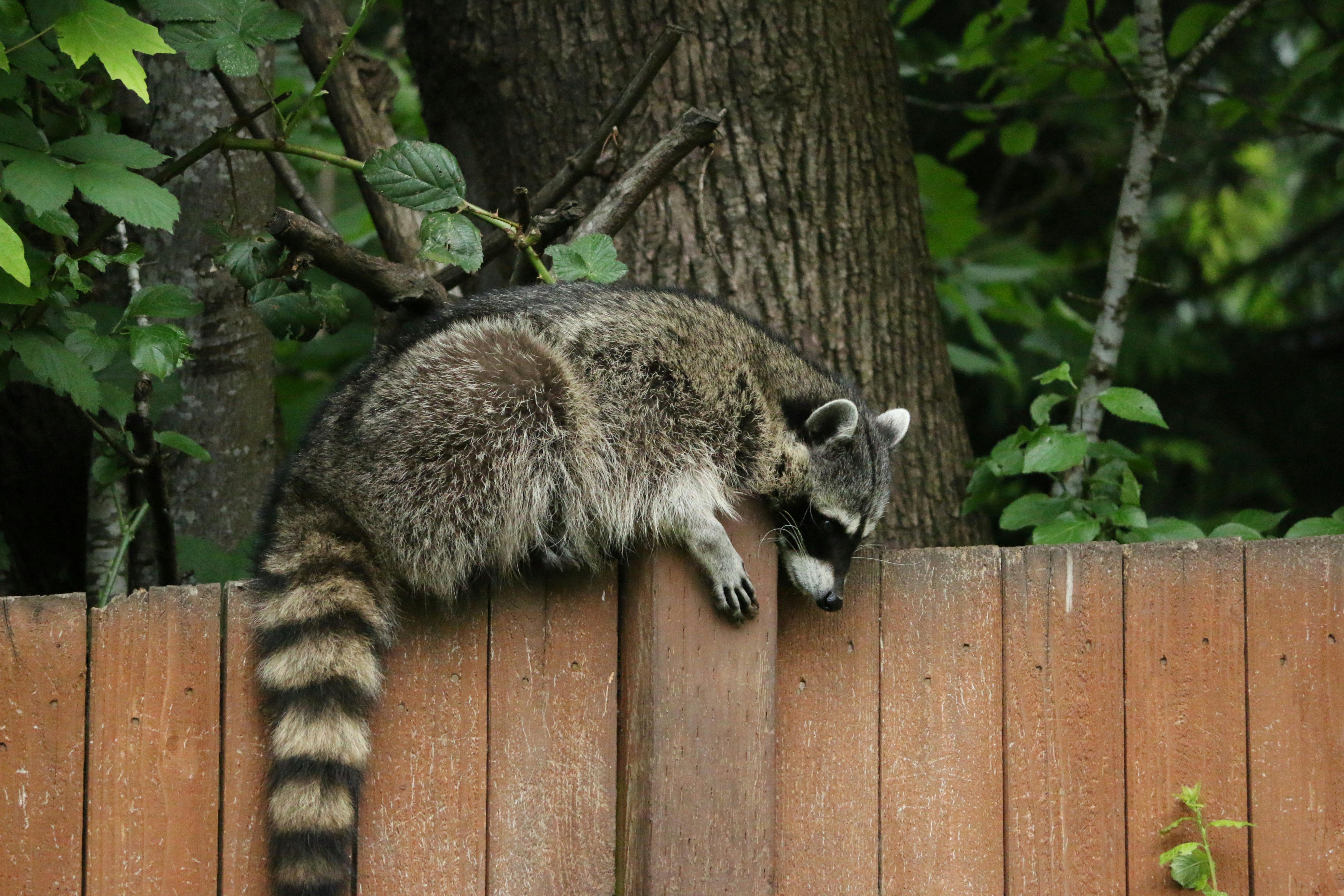
13. They’re invasive!

At least, some are. In Europe, there has been a recent boom in raccoon populations, and they’re not at all welcome. Unfortunately, as cute as they are, they eat pretty much everything, and present a legitimate threat to various small vertebrates and plant species wherever they set up shop. Sadly, there are now EU-mandated eradication programs in place to get rid of them, which is a necessary evil, and one which conservationists really don’t like.

SOURCE: FACTANIMAL.COM
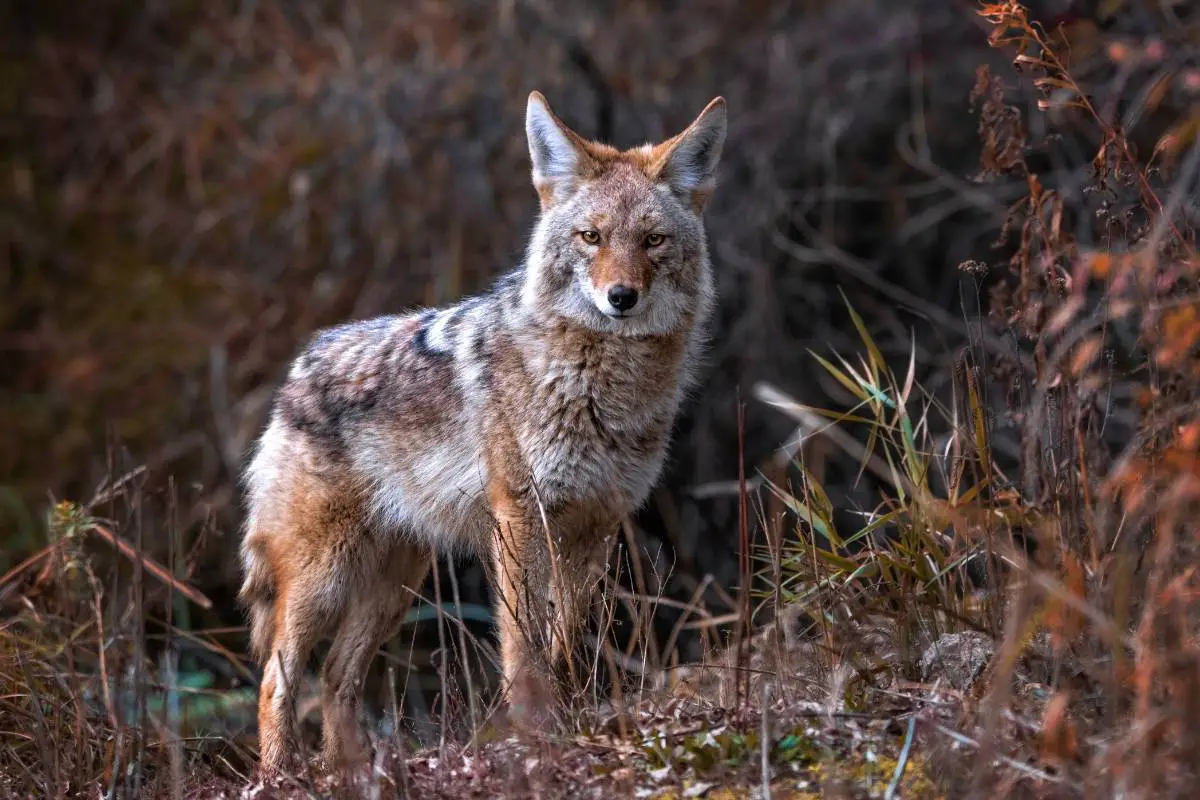
South Dakota State Animal: Coyote

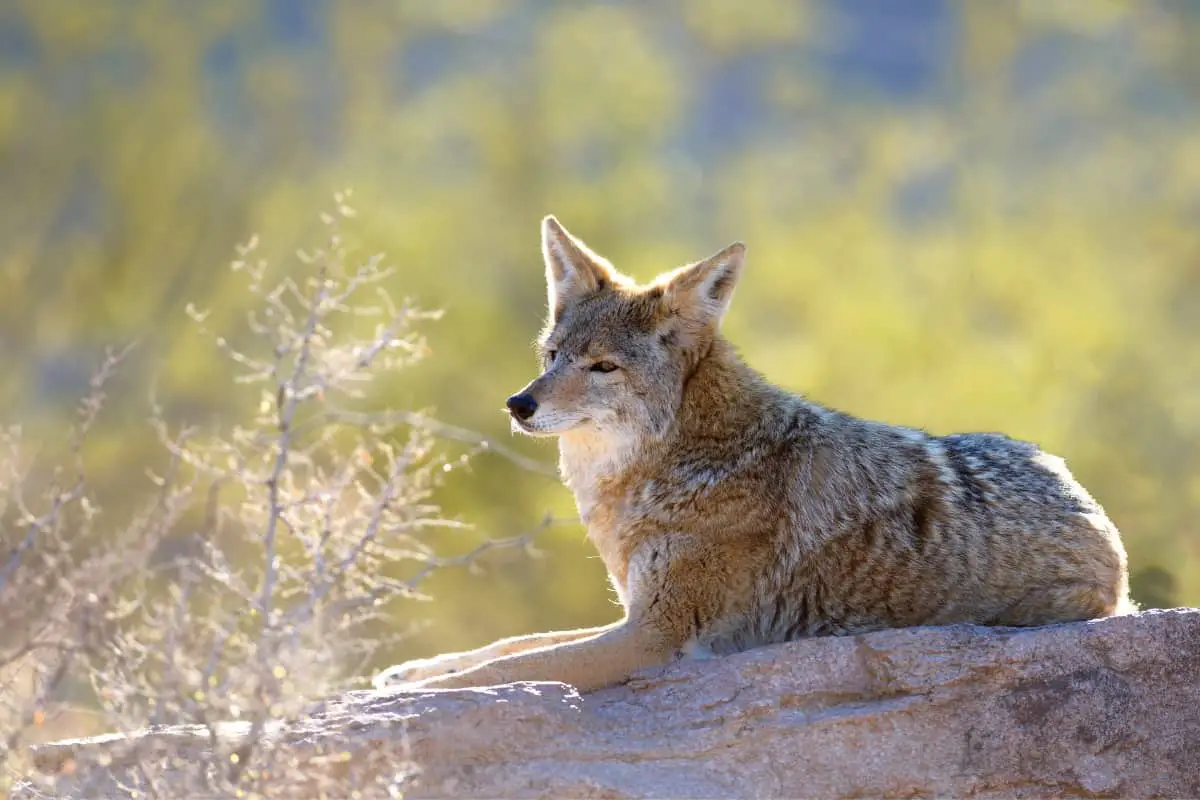
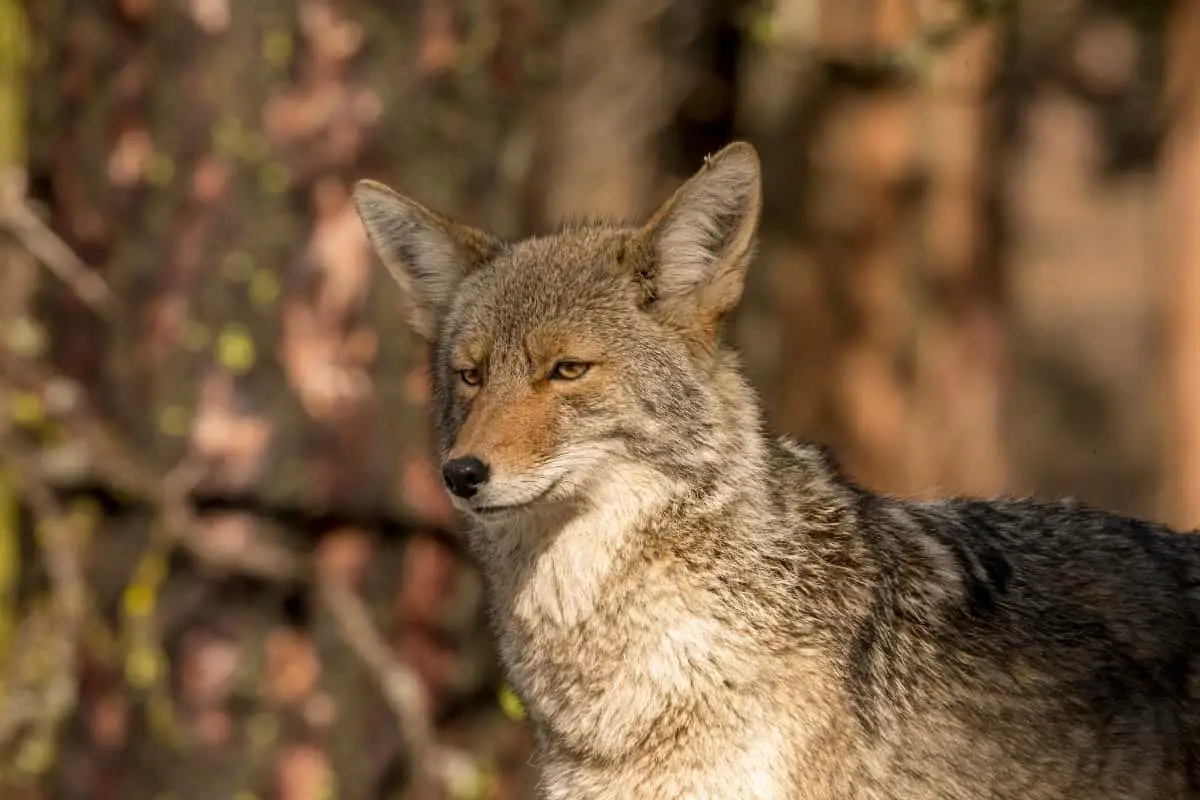
The historical presence of the coyotes in the South Dakota

You must keep in your mind that the coyotes are native animals of the state. Prior to the 1980s, they were mainly found in the western side of the state and in the counties at the border region of the Missouri River. With the increase in the size of their population, they started expanding to the other sides of the state. Now, coyotes are available in almost all the counties of the state. They have actually expanded their range in every nook and corner of the USA.

Once it was estimated that there are almost 80 to 90,000 coyotes available in the state of South Dakota only. The population of the coyote is mainly concentrated along the drained beds of the river. Now, they are also freely roaming among human beings in the Urban and semi-urban areas of the state. Being territorial animals, they like to establish their homes in good territory. Male coyote covers at least 10 to 20 square mile in their home range while female coyote covers only 10 to 15 square mile in their home range.

Diet and Habitat of the Coyotes in South Dakota

Coyotes are the native wild animals of the state. You can mainly find them in wooded areas, along the rivers, and in areas having very tall grass or brush. Coyotes have also now shifted towards the cities of the state as they can find here plenty of food, and many places to hide. Now, you can even witness them in many big metropolitan cities like New York City, Chicago, etc.

In these cities, these animals don’t like to confront human beings and are very timid and usually run away once they encounter people. Coyotes in South Dakota rely on a variety of fruits for their diet like Birds, eggs, mice, bugs, rabbits, squirrels, garbage, pet food, bird seeds, etc. In some cities, coyotes have been highly helpful in controlling the population of rodents, squirrels, and rabbits.

Ecological Importance of the Coyotes in the South Dakota

Coyotes play a significant ecological role in South Dakota’s ecosystems. As predators and scavengers, they contribute to the balance and health of the environment in various ways:

Regulation of Prey Populations

Coyotes help regulate the populations of their prey species, which can include rodents, rabbits, and small mammals. By keeping these populations in check, coyotes prevent overgrazing of vegetation and help maintain the health of plant communities.

Cascading Effects

The presence of coyotes can lead to cascading effects throughout the ecosystem. When coyotes suppress the populations of smaller predators such as foxes and raccoons, it can reduce the predation pressure on smaller mammals and birds that they would otherwise target. This can indirectly benefit other species and even plant communities.

Carrion Disposal

Coyotes are efficient scavengers, consuming carrion. By doing so, they help recycle nutrients back into the ecosystem, which can benefit soil fertility and nutrient cycling.

Seed Dispersal

Coyotes can aid in seed dispersal by consuming fruits and then dispersing the seeds in their scat across the landscape. This can contribute to plant diversity and the distribution of plant species.

In essence, coyotes are a crucial component of South Dakota’s ecosystems, playing a role in maintaining the delicate balance of nature. Their interactions with other species and their impact on food webs contribute to the overall health and functionality of the environment. Conservation efforts often focus on maintaining healthy predator populations like coyotes as part of broader strategies for preserving biodiversity and ecological stability.

SOURCE: WILDLYANIMALS.NET

South Carolina State Animal: White-Tailed Deer

Since yet another state has the white-tailed deer as their State Animal, I found an article about a different type of white-tailed deer—the piebald.

From: eastwesthunt.com:

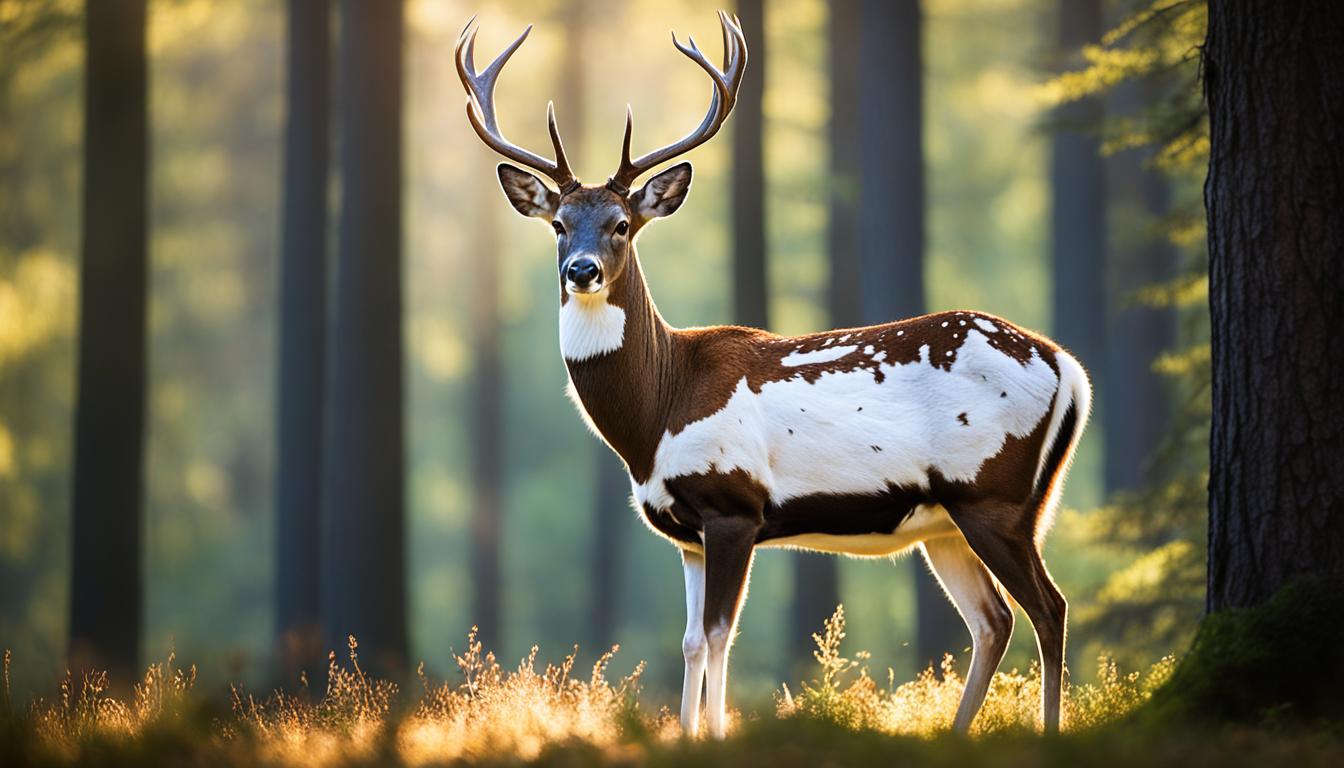
Among the most often seen and identifiable animals in North America, whitetail deer are among them; some of them stand out because of a startling genetic abnormality called piebaltism. Unlike normal deer, piebald whitetail deer have a marbled or speckled look from their unusual blend of brown and white fur. A genetic mutation influencing pigment causes this unusual tint and occasionally results in physical defects.

Piebald deer have captivated scholars, sportsmen, and nature lovers all around despite their difficulties. Some societies even view them as lucky symbols. Including their genetics, rarity, health issues, and importance in nature, this page covers all you need to know about piebald white-tailed deer.

A piebald whitetail deer is a deer having clearly brown and white fur patches. Piebalds have uneven white patches all over their bodies unlike typical whitetail deer, who have a full brown coat with a white underbelly. A genetic mutation influencing melanin production, the pigment in skin, hair, and eye color causes this disorder.

FeaturePiebald DeerAlbino Deer
Fur ColorBrown and white patchesCompletely white
Eye ColorNormal (brown or black)Pink or red
Nose ColorNormal (black or brown)Pink
Hoof ColorNormal (black or brown)Pink or white
PigmentationPartial pigmentationNo pigmentation at all

How rare are piebald whitetail deer?

Extreme rare are piebald whitetail deer. Piebaldism is exhibited by less than 2% of all the whitetail deer population. Genetic elements do, however, cause some locations to have a somewhat higher incidence.

Why are they so rare?

Piebald deer are rare mostly since the genetic mutation causing their pigmentation is recessive. This implies:

A fawn must inherit the piebald gene from both parent deer.

Just a tiny fraction of fawns will be born piebald even if both parents carry the trait.

Should just one parent have the gene, the fawn will have normal coloration but may pass the trait on to next generations.

Piebald deer are so scarce in nature and a wonderful sight for those who enjoy wildlife only.

What causes whitetail deer piebaldism?

A hereditary abnormality known as piebaldism causes white fur patches by influencing melanin synthesis. Along with affecting fur pigment, this mutation can cause physical abnormalities.

Physical Exceptions Related to Piebaldism

Many piebald deer are born with other health issues including:

Twisted or shortened legs make mobility harder.

Curved spine (scoliosis) causes postural problems

Affecting feeding and survival, overbite or underbite.

Abnormalities of internal organs cause problems in health.

While not all piebald deer have these problems, the mutation raises their likelihood of physical difficulties.

Piebald Deer’s Significance in Nature and Human Culture

More than just a rare sight in the wild, piebald deer are very important in both natural environments and human civilization.

Native American Folklore: Piebald Deer

Piebald deer are holy animals according to some Native American tribes. They are supposed to provide blessings, protection, and spiritual messages as well as luck. In some customs, killing a piebald deer is thought of as bad luck.

Do Piebald Deer suffer from any survival disadvantages?

Unfortunately, piebald deer’s distinctive color makes them more easily seen by predators including:

Wolves

Coyotes

Bobcats

Humans

Normal brown-colored deer mix in the wild and make it more difficult for predators to find them. But the white patches of piebald deer stand out and raise their vulnerability to attack or hunting.

Identification of a Piebald Whitetail Deer

Look for these characteristics if you search the wild for a piebald deer:

Randomly dispersed white and brown coat patches.

Normal-colored eyes—unlike albino deer, which have pink or red eyes.

Potentially physical anomalies including a bent spine or shortened legs.

A deer with arresting white markings that contrasts with its surroundings.

Should you ever stumble across a piebald deer in the wild, you should count yourself lucky as finding one is unusual and intriguing.

Conclusion

Piebald whitetails deer are among the most fascinating and unusual animals on Earth. Different from other deer, their unusual white-and- brown hue originates from a genetic abnormality. Although they are lovely, they are more easily seen to predators and often have health issues.

Piebald deer are rare, yet they nonetheless draw the interest of academics, hunters, and other wildlife aficionados. Some societies even see them as enigmatic luck symbols. Whether you are lucky enough to come across one in the wild or just find their genes intriguing, these deer remain an amazing example of the diversity present in nature.

SOURCE: EASTWESTHUNT.COM

Rhode Island State Animal: Rhode Island Red

From: chickensandmore.com:

Rhode Island Reds are one of my favorite chickens. They have bags of character, personality and a real zest for life. As a homestead bird they are one of the best breeds out there in my opinion. They are healthy, resilient and will lay plenty of eggs for you. They can be pushy and assertive with other breeds, but they certainly do not lack personality! These chickens have only been around for about 100 years but they have gathered a firm following, read on to find out why…

The Rhode Island Red is a very useful, delightful and entertaining bird to have in your flock. She does not need much care other than the basics of food, water and shelter. They are hardy chickens that are not prone to disease, which makes them ideal for beginners. They have become one of the staple birds of the modern homesteader as they have been proven over the years to be a reliable, no-nonsense breed.

With the Rhode Island Red there are two strains: the production and heritage strain. Heritage varieties do not put out quite as many eggs each year but they will lay for a longer period of years. If you want more eggs, choose a production Red as they are prolific in the egg production area. This hen makes a great starter chicken for anyone because of the ease of care and low maintenance. They are also pretty kid friendly (with the exception of the roosters).

Their body is somewhat rectangular and solid looking. Rhode Island Reds are well proportioned, with a head held high and the tail at a 45-degree angle. Their feathers are tight which means they sit together compactly – a trait of the Malay breed used to create this breed. What surprises a lot of people is the fact that Reds can have either a single or rose comb. The single comb is upright with well-defined points, and the rose comb has a rear facing leader spike. Wattles and ear lobes are red (like their comb), eyes are orange/red in color and the beak is a horn color. Their skin, shanks and feet are yellow.

Size and Weight

Reds are considered to be standard sized birds.

Hens will be around 6.5lb with roosters being around 8.5lb.

The bantam variety weighs in at 2.1lb and 1.9lb respectively.

Color Varieties

The primary color of the feathers is a beautiful shiny chestnut red. Occasional black feathers can be found in the tail and wings – this is called ‘smutty’ by judges and points will be taken from the overall score of a competition bird.

These chickens enjoy being active, and are usually the first out of the coop to see what is going on and if there are any treats available! They are intensely curious and always want to help you out or see what is in it for them.  Often, they can be found foraging and can obtain a good amount of their daily nutrition by foraging. They are not flighty or nervous birds and are generally considered bombproof, rarely getting flustered or panicked.

Personality

To sum up their personality in one word: exuberant! Rhode Island Reds love to investigate new things and are inquisitive to the point of being nosey. They are friendly hens and fairly docile with other birds of a similar disposition – however they are usually mid to higher level in the pecking order. This means that with very shy or docile breeds (such as Cochins or Polish) they can turn mean and unpleasant, so be careful if you are mixing breeds. As for the Roosters, they have a bit of a reputation for being obnoxious. Small children should not be allowed near them especially in the breeding season. Hens are not known for broodiness but occasionally one will surprise you and become broody. Once they have decided to be broody, they are usually good sitters and good mothers.

SOURCE: CHICKENSANDMORE.COM

Pennsylvania State Animal: White-Tailed Deer

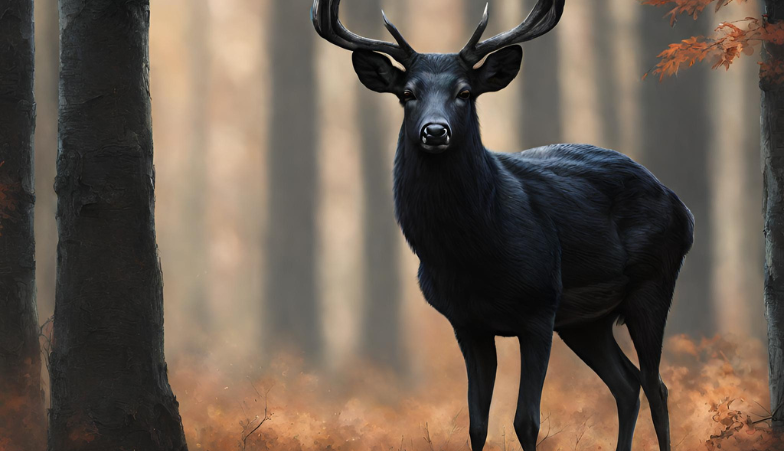
Yup, yet another state has the white-tailed deer as its state animal…lol.  Filly alerted me to a rare white-tailed deer I never heard of before—a black deer. I found this article on the blog:nature.org.  The author, Matthew L. Miller, details what a black deer and other animals that experience melanism are in the article.  (I only brought information about the deer, but you can read about other animals at https://blog.nature.org/2020/09/29/black-deer-have-you-seen-this-rare-color-of-a-common-animal/)

White-tailed deer are the most familiar large animal over much of North America. They live on farms, in suburbs, even in cities. In many regions, there are far too many of them, posing threats to conservation and even human health.

But deer are also a source of endless fascination for naturalists, hunters and backyard wildlife watchers, me most definitely included.

Despite also being one of the most studied wild animals in the world, whitetails can still surprise. Take their color variations. White deer – the subject of a blog I wrote previously – have long been the subject of lore and myth. White deer are not common, but they are conspicuous. People observe them regularly, many of them reporting them here.

But did you know there were also black deer? This coloration is even rarer than white. In fact, it is so unusual that this color variant remains little studied.

What is a Black Deer?

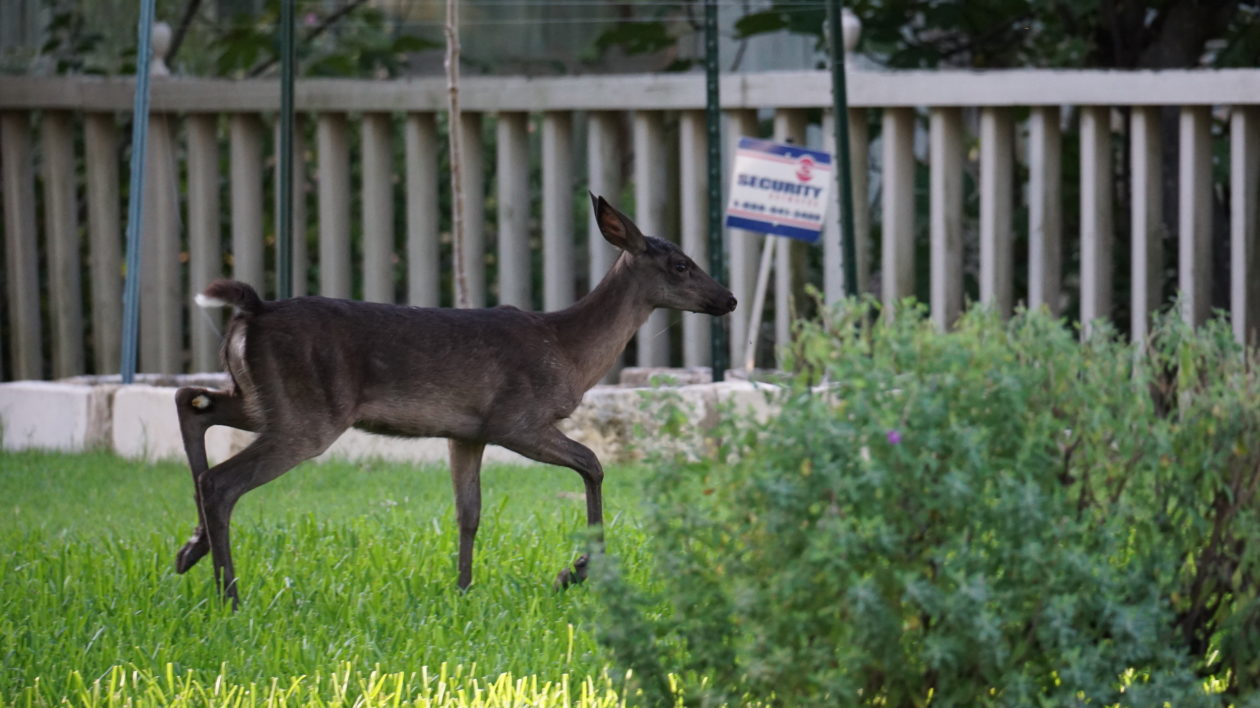
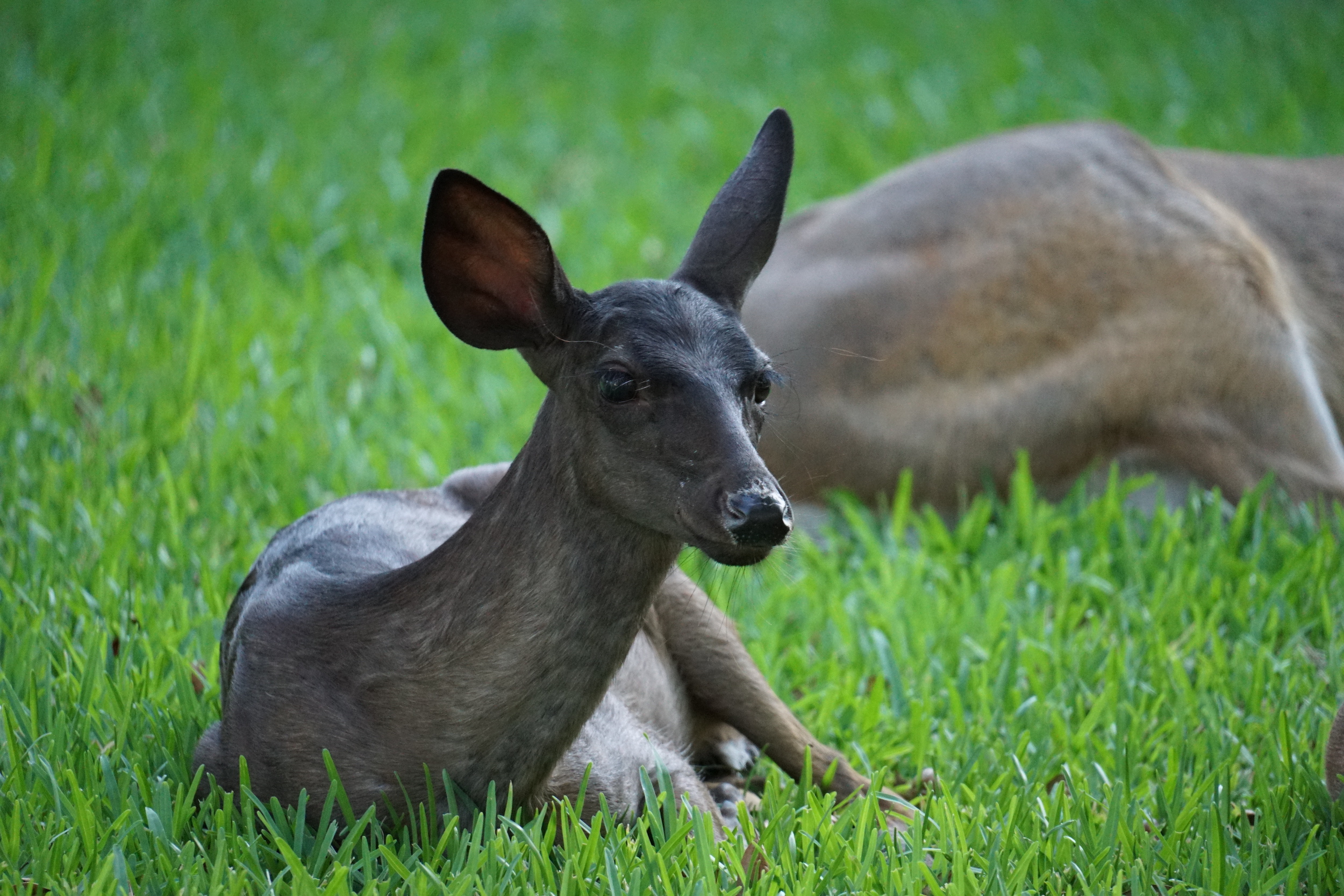
Many wild animals have variations in colors. In white-tailed deer, melanism – as the coloration is known – is a recessive genetic trait that can be inherited. It causes an excess of dark pigment, believed to be due to mutations in the melanicortin 1 receptor gene (MC1R). The deer appear a dark chocolate brown or black, and they have a fairly uniform coloration over their entire body.

Melanistic deer have been reported from 29 states, but they are never common. In one region of Texas, Texas Tech University found that melanistic deer make up about 8.5 percent of the population, by far the biggest concentration of these animals known.

Wildlife photographer and deer expert Leonard Lee Rue III, in his excellent reference book The Deer of North America, reported that in the mid-1900s, a concentration of melanistic deer was found in Union County, Pennsylvania. I have spent a fair amount if time in the woods in this area, always hopeful, but I have never seen a melanistic deer there, nor have I heard of others being spotted.

David Schroeder, who generously allowed me to use his photographs for this story, photographed a melanistic deer on his property that was the twin of a “normal” colored fawn. Neighbors alleged that this deer was sired by a melanistic buck, although Schroeder never saw this animal. However, this year another melanistic fawn has appeared on a neighboring property.

SOURCE: BLOG.NATURE.ORG

Oregon State Animal

The American beaver’s most noticeable characteristic is the long, flat, black tail. A beaver’s tail not only helps it swim faster, but can also be used to make a loud alarm call when slapped against water. In addition, the large tail helps the beaver balance when carrying a heavy log or tree trunk.

The American beaver is the largest rodent in the United States, growing from two to three feet  long, not including the tail. They have dark-brown waterproof fur and webbed feet. Beaver teeth grow continuously throughout their lives, and beavers must gnaw on trees to keep their teeth from getting too long. Thick layers of enamel on their teeth give them an orange color.

Beavers live in ponds, lakes, rivers, and streams throughout the continental United States, except in the desert areas of the Southwest. Beavers are well known for their ability to build dams. They are one of the few animals that can actively change an ecosystem by blocking rivers and streams with trees and mud, creating new lakes, ponds, and floodplains.

Beavers also build homes called lodges out of branches and mud, which can often only be accessed from underwater entrances in the ponds.

Beavers are semi-aquatic herbivores. They travel from water to land to collect and eat tree bark, leaves, roots, and wetland plants.

Beavers are monogamous. They mate at around three years of age. Females gestate the young for roughly three months before giving birth. A female will typically have one litter of kits a year, with litter size ranging from one to four kits. These kits, along with those born the previous year, stay with their parents inside the lodge.

Beavers can stay underwater for 15 minutes without coming to the surface. They have transparent eyelids that act as goggles so they can see as they swim.

SOURCE: NWF.ORG

Oklahoma State Mammal: American Bison

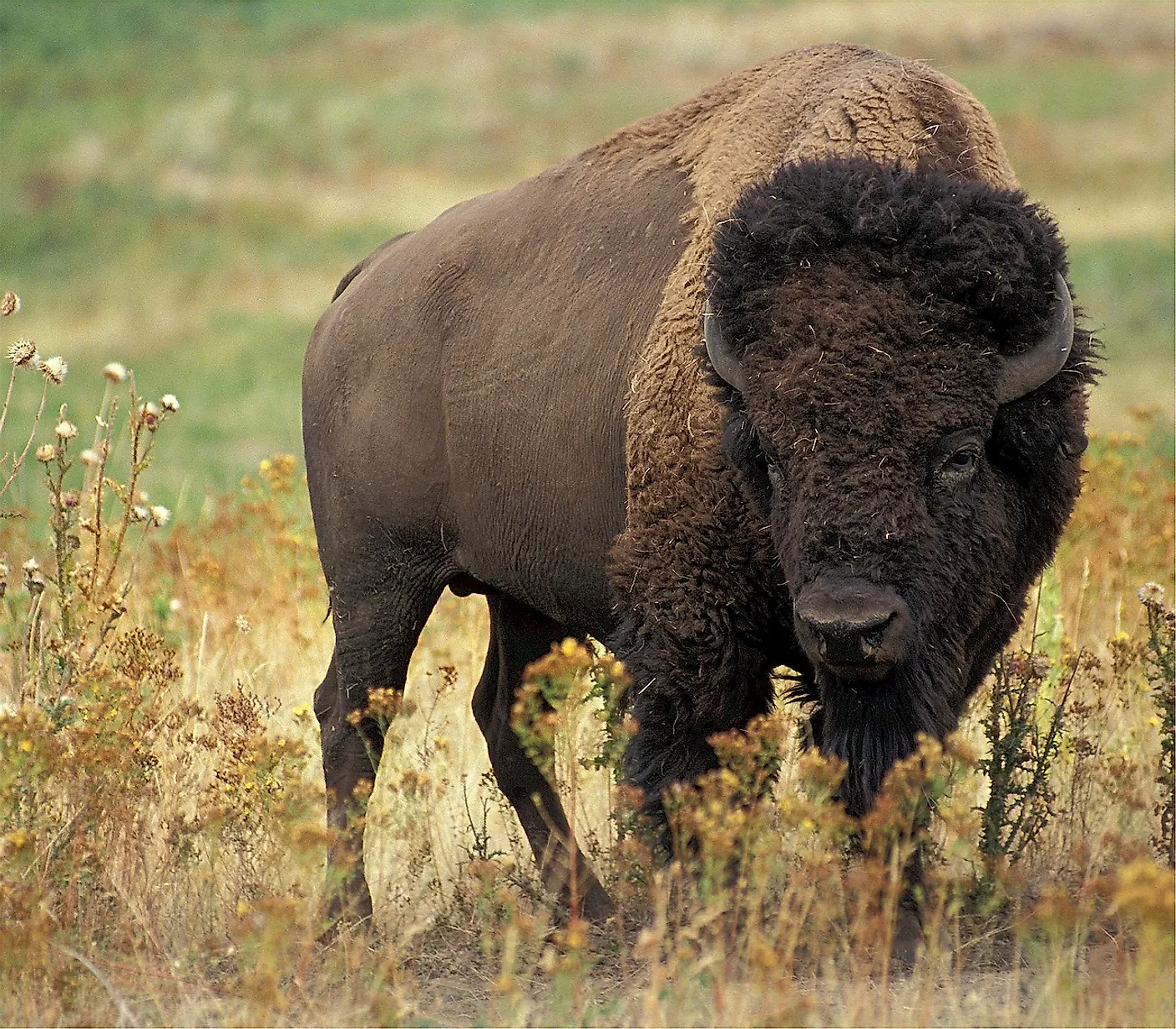
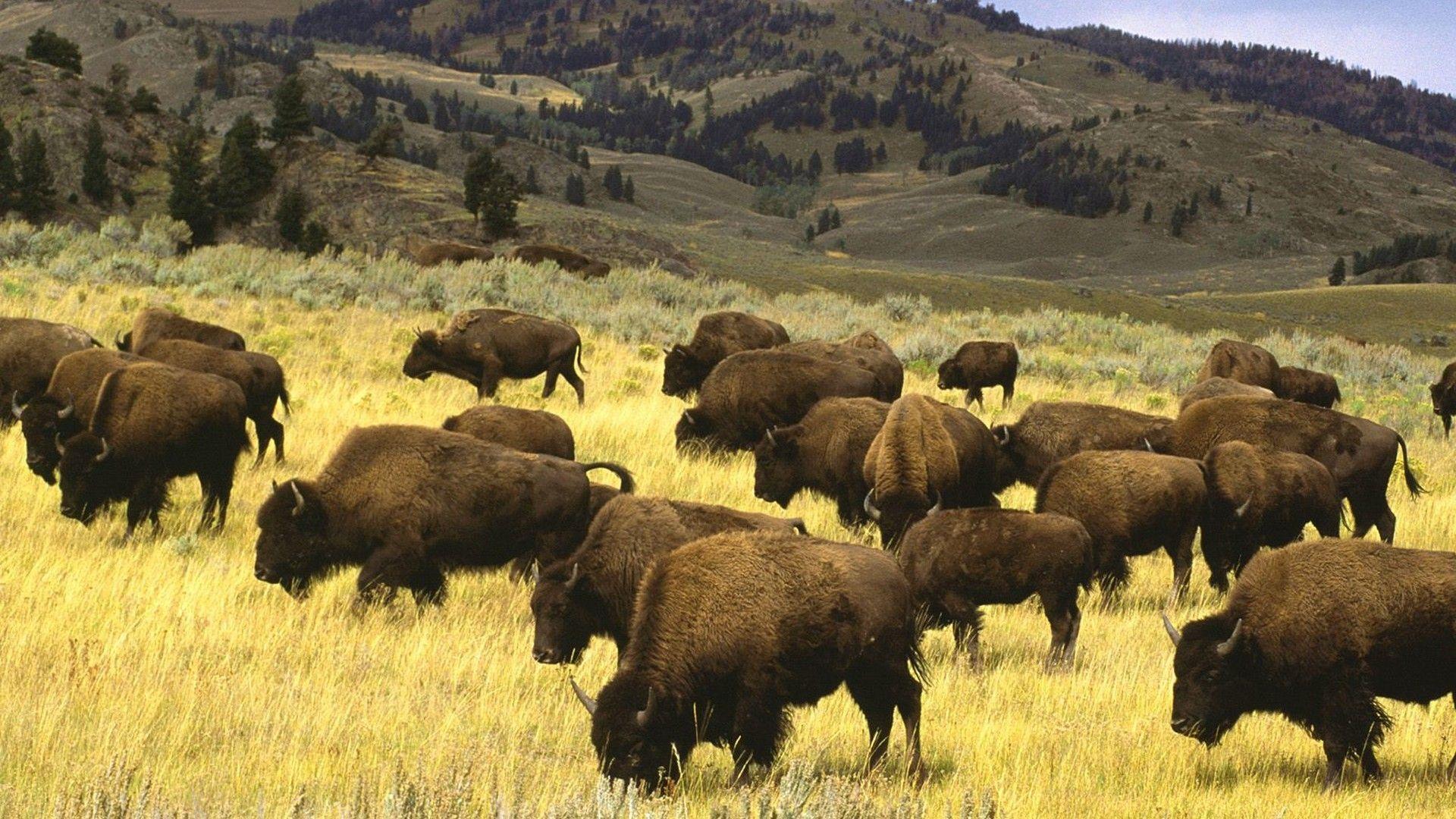
The American bison (Bison bison) is a species of bison native to North America. Sometimes colloquially referred to as buffalo (a distinct species of bovine), it is one of two extant species of bison, alongside the European bison. Once roaming in vast herds, the species nearly became extinct by a combination of commercial hunting and slaughter in the 19th century and introduction of bovine diseases from domestic cattle. With a population in excess of 60 million in the late 18th century, the species was culled down to just 541 animals by 1889. Through multiple reintroductions, American bison now freely roam wild in several regions in the United States, Canada, and Mexico, with them, also being introduced to Yakutia in Russia.

The color of the American bison fur varies in the front and back of its body and is different shades of brown. Bison is hunchbacked and it has a long beard on its chin. The forehead is wide and narrow while the neck is short. Hind legs are smaller than front legs, making up a scarp from humpback to tail. Length of hair differs in front and rear, especially in males: front hair is significantly longer than rear hair. Horns of bison are black, bent inward withal upward, and pointed.

In the past, a huge number of bison thundered North America from Mexico to Alaska. Then, mass killings of these impressive animals led to their total extermination from the main area of their habitat. However, bison survived and currently they live primarily in Canada and the western part of the USA, usually in protected areas and national parks. American bison prefer to inhabit river valleys, prairies, and plains. Typical habitat is open or semiopen grasslands, as well as sagebrush, semiarid lands, and scrublands. Bison also graze in hilly or mountainous areas where the slopes are not steep.

American bison is diurnal, being active all day long. They are usually relatively passive during the day, becoming particularly active at dusk and dawn. They spend a lot of time cleaning the fur or grooming: they rub their head, sides, and necks against trunks of trees. Bison are able to be constantly on the move, passing long distances as long as there is food. Cows, female bison, are leaders of family groups while males stay separate, creating small groups or living solitarily. As the mating season comes, males join female groups. Bison like rolling, weltering, and rubbing against the ground. Wallows are recesses – dust bowls with no vegetation, having circular form, formed as a result of bison’s wallowing on the ground.

Bison are herbivores (graminivores) and, more specifically, grazers, chewing grass all year round. However, in absence of grass, they eat other greenery found in the area such as sagebrush. The presence of water is another important component of their life: they can’t last long without a source of water.

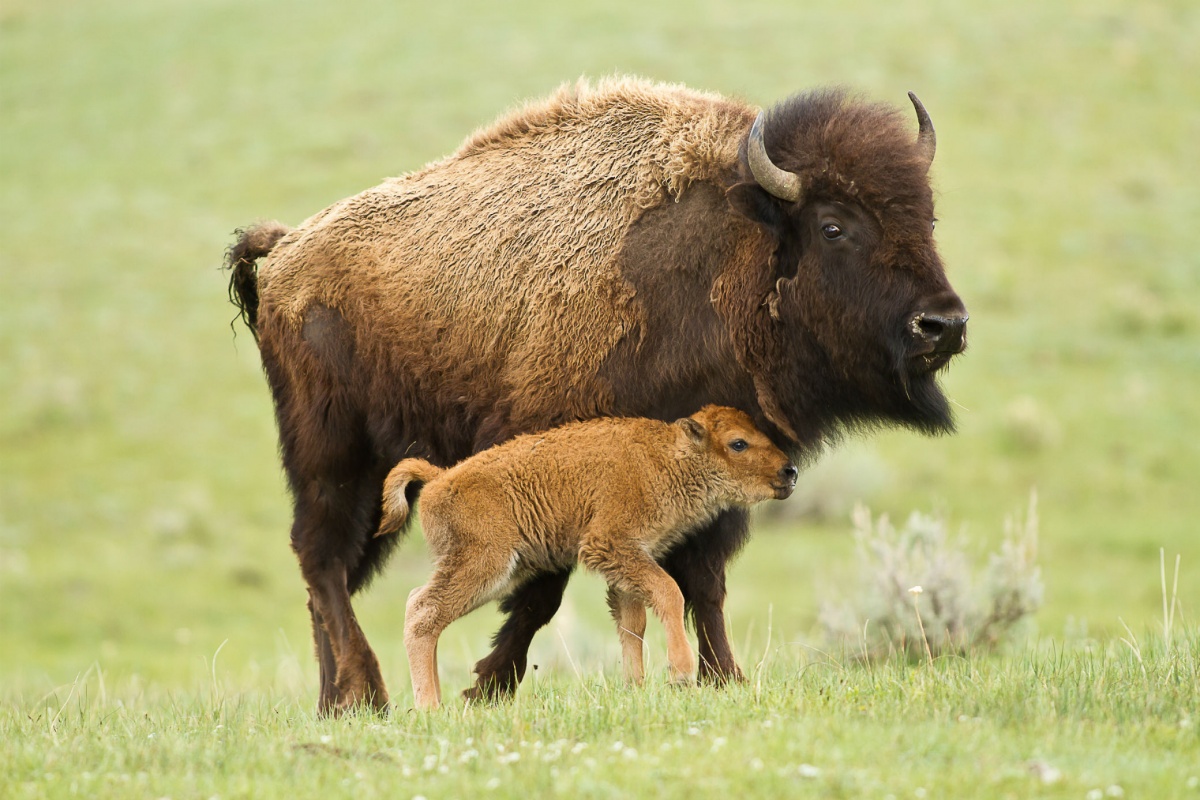
Bison are polygynous, meaning that a dominant male, or a bull, mates with a group of females. The season for breeding takes place in summer, from June to September while the gestation period lasts about 285 days. A female can give birth to a single calf each season. Newborn calf weight about 15-25 kg. To give birth, bison females choose shelter, a distant place far from the herd. Protection of the calf lies on the shoulders of females whereas males don’t take part in this process. Babies are breastfed for 7-8 months and weaned when they are one year old. Males reach sexual maturity at the age of 3 years and females – from 2 to 3 years.

Fun Facts 

Dense coat of bison protects it from the rough elements of the American plains. In winter the coat becomes solid and even thicker, so that bison are seen with snow on their backs, not melting due to their coats isolating their warm skin from the outer surface.

The groups that bison create are called obstinacies, gangs, or herds.

Hunch on its back is nothing but a bunch of muscles. The hunch also helps bison to move into the snowpack.

Bison is an excellent jumper, able to jump up to 6 feet off the ground.

Bison have a heightened sense of hearing, being able to identify big objects from a 1 km distance and moving objects – at a distance of 2 km.

Along with jumping, bison are excellent at running and swimming.

Newborn calves start walking and running a few hours after being born.

SOURCE: ANIMALIA.BIO

Ohio State Mammal: White Tailed Deer

Ohio is another state with the White Tailed Deer as it’s state mammal.  I found this article on the website deeranddeerhunting.com detailing some of the best deer stories!

From: deeranddeerhunting.com

The 7 Funniest Deer Hunting Posts of All Time

– Wednesday December 8, 2021 – Daniel Schmidt

Deer hunting is a time-honored tradition and, for many of us, a 24/7 lifestyle. I’ve had the good fortune of spending the past 27+ years of my life living the dream of getting to think about deer hunting “for a living,” and most of that time has been in serious, reflective thought. My job is to report the facts, foster this wholesome lifestyle and recruit our next generations of hunters. But there are times when we keep it light, as they say, and find humor in some of those things we deal with on the daily.

Here are the 7 best deer hunting memes, clips, posts — there’s a mix — that I’ve seen (and even created) over the past, oh, 15-ish years of this social media madness:

#7 Funniest Deer Hunting Post: “Deer Meat Wanted.”

This one has been floating around for year. I do not know it’s origin other than it was a real-life newspaper classified. It reads: “DEER meat wanted, fo free. I am not poor, I am just not a good hunter. (phone number) Thanks!”   

Hey, at least the person is honest! 

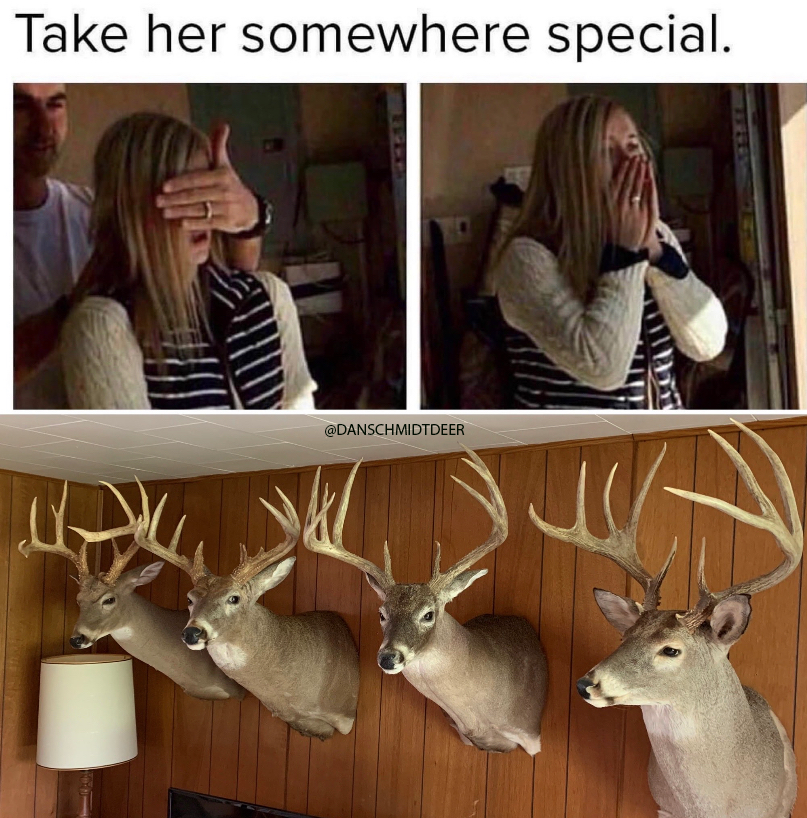
#6 Funniest Deer Hunting Post: “Take Her Somewhere Special.” 

I created this meme last year, but I cannot take credit for the top photo. That image has been used on social media thousands of times for other memes. When I added the photo of the deer mounts, I thought maybe my buddies around here would “get” it. They did, but so did a lot of other folks! This post received thousands of likes and shares, and I’ve even seen others take it, revise it and make it even funnier.

5 Funniest Deer Hunting Post: “Sitting in Your Stand … and You Hear a Twig Break.”

This is another one of my creations. I don’t recall the exact year (I want to say this was either 2011 or 2012), but this was another commonly used image in memes across the Internet. Back in those days, DDH was a tiny subsidiary of a large corporate entity. Our bosses were pressing all of us (hard) to either accept social media (when traditional media was pretty much opposed to it) or find new employment. I dove headfirst into building our Facebook page (which became the company’s largest social footprint). This one came to me one day when I saw the baby’s excited face and said, “Hey, that’s me EVERY time I think I hear a deer!” My coworkers laughed out loud (they knew it was true), and a meme was born.

#4 Funniest Deer Hunting Post: “Deer Hides in Barrel.”

No clue who was responsible for this one, but it makes me laugh out loud to this day. Pure genius. Who HASN’T run across a deer-hide donation barrel in their day? Heck, we used to have them at every gas station, grocery store parking lot and even some churches here in Wisconsin. The guys who saw the humor in this — and then pulled off the perfect photo shoot — get a gold star for this one!

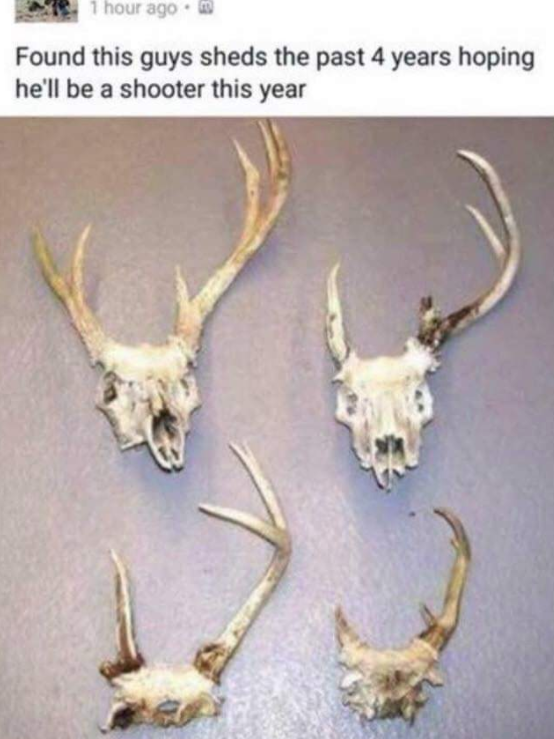
#3 Funniest Deer Hunting Post: “Clueless Shed Hunter.”

I vividly recall when this photo was first circulating on Facebook. As much as you would think that it was created to be a joke, it WASN’T! The guy truly thought he had been tracking the same buck for years. The first comment was something like, “Um … who wants to tell him?” That literally made me spit coffee all over my laptop that morning.

#2 Funniest Deer Hunting Post: “The Painful Bowel Movement.”

Poor Tyler. He’s in his mid-20s now, but he will forever be known as the kid that pooped a hefty 8-pointer. That copy editor surely was reprimanded after that newspaper hit the streets.

And, finally, the best of all-time:

#1  Funniest Deer Hunting Post: “Move the Deer Crossing Signs!”

I’m just going to take a wild guess that Tim Abbot knows a little more about deer behavior today than he did when he sat down and hammered out this letter to the editor years ago. Please … someone track him down and confirm that he does. Because I’m quite certain there’s a whole new crop of ill-informed city folks who probably think the same thing today!

SOURCE: DEERANDDEERHUNTING.COM

North Dakota State Mammal: Western Meadowlark

Juli Bosmoe, senior range ecologist for Audubon Great Falls in Fargo, North Dakota, points out that the easiest feature to spot on the western meadowlark is the yellow breast with a v-shaped black bib. She also says to look for the white outer tail feathers that flash when the bird flushes from a perch. These features are shared by two other species that are almost identical, the eastern meadowlark and Chihuahuan meadowlark.

Around the size of a robin, Juli says, “They’re big for a songbird, for sure.” They also have long, slender bills.

Adult males and females look similar. Immature birds are paler in color.

“They prefer grasslands without trees that are encroaching because these provide a perch for predator birds,” says Juli. Throughout the year, they inhabit a large portion of the western U.S., from southern Nebraska to the West Coast, and south into Mexico. In summer, their reach extends into Canada, Montana, the Dakotas, Minnesota and Wisconsin. These birds are early spring and late fall migrants.

What Do Western Meadowlarks Eat?

“During the breeding season they like insects the most. It’s a lot of good energy in a small package,” explains Juli. “Outside of the breeding season they’re more likely to be eating seeds, which is why it’s important to have these diverse grasslands.” Even though they do consume seeds as part of their diet, she notes, “They’re not going to be your backyard feeder bird.” Juli says of one of their favorite ways to find their seeds is by sticking their beaks in a cow pie to get out the seeds.

The ideal habit for western meadowlarks is an expansive grassland with diverse grassland species, but there are many instances where development or agricultural practices reduce these food options for the birds. “If the grassland is stagnant, it’s just going to turn into a lot of older grasses,” she says. “It is typically invaded by smooth brome and Kentucky bluegrass.” One of the best ways we can support these grassland birds is to keep our own backyards as diverse as possible with native grasses.

Nesting Habits

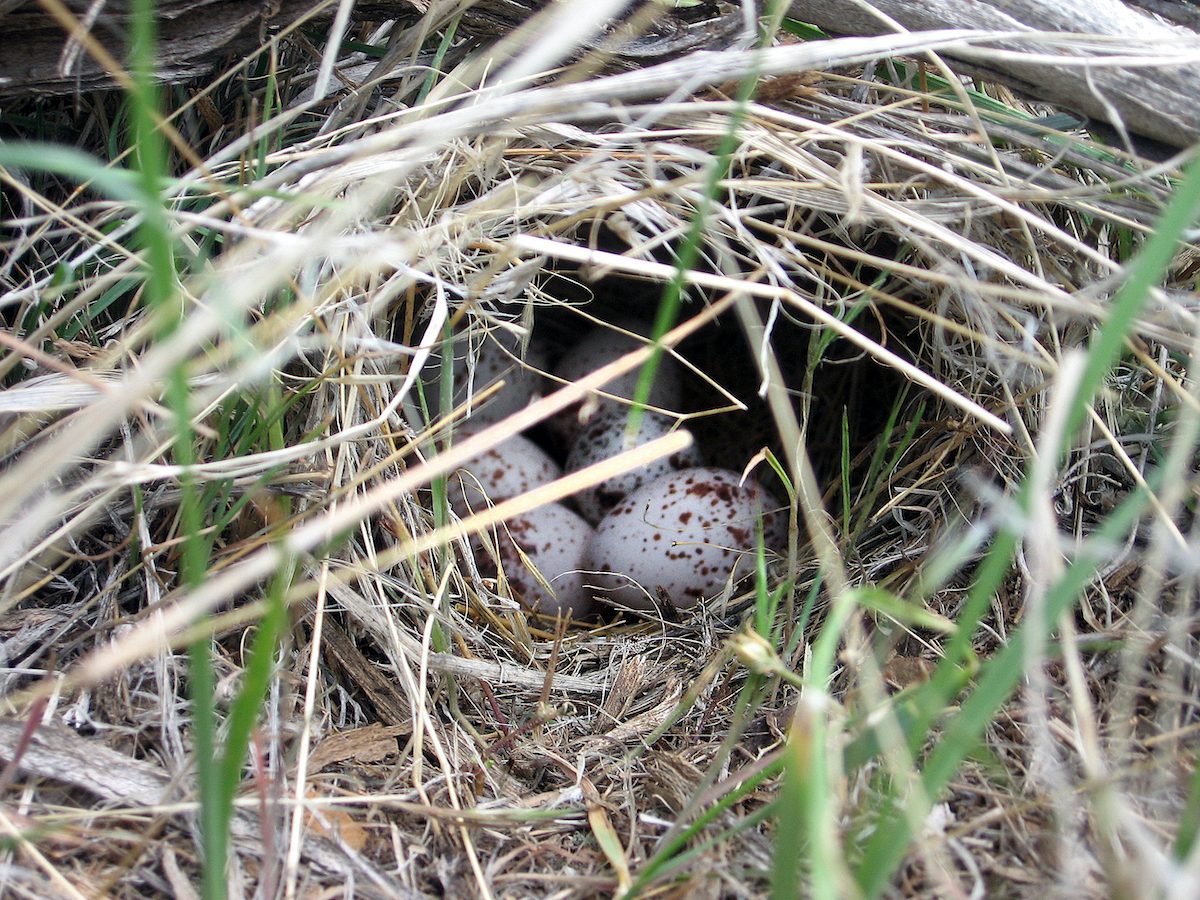
“The male mates with more than one female, but it may be only two,” notes Juli. They are very territorial during the breeding season, using their songs to woo a female, as well as ward off intruders. “They have great, hidden nests,” she explains. The female gathers all of the materials and builds the nest, which is positioned on the ground, often near a bunch of grasses or placed within a depression. Built of grasses and dried forbs, the six to seven-inch diameter nest blends perfectly with the surrounding vegetation.

“The female will tuck grasses over the top,” she says, and camouflage roof makes them nearly impossible to see, even when you’re looking for them. “(Western) meadowlarks usually have two breeds year, and the female takes care of the young,” says Juli. The five to six white eggs per clutch are heavily spotted with lavender, brown or rust markings, which adds to their concealment qualities. It requires 13 to 16 days for them to hatch, and the young leave the nest after 10 to 18 days.

Western Meadowlark Song

Their distinctive, remarkably loud song makes western meadowlarks unmistakable. “To me, that’s one of the key features, of how loud they are. You could be driving down the gravel road with the windows up, and you can still hear them,” Juli says.

“(Males) really like a post to sit on, such as fences or barbed wired, to sing for the ladies,” says Juli. “They have a whole repertoire of songs because the males are trying to attract the females. They can have 100 different variations. The females judge them on their songs.”

Sometimes described as “flute-like,” their songs vary with whistles, gurgles and warbling sounds. But once you hear it, you recognize it immediately.

SOURCE: BIRDS&BLOOMS

New Mexico State Mammal: Black Bear

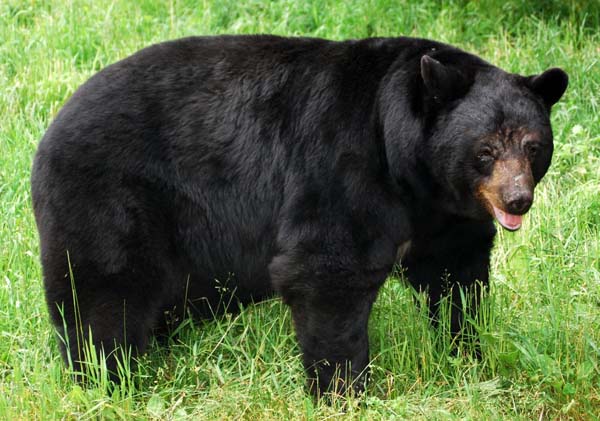
The American black bear, more commonly known simply as the black bear, is the smallest of the 3 bear species found in America. The brown or grizzly bear and the polar bear are larger in size, however the black bear is still a huge mammal. They can measure up to 7 feet in length and males can weigh over 400kg. When standing on their hind legs, they can reach a height of around 7 feet, although females are usually smaller and shorter than males.

Black bears can be distinguished from brown bears by their smaller size, longer ears and lack of a shoulder hump. Black bears also have shorter, more curved claws and are generally more timid animals. Typically they are black in color but depending on their location, their fur can be dark or light brown. Black bears are found throughout North America but are more abundant in the northern states. Unlike brown bears, they prefer more densely forested habitats and rarely venture into open areas for long periods of time.

Interesting American Black Bear Facts

1. They are not always black in color

Some black bears can be a very light brown (or cinnamon) color and very rarely, completely white.

2. Black bears are shy and timid

Black bears will usually run away or climb up a tree rather than confront humans. This is mostly true but some individual black bears can be very aggressive, especially when threatened. They are however much less likely to attack compared to the brown or grizzly bears, which tend to be less weary and less approachable. Both these species, as well as the polar bear, will usually move on when left alone and black bears especially tend to flee when confronted by people.

3. They can eat over 10,000 berries in a day

When food is abundant, black bears will eat as much food as they possibly can, sometimes over 8kg of fruit and berries in a day. When berries and fruits are abundant, black bears will move to these areas and feed almost exclusively on these. They have an excellent sense of smell and this helps them locate ripening berries, nuts and fruits as well as bee hives, where they feed on the honey and bee larvae. 

4. Black bears are skilled climbers

Black bears are excellent climbers and can easily access nuts and fruits before they fall to the ground. They have sharp, curved claws and this not only helps them when climbing but also makes ripping into trees logs or upturning boulders when searching for insects much easier. As well as being expert climbers, black bears are great swimmers and will cross fast flowing rivers to reach food on the other side.

5. They are incredibly strong animals

Black bears are up to 5 times stronger than the average human being.

6. American black bears are highly dexterous

They are capable of opening screw-top jars and manipulating door latches.

7. Their diet is predominantly vegetarian

Although they do eat meat, almost 70% of their diet is made up of plant matter.

8. Their sense of smell is 7 times more sensitive than a domestic dog

While American black bears have extremely sensitive noses, their eyesight and hearing is more comparable to that of a human.

9. Black bears are fast runners

Sprinting at around 40-50km/h, black bears can easily outrun humans.

10 They are mostly quiet animals

Although they tongue-click and grunt to communicate with one another, black bears do not growl or roar. 

11. They den in spots that are well hidden

Black bear dens are usually made in caves, under tree roots or are dug into hillsides.

12. Females usually give birth during the hibernation period

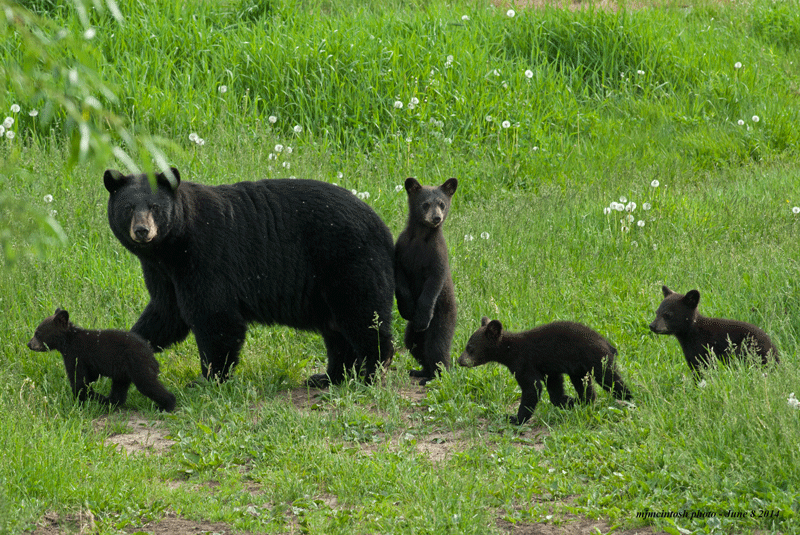
During the breeding season, a male and female will remain together until just before the cubs are born. Females usually give birth in their den while in torpor; a similar state to hibernation. The cubs will then feed off their mother’s milk while she hibernates until spring arrives.

Usually two cubs are born and they leave the den for the first time when their mother comes out of hibernation. Female black bears teach their cubs how to find food and survive in the wild until the cubs are around 17 months old and become fully independent. The father of the cubs does not actively help in raising his offspring but does protect the territory from other males, who may attack the cubs.

13. Black bear cubs are playful animals

Cubs will regularly wrestle and play with each other as well as their mother. This helps them develop essential skills to survive in the wild.

14. Black bears are very intelligent

Black bears can memorize their whole territory, they can make scratching sticks out of twigs and can easily break into locked food storage containers.

15. There are black bear hybrids

American black bears can reproduce with other bear species and produce hybrid offspring. Black bear and grizzly bear hybrids have been reported in the wild.

16. They are a key contributer to the ecosystem

Black bears are important contributors to the ecosystems in which they inhabit. Due to their large size they create micro-ecosystems where they leave deep footprints or break small trees and plants. They are also key in controlling insect populations as well as important seed disbursers, encouraging new plant growth wherever the seeds in their stools germinate. Black bears also have very large home ranges which means they can increase plant diversity by travelling long distances and disbursing seeds which otherwise may not have reached or germinated in that area.  

SOURCE: FACTANIMAL.COM