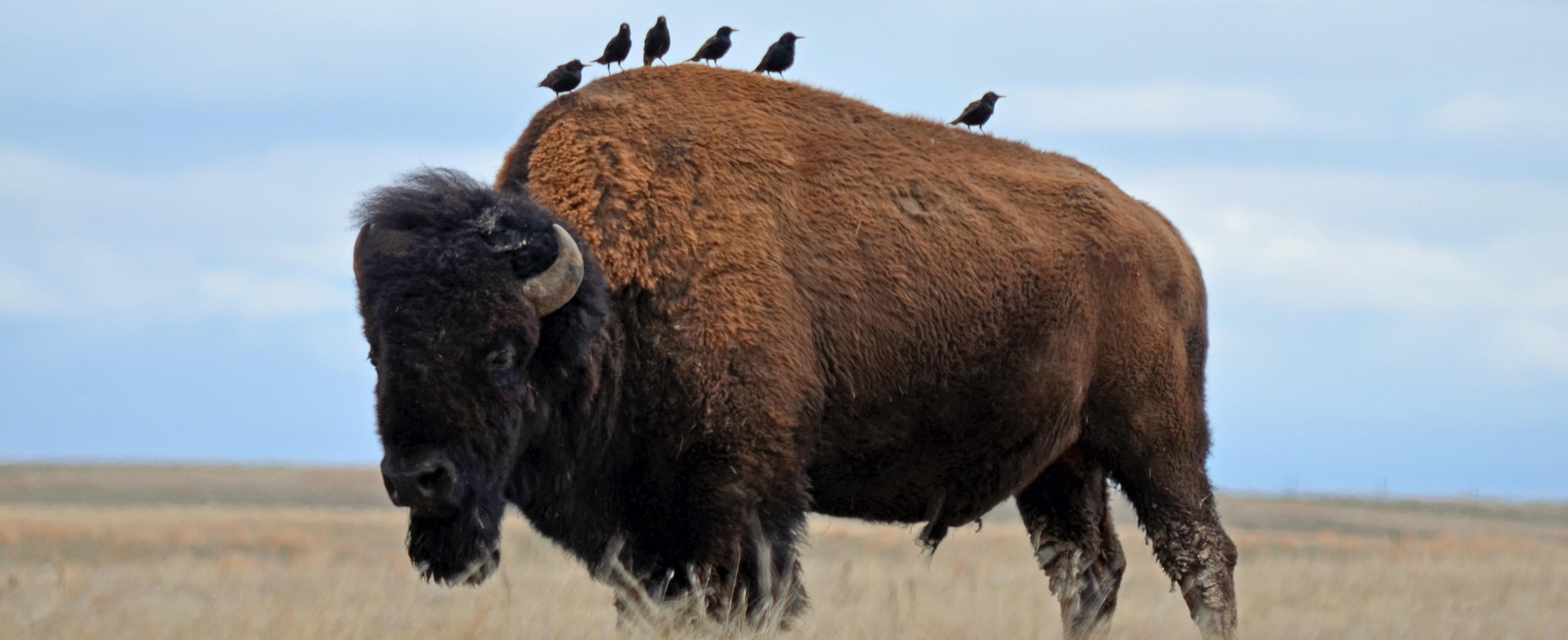
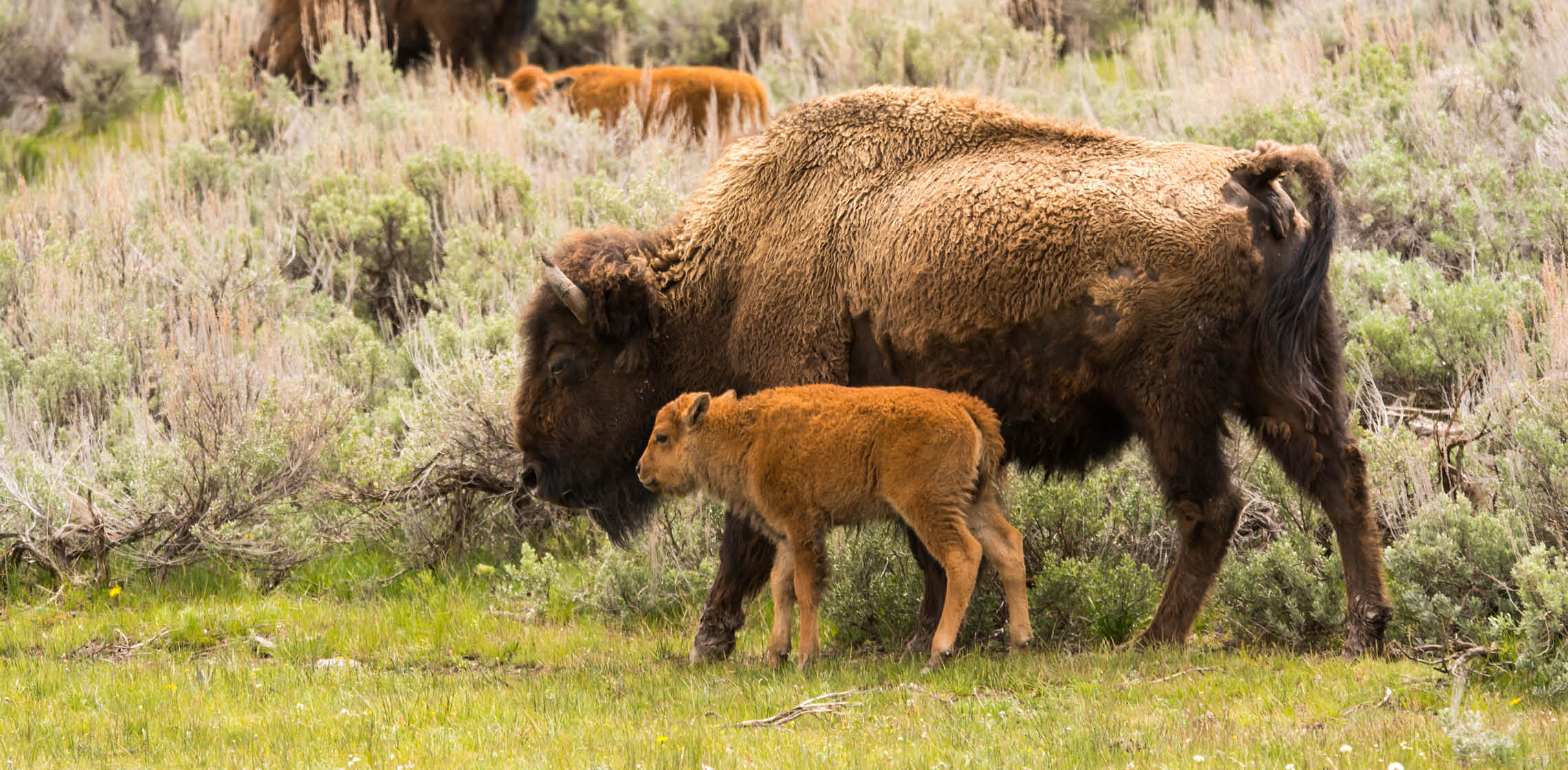
Wyoming State Animal: American Bison

I found this article on a site called MyCountry955.com  that details the differences between an American Bison and the American Buffalo.

From MyCountry955.com:

Don’t be confused, when in Yellowstone or most places in the North America, you’re not seeing Buffalo you’re seeing the American Bison. There is quite the difference and if you’ll follow along, I will explain it.

When the first explorers made their way west they came in contact with these massive beasts, that roamed the plains in the millions and started hunting until they thinned the herds greatly. Bison were hunted so often, they were almost eliminated in the late 1800’s. In the early 1900’s the US Army brought 21 Bison into Yellowstone and protected them and eventually were able to bring back to a comfortable number like we have now in the park.

Even back as far as those early day’s Bison have been (by some measures) incorrectly called Buffalo. Other than being both big, having horns and being extreme distant cousins in the Bovidae family, the American Bison isn’t even closely related to the Buffalo.

One difference you can see immediately between Bison and Buffalo is the Bison’s large hump on it’s back. This may shock you, but according to NPS.GOV the Bison’s hump is made up of muscles and long vertebrae so they can use their head as a snow plow to get to plants to eat during the winter. That comes in really handy during the Wyoming winters.

Yep! The American Bison is a natural born snow remover!

The Smithsonian’s National Zoo & Conservation Biology Institute points out that “True Buffalo” are actually native to Africa and Asia (Cape Buffalo and Water Buffalo), so living in the warmer climates, they wouldn’t need the type of thick coat of fur that the Bison of North America need during the winter months.  You’ll also notice that the Bison has a nice “mountain man” like beard to go along with that big winter coat. Of course the hot summers and to cool down the bison will shed the thick warmth for a lighter/cooler summer coat.

The next difference will come when you’re looking at the horns of the Buffalo and Bison. African Water Buffalo have long, large curved horns, the Cape Buffalo has horns that dip down and look like a mustache coming out of the top of their head and the Bison horns are sharp and shorter than the others.

Historians believe the reason many call the bison, buffalo is a simple play on words. Early explorers called bison by many names and that the French word for beef “boeuf” is where the name originated. Others believe the Bison’s coat resemble a “buff” coat (a popular coat worn in those times) and that’s how they started to be called “Buffalo”. Since that was EARLY in our country’s history, the origins of why they were called Buffalo are a little sketchy, but what we do know is that here in North America…they’re Bison!

I’m fairly certain that you’re not going to get in trouble for calling a bison, buffalo…BUT, just wanted you to be informed when you were in a deep conversation about western U.S. history and so you can school the “Tourons” on your next visit to Yellowstone


SOURCE: MYCOUNTRY955.COM

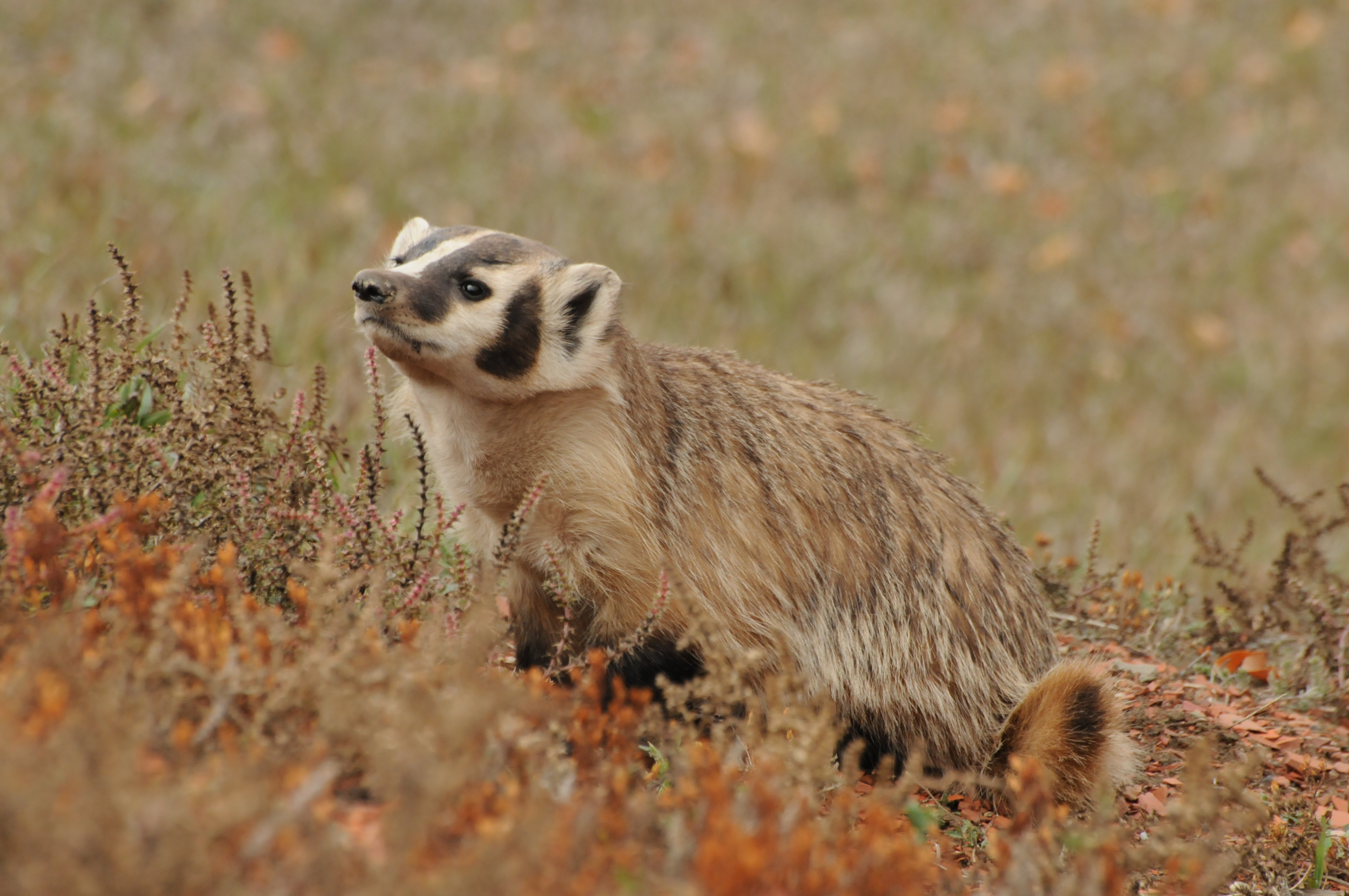
Wisconsin State Animal: American Badger

One of the most reclusive animals in the park, the American badger (Taxidea taxus) is a primarily nocturnal, burrowing predator found in grassy regions containing loamy soils that allow them to easily dig for prey and create burrows. The abundance of prairie dog towns and clay soil found in the Badlands provide a perfect environment for this species to thrive.

American badgers are medium-sized mammals with stocky bodies, short legs, and a tapered head. They have a distinctive black-and-white striped face and their torso’s coarse fur is thatched with black, brown, and white hairs, giving their coat a unique blended appearance. They’re equipped with strong, muscular forelimbs, long, sharp claws, and a streamlined body designed for digging.

Badgers are primarily solitary animals adapted to life underground. They build burrows used for shelter, thermal refuge, resting, and breeding. Badgers typically have many burrows in their home range and their structure can vary based on their use. During the summer, they frequently dig new burrows and alternate which one they use daily, but come fall they will begin using burrows for multiple days. During the winter, they typically select a single burrow to shelter from the cold and have been documented partially plugging entrances with loose soil to retain warmth. Similarly, when giving birth and rearing young in the spring, a mother badger will primarily raise her young in one burrow. Natal dens are structurally more complex, containing additional tunnels, chambers, and latrines, reflecting the needs of a family group. Abandoned badger holes are utilized as shelter by many other species, including snakes, rabbits, burrowing owls, insects, and tiger salamanders.

Badgers are physically equipped and specialized to prey on burrowing rodents, such as prairie dogs. They will smell and use other senses to detect recent activity at burrow sites and dig up their prey. They’ve been observed filling holes dug by their prey to block escape routes from burrow networks. While badgers are digging up burrows, coyotes can sometimes be observed waiting nearby to catch rodents fleeing their dens and catching an easy meal. While small rodents comprise most of a badger’s diet, they have also been documented consuming insects, birds, eggs, and various plants.

SOURCE: NPS.GOV

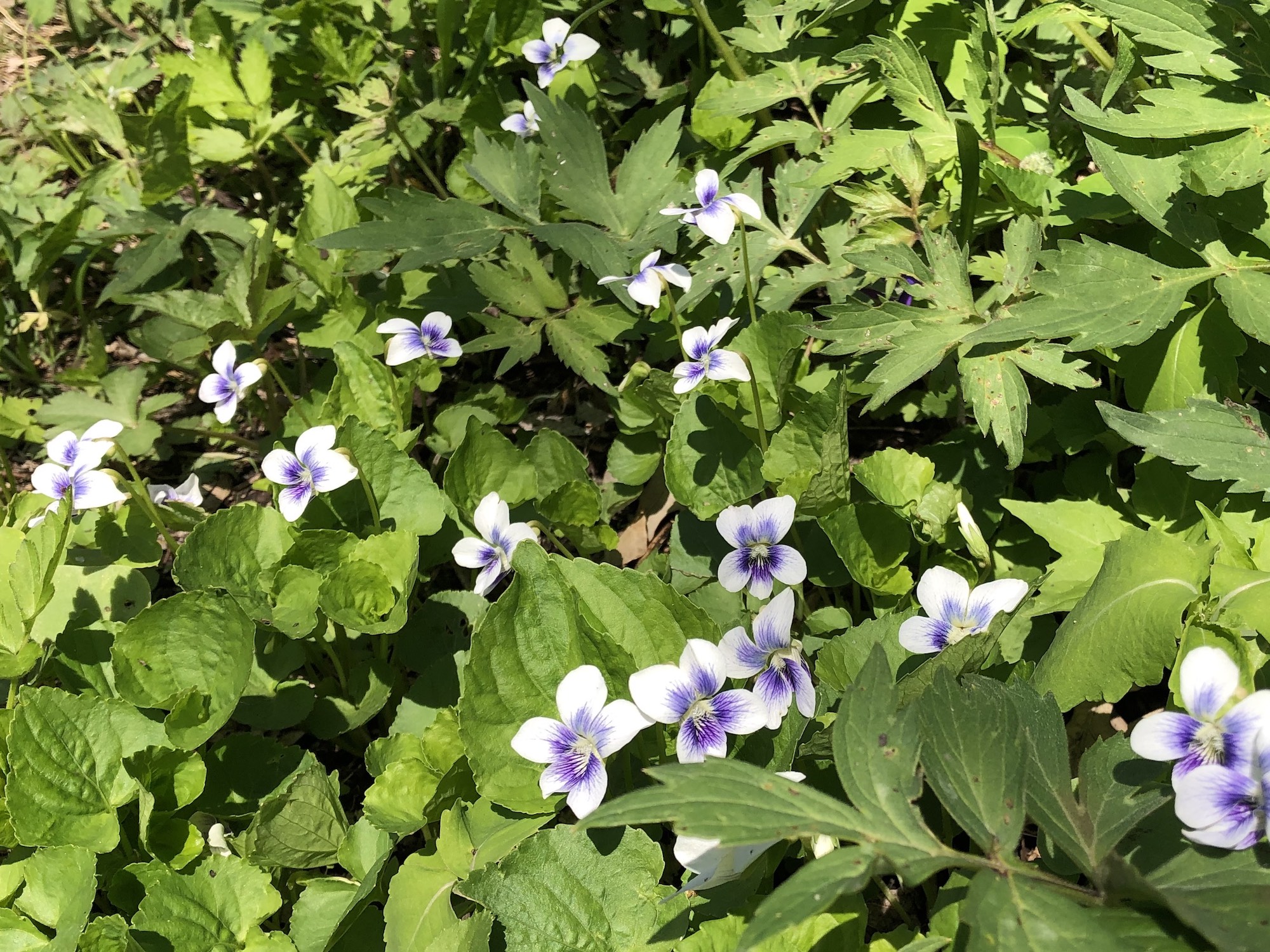
Wisconsin State Flower: Wood Violet

Wood Violet is a short-stemmed herbaceous perennial plant that is native to eastern North America. Wood violet flowers are irregular in shape and the flowers are deep blue/purple or violet, and sometimes almost white with blue markings. Wood violet flowers have side petals having beards or tuffs near the center of the flower. There are 5 petals in which lower one is longer and spurred, and the 2 petals having fine hairs.  Other names include: common blue violet, common meadow violet, purple violet, woolly blue violet and hooded violet. 

Wood Violet, also known as Viola papilionacea, is a charming wildflower commonly found in North America. With its distinctive purple petals and butterfly-like shape, this flower not only adds a vibrant touch to your garden but also brings a natural and serene atmosphere.

Wood Violet is celebrated for its charming and delicate flowers, which display a striking range of colors. The blooms are typically deep purple, lending a rich, royal hue to garden landscapes. However, variations in color are not uncommon, with some flowers showcasing light lavender tones that bring a soft, pastel touch. In rarer instances, Wood Violet produces pure white blossoms, which offer a stark and elegant contrast against its lush foliage.

The flowers consist of five petals arranged in a unique butterfly-like formation, a characteristic that gives the species its name “papilionacea,” derived from the Latin word for butterfly. The lower petal, known as the “lip,” is slightly larger and often marked with delicate, darker purple veins that act as nectar guides for pollinators. The two lateral petals sometimes bear tiny tufts of hair, adding subtle texture to the flower’s appearance.

Accompanying the vibrant blooms are the plant’s heart-shaped leaves, which are a rich, glossy green. These leaves grow in a basal rosette pattern, meaning they emerge from the base of the plant and spread outward, creating a dense, leafy ground cover. The scalloped edges and smooth surface of the leaves enhance their visual appeal, while their lush green color beautifully offsets the vividness of the flowers. Wood Violet naturally thrives in woodland habitats, where it enjoys the dappled sunlight filtering through tree canopies. It prefers partial shade, as direct sunlight can cause the delicate petals to fade or wilt. Ideal growing conditions include consistently moist, well-drained soils rich in organic matter, mimicking the humus-rich forest floors from which it originates. The plant is particularly well-suited to temperate climates, showing remarkable resilience to cold weather and even surviving light frosts

This species is highly adaptable and can flourish in a variety of soil types, although it prefers slightly acidic to neutral pH levels. It spreads easily by rhizomes, forming lush mats of greenery and vibrant flowers. Gardeners appreciate this characteristic for its usefulness as a ground cover in shaded garden corners, under deciduous trees, or along shaded pathways.

In addition to its ornamental value, Wood Violet plays an important ecological role. It provides nectar for early-season pollinators, including bees and butterflies, and serves as a host plant for the larvae of certain fritillary butterflies. Its ability to naturalize and spread effortlessly makes it a low-maintenance yet impactful addition to native plant gardens and woodland landscapes.

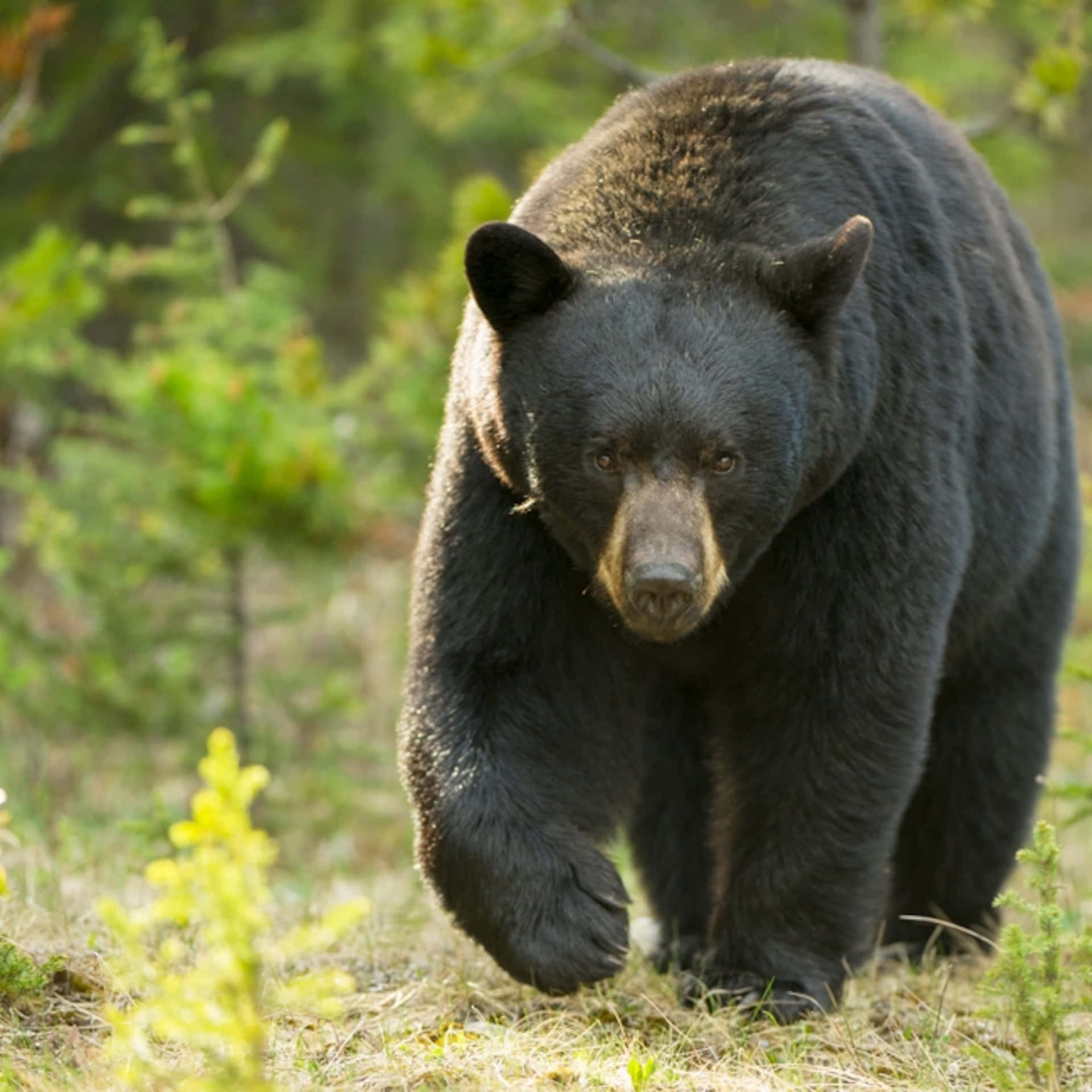
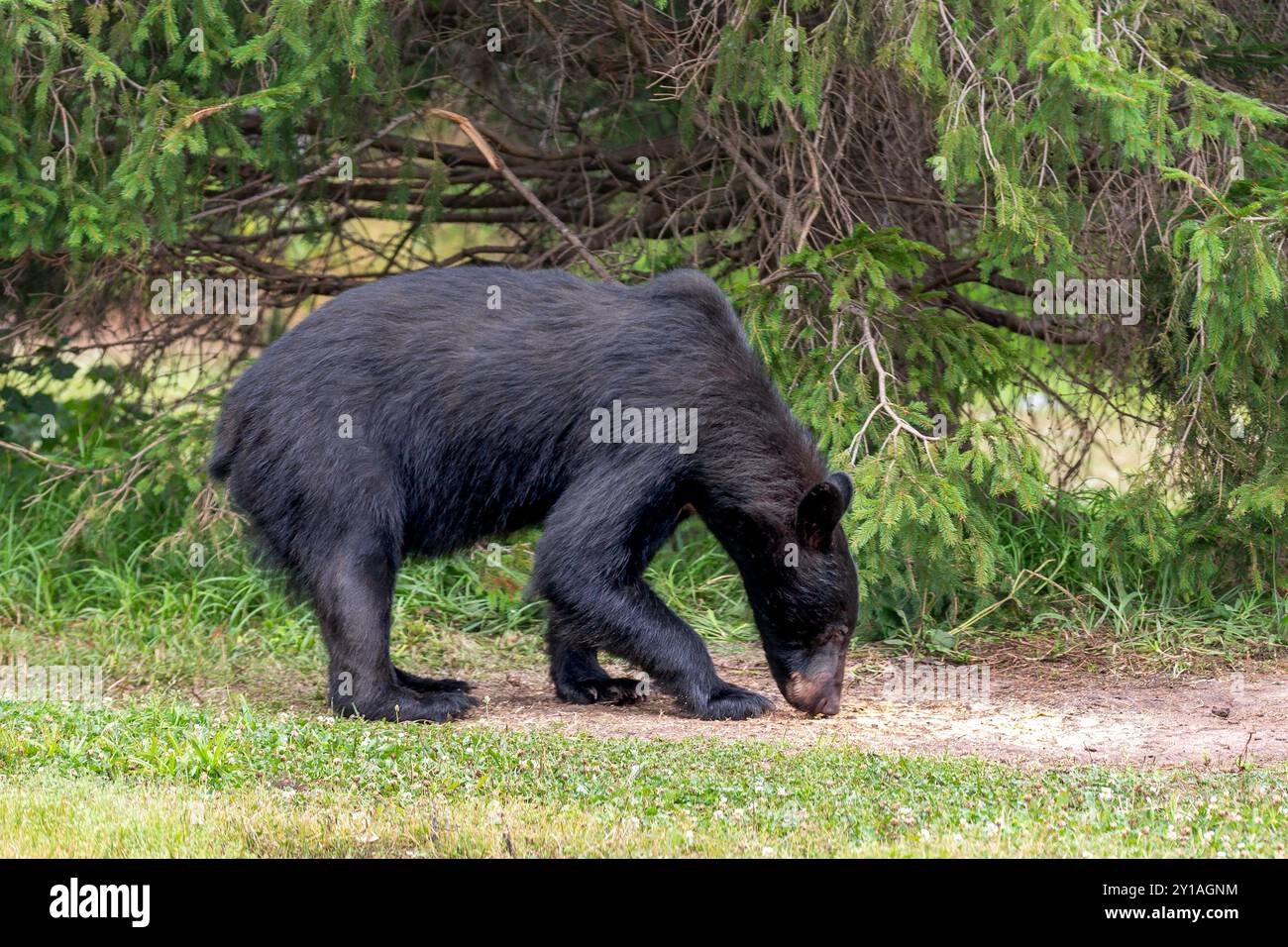
West Virginia State Animal: Black Bear

The American black bear, more commonly known simply as the black bear, is the smallest of the 3 bear species found in America. The brown or grizzly bear and the polar bear are larger in size; however, the black bear is still a huge mammal.

They can measure up to 2 meters in length and males can weigh over 400kg. When standing on their hind legs, they can reach a height of around 7 feet, although females are usually smaller and shorter than males.

Black bears can be distinguished from brown bears by their smaller size, longer ears and lack of a shoulder hump. Black bears also have shorter, more curved claws and are generally more timid animals. Typically they are black in color but depending on their location, their fur can be dark or light brown.

Black bears are found throughout North America but are more abundant in the northern states. Unlike brown bears, they prefer more densely forested habitats and rarely venture into open areas for long periods of time.

Interesting American Black Bear Facts

1. They are not always black in color

Some black bears can be a very light brown (or cinnamon) color and very rarely, completely white.

2. Black bears are shy and timid

Black bears will usually run away or climb up a tree rather than confront humans. This is mostly true but some individual black bears can be very aggressive, especially when threatened. They are however much less likely to attack compared to the brown or grizzly bears, which tend to be less weary and less approachable. Both these species, as well as the polar bear, will usually move on when left alone and black bears especially tend to flee when confronted by people.

3. They can eat over 10,000 berries in a day

When food is abundant, black bears will eat as much food as they possibly can, sometimes over 8kg of fruit and berries in a day. When berries and fruits are abundant, black bears will move to these areas and feed almost exclusively on these.  They have an excellent sense of smell and this helps them locate ripping berries, nuts and fruits as well as bee hives, where they feed on the honey and bee larvae. 

4. Black bears are skilled climbers

Black bears are excellent climbers and can easily access nuts and fruits before they fall to the ground. They have sharp, curved claws and this not only helps them when climbing but also makes ripping into trees logs or upturning boulders when searching for insects much easier. As well as being expert climbers, black bears are great swimmers and will cross fast flowing rivers to reach food on the other side.

5. They are incredibly strong animals

Black bears are up to 5 times stronger than the average human being.

6. American black bears are highly dexterous

They are capable of opening screw-top jars and manipulating door latches.

7. Their diet is predominantly vegetarian

Although they do eat meat, almost 70% of their diet is made up of plant matter.

8. Their sense of smell is 7 times more sensitive than a domestic dog

While American black bears have extremely sensitive noses, their eyesight and hearing is more comparable to that of a human.

9. Black bears are fast runners

Sprinting at around 40-50km/h, black bears can easily outrun humans.

10 They are mostly quiet animals

Although they tongue-click and grunt to communicate with one another, black bears do not growl or roar. 

11. They den in spots that are well hidden

Black bear dens are usually made in caves, under tree roots or are dug into hillsides.

12. Females usually give birth during the hibernation period

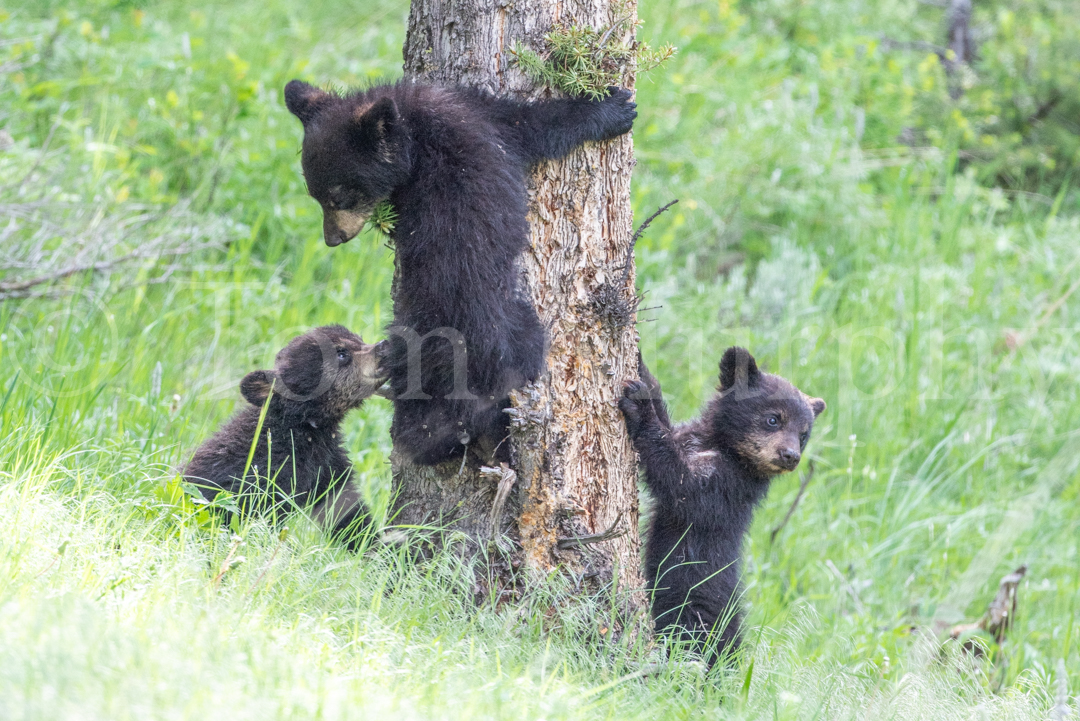
During the breeding season, a male and female will remain together until just before the cubs are born. Females usually give birth in their den while in torpor; a similar state to hibernation. The cubs will then feed off their mother’s milk while she hibernates until spring arrives. Usually two cubs are born and they leave the den for the first time when their mother comes out of hibernation. Female black bears teach their cubs how to find food and survive in the wild until the cubs are around 17 months old and become fully independent. The father of the cubs does not actively help in raising his offspring but does protect the territory from other males, who may attack the cubs.

13. Black bear cubs are playful animals

Cubs will regularly wrestle and play with each other as well as their mother. This helps them develop essential skills to survive in the wild.

14. Black bears are very intelligent

Black bears can memorize their whole territory, they can make scratching sticks out of twigs and can easily break into locked food storage containers.

15. There are black bear hybrids

American black bears can reproduce with other bear species and produce hybrid offspring. Black bear and grizzly bear hybrids have been reported in the wild.

16. They are a key contributor to the ecosystem

Black bears are important contributors to the ecosystems in which they inhabit. Due to their large size, they create micro-ecosystems where they leave deep footprints or break small trees and plants. They are also key in controlling insect populations as well as important seed disbursers, encouraging new plant growth wherever the seeds in their stools germinate. Black bears also have very large home ranges which means they can increase plant diversity by traveling long distances and disbursing seeds which otherwise may not have reached or germinated in that area.  

SOURCE: FACTANIMAL.COM

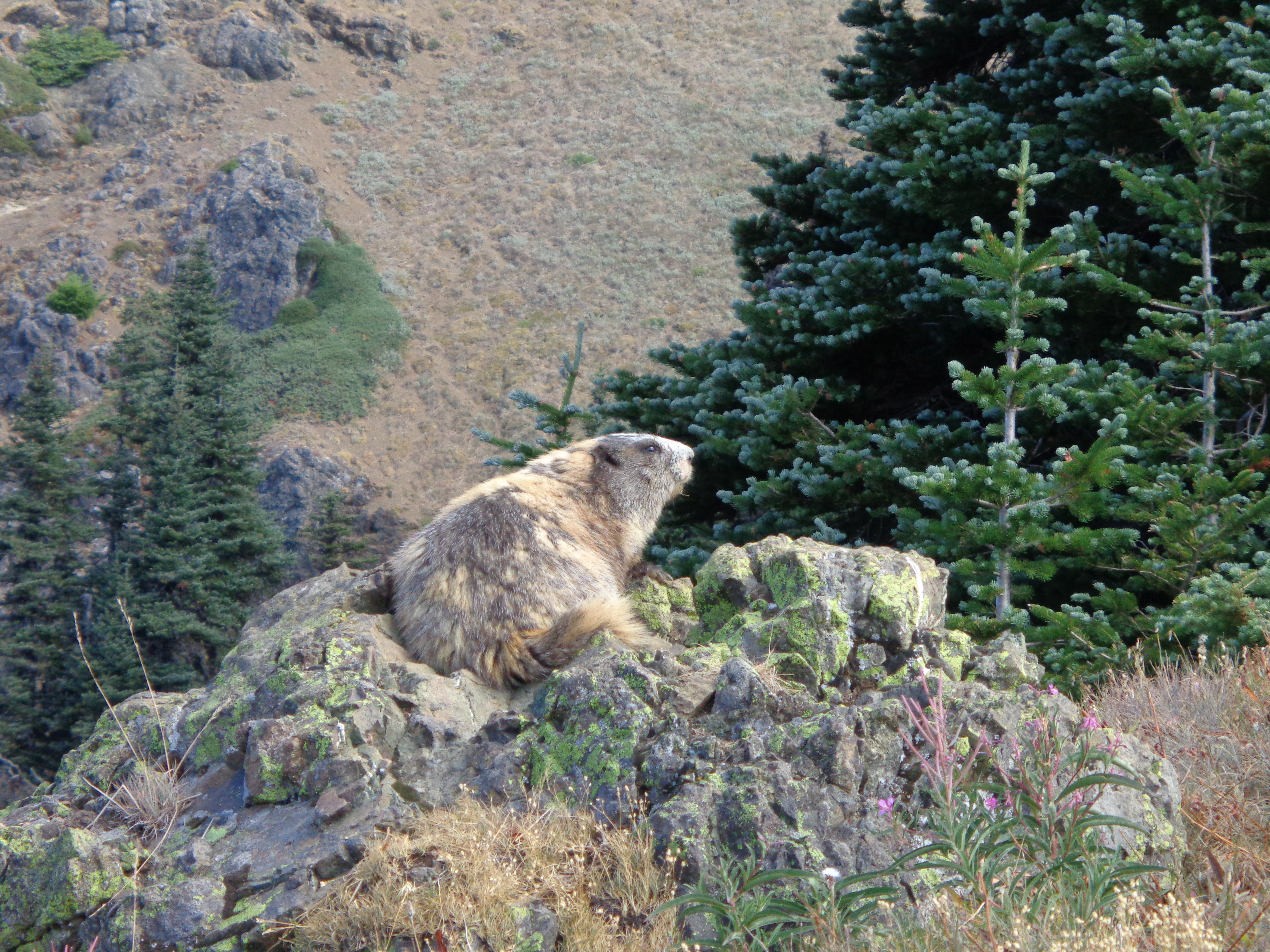
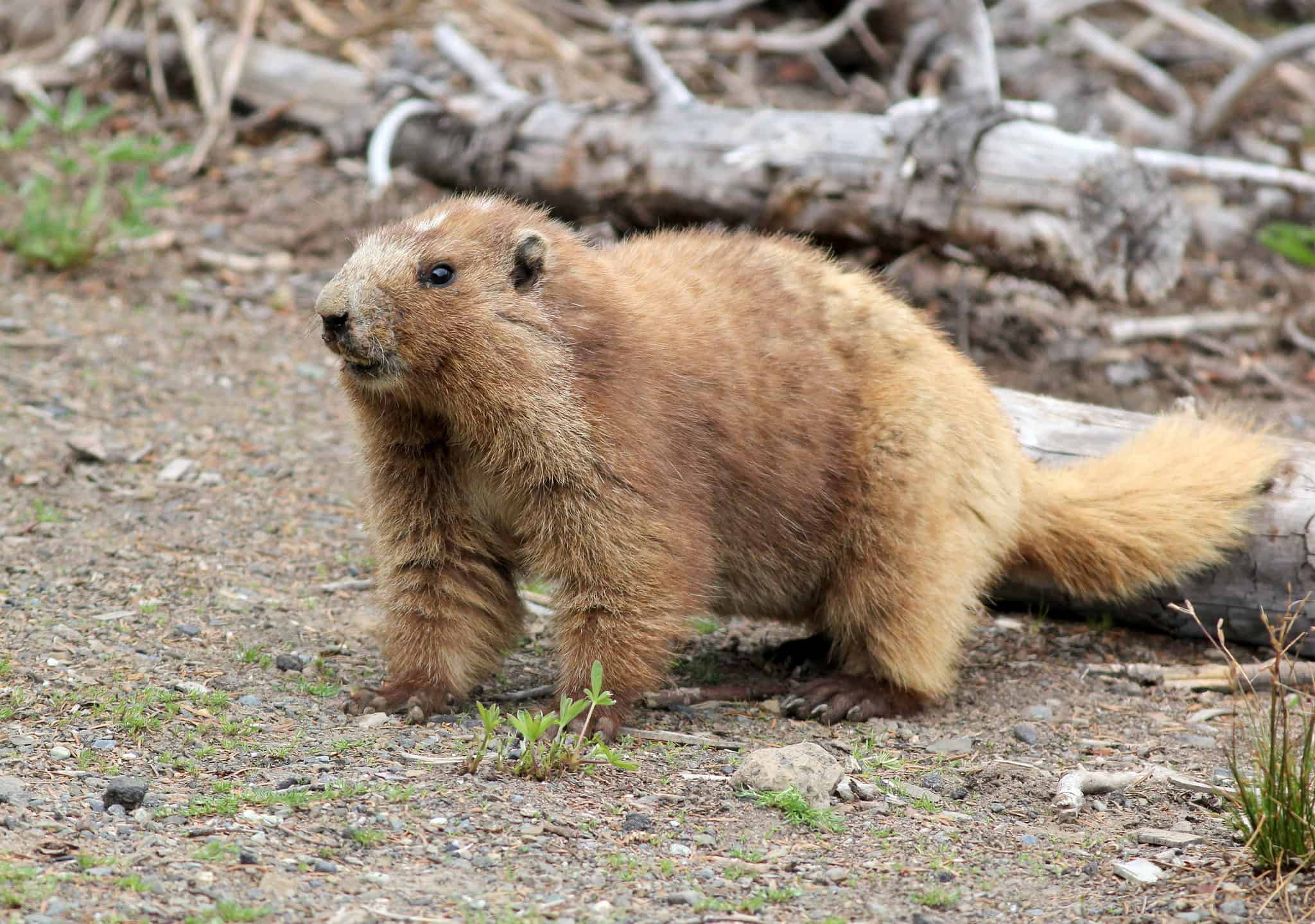
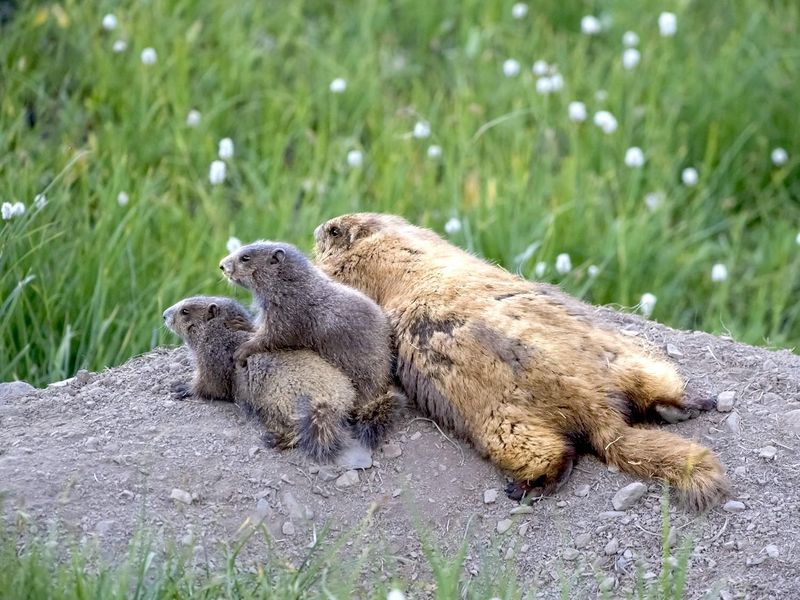
Washington State Animal: Olympic Marmot

Nuzzling, playing, chirping, feeding together; the Olympic marmot is quite possibly one of the most social and gregarious mammals on the peninsula. Marmots are rodents; they belong to the squirrel family and evolved during the Pleistocene Epoch. Some folks call them “rock chucks” or “whistle pigs”. There are 15 recognized species of marmot worldwide, all in the northern hemisphere, with six species in North America. The Olympic marmot however, is only found in the Olympic mountains and nowhere else (it’s endemic).

Identification:

Marmots are a housecat-sized rodent with a long, bushy tail. Adults can weigh 15 pounds or more before they enter hibernation in September or early October. Olympic marmots have widely varying coat colors, unlike their other American counterparts. The young are usually dark gray but the adults are often brownish in color, but may be yellow or tan colored with a variety of patch colors when they emerge from hibernation in the spring, and almost black in the fall.

Family groups of one adult male, one or more adult females, and several cohorts of young share a home range of 1/2-acre to five acres. In any given year, about 30 percent of adult females produce litters of 1-6 pups. Pups initially stay close to their burrows when they emerge in late July, but by mid-August, they can be seen wrestling and chasing each other in enthusiastic play. Marmots have a sharp, piercing whistle that warns others of intruders or potential predators, and notifies hikers that they are in marmot territory.

Habitat:

Marmots occupy mountain meadows above 4,000 feet. Although they are found throughout the Olympic Mountains, they are rare in the wetter southwest areas of the park. About 90 percent of Olympic marmot habitat is protected within Olympic National Park.

In the 1990s and early 2000s, Olympic marmot numbers declined, at least partly due to predation by non-native coyotes. Marmots and their habitat are also expected to be sensitive to climate change. In recent years, marmots have also disappeared from some of the driest meadows in the northeast Olympic Mountains. In response to these concerns, in 2010 the park initiated a volunteer monitoring program to record the presence or absence of marmots in many meadows throughout the park.

Diet:

Olympic marmots prefer fresh, tender, flowering plants such as lupine and glacier lilies. In May and June, they will eat roots and may even gnaw on trees. They can double their body weight in the summer and use stored fat during a seven to eight month hibernation.

Fun Facts

  • In 2009 the Olympic Marmot became the official endemic mammal of Washington state! 
  • The groundhog, or woodchuck, is a lowland species of marmot.

Marmots are supremely adapted to living on cold, windswept grasslands and exposed mountain slopes where snow covers the ground for all but a few short months. They forage on grasses, sedges, and herbacsous plants. They dig burrows in which they shelter from predators and weather, bear and nurse their young, and hibernate for up to 8 months a year. The body temperature of a hibernating marmot drops to <40F and the heart rate may drop to 3 beats per minute. Marmots do warm themselves up briefly every 10 days or so but do not eat or drink during hibernation.

Marmots have an unusually “slow” life history for rodents. Olympic marmots can live into their teens and do not reach reproductive maturity until age 3 or older. The average age of first reproduction for females is 4.5 years. Among reproductive-age Olympic marmots, about 35% of females wean young in an average year. Litters of 1-6 pups first come above ground in late July or early August, and about half of these young die before the following spring. The long maturation period, low rate of reproduction, and relatively high rate of juvenile mortality combine to make adult females particularly valuable to a marmot population – it can take years to replace one that is killed. The death of several breeding-age females can have serious long-term effects on the population.

Virginia State Animal: American Foxhound

(Virginia does not have a state animal per se.  They have a state bird, state bat and various other animals they recognize though.)

History of the American Foxhound

The American Foxhound, originally bred in the colonial era for hunting foxes, reflects a rich history intertwined with the development of early American society. As settlers moved into the New World, they brought with them various hound breeds, which they selectively bred to adapt to the diverse terrains and hunting needs of America. These breeding practices emphasized endurance, speed, and a keen sense of smell, essential traits for tracking and chasing foxes across vast landscapes.

The historical significance of the American Foxhound goes beyond its role in hunting; it symbolizes the melding of European traditions with American innovation. The breed became popular among early American gentry, who valued the hound for its loyalty and performance during hunts. As the nation expanded westward, the American Foxhound adapted to new challenges, further solidifying its status as an iconic American breed.

Understanding this history not only highlights the importance of the American Foxhound in the context of hunting but also reflects broader themes of adaptability and cultural exchange in early American life. You can appreciate the breed’s legacy as a reflection of ingenuity and resilience in the face of new frontiers.

Physical Characteristics

Characterized by a sleek, athletic build, the American Foxhound showcases a blend of strength and agility that’s essential for its hunting prowess. You’ll notice that these dogs typically stand between 21 to 25 inches tall at the shoulder, with weight ranging from 40 to 65 pounds, reflecting size variations that can accommodate different hunting needs.

Their long legs and powerful bodies enable them to cover extensive ground quickly, making them ideal for tracking. The American Foxhound has a distinctive head with a long, narrow muzzle and large, drooping ears that contribute to its keen sense of smell.

When it comes to coat colors, you’ll find a range of options, including tri-color patterns of black, white, and tan, as well as solid colors like red or lemon. Their short, dense coat provides protection against the elements while requiring minimal grooming, making it easy for you to maintain.

Temperament and Behavior

When you encounter an American Foxhound, you’ll notice their friendly and sociable nature right away. These dogs aren’t only energetic and playful but also possess a strong hunting instinct that drives their behavior. Understanding these traits will help you appreciate the unique personality of this breed.

Friendly and Sociable Nature

American Foxhounds are known for their friendly and sociable nature, making them excellent companions for families and individuals alike. Their warm demeanor encourages positive social interactions, which can enhance your lifestyle.

You’ll find that engaging in bonding activities with your Foxhound not only strengthens your relationship but also promotes their overall well-being.

Here are four ways to deepen your connection with your Foxhound:

  1. Regular Walks: Taking your Foxhound on daily walks helps you bond while allowing them to explore their surroundings.
  2. Playdates: Organizing playdates with other dogs fosters social skills and keeps your Foxhound happy and engaged.
  3. Training Sessions: Interactive training can enhance your communication and build trust between you and your pet.
  4. Family Activities: Including your Foxhound in family gatherings or outdoor activities provides them a sense of belonging while reinforcing their friendly nature.

SOURCE: DOGACADEMIC.COM

Happy National Louisiana Day!

As National Louisiana Day approaches, there’s no better place to celebrate than the vibrant city of Baton Rouge. Recognized on November 9, National Louisiana Day is observed in celebration of our great state and all the wonderful things associated with it. Commonly known for its music, Creole culture, and delicious food, Louisiana is also known for being a melting pot of many different cultures. Here are some engaging ways to immerse yourself in the rich local culture and discover the best ways to celebrate in Baton Rouge!

Explore the State Capitol

Kick off your celebration with a visit to Baton Rouge. Louisiana was admitted into the Union on April 8, 1812, and Baton Rouge was incorporated shortly after in 1817. You can explore our state’s colorful history by visiting notable landmarks, such as the Old State Capitol, which now serves as the Museum of Political History. Or head to the tallest state capitol in the United States, where you can enjoy stunning views from the observation deck and fully appreciate the beauty of Baton Rouge. If you want to delve even further into the history of Louisiana, visit Capitol Park Museum to learn more about the diverse aspects of Louisiana history, industry, and culture.

Discover an Oyster Paradise

Here in Louisiana, our calendar revolves around which seafood is in season, and right now, it’s all about fresh, delicious oysters. Baton Rouge is brimming with spots that serve them up just right, just like Drago’s. Head to Jolie Pearl Oyster Bar for oysters prepared raw, fried, baked, Bienville, or in a Po’ Boy. At Phil’s Oyster Bar & Seafood Restaurant, try them raw, charbroiled, fried or also in a Po’ Boy. At DON’S Seafood, enjoy them raw, charbroiled, or as DON’S Original Jacked Up Oysters. No matter what spot you choose, any of these restaurants will make celebrating Louisiana’s seafood heritage a delicious experience.

Dive Into a Bowl of Gumbo

Visit one of Baton Rouge’s local restaurants, and dive into a steaming bowl of our state cuisine, gumbo! No celebration of Louisiana culture is complete without indulging in our iconic dish, commonly found on menus at restaurants throughout Baton Rouge. Try Dempsey’s, the reigning 2024 champ for best gumbo, or runner-ups Parrain’s Seafood Restaurant, The Chimes, and Mike Anderson’s. No matter where you go, you’ll find that what makes gumbo so special are the many ways it can be served and enjoyed. 

Enjoy a Beignet

Treat yourself to a taste of Louisiana’s famous desserts! We would be remiss if we didn’t mention the state doughnut – the beignet! Beignets are French doughnuts that are deep-fried, creating a fluffy pastry that is then sprinkled with powdered sugar. If you’re looking to try the best, then Baton Rouge is the place for you – the best beignets can be found at local favorite, Coffee Call. It’s a delightful way to celebrate National Louisiana Day with a sugary twist!

Visit the Baton Rouge Zoo

Take off on a wildlife adventure at the Baton Rouge Zoo, where you can get to know all about the state animal — the American alligator — plus all of the other creatures that call the zoo home. As the first zoo in Louisiana to achieve the distinguished honor of being accredited by the Association of Zoos and Aquariums, the zoo is proud to be home to animals from around the world including tigers, black rhinos, flamingos, and giraffes. Before your visit, check their calendar to see what types of exhibits, educational programs, and interactive experiences they have on the schedule.

Feel the Blues

Baton Rouge has deep roots in the blues, with a history that stretches back to the early 20th century, shaped by legendary musicians like Slim Harpo and Lightnin’ Slim who helped put the city on the map as a blues hotspot. Today, you can still catch that soulful sound echoing through local venues like Phil Brady’s, the oldest blues bar in Baton Rouge, or visit Teddy’s Juke Joint, a one-of-a-kind spot that keeps the juke joint tradition going strong. And don’t forget to mark your calendars for spring when the Baton Rouge Blues Festival brings the city’s rich blues heritage to life in a big way!

SOURCE: VISITBATONROUGE.COM

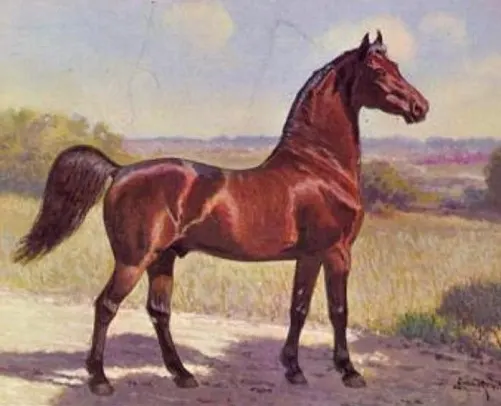
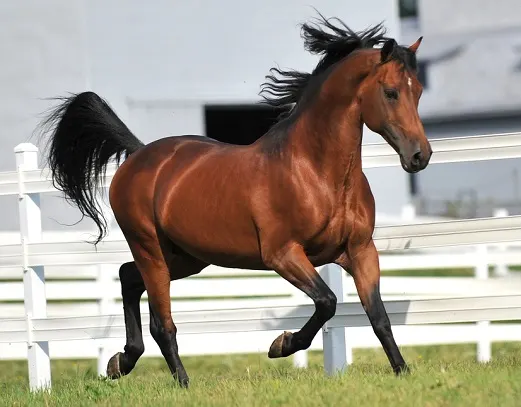
Vermont State Animal: Morgan Horse

From Horsey Hooves:

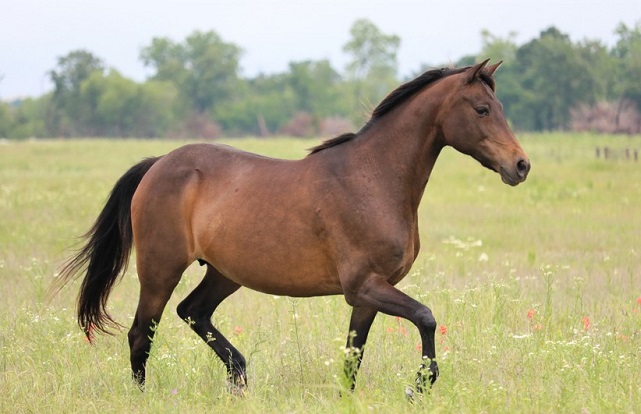
The Morgan horse is one of the earliest American horse breeds that still exist today. They are easy to recognize from their prominent eyes, arched necks, and graceful movement that captivates horse lovers around the world. Morgan horses are famous for their people-loving attitude, intelligence, and gentle nature. They have outstanding stamina and are extremely versatile, performing well in both English and Western disciplines.  Morgans are a popular choice for equine therapy, driving, and stock purposes. A typical Morgan stands between 14.1 and 15.2 hands at the withers, but some are outside this range. The most common colors in the breed are black, bay and chestnut, but many others are acceptable, including pinto.

Here are eleven facts about Morgan horses.

Morgan Horses Are One of the First Horse Breeds Developed in the Us

The Morgan horse is, in fact, the second native American horse breed. The first breed to develop in the United States was the now-extinct Narragansett Pacer. However, no existing American horse breed can trace its ancestry as far back as the Morgan horse.

The Morgan breed was an indispensable asset to Americans in the 19th century. Other than general riding, they worked as coach horses, partook in harness races, and were the go-to cavalry mounts in the American Civil War. Between 1906 and 1951, the US Department of Agriculture bred Morgan horses specifically for war.

The Morgan Horse Club, later called the American Morgan Horse Association (AMHA), was established in 1909. Prior to 1909, only horses deemed by Colonel Joseph Battell to be the descendants of Figure were regarded as Morgan horses (Source: AMHA). Many other breed registries followed in the next few decades, spread across the United States, Europe, and Oceania.

“The Horse That Chooses You”

Due to their remarkable ability to connect with people, the AMHA dubbed the Morgan horse “The Horse That Chooses You.” This phrase also serves as the registry’s slogan, and many enthusiasts use it to refer to the breed.

The Founding Sire of the Morgan Breed Is Figure

All Morgan horses today descend from one foundation sire called Figure. Figure was a stallion of unknown origins born in 1789 and given to Justin Morgan as debt payment. Recognizing the stallion’s unique ability to pass on his best traits, Justin Morgan used Figure to create a new breed. While his pedigree is not known, it is thought that Figure’s sire was a Thoroughbred stallion called True Briton. Moreover, his dam was likely a mare of Arabian and Barb breeding, according to the AMHA.

Figure was believed to be 14 hands tall, lightly built, and weighed around 1,000 pounds (450 kg). His owner, Justin Morgan, was a man of many professions. Born in 1747, he was a musician, horse breeder, and tavern keeper, among other things. Following his success with Figure, the stallion was named after him, and “Morgan” became the name of the new breed.

Interestingly, Figure only sired six known sons throughout his career as a stud. Three of his offspring went on to become prominent foundation stallions in the breed, namely Sherman, Bulrush, and Woodbury.  One of his sons, called Black Hawk, became a foundation sire for the American Saddlebred, Standardbred, and Tennessee Walking Horse breeds.

There Are Four Main Bloodlines Within the Morgan Breed

The four primary bloodlines in the Morgan breed are the Brunk, Lippitt, Government, and Western Working “families.” These bloodlines originate from breeding programs conducted in the 1800s and 1900s. Each of these families has slightly different traits, depending on which breeding program they descend from.

The Brunk family was started by horse breeder Joseph Brunk in Illinois. Horses from this family are renowned for their athleticism and soundness. They are well-muscled and slightly heavier built than their distant cousins.

The Lippitt breeding program was named after Robert Lippitt Knight, who maintained a high level of purity in his horses. Lippitt Morgans had no outside influence in the last century, and most bloodlines trace directly back to Figure. Lippitt Morgans are the rarest of the four bloodlines, with less than 1,000 horses in existence.

The horses of the Government family descend from the cavalry mounts bred by the USDA. In 1951, the University of Vermont took over the breeding program, purchasing most of the breeding stock. Morgans from this family are by far the most abundant in numbers.

The Western Working family is a collective category for Morgans that descend from working and stock horses. Many of these horses trace their ancestry to stallions from the Government family that were shipped to western states.

There Are Nearly 90,000 Registered Morgans Worldwide

According to the AMHA, there were around 89,000 registered Morgans in the world in 2015. As for the number of Morgan horses that exist worldwide, the grand total is estimated to be between 175,000 and 180,000. While the breed is most popular in the United States, larger Morgan populations exist in Sweden and the United Kingdom. By 2012, the AMHA has registered approximately 179,000 horses over its lifetime. Moreover, according to the United States Equestrian Federation, over 3,000 foals are registered with the association each year.

Morgans Have Influenced Many American Horse Breeds

Since Morgans were among the first horse breeds developed in the United States, it’s not surprising that they influenced many other American horse breeds. A few examples are the American Quarter Horse, Saddlebred, Standardbred, and the Tennessee Walking Horse. In the 19th and 20th centuries, the Morgan breed made its way around the world, further extending its influence. In England, for example, a Morgan stallion contributed to the developing Hackney horse.

The Morgan Horse Is a National Pride

When it comes to the Morgan horse, there is much to be proud of. These fine little horses are not only intelligent, but have proven their worth against larger and stronger horse breeds. Today, the Morgan horse is the state animal of not one, but two American states. In 1961, Vermont pronounced the Morgan their state animal, and Massachusetts did the same in 1970.

The Morgan Horse Appears in Literature and Film

The Morgan breed featured in the works of several children’s authors, including Ellen Feld and Marguerite Henry. Two books of Feld’s “Morgan Horse” series received awards from the Children’s Book Council and the International Reading Association. What’s more, Marguerite Henry’s “Justin Morgan Had a Horse” became a Newbery Honor Book in 1946. Even more exciting, the book was turned into a Disney movie in 1972. Although Henry’s story didn’t always stay true to historical facts and was misleading in certain aspects, critics say.

Morgan Horses Are Easy Keepers and Have Long Lives

The average lifespan of a Morgan horse is 20 to 30 years. It’s not unusual that Morgans live well into their 30s, making them one of the longest-living horse breeds in the world. There are very few genetic diseases in the breed, which contributes greatly to their long and healthy lives. Morgan Horses also keep well on a forage-only diet and require little to no grain. In fact, they are prone to becoming overweight if their diet is not monitored regularly.

Some Morgan Horses Are Gaited

While the Morgan isn’t a gaited breed, some horses can perform special gaits such as the pace, fox trot, or rack. Their pacing ability originates in the 19th century when Morgan Horses were popular in harness racing.  Breeders developed both trotting and pacing Morgans for competition, hence why some horses can pace today. Experts believe the gaited ability is not linked to any specific bloodlines and shows up spontaneously within the breed. It most likely originates from crosses with gaited horses early on in the Morgan’s development.

Morgans Were the First to Represent the Us in the World Pairs Driving Competition

This horse breed really is full of surprises! The Morgan horse was the first American breed to earn a place in the World Pairs Driving competition, outperforming all other native breeds. As it turns out, Morgan horses are just as talented in harness as under saddle. They often appear in driving competitions worldwide, bringing pride to the American nation.

SOURCE: HORSEYHOOVES.COM

Utah State Animal: Elk

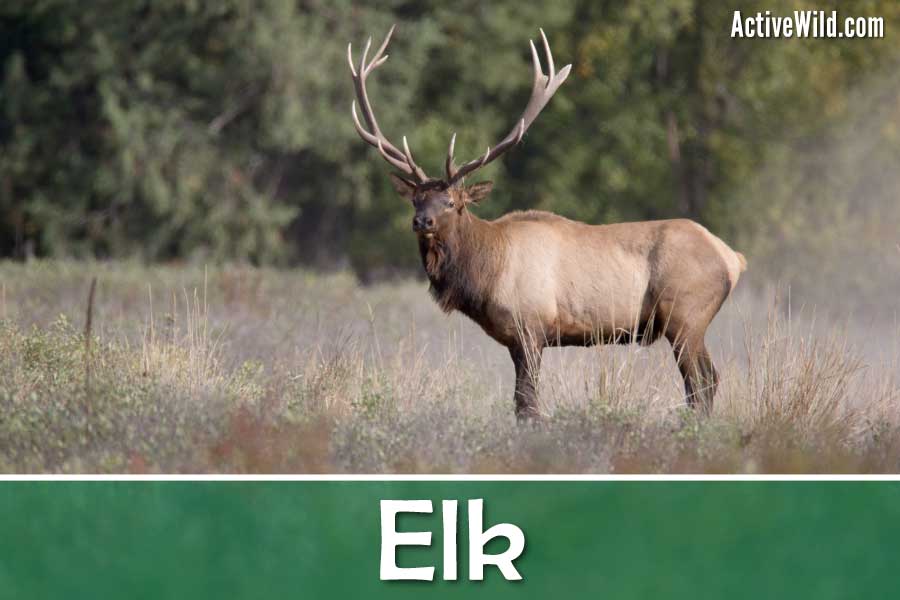
The elk is the second-largest species of deer in the world (only the moose is larger). It is found in forest, shrubland and grassland habitats in North America and eastern Asia. Bull elk are characterized by their impressive, branched antlers and loud “bugling” cries, which can be heard during the fall mating season.

Elk are thought to have evolved about 20 million years ago in the steppe regions of Beringia, a mass of land that once stretched between Siberia in northeastern Asia and Alaska in northwestern North America.

Today, the total elk population numbers around two million individuals, and is thought to be increasing. The species’ conservation rating is “Least Concern”.

Elk are large ungulates (hoofed mammals) with dark reddish-brown coats and pale patches on their rumps.

The color and thickness of an elk’s coat changes with the season; in winter it becomes thick and greyish, whereas in summer it is thinner, shorter and darker in color.

In winter both male and female elk develop a mane of dark hair around their necks.

Elk or Wapiti?

The elk is also known as the wapiti. The name wapiti comes from Shawnee and Cree word “wapiti”, which refers to the elk’s white rump.

Elk Antlers

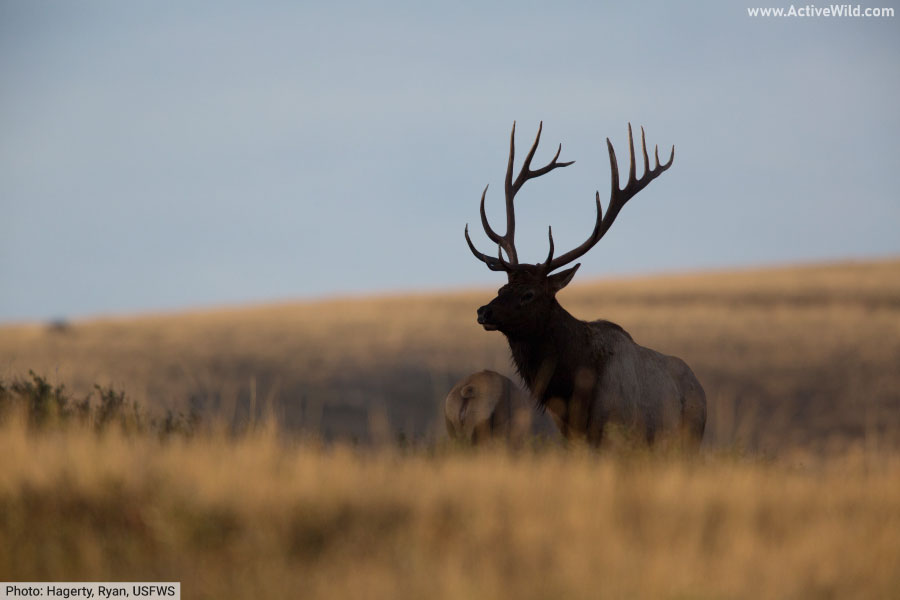
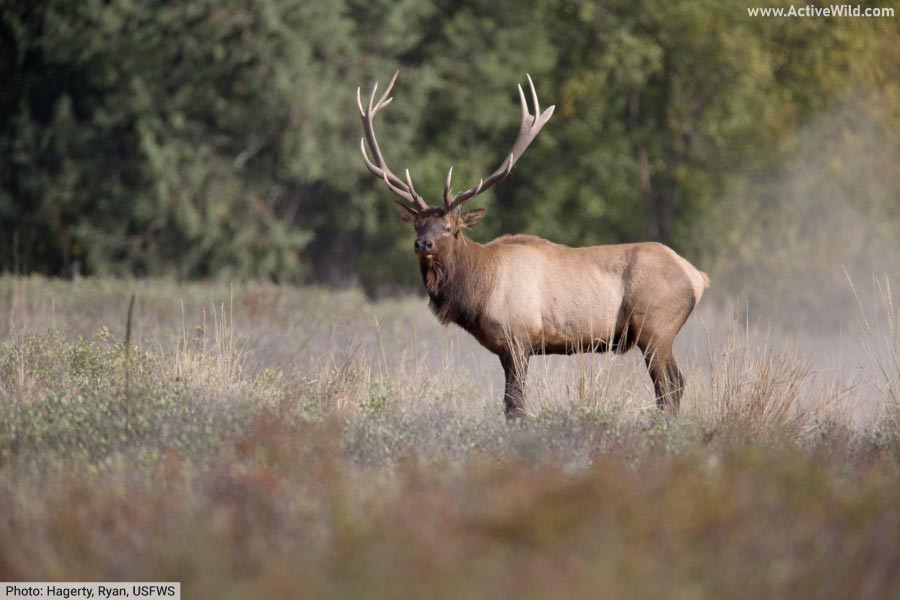
Male elk develop large, branched antlers during the spring. When the antlers are fully developed, they may weigh as much as 40 lb. As is the case with most deer species, female elk do not grow antlers.  The bull elk’s antlers are used to attract females and to fight off rival males and predators. The antlers have a central core of bone and, while growing, are covered with a layer of skin known as velvet, which is richly supplied with blood vessels.

The velvet is rubbed off once the antlers are fully developed. When the mating season is over, the antlers are shed; a new pair will begin to grow at the start of the next spring.

Elk Bugling

During the rut (mating season), bull elk emit characteristic, high-pitched screaming calls. This behavior is known as “bugling”. These extremely loud and penetrating calls can be heard from several miles away.

SOURCE: ACTIVEWILD.COM

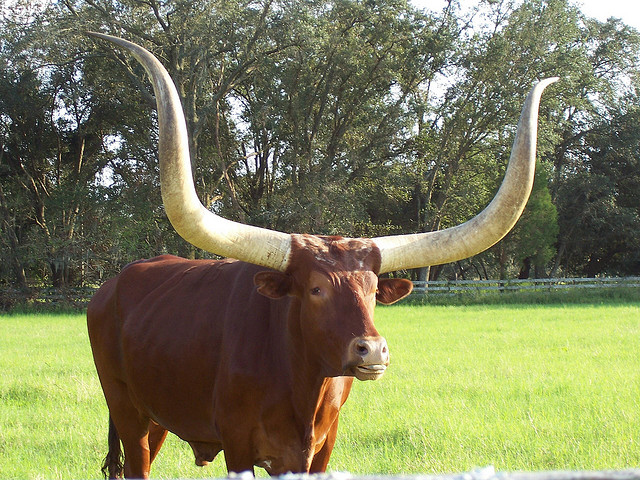
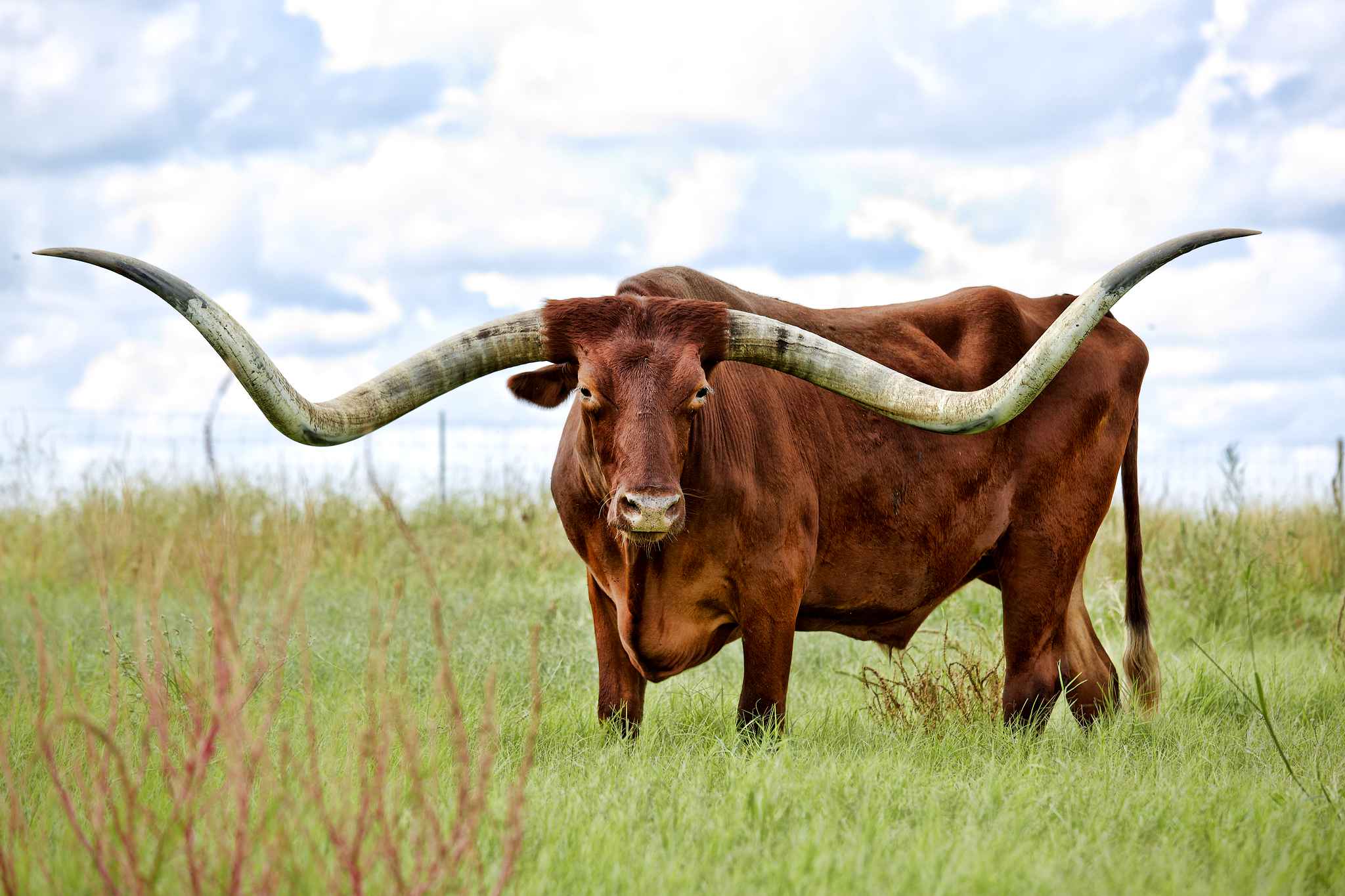
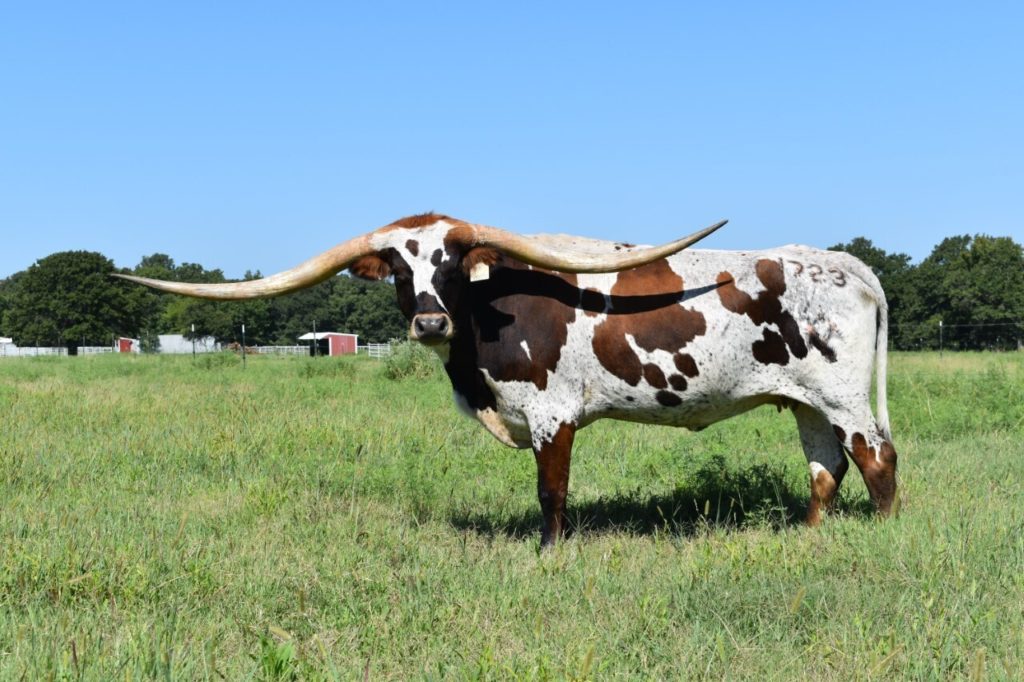
Texas State Animal: Texas Longhorn

Like all awesome stories, the history of the Texas Longhorn Cattle Breed has many twists and turns. A quick computer search will reveal tons of information. However, here are 17 astonishingly interesting facts that are fun and that stand out.

Fact 1.

Texas Longhorn Cattle did not originate in Texas
LOL!! None-the-less longhorn cattle are synonymous with the state. READ ON if this makes no sense ….

Fact 2.

Texas Longhorn Cattle have a link with Christopher Columbus.
On his second voyage to the New World (1493), Columbus brought cattle with him from the Canary Islands. A study conducted in 2013 by the University of Texas in Austin, connected the cattle genetically as progenitors of Texas Longhorn cattle. Over Centuries, Spanish settlers and missionaries drove these ancestral Longhorn cattle herds north, over Mexican lands towards what we now call Texas.

Fact 3.

There was a time when Texas Longhorn Cattle were feral.
The Spaniards believed in open range feeding. As a result, many of their cattle escaped, were left behind on their travels or just wandered off. In the days predating barbed wire fences, these cattle also intermingled with other bovine breeds brought to the continent. Cattle interbred, became wild and left to their own devices underwent a process of Natural Selection. Only the strongest survived.

Fact 4.

It is estimated that around the 1860’s, 5 to 6 million cattle roamed wild in Texas.
Wild Texas cattle were predominantly unbranded and self-sufficient.

Fact 5.

“Maverick“- originally was in reference to unbranded cattle.
The word Maverick means an independently minded person. Samuel A. Maverick (1803-1870) was a Texas land baron and cattle owner who refused to brand his cattle. In the mid 1800’s, a calf or yearling without a brand became known as a Maverick.

Fact 6.

In the early 1800’s Texas Longhorn Cattle were trailed to New Orleans and California for their hides and tallow.
During these drives, Texas Longhorn Cattle developed an immunity to Tick Fever, which they in turn passed on to other breeds of cattle they came into contact with. Many states placed restrictions against their passage and it became more difficult to get the wild Texas cattle to market. The era of the great cattle trails began in earnest after cow towns were established at rail heads outside of Texas, as a point of departure to ship cattle to markets outside of Texas.

Fact 7.

Many Civil War soldiers who returned to a war impoverished Texas State turned to Texas Longhorn Cattle to earn a living.
These war veterans rounded up unmarked cattle, branded them and claimed them as their own. The longhorn cattle drives that ensued help revive the State’s economy and became the fuel for the legendary cowboy and the trails that they pursued.

Fact 8.

Charles Goodnight was a trail blazer, literally!
Sometimes known as the ‘father of the panhandle’, Charles Goodnight was one of the best known ranchers in Texas. He created a path together with Oliver Loving along the Pecos River, to Colorado. The Goodnight/Loving trail was heavily used even though it was a long way round but it was the safest route in that direction.

Fact 9.

The Chisholm Trail was another major route for livestock out of Texas.
Between 1867-1884 (less than twenty years), over 5 million and up to 10 million longhorn cattle are estimated to have been driven to the rail heads in Abilene, Kansas, on their way East.

Fact 10.

The Texas Longhorn cattle drives spawned the cowboy culture.
Cattlemen in Texas worked closely with Vaquero’s.  They were accustomed to trailing large groups of cattle. As a result, their influence is woven into the cowboy culture regarding the techniques of handling cattle, their equipment as well as their clothing.

Fact 11.

By the 1920’s, Texas Longhorn Cattle faced extinction.
As the Cattle industry grew, so did the demand for more beefy cattle. In addition, fencing made it easier to control cattle and control a practice of interbreeding Texas Longhorn Cattle with more beefy bovine breeds. Subsequently, the number of Texas Longhorn Cattle in their pure form, began to dwindle.

Fact 12.

The Federal government commissioned the establishment of a foundation herd of Texas Longhorn cattle in order to preserve the breed.
J. Hatton and W. C. Barns, two US Forest Service employees rounded up 19 cows and a bull over a seven-year period. Consequently, this longhorn herd, known as the Wichita Mountains Wildlife Refuge herd, became the foundation for the government maintained WR herd, as we know it today. From 1927, records of each animal were kept and since 1934 to the present day, an annual auction sale of these historic longhorn cattle is held.

Fact 13.

Six additional families are recognized for contributing to the maintenance of the Longhorn Breed.
These ranchers bred Longhorn cattle in their purest form when other farmers did not. Moreover, they perpetuated bloodlines that have influenced and provided the foundation for the Longhorn breed as we know it today.

Fact 14.

Fort Griffin State Park is the permanent home of the Official State of Texas Longhorn herd.
The herd is comprised of around 250 Texas Longhorn Cattle.  They reside mainly at Fort Griffin State Park. Furthermore, they have been there since 1948.

Fact 15.

Charlie Schreiner III established The Texas Longhorn Breeders Association of America (TLBAA) in 1964 
Specifically, the mission of the TLBAA as stated on the website is “To record, promote, and protect the legacy and distinct characteristics of the Texas Longhorn while ensuring its purity and posterity.”

Fact 16.

The Cattlemen’s Texas Longhorn Registry (CTLR)
The CTLR is a small group of Breeders who believe that modern day improvements to Texas Longhorn Cattle are compromising the integrity of the Texas Longhorn cattle breed.

Fact 17.
The Texas Longhorn Cattle has changed considerably over the last 100 years. So much so, we recently wrote an article highlighting those changes.

SOURCE: GVRLONGHORNS.COM