Harlequin Shrimp

The harlequin shrimp is a saltwater shrimp species that inhabits coral reefs in the tropical Indian and Pacific Oceans. Its beautiful appearance and selective diet make it a unique creature among shrimp species.

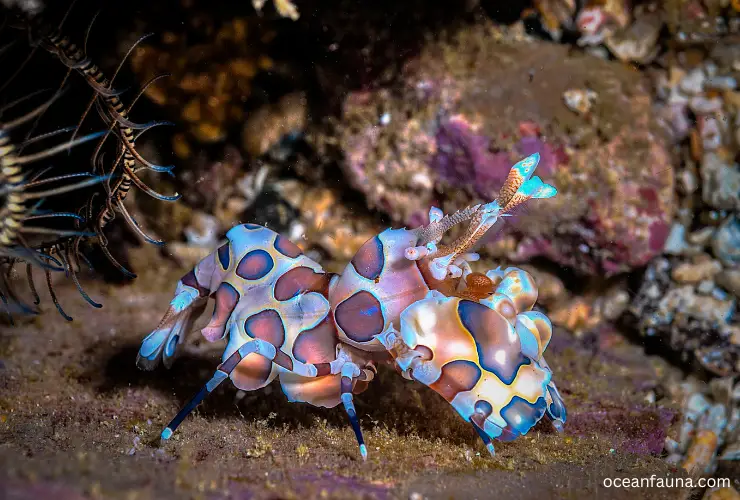
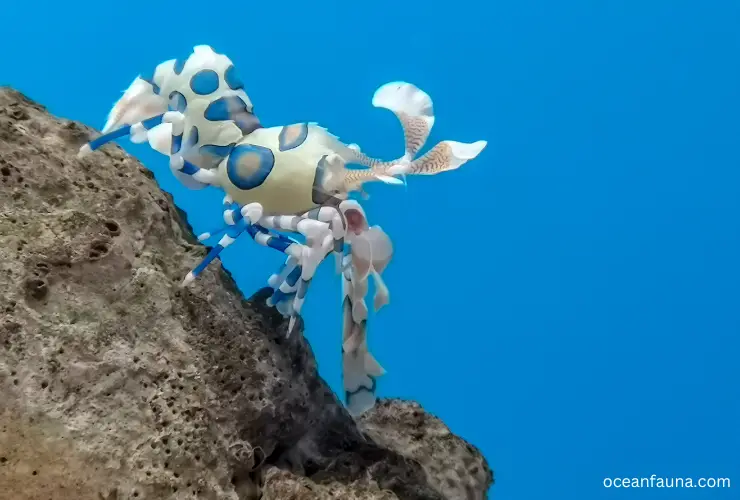
The Harlequin Shrimp is a strikingly colored species of shrimp found in tropical Indo-Pacific coral reefs. It has a distinctive color pattern of red, white, and blue that warns predators that it is toxic. But remember, this shrimp is not toxic.

This colorful shrimp reaches up to 2 inches in length and has enlarged pincer claws. Its colors are aposematic, meaning they act as a warning signal to other animals that it is distasteful or poisonous.

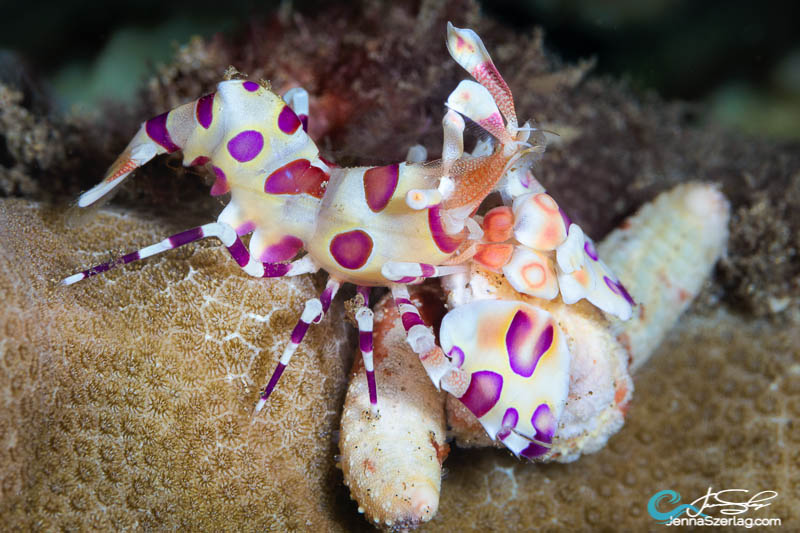
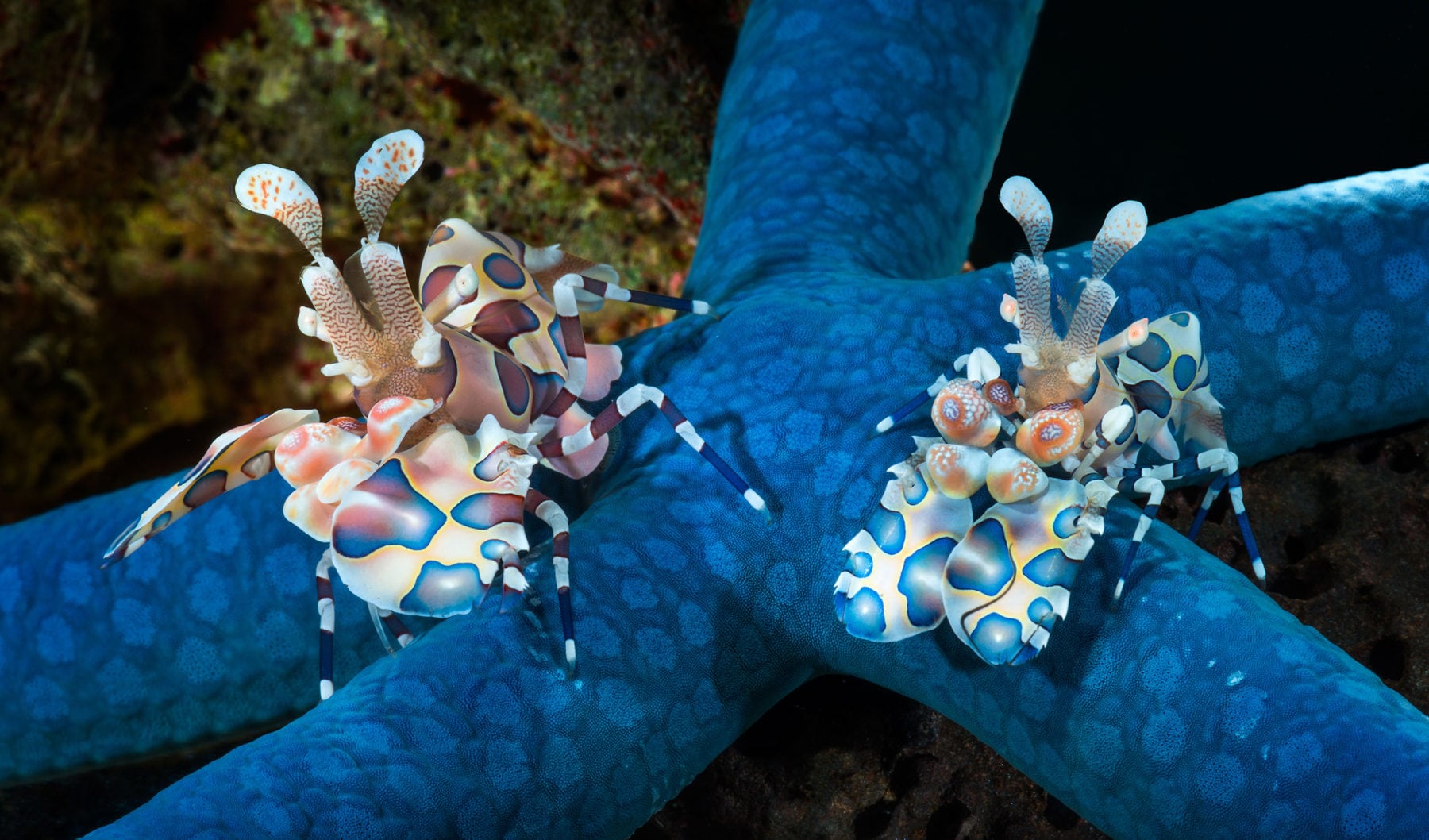
The Harlequin Shrimp feeds primarily on sea stars, using its claws to pry them off coral and flip them over to access their softer underside.

The vivid and highly contrasting colors of the Harlequin Shrimp make it popular in the marine aquarium trade, but it can be difficult to care for properly. Due to its specialized diet, it requires a continuous supply of sea stars, which can be challenging to obtain and keep alive.

The Harlequin Shrimp is a strikingly colored crustacean found in the Indo-Pacific. It has a white body covered in large light blue spots, giving it a harlequin pattern and its name. The males are slightly smaller than the females.

This shrimp has ten legs. The first pair are modified into large, flattened claws called chelipeds that it uses to capture prey and bring food to its mouth. Its eyes are located on stalks protruding from its head, giving it a wide field of view to spot predators and prey.

The Harlequin Shrimp’s first pair of antennae resemble a flattened leaf. These specialized antennae help the shrimp sense the smell of nearby prey. When it detects prey, the shrimp swiftly attacks using its large chelipeds and feeds on various species of starfish found in coral reefs.

Harlequin shrimp is a picky eater. They have a surprisingly unique diet that consists mainly comprised of echinoderms, particularly starfish. They will also eat a few species of sea urchins, but starfish make up the bulk of their diet. Even the potent toxins found in many starfish do not affect the harlequin shrimp.

To eat a starfish, the harlequin shrimp will flip the starfish onto its back, which disables it. The shrimp then begins eating at the tip of one of the starfish’s arms. It eats its way down the arm all the way to the central disk of the starfish.

The harlequin shrimp uses its claws to peel away the starfish’s spiny exoskeleton to get to the nutrient-rich internal tissues underneath. This peeling behavior and its striking coloration are how the harlequin shrimp got its name – it looks like it is wearing a harlequin costume while eating.

Due to their specialized diet, harlequin shrimp can only be found in areas with abundant starfish populations. They use their powerful claws to capture and subdue starfish, and their digestive systems have evolved to handle the toxins.

SOURCE: OCEANFAUNA.COM

Black & Gold Sap Sucking Slug

From: whatsthatfish.com:

Also known as Black-and-Gold Cyerce, Black-and-Gold Sap Sucking Slug, Many Petalled Sea Slug, Many Petalled Slug, Nudibranch, Sacoglossan, Sacoglossan Sea Slug.

Found singly or in pairs over rubble and sandy areas of coral and rocky reefs. These nudi’s can drop cerata when disturbed, these are sticky and carry on moving around presumably as a form of defense!
They feed on algae.
Length – 2cm
Depth – ?m
Widespread Indo-Pacific

Opisthobranchia – Nudibranchs – Sea Slugs meaning “naked gills” are mollusks without a hard shell.
All opisthobranchs are hermaphrodites.
These beautiful slugs are usually brilliantly colored and this in itself can act as a deterrent against predators. Some sea slugs secrete acid from stinging cells in their tentacles while others secrete acid from cells in their mantle.
Nudibranchs are slow moving, can swim or be propelled along either by muscular contraction or by millions of tiny hairs on the bottom of a fleshy ‘foot’, they have a voracious appetite and feed with a rasp like tongue.
Nudibranch lay their eggs in a ribbon effect on the sand, in different colors depending on species.

SOURCE: WHATSTHATFISH.COM

Indiana State Mammal: Northern Cardinal

Basic Description

The male Northern Cardinal is perhaps responsible for getting more people to open up a field guide than any other bird. They’re a perfect combination of familiarity, conspicuousness, and style: a shade of red you can’t take your eyes off. Even the brown females sport a sharp crest and warm red accents. Cardinals don’t migrate and they don’t molt into a dull plumage, so they’re still breathtaking in winter’s snowy backyards. In summer, their sweet whistles are one of the first sounds of the morning.

Find This Bird

The brilliant red of a male Northern Cardinal calls attention to itself when males are around. You can also find cardinals by getting a sense of the warm, red-tinged brown of females – a pattern you can learn to identify in flight. Away from backyards, cardinals are still common but inconspicuous owing to their affinity for dense tangles. Listen for their piercing chip notes to find where they are hiding.

Backyard Tips

Nearly any bird feeder you put out ought to attract Northern Cardinals (as long as you live within their range), but they particularly seem to use sunflower seeds. Leave undergrowth in your backyard or around the edges, and you may have cardinals nesting on your property.

Cool Facts

Only a few female North American songbirds sing, but the female Northern Cardinal does, and often while sitting on the nest. This may give the male information about when to bring food to the nest. A mated pair shares song phrases, but the female may sing a longer and slightly more complex song than the male.

Many people are perplexed each spring by the sight of a cardinal attacking its reflection in a window, car mirror, or shiny bumper. Both males and females do this, and most often in spring and early summer when they are obsessed with defending their territory against any intruders. Birds may spend hours fighting these intruders without giving up. A few weeks later, as levels of aggressive hormones subside, these attacks should end (though one female kept up this behavior every day or so for six months without stopping).

The male cardinal fiercely defends its breeding territory from other males. When a male sees its reflection in glass surfaces, it frequently will spend hours fighting the imaginary intruder.

A perennial favorite among people, the Northern Cardinal is the state bird of seven states.

The oldest recorded Northern Cardinal was a female, and was 15 years, 9 months old when she was found in Pennsylvania.

SOURCE: ALLABOUTBIRDS.ORG

Illinois State Mammal: White Tailed Deer

Since I have already posted about white tailed deer I decided to look into “unusual” white tailed deer.  I found this article “8 Weirdest Whitetails You’ve Ever Seen” on Outdoor Life, and I just had to share!

From Outdoor Life:

Have you ever seen a buck with a full set of velvet-rimmed antlers—in December? How about a black whitetail, or a buck with protruding canine teeth? Here are eight freak-of-nature deer that are so odd, piebalds might seem commonplace by comparison.

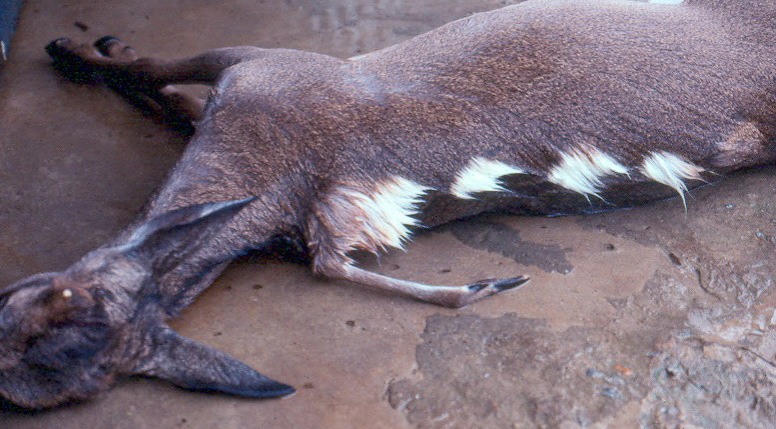
This is true, I swear, though you might have a better shot of hitting a $400 million Powerball than ever seeing this animal alive in the wild. Just imagine for a moment how much you might freak out if you ever spotted a deer with a fifth leg jutting out of its backbone near the back of its neck! Well, it happens.

According to the Quality Deer Management Association (QDMA), it is called the “parasitic twin” phenomenon. Twin fawns begin to grow inside a doe, but the embryos do not completely separate, and one of them stops developing normally. The somewhat macabre extra leg is the remnant of the twin fawn that didn’t fully mature. Most of the misplaced fifth legs that have been documented are short and small, with tiny hooves attached. That fifth leg is most often located on the deer’s shoulder or back.

Parasitic twins have been documented in many animal species, and are surely the rarest of the rare whitetail oddity.

One day down in the Texas Hill Country, a buck stepped out of the brush in front of my buddy Eddie Stevenson. He did a double take—not because of its rack, but rather its color. The deer was mahogany-colored all over, with an even darker head and face. Eddie shot the buck, and the one-in-a-million mount now hangs on his wall.

You have probably heard of albino deer and their kin the piebald (a brown deer splotched with white, much like a pinto pony). Biologists seem to agree that less than 2% of all whitetails born will exhibit those white traits. However, black deer are less common, the rarest of the rare. The first-ever was documented by a biologist in 1929, and although tens of millions of whitetails have been harvested since then, only a handful of black deer have been reported.

The dark-colored hide of black deer is caused by a genetic mutation that causes their bodies to produce too much of the pigment melanin. Melanistic deer are not always solid black—there are gray to mahogany to walnut color phases, with some white on the belly and tail.

Unlike piebalds, which often have deformities such as curved spines and partially stunted legs, none of the research conducted to date suggests that melanistic bucks have inferior body or antler traits. They appear perfectly normal, save for their color.

Interestingly, the Edwards Plateau region of Texas is ground zero for melanistic deer. More black deer have been seen and harvested in the Hill Country than any other place in North America, though researchers can’t say exactly why that is. The odd black deer has popped up in Pennsylvania, Oklahoma, and a few other places in the last 20 years. The most recent sighting, a jet-black doe, was spotted and photographed earlier this summer in Northern Michigan.

Commonly called a “stag,” this oddball deer retains antler velvet throughout the year due to low testosterone levels.

Biologists refer to this condition as cryptorchidism, and it’s rare. It can result from an injury or birth defect that prevents a buck’s testicles from descending properly. Cryptorchidism can occur in both whitetails and mule deer. Regardless of species, stag bucks are different. They don’t engage in the seasonal rituals of normal bucks, such as rubbing, scraping, or sparring. Lacking the chemical stimulation to express dominance, their necks do not swell, and they are essentially stuck in neutral in the reproductive sense. Some older stags amass large, funky blobs on their heads and become known as “cactus bucks.”

A New York State buck with upper canine teeth. Photo Courtesy of QDMA

One time down in South Texas, my buddy Sarge, a wildlife biologist at the ranch I was hunting, stuck a deer skull in my face and said, “Notice anything?”

I studied it and cocked my head…

“The fangs man!” Sarge said.

The tiny, peg-like upper canines were easy to miss. In more than 30 years of hunting and skinning deer across North America, this was the first fanged buck I’d seen.

Some 7 million years ago, dating back to the Miocene Epoch, ancestors of our whitetails had long, curved, sharp canines. While lower canines are present in all whitetails today, upper ones are uncommon. Paleontologists say the small deer-like animals used the fangs, or tusks, for survival. Over time, whitetails evolved antlers for defense, and the upper canine teeth regressed.

Brian Murphy, a biologist and CEO of the Quality Deer Management Association (QDMA), says, “Upper canines are a rare, but documented phenomenon and researchers believe it is an evolutionary throwback to the ancestral form of the whitetail which occasionally surfaces today. While the exact prevalence of upper canines in whitetails is not known, it is believed to be well below one percent.”

Fangs are not only rare but almost always overlooked.

Should a buck have fangs today, they would be only ½ to ¾ of an inch long, and most of them would not even break the deer’s gumline. Most fangs are spotted by taxidermists that cape bucks.

One more thing, and it’s fascinating.

Look up at a shoulder-mounted whitetail on your wall and focus on the small, black patches on either side of the lower jaw. These patches are positioned precisely where the fangs of an ancestral deer would have stuck out from the upper jaw. Valerius Geist, renowned mammologist and author of Deer of the World: Their Evolution, Behavior, and Ecology, theorizes that the black patches may have been there to accentuate the white of the long canines in prehistoric deer. The fangs evolved away, but the patches remain.

A few years ago, Virginia hunter Ben Yates went out and shot a nice 8-pointer. Ben and his buddy didn’t mess with gutting the deer and simply loaded it in his truck for the drive to a nearby check station. A biologist doing research at the checkpoint took some notes, lifted the 8-pointer’s hind legs, and said, “Uh, come take a look.”

Ben peeked under the deer, and it took him a minute to register. He’d shot a doe with a nice rack!

According to the Virginia Department of Game and Inland Fisheries, there are two types of antlered whitetail does. The first is a female with velvet-covered antlers. This animal usually has a normal female reproductive tract and is capable of bearing fawns.

The second type is a female deer with polished antlers, like the one Ben shot. This animal is actually a male “pseudo-hermaphrodite.” It has the external genitalia of a female but has male sex organs internally.

In either case, an antlered doe is extremely rare. Only one or two if any are killed by hunters in Virginia or any other state each season.

About 15 years ago, an Alabama hunter shot the first documented “Bullwinkle Deer.”

When pictures of the buck with the large, swollen, moose-like nose hit the Web, it caused quite the stir. In the next few years, a handful of other big-nosed does and bucks from Michigan to Florida to Texas (and a couple more from Alabama) showed up, and scientists took to studying them.

The affliction was and remains so mysterious and rare that experts don’t have a technical name for it yet. But the commonly used moniker, “Bullwinkle Disease,” fits. After more than a decade of studying tissue and blood samples from the few big-nosed deer that have been tested, scientists believe the swollen muzzles result from chronic inflammation of the nose, mouth, and upper lip. All the cases studied by researchers have shown similar colonies of bacteria in the inflamed tissues.

But there are still many unknowns. “It’s not like anything we’ve seen in deer before,” says Kevin Keel, associate professor at the University of California Davis school of veterinary medicine and the nation’s leading expert on Bullwinkle deer. “This is an interesting disease because we’re not sure if it’s new. It might be something that’s always occurred in deer, but at such a low prevalence we just didn’t know about it.”

The Southeastern Cooperative Wildlife Disease Study (SCWDS) at the University of Georgia, which has also researched this malady, notes that Bullwinkle Disease has been known to exist only since 2005. No cases appear in 50 years of SCWDS files prior. Scientists are unsure if this is because the disease has only been around for 14 years, or, a sign of the times, because hunters can now share photos of big-nosed deer kills on social media.

Teaching moment: In the very unlikely event that you or a friend shoot a Bullwinkle, do not eat the meat. Scientists say the infection could mean that bacteria are present in the blood and muscle or a secondary infection could have developed, making the meat unfit for consumption.

Every season hunters across the country shoot a few unicorns—bucks with third beams or tines jutting out of their foreheads or upper nose. The third antler is often only a few inches long, but larger and even multi-tined extra beams have been documented.

“This is caused by trauma to the frontal bone of the skull, such as a tine puncture from another buck,” says Mickey Hellickson, a noted whitetail biologist from Texas. “The entire region of a buck’s skull is capable of growing antler, and if an area of the frontal bone is injured, the trauma may cause a third antler to grow from the injury.”

Stranger yet, Hellickson says that researchers have experimentally caused antlers to grow from the frontal bone of a deer’s skull by grafting antler tissue to it. “Amazingly, the researchers were also able to induce antler growth in odd places, such as legs, hips, and even the ears of deer,” he says.

Will you ever see or shoot a unicorn? Probably not. Hellickson says that in his many research projects and surveys on some of the largest ranches in Texas, his teams have captured more than 5,000 wild antlered bucks, but not a single unicorn.

For decades hunters and biologists believed that during the rut the thick-bodied dominant bucks bred most if not all the does.

It’s time to blow that old myth out of the water.

Recent research of captive deer in Oklahoma documented that all age classes of bucks breed does, regardless of the herd’s age structure. In fact, yearling and 2-½-year-old bucks sired a third of the fawns in the study, even though a third of the bucks in the enclosure were 3½ years of age or older.

The Oklahoma study also revealed more new information. In their project, multiple paternity in fawns occurred about 25 percent of the time. One in four sets of twins or triplets had two different fathers.

That percentage could be higher. A Texas A&M-Kingsville study recently found that 16 of 23 sets of twins, or an astounding 70 percent, had two different sires, typically one mature buck and another buck 2½ years or younger. Researchers suggest the younger bucks are opportunistic little devils, sneaking in to breed a doe just before or after a mature buck does.

It gets even better. Scientists at Auburn University recently reported 3 different buck sires for one set of triplets.

SOURCE: OUTDOOR LIFE

Michael Hanback

Indiana State Flower: Peony

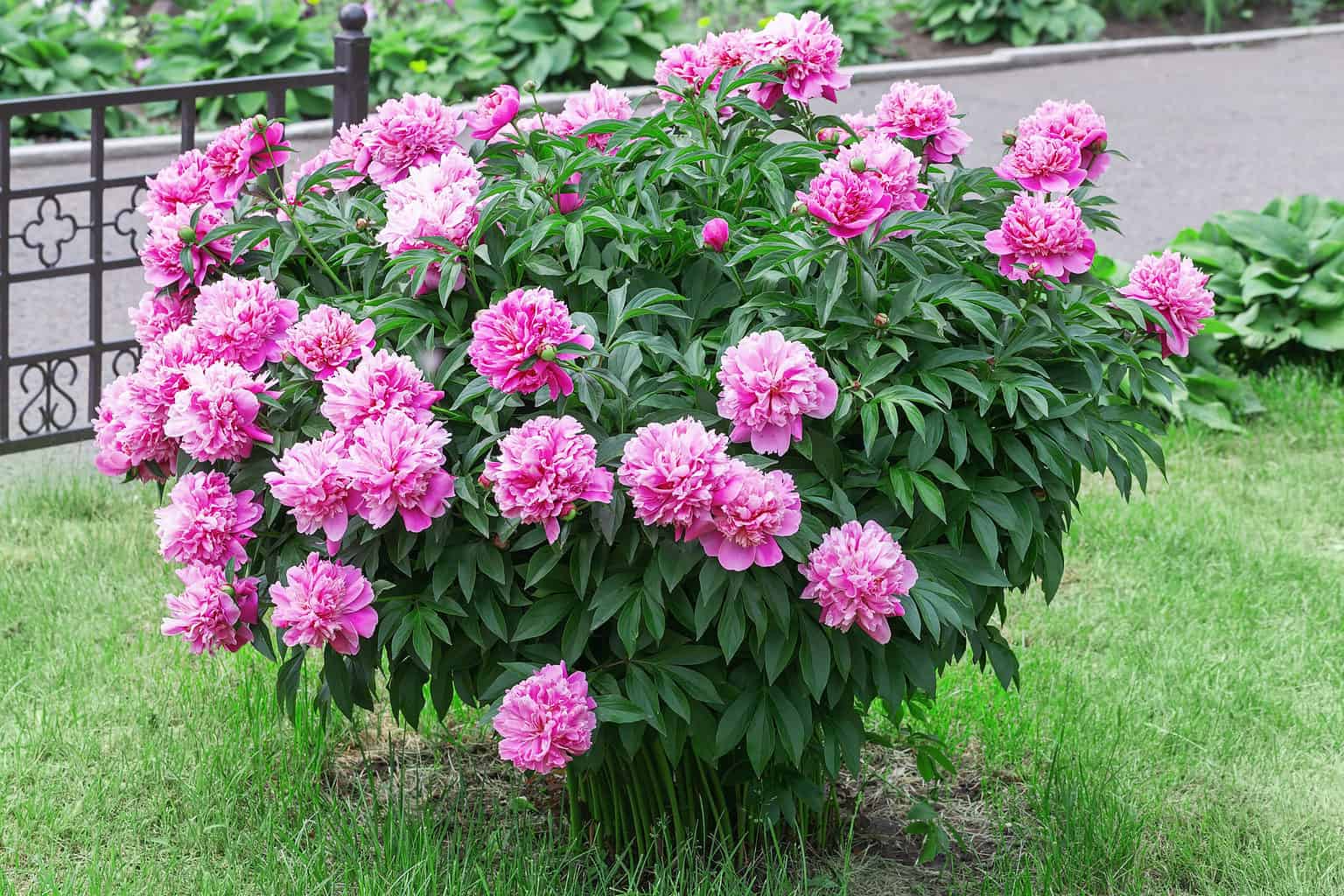
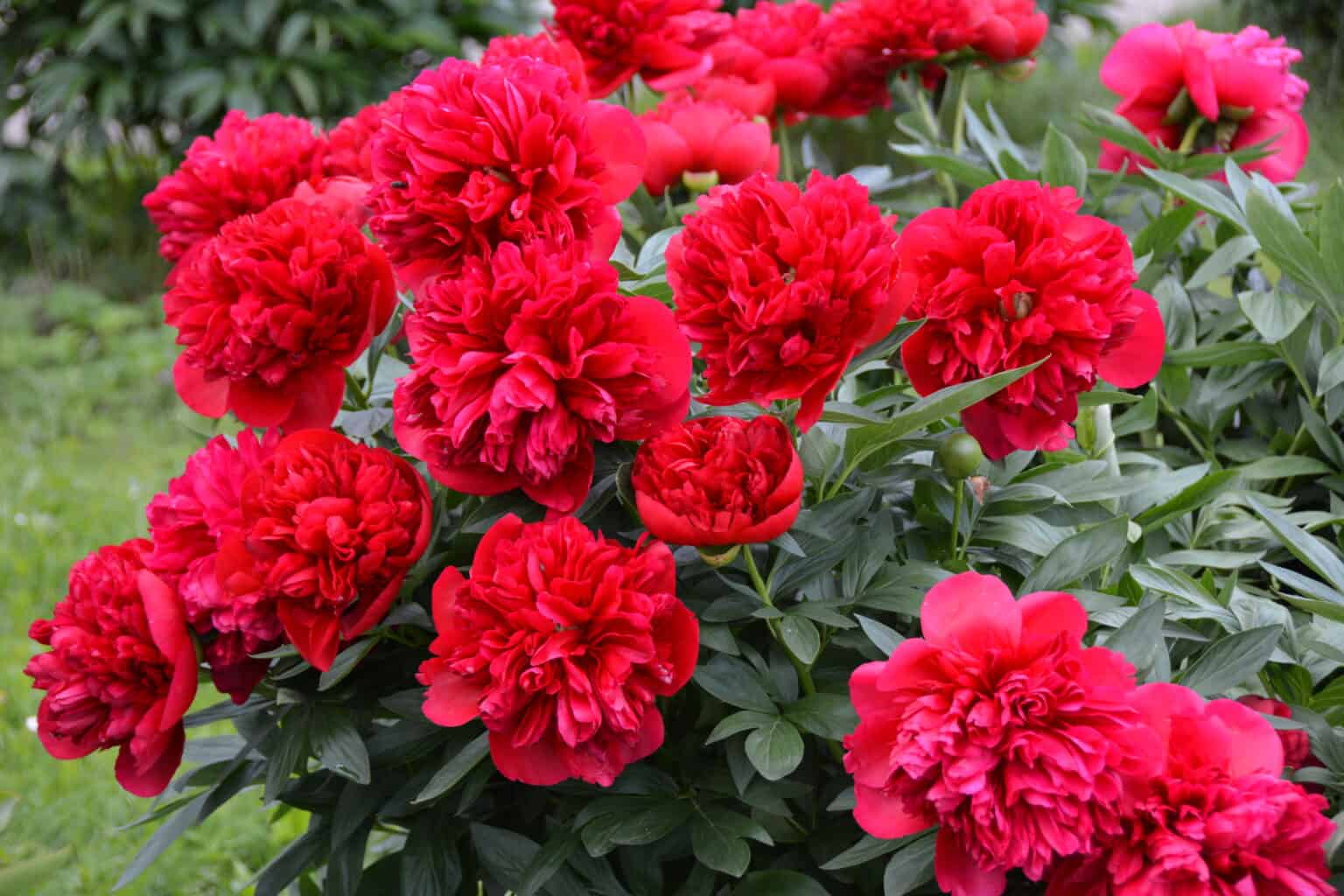
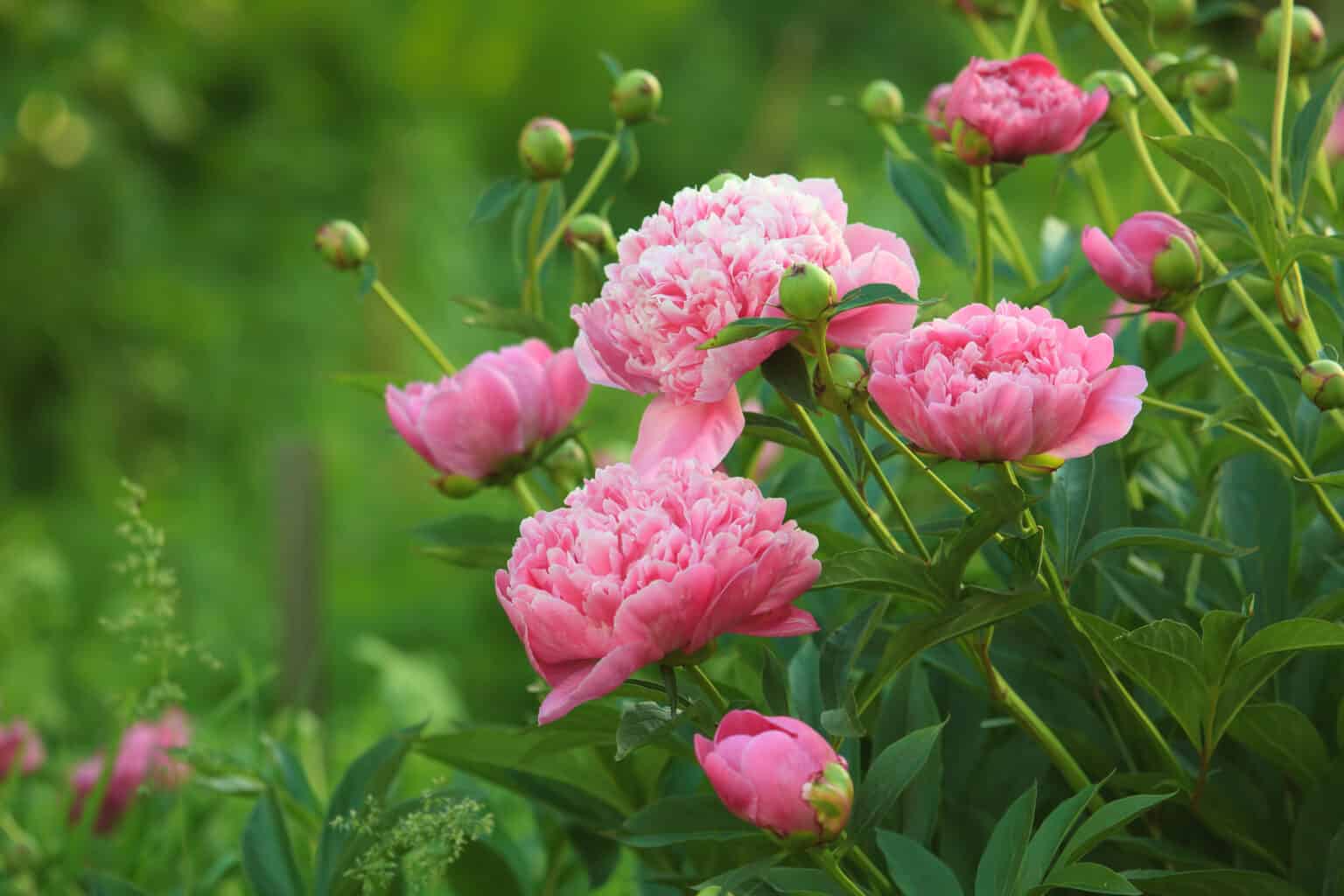
The peony is a true showstopper, flaunting large, lush blooms with delicate petals that come in an array of colors, including white, pink, red, and even purple. These captivating flowers can grow up to 10 inches in diameter, making them an irresistible sight in any garden.  Peonies are also known for their intoxicating fragrance, which varies from soft and sweet to rich and spicy.

Varieties and Colors

Did you know there are over 30 species and thousands of cultivars of peonies? Some of the most popular types include:

Tree peonies — they develop woody stems

Herbaceous peonies — they die back to the ground each winter

There are also intersectional peonies, a hybrid of the two, boasting the best features of both. With so many varieties, there’s a perfect peony for everyone!

Designation in 1957

The peony’s coronation as Indiana’s state flower happened in 1957, thanks to the dedicated efforts of flower enthusiasts and lawmakers. The Indiana General Assembly passed a bill that year, declaring the peony the new state flower, and it’s been a beloved symbol ever since.

Replacement of the Original State Flower

You might be surprised to learn that the peony wasn’t always Indiana’s floral emblem. In fact, the original state flower was the zinnia, which was designated in 1931. But over time, the people of Indiana decided that the peony was a more fitting symbol of their state, leading to the change in 1957. Now, the peony stands proud as Indiana’s official state flower, capturing the hearts of Hoosiers and visitors alike.

The Symbolism of the Peony

It’s not just the peony’s beauty and fragrance that make it so special. This flower also carries deep symbolism that resonates with the people of Indiana. So, let’s explore the rich meanings and connections that have helped the peony become such an enduring symbol of the Hoosier State.

Significance in Indiana’s History and Culture

Throughout history, the peony has been associated with positive qualities like prosperity, honor, and good fortune. In Indiana, these qualities reflect the state’s heritage and the hardworking nature of its people. The peony’s lush blooms are also reminiscent of the fertile lands and agricultural roots of Indiana, which contribute to the state’s identity.

Connection to Indiana’s Values and Identity

The peony’s stunning beauty and resilience echo the spirit of Indiana, a state that cherishes its natural beauty and the strength of its people. As the peony thrives in Indiana’s climate, it serves as a symbol of the state’s ability to overcome challenges and flourish. The flower’s diverse colors and varieties also represent the unity and diversity of Indiana’s communities, making the peony a fitting emblem of the state’s values and identity.

SOURCE: A-Z-ANIMALS.COM

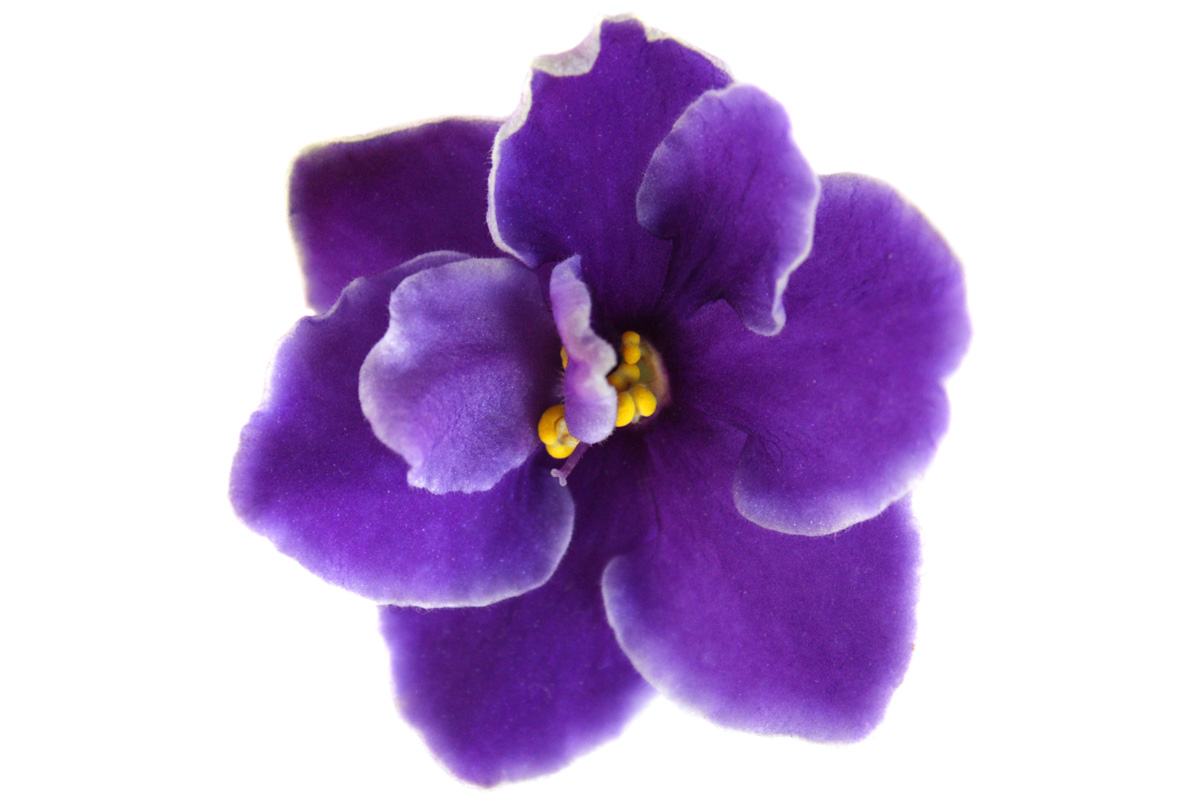
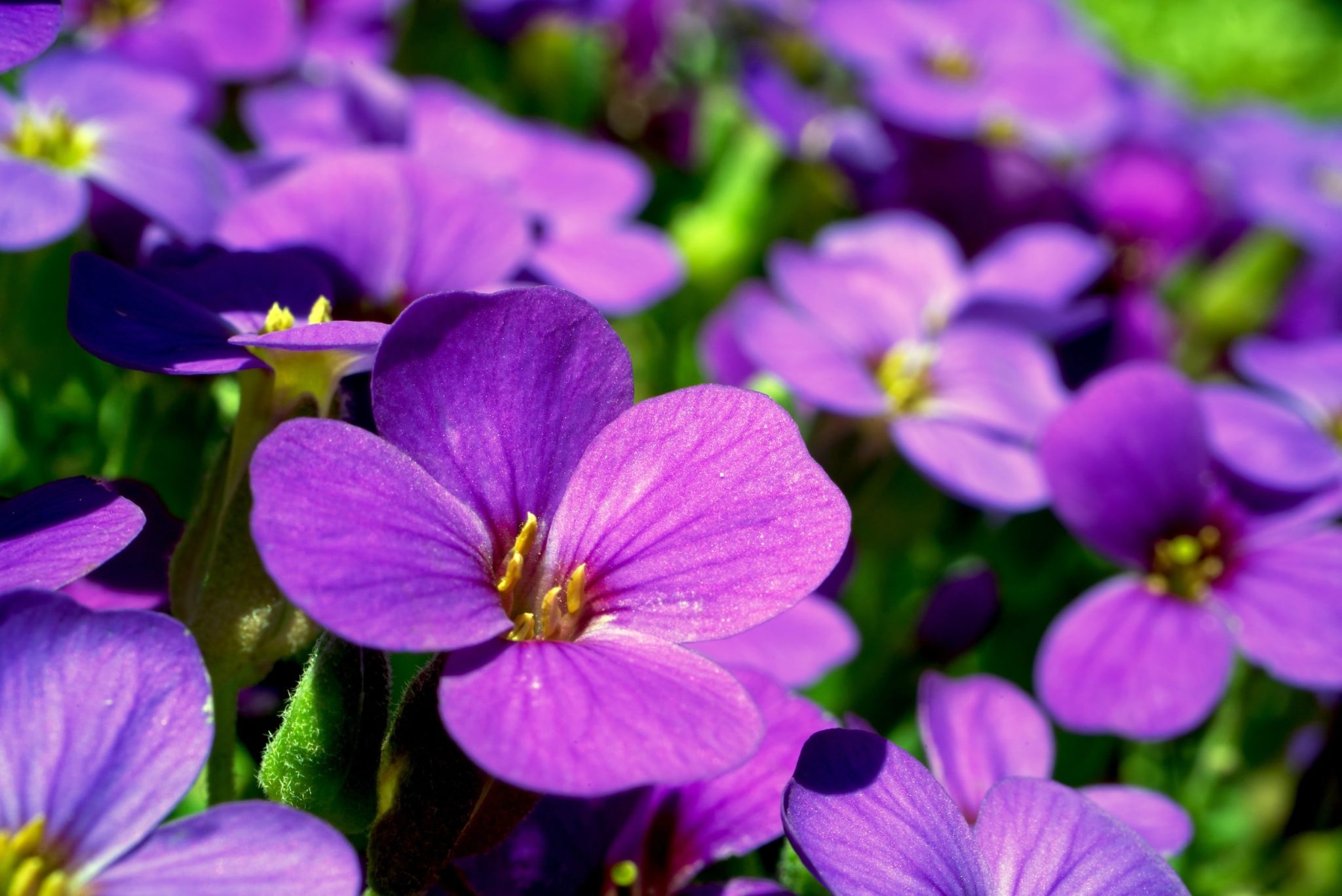
Illinois State Flower: Violet

Violet flowers, hailing from the violaceae family, are a fascinating and diverse group of perennials. Famous for their stunning violets, their shades range from deep, sultry purples of the common blue violet (Viola sororia) to the charming tricolor petals of the Viola tricolor.

Violet flowers are versatile and can thrive in a variety of conditions. They can grow under full sun or partial shade, making them a favorite among gardeners across different climates. In Europe, these perennials are a popular choice for both outdoor gardens and as a houseplant due to their adaptability and striking appearance.

The violet flower is a self-pollinating plant, which means it doesn’t rely on insects or wind to propagate. This feature ensures a continuous bloom of flowers from late summer to early autumn. The plant sends out runners, which contribute to its swift spread and swelling population in a garden.

Caring for a violet flower, part of the Violaceae family, requires an understanding of subtle nurturing techniques. These flowers produce delicate petals and lush leaves that resonate vividly in both spring and late summer.

Interestingly, violet flowers are self-pollinating, and some varieties produce runners, swelling their garden presence. However, be cautious of pests such as insects and slugs which could damage the plant.

As a houseplant, violets require careful watering to prevent leaf yellowing, a common sign of overwatering. These characteristic violet flowers are not only visually enchanting but are a source of flavonoids, beneficial for both their beauty and their nutritional value.

Violet flowers grow best in partial shade to full sun. These small plants, often considered perennials, require a delicate balance of light to flourish.

Too much direct sunlight can cause the leaves to scorch, while too little can hinder their growth and flowering. In Europe, they are often found growing in dappled light under trees.

SOURCE: PLANETNATURAL.COM

Butterfly Fish

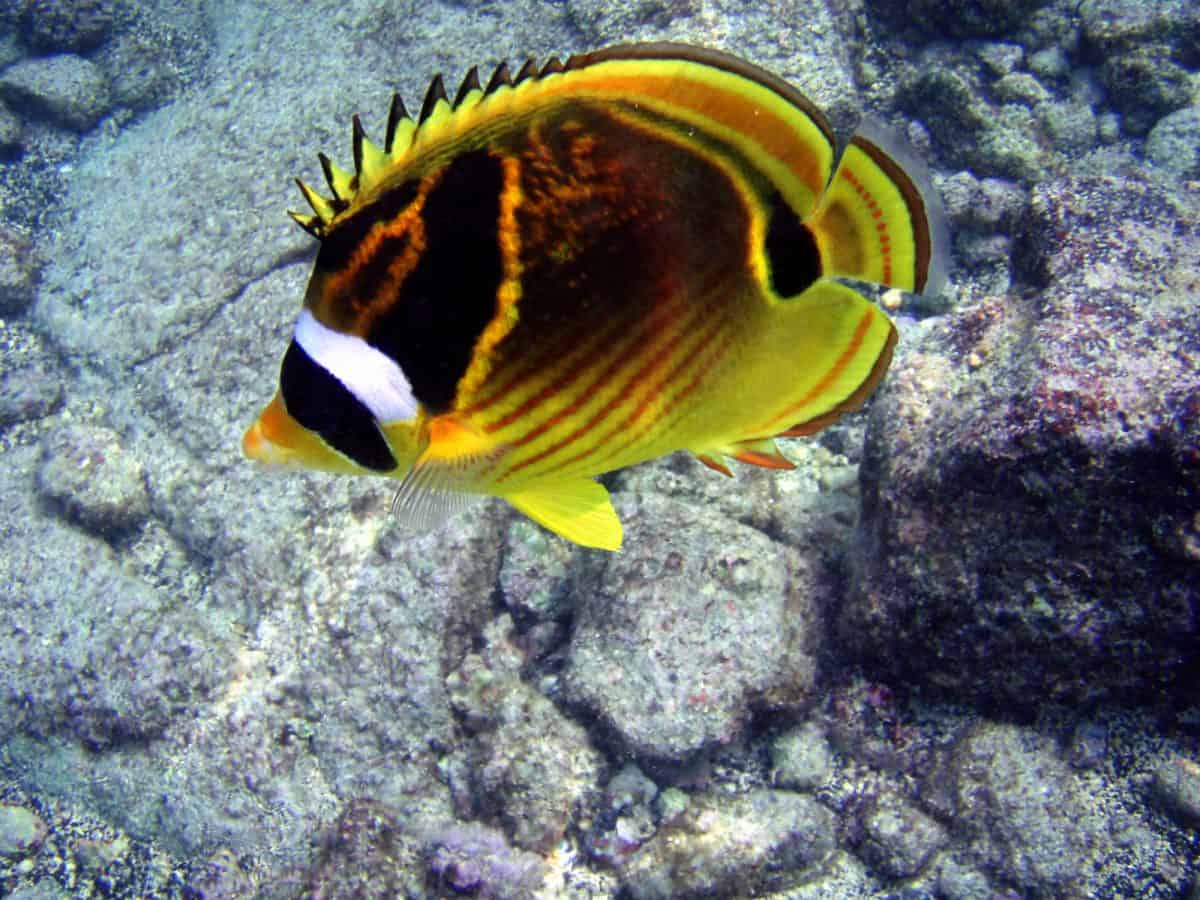
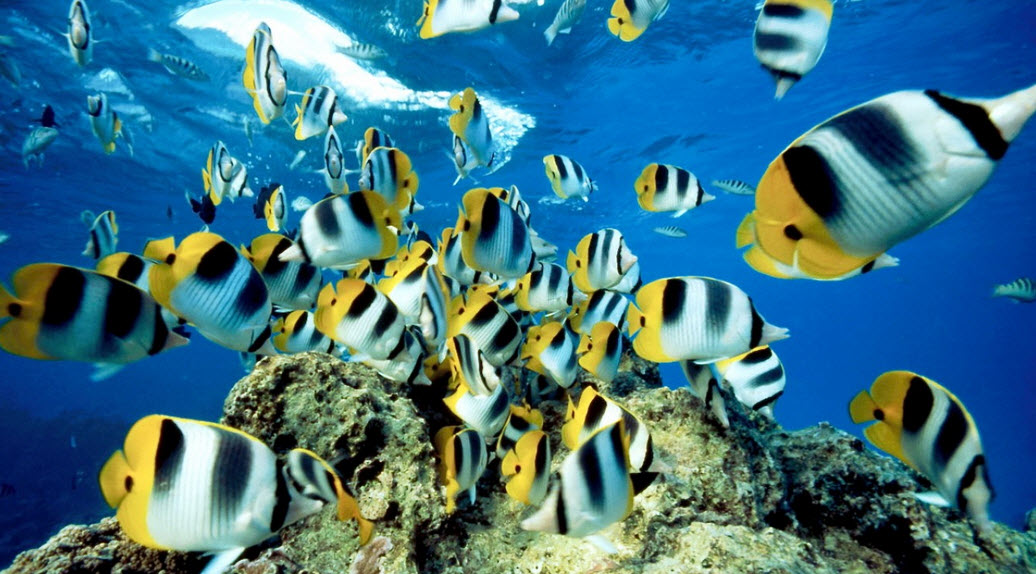
The butterfly fish are a group of tropical marine fish belonging to the family Chaetodontidae. There are approximately 129 species of butterfly fish that are mostly found on the reefs of the Atlantic, Indian, and Pacific Oceans. Butterflyfish look like smaller versions of angelfish (Pomacanthidae), but lack preopercle spines at the gill covers.

Thanks to their beautiful colors and patterns and docile personality, many butterfly fish are popular aquarium fish, and they are often found as pets. The name Chaetodontidae is a combination of two Ancient Greek words: chaite, meaning hair, and odontos, meaning tooth. This is probably a reference to the rows of brush-like teeth in these fishes’ mouths.

This Chaetodontidae family should not be confused with the freshwater butterfly fish (also known as the African butterfly fish). Endemic to the West African region, the freshwater butterfly fish belongs to an entirely different order. The freshwater butterfly fish is more closely related to other African fish in the order of Osteoglossiformes.

Butterfly Fish Characteristics

Butterfly fish are closely related to angelfish and both groups are collectively known as coralfish. Butterfly fish are small fish and most do not exceed 12 to 22 9.7 to 8.7 inches in length. The largest of the species is the lined butterfly fish (Chaetodon lineolatus) and the saddle butterfly fish (Chaetodon ephippium) which grows to 12 inches in length. Butterfly fish are, in general, sexually monomorphic (meaning males and females look alike), although occasionally males have been found to be larger than females.

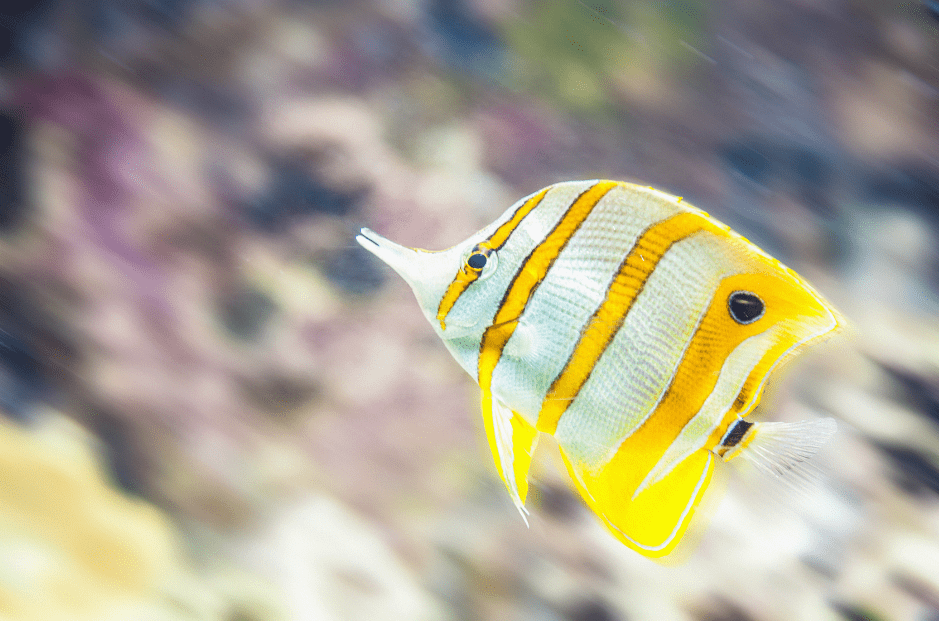
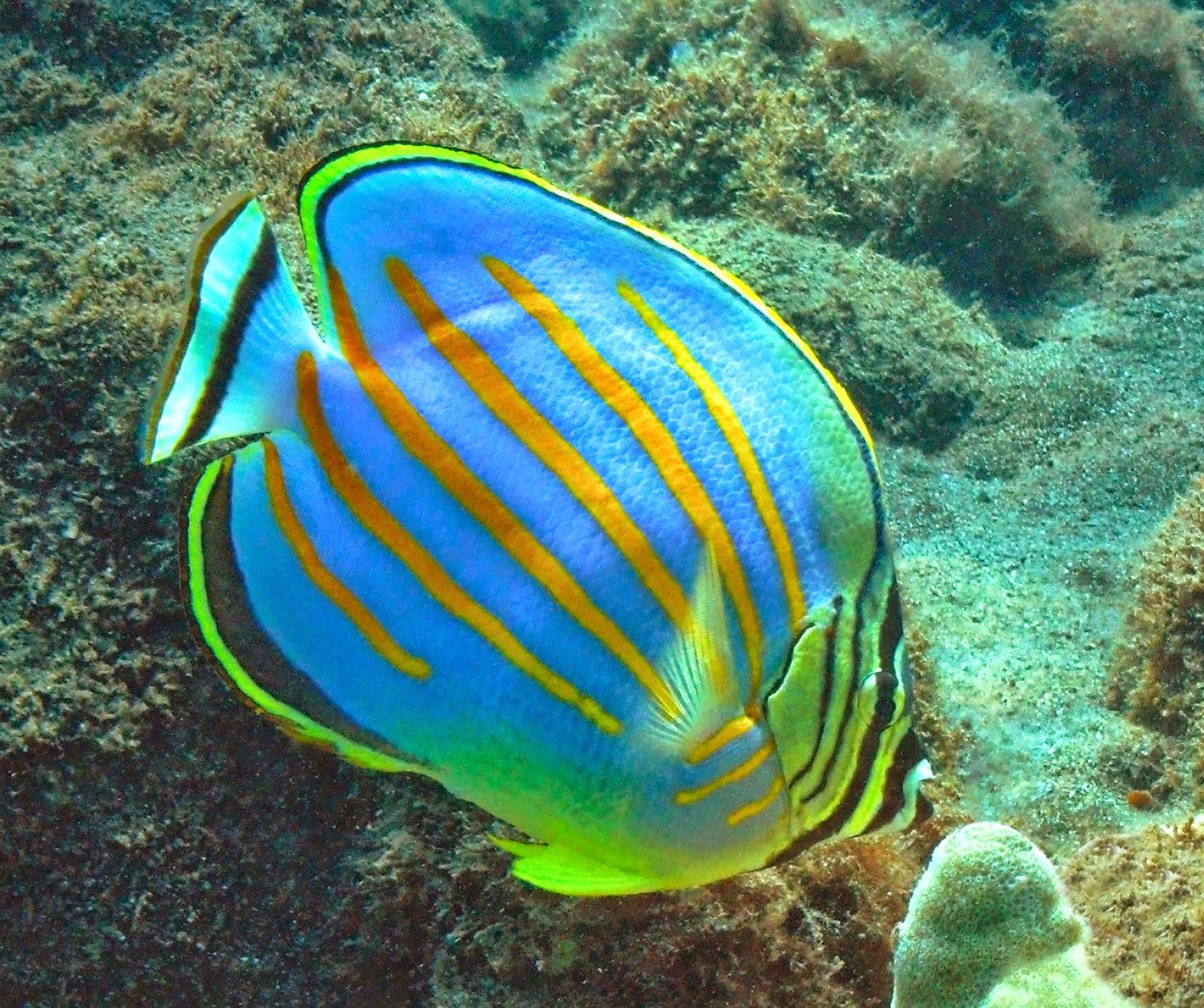
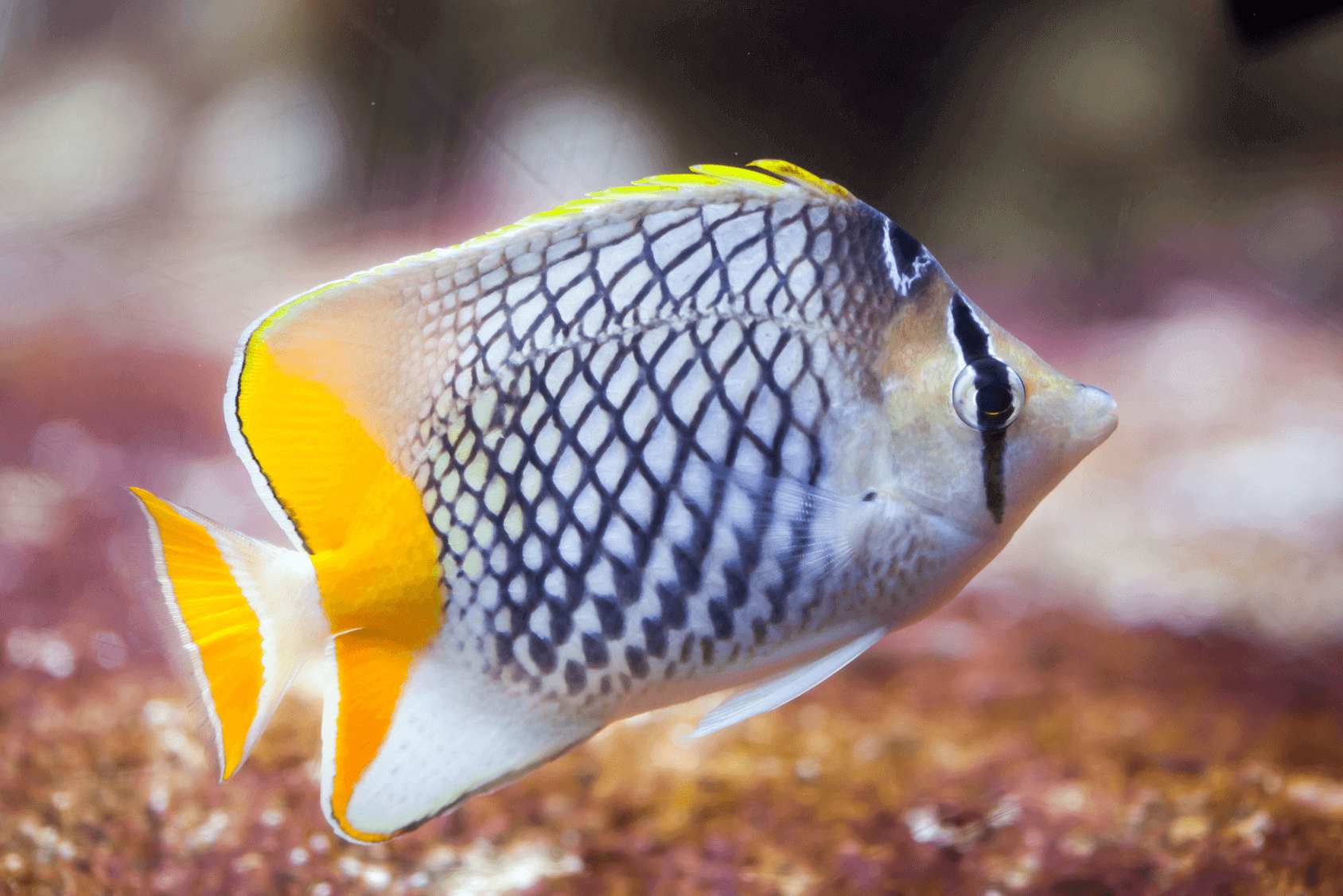
These fish are named for their brightly colored and strikingly patterned bodies, in shades of black, white, blue, red, orange and yellow. Some species are dull in color. Like patterns seen on butterfly wings, many of the species have eyespots on their flanks and dark bands across their eyes. Their coloration makes them popular aquarium fish, and as they are relatively small, they don’t need a large fish tank to house them.

Butterfly fish have uninterrupted dorsal fins with tail fins that may be rounded or truncated, but are never forked. The dorsal fin on the back sometimes features sharp spines which provide a defense against potential predators.

Their bodies are deep and laterally compressed, which allows them to slip between rocky outcroppings and reef crevices. This, combined with their bright colors, has lead many to believe they are intended for interspecies communication.

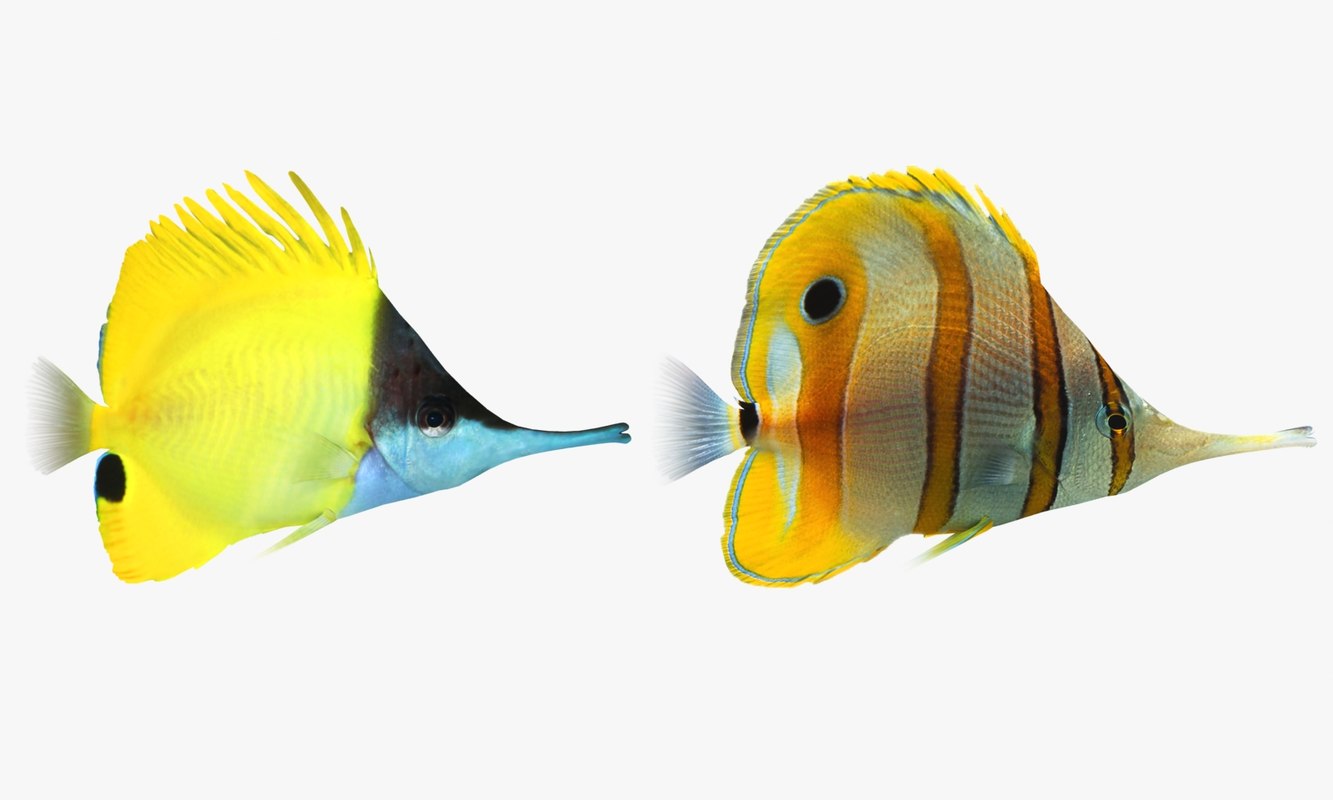
These fish also have a protruding snout, varying in length depending on the species, that is tipped with a small mouth. This extended snout allows them to reach inside cracks and holes to feed small organisms hiding within.

Lifespan

Butterfly fish have an average lifespan of between 5 and 10 years.

Diet

Butterfly fish eat mostly small invertebrates such as sponges, worms and plankton.
They’ll also eat coral polyps, algae and sea anemones. They feed during the
day, at the bottom layer of the seabed.

Behavior

Butterfly fish are diurnal animals, which means they are active and feed during the day
and rest on the coral during the night. At night, butterfly fish hide in reef
crevices and their colors can fade to blend and avoid predation.

The smaller species of butterfly fish tend to stay in groups, whereas the larger species
are usually solitary or swim with their mating partner, with whom they mate for
life. The butterfly fish relies on its sight to find prey and communicate with
others.

Reproduction

Butterfly fish are specific about the time of year that they mate; in the tropics, the spawning season usually peaks in winter or early spring, but in temperate climates, the spawning season takes place in the summer.

When the female is ready to mate, her stomach becomes swollen with eggs. The male will come up from behind and gently nudge her abdomen with its snout, and they will release the eggs and sperm together, creating a white cloud in the water. Some males without a mate may swim in and quickly add his sperm to the cloud!

Gestation is only 28 to 30 hours. Butterfly fish play no part in raising their young and instead, the young have a unique larval stage in which they develop a plate of bony armor over the head to protect themselves. This plate eventually extends outward along the back to form spines, which are eventually absorbed into the body.

The young butterfly fish enters a juvenile stage when it has reached the size of a coin, during which period it exhibits different color patterns from its adult form. Juveniles will live within small tidal pools or shallow areas temporarily before moving to the corals.

Butterfly fish form monogamous pairs for at least three years and sometimes even their entire lives. They reach sexual maturity at around a year old.

Location and Habitat

Butterfly fish are mostly found in the coral reefs of the Atlantic, Indian and Pacific Oceans, in temperate, tropical and subtropical waters. The greatest concentration of species is found in a stretch of Pacific territory between Australia and Taiwan. Only four species occur in the Eastern Pacific and 13 in the Atlantic Ocean.

Their preferred habitat is the shallow warm water less than 65 feet deep near shores or estuaries, but a few species reside in deep water habitats up to 650 feet. They are well adapted to life in coral reef systems, though a few species also inhabit seagrass beds, lagoons, and mudflats. Young butterfly fish may occupy different areas than adults, such as tidal pools, boulder reefs and shallow areas without coral.

Conservation Status

The exact population of the butterfly fish is unknown, but it is one of the most most common types of coral reef fish in the world. The species is listed as least concern on the IUCN Red List. That being said, they do face threats. The biggest threat to these fish is the destruction of the coral reefs.

The butterfly fish is never caught for food, but it is popular in the exotic pet trade. These animals can make good pets, but they have very specific requirements that can be demanding for the average fish owner.

Predators

The butterfly fish is preyed on by sharks, eels, snappers, and other large fish. Because they are very small, they have the ability to hide in small crevices around coral reefs. Many of the species have also evolved spines, armor, and toxins to deal with threats from predators.

SOURCE: ANIMALCORNER.ORG

Idaho State Flower: Syringa (Mock Orange)

According to the boisedev.com, the Idaho state flower has an interesting scientific name.  Read on find out what it is!

FROM BOISEDEV.COM:

Spring has sprung, and that means flowers are blooming across the state. One type of flower you’ll see is the syringa, designated the state flower of Idaho by the legislature in 1931.

Flowering late May through July, the syringa blooms in groups and often resembles a snowy mountainside.

It grows best in medium-dry to moist soil along streams, rocky talus, dry ravines, and canyons. According to US Forest Service, the syringa can be found across the state and most abundantly in the Boise National Forest near Idaho City and the canyons around Anderson Ranch Reservoir.

It’s a woody shrub that grows 8 feet tall and has clusters of white and yellow flowers. While it’s most commonly known as the syringa, it’s also called mock orange because the flowers have a strong smell similar to orange blossoms – hence the name.

The flower’s scientific name is the Philadelphus lewisii – after Meriwether Lewis of the Lewis and Clark Expedition. It’s said that Lewis wrote about the flower in his journal and collected them in the early 1800s as he explored the state. According to the Bureau of Land Management, other flowers in Idaho that are named after Lewis and Clark include the Lewis’s monkeyflower, the Bitterroots, the Lewis’s flax, and the beautiful clarkia.

Also, according to the US Forest Service, Native Americans used the syringa’s straight, sturdy stems to make arrows, pipe stems, and combs.

SOURCE: BOISEDEV.COM

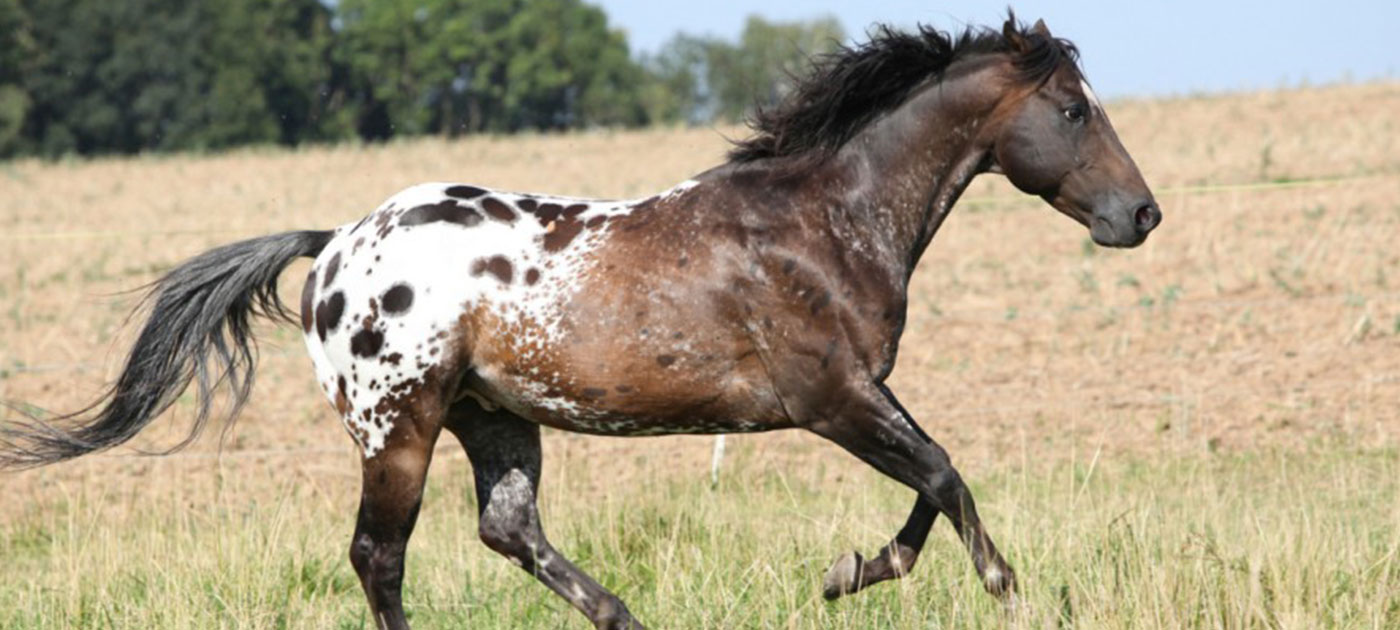
Idaho State Mammal: Appaloosa Horse

On March 25, 1975 Idaho Governor Cecil Andrus signed a bill naming the Appaloosa, as Idaho state horse. This is a deserving honor for a horse that has been an integral part of Idaho history.

The Appaloosa has a very long history. Spotted horses have been seen in art as far back as cave drawings 20,000 years ago. The Appaloosa was seen in ancient Persian literature as the horse of a great Persian hero.

The Appaloosa is a horse breed best known for its colorful leopard-spotted coat pattern. There is a wide range of body types within the breed, stemming from the influence of multiple breeds of horses throughout its history. Each horse’s color pattern is genetically the result of various spotting patterns overlaid on top of one of several recognized base coat colors. The color pattern of the Appaloosa is of interest to those who study equine coat color genetics, as it and several other physical characteristics are linked to the leopard complex mutation (LP). Appaloosas are prone to develop equine recurrent uveitis and congenital stationary night blindness; the latter has been linked to the leopard complex.

They were seen in China in ancient times as well, dating back to 206 BC, during the Han Dynasty. The Spanish introduced horses to Mexico in the 1500s. Following the Pueblo Revolt, horses rapidly spread throughout North America, reaching the Northwest around 1700. Historians believe the Nez Perce and Palouse tribes of Washington, Oregon and Idaho were the first tribes to breed horses for specific traits – intelligence, speed and endurance. White settlers call these horses ‘Palouse horses.’ Over time they came to be referred to as ‘a Palousey’ and the ‘Appalousey.’ During the Nez Perce War of 1877, Appaloosa horses helped the non-treaty Nez Perce, under the guidance of Chief Joseph, elude the US Calvary for several months. The coloring of the Appaloosa coat is distinct in every individual horse and ranges from white blanketed hips to a full leopard.

The hallmark of the Appaloosa is his striking and distinctive spotted coat. Dark oval or round spots are seen on their coats. Some display the spots only over their white hips and loins, while others have them all over their bodies. The loin and hip areas are usually the most spotted. Some have white spotting on dark backgrounds and others will display white all over their bodies. The spots range greatly in size from as large as four inches to others that are so small they are merely flecks. Each Appaloosa will possess a unique pattern much like the human’s fingerprint. In addition to their spotted coats, the skin of the Appaloosa is also mottled with spots.

The Appaloosa is an intelligent, fast and hard-working breed. An easy-going disposition and exceptional abilities give this horse a great deal of versatility that no doubt contributes to its rapidly rising popularity. Once the warhorses of the Nez Perce, today the Appaloosa serves as a racehorse, in parades, ranch work and youth programs. The coloring of the Appaloosa’s coat is distinct in every individual horse and ranges from white blanketed hips to a full leopard.

SOURCE: EREFERENCEDESK.COM

(This website calls the Appaloosa Idaho’s state HORSE, but in the list of state mammals it is listed there as the state mammal.)

Gulf Fritillary Butterflies

I found this article on the Birds & Blooms website. 

Whether you live in or are visiting the southern U.S., keep your eyes peeled for gorgeous a Gulf fritillary butterfly. And if you’re cultivating an outdoor space to benefit pollinators, think about adding their favorite host plant or a few nectar flowers they’ll love to visit.

What Does a Gulf Fritillary Butterfly Look Like?

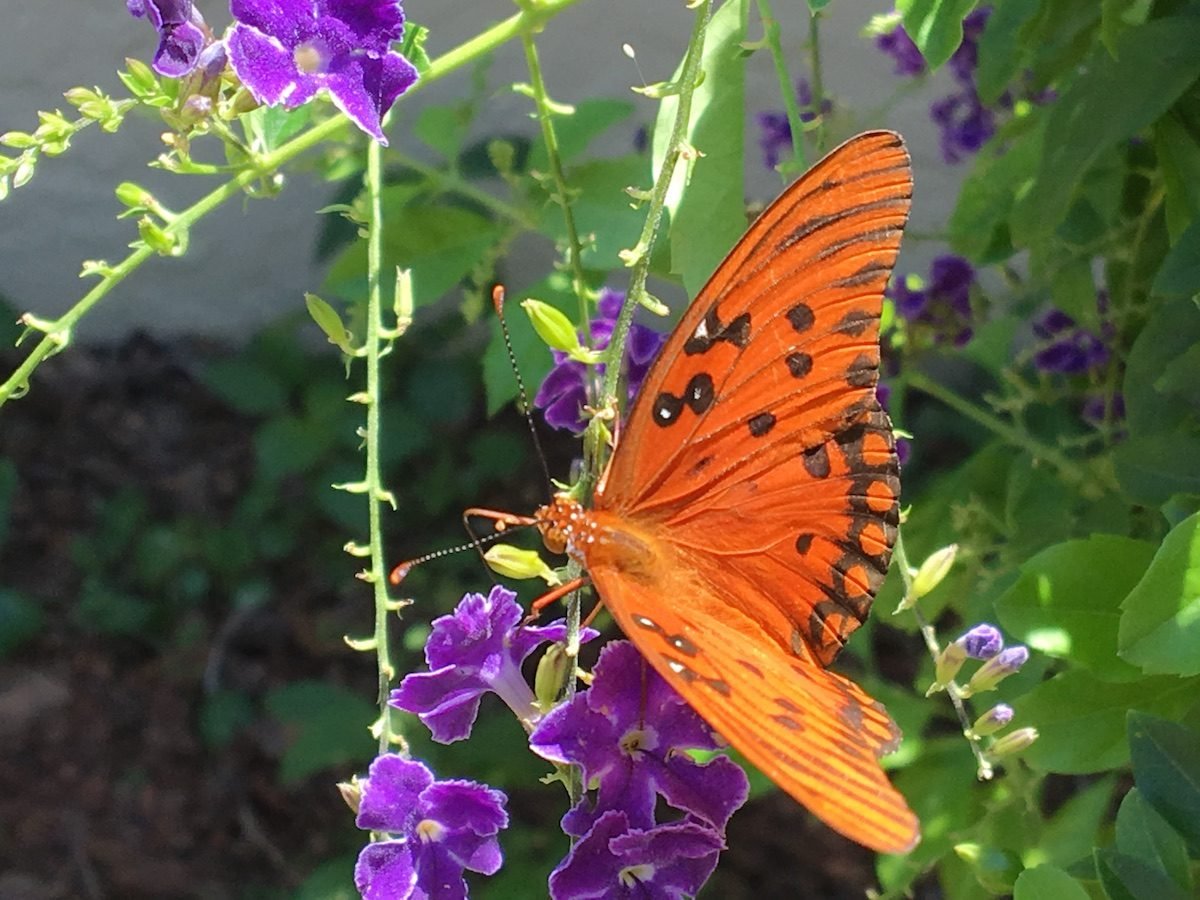
The best way to identify an adult Gulf fritillary butterfly is to look for bright orange wings that stretch between 2 1/2 to 3 3/4 inches. From above, there are black markings on the upper side and three white dots surrounded by black on the edge of the forewings. On the underside of the wings, there are long silver, iridescent spots.

Reader Tammy Peterson of Largo, Florida, notes that the markings stood out to her in person. She says, “I took this photo (above) at the Florida Botanical Gardens in Largo, Florida. The butterfly’s orange-and-black markings contrast significantly with the green foliage in the background.”

What Does a Gulf Fritillary Caterpillar Look Like?

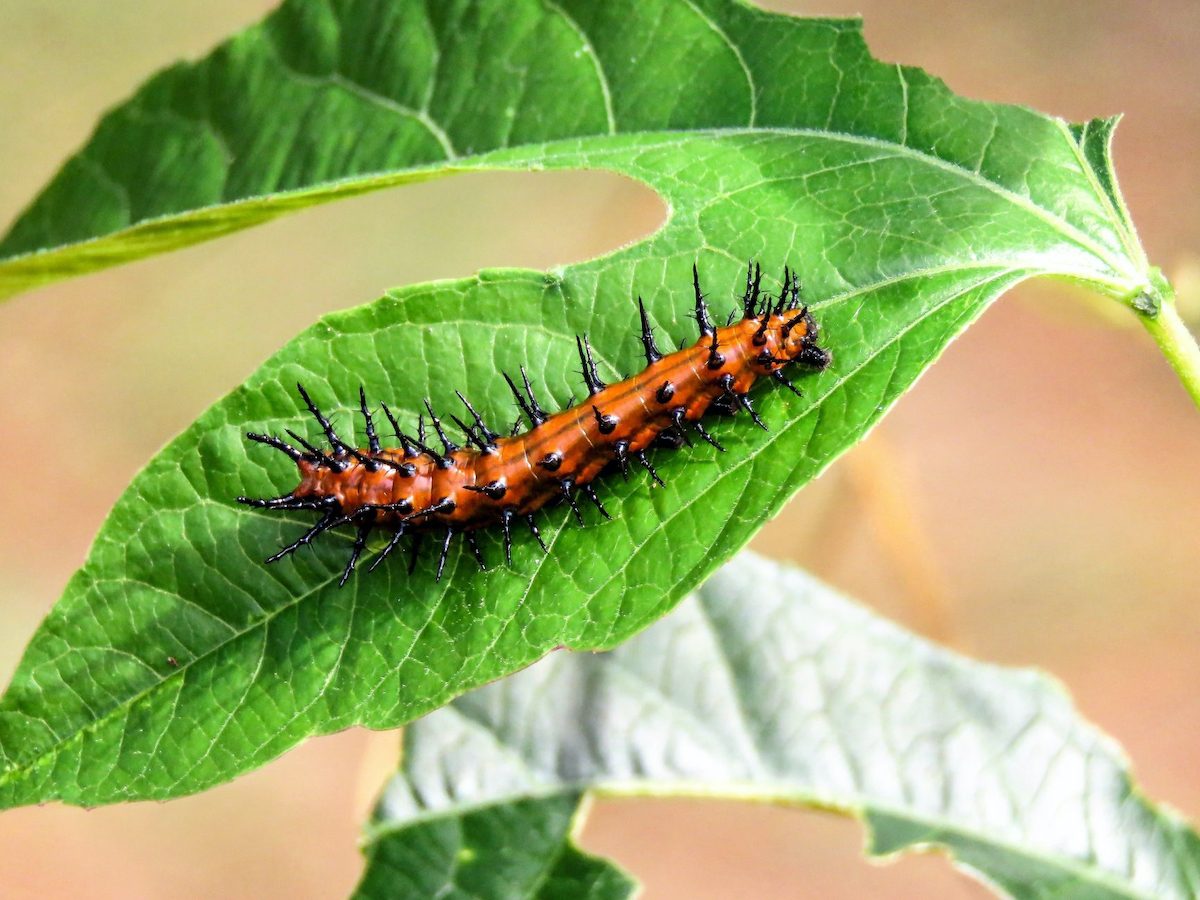
Gulf fritillaries start their lives in bright yellow eggs at first, which then become transparent as the caterpillar grows inside. A mature caterpillar has a bright orange body and is covered in black spikes.

Gulf Fritillary Range and Habitat

These butterflies have a large range and can be spotted anywhere from the southern U.S. through South America. They’re often found along roadsides or in fields, open woodlands, pastures, city gardens and parks.

How to Attract Gulf Fritillary Butterflies

If you want to support these butterflies, one easy way is to plant flowers they’ll visit. It’s not uncommon to see them visiting lantana, various asters, verbena and tickseed.

Reader Becky Litke of Panama City, Florida had luck attracting this butterfly (above) and other pollinators with the orange-and-yellow blooms of the lantana bushes in her front yard.

You can also grow their favorite host plant: passionflower. The caterpillars love a variety of passionflower vines, including purple passionflower (Passiflora incarnata), yellow passionflower (P. lutea) and corksystem passionflower (P. suberosa).

SOURCE: BIRDS&BLOOMS.COM

Kirsten Schrader