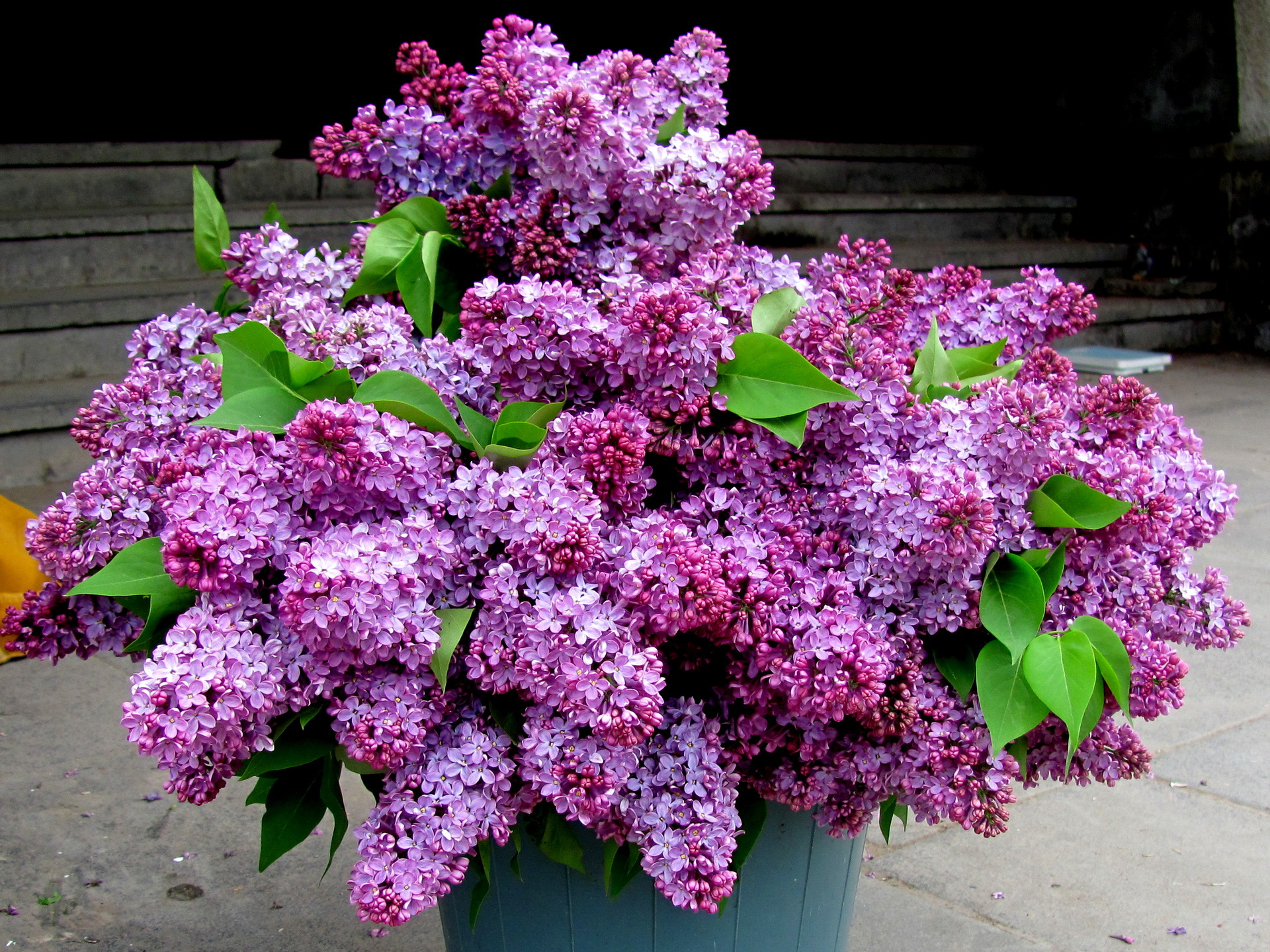
New Hampshire State Flower: Purple Lilac

The common lilac (Syringa vulgaris)—also known as the French lilac or simply the lilac—is a member of the olive (Oleaceae) family. Its relatives include ash trees, jasmine shrubs and vines, forsythia bushes, and privets. The common lilac is a popular ornamental landscaping plant that’s fairly low-maintenance under the right conditions. Native to the Balkan Peninsula, lilacs have long been revered for the heady scent of their abundant flower clusters. In the 1500s, the flowering shrub found its way to northern Europe, and settlers brought it to North America in the 1700s. New Hampshire even made the lilac its state flower.

They are very low-maintenance plants and require little care beyond annual pruning and fertilization. They are great plants for landscaping, including border plants and hedges, and are quite beautiful on their own.

Common Lilac Care

Here are the main care requirements for growing common lilacs:

Plant in full sun in a loamy, somewhat moist soil.

Can tolerate periods of drought, but prefers good watering during hot, dry weather.

Can handle frigid weather but prefers a cool, moderate temperature.

Benefits from a good pruning.

Light

Plant your lilac in an area that receives at least six hours of full sun each day. Lilacs will grow in some shade but likely won’t produce as many of the prized blooms.

Soil

Common lilacs like loamy, somewhat moist, neutral to slightly alkaline soil. Lilacs must have good drainage to avoid root rot and other diseases.

Water

Lilacs can tolerate the occasional drought but likely would benefit from supplemental watering during excessively hot, dry stretches.

Nevada State Mammal” Big Horn Sheep

The bighorn sheep is a majestic species of animal native to western North America. They are considered a “big game” trophy in many parts of the world and have been hunted by humans for their meat and fur since ancient times. Bighorn sheep are not only the largest sheep in North America, they are also wild. In this article, you’ll learn 8 facts about bighorn sheep.

8 Facts about bighorn sheep

These magnificent mammals are some of the first animals that come to mind when we think of the North American West and they were once a major source of food and income for humans living in areas where they reside.

1 The bighorn sheep is one of two wild sheep species in North America with large horns

Bighorn sheep are not the only wild sheep in North America with large horns. The other is the Dall sheep, which is found in Alaska and Canada. But unlike the Dall sheep, bighorn sheep are found throughout western North America, with populations in the US states of Arizona, California, Colorado, New Mexico, Oregon, Utah, and Washington as well as the Canadian provinces of Alberta, British Columbia, and Saskatchewan.

2 The bighorn sheep has 3 subspecies

The Rocky Mountain bighorn sheep, the desert bighorn sheep, and the Sierra Nevada bighorn sheep are each a part of the single bighorn sheep subspecies. Each subspecies has adaptations to help it survive, such as fur color and terrain.

The Rocky Mountain bighorn sheep is the largest of the 3 subspecies and has adaptations to survive its harsh surroundings. These sheep have large hooves that help them traverse rocky, mountainous terrain with ease. Additionally, they are able to eat plants found in these areas, such as grasses and shrubs. As a result, they have longer coats to help insulate them from the cold.

The desert bighorn sheep has adaptations to survive in its hot and arid climate. These sheep have shorter, coarser fur that can withstand intense heat, as well as large noses to help them avoid breathing in dust. They also tend to travel only at night when it is cool and avoid areas where there is a lot of vegetation.

The Sierra Nevada bighorn sheep has adaptations to survive its high, dry climate. These sheep have longer fur that helps insulate them from the cold, as well as large hooves that can help them traverse challenging terrain. Additionally, these sheep are also able to eat plants in their environments, such as fungi and woody shrubs.

3 Rams and ewes have differently shaped horns

Rams are male sheep and ewes are female sheep. A rams’ horns are thicker and curve forward and ewes have more slender horns that stick straight out from their heads. This difference is important for the sheep population to survive because rams use their horns as a defense against predators and competition from other males, as well as for fighting and courting females.

4 Bighorn sheep can climb steep cliffs without much effort

Bighorn sheep are known for their ability to climb steep cliffs with relative ease. They have strong neck muscles, and their hooves are able to cling to even the roughest of surfaces. These traits help them find food during certain times of the year when food may be scarce, such as in the winter months or in more arid regions. This adaptation also helps them to evade predators.

5 Bighorn sheep have 4-part stomachs

Bighorn sheep are ruminants, meaning that they have a four-part stomach. After their first meal, which usually consists of grass and other plants, bighorn sheep chew their cud – or regurgitated food – before digesting it again. Their digestive system is specially designed to let them eat and process fiber-rich vegetation from harsh environments.

6 Rams spend most of their lives in a bachelor flock

Rams leave their mother’s ewe group a few years after being born to go join a herd of rams. This is known as a bachelor flock. This bachelor herd can be anywhere from two rams to over 10 and they only leave the herd during mating season. The rams spend most of their lives in this bachelor flock.

7 Rams fight over who is allowed to mate with the ewes

It can be hard for rams younger than 7 or 8 years to mate. Bighorn sheep have a hierarchy that favors older rams with bigger horns, making it difficult for younger rams to find a mate. During the mating season, known as the rut, rams will compete against each other for dominance and the right to mate with ewes. This competition can take up to a month, with rams fighting aggressively using their horns to battle it out. Only one ram will be selected to mate with the ewes, and after mating, the victorious rams will return to their bachelor herds.

Despite these challenges, many younger rams are able to successfully find a mate during the rut. Ultimately, it all comes down to size and dominance – larger and older rams are more likely to win in the mating battles and are therefore more likely to find a mate. However, even small rams can get lucky if they manage to outsmart or intimidate their larger competitors.

8 The skulls of bighorn sheep are made for head-to-head combat that males engage in

The bighorn sheep is a species of large, sturdy-looking mammal with thick fur and huge curved horns. These horns can measure up to three feet in length, allowing the bighorns to engage in head-to-head combat with one another. The skulls of the males are particularly suited for this; they have thick bones that can withstand the repeated battering that occurs during fights. This is an important aspect of bighorn sheep adaptation, as competition for females is fierce among males.

SOURCE: WILDLIFEINFORMER.COM

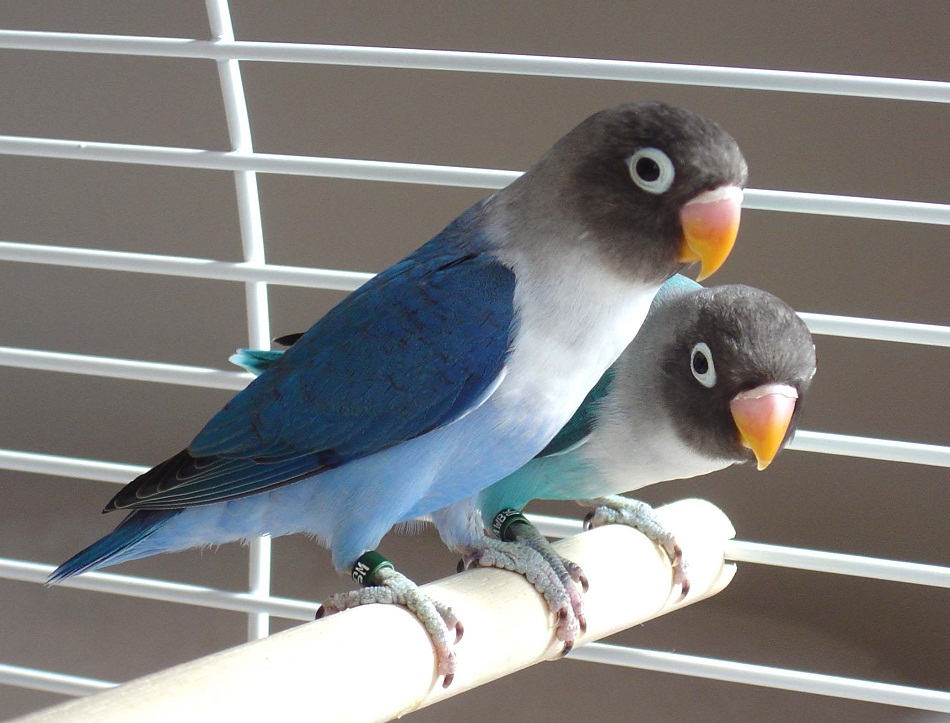
Love Birds

Lovebirds are one of the most popular pet parrot species, and for those who are familiar with them, it’s no surprise. Beautiful and intelligent, these little birds have been one of the most beloved types of African parrot for more than 100 years. However, there are a lot of myths out there about lovebirds, their behavior, and what it’s like to keep them as pets.

Although they are a type of parrot, and they do have the ability to mimic human speech, lovebirds are not among those species that most would consider talking birds. This is because they very rarely decide to speak, and if they do choose to mimic a sound, more often than not they repeat simple noises such as whistles or household sounds such as doorbells and microwaves.

It is not known why some lovebirds are more prone to mimicking speech than others, but it is widely believed that those who do learn to talk are taught from a very young age.

There Are Several Types of Lovebirds

There are many different types of lovebirds. There are nine separate sub-species of these little parrots, each carrying their distinct traits and characteristics. These include the masked lovebird, the black-cheeked lovebird, the Fischer’s lovebird, the Nyasa lovebird, the Swindern’s lovebird, the red-faced Lovebird, the Abyssinian lovebird, the Madagascar lovebird, and the beloved peach-faced lovebird.

The peach-faced lovebird, which is the most popular, can be identified by the rainbow of yellow, green, and blue on their bodies as well as their bright peachy-pink faces. While the different types of lovebirds have differences in looks and temperament, on average, all of the lovebirds will live for up to 20 years in captivity. 

Lovebirds Are One of the Smallest Parrot Species

While they are true parrots, lovebirds are one of the smallest members of the parrot family. On average, most lovebirds fall between 5 and 7 inches in length at maturity, when measured from the beak to the end of the tailfeathers. Their small size has worked to push their popularity among those who live in apartments and other small spaces. Many of these bird lovers have found it easier to house and care for these little birds instead of attempting to keep a larger parrot species such as a macaw or a cockatoo.

Lovebirds Are Not Always Best Kept in Pairs

It is a widely purported myth that you should never own a solitary lovebird and that if they are not kept in pairs, they will die of depression. While it is true that they are extremely social birds who thrive on interaction and must be socially stimulated, in many cases, bird owners should keep single lovebirds. This is because these birds breed readily in captivity, and most bird owners are not capable of caring for an entire family of parrots.

It is also worth noting that birds kept in pairs tend to bond with each other and shun human interaction. Those who would like their bird to be affectionate and open to being handled by human hands have found that it’s best to keep birds by themselves and devote as much time as possible to playing and socializing with them so that their needs are met.

Lovebirds Are Very Active

Like all parrots, lovebirds are extremely active birds that need quite a bit of exercise to stay in top physical condition. Those interested in adopting a lovebird must be willing and prepared to give their feathered friend a bird-safe place to play outside of its cage for several hours per day. This will allow the bird to exercise all of the muscle groups that it needs to stay healthy, as well as provide important mental stimulation that these very intelligent animals need.

Fast Facts

What do lovebirds eat?

Lovebirds eat seeds, grasses, fruits, and vegetables.

How do lovebirds sleep?

Lovebirds hang onto the sides of their cage when it’s time for some shut-eye.

Why are lovebirds called lovebirds?

Lovebirds got their name because of the strong bond they have with their monogamous mate.

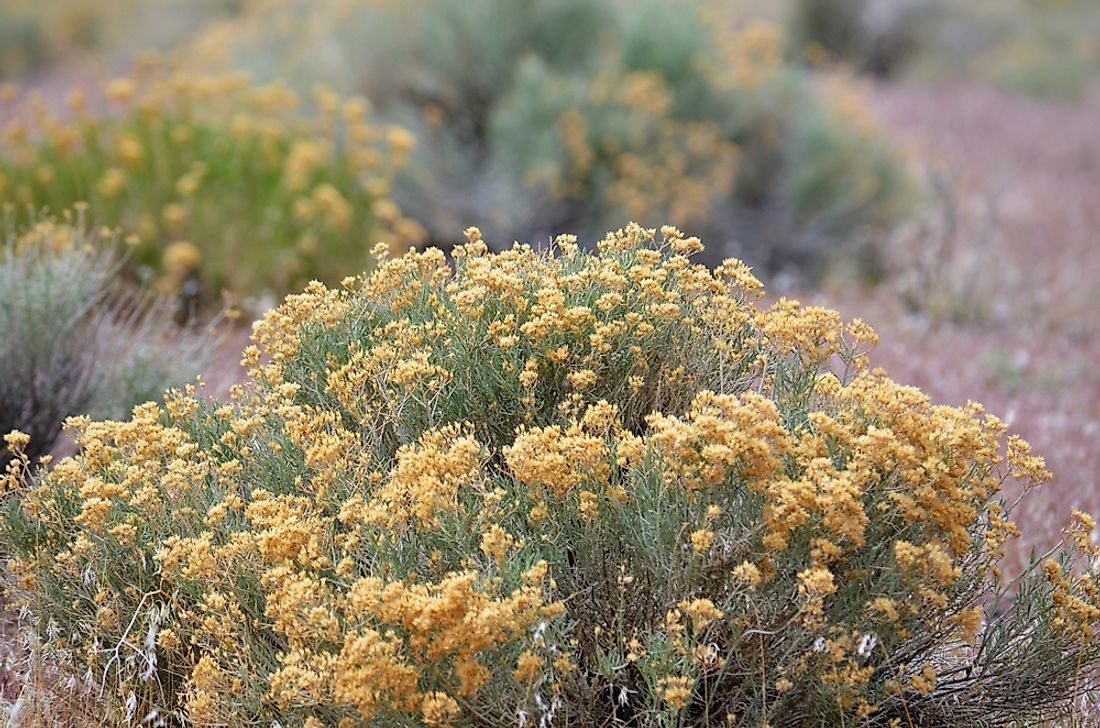
Nevada State Flower: Sagebrush

Nevada, the Silver State, is renowned for its stunning landscapes and unique flora. Among its natural treasures is the sagebrush, the official state flower of Nevada. This hardy and aromatic plant holds great significance in the state’s ecosystem and history. In this article, we’ll explore 10 fascinating facts about the Nevada state flower, shedding light on its cultural, ecological, and botanical importance. From its role in Native American traditions to its resilience in the harsh desert environment, the sagebrush embodies the spirit of Nevada’s rugged beauty. Let’s delve into the captivating world of the sagebrush and uncover the secrets that make it a cherished symbol of the Silver State.

Key Takeaways:

Sagebrush, Nevada’s state flower, symbolizes endurance and resilience, providing habitat and food for wildlife while stabilizing the state’s arid landscapes. It’s deeply ingrained in the state’s cultural heritage and inspires conservation efforts.

The aromatic Sagebrush embodies Nevada’s untamed spirit, captivating all with its evocative scent. It’s a living symbol of the state’s indomitable spirit, resilience, and natural beauty, cherished by its people and deeply rooted in its identity.

Sagebrush: The Emblem of the Silver State

Known as the emblem of the Silver State, Sagebrush (Artemisia tridentata) is the official state flower of Nevada. This resilient and aromatic plant holds immense significance in the state’s history and ecology. Sagebrush thrives in the arid landscapes of Nevada, demonstrating remarkable adaptability to harsh environmental conditions. The plant’s distinctive silvery-green foliage and its invigorating scent are emblematic of the rugged beauty of the Nevada wilderness.

A Symbol of Endurance

Sagebrush is a symbol of endurance and tenacity, reflecting the resilience of the state’s inhabitants and its natural environment. Despite its unassuming appearance, Sagebrush plays a vital role in Nevada’s ecosystem, providing sustenance and shelter for diverse wildlife, including the state animal, the Desert Bighorn Sheep. This hardy shrub is deeply intertwined with the fabric of Nevada’s identity.

Historical Significance

Sagebrush has deep historical roots in Nevada, dating back to the time of the early settlers and Native American tribes. The plant’s presence in the state’s folklore, medicine, and daily life underscores its cultural significance and enduring legacy. Its prevalence in the Great Basin region has made it an enduring symbol of the state’s rugged beauty and the resilience of its people.

Additional Sagebrush Plant Information

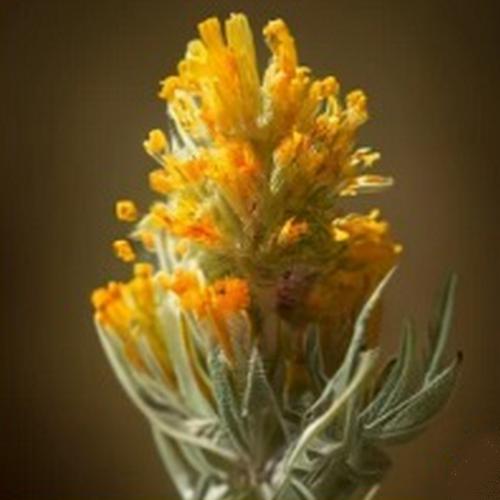
Sagebrush leaves can be identified by their grayish wooly appearance. They are about an inch long and end in a three-pronged set of “teeth.” This characteristic is important sagebrush plant information and sets them apart from other species of Artemisia. The young bark is gray and covered in fine hairs while older growth is dressed in shredded bark that falls off easily. Most plants do not grow taller than 4 feet but occasionally they have been found 10 feet tall in their native habitat. The shorter size is more likely when growing sagebrush plants in the home landscape.

Uses for Sagebrush

In addition to the medicinal uses for sagebrush, it is an important habitat for native birds, small rodents and reptiles. The plant was used as building material for baskets and rope, and the wood was fuel for early Native American people. It also has importance as a spiritual and ritual aromatic plant. The smoke is thought to have cleansing properties by those with belief in spirits. As a poultice, it clears lungs and eases aches and pains. It was once chewed for its ability to soothe stomach problems and bowel issues. Another of the uses for sagebrush included lining cloth with the leaves of the plant as a diaper.

How to Care for a Sagebrush Plant

Sagebrush is a member of a hardy and adaptive genus that thrives where moisture and nutrients are low. They can survive ferocious winds and extreme periods of drought. As such, the worst thing you can do to sagebrush is overwater it. If you give the plant supplemental water in spring, it will bloom. There is no need to water after the plant has been established.

Most pests and insects are repelled naturally by the plant’s strong taste and odor.

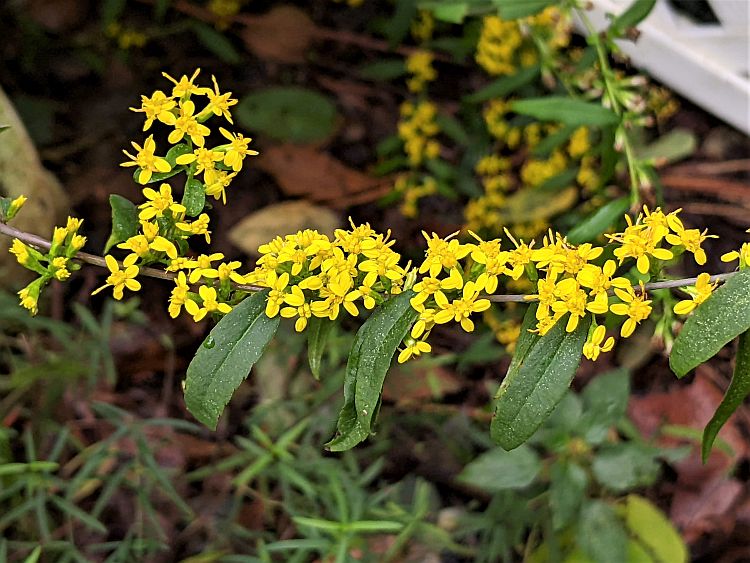
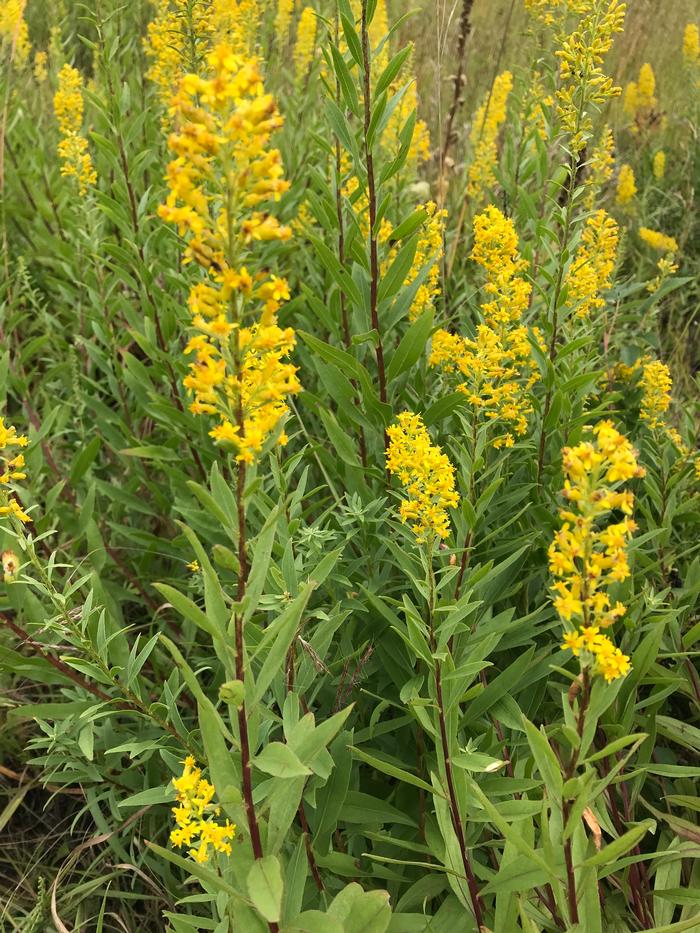
Nebraska State Flower: Goldenrod

Goldenrod is a native North American perennial wildflower that is tall and slim with fluffy golden flower spikes in various shades of yellow. Once regarded as an invasive weed, goldenrod is increasingly valued by gardeners thanks to cultivars that offer better performance and more attractive flowers. Goldenrod grows best in any sunny location, survives well in average or even poor soil, and thrives in temperatures between 65 and 80 degrees Fahrenheit.

Goldenrod Care

Here are the main care requirements for growing goldenrod.

Plant goldenrod in the spring or fall, choosing a sunny location with average soil.

Stake the taller varieties so the plants don’t flop and bend. 

Water young goldenrod plants weekly to keep soil moist until established, then only supplement in drought.

Do not overfertilize; goldenrod does not need fertilizer at all.

Light

Goldenrod craves full sun for optimal flowering. The plant will tolerate a bit of shade, though a shady location can reduce its blooms.

Soil

Goldenrod is not overly picky about soil but it must be well-drained with a pH in the acidic-to-neutral range. This plant can tolerate sandy, rocky, and clay soils. Very rich soil can cause the plant to become leggy and potentially flop over.

Water

Water new goldenrod plants weekly to maintain damp, but not soggy soil. Mature goldenrod plants are drought tolerant and rarely need supplemental watering except when rainfall is scarce.

Temperature and Humidity

The hardiness range varies a bit depending on the species, but most goldenrods thrive in USDA cold hardiness zones 2 to 8, taking heat and cold weather in stride. Goldenrod isn’t fussy about humidity, either.

Types of Goldenrod

The many goldenrod species vary somewhat in size and appearance. Cultivars are known to be less aggressive spreaders than the species forms. Some popular species—all native to North America—include:

Solidago caesia (blue-stemmed goldenrod) has arching purplish stems. It is not an aggressive spreader and produces good cut flowers.

Solidago odora (sweet goldenrod) is a 2- to 4-foot plant with anise-scented leaves and yellow flowerheads. It does not spread aggressively and has a good tolerance for poor, dry soils.

Solidago rugosa, also known as rough goldenrod is a 3- to 5-foot plant with a fondness for moist conditions. A popular cultivar is ‘Fireworks’, with its arching golden-yellow flowerheads that resemble an exploding skyrocket.

Solidago speciosa, also known as showy goldenrod, grows 1 to 3 feet tall, with dense clusters of tiny yellow flowers.

Solidago sphecelata,also known as autumn goldenrod, is a 12- to 24-inch species with arching stems holding plumes of yellow flowers. Two notable cultivars are ‘Golden Fleece’, a short 15- to 18-inch plant with arching cylindrical flowers, and ‘Wichita Mountains’, a 30-inch plant with rich gold flowers.

Solidago bicolor (white goldenrod)is noteworthy simply because it does not display the typical yellow goldenrod blooms. Instead, it features white blooms.

SOURCE: THESPRUCE.COM

Love Bugs

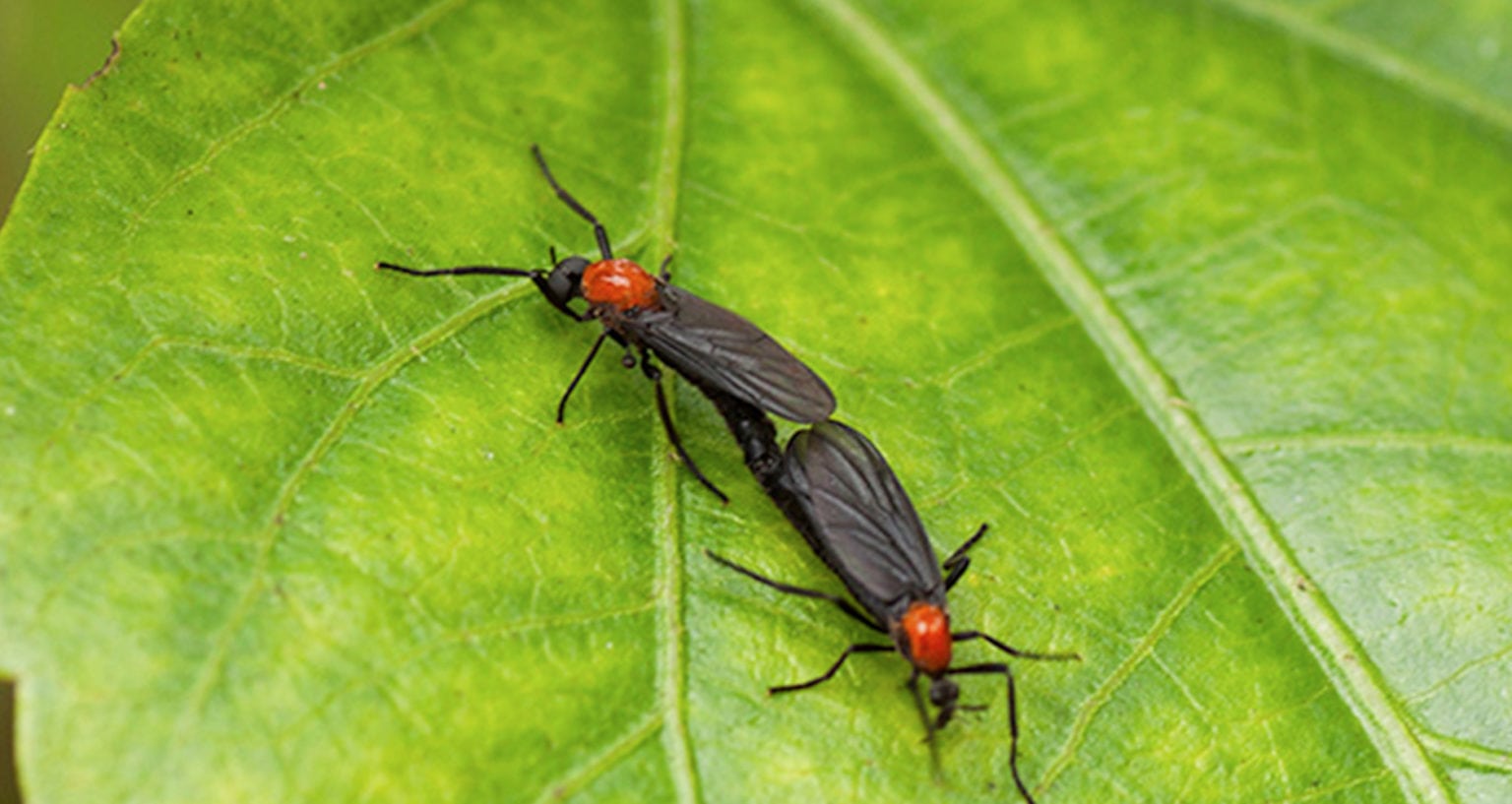
Love bugs, also known as the honeymoon or double-headed fly, are a species of march flies that are commonly found in parts of Central America and the southeastern United States.

Despite their seemingly affectionate name, these insects can become quite a nuisance, particularly during their mating seasons which occur twice a year. They are known for their unique mating behavior, where the male and female remain attached for several days.

Contrary to popular belief, love bugs do not bite or sting, making them harmless to humans. However, their sheer numbers, especially during their mating periods, can cause inconveniences.

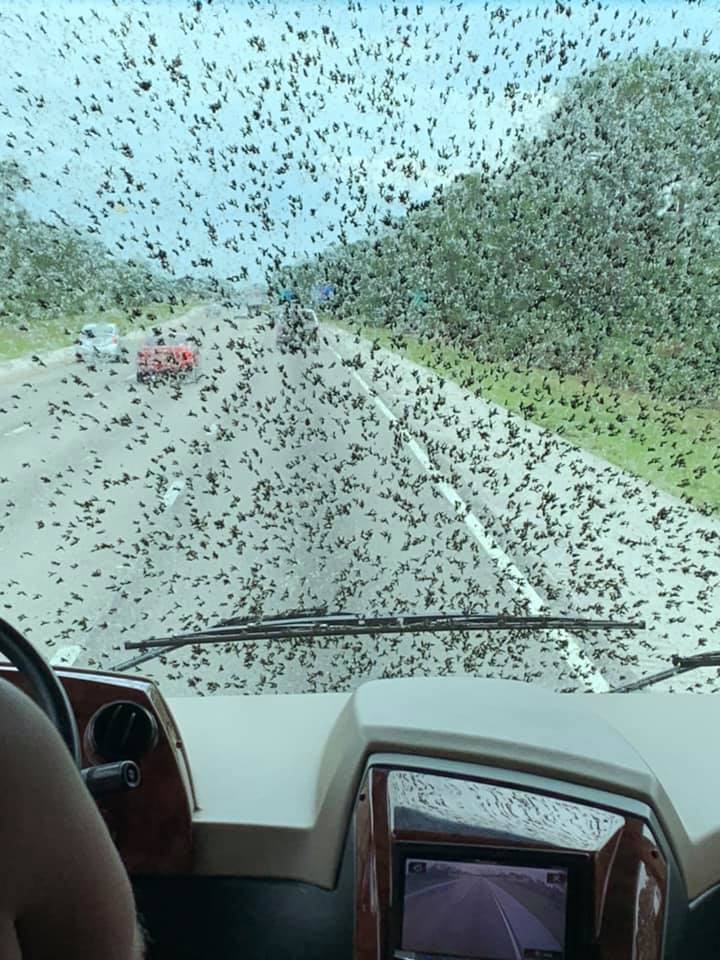
They often swarm around highways, resulting in visibility issues for drivers and potential damage to vehicles due to their acidic body chemistry.

Love bugs, scientifically known as Plecia nearctica, are a species of fly that are quite common in parts of the United States, particularly in the southern regions. These small, red and black insects are often seen in large swarms, especially during their mating seasons in spring and late summer.

The name “love bug” is derived from their unique mating habits. After mating, the male and female remain attached to each other, flying in tandem for several days. This distinctive behavior, coupled with their striking red and black coloration, makes them easily recognizable and has earned them their romantic nickname.

Despite their endearing name, love bugs can be quite a nuisance. They are attracted to heat and the exhaust fumes of cars, often resulting in large numbers of these insects splattering on windshields and car grills.

Besides being a driving hazard, the acidic body fluids of love bugs can lead to paint damage if not removed promptly.

During their adult life, love bugs are often seen in large swarms, especially during their peak mating seasons in May and September. These swarms can be so dense that they cause visibility issues for drivers. It’s during these swarms that you may wonder where they all go.

In fact, their lifespan as adults is very short – only about three to four days. After mating, the females lay their eggs and then die, while the males die shortly after mating. This means that the swarms of love bugs disappear almost as quickly as they appear, leaving behind only their eggs to continue the cycle of life.

SOURCE: PLANETNATURAL.COM

A Rose is a Rose is a Rose: Part 2

12 Ivory

Ivory is an off-white color resembling the color of egg shells. Ivory roses symbolize grace and charm. If you know someone who has those traits, these flowers can make a wonderful gift for them. They’re usually given to people you care about without romantic intentions. Some people also view these roses as elegant and perfect.

13 Pearl

Pearl roses look similar to white and ivory. They’re a symbol of thoughtfulness and perfection. They’re a great way to let someone know you’re thinking of them without any romantic feelings involved.

14 Cream

Cream roses share meanings with both ivory and pearl roses. Thus, they symbolize charm and thoughtfulness. Like the other off-white colors, they’re a great way to show platonic appreciation for someone.

15 Lavender

Lavender roses often symbolize wonder and enchantment. They can be used to portray a special love, such as the kind that only happens once in a lifetime. They represent all the splendor and mystery that true love brings.

16 Purple

Purple roses are a sign of passion and infatuation. People who give purple roses are likely expressing their lasting feelings in a relationship and searching for a deeper connection. Purple roses are less intense versions of red roses, so they may lead to new relationship milestones.

17 Blue

Since blue roses don’t exist in nature, they represent mystery and uniqueness. They symbolize something that is impossible or unattainable. They are often given to someone as a way to tell them to dream big and never give up.

18 Green

Green is one of the most common colors in nature, so green roses symbolize growth and abundance. They’re also a sign of good news and new beginnings. They can be used to encourage or congratulate someone.

19 Mint

Mint is a more playful version of green. So, these roses usually represent cheerfulness and new beginnings. Like green roses, they’re used to cheer on someone during a new milestone in their lives.

20 Black

Like blue roses, black roses don’t occur naturally. So, they’re a rare and mysterious find. They usually symbolize death and mourning, so they’re a common decoration for funerals. On a more positive note, they could be a sign of a new beginning or a big change in life.

21 Multicolored

Any rose that has more than one color on it, such as rainbow roses or a mix of blue and pink, could fall into this category. Multicolored roses usually share a combination of meanings. For example, if a rose has red and yellow, it could be given to a friend you’ve developed romantic feelings for. Multicolored roses are usually vibrant, so they’re great for party decorations.

22 Assortment of Colors

Sometimes, you may receive more than one rose color. This is another way to convey multiple rose meanings at once. However, there’s not always a deeper meaning to a mixture of roses. In some cases, it’s just a vibrant decoration for a celebration. They’re a good gift for someone who wants beautiful flowers without having to worry about a deeper meaning.

Source: color-meanings.com

A Rose is a Rose is a Rose: Part 1

Thinking of buying roses for someone this Valentine’s Day or maybe expecting to receive roses?  This article details the meaning of the color of roses and what they “say” or what the sender wants them to say. 

From: Color-Meaning.com:

Buying flowers for someone can be a stressful process because there’s a chance they may misunderstand your intentions. Many people perceive giving roses as a romantic gesture, but not every color of rose is seen as a gift of deep love. So, what does each rose color mean? Understanding different roses may help you choose the best type to give someone.

Do Roses Come in Every Color?

“Roses are red” is what we’re used to hearing, but it’s not always true. They may not be the most colorful flowers in the world, but roses can come in all sorts of colors, including multi-colored varieties. Shades of red will always be the most common, but there are plenty of other natural colors roses can be. If a rose can’t be produced in a certain color, sellers may dye the flower to give it a desirable hue. The only colors that you won’t find naturally in roses are blue and black. Even though other flowers can naturally be blue, blue doesn’t exist in the rose gene pool. Some flowers can have black pigments, but no flower can be completely black naturally.

Top of Form

Rose Color Meanings

Roses typically symbolize love and romance, but the color of the rose could change that meaning. So, let’s take a look at what 22 different rose colors mean.

1 Red

2 Light Pink

Roses come in many shades of pink, each with different meanings. Light pink is often a sign of innocence and appreciation. They’re a great gift for a family member or close friend to show that they’re important to you. They may also symbolize joy and gentleness.

3 Medium Pink

Most pink roses are a symbol of grace and femininity. They may also be associated with gratitude. They’re often used to decorate celebrations, and they can be given as a way to congratulate someone.

4 Dark Pink

Dark pink is a gentler version of red. Instead of passionate love, it represents a form of admiration and gratitude. Deep pink roses are often given to people to let them know you appreciate them, and they can be given for any type of love, whether it’s family, friends, or a partner.

5 Burgundy

Burgundy roses are similar to red roses, but they’re slightly darker. Thus, they’re a sign of passion and devotion. They’re almost always given as a gift to a significant other. These roses are viewed as stunning and beautiful.

6 Peach

Peach roses are often given to someone as a sign of thanks and appreciation. They’re a down-to-earth way to show someone that you’re grateful for them. Some people may also give them to a loved one when expressing sympathy.

7 Salmon

Salmon roses aren’t quite red, and they’re more vibrant than peach. They’re a sign of excitement and desire. They let the receiver know that you’re thrilled to be spending time with them.

8 Coral

Coral is similar to salmon, and it shares many of the same meanings. It’s a sign of enthusiasm and desire, so it’s a fun alternative to red roses.

9 Orange

Orange is one of the most vibrant rose colors you can buy. These flowers symbolize fascination and energy. Like similar colors, they can also be a sign of desire, excitement, and enthusiasm. They’re perfect for people who love when attention is drawn toward them.

10 Yellow

Yellow roses are a symbol of friendship and joy, so they should be given to friends and family rather than romantic partners. In the Victorian Era, yellow roses were a sign of jealousy and envy, but over time, they changed to mean the opposite. These flowers are the perfect way to tell someone they’re a great friend.

11 White

White roses symbolize new love and innocence. They’re also a sign of purity and youthfulness. They’re the perfect gift to give in the early stages of a relationship. However, these roses are sometimes also used as wedding decorations.

Source: color-meanings.com

Pucker Up: Kisser Fish

From thesprucepets.com:

The name kissing gourami (or kisser fish) is derived from what appears to be kissing between fish; however, scientists still are not sure of the true purpose of the behavior. It is believed to be a harmless territory-challenging behavior that generally occurs between two males. This conjecture is supported by the fact that aging seems to diminish the need to challenge one another. Also with age, the desire for mating territories diminishes.

The popular kissing gourami, commonly called a kisser, originates from the Indonesian island of Java and is also found in Borneo, Cambodia, Malaysia, Thailand, and Vietnam. It is commonly cultivated in the southern Indochina region as a food fish. Today, virtually all specimens sold in the United States are commercially bred in Florida. Additionally, Thailand and Singapore commercially breed this species for the aquarium trade as well as for food consumption.

In nature, kissers are usually found in slow-moving, heavily vegetated ponds or marshes. They are a hardy fish that will tolerate a range of water conditions. These fish have a hidden structure called the labyrinth organ. It enables them to take oxygen from the air, allowing them to survive in waters with low oxygen levels.

In fact, the gills of labyrinth fish are usually not even capable of obtaining enough oxygen from the water to survive. Therefore, they must satisfy most of their oxygen requirements by gulping air at the surface of the water. For this reason, it’s essential to provide them with access to the water surface in all tank zones.

Kissers need warm water, and they need to consume plenty of plant matter. As a habitat, use artificial plants or sturdy live plants such as Java fern or Java moss. Tender live plants are likely to be eaten down to the stem.

In nature, kissers grow to a size of a foot or more, but in captivity, they generally remain about half that size. However, even a small kisser will grow too large for an aquarium smaller than 30 gallons, so this species should not be kept in mini-tanks. With proper care, it is not unusual for these fish to live well over a decade.

Kissing gouramis are omnivorous fish. On the inside surface of the kisser’s obvious lips are rows of fine teeth which are used to graze on algae and vegetable matter. Periodically provide fresh romaine lettuce, cooked zucchini, or peas to keep your kissers in optimal health. But take care when providing fresh vegetables, as uneaten portions will quickly foul the water.

They should be provided with plenty of spirulina-based foods as well as fresh vegetables when possible. Kissers also accept a variety of protein foods, including flake, frozen, freeze-dried, and small live foods, such as tubifex and brine shrimp.

Gender Differences

Both sexes of kissing gourami look almost identical, from their oval shape to their thick fleshy lips. It is almost impossible to determine the sex of these fish until they spawn. At the mating period, the body of the female becomes round as it fills with eggs.  

SOURCE: THESPRUCEPETS.COM

Sea Horses

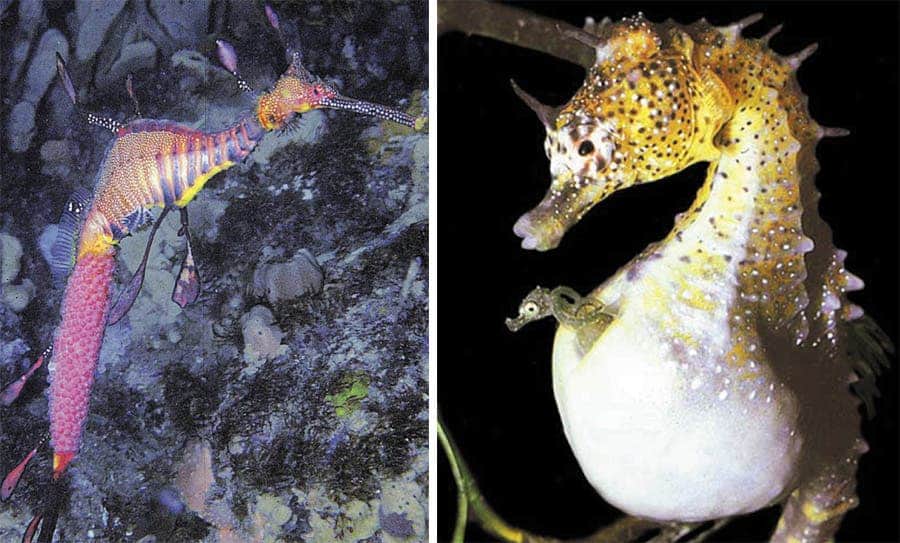
Hippocampus, commonly known as Sea Horse, is the designation of any of the 50 small marine fish. The word “hippocampus” is derived from the Greek words “horse” and “sea monster.” Sea Horses have a horse-like head and neck, segmented skeletal armor, an erect stance, and a curled, prehensile tail.

One of the most unusual and alluring marine animal species in existence, Sea Horses are found in both tropical and temperate regions all over the world. There’s much more to Sea Horses’ breathtaking allure than just their distinctive protruding faces and curling tails, from weird eating behaviors to exquisite courting rituals.

Appearance

Sea Horses come in a variety of sizes and can grow to be 14 inches long. Sea Horses have broad-snouted heads, curved necks, and unique trunks and tails, giving them a horse-like look and earning them the moniker. Despite being bony fish, they lack scales and instead have a thin layer of skin stretched over a number of bone plates that are distributed throughout their body in rings. 

Sea Horses are protected from predators by the armor of bone plates, and because of this external skeleton, they no longer have ribs. Sea Horses use their dorsal fins to drive themselves forward as they swim upright. They have good camouflage abilities, and depending on their environment, they can develop or shed spiky appendages.

Diet

Sea Horses are carnivorous fish. Sea Horses can easily chew their food thanks to their long snouts. Yet, because they take a long time to finish their meals and have very basic digestive processes without stomachs, they must continually feed in order to survive. Smaller crustaceans that are swimming or burrowing on the bottom are what seahorses hunt. 

Sea Horses ambush anything that floats within striking distance using their superior camouflage, waiting patiently for the right opportunity. Mysid shrimp and other little crustaceans are top choices. The three unique feeding phases in Sea Horses are anticipatory, expansion, and recuperation. When in the expanded phase, the Sea Horse catches its prey by lifting its head, opening its oral cavity, and sucking it in before returning to its normal position.

Habitat

Around the planet, shallow tropical and temperate saltwater is where you’ll mostly find Sea Horses. They are found in protected environments such as coral reefs, mangroves, estuaries, and seagrass beds. Due to their poor swimming abilities, Sea Horses must attach themselves to seaweed, coral, or any other object that will keep them anchored. 

The Western Atlantic’s Caribbean area is home to the Long Snout and Northern Sea Horses. The Mediterranean Sea and warm regions of the Atlantic Ocean are home to the common Sea Horse. The Indo-Pacific is home to the Yellow Sea Horse. The sole Sea Horse found along the eastern Pacific coast, which stretches from California to Peru, is the Pacific Sea Horse.

Reproduction

Sea Horses engage in courtship for several days before mating. During mating, the female Sea Horse can lay between 1,000 to 2,000 eggs in a brood pouch on the male’s ventral side, facing the front. The pouch serves as an incubator, nurturing the eggs until they hatch, which can take anywhere from 9 to 45 days. Once the young Sea Horses are released into the water, the male may mate again within hours or days during the mating season.

Many species of Sea Horses establish pair bonds that endure at least the mating season, despite the fact that they are not known to be lifelong partners. More monogamous fidelity is demonstrated by certain species than by others. When the chance presents itself, many species of Sea horses will quickly exchange partners. 

Threats

The Sea Horse has many predators in its natural habitat because of its tiny size and susceptibility. The Sea Horse is frequently preyed upon by crabs, fish, and rays. Additionally, Sea Horses have been found within the stomachs of predator fish species like bluefin tuna.  The Sea Horse is especially susceptible to inclement weather because, during storms, they are frequently tossed onto the shoreline from the surface they were sticking to.

Ocean pollution depletes many species’ food sources and habitats, including Sea Horses.  Additionally, Sea Horses have been overfished, particularly in Asia, to be used in recipes and as a component of medicine.

Facts about the Sea Horse

The scientific name for Sea Horses, Hippocampus, is also a brain area in humans. 

Sea Horses get their name from their resemblance to land horses.

Sea Horses move 60 inches an hour, swimming exceptionally slowly.

Seahorses are fish with digestive tracts but no stomachs.

The male species of Sea Horses are the ones that give birth.

SOURCE OCEANINFO.COM