The Alaska Triangle

The Alaska Triangle, sometimes called Alaska’s Bermuda Triangle, is a place in the untouched wilderness of the Frontier State where mystery lingers and people go missing at a very high rate.  The Alaska Triangle connects the state’s largest city of Anchorage in the south, to Juneau in the southeast panhandle, to Barrow, a small town on the state’s north coast. Here, is some of North America’s most unforgiving wilderness.

The area began attracting public attention in October 1972, when a small, private plane carrying U.S. House Majority Leader Hale Boggs, Alaska Congressman Nick Begich, an aide, Russell Brown, and their bush pilot Don Jonz seemingly vanished into thin air while flying from Anchorage to Juneau. For more than a month, 50 civilian planes and 40 military aircraft plus dozens of boats, covered a search area of 32,000 square miles, but no trace of the plane, the men, wreckage or debris were ever found.

Afterward, more planes went down, hikers went missing, and Alaskan residents and tourists seemed to vanish into thin air. In fact, since 1988, more than 16,000 people have disappeared in the Alaska Triangle, with a missing person rate at more than twice the national average.
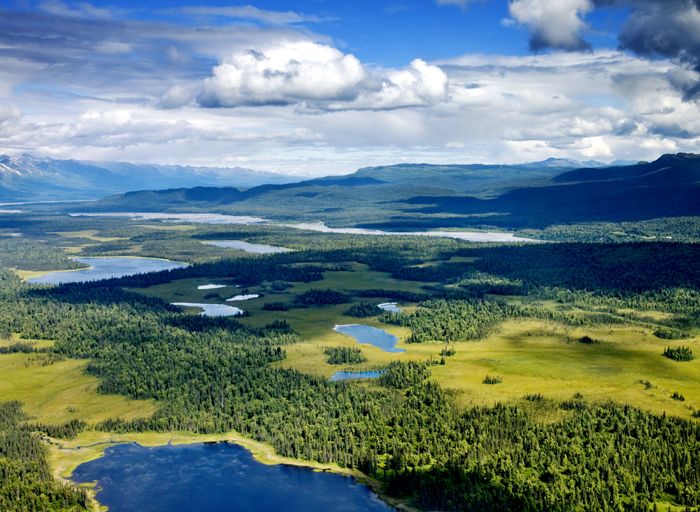
Alaska is bound by 33,000 miles of coastline, contains more than three million lakes, untamed wildlife, and winters that blanket vast reaches of the state in snow and ice.  In any given year, 500-2,000 people go missing in Alaska, never to be seen again. Authorities conduct hundreds of rescue missions, most often return without finding the missing person or any evidence at all.  There are several theories about the disappearances—everything from severe weather to aliens—to swirling energy vortexes to evil shape-shifting demons.

The Environmental Theory

The most likely explanation of these many missing people is the wilderness itself. Despite the warnings from authorities regarding weather, wildlife, and environmental conditions, hundreds of tourists visit Alaska to see the unspoiled land, many of whom are unprepared for the natural elements. Some of these people probably became lost in the middle of nowhere, resulting in the numerous search and rescue operations performed each year.

Within this area are dense forests, craggy mountain peaks, massive glaciers, hidden caves, and deep crevasses where downed aircraft or lost hikers might easily be hidden and then covered by snowfall, hiding any trace of human activity. This harsh landscape is also filled with wild animals and is subject to unforgiving weather, including avalanches. That, however, does not explain why there are more disappearances in the Alaska Triangle than elsewhere in the state.

The Vortex Theory

Some believe that the Alaska Triangle is home to its own electromagnetic variations, also known as ‘vortexes,’ that affect the physical world. Energy vortexes are thought to be swirling centers of energy concentrated in specific places where the energy crackles most intensely. The energy radiates in a spiraling cone shape clockwise or counterclockwise, creating positive and negative effects. They are thought to affect humans in various physical, mental, and emotional ways.

One example of this vile vortex is the Bermuda Triangle, but a more common example would be the North and South Poles. These types of magnetic energy centers are believed to have varying affects on humans, including anything from confusion to emotional changes.

Positive vortexes spiral upward in a clockwise motion creating an enhancing flow of energy. This type is said to be conducive to healing, meditation, creativity, and self-exploration. People actively search these places out to feel inspired, recharged or uplifted. Some of the places where positive vortexes are said to exist are the Egyptian pyramids, Stonehenge, the Sedona desert, and sacred temples and cathedrals throughout the world.

Alternatively, negative vortexes spiral downward in a counterclockwise motion, creating a draining or depleting energy and depleting the positive energies in its vicinity. In humans, they are believed to cause health problems including depression, nightmares, disorientation, confusion, and both visual and audio hallucinations. They are also said to cause electrical instruments to malfunction. Some places that are said to be filled with negative vortexes are the Bermuda Triangle, Japan’s Devil’s Sea, and Easter Island.

Electronic readings in Alaska have found large concentrations of magnetic anomalies, some of which have disrupted compasses to the point that they are as much as 30 degrees off. In addition, some search and rescue workers have reported having audio hallucinations, disorientation, and lightheadedness.

It is unclear whether vortexes really exist and the theory has been open to a good amount of skepticism, but is it possible?  Whether the mysterious disappearances of the Alaska Triangle are the result of natural perils, strange energy vortexes, or ancient evil spirits, they are certainly alarming.

The Alien Theory

Another theory about the Alaska Triangle is…aliens.  Since 1998 there have been over 560 reported UFOs (Per the National UFO Reporting Center) in Alaska with a majority of sightings in the Alaska Triangle.  The most notable example of this, however, happened in 1986, when a Japanese plane flying from Iceland to Anchorage witnessed something that still has no explanation to this day. The plane stumbled upon what appeared to be three separate aircraft, all of which followed the plane’s flight pattern for roughly 400 miles before they disappeared after about 30 minutes. The entire time, the pilots reported the unusual aircraft darting in and out of their line of sight and performing strange aerial maneuvers that are unlike what anyone had seen with the average plane.

The Kushtaka Theory

Still there are many theories that persist about a shape-shifting demon that is associated with the native Tlingit people who live in the area. These people are said to have origins dating back to 11,000 years ago. Their name, Tlingit, means “People of the Tides.” These people believe that there is a shape-shifting demon named Kushtaka who is a cross between a man and an otter. It is said to lure people to their impending doom by attracting lost people to the water by portraying children or women who are screaming for help.  It is also said that when the Kushtaka (also known as the “Otterman”) captures these lost people, it then steals their souls. It is folklore that has never been proven, but it’s still a frightening thought, to say the least.

The Big Foot Theory
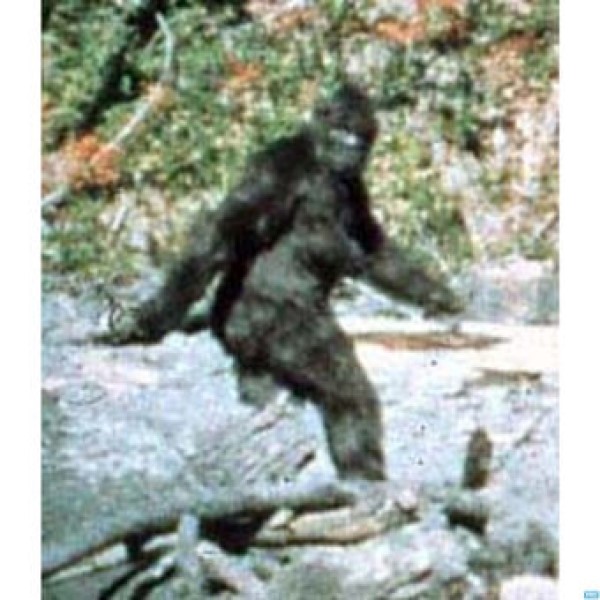
And still legends persist about Big Foot—Sasquatch.  With huge amounts of forests and uncharted wilderness, Alaska is certainly a perfect location for Bigfoot to hide out.  There are numerous reports of Bigfoot sightings throughout the entire state. Some reports include evidence of nesting sites, a possible Bigfoot skeleton, and unidentified hair samples. Some witnesses have even reported seeing a swimming Sasquatch during their encounters.

Some villages have even relocated as a result of terrifying encounters with Bigfoot, which is surprising because the common understanding is that the creature prefers isolated areas and is in general quite peaceful.

The Nome Serial Killer

Our discussion of theories would not be complete without a serial killer and the FBI. Around 2005, people began to notice that a large percentage of residents or tourists who went missing in Alaska happened to disappear from the city of Nome. In fact, the numbers became so worrying, that rumors of a serial killer began to run rampant throughout local topics of conversation, totally freaking out the population. This loud panic eventually caught the ear of the FBI, who came rushing in to investigate, eager to catch a murderer and show him off to their friends. But they didn’t find one.

Instead, they concluded that it was Nome’s fault all along. You see, Alaska is known to have one of the highest concentrations of alcohol-free municipalities in America, but Nome? Nome loves to party, which is the very reason why so many people flocked to the city in the first place.

So now you had a bunch of drunk visitors wandering off alone, into the woods to take a pee maybe, and then suddenly they get eaten by a bear, or stolen by aliens, or seduced by the Otter-Man, or they pass out and freeze to death, snowed under, gone, added to the list, forgotten already. Morale of the story? Don’t get baked in Alaska…


The Language of…Flowers

According to the Alamanac, historically flowers have always had a hidden language. Following the protocol of Victorian-era etiquette, flowers were primarily used to deliver messages that couldn’t be spoken aloud. In a sort of silent dialogue, flowers could be used to answer “yes” or “no” questions. A “yes” answer came in the form of flowers handed over with the right hand; if the left hand was used, the answer was “no.”

Plants could also express aversive feelings, such as the “conceit” of pomegranate or the “bitterness” of aloe. Similarly, if given a rose declaring “devotion” or an apple blossom showing “preference,” one might return to the suitor a yellow carnation to express “disdain.”

How flowers were presented and in what condition were important. If the flowers were given upside down, then the idea being conveyed was the opposite of what was traditionally meant. How the ribbon was tied said something, too: Tied to the left, the flowers’ symbolism applied to the giver, whereas tied to the right, the sentiment was in reference to the recipient. And, of course, a wilted bouquet delivered an obvious message!

But it’s not just the TYPE of flower that has meaning–color is also important. Take, for instance, all of the different meanings attributed to variously colored carnations: Pink meant “I’ll never forget you”; red said “my heart aches for you”; purple conveyed capriciousness; white was for the “the sweet and lovely”; and yellow expressed romantic rejection.

Likewise, a white violet meant “innocence,” while a purple violet said that the bouquet giver’s “thoughts were occupied with love.” A red rose was used to openly express feelings of love, while a red tulip was a confession of love. The calla lily was interpreted to mean “magnificent beauty,” and a clover said “think of me.”

Unsurprisingly, the color of the rose plays a huge role. Red roses symbolize love and desire, but roses come in a variety of colors and each has their own meaning.

  • White rose: purity, innocence, reverence, a new beginning, a fresh start.
  • Red rose: love, I love you
  • Deep, dark crimson rose: mourning
  • Pink rose: grace, happiness, gentleness
  • Yellow rose: jealousy, infidelity
  • Orange rose: desire and enthusiasm
  • Lavender rose: love at first sight
  • Coral rose: friendship, modesty, sympathy

You can see a more in depth listing of flowers, herbs and other plants at the following wesbite:

https://www.almanac.com/flower-meanings-language-flowers

Here are some of the ones that interested me:

Black eyed susans mean justice
Clematis means mental beauty
Gladiolus means integrity, strength, victory
Nasturtium means patriotism, conquest in battle
African violets mean faithfulness

Mint

There are many safe uses for mint-family herbs besides beautifying your gardens. Here is just a sampling:

Food: The peppermints are especially good culinary mints, ideal for chopping into salads, sprinkling over fruits or combining with basil or cilantro to make mint pesto. Add a couple of tablespoons of fresh chopped mint to peas, green beans, carrots, cauliflower, or zucchini to create minted vegetables!

Drinks: Freeze a few trays of strong mint tea, then use the ice cubes for cooling summer drinks! Add mint leaves or cubes to mojitos, iced tea, or fresh lemonade.

Tea: Why buy mint tea when it’s so easy to make? Peppermint, spearmint, apple mint, etc. are traditional tea herbs. Just steep fresh mint leaves in boiling water for about five minutes and serve. It’s a great digestive aid after dinner. 

Hair rinse: Add one part strong mint (especially rosemary) tea to one part cider vinegar for a conditioning rinse you can either leave in or rinse out. The vinegary smell dissipates after drying.

Facial astringent: Add a few finely minced leaves of fresh peppermint or other mint to a cup of witch hazel. Store in a glass jar for a week or more, shaking occasionally. Strain the herbs from the mixture after a week.

Mouthwash: Chop a quarter cup of fresh mint, bee-balm, lemon balm, basil, thyme, or oregano leaves and infuse in a quart of boiling water. When cool, strain the herbs and store in the refrigerator.  

Mint bath. Steep a handful of mint leaves in a pint of hot water for about ten minutes, then strain. Add to bath water for an invigorating, stress-free soak. 

Ease sunburn pain: Make a strong peppermint tea and refrigerating the mixture for several hours. To use, gently apply to the burned area with cotton pads. 

Breath freshener: Just chew on a few mint leaves! Sage teas and extracts have been used for centuries as a mouthwash for oral infections. Don’t use chew mint-family herbs if you’re breastfeeding, as even small amounts or sage and peppermint may reduce milk supply.

Scent up a space: Keep your home smelling fresh by adding a few drops of mint essential oil to your favorite unscented cleaner or just take a cotton ball and dap onto a light bulb. 

Moth repellent/scented sachet: Tie a few branches of strongly scented mint (peppermint, sage, lavender, rosemary, bee-balm) together, or pull off a handful of leaves, and stuff them into the leg of an old nylon stocking. Suspend by a string inside a garment bag, tuck into bags of stored woolen clothing, or just place in your drawers to let your clothes soak up the scent. Refresh periodically to keep the scent fresh.

Bug repellent: When ants come into the kitchen during the summer, place a few stems of mint, gently crushed, near suspected entry points really does deter ants. You need to replace the mint with fresh material every few days. Also, keep pets flea-free by stuffing a small pillow with fresh spearmint and thyme and placing near your pet’s bed.

Mint in Your Garden

You may have heard that mint takes over the garden. It’s mainly spearmint that gives a lot of mints a bad name. Peppermint pretty much stays put and peppermint rarely produces viable seeds, so you won’t find it popping up in different garden beds.

Wild spearmint is the real bully, developing an enormous network of tough, quarter-inch-thick rhizomes under flower beds, spilling out into a large section of lawn, sending up a new plant every inch or two from the underground nodes. So if you want to grow this mint, just give this attractive ground cover plenty of room to spread. Or, plant mint in a container such as a terracotta pot near the kitchen window. In the ground, it’s ideal to grow spearmint in its own bed. But if you want to grow mint in a bed with other herbs or plants, consider sinking a deep bucket or tub without holes into the soil and plant into that. Otherwise, spearmint will choke out other plants in the bed. 

NOTE: If herbal medicine interests you, please approach the mints, especially their essential oils, tinctures, and concentrated extracts, with care. Although many have been used by traditional healers around the world for centuries, most herbs haven’t undergone rigorous testing for safety and efficacy, especially in pregnant/nursing women, children, elders, and people with chronic illnesses.

Dragonflies

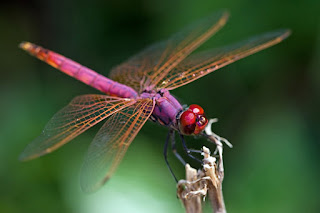
The earliest dinosaur fossils date back 240 million years. But can you believe that dragonfly fossils have been found to be even older than that? Paleontologists place the earliest known dragonflies more than 300 million years ago, long before dinosaurs ruled the Earth. The dragonflies of the prehistoric era weren’t only old — they were enormous! Some dragonfly fossils have a 30-inch wingspan, which is about as big as a modern crow.

Today, the largest dragonflies (Petalura ingentissima) have a 6.3-inch wingspan and are found in Australia. Dragonflies don’t really look like dragons, so how did they get their name? The answer comes from Romanian folklore and the story of St. George. In the myth, the Devil turned St. George’s horse into a huge insect. That earned dragonflies the Romanian name for “Devil’s Horse.” Since the Romanian word drac means both “Devil” and “dragon,” the insect soon became “dragonfly.”

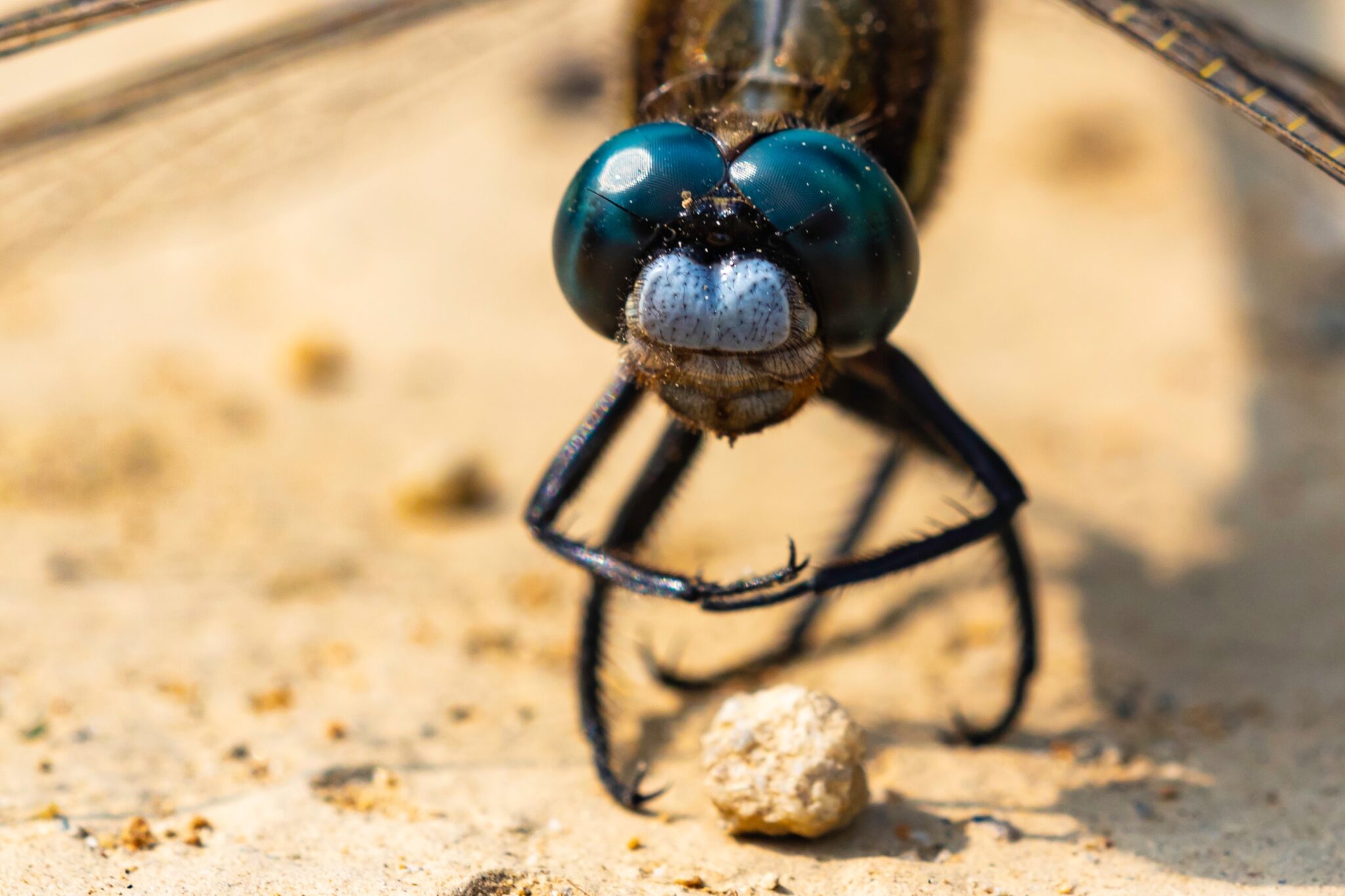
Despite their place in the order Odonata, which means “toothed,” dragonflies don’t have teeth. Like other insects, they have sharp mandibles on their jaw used for tearing and eating prey. Their bite isn’t dangerous for humans, but it can definitely pinch! Dragonflies have two giant eyes that contain nearly 30,000 lenses called ommatidia. Their eyes are so big that they cover the dragonfly’s entire head, allowing it to see 360 degrees around — perfect for a creature that tends to be both predator and prey. Dragonflies are the fastest flying insect in the world. Some large species of dragonflies can reach speeds of 35 miles per hour, which is even faster than the average hummingbird!

While dragonflies are the fastest fliers, they don’t get that way by beating their wings more quickly than other insects. Dragonflies beat their wings around 30 times per second. That sounds very fast until you compare that rate to bees (200 times per second) or mosquitoes (800 times per second). Because dragonflies have a unique two-wing design, they are incredibly aerodynamic. Dragonflies can fly in any direction that a helicopter can fly, including 360 degree turns, hovering in one place and even backward.

Dragonflies aren’t born to fly. In fact, they’re born to swim! Dragonflies lay their eggs in still water. The eggs hatch shortly after, and dragonfly larvae (known as nymphs) emerge as aquatic creatures. These nymphs may spend up to four years in the water before the next stage of their life cycle. As nymphs, dragonflies learn to be prolific hunters. Nymphs eat any aquatic creatures they can handle, which include mosquito larvae, worms and tadpoles. As they get bigger, small fish can even become part of their diet.

During the course of their nymph stage, dragonflies molt up to 12 times as they grow. Their final molt takes place out of the water. Unlike butterflies and moths, who use this time to transition to the pupal stage, dragonflies progress straight from larva to fully grown adults. The nymph’s skin splits open and the adult dragonfly body emerges. After a short rest, it’s ready to fly!

Dragonflies typically hunt and eat in midair. They can catch any insect (they’re not picky about the type) by creating a snare with their legs or by simply plucking it out of the air with their jaws. They eat their prey quickly and move on to the next hunt. Larger dragonflies can even eat their own body weight in a day. If you’re seeing fewer mosquitoes around than you normally do, thank a dragonfly! Dragonflies can eat up to 100 mosquitoes a day, which helps freshwater ecosystems flourish. It also keeps mosquitoes from spreading dangerous diseases to humans.

Wile E. Coyote

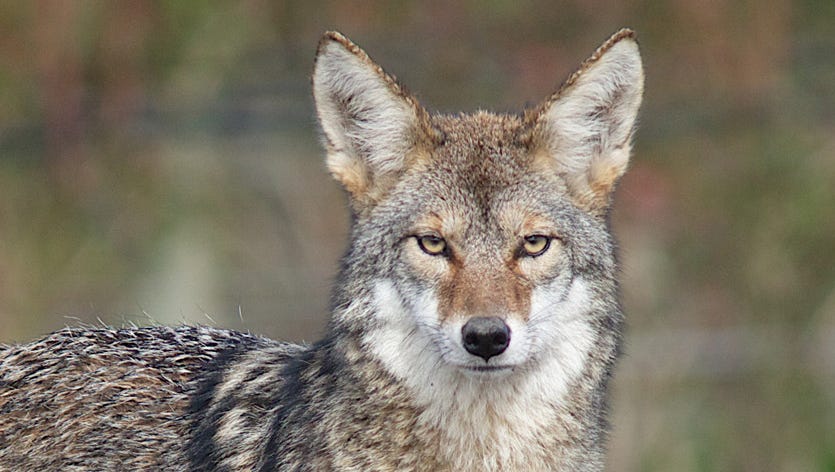
Although the Road Runner always got the best of Wile E Coyote, coyotes are pretty amazing animals. They can run up to 43 mph, control how many pups they have in a litter based on food availability, and use 11 different ways of communicating. There are 19 subspecies of coyotes that live in every state except for Hawaii, and they can even mate with wolves and dogs. And apparently, they have ACME on speed dial…LOL.

Coyotes are most active at dusk and dawn. Why?  Their favorite prey—deer—are also most active at this time. Coyotes will hunt deer, but they will also be perfectly happy with roadkill as well.  Coyotes are not picky eaters by any means—they’ll eat whatever is available—rabbits, rodents, berries, fruits and vegetables and grasses.  They will even eat rattlesnakes if they wander too close to their den.

Coyotes go by many, many different names. Some pronounce the name KIGH-oh-tee and some say it KIGH-oat.  They are also known as prairie wolves, brush wolves and American jackals.  The original name for the coyote derived from the Aztec name ‘coyotl’ which was corrupted somewhat by the Spanish language and became ‘coyote.’  The character ‘Coyote’ is an important cultural phenomenon in many indigenous people’s cultures. This character is described as a trickster and is often portrayed as being greedy or dishonest.   Still, in some Native American cultures, Coyote is revered as teaching children important life lessons about survival and life in general.

Physically, coyotes are also amazing!  Coyotes are very comfortable in the dark. Their powerful night vision comes from the abundance of rod receptors in their eyes. These respond to low levels of light, as opposed to cones which respond to high levels of light. They also have a mirror beneath their retinas called a tapetum lucidum. It reflects the observed light twice, giving the eye a better chance of seeing even in low-light conditions.

And their hearing is tremendous!  The shape of their ears is meant to capture even the smallest of movement.  They can hear up to a quarter mile away! During the wintertime, a coyote can hear a mouse moving beneath 7 inches of snow!

To thrive as well as the coyotes have, they must be equipped with top-notch sight, hearing, and smell. Luckily for coyotes, they have all three.  Coyotes have been known to be weirded out by even the subtlest of scents. Their natural instinct to avoid danger makes their sense of smell that much more important, especially when it comes to smelling people or hunters.  Coyotes also use smell, more than sight, to identify pack members.  While sight is only used to detect movement, coyotes depend more on hearing and smell to find their prey.

Which brings us to sound.  Coyotes don’t just make noise to make noise. Each sound has a different purpose. The two most distinct sounds a coyote can make are barks and howls. Howls seem to be more for communicating information to other pack members, or to warn outsider coyotes not to enter a pack’s territory. Barks and yips seem to be more related to assessing how far away other pack members are or to attract the attention of other pack members.

The fur of a coyote can be gray, red or yellow-brown mixed with black.  Many coyotes will even change fur colors throughout the seasons. Regional environments can also influence a coyote’s fur color. Typically, the color on the back is darker than the color on the stomach and legs.

A pack of coyotes is called a band even though coyotes rarely hunt in larger units unless they’re taking down a larger prey like a deer. They stay active during the winter too, forgoing a cozy den.  And speaking of dens, when picking a den location, coyotes will often find a hollow between rocks or build a burrow in the soil. When they decide to go the burrow route, they’ll often find abandoned fox or badger burrows and expand on those instead of making their own.  Coyotes, however, will create dens to raise their pups in. Once the rearing season is over, coyotes often move aboveground. They sleep in densely wooded areas where they won’t be observed by humans or bigger predators.

Coyotes can jump fences—as high as 3 feet, but cannot climb trees.  While this may not sound impressive, coyotes have been known to scale fences as high as 14 feet and can jump just as far across if they have momentum built up. Not the cartoon characters we assume them to be at all.

HUMP DAY!!!!!!!!

Amazing Camel Facts:

Camels’ humps are not used to store water. Even though they come from hot climates, their humps store fat and also help the rest of their bodies to stay cooler. When needed, the fat will be converted to food or water.

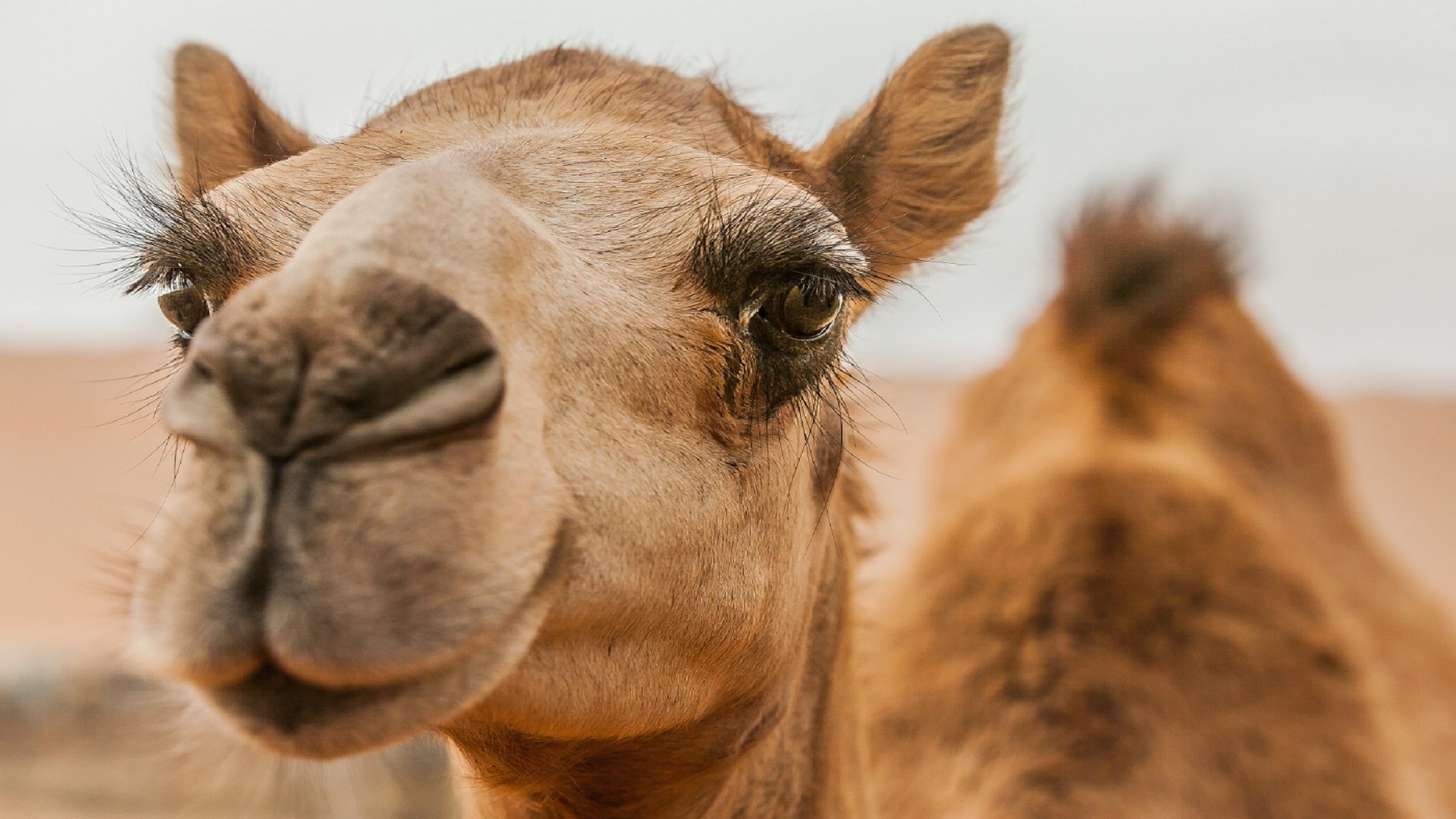
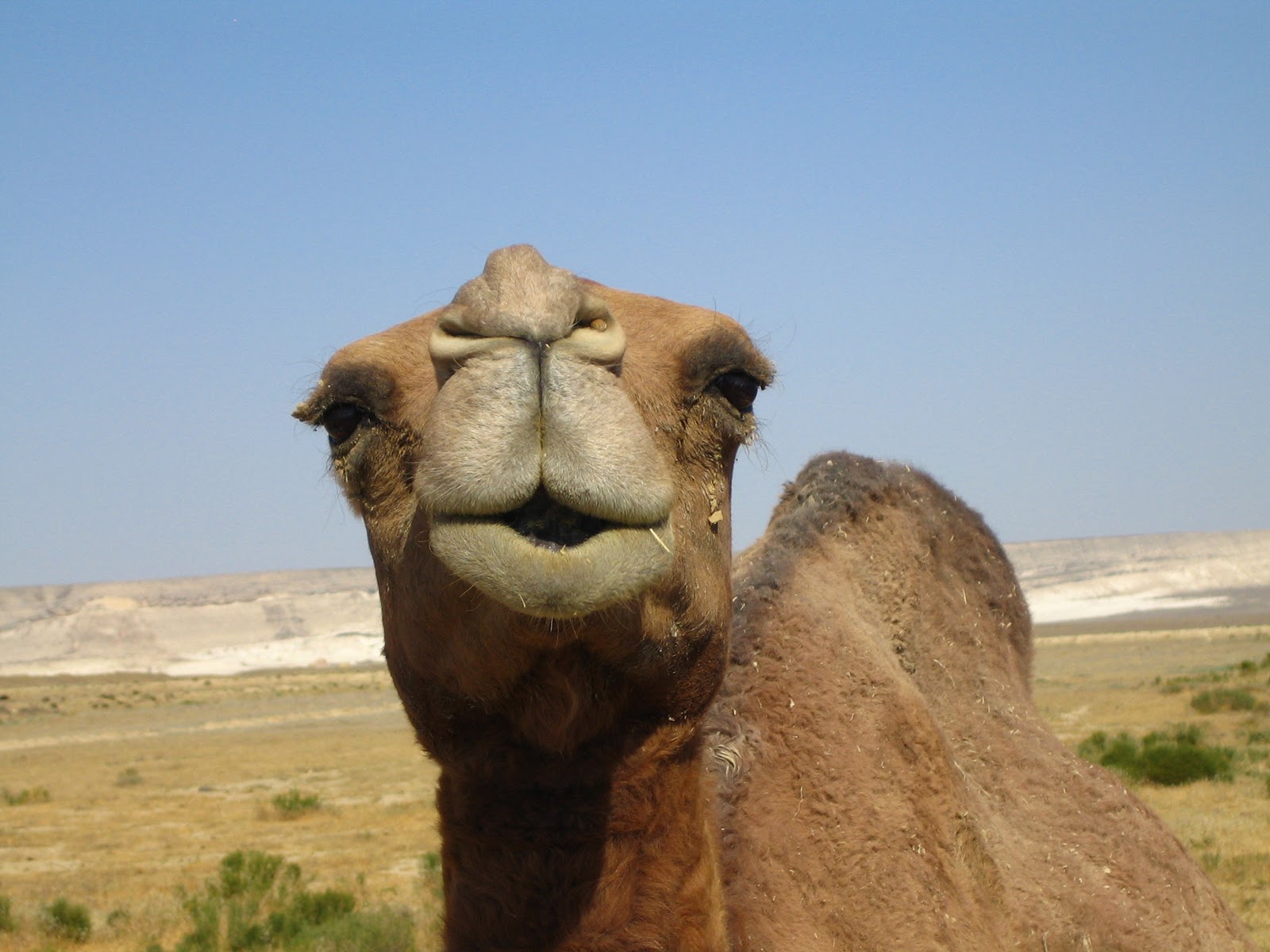
The word ‘camel’ comes from an Arabic word, when it’s literally translated, it means beauty. Don’t ever try and say that camels are ugly! (Look at that sweet face above…lol)

They need to stay hydrated in the desert, so it’s no surprise that camels can drink as much as 40 gallons of water at once. Considering it’s not being stored in their humps, that’s pretty amazing.

During the Second World War, German tank drivers would drive their vehicles over camel droppings, thinking it would bring them good luck.

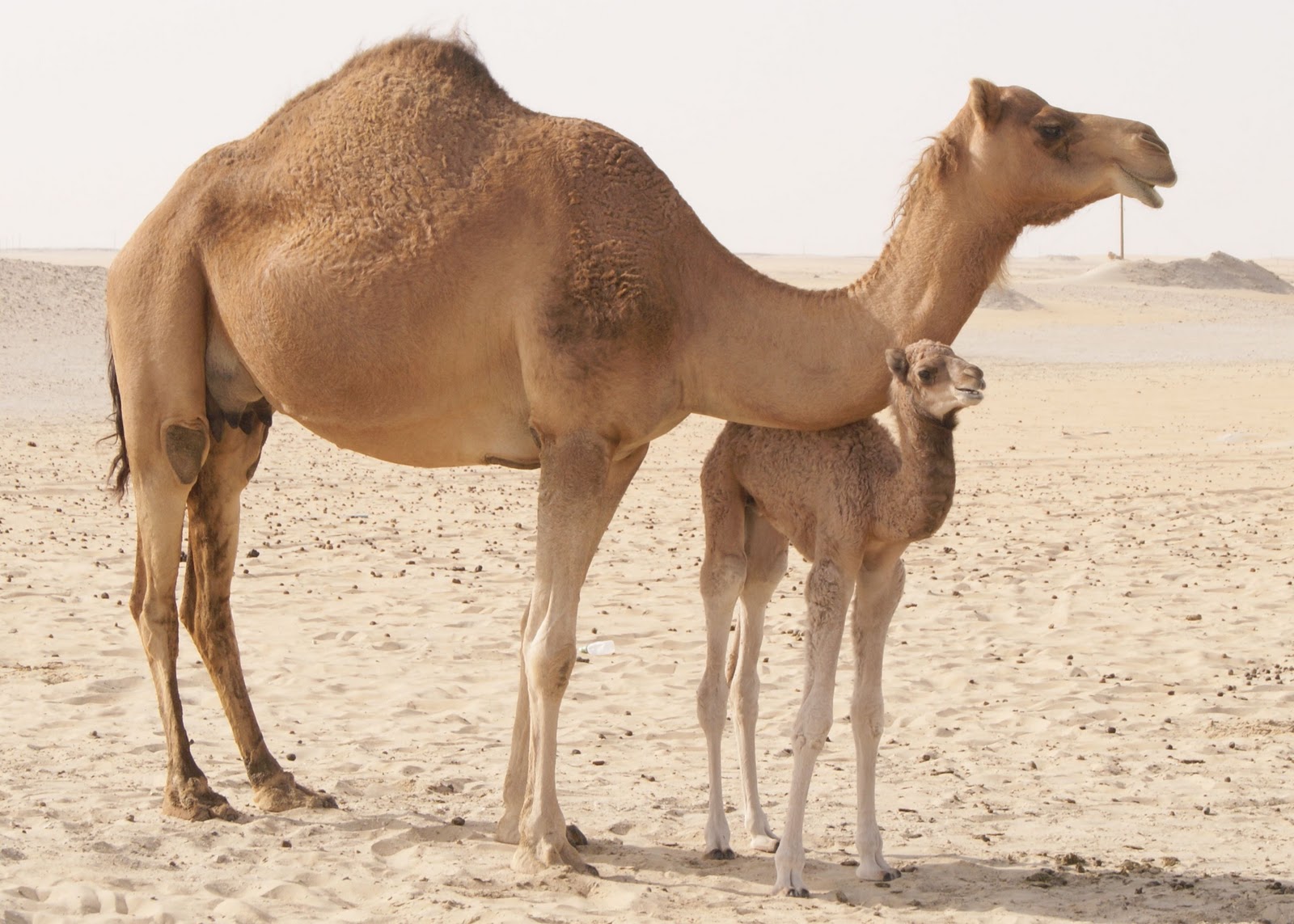
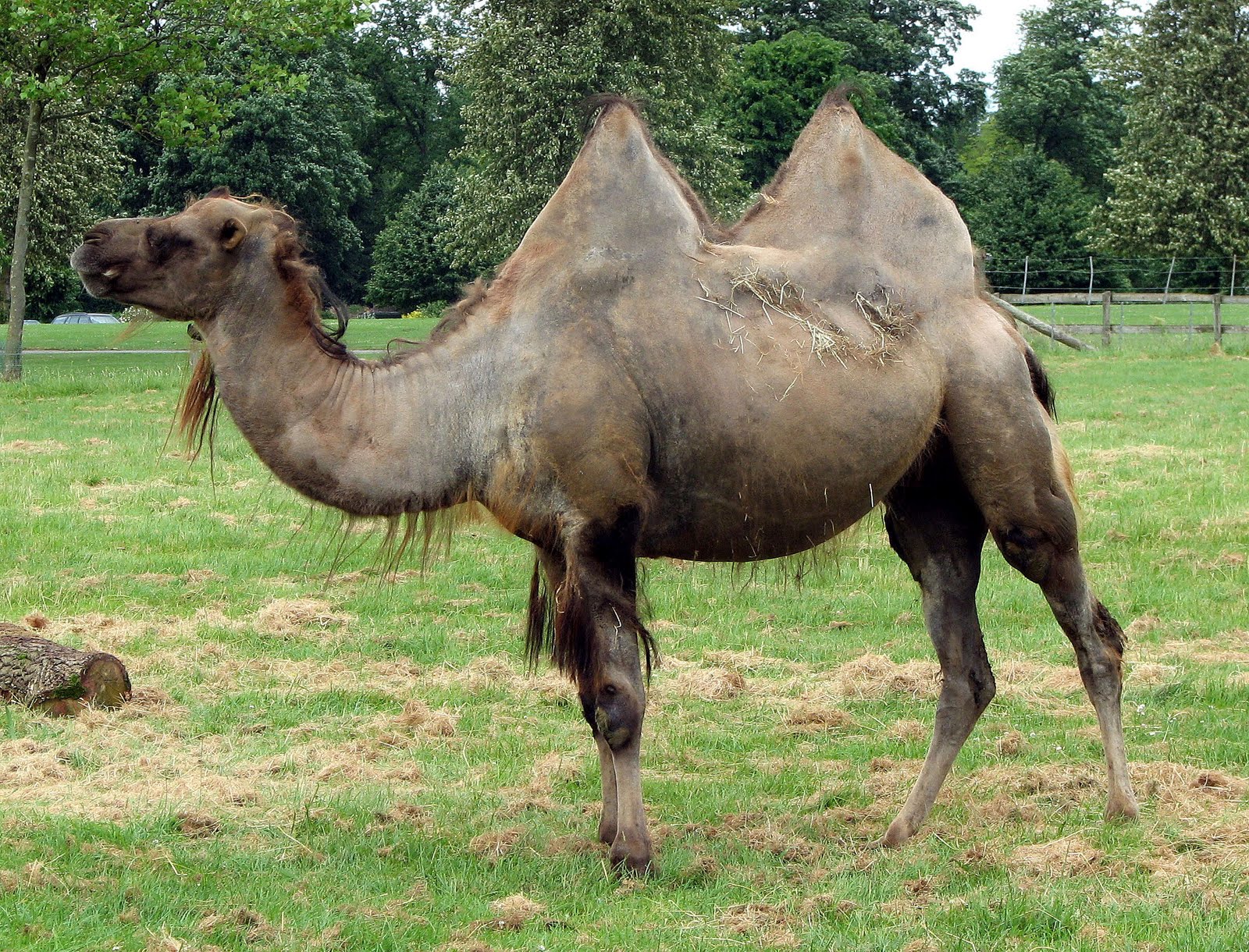
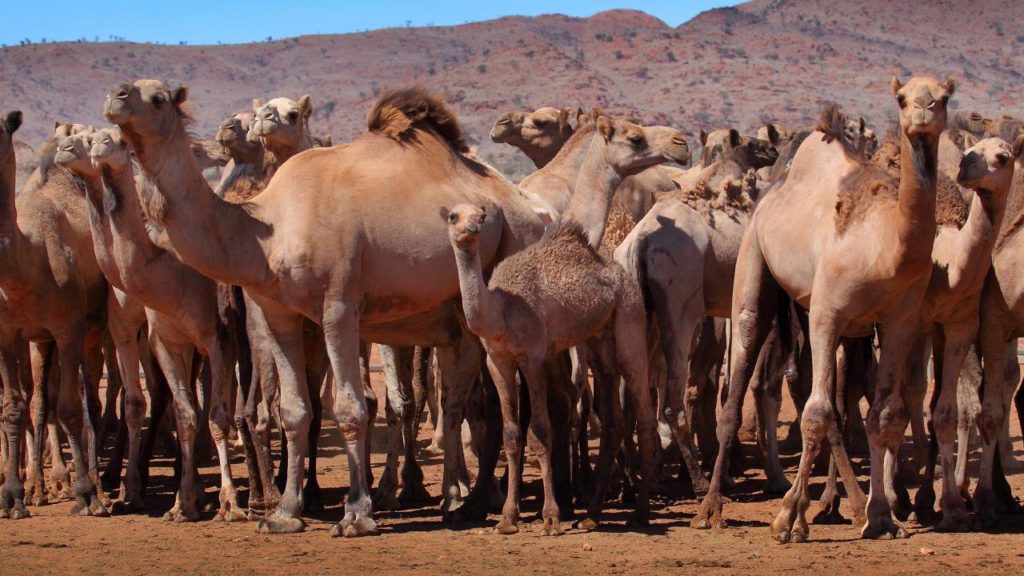
Arabian camels are the ones which only have one hump (Asian camels have two). In Arabian culture, they are so iconic that there are more than 160 words which mean ‘camel’. Camels are very social, even though they might seem extremely laid-back and slow. In the wild, they travel with around 30 others when looking for food.

Arabian camel
Asian camel

Camels are very social, even though they might seem extremely laid-back and slow. In the wild, they travel with around 30 others when looking for food.

There are more than 14 million camels in the world – most of them live in the Middle East, Asia and Australia.

In Turkey, a camel wrestling event takes place every January. Camel wrestling dates back to the ancient world, so even though animal rights groups aren’t very happy with the sport, there are no signs of it stopping in the near future.

Camels will not damage their mouths if they eat thorny twigs and other items which might cause injury to other animals.  A camel’s mouth is split into two. This helps them to graze and eat their food more effectively.

The majority of mammals, including humans, only need to lose 15% of water before becoming dehydrated. However, camels are able to lose up to 25%, which means they can go much longer without water.

In Middle Eastern countries, many people eat camel and consider it a delicacy. The hump is apparently the best part, and younger camels are tastier than the older animals.

A camel’s nostrils are amazing. They retain water vapor which can be returned to the body when necessary, but they can also be closed if there is too much sand or wind blowing.

Camels don’t just spit for fun. If they feel threatened, they will use it as a defense mechanism. Be nice to camels and they’ll be nice to you!

They may not seem like fighters, but camels have been used during wars in the past. Ancient Greeks, Romans and Persians used to ride them, but they were used in the 20th Century too.

In 1855, the US Congress allowed the War Department to purchase camels using a $30,000 budget. They were used for several years, until the soldiers became tired of their bad tempers and smell.

Wild Bactrians are the only type of camels which have never been tamed or domesticated. They live in the wastelands of Eastern Asia and are incredibly tough creatures. However, they are less than a thousand of them left on the earth.

The world’s largest meal included a roasted camel. It was served at an Arabic wedding feast.

If you visit Abu Dhabi, you’ll be able to pick up a camel milkshake – made with real camel milk. The milk has loads more Vitamin C and iron than cows’ milk, and is very good for you. It is used in Kazakhstan to help treat illnesses, such as tuberculosis. The only reason it hasn’t made its way to the Western world is because the governments won’t pay for testing processes.

The Camel Mobile Library provides people in Kenya with literature. Camels are used to take books to areas which would not otherwise have access to a library.

A camel might appear to have thick fur, but its coat reflects the sun. This makes it ideal in the hot desert, and the camels don’t get too hot.

The Al-Dhafra Camel Festival takes place every year in the UAE. One of the most popular events is the beauty contest, which sees thousands of camels compete for the title.

Camels aren’t as slow as they look – they can run up to speeds of 40mph. However, they cannot maintain this for very long, but can comfortably move at up to 25mph.

The legend of the Red Ghost tells the story of a terrifying red camel wandering an Arizona desert and causing all kinds of atrocities, including killing people and trampling over tents.

The only time you will see a camel without a hump is when it is first born. Once the baby camel is old enough to eat solids, the hump (or humps) will start growing.

What’s the Buzz?

Are honey bees as busy as they say?  Do they really dance? How do they make honey?  Let’s find out!

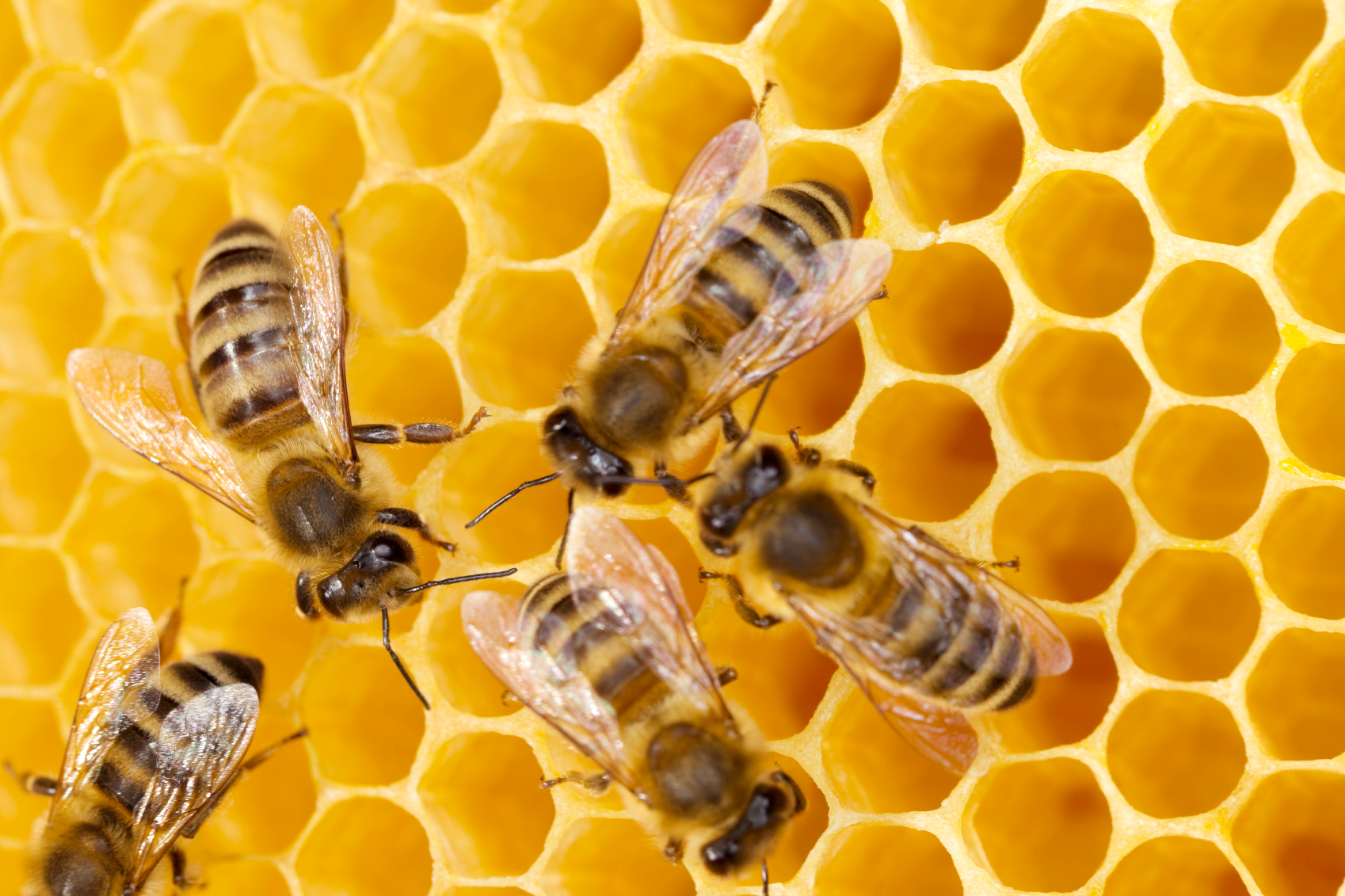
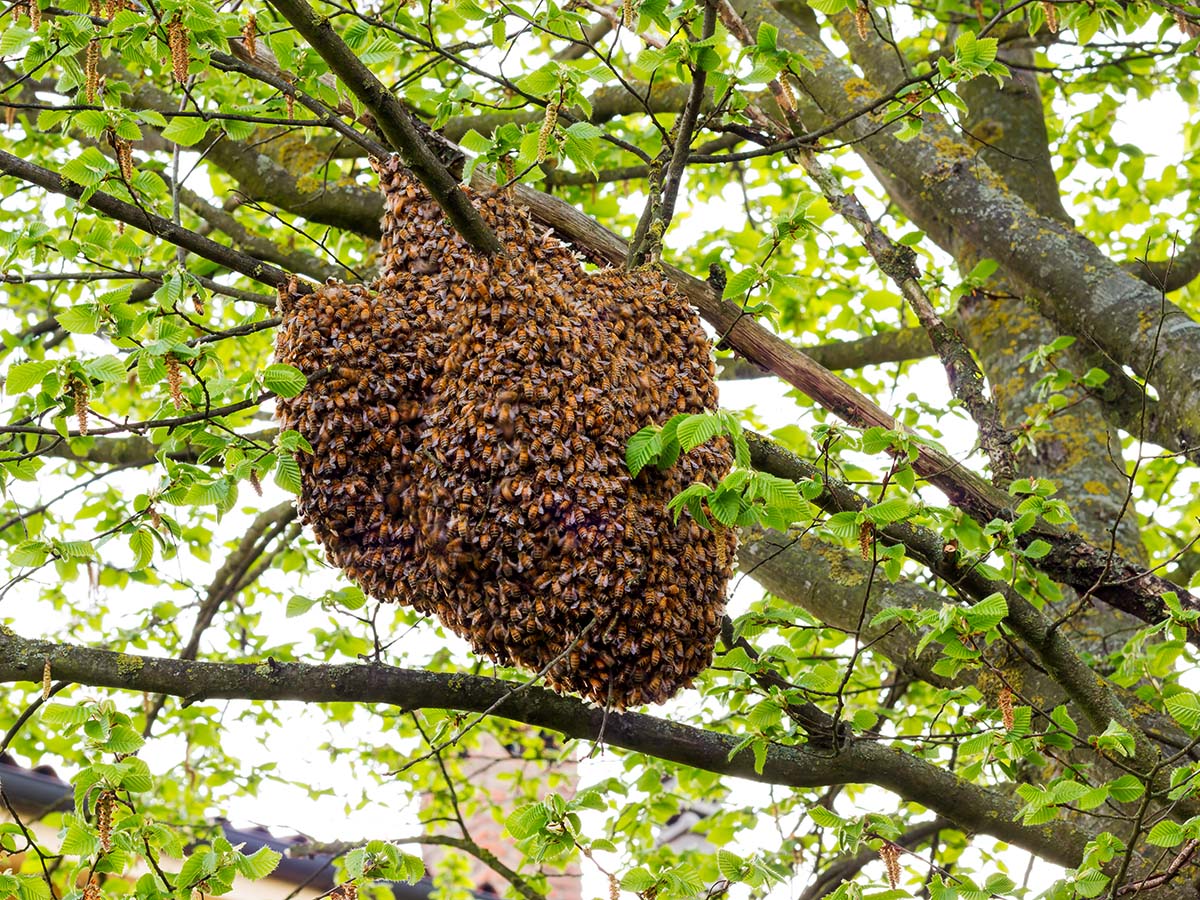
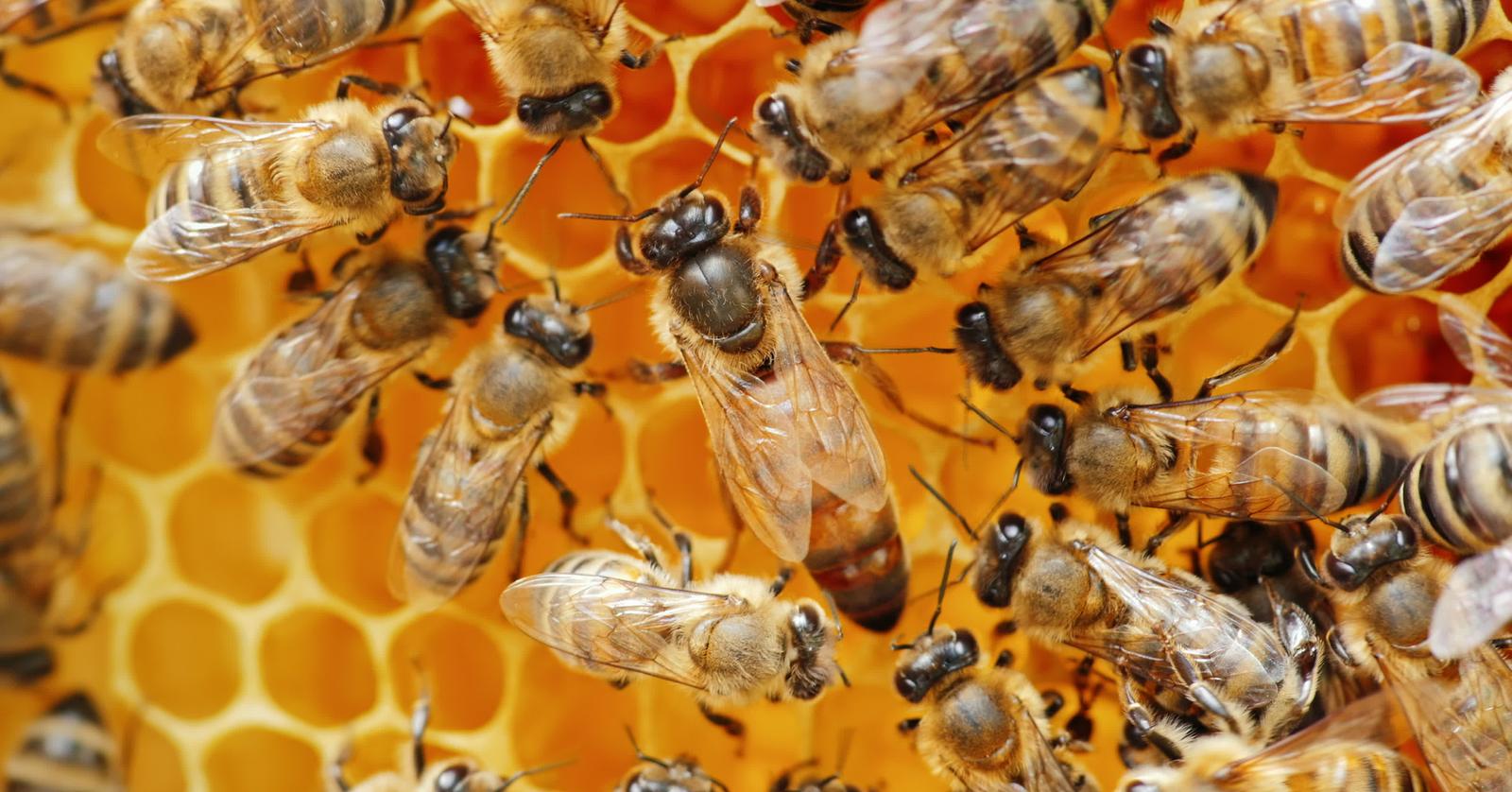
A colony is a group of bees that live and fly together. One colony can contain around 20,000 to 60,000 bees. The colony is divided into three groups; a queen, who will lay eggs to bring the next generation of bees to the hive; drones, male bees whose only function is to mate with the queen; workers, the female bees responsible for everything else…lol. They collect the pollen and nectar, circulate and clean the air in the hive, tend to the queen and build and protect that hive.

Queen

During the winter season, a productive queen will form a new colony by laying eggs within each cell inside a honeycomb. She lays one egg after every 45 seconds resulting in around 2500 eggs in a day.  Compared to other insects and other honey bees, the queen bee has a longer lifespan, because she is the one to bring the next generations of bees. In her 2-3 years of life, she may lay up to 2500 eggs per day, so in her lifetime, she will have produced over 1 million offspring. As she ages, her productivity declines though she can live up to 5 years. Mature queen bees have larger body sizes, because of their long abdomen containing several ovaries, enabling them to produce a lifetime’s supply of eggs. This length also enables her to cement an egg into the bottom of a honey comb cell.  If the queen is absent, honey bees will notice that absence within a span of one hour. After a few hours of agitation, emergency cells are constructed on existing worker larvae. The worker larvae is built for a new comb and fed royal jelly to enable its fast growth and development into a new queen.

Drone Bees

Male bees, called drones, exist to mate with the queen.  After that happens, they die. Tough life.

Worker Bees

Worker bees teach younger members how to make honey at an early age. They are first made to fly miles away from the hive, and then taught how to gather nectar and pollen from blooming flowers. Young honey bees then fly with the collected nectar back to the hive.  In the hive, worker bees make them chew up the nectar and then deposit that into honeycomb wax cells. They then fan their wings vigorously over the nectar to dehydrate the liquid inside in the cells. This will transform a slightly thin liquid into very thick honey. Once they have mastered this art, they officially start producing honey like other worker bees.

Honey Bees actually will perform a waggle dance to share information about the best food sources. They move in a figure-eight and waggle their body to indicate the direction of the food source, distance to patches of flowers and to new-site locations with other members of the colony. Nectar is carried by scooping it in a special sac behind the bee’s leg. In order to make one pound of honey, 556 worker bees must fly to around 2 million flowers to gather nectar and pollen. In their lifespan of 6-8 weeks, worker bees have to fly approximately 90,000 miles, equivalent to 1½ times the earth’s circumference in search of quality pollen and nectar, to produce that one pound of honey.  Amazingly, in one collection trip, 50-100 flowers are pollinated. And only 4 species of honey bees are kept for producing honey: the Apis melifera, meliponines, Apis lithohermaea and Apis nearctica.

Basic Honey Bee Facts

Your basic honey bee has 170 odorant receptors that enable it to recognize its relative’s signals, social communication within the hive and recognition of odor for finding food. Their sense of smell is so precise (and 50 times more powerful than a dog), that they can recognize different floral varieties when looking for pollen and nectar. Pheromones released by the honey bees together with compounds building up the nest wax, such as fatty acids and carbohydrates, make up the volatile mixture of odor. A honey bee’s odor helps it to determine its own colony, and distinguish between nest mates and foreign bees so they can identify intruders from other species. The sense of smell of a honey bee is so sensitive that carbon dioxide released from human breath may smell threatening to them, stimulating them to sting…so no heavy breathing around bees!

Honey bees rarely sleep; they work the whole day and night. When they want to sleep, they take shifts inside the hive. Their sleep pattern changes with their age. The younger bees will sleep a lot less while the older bees will sleep more than the younger bees. Older bees need more sleep because it helps their memory.  Honey bees will hardly work when the temperatures are below 57⁰F or above 100⁰F. When the temperature is below 55⁰F, they can’t fly. They can only fly when the temperatures are between 55⁰F and 60⁰F. On extremely hot days, they will cluster outside unshaded hives because too much shade makes them irritable, especially in the summer.

A honey bee has two barbed lancets on its stinger, that if it stings you with it, it is unable to pull it back. Due to this fact, not only the stinger is left behind, but part of his abdomen, digestive tract, muscles and nerves are also left. This results into a massive abdominal rupture that kills the bee. Honey bees have three simple eyes called ocelli and two large compound eyes. They use their ocelli eyes to detect light intensity. The other two large eyes are used for detecting movement.

Honey bees belong in the hymenopterans family, therefore have four wings. Their wings are arranged in two pairs, connected by a row of hooks called hamulus on the back wing. Although their wings help in flight, the fore wings are much larger than the hind wings. Apart from flight, the fore wings are also used as a cooling mechanism. The hind wings are used for flight and fanning away heat from the hive.  The sound of a honey bee is called a buzz. This is their trademark sound, which is created as a result of rapid beating of their wings. They flap their wings 200 times per second, creating vibrations in the air that result into the sound perception called buzzing.

Have you ever wondered why beekeepers wear white overalls? Honey bees dislike dark colors probably because they came to realize that most of the honey predators, bears and other animals, have dark colors. Dark colors make them defensive of their sweet honey. Therefore, beekeepers wear white colors to decrease their chances of being stung.  Studies have proven that honey bees have the ability to recognize human faces and remember them for at least two days. It is said that they have a better memory of remembering faces than some humans. Honey bees are lovers of caffeine and can get hooked on caffeine like people. Studies reveal that honey bees love caffeine because it boosts their long-term memory.

Red Fox

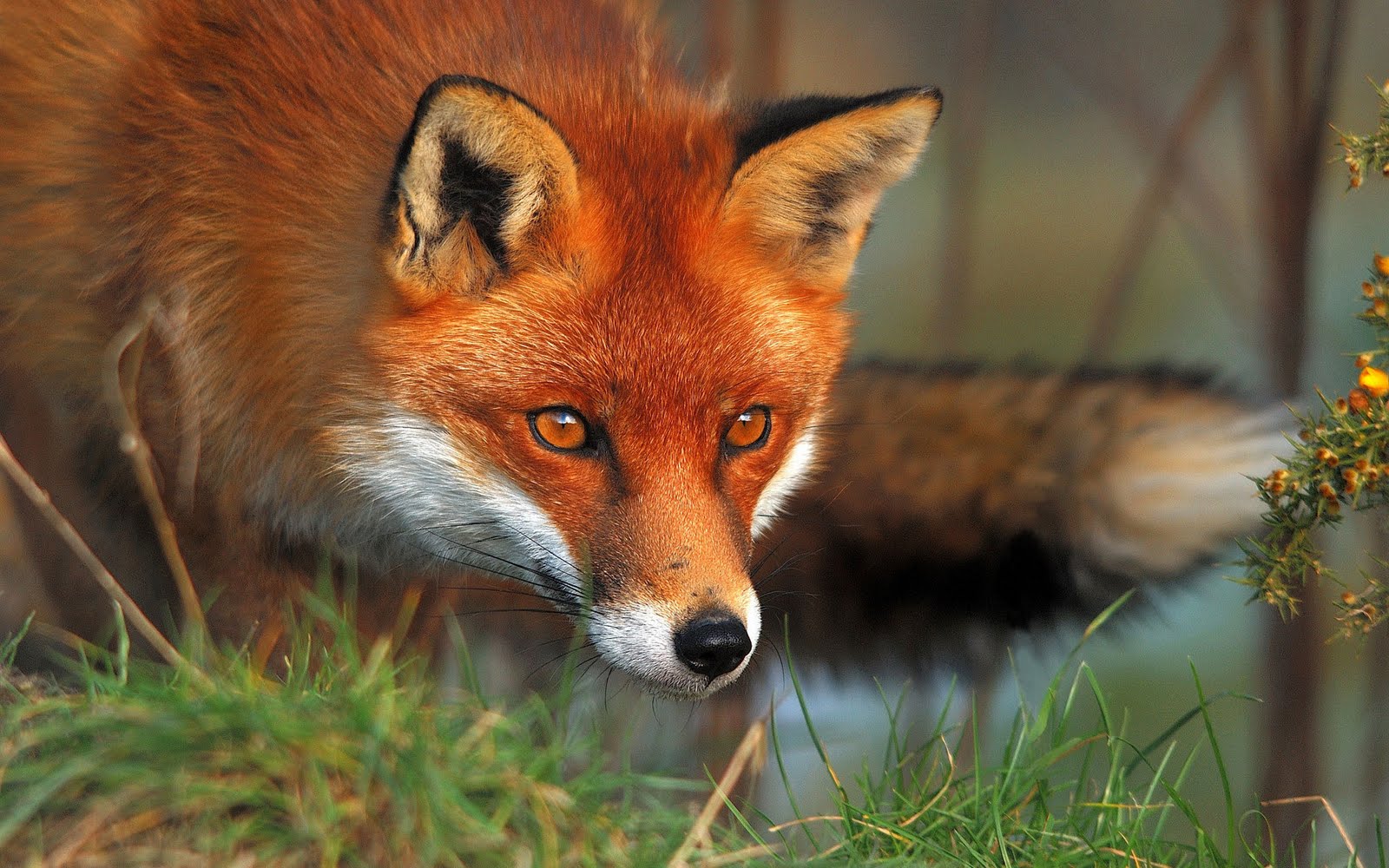
Red foxes are gorgeous! In general, foxes live on every continent in the world, except Antartica and thrive in cities or rural settings. Foxes are members of the Canidae family, which means they’re related to wolves, jackals, and dogs. They’re medium-sized, weighing anywhere between 2 and 24 pounds, with pointy faces, lithe frames, and bushy tails.

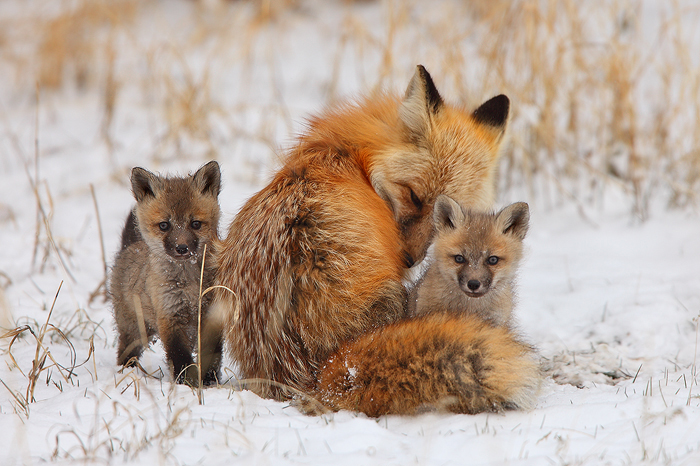
Unlike their relatives, foxes are not pack animals. When raising their young, they live in small families—called a “leash of foxes” or a “skulk of foxes”—in underground burrows. Otherwise, they hunt and sleep alone. Fox pups are born blind and don’t open their eyes until 9 days after birth. During that time, they stay with the vixen (female) in the den while the dog (male) brings them food. They live with their parents until they’re 7 months old.

Even though they are related to dogs, foxes have a lot in common with cats. Like a cat, the fox is most active after the sun goes down. It has vertically oriented pupils so it can see in dim light, and it hunts by stalking and pouncing on its prey. The fox also has sensitive cat-like whiskers and spines on its tongue. It walks on its toes, which accounts for its elegant, feline-like tread. The gray fox even has semi-retractable claws, making it the only member of the dog family that climbs trees and it has been known to sleep in the branches—just like a cat.

The red fox also comes in many colors, including silver, black, orange, or a mix of all three. While color variations happen naturally, people have bred foxes for fur, leading to many different patterns. These include the marble fox, which is white with gray or black streaks; the cross fox, which is red with black patches; and the pink champagne fox, which has peachy-white fur and a pink nose.

Some foxes can run up to 42 mph, giving new meaning to the phrase “quick like a fox.” They’re also agile. They can jump three feet in the air and climb fences and over roofs. They also have impressive endurance: One Arctic fox walked 2,700 miles, from Norway to Canada, in three months. That’s over 30 miles a day!

Foxes can make about 40 (!) different sounds ranging from screams to barks and howls. Some calls are used during their mating season, some are used while protecting their territory, while others are just warnings.

Researchers have found that foxes are the first animals to use the earth’s magnetic fields to judge the distance and direction of their prey. They use this to their advantage when hunting for small animals located in high grass and deep snowy environments. They use the magnetic field to jump on their prey and successfully capture them. Their pouncing is also referred to as mousing by others.

In contrast, a silver fox is an entirely different animal…sigh

Camelopardalis

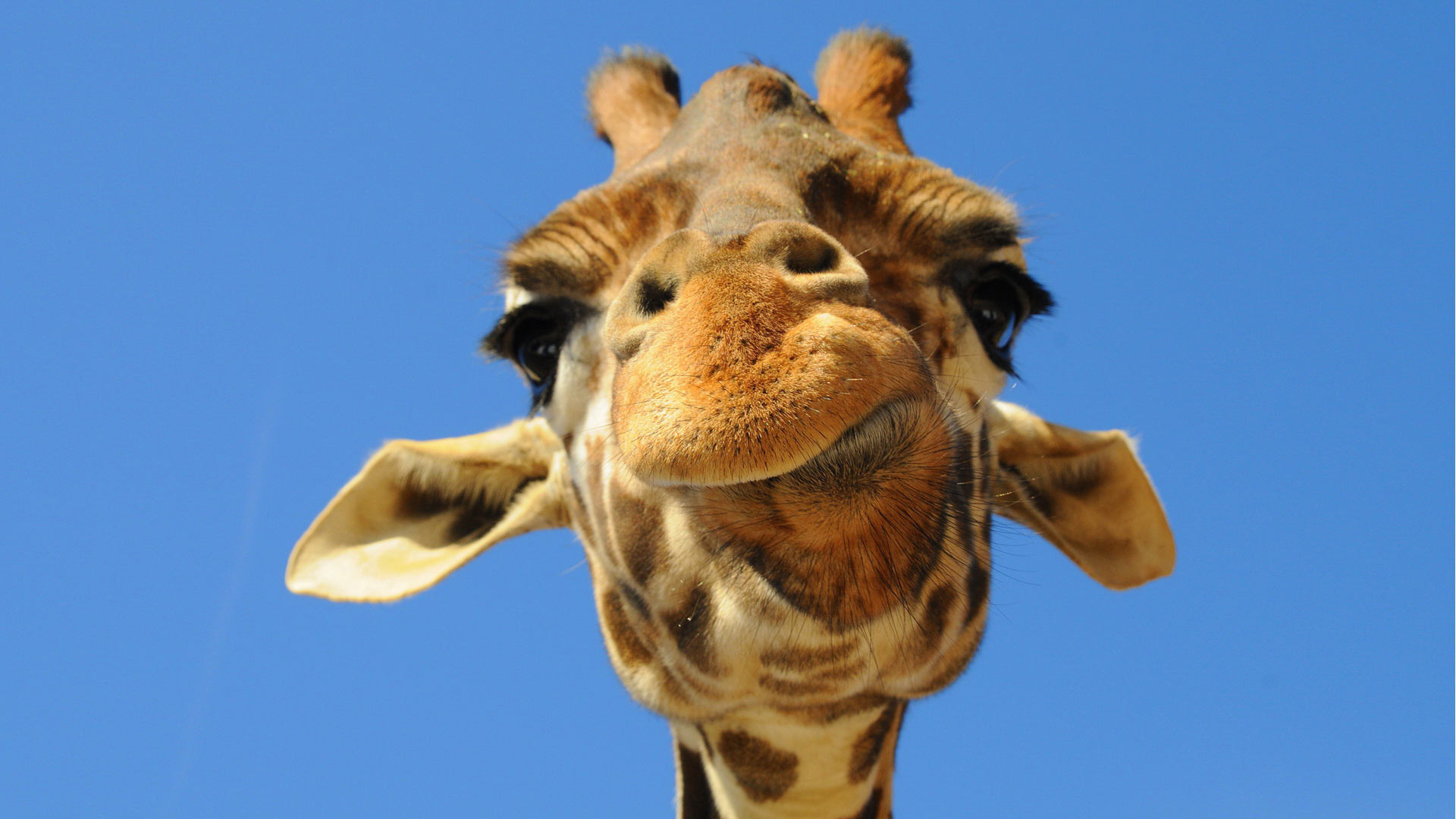
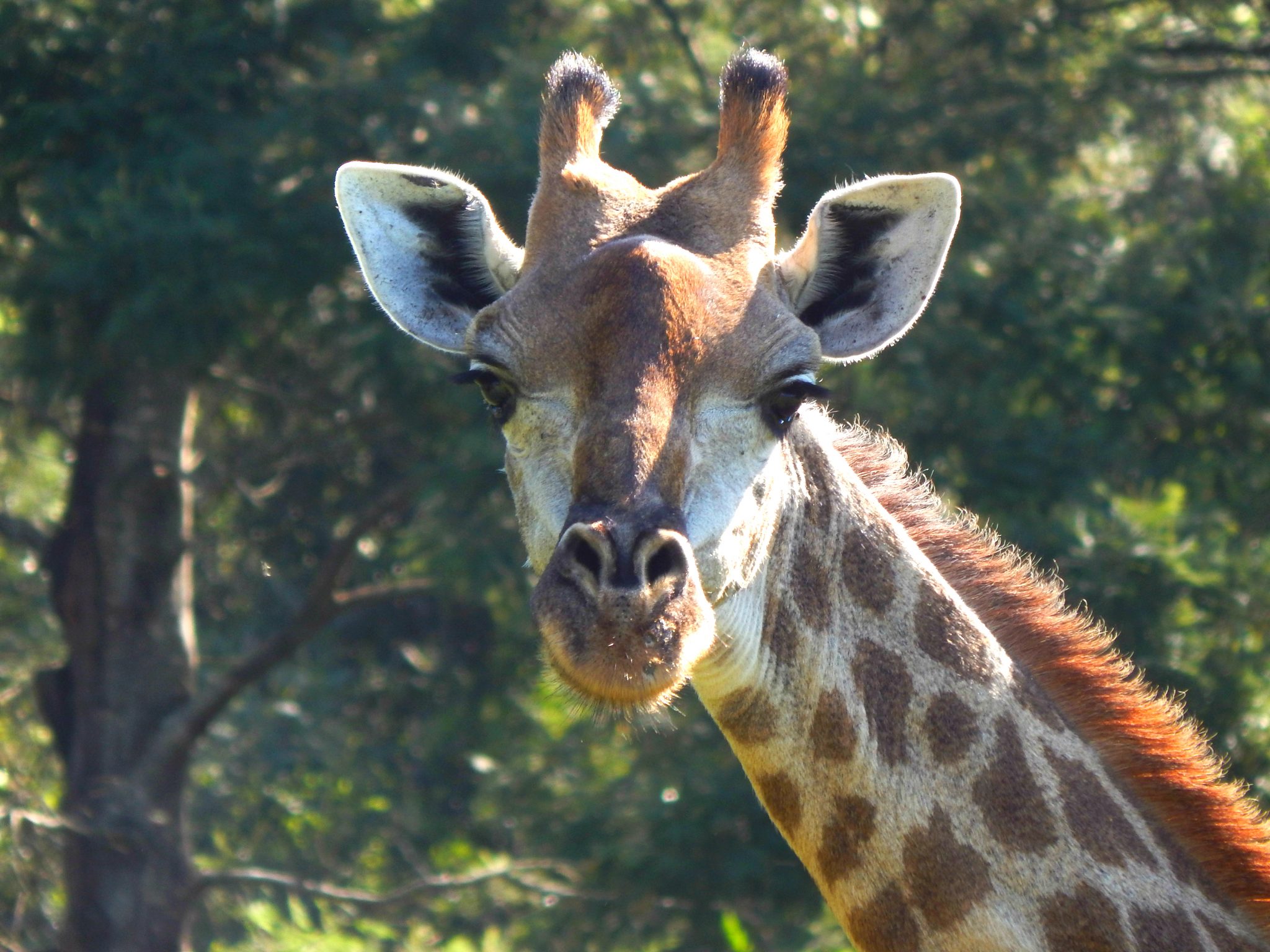
Giraffes are amazing creatures! They used to be known as ‘camel leopards’, due to their tall structure and leopard-like pattern, and their scientific name today has not changed – Camelopardalis. The name was given to these creatures by Julius Caesar, who received a giraffe as a gift and was thrilled with it! After showing it off to the people of Rome, he ended up feeding it to the lions…ooops!

The patterns on a giraffe are totally unique – no two giraffes are ever the same! And even though a giraffe has a longer neck than all other mammals, it still only has seven vertebrae in its neck, which is the same amount as other animals. They can run up to speeds of 35 miles per hour, outrunning most horses, and their long legs mean that they can cover plenty of space in a short amount of time, making their average walking speed around 10 miles per hour. But a giraffe’s sharp 12-inch hooves can cause a lot of damage, and could even kill a lion if necessary.

A giraffe’s tongue is blue-back to protect it from sunburn in hot climates. They also have the same amount of teeth as humans; however, one of the most interesting things about giraffes is that all 32 teeth lay on the bottom of its mouth and are mostly molars positioned right at the back. Giraffes use their bottom teeth to grab a branch and then comb the leaves off. So when you see a giraffe without upper front teeth it’s not because of a giraffe brawl – that’s what evolution intended. Giraffes live in savannas throughout Africa. The tall creatures are native to Kenya, Cameroon, Chad, Niger, Uganda, Namibia, Botswana, Zimbabwe, Zambia, Tanzania, Angola and South Africa. They like semi-arid, open woodlands that have scattered trees and bushes, making the savannas perfect for these animals. 

Giraffes seldom sleep. Most of them get around 10 minutes to two hours of sleep per day. Even when they get the little amount of sleep required each day, they don’t lie down. Giraffes go to sleep standing up most of the time. They are also able to give birth while standing up, meaning that these creatures rarely have an excuse to lie down! And giraffes conserve water very well, mainly because they don’t sweat or pant when hot. But adult giraffes only need to find water once a day. They are able to drink up to 10 gallons of water each day, and also get water from the plants they eat, including acacias.

When giraffes are seen rubbing their necks against one another, they are competing to see who is stronger. Known as ‘necking’, it is a practice between male giraffes. (Not at all what I envision when i hear the term necking.) Both male and female giraffes have horns from birth. These actually lie flat on their heads and are not attached to the skull to avoid injury during birth. These horns, called ossicones, can be used to defend themselves. Later in life, the ossicones will fuse with the skull and become formidable weapons, particularly in adult males.

The birds pictured below are oxpeckers which feed off parasites on giraffes’ bodies. This win-win situation for both creatures ensures that the birds find food and that the giraffes get rid of unwanted parasites.

Unfortunately giraffe populations are challenged because of poaching and their shrinking habitat. The animals’ tails are made into good-luck bracelets, fly whisks and thread for stringing beads. As agricultural settlement expands, the giraffe’s main source of food, the acacia tree, is being cut down. Fewer than 100,000 giraffes remain in the wild, down from an estimated 150,000 that roamed the savannas 30 years ago.

We Need to Talk

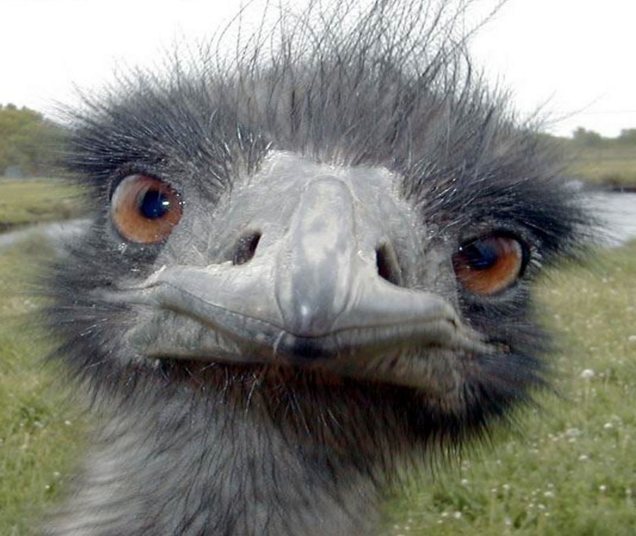
I am an ostrich.  I am the fastest runner of any bird and most other two-legged animals and I can sprint at over 43 mph! Well, okay, I am no match for a cheetah…

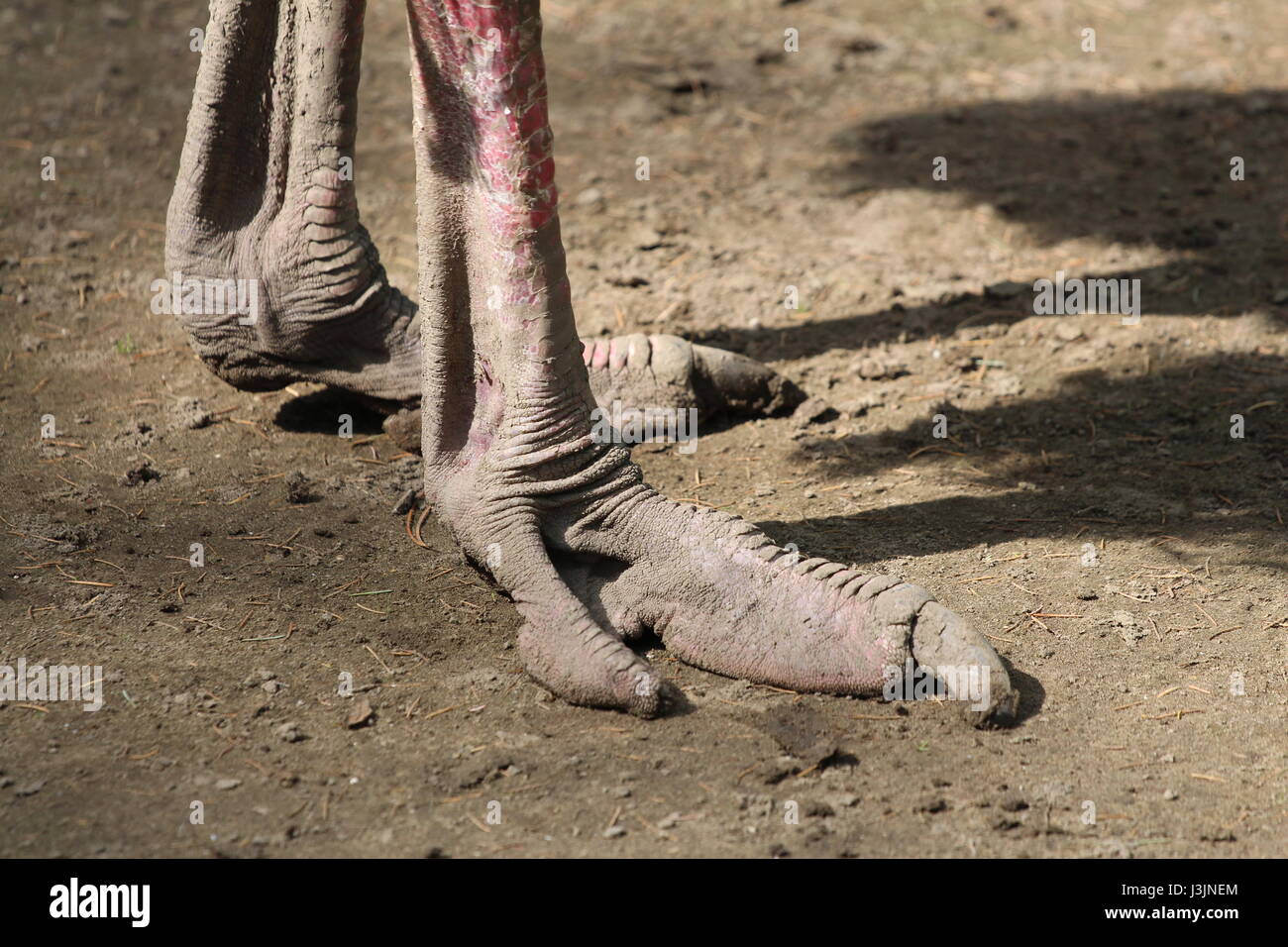
Of course, these long, gorgeous legs are a factor, but having just two toes on each foot (most birds have four), with the large nail on the larger, really helps! 

Males of our species have black feathers with white feathers on their tails and pink or blue necks.  Females have gray-brown feathers that allows them to blend in while they are sitting on their nests.  Males and females share the nest sitting duties—the females do it doing the day, while the males sit at night.  (Their black feathers providing wonderful camouflage.) We can reach 7-9 feet in height and weights between 250-350 pounds! And our eye is the largest of any land animal—2 inches across!  And talk about formidable! When I feel threatened, not only can I run fast, but my powerful, long legs can be formidable weapons, capable of killing a human or a potential predator like a lion with a forward kick.

As an omnivore, I feed on plants, roots, seeds, flowers, berries, small rodents, leaves, lizards, and invertebrate insects.  I will graze on trees and shrubs on the African savannahs and I can survive without water for days, utilizing moisture in the plants to source the water. I will graze with as many as 50 other ostriches, being mostly active in the early part of the day and later in the evening.

After mating, I will lay up to 12 eggs in a shallow pit dug by my mate.  The giant eggs are about 6 inches long and can weigh as much as 2 dozen chicken eggs!  Both my mate and I will incubate the eggs and they will hatch in 35-45 days. 

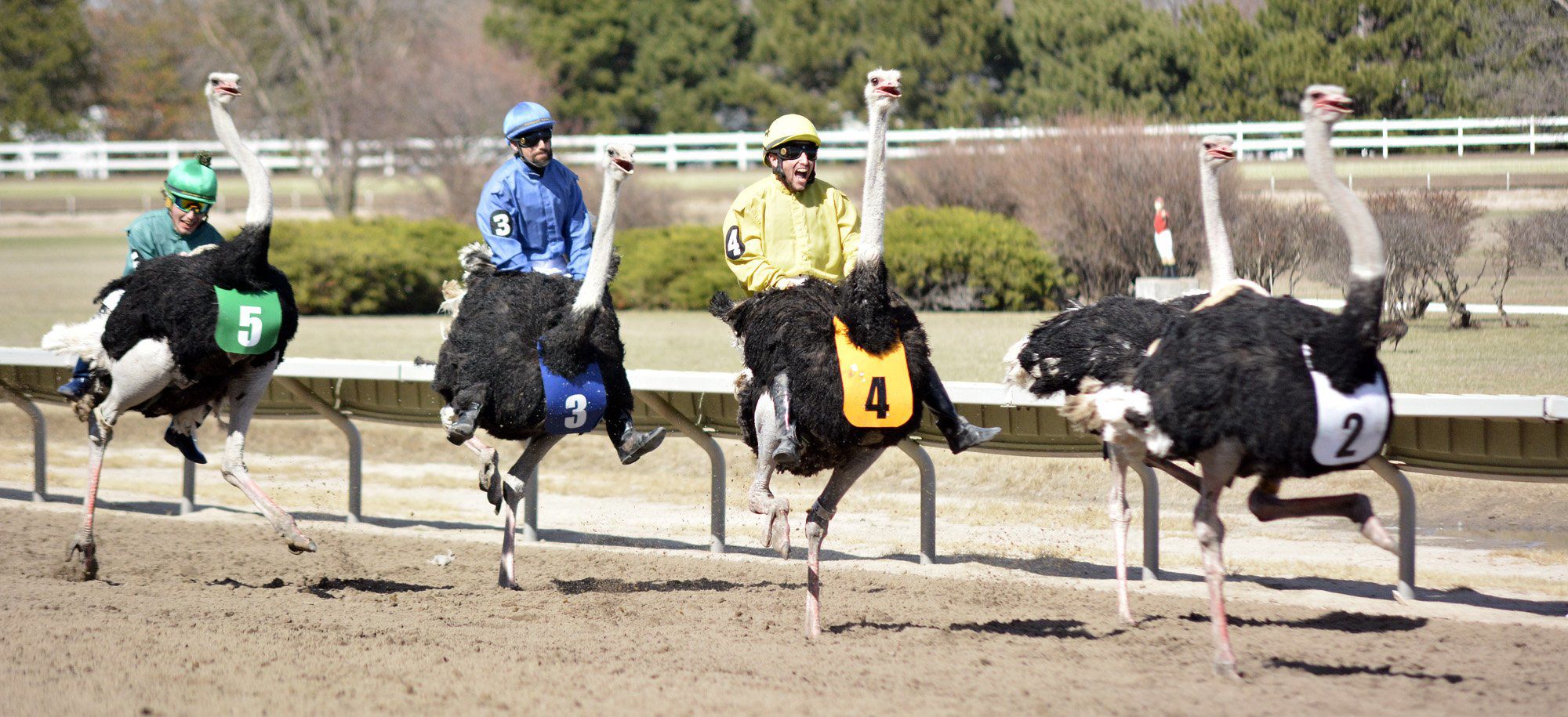
My kind are farmed all around the world, particularly for my gorgeous feathers; my skin is used as leathers, and well, apparently we’re quite tasty.  In some places we’re even saddled and raced.

So, let’s get to the point of this conversation.  I do NOT bury my head in the sand for any reason.  I am not looking for anything, I am not avoiding anything…I just don’t do it.  If I want to hide, I press my neck along the ground to be less noticeable …but I do not bury my head in the ground.  So this bullshit is NOT because of us!  This is just democrats being democrats.

GOT THAT?