Sweet Peas

The colorful and fragrant sweet pea (Lathyrus odoratus) is a favorite plant for informal cottage gardens and is easy to grow. It is most often seen trained up trellises or fences, but sweet peas grow beautifully in pots where it spills over the sides. They are climbing plants that bear profuse clusters of spring and early summer flowers in a wide variety of colors, including red, pink, blue, white, and lavender. Sweet pea flowers resemble fringed butterflies, while their sturdy stems appear to be folded. Plant your sweet peas in late winter or early spring. Sweet peas provide beautiful color in garden spaces, but beware because they are toxic to humans and pets.

About Sweet Pea Flowers


Sweet pea (Lathyrus odoratus), is a climbing annual member of the legume genus. Originating in the southwest of Italy and the islands of the Mediterranean, sweet pea has been cultivated for use in gardens since the 17th century.3 It reached its modern form under the work of Scottish nurseryman Henry Eckford, who developed dozens of cultivars during the late 1800s.

Sweet Pea Care

Sweet peas lend a cottage feel to gardens. For many of us, fast-growing sweet peas are an instant nostalgic reminder of the beautiful, rambunctious old-fashioned gardens. These vintage varieties were selected for their vibrant colors and intense fragrance. Modern sweet pea cultivars come in almost every color except yellow, but not all of the newer sweet pea varieties are fragrant. The mature size will depend on the variety you choose to grow, but expect the vines to stretch to at least 6 to 8 feet tall. They are often grown on bamboo tripods, but typically they are grown along a trellis or fence for support.

Planting and Soil

Plant sweet pea in the late winter and early spring. Sow three seeds together about a foot between groups of seeds. Plant sweet pea seeds about 1 inch down in the soil. For better blooms, work compost into the soil about six weeks before planting the seeds. Compost will also improve poor soil.

Sweet peas prefer rich but well-drained soil. A slightly alkaline soil pH (about 7.5) is ideal.

Light

Sweet peas thrive in full sun, although in warmer climates they do well in a location that receives a bit of shade in the heat of the afternoon.

Water

Sweet peas need weekly watering, to keep the soil moist during the growing season. Check the soil by placing your finger an inch into the soil. If it’s moist, there’s no need to water the plant but if it’s dry, it’s time to give the plant a drink.

Temperature and Humidity

Because sweet peas originated in the Mediterranean, they can handle a rare chill but do best if they’re planted after the last frost and in warmer temperatures in USDA zones 3-8. Sweet pea seedlings can tolerate a light frost, but the plants dislike extremely hot temperatures. Plant early to enjoy the blooms before they wither in the heat.

Fertilizer

During the growing season, apply fertilizer for sweet peas monthly. Choose a fertilizer high in potassium, such as a tomato fertilizer. Adding a bit of blood meal to the soil is thought to help keep the stems long and suitable for cutting.

Types of Sweet Peas

‘Old fashioned’:Sweet peas labeled old fashioned should be very fragrant.

Spencer cultivars:These are especially hardy vines with striking coloring, but not all of them are particularly fragrant.

‘Bijou Group’: This is a sweetly scented dwarf variety suitable for containers.

Pruning

To increase branching, which produces more flowering stems, pinch the growing tips back 1 inch when the plant reaches 4 inches tall.3 The more you cut the flowers, the more blooms you should get, so don’t hesitate to bring some bouquets indoors. Deadhead the spent flowers to encourage continued blooming. For Lathyrus odoratus annuals, you do not need to do anything to the plant when sweet peas have finished flowering.

How to Grow Sweet Pea From Seed

Sweet peas are usually direct sown. To assist germination, seeds should be scarified by nicking and/or soaking in water for several hours to soften the seed coating.4

Seed can be started outdoors, as soon as the ground has warmed to about 50 degrees Fahrenheit and is not too wet. In the South, you may have better luck seeding sweet peas in the fall to grow into winter.

You can get a jump start on the season by starting seed indoors, about four to five weeks before your last frost date. They will be easier to transplant if you start them in peat pots. When you are ready to transplant, pinch any flowers or buds off that may have formed, which will encourage root development. They like cool soil, so a thick layer of mulch around the plants may help sweet peas thrive.

When the plants reach about 4 inches tall in the garden, pinch the seedlings to encourage strong side shoots.3 Sweet pea vines have tendrils and will attach themselves to almost any type of support that has meshing or strings.

Tigers…They’re GRRRRREAT

I found an interesting article about tigers on the FactSite!

The Latin name for the tiger is ‘Panthera tigris‘.

They can live up to 26 years in captivity and in the wild.

Tigers prefer to inhabit forests, grasslands and mangrove swamps.

There are six distinctive tigers: Bengal, Indochinese, Malayan, Siberian, South China and Sumatran.

White tigers are caused by recessive genes and inbreeding.

There are as few as 30 Golden Tigers in captivity.

There are three extinct breeds: Bali, Caspian and Javan.

They can measure up to 11ft, including tail.

They can weigh up to 670lbs.

The stripes that a tiger has are as unique as human fingerprints.

Tigers are generally solitary creatures, but are seen as highly social able.

They have a great fondness for water and are very strong swimmers.

Tigers feast on many animals, depending on their territory. These include: antelope, boar, buffalo, camel, fish and horse.

Interestingly, a tiger can go two weeks without feeding.

They can gorge up to 75lbs of flesh in one sitting.

A tiger’s method of killing prey is to stalk it, before ambushing and overpowering it, before biting.

Human behavior can make the tiger feel threatened and attack humans. These are known as ‘man eaters’.

They can make horizontal leaps of up to 33ft.

Usually, in a litter of cubs, there are up to three, but as many as six can be born.

After fourteen days, the cubs will open their eyes.

A cub can take up to two-and-a-half years to separate from its mother.

Tigers are heavily endangered.

They are hunted for fur, meat, medicine and sport.

Save China’s Tigers is a conservation group, which is extremely successful at breeding and reintroducing tigers to the wild.

The Bengal tiger is the national animal of Bangladesh and India.

They are one of the Chinese Zodiac animals, depicting wood.

In Asian folklore, the weretiger is seen as a horrific and terrifying creature, replacing the werewolf.

Shere Khan was a deadly tiger in Rudyard Kipling’s The Jungle Book (1894).

The breakfast cereal Frosted Flakes is sponsored by Tony the Tiger, who claims, “They’re grrrreat!”

Siegfried and Roy, the magical entertainers, closed their show after a confused seven year old tiger bit Roy’s neck and attempted to treat him like a cub.

SOURCE: The Fact Site

“420” WEED DAY

There have been many misconceptions, fallacies, falsehoods, and media inaccuracies about the beginnings of ‘420’, and even about The Waldos. Rogues and fogged burnouts turn up across the internet claiming they started ‘420’, fictionally making up dates that precede The Waldos’ creation date with their revisionist history. Unfortunately, as things grow in popularity, sometimes people “crawl out of the woodwork” to claim they were part of it.

The Waldos, from left, Mark Gravitch, Larry Schwartz, Dave Reddix, Steve Capper and Jeffrey Noel by the statue of Louis Pasteur at San Rafael High School in San Rafael, California in 2018. (Photo: Associated Press/Eric Risberg)

The Waldos are the only ones with multiple pieces of physical-evidence proof of the very earliest usage of the term ‘420’. In fact, The Waldos are the only ones in the world with any proof at all. The Waldos story/proof of ‘420’ origination has been investigated, and verified, by numerous credible journalistic news organizations. The Waldos are the real creators of the term 420.

This photo shows dried cannabidiol (CBD) flower buds on February 16, 2022 in Paris. April 20 or “4/20” is the event in the calendar that stoners look forward to every year, becoming a celebration of cannabis culture.

Meet The Waldos

“In the fall of ’71, Waldo Steve was given a treasure map to a patch of weed on the Point Reyes Peninsula. The map was given to him by a friend whose brother was in the U.S. Coast Guard and was growing cannabis. The coastguardsman was paranoid he would get busted so he granted permission to harvest. The Waldos™ all agreed to meet at 4:20 p.m. at the statue of chemist Louis Pasteur on the campus of San Rafael High. They met, got high, and drove out to search for the patch.

In the ensuing school days the Waldos would use the term ‘420 Louie™’ to remind each other of their after school quest. They eventually dropped the ‘Louie’ part and just said ‘420’ to refer to cannabis. Originally ‘420’ was nothing more than the Waldos’ secret slang–their own private joke–however, it was picked up by others and spread from generation to generation, city to city, country to country, across decades, and throughout all media around the globe. The Waldos have published multiple pieces of “evidence” to give credence to their theory, including letters from college and the original “420” flag from the 1970s.

Point Reyes Forest

Spreading the Word

Initially “420” began as private joke for their own meetups, but the phrase supposedly caught traction via the group’s connection with the rock band ‘The Grateful Dead,’ also based in Marin County Hills at that time, only blocks away from the high school the Waldos attended. One of the Waldos, Mark Gravitch, had a father who managed real estate for the band, while the brother of Dave Reddix (another Waldos member) managed a Grateful Dead side-band and was close friends with Grateful Dead bassist Phil Lesh.

Grateful Dead

The Grateful Dead practiced at a rehearsal hall in San Rafael, California and the Waldos used to hang out there at watch, Reddix said. His older brother Patrick spread the “420” phrase with the band through Lesh. “And me, too, because I was hanging out with Lesh and his band [as a roadie] when they were doing a summer tour my brother was managing,” Reddix added.

Capper added: “We’d go with [Gravitch’s] dad, who was a hip dad from the ’60s. There was a place called Winterland and we’d always be backstage running around or onstage and, of course, we’re using those phrases. “When somebody passes a joint or something, ‘Hey, 420.’ So it started spreading through that community.”

“Winterland Auditorium stage in 1976”

Capper said Marin County was “ground zero” for the California counterculture, which saw hippies smoke weed as a form of protest against government policies, such as the Vietnam War. Later, banners calling from 4:20 p.m. meetings on 4/20 were found circulating at gatherings ahead of Grateful Dead concerts.

Today, 4/20 can mean a whole host of different things to weed smokers, as well as the industry. Hundreds of sellers show off their marijuana products at 4/20 rallies each year. For example, the aptly-named California town Weed hosts its own 4/20 festival:

“The City of Weed, California, Threw Huge Blowout to Celebrate 420

Published April 21, 2022, by Chris Moore

“What better place to celebrate the year’s biggest cannabis holiday than a town named Weed? Yesterday, a tiny Northern California city called Weed hosted its fourth annual festival to celebrate 4/20, the official cannabis holiday. The event was held by La Florista Cannabis dispensary, which just happens to be the only weed shop in Weed. Organizers shut down a block of the city’s Main St. for a blowout featuring bands, a DJ, a taco truck, and – you guessed it – legal cannabis. The dispensary offered special “swag bags” for customers, plus promos on flower, pre-rolls, vape carts, edibles, and pretty much every other product they sell.

With all the hype surrounding California’s fabled cannabis industry, one might speculate that the town of Weed might have adopted this name just to cash in. But the town’s unique name actually comes from its founder, a pioneer named Abner Weed. In 1897, Weed bought a 280-acre lumber mill in the area that eventually became the current City of Weed.

Weed was initially quite reluctant to embrace its cannabis namesake. Residents and elected officials initially resisted attempts to capitalize on the town’s potential for pot tourism but did agree to allow La Florista to open in 2018. Since then, Weed has slowly been warming up to weed. Last January, the city council voted to impose a 3% local cannabis sales tax, which city officials predicted would bring them about $100,000 a year.”

https://merryjane.com/news/weed-california-threw-huge-blowout-to-celebrate-420-1

How to Celebrate

Watch a marijuana documentary….Learn more about the history of cannabis and the controversies surrounding it today by watching a marijuana documentary, such as “Grass is Greener, High Country: The Future of Weed,” “The Culture High” and “The Legend of 420.”

Those are all movies that require payment. This one, however, is surprisingly honest, even tho it came via PBS. The FDA (i.e., HHS) consciously CHOSE to block ALL study on the efficacies of MJ for health purposes simply by refusing to take it off the list of dangerous drugs to free up research $$$. They want to control ALL of it!!!! Bayer/Monsanto has been locking up the medical MJ business for a very long time!!!

Try some cannabis recipes

Try a recipe or two from “The Official High Times Cannabis Cookbook,” which features more than 50 tasty recipes to get you high.

Listen to a marijuana podcast

Learn more about the ins and outs of the cannabis industry on ‘The Adam Dunn Show,’ ‘Brave New Weed’ and ‘Cannabis Cultivation and Science Podcast.’

Video of the effects of CBD on Parkinsons and Epilepsy:

Parkinson’s Sufferer Shows The Incredible Effect Marijuana Has On His Tremors

A Little Girl With Epilepsy Tries Cannabis Oil

Toddler’s seizures treated with medical marijuana

“20 Medical Studies That Show Cannabis Can Be A Potential Cure for Cancer”

EXCERPT: “Let’s take a look at the science behind cannabis and cancer. Although cannabis has been proven to be an effective treatment for a wide range of ailments, this article will focus mainly on its effects on cancer.

Cannabinoids, which refer to any of a group of related compounds that include cannabinol and the active constituents of cannabis, may very well be one of the best disease- and cancer-fighting treatments out there. They activate cannabinoid receptors in the body, and the body itself produces compounds called endocannabinoids that play a role in many processes within the body that help to create a healthy environment.

Cannabinoids are also involved in immune system generation and re-generation. The body regenerates best when it’s saturated with phyto-cannabinoids.”

This disappeared and I had to use the Wayback Machine:

https://web.archive.org/web/20210921210659/https://www.collective-evolution.com/2013/08/23/20-medical-studies-that-prove-cannabis-can-cure-cancer/

Daisy, Daisy, Tell Me You Love Me True

Daisies are one of two flowers for April.  This article from The Spruce details 7 of the most common varieties.

Daisies are a popular choice for gardens—and for good reason. Bright, cheerful, and easy to grow, the flowers are readily identifiable and are a mainstay of cottage gardens and classic perennial borders alike. But the term “daisy” is far broader than you may realize. There are multitudes of options when it comes to choosing daisies to grow in your garden.

The common name “daisy” is applied to a large handful of species within the huge Asteraceae family of plants, a group known for blooms that are flat and disc-shaped, with petals that form rays projecting outward from a central hub. The family also includes chrysanthemums, zinnias, asters, and sunflowers as well as many common weeds, such as dandelions. However, the daisy species that are best for your flower garden depends on several factors. A daisy that’s perfect for one growing zone might be a total pest in another.

Here are seven gorgeous species of daisies to consider for your garden.

Warning

Some types of daisies are considered weeds and are categorized by states as invasive (and thus discouraged), because they grow so rapidly, thanks to self-sowing and their robust nature. Check with your local county extension office before planting a new daisy variety.

English Daisy (Bellis perennis)

The common English daisy, Bellis perennis, has a somewhat deserved reputation for being a weed; it’s even considered invasive in some areas. The species has flowers with white rays and yellow centers, but there are many cultivars with semi-double and button flowers, such as ‘Galaxy Red.’ These cultivars are both showier and better behaved than the primary species. English daisies are hardy in growing zones 4 to 8 but are often grown as biennials in warmer zones and as annuals in cooler zones. These low-growing daisies, especially the showier cultivars, can make excellent ground cover plants.

Gerbera Daisy (Gerbera jamesonii)

The National Garden Bureau named 2013 the Year of the Gerbera, declaring the pleasing shape and luminous colors of the flower to be irresistible to gardeners. And we’re still in love with the species today. Unlike some daisies, this South African native is a tender perennial, hardy only in warm climates. However, the plants can thrive in a container garden and make fabulous cut flowers, as many florists and brides can attest. Gerbera daisies, also called African Daisies or Veldt Daisies, prefer morning sun, although full sun is tolerated in cooler climates. Irrigate the plants at soil level to keep water off the foliage and prevent fungal diseases. Look for the Festival series in a rainbow of colors, or try one of the lush, semi-double types, such as the peach-hued Cartwheel Chardonnay.

Marguerite Daisy (Argyranthemum frutescens)

The Marguerite daisy, Argyranthemum frutescens, also known as the cobbitty daisy, thrills gardeners with its blazing yellow and pink color choices as well as its demure white petal variety, which will thrive as a perennial in zones 8-10. These are annuals in all but the warmest growing zones, so they won’t return after winter, but you will get a full season of repeating blooms. Marguerite daisies are at their best during spring and fall when nighttime temperatures are below 75 degrees. However, if you shear them back in the summer, they’ll bounce back with a new flush of blooms when the autumn rains arrive.

Oxeye Daisy (Leucanthemum vulgare)

What’s considered a vigorous plant in one garden is considered a weed in another, and that’s true for the oxeye daisy, Leucanthemum vulgare. It’s a native flower in Europe, where the spreading nature and drought tolerance of the plants make them pasture pests. These short-lived perennials are discouraged in a dozen continental states because they’re considered invasive. However, in tamer settings, oxeye daisies are welcome for their three-month bloom time. Consider using them in a small, well-kept wildflower garden, or allow them to naturalize in your cottage garden.

Painted Daisy (Tanacetum coccineum)

The ease of care and vivid blooms of the painted daisy, Tanacetum coccineum, makes it deserving of a spot in every cutting garden. It starts blooming in early summer and may even put on a second, smaller showing in the fall if you deadhead the faded blooms. After the fernlike leaves appear in spring, watch out for aphids and leafminer. Varieties like ‘James Kelway’ are easy to start from seed or try the pale pink ‘Eileen May Robinson.’ Shasta Daisy (Leucanthemum x superbum)

A cross of the oxeye daisy and three other wild daisies yielded the beloved Shasta daisy, Leucanthemum x superbum, which received its common name from the white snow of Mount Shasta in California. The many cultivars of this daisy offer gardeners several different looks for their flower borders, ranging from the yellow ‘Banana Cream’ to the frilly, fringed ‘Phyllis Smith.’ The ‘Becky’ and ‘Alaska’ varieties are widely sold and look like the classic daisy flower seen in many cottage gardens. These plants bloom across a long season but reach their peak in June and July. Although they’re low-maintenance, Shasta daisies don’t like wet feet and will sometimes fail to reappear in the garden after a soggy winter. Divide the plants every two years to keep them vigorous.

Swan River Daisy (Brachyscome iberidifolia)

A warm-weather perennial from Australia, the swan river daisy produces small flowers, only about 1 inch in diameter. But the blooms are so colorful and abundant—and the flower works so well with other garden plants—that it can serve as a central feature of any flower garden. Lavender, blue, yellow, or white blooms appear in abundance from summer into fall, while the foliage is a softly textured gray-green hue.

FAQ

Which daisies bloom for a long period?

Shasta daisies, black-eyed Susans, and African daisies or osteospermum have a longer bloom period, blooming at least three months. Black-eyed Susans will bloom from June to September, and Shastas will produce flowers from July to September. Osteospermums start blooming in late spring, flowering through fall, but slow down during the height of summer.

Are all daisies perennial?

In short, daisies are perennial depending on your USDA growing zone. Marguerite and gerbera daisies are only perennial if grown in zone 9 or higher. Most other daisies are perennial down to zone 3 or 4. Do not confuse hardier golden Marguerites (Anthemis tinctoria) with Marguerite daisies; the two are two different species.

Which daisies are the easiest to grow?

Oxeye daisies are among the easiest daisies to grow. These quintessential daisies self-seed and grow easily; they’re even listed as invasive in Washington state. Before planting them in your region, check your local extension for invasiveness.

Let Us Pray

However bizarre or intimidating they may appear to be, praying mantises have long intrigued scientists not only for their amazing camouflaging ability but also for their uncanny ability to control the spin of their body. Worldwide, there are around 2,400 species of a mantis—ranging in size from as small as a human nail to as big as a human forearm. Perhaps it’s time to bring out some more interesting facts about praying mantis.

Prayer-like Posture

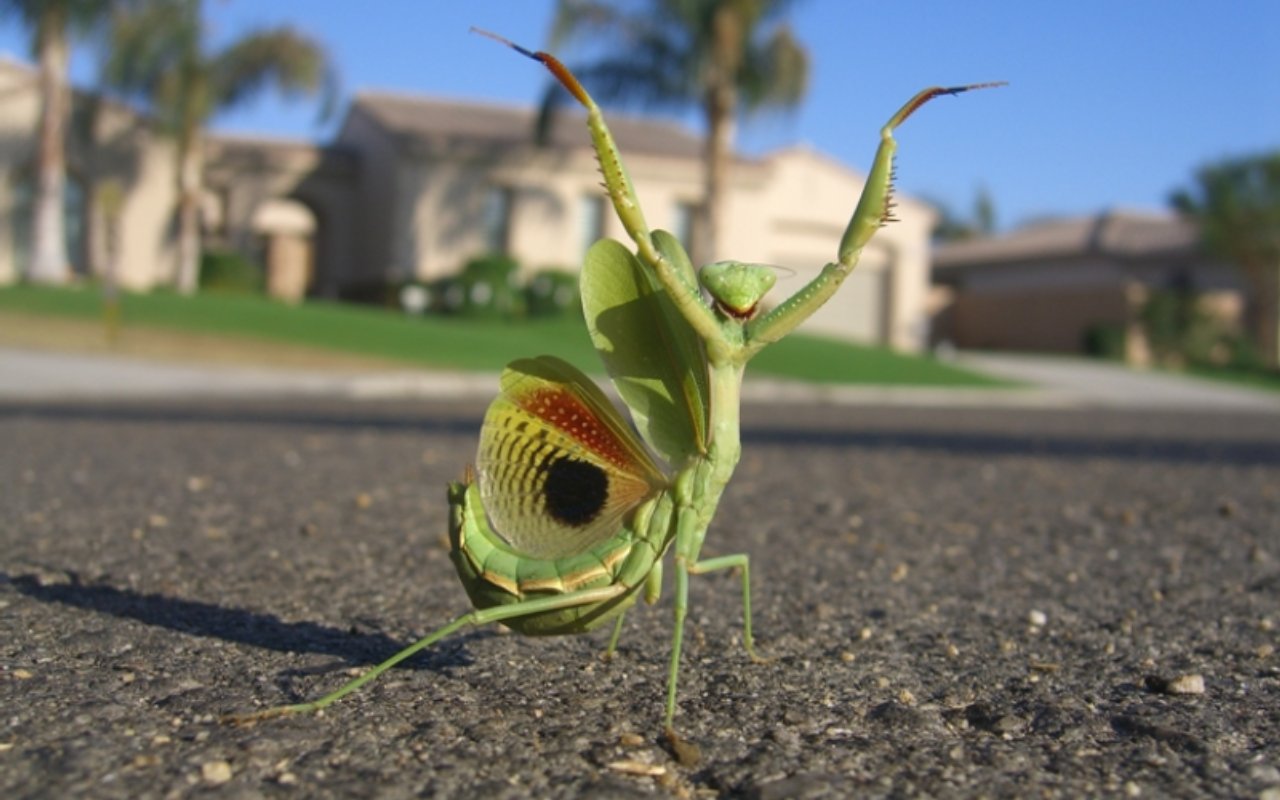
The praying mantis earns its name due to its prayer-like posture especially when it raises its seemingly reverent forelegs. For the same reason, the mantis is highly esteemed in some parts of the world; a few people even consider mantids as a sign of good luck.

Remarkable Vision

Studies suggest that the praying mantis is probably the only insect able to swivel its head and stare right straight at you. Lately, scientists have also discovered that the mantis’ eyes may well be equipped with 3-D vision.

Accurate Jump

A mantis doesn’t jump haphazardly. In fact, it is able to control its trajectory by twisting its abdomen and body parts alongside head. They don’t miss the target. The head-movement is meant to judge precisely the distance between the two points.

Feeding on Birds

You might have heard that birds feed on insects but how about if it occurs the other way round. Mantises are the only insects that feed on birds. While hummingbirds are the most primary target, mantids do take on European robins, sunbirds, flycatchers, warblers, honeyeaters, and vireos. Chinese mantises, one of the biggest species, are particularly avid avivores, but only females kill and eat the birds.

Sexual Cannibalism

The female mantis kills and eats the male either during or sometimes after the mating. She bites the head off the male. Since females are twice the size of the males and they cannibalize their mating partner, males usually avoid head-on confrontations with the female.

Male’s Flight

Males are thought to fly only although both males and females have wings. Females, with their heavy weight and bigger size, are probably just too heavy to lift off the ground.

Number of Eyes

Praying mantises have five eyes out of which two are compound eyes while three are simple. Scientists believe that mantises might see things in three-dimensional way just like we humans do.

Ambush Hunters

Mantids are ambush hunters and their predatory nature enables them to take on animal the size of their own. Like big cats, they will stalk prey and grab it with its neck.

Ootheca – Egg Sack

The female mantis produces 100 to 300 eggs over a period of several days. The eggs are protected in a hard frothy liquid. The entire egg sack is known as ootheca.

Spinning Bodies

While in flight praying mantis manages to generate a bit of spin together with swinging their head side to side. They will swing their heads to gauge the distance and judge the landing on an unsuspecting target.

Source: https://praying-mantis.org/praying-mantis-fun-facts/

Lamb’s Ear

The leaves and stems of lamb’s ear, also known as betony, are covered with a dense layer of tiny white hairs that make them feel silky to the touch and give them a silvery appearance. This plant is a must for sensory garden settings and is sure to delight children who are encouraged to stroke the soft leaves. While lamb’s ear is most commonly grown for its foliage, it does bloom; some varieties are grown specifically for their prolific blooms.

In addition to lamb’s ear plants providing tactile joy, the silvery foliage also serves as the perfect backdrop for many other plants. The flower stalks are usually 12-24 inches tall, with small purple, white, red, or pink blooms.

Lamb’s ear is a vigorous grower. It isn’t on the USDA invasive plant list, but unless it is carefully contained, it can become troublesome. Lamb’s ear produces creeping stems that root along the soil, creating dense mats of foliage. The roots aren’t thick, so the plants can be pulled up where you don’t want them. This spreading habit makes lamb’s ear a good choice for a groundcover in full sun or poor soil situations. Lamb’s ear also readily reseeds itself, so removing the flower stalks before they go to seed reduces spreading.

Lamb’s Ear Care Tips

Light

This plant performs best in full-sun conditions, but it can withstand shade. The plant looks greener in the shade because it produces fewer dense hairs.

Soil and Water

Lamb’s ear varieties withstand poor soil conditions and drought. One thing it does not tolerate, however, is soggy soil.

Give the plant about 1 inch of water weekly if the soil is dry. Don’t water from the top of the plant. Keep the plant as dry as possible by watering it from the bottom.

Temperature and Humidity

The soft hairs on the leaves and stems help prevent plant moisture loss, making it exceptionally drought-tolerant. Heat is not a problem for lamb’s ear. However, in desert locations, it is best to select a planting location with at least some partial shade. Low humidity is best for this plant. In locations with high humidity, the plant is susceptible to leaf rot.

Fertilizer

Lamb’s ear doesn’t like rich soil. It is best to avoid giving the plant any fertilizer.

Pruning

Because the prolific seeds spread quickly, deadhead the flower stalks or cut them back to the ground to prevent unintended spread. Prune any dead or damaged leaves as they occur. Repeat the process whenever you see more dead leaves or about twice a year. The plant can stand a harsh pruning if needed. It’s difficult to kill.

Puffins

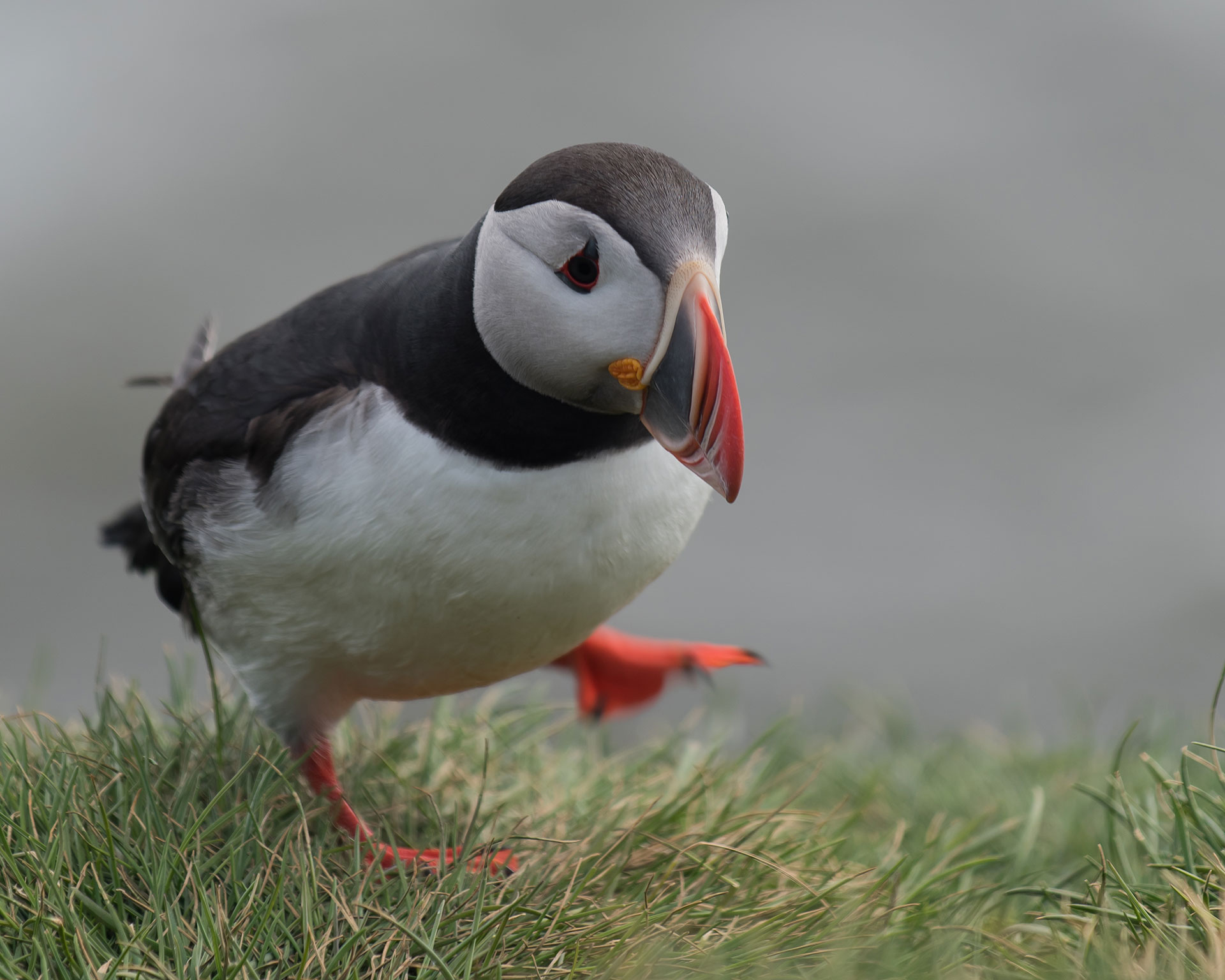
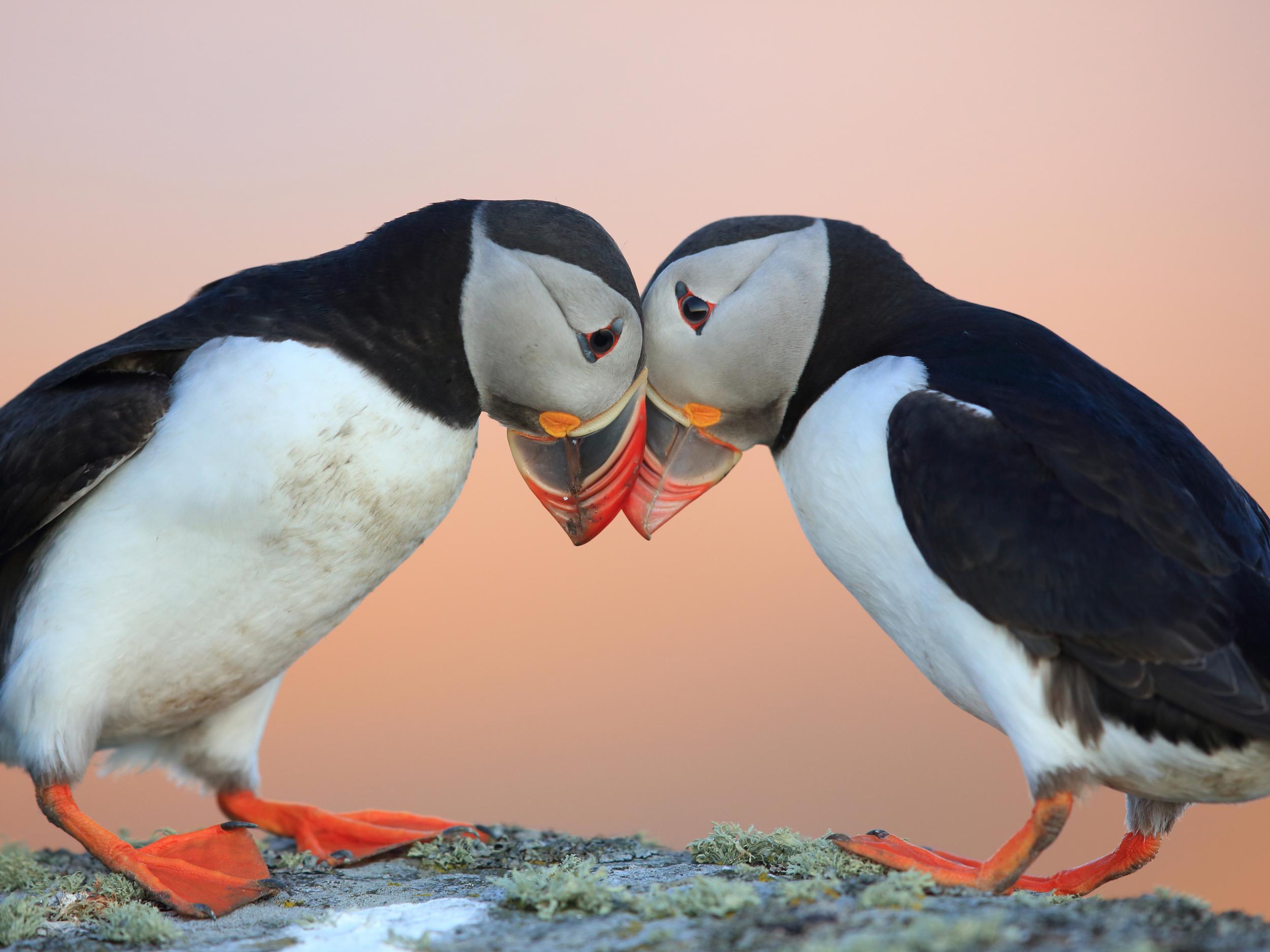
Puffins are cute, stocky birds, known for their black and white plumage and orange feet and bills. Their appearance has earned them numerous nicknames, including “sea parrots” and “clowns of the sea.” Puffins are often compared to penguins because of their plumage, waddling walk, and diving ability, but the two birds are not actually related.

Types of Puffins

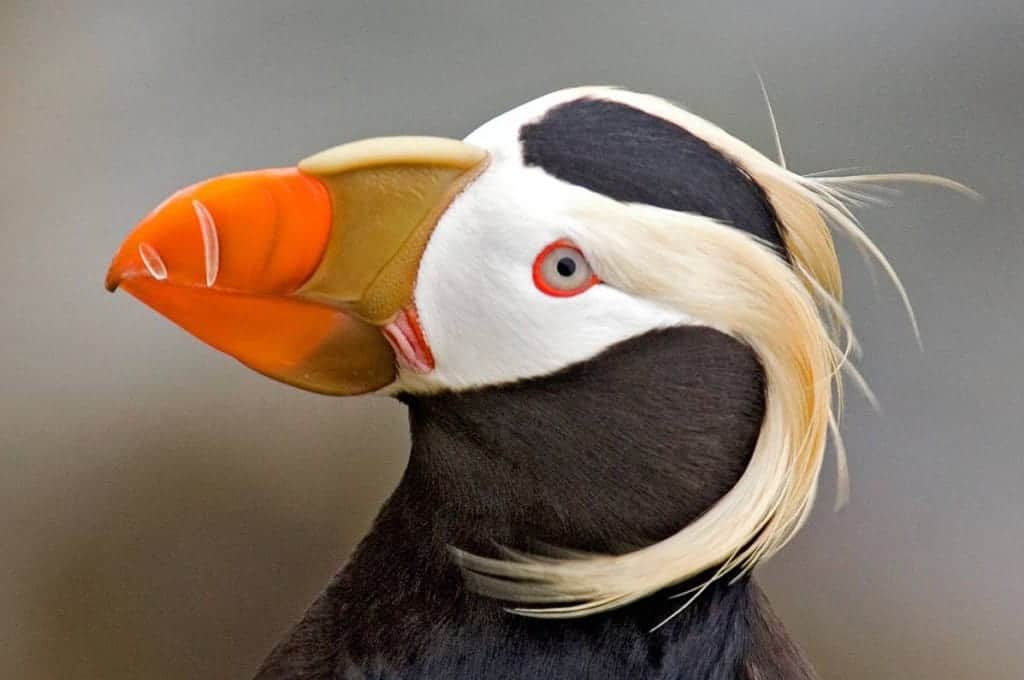
Depending on which expert you ask, there are three or four puffin species. All puffin species are types of auks or alcids. The Atlantic or common puffin (Fratercula arctica) is the only species native to the North Atlantic. The tufted or crested puffin (Fratercula cirrhata) and the horned puffin (Fratercula corniculata) live in the North Pacific. The rhinoceros auklet (Cerorhinca monocerata) is definitely an auk and only sometimes considered to be a type of puffin. Like the tufted and horned puffin, it ranges across the North Pacific.

Description

Puffin plumage depends on the species, but the birds are generally brownish-black or else black and white, with black caps and white faces. Puffins are stocky, with short tails and wings, orange webbed feet, and large beaks. During the breeding season, the outer portions of the beak are bright reddish orange. After breeding, the birds shed the outer part of their bills, leaving smaller and less-colorful beaks.

The Atlantic puffin is about 13 inches long, while the horned puffin and tufted puffin average 15 inches long. Male and female birds are visually indistinguishable, except that the male in a pair tends to be slightly larger than his mate.

Habitat and Distribution

The open sea of the North Atlantic and North Pacific is home to puffins. Most of the time, the birds live out at sea, far from any coast. During the breeding season, they seek islands and coastlines to form breeding colonies.

The Atlantic puffin ranges from Iceland, Greenland, and Norway as far south as New York and Morocco. The horned puffin may be found from the coasts of Alaska, British Columbia, and Siberia, wintering along the California and Baja California coast. The tufted puffin and rhinoceros auklet range largely overlaps that of the horned puffin, but these birds also overwinter off the coast of Japan.

Diet

Puffins are carnivores that feed on fish and zooplankton, preying primarily on herring, sand eels, and capelin. Puffin beaks feature a hinge mechanism that allows them to hold several small fish at a time, making it easier to transport small prey to feed a chick.

Behavior

Unlike penguins, puffins can fly. By rapidly beating their short wings (400 beats per minute), a puffin can fly between 48 to 55 mph. Like other auks, puffins also “fly” underwater. Despite their mobility in the air and sea, puffins appear clumsy when walking on land. Puffins are highly vocal at their breeding colonies, but silent when they are out at sea.

Reproduction and Offspring

In captivity, puffins reach sexual maturity at three years of age. In the wild, breeding usually occurs when the birds are around five years old. Like other auks, puffins are monogamous and tend to form lifelong pairs. Each year, the birds return to the same colonies. They build nests among rocks or burrows in the soil, depending on the colony geography and puffin species.

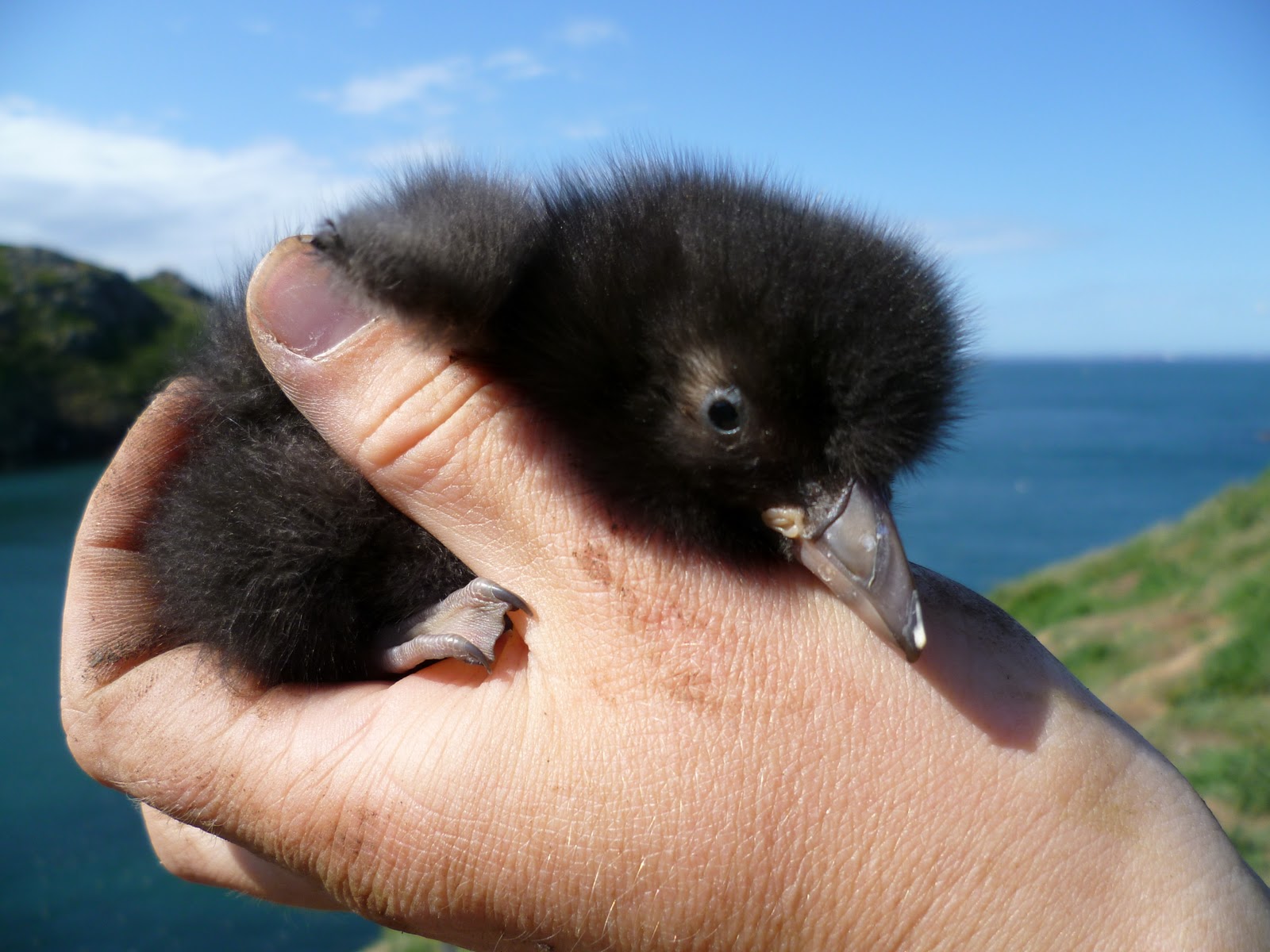
The female lays a single white or lilac-colored egg. Both parents incubate the egg and feed the chick, which is commonly called a “puffling.” Pufflings lack the well-defined plumage markings and colorful bills of their parents. Chicks fledge at night and head out to sea, where they will remain until they are ready to breed. The average lifespan of a puffin is about 20 years.

Conservation Status

The horned puffin and tufted puffin are classified as being of “least concern” on the IUCN Red List of Threatened Species. The IUCN lists the Atlantic puffin as “vulnerable” because populations are rapidly declining across the species’ European range. Researchers believe the decline is due to multiple factors, including food shortage caused by overfishing, predation, pollution, and mortality in fishing nets. Gulls are the principle natural predator of puffins, although they are also preyed upon by eagles, hawks, foxes, and (increasingly) domestic cats. Atlantic puffins are hunted for eggs, food, and feathers in the Faroe Islands and Iceland.

Happy National Ferret Day! (really)

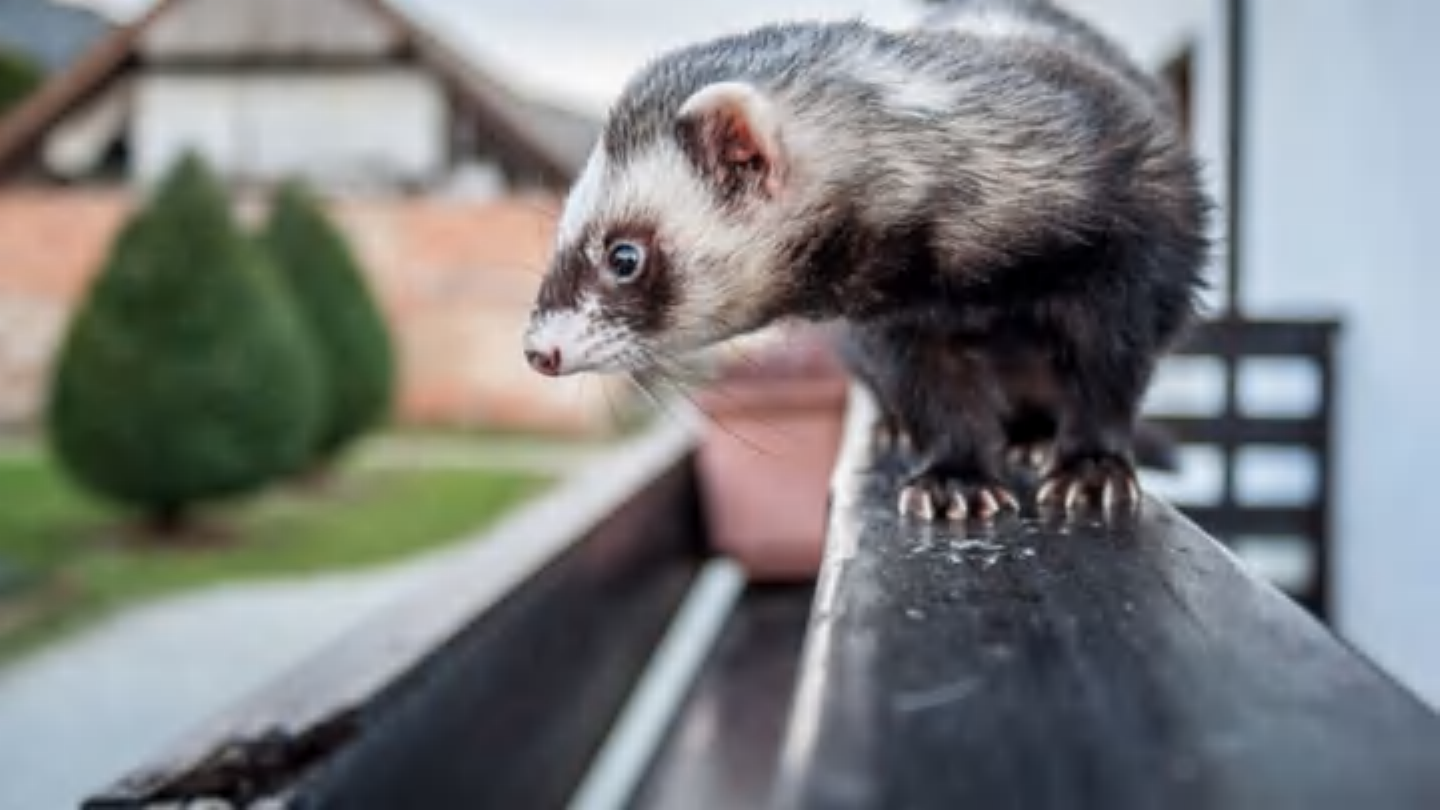
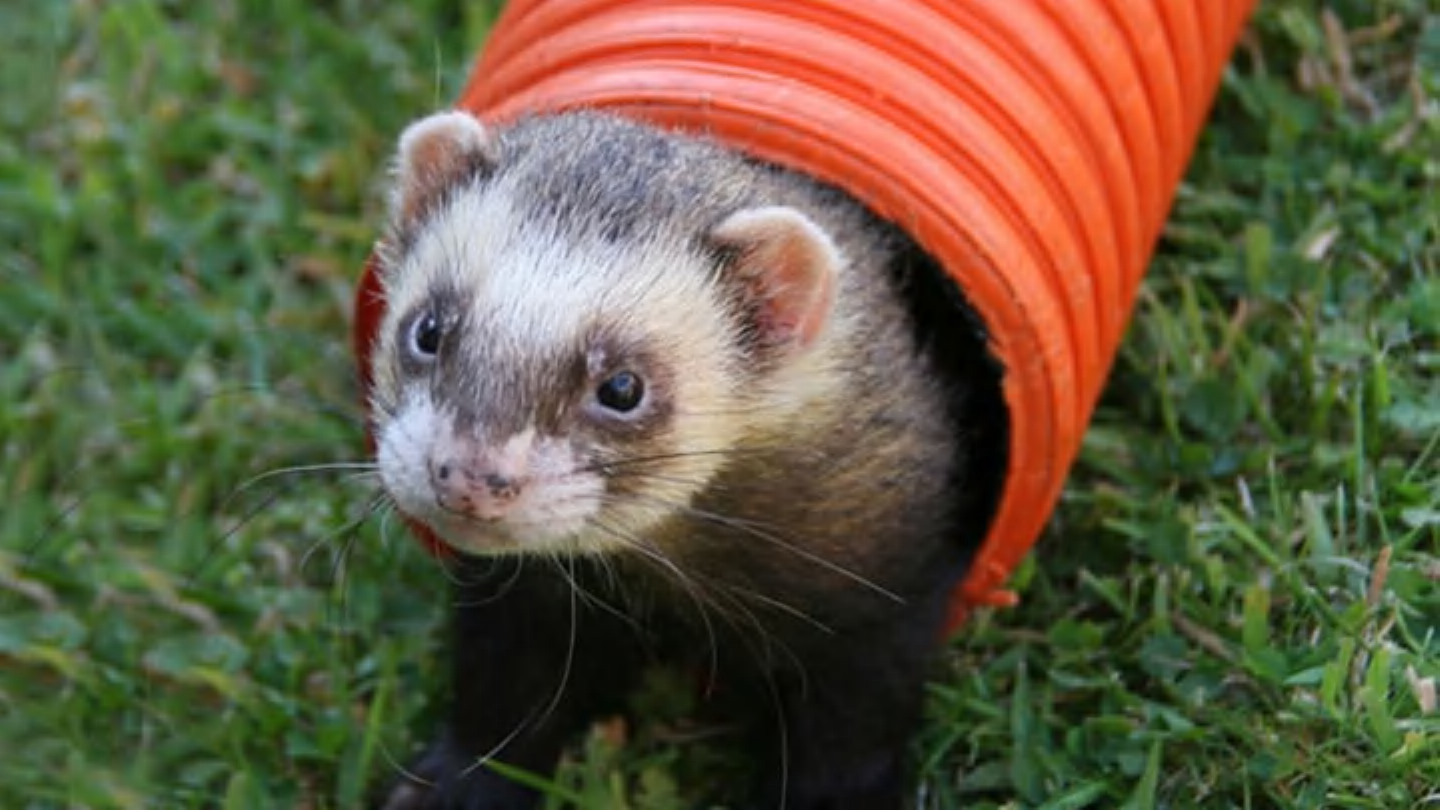
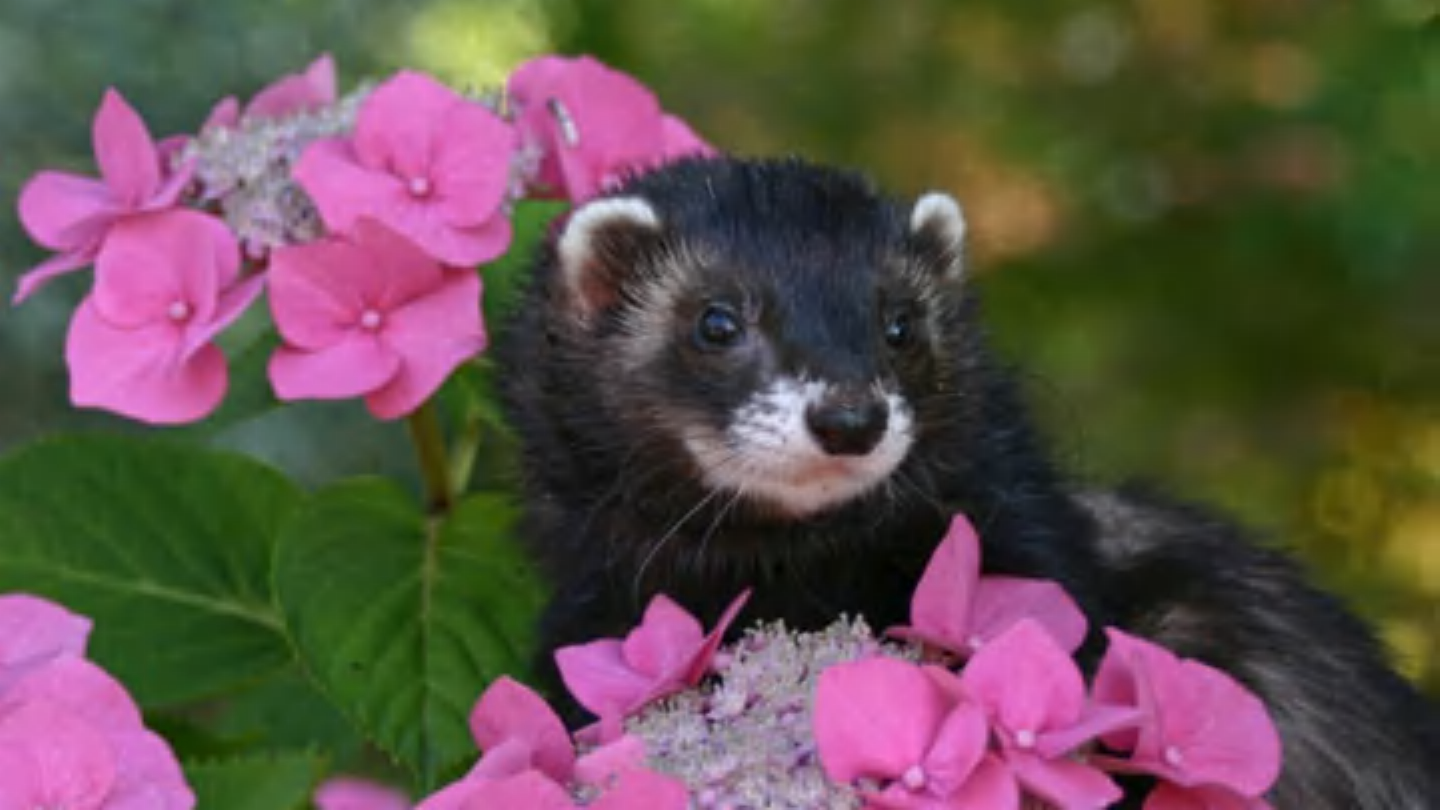
Happy National Ferret Day! In honor of the “holiday”, brush up on your knowledge about everyone’s favorite (and longest) polecat-like pet.

Ferrets have been domesticated for a quite a while.

It is unclear exactly when ferrets were first domesticated, but the critters have a long and storied history. Greek scholars—Aristophanes in 450 BCE and Aristotle in 350 BCE—wrote about a ferret-like animal. Some lore asserts that ancient Egyptians even kept them as pets, but the absence of ferret bones in explored tombs casts doubt on that claim. Remains have been found in a medieval castle in Belgium, but there is no mention of the pets in any contemporary writings. It’s also possible that the ferret was exclusively a lower-class pet, which would explain the lack of documentation.

In the late 15th century, Leonardo da Vinci painted Cecilia Gallerani holding a weasel-like creature. Although the animal has been dubbed an ermine, many scholars believe the animal is actually a ferret.

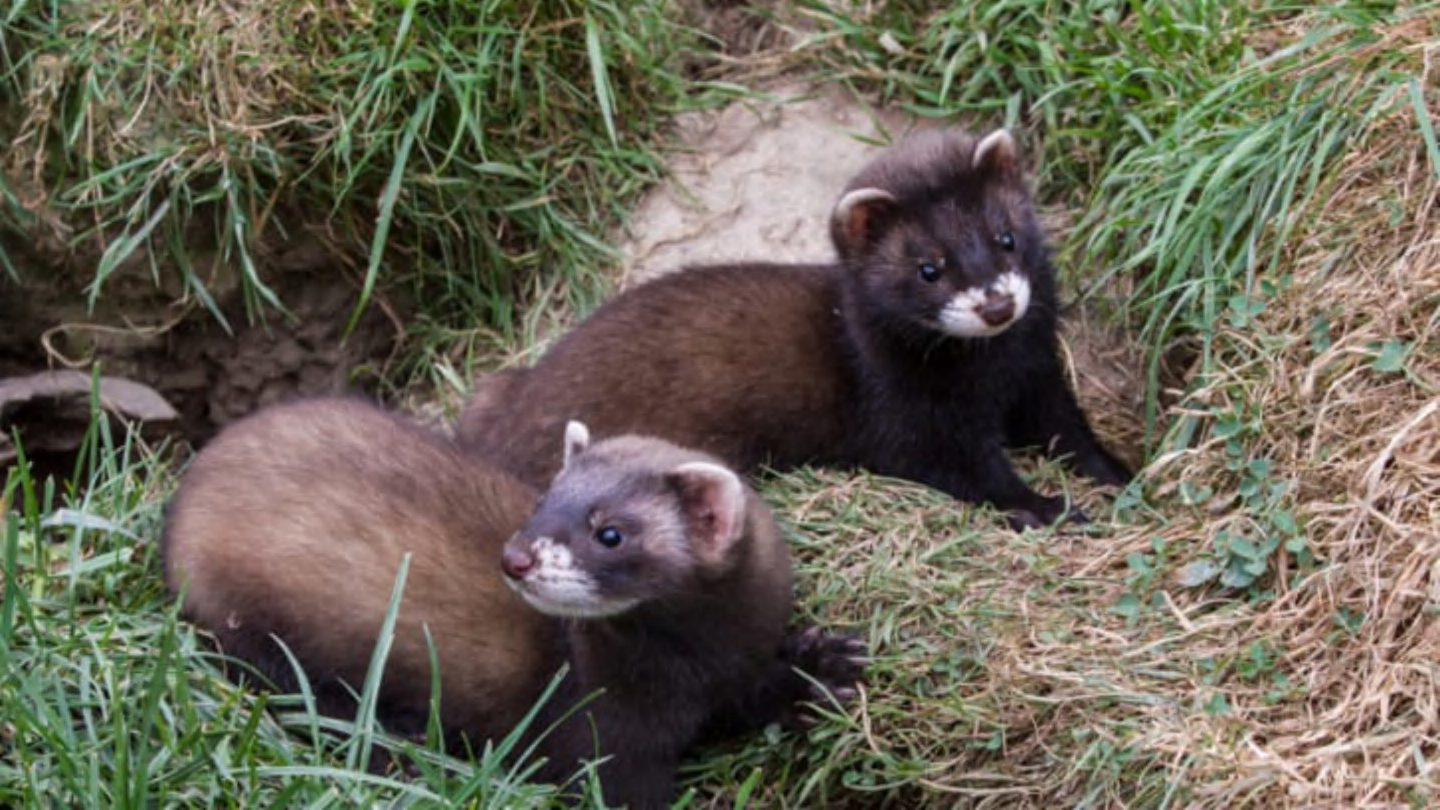
They are related to polecats.

Ferrets are the domesticated subspecies of European polecats. They can easily interbreed to produce offspring that are very similar to domestic ferrets.

When threatened, ferrets will dance.

In the wild, ferrets and stoats perform a hypnotic dance that sends their prey into a trance. Domestic ferrets also perform this dance, but they use it for play instead of hunting. They arch their backs, puff their tails, and move from side to side. This rug-cutting is usually a sign that the ferret is happy and having fun.

Black-footed ferrets almost exclusively eat prairie dogs.

Wild black-footed ferrets, or American polecats, live in central North America and feast on unsuspecting prairie dogs. Scientists discovered that in South Dakota, 91 percent of the black-footed ferret’s diet consisted of prairie dogs.

Unfortunately, their main source of food has bigger problems than being eaten: The Black Death. The plague is no longer a worry for most humans, but it has a tendency to wipe out whole colonies of black-tailed prairie dogs. This threat is a real issue for the endangered black-footed ferrets, which perish without their favorite food. Luckily researchers have found a vaccine that could help keep the tiny rodents healthy. Testing is currently underway to see if the vaccine works in the wild.

A group of ferrets is called a business.

Now that’s a professional pet!

Ferrets can be used to hunt rabbits.

Rabbit hunting with ferrets is a popular sport in England. The ferrets run into rabbit holes to run the prey out of hiding. When the rabbits dash from their homes, human hunters trap them in nets. The tiny hunters wear ferret finder collars so that if they corner a rabbit underground, their owners can come to their rescue with a shovel. 

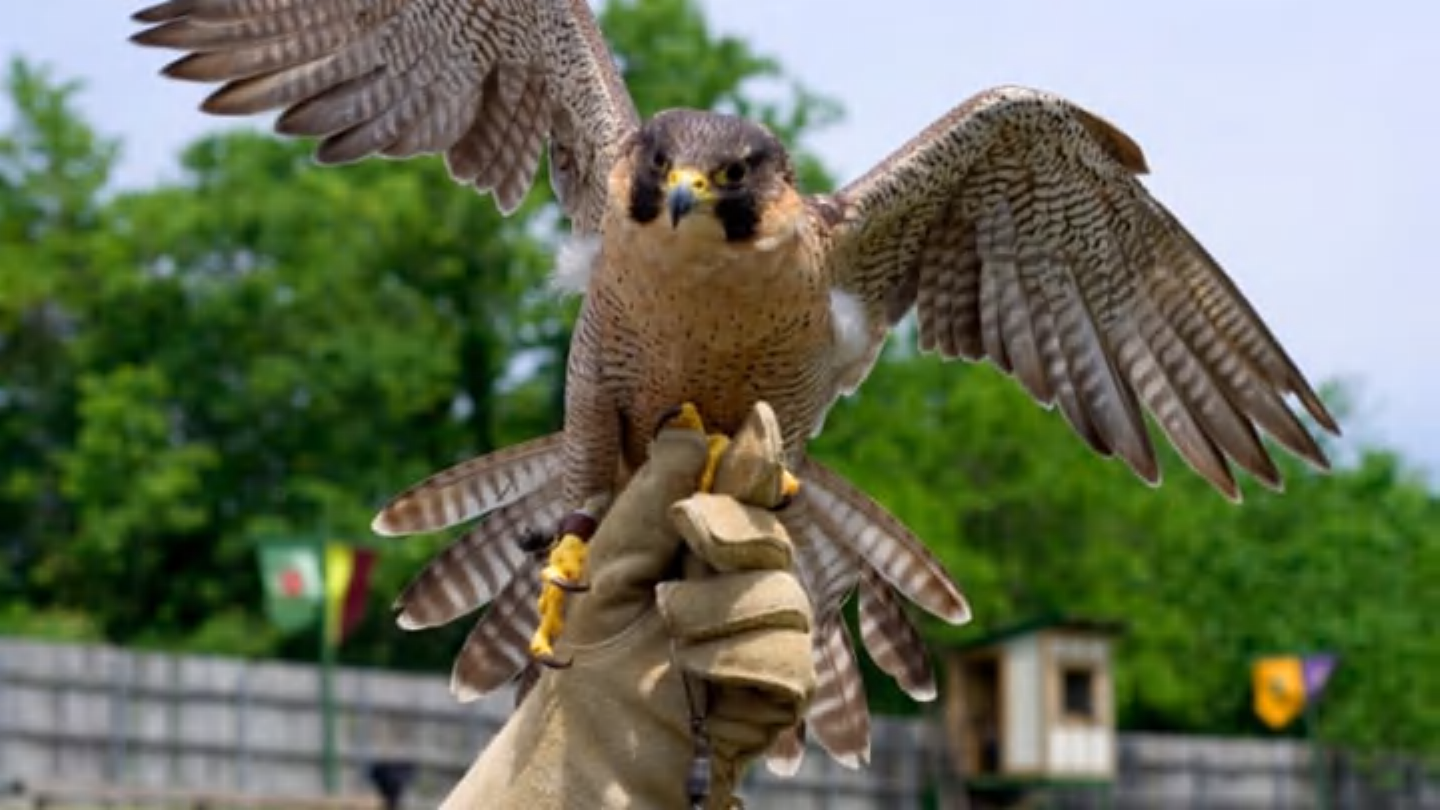
They can team up with falcons.

Falconers employ ferrets in a similar role; the only difference is that the ferrets are used to bring the prey to the falcons. The two animals make a great hunting team.

Some ferrets have jobs.

Known for their love of burrowing, ferrets can put their skill at running through pipes to a variety of professional uses. When wires cannot be pushed through tubes or tunnels with rods, the tiny critters can step in. They are known for pulling wire through underground tunnels, and even helped lay wire for London’s Party in the Park concert in 1999.

One famous ferret named Felicia helped clean pipes at Fermilab’s Meson Laboratory in 1971. A swab connected to her collar allowed her to clear away unwanted debris. Although Felicia only cost $35, she likely saved the lab thousands of dollars.

Ferret racing is a popular sport.

Ferret racing is a popular sport in London that involves competing ferrets racing through drainpipes. A small section of the pipe is removed and replaced with chicken wire so viewers can know when the pets are half-way through. Apparently, the animals thoroughly enjoy the games, and the company of their fellow ferrets.

Scammers have sold ferrets on steroids as fancy poodles.

If you are looking to get a tiny exotic dog, make sure you’re not actually buying a ferret. In 2013, some Argentineans were being tricked into buying fake miniature poodles. Ferrets were given steroids and new haircuts before being passed off as tiny purebred dogs. The owners often didn’t realize they had accidentally bought drugged ferrets until visiting the vet for shots.

Females can die if they go too long without mating.

Unspayed females need to mate or run the risk of producing too much estrogen. The overproduction can lead to estrogen toxicity, or hyperestrogenism. This condition can lead to anemia, clotting, and death.

Scientists fiddled with a ferret’s brain and made a startling discovery.

In the 1990s, neuroscientists at MIT reconfigured baby ferrets’ brains so that the critters’ retinas were connected to their auditory cortexes. They expected the ferrets to go blind, but miraculously, they readjusted so that the auditory cortex worked like the visual cortex; they could see using the part of the brain normally used for hearing. This discovery showed that the brain is adaptable and makes use of what’s available. ”It’s just waiting for signals from the environment and will wire itself according to the input it gets,” Dr. Jon Kaas, a professor of psychology at Vanderbilt University, told The New York Times in 2000.

They love to jump.

But sometimes they land in some unfortunate places.

Source: Mental Floss

Otters

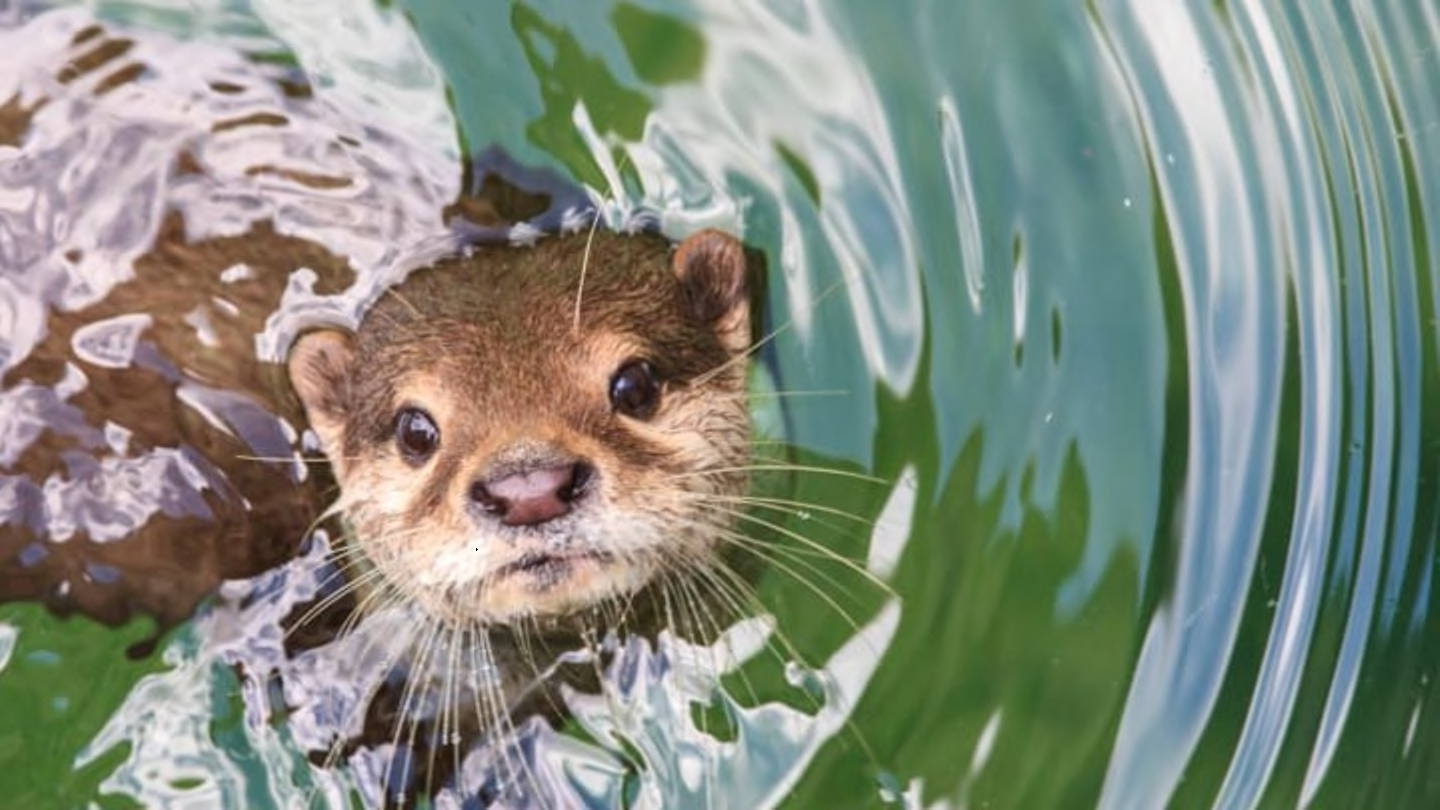
These adorable aquatic mammals are clever, chatty, and oddly aromatic.

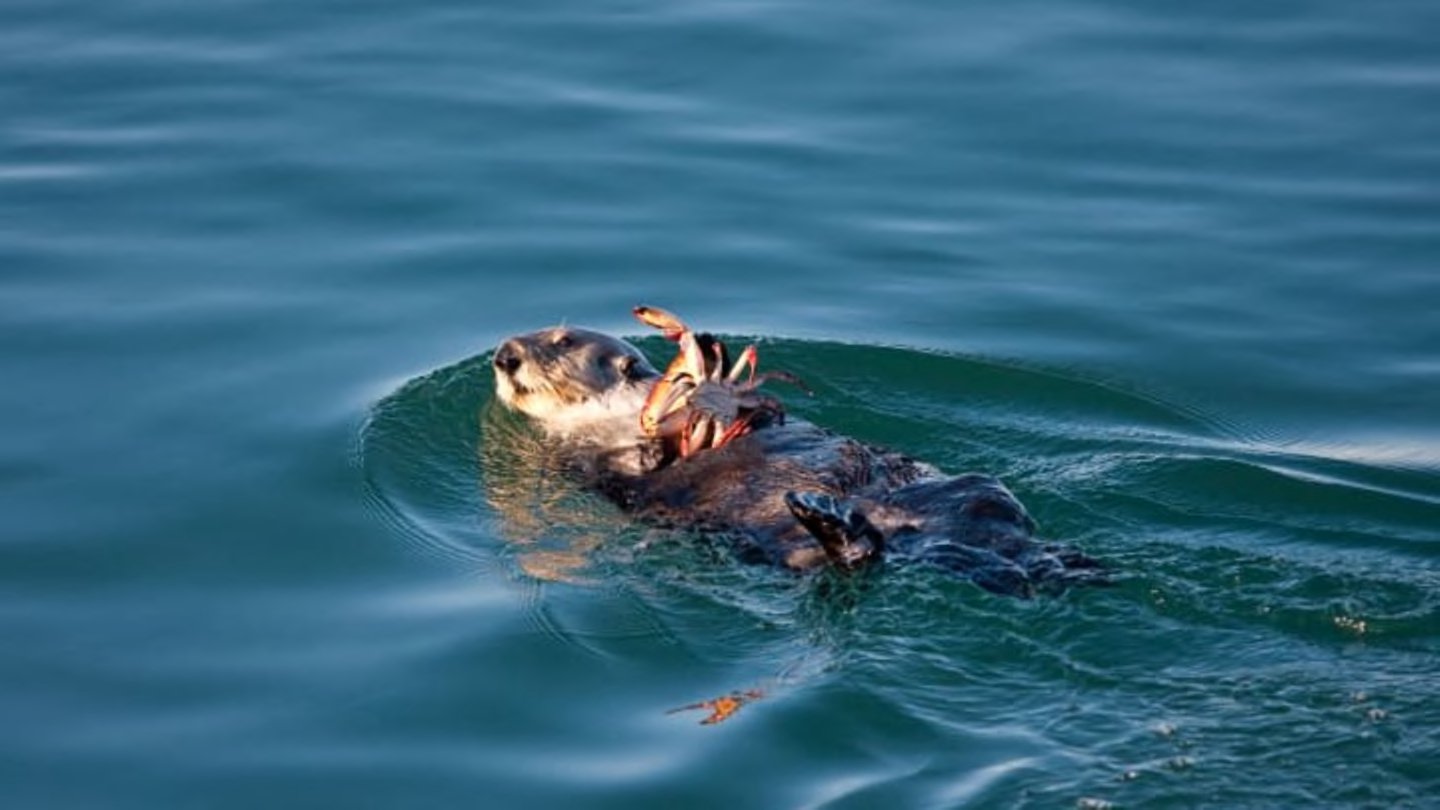
THERE ARE 13 SPECIES OF OTTERS, AND JUST ABOUT ALL OF THEM ARE DECREASING.

Only one otter species seems to be thriving, and that’s the North American River Otter. The other 12 otter species were recently identified by the International Union for Conservation of Nature (IUCN) as having decreasing populations, and five otter species are already on the endangered list. Among the endangered are the sea otters along the Californian to Alaskan coasts, which are threatened by “environmental pollutants and disease agents.” Others, like the marine otters of South America, have had their numbers reduced because of poaching, as well as environmental concerns.

ZOROASTRIANS THOUGHT THE OTTERS TO BE NEARLY SACRED CREATURES.

This ancient religion considered otters to be the dogs of the river or sea and had strict rules forbidding the killing of otters. It was thought that otters helped keep water purified by eating already dead creatures that might contaminate the water source if they were allowed to rot. Zoroastrians would also hold ceremonies for otters found dead in the wild.

OTTERS HAVE VERY DISTINCTIVE POOP, AND THAT SCAT HAS ITS OWN NAME.

Otters use their dung—known as spraint—to communicate with other otters. The mammals like to keep things organized within their communities and will designate certain areas to be used as latrines. Spraint scents can vary, but often are (relatively) pleasant—one expert described them as not “dissimilar to jasmine tea.” Spraint composition is unique to each otter, and the creatures can identify each other by the smells. Scientists suspect otters may even be able to determine the sex, age, and reproductive status of the spraint dropper just from a quick whiff. And since otters have superb metabolisms and can easily eat up to 15 percent of their body weight each day, there’s a lot of spraint to go around.

OTTER MOMS ARE TOTALLY GAME FOR ADOPTION.

In 2001, a female otter at the Monterey Bay Aquarium gave birth to a stillborn pup on the same day a stranded pup was discovered in the wild nearby. The aquarium staff had previously tried raising pups themselves but found that hand-raised otters became too attached to humans to be released back into the wild. So instead, they dropped the pup in with the female otter, and she immediately went into mom mode. The aquarium has since devised a system of hand-rearing pups for the first six to eight weeks—mostly for bottle feeding purposes—before handing the pups off to female otters for raising. At six months, the pups are released back into the wild with generally strong results.

THEY HAVE THE THICKEST FUR OF ANY MAMMAL IN THE ANIMAL KINGDOM.

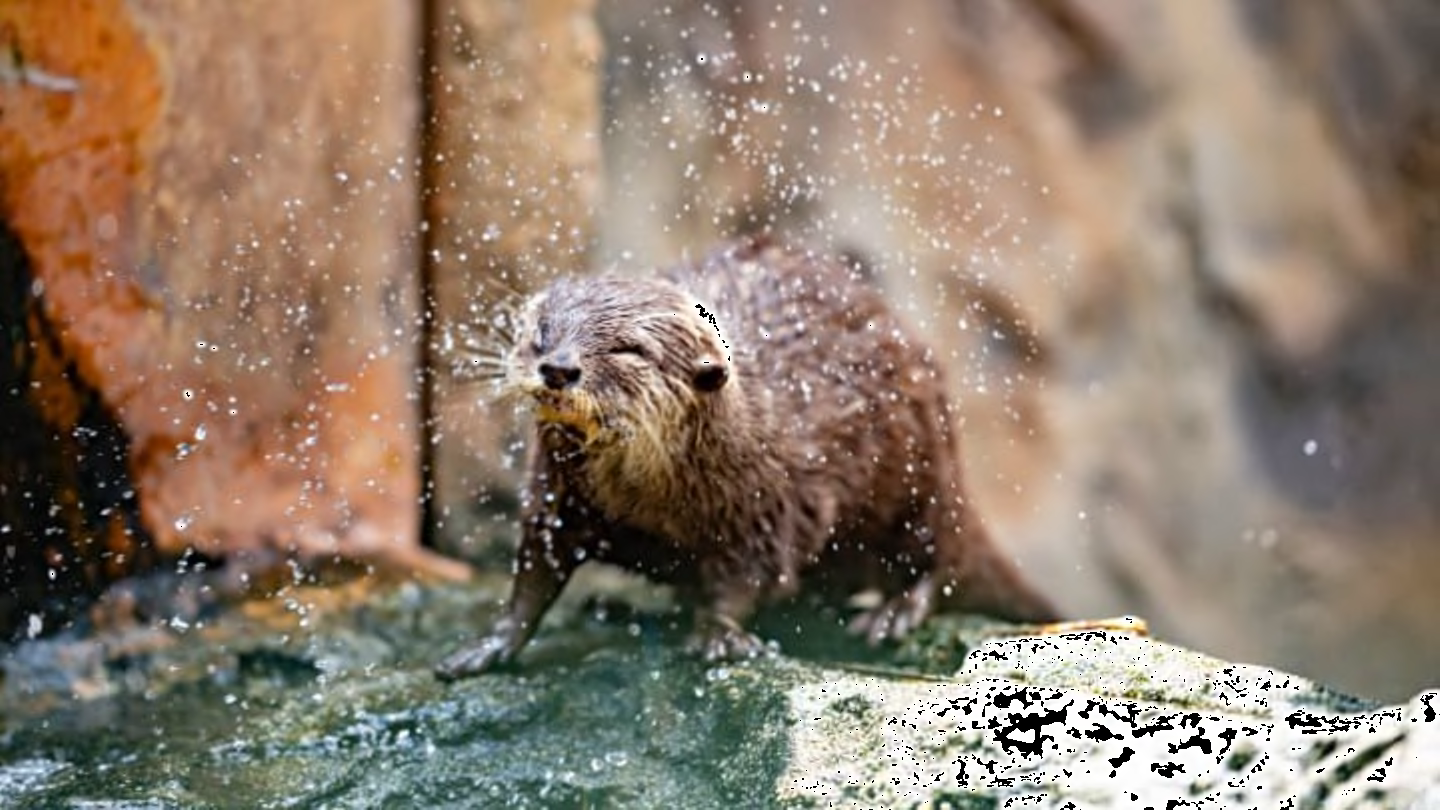
Otters can have up to one million hairs per square inch. There are two layers of fur—an undercoat and then longer hairs that we can see. The layers manage to trap air next to the otter’s skin, which keeps the otters dry and warm and also helps with buoyancy. Otter pups have so much air trapped in there, they actually can’t dive under water, even if they want to.

AN OTTER IS SOMETIMES ONLY AS GOOD AS HIS TOOLS.

Otters love to eat shelled animals, like clams, but they aren’t equipped with the strength to open their food without some help. Therefore, they are big on tools and will often use rocks to help crack into dinner. While they hunt for food underwater, they’ll often store a rock in the skin under their arms for later use.

OTTERS ARE POPULAR IN NATIVE AMERICAN CULTURES, BUT FOR VARYING REASONS.

Some tribes consider the otter to be a lucky animal and a symbol of “loyalty and honesty.” But some, particularly in present-day Canada and Alaska, viewed the river otter “with awe and dread” and associated the creatures with the undead and drowning. Some cultures even forbid eating the creatures and were offended when colonial Europeans began hunting the river otters and selling their furs.

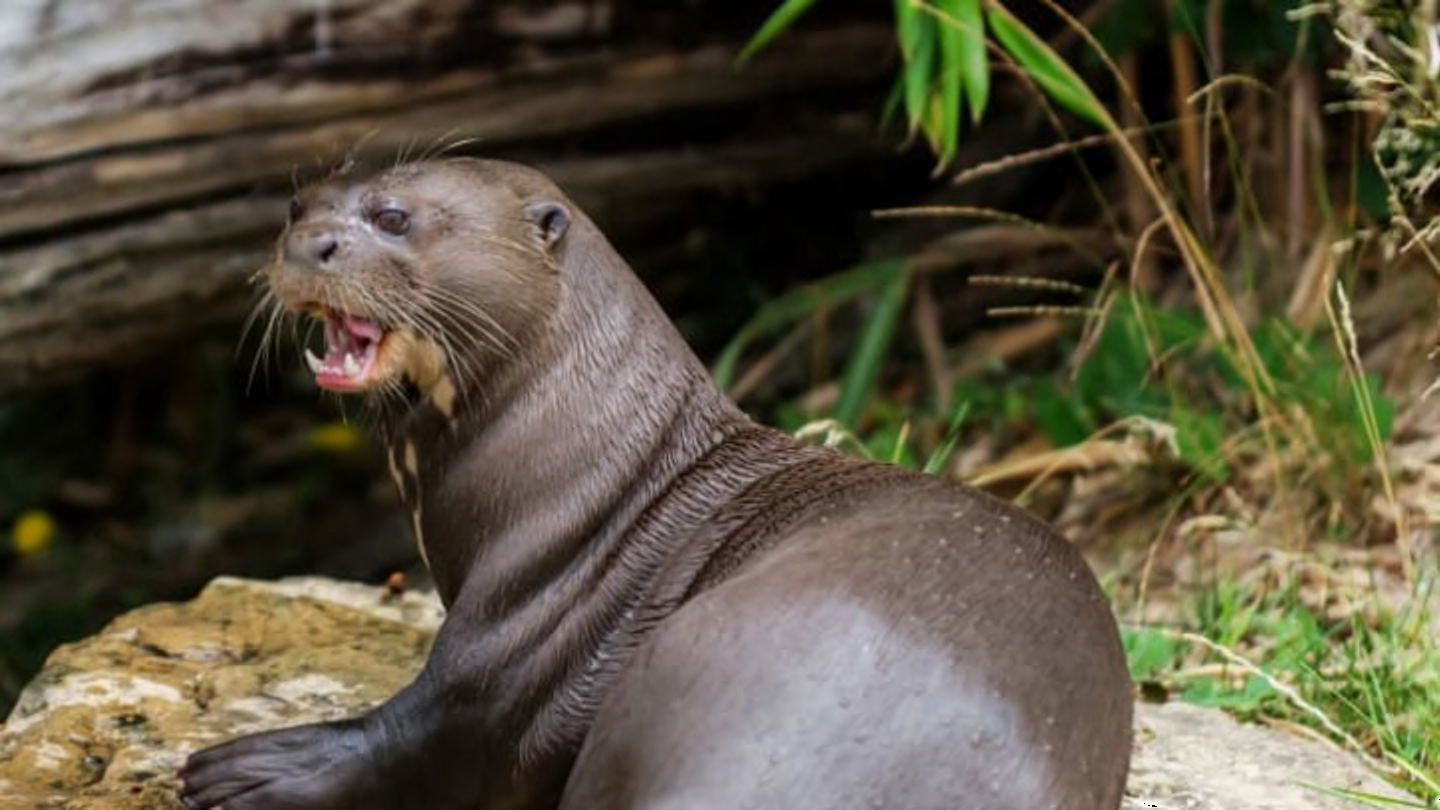
GIANT OTTERS ARE SUPER CHATTY.

In 2014, a study of giant otters found that the river-dwellers have 22 distinct noises they make for different situations. On top of that, pups have 11 of their own calls that they intersperse with “infant babbling.” Among the most notable calls: a “hum gradation” used to tell otters to change directions and a “Hah!” shout when a threat is nearby.

SEE A GROUP OF OTTERS? THAT’S A ROMP. OR A BEVY.

Or a family or a raft. Otter groups go by a few different monikers, all of which are fairly unique to that crew. Generally, a group of otters on land will go by a romp, while a group hanging in the water is called a raft.

OTTERS ARE BIG ON PLAY TIME, AND MAKING SLIDES IS AMONG THEIR FAVORITE GAMES.

Otter families are usually limited to pups and their mothers, and these duos will spend most of their time either feeding or sleeping. In the downtime, though, otters love to play and will often build themselves slides along the banks of rivers.

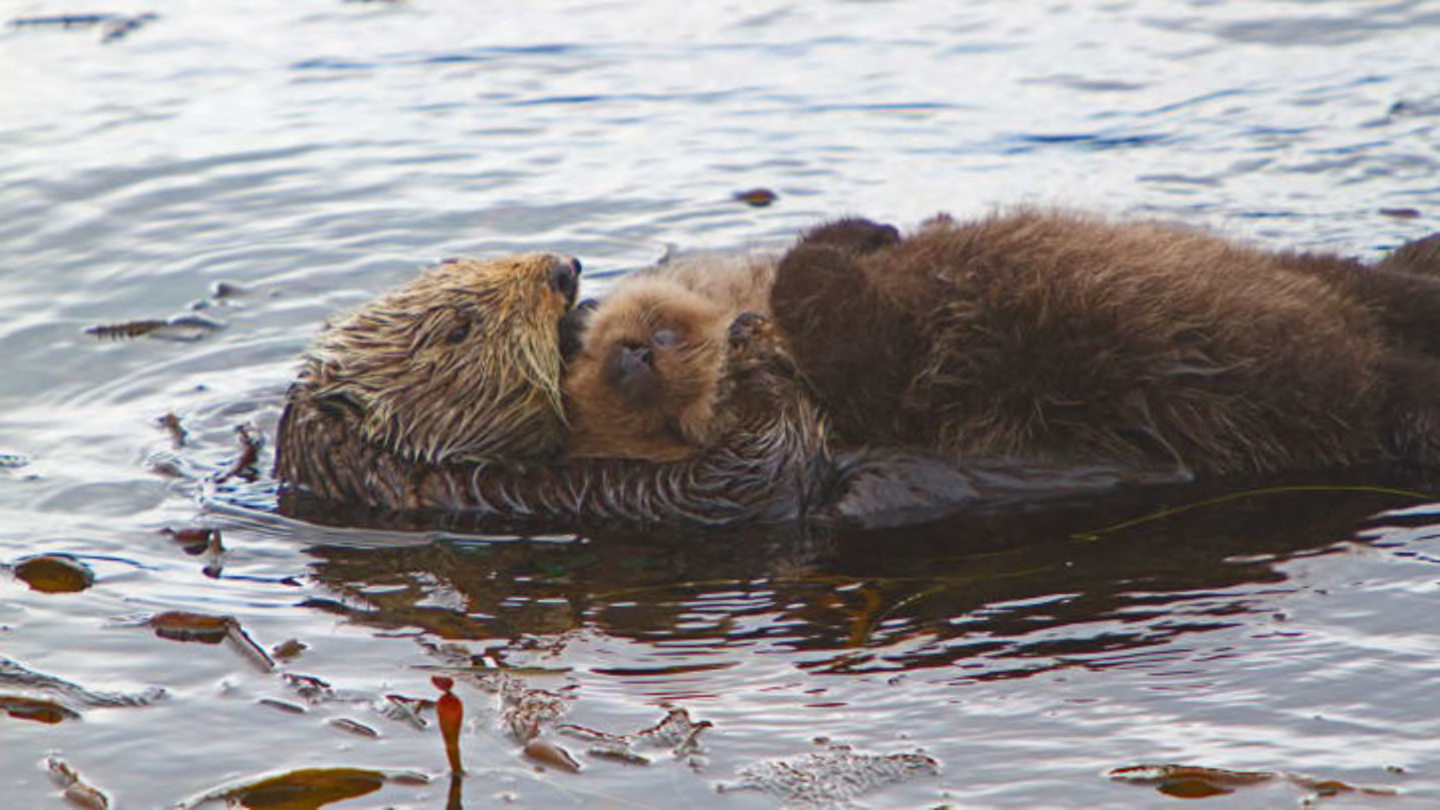
BABY OTTERS ARE BUOYANT, BUT THEY CAN’T SWIM ON THEIR OWN.

A mother will often wrap the babies in kelp to keep them in one place while she hunts. Or, she might rely on human resources and otter ingenuity to find a makeshift “playpen” for her pup.

THEIR BEHAVIOR ISN’T ALWAYS ADORABLE.

Like many animals, otters sometimes behave in ways that aren’t exactly within the bounds of what humans would consider morally acceptable. Even if you find them otherwise adorable, otters’ mating habits will no doubt make your stomach turn.

Male otters’ mating techniques are violent. They bite their female partner’s face during copulation to keep her from slipping away, leaving her with substantial facial wounds. It’s not uncommon for female otters to die as a result of these aggressive encounters, either through drowning or from their wounds becoming infected. Male otters have also been known to violently copulate with other species—most notably, baby seals. The behavior doesn’t stop when the seals die from the trauma. Otters have been known to guard and have sex with the bodies of their victims for up to seven days after they’ve died.

Scientists hypothesize that these seemingly counterproductive mating habits might be the result of a population imbalance. In California’s Monterey Bay, where scientists observed otters trying to copulate with the week-old bodies of dead baby seals, there are far more male otters than females. Facing a lack of female partners, male otters may be engaging in what researchers call “misdirected sexual activity.” The area in the bay where the scientists observed the most otter-on-seal mating sessions was also where there was a high population of transient male otters, ones that, unlike more dominant males, don’t have an established territory filled with potential mates. In the absence of females of their own kind, then, they turned their typical sexual responses toward the seals. Nature, unfortunately, isn’t always pretty.

Lightning Bugs or Fireflies?

This is an article I found on Birds & Blooms discussing lightning bugs!

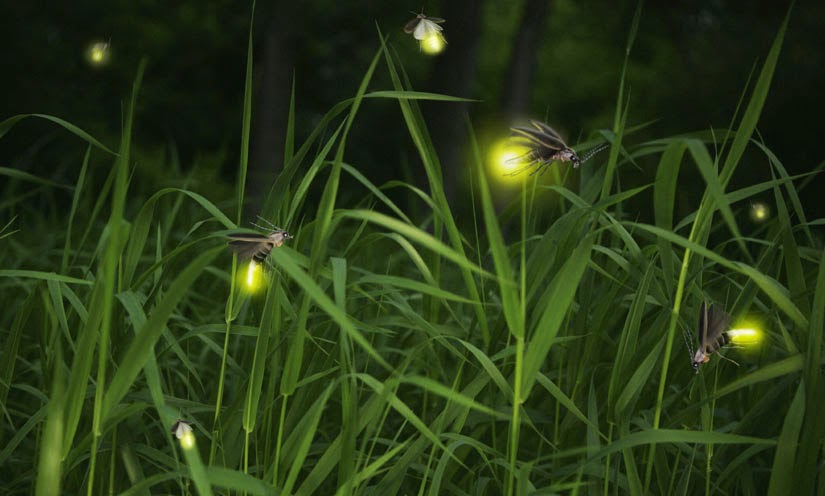
Whether you are lucky enough to see a lightning bug in your backyard or plan to head to a local spot for prime viewing, lightning bugs (aka fireflies) are synonymous with summer. Let’s illuminate some little-known truths about these fascinating, glowing creatures.

Firefly vs Lightning Bug

More than 2,000 species of lightning bugs and fireflies exist worldwide, including 170 in North America. But what’s the correct name? According to Adele Wellman, Allegany region environmental educator for New York State Parks, calling them either fireflies or lightning bugs is fine. “There is no difference between them; they are the same insects,” she says.

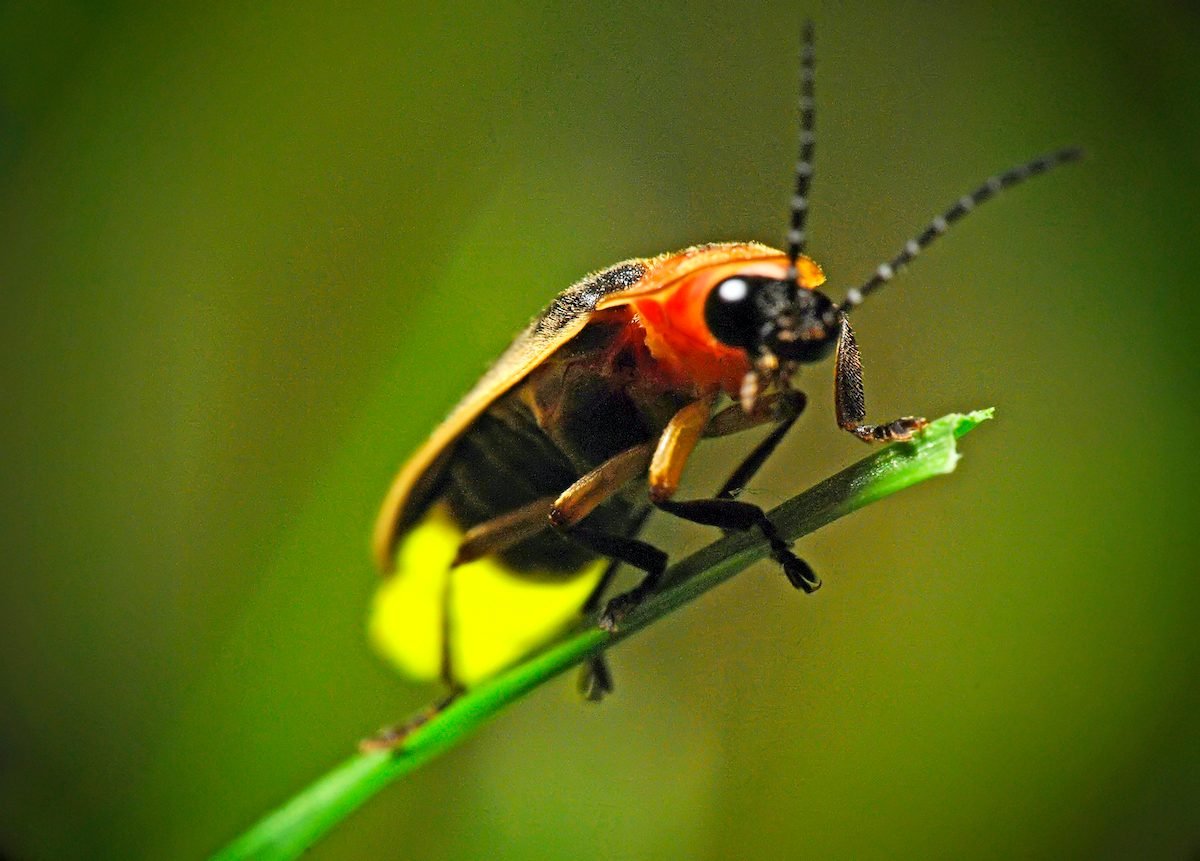
Though both names are correct, these flashers are technically neither bugs nor flies. Instead, they are beetles. Next time you’ve got one in your hands, look closely for hardened wing cases, the elytra. This is a key beetle characteristic.

How Long Do Lightning Bugs Live?

“Fireflies go through complete metamorphosis,” Adele says. “They lay eggs in moist areas, and these hatch in about two weeks. The larvae grow for months, pupate underground or beneath tree bark, and then transform into adults.”

Adulthood is short-lived for these beetles. Most adult fireflies survive for just days or weeks.

What Do Lightning Bugs Eat?

Lightning bug larvae are voracious. Adele says that the small, armored, leggy predators live on earthworms, slugs and snails.

Though some adults do not eat at all, the predatory females in the Photuris genus mimic the flashing patterns of other firefly species to lure and eat males.

How and Why Do Lightning Bugs Light Up?

Not all fireflies flash, but both the eggs and larvae glow. Scientists think this is a hint to leave young fireflies alone—a clear warning to would-be attackers of their potentially bitter taste. Adult firefly abdomens have light-producing organs. Within these lanterns, chemicals, enzymes and other compounds mix to produce light.

The blinking rates can help identify different species. “It may take a while for your eyes to adjust, but when they do, note how many different flash patterns you see,” Adele says.

Some Lightning Bugs Flash in Unison

One fascinating type of firefly flashes in unison. In the U.S., these synchronous fireflies were once thought to live only in the Smoky Mountains, but recently they’ve been discovered in other pockets along the Appalachians.  Synchronous fireflies prefer mature, dark forests, according to Adele. One of her favorite programs at Allegany State Park is leading firefly trips that include viewing synchronous species.

When Do Lightning Bugs Come Out?

With so many species worldwide, lightning bugs are found in many habitats, including deep woods, meadows, marshes, swamps and fields. They often like to be near water sources.

“They prefer hot and humid nights,” Adele says. “Heavy rains or cooler temperatures cause them to slow their flash.”

Light hampers fireflies’ ability to see one another, so these bright beetles seek out dark areas. The summer viewing season begins as early as May and lasts until September—peak watching coincides with the warmest months of the year.

Source: Birds & Blooms