Patriotic Bettas

Betta fish are one of the most popular aquarium fish around the world, known for their vibrant colors and unique personalities. Among the many different types of betta fish, the red white and blue betta is a particularly stunning and sought-after variety.

These fish are named for their bright red, white, and blue coloring, which can come in a variety of patterns and shades. Whether you’re a seasoned aquarium owner or just starting out, these colorful fish are sure to make a stunning addition to any tank.

All About Red White and Blue Betta Fish

If you’re looking for a stunning addition to your aquarium, the red, white, and blue betta fish is an excellent choice. These fish are known for their bold colors and captivating personalities. In this article, we’ll explore everything you need to know about caring for red, white, and blue betta fish.

Appearance of Red White and Blue Betta Fish

Red, white, and blue betta fish are strikingly beautiful creatures. These fish are known for their vibrant colors, which can range from deep red to bright blue. The patterns on their fins and bodies can vary, but they typically feature stripes, spots, or intricate designs.

In terms of size, red, white, and blue betta fish are relatively small. They typically grow to be around 2.5 inches long, making them an ideal choice for smaller aquariums.

If you’re considering adding a red, white, and blue betta fish to your collection, you’ll want to make sure your aquarium is set up to showcase their beauty. Consider using a dark substrate and adding plenty of plants and decorations to create a visually appealing environment.

Caring for Red White and Blue Betta Fish

Like all fish, red, white, and blue betta fish require proper care to thrive. Here are some essential things to keep in mind if you’re considering adding one of these fish to your aquarium:

Water Quality: Betta fish are sensitive to changes in water quality, so it’s crucial to keep their environment clean and well-maintained. Test the water regularly and perform partial water changes as needed.

Diet: Red, white, and blue betta fish are carnivorous and require a diet rich in protein. Feed them a variety of foods, such as pellets, frozen or live brine shrimp, and bloodworms.

Temperature: Betta fish are tropical fish and require a consistent water temperature between 76-82°F. Use a reliable heater to maintain the correct temperature.

Compatibility: Betta fish are known for their aggressive behavior, so it’s important to choose tankmates carefully. Avoid keeping multiple bettas in the same tank, and choose peaceful species that won’t nip at their fins.

Conclusion

Overall, red, white, and blue betta fish are a stunning and captivating addition to any aquarium. With proper care and attention, these fish can thrive and provide you with years of enjoyment. Whether you’re an experienced fishkeeper or just starting, consider adding a red, white, and blue betta fish to your collection.

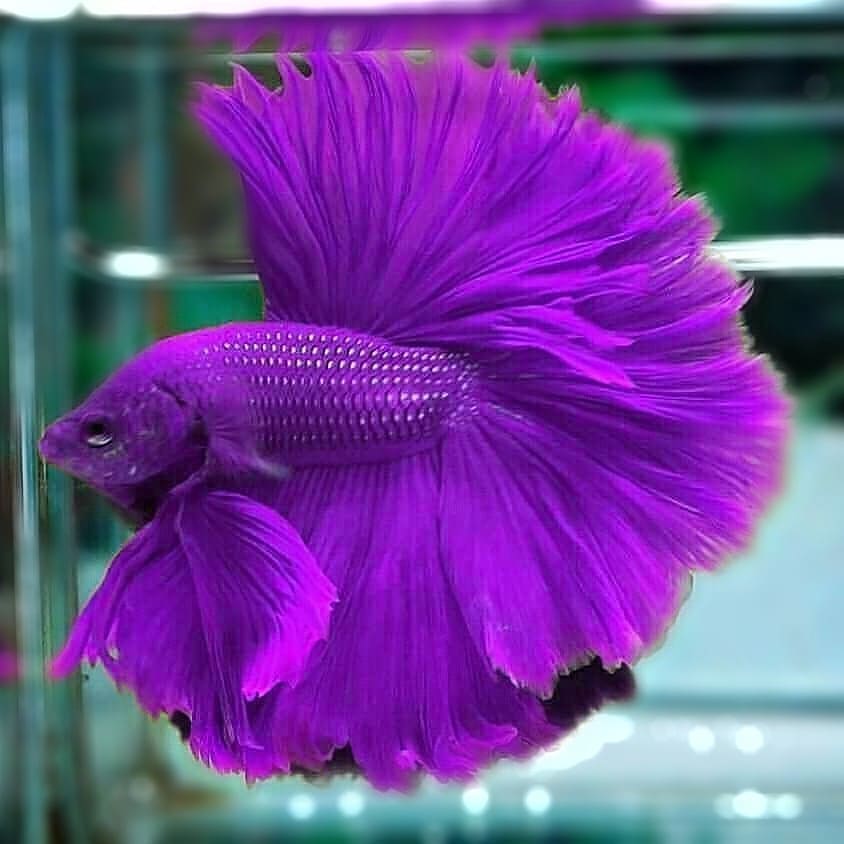
Purple Betta Fish

True purple bettas are a rare and coveted treasure in the fishkeeping world. Finding a betta with a genuine, deep purple coloration is almost unheard of, making them incredibly valuable.

Often, bettas marketed as “purple” will have shades of blue, red, or lavender. While these shaded purples are still quite rare and beautiful, they won’t command the same astronomical prices as a true, solid purple betta. Even these shaded varieties are considered prized and can be quite expensive to acquire.

Why Are Purple Bettas So Rare?

The allure of a pure purple betta lies not only in its stunning beauty but also in its rarity. This captivating color isn’t a natural occurrence in the betta world. It’s the result of a fascinating interplay of genetics and selective breeding.

The Genetic Puzzle

True purple bettas owe their unique coloration to a rare genetic mutation. This mutation doesn’t occur frequently, making it incredibly difficult to breed for. While breeders can increase their chances of producing purple bettas by focusing on lines with blue, pink, and red coloration, the final outcome remains a matter of chance.

A Matter of Luck

There’s no guaranteed formula for breeding a pure purple betta. It’s essentially a lottery, with the odds stacked against breeders. Even with careful selection and meticulous breeding practices, the appearance of a true purple betta is often a delightful surprise.

The Allure of Shaded Purples

While true purple bettas are a rare gem, their close relatives, the blue-purple bettas, are slightly more common but still quite elusive. These fish also carry the rare genetic mutation, resulting in a stunning blend of blue and purple hues. However, even these shaded purples remain prized possessions for betta enthusiasts, reflecting the challenges of breeding for this unique color.

The rarity of true purple and blue-purple bettas underscores the intricate world of betta genetics. These stunning colors are a testament to the artistry of nature and the dedication of breeders who strive to preserve and enhance these rare and captivating traits.

How To Take Care of Purple Betta Fish

In the vibrant world of betta fish, where colors burst forth in dazzling displays of reds, blues, oranges, and greens, a truly unique and captivating hue stands out: purple. But unlike the more common colors, true purple bettas are not a natural occurrence. They are the result of a captivating interplay between genetics and the careful hand of breeders.

Unveiling the Genetic Mystery

The secret behind the purple betta’s mesmerizing color lies in a rare genetic mutation. This mutation doesn’t occur frequently, making it a true treasure in the betta world. While breeders can increase their chances of producing purple bettas by focusing on lines with blue, pink, and red coloration, the final outcome remains a matter of chance. It’s like a genetic lottery, with the odds stacked against them.

The Quest for Purple Perfection

Imagine the dedication of breeders who meticulously select and pair bettas with the best possible genetics, hoping to coax out that elusive purple hue. They spend countless hours observing their fish, meticulously recording their lineage, and carefully analyzing their offspring. Their goal is to unlock the secrets of the purple gene, hoping to create a line of bettas that consistently produce this sought-after color.

The Allure of Shaded Purples

While true purple bettas are a rare gem, their close relatives, the blue-purple bettas, are slightly more common but still quite elusive. These fish also carry the rare genetic mutation, resulting in a stunning blend of blue and purple hues. They may not be a solid purple, but they possess a captivating charm that makes them highly sought-after by betta enthusiasts.

The Price of Rarity

The rarity of true purple and blue-purple bettas translates into a significant price tag. These fish are considered prized possessions, reflecting the dedication of breeders and the challenges of breeding for this unique color. Their value is a testament to the artistry of nature and the dedication of those who strive to preserve and enhance these rare and captivating traits.

How Much Does a Purple Betta Fish Cost?

The rarity of purple bettas, both true purple and blue-purple, naturally translates into a higher price tag compared to your average betta. The price you’ll pay will depend on the specific shade and the breeder’s expertise.

While still considered rare, blue-purple bettas are generally more readily available than their true purple counterparts. You can typically find these stunning fish for around twenty dollars from reputable breeders and online retailers. This price point makes them a bit more expensive than your average betta, but still a reasonable investment for those seeking a unique and beautiful fish.

Conclusion

As you’ve journeyed through the world of purple bettas, you’ve discovered the captivating story behind these rare and beautiful fish. From their unique genetics to the challenges of breeding them, you’ve gained a deeper appreciation for the allure of this captivating color.

SOURCE: BETTAFISHINFORMATION.COM

New Mexico State Mammal: Black Bear

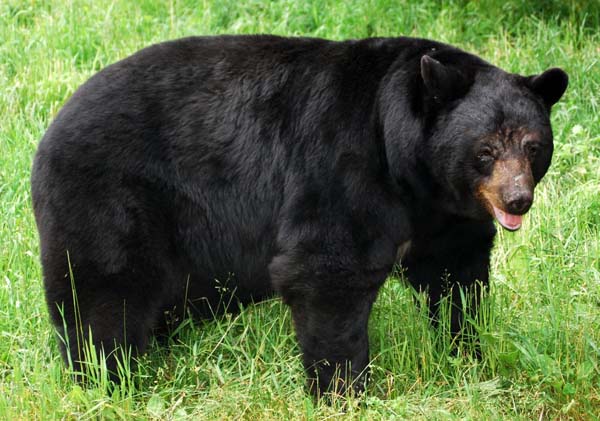
The American black bear, more commonly known simply as the black bear, is the smallest of the 3 bear species found in America. The brown or grizzly bear and the polar bear are larger in size, however the black bear is still a huge mammal. They can measure up to 7 feet in length and males can weigh over 400kg. When standing on their hind legs, they can reach a height of around 7 feet, although females are usually smaller and shorter than males.

Black bears can be distinguished from brown bears by their smaller size, longer ears and lack of a shoulder hump. Black bears also have shorter, more curved claws and are generally more timid animals. Typically they are black in color but depending on their location, their fur can be dark or light brown. Black bears are found throughout North America but are more abundant in the northern states. Unlike brown bears, they prefer more densely forested habitats and rarely venture into open areas for long periods of time.

Interesting American Black Bear Facts

1. They are not always black in color

Some black bears can be a very light brown (or cinnamon) color and very rarely, completely white.

2. Black bears are shy and timid

Black bears will usually run away or climb up a tree rather than confront humans. This is mostly true but some individual black bears can be very aggressive, especially when threatened. They are however much less likely to attack compared to the brown or grizzly bears, which tend to be less weary and less approachable. Both these species, as well as the polar bear, will usually move on when left alone and black bears especially tend to flee when confronted by people.

3. They can eat over 10,000 berries in a day

When food is abundant, black bears will eat as much food as they possibly can, sometimes over 8kg of fruit and berries in a day. When berries and fruits are abundant, black bears will move to these areas and feed almost exclusively on these. They have an excellent sense of smell and this helps them locate ripening berries, nuts and fruits as well as bee hives, where they feed on the honey and bee larvae. 

4. Black bears are skilled climbers

Black bears are excellent climbers and can easily access nuts and fruits before they fall to the ground. They have sharp, curved claws and this not only helps them when climbing but also makes ripping into trees logs or upturning boulders when searching for insects much easier. As well as being expert climbers, black bears are great swimmers and will cross fast flowing rivers to reach food on the other side.

5. They are incredibly strong animals

Black bears are up to 5 times stronger than the average human being.

6. American black bears are highly dexterous

They are capable of opening screw-top jars and manipulating door latches.

7. Their diet is predominantly vegetarian

Although they do eat meat, almost 70% of their diet is made up of plant matter.

8. Their sense of smell is 7 times more sensitive than a domestic dog

While American black bears have extremely sensitive noses, their eyesight and hearing is more comparable to that of a human.

9. Black bears are fast runners

Sprinting at around 40-50km/h, black bears can easily outrun humans.

10 They are mostly quiet animals

Although they tongue-click and grunt to communicate with one another, black bears do not growl or roar. 

11. They den in spots that are well hidden

Black bear dens are usually made in caves, under tree roots or are dug into hillsides.

12. Females usually give birth during the hibernation period

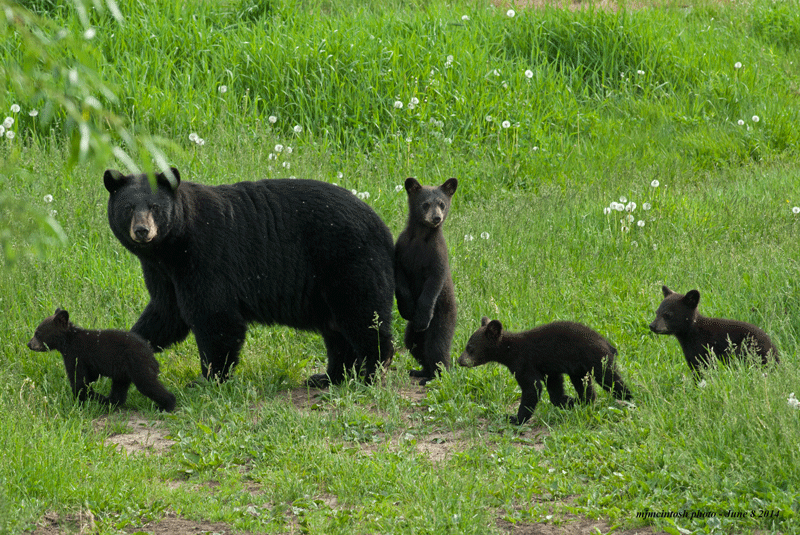
During the breeding season, a male and female will remain together until just before the cubs are born. Females usually give birth in their den while in torpor; a similar state to hibernation. The cubs will then feed off their mother’s milk while she hibernates until spring arrives.

Usually two cubs are born and they leave the den for the first time when their mother comes out of hibernation. Female black bears teach their cubs how to find food and survive in the wild until the cubs are around 17 months old and become fully independent. The father of the cubs does not actively help in raising his offspring but does protect the territory from other males, who may attack the cubs.

13. Black bear cubs are playful animals

Cubs will regularly wrestle and play with each other as well as their mother. This helps them develop essential skills to survive in the wild.

14. Black bears are very intelligent

Black bears can memorize their whole territory, they can make scratching sticks out of twigs and can easily break into locked food storage containers.

15. There are black bear hybrids

American black bears can reproduce with other bear species and produce hybrid offspring. Black bear and grizzly bear hybrids have been reported in the wild.

16. They are a key contributer to the ecosystem

Black bears are important contributors to the ecosystems in which they inhabit. Due to their large size they create micro-ecosystems where they leave deep footprints or break small trees and plants. They are also key in controlling insect populations as well as important seed disbursers, encouraging new plant growth wherever the seeds in their stools germinate. Black bears also have very large home ranges which means they can increase plant diversity by travelling long distances and disbursing seeds which otherwise may not have reached or germinated in that area.  

SOURCE: FACTANIMAL.COM

Hoatzin

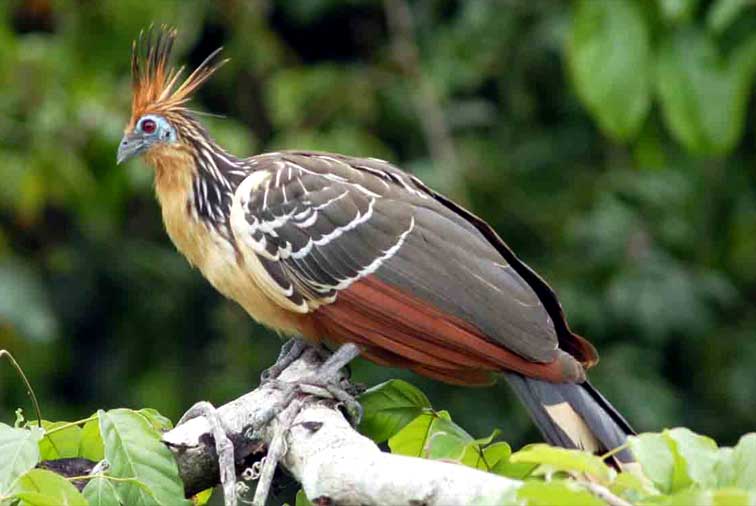
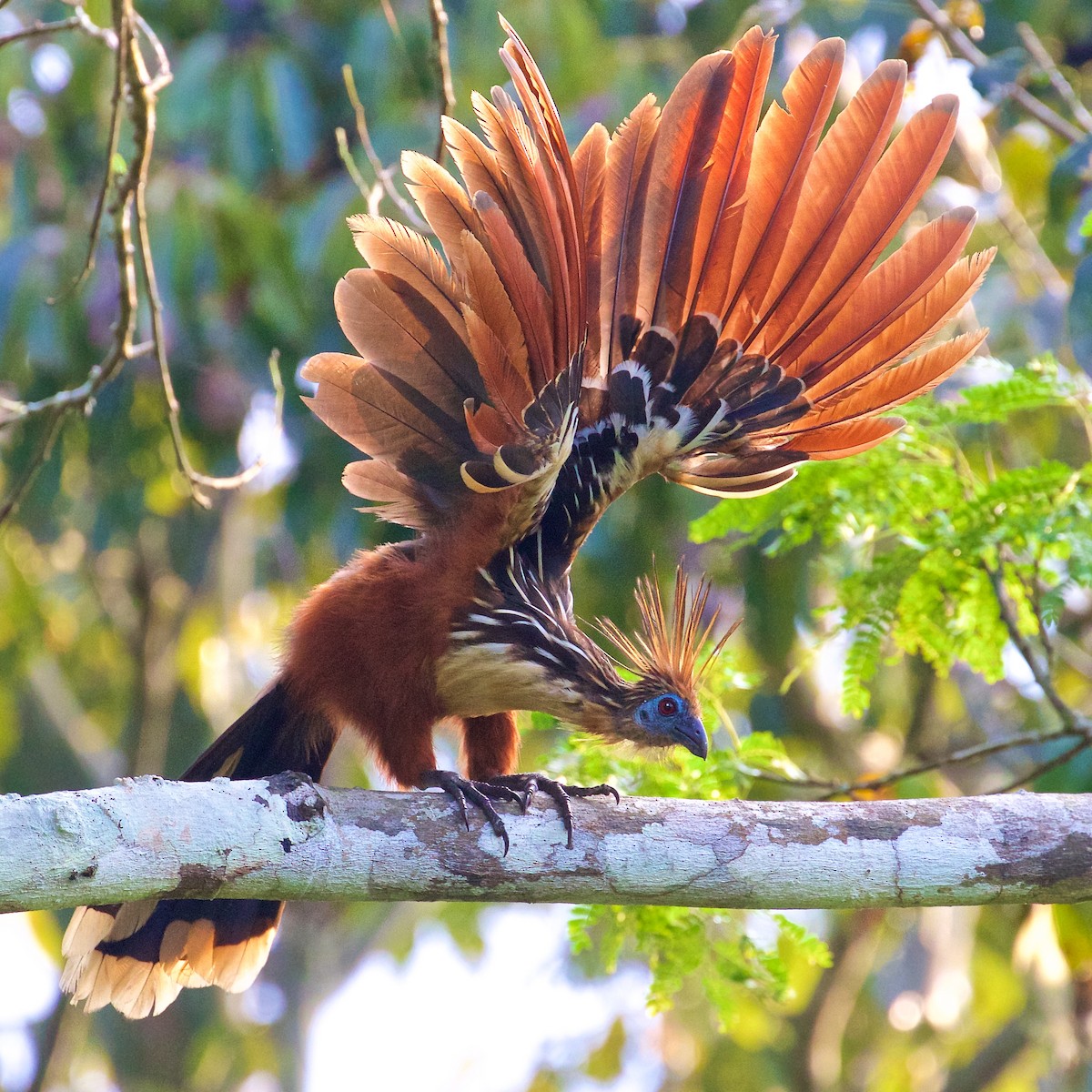
The Hoatzin, pronounced ‘Hwat-zin”, is a peculiar tropical bird species found in South America, that has puzzled taxonomists for as long as it’s been observed. They are the only member of their genus Opisthocomus, which comes from Ancient Greek and translates to ‘wearing long hair behind’, in reference to their striking large crest. Hoatzin inhabit swamps, riparian forests, and mangroves of the Amazon and the Orinoco basins, where they spend their time eating leaves, as well as the occasional flower and fruit. They grow up to around 65cm in length, or roughly the size of a pheasant. They are sometimes referred to as the ‘Canje pheasant’, or the skunk bird, or reptile bird. They have some very primitive characteristics and isn’t the most agile for a flying bird up in the trees, but it does well with its loud voice and clever defense mechanisms. It also has a gut that resembles that of a farm animal. 

Interesting Hoatzin Facts

1. Nobody knows what it is

Hoatzin is quite clearly a rapper’s stage name, and this goes some way to obscuring the true lineage of its ancestors. While recent research has narrowed things down a lot more, this bird has been placed among chickens, cuckoos, and various other clades in an attempt to figure out just what’s going on here. 

2. This chick’s got claws

One thing that makes it peculiar is the claws present in the wing tips of the young birds. Hoatzins build their nests over water, and the young are clumsy little things. Having clawed hands helps them clamber through the branches and occasionally fight off eagles. 

3. And a serious set of pipes

These are loud birds. Their most common call is a huff that sounds somewhere between a gorilla and a wood saw, and it’s a grating, noisy affair that carries across the rainforest. They’re also capable of groans, croaks, hisses and grunts, which they use in different contexts. When threatened by a predator, adults will flap about making all manner of alarm calls, using their outstanding voices to overwhelm and confuse their foes as the young try to fend it off with their finger talons. Even when they’re not agitated, they seem to wander about loudly huffing.

4. They’re leaf-eaters

Even their diet is unusual. There are very few birds that eat exclusively leafy vegetation, and this is one of them. While it’ll go for some fruit on occasion, the diet of a hoatzin comprises almost entirely of leaves. One of the ways they make this work is by having an equally-uncommon digestive system. 

To help balance itself on the branches, the hoatzin uses a leathery bump on the bottom of its crop.

5. They’re ruminants

Most birders don’t spend a lot of time cutting into bird guts the way they might with a cow or a goat, and this may explain why it’s only recently been discovered that some birds are also ruminants. Ruminants are traditionally hooved animals with multiple stomachs, capable of extracting the majority of useful nutrients from roughage in a process that involves fermentation, chewing their own puke, and various stomach sacs and digestive stages.  But the Hoatzin has shown us that it’s not just a perk of certain mammalian digestive systems, birds can do this too. At least, the Hoatzin can, and at least two other species, discovered since this was found out. The necessary gut bacteria for foregut fermentation in hoatzins comes, as is often the case, via a gooey, bacteria-ridden parcel, regurgitated into its mouth by a parent. This discovery has further scrambled the bird’s possible taxonomic lineage. 

6. The are pretty stinky!

The hoatzin is also known as the ‘stink bird’ or ‘skunk bird’, as it’s said they smell like fresh cow manure. Due to their diet and digestive system similar to cows, their meals ferment in their stomachs. Its strong scent serves to deter predators as well as to attract mates.

7. They suck at flying

All this extra gut makes them a weighty bird. The crop alone can be 17% of its body weight, and to make space for this extra digestive stuff, the flying muscles are small and reduced. It can fly, but much like a chicken, it’s far more adept at flapping about loudly. When full of food, they rest their extended belly on the branch to take a load off.

8. It might be one of the most primitive flying birds in existence

Most people understand that birds descended from dinosaurs, but it’s a little-known fact that birds are dinosaurs. Of all the lineage of dinosaurs that existed 66 million years ago, only one survived: the therapods. By this time, dinosaurs had long had feathers, and many could probably fly. It’s thought archaeopteryx could get some serious air as far back as 150 million years ago, so avian dinosaurs had long been in the making by the time of the extinction. Of course, after the extinction event, about a gazillion new niches opened up for the survivors, so evolution quickly set to work modifying everyone to fill them. One hypothesis for the origin of Hoatzin was that it diverged around this time, with its ancestors showing up around 65 million years ago. This could make it one of the most ancient birds in existence. And the claws on its hands definitely corroborate this – ancient birds like archaeopteryx had these too! Though these may have disappeared and reappeared over the course of the animal’s evolution.

9. They can swim

If you thought dragging themselves around on dinosaur claws wasn’t weird enough, hoatzin chicks have another trick up their wing. While the claws can be used in defense, if that doesn’t go to plan, they can drop out of the nest and into the water below, a medium they’re quite comfortable swimming in, submerged, until the threat is gone. 

10. They’re doing ok for now, but populations are declining

The sheer size of the Hoatzin’s range gives it an ecological advantage, and population numbers look good; though there’s no set estimate for just how many there are. However, the population is decreasing, and though this doesn’t spark concerns in terms of conservation just yet, it’s possibly a sign of worse to come. Populations of animals will naturally fluctuate and can often bounce back or stabilize, but the hoatzin is projected to lose around 20% of its habitat over three generations, and the factors affecting this aren’t going away any time soon.  Locally, they’re eaten by humans, and internationally they’re subjects of illegal pet trading. Still, for now, they’re not close to becoming threatened.

11. The hoatzin is the national bird of Guyana

Guyana is a country on the northern mainland of South America. They can be found throughout the year in the country – along the Berbice River and its tributary, the Canje Creek, and to some extent, on the Abary, Mahaicony and Mahaica Rivers. 

SOURCE: FACTANIMAL.COM

New York State Flower: Rose

Meet Rose

Since 1955, the official state flower of New York, the rose exquisitely captures the essence and variety of the Empire State. New Yorkers have a particular place in their hearts for this treasured bloom, which is renowned for its brilliant colors and captivating scent. It speaks not only of beauty but also of strength and resilience—qualities that speak to the active culture and rich legacy of the city.

History and Why It Was Chosen as a State Flower

Rose History

The journey of the rose to its status as New York’s state flower is quite fascinating. Officially assigned on June 24, 1955, the rose took place of the less known daisy. This selection represented the flower’s great popularity in gardens all throughout the state and its close ties to New York’s past. Originating in Asia, the rose has thrived in the several climates of New York, fittingly symbolizing the state’s open and inclusive character.


State Flower Choice

Officially assigned on June 24, 1955, the rose took place of the less known daisy. This selection represented the flower’s great popularity in gardens all throughout the state and its close ties to New York’s past. Originating in Asia, the rose has thrived in the several climates of New York, fittingly symbolizing the state’s open and inclusive character.

Biological Information

Rosa is the scientific name for the rose; the Rosaceae family is where it belongs. Red, pink, yellow, and white are just a few of the hues this flowering shrub comes in. Its bright green leaves and prickly stems are well-known. Roses are a sensory feast since their sizes and forms vary from small, delicate blossoms to bigger, more amazing variations.

Roses benefit from abundance of sunlight and like well-drained ground. They proliferate in public parks as well as in private settings and in New York’s urban gardens. Regular watering—especially in dry conditions—helps to maintain their bright appearance and health.

Blooming Period

One of the most anxiously anticipated seasons in New York is rose bloom time. Roses usually bloom late spring to early fall, with best beauty visible from June to August. The length of the blooming would vary according on the type and environment from few days to many weeks. The longevity of the blossoms depends mostly on factors including temperature, sunlight, and waterings methods.

Meaning, Symbolism, and Representation

Roses carry profound symbolic meanings, representing love, passion, and beauty. In New York, they are woven into the fabric of the state’s traditions, appearing in festivals, weddings, and celebrations. The rose serves as a reminder of the enduring spirit and charm that define New York.

Beyond their aesthetic beauty, roses symbolize resilience and hope. They flourish in parks, gardens, and backyards, serving as a testament to the vibrant life and creativity that characterizes New York.

SOURCE: MYGLOBALFLOWERS.COM

New Mexico State Flower: Yucca

Fun Facts about Yucca:

1. A Desert Survivor

Yucca plants are renowned for their ability to thrive in some of the harshest conditions. With their sword-like leaves and formidable spikes, yuccas are uniquely adapted to the arid desert environment.

These plants have evolved to conserve water by reducing the surface area of their leaves, making them ideal inhabitants of New Mexico’s dry climate. Their resilience in the face of adversity has made them a symbol of survival and adaptability.

2. Distinctive Features

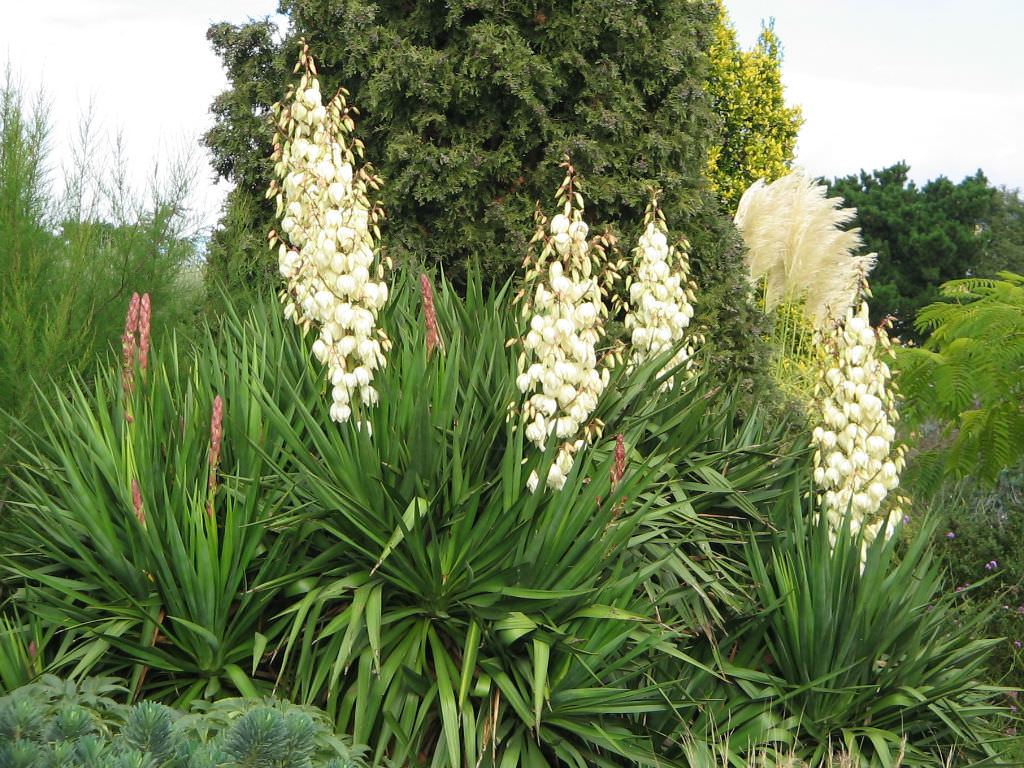
Recognizing a yucca is relatively easy due to its distinctive appearance. Yucca plants typically have long, pointed leaves that can range from green to bluish-gray in color. Some varieties produce spectacular flowering stalks that shoot up from the center of the plant, bearing clusters of creamy white or pale yellow blossoms. These blooms often emit a sweet fragrance, attracting pollinators like yucca moths.

3. Edible and Medicinal Uses

Yucca is not just a survivor in the wild; it’s also an essential resource for humans. The plant’s edible flowers, fruit, and stems have been consumed by Native Americans for centuries. Yucca flowers are a delicacy when cooked, and the fruit pods can be roasted or ground into a nutritious flour. The roots of some yucca species contain saponins, natural compounds with cleansing properties, which have been used in traditional medicine for various purposes.

4. Landscaping 

The yucca plant’s unique beauty makes it a sought-after addition to xeriscaped gardens and desert landscaping. Its architectural form and low-maintenance requirements have made it a staple in New Mexican gardens, where it thrives with minimal water. However, it’s crucial to be mindful of preserving wild yucca populations, as some species are slow-growing and susceptible to overharvesting.

5. Yucca and Native American Culture

For centuries, yucca has held a significant role in Native American cultures across the Southwest. Indigenous communities have utilized various parts of the yucca plant for practical and spiritual purposes. The leaves of the yucca were woven into baskets, sandals, and even clothing, showcasing the plant’s versatility. Additionally, yucca’s durable fibers were used to create cordage and rope. In some cultures, the yucca plant holds symbolic importance, representing strength, protection, and resilience.

Green Jay

12 Facts about Green Jays

1. Males and females look similar. 

Both males and females have the same plumage and brilliant green feathers. The ombre of yellow-green, blue, and black is striking. This bird can blend in with light green foliage or stand out against a backdrop of coastal brush. The Green Jay’s head is black with blue accents around its eyes. Small blue feather tufts perch like eyebrows over its eyes. A blue stripe comes down the front of its head and adorns its cheeks. The body is blue, green, and yellow. It has a greenish back, wings, and tail, but the underside is pale yellow. 

2. The only place in the United States to see them is Texas.

The Green Jay is a thoroughly tropical bird. Most of their population is found along Mexico’s east and west coasts, and the Yucatan peninsula to Honduras. However, the very northern edge of their range reaches into the southern tip of Texas, where they are considered a South Texas specialty. Green Jays don’t migrate, so you can expect to see them year-round within their range. They will shift around between breeding and feeding sites, however, in order to capitalize on the growing season. 

3. They travel in flocks. 

Green Jays are the opposite of solitary birds. They almost always live in pairs or family groups that contain a nesting pair, their new young and the previous seasons young. When feeding, the flock can send out a few birds as lookouts for predators. Other birds work as scouts to identify new food sources. Once the young males in the group get to be a year or so old, the adult male will chase them off, forcing them to break from the group and go establish their own.

4. They have complex social networks.

Green Jays are very family-oriented. Most flocks of Green Jays are related to each other in some manner. Once a mated pair’s young fledge, they stay with their parents’ flock for about a year. During this intermediate period, they learn techniques to forage for food, ways to defend territory, and how to use tools. To greet their elders, they call to them and hop up and down on their perches. 

5. There are two similar populations that are often lumped together.

Scientists recognize two separate populations of Green Jay. The first, which we are discussing in this article, lives in Mexico and southern Texas. A second group called “Inca Jays”, with a slightly different look, lives in a strip of habitat along the Andes Mountains from north-central South America south to Bolivia. They are separated by about 900 miles.  Sometimes these are listed as separate species, and sometimes the Inca’s are looked at as a subspecies of the Green Jay. These two populations have slightly differently colored feathers. Inca Jays are similar to the Green Jays, but their underparts are brighter shades of yellow. Instead of having blue on the top and back of their head, they have white. 

6. They can be attracted to bird feeders with moderate effort. 

It’s simple work to entice Green Jays to your yard, but be careful. If there’s one Green Jay there, there will probably soon be several more! These birds are not picky and will eat almost any kind of seed or suet. Similar to Blue Jays, they prefer large nuts like peanuts. 

7. Parents work together to raise their young. 

Males and females mate for the long term. While it is not known if these birds mate for life, the interconnectedness of their family relationships suggests that long-term partnerships are at least common. After the male woos the female with mutual preening, soft burbling noises, and spending time one-on-one, they build the nest together. Texas populations select brushy thickets and favor mesquite. The young often patrol the outer reaches of the territory, which can reach over 40 acres! 

8. Their behavior is similar to Blue Jays and Steller’s Jays. 

Like Blue Jays and Steller’s Jays, Green Jays are not very afraid of humans or their developments. While Blue Jays are more common in suburban areas, all three species are commonly seen at campsites and rural parks. They will beg for food and scavenge around trash cans and refuse piles. Other shared characteristics include a broad vocabulary, highly territorial natures, and a tendency to be more curious than afraid. None of these three species of birds is very subtle, either! Blue Jays are known for their ability to mimic the sound of common hawks such as red-tailed and red-shouldered. This can frighten away other bird species from food sources they want for themselves. Green Jays are also known to use this behavior and have been observed mimicking other large bird species, like Plain Chachalacas, to scare away other birds.

9. Populations in Texas are thriving. 

Conditions in southern Texas continue to be hospitable to Green Jays. There, they enjoy mild winters, abundant foliage and berry bushes, and non-threatening human development. They are free to spread out in territories averaging about 40 square acres, which isn’t possible in smaller habitat zones. 

10. Green Jays are omnivores. 

Like crows and blue jays, Green Jays eat almost anything they can get their beaks on. They are consummate foragers, searching for everything from fruit to the helpless nestlings of other birds. Some have been known to eat mice and small amphibians. 

11. They prefer habitats near water sources. 

Along the scrubby desert coast, freshwater is a crucial resource. Green Jays take advantage of that by preferring to nest and live nearby reliable water sources. This provides them with well-developed foliage to perch, nest, and forage in. It’s also more likely that they will find food sources near freshwater. Insects, an essential part of their diet, are more plentiful near lakes, rivers, and streams. 

12. Green Jays are one of the few North American bird species to use tools.

These birds are members of the family Corvidae, the same family as crows and ravens. Their intelligence expresses itself by way of the complexity of these birds’ communications, their ability to work together, and the use of tools. Green Jays have been observed using sticks to lift pieces of bark away from the tree, exposing insects beneath that they can eat. They are one of the few North American bird species known to use tools, alongside their cousins the crows and magpies. 

SOURCE: BIRDFEEDERHUB.COM

New Jersey State Mammal: Horse

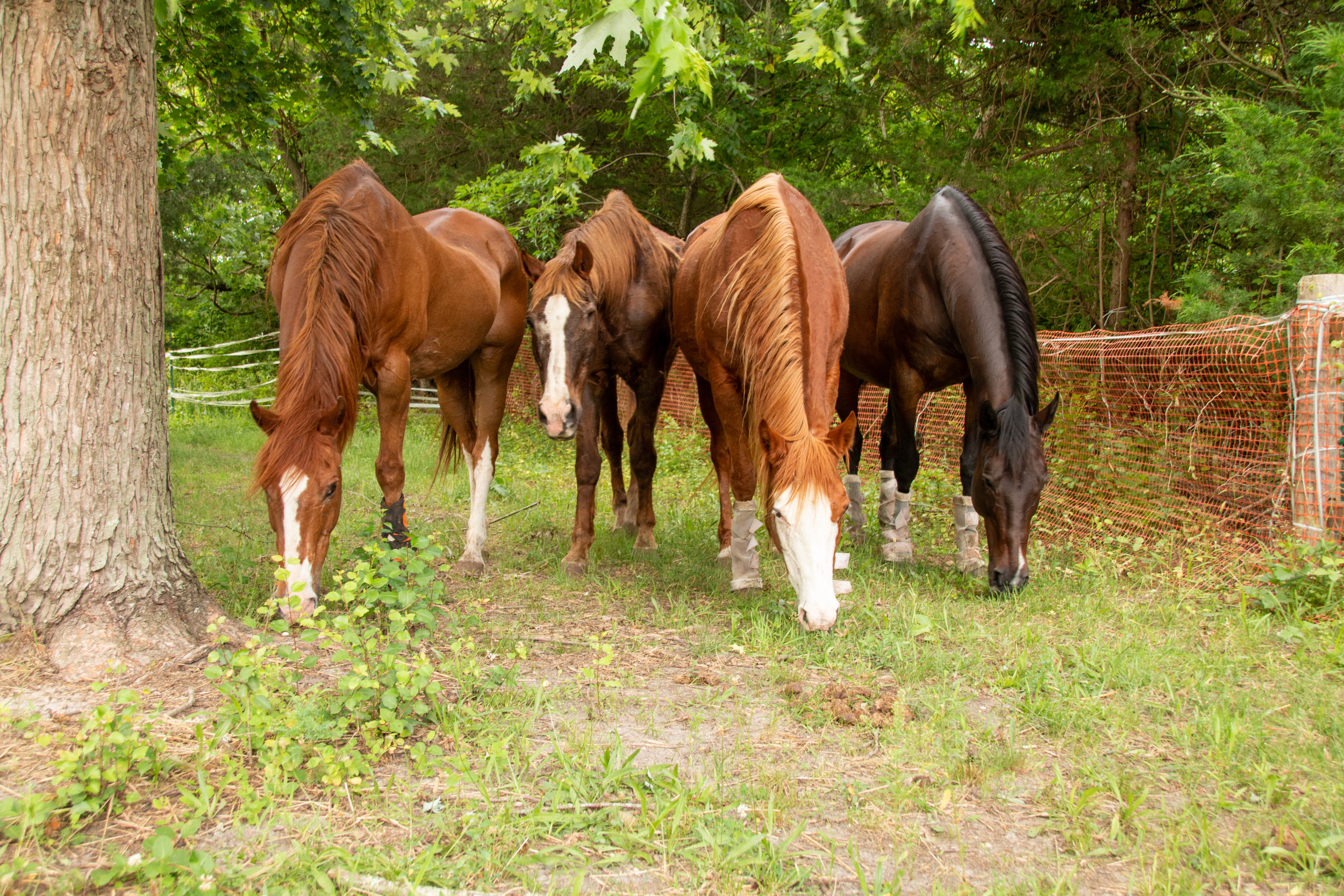
I couldn’t find a specific breed of horse for New Jersey, just the general term “horse” due to its importance in agriculture and economy.  So, I decided to focus on New Jersey Horse Rescue.

South Jersey Horse Rescue is a 501c3 non-profit horse rescue and rehabilitation facility.  Our mission is to provide a loving sanctuary to abandoned, neglected, abused, and slaughter bound horses. 

Donations pay for food, medicine, and veterinary services. We also use donations to buy horses at auction that would otherwise be sold to kill brokers, people who buy horses to sell them for meat in Mexico and Canada. About 90% of the horses that go through the slaughter lot are in perfect health.

What We Do

We evaluate and rehabilitate then re-home the horses we rescue. We do have some permanent residents, but strive to adopt out as many animals as possible to loving forever homes. We are 100% volunteer run and operate solely on donations.

We have been chosen for Secret Santa powered by our friends at Special Horses, Inc.

Please see link and donate to our rescue horses’ letters to Santa

https://specialhorses.company.site/South-Jersey-Horse-Rescue-c26120097

The rescue may have to close and our equine residents need your help!

Want to help us save the rescue? We are raising money to buy our property from the bank. We have made a great deal of progress with the help of our supporters just like you! We have had slow and steady negotiations. Fingers crossed we will be able to work this out and buy the property. We hope to have good news soon for those of you who have volunteered, donated, and sent well wishes. Any bit of support means the world to those who are here daily caring for our lovely rescues. We will do anything to keep providing a safe landing for those animals who need us most!

We have been at this property doing our life saving work as a rescue for over 14 years. Our fearless leader Ellen and her trusty staff have helped adopt and rehome over 400 horses, ponies, and donkeys. We are still rescuing animals and will do anything it takes to save our beloved rescue.

WEBSITE: https://www.southjerseyhorserescue.com/

Green Phantom Pleco

The Green Phantom Pleco (Hemiancistrus subviridis) is a captivating freshwater fish that hails from the fast-flowing rivers of Venezuela and Colombia in South America. Renowned for its vibrant green coloration and peaceful demeanor, this species can grow up to 8 inches in length, making it a standout addition to larger aquariums. 

What sets the Green Phantom Pleco apart is not just its striking appearance but also its ecological role as an algae eater, helping to keep aquariums clean by grazing on algae growths on glass and decorations.

Unlike many other fish species, the Green Phantom Pleco prefers cooler water temperatures ranging from 72 to 86°F, and requires a well-oxygenated environment with plenty of hiding spots to mimic its natural habitat. This species’ unique color and beneficial cleaning habits make it highly sought after by aquarium enthusiasts, despite its somewhat more demanding care requirements.

Green Phantom Plecos are relatively hardy, making them suitable for a variety of aquarium settings, but they do require specific care to thrive. They are best kept in tanks with a minimum size of 30 gallons to accommodate their potential growth up to 8 inches in length. The water should be well-oxygenated with a moderate to strong flow, mimicking their natural river habitat, and maintained with a pH between 6.5 and 7.5. 

Green Phantom Plecos are peaceful and can be housed with many other species, but they do need hiding spots and a diet rich in vegetables and high-quality sinking pellets or wafers. While they can tolerate a range of conditions, attention to water quality and diet is essential for their well-being. This species demonstrates that with proper care, they can be both a hardy and rewarding addition to the aquarium.

Food & Diet

Caring for Green Phantom Pleco includes providing them with a diet that meets their nutritional needs. Here’s an overview of the food and diet recommendations for Green Phantom Plecos:

Primary Diet

Green Phantom Plecos are omnivores with a strong preference for algae and biofilm in their natural habitat. In captivity, their diet should include a variety of foods to ensure they receive all the necessary nutrients:

Algae Wafers: These are a staple for most plecos and should be included in their diet. They mimic the pleco’s natural food source and are rich in essential vitamins and minerals.

Vegetables: Offering blanched vegetables like zucchini, cucumber, spinach, and peas can provide additional nutrients. These should be offered on a regular basis but removed after 24 hours to prevent decay.

Driftwood: While not a food source per se, having driftwood in the tank is important for Green Phantom Plecos. They graze on the biofilm that grows on the wood and may also ingest small amounts of wood fiber, which aids in digestion.

New Jersey State Flower: Meadow Violet

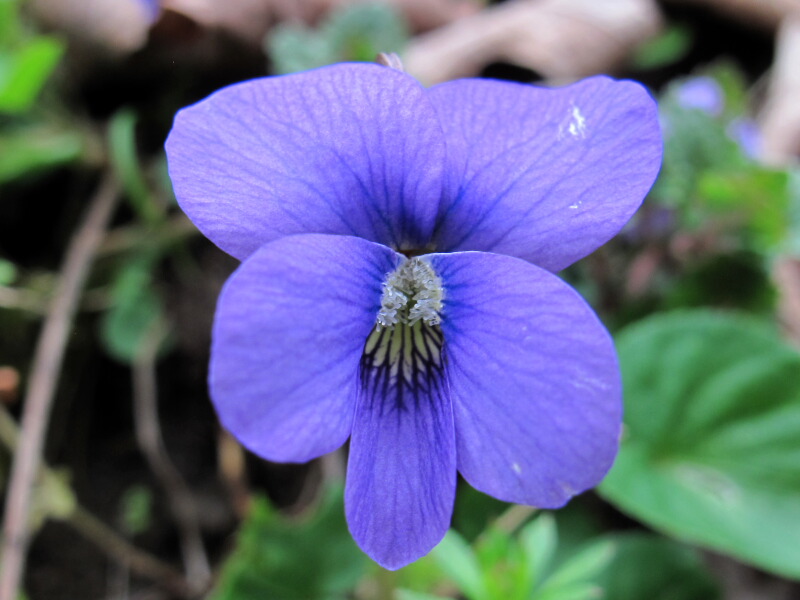
Common blue violet is a rhizomatous clumping annual in the Violaceae (violet) family native to eastern and central North America. It grows 6 to 10 inches in height and width, and is found in woods, thickets, and along streambeds, especially in shadier areas.  

The common blue violet prefers moist, rich soils and dappled sunlight. However, it will grow in many light conditions and tolerate wet soil, clay soil, and being planted near black walnut trees. It also freely self-seeds and may become invasive in fertile, moist locations. During hot summer months, the foliage tends to depreciate. During the summer months, it produces flower buds that never open (called cleistogamous flowers) but which develop into fruits with fertile seeds.

Nectar from the flowers attract butterflies and bees. Members of the genus Viola support specialized bees: Andrena (Gonandrena) fragilis, Andrena (Gonandrena) integra, and Andrena (Gonandrena) platyparia. Birds and small mammals use the seed fruits as a food source.

Use the blue violet as a wildflower in lawns, rock gardens, edging, and borders. This plant can also be used as a groundcover along walls and path edges as mowing can limit its spread. It is best in open woodland gardens where it can be left to spread naturally. It is deer resistant, but much loved by rabbits.

Quick ID

Leaves are basal, heart-shaped, crenate, and subpeltate

Many solitary, 2 cm flowers on slender, peltate stalks

Acaulescent herbaceous plant with purple to white spring flowers

Lateral petals with basal tufts of hairs

Insects, Diseases, and Other Plant Problems: May have some issues with slugs, snails, aphids, red spider mite, and violet gall midge. Powdery mildew and pansy leaf spot are occasional disease problems.