Gladiolas

The gladiolus is a classic perennial known for its tall flower spikes and large, colorful blooms! A great cutting flower, the gladiolus looks spectacular in summer bouquets. Here’s how to grow gladioli in your garden.

About Gladiolus

Part of the iris family (Iridaceae) and commonly known as “glads,” these lovely flowering plants are available in a multitude of colors and sizes—from the smaller hybrids that fit perfectly in containers to the large-flowered Grandiflora hybrids, which send out huge spikes of blooms in a range of colors. 

The most common gladioli typically reach between 2 and 5 feet in height, sporting flowers that also range in size—from “miniature” blooms less than 3 inches in diameter to “giant” flowers greater than 5 inches across! The taller varieties, which need to be staked, are often placed in the back of a garden to nicely complement shorter plants.

Gladiolus Winter Hardiness

The accepted hardiness zone for the classic Grandiflora gladioli (your typical garden glad) is zone 8, but it’s well known that by covering the corms with a good mulch, you can keep them alive in zones 6 and 7 and sometimes even zones 5 for certain varieties such as “Nanus Hybrids.” In colder zones, most gladioli corms should be dug up in the fall, stored, and replanted the following spring

Planting

For the best blooms, plant glads in full sun (6 to 8 hours of sunlight per day) in well-drained soil that’s moderately fertile. They will not do well in heavy, soggy soil. Mix compost (humus) into your soil to improve its consistency and fertility.

When to Plant Gladiolus

Start planting gladiolus corms in the spring, once the danger of frost has passed and the soil has warmed to at least 55°F (13°C).

From your last frost date to early summer, plant another round of corms every 10 days or so. This will result in continuous blooms through early fall!

Depending on the variety, it takes between 60 and 90 days from the time glads are planted for the corms to root, grow, and bloom.

How to Plant Gladiolus
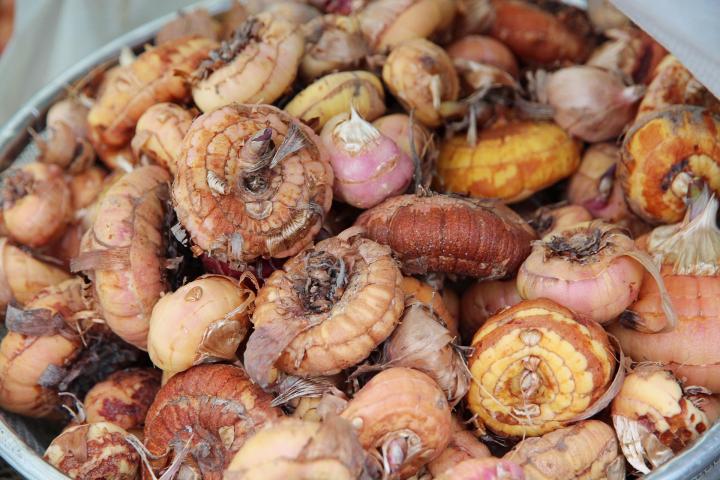
Ready your garden by using a garden fork or tiller to loosen the soil to about 12 to 15 inches deep. After loosening the soil, mix in a 2- to 4-inch layer of compost or aged manure.

To ensure large-sized blooms, plant corms that are 1¼ inch or larger in diameter.

Set the corm in the hole about 4 inches deep with the pointed end facing up. Cover with soil and press firmly.

Space the corms 6 to 8 inches apart.

If you grow gladioli primarily for cut flowers, plant them in rows. It’s easier to tend the plants and to harvest the flowers.

If planted with other flowers in borders or annual beds, plant the corms in groups of 7 or more for the best effect.

Water the corms thoroughly at planting.

If you’re planting tall varieties, be sure to stake them at planting time. Be careful not to damage the corms with the stakes.

Growing

How to Grow Gladiolus

Put a 2- to 4-inch layer of mulch around your gladioli to keep your soil moist and help prevent weeds.

If you get less than 1 inch of rain a week, water your plants regularly throughout the summer. Otherwise, water them moderately when in growth to keep the soil moist.

Remove the faded/dead flowers to ensure continuous blooms. Once all the flowers on a stalk are gone, cut the stalk off at about 2 to 3 inches above the soil.

Be sure to leave the plant intact so it can mature and grow the corms for the next season.

Winter Protection for Gladiolus

If you live in USDA Hardiness Zone 8 or warmer, put down a layer of hay or straw for winter protection. Gladiolus can remain in the ground through winter, provided a hard freeze (28°F or colder) isn’t common in your area. 

In colder regions (Zone 7 or colder), dig up gladioli corms once the foliage has faded after the first fall frost. A light frost will kill the foliage, but not the rest of plant. Be sure to dig up the gladiolus corms before a hard freeze (28°F), or the plants could be fatally damaged.

All that said, many gardeners who live in the “border” zones 6 and 7 have tried leaving their glads in the ground and found that they survived; this is a judgement call and based on your microclimate, your variety of gladiolus, and climate shifts.

Digging Up and Storing Gladioli Corms

To dig up the gladioli corms for winter storage, follow these tips:

Use a spade and dig up the entire plant, grasping the top to pull it out of the soil. Avoid bruising or injuring corms while digging. Shake off all loose soil (do not wash them off) and discard damaged corms. Cut the stalk down to 1 to 2 inches above the corm. Save the small cormels separately if you so desire. These will bloom in 2 to 3 years if you replant them each spring.

Allow the corms to dry in the sun for 1 or 2 days if the weather agrees. Sift out excess soil and place corms in wooden flats or trays. Cure in a warm and airy location for 2 weeks at a temperature of 80 to 85°F (27 to 29°C). Remove and throw away the oldest bottom corms (from the base of the new one).

Don’t remove the husks on the corms.

Dust the corms with a fungicide (“bulb dust”) to avoid disease problems. Place dust and bulbs in a paper bag and shake vigorously.

Store the corms in paper or cloth bags, pantyhose, or old onion sacks. Stack or hang the containers so air can move among them. Store the corms at 35 to 45°F (2 to 7°C) in low humidity. A cool basement is quite suitable. Do not allow corms to freeze.

Replant these corms in the spring for another year of beautiful blooms.

Varieties

Gladioli come in a variety of sizes and colors, with the most popular being part of the follow hybrid groups:

Grandiflora Hybrids: These are the classic gladioli that produce a plentiful amount of large (5- to 6-inch) blooms in a range of colors. The plants produce flower stalks that reach up to 4 feet in height and are winter hardy to Zone 7.

Dwarf Grandiflora Hybrids: These miniature glads are a great choice for containers and cutting gardens, as their flowers are about half the size of Grandifloras and their shorter stalks don’t typically require staking. They are also winter hardy to Zone 7. Glamini gladioli are included in this group; they are pest resistant and will bloom in full sun or partial shade.

Nanus Hybrids: Hardy to Zone 5, these smaller gladioli look a lot like Grandifloras, but do not produce as many flowers. They tend to grow no larger than about 2 feet in height, which makes them perfect for containers or small spaces.

Some specific gladiolus varieties of note include:

‘Black Star’, which has deep purple-red blooms
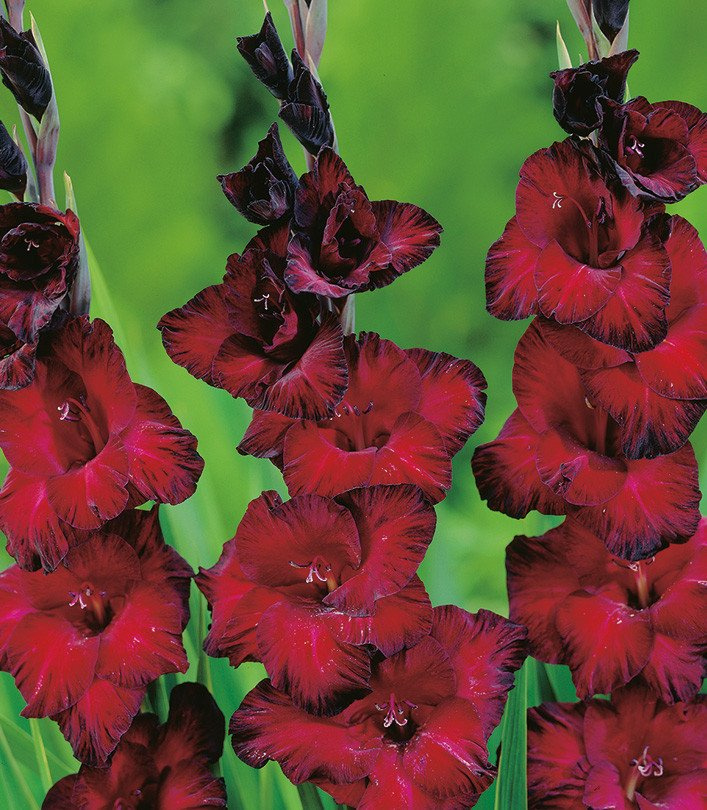
‘Candyman’, for its beautiful, deep pink flowers

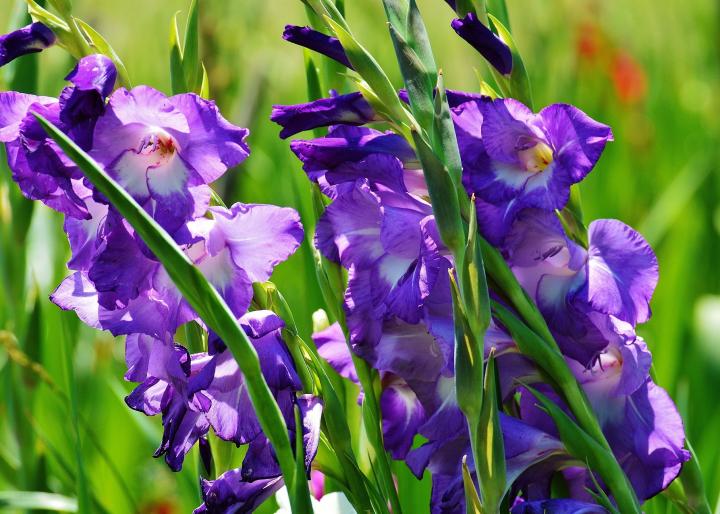
‘Costa’, which sports ruffled flowers in blue-purple

‘Dream’s End’, which makes a good background plant because its flower spike is up to 3 feet tall (and it has pretty light orange flowers with large yellow centers)

‘Fun Time’, which has yellow flowers edged with red

‘Green Time’, for its unusual lime-green flowers

‘Prins Claus’, which has white flowers with splashes of pink on its petals

‘Priscilla’, which produces off-white flowers with yellow center and a pink edge

Harvesting

To cut glads for bouquets, follow these tips:

Cut the flower stalks early in the morning or at night, not during the heat of day.

Use a sharp knife and bring a bucket of lukewarm water to the flower bed; cut diagonally through the stalks and place in the bucket.

Cut stalks with only one or two open flowers. The rest of the buds will open after you put them in a vase. Leave at least four leaves on the plant in the ground if you want to re-use the corms.

Place the bucket with the flowers in a cool dark place for a few hours before arranging them in a vase.

Remove lower fading flowers and cut about 1 inch off the bottom of each flower stalk every few days.
SOURCE: ALMANAC

Labradors!

You may already know the Labrador Retriever as a high-energy, water-loving family dog. You might also feel like you see them everywhere. That’s no coincidence because the Labrador Retriever is one of the most popular dogs in the United States (and in much of the world). Read on to learn more about this easy-going dog breed, from their hunting dog history to how to care for your very own lab best friend, and decide whether a Labrador Retriever dog is right for you.

Labrador Retriever Breed Appearance

A Labrador Retriever dog has a dense, short-to medium-length coat, with a wide head. As a consummate water dog, a lab’s webbed toes help them move through the wet stuff, and their rudder-like otter tail is great for swimming (and knocking things off your coffee table). Their foot webbing also helps them stay comfortable in colder climates, forming a “snowshoe” that keeps snow and ice from getting stuck between their toes.

Labrador Retrievers are born with a variety of colorings, such as the yellow Lab, chocolate Lab, and black Lab. The silver Labrador Retriever has a rarer grayish coloring with striking blue eyes. Although it sounds like it, a “golden Lab” is not a coloring of Labrador Retriever and is instead a crossbreeding of the Golden Retriever and a true Lab.

Within the Lab breed, there are two distinct body types. The field or working variety (also referred to as the “American” type) tends to have lighter bones, a longer and less dense coat, a narrower head, and a longer muzzle. They also tend to have more energy and be higher strung. This is no accident, as these Labs are built to work.

The “English” or show variety of Labrador Retriever tends to have shorter legs, a denser coat, and a broad head. This variety is better suited to be a family pet.

As far as grooming goes, a Labrador Retriever dog will usually shed twice a year, or year-round in temperate climates. Much like other dogs with a double coat, weekly brushing (or daily during shedding months) should be enough to prevent that dreaded blowout of the undercoat.

Labrador Retriever Personality

The Labrador Retriever was bred to be friendly, both toward humans and other dogs. To complement that gentle nature, their working history gives them a high-energy, fearless, enthusiastic personality.

Labs are curious and intelligent, which means they do well as service dogs, but this can mean that your single-minded lab is more likely to escape or suddenly disappear, most likely having followed something interesting (squirrel?). This is why many owners of Labrador Retriever dogs choose to microchip their pets.

Ideal Environment for a Labrador Retriever

A Labrador Retriever dog will need plenty of exercise and outdoor time. And, as their name implies, they love to retrieve. The best home for a lab will be one with a big backyard or space nearby for a long game of fetch. With their sweet personalities and love of play, these dogs are a popular breed for an active family.

Ideal Human for a Labrador Retriever

The ideal human companion for a Labrador Retriever likes to play just as much as their dog. This can mean long walks and runs, swimming, or tossing a ball around.

However, the Lab’s history as a working dog also means that daily walks for exercise aren’t enough. Trick training, puzzle toys, and other mentally challenging games like hide and seek will help keep your Lab happy.

Lab Obedience Training

With consistent positive reinforcement, a lab will excel with basic obedience training and soon be ready to move on to more complicated skills. You may still consider a professional dog training for the early days though. Labs are known to be a little distractible. This can also be managed with plenty of mental and physical exercise, including teaching your lab new tricks in quiet environments where they can focus.

With their talent for learning and easygoing nature, Labrador Retrievers make excellent service dogs. Labs serve as companions to people with illnesses or vulnerabilities and are able to do complex tasks like rolling a person into the recovery position or activating an emergency communication device.

According to Guide Dogs for the Blind, Labs are the most successful guide dogs. This champion smeller can even work in search and rescue and is especially suited to more challenging work, such as water rescue. Labrador Retrievers are true heroes of the dog world.

Labrador Retriever Grooming

Most Labrador Retriever parents will find grooming relatively easy. Labs have a thick double coat, and shed their undercoat during spring and fall (or year-round in temperate climates). During the seasonal shedding periods, you can brush them daily to help remove fur. The rest of the year, brushing once a week as maintenance should be enough. Occasional baths may be necessary to keep your Labrador Retriever clean, especially if your Labrador likes to find smelly things to roll in. Like most dogs, Labrador Retrievers’ nails should be trimmed regularly, and their teeth brushed to maintain dental health. 

Labrador Retriever Health

Labrador Retriever dogs tend to be a healthy breed with very few health problems. Some Labs may develop elbow dysplasia and hip dysplasia, but less so than other dog breeds. Labrador Retrievers can also tend toward knee problems and eye problems, such as progressive retinal atrophy. Ask your vet for more information on prevention or treatment of potential health issues. Many pet owners opt for pet health insurance, just in case.

A note on that endless game of fetch: some labs will work until they collapse. Be sure to take regular rest and water breaks when you’re getting your play on.

Labrador Retriever History

According to the American Kennel Club (AKC), the first Labrador retrievers were bred in England, from a unique and water-loving ancestor, the St. John’s water dog. St. John’s water dogs originally came from Newfoundland, where they assisted fishermen with retrieving nets and other equipment, and even diving for dropped fish.

Working mainly as gun dogs specializing in retrieving waterfowl, Labrador Retrievers later became accomplished sporting dogs, joined the show ring, and eventually stepped into the role of the fun-loving family companion we know today. Across the world, but especially in the United States, England, and Canada, the Labrador Retriever remains one of the most popular dog breeds to date.

SOURCE: ROVER.COM

Scorpionfly

What type of animal is a scorpionfly?

The Scorpionfly is an insect of the Panorpidae family, which is the largest family of order Mecoptra with 480 species. It is often addressed as the common Scorpionfly or Panorpa communis, and it belongs to the genus Panorpa. This genus has 260 species.

How many scorpionflies are there in the world?

The total strength of the Mecoptera order is innumerable as it is widespread. From North America to South America and from Asia to Australia, the Scorpionfly distribution has spread worldwide.

Where does a scorpionfly live?

The Scorpionflies adapt to the grassland, healthy land, moorland, fresh water, farmland, wetlands, woodland, towns, and gardens.

What is a scorpionfly’s habitat?

The Scorpionflies are known to adapt to moist environments, mosses, and a few Mecoptera flies also inhibit semi-desert habitats. The common Scorpionflies are vividly found in woodlands with broad leaves, as this Scorpionfly habitat has superabundant damp leaf litter.

Who do scorpionflies live with?The Scorpionfly families are not social and do not move in groups. They are found as solitary or in mating pairs.How long does a scorpionfly live?The Scorpionfly life cycle consists of four stages that begin with an egg’s formation. There is no recorded information on the average lifespan of these insects.How do they reproduce?The male attracts the female by flapping its wings. Once the female is submissive, it drags the abdomen of a female with the help of claspers. The male presents the female with the nuptial gift of thick saliva secretions. The mating scorpionfly feeds during the copulation time, which may last from 15 minutes to several hours. Some scorpionflies also offer dead insects or bugs as a present. Some scorpionflies emit chemical forms to grab the attention of the female.While the female inspects the offering, the male scorpionfly probes into female reproductive organs; in this process, it is most probable that the female denies the gift and flies away. If she acquires the gift, it lowers itself in an upside-down hanging position approving the copulation. During copulation, the female preys on the present, and the male holds up the female to anchor it. The mating time lasts from 15 minutes to several hours. On culmination, the female lays eggs in a moist environment.What is their conservation status?As Scorpionflies are spread in high concentrations worldwide, the conservation status of this common Scorpionfly is Least Concern.Scorpionfly Fun FactsWhat do scorpionflies look like?The Scorpionfly is an insect. It is a colorful fly. The common Scorpionfly has a yellow-black body with a reddish head. The tail of these insects is also red. The length of Scorpionfly wings is 1.4 inches, slightly more significant than the total length of its body. The Scorpion insect attained its significance and name due to the anatomy of the genus Panorpa. The male insects have genitals at the end of their tail, which replicates scorpion stingers. These are called claspers. The abdomen of a male Scorpion fly is swollen, and the swelling is referred to as a genital capsule. The female Scorpionfly abdomen is comparatively slim.The Scorpionfly has four membranaceous wings and filamentous antennae. Their prolonged head is signified with mouthparts like a beak. It has large eyes. Their abdomen is cylindrical with 11 segments. In the Scorpionfly males, the swollen abdomen is curved upwards that looks like a scorpion-like tail.

How cute are they?

This species creates curiosity in its appearance. Their scorpion-like tail allures the human eye. But the Scorpionfly stings are not poisonous, indicating that these flies are cute but not harmful.

How do they communicate?

The Scorpionflies are not social animals. But they are very expressive while communicating during mating. There is significant diversity in the male’s mating techniques. The Scorpionflies communication includes emitting chemical signals, offering nuptial presents, flapping wings, and waving with antennae. In some of the Scorpionfly groups, the males even dance to attract female attention.

How big is a scorpionfly?

The common Scorpionflies are 0.1-1.4 inches. Its length is relatively equal to that of a medium-sized Mecoptera order insect.

How fast can a scorpionfly fly?

The locomotion of a scorpionfly is flying short distances. Despite having two pairs of wings, the Scorpionfly takes a slow flight with variable patterns. The Scorpionfly can fly at a speed of 1.1 mph.

How much does a scorpionfly weigh?

The exact weight of Mecoptera is unknown. However, they are small to medium-sized insects with long slender bodies and short membranous wings that resemble flies.

What do they eat?

The Scorpionflies prey on dead insects, insects trapped in spider webs, petals, leaves. The Scorpionfly diet also includes decaying vegetation.

Are they dangerous?

These flies do not bite; hence the Scorpionfly sting or bite is harmless to humans. Quite contrary to the scary appearance of Scorpionfly tails, they are not dangerous.

Did you know…

Scorpionflies play a prominent role in forensic entomology, revealed a study related to the developmental stages of arthropods on the corpse, as these flies are the first ones to arrive at it.

The mating process of the Scorpion fly is the most dreadful and aggressive. There are fair chances of the female killing the male during the aggressive copulation.

Even the Scorpionfly larvae can feed on a dead insect. If the hot conditions of the habitat are not favorable, these flies choose to remain in the current state of egg or pupa even for several months.

The flies of the Panorpa species are predatory during the day and can be opportunistic hunters during the dark.

SOURCE: KIDADL.COM

Shoebills

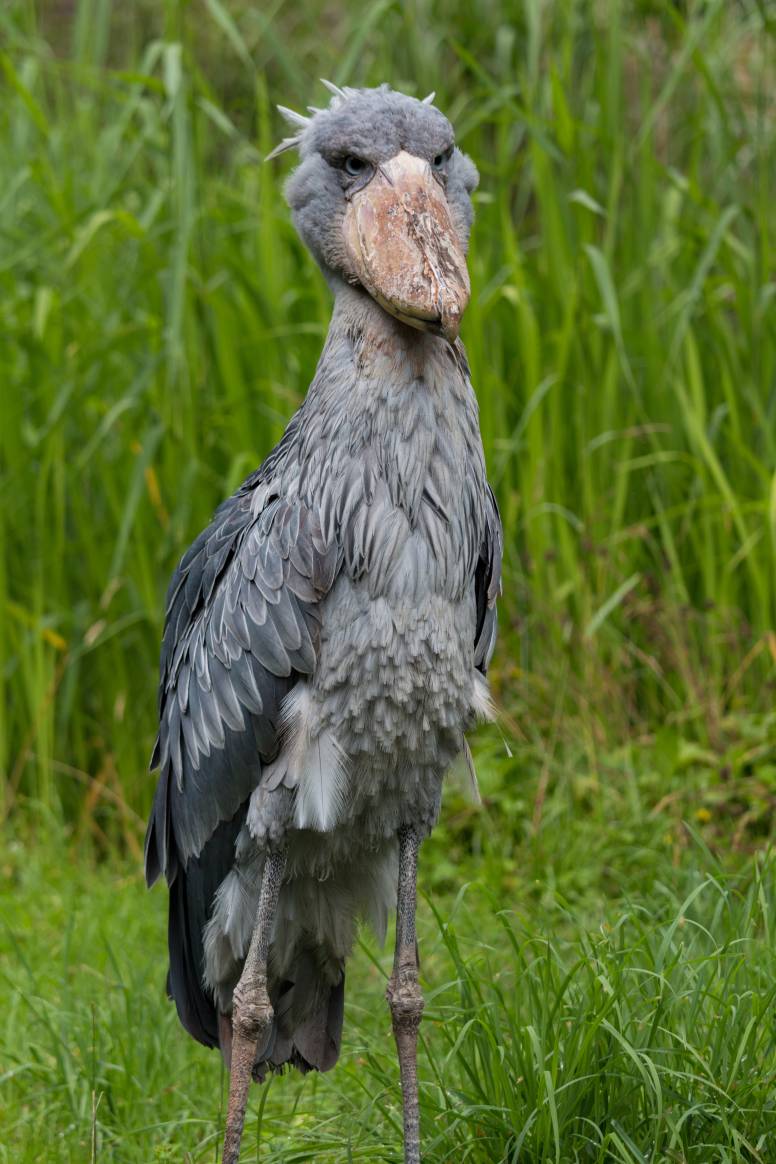
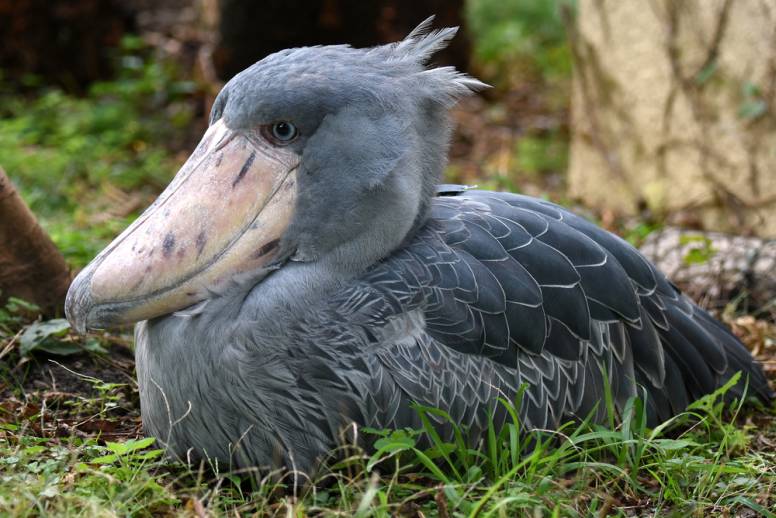
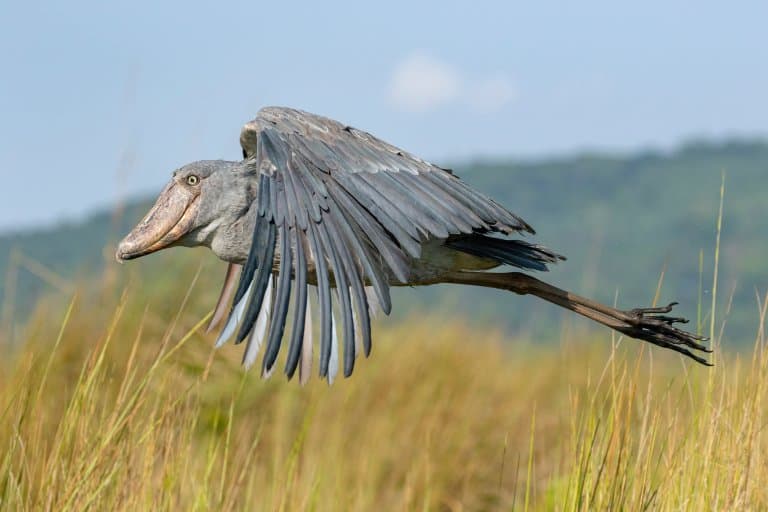
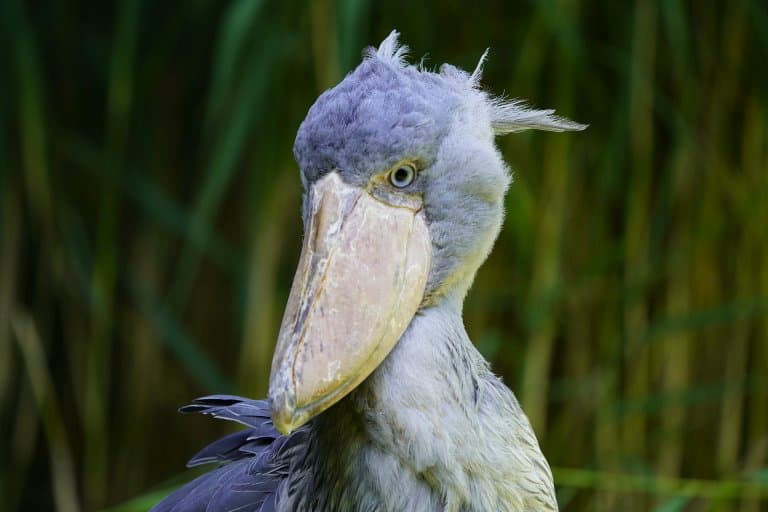
They have a prehistoric-like appearance

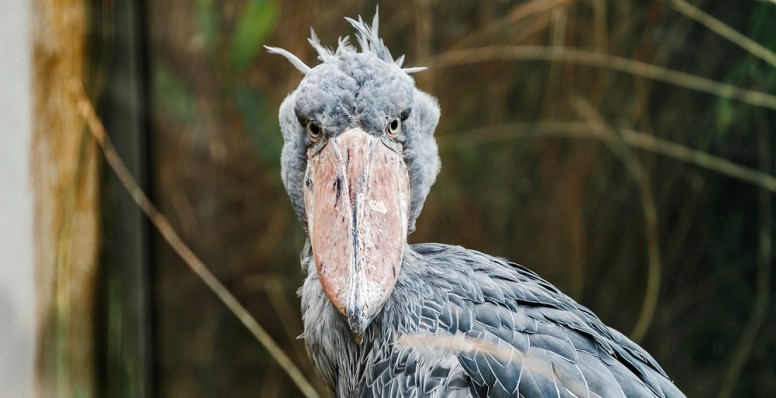
At times, and from certain angles, they can appear rather menacing, peering down their long, razor-sharp beak, with a hook at the tip.

They can also be extremely cute, and almost ‘cartoon-like’. They have striking pale, blue-eyed genes, which can make them appear not really real.

They are truly unique and beautiful birds.

The shoebill’s flapping when flying is one of the slowest of any birds, at a mere (approx.) 150 flaps per minute

Only larger stalk species have slower flapping than the shoebill.

They have the 3rd longest beak in the world, which enables them to hunt extremely large prey, even baby crocodiles

Their beaks can reach up to 7.4 to 9.4 inches in width, which helps them hunt for fish or snakes as long as 3.2 feet in size.

The razor-sharp edges of its beak, allow it to decapitate their prey quickly

They are known to often behead their prey, before consuming whole.

A shoebill can often benefit from the presence of hippos, which disturb fish, and bulldoze paths through swamps

The shoebill can take advantage of the disturbed fish in the water and strike.

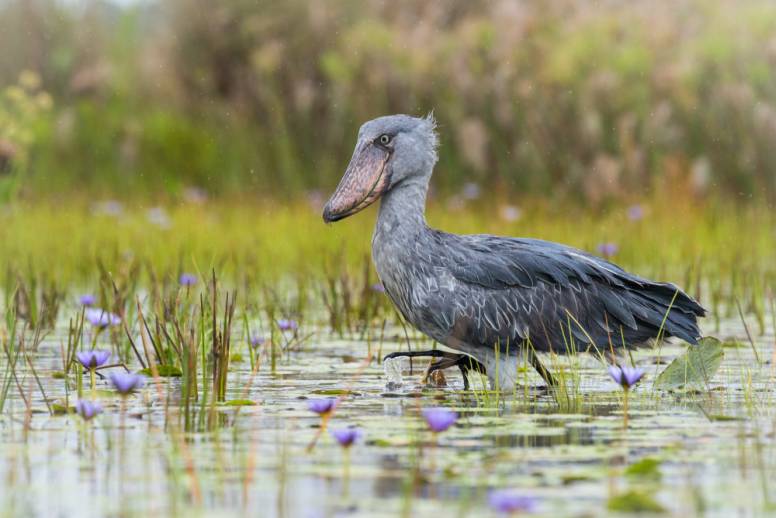
The shoebill is an ambush predator

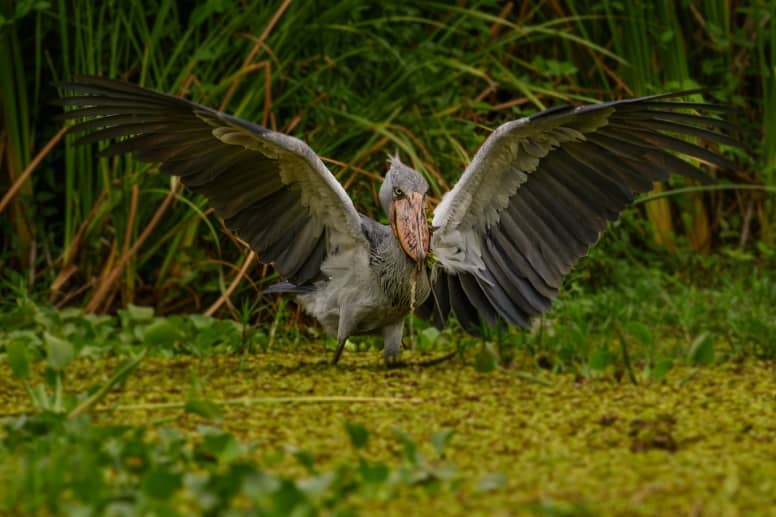
They often stand still for long periods, motionless like a statue, before launching a vicious attack to kill any prey that come within strike distance.

The shoebill often feeds at night, and is also known to stand on floating vegetation to hunt their prey.

The shoebill favors areas of poorly oxygenated water

This causes the fish living in the water to surface for air more often, which increases the likelihood of the shoebill striking and capturing its prey.

They clatter their bills which like a machine gun

The shoebill is usually silent, but they are known to clatter their bills loudly during courtship or greeting, which can sound a little like a machine gun.

Bill-clattering is a behavior of real storks. They can also let out a high-pitched whine, and even make cow-like ‘moo’ noises.

Shoebill are solitary in their breeding habits, with typically less than 3 nests per square kilometer

The nesting shoebill will vigorously defend their territory between 1 to 1.5 square miles from other shoebill, and large birds.

Shoebills chicks often bully, fight and can kill their siblings (known as ‘siblicide’) when only a few weeks old

Rather disturbingly, this is actually rather common in larger birds.

Often the older, and bigger chick, can hurt a smaller chick, while their parents are away from the nest eventually driving it to live away from the nest. Research suggests, this is due to energy efficiency and survival of the fittest.

The shoebill female always lays two eggs, but only one ever survives

The second egg is seen like a ‘back up’, in case anything is wrong with the first egg. Usually the first to hatch survives only.

The shoebill has long fascinated civilizations

They appear in wall paintings and hieroglyphics of ancient Egyptians, and it’s old Arabic name is Abu-markub, or ‘Father of a Slipper’. This name is in reference to the birds very distinctive beak.

Sadly, the demand for shoebill storks is high

Both in zoos, or for private collectors. There are reports that they can sell for US $10,000-$20,000, making them the most expensive birds in the zoo trade.

The high price encourages shady traders to capture the shoebill and sell to zoos or middle men – reducing the wild population size further. Shoebills rarely breed in captivity.

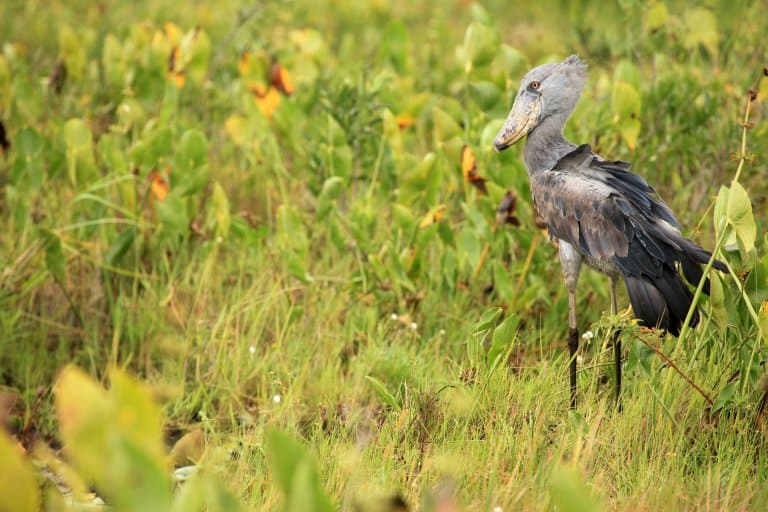
They are incredibly rare

Birding enthusiasts have to pay local expert guides to go on specialist shoebill tours and safaris, to try and get a glimpse of the elusive, sought after birds in the wild.

This involves going way off the beaten track and into the swamps which they inhabit.

SOURCE: FACT ANIMAL

Larkspur

The larkspur flower has an identity issue in that it’s the common name for both Delphinium and Consolida ajacis, which are also both in the same buttercup family. As Delphinium, larkspur is considered an herbaceous perennial. But as Consolida ajacis, or true larkspur as it’s called, it is considered an annual. However, these closely related cousins look nearly identical, growing delicate little blooms on showy, spikey stems that are adorned by lacy foliage.

As a perennial, larkspur commonly bears purple, blue, or white flowers. Lavender is the next most common color. You will occasionally encounter larkspurs with pink blooms, and other colors exist but are rarer. Larkspur is valued as one of the traditional plants for cottage gardens. Meanwhile, they are useful for drawing butterflies and hummingbirds to the yard. Larkspur is a toxic plant. Take precautions to prevent children and pets from ingesting it.

Warning

All parts of a larkspur plant are toxic so take precautions to prevent children and pets from touching or ingesting the flower. Touching the plant can affect the skin with a minor rash, but it is dangerous to eat the plant, especially the flowers and seeds.

Most larkspur plants, however, are considered stately perennials ideal for growing at the back of a flower border. The drawback with these is that you have to stake them. For example, ‘Cassius’ is one of the tall types of Delphinium. This D. Elatum hybrid definitely needs to be staked. If you prefer low-maintenance landscaping, opt for dwarf types.

Their impressive height (some types reach 7 feet tall) makes them extremely showy specimens. The taller types of larkspur are well worth growing if you do not mind performing a bit of maintenance.

There’s no need to do anything with a true larkspur for the winter as some are annuals and the others which are considered delphiniums are short-lived perennials that will die back on their own before the first frost.

Light

Full sun is best for larkspur. The plant needs between 6 and 8 hours of sun daily.

Soil

Give them a moist, cool, well-drained soil. The soil can be kept cool and moist by furnishing with mulch.

Water

Water the plants once or twice a week. Give the flowers an inch of water every time you water. If the soil becomes waterlogged, stick to watering the plants once a week.

Temperature and Humidity

Larkspur prefers cooler temperatures, which also triggers blooming. The plant prefers mild summerlike conditions that are not humid, however, seedlings may prefer some humidity.

Fertilizer

Fertilize your larkspur plants every spring with compost.

Types of Larkspur

When most gardeners think of larkspur, they think of a plant with blue flowers. As you can see, there are many choices in blue larkspurs. They differ in terms of hardiness, size, and the precise quality of the blue flower color. Here are 10 popular larkspur types:

Black Knight Larkspur (Delphinium ‘Black Knight’): Deep purple blooms, 4 to 6 feet tall

Galahad Larkspur (Delphinium ‘Galahad’); Snow-white petals, 4 to 6 feet tall

Astolat Larkspur (Delphinium Astolat Group): Pink to lavender pink petals, 4 to 6 feet tall

Guardian Lavender Larkspur (Delphinium elatum ‘Guardian Lavender’): Lavender blossoms, 2 to 4 feet tall

Dwarf Larkspur (Delphinium tricorne): Deep violet blue flowers, dwarf, 1 to 3 feet tall

Blue Mirror Larkspur (Delphinium ‘Blue Mirror’): Blue and lavender blossoms, dwarf, 2 feet tall

Cassius Larkspur (Delphinium ‘Cassius’): Blue blooms with black centers, 6 to 7 feet tall

Summer Skies Larkspur (Delphinium ‘Summer Skies’): Pale blue flowers, 5 feet tall

Golden Larkspur (Delphinium luteum): Very rare yellow blooms, 2 feet tall, grows only in California

Red Lark Larkspur (Delphinium ‘Red Lark’): Rare red blooms, 2 to 3 feet tall

The Flying Duck Orchid

If you have never seen the Flying Duck orchid in real life, you can be forgiven for thinking that it is a fake. This is because it is hard to imagine Mother Nature trying to copy or impersonate one of its own creatures? But it is a fact that the flowers of this species of orchid bear uncanny resemblance to a flying duck. It is a small species of orchid that is found in eucalyptus woodland of Australia along its eastern and southern coastline. The scientific name of this orchid is Caleana Major after the name of a botanist George Caley.

The complex flower of this species of orchid is tiny, only 15-20mm in size. But it has a peculiar shape that makes it look like a duck in flight. Most of the plants have reddish, brown, and purplish flowers even though in some cases these flowers can also be green. Chances are that you may miss out on seeing this species of orchids even after visiting the right places in Southern and Eastern Australia. The peculiar color of the flowers of this orchid makes the plant to mix and blend well with the surroundings. Scientists say that the flower has evolved in such a way so as to help this species of orchids to attract its pollinators. We humans see the head of the flower in the shape of a duck but male sawfly sees it as a female sawfly. It gets attracted to it and makes an attempt to mate with it.

Facts about the Flying Duck Orchid

Habitat: Eastern and Southern Australia

Scientific name: Caleana major

Other common names: Flying Duck orchid

The flower has a labellum that is in the shape of the beak of the duck. The length and breadth of this labellum is such that it serves as a perfect place for sitting for the male sawfly. As the male sawfly sits on it, it sends signals to the body of the flower to set the trap in motion. This trap makes the insect get into a place and by the time it is free, it has to pollinate the flower. This process of propagation is referred to as pseudocopulation by the scientists. The roots of this species of orchid have a symbiotic relationship with a fungus that is native to the places where it is found in Australia. This is one of the reasons why this unique species of orchid is very difficult to grow inside homes. It is this fungus that protects the plant from several infections. When this fungus is not present in the medium, it is difficult to save the plant from dying down because of these infections.

There are two more petals of this uniquely shaped flower of Flying Duck orchid. Both of them look more like sepals and they are curved back to look exactly like the wings of a duck ready to take a flight. This orchid plant is perennial in nature but it flowers only during spring or early summer.

Flying Duck orchid has the pride of being on the postage stamp of Australia.

SOURCE: ORCHIDSPLUS.COM

Oregano

A must-have herb in a culinary garden, oregano is easy to grow and perfect for beginners. Started in spring, oregano grows well in containers or even as ground cover along a path. Here’s how to plant, grow, and harvest oregano—plus how to use oregano!

Belonging to the mint family, or Lamiaceae, oregano is a woody perennial plant. It’s a robust herb with a peppery bite and a minty aroma. In the Greek language, the word oregano means “joy of the mountain” and it’s certainly a popular herb for any Mediterranean cuisine.

Oregano adds savory flavor to pizza, tomato sauce, and really anything tomato as well as cooked summer vegetables such as zucchini and eggplant, a Greek salad, kabobs, roasted potatoes, white beans, a vinaigrette, and any egg dish.

The perennial herb produces long trailing stems which looks pretty spilling over a container or as a bright green leafy ground cover, especially along a path. White flowers bloom in late summer.

Oregano also makes a good companion plant in the vegetable garden.

Planting

Oregano loves the sun, so ensure that your placement has full sun for strong flavor. Offer partial shade if growing in hot climates.

Plant anytime in the spring, once you’re well past chance of frost. Some folks plant later in the season for assured warm weather. The soil should be around 70ºF.

For a head start, plant the seeds/cuttings 6 to 10 weeks before the last spring frost. (See local frost dates.)

Oregano can easily be started from seeds, though you can also use cuttings from an established plant.

Before planting, mix in several inches of organic matter such as compost. If you’re growing in containers, use a quality potting mix. 

Plant 8 to 10 inches apart. The plants will grow 1 to 2 feet tall and spread about 18 inches.

Growing

Allow oregano plants to grow to about 4 inches tall and then pinch or trim lightly to encourage a denser and bushier plant. Regular trimming will not only cause the plant to branch again, but also avoid legginess.

Oregano doesn’t need quite as much water as most herbs. As the amount of watering depends on many variables, just water when the soil feels dry to the touch. Remember that it’s better to water thoroughly and less often.

If you have a container, water until the water comes out of the drainage holes in the bottom of the container.

At the end of the season, you can move pots indoors for the winter; cut dead stems in the spring before new growth. In warmer climates, protect plants with mulch.

To ensure the best-quality plants, thin out plants that are 3 or 4 years old in the early spring. Oregano is self-seeding, so the plants will easily grow back.

You can divide the plants in late spring if you want to put one indoors.

Recommended Varieties

Greek oregano (Origanum vulgare var. hirtum) for cooking.

Common oregano for decoration (its white-lavender flowers look pretty in the garden and are also used in wreaths).

Harvesting

Harvest the leaves with sharp shears as you need them, once the plant is several inches tall. This will encourage new growth. Just don’t harvest more than one-third of the plant at a time.

The most flavor-filled leaves are found in mid-summer, right before the flowers bloom.

You can freeze the leaves to use during the winter. Oregano leaves store well and are easily dried. Keep them in an airtight container once dried.

Gardening Products

Wit and Wisdom

Oregano tea relaxes nerves and settles an upset stomach.

Fresh oregano is a great antibacterial agent and loaded with antioxidants as well as an excellent source of fiber, vitamin K, iron, vitamin E, and calcium. It was once used in many old-fashioned herbal remedies.

Oregano plants are said to symbolize “substance.”

Cooking Notes

Crush or chop oregano leaves by hand before adding them to a dish in order to release the flavorful essential oils contained within. For cooked dishes, it’s best to add oregano leaves at the end of cooking process or they won’t hold up well.

Source: Almanac

Goblin Sharks

They’re pink!

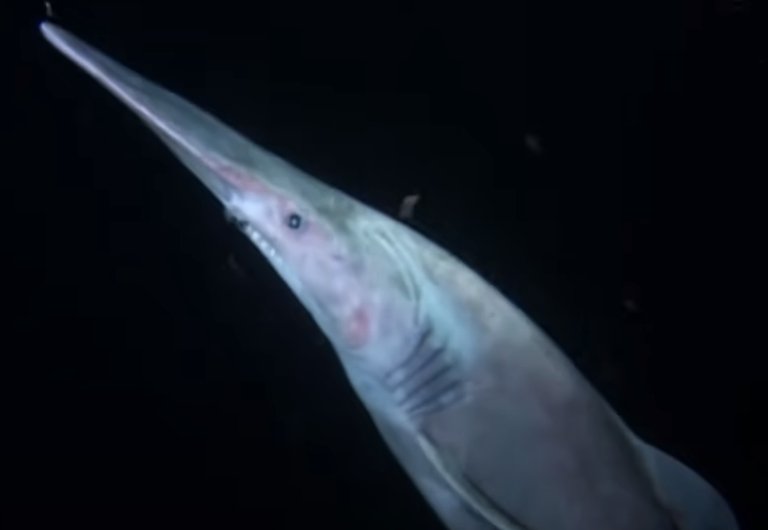
Of all the colors you’d associate with a goblin, I bet pink wasn’t one of them. However, this color goes come from a trait that’s much more in line with a mythical demon from the middle- ages. Goblin sharks have wrinkled, translucent skin, and through this, it’s their blood that gives them a murky, pink or purplish-grey tinge.

They grow into their noses

When they’re little, they’re equipped with disproportionately huge noses. While they never fully reach healthy proportions, this nose doesn’t grow as fast as the shark’s body does, so it does start to look a little better on them. Still, these are some ugly fish. With the weird jaws and the wrinkly skin, the oversized schnoz doesn’t do them any favors in the looks department.

Fortunately for the shark, it’s very dark in the deep, and the nose is packed with an array of electroreceptors called ampullae of Lorenzini that help it identify tiny little heartbeats of tiny little food items in the inky blackness.

They have atrophied bodies

These sharks seem to have small fins, weak skeletons, and poorly-developed muscular and visual systems. Indeed, most of what we might consider useful adaptions in an animal are missing from this one. And yet, it is supremely well adapted. This shark has been living in the deep ocean, relatively unchanged for over 125 million years.

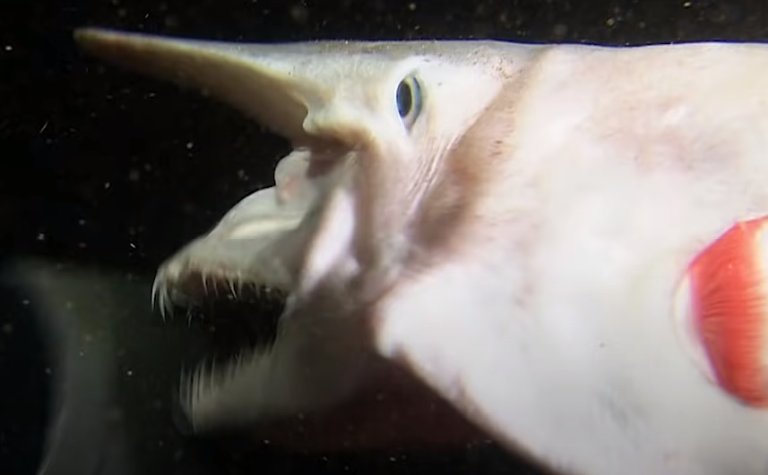
Along with its heartbeat-detecting snout, the goblin shark has rapidly-extendible jaws that attach to an expandable, muscular mouth and throat. The ugly, ragged teeth are also not as haphazard as they seem. They’re perfect for impaling deep-sea, slippery fish.

They’re probably ambush predators

These adaptations suggest that the best way for this shark to hunt is to quietly approach prey in the dark and rapidly lunge at it with open jaws. From studying the jaws specifically, it seems that they’re able to lock down under pressure, in a retracted position, storing elastic energy in special ligaments that can be released to catapult the mouth forward, around the prey.

These jaws are said to be possibly up to nine times more protrusible than in other sharks and can be re-opened and closed again in a unique hunting pattern that’s not seen in other species.

It’s thought that this is the best way for the shark to compensate for its terrible body and inability to swim fast to catch prey.

The goblin shark has many teeth arranged in multiple rows

The upper jaw contains anywhere between 35 and 53 rows of teeth. Then there’s the lower jaw which has 31 to 62 rows of teeth. The teeth located in the main part of the jaw are narrow and long and are even more so the closer they are to the midpoint of the jaw. These teeth are also finely grooved and pointy to ‘spear’ prey, not actually crush it. It’s thought that goblin sharks will then swallow prey whole.

We don’t really know much more about it

As with so many creatures of the deep, what we know about the Goblin shark comes mostly down to a handful of dead specimens and scant footage. This means that behavioral information is sorely lacking, as is anything involving where they go and what they do. We can assume a lot from the physiology of specimens that are collected, but there are still plenty of secrets to be discovered about this elusive, deep-water shark.

They’re not caught very often

And these specimens are few and far between because somehow, the goblin shark avoids even being picked up as by-catch by trawling fisher nets. Examples have been found scattered all over the world, usually caught alone, leading researchers to assume that these sharks are solitary. Population numbers are impossible to estimate, and their geographical range is still uncertain.

This is a truly deep-sea animal

The goblin shark has been caught in depths of between 890 and 3,150 feet and as deep as 4,300 feet. A goblin shark tooth has been located lodged in an undersea cable at a depth of 4,490 feet. Adults are known to inhabit the deeper waters than juveniles and there have been reports of the odd goblin shark found in shallow inshore waters of 130 feet. The odd one has also been caught in fishing nets in the Gulf of Mexico and in the Sri Lanka region.

In 2003, there was a mystery gathering just off the coast of Taiwan

One strange event that might hold clues to goblin shark behavior was a peculiar moment in 2003 where it’s said that between 100 and 300 individuals were caught by fishermen around the same time. Was this a mating group, or a feeding frenzy? Or could it have had something to do with the corresponding earthquake, flushing them out of their submarine canyon habitats? It certainly creates more questions than it answers, and, frustratingly, a more recent paper claims that only 14 goblin sharks were caught during the event.

Even so, the species had never been found in the area previously and has never been seen there again. So as usual, the shark manages to keep its secrets.

The goblin shark diet sometimes includes man-made items

Sadly, there has been evidence of Goblin Sharks eating garbage that is found near the ocean floor – the natural habitat of this water creature.

They’re listed as Least Concern, but should they be?

The IUCN has classified goblin sharks as unworthy of any protective intervention, and this is usually a good thing. The fact that they don’t seem to be scooped in nets very often might suggest that they’re relatively safe from commercial fishing. Even marine biologists hardly ever receive specimens for study. However, so little is known about these animals that it might be a little hasty to assume they’re doing just fine. Then again, the deep is a habitat that weathers all kinds of environmental shifts far above it, remaining relatively stable in terms of temperature and salinity. Whether oxygen levels are stable this deep, on ecological timescales, we don’t know, but so far, for the last 125 million years or so, goblin sharks have been doing just fine.

We just have to hope that our fisheries aren’t wiping out their only remaining food sources.

SOURCE: FACT ANIMAL

Rubies

What Is a Ruby and Where Are They Found?

Ruby is one of the four precious gemstones. The others are emerald, sapphire, and diamond. Ruby comes from the Latin “rubens” meaning red.

Rubies are made of corundum. Corundum comes in many other colors, but those colors are classified as sapphires. Pink corundum is sometimes referred to as pink sapphire and other times is referred to as pink ruby depending on the hue, region, and personal opinion. Ruby gets its red coloring from trace amounts of chromium. 

Ruby measures 9 on the Mohs Scale of Hardness, second only to diamond and matched with sapphire. This makes ruby an extremely hard and durable gemstone. 

History and Lore

Rubies symbolize power and protection. When worn as a talisman, ruby was believed to help protect warriors in battle. One more modern allusion to this legend is in The Wizard of Oz. Dorthy’s ruby slippers were thought to protect her from evil. 

Rubies are referenced four different times in the bible. The Bible associates these gems with beauty and wisdom.  

According to ancient folklore, people of India believed rubies would help them be at peace with their enemies. 

Thailand is one of the leading hubs for ruby mining and production, with other leading countries including Madagascar, Sri Lanka, and India. 

Famous Rubies

Until the beginning of the 19th century, red spinels were thought to be rubies. Famous stones including “Black Prince’s Ruby” and “Timur Ruby” were considered to be rubies until it was discovered that they and many other red stones were, in fact, red spinels. 

Some famous rubies include the “Rosser Reeves Star Ruby,” the “Edwardes Ruby,” and the “De Long Star Ruby”

In 2011, an 8.24-carat ruby ring belonging to Elizabeth Taylor and made by Van Cleef & Arpels sold at auction for $4.2 million, with the price per carat amounting to approximately $500,000. 

The most expensive ruby ever sold was the “Hope Ruby” which weighs 32.08 carats and sold for $6.74 million. 

Value

High-quality rubies that weigh over 10 carats can sell for much more than a similar-sized diamond. Some large rubies have fetched sale prices upwards of $225,000 per carat. Comparably sized diamonds average a sales price of around $125,000 per carat. Rubies of this magnitude are significantly more rare than larger sized diamonds, which explains the difference in price.

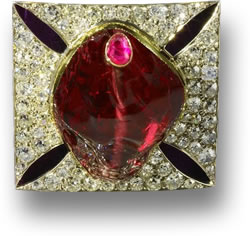
The most desirable shade of ruby is a deep red with a hint of blue which is referred to as “pigeon’s blood.”

Inclusions (or imperfections) in rubies are to be expected and are generally well tolerated. However, when inclusions impact the transparency or brilliance of the stone, the value of the ruby dramatically decreases. 

Many top-quality rubies have been mined in Myanmar (formerly Burma), which is where the term “Burmese ruby” comes from.

Synthetic Rubies and Ruby Treatments

Like emeralds, almost all rubies have some type of imperfection, which helps in identifying synthetics. Synthetic rubies can be identified by its lack of inclusions. 

Simulated rubies were used in jewelry production since the 1850s. These are also known as garnet doublets, where a piece of garnet is fused with a pinkish-red piece of glass. This creates a gem that looks like a much more expensive ruby. Less expensive Victorian era jewelry incorporates these gems. 

 Synthetic “flame-fusion” rubies hit the commercial market in the late 1800s. Chemist Auguste Verneuil perfected this method and had his ruby material shown at the Paris World’s Fair in 1900.  

Most modern rubies are treated to improve their color and durability. Treatments include heat treatment, irradiation, and fracture filling. All treatments should be disclosed to the buyer. 

The first-ever functional laser was created with a synthetic ruby crystal by Theodore H. Maiman in 1960. Synthetic rubies are used not only in laser technology but also in microelectronics. 

HAPPY ANNIVERSARY CM & MRS. CM!!

Pink Fairy Armadillo

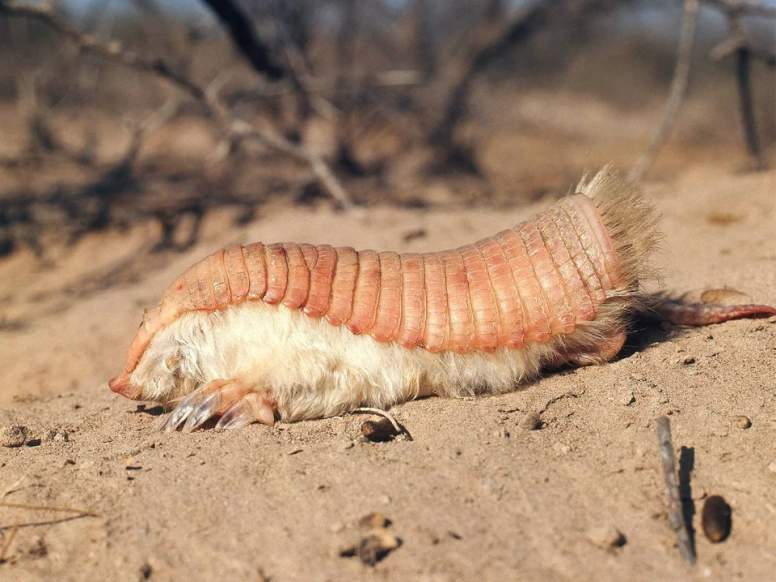
The pink color of their shell is due to a network of blood vessels underneath, which can be seen through the armor.

This is what gives the pink fairy armadillo shell its pink or pale-rose appearance.

The armored shell contains 24 bands that allow the pink fairy armadillo to curl up into a ball to protect its vulnerable soft underbelly.

While its shell is much softer than and more flexible than other armadillos, it still acts as armor.

Of all armadillo species, the pink fairy armadillo is the only one whose dorsal shell is totally separate from its body.

It is connected to the body with only a thin membrane, which runs right along its spine.

Scientists believe the pink fairy armadillo shell helps with thermoregulation.

Since its blood vessels are so close to the surface, the armadillo can control the amount of surface area is exposed to the environment to gain or lose heat.

The pink fairy armadillo shell can change color.

This is dependent on the environment and thermoregulation of the armadillo. Irrigation of the blood can increase into carapace of the shell to help lose heat and increase the ‘pink’ appearance. Conversely, it can drain blood from out of the shell to retain body heat which makes the shell color paler.

It’s equipped with two massive sets of claws on its front and hind legs.

They serve as tools to assist with quickly digging burrows in compacted soil. A very rare video below captures a pink fairy armadillo doing what pink fairy armadillos do best: digging.

The pink fairy armadillo has earned an unusual nickname the ‘sand-swimmer’.

It was long presumed by biologists that they could ‘swim’ through sand like a fish swimming in a body of water. However, that is a myth, the pink fairy armadillo actually digs through sand using their claws.

The posterior portion of their shell, known as the ‘butt plate’ – is flattened, so that it can compress dirt behind it as its digging.

It does so to close the burrow behind it, and create more open space in front so it can breathe. Mariella Superina a biologist managed to capture this behavior in a video below.

The claws of the Pink Fairy Armadillo make it hard to walk on hard surfaces.

Because of the size of the digging claws, which are actually large in comparison to the scale of the animal, they make walking on anything other than sand and soft surfaces very difficult.

Pink fairy armadillos are extremely sensitive to changes in environmental conditions and stress resulting from it can be devastating.

As they are classified as subterranean armadillos, any form of environmental change can have an impact on them including extreme changes in temperature or soil quality.

The desert-adapted characteristics of the pink fairy armadillo severely limits the type of habitat it can occupy.

In order for these mammals to survive, they require undisturbed regions that contain enough compact sand and hiding places for protection from elements and predators.

As a fossorial generalist insectivore, the pink fairy armadillo has a primary diet which is easily and quickly supplemented when required.

Ants and larvae that are located underground make up the main diet for this mammal and in instances when these food sources do not exist, the pink fairy armadillo will turn to plant leaves and roots.

With very small eyes, the pink fairy armadillo finds its way around in a unique manner that does not require vision.

The navigation skills of this animal come directly from touch and hearing.

The body of the pink fairy armadillo has a great deal to do with how it is able to move underground.

It has a torpedo-shape which reduces the amount of drag when burrowing underground.The tail of the pink fairy armadillo is more than just an appendage that hangs from the rear of the body.Because it is thick and hairless, the tail is used for balance and stability when all other limbs are being used for other tasks.Rain presents life-threatening risks to the pink fairy armadillo.Because it lives in burrows, during heavy rain the armadillo will vacate the underground to avoid being drowned. Plus, if it gets its fur wet, the pink fairy armadillo can’t properly thermoregulate and may develop hypothermia in the cooler hours overnight.

Oddly enough, on the black market, many of these mammals have been sold as pets. However, their low survival rate in captivity has greatly impacted that practice.

Climate change could virtually eliminate the entire pink fairy population.

Because they have very little body fat and a low metabolism rate, cold temperatures could result in the extinction of this animal. Habitat loss it already contributing to a decline in population.

Farming presents two very different risks to the pink fairy armadillo population.

In addition to farmland destroying burrows, the use of pesticide can impact the mammal. The pesticides adhere to the bodies of ants and as ants are one food source for the pink fairy armadillo, the more one ingests, the sicker it can get.

Hunters have also contributed to the decline in pink fairy armadillo population.

Pink fairy armadillos have been harvested for consumption for decades. The fact that they have a taste and texture that has been compared to pork has added to the endangerment.

They are so rare, nobody really knows their conservation status and whether they are an endangered species.

Mariella Superina a biologist for National Scientific and Technical Research Council of Argentina’s Conservation has been trying to assess their risk of extinction and in 13 years of field work has never seen a pink fairy armadillo in the wild. She has only seen tracks, which stop suddenly, and appear to be where the armadillo has disappeared underground.