Sapphire is the most precious and valuable blue gemstone. It is a very desirable gemstone due to its excellent color, hardness, durability, and luster. In the gem trade, Sapphire without any color prefix refers to the blue variety of the mineral Corundum. However, the term Sapphire encompasses all other gem varieties and colors of Corundum as well, excluding Ruby, the red variety of Corundum, which has its own name since antiquity.
The most valuable color of Sapphire is a cornflower blue color, known as Kashmir Sapphire or Cornflower Blue Sapphire. Another extremely valuable Sapphire form is the very rare, orange-pink Padparadschah. An exotic type of sapphire, known as Color Changing Sapphire, displays a different color depending on its lighting. In natural light, Color Changing Sapphire is blue, but in artificial light, it is violet. (This effect is the same phenomenon well-known in the gemstone Alexandrite). Yellow and pink Sapphire have recently become very popular, and are now often seen in jewelry
Going way back in time, Sapphires (excluding blue) were often called the same name as a popular gemstone of that color with the prefix “oriental” added to it. For example, green Sapphire was called “Oriental Emerald”. The practice of applying the name of a different gemstone to identify the sapphire was misleading, and these names are no longer used. What was once called “Oriental Emerald” is now called “Green Sapphire”. The same holds true for all other color varieties of Sapphire. However, the word “Sapphire” in its plain context refers only to blue Sapphire, unless a prefix color is specified. Sapphire with a color other than blue is often called a “fancy” in the gem trade.
Sapphire is a tough and durable gem, and the only natural gemstone harder than Sapphire is Diamond. Despite this, Sapphire is still subject to chipping and fracture if handled roughly, and care should be taken to ensure it is properly handled. Sapphire was first synthesized in 1902. The process of creating synthetic Sapphire is known as the Verneuil process. Only experts can distinguish between natural and synthetic Sapphire.
Sapphire is one of the most popular gemstones, and is used extensively in Jewelry. Fine colored Sapphire with a deep blue color and excellent transparency can reach several thousand dollars a carat. The blue variety is most often used in jewelry, but the yellow, pink, and orange “fancies” have recently become very popular. Green and light blue Sapphires are also known, but are less commonly used in jewelry. Opaque Black Sapphire is also used a minor gemstone.
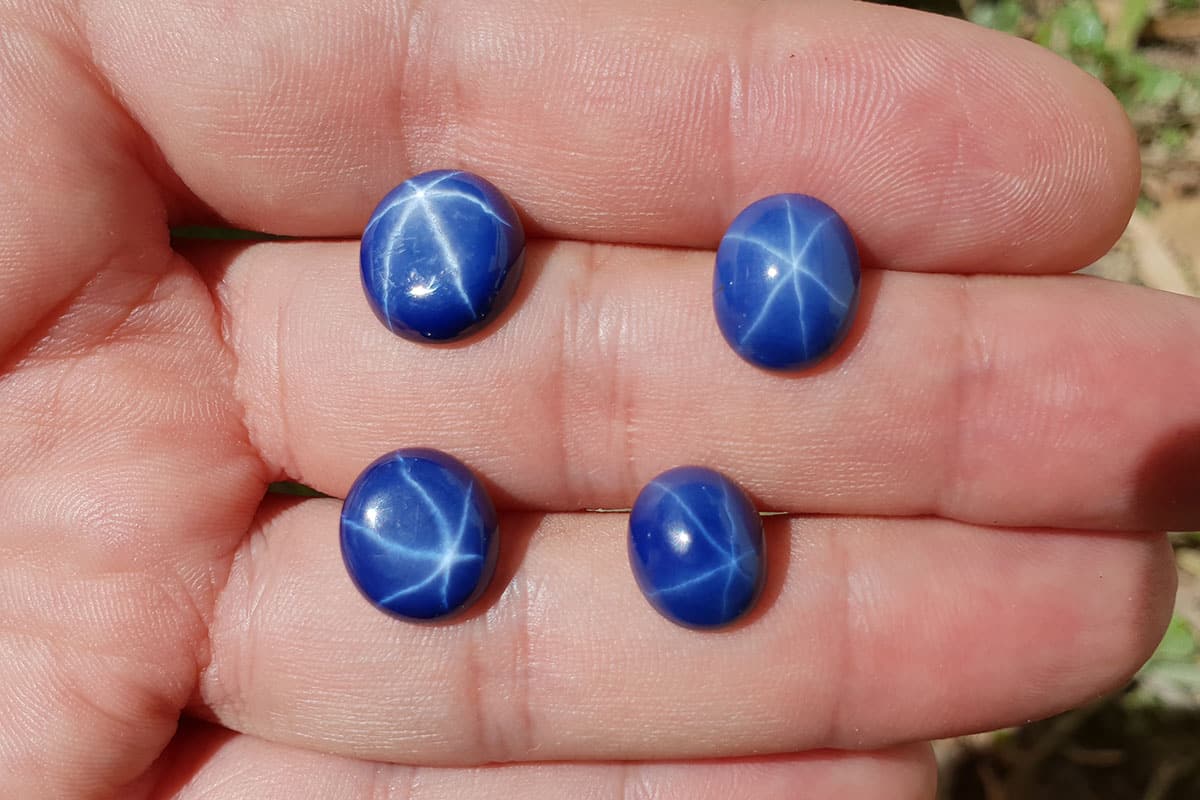
Sapphire is used in all forms of jewelry, including bracelets, necklaces, rings, and earrings. It is used both as centerpiece gemstone in pendants and rings, as well as a secondary stone to complement other gemstones such as Diamonds. Star Sapphires are polished as cabochons, and, if clear, are extremely valuable.
The rare orange-pink variety, known as Padparadschah, can be even more valuable than fine blue Sapphire. Blue Sapphire is sometimes carved into cameos or small figures, especially the less transparent material. Synthetic Sapphire is often used as a cheap substitute for the natural material.
Besides for the varieties of Sapphire listed below, Sapphire with color other than blue are prefixed with their color names. The main gemstone colors in addition to blue Sapphire include: Yellow Sapphire (sometimes also called “Golden Sapphire” if intensely colored) Pink Sapphire White Sapphire (describes Sapphire that is colorless) Green Sapphire Purple Sapphire Orange Sapphire Black Sapphire
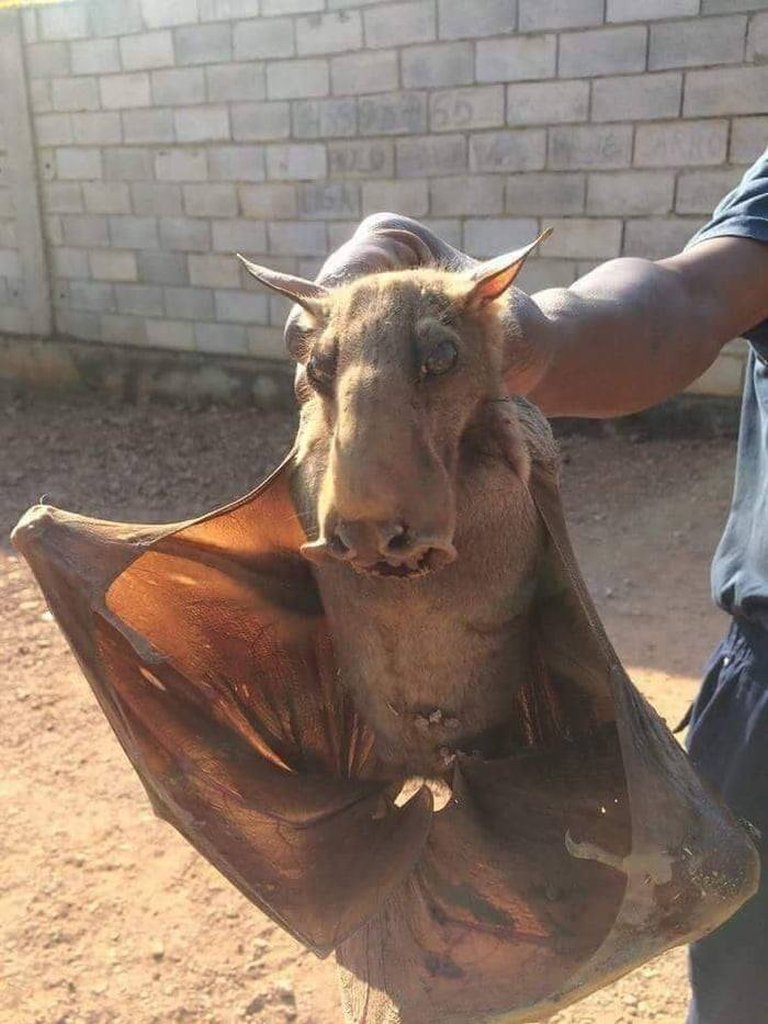
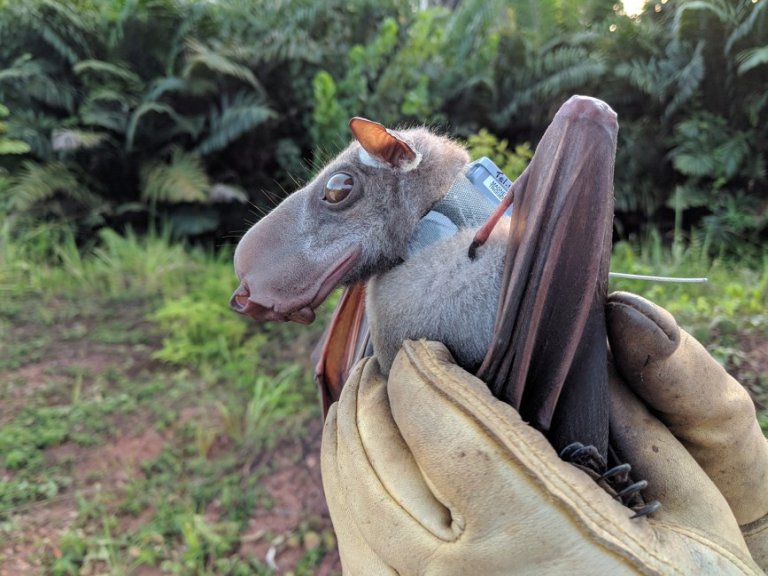
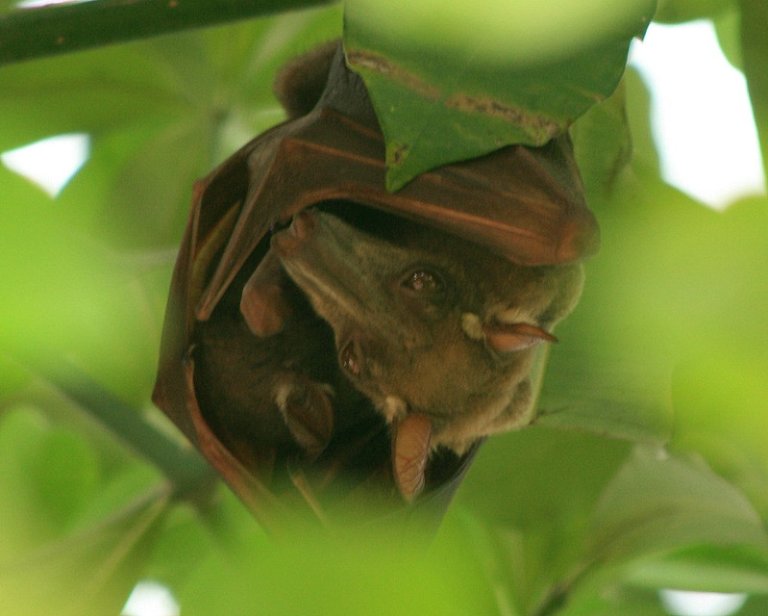
The hammer-headed bat, also known as the hammer head fruit bat and big-lipped bat, is one of the most unique species of bats around. They’re a type of megabat, just like flying foxes.
They’re considered frugivorous, which means their diet mainly consists of fruits. This, paired with the loud honking sound they make, has caused many people to consider them pests.
While they’re considered pests in much of Africa, they are also an important part of day-to-day life in the countries the species is found. This is because they are considered bushmeat. As a result, they help contribute to the daily protein needs of the people there.
Although they are hunted for a variety of different reasons, the hammer-headed fruit bat isn’t considered to be endangered or threatened. This is because they have a wide habitat distribution with estimated high populations.
Males gather together in groups to attract females and impress them with courtship rituals, which involves ‘calling‘ to entice females to mate. They sound a little like croaking frogs! Like many other mammals, baby bats are known as pups.
Hammer-headed bats will sleep during the day in tree roosts individually or in small groups of 4-5, and forage for food at night.
They’re one of the largest bats in the world
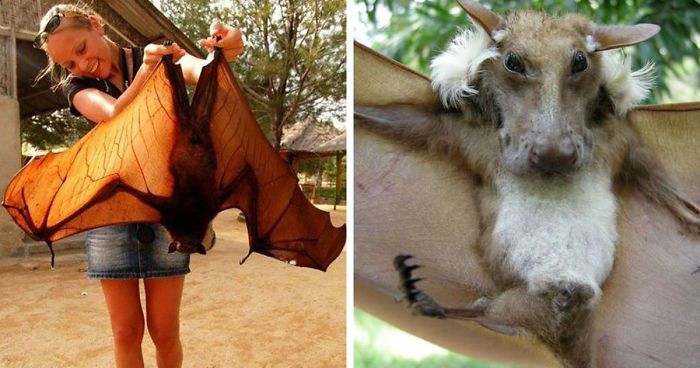
As a species of megabat, the hammer-headed bat is one of the largest species of bat in the entire world.
In fact, they rank at about number three, right after different species of flying fox. They have wingspans rivaling those of small birds of prey – around 3.3 feet, and their forearms are more than half the size of human forearms.
Hammer-headed bats are known to have different personalities
Believe it or not but hammer-headed bats actually have highly noticeable personalities that can differ from individual to individual. This is best observed when trying to further research and tag individuals to track their activity and behavior.
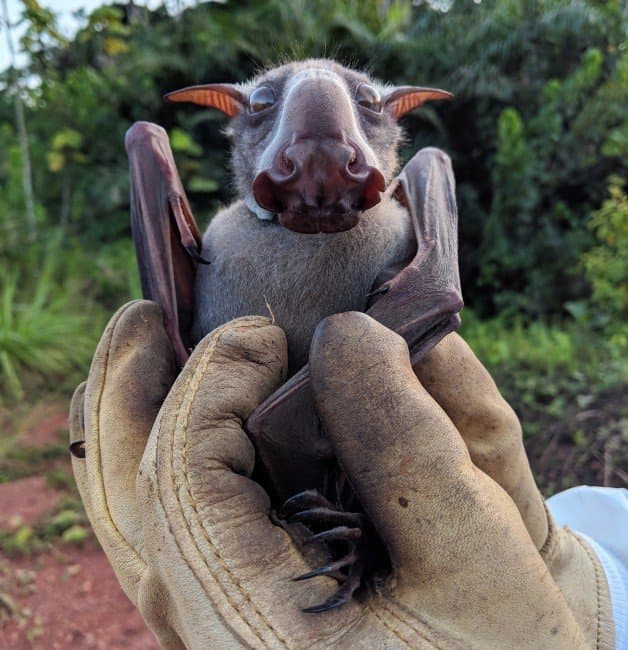
In order to track hammer-headed bats, scientists have to place GPS collars on them. This means that they’d have to hold the hammer-headed bat. Some individuals have been recorded to be docile and wait patiently to be released. Others were much more rebellious and would often bite, causing the scientists to need thick leather gloves.
They can have twins
While they’re not so uncommon in certain animals, hammer-headed bats, like humans, don’t often have twins. Instead, they usually only have one baby per pregnancy, which can happen up to twice a year. However, while this is the norm, twins have been reported!
The hammer-headed bat’s tongue acts as a straw
Because hammer-headed bats eat mainly fruit, their anatomy is designed in a way to help them get the most out of their diet. Their tongue is no exception.
The hammer-headed bat’s papillae are for more than just tasting – they also act as a straw! These little bumps on their tongue face backward, which allows for the hammer-headed bat to easily suck out the juices from their favorite fruit.
Their large face is a part of their mating rituals
The hammer-headed bat is named for its large head. However, this is actually only most notable in males, with females having an appearance more like other megabats.
Remember how earlier in this article we mentioned that hammer-headed bats are viewed as pests because of the loud ‘honking’ noise they make?
That noise can actually be traced back to the shape and size of their head. The male hammer-headed bat’s head is designed in such a way to echo, and thus amplify their calls. They have large resonating chambers on their faces, which help them find a mate.
Male’s vocal chords are also three times the size of females, and their larynx is so large, it displaces other organs, such as their heart, lungs, and gastrointestinal tract.
6% of males are involved in 80% of matings
Females visiting the lek (group of males) select a male to mate with, and interestingly a study found that it’s often a relatively small number of males that are chosen by many of the females for mating!
It’s difficult to keep a hammer-headed bat in captivity
Although some zoos can be beneficial to both animals and humans, not all animals will thrive in captivity. Take the great white shark, for instance. The hammer-headed bat falls somewhere in the middle, able to live in captivity but has certain needs that have to be attained in order to survive.
Hammer-headed bats can become easily stressed, especially if they’re being moved often. As a result, they require long-lasting residencies in zoos. They also need access to a variety of food and care.
Some people eat hammer-headed bats
Hammer-headed bats are considered bushmeat in certain countries in Africa. This is seen most commonly in Nigeria and the Democratic Republic of the Congo.
It is hunted and eaten year-round in Nigeria. However, in the Democratic Republic of the Congo, it is typically only eaten seasonally.
They are being investigated as a reservoir of the Ebola virus
Ebola is a severe and often fatal hemorrhagic fever, which can be caught and passed from animals to humans.
Some hammer-headed bats have been tested positive for having antibodies for the virus, although Ebola itself has not been detected in the bat itself.
The reserviors for the Ebola are still unknown, although the natural reservoir is thought to be bats.
Kea brought this adorable little bird to my attention last month and I wanted to share this article I found about them. It’s written by “Kelly” at Tail and Fur.
Zebra Finches are a popular bird found all over the Australian continent, except for the cool, moist south and the tropical far north. Aside from Central Australia, these attractive birds are native to Indonesia and East Timor. They are mainly grass seed eaters. And because they are soothing singers, they are fun to have in your home too.
If you are interested in different bird species and beautiful birds always attract your attention, then go through this article. Many interesting facts about these beautiful Zebra Finches are waiting for you. Go through them all, and you may end up bringing a pair home too.
Most Interesting Facts About Zebra Finches
For more than a century, these birds have been among the most popular caged birds across many countries. They are mainly grass seed eaters, but what else do we know about them? Here are 25 interesting facts about Zebra Finches:
They have stripes like zebras.
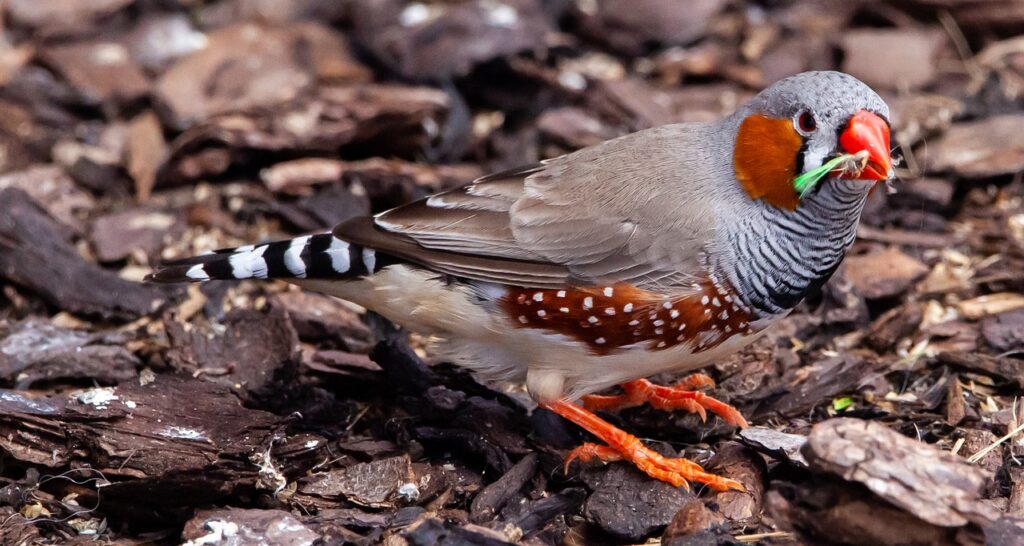
You may wonder why a bird is named “zebra.” There is obviously a reason for that. The small chest of this cute bird features black and white stripes like zebras. Its barred tail is often colored black and white too.
As with other birds in the animal kingdom, the males also feature a burst of colors. Often, you will find them in a mix of brown, white, black, gray, and orange. The females, on the other hand, are uniformly gray.
Males and females have different beak colors.
Adult males have brightly colored crimson-red beaks. In comparison, you will notice that female Zebra Finches have lighter-shaded, more muted orange beaks.
They are the fastest maturing birds in the world.
Oh! This tiny bird has one big record against its name. They are the fastest maturing bird. They are able to breed from the age of only 70 to 80 days. After the breeding season, a baby bird will have grown and is ready to leave the nest in just about two months.
They are wonderful pets.
Zebra Finches are great company to the human beings and should be kept in pairs. They are well known for their cool temperament and often make such a good connection with their human host that they eat food directly from their master’s hand.
They are monogamous.
Finches are monogamous breeding pairs, which means they stay with one partner for their lifetime. They generally breed after ample rainfall, as there is abundance of water and food available afterward. Adult birds aged 70 to 80 days are ready to breed.
They dance wonderfully.
Before the mating and breeding season, you will find male birds dancing on the branches of trees to impress the female finches. They push their plumage outward to make their dance even more attractive.
They are small and tiny appearance.
Zebra Finches are one of the tiniest Finch species, but they are not the smallest. They only grow up to four inches long. Males and females are practically the same size, but you can easily distinguish them by looking at the color of their beaks.
They have a long lifespan.
These attractive birds can live around five to seven years when they are free and out in the wild. However, a captive Zebra finch will live longer, often surviving up to 10 to 15 years.
To increase their survival rate and prolong their life, you will want to give your Zebra Finch a companion. This way, you can be sure they remain emotionally and mentally stable.
Both the male and female birds can sing.
Like other birds in the Finch species, these birds are singers too. All male birds sing differently, having their own song features that distinguish them from the rest.
Adult males sing to impress a potential mate so that they can continue their line. Pay attention to males, and you’ll notice that they are the ones that tend to be loud and noisy. While the female finches can sing, they are bad singers.
They live together.
In the wild, big flocks of Zebra finch birds stay together. They enjoy plenty of social interactions so that they can be happy and healthy. Even a male and his female only separate when they have eggs in their nest.
While they like their human companions, they prefer spending most of their time interacting with fellow birds. They also don’t enjoy being held, which can frighten and stress them out. As such, do your best to touch them as little as possible.
Their beaks change colors as they mature.
The young birds have black beaks, which change into bright red or orange after one month. Before they mature, all male Zebra finches look like the females, save for their black beaks.
They are protective.
When they breed and have eggs in their nest, the male Finches become very protective. The males also produce a hissing noise to let others know they are ready to protect their mates and their territory.
They are untidy while eating.
Though they are very beautiful to look at, they can get very messy when they eat. If you ask us, that’s understandable, as they need to dehusk seeds to get to their food. Even so, you will often find them dropping seeds here and there.
They have a good sense of smell.
Birds are known for their poor smelling capability. However, Zebra Finches are different. Although the brain of Zebra finches has smaller olfactory bulbs compared to other bird species, they actually use their sense of smell to locate and recognize their relatives.
They have a huge contribution to the world of science.
This may be hard to believe, but, yes, this small bird has helped a lot when it comes to understanding how birds behave, how they sing and talk, and how they evolve. They even lent a hand in figuring out how the human brain works.
You will find Zebra Finches used in neurobehavioral studies where the focus is on auditory processing and song development.
Their diet consists mostly of seeds.
Wild Zebra Finches enjoy eating seeds from different plants and a diet with insects. They also regularly eat pine cones, weeds, and even berries. However, when they do, they almost always chew up the fruit only to get to its seed.
Though they love grass seeds, if you are planning to make them your pet, give them a balanced diet of calcium (boiled eggshell) and seeds. It will also help if you put their food on the cage’s floor so that they can still use their foraging skills.
A premium daily diet is especially important during the breeding season. Make sure you supplement their diet with insects, such as water fleas and moths.
They love water.
This bird is a frequent water drinker, so make sure water is always available to them. They also enjoy a good bath once in a while. Hence, leave a couple of small bowls filled with water in their cage.
Because they have a small body, they can get dehydrated really fast. If you pay attention, they can drink up to 28% of their weight in water per day. Dehydrated birds can die if not given water for hours.
Never house them alone.
This bird does not like to live alone, so always house them in pairs even when they breed. If you find an uneven number of birds in the cage, make it even.
When we say pairs, we don’t necessarily mean that you get a male and female Zebra finch. They can both be males or females. However, a male and female pair get along much better than a same-sex pair.
If you decide to keep two Zebra Finches of the same sex, do not put a nest or nests in their cage. This is to avoid fights, as these birds can be territorial.
They require occasional trimming of their nails.
If your pet finch has overgrown nails, bring it to an experienced bird groomer to have them trimmed. If you’re confident enough, you can try cutting them yourself using human nail clippers.
You will know your Zebra Finches need their nails trimmed when their feet don’t touch the ground when they are standing. Overgrown nails could curl around and cause them pain.
They are sociable in nature.
As they are social in nature, they create cacophony while they sing together. And since you’ll be keeping them in pairs, make sure you put them in a big enough cage for flight.
They are a common subject of genetic research.
This bird species is a common subject of genetic research. Also, studies of their brain structures have led to discoveries in song production.
They love to fly.
Finches are flight-loving birds and need a minimum of 20 inches of horizontal space to be accommodated. Putting them in a big enough flight cage allows them to exercise, play, and stay healthy overall.
You can also keep your Zebra Finches entertained by making sure they have plenty of perches on which they can hop. Since they are small birds, you will want to use natural wood or ropes.
They are an adaptive species.
This bird is very adaptive to new surroundings. However, they are mostly found in open areas with grasses and bushes. In fact, they are such an adaptive species that you will find them building their nests in urban cities and commercial establishments.
They learn to sing from their surroundings.
As they are adaptive in nature, they learn singing from nature itself so they are very popular as songbirds. A young male often learns singing by copying the song features of an older male Zebra Finch.
They can learn as many as two complex songs when still in the learning stage. However, they are often only able to produce a single song when they reach full maturity.
They are the second bird genome to be sequenced.
After chicken, Zebra Finches are the second bird species whose genome has been sequenced in the year 2008. Through this, researchers were able to gain insight into the evolutionary processes of birds in general.
For years, scientists all over the world have been interested in learning about this bird species. In particular, they wanted to study its brain function and how it can learn, memorize, and vocalize songs.
Conclusion
Zebra Finches are one of the loveliest creations of Mother Nature, with their serene beauty, soothing singing voice, and composed temperament. For this reason, it is not surprising why they are also among the most popular pet birds across many countries. They also require a minimal time commitment, so newbie bird owners will find them easy to care for.
To keep them happy and healthy, make sure you provide them with a premium daily diet, a water source where they can drink, and collections of water so that they can bathe a couple of times every week.
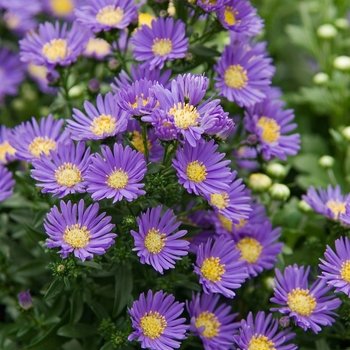
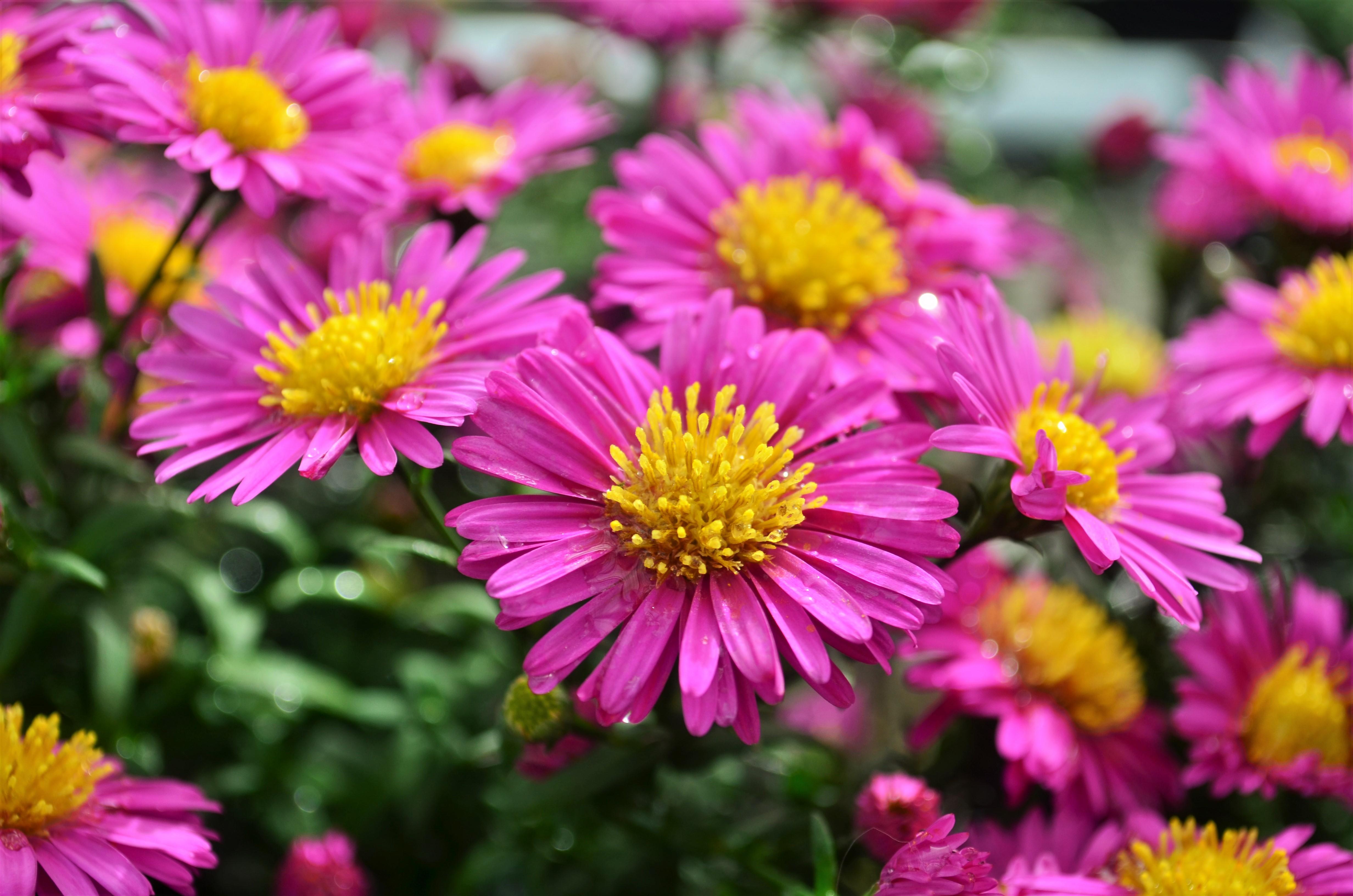
It’s a cruel trick of Mother Nature that the most glorious weather of the gardening season coincides with the decline of most blooming plants. Asters (Symphyotrichum spp.), however, don’t play along with the prank. Like garden mums, asters flower in response to the shortening days of fall, giving gardeners a beautiful display of buds that can bloom from August through October. Native to North America, New World asters comprise many species in several different genera of plants, as well as dozens of cultivars, but for gardeners, asters are simply great flowers that provide purple or blue daisy-like flowers late in the season.
Aster Care
Although home and garden centers often market asters as a seasonal purchase among displays of pumpkins and hay bales, asters are long-lived perennials that can become a permanent part of your landscape. These fast-growing perennials will be ready to put on a good fall display in their first year, and once established, they will hold their own for many years.
While you can grow aster flowers from seeds planted in the springtime, it may take several years for them to mature into full-sized plants. More often, asters are planted from potted nursery specimens. They do best in loamy, well-draining soil, and desire a good amount of space around the plants to allow room for their roots to expand.
Every three years or so, the root clumps should be dug up and divided to keep the plants from getting too woody and dying out in the centers. The woody center can be discarded, with the outer portions replanted at the same depth as before.
Light
Plant aster flowers in an area that boasts full sun for the majority of the day. Too much shade can cause lanky plants and fewer flowers, especially for the more common cultivars and hybrids. There are some native species varieties, however, that will do quite well in partially shady conditions.
Soil
Asters appreciate loamy soil that’s slightly acidic, with a pH ranging from 5.8 to 6.5. If your soil is alkaline, you can correct it by adding organic matter such as well-rotted manure, leaf mold, or compost.
Water
Keep new plantings moist and continue watering regularly until the flowers are finished blooming. As a rule of thumb, the soil your asters reside in should stay consistently moist but never saturated. One thing to note: Try to water the base of your asters without splashing water on the leaves—doing so can cause mildew or fungal growth. One inch of rain or watering once a week is usually recommended for most perennial plants.
Temperature and Humidity
Aster flowers thrive in cooler temperatures and are frost-hardy, able to withstand near-freezing temperatures temporarily. When it comes to humidity, asters have no special preferences and therefore will not need increased humidity levels or extra spritzing.
Fertilizer
Asters are moderate feeders, and they appreciate being fed with a balanced flower fertilizer twice a month, beginning in spring and continuing until the blooms begin to open. Excessive nutrients can shorten the blooming time, so stop fertilizing asters in August.
Types of Asters
The taxonomy of asters is somewhat complicated, as it now includes several genera of plants, all within the Asteraceae family. Most gardeners do not need to worry too much about the taxonomical details, as all these plants are sold as asters and all have the familiar daisy-like flowers and perform the same way in the garden. Some of the more popular cultivars include:
‘Celeste’: These dark blue flowers bloom early and feature bright yellow centers.
‘Hazy’: Another early bloomer, the “hazy” aster boasts raspberry-pink flowers with yellow centers.
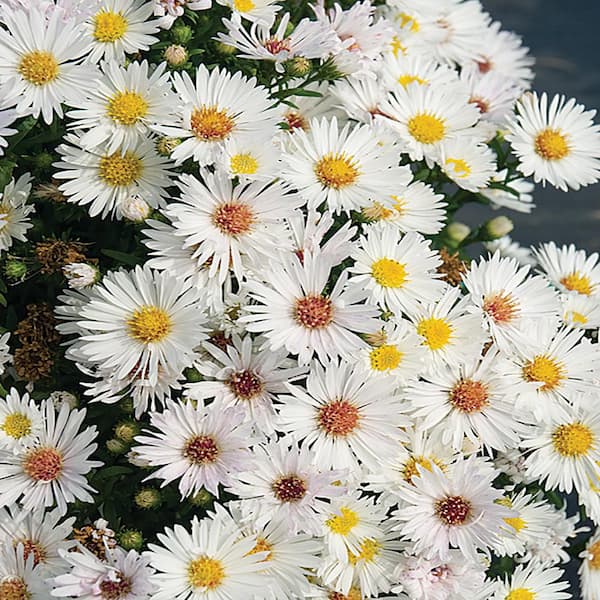
‘Puff’: The puff aster is hardier than many other white cultivars and will bloom among the earliest.
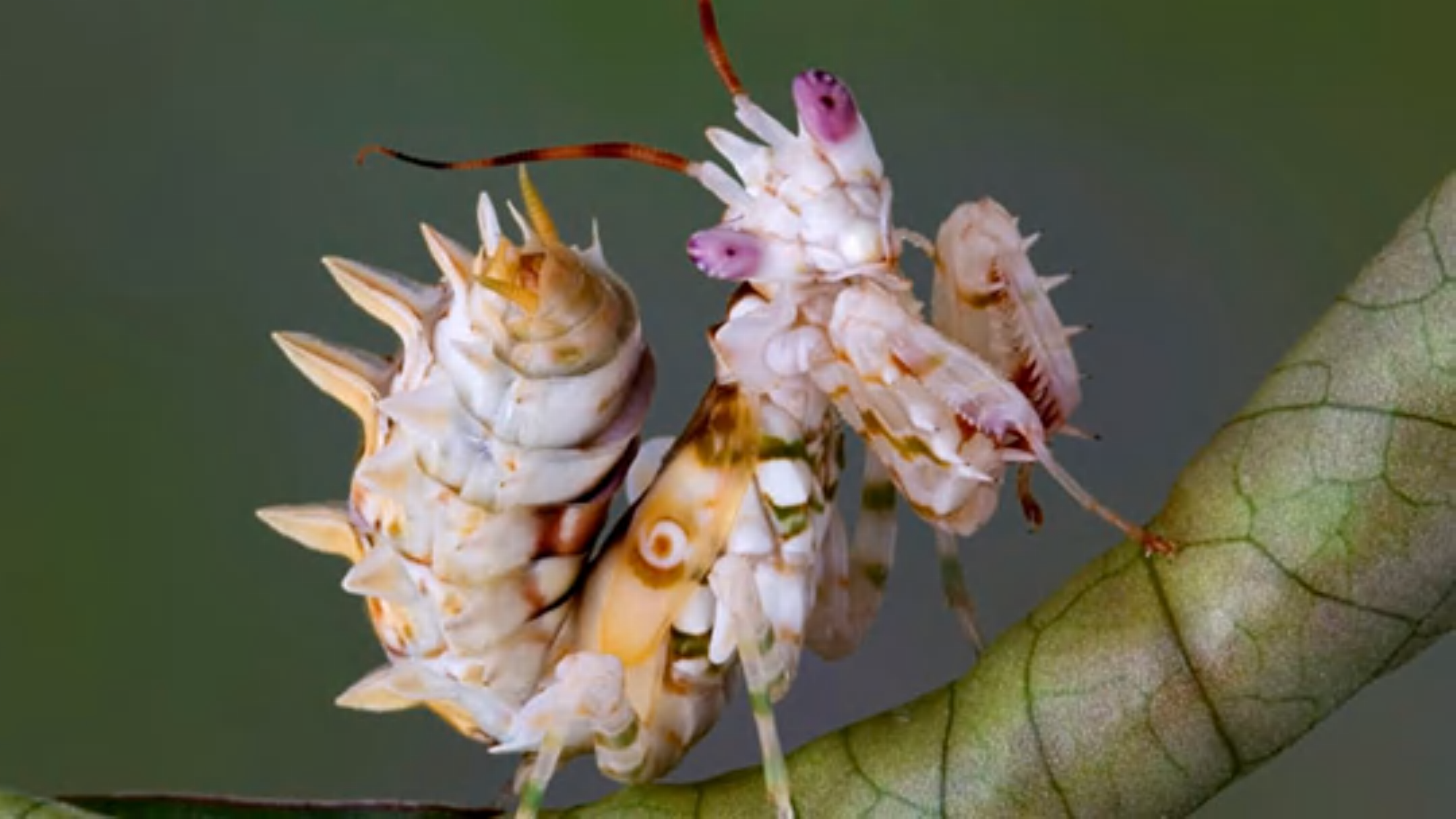
Sure, you’ve heard of the Praying Mantis. But have you met its cousin, Pseudocreobotra wahlbergii, also known as the Spiny Flower Mantis? We stumbled upon its photo during an image search and had to find out more. Here are a few things to know about this beautiful, terrifying-looking insect.
This tiny bug measures between 1 to 2 inches and is native to Southern and Eastern Africa.
Nymphs, like the one shown above, have an upturned abdomen. Adults have a large yellow spiral eyespot on their fore wings.
When they’re first born, nymphs are mostly black and look almost like ants.
Nymphs will molt approximately every two weeks; the time between molts gradually increases as the mantids get closer to adulthood. During molting, a mantis hangs upside down, sometimes shaking, and eventually wiggles out of its skin. It takes seven molts for a female to reach maturity, and six molts for males.
When threatened, the insects raise their fore wings, which makes them look like a much larger creature with big, golden eyes. This is called a deimatic display, and it looks like this:
I wouldn’t want to run into that guy in an alley—would you?
Instead of searching for prey,P. wahlbergii prefers to snatch its meals—usually pollinating insects right from the air.
Females have small spines on the edges of their wing cases; males do not. The male has slightly longer antennae and eight segments on its abdomen (females will have six or seven).
An easy way to tell males from females is to look at the length of their wings: A female’s wings will reach to the end of her abdomen, while a male’s wings will extend past it.
Like other mantis species, the Spiny Flower Mantis is cannibalistic. As usual, it’s the males who have the most to fear; the website MantisKingdom.com recommends feeding the female before putting a male in the cage behind her:
As she is busy with eating, she can’t grab him or throw him off of her. After a while of holding on, the male will bend his abdomen down to connect with hers and mating will commence.
After the deed is done, the site suggests getting the male out of the cage quickly, or else he’ll become a meal.
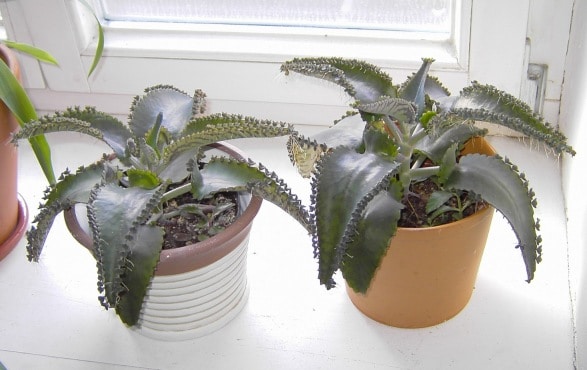
Mother of Thousands (bryophyllum daigremontianum) is a beautiful and interesting house plant, and one of my favorites. If you have one of these plants in your home, you’ll want to know how to care for it, so it thrives for years to come.
Mother of Thousands should be planted in a well draining potting mix, watered infrequently but thoroughly, and kept in bright, indirect sunlight with low humidity at 65 to 75° F. The tiny plantlets that grow along the edges of the leaves will need to be managed as they try to take root wherever they happen to land.
What Is A Mother Of Thousands Plant?
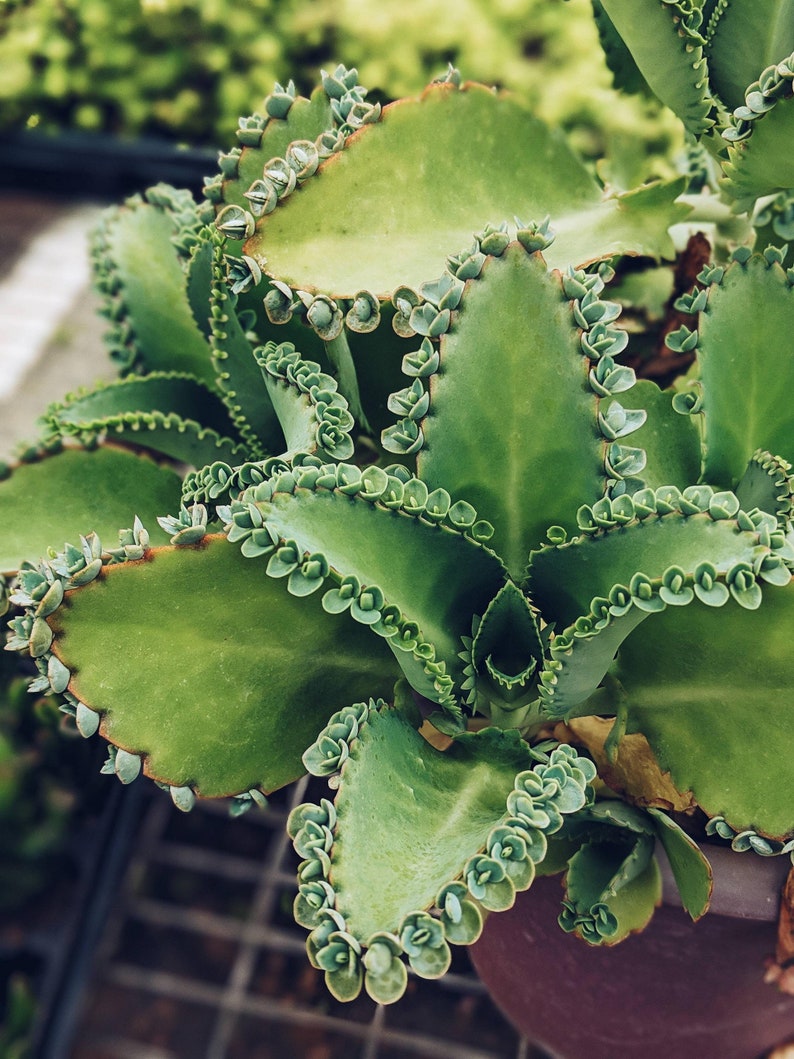
Mother of Thousands is known by numerous other names – Mexican Hat Plant, Alligator Plant, and Devil’s Backbone. A native of Madagascar, the plant is a succulent that grows up from one stem. The large blue-green leaves are pointed and narrow and grow up to 6-inches long and 3-inches wide. The plant itself can grow as tall as 18 to 35-inches if you let it.
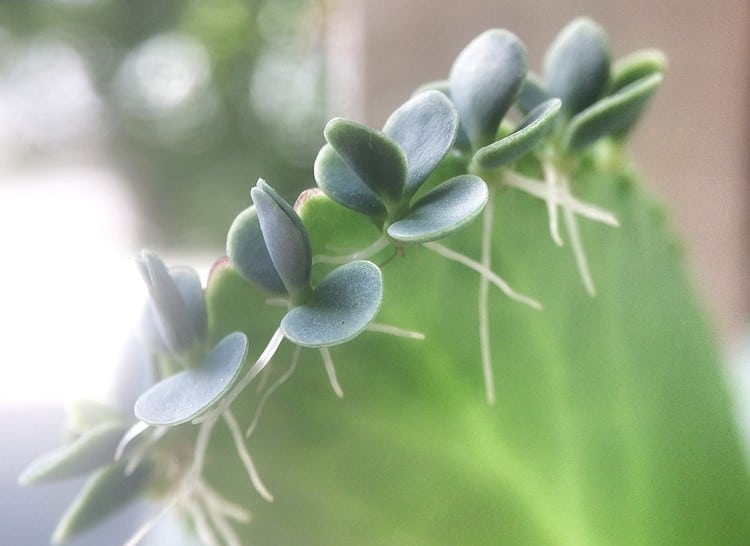
The most unique part of this plant is the tiny plantlets that grow along the edges of the leaves. These little plantlets will drop easily from the main plant, trying to take root wherever they land and find soil appropriate for growth.
For this reason, many gardeners think of the Mother of Thousands as a bit of a problem plant, with the little plantlets doing their best to grow and multiply in all types of soil alongside other plants.
You can easily see how the plant got its most common name – it’s the mother to thousands of other plants! When you’re growing Mother of Thousands indoors, you won’t have to worry too much about it propagating, although you may find that the little plantlets drop into any nearby plant pots where they can take root.
Mother Of Thousands Propagation
With all the little plantlets, your Mother of Thousands is an easy houseplant to propagate. The first thing to do is pick two or three of the plantlets from one of the leaves. If you’re not going to plant them right away, place the plantlets into a plastic bag or seal in plastic wrap. You want to keep them moist until you’re ready to use them.
Take a small terracotta pot and add cactus soil. Don’t worry about finding a deep or big pot – the roots of the plantlets will take some time to grow big enough for a large pot.
Put the plantlets directly onto the soil, making sure they’re at least a ½-inch apart. Spray the soil and the plantlets with water so they’re moist without being saturated. Then cover the pot with plastic wrap so that you’re creating your own little greenhouse.
Place the pot where it gets a lot of sun – then continue to keep the soil and plantlets moist, being careful not to overwater. If you give them too much water, they have a tendency to rot, making them unusable. Mother of Thousands doesn’t like a lot of humidity – this goes for the plantlets as well.
Keep an eye on the plantlets, watching as they start to grow. Adjust the plastic wrap so that it doesn’t crush the plants. You can place a toothpick in the soil and tent over the plastic wrap.
When they’re about an inch tall you can remove the plastic wrap, keeping them in the sun as they continue to grow. If you have a really green thumb, some of these new plants may flower for you, bursting with little pink/purple flowers.
When the plants are big enough you can separate them and plant them in their own pot. Keep in mind that the roots of these new plants are very tender and can be easily damaged. Make a wide cut into the soil when transplanting them to avoid making any cuts into the roots.
Does Mother Of Thousands Flower?
When grown indoors as a house plant, the Mother of Thousands rarely flowers. When grown outside and kept in the garden, Mother of Thousands will flower if the conditions are right. The flowers are pink and tubular in shape, hanging gently over the main stalk of the plant.
They only bloom on plants that are mature and then only in the late fall and early winter if the temperature isn’t too cold. After blooming the plant dies, leaving behind its many plantlets to start sprouting in its place.
Is The Mother Of Thousands Plant Poisonous?
Mother of Thousands is a poisonous plant. The leaves, stem, and tiny plantlets are all toxic and could be fatal to small children and pets. If you have children and pets, be sure to keep the plant well out of reach.
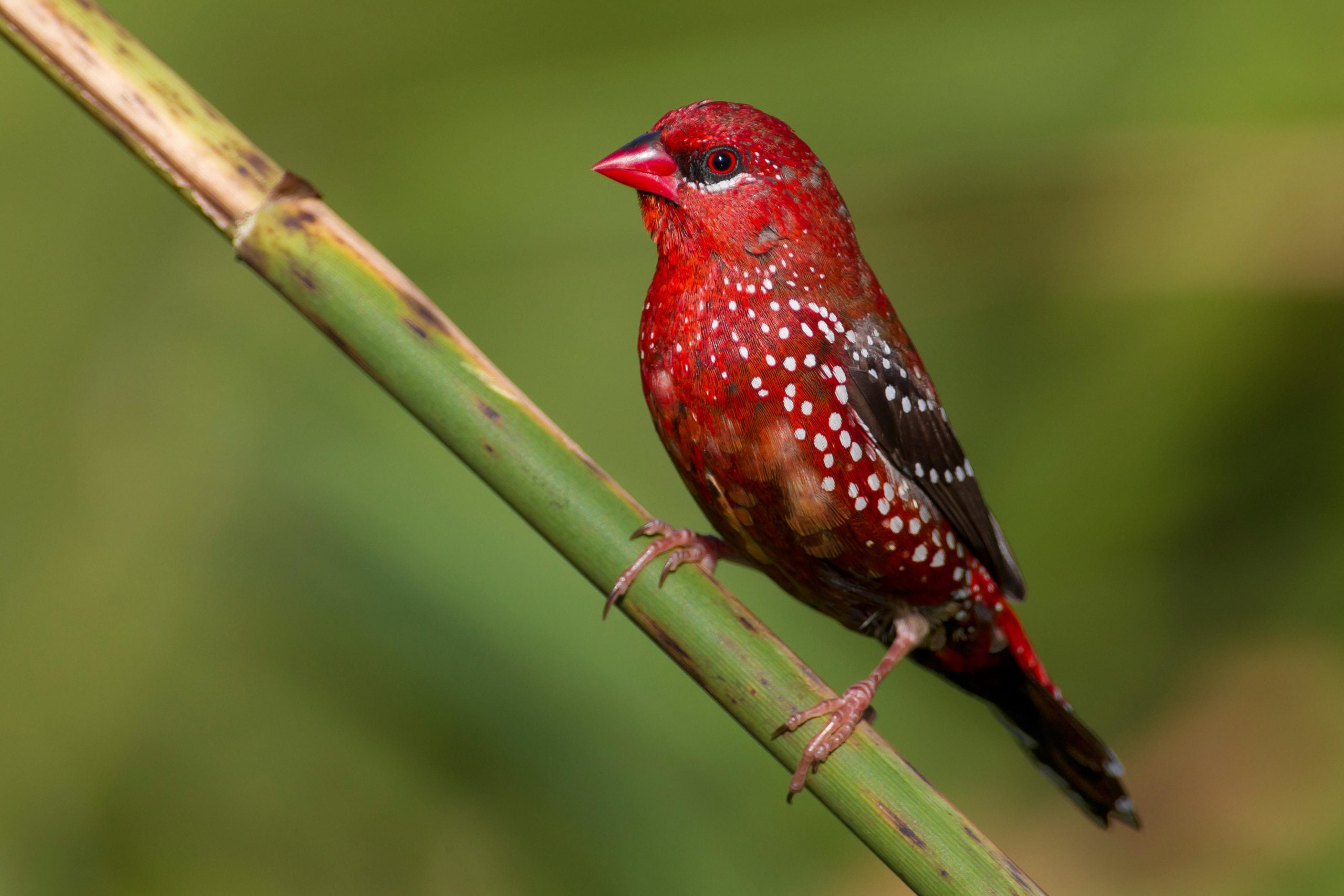
The strawberry finch (Amandava amandava), also known as the red munia or the red avadavat, is a sparrow-sized bird with spectacular bright red plumage speckled with white spots. However, the signature look of the males of the species is only temporary and worn only during the breeding season. Once the breeding season is over, the males take on a plainer and duller look like the female strawberry finches.
Native throughout South and Southeast Asia, these species of finches are most common in the tropical regions of Northwestern and Central India. They are usually found in the flat plains with an abundance of tall grasses. These finches belong to the waxbill group of birds that includes passerines (songbirds). Even though their general physical build is similar to sparrows, the strawberry finches are easily distinguished by their seasonal red beak and the striking vermilion red and white-spotted breeding plumage of the males.
However, there are introduced populations of the strawberry finches that exist in Hawaii, Singapore, Puerto Rico, Portugal, Malaysia, Egypt, Fiji, Brunei, and southern Spain.
The gathering of strawberry finches is called clumping. During this time, they create and maintain bonds by engaging in social preening or grooming.
As part of their pre-mating ritual, the male finch of the breeding pair holds a feather or grass stem in its mouth, keeps its feathers erect, and deeply bows its head in front of the mating partner.
Strawberry Finch Interesting Facts
What type of animal is a strawberry finch?
A strawberry finch is a species of waxbill bird of the family Estrildidae.
Where does a strawberry finch live?
Strawberry finches mostly live in tropical flat plains with crops or tall grasses, preferably with a nearby water source.
What is a strawberry finch’s habitat?
The strawberry finch’s natural habitat and distribution extend throughout South and Southeast Asia from Pakistan to the Malay Peninsula and the adjoining islands. The nominate subspecies (Amandava amandava amandava) is found in Pakistan, India, Nepal, Bangladesh, and Sri Lanka, the Burmese form (Amandava amandava flavidiventris) is also common in Vietnam, Thailand, Indonesia, and China, and the Javan form (Amandava amandava punicea) is found in Cambodia.
How do they reproduce?
Before mating, the male birds try to attract the female finches with a vibrant display of their bright red plumage accompanied by a mating dance comprising bowing, singing, and hopping. The breeding pairs build nests and stick together throughout the breeding season.
The breeding season varies regionally but usually begins in the second half of the rainy season and extends into the following dry months. Female strawberry finches lay a clutch consisting of four to six eggs. The clutch of eggs is incubated by both the parents during the day and by the female of the breeding pair during the night. The eggs are incubated for 11-14 days. After hatching, the young birds take about 20 days to fledge. Both members of a breeding pair are involved in feeding their young.
How do they communicate?
Although not particularly loud, strawberry finches are quite vocal. The male birds have long location calls, but those of the females are softer, shorter, and used less frequently. Both members of a breeding pair use vocalizations during pre-mating ritualistic displays. A shrill call is typical of finches showing aggressive behavior. These birds also give out typical high-pitched calls in times of potential threat to the young. When in the nests, the juveniles learn songs from their father.
What do they eat?
The diet of these finches is quite diverse. They take an omnivorous diet consisting primarily of grass seeds as well as termites, ant larvae, mosquito larvae, caterpillars, and centipedes. They also feed on fruit when available.
They look like a cross between an antelope and a giraffe
Some of the most notable characteristics of the gerenuk are its long, slender neck and thin legs. Gerenuks have also wedge-shaped skulls and shorter noses than many antelope species, lending them a giraffe-like appearance.
Their name means “giraffe-necked”
Gerenuks look so similar to giraffes that they were given the name garanuug, which means “giraffe-necked” in Somali.
They can stand up to find food
Gerenuk diets consist of plant matter from trees, bushes, and other plants. Unique structures in their spine allow them to stand upright on their hind legs to reach food as high as 2 m (about 6 feet) in the air.
Gerenuks never need to drink
These animals get all the moisture that they need from the plants that they consume. Scientists studying gerenuks have observed them for weeks without ever seeing them drink water.
They are surprisingly fast
Gerenuks are prey for lions, cheetahs, hyenas, and other African carnivores. To escape these predators, gerenuks can run up to about 40 miles per hour.
They mark their territory with tar and urine
Male gerenuks secrete a thick, tarry substance from ducts near their eyes. They then wipe this fluid on trunks and branches to alert other males of their territorial boundaries. Male gerenuks also urinate to mark these boundaries. This method only discourages other adult males; female gerenuks and their fawns can move freely through a male’s territory.
Gerenuks have scent glands in unusual places
Many animals use scent to mark their territory. However, unlike most animals, the scent glands of a gerenuk are located behind their knees and inside their hooves. These glands also play a role in reproduction, as they produce pheromones that can help gerenuks attract a mate.
They have a natural defense against thorns
Gerenuks must forage through spiny bushes to find the leaves that make up the bulk of their diet. Their large eyes are vulnerable to scratches or other wounds from sharp thorns. The gerenuk’s long eyelashes protect their delicate eyes from injury as they search for food.
Gerenuks can live up to 13 years in captivity
In nature, gerenuks generally reach about 8 years of age. However, without pressure to find food and avoid predators, captive gerenuks can live much longer than their wild counterparts.
Their mating behaviors are unusual
As gerenuks prepare to mate, the female will raise her nose and pull her ears close to her head. The male will then present his long neck in the hopes that the female will choose to mate with him. Before mating, the male will wipe the female with the scent glands near their eyes and sometimes tap or even kick the female gerenuk in the stomach with his foreleg.
Females live together and males live alone
If you observe a group of gerenuks in the wild, they are almost always adult females and fawns. Male gerenuks leave their maternal groups when they reach sexual maturity. From that point on, they remain solitary, interacting only to defend their territory from other males or breed with females.
Gerenuk pregnancies last about 7 months
Gerenuk breeding happens year-round, and most mothers have only one fawn at a time. Female gerenuks remain pregnant for about 7 months. The newborns are able to stand within minutes after birth.
Hiding is the key to gerenuk fawn survival
Despite their ability to move independently soon after birth, delicate young gerenuks are vulnerable to predators and dangers in the environment. They spend much of their early months hiding in trees, bushes, and piles of leaves and grasses for more than 9 hours a day. Their mothers forage for food while they remain safe. After each nursing period, both mother and fawn move to a new area.
They have a vocabulary of their own
All gerenuks regardless of age or sex communicate with a series of vocalizations. Each sound has a distinct meaning among gerenuks. Loud bleating indicates danger and helps alert other gerenuks. Mothers bleat softly to their young. A whistling noise indicates irritation or annoyance.
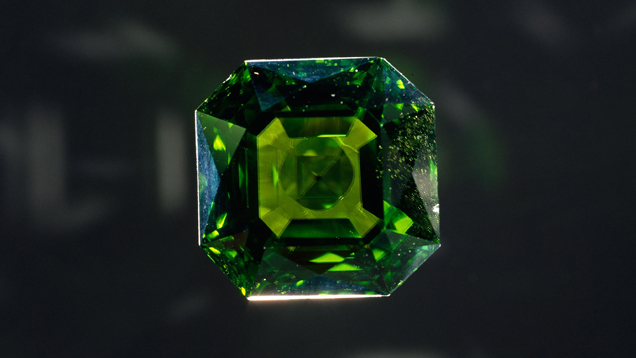
Peridot has always been associated with light. In fact, the Egyptians called it the “gem of the sun.” Some believed that it protected its owner from “terrors of the night,” especially when it was set in gold. Others strung the gems on donkey hair and tied them around their left arms to ward off evil spirits.
The word peridot comes from the Arabic “faridat,” which means “gem.” Most peridot formed deep inside the earth and was delivered to the surface by volcanoes. Some also came to earth in meteorites, but this extraterrestrial peridot is extremely rare, and not likely to be seen in a retail jewelry store.
Early records indicate that the ancient Egyptians mined a beautiful green gem on an island in the Red Sea called Topazios, now known as St. John’s Island or Zabargad. Legend has it that the island was infested with snakes, making mining unpleasant until an enterprising pharaoh drove them into the sea. From the earliest times, people confused this stone—now known to be peridot—with other gems. It was one of many labeled as “topaz.”
Some historians believe that Cleopatra’s famous emerald collection might actually have been peridot. People in medieval times continued to confuse peridot with emerald. For centuries, people believed the fabulous 200-ct. gems adorning the shrine of the Three Holy Kings in Germany’s Cologne Cathedral were emeralds. They are, in fact, peridots.
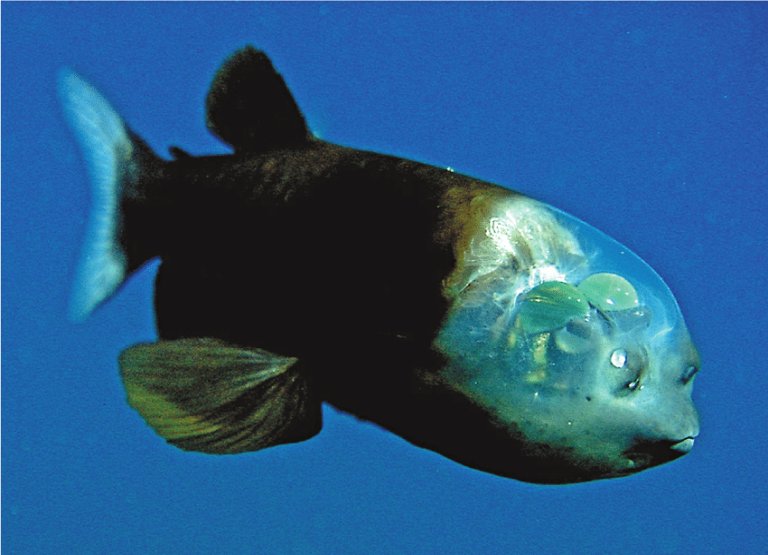
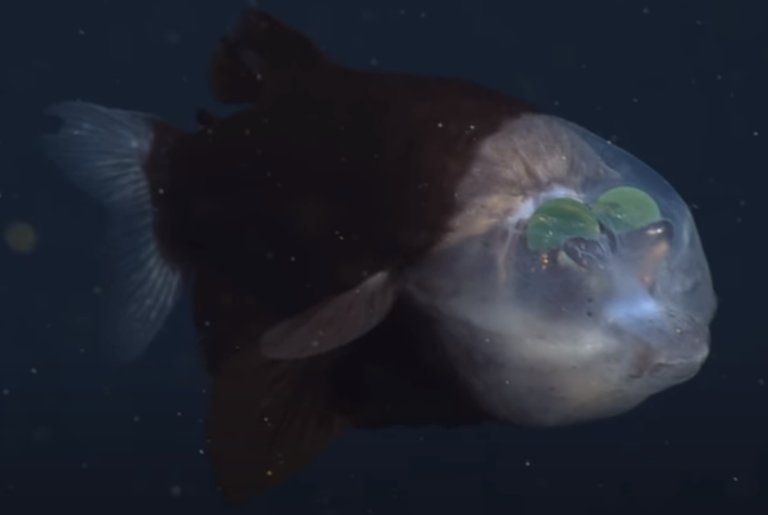
The barreleye (Macropinna microstoma) is a small deep-sea fish with a dome-shaped transparent head that contains glowing green eyes.
This family of fish has been found in the Bering Sea and off the coast of Baja California, but there have only been a handful of sightings. There is still much to learn about these fascinating organisms.
Named for the shape of its eyes, the barreleye’s eyes are contained within its see-through headpiece.
Barreleyes can refer to any fish in the family ‘Opisthoproctidae’, who all have barrel-shaped heads, with tubular eyes. There are 9 genera in the family and over 20 species.
Macropinna is a genus of Opisthoproctidae, which contains one species, Macropinna microstoma.
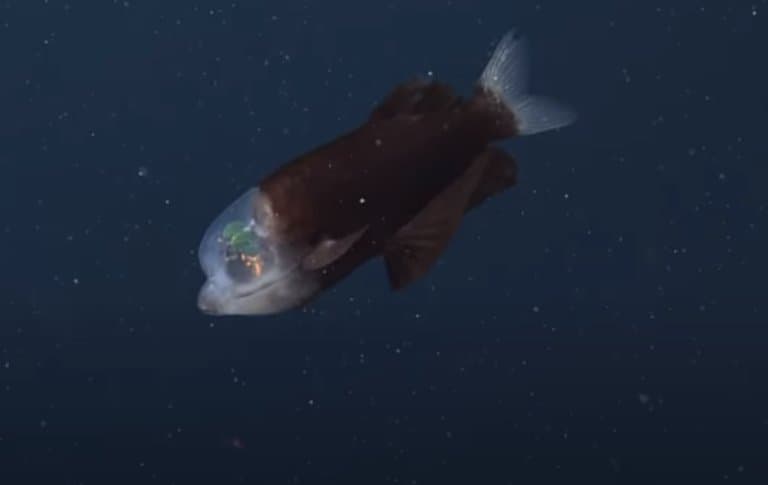
During the small number of times these fish have been found, they are seen moving slowly through the dark waters—patrolling for signs of prey above them. Living thousands of feet below the surface, little is known about their natural predators and their reproductive patterns. Due to a lack of data and research, the IUCN has yet to classify them. Their absolute numbers are also unknown. Even so, it is important to remember that our actions on the ocean surface can have lasting impacts on the deep sea and its animals.
They have transparent heads that are fluid-filled
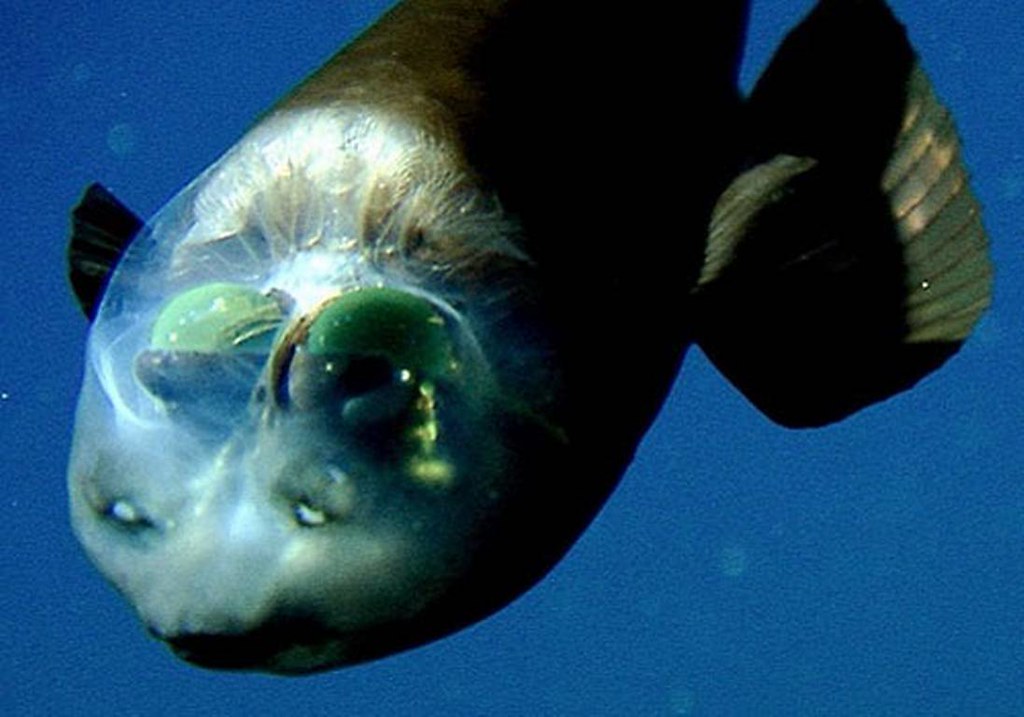
Their alien-like heads are made up of a transparent shield and fluid that protects the fish’s eyes. Through the transparent dome, you can see their eyes, brain and nerve endings in their head! This shield is extremely fragile and has often been reported to be damaged in research when the animal is brought up from the deep.
Their eyes can rotate
Two green glowing orbs can be seen within the transparent head. Normally, these eyes point upwards to capture as much light as possible, but barreleyes are capable of rotating these eyes forward when searching for prey.
They have ‘nostrils’
The two dark spots above the fish’s mouth were originally mistaken for eyes. They are actually olfactory organs that are the equivalent of nostrils.
The barreleye fish was recently discovered
The barreleye was first described in 1939. Due to it inhabiting such deep depths, it has been difficult for marine biologists to thoroughly study it since then.
They have very narrow mouths
Barreleye’s have small pointed mouths that have to be precisely directed towards its prey. This is one of the reasons why its eyes are capable of rotating forwards—so that it can plan coordinated strikes.
Their eyes are tubular
Many deep-sea animals possess tubular eyes that help them capture light. These types of eyes are generally located dorsally on the animal, are cylindrical, and have an accessory retina. The green globes seen in barreleyes are large lenses that help to focus light onto their retinas which contain a high density of rod cells.
Barreleyes are colorblind
Their eyes do not possess and cone cells which are used for the perception of color. Where they live, it is so dark that these fish are solely focused on recognizing brightness and differentiating light that is coming from above or from potential prey.
Their fins allow them to hover
Barreleye fins are large and flat which allow them to essentially remain motionless underwater. Using exact movements, these fins steer them around as the barreleye looks upwards.
They might steal food from others
At the deep-sea depths that barreleyes inhabit, siphonophores—a group of jellyfish—are also found. They can grow to over 10 meters long and catch prey in their stinging tentacles. It has been suggested that barreleyes sneakily consume organisms that have been entangled within the arms of siphonophores. Their see-through shield protects their eyes from being damaged by any stinging appendages.
They live in the twilight zone
Barreleyes live in the ocean twilight zone—the layer of water that is 650 to 3300 feet below the surface. It surrounds our planet and is deep enough that it lies just beyond the reaches of sunlight.
Their digestive systems are quite large
Based on preliminary findings, it has been found that barreleyes have lengthy digestive systems capable of breaking down various types of prey.
We know little about their reproduction
Barreleyes are believed to reproduce by pelagic spawning, a process in which eggs and sperm are released into the water. Following fertilization, the eggs are carried along by currents.
Barreleyes are extremely elusive and rare
These mysterious creatures are rarely sighted. In fact, in approximately 5600 dives, researchers with the Monterey Bay Aquarium have only spotted these fish nine times.






:max_bytes(150000):strip_icc():format(webp)/perennial-aster-flower-plants-1316032-08-30ed78fdcd14479294b1521a8aa174ff.jpg)
















 Sew Colorful