Cosmos

Cosmos are freely flowering annuals that are easy to grow by sprinkling some seeds in the garden after any danger of frost has passed. These quintessential cottage garden flowers reach full maturity in about two months. Cosmos can be slower to germinate, but it blooms quickly after that and continues to flower through the fall. The flowers sit atop long slender stems and form a cloud of attractive color all summer that attracts bees, butterflies, and birds to your garden. Cosmos flowers look a lot like daisies. They come in a broad range of colors, with more cultivars developed every year. The leaves grow opposite on stems and are deeply lobed, pinnate, or bipinnate and feathery-looking depending on the type. If you plan to have cosmos and live in the southern U.S., consider keeping them as potted plants since they tend to be invasive there.

Cosmos grow easily in beds and make great cut flowers. When established, the plants can handle drought, poor soil conditions, and general neglect. They even self-sow. This is a truly low-maintenance plant.

While some pests, like aphids, flea beetles, and thrips feed on cosmos, they’re easy to control with a strong spray of water or insecticidal soap. Aster yellows, bacterial wilt, and powdery mildew may also affect cosmos. Space plants accordingly to ensure good airflow to avoid diseases.

Taller varieties look good in the middle or rear of the border with goat’s beard, coneflowers, and black-eyed Susans. Shorter varieties make very colorful, airy edging plants.

Light

For the best flowering, choose a site that gets full sun. Cosmos will grow in partial shade but will have fewer blooms and be less vigorous when planted in shady areas. These plants will also thrive under uninterrupted full sun in the hottest conditions, much like their native habitat: the arid regions of Mexico and Central America.

Soil

Cosmos plants prefer a neutral soil with a pH of 6.0 to 8.0, although they will grow in poor soil where many flowering plants languish. They perform best in medium moisture, well-drained soils, but they will perform adequately in dry soils. Avoid planting in a rich soil; it can cause the plants to get too tall and flop over. You can prevent drooping by staking the plants or growing them close to other plants that can support them.

Water

Once established, you will not need to water your cosmos plants unless there is a prolonged drought. Where water is limited, these are the last plants that require irrigation.

Temperature and Humidity

Hot weather is ideal for cosmos, and they thrive in any humidity level.

Fertilizer

Fertilizing can negatively impact cosmos. Cosmos can handle poor soil. Too much fertilizer can often lead to strong plants with lots of foliage but few blooms. Unless your plants seem to be struggling, these plants do not need fertilizer.

Types of Cosmos

There are over 25 species of cosmos. However, three species are most commonly used in gardens and landscaping. Cosmos sulphureus is native to Mexico, Central America, and northern South America. With golden yellow blooms, it is very drought tolerant and loves hot weather. The plant grows 2 to 6 feet tall and comes in double and semi-double flowers. Some of the more recent cultivars tend to be shorter, more orangy, and with smaller flowers.

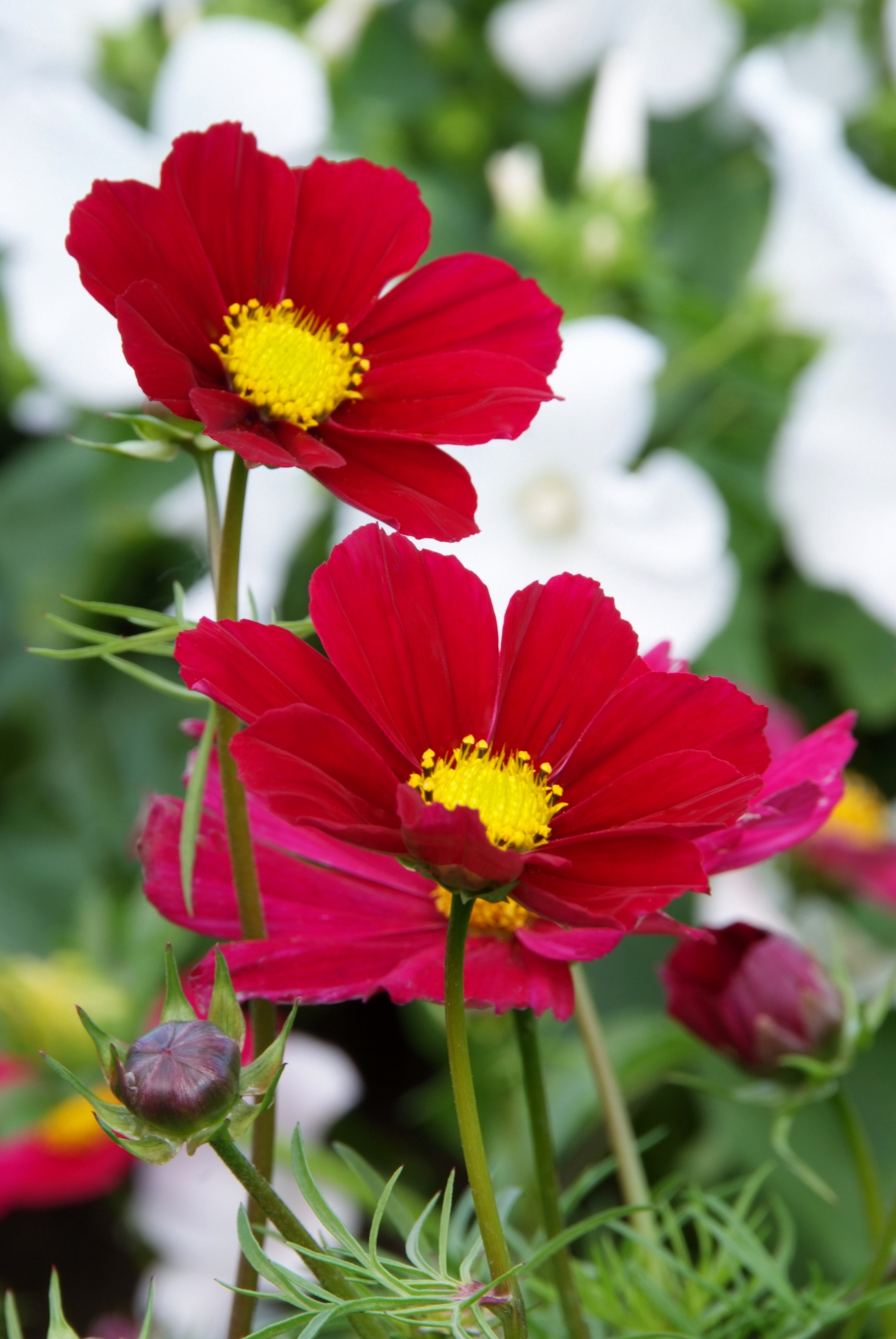
Cosmos bipinnatus are colorful daisy-like flowers that come in white, pinks, reds, and orange. At 1 to 4 feet in height, they are shorter than C. suphureus and are available in several popular hybrid series. Although they are not quite as heat tolerant as C. sulphureus, C. bipinnatus will grow well in just about any sunny space.
Chocolate cosmos are a separate species: Cosmos atrosanguineus. The dark red flowers smell like chocolate. This perennial is hardy to USDA zone 7, but it is higher maintenance than annual cosmos. Like dahlias, it grows from tubers.

Other common cosmos cultivars include:

‘Bright Lights’ mix: This variety boasts a blend of exuberant yellows, oranges, and reds.

‘Cosmic Orange’: This brilliant, semi-double orange flower has great drought tolerance.

‘Peppermint Candy’: An award-winning variety, the petals are splashed in magenta and white.

‘Sea Shells’ series: A pretty mix of pastel colors, it has distinctive tubular petals.

‘Ladybird’: This cosmos is a shorter variety that blooms in red, yellow, orange, or gold, averaging 18 to 24 inches tall. 

SOURCE: The Spruce
Markhor

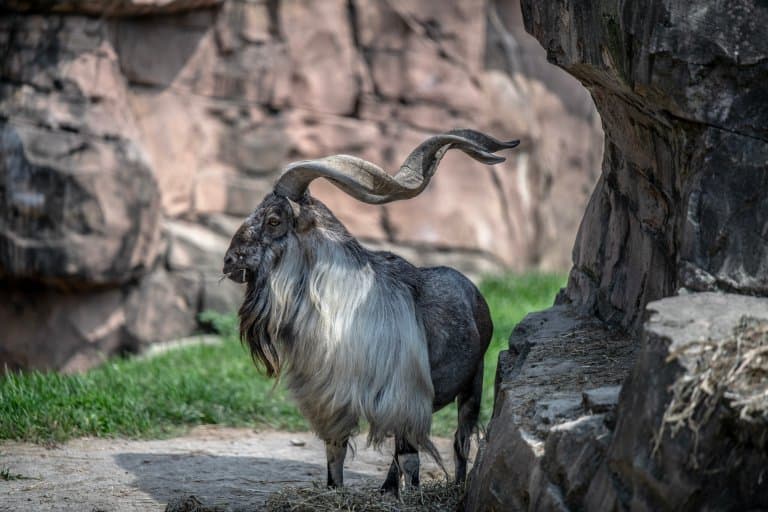
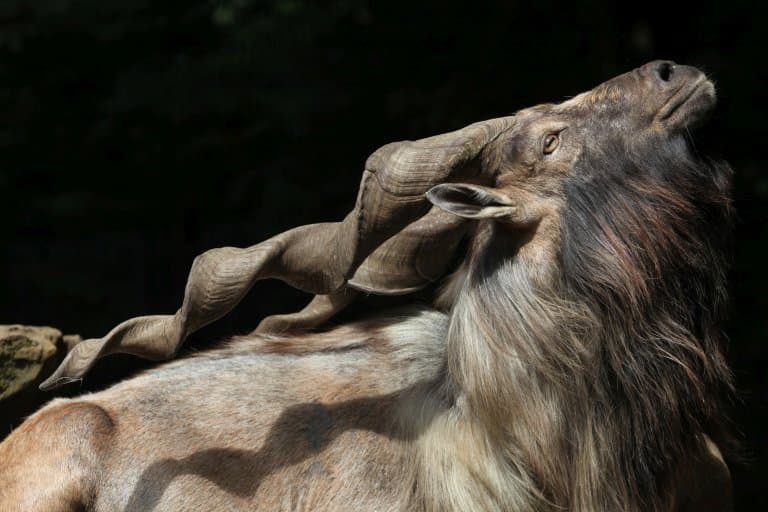
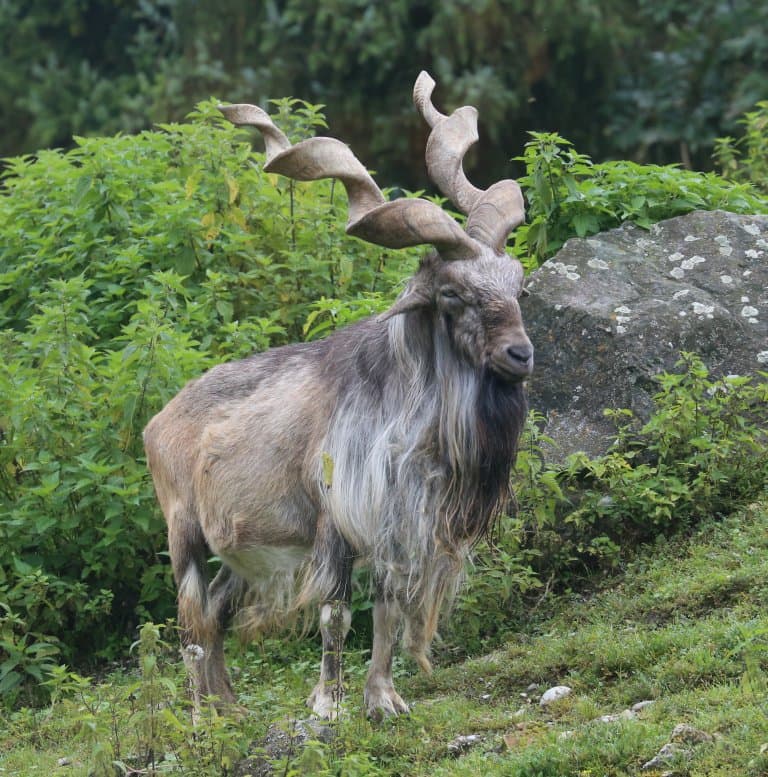
There are 5 subspecies of the markhor that have been recognized, with the main differences being their location and shapes of their horns, which can differ in size and shape of the corkscrew.

The subspecies are the Astor markhor (or ‘flare-horned markhor’), Bukharan markhor, Kabul markhor, Kashmir markhor and Suleiman markhor.

Markhor are adapted to mountainous terrain and are generally found at high elevations between 2,000-12,000 feet, where females they live in herds of up to ten animals. They are excellent climbers and jumpers.

They are herbivorous, and graze in the summer and eat leaves and shoots from trees in the winter.

They have a red–brown coat in the summer, which turns to a long, grey and silky coat in the winter. Males can be distinguished by their long and heavy fringe on their throat and chest. They stand at a height of approximately 95-102cms up to 160cms.

The markhor is listed by the IUCN as near threatened, but some subspecies vary between endangered and critically endangered. The reason for their decline is due to them being overhunted for their meat and their prized horns.

There’s a high price tag to hunt Markhor

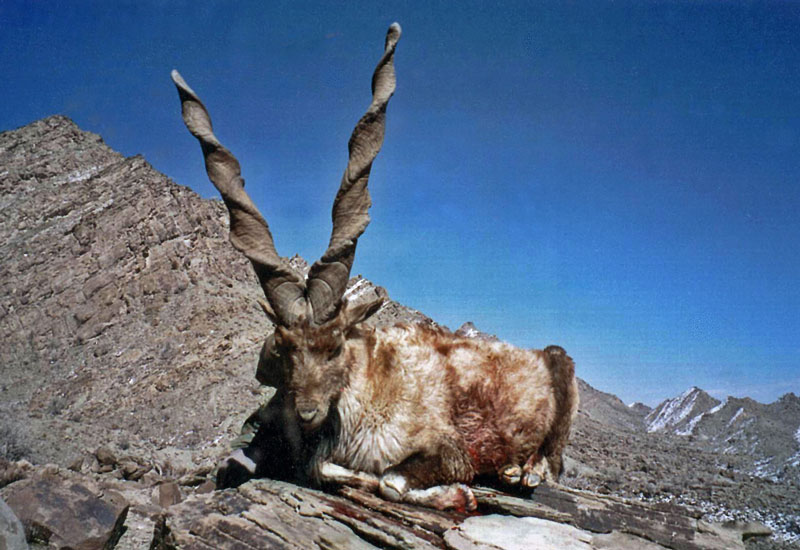
The wildlife department in Pakistan issues permits to selected bidders for trophy hunting of markhor and other species each year. The award of an annual markhor trophy hunting permit fetched a whopping $597,200 from different bidders in the winter of 2021.

The highest bidder was an offer for $160,250 for a single markhor to be hunted in a game reserve called Toshi-I in the Chitral district. This is the highest rate ever offered in history for this type of markhor trophy hunting.

80% of the proceeds from this program will be distributed to local communities. Excessive hunting has caused the population to decrease.

They are the largest of the goat family

Markhor are large goats and can reach up to 1.6m in length and weigh as much as 110kg.

Markhor corkscrew horns can grow over 60 inches

Males have much longer horns, while female horns typically only grow to 10 inches.

Markhor fight for the right to breed

While Markhor will use them in defense against predators, they will also use them against other males when fighting for a mate.

They will fight each other by lunging, locking horns and pushing each other off balance on the rocky mountain. Mating season occurs during winter and the gestational period is between 135-170 days.

Markhor do not like the cold

Markhor do not like to be in deep snow or in cold temperatures. They prefer to be in dry terrain and they have the tendency to stay close to the mountains below the altitudes of 2,200m in winter.

Markhor smell really bad!

The are known to be one of the smelliest goat species. It’s thought that their smell might help them repel predators, and mark their territory.

The Government are trying to protect the species

In Pakistan, hunting markhor is limited and only legal with expensive hunting licenses. In India, it is illegal to hunt markhor. Governments are working hard to protect the species from poaching.

In the South of the Khyber Pass in Pakistan in the tribal areas, there are no wildlife laws, so the straight horned markhor is most at risk. They require protection as there are possibly fewer than 2,000 individuals due to the scattered populations.

This total is comprised of flare-horned markhor in eastern Afghanistan and in the Chitral, Dir and western region of Pakistan at around 1,500. Many more exist further east along the upper Indus.

Markhor horns are likened to snakes

The word Markhor is derived from two Persian words, ‘Mar’ which means ‘snake’ and ‘khor’ which means eater.

In Folklore it is believed that it is able to kill snakes by using its horns and then it can eat them, although there is no evidence that this is true.

It is more likely that the Markhor has the ability to kill snakes with its strong hooves and that their horns actually resemble snakes due to their features.

The male markhor is a solitary animal

The male markhor tends to be seen alone on the open grass and clear slopes, whilst in comparison the females tend to be in herds and want to climb up to the high ridges which are rocky.  This makes them difficult to catch as they stand up on these areas.

The markhor has some unusual predators

Alongside lynx, leopards, wolves and bears – feral dogs are suspected to be threat to the markhor as they have increased in the communities.

There has been calls for more control of the feral dog population and more education around the clean environment and disposal of waste correctly for biodiversity conservation.

Incredibly golden eagles have also been reported to prey upon young markhor.

Markhor were considered one of the most challenging game species

This is due to the danger involved in hunting them in then rocky mountainous terrain at high altitudes.  Markhor are also extremely aware of their surroundings, with excellent hearing and eyesight and will quickly run and let out an alarm call from any potential threat.

It’s estimated there are under 6,000 Markhor left in the wild

Markhor are classified as a near threatened species due to its small population size, which was estimated below 6,000 in 2013.  While there are concerns over poaching and habitat destruction, ongoing conservation efforts seem to be helping maintain population levels.

SOURCE: FACT ANIMAL

Potoos

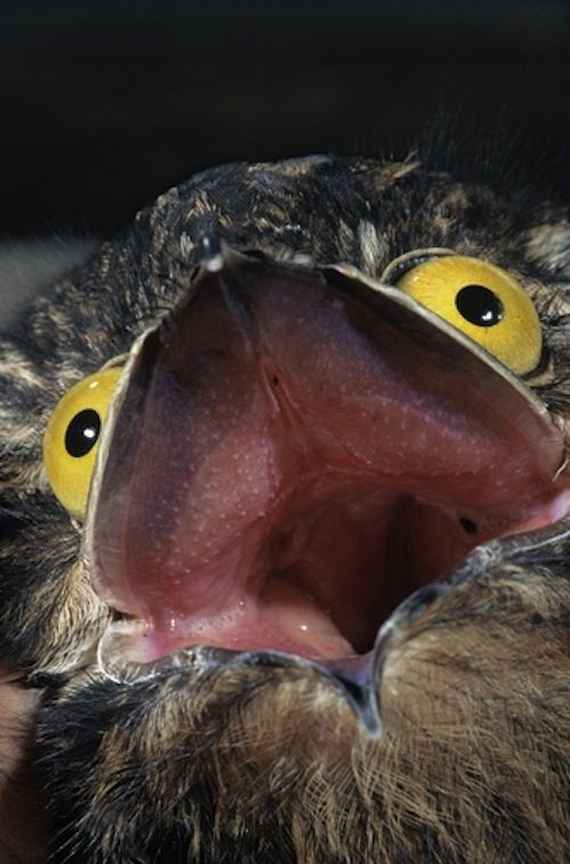
Potoos are neotropical birds of the family Nyctibiidae. There are 7 species of potoos and all of them are famous for their incredible camouflage skills.

They are often seen in memes due to their slightly goofy-come-creepy looks, with enormous googly yellow eyes, as well as their amusing name (often mistakenly spelled ‘pooto‘).

Potoos are insectivorous, nocturnal and related to nightjars and frogmouths. They can be found in every central and south American country, on Caribbean islands and have the greatest diversity in the Amazon, which holds five of the seven species.

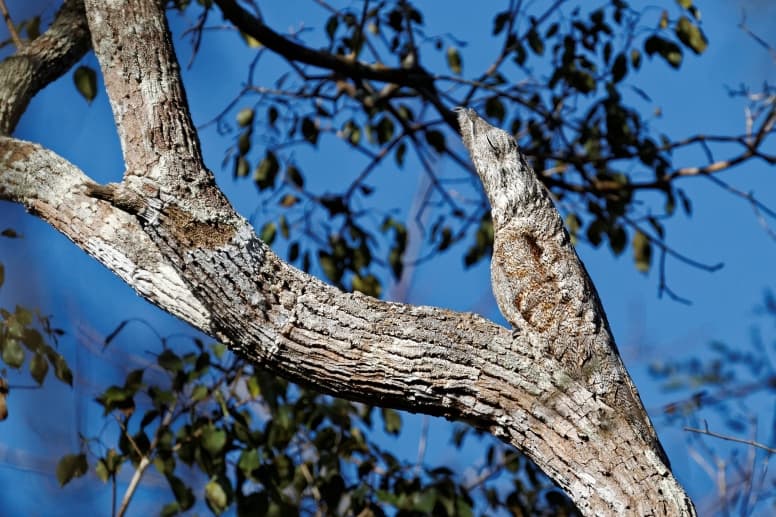
During the day, they perch almost completely still with their eyes closed on the ends of dead branches or tree stumps. This behavior combined with their tree-like plumage makes them so well camouflaged that it is almost impossible to spot them.

At night, they are excellently evolved for hunting flying insects. Their large eyes combined with huge mouths allow them to swoop down from their perches and grab beetles, moths, termites and more.

Interesting Potoo Facts

Potoo camouflage perfectly with dead branches.

While some animals focus on defense techniques, these birds instead have become talented at hiding. They perch at the top of a dead branch usually, where they position themselves at a sharp angle and stay completely still, with their eyes closed.

The Great potoo below even points its beak upwards, making itself look even more like a branch.

Potoos will stay in this position all day, barely moving, and almost invisible.

They can see you even with their eyes closed.

They have “magic eyes”, which are small folds along the upper eyelids that allow them to sense movement with their eyes closed. This means that from their camouflaged positions during the day, they can still watch for predators.

Potoo have huge mouths.

In the same way that humpback whales have huge mouths to catch as many krill as possible, these birds’ huge mouths allow them to scoop up lots of flying insects.

They have equally huge eyes.

As night-time hunters, their huge eyes mean they have excellent night vision allowing them to spot insects from their perch. They also add to the dorky look that has made them so popular in memes.

Potoo lay a single egg in the top of broken branches.

They lay a single egg in the same place they perch for camouflage during the day, usually in the hollowed-out top of a broken branch. They add no materials to the nest, making it harder to spot. They are also meticulously clean, removing all of the chick’s poop from the nest making it hard for predators to find them by smell.

They start young.

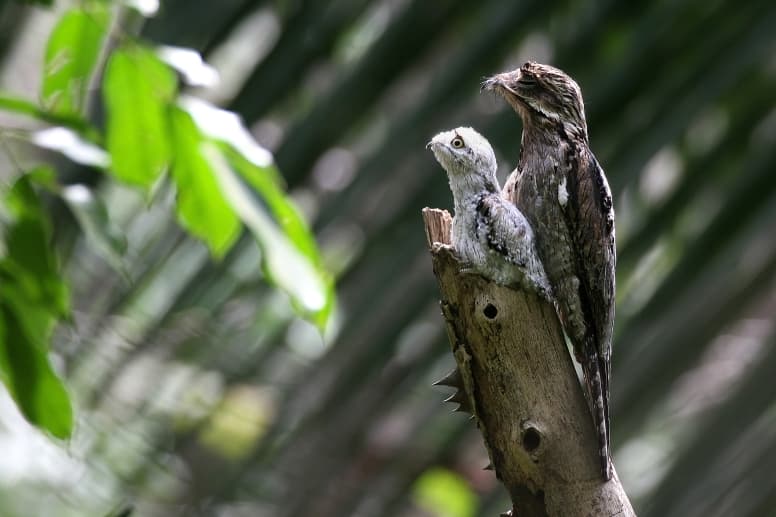
From a young age, nesting potoos imitate their parents, standing in camouflaged positions next to their parents, as can be seen in the adorable photo below.

Potoo have strange and wonderful calls.

Across Nyctibiidae there is a wide range of weird and wonderful of calls, all of which are likely to disturb new night-time wanderers of the neotropics. The Common Potoo (Nyctibius griseus) has earned itself the local name of “Ayaymama”, after it’s long and mournful call “ayyyyyy ayyyyy maaaaa maaaa”. While the Great Potoo has terrifying moaning howl.

Their eerie night-time calls make them a subject of many myths.

The Common Potoos eerie call of “aaaaaay aaaaay maaaaa maaaaa” has led to the Amazonian version of Hansel and Gretel. Two children, abandoned in the forest by parents too poor to feed them, eventually turn into birds. They are eternally calling out “mama” to the mother that left them. While in Ecuador there is an equally sad story of two lovers separated, one becomes the moon and the other a potoo. The potoo is eternally calling out to the lover it can never reach, the moon.

The adorable Rufous Potoo is the smallest of the potoos.

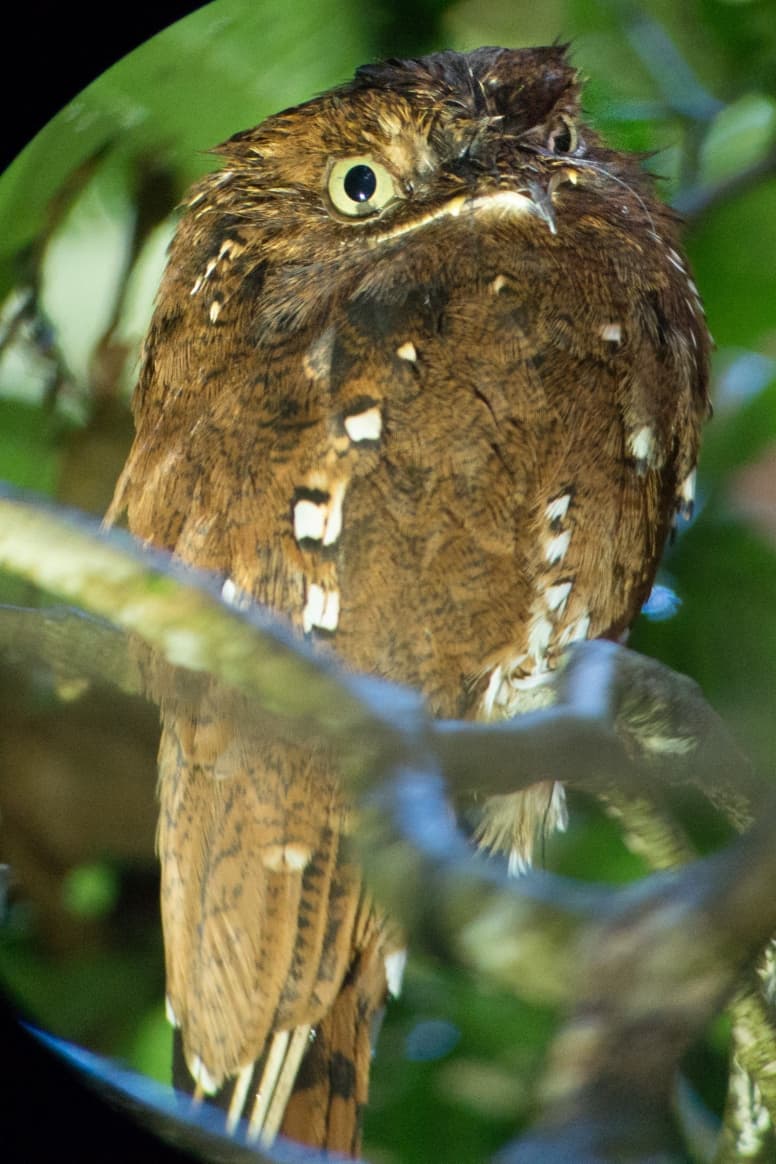
The Rufous Potoo (Nyctibius bracteatus) is the smallest potoo, weighing in at around 50g. Its tactic is to pretend to be dead leaves. It even rocks back and forth slightly so that it resembles a leaf moving in the wind.

They’ve started perching on human-made things.

An extensive study showed that potoos have taken to hiding on human things, like plastic bottles. This is an interesting side effect of humans continuing spread into wild habitats.

SOURCE: FACT ANIMAL

Parsley

Parsley is a biennial plant with bright green, feather-like leaves. It’s in the same family as dill and carrots and is most commonly used as a garnish. Here’s how to grow parsley in your own garden.

About Parsley

This popular herb is used in sauces, salads, and especially soups, as it lessens the need for salt. Not only is parsley the perfect garnish, it’s also good for you; it’s rich in iron and vitamins A and C!

Native to Mediterranean Europe, the parsley plant is a biennial, but is usually grown as an annual in home gardens. After the first year, the leaves tend to become more bitter and tough, but the plant will gladly reseed itself in temperate zones.

Planting

Pick a spot that gets full sun (6+ hours of sunlight) and has well-draining soil that’s rich in organic matter. This herb needs more fertile soil than most herbs. Soil pH should ideally be around 6.0—slightly acidic. 

Try to also choose an area that is weed-free; it’ll be easier to see the parsley sprouting.

When to Plant Parsley

Parsley seeds can be started indoors or sown directly in the garden. However, the taproot of parsley plants is delicate, so take extra care if transplanting!

For a head start, plant seeds in individual pots indoors 6 to 8 weeks before the last spring frost date.

Sow seeds outdoors 3 to 4 weeks before the last spring frost, as parsley is a slow starter. 

For the best germination, soil should be around 70ºF, though parsley seeds will germinate in temperatures as low as 50ºF.

How to Plant Parsley

The germination rate of parsley seeds tends to be low, so consider soaking the seeds overnight before sowing to improve your chance of success.

Sow parsley seeds 1/4 inch deep.

Sow seeds about 6 to 8 inches apart. For larger plants, sow about 8 to 10 inches apart.

Be sure to keep soil moist while seeds germinate. 

It can take 2 to 4 weeks for seedlings to appear. 

Tip: Plant radish seeds in the gaps between parsley seeds. The radishes will sprout and grow before the parsley appears, and the radishes will mark the row.

Indoors, you can use a grow light to help seedlings grow. Make sure it remains at least two inches above the leaves at all times.

Growing

Be sure to keep parsley plants sufficiently watered, especially through the heat of summer.

Lightly mulch around the plants to conserve moisture.

Recommended Varieties

Flat-leaf varieties: Use in cooking because they have better flavor and are easier to work with than curly-leaf parsley

Curly-leaf varieties: Use when you want a fancier garnish

Harvesting

When the leaf stems have at least three segments, parsley is ready to be harvested.

Cut leaves from the outer stems of the plant whenever you need them. Leave the inner portions of the plant to mature. Ideally, allow 2 to 3 weeks for regrowth between major harvests. 

If you want fresh parsley throughout the winter, replant a parsley plant in a pot and keep it in a sunny window.

How to Store Parsley

One method of storing the parsley fresh is to put the leaf stalks in water and keep them in the refrigerator.

Another method of storage is drying the parsley. Cut the parsley at the base and hang it in a well-ventilated, shady, and warm place. Once it’s completely dry, crumble it up and store it in an airtight container.

SOURCE: ALMANAC

Marigolds

Marigolds (Tagetes spp.) are among the most common and reliable of all bedding flowers. These cheerful flowers with warm colors and fern-like foliage are true annuals, completing their life cycles in a single growing season. The size and construction of the blooms can vary considerably, from tiny single-petal flowers of the signet marigolds to the large 4-inch double-petal blossoms of the African marigolds, but all show their membership in the aster family with flowers demonstrating the characteristic daisy-like appearance. Marigolds are typically planted from nursery starts or seeds planted in the spring after the soil can be worked. These fast-growing plants will achieve blooming maturity within a matter of a few months when planted from seeds. For earlier outdoor blooms, start the seeds indoors six to eight weeks before the last frost.

Marigold Care

Marigolds are very low-maintenance once established, and they are notably pest-free. In fact, they are sometimes planted as a deterrent to pests that attack other plants. Marigolds can bloom almost non-stop and will keep going all summer, until frost. To achieve that non-stop flowering, keep your marigolds deadheaded. Flowering may decrease slightly during the heat of summer but generally resumes in full force as cooler weather arrives.

Tall varieties of African marigold are sometimes planted by stripping off the lower leaves and burying the stems extra deep. This encourages an extra sturdy root system and minimizes the need for staking the plants.

Light

For the most flowers and the healthiest plants, plant your marigolds in full sun. Shady conditions will cause the plants to become leggy and to flower less profusely.

Soil

Marigolds are not fussy. Any good garden soil (and a little water during dry spells) should keep them happy, as long as the soil is not too acidic. Keep the soil pH roughly neutral, from 6.0 to 7.0. They also don’t need a soil that is particularly rich in organic matter and seem to grow better in a leaner soil.

Water

When you first plant your marigold seeds or plants, make sure they get regular water. Don’t leave them in dry soil for more than a couple of days. If it is particularly hot and sunny, water new plants every day. Once they have had a few weeks to establish a good root system, they will be more drought-tolerant, but they will still bloom best if given weekly water.

Temperature and Humidity

Marigolds are heat-loving plants that thrive in summers throughout their growing range, zones 2 to 11. These true annuals may become a bit subdued during the height of summer, especially in areas with hot summers, but the flowering picks up again when the weather cools in later summer and fall.

Marigolds tolerate a wide range of humidity levels, but they may get powdery mildew in damp or humid summers. Planting in full sun and providing room for airflow will lessen this problem. These native plants of Mexico prefer relatively dry air.

Fertilizer

Your marigolds won’t need any supplemental fertilizer unless your soil is extremely poor. The best thing you can do to keep them in flower is to deadhead regularly.

Types of Marigolds

There are several species and divisions of marigold, with many cultivars of each. Most are moderate in height, but there is a good amount of variety among the different types. You can find short bedding marigolds that grow only 4 to 6 inches tall and taller varieties that can reach 48 inches and make nice cutting flowers. The three most commonly grown types are African, French, and signet marigolds, representing three different Tagetes species:

African marigolds (Tagetes erecta): With large, pom-pom flowers on medium-sized to tall plants, African marigolds (also known as Mexican marigolds) are popular for both the border and as cut flowers. They can grow up to 4 feet tall and have flowers more than 4 inches across. Colors include yellow and orange. ‘Antigua’ Series are African marigolds with unusually profuse blooms.

French marigolds (Tagetes patula); French marigolds are prized for their long, prolific blooms. They tend to be short, bushy plants, from 5 to 18 inches tall. They have purple-tinged stems with double flower heads in yellow, orange, and mahogany that are about 2 inches across. ‘Naughty Marietta’ is a ruffled, deep-yellow French marigold with maroon splashes in the center.

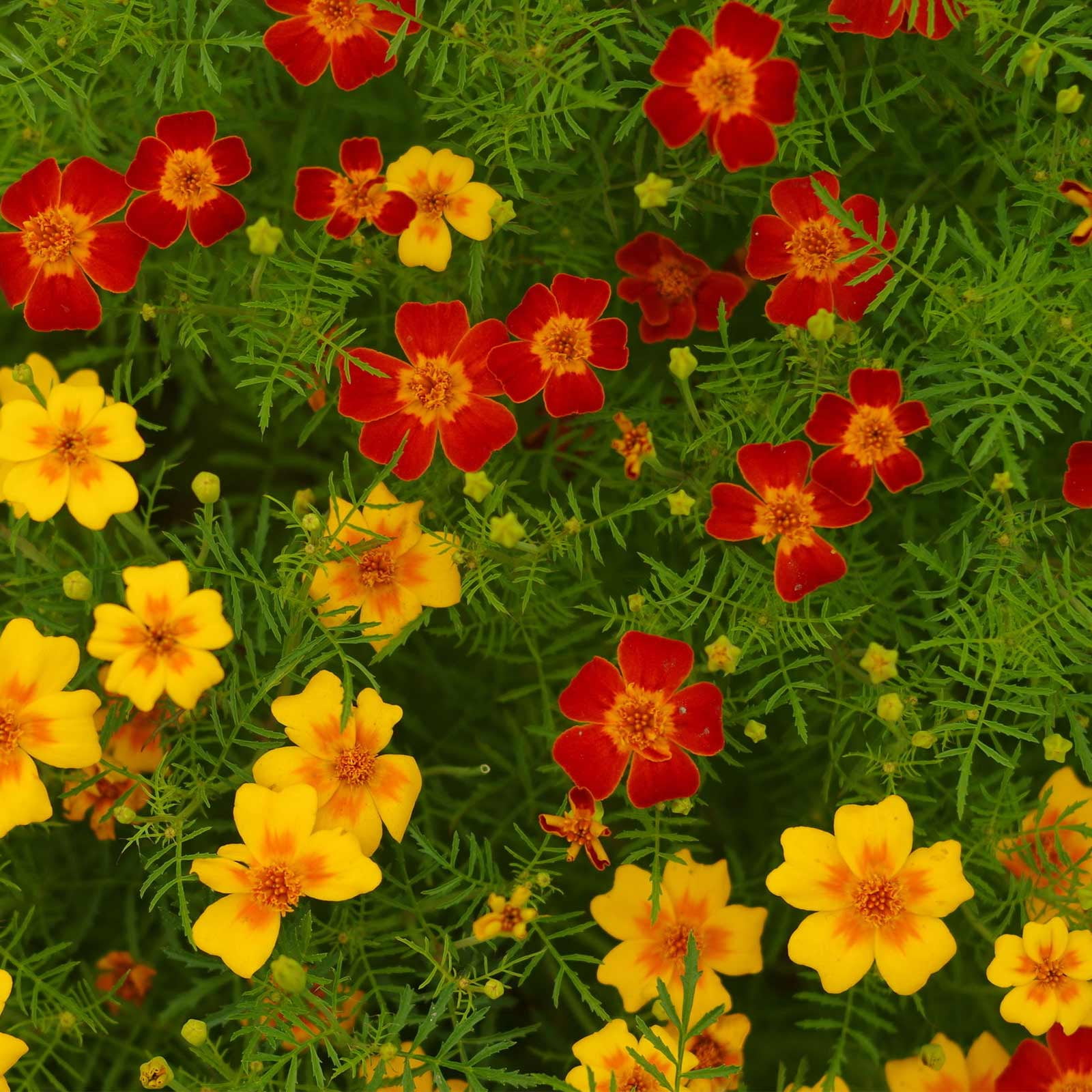
Signet marigolds (Tagetes tenuifolia): The edible marigolds are the signets. They look totally different from bedding marigolds, with lacy leaves and small, single, daisy-like flowers. They come in yellow and orange, with fitting cultivar names such as ‘Orange Gem,’ ‘Tangerine Gem’, ‘Red Gem’, and ‘Lemon Gem’. ‘Gem’ Series are single-flowered signets with very fern-like foliage. There have been some hybrids on the market recently with an expanded palette of colors, such as shades of cream, burgundy, and bi-colors, but the flavor is not always equal to that of the ‘Gem’ varieties.

There are also hybrid crosses between T. erecta x T. patula that combine the large flowers of the African marigolds with the more compact stature of the French marigolds.

SOURCE: The Spruce

Grandalas

I stumbled across this beautiful picture while looking for something else. The bird is a Grandala and lives primarily in India.  I couldn’t find much info on this lovely bird, except for this from Wikipedia:

The grandala (Grandala coelicolor) is a species of bird in the thrush family Turdidae. It is the only species placed in the genus Grandala. It is an arboreal insectivore. It ranges across the northeastern Indian Subcontinent and some adjoining regions, existing primarily in the low-to-mid altitudes of the Himalayas. It is found in Bhutan, India, Myanmar, and Nepal, as well as Tibet and other areas of China.

The body length of the grandala is 20.5-23 cm, and it weighs from 38 to 52 g. The plumage of the male is blue-gray, only the tail and wings are black. The plumage of the female is brownish with white stripes; rump gray-blue; the tip and underside of the wing feathers are white. Birds usually make the sounds “dew-ee” and “dewee”. In young birds, the plumage is similar to females, but does not have a bluish tint on the rump and upper tail integuments.

Grandala is a social bird; they feed on insects, fruits, berries.

The grandala lives in a vast territory. In India it is found in the Himalayas from Kashmir (Kishenganga and Liddar valleys), Himachal Pradesh, Uttarakhand through Nepal, Sikkim, and east to Arunachal Pradesh. Though grandala is a common bird in that region, no scientific studies have been conducted.

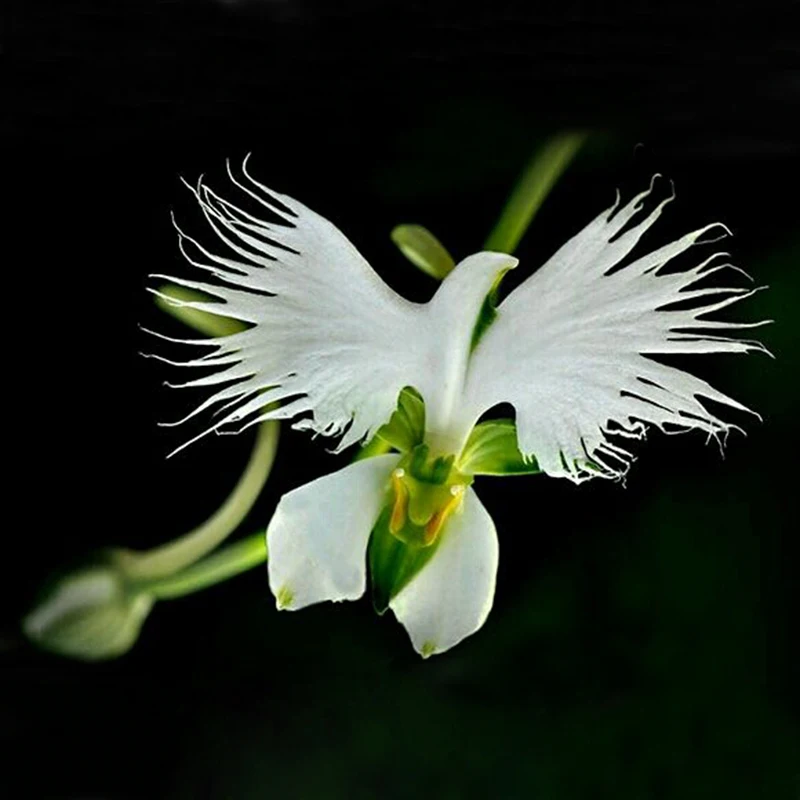
White Egret Orchid

The white egret orchid is named for its uncanny resemblance to a white egret (also known as a Great White Heron) when its wings spread in flight. Native to Japan, Korea, Russia and China, this orchid is known as a terrestrial orchid because it grows in soil as opposed to being found in tree canopies. It likes damp, boggy sites, such as grassy wetlands and steepage slopes (i.e., wetland areas found on the sides of hills). It grows from a small tuber and spreads via tiny offset bulbs.

The white egret orchid is highly sought after for its small but floriferous green and white blooms, with up to eight flowers per stalk.

White Egret Orchid Care

Growing the white egret orchid as a home gardener is not difficult, though its moisture requirements are fairly specific.

Plant the bulbs in growing medium created specifically for orchids; ordinary potting soil may cause fungus to develop.

Keep soil consistently moist during the growing season, then allow to dry out in a cool spot during winter dormancy.

Fertilize lightly with diluted all-purpose plant food (10 to 20% of usual dose) once or twice at the start of the flowering season.

If growing indoors, locate near a window that can be opened to give the plant fresh air.

Remove spent blooms to keep plant looking neat.

Warning

The white egret orchid is endangered in the wild due to over-gathering and destruction of its habitat, so it’s important to source this plant in a way that does not contribute further to its decline.

Light

Your white egret orchid is adaptable to a range of light conditions, and will perform well in full sun to partial shade. Dappled sunlight or bright morning sunlight are both suitable, though it can also handle plenty of afternoon sunlight and enjoys hot weather in summer.

Soil

A sandy, slightly acidic, well-drained soil is best for the white egret orchid. The standard potting mix designed to be used with orchids is also suitable. Perlite mixed with sand and peat can form a good mixture for growing this orchid. A light layer of dried sphagnum moss on top keeps the soil surface healthy.

Water

During the growing season, keep the soil lightly but consistently moist. If growing in a container, remember the soil will dry out a bit faster. Placing a container with drainage holes in a saucer with pebbles will help the plant absorb water at a uniform rate.

It’s important to use water that is free from chlorine, as chlorine can damage this delicate plant. Set chlorinated water for 48 hours to allow the chlorine to dissipate.

Temperature and Humidity

Though some guides say this plant is cold-hardy to Zone 5, to be on the safe side it should be grown within Zones 6 through 10. Once the weather gets hot, be sure the soil remains moist, which may require increasing the amount of water, or using a mister to spray the top layer of soil during the day.

This orchid likes a humid environment, apart from its dormant season (winter), but it also enjoys plenty of fresh air.

Fertilizer

Fertilize your white egret orchid very lightly when blooms begin to appear in spring. A basic all-purpose liquid plant food is recommended, at a diluted strength of 10 to 20% of the recommended amount. Dilute the plant food with water before watering as usual. You can also use organic fertilizers such as fish emulsion or seaweed extracts, but dilute them before use.

SOURCE: THE SPRUCE

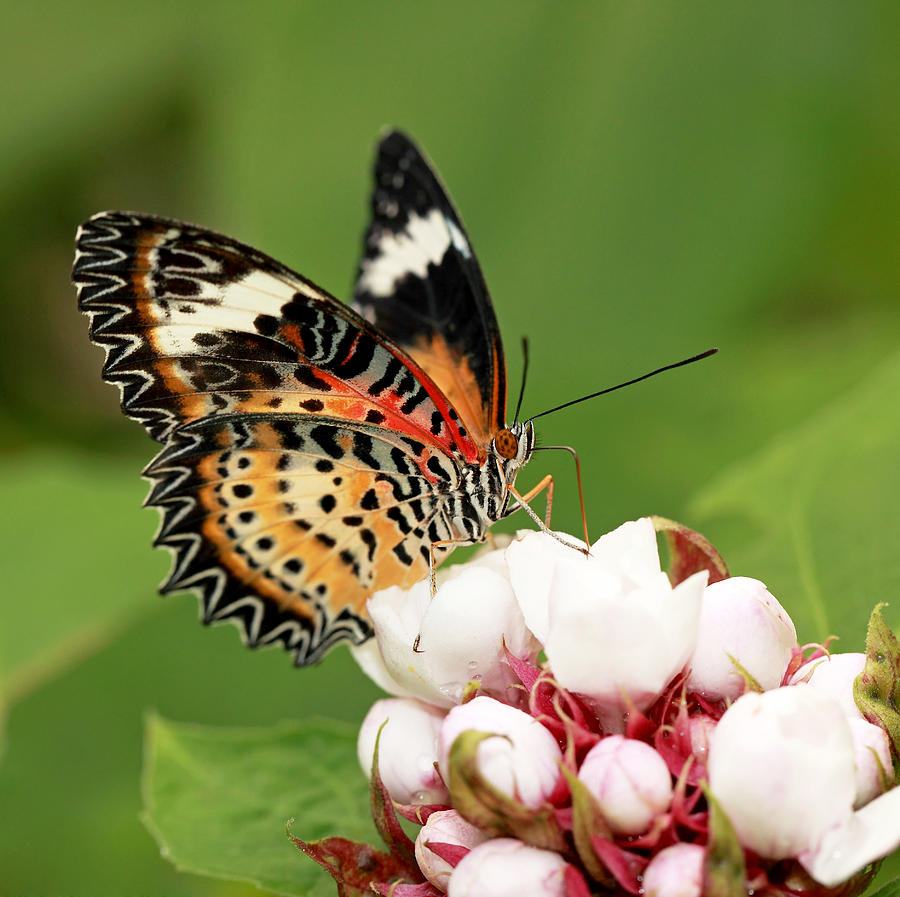
Malay Lacewing

 These butterflies are gorgeous! But I found relatively little information about them.  The larvae, Cethosia hypsea, because of their appearance, are often referred to as red wine caterpillars. Lacewings inhabit tropical rain forests and are found only in tropical climate zones. They have toothed edged wings, sawtooth like wings on the hindwings. The color of the dorsal wing surface is bright orange red with wide, pronounced black borders, while the ventral side is orange red with white bands and black dots or stripes forming remarkably intricate patterns.

   The wing borders are dark colored and deeply indented with a lace like pattern of white marking. Adult colors are lighter in color to warn predators that they can be poisonous.  Individual females have a slightly yellowish white patch on the dorsal side and the color of the wings is paler. They fly quite slowly, around flowering shrubs such as Lantana camara¸ Stachytarpheta indica, Ixora javanica and Leea indica. 

Fried Egg Jellyfish

Jellyfish aren’t really fish

Though they have the word “fish” in their name, jellyfish aren’t really fish at all. In fact, they couldn’t be more different. Jellyfish don’t have fins, gills, or scales.

They come from a completely different phylum. Really, the only thing they have in common is that they both live in marine habitats.

They don’t have a brain

They also lack a heart, stomach, and many of the other organs we are familiar with.

While they do have a nervous system, jellyfish don’t possess a brain in the way that we typically think of them.

Instead, they have a network of neurons that allows them to sense different aspects of their environment, like changes in water chemistry or which direction they are facing.

These jellyfish are made up of 95% water

The jellylike material that makes up most of what we consider a jellyfish is called mesoglea.

This material is mainly made up of water, with the exception of a few structural proteins. The other 5% of jellyfish is their muscle and nerve cells.

Jellyfish are the oldest animals on Earth

Fossils dating back to the Cambrian period suggest that jellyfish are at least 500 million years old. This makes them about three times as old as dinosaurs, if not more. 2

Two different species of jellyfish share the Fried Egg name

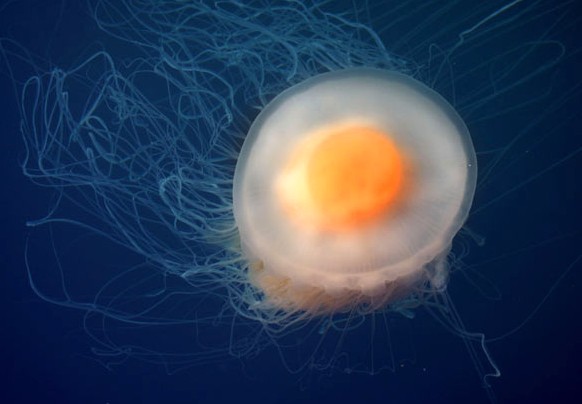
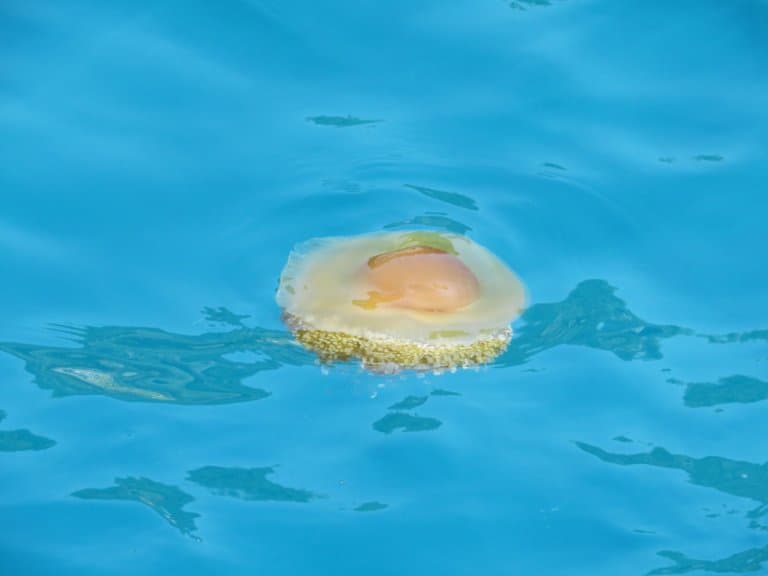
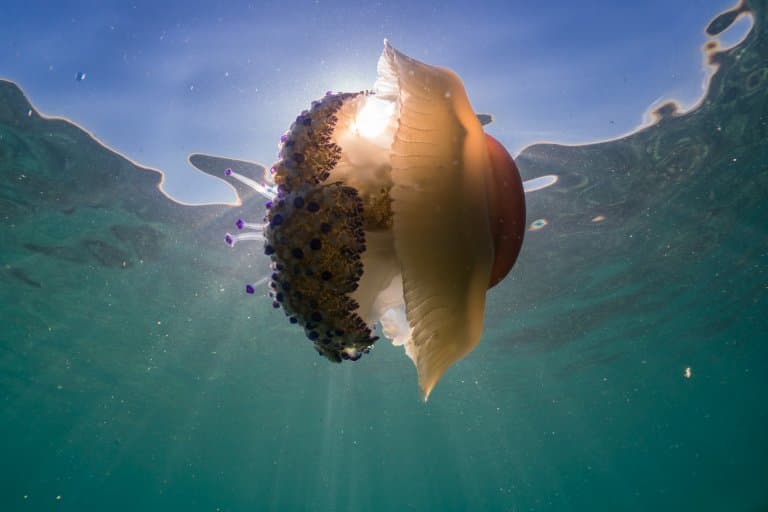
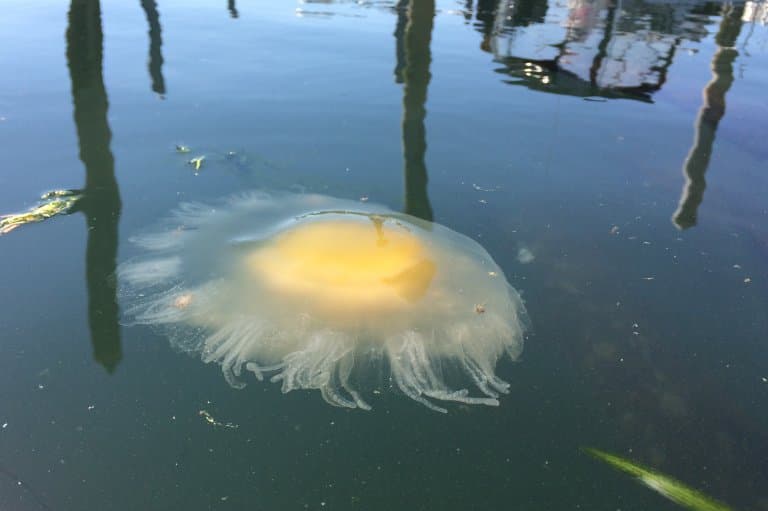
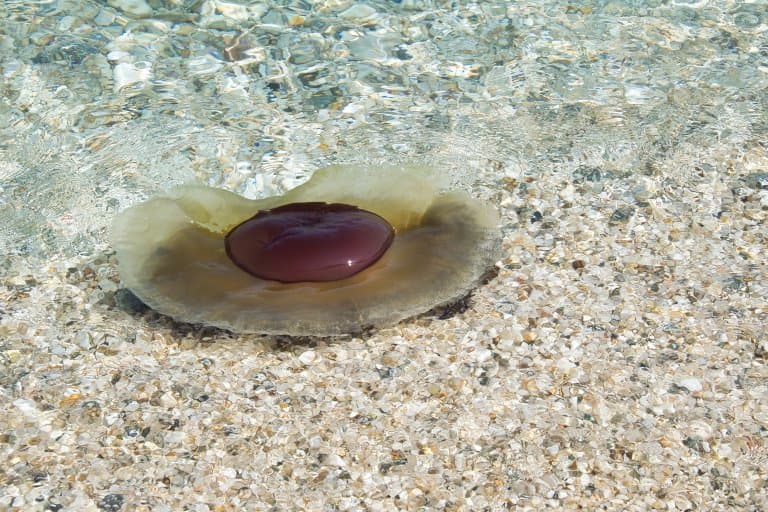
Phacellophora camtschatica and Cotylorhiza tuberculate are both referred to as fried egg jellyfish. This name comes from the bright yellow dome surrounded by a white or transparent membrane around the edges, making it look like a fried egg floating in the water. However, there are some major differences between these two jellies.

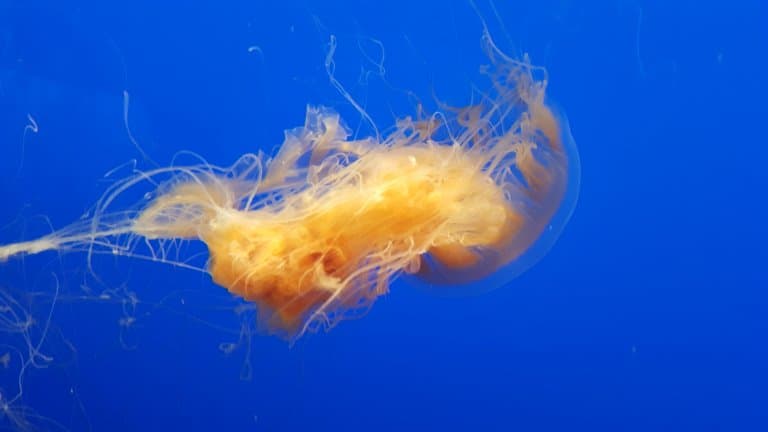
Phacellophora camtschaticas are large jellyfish that can be found in oceans worldwide. The bell can grow to a diameter of about 2 feet long. They have 16 clusters of tentacles that can stretch as long as 20 feet. They typically sit motionless in the ocean, acting as an underwater spider web to capture their prey.

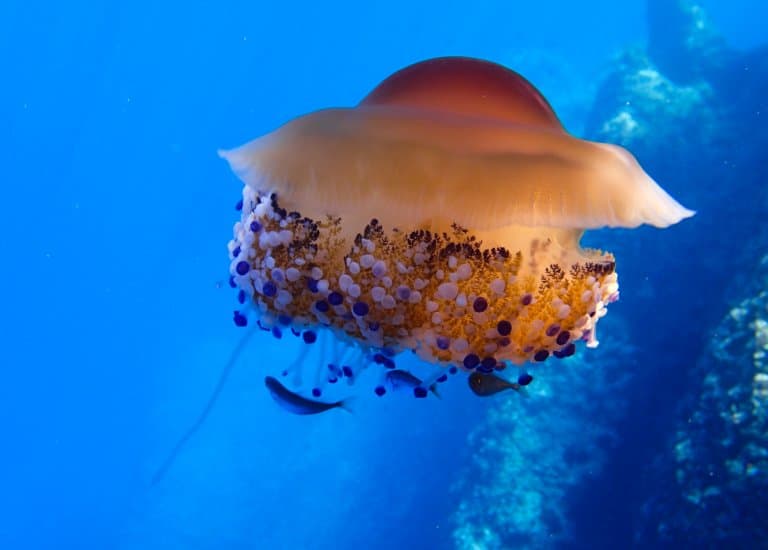
Cotylorhiza tuberculates have short appendages that are a deep purple color. These are much smaller than the other species and are most commonly found in the Mediterranean Sea. This jellyfish is also more apt to move through the ocean by slowly pulsing its bell.

They seem to be adapting well to climate change

Unlike most creatures, jellyfish don’t seem to be having a hard time with climate change. In fact, they may even be thriving in it.

According to experts, jellyfish populations are expected to rise. This is because they can survive on less oxygen than most marine creatures, even plankton. As oxygen levels lower in ocean waters, jellyfish are expected to outlive most of the species. 3

They catch prey in their tentacles

Their tentacles are adapted to sting prey and potential predators such as fish, turtles and sea birds.

You can see the fried egg jellyfish (Cotylorhiza tuberculata) swimming with small fish caught in its tentacles.

They don’t often travel in groups

Though we often see pictures of a large group of jellies floating through the ocean, these creatures are fairly solitary animals. They typically only get clumped together when they are following the same water current or food source.  

However, when they are found in a group, they tend to go by some fun names, including smack, swarm, and bloom.

Jellyfish reproduce asexually

A single jellyfish will reproduce both sexually and asexually in its lifetime.

During the medusa form, jellyfish produce sexually by spawning eggs or sperm into the ocean and fertilization takes place in the open water.

However, jellyfish reproduce in their polyp form as well. This is a process called budding, in which a polyp divides in half to create a genetically identical polyp.

Their lifespan is less than a year

Like many jellyfish, fried egg jellyfish are short-lived. They only live for about half a year, usually from summer to winter. Research suggests that this has to do with the variations in water temperature throughout the seasons. 4

Jellyfish are edible

People living off the coast of China have been eating jellyfish for at least the past 1700 years.

In fact, it is estimated that more and more people will turn to jellyfish as we overfish more desirable fish species.

How do you like your eggs? Sunny-side up, or with a little sand?!

Crabs are known to hitch a ride on these jellies

Occasionally, crabs and small fish will tuck themselves away in the underside of the jellyfish’s bell. Crabs have even been to plant themselves on top of the bell, away from the jellyfish’s stingers.

SOURCE: FACTANIMAL

Morning Glory

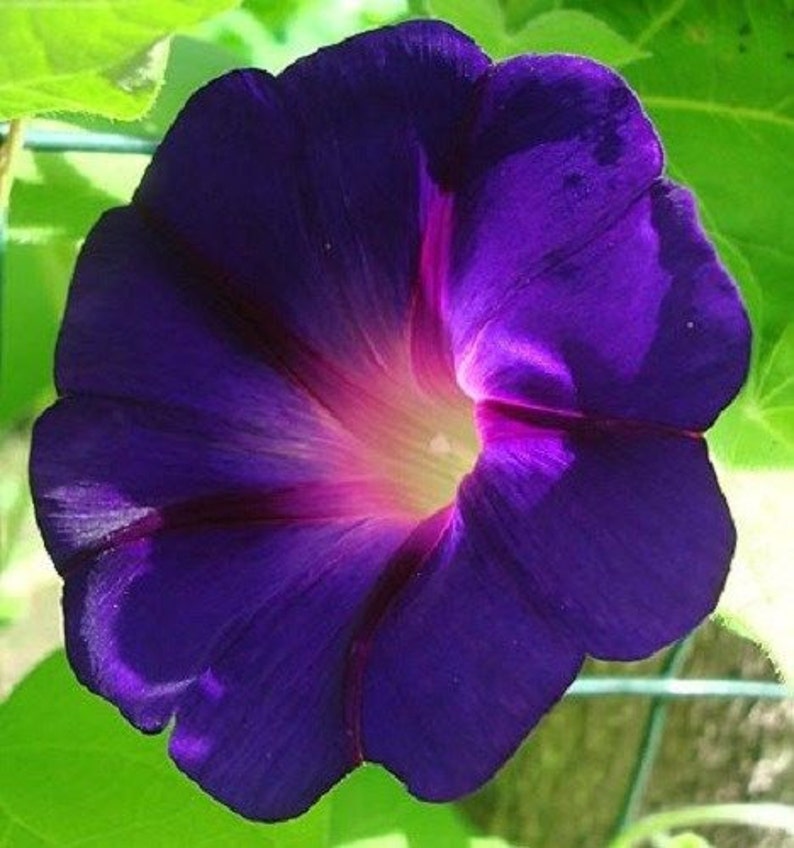
The common morning glory is a favorite of gardeners everywhere for good reason. The eye-catching vines are very low maintenance—they can be easily started from seed in early spring, and you don’t need to prune or deadhead them as they grow. Have a trellis or other support in place wherever you plant your seeds and the vines will soon find the support and train themselves to grow on it.

With regular watering, morning glories can start blooming by mid-summer, but many times they are slow to begin setting flowers, earning them the nickname “back to school vine.” If you want to try and speed up the flowering time of morning glories you seed yourself, you can try sowing the seeds even earlier in the spring by scattering them on the frozen ground and even on snow.

Light

Planting your morning glory in a spot that gets full sun is especially important. The flowers will only open when they are in direct sunlight, so daily exposure to full sun (at least 6 to 8 hours a day) will give you the longest amount of bloom time. If they are in a spot that doesn’t get sun until the afternoon, don’t expect “morning” glories.

Soil

Morning glories do best in soil that is moist but well-draining. A neutral soil pH of 6.0 to 6.8 is best, but morning glories will grow just about anywhere. However, they do bloom better in soil that is not too rich in organic matter. You can always amend the soil later if the vines look like they are struggling.

Water

Provide your morning glories with regular water, about one inch per week, and mulch around the roots to retain moisture. The biggest moisture needs come during the plant’s growing period. Once established (and in the winter, if your zone is warm enough to grow the plant as an annual), you can slow your watering cadence.

Temperature and Humidity

Morning glories easily tolerate both cold and warm temperatures; they are hardy and can even make it through the first frost and continue to bloom. They are grown as an annual in areas where the temperature drops below 45 degrees Fahrenheit and can be perennials in tropical and subtropical climates. They have no special humidity needs.

Fertilizer

Feed your morning glories with a low-nitrogen fertilizer every four to five weeks throughout their growing period. If you notice a lack of blooms, you can try a fertilizer blend that is high in phosphorous.

Morning Glory Species and Varieties

In addition to cultivars of the common morning glory, there are other Ipomea species with similar appeal:

Star of Yelta: Deep purple blooms with dark red stars and small white throats

Kniola’s Black: Another purple-flowered cultivar but with blooms even darker than those of ‘Star of Yelta’

Heavenly Blue: A popular cultivar with large azure flowers and heart-shaped leaves

alba: Also called moonflower or belle de nuit; a night-blooming species with 6-inch-wide white flowers

multifida: Known as the cardinal climber; a hybrid with relatively small but deep red flowers resembling morning glory blooms