Poinsettias

Poinsettia is a perennial shrub native to Mexico. It is most often grown as an annual for winter holiday display, but it can also be grown as a perennial garden shrub in regions where winter temperatures remain above 50 degrees Fahrenheit. The familiar red species has been joined by even flashier hues thanks to hybridizers who have expanded the range of colors from the familiar scarlet to white, cream, salmon, yellow, and pink. Its blooms are a cluster of tiny yellow flowers surrounded by large brilliant (usually red) floral bracts, which are modified leaves. Also known as Mexican flameleaf, these plants are forced into bloom in time for the holiday season, and they require specific care to look their best into the new year and beyond.

Contrary to a popular myth, poinsettias are not seriously toxic to people or pets. At most, they are mildly toxic to cats and dogs who ingest the plant material.

Poinsettia Care

There is no need to discard your poinsettia come January—you can keep it healthy and vigorous throughout the year with the right care. The trick: Provide enough filtered sun, warmth, and water, and your poinsettia will thrive. If you’re especially motivated and follow a regimen of specific care, your plant might rebloom next holiday season.

If grown as a landscape shrub in warm climates, poinsettia requires a sunny location and well-drained soil. Frequent pinching back of the stem tips will ensure seasonal color in winter.

Light

Poinsettia do best when placed in bright, diffused sunlight, so place your plant near a sunny window where it will receive at least six to eight hours of diffused light per day. Although the plants can survive with fewer hours of light, they won’t be as vigorous or as long-lived. Be aware that exposure to direct sunlight can burn bracts and leaves.

Soil

While poinsettias are typically purchased already potted from a garden center or nursery, if you’re planting (or replanting) a poinsettia, choose a well-draining peat-based potting soil for best success. In warm climates (zones 9 to 11), poinsettias can be planted into the landscape, where they thrive best in a well-drained, acidic to neutral soil.

Water

Water your poinsettia whenever the soil surface feels dry to the touch. Saturate the soil completely until water runs through the drainage holes in the bottom of the pot, but do not let the plant sit in water. If the pot was wrapped in decorative foil, be sure to poke a few holes through the bottom to allow excess water to drain away. Overwatering is the quickest way to kill a poinsettia, and wilting leaves and rotted plant roots are usually signs of overwatering.

Temperature and Humidity

To keep your poinsettia in bloom as long as possible, maintain a temperature of 65 to 75 degrees Fahrenheit during the day. A slight drop in temperature at night will not hurt the plant. However, cold drafts, allowing the leaves to touch a cold window, or more importantly, a lack of adequate light, can injure the leaves and cause premature yellowing and leaf drop.

Lack of humidity during dry seasons, particularly during winter, is an ongoing problem for most houseplants, including poinsettias. If your home tends to be dry, consider investing in a small space humidifier to increase humidity levels in the area surrounding your poinsettia.

Fertilizer

Do not fertilize these plants during their blooming period. When keeping the plant throughout the year, you can begin fertilizing in the spring at half-strength when there’s no growth, but not until then. Feed every three to four weeks until the plant is re-established.

How to Get Poinsettias to Rebloom

If you want to grow your poinsettia throughout the year and force reblooming for the next holiday season, you must follow a very specific process throughout the year. Achieving rebloom is not easy, so don’t be disheartened if you don’t succeed on your first try. Follow this schedule for best results:

December to Early Spring

Water your holiday poinsettias, keeping them moist but not soaked. Then, starting in early spring, do the following:

Gradually decrease waterings, allowing the soil to dry out between waterings. Be careful that the stem of your poinsettia does not begin to shrivel—this is a sign the plant is too stressed and is dying.

In a week or two, when the plant has acclimated to this drying process, move it to a cool spot, such as the basement or a heated garage. Keep the temperature around 60 degrees Fahrenheit.

May

In mid-May, do the following:

Cut the stems back to about four inches and repot your poinsettia into a slightly larger container filled with new potting soil.

Water well and place the newly-potted plant in front of the brightest window you have, and once again keep it at a temperature of 65 to 75 degrees Fahrenheit.

Continue watering whenever the surface of the soil feels dry and watch for new growth.

Once new growth appears, begin fertilizing every two weeks with a complete fertilizer.

Summer

Come summer, move your potted poinsettia outdoors. Keep it in a partially shaded location and maintain your watering and fertilizing schedule.

In early July, pinch back each stem by about one inch to encourage a stout, well-branched plant. If left unpinched, the poinsettia will grow tall and spindly.

By mid-August, the stems should have branched and leafed out. Once again, pinch or cut the new stems, leaving three to four leaves on each shoot. Bring the plant indoors and place it near your brightest window.

October

Poinsettias are short-day plants, meaning their bud set is affected by the length of daylight. To rebloom, poinsettias need about 10 weeks with 12 to 14 hours of absolute darkness per day. You will have to artificially create these conditions and remain diligent. At the very start of October, do the following:

Keep your plant in complete darkness from 5 p.m. to 8 a.m.—any exposure to light will delay blooming.

Use an opaque box or other material to block out all light, including artificial light. Many people place their plants in a closet, but if any light gets through cracks or if you open and use the closet, the exposure to light will affect the bud set.

Move the plant back to the sunny window during the daytime and continue watering and fertilizing.

November and December

About the last week of November, stop the darkness treatment and allow the plant to remain near the window. You should see flower buds at this point. Stop fertilizing around mid-December. Keep watering and treat your plant the way you did when you first brought it home in bloom. If all has gone well, bracts should begin to show color.

Types of Poinsettias

Besides the traditional red bracts, newer hybrids have been bred in a variety of colors, including shades of white, cream, yellow, salmon, purple, burgundy, and pink. Note that some unusual colors, such as blue, are produced using dyes, and if the plant reblooms, bracts will be their natural color.

At any given time, there are at least 100 different poinsettia cultivars to choose from. Some recent favorites (along with some long-time standards) include:

‘Christmas Eve’: This is a long-time favorite with pure red flowers, known for its long color season.

‘Plum Pudding’: This is the first purple hybrid introduced to the market.

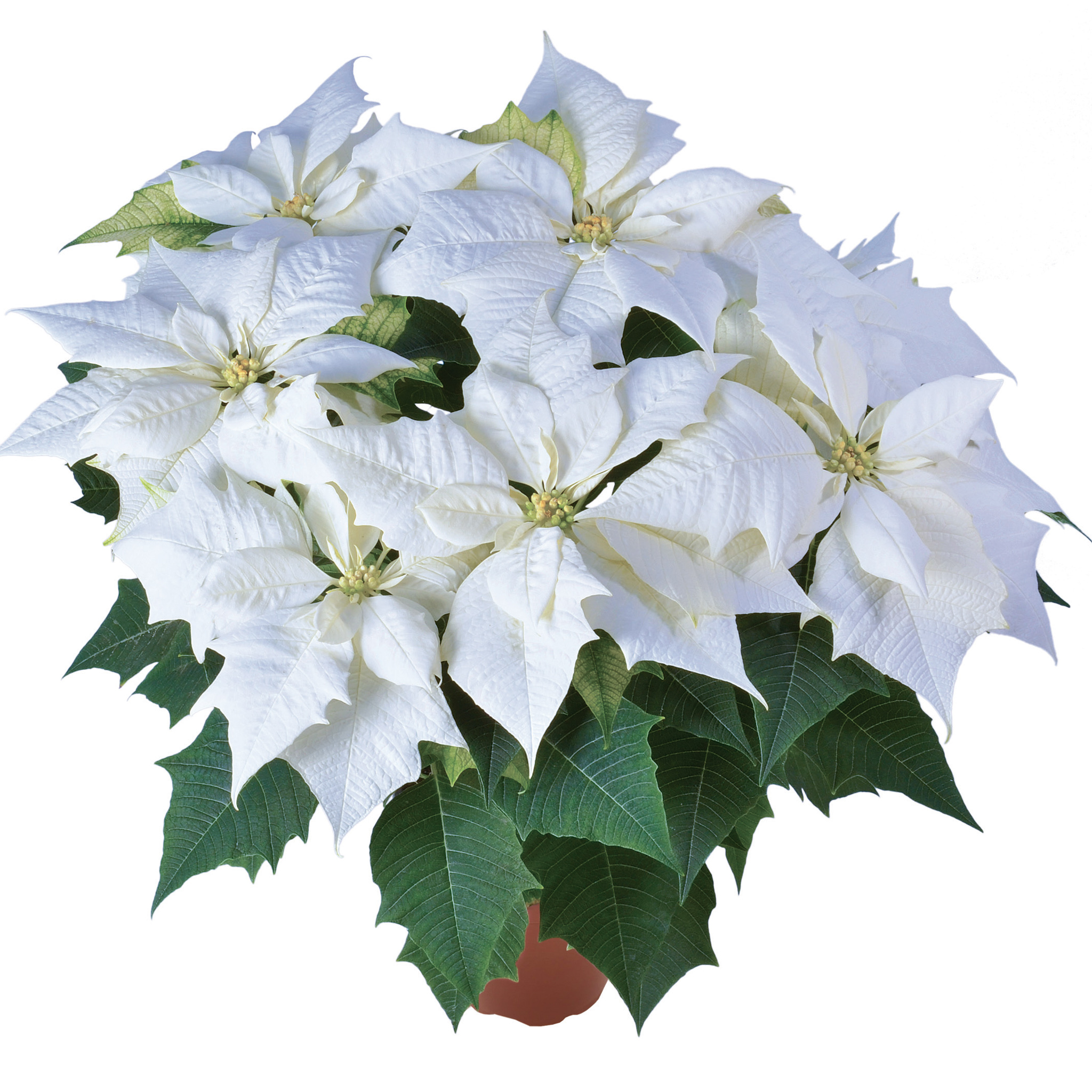
‘Alaska White: As the name suggests, this is a pure white cultivar that blends well with red varieties.
‘Jingle Bell Rock’: ‘This variety is a mixture of cream and bright red with glossy dark green leaves.

‘Candy Cinamon’: This cultivar has dappled pink foliage, making for a softer appearance.

‘Golden Glow’: This soft yellow variety is compact and known to be more heat tolerant than other forms.
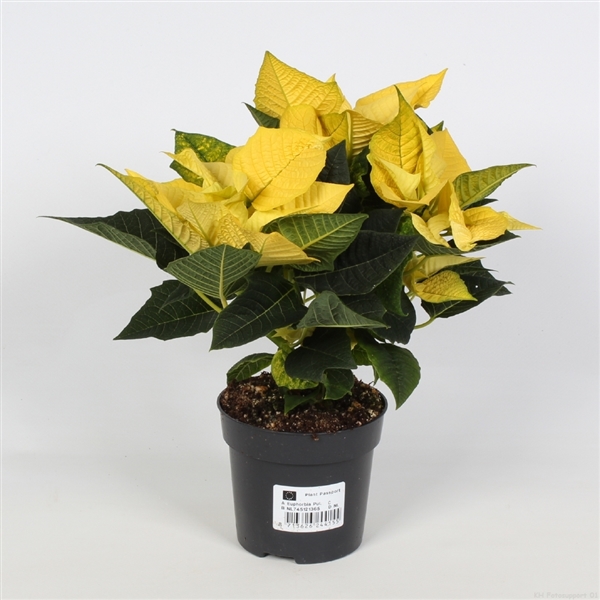
‘Lemon Drop’: This cheery variety has bright yellow bracts.

‘Gold Rush’: This stunning variety combines shades of pink and gold.

Sarcastic Fringehead

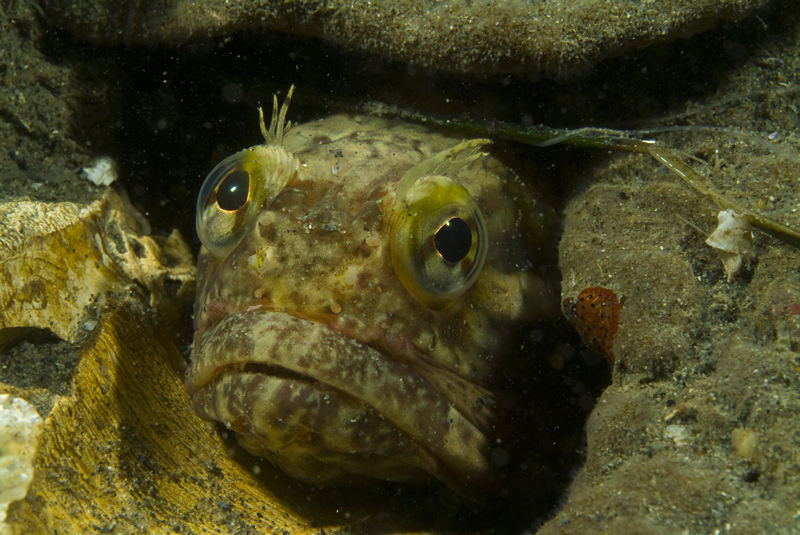
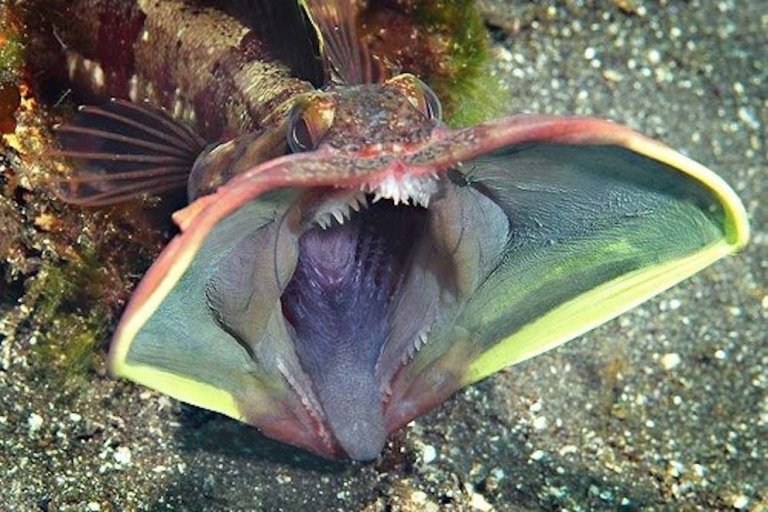
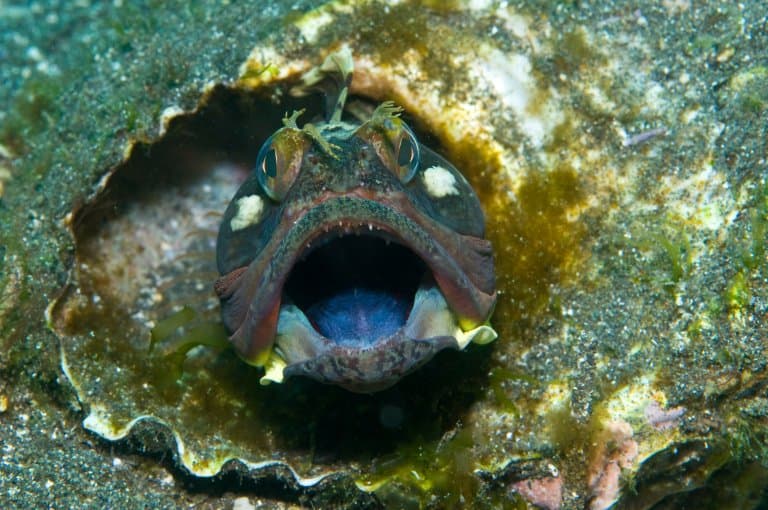
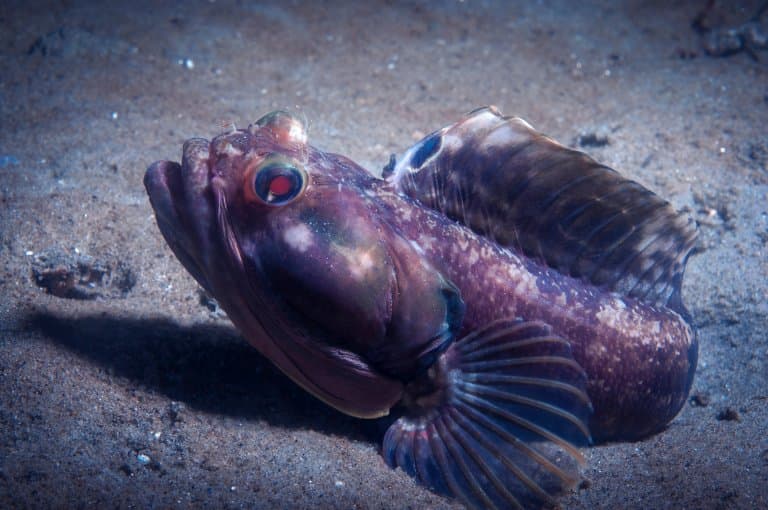
On the seafloor of the Northwest Pacific Ocean lives a very angry fish with a bizarre name and a parachute on its face, which it uses as a weapon. Named for its huge mouth and aggressive temperament, the sarcastic fringehead is a fascinating small saltwater fish, which exists in perpetual intense competition with others of its own kind.

They are found in the Pacific waters from San Francisco to central Baja California in the USA between 10 – 250 feet in depth. The sarcastic fringehead is a species of blenny, belonging to the order Blenniformes; a diverse group of species which can be found throughout the world in marine, brackish and freshwater habitats.

The family Chaenopsidae, of which the sarcastic fringehead is the largest member, is a group of scaleless, elongated blennies that strangely lack the lateral line found in the majority of other fish species. There are over 900 species of blenny, most of which are relatively small, benthic dwellers.

Blenniformids tend to be reclusive, either burrowing into soft sediments or occupying cracks, crevices and burrows. The sarcastic fringehead spend much of their time in their ocean floor dens, but when they do swim it’s in short, dart-like movements – to diet on small crustaceans, or fiercely defend its territory.

Interesting Sarcastic Fringehead Facts

‘Fringehead’ refers to the floppy tissue above the fish’s eyes

While ‘sarcastic’ is thought to derive from the Greek word sarkázein, which means ‘to tear flesh’ – referring to their aggressive behavior.

Sarcastic fringeheads are territorial homeowners

Many species within Chaenopsidae live permanently in holes or cavities, and sarcastic fringeheads are no exception. They stake a claim over a territory centered around an abandoned clam burrow, large empty snail shell or other suitable crack or crevice.

They’ll even live in man-made homes

As long as their home has the right dimensions, sarcastic fringeheads are not fussy over what it’s made from. They are often spotted living inside cans, bottles and other human rubbish that has made its way into the ocean.

They are fiercely protective of their homes

To a sarcastic fringehead, a high-quality home is a secure space of just the right size, positioned in an area with a dependable food source. These are few and far between, so fringeheads aggressively defend their territories against conspecifics, other ocean creatures and even human divers!

The best homes are worth competing for

Female sarcastic fringeheads choose males with the most desirable homes as their mates. This makes competition between males particularly intense, and is thought to be a large factor in the evolution of their extraordinary mouths.

They have an infamous ‘Demogorgon’ from Stranger Things mouth

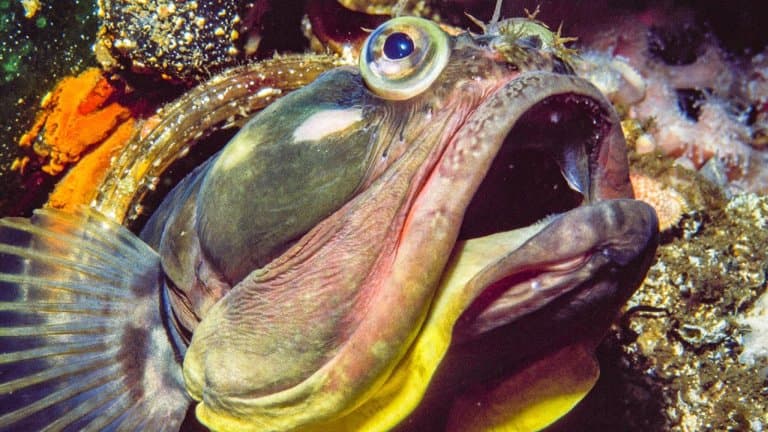
When threatened by other Sarcastic fringehead, they are able to open their mouths to horrifying circumferences – larger than their own head, displaying two rows of sharp teeth. This is in an effort to say ‘I am bigger than you’ and scare away the competition.

Sarcastic fringeheads fight each other with a ‘kiss’

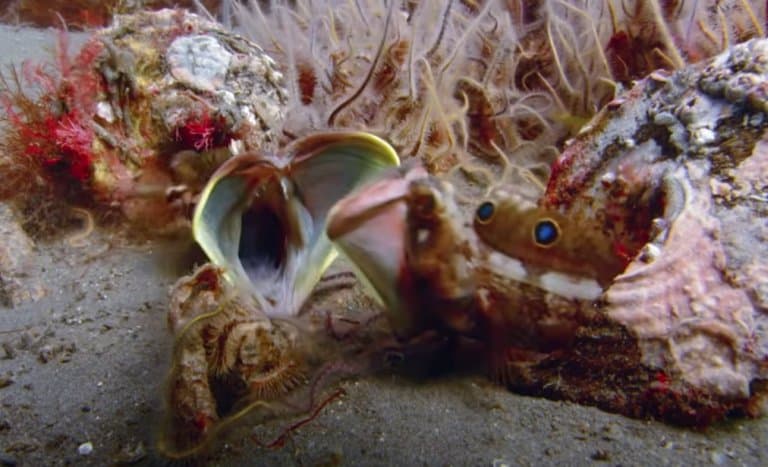
Riled individuals face-off by slamming their huge, open mouths together in a strange ‘who has the biggest mouth competition’. When sarcastic fringeheads perform their famous gape display, they emphasize their physical size, reveal their double row of teeth, and also flaunt muscles belonging to the adductor mandibular complex. These muscles are responsible for closing the mouth and their size gives an accurate measure of their bite force.

Evolving their weaponry has had its drawbacks

Their disproportionate jaw morphology of the sarcastic fringehead is thought to actually hamper its ability to feed compared to the smaller-mouthed species with which it shares its genus. This reflects the extreme selective pressure faced by males; when it comes to reproduction, being able to see off rivals is more advantageous to sarcastic fringeheads than being able to feed efficiently.

There’s more to their displays than meets the eye

The skin stretched around the elongated jawbones of the sarcastic fringehead is known as the buccopalatal membrane, and has been observed to reflect ultraviolet light. The yellow outer edges of their mouths are also fluorescent, and it is thought that the brightness of these pigments relates to the fitness of an individual.

When displays don’t work, sarcastic fringeheads resort to wrestling

If two males find each other to be physically well matched, the only way to resolve their disputes is by entering into single combat. Flaring their mouths as wide as they can, the two fish swim directly against each other, each trying to push the other backwards and thereby prove their superior strength.

Their aggressive nature has a purpose

The famous bad temper of the sarcastic fringeheads isn’t just because they’re feeling grumpy. Through their elaborate displays, individuals are able to accurately size each other up and avoid entering mismatched physical confrontations that could lead to injury.

Sarcastic fringeheads are caring fathers

Once a female has found a male with a desirable territory, she lays her eggs inside the male’s home and then leaves. The male then guards the eggs on his own until they hatch.

Their bizarre adaptations have evolved twice

Compared to their close taxonomic relatives, sarcastic fringeheads are larger, have particularly high levels of aggression, and are equipped with some freaky jaw morphology. Some truly unique adaptations? Nope! The long-jawed muscucker (Gillichthys mirabilis) has evolved a spookily similar set of features through convergent evolution; it is thought that their comparable burrow-dwelling lifestyles, extreme competition between males and a hefty dose of pure chance have driven these remarkable resemblances.

SOURCE: FACTANIMAL

International Cheetah Day

The Cheetah is a large, slender cat that live in sub-Saharan Africa, and in eastern and southern African parks. Cheetahs can also be found in small numbers in southern Algeria, northern Niger and Iran.  The Cheetah is the fastest land animal on the planet. They are members of the family Felidae, which includes the tiger, lion, jaguar, leopard, snow leopard, and other big cats.

Cheetahs are found in open and dry grasslands in the Sub-Saharan region of Africa, although they were once widespread throughout Africa and Asia. The majority of Cheetahs today inhabit natural reserves or parks. Cheetahs in the wild typically live between 10 – 15 years in the wild. Some can reach 20 years of age while in captivity.

The Cheetah has a slender body with long legs and is clearly designed for speed. They are tan in color with a massive covering of black spots all over the body. The unique patterns of the spots are as distinctive as fingerprints are on humans.

Cheetahs areeasy to distinguish from other large cats as they are smaller in size, have a smaller head and ears than most other cats, have a spotted coat – and carry what are known as tear stripes that run from the corner of each eye to the side of their nose.

These meat eaters typically hunt and feedon impalas, wildebeest calves, gazelles and other smaller hoofed animals. They are diurnal, which means they hunt during the day and rely on tall grasses to hide when on the hunt. Cheetahs mostly hunt in either the late morning or early evening. A typical chase can last between 20 and 60-seconds with only half of them being successful. They have large non-retractable claws that are used to prevent skidding when cornering quickly, and to pull down an animal.

Interesting Cheetah Facts

Cheetahs are the fastest land animal in the world.

These cats are fast. They can typically reach speeds of up to 61 miles per hour, and can go from 0 to 60 Mph in just 3-seconds, which is faster than most super-cars. Their stride length becomes as long as 23ft at full pace, which means the cheetah spends more than half the time airborne.

Cheetahs don’t simply rely on their speed, they anticipate the escape tactics of different prey when hunting.

A team or researchers found that Cheetahs hunting tactics were specific to characteristics of their prey, and are far more sophisticated than thought. Research suggests that cheetah chases comprise two phases – the first phase involves rapid acceleration to catch up with prey. The second phase involves slowing down five to eight seconds before the end of the chase, where the cheetah will predict and match movements of the prey, as the distance between them closes.

The Cheetah tail helps them steer at high speed.

It may look large and cumbersome, but when on the chase, the tail of the Cheetah plays an important role. It actually helps to steer the cheetah as it runs, like a rudder on a boat.

It’s not a cheetah’s speed that’s their greatest attribute when hunting, it’s this agility — their skill at jumping sideways, changing directions quickly and slowing down almost instantly.

Cheetahs tire quickly.

Due to the energy required to run at such speed, cheetahs can only maintain a chase for a short time. If a hunt isn’t successful after 1 min, they usually stop to rest.

Fossils have revealed that Cheetahs date way, way back.

Carbon dating has estimated the age of some cheetah fossils as being between one and two million years old.

Cheetah can’t roar.

Unlike big cats like the lion, cheetahs are unable to roar. They are closer to your domestic house cat in that they can purr, both inhaling and exhaling.

Female adult cheetahs often live alone.

Known to be typically solitary animals, females raise their cubs alone for about a year before they leave. Male cheetahs sometimes will live in a small group of brothers from the same litter.

Cheetahs abandon around 10% of kills to larger predators.

In order to prevent losing their kill to another big and nasty carnivore (lions, hyenas or even vultures), Cheetahs will move their prey to a secluded spot, and eat quickly.

They will also hunt during the day when predators are generally asleep, and only end up abandoning a relatively small number of kills.

The cheetah’s spots act as camouflage.

The cheetah can have between 2,000 and 3,000 spots, to help it blend into surroundings when hunting or hiding from predators.

Cheetahs can mate any time of the year with gestation lasting just three months. A litter can range between 2 and 4 cubs.

Cheetah cubs have a very different coat to that of adults.

The cubs have a smoky colored, long, wooly coat called a mantle. It runs down their backs and acts as a form of camouflage. It helps to conceal the cubs and their mothers assist in this by constantly seeking places to ‘hide’ them to protect the cubs from predators until they are old enough to take care of themselves.

Female cheetahs will move their cubs to different hiding places every few days. Once the cubs reach 5 or 6 weeks of age, they will follow their mothers and even start eating from their kills. By the time the cubs reach one year of age, they are hunting on their own. At 15 months, they will move away from their mother and either find a mate or sometimes live in a small group.

Cheetahs don’t need to drink lots of water.

Having adapted for life in an environment where there is little water, cheetahs can go three to four days without a drop of it. That doesn’t mean that they don’t actually get any liquids at all. As it turns out, cheetahs are able to draw water from the animals they hunt, kill and eat.

Cheetahs start families early.

The male can reproduce at the age of one, while females can begin rearing families at the age of two. The pairing is mostly random as cheetahs will mate with many different cheetahs during their lifetime.

Females end up raising their young alone.

Males do not participate in the rearing of their young. Female cheetah are caring, affectionate and dedicated mothers.

Cheetah cubs have a shockingly high mortality rate.

One study in the 90’s the Serengeti found that 95% of cubs died before reaching adulthood. Many deaths were due to lions, but also other predators and disease.

Cheetahs are capable of turning mid-air.

The Cheetah is the only big cat that is capable of turning in mid-air while sprinting. Studies concluded cheetah are able to use their tails to change body orientation in mid-air, which further aids their incredible agility and hunting prowess.

It’s a myth that cheetahs abandon hunts due to overheating when running.

Two Harvard scientists in 1973 set-up an artificial experiment in a laboratory, that that concluded a cheetah would be forced to stop running when their body temperature reached 40.5 degrees Celsius. However, new research in real world conditions shows that cheetahs body temperatures never rise that high in the wild, and they don’t abandon hunts due to overheating.

Cheetahs were considered sacred.

Sumerians trained cheetahs for hunting back in 3000 BC. The Indian (then Hindustan) ruler Emperor Akbar had 1,000 trained cheetahs he used for hunting while in power from 1556 to 1605. Even King Tut’s tomb (1400 BC) contained various cheetah artifacts. It was because of this that historians believed that the cheetah was a sacred animal to ancient Egyptians.

Cheetahs are slowly disappearing from the planet.

At the turn of the 20th century there were well over 100,000 cheetahs. Today the numbers are considerably less with roughly 7,000 in Africa and a few hundred in Iran. They have been driven out of their historic range by humans, and are now only found in Algeria, Angola, Northern Niger, Namibia, Zimbabwe, Botswana, South Africa, and Mozambique. The species is already almost extinct in Asia, with fewer than 50 individuals remaining in one isolated pocket of Iran.

SOURCE: FACT ANIMAL

Holly

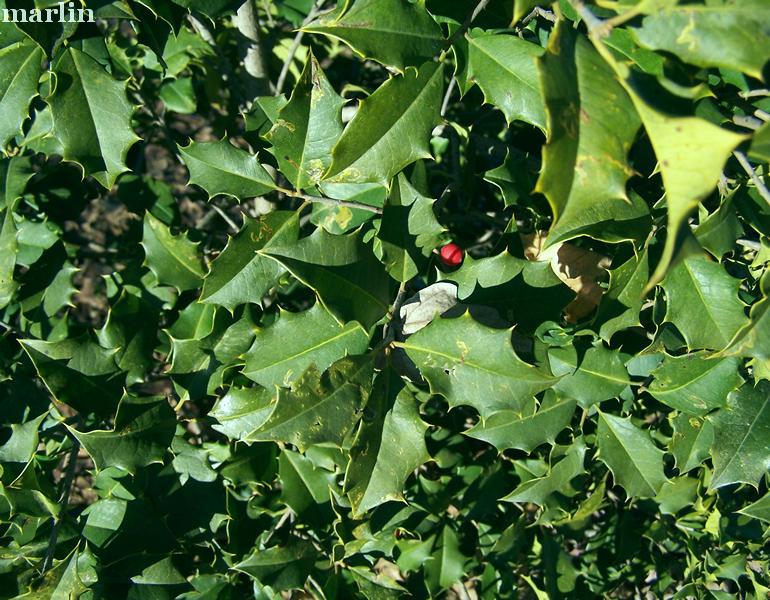
American holly is the familiar Christmas holly with glossy green, spiny leaves, and bright red berries. Native to the bottomlands and swampy margin areas of the eastern and central U.S., this tree forms a pyramidal shape and can grow to notable size in the wild. This tree is dioecious, with separate male and female plants. Pollination from male pollen is necessary for the female trees to flower and produce the signature red or orange berries. If you grow it in your landscape, you will need plants of both sexes if your goal is to have berries.

American holly is normally planted from potted nursery specimens in the spring or early fall. It has a medium growth rate, adding 12 to 24 inches per year until reaching its mature size of 30 feet or more.

American Holly Care

Although American holly tolerates a wide range of soils, it does not accept alkaline conditions or dense, poorly drained soil. But if you have a well-drained soil that you can acidify, this plant will do marvelously in most sunny or part shade locations. The plant generally loses density in shady conditions, but in hot southern climates, it likes a few hours of shade in the afternoon. In cold climates, plant American holly where it will get some shelter from winter winds.

If planting for a screen or in groups, space the plants about 5 feet apart in a prepared hole two or three times larger than the container root ball. Backfill the hole with soil blended with organic material plus an acidifying amendment, if needed. Keep the plant moist until established.

Light

American holly will grow nicely in most full sun to part shade locations. In hot climates, plants will do best if they get some afternoon shade.

Soil

Give this plant a well-drained, acidic soil. If necessary, amend the soil to acidify it, or be prepared to feed it regularly with an acidifying fertilizer.

Water

American holly needs to be kept moist while it getting established, but after the first year or so, watering once a week (about 1 inch) is sufficient. This plant has a good tolerance for occasional drought.

Temperature and Humidity

American holly generally does well throughout the temperature range of its hardiness zone, 5 to 9.

Fertilizer

Early each spring, American holly will appreciate an application of an acidifying fertilizer.

American Holly Varieties

There are hundreds of different cultivars of American holly; the pure species plant is almost never planted. Holly cultivars are normally sold as either female (berry-producing) or male plants (necessary to pollinate the females). These are some popular varieties:

‘Cobalt’ is a male cultivar with good cold hardiness (down to minus 25 degrees Fahrenheit).

‘Jersey Knight’ is one of the most popular male cultivars, growing to 7 to 10 feet over 10 years.

‘Miss Courtney’ is by some standards considered the best female cultivar. It grows 20 to 30 feet and is cold hardy down to minus 20 degrees Fahrenheit.

‘Morgan Gold’ is a yellow-berried female cultivar growing to 25 feet.

‘Maryland Dwarf‘ is a diminutive, 2-foot-tall plant with few berries.

‘Cardinal Hedge’ is a dwarf cultivar, growing to only about 4 feet, excellent for foundations and small hedges.

In order to produce berries, female hollies will require a male plant within 30 to 40 feet. It is fine to plant a single male to pollinate all your female hollies.

SOURCE: The SPRUCE

Zircons

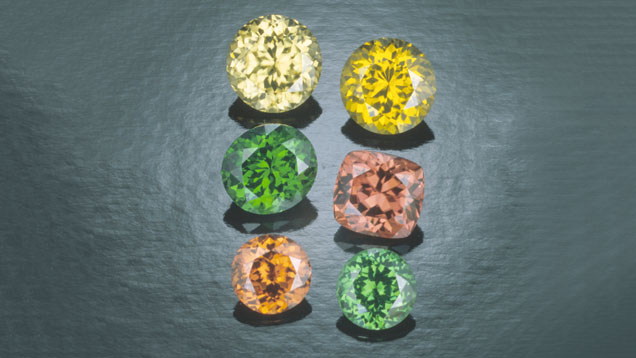
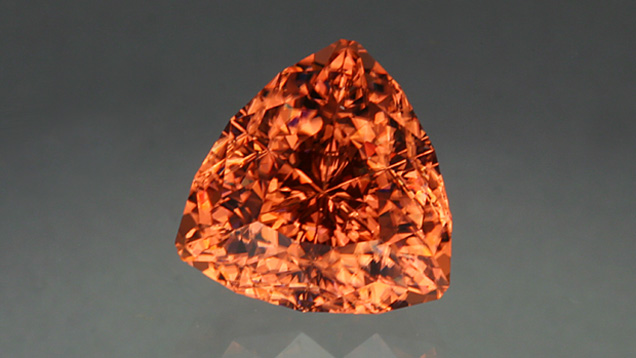
Zircon is a gemstone that’s not commonly known among jewelry buyers, which is a shame considering the number of beautiful colors it comes in. These include earth tones such as cinnamon, sherry, yellow, orange, and red. Among those who are familiar with this gem, zircon is especially admired for its attractive blue colors.

Some zircons display warm autumnal earth tones such as yellowish and reddish brown, inspiring fashion trends. Red and green zircons have market value as collectors’ stones, and cat’s-eye zircons occasionally appear on the market. There are also colorless zircons.

Although collectors clearly love zircon’s color variety, consumers seem most enamored of just one hue: blue. Gem dealer reports indicate that at least 80 percent of zircons sold are blue.

Because they’re in greater demand, blue zircons usually command higher prices than any of the other varieties. Even though gem buyers can satisfy their demand for blue gems with top-grade topaz at significantly lower cost, blue zircon continues to sell well. Industry analysts believe that blue zircon has yet to reach its full market potential.

Zircon’s blue, almost always the result of heat treatment, comes in a range that includes very slightly greenish blue, greenish blue, and very strongly greenish blue.

Clarity
Zircons are relatively free of inclusions, but many untreated zircons have a cloudy or smoky appearance. If it’s extreme, it can be a negative factor with buyers. In Victorian times, this smokiness made zircon a popular gem for mourning jewelry.

Today, most zircon that is faceted for use in jewelry is free of inclusions that are visible to the eye. Eye-visible inclusions cause a drop in zircon value.

Rarely, zircon might contain long parallel inclusions that create the cat’s-eye effect when the stone is cut as a cabochon.

Cut

It’s a challenge to cut zircon because the gem is brittle. Cutters usually fashion zircon in the brilliant style to take advantage of its luster and fire. A modification of the brilliant cut, known as the “zircon cut,” uses eight extra facets around the gem’s lower portion, called the pavilion. This isn’t seen very often today because of the extra labor costs involved. Zircon can also be found in step cuts, which have rows of parallel facets, and mixed cuts, which are a combination of brilliant and step-cut facets.

Carat Weight
The supply of zircon is generally limited, and typical sizes depend on color. Blue or green stones normally range from 1 carat to 10 carats and yellows and oranges up to around 5 carats. Reds and purples are usually smaller.

Jaguarundi

They are carnivores, hunting small animals such as birds, mammals, and reptiles.

They are primarily terrestrial, preferring to hunt from the ground, however they are both excellent climbers and swimmers.

They are usually solitary, although are sometimes found in pairs. They have litters of up to 4 kittens.

Interesting Jaguarundi Facts

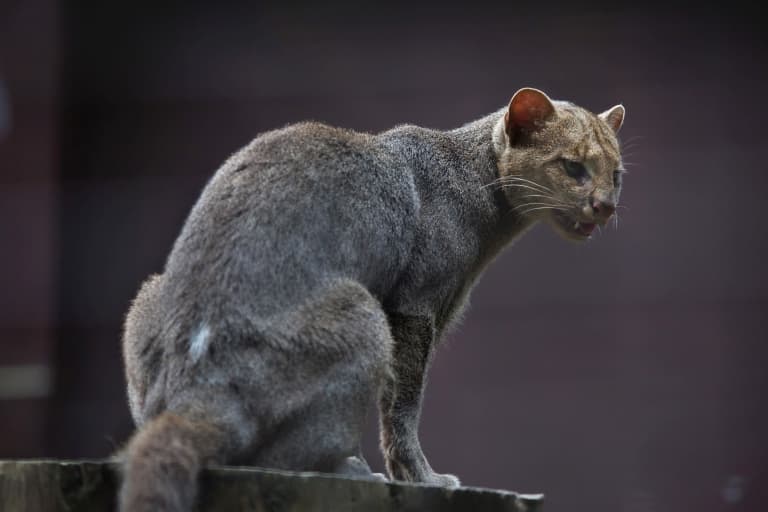
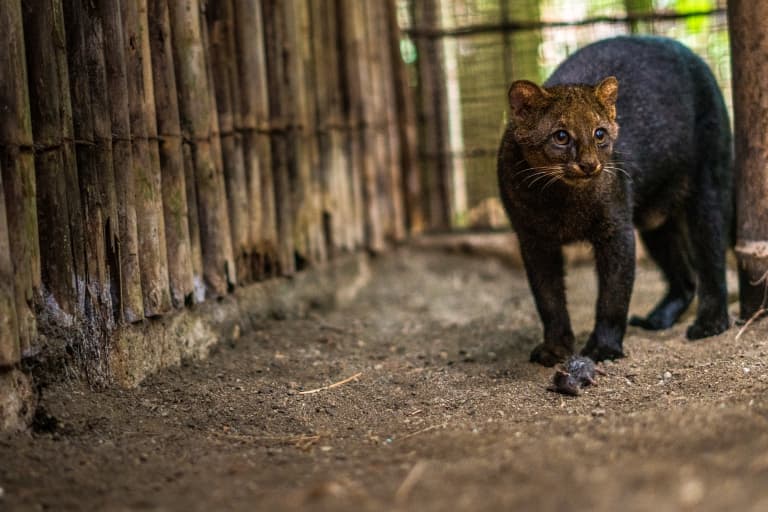
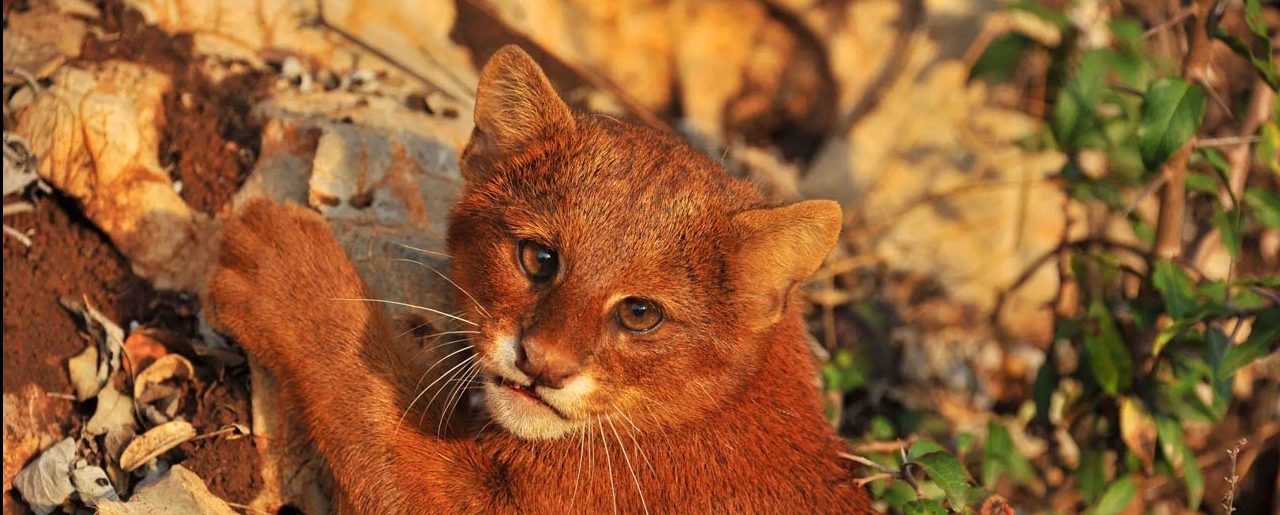
They are about twice as big as a house cat

This makes them pretty big, but this is still small compared to the cougars or jaguars which also inhabit the region.

They are similar in appearance to weasels and otters

They have elongated bodies, short legs, a long tail, and small squished faces.

They are very shy

You will struggle to see these cats in the wild as they are shy and reclusive. This partly explains why so little is known about them.

They are usually solitary

They have sometimes been found in pairs, but this is likely mothers and older offspring or mating pairs.

Their closest relative is the cougar

However, cougars are much bigger than the medium-size jaguarundi.

The oldest fossil of a jaguarundi dates to 0.5 million years ago

This fossil is from the late Pleistocene era and was found in Brazil.

They have a big range

They can be found all the way from Argentina to Mexico.

They are active during the day

This is a little unusual for wild cats. They seem to prefer hunting in the mornings, which may be because it helps them avoid other wild cats.

They are terrestrial

While other wild cats inhabiting forests may prefer to stick to the trees, these cats hunt primarily on the ground. However, they are also proficient climbers.

They can swim across rivers

These cats often inhabit rainforests, where they will swim across medium-sized rivers.

They can leap as high as 2m into the air

They do this when hunting birds.

They are vocal

They have been recorded making 13 different calls, including screaming, purring, whistling, and yapping.

They have a tendency to steal chickens

They are often found eating domestic chickens, leading to conflict with farmers.

They have litters of up to 4 kittens

These kittens live in dens constructed in dense undergrowth.

SOURCE: FACTANIMAL

Mums

Hardy mums are fast-growing and will reach their full height within their first year, with the plant filling out a little more each subsequent year. Hardy mums set buds once the nights become longer and flower in the fall for up to eight weeks. The leaves and flowers of hardy mums are mildly toxic to humans as well as to dogs, cats, and horses.

Hardy Mum Care

Here are the main care requirements to keep mums growing healthy.

Plant mums in a site that’s protected from damaging strong winds.

Provide good air circulation around the plants to reduce fungal infections.

Pinch plants on or around Memorial Day and Fourth of July for best performance.

Water weekly and feed regularly.

Light

Hardy mums prefer to grow in full sun, meaning at least six to eight hours of direct sunlight daily. However, in the warmer parts of their growing zones, they can benefit from some afternoon shade. The flowers are photoperiodic, meaning they bloom in response to the shorter days and longer nights experienced (in the northern hemisphere) in the late summer and fall. Therefore, don’t plant them near street lights or night lights; artificial lighting wreaks havoc with their flowering cycle.

Soil

These plants grow best in organically rich soil with a slightly acidic to neutral soil pH. Sharp drainage is a must, as soil that remains wet for too long can cause root rot.

Water

Mums like consistent moisture but they do not tolerate soggy soil. Water whenever the soil dries out about 1 or 2 inches down. In warmer weather and once the plant is large and in bloom, more frequent waterings will likely be necessary. About 1 inch of water per week is considered a minimum.

Temperature and Humidity

Most garden mums can handle temperatures up to 100 degrees Fahrenheit with sufficient water and some shade. Most hardy mums continue blooming as temperatures dip down as low as 20 degrees Fahrenheit and the roots of most varieties can survive winter soil temperatures down to less than zero degrees Fahrenheit. However, it’s best to choose varieties bred to thrive in your region’s particular conditions.

A moderate humidity level is ideal for these plants. Excessive humidity can encourage fungal diseases, such as leaf spot.

Fertilizer

Mums are fairly heavy feeders. You can use a slow-release fertilizer in the spring, following label instructions. Or use a water-soluble fertilizer monthly through July. Any fertilization after July can trigger tender new growth that cold fall temperatures can damage. 

Types of Hardy Mums

Mums are recognized for their particular characteristics and there are many named varieties. The most popular categories include:

Anemone

This group features long, flat petals on blooms that reach a maximum size of around 4 inches. Varieties include the following:

‘Dorothy Mechen’: Light purple blooms

‘Adrienne Mechen’: Flowers with a pink center that fades to bright white tips

‘Samba’: Rose-pink flowers

‘Rhumba’: Coral red flowers

‘Harmony’: Bright yellow blooms

‘Overture’: Bright red flowers

‘Ruby Mound’: Semi-double bright ruby-red flowers

Pompom

Pompom (also spelled pompon) mums are fluffy flowers that are also known as button mums. All varieties produce compact blooms in various colors. Some common varieties include:

‘Patriot’: All white flowers

‘Garnet’: Crimson blooms that mature with bronze overtones

‘Barbara’: Small, purple flowers

Spoon

Named for its spoon-shaped petals, this type of mum grows petite flowers up to 4 inches in diameter. Popular varieties include:

‘Kimie’: Yellow-gold petals

‘Matchsticks’: Yellow centers that end dramatically in bright red “spoons,” and

‘Yellow Quill’: Bright yellow centers that fade into creamy white tips

Newer Varieties for Northern Climates

Historically, garden mums are regarded as hardy only to USDA zone 5, but there are recent introductions by Canadian and University of Minnesota horticulturalists who have created many varieties hardy to zone 4, and some even to zone 3. If you live in a northern climate, consider one of these:

My Favorite series: developed by the University of Minnesota, this mum is hardy into zone 3b. Plants are up to 4 feet tall, with coral, pink, or yellow flowers.

Morden series: Developed in Canada, these jewel-toned mums should be reliably hardy into zone 3. Named cultivars include ‘Morden Canary’, ‘Morden Delight’, ‘Morden Fiesta’, and ‘Morden Garnet’.

Other cultivars zone 3 and 4 gardeners can consider include those developed by the University of Minnesota:

‘Peach Centerpiece’: Peach-hued flowers

‘Rose Blush’: Delicate, double, rose-colored blooms

‘Sesquicentennial Sun’: Double-gold blooms

‘Betty Lou Maximum’: Large red flowers

SOURCE: THE SPRUCE

Rufous-Crested Coquettes

The adult male’s forehead and crest, composed of quite rigid feathers, are cinnamon red. The back of their neck and most of the tops show a tan green color. A band varying from white to cinnamon blue crosses their upper rump. The central pair of rudders is dark bronze, the others are cinnamon-reddish with black tips. 

The feathers of their chin and throat show a yellowish green color with metallic shine, and have a cinnamon-rufous base that is most evident on the sides of their throat. The underparts are metallic bronze green, with the exception of a small white spot, located just below their throat.

Their irises are brown and their legs are grayish brown. The beak varies from red to reddish with a small grey or blackish spot on the tip depending on the subspecies. Central and South American breeds have a long crest and a reddish beak, while those of Mexico have a short, bushy crest and a blackish beak.

How do females differ from males?

Female rufous-crested coquettes differ from their partners in that they have no crest. Their forehead is dyed reddish while their throat has a reddish-cinnamon, white-cinnamon or white color. Small dark specks at the bottom of their throat sometimes form a transverse strip. The side rectrices have reddish tips and a wide black underground band. 

Central rudders are metallic green, just like the back. Belly and flanks are greyish brown and have no spots. The undertail coverts show a more or less pale cinnamon tone. Their beak has a darker tip than the male’s. Immature males resemble females, but their forehead, chin and upper throat vary from cinnamon red to opaque grey. As they get older, they acquire a crest of variable development.

Habitat

Rufous-crested coquettes live in humid or semi-humid forests with permanent leafy trees. They are also found on the edges of wooded areas and in clearings, even in mixed pine and hardwood forests, as well as in semi-deciduous stands. They tolerate highly degraded areas. Moreover, they live mainly in heights ranging from 1000 to 1500 meters. Outside the breeding season, they probably descend to lower altitudes.

Behavior

Rufous-crested coquettes often perch prominently on a well-exposed branch. When in flight, they move their tail up and down like true hummingbirds. Because of the band that covers their rump, these coquettes are often mistaken for moths, and more particularly, with sphinxes of the genus Aellopus, which have a similar size. 

Coquettes have a solitary lifestyle, except during the breeding season. These birds are sedentary, but they wander in search of places with abundant and small flowers. They are often forced to move because they are too small to compete with some species of hummingbirds.

Diet

These birds find their food in 3 different sources: they feed mainly on the nectar found in the small aromatic flowers of trees, grasses, shrubs or epiphytes. These usually have vibrant colors, tubular shape and contain a high energy content. 

In Central America, coquettes are attracted to legumes of the genus Inga. These trees are often used for shade in coffee and cocoa crops. They also visit the cecropias found in secondary forests, although these produce mainly pollen and little nectar. 

These hummingbirds occasionally visit artificial feeders, hoping to find sweet juices there. They also catch spiders and insects that are an important resource during the nesting period due to its high protein content.

Nesting

Coquettes do not establish marriage ties. In an attempt to seduce a partner, the male performs an air show, in which they make a “U” flight in front of her. After copulation, they cease all relationships and do not participate in various tasks, such as nest construction or feeding of young. They return to their courtship activities and try to mate with a new female. 

The female builds a cup-shaped nest that ties a web to a horizontal branch of a tree, between 6 and 25 meters above the ground. The laying usually consists of 1 or 2 white eggs, whose weight does not exceed 3 grams. 

The female incubates alone, probably for 12 or 13 days. Chicks are born naked and blind, depending entirely on their mother to take care of them for the first few days. This heats them for the first 2 weeks and then the mother leaves them after 12 days. Finally, the chicks leave the nest about 20 days after hatching.

Citrine

What Is Citrine?

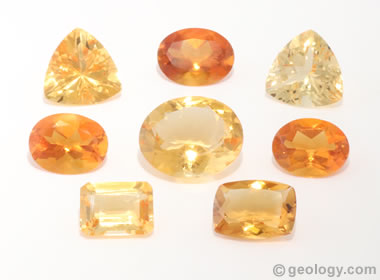
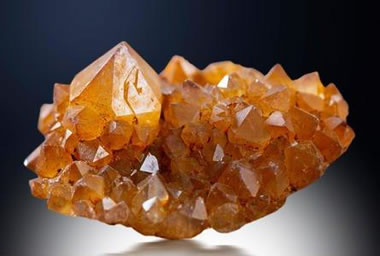
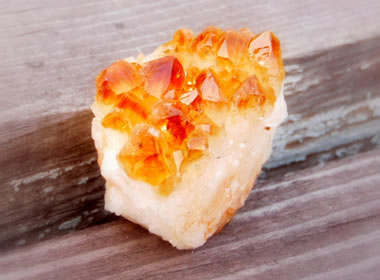
Citrine is a transparent variety of quartz with a yellow to orange color. Its attractive color, high clarity, low price, and durability make it the most frequently purchased yellow to orange gem.

Citrine is also a modern birthstone for the month of November. Its designation as a birthstone contributes to its popularity and drives a large number of sales.

The Citrine Color Range

Citrine’s color ranges from yellow, to orangey yellow, to yellowish orange, to brownish orange. The name citrine is used for any transparent quartz in that color range – regardless of its saturation. Stones with a faint color and stones with a rich color are all called “citrine”.

The quality of a stone’s color has an enormous impact on its price. Stones with a faint color are abundant and inexpensive. Stones with a rich, uniform color are rare, valuable, and preferred by buyers.

Reddish orange and reddish brown are rare colors in quartz. Gems of these reddish colors are often called Madeira citrine. The name is after wines of similar color made in the Madeira Islands, an autonomous region of Portugal, located in the North Atlantic Ocean about 450 miles southwest of Portugal.

Birthstone of November

Citrine and topaz both serve as birthstones for the month of November. Topaz was one of the original modern birthstones selected by the National Association of Jewelers in 1912. Citrine was added to the modern birthstones list in 1952.

Citrine and topaz are both available in the yellow to orange color range, but citrine generally has a much lower cost. Citrine has a Mohs hardness of 7 and topaz has a Mohs hardness of 8. That information might make some people believe that topaz has a higher durability than citrine. However, topaz is a brittle mineral that easily breaks by cleavage. It has little, if any, durability advantage over citrine.

Citrine Geodes

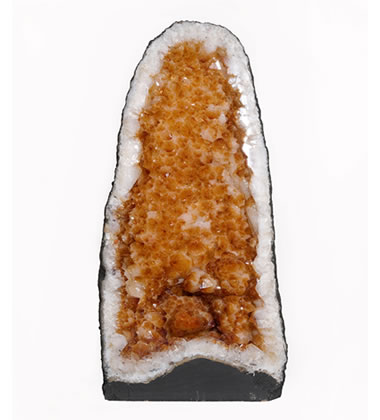
One of the most impressive specimens of citrine that you might encounter is a large citrine geode from Brazil.  These are often offered for sale at major gem and mineral shows.  Gem hunters find these geodes in the Brazilian basalt fields, then clean and prepare them to stand as a crystal tower in your living room.  They can be two, or four, or six feet tall – or taller.

Surprisingly, they are not filled with orange to orangy brown citrine when they are found.  Instead, most are filled with purple amethyst crystals.  Somewhere between discovery and the consumer, a decision is made to heat the geodes in industrial ovens to convert the original purple amethyst into an orangy brown citrine.

Why convert a beautiful amethyst geode into a citrine geode?  Because many people who will not buy an amethyst geode will buy a citrine geode because they enjoy the orange color or because citrine is their birthstone.

Natural, Treated, Synthetic

Five categories of citrine exist in the gem and jewelry market. These are:

1. citrine with a natural color
2. citrine with a natural color, but enhanced by treatment
3. citrine produced by heating light amethyst
4. synthetic citrine (a man-made product)
5. imitation citrine (a man-made product that is not SiO2)

All of these are legitimate products; however, sellers should always inform the customer when they are selling gems that have been treated, gems that might have been treated, and especially when they are selling synthetic or imitation materials. Here are a few reasons why…

Natural Color Citrine

Quartz with a natural citrine color is rare. Some people want this natural-color citrine and are willing to pay a premium price for it.

Sources of Citrine

Small quantities of naturally colored citrine are found at many locations throughout the world. The frequency of its occurrence is demonstrated by the locality maps at mindat.org.

The most important commercial source of citrine with a natural yellow to orange color are the pegmatites of eastern Brazil. Other countries where citrine has been produced include: Argentina, Bolivia, Madagascar, Mexico, Russia, Spain, and Uruguay.

The most important source of amethyst that is heat treated to produce a citrine color is also eastern Brazil. Russia is the most important source of synthetic citrine.

Ametrine

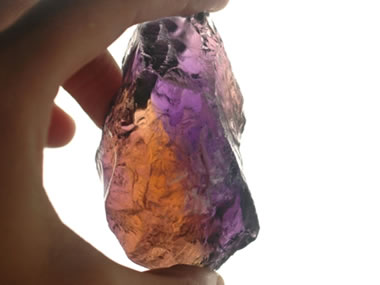
Ametrine is a bicolor quartz that has zones of golden yellow citrine and deep purple amethyst in contact with one another in a single crystal. The origin of the name is a combination of AMEthyst and ciTRINE to yield “ametrine.”

Ametrine is a rare gem, with most of the world’s commercial ametrine production from the Anahi Mine in southeastern Bolivia. The mine produces a variety of ametrine, amethyst, citrine, rock crystal, and bicolor gems.

Roseate Spoonbill

Physical Description

The roseate spoonbill is a large wading bird known for its pink plumage and distinctive spoon-shaped bill. Its upper neck and back are colored white, while the wings and feathers underneath display the more recognizable light shade of pink.

The wings and tail coverts are deep red, along with the legs and the iris of the eyes. Part of the spoonbill’s head is a distinct yellow-green. When they are young, the birds are duller in appearance, brightening as they mature.

Size

Reaching a height of up to 2.5 feet, the roseate spoonbill’s wingspan can stretch 1.5 times as wide, reaching up to 4 feet.

Native Habitat

In the United States, the roseate spoonbill can be found in southern Florida, coastal Texas and southwestern Louisiana. Their breeding range extends south from Florida through the Greater Antilles to Argentina, Chile and Uruguay. Roseate spoonbills usually live in marsh-like areas and mangroves.

Communication

While feeding, spoonbills utter a low, guttural sound. They are also known to call during breeding displays and when flying.

Food/Eating Habits

Using its spoon-like bill to scoop prey up from shallow water, the roseate spoonbill’s diet typically includes minnows, small crustaceans, insects and bits of plants. They feed in the early morning and evening hours in both fresh and saltwater wetlands. It is believed the roseate spoonbill receives its bright coloring from the pigments of the crustaceans that it eats.

At the Smithsonian’s National Zoo, they are fed flamingo pellets, sea duck pellets and insects.

Social Structure

A social bird, the roseate spoonbill often feeds, roosts and flies in formation with its species. They nest singly or in pairs, usually in trees over water and sometimes on small islands.

Reproduction and Development

Typically roseate spoonbills do not breed until their third year. To attract one another, courtship displays include ritualized exchanges of nest material, dancing and clapping. Female spoonbills create deep, well-constructed nests out of sticks using materials brought to them by males. The Florida population usually nests in red and black mangroves sometimes with wood storks, while the Texas and Louisiana populations often nest on the ground in offshore island mixed colonies with gulls, terns and herons.

A female lays a clutch of one to five eggs. Both parents share incubation duties, which last about 22 to 24 days. A newly hatched chick has mostly pink skin with a sparse covering of white down. The parents feed the chick by dribbling regurgitated material into the baby’s upturned bill. After one month, the chick will begin to exercise by clambering through the branches or foliage surrounding the nest, and by six weeks, it will have developed wing feathers large enough for flight.

Sleep Habits

The roseate spoonbill sleeps standing, usually on one leg, with its head tucked beneath its back and shoulder feathers.

Lifespan

They can live up to 15 years in human care and an estimated 10 years in the wild.

SOURCE: national zoo.edu