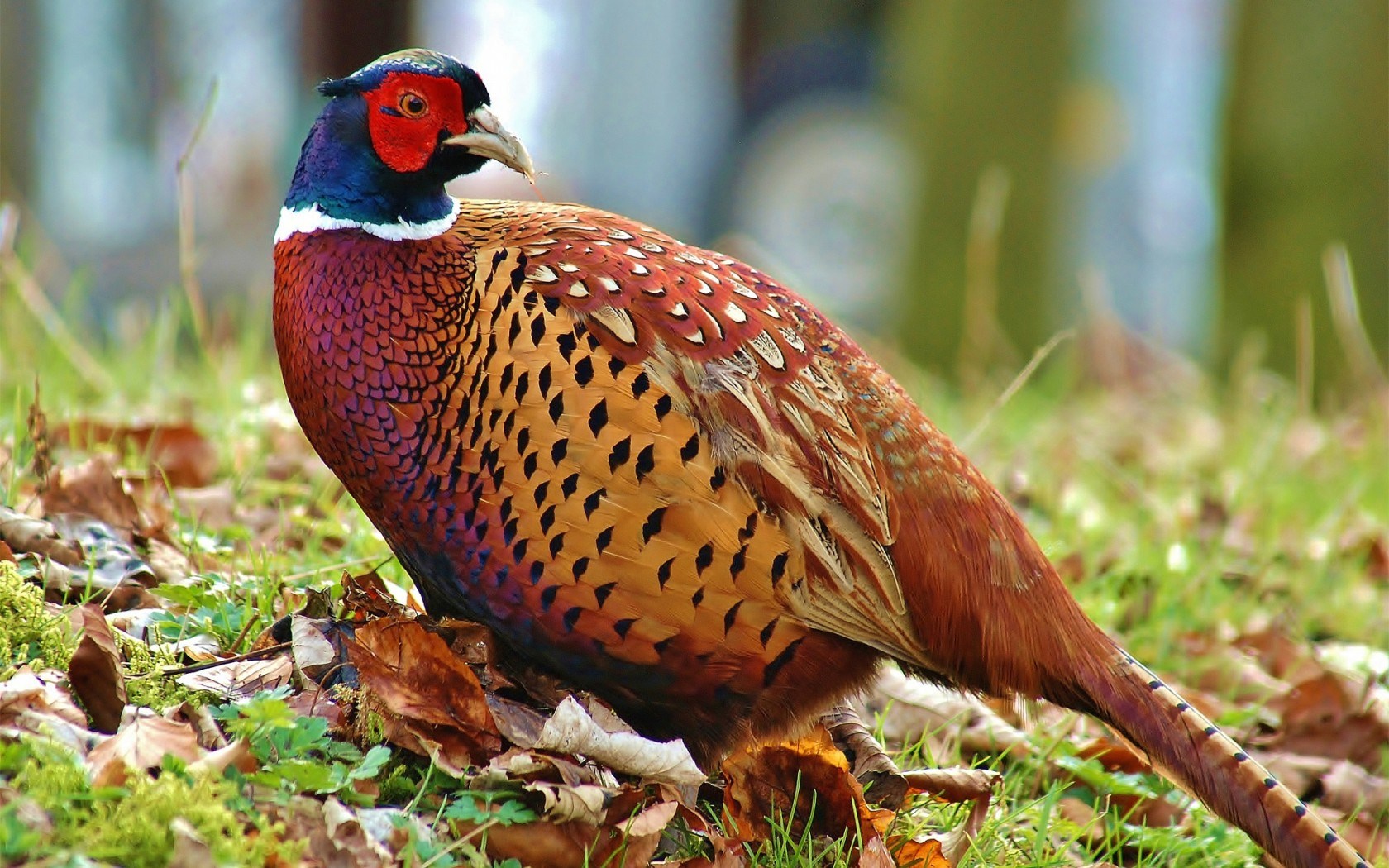
Pheasant

From: Animals.net:

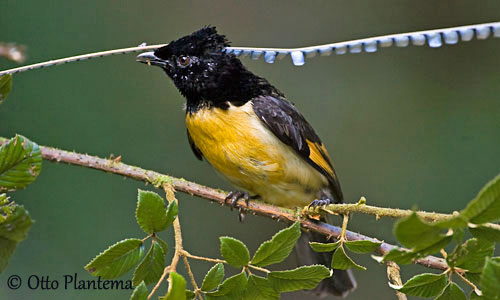
The Pheasant comprises a large group of birds in the Phasianidae family. Their closest relatives are the partridge, quail, grouse, turkey, and more. Within the family, these birds make up the entire subfamily Phasianinae. Researchers recognize at least 39 different species of these birds, including the Common Pheasant, Golden Pheasant, Argus, and more.

Description of the Pheasant

Many species of these birds are brightly colored, with iridescent plumage, or feathers. Their coloration varies from grey, brown, tan, white, and black, to red, yellow, green, blue, and more. The males are usually more brightly colored than the females. Most of these birds are relatively large and have long tails. They usually measure between one and three feet long, including their tails, and weigh between one and five pounds.

Interesting Facts About the Pheasant

There are so many different species of these birds that it’s difficult to pick just a few unique traits. Learn more about some specific species and what makes them unique below.

Common Pheasant – The Common Pheasant is, well, common. They live throughout much of the northern hemisphere, including North America and Eurasia. However, their natural range is much smaller. Commons actually hail from several regions in Asia. Humans introduced them into North America and Europe so that they could hunt them.

Green Pheasant – This species is a close relative of the Common. They are so named because males have iridescent green feathers on their bodies. This flashy bird has a bright red face and is easily recognizable. The Green is Japan’s national bird.

Lady Amherst’s Pheasant – As these birds go, Lady Amherst’s is uniquely colored. Males have black and white striped feathers running off their heads and down their tails. They also have shiny blue-green feathers on their bodies and wings, a yellow “saddle patch” above their tails, and splashes of red thrown in here and there.

Crested Fireback – The crested fireback has a plume of dark feathers that grow from the top of its bright blue head. The feathers on its back, directly above its tail, are dark red. Combined with its yellow tail, this coloration gives this species the appearance that its back is on fire.

Habitat of the Pheasant

This group of birds lives in a variety of different habitats. Different species have different habitat preferences, and some Pheasants inhabit just a few types of habitats while others live in nearly any. Some of the different ecosystems that they occupy include rainforests, scrubland, meadows, mountainous regions, forest edges, woodlands, and more. Depending on the species, some also live in more urban areas, like farms, pastures, and agricultural areas.

Distribution of the Pheasant

Each Pheasant has its own unique distribution. Some live across an incredibly wide range, while others only inhabit a small region. Still others originally lived in a smaller area, but humans introduced them to different places. Most of these birds naturally range through various parts of Asia, but humans have spread different species to North America, Europe, Australia, and more. Some people also keep certain species on farms or in zoos.

Diet of the Pheasant

Most Pheasants are omnivores, which means that they eat both plants and animals. However, each species’ diet varies slightly. Some species eat mostly seeds and fruits while others feed more heavily on insects and invertebrates. A few of the different plant parts that they eat include berries, seeds, nuts, fruits, roots, bulbs, grains, shoots, and more. They also hunt for many different types of insects and invertebrates, like grasshoppers, spiders, worms, insect larvae, snails, caterpillars, and more.

Pheasant and Human Interaction

Though human impact and interaction varies from species to species, many of these birds are popular gamebirds. This means that people like to hunt them for their meat and feathers. In fact, this is why people introduced several species across the world. In their natural ranges, people have driven some Pheasants towards potential extinction. The threats that people pose typically include habitat destruction, hunting, and egg collection.

Domestication

You can consider some species of these birds to be semi-domesticated. People do farm and breed several species, and the Common species is particularly popular for this purpose. Farm-bred birds come in a variety of different colors.

Does the Pheasant Make a Good Pet

Some Pheasants do make good pets, but only for the right type of home. If you live on a farm, you could own one as a pet if you’d like. However, it is important to know that only some species are legal to own as pets, and it is only legal to keep gamebirds in certain areas.

Pheasant Care

In zoos and on farms, these birds need large enclosures with secure fencing to protect them from predators. They primarily walk on the ground, but they can fly, so their enclosures should provide space for them to fly safely if frightened. Pheasants do particularly well in aviary-style enclosures with plenty of space and shrubbery for them to hide in. Zookeepers and farmers vary their diet based on the species, but most of these birds eat a combination of seeds, insects, and pelleted insectivore feed.

SOURCE: ANIMALS.NET
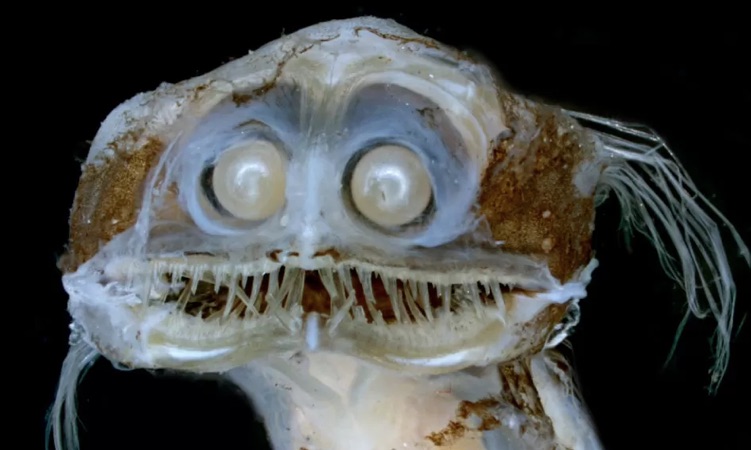
Telescope Fish

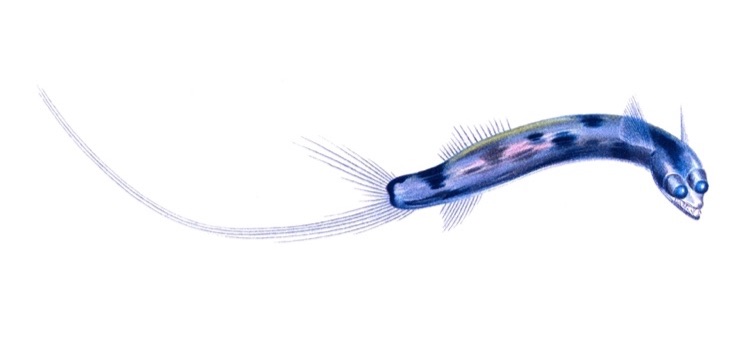
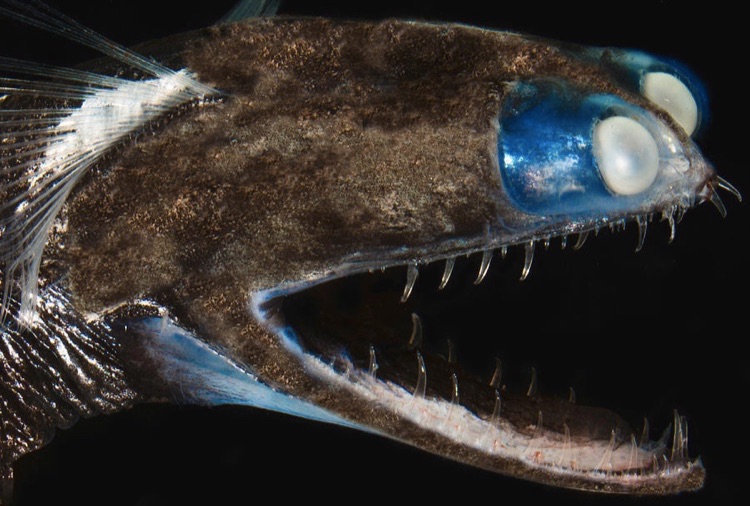
The telescope fish is a unique, brightly colored fish that can be found in deep-sea tropical and subtropical waters. It lives three-quarter miles to 1.3 miles beneath the surface. These fish dwell in the deep, far from natural light and away from the surface. To make up for it, Mother Nature endowed the telescope fish with tubular eyes that protrude from the head like binoculars.

The fish has adapted its eyes to see and seek prey in the most mesopelagic twilight zones of the ocean. The fish employs its distinct eyes to find food. They swim, directing the attention upward to surfaces. They may discern silhouettes of their prey this way. The fish move vertically in the water column to observe both food and predator.

Size

The typical length of a telescope fish is between two and four inches. However, it can grow up to half a foot long in rare cases. A single case has been documented where a specimen reached 16 inches in length.

Nomenclature

The telescope fish is a deep-sea aulopiform species of fish named Gigantura chuni. There are only two species in the world. Outside of that, little is known about the creatures. The genus name (Gigantura) is taken from Greek mythology’s Gigantes, a legendary group of giants.

The “oura” suffix means “end” or “tail,” and the word is a reference to the ribbon-like, elongated lower tailfin that makes up half of the fish’s total length.

Species of Telescope Fish

We do not know much about the telescope fish, but we do know that there are two species.

Gigantura Chuni

The Gigantura chuni, is a deep-sea creature that may be found in the Indian, Atlantic, and Pacific oceans. It also inhabits the Gulf of Mexico. In recent years, there have been sightings in South Africa as well. It has been observed in the seas of New Zealand, Chile, Saint Paul, Tasmania, and Gough Island.

Gigantura Indica

The Gigantura indica is a deep-sea creature with a silvery, scaleless body and tubular, forward-pointing eyes with large lenses and a ribbon-like tail. The animal’s eyes are similar to those of its cousin, the Gigantura chuni, which have tubular, ahead-directed eyes with big lenses.

Both species are adapted to specific water depths and environments. This is why experts do not believe the species suitable for captivity. This fish is superior in temperate seas, thus making difficult to adapt to tanks.

The overall cost of maintaining and protecting an environment for the telescope fish, as well as the expense of the animal itself, is prohibitively high.

Telescope Fish Appearance

The eyes of aequidens are extremely large, protruding, and have delicate glass screens. The bubbles lenses include around two dozen dorsal spines. From the correct perspective, they appear to be binoculars or more precisely, a pair of telescopes.

Telescope fish have big heads and a greenish-blue color with a silvery underside. The fish have blue dotting and tiny brown lines that form stripes along the sides and back. The fish have gritty, slimy scales and a pointy nose. The tail accounts for almost half of the fish’s total length.

Habitat

The telescope fish is found in tropical and subtropical waters all over world. Some countries territorial waters where they are most prevalent include New Zealand, Tasmania and Chile.

The population, which is not closely watched, is considered robust and of “Least Concern” by conservation organizations.

In several situations, such as the IUCN, the fish are not evaluated at all. There isn’t enough information about the numbers to generate trustworthy statistics because there aren’t enough records on them.

The fish’s range includes sub-Antarctic bodies of temperate cool seas with a habitat that ranges across the world’s oceans.

The telescopic scope is positioned more than 66 feet underwater in the water columns and up to 2,000 miles beneath the ocean floors. They may also be found in surge channels and vast low tide pools.

The telescope fish is a solitary by nature, but it will travel in groups. You’ll never see one its own. Grouping together makes for simpler hunting. It’s also a great way for the animals to keep an eye out for predators while everyone else is sleeping.

Predators and Prey

The telescope fish, like all other living animals, has its enemies and favorite foods. Let’s look at both of them now.

Predators

Due to their diminutive size, telescope fish are prey for larger carnivorous fish and sharks that dwell in these habitats.

Prey

This species is an active predator that can’t wait to get its teeth on bristlemouths, lanternfish, and barbed dragonfish. Like the sucker fish, they’ll also go after plankton.

The telescope fish engulfs its prey whole. Sea creatures that are frequently larger than it are among the victims. However, such a technique of consuming is typical for animals at those depths.

It has a long, flexible jaw with razor-sharp teeth. They capture food quickly, usually from below, whilst constantly looking upwards from the ocean floor.

SOURCE: SURFSUPMAGAZINE.COM

Ever More…

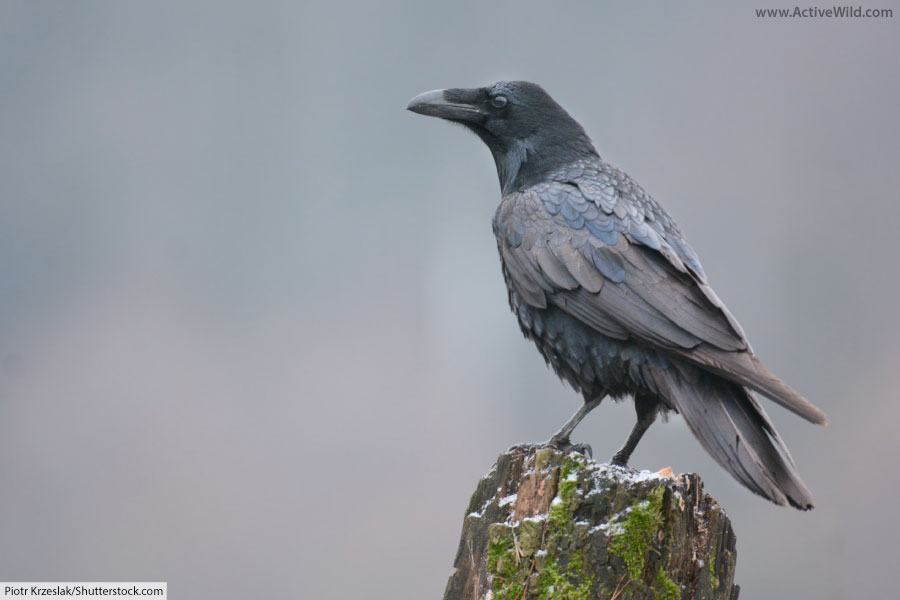
A raven is a large black bird in the genus Corvus, which is part of the crow family, Corvidae. Members of this family are known as ‘corvids’. Although there are nine species of raven, the word ‘raven’ is most often used to refer to the common raven, Corvus corax. The common raven is the most widely-distributed, and the (joint) largest of all the corvids. The common raven isn’t just the largest member of the crow family; it’s also the largest passerine. Passerines are also known as ‘perching birds’, or ‘song birds’. They make up over half of all living bird species.

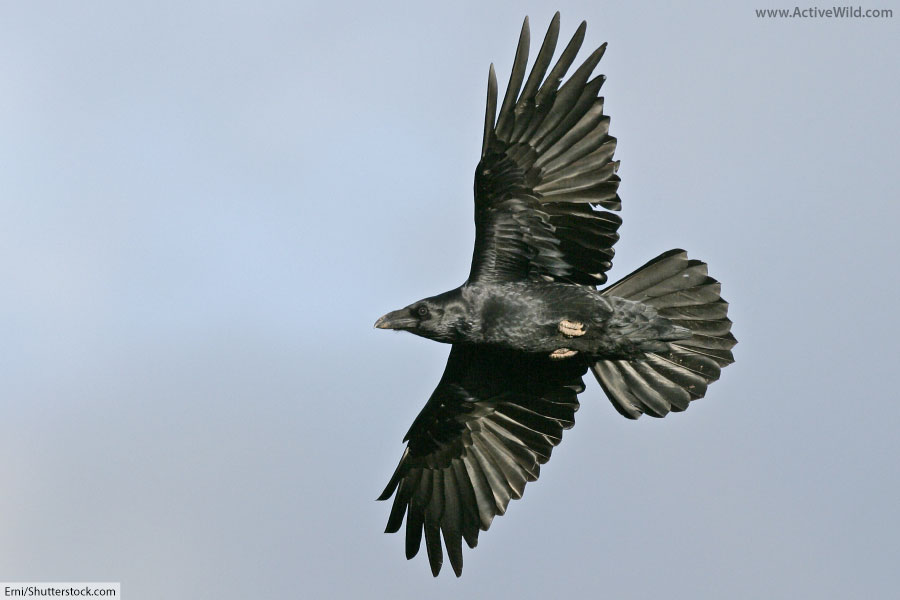
The common raven is a large, jet-black bird. It has a body length of up to 21.3 in. and a wingspan of up to 51.2 in. It is a similar size to (if not slightly larger than) both the common buzzard (Europe) and the red-tailed hawk (North America). A raven’s plumage can appear to have a glossy, green or blue sheen. Its bill is large and powerful, with bristles that reach about half-way along its upper side. The chin feathers are shaggy and often prominent. When in flight, the common raven’s tail is diamond, or ‘wedge’-shaped. Its wings are long and relatively narrow. Finger-like feathers may be seen at the tips of the wings.

Perhaps due to its large size and somewhat sinister appearance, the raven has found its way into the myths and legends of many cultures. In Norse mythology, the ravens Huginn and Muninn (thought and memory) sit one on each shoulder of the god Odin, and supply him with news and information. Several First Nations peoples know the bird as a powerful trickster. Others know it as a creator. The bird appears on the crests and artwork of many indigenous North American tribes. In England, it is said that if the small raven colony present in the Tower of London were to leave, then the country would fall to an invader.

Raven Intelligence

Crows as a family are known for their high intelligence, and the raven is no exception. The species has one of the largest brains of any bird, and, in relation to body size, one of the largest of all animals. The raven’s intelligence is apparent in many of its dealings with other ravens. Individuals can remember their relationship with other ravens for years. A raven will form mutually beneficial relationships with ‘friendly’ birds, and will also attempt to prevent competitors from forming potentially beneficial relationships themselves.

A raven can remember not only its own place in the system, but also the relationship between other ravens. A raven will show discomfort if other familiar ravens do not behave in the expected manner towards one another.

Ravens are among the small number of animals that are able to communicate to each other about things that are not present. (This is known as displacement). For example, upon finding carrion being guarded by a pair of older ravens, a young raven has been observed returning to its roost and telling the others about the find. The next day, the flock flew to the carrion together to see off the older pair and claim the carrion for themselves.

Ravens also demonstrate problem-solving abilities, tool use, and are even known to ‘play’ – partaking in activities purely for enjoyment (a behavior seen only in intelligent animals).

Like most crows, the raven is omnivorous. It is a predator, a scavenger and a forager. In fact, the species will eat just about anything, from seeds to carrion. Ravens are known to eat fruit, nuts, grain, bird eggs, human garbage, dung, worms and arthropods such as scorpions, beetles and other insects.

SOURCE: ACTWILD.COM

Why Do Fish Travel in Schools?

From Scubadiving.com:

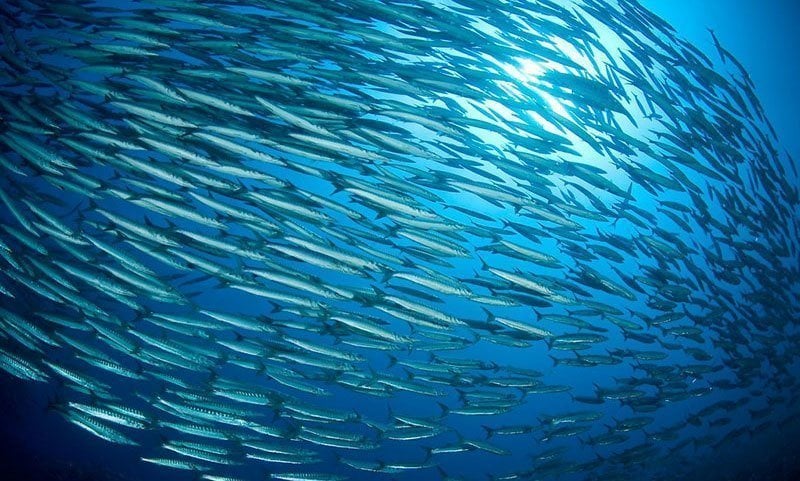
I am completely enclosed, suspended in a sphere of clear warm water smaller than my office. I am not surrounded by bricks and mortar, but living walls made of thousands of silvery bodies. The schooling silversides are so thick that I can’t see the surrounding coral canyon they’ve filled on this Cayman reef. As swiftly as I was engulfed, I am spat back into the bright blue world as the fish sweep past me to escape a marauding tarpon.

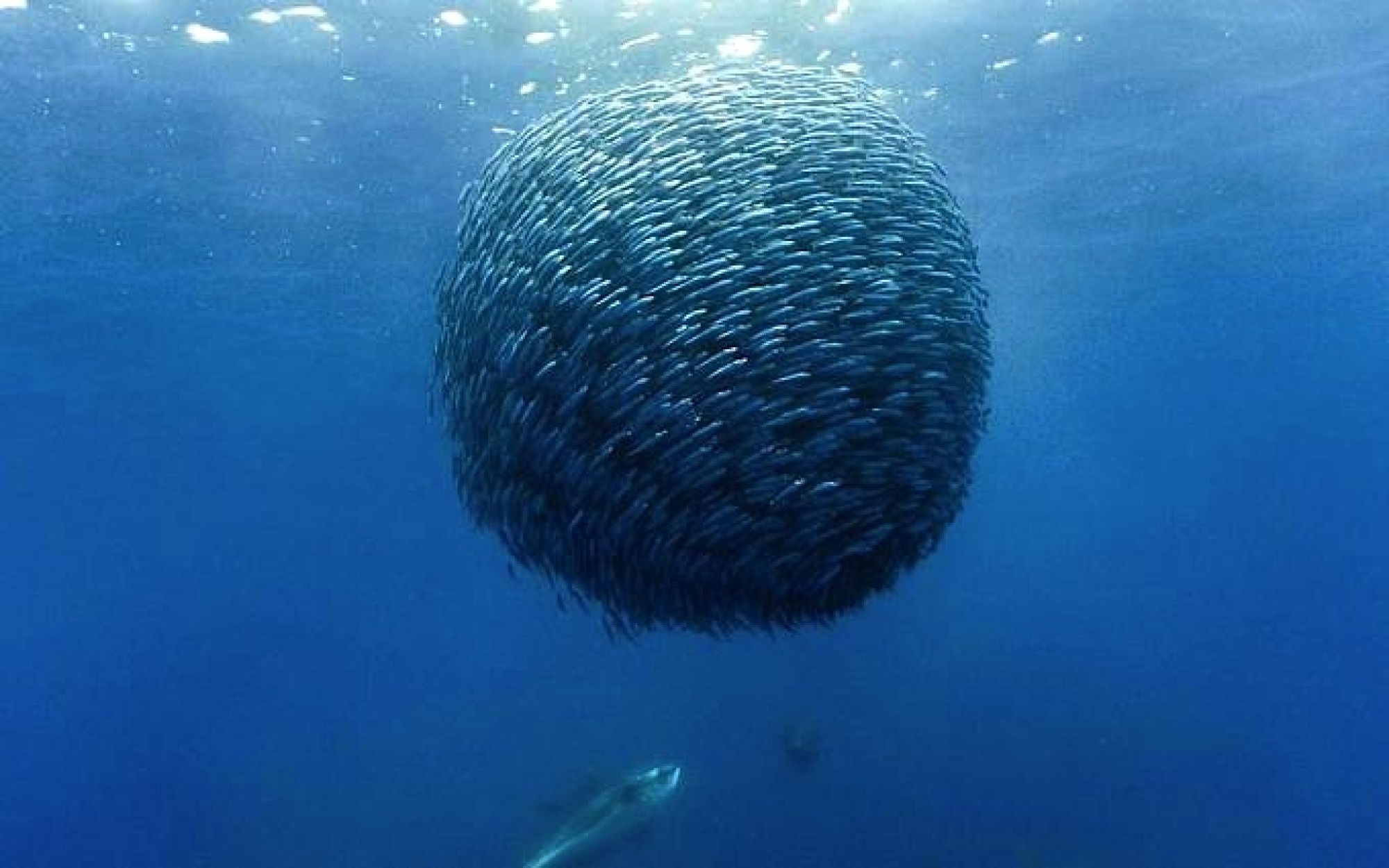
Shoals and schools of fish are similar, but there are differences. A shoal is any gathering of fish (single or mixed species), something about 50 percent of all fish species does at some point. Strictly, schools are much tighter formations, where the fish are fully synchronized, usually dominated by a single species of a similar size. Many schooling fish are silvery, which keeps them safe, not only because those scales reflect the water, making them harder to see, but they also dazzle and confuse predators. To us, these defensive maneuvers are an enchanting spectacle; the fish dance as if they are a single, giant creature.

As effortlessly balletic as it looks, these coordinated and unrehearsed mass twists and turns are challenging. It is not something a group of people could do. It used to be thought that fish’s unique lateral line sense, which allows them to feel vibrations in water, was the main control. But recent studies show that vision is the dominant sense in synchronized schools. Fish that school typically have eyes mounted on the sides of their head; the exact spacing of individuals, and the precise and unified movement are controlled mainly by eye contact.

Many schools form for defense. The main protective advantages of safety in numbers are: Each member of the school has less chance of being eaten since predators struggle to pick out an individual, and when faced with a predator, most individuals can take evasive action before it gets close, based on the movements of the other fish. The closer the fish pack together and the more unified their movements, the safer they are, which has driven the evolution of this complex behavior.

Not all gatherings are for protection. Fish also form shoals to feed, migrate, rest, court and spawn. Some herbivorous species of damselfish live alone and aggressively defend the gardens where they farm algae—even against divers. Other species can’t raid these gardens alone, but many species of surgeonfish, parrotfish and rabbitfish will shoal to use the weight of numbers to gain access.

Many nocturnally active species, like snappers, grunts, sweetlips and bigeyes, are commonly seen resting in mixed groups during the day. These shoaling fish are often horizontally striped, a pattern thought to signal peaceful cooperation in the fish world. (Vertical bars are often associated with aggression and territoriality.)

Smaller reef fish tend to spawn regularly, but larger species reproduce less frequently, often gathering in large numbers just a few times each year to spawn. Large, solitary reef predators like Nassau groupers and bohar snappers are classic examples of species that gather impressively for spawning events. Sadly, this is a sight that is vanishing from the oceans, because these gatherings make it easy for people to net large numbers of fish, often wiping out the entire adult population of a species from a reef system in one fell swoop.

As photographers, our best shots will emphasize the togetherness of the fish. We want tight formations of neat, repeated shapes to make our pictures pop. However, the one thing guaranteed to mess up pleasing arrangements is getting too close! Shooting schools requires that we unlearn the golden rule of underwater photography and keep a bit of distance (in relative terms, anyway) to maintain those fantastic formations in our photos. What benefits the fish is also good for our photos.

SOURCE: SCUBDIVING.COM

Catahoula Leopard Dog

Some dogs are easy-going companions. Others are natural-born workers, always ready for action. Then there’s the Catahoula Leopard Dog—a breed with a personality as bold as its name. Get ready to uncover what makes this breed one of the most intriguing in the canine world.

Louisiana Recognizes It as the Official State Dog

Declared Louisiana’s official state dog in 1979, the Catahoula Leopard Dog has deep historical roots in the region. This breed is used for hunting and herding, and it showcases impressive intelligence and resilience. Its official recognition reflects its significance in Louisiana’s culture, particularly in rural and working communities.

Catahoula means “sacred lake” in the Choctaw language, referencing the Catahoula Parish in Louisiana. This name highlights the breed’s connection to indigenous history and the swampy landscapes where it thrived. Some historical accounts suggest the breed was originally called the Catahoula Cur.

Eyes Can Be a Striking Mix of Colors

Heterochromia, a rare genetic trait, often occurs in Catahoulas and creates one-of-a-kind eye colors. Some have “glass eyes” that appear blue or white. Others display amber, green, or a mix in one eye. These variations enhance their mysterious, piercing gaze, making them even more captivating.

One Of the Most Unique Coat Patterns

Swirls and brindle stripes combine to make this breed instantly recognizable. In addition, the Catahoula Leopard Dog’s coat can display blue, red, black, or chocolate merle patterns. Because of this, no two Catahoulas look identical, making their appearance as distinctive as a fingerprint.

The Catahoula Leopard Dog’s Coat Is Water-Resistant

The Catahoula Leopard Dog’s coat is not only striking but also functional. Their short, dense fur helps repel water, allowing them to move through wet environments comfortably. This characteristic is especially beneficial in the wet and muddy terrains they are often found working in.

The American Kennel Club Does Not Recognize It

Despite its long history and working capabilities, the American Kennel Club (AKC) has not officially recognized the breed. Instead, organizations like the United Kennel Club and the National Association of Louisiana Catahoulas (NALC) uphold breed standards.

Requires A Job to Stay Happy

A daily routine with problem-solving exercises keeps the Catahoula Leopard Dog engaged and reinforces its instincts. The breed may become restless and destructive without this mental and physical stimulation. High-energy tasks like agility courses or herding trials are essential to prevent boredom.

Starfish

Starfish (or sea stars) are beautiful marine animals found in a variety of colors, shapes, and sizes. All starfish resemble stars, and though the most common have only five arms, some of these animals can grow up to 40 arms. The amazing sea creatures—part of a group of animals known as echinoderms—travel using their tube feet. They can regenerate lost limbs and swallow large prey using their unusual stomachs.

Sea Stars Are Not Fish

Although sea stars live underwater and are commonly called “starfish,” they are not true fish. They do not have gills, scales, or fins like fish do. Sea stars also move quite differently from fish. While fish propel themselves with their tails, sea stars have tiny tube feet to help them move along. Because they are not classified as fish, scientists prefer to call starfish “sea stars.”

Sea Stars Are Echinoderms

Sea stars belong to the phylum Echinodermata. That means they are related to sand dollars, sea urchins, sea cucumbers, and sea lilies. Overall, this phylum contains approximately 7,000 species. Many echinoderms exhibit radial symmetry, meaning their body parts are arranged around a central axis. Many sea stars have five-point radial symmetry because their body has five sections. This means that they do not have an obvious left and right half, only a top side and a bottom side. Echinoderms also usually have spines, which are less pronounced in sea stars than they are in other organisms such as sea urchins.

There Are Thousands of Sea Star Species

There are about 2,000 species of sea stars. Some live in the intertidal zone, while others live in the deep water of the ocean. While many species live in tropical areas, sea stars can also be found in cold areas—even the polar regions.

Not All Sea Stars Have Five Arms

While many people are most familiar with the five-armed species of sea stars, not all sea stars have just five arms. Some species have many more, such as the sun star, which can have up to 40 arms. 

Sea Stars Can Regenerate Arms

Amazingly, sea stars can regenerate lost arms, which is useful if a sea star is injured by a predator. It can lose an arm, escape, and grow a new arm later. Sea stars house most of their vital organs in their arms. This means that some species can even regenerate an entirely new sea star from just one arm and a portion of the star’s central disc. This won’t happen too quickly, though; it takes about a year for an arm to grow back.

Sea Stars Are Protected by Armor

Depending on the species, a sea star’s skin may feel leathery or slightly prickly. Sea stars have a tough covering on their upper side, which is made up of plates of calcium carbonate with tiny spines on their surface. A sea star’s spines are used for protection from predators, which include birds, fish, and sea otters. One very spiny sea star is the aptly named crown-of-thorns starfish.
Sea Stars Do Not Have Blood
Instead of blood, sea stars have a circulatory system made up primarily of seawater. Seawater is pumped into the animal’s water vascular system through its sieve plate. This is a sort of trap door called a madreporite, often visible as a light-colored spot on the top of the starfish. From the madreporite, seawater moves into the sea star’s tube feet, causing the arm to extend. Muscles within the tube feet are used to retract the limb.
Sea Stars Move Using Their Tube Feet
Sea stars move using hundreds of tube feet located on their underside. The tube feet are filled with seawater, which the sea star brings in through the madreporite on its top side. Sea stars can move quicker than you might expect. If you get a chance, visit a tide pool or aquarium and take a moment to watch a sea star moving around. It is one of the most amazing sights in the ocean. Tube feet also help the sea star hold its prey, including clams and mussels.
Sea Stars Eat with Their Stomachs Inside-Out

Sea stars prey on bivalves like mussels and clams as well as small fish, snails, and barnacles. If you’ve ever tried to pry the shell of a clam or mussel open, you know how difficult it is. However, sea stars have a unique way of eating these creatures. A sea star’s mouth is on its underside. When it catches its food, the sea star will wrap its arms around the animal’s shell and pull it open just slightly. Then it does something amazing: the sea star pushes its stomach through its mouth and into the bivalve’s shell. It then digests the animal and slides its stomach back into its own body. This unique feeding mechanism allows the sea star to eat larger prey than it would otherwise be able to fit into its tiny mouth.
Sea Stars Have Eyes

Many people are surprised to learn that starfish have eyes. It’s true. The eyes are there—just not in the place you would expect. Sea stars have an eye spot at the end of each arm. This means that a five-armed sea star has five eyes, while the 40-armed sun star has 40 eyes. Each sea star eye is very simple and looks like a red spot. It doesn’t see much detail but it can sense light and dark, which is just enough for the environments the animals live in.

All True Starfish Are in the Class Asteroidea

Starfish belong to the animal class Asteroidea. These echinoderms all have several arms arranged around a central disk. Asteroidea is the classification for “true stars.” These animals are in a separate class from brittle stars and basket stars, which have a more defined separation between their arms and their central disk.

Sea Stars Have Two Ways to Reproduce

Male and female sea stars are hard to tell apart because they look identical. While many animal species reproduce using only one method, sea stars are a little different. Sea stars can reproduce sexually. They do this by releasing sperm and eggs (called gametes) into the water. The sperm fertilizes the gametes and produces swimming larvae, which eventually settle on the ocean floor, growing into adult sea stars. Sea stars can also reproduce asexually through regeneration, which is what happens when the animals lose an arm.

SOURCE: THOUGHTCO.COM

King of Saxony Bird-of-Paradise

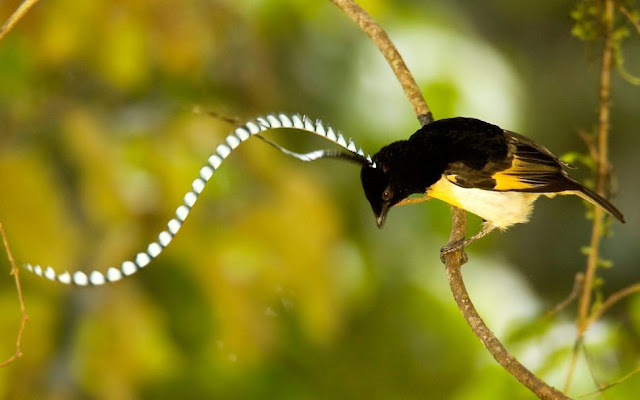
The King of Saxony Bird-of-paradise is a fascinating and visually striking creature. This bird is relatively small in size, with a height of approximately 10-12 inches. However, what it lacks in stature, it more than makes up for with its elaborate and unique physical features.

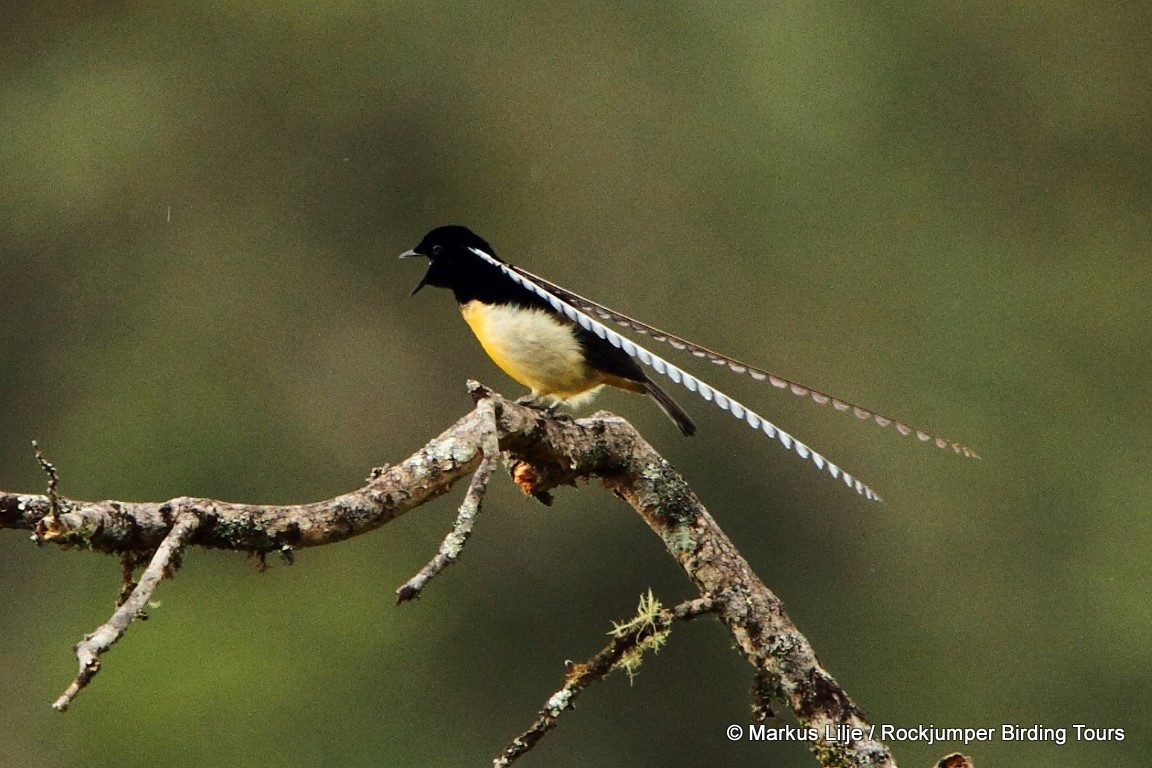
One of the most prominent characteristics of the King of Saxony Bird-of-paradise is its incredibly long and ornamental head plumes. These plumes, which are only possessed by the adult males, can reach up to 18 inches in length. They are composed of slender, wire-like feathers that emerge from the bird’s forehead and curve outward, resembling two long antennae or saxophone reeds. These extraordinary head plumes give the bird its distinctive appearance and lend it its regal name.

The King of Saxony Bird-of-paradise has a compact body with a relatively short tail compared to other bird-of-paradise species. Its body is covered in soft, fluffy feathers that are predominantly black in color. However, it also exhibits vibrant patches of color on its chest and sides. These patches vary between individuals but can include shades of yellow, orange, or red. The contrast between the dark body and the bright, eye-catching colors adds to the bird’s overall allure.

In addition to its striking head plumes and colorful patches, the King of Saxony Bird-of-paradise possesses other unique physical attributes. It has a small, curved beak that is black in color, perfectly suited for its diet of fruit, insects, and arthropods. The bird’s eyes are relatively large and are surrounded by bare, bright blue skin, which further enhances its visual appeal. Its legs and feet are short and sturdy, adapted for perching and maneuvering through the dense vegetation of its natural habitat.

Overall, the King of Saxony Bird-of-paradise is a truly remarkable creature in terms of its physical appearance. From its long, extravagant head plumes to its vibrant patches of color and unique facial features, this bird stands out as one of nature’s most visually captivating creations. Its relatively small size does not diminish its impact, as its ornate and regal appearance commands attention and admiration.

The King of Saxony Bird-of-paradise, scientifically known as Pteridophora alberti, is a striking and unique bird species found in the rainforests of New Guinea. This avian beauty boasts an elaborate and extravagant plumage, making it one of the most remarkable creatures in the avian world.

One of the most distinctive features of the King of Saxony Bird-of-paradise is its extraordinary head crest. The male bird has two long, thin, and curved feathers protruding from its forehead, resembling two elegant ribbons. These remarkable plumes can reach up to half the bird’s body length, making it an impressive sight to behold. These feathers are used during elaborate courtship displays to attract females and establish dominance among males.

In terms of diet, the King of Saxony Bird-of-paradise primarily feeds on fruits, nectar, and small insects. Its beak is specially adapted for its feeding habits, allowing it to extract nectar from flowers and catch insects with precision. This bird plays a crucial role in pollination, as it transfers pollen from flower to flower while feeding on nectar.

The King of Saxony Bird-of-paradise is known for its unique courtship rituals. During the breeding season, males gather in specific display trees to showcase their colorful plumage and impressive head crest. They engage in elaborate dances, spreading their wings, vibrating their feathers, and swinging their head plumes in mesmerizing displays. These displays are accompanied by a series of distinctive calls and vocalizations, creating a symphony of sounds in the rainforest.

When it comes to living habits, the King of Saxony Bird-of-paradise is primarily arboreal, spending most of its time in the forest canopy. It is a highly territorial bird, with males defending their display trees from intruders. These birds are solitary creatures, preferring to live and forage alone, except during the breeding season.

As for sleep patterns, the King of Saxony Bird-of-paradise typically roosts in the dense foliage of the rainforest at night. It chooses secure locations that offer protection from predators and adverse weather conditions. These birds have been observed to roost alone or in small groups, seeking safety in numbers.

The conservation status of the King of Saxony Bird-of-paradise is currently classified as near threatened. Its habitat destruction due to deforestation and illegal hunting pose significant threats to its population.

SOURCE: ANIMALINFORMATION.COM

French Angelfish

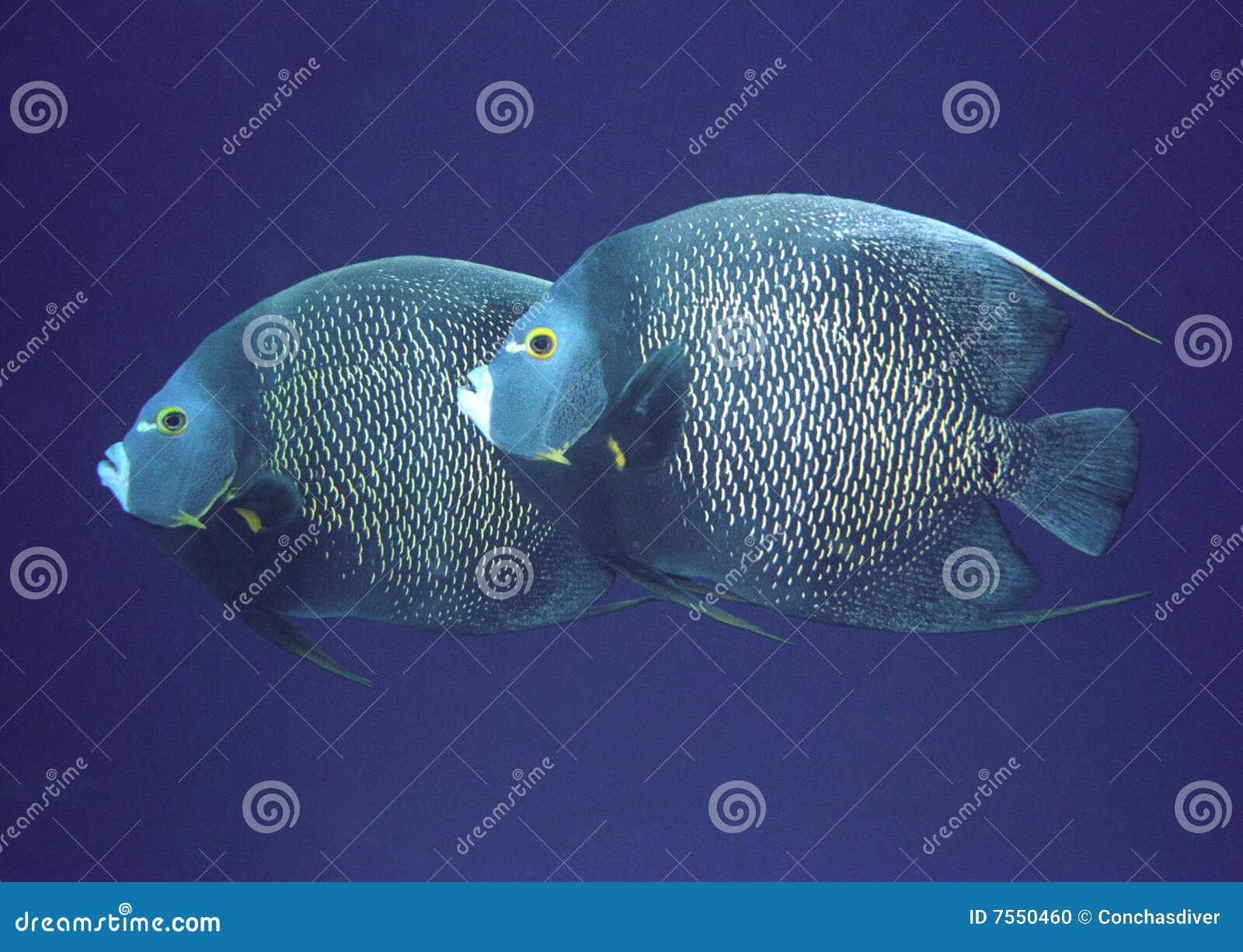
June is the month of couples and weddings (in my mind, at least) so I looked for a fish that is frequently found in pairs…viola…the French Angelfish!

From thoughtco.com:

French angelfish are part of class Osteichthyes and live in coral reefs in the Western Atlantic, from the Bahamas to Brazil and the Gulf of Mexico. Their scientific name, Pomacanthus paru, comes from the Greek words for cover (poma) and spine (akantha) due to their protruding spines. French angelfish are very curious, territorial, and often travel in pairs.

Description

French angelfish have thin bodies with protruding lower jaws, small mouths, and comb-like teeth. They have black scales with a bright yellow rim, and their eyes have yellow at the outer portion of the iris. Juveniles have a dark brown or black body with vertical yellow bands. As they mature, the scales begin to develop yellow rims, while the rest of the body remains black.

These fish commonly swim at depths of 15 feet, traveling in pairs in coral reefs near sponges. They are strongly territorial and will fight with neighboring pairs over areas. Due to their small bodies, French angelfish are able to swim into narrow cracks between corals to hunt and hide from predators. They swim by rowing their pectoral fins, and their long tail fins allow them to turn quickly.

Habitat and Distribution

French angelfish occur in coral reefs, rocky bottoms, grassy flats, and other places that provide coverage in tropical coastal waters. They have been found in the Atlantic Ocean off the coasts of Florida down to Brazil. They also appear in the Gulf of Mexico, the Caribbean Sea, and occasionally off the coast of New York. French angelfish can survive a wide variety of environments due to their salinity tolerance.

Adult angelfish’s diet mostly consists of sponges and algae. Many sponges have a V-shaped pattern due to French angelfish bites. They also eat cnidarians including zoantharians and gorgonians, as well as other aquatic invertebrate animals such as bryozoans and tunicates. Young angelfish eat algae, detritus, and ectoparasites cleaned off other fish. In reef ecosystems, young French angelfish set up “cleaning stations” for a variety of fish clients as a way for them to control parasites. They do so by touching the body of fish clients with their pelvic fins to remove parasites. This specialized function rivals other cleaners like gobies and shrimp. Client fish include jacks, morays, surgeonfish, and snappers, among many others.

Adults form pairs, staying with their mate for life. These pairs search the corals for food during the day and hide from predators at night in cracks in the reefs. Despite being very territorial, adult French angelfish have been known to be very curious towards divers.

Reproduction and Offspring

French angelfish reach sexual maturity when they are around 3 years of age and about 10 inches long. Spawning occurs from April to September. They are nest non-guarders and reproduce in pairs via external fertilization. Unlike other fish that spawn in the open, French angelfish mate exclusively with their partner. The male and female will travel to the surface where they release both eggs and sperm into the water. The eggs are only 0.04 inches in diameter and hatch 15 to 20 hours after fertilization. These eggs develop in plankton beds until they can travel down to the coral reef.

SOURCE: THOUGHTCO.COM

Inca Tern

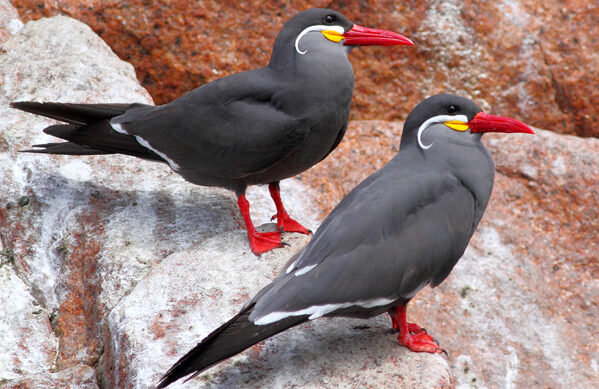
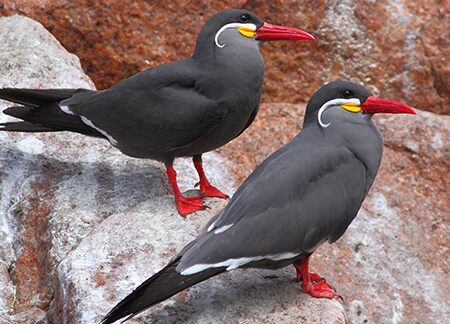
This striking bird occupies part of the same habitat ruled by the ancient Inca Empire in South America. Inca Terns are best known by their dashing white mustaches, which are found on both male and female birds.

The species is found only near the cold waters of the Humboldt Current, where the birds feed on anchovies and other small fish. Like Least Terns, Inca Terns feed by plunge diving and surface dipping. The birds also scavenge scraps from sea lions, dolphins, and fishing boats. Declining fish stocks are one of the reasons for this species’ population decline.

Nesting by the Thousands

It’s a gregarious species, nesting in colonies of several thousand birds. The recording on this page, from Pantanos de Villa Wildlife Refuge outside of Lima, Peru, gives an idea of what these noisy colonies are like.

The Inca Tern’s elaborate courtship includes a “high flight,” with the male quickly ascending to several hundred feet, pursued by the female. Pairs choose a nest site in cliff hollows or fissures—sometimes even in the old nest burrow of a Humboldt Penguin. They often return to the same nest site for several years in a row, and both parents incubate and care for the chicks.

“Coastal Peru is a spectacular place to see vast numbers of Inca Terns and other seabirds such as Peruvian Boobies and Guanay Cormorants,” said ABC Vice President Mike Parr.

“It’s hard to imagine that there were once even more seabirds using these waters. The double-whammy of over-fishing and excessive guano harvest—which eliminates nest sites—has been compounded by the effects of the El Niño cycle, which affects fish stocks.”

From Threats to Protection

Rats, cats, and other introduced predators on some islands also affect nesting and breeding success. Islands are particularly susceptible to the effects of invasive species; for example, free-roaming cats have contributed to the extinction of 33 species on islands.

Following years of lobbying by in-country NGOs, the Peruvian government created the Guano Islands and Capes National Reserve in 2009, protecting Inca Tern as well as sea lion breeding colonies on 28 guano islands and cliffs along the coastline.

SOURCE: ABCBIRDS.ORG