Lighthouses are pretty cool in my opinion, but I’m not sure I’d want to live in one. This “lighthouse” estate is in Alabama and is unique. Inland Alabama doesn’t seem like a great place for a lighthouse, but the improbable location didn’t faze the sea-obsessed builder of this six-bedroom, 18,000-square-foot home on Lake Guntersville. The lighthouse itself is six stories high, made of marble and concrete, and topped with a catwalk so the owners can survey their kingdom.
From AL.COM:
GUNTERSVILLE, Alabama – The lighthouse on Lake Guntersville attracts the curious. They drift by in their boats, their voices carrying over the water as they try to guess why the structure is there. Some don’t realize the lighthouse fronts what is an 18,000-square-foot home. What many don’t know is the eight-story structure is the culmination of one man’s life work.
The lighthouse house Jim Kennamer built on four acres of lake-front property is for sale now, on the market for $3.25 million. The property has been appraised for $6 million, but with a soft economy and the desire to sell, Realtor Ernie Tidmore has set a lower price.
Thank you to all who visit this site—those who contribute and those who just read. I appreciate all of you! May we all know peace and prosperity in the new year!
In July of 1862, Congress established the Internal Revenue Service. I found an article from 2017 about “quirky” facts about the agency on LISTVERSE:
10 Quirky Facts About The IRS
Another April 15 has just gone by. People who have filed their taxes can heave a sigh of relief while they await any tax refunds. People who have yet to file their taxes and haven’t requested an extension may be too late to avoid the interest and late payment penalties of the IRS.
However, there is more to the IRS than simply collecting taxes. They do some quirky things. As you’re about to find out, the agency is more interesting than it looks.
10 The IRS Uses Outdated Computers To Process Your Taxes
The IRS oversees one of the major revenue streams of the US government. So it is very surprising that the computers it uses to process our taxes are not up-to-date. They were made in the 1950s and still use magnetic tapes to store information. Decades ago, every American manually filed their taxes. It was often time-consuming for IRS staff to cross-check for fraud and errors. This changed in the 1950s when the IRS contracted with IBM to develop the Individual Master File (IMF) computer software to hasten the tax process.
The software could automatically detect the differences between the incomes reported by employers and declared by employees. It also automatically compared current and previous tax payments to detect evaders. If that was not enough, it automatically issued letters to taxpayers who were determined to be underreporting their taxable income. However, IMF is outdated. It was written in assembly programming language, which is not popular today. In fact, the IRS has more problems recruiting programmers to maintain the code with each passing year. The IRS has suggested replacing IMF with Customer Account Data Engine, but it has yet to do so.
9 The IRS Only Offers One-Year Deductions And Credits For Kidnapped Children
For the 2018 tax year, the IRS raised the standard deduction and eliminated personal exemption deductions for dependents, such as children. Before that, however, the IRS had elaborate tax exemption rules for the parents of kidnapped children. The IRS only allowed tax deductions for a child kidnapped by someone other than a family member. The child must have lived with the parent or guardian claiming the deduction for half the year during which the youngster was kidnapped. (For tax year 2018, this rule still applies if you want to claim an earned income tax credit.)
The parent or guardian was only eligible for a personal exemption deduction for the kidnapped child for the remainder of the year and not even a day after. The IRS said that it could not allow tax deductions after the year of abduction because parents could only claim personal exemption deductions for the youngster if they provided half of the child’s upkeep.
Interestingly, the kidnapper—even if he was a family member—could not legally claim a tax deduction for the upkeep of the child, either, because the kidnapper had the child illegally.
8 The IRS Made Seven Million American Children Disappear In 1987
The IRS has not always required parents to list the social security numbers of their children on tax returns. Many parents exploited the loophole and listed nonexistent children as dependents. It was almost impossible for the IRS to detect or even confirm whether the children really existed.
This changed in 1987 when the IRS demanded that parents list the social security numbers of any dependents who were at least five years old. The rule came into force in 1987 when US parents listed 70 million children as dependents. Curiously, they had declared 77 million children as dependents a year earlier. Where did the seven million children go?
7 The Church Of Scientology Allegedly Blackmailed The IRS To Become Tax-Exempt
The Church of Scientology does not pay taxes to the US government even though it has some profitable sources of income. The IRS claimed that the church made $300 million a year in the early 1990s. It probably makes much more now. Interestingly, the Church of Scientology paid taxes to the US government for 25 years until the IRS suddenly declared it a tax-free enterprise in October 1993. Before then, the IRS and the church had been engaged in a long legal battle over the church’s tax status.
The church declared that it was not a taxable entity because it was a church. The IRS insisted that it was actually a business and its income was taxable. However, the church continued to pay the taxes because every court considered it a business—until the IRS suddenly backtracked in 1993. The IRS has never revealed the reason for its surprising change of mind. It was later revealed that the Church of Scientology was granted tax-exempt status after it allegedly launched an elaborate blackmail attempt against several key IRS staff members. Supposedly, the Church of Scientology hired private investigators to gather dirt about IRS officials and their businesses. It may have also secretly funded some anti-IRS organizations.
In 1991, David Miscavige, the leader of the church, met with Fred T. Goldberg Jr., then the commissioner of the IRS, and offered to abandon several lawsuits the church was filing against the IRS in exchange for tax-exempt status. However, neither Goldberg nor Miscavige have confirmed that this is true.
The church stated that the meeting was impromptu and denied that its private investigators had something to do with it. The IRS still refused to release the information about the meeting even after The New York Times invoked the Freedom of Information Act.
6 The IRS Has An Elaborate Plan To Resume Tax Collection A Month After A Nuclear War
The IRS is so hell-bent on collecting taxes from US citizens, residents, and businesses that it has even outlined how to do so after a nuclear Armageddon. As reported in 1989, the IRS updated its employee manual with information detailing the agency’s response to a nuclear war. This was during the Cold War, so the fear of a nuclear apocalypse was somewhat understandable. According to the manual, the IRS will resume tax collection within 30 days of a nuclear attack. Considering the chaos, every staff member will focus on this important job despite their position. Tax collection efforts will be concentrated on areas that produce the most taxes. The manual also mentioned that staff will focus on collecting current taxes because the widespread destruction could make it challenging to recover previously owed taxes.
5 A Commissioner Of The IRS Was Convicted For Tax Fraud
The commissioner of the IRS is the agency’s head. He is supposed to be the most upright about tax matters, but that may not always be so. Decades ago, Joseph D. Nunan Jr., the IRS commissioner from 1944 to 1947, was sentenced to five years in prison and ordered to pay a $15,000 fine for tax fraud. Nunan’s problems began in March 1933 when he withdrew large sums from his bank (over concerns that the bank would collapse) and kept the money in his home. This money couldn’t be tracked. When he later deposited money in other banks, it was unclear if he was depositing new income or these previously withdrawn funds. In 1948, he also won a $1,800 bet after correctly predicting that Harry S. Truman would defeat Thomas E. Dewey in that year’s presidential election.
On tax returns from 1946 to 1950, Nunan also hid a series of fees he received for legal services he offered through his firm. He neither declared nor paid taxes on this income. The IRS believed that he dodged paying $90,000 in taxes over five years. Nunan desperately tried to avoid jail time after he was exposed. He claimed that the monies were nontaxable even though they were. He also denied that he was an expert in tax matters even though he was. He stated that he only got the IRS job because of politics.
4 The IRS Taxes Proceeds From Crime
The IRS requires US citizens, residents, and businesses to pay taxes on the proceeds of crime. Bribes, kickbacks, and other monies generated from illegal activities, including theft and illegal drug sales, are considered taxable income. The IRS also demands that thieves who steal taxable nonmonetary items pay the appropriate tax based on the “fair market value” of the stolen item. Thieves are only exempted from paying the tax if they return the snatched item to the owner in the year it was stolen. Ordinarily, a tax on illegal income would have gone afoul of the Fifth Amendment, which protects criminals from incriminating themselves. However, the IRS has this covered. Criminals are allowed to pay their taxes without listing the source of the income. An illegal drug dealer could just list himself as “self-employed.”
3 The IRS Has An Armed Division
The IRS Criminal Investigation Division is the armed department of the agency. Workers in the department call themselves “special agents,” the same title used by FBI agents. IRS special agents use a wide array of weapons, including machine guns. As of 2017, it was reported that the IRS Criminal Investigation Division had 4,487 guns and over five million rounds of ammunition. The IRS only maintains the arsenal to provide its agents with the required weapons when executing search warrants and arresting suspected tax evaders. However, it seems that IRS special agents do not get to shoot their guns often. Between 2009 and 2011, it was determined that the IRS special agents accidentally fired their weapons a total of 11 times, which is more than the number of times they intentionally fired their weapons.
2 The IRS Maintains A List Of Violent Taxpayers
Not everyone likes paying taxes. Some citizens even oppose these payments and may become violent when the IRS comes knocking on their doors. Violence against the IRS rose sharply in the 1970s when radical citizens opposed to taxation started targeting IRS staff members and offices in what would be considered acts of terrorism. Citizens opposing taxation have attacked or kidnapped IRS agents. Some people who owe taxes have even hired assassins to get rid of IRS staff members. Others have shot at or just driven vehicles into IRS offices. There have also been a series of failed attempts to blow up or burn down IRS offices.
In 1991, the IRS submitted a list of people it considered “potentially dangerous taxpayers” to the police and other law enforcement agencies. However, attacks against the IRS continued. The attacks reached their peak in 2010 when Joe Stack flew an airplane into the IRS office in Austin, Texas. Stack and an IRS agent were killed. Thirteen other people were injured. This was the deadliest attack against the IRS.
1 The IRS Has An Entire Page Dedicated To Tax Quotes
The IRS dedicates an entire page on its website to publishing tax quotes. The quotes seem to be directed at encouraging people to pay their taxes. There are quotes like “Taxes are what we pay for civilized society” by Justice Oliver Wendell Holmes Jr., “The power of taxing people and their property is essential to the very existence of government” by President James Madison, and “Like mothers, taxes are often misunderstood, but seldom forgotten” by Lord Bramwell.
There are also quirky tax quotes like “I am proud to be paying taxes in the United States. The only thing is—I could be just as proud for half the money” by Arthur Godfrey, “Few of us ever test our powers of deduction, except when filling out an income tax form” by Laurence J. Peter, and “Next to being shot at and missed, nothing is really quite as satisfying as an income tax refund” by F.J. Raymond.
Other tax quotes are “People who complain about taxes can be divided into two classes: men and women,” which was credited to an unknown author, “The best measure of a man’s honesty isn’t his income tax return. It’s the zero adjust on his bathroom scale” by Arthur C. Clarke, and “Income tax has made more liars out of the American people than golf” by Will Rogers. However, for some reason, the IRS left out the best tax quote of all: “In this world, nothing can be said to be certain, except death and taxes” by Benjamin Franklin.
Our daughter and her family recently got a puppy to replace the hole in the family left by the death of their beloved dog Jamison. Jamison was a rescue dog—a Boxador—a large lovable sweetheart of a dog. Their new puppy is also a rescue but a breed I hadn’t heard of before—a Goldador—a Golden Retriever and Labrador mix. I wanted to find out more about this breed and searched PETGUIDE.COM.
From PETGUIDE:
It’s always difficult to decide which breed of dog to bring home. There are too many amazing pooches out there to choose from and every single one of them has amazing qualities. In particular, many people find themselves torn between the equally beloved Golden Retriever and Labrador Retriever. If you find yourself facing this impossible choice, you should know that there is another option. Why not have the best of both worlds and get yourself a Goldador?!
Also known as Golden Labradors, the Goldador is a hybrid of two of the most popular dogs in North America. A wonderful family pet, an amazing service dog (they’re even used as bomb sniffing dogs) and a superb hunting companion, sometimes we wonder if there’s anything the Goldador can’t do well. Known for its trainability and willingness to please, this designer breed is a breeze to train, as he just wants to make you happy. Having a Goldador in your home guarantees constant smiles.
The Golden Retriever and Lab mix is a large, athletic dog that will do best living in a house with a big backyard. However, with enough exercise, they can adapt to apartments as well. These dogs can be happy just about anywhere. Their versatility and easy-going attitude are just some of the many things people love them for!
Ideal for a wide range of families and lifestyles, this hard-working dog would be a joy to any household. Whether they are playing, working, or relaxing, your Goldador’s favorite place will be by your side. Their affectionate behavior and loyalty to owners is truly something special: the Goldador is the living embodiment of the phrase ‘man’s best friend’. While their many impressive qualities make these mixed breed dogs a popular choice for pet owners, they might not be the best match for everyone. There’s only one way to be certain that this is right dog for you. Keep your eyes glued to this page and read on to learn everything that there is to know about the Goldador and find out if you’ll be bringing this adorable doggo home anytime soon.
Also known as Golden Labradors, the Goldador is a hybrid of two of the most popular dogs in North America.
First introduced as a designer dog over a decade ago, the Goldador was bred for the purpose of creating a sensitive and tolerant working dog. To say that breeding was a success would be an understatement. This dog is now used as guide and assistance dogs, search and rescue dogs, therapy dogs, and police and bomb-sniffing dogs. They can be trained to do just about anything! However, beyond the breed’s many day jobs, the Goldador has proved itself to be a loyal and loving companion as well. These pups are valuable to both families and hunters alike. while it’s not as popular has other hybrid breeds, there’s no doubt that once the word gets out on the Goldador, more people will appreciate its fine qualities. It’s only a matter of time before this extraordinary hybrid matches the popularity of his famous parents.
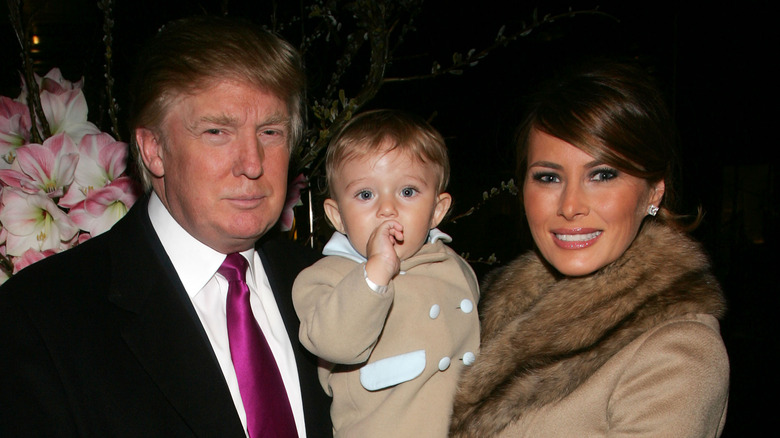
Barron William Trump is the son of former model Melania Trump and U.S. President and real estate mogul Donald Trump. Barron is the couple’s only child and the only one of the president’s offspring residing with him in the White House. His mother, Melania, told ABC News that the youngest Trump likes wearing a suit every day — he is “not a sweatpants child.” Also, like his famous father, he enjoys golfing a lot.
Early Childhood
Barron William Trump was born on March 20, 2006, in New York City. Having grown up inside of Trump Tower in New York City, where he has an entire floor to himself, Barron has always known a life of luxury. In an interview with Parenting, Melania revealed that Barron really liked planes and helicopters when he was little and that, as a hands-on mom, she cooked his breakfast and prepared his lunches. She also believed in encouraging his creativity — even when he would draw on the walls. “His imagination is growing and important,” she said. “If he draws on the walls in his playroom, we can paint it over.”
Life at the White House
Barron and Melania stayed at Trump Tower for almost the first five months of Donald Trump’s presidency, so that Barron could finish his studies at the Columbia Grammar and Preparatory School on the Upper West Side. He and his mom moved into the White House on June 11, 2017, and attended St. Andrew’s Episcopal, a prep school in Maryland.
Barron is the first son of a president to reside in the White House since John F. Kennedy Jr. in 1963. Although he stays out of the spotlight for the most part, he has turned up for some of the White House’s fun holiday-themed events in 2017, including the annual Easter Egg Roll in April, where he joined his parents in signing cards for members of the American Armed Forces. He also supported his father’s pardoning of the turkeys before Thanksgiving and soon after, stepped out with his mom on the North Portico to receive the official Christmas tree from Wisconsin, which went up on display in the White House’s Blue Room.
Nicknamed ‘Little Donald’
“He is a mixture of us in looks, but his personality is why I call him ‘Little Donald,’” Melania told Parenting. “He is a very strong-minded, very special, smart boy. He is independent and opinionated and knows exactly what he wants.”
She also noted that Barron has spent a lot quality time with his father, mostly at Mar-a-Lago in Palm Beach, Florida, where they would play golf, eat dinner together, and enjoy family time.
Skills and Interests
Thanks to his Slovenian mom, Barron is already fluent in both English and Slovene and is also learning French.
Though he’s a long way off from officially joining the family’s real estate business, Barron does like to build cities and airports using Legos and Magna Tiles, but he has his own aesthetic. “He likes clean and white,” Melania told Parenting. “He builds big projects. He has a big imagination and it’s very impressive. He loves to build something and tear it down and build something else. He is very detailed at drawing. We travel often and he remembers everything he sees.”
Modern Family
As the youngest of the president’s five children, Barron has four half-siblings: Don Jr., Ivanka and Eric, as well as his older half-sister, Tiffany, from Trump’s marriage to Marla Maples. He has six nephews — Theodore James Kushner, Donald Trump III, Joseph Frederick Kushner, Tristan Milos Trump, Spencer Frederick Trump and Eric Luke Trump — and four nieces — Arabella Rose Kushner, Chloe Sophia Trump, Carolina Dorothy and Kai Madison Trump, who is just one year his junior.
COVID-19 Diagnosis
On October 14, 2020, Melania confirmed that like her and Donald, Barron tested positive for COVID-19. Initially testing negative, the first lady revealed that her “fear came true when he was tested again and it came up positive.” Melania continued, “Luckily he is a strong teenager and exhibited no symptoms. In one way I was glad the three of us went through this at the same time so we could take care of one another and spend time together. He has since tested negative.”
Life After the White House
Since leaving the White House, Barron, his mother and father have moved back to Mar-a-Lago. In August 2021 it was announced that Barron enrolled in private school at the Oxbridge Academy in Palm Beach, Florida, as part of the class of 2024.
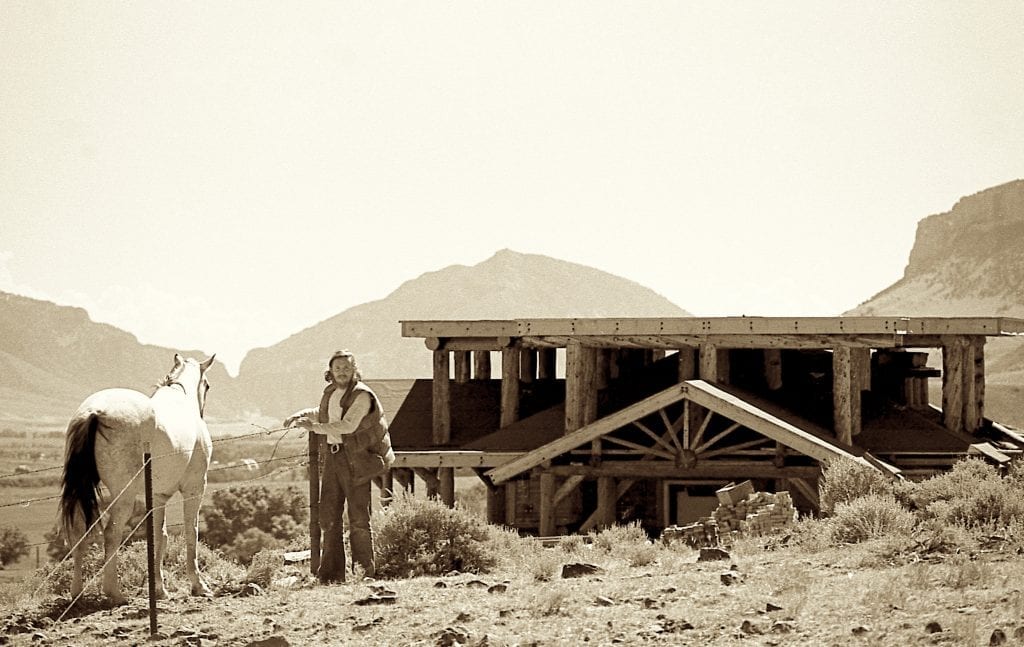
As you make your way through Wyoming’s Wapiti Valley, perched upon a hill just outside of Cody is a strange looking building known to locals as ‘Smith Mansion.’
The home was built over eighteen years by local man Francis Lee Smith. Smith, who worked as a full-time engineer in Cody, made the property in his spare time.
Francis Lee Smith, designed and built ‘Smith Mansion’ from scratch.
Unfortunately, the house didn’t have a fairy-tale ending one would hope for. In 1992, disaster struck, and construction on the property came to an end, forever.
THE HISTORY OF THE SMITH MANSION
In the 1970s, Smith was inspired by an opportunity he couldn’t pass up. After a huge fire on the nearby Rattlesnake Mountain, much of the timber was left up for grabs for anyone willing to lug it away.
Smith had a truck and two willing associates who helped him start loading up. Yet it appears Smith could never stop!
At first, Smith wanted to build a comfortable home for him and his family. But once the house was completed, the project just kept growing. Over the years, what was supposed to be a small family home, became a large tower featuring balconies and viewing platforms.
In the lower floor living spaces, you had named rooms, such as the “hot room” and “cold room.” Through the colder months, they would spend their time in the “hot room” which featured a wood-burning stove. In warmer months, they would use the cooler temperatures of the “cold room.” The house had no running water, and no plumbing or electricity, except for that provided by a small generator.
Unfortunately for Smith, the family home wasn’t to be. Despite living there with his family for some time, his obsession with it became a strain on his marriage, which lead to divorce. His wife, son, and daughter moved back into the nearby town of Cody.
This however, only drove Smith to focus more on completing the building. However, it wasn’t to be, one day in 1992, the 48-year-old was working on one of his slanted roofs when he fell (not for the first time) and died. Smith’s body wasn’t found until two days later.
THE SMITH MANSION TODAY
After the death of Francis Lee Smith, the Smith Mansion passed on to his family. The home is now looked after by Smith’s daughter Sunny Larsen, who was just 12 when her father died but still remembers living in the property as a child.
She said: “His original intent was to build a home for his family, and it just took on a life of its own.” It was only in later years that she realized her father had no blueprints, every addition was off-the-cuff. “He never knew what his next step was going to be.”
His daughter also rejects the idea that mental illness played a part in her father’s obsession. “He built,” she said. “He was an artist in every sense of the word.”
The property has been empty now for almost 30 years, exposed to the elements the wooden structure has begun to decay slowly. Teenagers from the nearby town of Cody routinely visit the property on the weekends and vandalize it.
This decay hasn’t stopped Ms. Larsen from trying to sell the property though. In August 2018, Smith Mansion was listed on the market for $750,000, as of yet it still has no buyer.
How a half-finished wooden structure with no plumbing or electricity on a hill in Wyoming could fetch $750,000 we don’t know. However, it would be a cool property to finish if you had the cash burning a hole in your pocket.
Roses are one of the birth flowers for June and there is an incredible amount of information available on growing them and their care. Perusing the vast amount of articles, I stumbled upon a unique rose offering—the Forever Rose.
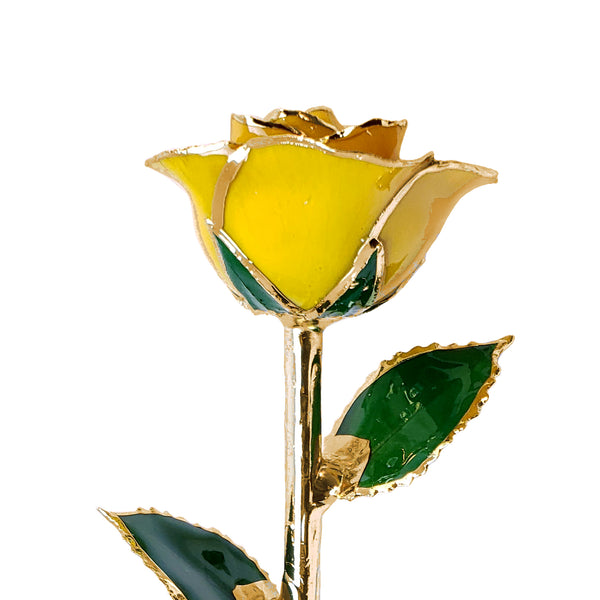
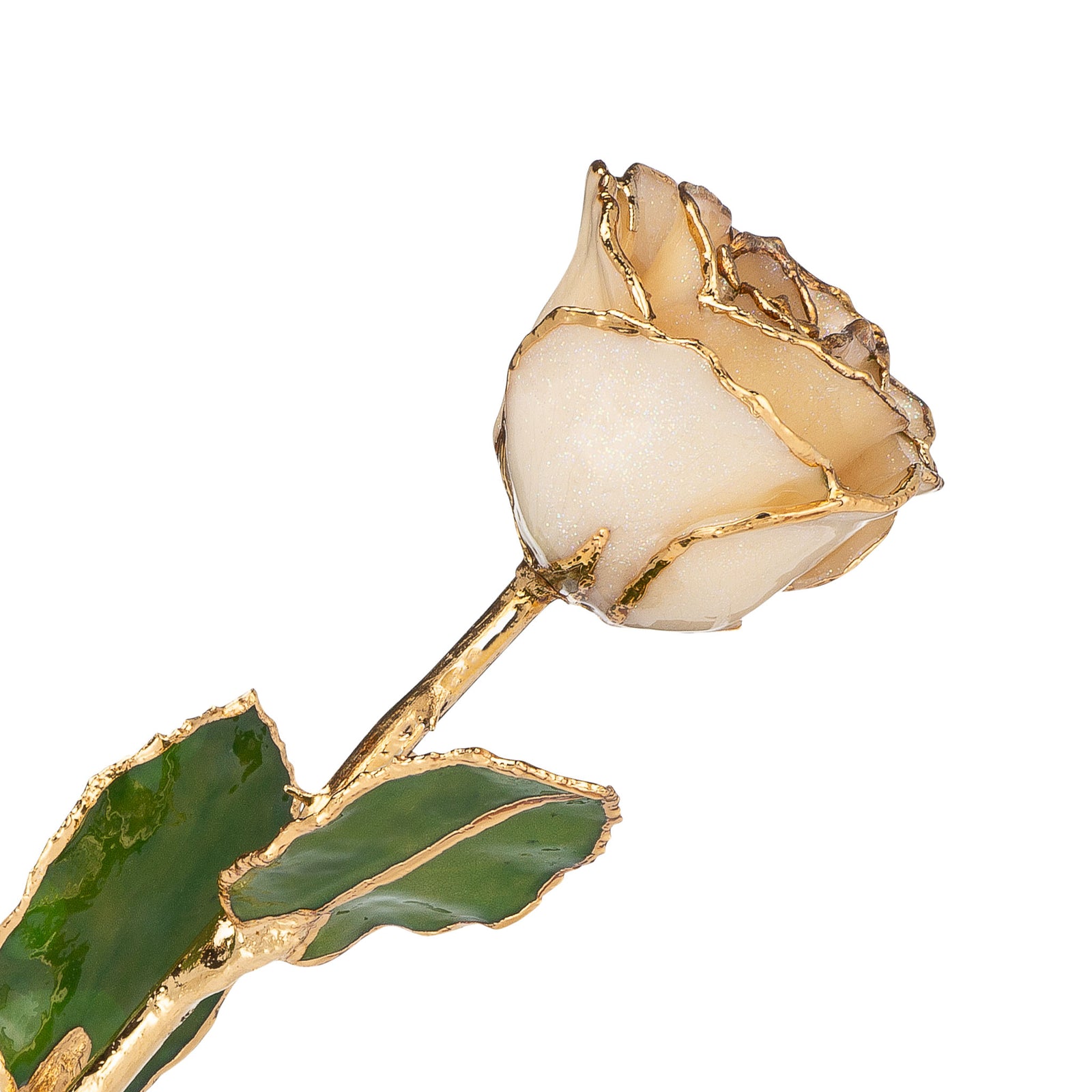
These roses are guaranteed to last a lifetime and are offered in many colors and “finishes”. Finishes include gold dipped, gold trimmed, rose gold, birthstone, platinum, silver and others.
They even offer some other flowers, and for him, gold finished golf balls.
The Rose has long been a symbol of love, beauty, and emotion. It has been immortalized for centuries in the art and literature of many cultures. It is, to the world, what Gold, Silver, and Platinum are to the realm of precious metals. These timeless symbols of richness and beauty have been perfectly combined to create our elegant Forever Rose
The journey starts in our nursery, where our highly skilled horticulturalists and staff spare no expense. They carefully monitor each rose as it grows and begins to bloom. As it reaches its ideal moment of perfection and beauty, it is chosen and harvested.
Once we harvest the rose, the journey has only begun. With over 60 meticulous steps and ten days of hand work by skilled artisans and technicians, each Forever Rose is one-of-a-kind, unique and everlasting. We use a proprietary process known as electroforming to plate multiple layers onto the rose. This is done in many very light layers to maintain as much natural detail of the rose as possible. These steps are performed under strict quality control to assure the highest level of quality.
With over twenty years of experience, our world-famous Forever Roses are second to none. All Forever Roses come with a 90-day money back guarantee and an exclusive Lifetime Warranty. When you purchase a Forever Rose you can be confident that it will exceed your expectations and be a cherished keepsake for years to come.
The roses are pricey as one would expect—but they are unique, can be engraved, and guaranteed to last a lifetime.
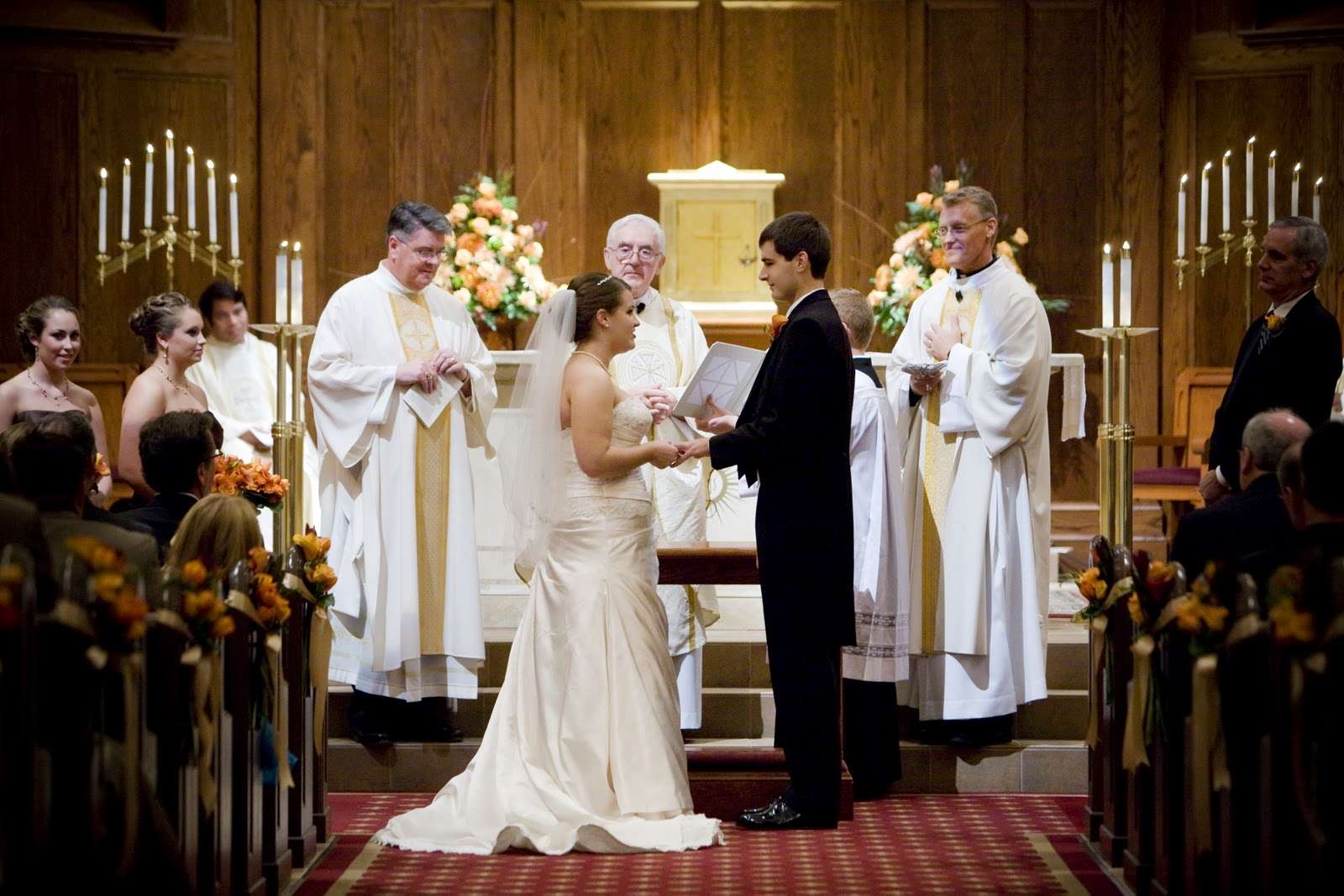
[Since June is prime bridal season, I brought an article, written in 2021, detailing and explaining 13 wedding traditions.]
In 2021, there are truly no ‘rules’ to weddings—anything and everything goes, as long as it brings you happiness as a couple. That said, there is a reason why time-honored traditions have been mainstays of wedding days for so long: They’re guidelines that so many generations before you have indulged, historically, so it feels kind of like a nice privilege to entertain them at your own wedding celebration, right?
The cool thing about weddings now, though, is that you can pick and choose which customs and conventions you want to embrace or dismiss. Not wearing white, skipping the veil, sneaking a peek at your spouse before the ceremony—it can all be done without repercussions.
Whether you consider yourself superstitious or not, you might still want to take a few of these folklore referrals to heart. Ahead, read up on some of the longest-standing wedding superstitions that go well beyond something old, something new, something borrowed, and something blue.
Getting married on a weekday.
While Saturdays have long been the most popular days to get married for decades, an ancient Celtic poem claims couples should avoid a Saturday wedding at all costs. It reads: “Monday for wealth, Tuesday for health, Wednesday the best day of all, Thursday for losses, Friday for crosses, and Saturday no luck at all.” So if a Saturday nuptials isn’t in the cards, then a weekday wedding is quite alright!
Wearing white.
Wearing white on the day you get married is a dress code that dates back thousands of years and this verse explains why: “Married in white, you will have chosen all right. Married in grey, you will go far away. Married in black, you will wish yourself back. Married in red, you’ll wish yourself dead. Married in blue, you will always be true. Married in pearl, you’ll live in a whirl. Married in green, ashamed to be seen. Married in yellow, ashamed of the fellow. Married in brown, you’ll live out of town. Married in pink, your spirits will sink.”
Wearing something borrowed.
Out of the four “somethings” that brides have been conditioned to carry, “something borrowed” makes the most sense when it comes to luck! The idea here is that in addition to wearing something old and new, representing your pre-married life and your happy one to come, you should also borrow something from a happily married woman (your mom, mother-in-law, sister, grandmother, etc.). It’s thought that wearing something on loan from a long-married missus might just let some of her marital success rub off on you!
Forgoing any pearl accessories.
Speaking of something borrowed, although they’re very common family heirlooms, pearls are one semi-precious gemstone that you might want to pass on if they’re offered. According to several cultural belief systems, pearls embody the look of tears and point to sadness and suffering, so it’s best to keep them away from such an important day. If your partner proposes with a pearl, however, it stands that you can rebalance the karma by giving them a dollar—in essence, by paying for it, the ring is no longer a gift.
Including a sixpence in your shoe.
What most people don’t know about one of the oldest and most iconic wedding proverbs is that it is completed with the phrase “and a sixpence in her shoe.” Dating back to Victorian times, a father would place a sixpence (a coin equivalent to six pennies) in his daughter’s shoe as a token of good luck and prosperity. Nowadays, a penny is usually subbed in for the sixpence from any family member or friend. And if you don’t want to squeeze a coin in your stiletto, consider tying it to your bouquet or ring bearer’s pillow instead.
Adding a veil to your ensemble.
Veils have been part of the bride’s traditional trousseau for centuries. But to ancient Greeks and Romans, the veil was for function rather than fashion. They believed that a bride needed to wear a veil to make her less susceptible to the curses and hexes of jealous witches and evil spirits who wanted to steal her happiness. Once her face was obscured, so too were their vexes.
Crying all the way to the altar.
You’d be hard-pressed to find a bride or groom who doesn’t shed at least a few tears on their wedding day, but that’s actually a good thing. In fact, crying all the tears is a tried-and-true method of making sure you’re happy for the long haul. Once you’ve let the waterworks run, they’ll be as good as gone for the entirety of your marriage.
Saying farewell to your fiancée-ship a little too prematurely.
Using your married name before the actual wedding is kind of taboo ahead of tying the knot. There are a lot of negative, foreboding feelings associated with these anticipatory celebrations (like signing letters with your soon-to-be last name), ultimately suggesting that doing so will prevent the event from taking place altogether. And it doesn’t stop there, folklore also warns against trying on everything you’ll be wearing on your wedding day (dress, veil, shoes, headpieces, jewelry) before the day itself comes. So, if you plan on dressing or suiting up pre-wedding, just remember to leave one or two articles of clothing off.
Crossing paths with a nun or monk on the way to the wedding.
The British backstory goes that if you see a nun or a monk (both of whom notably take vows of chastity and poverty) en route to your wedding, you’ll be blighted with a barren life and dependent on charity. Granted, not every couple envisions a future with children and some prefer simplicity and experiences over money and material things, so this does suppose a pretty antiquated point of view.
Dropping the rings.
There is a timeworn forewarning that should someone drop a ring or ring(s) at the time of the ceremony, that person (regardless of role—bride, groom, officiant, best man, etc.) is next to die. Scary, right? Well, we can pretty much guarantee that there’s no truth to it, but you might just want to double-check how tightly those rings are tied on the ring bearer’s pillow and take your time with the ring swap.
Receiving knives for a wedding gift.
We’re well aware that a sharp set of knives is a common registry item. However, according to a legend that dates back to the Vikings, knives symbolize the cutting or breaking of a relationship. You truly never know what your wedding guests will end up bringing you for the big day, but if you want to hedge your bets on not receiving something like this heartbreak-ridden hardware, maybe just remove it from the registry altogether. Or, send your guests a penny enclosed in their thank you card to switch the script from a gift to a purchase!
A spider showing up on your attire.
Most people don’t enjoy spotting a spider, but if one shows up on your wedding outfit on the big day, just grin and bear it. English tradition holds that if a spider weaves its way into your wedding day, it’s a terrific and radiant omen; so, come through Charlotte!
Rain on your wedding day.
Rain on your wedding day is something that all couples will stress over, but according to several cultures’ canons, it represents a streak of luck for your special day. If you see dark clouds gathering and raindrops coming down, don’t fret as you’re getting wet: It symbolizes fertility and cleansing, and if ever there were a perfect day to start with a clean slate, it’s your wedding day.











































 Sew Colorful