Urban Legends From Every State Part 2

From Reader’s Digest:

Montana: The Haunting of Chico Hot Springs Hotel

The mysterious “Lady in White” supposedly roams the corridors of the Chico Hot Springs Hotel in Pray, scaring guests and staff members. People have reportedly seen the ghost of a woman in white, many times leading them into room 349, only to find an empty rocking chair swaying back and forth. Her rocking chair is sometimes found in other rooms as well, always facing the window, no matter the position the last person left it in.

Nebraska: The Hatchet House

The urban legend of the “Hatchet House” of Portal reminds us of those scary ghost stories we used to tell each other at camp. As the legend goes, a school teacher from long ago went insane and decapitated all her students in the one-room schoolhouse. Afterward, she placed their heads on their respective desks and took their hearts to a nearby bridge, throwing the organs into the water. People say you can still hear the hearts beating if you cross it, hence the name “Heartbeat Bridge.” We dare you to try it.

Nevada: The Aliens at Area 51

Publicly known as the place where the military tests out some of its most advanced weapons and technology, conspiracy theorists and urban legend die-hards suspect that it’s also where the U.S. government stashes the UFOs it doesn’t want us knowing about.

New Hampshire: The Legend of Chocorua

Mount Chocorua was named after a native American chief who lived in the early 1700s. Legend has it that he left his son with the Campbell family while he went away on tribal business. While under the family’s care, the son died (perhaps accidentally, perhaps not). To exact revenge, Chief Chocorua killed the white man’s wife and children. Then the surviving Campbell chased Chocorua to the top of a mountain and shot him dead, but not before the Chief had placed a terrible curse upon the land. It is said that the land, now known as Chocorua Lake Conservancy, will inflict suffering and death on anyone who tries to live there or drink from its rivers.

New Jersey: The Ghost Boy of Clinton Road

The ghost of a young boy is said to reside beneath one of the bridges on this road in Passaic County in northern New Jersey. According to legend, he’s quite helpful, not to mention honest: If you drop a coin into the water, he will return it to you within 24 hours. It has become a rite of passage for local teens to go test it out.

New Mexico: UFO Crash at Roswell

In 1947, something big, really, really big, crashed on a ranch northwest of Roswell. Members of the U.S. military quickly came to retrieve the debris, which led some to believe that it was something they wanted to cover up—a UFO, perhaps? Adding to the mystery, Jesse Marcell Jr., son of one of the military officers charged with clearing the site, later described the debris he saw his father bring home as being made of lead foil with “I”-beams. According to Roswell UFO Museum, “He recalled the writing on the ‘I’-beams as ‘Purple. Strange. Never saw anything like it … different geometric shapes, leaves and circles.’” The U.S. government maintains it was a weather balloon that crashed, but urban legend tells a different story …

New York: The Legend of Cropsey

Staten Island’s “Cropsey” has been a local legend for decades, gaining national attention when the documentary of the same name was released. The story goes that Cropsey had a hook for a hand and was a patient at the Willowbrook State School. He would come out late at night to hunt and chase local kids with his hook hand. In truth, a series of child murders did take place in that area of Staten Island in the 1970s and 1980s.

North Carolina: The Beast of Bladenboro

Many regions in the United States have their own urban legends of a story about a mutant creature in the woods who kills viciously and indiscriminately. In North Carolina, it’s the Beast of Bladenboro, described by locals as a panther-like, bloodthirsty killer lurking in the darkness. It is said to have attacked numerous dogs and even people. Watch your back!

North Dakota: The Miniwashitu

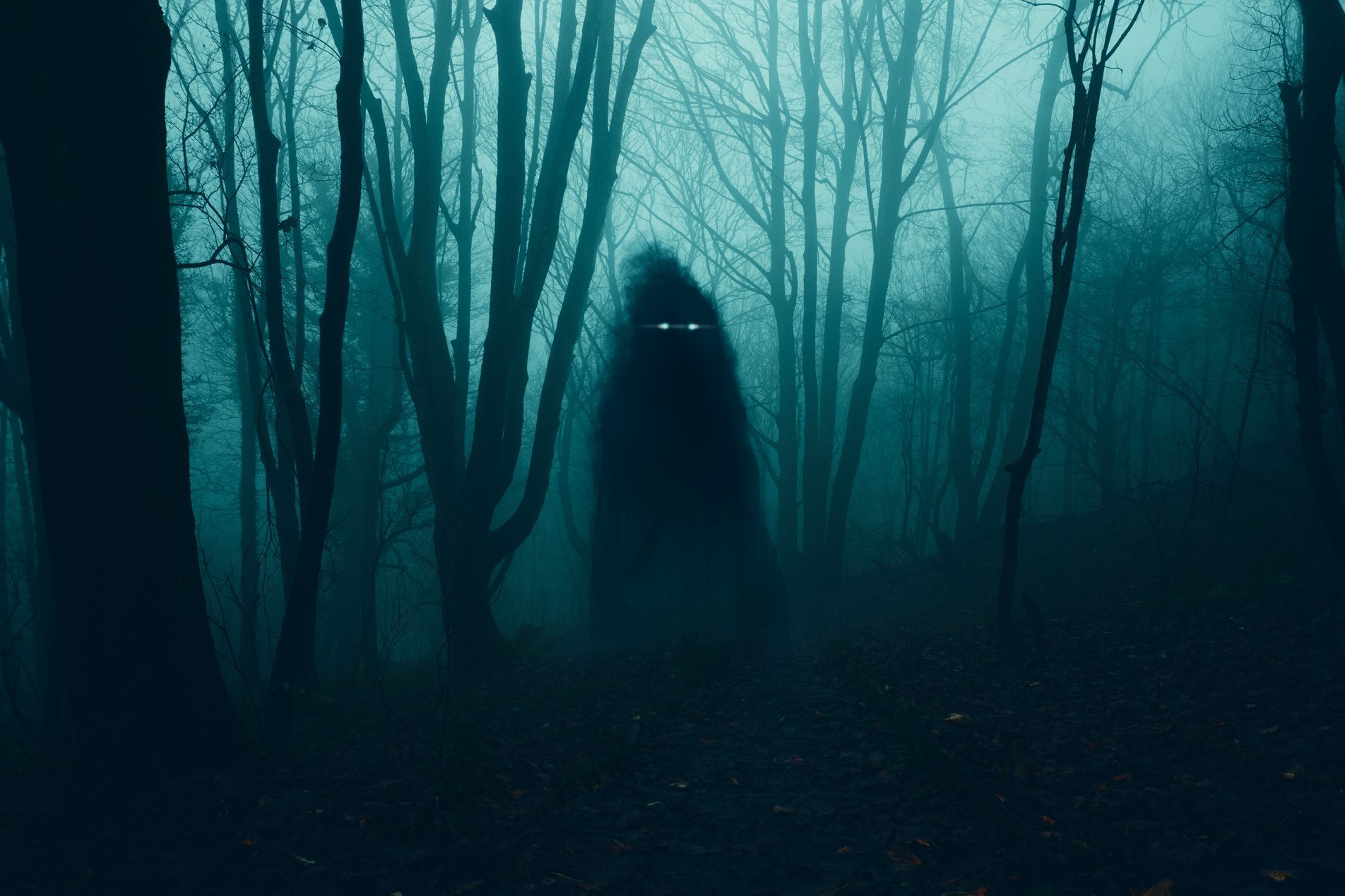
Next time you’re on the banks of the Missouri River in North Dakota, keep an eye out for the Miniwashitu of North Dakota, a giant, red, hairy monster with sharp spikes along its back, a horn and only one eye. If you look at it, blindness, insanity and even death are said to soon follow. So on second thought, don’t keep an eye out for it!

Ohio: Gore Orphanage

In the 1800s, there was a deadly fire at the aptly named Gore Orphanage in Lorain County. Tragically, every single orphan in the institution perished. Locals say if you visit the site where the orphanage stood, you can still see the ghosts of the dead children, hear them playing or smell their burning flesh.
Oklahoma: Shaman’s Portal

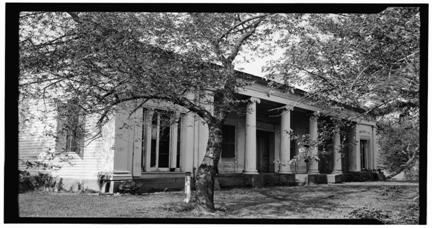
People have allegedly disappeared into thin air upon setting foot in these dunes in Beaver Sands, also known as Oklahoma’s Bermuda Triangle. It’s believed that a UFO crashed here, opening a door to another world.

Oregon: The Bandage Man

The ghost of a man who was supposedly chopped into bits at a sawmill terrifies Oregon residents and urban legend believers to this day. They call him the “Bandage Man,” because, well, his entire body is wrapped in bloody bandages. Mostly, he is said to attack people who drive through or park their cars in Cannon Beach.

Pennsylvania: Eastern State Penitentiary

The Eastern State Penitentiary of Pennsylvania is a real place that was shut down due to its exceptional cruelty toward inmates. Each cell and chamber has its own set of hauntings and terrible tales, and walking through it is supposed to feel like walking through the pit of hell itself. If you’re the type who likes to experience the macabre, you can take a tour on Halloween. You must sign a liability waiver before entering, though.

Rhode Island: Fingernail Freddie

If this sounds familiar, it’s because the Rhode Island legend of Fingernail Freddie is supposedly the inspiration for The Nightmare on Elm Street. In this version, Fingernail Freddie is a wild woodsman with insanely long fingernails who comes out at night to attack campers with his talons.

South Carolina: The Legend of Lavinia Fisher

Known as America’s first female serial killer, Lavinia Fisher was certainly not dainty about her kills: In the 1800s, she and her husband John ran an inn, where they had the unfortunate habit of killing off many of their guests. They would poison them, then when the poor person had fallen asleep, drop them down a trap door. One victim managed to escape, and the two were found out, resulting in their execution. Now people say the ghost of Lavinia Fisher haunts the Charleston jail where she was executed.

South Dakota: Walking Sam

Walking Sam of South Dakota is a bit like the notorious figure from the Slenderman video games: an unnaturally tall, skinny and creepy character. Those who cross his path are induced to commit suicide, and his favorite prey is young teens.

Tennessee: Skinned Tom

As the story goes, in the 1920s, a young man named Tom once took his lady friend to the local Lover’s Lane. He didn’t know it, but the woman he was so enamored with, was, in fact, married. Her husband found the two canoodling in their car, murdered the wife and then skinned Tom alive. Folks say Tom still hangs around Lover’s Lane, ready to kill those who dare to commit adultery.

Texas: The Lechuza

In South Texas, after you’ve had a beer or two, you’ll need to be on the lookout for the lechuza. Depending on the version of this urban legend being told, this incredibly large owl is either a brouha’s (witch) or a familiar woman by day, bird by night. Her child was killed by a drunk, so she is on the prowl, looking to take revenge on bar patrons stumbling out onto the street after closing time.

Utah: The Curse of the Escelante Petrified Forest

Visitors to Escelante Petrified Forest in the Black Hills of Utah are cautioned to leave what they find behind. Legend has it that anyone who takes so much as a rock or a piece of wood will suffer intense misfortune. Car accidents, broken bones and even job loss are said to have befallen those who dared to ignore the warning.

Vermont: The Brattleboro Retreat Tower

Built as part of an insane asylum in the late 1800s, the Brattleboro Retreat tower was soon closed off after a number of patients supposedly committed suicide by flinging themselves from the top. The tower remains standing today, and people say that if you dare visit it, you’ll see ghosts plunging to their deaths over and over, like an old tape replaying itself.

Virginia: Bunny Man Bridge

As the story goes, in 1904, some of the most dangerous patients from an insane asylum in Clifton, Virginia, were being moved to a prison when the bus crashed on Fairfax Station Bridge. The inmates attempted to escape, but only one was successful. He left a trail of dead, skinned, half-eaten rabbits, hanging many from the bridge that was the scene of the crash. Then on Halloween night of that very same year, several teens hanging out under the bridge were attacked at the stroke of midnight—and met the same fate as the bunnies.

Washington: Maltby’s 13 Steps to Hell

In Maltby Cemetery in Maltby, you’ll find a set of 13 steps leading down into an underground crypt. Urban legend has it that anyone who makes the regrettable decision to climb down those steps will be met with a vision of hell so terrifying it will drive them to insanity.

West Virginia: The Mothman

Yes, this is the same “Mothman” from the movie, The Mothman Prophecies. The final scene of that movie is a retelling of a take on an event that actually happened in 1967: The Silver Bridge that connects Point Pleasant, West Virginia, with Gallipolis, Ohio, collapsed at the height of rush hour, killing 46 people. According to legend, it was the Mothman, the great bringer of death, who caused the accident.

Wisconsin: The Bloody Headstone at Riverside Cemetery

This urban legend tells of a local woman by the name of Kate Blood (fitting, right?), who is said to have killed her husband and three children, after which she committed suicide. Her headstone at Riverside Cemetery in Appleton allegedly drips with blood every full moon. (Though if you do visit, a glance at her headstone will quickly debunk the legend: She was outlived by her husband and her only child.)

Wyoming: The Jackalope

The large bunny creature with antelope horns is a well-known character in Wyoming’s culture, history, landscape and urban legends. Some people say they’ve most definitely seen it, while others shrug it off as fairy tale. What do you think?

Urban Legends From Every State Part 1

From Reader’s Digest:

No matter where in the United States you’re from, your home state is sure to have its share of urban legends and urban myths. These scary stories aren’t just for Halloween; they’re whispered between campers, passed from town to town and reserved for nights when the power goes out. Urban legends may be spooky stories, but they aren’t necessarily ghost stories. They could have happened to someone you know, a relative or friend. These are the stories that make you do a double-take when you walk past abandoned places or make you check to make sure your door is locked when you’re home alone. Be careful next time you’re driving the back roads of America. You never know what scary urban legends you might encounter.

Alabama: Huggin’ Molly

The legend of Huggin’ Molly is clearly a tool used by parents to get their children to obey the rules: The story, native to Abbeville, tells of a phantom woman who appears to children if they stay out late at night. She grips the lingering child tightly and screams in their ear—she’s not meant to cause death, just one heck of a fright. Sounds like something straight out of a horror movie!

Alaska: The qalupalik

The qalupalik, an Inuit version of a mermaid or siren, calls with a hum to children who are wandering too close to the seashore, then takes them away in her baby pouch. The greenish, womanlike creature will never return a child once taken into the depths. Sounds like a good way to convince your kids not to go in the water, if you ask us.

Arizona: Slaughterhouse Canyon

Also known as Luana’s Canyon, the urban legend of Slaughterhouse Canyon tells the gruesome tale of a 19th-century gold miner who failed to come home to his family one night. Without his earnings, the mother and her children couldn’t buy food and began to starve. When she couldn’t stand it any longer, the wife chopped her kids into pieces, tossed them into the nearby river and died of despair. Her cries can still be heard echoing through the canyon.

Arkansas: The Gurdon Light

Like many urban legends, the story of the Gurdon Light has several variations. In one, a railroad worker was hit by a train and decapitated. His spirit can still be seen today, searching for his lost light. In another, the railroad worker bore a violent grudge against his boss who had fired him. He murdered his former employer with a railroad spike, and the victim now wanders the tracks. While the Gurdon Light is well documented, no one has been able to offer an explanation as to what it really is …

California: Char Man of San Antonia Creek

Per local lore, a father and son were trapped in a horrible fire. The father perished, and before help could arrive, the traumatized son lost his mind. He skinned his father and then ran into the forest. Now, known forever as Char Man, his blackened, burnt body is said to attack motorists on Creek Road in Ojai as he seeks more human skins.

Colorado: The Ridge Home Asylum

The Ridge Home Asylum was a real facility that opened in Arvada in 1912, but it’s become an urban legend because of its history. It reportedly housed patients who were horribly mistreated—some of whom weren’t even mentally incapable but had just been forsaken by their families. Though it was demolished in 2004, people say they can still hear the screams and see the apparitions of former patients on the grounds.

Connecticut: Dudleytown

The misfortunes that have occurred in Dudleytown, starting in the 1700s, are so terrible and numerous that its nickname is “Village of the Damned.” The now completely deserted town is said to have been home to many suicides, disappearances and even demonic activity that have given rise to several urban legends. It is believed that the founders of the village—and by extension, the village itself—are forever cursed.

Delaware: Fort Delaware

A prisoner camp during the Civil War, Fort Delaware in Delaware City was ultimately home to more than 30,000 Confederate soldier inmates. The few thousand who died before they could leave the Union fort are said to still haunt the area.

Florida: Captain Tony’s

Since 1852, Captain Tony’s, the oldest saloon in Key West, has been known to be haunted: Doors slam for no apparent reason, and there are inexplicable banging noises and frequent ghostly visitations. Perhaps that’s because it’s the site of the town’s original morgue and was built around a tree that the town once used for hanging pirates.

Georgia: “The Song of the Cell”

As urban legend goes, in 1848 Elleck and his wife, Betsy, both slaves, were in their home one night when their master, drunk and belligerent, crashed open the door. He attempted to attack Betsy, but Elleck fought him off. Undeterred, the master chased Elleck up a ladder into a loft. As the struggle continued, the master lost his balance, fell out of the loft and died. Even though Elleck turned himself in to the sheriff the next morning, explaining that what happened was self-defense, he was still charged with murder (par for the course in the antebellum South). Elleck was imprisoned in the Old Lawrenceville Jail and later executed unjustly for the crime. People say they can still hear his sorrowful song traveling through the walls of the old jail.

Hawaii: Pali Highway

Pele, the Hawaiian volcano goddess, has many myths attached to her name. One tells of her ill-fated union with the demigod Kamapua’a, who was half-pig, half-human. The two supernatural beings had a terrible breakup, agreeing to never see each other again. That’s why, as urban legend has it, if you carry pork with you when you travel over the Pali Highway in O’ahu, your car will come to an inexplicable halt. Next time you’re in the area, we advise sticking to chicken!

Idaho: The Water Babies of Massacre Rocks

This urban legend is about starvation and infanticide, so if you’re squeamish, you may want to skip ahead. When famine hit the local area of Pocatello, mothers resorted to drowning their babies in the rivers instead of letting them starve to death. It is said that those babies turned into fish-like imps whose new mission was to trick, or even murder, people.

Illinois: Bachelor’s Grove Cemetery

Often referred to as one of the most haunted graveyards in America, this 82-plot cemetery is known as the home of many phantom sightings. People who have visited the site have seen numerous inexplicable illusions, from a ghostly “White Lady” to an ephemeral white farmhouse.

Indiana: 100 Steps Cemetery

If you visit this cemetery in the town of Brazil and climb the 100 steps in the total darkness of night, urban legend has it you’ll see the ghost of the original caretaker appear before you on the top of the hill. Apparently he will give you a preview of what your own death will look like!

Iowa: Stony Hollow Road

As the saying goes, a woman scorned is not someone you want to mess with. Lucinda of the town of Burlington is no different. Legend says that when her fiancé failed to meet her there as promised one night, she threw herself off the bluffs along Stony Hollow Road. Ever since, her ghost has appeared to countless people. What’s (much) worse, if she leaves a rose at your feet, you are destined to die within 24 hours, or so the story goes …

Kansas: Molly’s Hollow

The urban legend of Molly’s Hollow speaks to the country’s racist history. As the legend goes, when the local townsfolk found out that Molly, an African American woman, was involved with a white man, she was lynched. People claim her spirit is still there, screaming at night.

Kentucky: Hogan’s Fountain

In Cherokee Park, you’ll find Hogan’s Fountain, which features a statue of Pan, the pastoral yet devious Greek god. At every full moon—some versions say every night at midnight—the figure of Pan wanders the park, causing mischief for passersby.

Louisiana: The Carter Brothers

Back in the early 1930s, a young woman escaped from the home of the Carter Brothers in New Orleans with slash marks on her wrist. She told the police that the brothers were feeding off her blood. The cops stormed the French Quarter residence where they found more young women in similar states, their blood draining from their bodies. The brothers, now thought to be vampires, were captured and executed, only for it to be discovered years later that their crypts were empty.

Maine: Seguin Island Lighthouse

Like many urban legends, the one in Maine has to do with isolation. As legend has it, in the 1800s, the caretaker of the Seguin Island Lighthouse and his wife were the only two people living on the tiny spit of land. They naturally grew increasingly bored and isolated. The caretaker bought a piano so his wife could play it to keep them both entertained, but she only knew one song. The insufferable repetition of the same tune, combined with severe isolation, drove the husband mad. He took an ax, chopped the piano and his wife into bits, and then killed himself. Or so the story goes …

Maryland: Bigg Lizz and the Greenbrier Swamp

During the Civil War, Bigg Lizz, a very large woman, was a slave who became a spy for the Union troops. But her espionage was found out by her master, who decided to exact revenge. Urban legend says he took Bigg Lizz to Greenbrier Swamp so she could help him bury a treasure. Bigg Lizz dug the hole, and was subsequently decapitated by her evil master, who threw her body into the grave she had just unwittingly dug for herself. It is said that if you travel to that spot during the dead of night, you will see her spirit there, attempting to lure you into the murky swamp.

Massachusetts: The Ghost of Sheriff George Corwin

When you think of haunted locales and birthplaces of urban legends in the United States, Salem is no doubt one of the top places that comes to mind. A key character in the Salem Witch Trials, Sheriff Corwin was the most infamous and brutal when it came to interrogating and handling accused witches, earning himself the nickname “The Strangler” for his torturous methods. A building called the Joshua Ward House now stands on top of the land where Corwin lived and died, and many people say they’ve seen him in the windows or even felt his hands pressing down around their necks when they’re inside the space.

Michigan: The Nain Rouge

This is one of the urban legends still recognized today, celebrated by the people of Detroit every year. They say there’s a devilish creature, known as the Nain Rouge (French for “red dwarf”), who causes mayhem in the city. He’s thought to be seen when disaster is about to strike and is even said to be the reason for the Cadillac company’s downfall in the city.

Minnesota: The Wendigo

The wendigo is a creature of Native American folklore that is thought to be the result of cannibalism. A person will turn into a wendigo, a fang-bearing creature that is tall, skeletal and hairy, if they resort to eating another human being. Will you fall prey to the glowing eyes and snake-like tongue of the wendigo, or is it just an urban legend?

Mississippi: The Witch of Yazoo

While living on the Yazoo River, an old woman allegedly lured boatsmen to their deaths with her magic. One day, the local sheriff chased her into a swamp, and as she drowned in quicksand, she put a curse upon the town. In 20 years, she said, she would return to set the city aflame. Eerily, in 1904 the city was hit with a massive fire, believed to be the work of the witch. The next day, when people went to visit her grave at the Glenwood Cemetery, they saw that the chain links around her grave had been broken. Or so the urban legend goes …

Missouri: The Landers Theater

The Landers Theater in Springfield is supposedly beyond haunted: From fires to stabbings to accidental deaths, this theater has seen it all and has many urban legends to tell. Locals and performers have alleged that they’ve seen the ghosts of the people believed to have perished there, including the janitor who was said to have died during a 1920 fire.

From Lover to Monster: Bela Lugosi

On October 20, 1882, one of the world’s most gifted performers was born. In his heyday, Bela Lugosi was hailed as the undisputed king of horror. Today, more than 85 years after he first donned a vampire’s cape, Lugosi’s take on Count Dracula is still widely hailed as the definitive portrayal of the legendary fiend. But who was the man behind the monster?

Bela Lugosi worked with the National Theater of Hungary.

To the chagrin of his biographers, the details concerning Bela Lugosi’s youth have been clouded in mystery. (In a 1929 interview, he straight-up admitted “for purposes of simplification, I have always thought it better to tell [lies] about the early years of my life.”) That said, we do know that he was born as Béla Ferenc Dezső Blaskó on October 20, 1882 in Lugoj, Hungary (now part of Romania). We also know that his professional stage debut came at some point in either 1901 or 1902. By 1903, Lugosi had begun to find steady work with traveling theater companies, through which he took part in operas, operettas, and stage plays. In 1913, Lugosi caught a major break when the most prestigious performing arts venue in his native country—the Budapest-based National Theater of Hungary—cast him in no less than 34 shows. Most of the characters that he played there were small Shakespearean roles such as Rosencrantz in Hamlet and Sir Walter Herbert in Richard III.

Bela Lugosi fought in World War I.

The so-called war to end all wars put Lugosi’s dramatic aspirations on hold. Although being a member of the National Theater exempted him from military service, he voluntarily enlisted in the Austro-Hungarian Army in 1914. Over the next year and a half, he fought against Russian forces as a lieutenant with the 43rd Royal Hungarian Infantry. While serving in the Carpathian mountains, Lugosi was wounded on three separate occasions. Upon healing from his injuries, he left the armed forces in 1916 and gratefully resumed his work with the National Theater.
When Bela Lugosi made his Broadway debut in 1922, he barely knew any English.
In December 1920, Lugosi boarded a cargo boat and emigrated to the United States. Two years later, audiences on the Great White Way got their first look at this charismatic stage veteran. Lugosi was cast as Fernando—a suave, Latin lover—in the 1922 Broadway stage play The Red Poppy. At the time, his grasp of the English language was practically nonexistent. Undaunted, Lugosi went over all of his lines with a tutor. Although he couldn’t comprehend their meaning, the actor managed to memorize and phonetically reproduce every single syllable that he was supposed to deliver on stage.


Universal didn’t want to cast Bela Lugosi as Count Dracula.


The year 1927 saw Bela Lugosi sink his teeth into the role of a lifetime. A play based on the novel Dracula by Bram Stoker had opened in London in 1924. Sensing its potential, Horace Liveright, an American producer, decided to create an U.S. version of the show. Over the summer of 1927, Lugosi was cast as the blood-sucking Count Dracula. For him, the part represented a real challenge. In Lugosi’s own words, “It was a complete change from the usual romantic characters I was playing, but it was a success.” It certainly was. Enhanced by his presence, the American Dracula remained on Broadway for a full year, then spent two years touring the country.

Impressed by its box office prowess, Universal decided to adapt the show into a major motion picture in 1930. Horror fans might be surprised to learn that when the studio began the process of casting this movie’s vampiric villain, Lugosi was not their first choice. At the time, Lugosi was still a relative unknown, which made director Tod Browning more than a little hesitant to offer him the job. A number of established actors were all considered before the man who’d played Dracula on Broadway was tapped to immortalize his biting performance on film.

Most of Bela Lugosi’s Dracula-related fan mail came from women.

The recent Twilight phenomenon is not without historical precedent. Lugosi estimated that, while he was playing the Count on Broadway, more than 97 percent of the fan letters he received were penned by female admirers. A 1932 Universal press book quotes him as saying, “When I was on the stage in Dracula, my audiences were composed mostly of women.” Moreover, Lugosi contended that most of the men who’d attended his show had merely been dragged there by female companions.

Bela Lugosi turned down the role of Frankenstein’s monster.

Released in 1931, Dracula quickly became one of the year’s biggest hits for Universal (some film historians even argue that the movie single-handedly rescued the ailing studio from bankruptcy). Furthermore, its astronomical success transformed Lugosi into a household name for the first time in his career. Regrettably for him, though, he’d soon miss the chance to star in another smash. Pleased by Dracula’s box office showing, Universal green-lit a new cinematic adaptation of Mary Shelley’s Frankenstein. Lugosi seemed like the natural choice to play the monster, but because the poor brute had few lines and would be caked in layers of thick makeup, the actor rejected the job offer. As far as Lugosi was concerned, the character was better suited for some “half-wit extra” than a serious actor. Once the superstar tossed Frankenstein aside, the part was given to a little-known actor named Boris Karloff.

Moviegoers eventually did get to see Lugosi play the bolt-necked corpse in the 1943 cult classic Frankenstein Meets the Wolf Man. According to some sources, he strongly detested the guttural scream that the script forced him to emit at regular intervals. “That yell is the worst thing about the part. You feel like a big jerk every time you do it!” Lugosi allegedly complained.

Bela Lugosi’s relationship with Boris Karloff was much more cordial than it’s usually made out to be.

It’s often reported that the two horror icons were embittered rivals. In reality, however, Karloff and Lugosi seemed to have harbored some mutual respect—and perhaps even affection for one another. The dynamic duo co-starred in five films together, the first of which was 1934’s The Black Cat; Karloff claimed that, on set, Lugosi was “Suspicious of tricks, fearful of what he regarded as scene stealing. Later on, when he realized I didn’t go in for such nonsense, we became friends.” During one of their later collaborations, Lugosi told the press “we laughed over my sad mistake and his good fortune as Frankenstein is concerned.”

That being said, Lugosi probably didn’t appreciate the fact that in every single film which featured both actors, Karloff got top billing. Also, he once privately remarked, “If it hadn’t been for Boris Karloff, I could have had a corner on the horror market.”

Bela Lugosi was a major soccer fan.

In 1935, Lugosi was named Honorary President of the Los Angeles Soccer League. An avid fan, he was regularly seen at Loyola Stadium, where he’d occasionally kick off the first ball during games held there. Also, on top of donating funds to certain Hungarian teams, Lugosi helped finance the Los Angeles Magyar soccer club. When the team won a state championship in 1935, one newspaper wrote that the players were “headed back to Dracula’s castle with the state cup.”

Bela Lugosi was a hardcore stamp collector.

Lugosi’s fourth wife, Lillian Arch, claimed that Lugosi maintained a collection of more than 150,000 stamps. Once, on a 1944 trip to Boston, he told the press that he intended to visit all 18 of the city’s resident philately dealers. “Stamp collecting,” Lugosi declared, “is a hobby which may cost you as much as 10 percent of your investment. You can always sell your stamps with not more than a 10 percent loss. Sometimes, you can even make money.” Fittingly enough, the image of Lugosi’s iconic Dracula appeared on a commemorative stamp issued by the post office in 1997.

Bela Lugosi almost didn’t appear in Abbott and Costello Meet Frankenstein … because the studio thought he was dead!

The role of Count Dracula in this 1948 blockbuster was nearly given to Ian Keith—who was considered for the same role in the 1931 Dracula movie. Being a good sport, Lugosi helped promote the horror-comedy by making a special guest appearance on The Abbott and Costello Show. While playing himself in one memorable sketch, the famed actor claimed to eat rattlesnake burgers for dinner and “shrouded wheat” for breakfast.

A chiropractor filled in for Bela Lugosi in Ed Wood’s Plan 9 From Outer Space.

Toward the end of his life, Lugosi worked on three ultra-low-budget science fiction pictures with Ed Wood, a man who’s been posthumously embraced as the worst director of all time. In the 1953 transvestite picture Glen or Glenda?, Lugosi plays a cryptic narrator who offers such random and unsolicited bits of advice as “Beware of the big, green dragon who sits on your doorstep.” Then came 1955’s Bride of the Monster, in which Lugosi played a mad scientist who ends up doing battle with a (suspiciously limp) giant octopus.

Before long, Wood had cooked up around half a dozen concepts for new films, all starring Lugosi. At some point in the spring of 1956, the director shot some quick footage of the actor wandering around a suburban neighborhood, clad in a baggy cloak. This proved to be the last time that the star would ever appear on film. Lugosi died of a heart attack on August 16, 1956; he was 73 years old.

Three years after Lugosi’s passing, this footage was spliced into a cult classic that Wood came to regard as his “pride and joy.” Plan 9 From Outer Space tells the twisted tale of extraterrestrial environmentalists who turn newly-deceased human beings into murderous zombies. Since Lugosi could obviously no longer play his character, Wood hired a stand-in for some additional scenes. Unfortunately, the man who was given this job—California chiropractor Tom Mason—was several inches taller than Lugosi. In an attempt to hide the height difference, Wood instructed Mason to constantly hunch over. Also, Mason always kept his face hidden behind a cloak.

Bela Lugosi was buried in his Dracula cape.

Although Lugosi resented the years of typecasting that followed his breakout performance in Dracula, he asked to be laid to rest wearing the Count’s signature garment. Lugosi was buried under a simple tombstone at California’s Holy Cross Cemetery.

SOURCE: MENTAL FLOSS

Trivia Tuesday: Halloween Version

What were the first jack o lanterns made of?

Some end up wearing their clothing inside out on Halloween – why is that?

Which phobia denotes an intense fear of Halloween?

Who’s said to haunt the White House Rose Garden?

What’s the mega-popular Halloween candy that was named after a horse?

According to the National Retail Federation, which children’s costume continues to hold the number one spot year after year?

What does it mean if you see a spider on Halloween?

Who creates the creature in Mary Shelley’s Frankenstein?

According to a legend, tattoos, a unibrow, and a long middle finger are signs of what Halloween creature? (Clue: NOT JOHN FETTERMAN)

Halloween originated in Ireland: true or false?

Where can you be fined for using Silly String on Halloween?

Which US state produces the most pumpkins?

What was voted the most popular Halloween candy for trick-or-treaters?

According to superstition, if you stare into a mirror at midnight on Halloween what do you see?

How many witches were burned at the stake at the Salem Witch Trials?

What does the English word “Hallow” mean?

ANSWERS

Turnips

Allegedly, wearing your clothes inside out on Halloween and walking backward means you could see a witch at midnight.

Samhainophobia

The ghost of First Lady Dolley Madison

Snickers

Princess

It’s thought to be a loved one’s spirit guarding the person who found the spider

Victor Frankenstein

A werewolf

True

Hollywood. If you use Silly String on Halloween in Hollywood, you could receive up to a $1,000 fine.

Illinois

Reese’s Peanut Butter Cups

Your future spouse

None

Saint

How didja do?

Schlemiel? Schlimazel? Hasenpfeffer Incorporated!

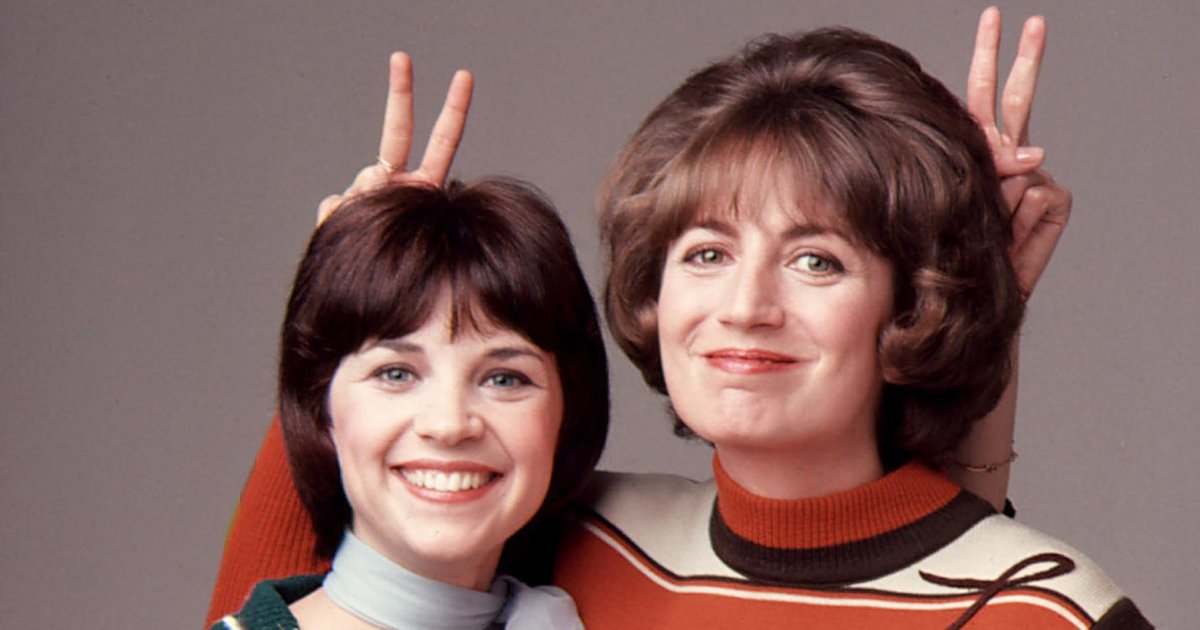
In honor of Penny Marshall’s birthday this month, I thought it would be fun to look at some little-known facts about the Lavern & Shirley Show. I found an article on looper.com, written by Brian Boone in 2021, sharing the “untold truth” about Laverne & Shirley.

The Untold Truth Of Laverne & Shirley

Give them any chance, they’d take it, give them any rule, they’d break it — Laverne and Shirley were going to make their dreams come true, their way.

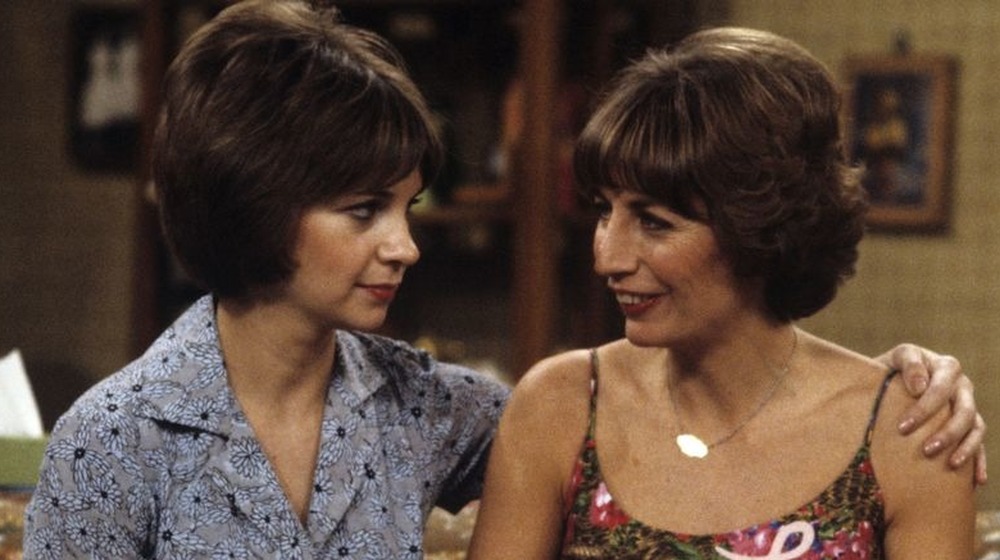
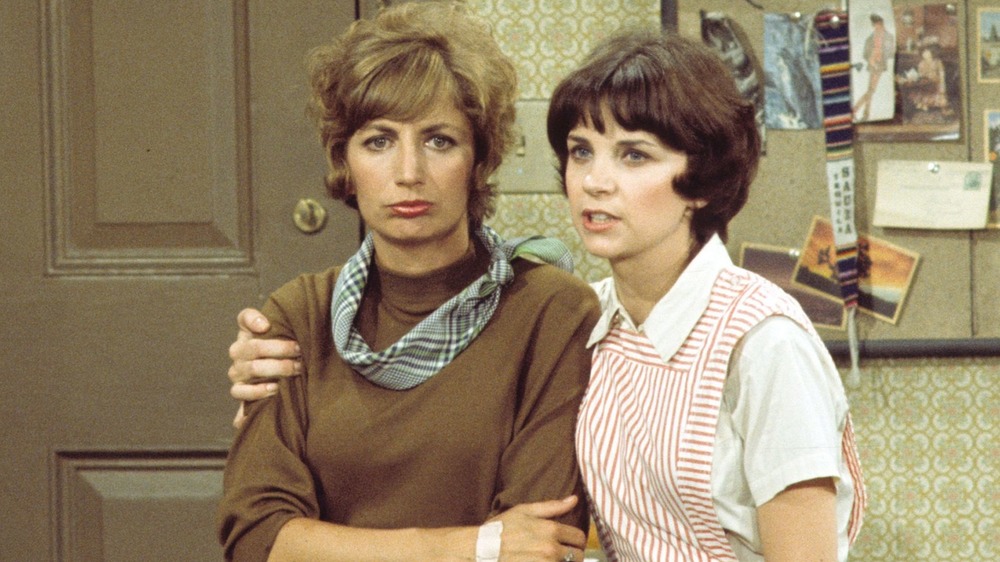
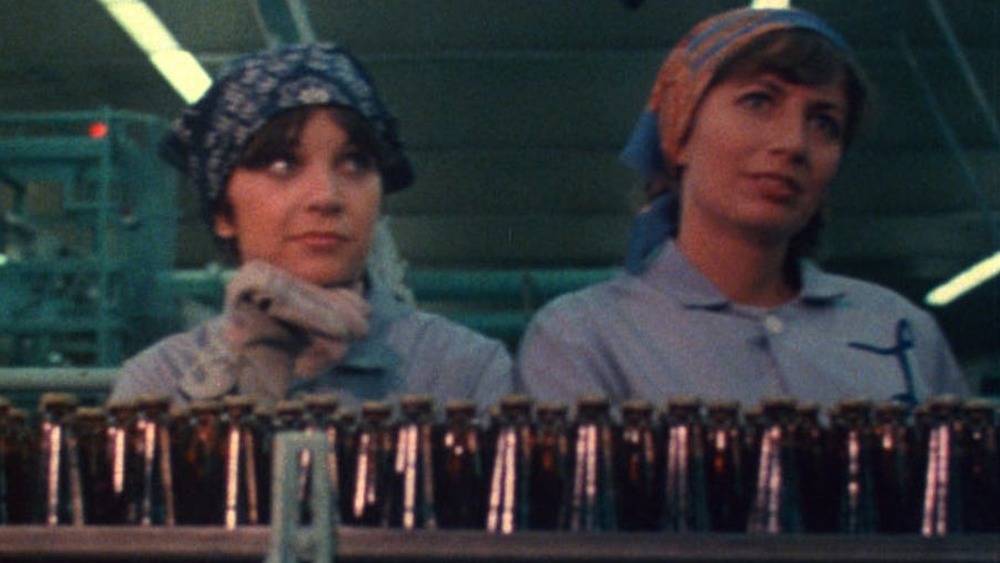
Laverne & Shirley – starring Penny Marshall and Cindy Williams as the street-smart, self-sufficient, Shotz Brewery bottle-cappers in early 1960s Milwaukee — ran on ABC from 1976 to 1983, and it was one of the most popular sitcoms of its era … or any era, for that matter. Millions tuned in each week to watch Laverne and Shirley get themselves into jams, go on bad dates, strive for a better life outside of their tiny apartment, and get embroiled in mishaps. And that’s to say nothing of their friends and associates Carmine “The Big Ragu” Ragusa, Big Rosie, and fan-favorites Lenny and Squiggy — wannabe bad boys but really total dweebs.

A spinoff of Happy Days — another Garry Marshall-created, retro-flavored megahit — Laverne & Shirley was a television institution. And if you want to know more about this beloved sitcom, here are some behind-the-scenes stories about the creation, production, and impact of Laverne & Shirley.

Laverne and Shirley originated as tough ladies on Happy Days

By its third season in 1975, Happy Days was a smash hit, a top 10 show and cultural phenomenon. That was thanks partly to former child star Ron Howard as amiable 1950s teenager Richie Cunningham but mostly because of Henry Winkler as Arthur “Fonzie” Fonzarelli, the coolest guy in Milwaukee. An appearance on the heavily viewed show could be career-changing for an actor, and that’s exactly what happened to Penny Marshall and Cindy Williams.

On November 11, 1975, the episode “A Date with Fonzie” aired. As for the plot, Richie is having a hard time landing a date, so Fonzie sets them up for a double date. Richie winds up way out of his depth because the women Fonzie selects for them are a lot older, more aggressive, and more experienced than the high school students Richie usually dates. As Penny Marshall told the Television Academy Foundation, Happy Days producer Garry Marshall (her brother) described the duo as “fast girls, girls who ‘put out.'” The two performers (writing partners at the time) signed on for the one episode, and that was it … until after it aired and TV executives thought Laverne (Marshall) and Shirley (Williams) could carry their own series.

Less than three months after that Happy Days episode, Laverne & Shirley debuted. For the 1975-76 season, it ranked as the #2 show on TV, outdrawing even its predecessor series.

Laverne & Shirley is a semi-remake

Garry Marshall is the undisputed king of 1970s sitcoms. Prior to creating Laverne & Shirley, Happy Days, and Mork and Mindy, he had his first big hit developing and writing for the television adaptation of Neil Simon’s comic stage play The Odd Couple. That series went off the air in 1975, and Laverne & Shirley was scheduled to hit ABC as a midseason replacement in early 1976. To get it up and running in a relatively quick manner, Marshall (and production studio Paramount) had to act quickly and recycle where possible. According to Maclean’s, the Laverne & Shirley main apartment set is simply the revamped apartment set of Oscar and Felix from The Odd Couple.

Scripts for Laverne & Shirley also leaned heavily on preexisting sitcoms. For example, Hey, Landlord lasted two short seasons in 1966 and 1967, and it was a show about a guy who moves to New York, inherits an apartment, and shares it with a comedian. Marshall reused many elements of that forgotten, unpopular sitcom in episodes of Laverne & Shirley.

Lenny and Squiggy came before Laverne and Shirley

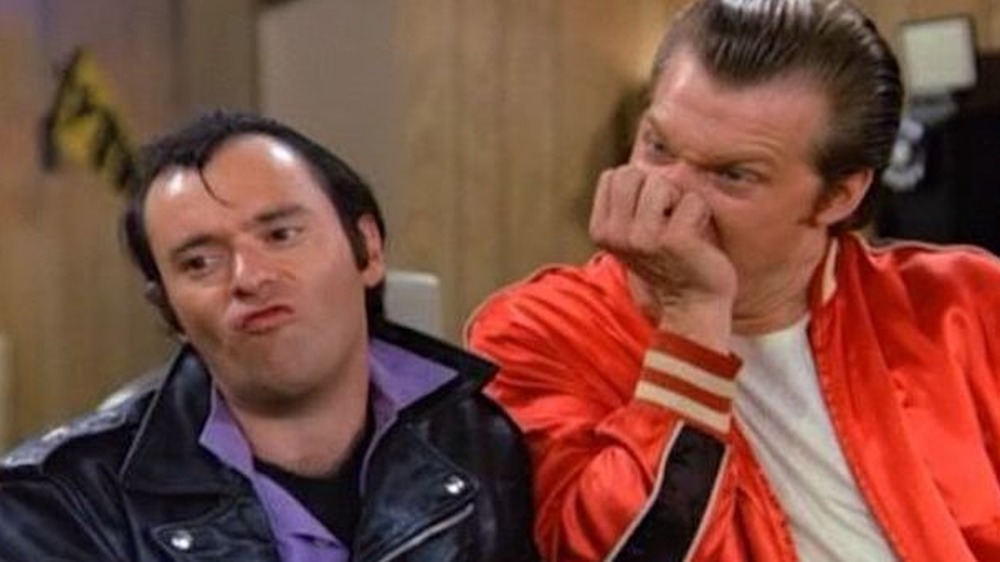
Laverne & Shirley ran on the laughs generated by two comedy duos — Laverne and Shirley but also Lenny and Squiggy. Portrayed, respectively, by Michael McKean and David L. Lander, Lenny and Squiggy dressed like “greasers” — tough guy hoodlums like you’d find in Grease or The Outsiders. But looks can be deceiving. They were really a couple of truck drivers who worked at Shotz Brewery with Laverne and Shirley (and who wouldn’t leave them alone) and were, in actuality, a couple of creepy loser weirdos with strange voices.

Believe it or not, Lenny and Squiggy greatly predate Laverne & Shirley. According to Delaware Liberal, McKean and Lander met as drama students at Carnegie Mellon University in the mid-1960s and developed the characters — originally named Lenny and Ant’ny — while members of the comedy group the Credibility Gap. Actor-director Rob Reiner was a big fan of the characters, and he asked McKean and Lander to perform them at a party that was attended by his wife, Penny Marshall, just before Laverne & Shirley entered production. McKean and Lander landed jobs on the show as writing consultants, and their first order of business was to write themselves into the pilot episode, although producers asked them to rename Ant’ny, and thus Lander’s character became Squiggy.

The dorky, confident pair became so popular that McKean and Lander recorded a 1979 album while in character as Lenny and the Squigtones.

Cindy Williams was only barely cast as Shirley

Penny Marshall and Cindy Williams arrived at their respective roles of Laverne and Shirley in different ways. Marshall’s brother, Garry Marshall, created the series, and the two had worked together earlier in the ’70s on the sitcom The Odd Couple. Williams’ route to the show was more circuitous.

According to Penny Marshall in Live from New York: The Uncensored History of Saturday Night Live, Williams was in the running for the role early on, as she’d be reprising a character she originated on Happy Days, but the actress wanted to keep pursuing movie roles. After all, Williams had broken out in George Lucas’s American Graffiti and Francis Ford Coppola’s The Conversation. Laverne & Shirley producers auditioned a number of actresses in her absence, but Penny Marshall was left underwhelmed, taking it upon herself to try and recruit Saturday Night Live cast member Gilda Radner. “I needed someone strong,” Marshall said. However, Radner “had a loyalty to” SNL producer Lorne Michaels, plus that show had only just started airing.

A young actor named Liberty Williams, who’d appeared on episodes of ’70s TV shows like Chico and the Man and The Mary Tyler Moore Show, just about had the part of Shirley locked up. Producers called her in for a screen test (and promo photos), only for Cindy Williams to decide she wanted the role after all.

The real reason why Laverne’s clothes are adorned with an “L”

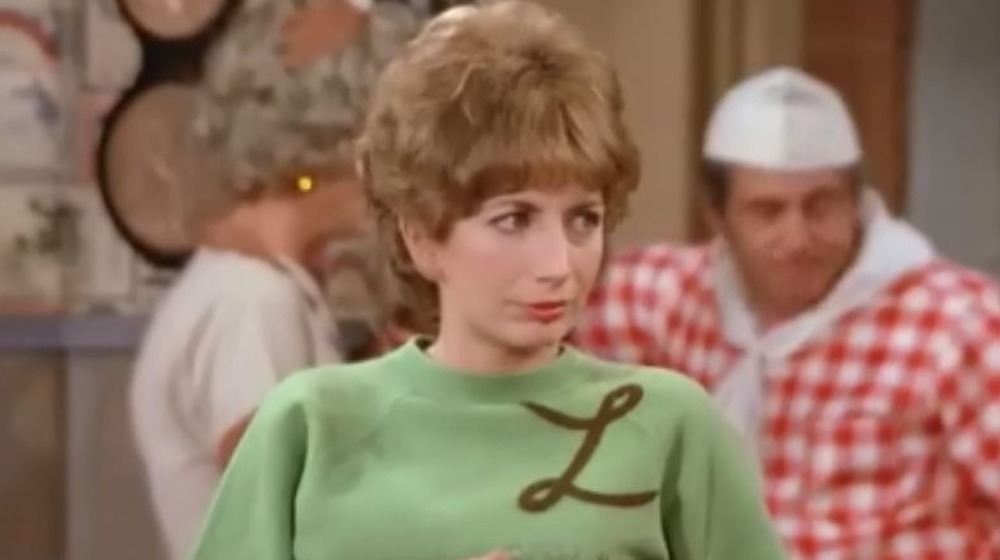
One of the most unique stylistic choices on Laverne & Shirley was a fashion choice on the part of the character of Laverne. Seemingly every outfit she wore over the course of the series came adorned with a large, script “L” near the shoulder and neckline. That “L” stands for “Laverne,” of course, and its constant presence implies that Laverne makes her own clothes or alters store-bought ones to carry her personalized and identifying touch.

However, Laverne actually wears an “L” all the time due to practical concerns, for the benefit of the audience. “At the beginning of any TV series, you have to repeat who you are, where you’re from, and what you do for a living so viewers will get to know you,” Laverne herself, Penny Marshall, wrote in her memoir My Mother Was Nuts. But she found that having to repeat identifying information was “boring,” and it was just as annoying to hear costar Cindy Williams “say ‘Laverne’ all the time.” Marshall’s suggestion, adopted by producers, was to put an “L” on her clothes to instantly let the audience know which character she was. It didn’t work. “I was wrong. We still had to say those lines,” Marshall wrote.

Laverne & Shirley made Cyndi Grecco’s dreams come true

There are many connections between Happy Days and Laverne & Shirley. Garry Marshall created both shows, the latter is a spinoff of the former, and songwriting duo Charles Fox and Norman Gimbel wrote the memorable and catchy theme songs for each series. However, the Laverne & Shirley opening music could’ve sounded a lot different had the composers not ventured out to a California amusement park to do something nice for a Happy Days cast member.

Pop singer Cyndi Grecco was discovered singing in a pizza parlor and landed a manager, who booked her for a months-long gig. “I went on to Magic Mountain to do an all-summer thing,” Grecco told Dick Clark on American Bandstand. “Charlie and Norman came down there to see a friend of mine, Anson Williams,” she added, referring to the actor and singer who played Potsie on Happy Days. “And they saw me, and they liked me, they wanted to know what I was doing.”

Grecco then mentioned she’d like to record an album at some point, and Fox and Gimbel promised to write something for her. Eventually, they did, and it was the Laverne & Shirley theme song. An extended version of the number, titled “Making Our Dreams Come True,” was released as a single and made it to #25 on the Billboard pop chart, Grecco’s one and only hit.

Schlemiel? Schlimazel? Hasenpfeffer Incorporated!

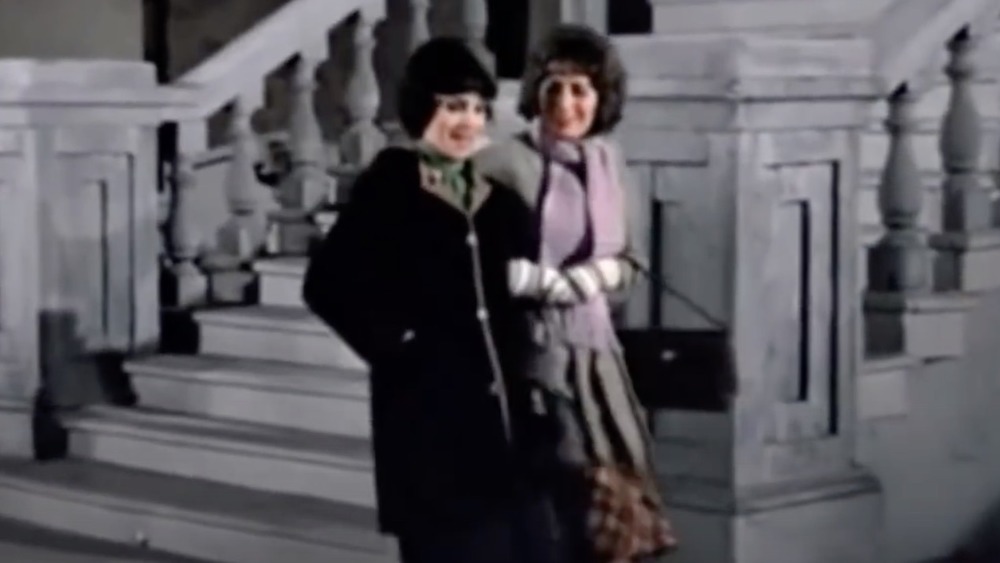
Even before Cynthia Grecco’s bombastic Laverne & Shirley theme song kicks in, the sitcom’s opening sequence gets viewers’ attention with a musically underscored, spoken word introduction. On a Milwaukee street at night, Laverne and Shirley march and recite in unison what sounds like a nonsensical, schoolyard chant: “One, two, three, four, five, six, seven, eight, schlemiel, schlimazel, Hasenpfeffer Incorporated!” “Schlemiel,” “schlimazel,” and “Hasenpfeffer” weren’t commonly used words in the American lexicon in the 1970s (or today), so what do they mean? In the context of Laverne & Shirley, almost nothing.

In an interview with the Television Academy Foundation, Williams said that the rest of the credits sequence had already been shot, and creator Garry Marshall needed a bit more footage. He asked Penny Marshall, his sister, about a nonsense song-and-dance routine she used to do while walking to school as a kid decades earlier, and she went through the “schlemiel, schlimazel” spiel. “I don’t know what it means,” Penny Marshall said, but Garry Marshall told her to teach it to Williams. They had very little time to learn it and only had time to shoot it twice, which Williams said she had a hard time figuring out because of her dyslexia.

So what does it mean? “A schlemiel is someone who falls from a building,” Williams explained, “and a schlimazel is the person they land on.” Hasenpfeffer is a German stew made of rabbit.

Was Laverne & Shirley’s soft reboot a mistake?

There are two ways an aging sitcom can reinvent itself. First, it can generate new storylines and fresh starts for characters. Second, it can change its setting and jump a few years into the future. Laverne & Shirley did both.

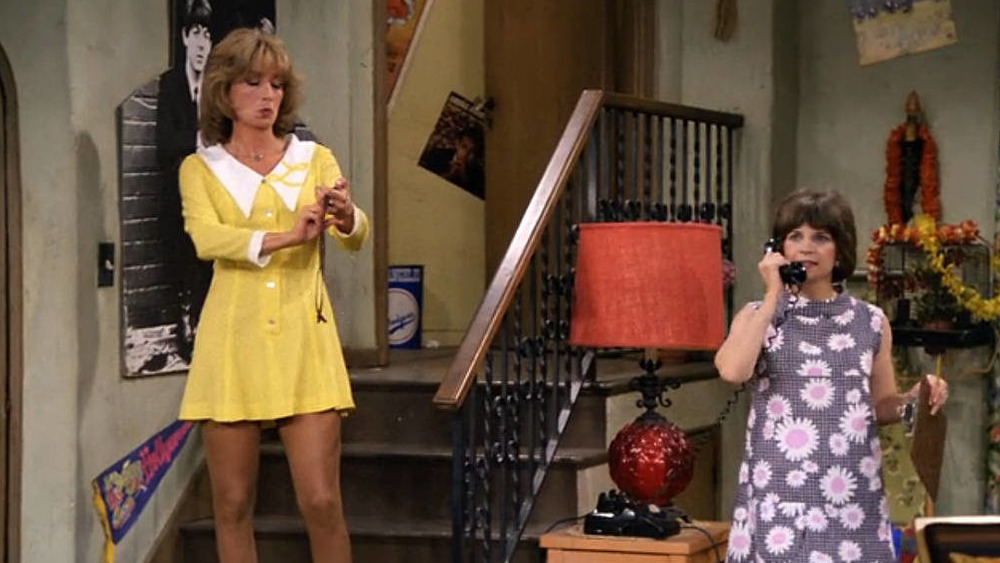
At the beginning of the show’s sixth season in 1980, side characters Frank and Edna have moved out of Milwaukee in favor of sunny Burbank, California, and after their jobs at the Shotz Brewery are eliminated by automation, Laverne and Shirley head west, as do Carmine, Lenny, and Squiggy. Frank and Edna manage a barbecue joint, Carmine tries to make it as an actor, Lenny and Squiggy open a talent agency, and Laverne and Shirley find jobs as department store gift-wrappers. The gang also mysteriously moved ahead in time by about five years, as the Burbank episodes weren’t set in the early ’60s like the rest of the show but the late ’60s, as evidenced by a Beatles poster on Laverne and Shirley’s apartment wall.

The transition was awkward, and it didn’t sit well with star Penny Marshall. “I thought the whole thing was a mistake,” she wrote in My Mother Was Nuts, arguing that superficial, moneyed Los Angeles “didn’t make sense” for the working-class, no-nonsense characters. “They were regular folks. I thought they should go to New York, where they would face new struggles,” Marshall wrote, adding that her opinion couldn’t persuade producers and executives.

When Shirley left Laverne

Laverne & Shirley successfully weathered big changes and remained a highly rated show in its sixth and seventh seasons. Viewership would slip in season eight, however, likely owing to the sudden loss of a fundamental element. Laverne & Shirley was built on the interplay between its two title characters — which disappeared when Cindy Williams left the series in 1982.

According to Marley Brant’s Happier Days: Paramount’s Classic Television Sitcoms, 1974-1984, Williams learned she was pregnant, and she claimed that producers would work it into the show but then reneged on the promise, along with guarantees that she’d be paid for episodes she wouldn’t appear in. Creator and producer Garry Marshall had also reportedly worked up a plan for Williams to tape as many episodes as possible before her pregnancy became undeniably visible. When it became evident that none of those things were going to happen for Williams, she walked off the set in August 1982 and filed a $20 million lawsuit against producers, which was ultimately settled out of court. She never appeared on Laverne & Shirley again.

It probably also didn’t help that one-half of the show’s other essential duo disappeared for half the season. Michael McKean, the Lenny of Lenny and Squiggy, departed to film This is Spinal Tap. At any rate, the actor-depleted 1982-83 season of Laverne & Shirley would finish in the Nielsen Top 30, but ABC decided to cancel the long-running sitcom anyway.

Why Laverne drinks Pepsi and milk

Certain characters in the annals of television are associated with particular foods and drinks. Sesame Street’s Cookie Monster loves cookies, the Doctor on Doctor Who had an affinity for jelly babies, and Laverne on Laverne & Shirley often guzzled a mixture of milk and Pepsi. It probably tasted something like a Coke float, only it was explicitly made with Pepsi and not Coca-Cola and not as sweet.

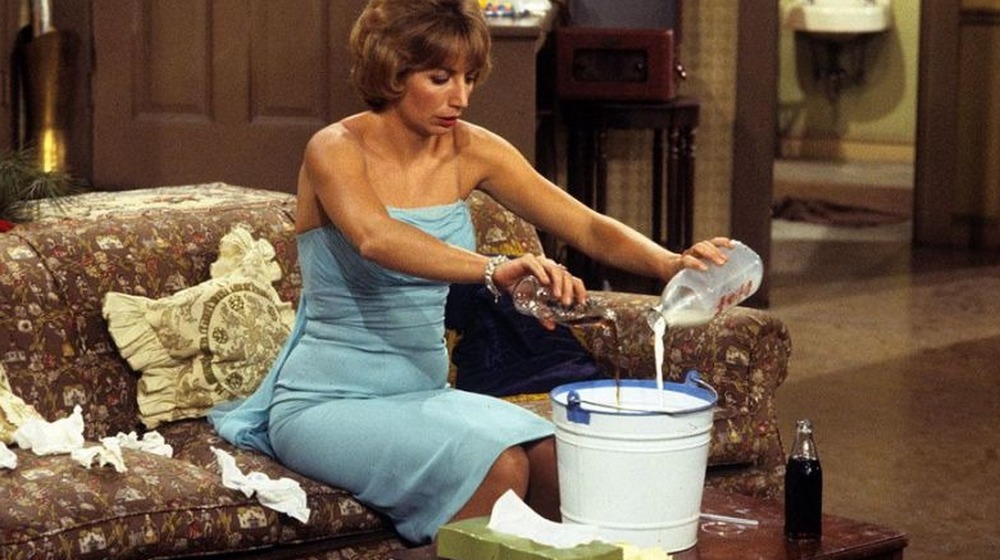
It’s a trait of the character that Laverne & Shirley creator Garry Marshall pulled from real life, and the childhood of the actor who plays Laverne — Penny Marshall, his sister. “I actually drank that as a kid,” the performer wrote in her memoir, My Mother Was Nuts. “At kosher camp,” she recalled from childhood, “they couldn’t drink milk with meat so they had Pepsi.” Marshall wanted to be like the adults and wanted to drink Pepsi with her meals at home, as well. However, as she put it, “My mother made me drink milk first.” Only then could she have a serving of the less-healthy, sugary soda. “Sometimes she didn’t rinse out the glass. Sometimes it wasn’t even empty. Eventually it became half and half.” The Marshall siblings included the slightly stomach-churning concoction in Laverne & Shirley knowing that “it would get a reaction.”

The many spinoffs of Laverne & Shirley

Television networks, particularly in the ’70s and ’80s, sought to build franchises out of successful series by spinning off characters into their own shows. Itself a spinoff of Happy Days (like Mork and Mindy and Joanie Loves Chachi), Laverne & Shirley also led to more programming for ABC. During the first season of Laverne & Shirley, breakout characters Lenny and Squiggy proved so popular that ABC president Fred Silverman asked show creator Garry Marshall to come up with a showcase show for the weird duo. Marshall dutifully came up with the self-explanatory Lenny and Squiggy in the Army. Producer Paramount Television liked the notion, but ABC didn’t like the pilot episode and dropped the idea.

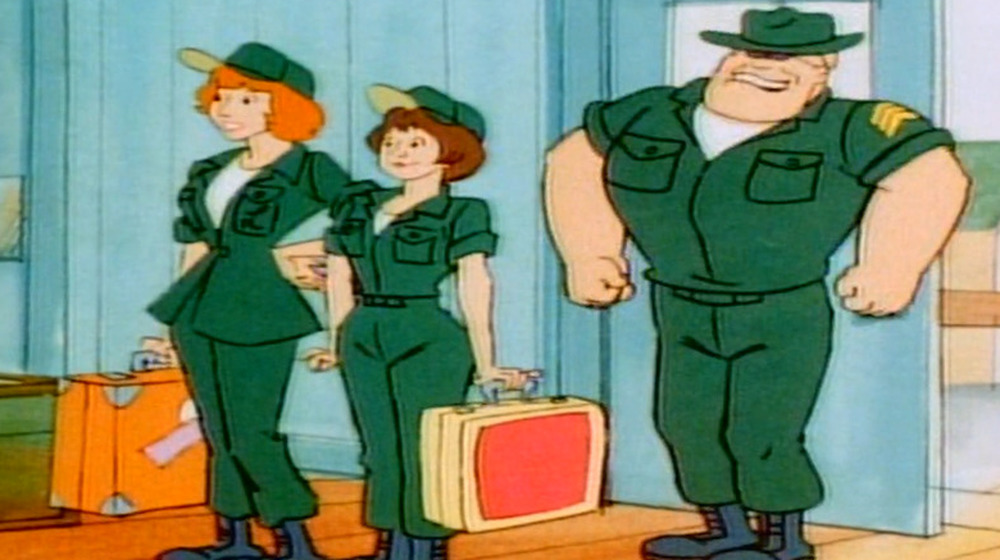
Five years later, ABC revisited the idea of Laverne & Shirley in the military in the form of a Saturday morning cartoon. The sitcom was popular with children, and in 1981, Laverne & Shirley in the Army debuted, featuring the title characters (along with Lenny and Squiggy) signing up for and getting drafted into the U.S. Army in advance of a war. The animated spinoff lasted just 19 episodes.

SOURCE: looper.com

The Congressional Theme Song

I bet you didn’t know there was a Congressional Theme Song…well there is!  I just heard it the other day and it explains EVERYTHING!  The Title is “If You Go Down, (I’m Going Down Too) by Kelsea Ballerini.  Read the lyrics…you’ll see!

I’ve known you since Brad and Angelina
We go back like Pontiac seats
If I got an aisle with a mess I gotta clean up
I know you’ll be showin’ up with bleach

All those names that we don’t ever speak of
Got a couple nights that have slipped my mind
Proof and photographs have been deleted
If you ever needed an alibi

‘Cause dirt on you is dirt on me
And we both know our hands ain’t clean
If it all blows up and we end up on the news
If you go down, I’m goin’ down too

It’s a good thing we’re each other’s kinda crazy
Ain’t no judgment or keepin’ score
If you rob a bank, I’m your getaway Mercedes
God knows that’s what friends are for

‘Cause dirt on you is dirt on me
And we both know our hands ain’t clean
If it all blows up and we end up on the news
If you go down, I’m goin’ down too
If you go down, I’m goin’ down too, yeah

I keep all your secrets by the dozen
You know where my skeletons sleep
Hypothetically, if you ever kill your husband
Hand on the Bible, I’d be lyin’ through my teeth

Our bodies are buried and they’re in the same ditch
So even if I wanted to, I can’t snitch
30 to life would go quicker with you, yeah
So, if you go down, I’m goin’ down too
If you go down, I’m goin’ down too

I think this truly represents the ideology in government. This is why things never change.  If you take down one? You gotta take them ALL down.

American Girl

One of my all-time favorite Tom Petty songs is American Girl.  It’s a story about a girl longing to be more than what she was. It was recorded on July 4th 1976 during the Bicentennial and American Girl was the last song performed in concert by Tom Petty and the Heartbreakers. They played it to close out the encore of their performance on September 25, 2017, at the Hollywood Bowl in Los Angeles, California, the final concert of their 40th Anniversary Tour. Petty died of complications from cardiac arrest after an accidental prescription medication overdose on October 2, just over a week later.

My first real boyfriend was actually a Tom Petty look alike and when he took me to a Tom Petty & The Heartbreakers’ concert, we were mobbed!  Everyone thought he was THE Tom Petty.  Security finally came to investigate the crowd and we ended up getting to meet Tom.  Nice but brief hello.  It was cool.

American Girl

Well, she was an American girl
Raised on promises
She couldn’t help thinkin’ that there
Was a little more to life
Somewhere else
After all it was a great big world
With lots of places to run to
Yeah, and if she had to die tryin’
She had one little promise
She was gonna keep

Oh yeah, alright
Take it easy baby
Make it last all night
She was an American girl

Well, it was kind of cold that night
She stood alone on her balcony
Yeah, she could hear the cars roll by
Out on 441
Like waves crashin’ on the beach
And for one desperate moment there
He crept back in her memory
God it’s so painful
Something that’s so close
And still so far out of reach

Oh yeah, alright
Take it easy, baby
Make it last all night
She was an American girl

Ooh
Uh-huh-huh
Uh-huh-huh
Oh yeah

Libra

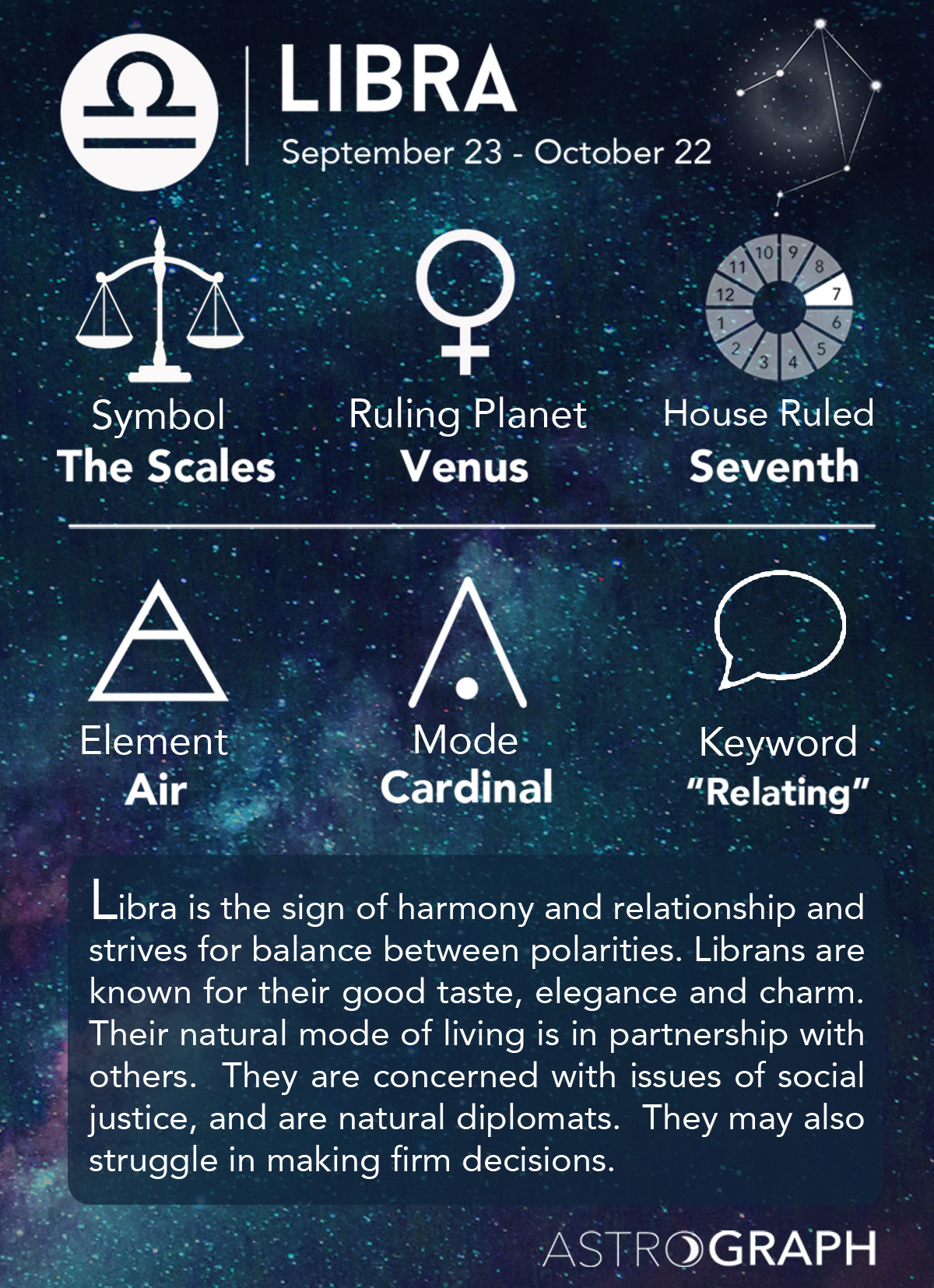
Intelligent, kind, and always willing to put others before themselves, Libras value harmony in all forms. Ruled by Venus, the planet of beauty, Libra adores a life that looks good. As the master of compromise and diplomacy, Libra is adept at seeing all points of view, and excels at crafting compromises and effecting mediation between others. This sign has a rich inner life yet loves other people, and they’re always happiest with a large group of friends, family, and coworkers on whom they can count.

An air sign, Libra can often be “up in the clouds,” and while he or she is amazing at making big plans, follow through can be tricky. Working with detail-oriented signs, like Virgos or Capricorns, can help Libras actually manifest their dreams into reality, especially in the workspace. But don’t call out Librans for daydreaming—their imagination is one of their biggest assets, and they often put their imagination to work by finding careers in the arts or in literature.

Libras believe that they’re directing their own lives, and they take a big-picture approach in making that life look and feel the best it can be. They spend a lot of time figuring out what’s missing from that big picture, and they may feel unhappy if they become too focused on one thing, whether it’s work, a partner, or a family member. Librans are at their best when they balance their schedule to include plenty of time for self-care rituals and personal pursuits, and when they give themselves enough flexibility to change focus.

When Libra falls in love, he or she falls hard, but this sign also recognizes that there’s room for more than one grand love in his or her life. The Scales are pragmatic about love, realizing that different relationships often have different seasons. Librans can sometimes be accused of being too pragmatic, and they’ve been known to call off a relationship pre-emptively if they feel it may not work due to distance, age difference, or another external conflict.

Although Libra appears self-confident to outsiders, he or she might struggle with insecurity, especially as it relates to personal identity, which sometimes feels mutable. This sign’s lifelong question is: “Who am I?” They may find their identity shifting based on where they are in their lives and who they’re spending time with. In order to feel more confident in their identity, social Libras need to get comfortable spending time with themselves and getting to know their gut and their internal voice.

Libra’s Love Style

Libra adores flirting, loves the drama and pageantry of romance, and is one of the few signs of the Zodiac that actually enjoys first dates. While Libras excel at charming potential partners, they have difficulty figuring out what they want, and all too often can get lost in the twists and turns of a relationship.

Libra Friendship Style

Thanks to this sign’s quick smile, sharp wit, and ability to make anyone feel like the most important person in the room, people are often surprised to find that the Libra they consider a “best friend” has about ten “best friends” just like them. Libras are adept at connecting to others quickly and love getting to know people.

Libra Career, Money & Success Traits

Libra’s greatest career strength: Imagination. For a Libra, work can be a playground. If this sign works with a great team and on projects they believe in, their job is fun. Librans love dreaming up new projects to accomplish and challenges to meet.

Libra’s Greatest Gifts

Libra’s everyday vibe is this gentle reminder: “Let’s just all get along.” For this sign, compromise is key. Librans don’t do well when anyone in their orbit isn’t happy, and they’re especially adept at inviting other signs to see things from a different perspective. A Libra doesn’t strong arm or use coercion, but rather relies on his or her communication prowess to help everyone see another side to a story.

Libra’s Greatest Challenges

Libra is great at making everyone happy—but what good is that if Libras themselves don’t feel fulfilled? While the Scales have a fine-tuned internal compass, they sometimes ignore what they want in favor of what makes everyone else happy—and this habit ends up backfiring in the long run.

Libra’s Secret Weapon

This sign has weaponized their imagination in the service of good. Librans’ imagination is unmatched, and they can always come up with a new way of looking at an issue. Libra is also blessed with boundless creativity. Even if they’re working in a data-dominated field, their creativity shows them novel ways to see things.

Famous Libras

Tom Petty

Penny Marshall

John Lithgow

When You Can’t Trust Your Own Eyes

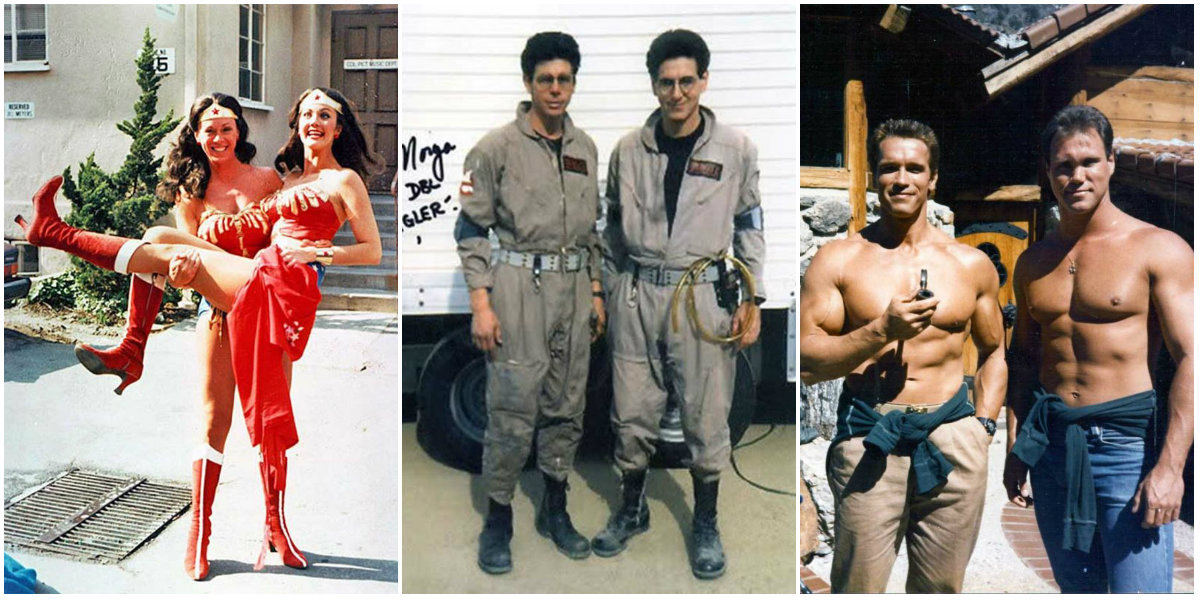
Actors and actresses are often approached for roles in movies or television that require more than just good acting skills.  Some rolls require difficult stunts or heroic feats the attractive star may not feel comfortable doing—or even capable of doing.  Enter the stunt double. 

The expensive actor or actress is spared any chance of harm, while the public is fooled.

In other roles, an actor or actress may be required to do a risqué scene that exposes parts of their bodies they are unwilling to reveal.  Enter the body double. 

These doubles, by their very nature, HAVE to be very convincing.  Our movie experience wouldn’t be the same, if they were obviously fake.  But how far could doubles go? Could we be fooled for any length of time? Enter the movie Dave.

Dave, starring Kevin Kline, was a 1993 tale about Dave Kovic (Kline), the owner of an employment agency who is hired to stand in for the President of The United States, Bill Mitchell (also Kline) at a Washington D.C. function while the Commander in Chief has a tryst with a staff member only to become his full-time replacement when Mitchell suffers a near-fatal stroke during that tryst. The Chief of Staff and the President have been conducting unsavory business which could be exposed if the President passes away and the VP assumes the office.  The Chief of Staff decides to implicate the VP and run for the office himself, but is later thwarted by Kline who, as the President, confesses publicly, exonerates the VP and blames the Chief of Staff.  He then fakes a stroke, and is “replaced” by the real President who later passes away.

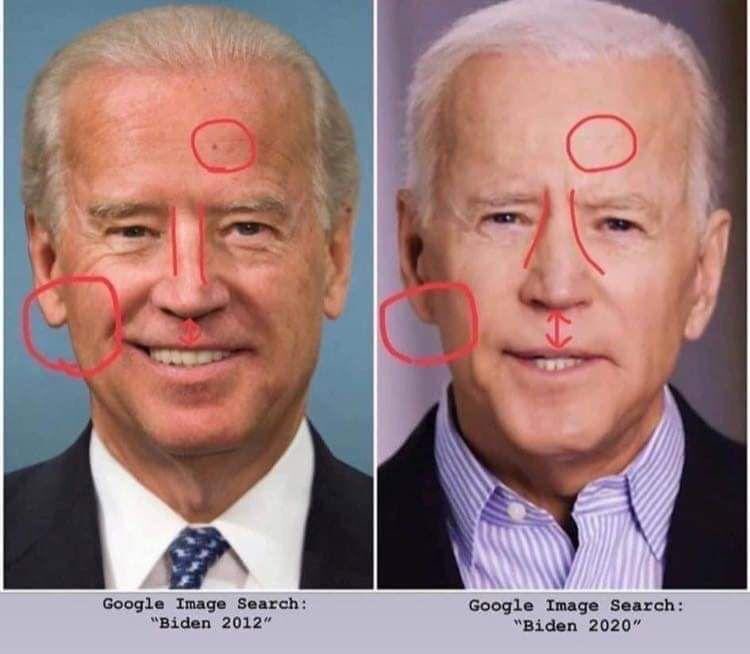
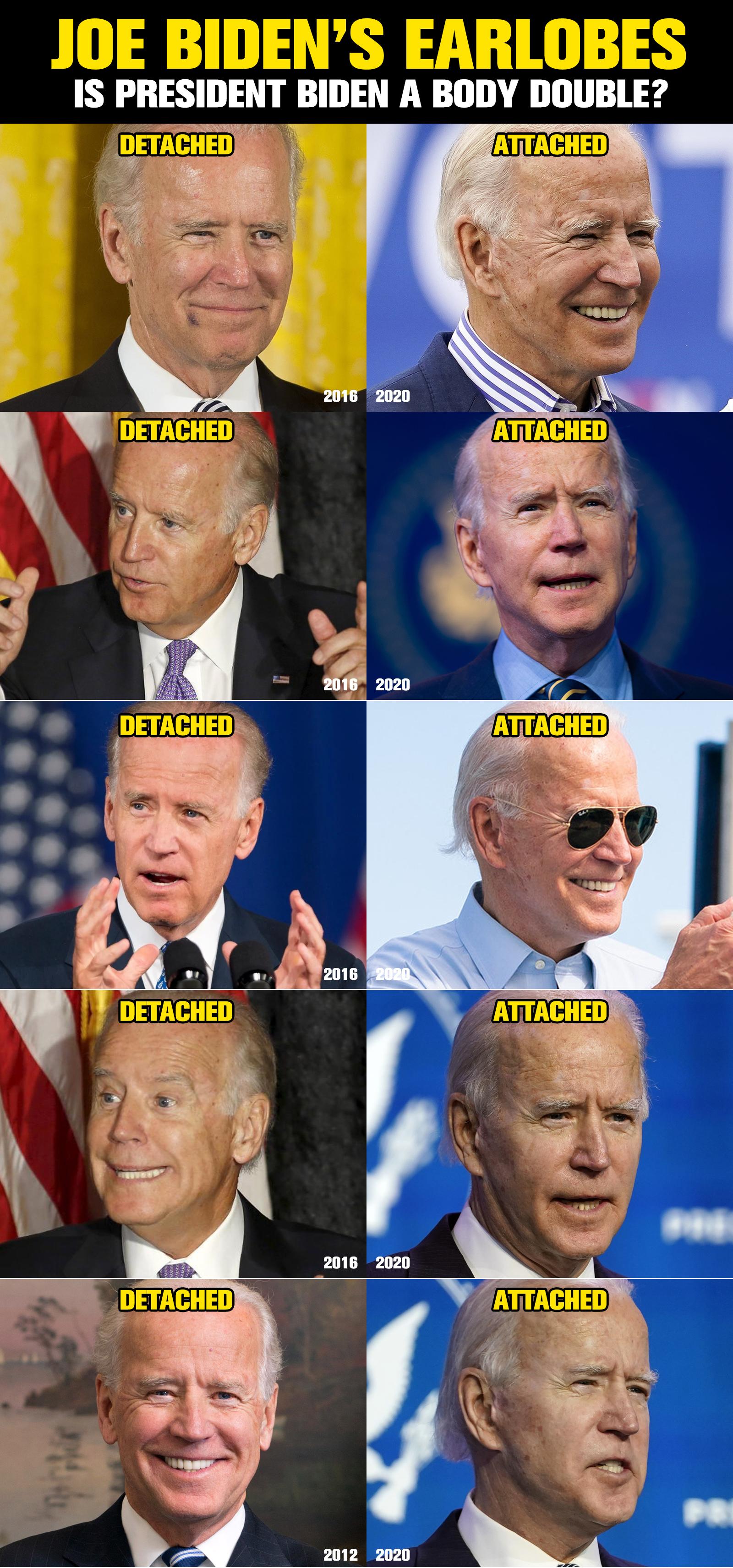
Enter Joe Biden.  It seems the left is attempting a real life Dave-redo using body doubles for Joe Biden.  Keeping Old Joe out of the public eye as much as possible is essential to fooling a lot of people, but that isn’t always going to work—as cameras are everywhere and they capture everything. There are pictures and theories about the different Joe Bidens, and as a result, the White House has revealed Old Joe has had some work done…hair plugs definitely but maybe other work as well? 

Enter John Fetterman.  John has undergone some trauma after he arrived on the national political scene—a stroke which has left him somewhat incapacitated—which might account for the differing looks he sports.

In some photos you can see the signature ears…in others it appears his ears have been tucked back.  In some photos he is haggard looking and then in newer photos, he looks 10 years younger. And the mustache? If I were a suspicious person, I would point out it’s a good distraction.  You look at John and think something’s off but you quickly dismiss your concerns—oh it’s the mustache that’s making me think that. Disregard the tucked back ears, the softer, younger eye area and less pronounced Frankenstein-ish brow.   

And the signature tattoos that seemed to disappear in a recent picture? That’s a camera trick due to the rotation of his arms.  No one’s trying to fool us.

Enter Rand Paul…

Facts about I Dream of Jeannie That You Never Knew

I Dream of Jeannie is a classic fantasy sitcom that ran on NBC from 1965 to 1970. Starring Barbara Eden and Larry Hagman, the show is about a 2,000-year-old genie-in-a-bottle named Jeanie who was acquired by astronaut Captain (later Major) Anthony “Tony” Nelson while stranded on a desert island after a space mission. The astronaut took the genie in the bottle and takes her home with him, and he becomes her master. Hilarious situations ensued between them, with Jeanie falling in love with Tony at first sight. Eventually, they get married in the end.

The show was released to coincide with fantasy comedy shows like Bewitched, which was airing over at ABC. Many critics have noted the similarities between the two shows, but I Dream of Jeannie became a pop culture classic on its own.

Here are some fun facts about the show that you never knew:

Barbara Eden was not the first choice of the producer

Being Jeannie was the role of a lifetime for Barbara Eden, since it catapulted her to stardom. Also, it’s hard to imagine anyone filling in Jeannie’s iconic costume than her. But Sidney Sheldon, the show’s executive producer, originally had reservations about hiring her. Sheldon didn’t want to cast anyone with blonde hair, to avoid comparisons with Bewitched star Elizabeth Montgomery. After various brunette starlets and beauty queens unsuccessfully auditioned for the role, they could not find anyone who could play the role as he wanted it. Eden was cast almost in an act of desperation, as Sheldon’s colleagues recommended her because of her performance in The Brass Bottle.

The show gave conflicting stories of Jeannie’s origins

When the series started, it was shown that Jeanie was transformed into a genie for refusing to marry Blue Djinn (who was played by Michael Ansara, Eden’s real-life husband back then). It became confusing when later on in the middle of the series, they mentioned that Jeannie came from a family of genies.

It was the last network series to be filmed in black and white

The first season of Jeannie was shot in entirely black and white because of budget restraints. Apparently, the studio execs didn’t expect the show to last for more than one season so they weren’t willing to spend extra bucks for the color film. Because of that, this was the last series from the network to be filmed in black and white. But as the show came out successful, they switched to color on the second season.

There was no theme song until the second season

The show didn’t have a theme song on the first season.  The familiar-sounding, catchy Jeannie theme song appeared in the second season, when a new, colored animated opening sequence was introduced.

Censors had problems with Eden showing her belly button

Due to strict television censorship at the time, Eden was restricted from showing off her belly button on screen. But there was one slip-up that caused a bit of commotion during the series. Also, her legs must always be kept covered with baggy pantaloons that must be thick enough so her legs won’t show through. Cleavage, however, was a fair game.

Barbara Eden was an on-set lion expert, too

Besides being the lead star, Barbara Eden also considered herself as somewhat of a lion expert on the set. During the first season, there was an episode where they featured a real lion on one scene. As Eden told her story in her memoir, Jeannie Out of the Bottle, she said she had some prior experience working with lions, so she was thrilled. She offered helpful advices for her co-workers on how to deal with the lion. However, her co-star, Larry Hagman refused to bond with the lion and didn’t feel the same way about the furry friend. When it came to do the scene, Eden was comfortable with the lion’s presence, but when it looked at Hagman, the furry friend let out a frightening roar. The frightened Hagman bolted out of the set, off the studio and into the street. Some crew members bolted off, too.

Barbara Eden was pregnant during filming the first episodes of the series

When the series began shooting in 1965, Barbara Eden was pregnant. During the first 10 episodes, the producers tried to hide her growing baby bump through different techniques, like adding several extra veils to her genie costume. Eden joked about it, saying “I looked like a walking tent.”

Larry Hagman handled his anxieties and frustrations on the set with booze

For an ambitious actor like Larry Hagman, it was hard to play as the second best star to Eden. Also, he would often get frustrated with how the script was written, plus he was carrying some of his own personal anxieties, so he drank away his sorrows. Eden wrote on her memoir that Hagman started every day at the studio drinking champagne, and then enter his dressing room in between scenes to smoke pot and drink more champagne to keep calm. This caused him to undergo a liver transplant in the ‘90s.

Also, Larry Hagman was problematic to work with

Because of Hagman’s alcoholism and unruly attitude, the show was hampered. The staff were irritated by his behavior, so the producers sent him to a therapist. However, it seemed to only make things worse because Hagman started to ingest lots of marijuana, LSD and more champagne “in the interests of maintaining a calm serenity.” He often lost his temper and once voiced his displeasure with the staff by urinating all over the set due to a disappointing script. And it didn’t affect only the staff. Legendary singer Sammy Davis Jr., who appeared in a season 2 cameo, became so enraged with the co-star that he actually threatened to kill Hagman.

Barbara Eden didn’t like that Jeanie and Tony Nelson got married in the end

It seems like Hagman wasn’t the only one who had problems with the script. The show ended with Jeanie and Tony getting married, which Eden didn’t approve of. Part of the whole fun of the show was the palpable sexual tension between the astronaut Tony and the mischievous and attractive Jeanie who both lived under the same roof, while Tony still managed to keep her out of his bedroom. The funny antics ran around watching Jeannie being willing to fulfill his wishes and calling him master, no less. But regarding the characters’ marriage, Eden said it ruined the point of the show and broke credibility, because Jeannie wasn’t human. “This just turned her into a housewife – more like Samantha from Bewitched,” she added.

Larry Hagman only found out that the show was cancelled from a studio guard

After the series’ fifth season, Hagman went to South America to take a vacation. Upon returning to the US, the actor wanted to get something from his dressing room on the set. He ran into a security guard who was perhaps surprised to see him there and told him that there was no sixth season in the offing. Apparently, nobody told him, and he only found out about the news from that guard. Hagman wasn’t surprised and said he halfway expected it, citing decline in ratings and the decision to marry off Jeannie and Tony. But he couldn’t help but observe, “Wow that was real Hollywood.” He lamented, “I expected some kind of formal, pleasant way of telling you you’re out of work.”

Phil Spector made a cameo on the show

Before he became a convicted murderer, Phil Spector was a big record producer during the 1960s and 70s. He appeared on a cameo on the show playing as himself when Jeannie had musical aspirations. Spector was game for poking fun at himself and the music industry in general.

The show had a fun little connection with The Monkees

While it only lasted for two seasons, The Monkeys, a fellow NBC sitcom, had some fun connections with I Dream of Jeannie as both shows referenced each other in some episodes. In one The Monkees episode, Davy Jones rubs a small table lamp and a beautiful genie (not exactly Jeannie) emerged, which led Jones to respond, “Imagine that – wrong show!” Then, cue the laugh track.

In I Dream of Jeannie, Jeannie puts together a rock band featuring Bobby Hart and Tommy Boyce, who wrote some of The Monkee’s most famous songs. At one scene, Hart is shown holding a copy of The Monkees’ first album.

Bill Daily had trouble memorizing his lines, but it turned out all right

Besides Eden and Hagman, I Dream of Jeannie also featured Bill Daily as astronaut Roger Healey. Daily was praised a lot for his comic ability, but little did people know that he suffered from dyslexia, which made him have trouble memorizing lines. The actor often ad-libbed his lines, creating some of the series’ best moments in the process.

The producers burned the set of the show

After the show was cancelled, the show’s producers set to work dismantling the show’s production. During the 50’s and 60’s in Hollywood, it was quite expensive to store collective sets and props, and it was not worth spending the money if it won’t serve any purpose anymore. To resolve this, the crew burned down Jeannie and Major Nelson’s “home” to avoid a big expense with no payback. Barbara Eden did manage to get a hold of one of the series’ magic lamps, which she kept in her personal vault for years. Eventually, she decided to donate it to the Smithsonian Institution, which is one of the most famous and visited TV props in history.

SOURCE: MENTALITCH